bookmark_borderClimate Change: Code Red for Humanity

The UN’s IPCC (Intergovernmental Panel on Climate Control) release their latest report that has been compiled and peer-reviewed over the last 8 years.

U.N. Secretary-General, António Guterres described the report as “a code red for humanity.”

“The alarm bells are deafening, and the evidence is irrefutable: greenhouse gas emissions from fossil fuel burning and deforestation are choking our planet and putting billions of people at immediate risk,” said Mr. Guterres.

Some of the changes already set in motion will be “irreversible” for centuries to come.

A press release from the IPCC states:

The report provides new estimates of the chances of crossing the global warming level of 1.5°C in the next decades, and finds that unless there are immediate, rapid and large-scale reductions in greenhouse gas emissions, limiting warming to close to 1.5°C or even 2°C will be beyond reach.

The report shows that emissions of greenhouse gases from human activities are responsible for approximately 1.1°C of warming since 1850-1900, and finds that averaged over the next 20 years, global temperature is expected to reach or exceed 1.5°C of warming. This assessment is based on improved observational datasets to assess historical warming, as well progress in scientific understanding of the response of the climate system to human-caused greenhouse gas emissions.

“This report is a reality check,” said IPCC Working Group I Co-Chair Valérie Masson-Delmotte. “We now have a much clearer picture of the past, present and future climate, which is essential for understanding where we are headed, what can be done, and how we can prepare.”

Every region facing increasing changes

Many characteristics of climate change directly depend on the level of global warming, but what people experience is often very different to the global average. For example, warming over land is larger than the global average, and it is more than twice as high in the Arctic.

“Climate change is already affecting every region on Earth, in multiple ways. The changes we experience will increase with additional warming,” said IPCC Working Group I Co-Chair Panmao Zhai.

The report projects that in the coming decades climate changes will increase in all regions. For 1.5°C of global warming, there will be increasing heat waves, longer warm seasons and shorter cold seasons. At 2°C of global warming, heat extremes would more often reach critical tolerance thresholds for agriculture and health, the report shows.

But it is not just about temperature. Climate change is bringing multiple different changes in different regions – which will all increase with further warming. These include changes to wetness and dryness, to winds, snow and ice, coastal areas and oceans. For example:

* Climate change is intensifying the water cycle. This brings more intense rainfall and associated flooding, as well as more intense drought in many regions.
* Climate change is affecting rainfall patterns. In high latitudes, precipitation is likely to increase, while it is projected to decrease over large parts of the subtropics. Changes to monsoon precipitation are expected, which will vary by region.
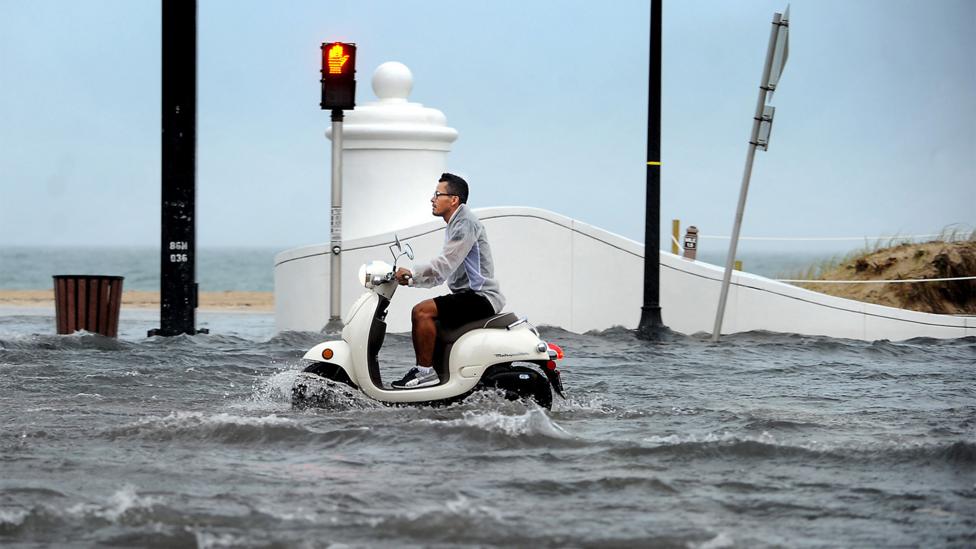
* Coastal areas will see continued sea level rise throughout the 21st century, contributing to more frequent and severe coastal flooding in low-lying areas and coastal erosion. Extreme sea level events that previously occurred once in 100 years could happen every year by the end of this century.
* Further warming will amplify permafrost thawing, and the loss of seasonal snow cover, melting of glaciers and ice sheets, and loss of summer Arctic sea ice.
* Changes to the ocean, including warming, more frequent marine heatwaves, ocean acidification, and reduced oxygen levels have been clearly linked to human influence. These changes affect both ocean ecosystems and the people that rely on them, and they will continue throughout at least the rest of this century.
* For cities, some aspects of climate change may be amplified, including heat (since urban areas are usually warmer than their surroundings), flooding from heavy precipitation events and sea level rise in coastal cities.

For the first time, the Sixth Assessment Report provides a more detailed regional assessment of climate change, including a focus on useful information that can inform risk assessment, adaptation, and other decision-making, and a new framework that helps translate physical changes in the climate – heat, cold, rain, drought, snow, wind, coastal flooding and more – into what they mean for society and ecosystems.

This regional information can be explored in detail in the newly developed Interactive Atlas interactive-atlas.ipcc.ch as well as regional fact sheets, the technical summary, and underlying report.

Human influence on the past and future climate

“It has been clear for decades that the Earth’s climate is changing, and the role of human influence on the climate system is undisputed,” said Masson-Delmotte. Yet the new report also reflects major advances in the science of attribution – understanding the role of climate change in intensifying specific weather and climate events such as extreme heat waves and heavy rainfall events.

The report also shows that human actions still have the potential to determine the future course of climate. The evidence is clear that carbon dioxide (CO2) is the main driver of climate change, even as other greenhouse gases and air pollutants also affect the climate.

“Stabilizing the climate will require strong, rapid, and sustained reductions in greenhouse gas emissions, and reaching net zero CO2 emissions. Limiting other greenhouse gases and air pollutants, especially methane, could have benefits both for health and the climate,” said Zhai.
More on The Human Induced Climate Change Experiment

bookmark_borderClimate Change 2020

Our Infrastructure Is Being Built for a Climate That’s Already Gone
Our drain pipes, reservoirs, power lines, roads, sewage systems, and more are all designed based on past climate data. But with the climate crisis comes the uncomfortable realization that the past can’t predict what we’ll need in the future.
by Shayla Love
Jun 2 2020, 1:05pm

In 1979, the Army Corps of Engineers predicted that by 2014, Optima Lake, in the panhandle of Oklahoma, would have 600,000 visitors a year camping, fishing, boating, and swimming. Instead, the lake sat empty, a dry expanse of land about three miles long. Today, it is still abandoned.

The Optima Lake and Dam was originally intended to control flooding from Beaver Creek and the North Canadian River. After $45 million was spent on its construction, though, the lake never filled up, and it has never reached more than 5 percent of its capacity.

Ed Rossman, a planning branch chief for the Corps of Engineers’ Tulsa District, told a local NPR station in 2013 that the project had been led astray because planners used historical climate data to pick the spot where the dam would be built. That data was wrong by the time construction was completed, and the water no longer flowed there. “We know that the historic record may not be a good snapshot for the future,” Rossman said.

In other parts of the world, the opposite problem has occurred. A flooding barrier put up in the 1990s in the Netherlands to protect Rotterdam will likely fail 25 years sooner than was predicted when it was first built in the 1990s. Replacing the barrier will cost around a billion euros, 10 million of which would be just the cost for taking it down.

The issue here, in its different guises, is one that engineers and city planners continue to face, and which reveals an inherent problem with how we’ve planned, designed, built, and made predictions around all of our infrastructure. At its core, this problem revolves around a concept called stationarity.

The tropics lost 11.9 million hectares (46,000 square miles) of tree cover, the study found, 3.8 million in older, primary forest areas – the third highest loss of primary trees since 2000 and a slight increase on 2018.

“The level of forest loss that we saw in 2019 is unacceptable,” Frances Seymour, from the World Resources Institute, said.

“And one of the reasons that it’s unacceptable is that we actually already know how to turn it around.

“If governments put into place good policies and enforce the law, forest loss goes down.

“But if governments relax restrictions on burning, or [are] signalling that they intend to open up indigenous territories for commercial exploration, forest loss goes up.”


Miami’s fight against rising seas
By Amanda Ruggeri
22nd May 2020

Just down the coast from Donald Trump’s weekend retreat, the residents and businesses of south Florida are experiencing regular episodes of water in the streets. In the battle against rising seas, the region – which has more to lose than almost anywhere else in the world – is becoming ground zero.

Stationarity is the idea that, statistically, the past can help you predict and plan for the future—that the variations in climate, water flow, temperature, and storm severity have remained and will remain stationary, or constant.

Nearly all the infrastructure decisions with which we live have been made with the assumption of stationarity. Engineers make choices about stormwater drainage pipes based on past data of inches of rain. Bridge engineers design foundations that can withstand a certain intensity of water flow based on the severity a certain location has experienced in the past. Reservoirs are designed to hold water based on historical information about water flow, and the historical water needs of a community.


Climate change: older trees loss continue around the world
By Matt McGrath Environment correspondent

In 2019, an area of primary forest the size of a football pitch was lost every six seconds, the University of Maryland study of trees more than 5 metres says.

Brazil accounted for a third of it, its worst loss in 13 years apart from huge spikes in 2016 and 2017 from fires.

However, Indonesia and the Democratic Republic of Congo both managed to reduce tree loss.

Meanwhile, Australia saw a sixfold rise in total tree loss, following dramatic wildfires late in 2019, .

As well as storing massive amounts of carbon, primary, tropical rainforests, where trees can be hundreds or even thousands of years old, are home to species such as orangutans and tigers.

The first time my father’s basement flooded, it was shortly after he moved in. The building was an ocean-front high-rise in a small city north of Miami called Sunny Isles Beach. The marble lobby had a waterfall that never stopped running; crisp-shirted valets parked your car for you. For the residents who lived in the more lavish flats, these cars were often BMWs and Mercedes. But no matter their value, the cars all wound up in the same place: the basement.

When I called, I’d ask my dad how the building was doing. “The basement flooded again a couple weeks ago,” he’d sometimes say. Or: “It’s getting worse.” It’s not only his building: he’s also driven through a foot of water on a main road a couple of towns over and is used to tiptoeing around pools in the local supermarket’s car park.

Ask nearly anyone in the Miami area about flooding and they’ll have an anecdote to share. Many will also tell you that it’s happening more and more frequently. The data backs them up.

It’s easy to think that the only communities suffering from sea level rise are far-flung and remote. And while places like the Solomon Islands and Kiribati are indeed facing particularly dramatic challenges, they aren’t the only ones being forced to grapple with the issue. Sea levels are rising around the world, and in the US, south Florida is ground zero – as much for the adaptation strategies it is attempting as for the risk that it bears.

Florida State Road A1A runs the entire length of Florida along the ocean, making it vulnerable to flooding – as shown here in Fort Lauderdale in 2013 (Credit: Alamy)

Florida State Road A1A runs the entire length of Florida along the ocean, making it vulnerable to flooding – as shown here in Fort Lauderdale in 2013 (Credit: Alamy)

One reason is that water levels here are rising especially quickly. The most frequently-used range of estimates puts the likely range between 15-25cm (6-10in) above 1992 levels by 2030, and 79-155cm (31-61in) by 2100. With tides higher than they have been in decades – and far higher than when this swampy, tropical corner of the US began to be drained and built on a century ago – many of south Florida’s drainage systems and seawalls are no longer enough. That means not only more flooding, but challenges for the infrastructure that residents depend on every day, from septic tanks to wells. “The consequences of sea level rise are going to occur way before the high tide reaches your doorstep,” says William Sweet, an oceanographer at the National Oceanic and Atmospheric Administration (NOAA).

The flooding would be a challenge for any community, but it poses particular risks here. One recent report estimated that Miami has the most to lose in terms of financial assets of any coastal city in the world, just above Guangzhou, China and New York City. This 120-mile (193km) corridor running up the coast from Homestead to Jupiter – taking in major cities like Miami, Fort Lauderdale and West Palm Beach – is the eighth most populous metropolitan area in the US. It’s also booming. In 2015, the US Census Bureau found that the population of all three counties here was growing – along with the rest of Florida – at around 8%, roughly twice the pace of the US average. Recent studies have shown that Florida has more residents at risk from climate change than any other US state.

* extreme weather events
* flood insurance
* feedback loops
* tree deaths and deforestation
* The Human Induced Climate Change Experiment

bookmark_borderThe Hemp Myth, Carbon Sinks and the Environment

by Daniel Brouse and Sidd Mukherjee

Q: Is hemp a good solution for carbon sequestration (carbon sinks) and/or beneficial to the environment?

A: No, not really. In general, hemp only acts as a carbon sink while it is growing and left unharvested. The harvesting usually negates any net-negative carbon sink. (ie more CO2 is released in the harvesting than is being sequestered.) In addition, production of oil, pulp, fibers, or other products usually results in a large carbon footprint. Hemp is not known to be more efficient in the production of anything. It’s also important to note, plant based oils and alcohols result in more low level ozone than petroleum, not to mention, any carbon that is combusted is converted to CO2. Ozone is killing many trees and humans (Death By Ozone, 2016).

Q: Remember the awful hole in the ozone layer in the 80-90’s? Don’t we want more ozone?

A: No. Ozone is a volatile gas and changes form rapidly. In general, there are 2 types of ozone — Tropospheric and Stratospheric. Tropospheric is low level ozone and deadly to life on earth. Stratospheric is in the upper level atmosphere (stratosphere) that protects life on earth (The Ozone Know Zone, 2005).

Q: Won’t the carbon be sequestered in the fiber and stay there until it rots (and hemp is resistant to rotting)?

A: Saying the carbon will stay in the fiber is partially correct… it will also stay in the leaves and the roots. The leaves and roots will decay faster. But, as for the fibers, to harvest them takes more carbon than the carbon that is sequestered. In all cases of plants as carbon sinks, it does nothing to solve the problem of the CO2 in the atmosphere that was released by fossil fuels. Plants are just a temporary store for their own carbon. Trees absorb and release about the same amount of carbon over a 100-year cycle (with many shorter time cycles for the leaves — about 1-2 years.) Comparatively, hemp’s cycle is only a few years. Another important factor in calculating the length of time of a carbon sink with plants is that plants also breath: “Plants release up to 30 per cent more CO2 than previously thought.” During daylight and night there is the process of plant respiration in which plants breath in O2 and breath out CO2. This is different than during daylight hours when a separate process called photosynthesis takes in carbon dioxide and releases oxygen. Plants release up to 30 per cent more CO2 than previously thought, 2017)

Q: Would it is better to have tarmac than grow hemp? Even though hemp can replace petroleum-based plastic with biodegradable products?

A: No, not at all. We should plant as many plants with the longest sink-cycle (trees). Most importantly we should stop releasing CO2 that has been sequestered for millions of years. Then, we should figure how to re-sequester CO2 for millions of years.

Hemp has far more benefits and significantly less costs than petroleum products; however, agriculture in general has many costs (in fact, the invention of flooded rice paddy agriculture thousands of years ago in China was one of the first major human causes of climate change.” The origins of human-influenced climate change may be traced back 5,000 years“, 2004) Monoculture of hemp, corn, and other bio-fuels release all the CO2, create more ozone and require vast areas of land. Having a single crop produced in large scale has a devastating effect on biodiversity. Bio-plastics and other petroleum substitutes create the same sort of environmental problems. They don’t instantly bio-degrade. They initially breakdown into micro-bio-plastics.

The little live creatures on this planet have evolved for a couple billion years to eat what plants make — like carbohydrates. So, they eat carbohydrates much faster than they can eat hydrocarbons from fossil fuels. (But they are working on it, we already see evolution in that direction.)

Unfortunately, there are no good carbon sinks known to Man (other than petroleum / hydrocarbons.) The best solution is to stop human Green House Gas emissions. A study published in the Journal Nature, The contribution of insects to global forest deadwood decomposition found, “Worldwide, dead and decaying wood releases roughly 10.9 gigatons of carbon every year. This is roughly 115% of annual fossil fuel emissions.”

“We found both the rate of decomposition and the contribution of insects are highly dependent on the climate, and will increase as temperatures rise,” study co-author David Lindenmayer said.

At present, bio derived packaging is to be preferred to fossil derived packaging since the former made out of carbohydrate will break down faster than fossil derived hydrocarbon. More important, the bio derived packaging is only returning to the atmosphere recently obtained CO2, since the plants from where the packaging came would decay anyway. But, if fossil plastic decays, that’s dumping into the atmosphere fossil C which was buried hundreds of millions of years ago. Maybe it’s a good thing the little bugs haven’t yet found a widespread, efficient way to eat fossil plastic.

Relative to petroleum, plants are much more beneficial. Hydrocarbons have a much greater cost to the environment. Relative to trees, hemp is far more costly; however, the real solution is to cut down on packaging and consumption.

The Human Induced Climate Change Experiment

bookmark_borderTurn out the lights… the fossil fuel party’s over.

October 15, 2018:
To: Sidd
RE: Energy and Climate Change
I’ve been thinking about a famous Sidd quote… and wonder if it still holds true?

Back in the day (2001), you recommended one of the best things to do was to turn off the lights!
“Turn out the lights… the fossil fuel party’s over.”
http://membrane.com/oil/

Since that time, some things have changed… sort-of… and I wonder if your thoughts have changed?

1) there is some evidence that light may be beneficial to plants and humans (perhaps other animals, too) … such as, sleep cycle, jet lag, depression, light effects on circadian rhythm, etc.

2) LED, compact fluorescent bulbs, etc. appear to be much less energy intense.

Is it ok to leave on some lights now?

Sidd replied:
heeehee, ya LED is much more energy efficient … but the light it provides is far from daylight. Nevertheless, LED electric consumption is much better.

But best of all is to frolic in the light of the sun.

Next turn off the AC and the heat. Deep eaves for shade and deciduous trees that shed their leaves in winter. And insulation, lots and lots of insulation.

The party’s definitely over tho. Hangover is gonna get worse.

sidd

The Human Induced Climate Change Experiment

bookmark_borderWhy “Fresh Air and Sunshine” is Dangerous

By Daniel Brouse

Q: Do you know what are two of the most dangerous exposures for children and the elderly?
A: Fresh air and sunshine. Either may be hazardous; however, when fresh air and sunshine are combined, the result can be extreme.

On days like today, do not go out and play.

The sun can damage your skin and cause cancer. Air pollution causes many health risks, too.


Fresh Air + Sunshine = Dangerous

Sunshine is also part of a deadly reaction. When combined with heat and volatile gases in the air, ultraviolet light causes a deadly reaction. The result is tropospheric ozone.

The dangerous ozone (O3) is created when vehicle (and other) exhaust is not completely combusted. Nitrogen Oxides (NOx) and Volatile Organic Compounds (VOCs) in the exhaust react to temperature and sunlight creating tropospheric ozone (O3).

The ozone in the air can cause permanent damage to your respiratory and immune systems. Millions of micro-explosions enter through your mouth and nose (and to some extent eyes, ears and skin)… then, if lucky, complete their short lives in your lungs. (NOTE: Lucky, for the length of their life. Unlucky, for the length of yours.)

bookmark_borderWARNING! Hold Your Breath / Air Quality Alert

By Daniel Brouse

Many days in the Philadelphia region are not healthy for breathing. On “Ozone Action Alert Days” you are advised to avoid outside activities. Children should not play outdoors. Avoid running and other fitness activities. Do not breathe in unconditioned air. Low level ozone is volatile and causes micro-explosions in your lungs that result in chronic respiratory and immune system damage. The more and harder you breathe, the more damage you cause to your body. Avoid exercise.

Pollution is the leading cause of death and illness. Low level (tropospheric) ozone is a major contributor to air pollution diseases.

Also see: “Why Fresh Air + Sunshine = Dangerous”

View the current air quality for Philadelphia.

The Philadelphia Region started the season with three Action Alert days in a row.

June 13, 2017

Dangerous Air Quality / June 13, 2017

June 12, 2017

Unhealthy Air Quality June 12, 2017

June 11, 2017

Unhealthy Air Quality June 11, 2017

NOTE: Graphics are from the EPA (Environmental Protection Agency of the United States of America)

Death By Ozone | The Ozone Know Zone

Ozone is not only killing humans, it is also killing the trees. The chain reaction is known as an adverse feedback loop.

Dying Trees, The Membrane Domain

  1. Tree Death Questions
  2. The Earth’s Status
  3. Answers About Ozone and Dying Trees
  4. Ozone Questions Part 4
  5. Ozone Answers Part 5

bookmark_borderTrees: Sudden Oak Death “Unstoppable”

A new report out of Cambridge University has determined that the sudden oak death epidemic in California is unstoppable.

“Sudden oak death – caused by Phytophthora ramorum, a fungus-like pathogen related to potato blight – has killed millions of trees over hundreds of square kilometres of forest in California. First detected near San Francisco in 1995, it spread north through coastal California, devastating the region’s iconic oak and tanoak forests.”

“Our study is the first major retrospective analysis of how the sudden oak death epidemic in California could have been managed, and also the first to show how to deal with a forest epidemic of this magnitude,” explains Cunniffe.

“Even if huge amounts of money were to be invested to stop the epidemic starting today, the results of our model show this cannot lead to successful control for any plausible management budget. We therefore wanted to know whether it could have been contained if a carefully-optimised strategy had been introduced sooner. Our model showed that, with a very high level of investment starting in 2002, the disease could not have been eradicated, but its spread could have been slowed and the area affected greatly reduced.”

The model also indicates how policymakers might better plan and deploy control when future epidemics emerge.

“It is a tool by which we can make a better job next time, because it is inevitable that there will be a next time,” says Professor Chris Gilligan, senior author and also from the Department of Plant Sciences. “With this sort of epidemic there will always be more sites to treat than can be afforded. Our model shows when and where control is most effective at different stages throughout a developing epidemic so that resources can be better targeted.”

“It can be tempting for authorities to start cutting down trees at the core of the infected area, but for this epidemic our research shows that this could be the worst thing to do, because susceptible vegetation will simply grow back and become infected again,” explains Cunniffe.

More about Deforestation and Tree Death

bookmark_borderWhat Is Global Warming

by the National Oceanic And Atmospheric Administration

What is Global Warming?

sun.jpg, photo courtesy of NOAA Photo Library
The term Global Warming refers, without any implications for the cause or magnitude, to the observation that the atmosphere near the Earth’s surface is warming. This warming is one of many kinds of climate change that the Earth has gone through in the past and will continue to go through in the future.

Why is Global Warming important?

Temperature increases will have significant impacts on human activities, including: where we can live, what food we can grow, how and where we can grow food, and where organisms we consider pests can thrive. To be prepared for the effects of these potential impacts we need to know how much the Earth is warming, how long the Earth has been warming, and what has caused the warming. Answers to these questions provide us with a better basis for making decisions related to issues such as water resources and agricultural planning.

What is the Greenhouse Effect?

Greenhouse effect image Our planet absorbs radiant energy from the sun and emits some of that energy back to space. The term greenhouse effect describes how water vapor, carbon dioxide, and other “greenhouse” gases in the atmosphere alter the return of energy to space, and in turn, change the temperature at the Earth’s surface. These greenhouse gases absorb some of the energy that is emitted from the Earth’s surface, preventing this energy from being lost to space. As a result, the lower atmosphere warms and sends some of this energy back to the Earth’s surface. When the energy is “recycled” in this way, the Earth’s surface warms.

Life on Earth would be very different without the greenhouse effect. The greenhouse effect keeps the long term annual average temperature of the Earth’s surface approximately 32°C (or about 58°F) higher than it would be otherwise.

How is the Greenhouse Effect related to Global Warming?

Greenhouse gases occur naturally in the Earth’s atmosphere, but are also being added by human activities. This happens primarily through the burning of fossil fuels, such as coal, oil and natural gas, which releases carbon dioxide to the atmosphere. Over the past century, atmospheric carbon dioxide (as measured from ice cores) has increased due to human activities from 300 to 380 parts per million (ppm), and the average Earth temperature has increased approximately 0.7°C (or about 1.3°F).

Co2 image
Given what we know about the ability of greenhouse gases to warm the Earth’s surface, it is reasonable to expect that as concentrations of greenhouse gases in the atmosphere rise above natural levels, the Earth’s surface will become increasingly warm. Many scientists have now concluded that global warming can be explained by a human-caused enhancement of the greenhouse effect.

It is important to remember both that the greenhouse effect occurs naturally, and that it has been intensified by humankind’s input of greenhouse gases into the atmosphere.

Are Ozone Holes related to Global Warming or the Greenhouse Effect?

ozone.gif, photo courtesy of NASA The formation of ozone holes is related to these scientific issues, yet is still distinct.
Ozone plays a very important, natural role in the upper atmosphere (called the stratosphere), where 90% of it exists. Stratospheric ozone acts as a shield against harmful ultraviolet (UV) radiation from the sun. This ozone can be destroyed by human-produced chemical compounds called chlorofluorocarbons, or CFCs. When these CFCs are combined with extremely cold stratospheric temperatures over the poles, solar radiation, and particular patterns of atmospheric circulation, chemical reactions occur that cause “Ozone Holes” over Antarctica (pictured above) and the Arctic.

The formation of ozone holes is related to global warming and the greenhouse effect in two ways. First, CFCs are greenhouse gases. Thus, the release of these compounds into the atmosphere will have two separate effects: to destroy ozone and to add to the greenhouse effect. Second, if stratospheric temperatures or patterns of atmospheric circulation change as part of global warming, this will affect the chemical reactions that destroy ozone and cause the ozone holes to either grow or shrink.

daily ozone image
For daily updated images of the ozone, please visit NOAA’s Stratosphere: SBUV-2 Total Ozone Page with images of the ozone from the NOAA-14 Satellite by clicking here or on image at left.

bookmark_borderAre Bio-fuels Worse for the Environment?

by Daniel Brouse
The Membrane Domain

Q: Are bio-fuels, ethanol, and re-cycled restaurant oils worse for the environment?
A: Yes.

The more volatile nature and ozone emissions used as a fossil fuel substitute appear to be much more harmful to the environment than fossil fuels.  Though fossil fuels need to be eliminated as soon as possible, care should be taken.


CALIFORNIA, USA — State officials have argued since 1999 that the volatility of ethanol, a fuel blend made from corn that evaporates easily, contributes to smog by increasing ozone levels and adding particulates to the air.


REFERENCES:
End The Use Of Bio-fuels

Does Ethanol Use Result in More Air Pollution? More Bad Ozone?

Dying Trees

Land and Water Degradation Lead to Food Shortages