bookmark_borderShipping Pollution (Sulfur Emissions and Climate Change)

by Daniel Brouse

There are several critical issues associated with marine fuel pollution used in international shipping. Shipping pollution is a global problem, spreading air pollution across the world. Historically, marine fuels have contained higher levels of sulfur due to the lower cost of lower-grade fuel oil. However, heavy fuel oil contains, on average, 2700 times more sulfur than road fuel. Sulfur in fuel leads to emissions of sulfur dioxide (SO2) and contributes to the formation of secondary particulate matter (PM), which is highly detrimental to both human health and the environment.

Acid rain is a consequence of chemical reactions initiated when compounds like sulfur dioxide and nitrogen oxides are released into the atmosphere. These substances can rise into the upper atmosphere, where they mix and react with water, oxygen, and other chemicals, forming more acidic pollutants known as acid rain. Acid rain, when absorbed by the ground, can dissolve essential nutrients like magnesium and calcium, crucial for the health of trees. Additionally, it releases aluminum into the soil, hindering trees’ ability to absorb water. This influx of chemicals also alters the chemistry of seawater, reducing its pH and capacity to store carbon. Ocean acidification, often dubbed “osteoporosis of the sea,” can erode the minerals essential for the shells and skeletons of marine life, including oysters, clams, lobsters, shrimp, and coral reefs.

Exposure to particulate matter (PM10 and PM2.5) poses numerous health risks, compromising respiratory and cardiac health. PM2.5, in particular, can deeply penetrate the lungs, causing inflammation and damage to lung tissue. Currently, approximately 7 million people die each year from exposure to particulate matter, with millions more experiencing severe health complications. Health impacts of air pollution encompass a wide range of ailments, including Alzheimer’s disease, asthma, bronchitis, cancer, cataracts, chronic obstructive pulmonary disease (COPD), dementia, developmental damage, emphysema, gastrointestinal disorders, heart ailments, heart attacks, immune system dysfunction, ischaemic heart disease, impaired brain development in children, kidney disease, liver disease, lung disease, premature death, pneumonia, nasal and upper respiratory tract health problems, neurological disorders, reproductive harm, respiratory system failure, skin diseases, and strokes.

The Restriction of Sulfur in Marine Fuel
In 2020, the International Maritime Organization (IMO) introduced regulations imposing strict limits on the sulfur content of marine fuels. These rules mandated a reduction in the maximum percentage of sulfur from 3.5% to 0.5% for all ships operating worldwide.

The restriction on sulfur in marine fuel has indirectly contributed to increased ocean surface temperatures. As sulfur emissions from marine fuels decrease, ships transition to cleaner fuels with lower sulfur content. However, these cleaner fuels often contain higher levels of carbon dioxide (CO2), a potent greenhouse gas. The increased CO2 emissions from ships burning cleaner fuels exacerbate global warming, leading to elevated ocean surface temperatures. This phenomenon underscores the broader impact of human activities on climate change, driving overall increases in global temperatures, including those of the Earth’s oceans.

According to a NASA-led analysis, global average sea level rose by approximately 0.3 inches (0.76 centimeters) from 2022 to 2023. When our paper, “Climate Change: Rate of Acceleration“, was authored in 2023, the swift acceleration of this trend was unforeseen. Initially projected to double over 100 years, the rate of sea level rise dramatically escalated, shortening the doubling period to just 10 years by 2020. Recent observations suggest a further compression of this doubling period to a mere 2 years, raising significant concerns. It is imperative to acknowledge and address this alarming trend, hoping it is not indicative of a new norm but rather an anomaly.

Sidd elaborated, stating, “I suspect this is linked to the large jump in sea surface temperature last year, perhaps due to the restriction on sulfur in marine fuel. The rapid warming and expansion of the ocean’s surface warrant close observation to determine if this trend is sustained.”

Health and Wellness
Humans will experience greater loss and damage to life and quality of life from air pollution, decreasing supply of potable water, extreme weather events, disease, and other adverse health outcomes The greatest short term climate change risk to human health is deadly humid heat (wet-bulb temperature).

The environmental changes and uncertainties associated with climate change can contribute to mental health issues, including anxiety, depression, and post-traumatic stress disorder (PTSD). Almost all survivors of climate-related disasters suffer from mental distress and experience PTSD. Of those who have not experienced climate disasters, over two-thirds of U.S. adults (68%) report having climate change anxiety.

* Our climate model employs chaos theory to comprehensively consider human impacts and projects a potential global average temperature increase of 9 degrees Celsius above pre-industrial levels.

The Human Induced Climate Change Experiment

bookmark_borderCorsi-Rosenthal Box: The Best Air Purifier

What is a Corsi-Rosenthal Box and how do you build one? The Corsi-Rosenthal Box is a simple DIY air filter and purifier that outperforms and can be more effective than expensive HEPA purifiers.

Corsi-Rosenthal Boxes are made from cardboard, tape, furnace air filters, and a box fan.

Corsi-Rosenthal Box
Corsi-Rosenthal Box

The Corsi-Rosenthal Box was invented by Richard Corsi, PhD, of the University of California-Davis and Jim Rosenthal, CEO of Tex-Air Filters.

“One night, I just scribbled out this idea on a piece of paper,” said Corsi. “It wasn’t an original idea – people had put a single filter on a box fan before. But not with MERV 13 filters.” (MERV — minimum efficiency reporting values — is the measure of how well a filter captures particles. The higher the MERV, the more effective the filter.)

“The Corsi-Rosenthal box outperformed the HEPA filter on every sized particle,” Rosenthal said. “You have such high flow from these fans, way more flow than you get out of a commercial HEPA filter. The air goes through the filter more than once in the same period of time. It may only get 50% of the particles at first. But the second time through, it’s getting much more.”

Corsi-Rosenthal Box Test

Smoke from wildfires in Canada brought record-breaking air pollution to the United States this spring, creating dangerous air quality from Bismarck, N.D., to Denver and Detroit to New York City and Washington. According to a Washington Post analysis of smoke data through June 7 (2023) from Stanford University, 197 air quality monitoring stations have reported all-time high pollution from wildfires.

During the Air Quality Crisis of 2023 the plant-based long-term breathing experiment failed the test. After 4 days in a row of Unhealthy (151 to 200 AQI) to Hazardous (301 and higher AQI) outdoor air quality, the the plant-filtered indoor air quality was unhealthy.

Even with spider plant filled windows and dozens of other plants, humans still suffered from itchy eyes, scratchy throats, and headaches.

Christopher suggested, “You should look into Corsi-Rosenthal… they consistently outperform high-end air filtration systems and it’s a simple DIY project.”

Sidd independently advised, “We are way beyond that (plant filtration). Put in something about Corsi-Rosenthal filters and CO2 monitors to judge ventilation.

Sooo… luckily I had a couple furnace filters, a box fan, and a case of beer. After constructing a crude Corsi-Rosenthal Box, the entire first floor was cleared of noticeable pollutants within 15 minutes. The itchy eyes, scratchy throat, and headache dissipated.

Makeshift / Emergency Corsi-Rosenthal Box

To confirm our results, we brought in the hound dog. Dogs are even more sensitive to air quality. After days of suffering in unhealthy air quality, the hound immediately laid down with his nose in the flow of the circulating Corsi-Rosenthal filtered air.

Conclusion
Air quality is already considered the number one contributing factor to death worldwide. Climate change is making poor air quality even more extreme. A combination of plant and Corsi-Rosenthal filtered air is recommended on a daily basis.

Our experiment was conducted in Southeastern Pennsylvania during an extreme air quality event; however, to our east is Philadelphia. The immediate Philadelphia area rarely has a day of Good air quality. Most summer days are Moderate to Very Unhealthy. To our west is Morgantown and Lancaster County. Even though Lancaster is a much more rural area, it continuously has some of the worst air quality in the world. So it doesn’t really matter where you live, implementing plant and Corsi-Rosenthal filtered air to the daily routine will likely improve your quality and quantity of life.

More on Clean Water, Air, and Healthy Plants
More Things You Can Do to Help the Environment and Your Health


bookmark_borderPollen and Increased SARS-CoV-2 Infection Rates

The Proceedings of the National Academy of Sciences of the United States of America published the study Higher airborne pollen concentrations correlated with increased SARS-CoV-2 infection rates, as evidenced from 31 countries across the globe.

The research showed that airborne pollen on average accounts for 44% of the variation in infection rates in addition to humidity and air temperature.

Pollen exposure weakens the immunity by diminishing the antiviral interferon response.

“Our large-scale retrospective data analysis based on 80 individual time series from 130 regions in 31 countries in all inhabited continents across the globe (8,019 data points) enabled us to reveal a robust and significant positive correlation between SARS-CoV-2 infection rates and airborne pollen concentrations, which was halved under lockdown.”

COVID-19 and Air Pollution

COVID-19 Index

bookmark_borderAir Quality And Asthma

A report published in JAMA entitled “Association of Changes in Air Quality With Incident Asthma in Children in California, 1993-2014” confirms air pollution increases childhood asthma incidence.

“Conclusions and Relevance: Among children in Southern California, decreases in ambient nitrogen dioxide and PM2.5 between 1993 and 2014 were significantly associated with lower asthma incidence.”

“There’s been a concerted effort in California over the period of this study to reduce motor vehicle emissions in general and diesel emissions in particular,” John Balmes, an environmental health professor at the University of California, says. “And I think this study shows that it’s paying off.”

When LA’s Air Got Better, Kids’ Asthma Cases Dropped NPR

Deaths and Ailments Attributed to Climate Change and Pollution

bookmark_borderEarth Status 2018

Humanity has wiped out 60% of animal populations since 1970 according to a report issued on October 30, 2018 by the World Wildlife Foundation.

Plummeting numbers of mammals, reptiles, amphibians, birds and fish around the world are an urgent sign that nature needs life support. Our Living Planet Report 2018 shows population sizes of wildlife decreased by 60% globally between 1970 and 2014.

For the last 20 years, scientists from ZSL, WWF and other organisations, have been monitoring changes in the populations of thousands of animal species around the world. Sadly, they’ve concluded that the variety of life on Earth and wildlife populations is disappearing fast.

“We are sleepwalking towards the edge of a cliff” said Mike Barrett, executive director of science and conservation at WWF. “If there was a 60% decline in the human population, that would be equivalent to emptying North America, South America, Africa, Europe, China and Oceania. That is the scale of what we have done.”

“This is far more than just being about losing the wonders of nature, desperately sad though that is,” he said. “This is actually now jeopardising the future of people. Nature is not a ‘nice to have’ – it is our life-support system.”

On September 26, 2018, the UN released a report that concluded climate change is happening faster that models predicted, and we reaching the point of no return.

As governments prepare to meet later this year for the next round of climate talks, Secretary-General António Guterres today underscored the need to speed up action on an issue that is “the absolute priority” for the United Nations.

Climate change is the defining issue of our time – and we are at a defining moment,” the Secretary-General said at the Informal Leaders Dialogue on Climate Change, held on the margins of the annual high-level debate of the General Assembly.

“[…] we have many priorities in the UN – peace and security, human rights, and development – but I would say that this is the absolute priority.”

Mr. Guterres recalled that when world leaders signed the Paris Agreement on Climate Change three years ago, they pledged to keep global temperature rise to well below 2 degrees Celsius above pre-industrial levels and to work to keep the increase as close as possible to 1.5 degrees.

These objectives were agreed, he noted, as the “bare minimum” to avoid the worst impacts of climate change.

“The commitment was universal – but we are nowhere close to where we need to be to meet these minimum targets,” he stated, adding that a UN study found that the commitments made so far by Parties to the Paris Agreement represent just one-third of what is needed.

“We need to do more and we need to do it quicker: we need more ambition and accelerated action by 2020.”

On November 23, 2018, a congressionally mandated report on the impacts of climate change. It is believed the White House released it on Black Friday in an attempt to bury it. The report summary:

Climate change creates new risks and exacerbates existing vulnerabilities in communities across the United States, presenting growing challenges to human health and safety, quality of life, and the rate of economic growth.

Impacts from climate change on extreme weather and climate-related events, air quality, and the transmission of disease through insects and pests, food, and water increasingly threaten the health and well-being of the American people, particularly populations that are already vulnerable.

* Climate change will cost the U.S. economy hundreds of billions of dollars by the end of the century, damaging everything from human health to infrastructure and agricultural production, according to a government report.
* The report issued a dire warning at odds with the Trump administration’s pro-fossil fuels agenda.
* The White House dismissed the congressionally mandated reported as inaccurate.

“With continued growth in emissions at historic rates, annual losses in some economic sectors are projected to reach hundreds of billions of dollars by the end of the century – more than the current gross domestic product (GDP) of many U.S. states,” reports the Fourth National Climate Assessment Volume II. “While President Trump continues to ignore the threat of climate change, his own administration is sounding the alarm,” said Abigail Dillen, president of environmental group Earthjustice. “This report underscores what we are already seeing firsthand: climate change is real, it’s happening here, and it’s happening now.”

On November 27, 2018, the UN’s emissions gap report concluded that despite pledges of industrial countries CO2 emissions rose in 2017.

To meet the goals of the Paris climate pact, the study says it’s crucial that global emissions peak by 2020.

But the analysis says that this is now not likely even by 2030.

The Human Induced Climate Change Experiment

bookmark_borderWhy “Fresh Air and Sunshine” is Dangerous

By Daniel Brouse

Q: Do you know what are two of the most dangerous exposures for children and the elderly?
A: Fresh air and sunshine. Either may be hazardous; however, when fresh air and sunshine are combined, the result can be extreme.

On days like today, do not go out and play.

The sun can damage your skin and cause cancer. Air pollution causes many health risks, too.


Fresh Air + Sunshine = Dangerous

Sunshine is also part of a deadly reaction. When combined with heat and volatile gases in the air, ultraviolet light causes a deadly reaction. The result is tropospheric ozone.

The dangerous ozone (O3) is created when vehicle (and other) exhaust is not completely combusted. Nitrogen Oxides (NOx) and Volatile Organic Compounds (VOCs) in the exhaust react to temperature and sunlight creating tropospheric ozone (O3).

The ozone in the air can cause permanent damage to your respiratory and immune systems. Millions of micro-explosions enter through your mouth and nose (and to some extent eyes, ears and skin)… then, if lucky, complete their short lives in your lungs. (NOTE: Lucky, for the length of their life. Unlucky, for the length of yours.)

bookmark_borderWARNING! Hold Your Breath / Air Quality Alert

By Daniel Brouse

Many days in the Philadelphia region are not healthy for breathing. On “Ozone Action Alert Days” you are advised to avoid outside activities. Children should not play outdoors. Avoid running and other fitness activities. Do not breathe in unconditioned air. Low level ozone is volatile and causes micro-explosions in your lungs that result in chronic respiratory and immune system damage. The more and harder you breathe, the more damage you cause to your body. Avoid exercise.

Pollution is the leading cause of death and illness. Low level (tropospheric) ozone is a major contributor to air pollution diseases.

Also see: “Why Fresh Air + Sunshine = Dangerous”

View the current air quality for Philadelphia.

The Philadelphia Region started the season with three Action Alert days in a row.

June 13, 2017

Dangerous Air Quality / June 13, 2017

June 12, 2017

Unhealthy Air Quality June 12, 2017

June 11, 2017

Unhealthy Air Quality June 11, 2017

NOTE: Graphics are from the EPA (Environmental Protection Agency of the United States of America)

Death By Ozone | The Ozone Know Zone

Ozone is not only killing humans, it is also killing the trees. The chain reaction is known as an adverse feedback loop.

Dying Trees, The Membrane Domain

  1. Tree Death Questions
  2. The Earth’s Status
  3. Answers About Ozone and Dying Trees
  4. Ozone Questions Part 4
  5. Ozone Answers Part 5

bookmark_borderRare Winter Air Quality Alert for Philadelphia

Philadelphia, PA — December 7 and 8, 2015 have been declared “don’t breath in Philly days” by the EPA. It is rare to have a December air quality alert in Philadelphia, PA. It is recommended not to breath in the out-of-doors on alert days. Children, elderly and physically active individuals are most at risk for disease and death.

View the current air quality for Philadelphia.

Philadelphia Air Quality Winter 2015

More on the health risks of air pollution.

Death By Ozone

More on global warming and climate change.

bookmark_borderChina: Air Quality *Red Alert*

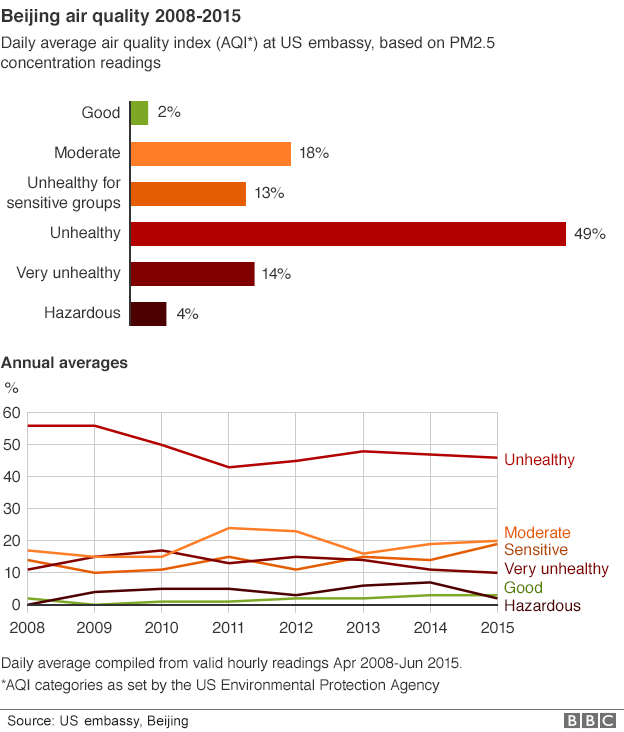
The air pollution in China has become so bad the government has issued their first ever Red Alert. Schools in Beijing are closing and outdoor construction is to cease. The state-run Xinhua news agency says the red alert is the highest possible, and has not been used in the city before.

The air quality is so bad that it is unhealthy to breath. The very young, old and physically active are the most prone to ill-effects. Breathing the air could result in respiratory disease or even death.

Beijing Air Quality
Beijing Air Quality

More on the health risks of air pollution.

More on global warming and climate change.

bookmark_borderBackground Ozone

Low level ozone (Tropospheric Ozone) is deadly to plants and animals. The huge increase in human respiratory problems and asthma is largely attributed to ozone.

NASA has released a new study on ozone pollution:

Levels of “background ozone” — ozone pollution present in a region but not originating from local, human-produced sources — are high enough in Northern California and Nevada that they leave little room for local ozone production under proposed stricter U.S. ground-level ozone standards, finds a new NASA-led study.

The researchers, led by Min Huang of George Mason University, Fairfax, Virginia, used a novel technique that combined data acquired from two instruments on NASA’s Aura spacecraft in the summer of 2008. The technique more accurately determines levels of background ozone and their relative contribution to total surface ozone levels. Integrating Aura satellite data into the study increased the estimates of background ozone by an average of 2.4 parts per billion (ppb) over previous estimates, an amount that varied by 4 to 11 ppb over the two states. Huang conducted the study while a postdoctoral scholar at NASA’s Jet Propulsion Laboratory, Pasadena, California.

The new method of integrating satellite data may help provide states with a scientific basis to request exemptions to the federal air quality standards for ground-level ozone proposed by the U.S. Environmental Protection Agency. EPA proposed lowering the standard from the current 75 ppb set in 2008 to between 65 and 70 ppb, following a review of public data on the negative health effects of ozone pollution. EPA is required to announce a final decision by Oct. 1.

Background ozone can be produced from natural local sources such as wildfires, and transported via winds from distant sources, such as the stratosphere or another region or country.

Monthly-mean maximum daily 8-hour average background ozone concentration in parts per billion in California and Nevada
Monthly-mean maximum daily 8-hour average background ozone concentration in parts per billion in California and Nevada, estimated by integrating data from NASA’s Aura spacecraft. Credit: NASA/JPL-Caltech/George Mason University

The NASA study found that, on average, background ozone sources generated about 48.3 ppb, or 77 percent, of the total ozone in the study region of California and Nevada. The findings are particularly important in Northern California and Nevada, where wildfires and ozone transported to the region from abroad can cause background ozone to exceed 60 ppb. The lowest background ozone levels were seen in Southern California, where topography helps trap local emissions.

“Our study shows background ozone plays a significant role in Western U.S. ozone levels under high-ozone conditions, and varies considerably by region, with higher values in many rural regions,” said Kevin Bowman, study co-author and principal investigator of Aura’s Tropospheric Emission Spectrometer (TES) instrument at JPL. “Some regions in the West have high background ozone levels that leave less than 10 parts per billion for local ozone production under the EPA’s most aggressive proposed ground-level ozone standards.”

To more accurately determine which sources are contributing the ozone, the team developed a multi-scale pollution assimilation system that ingests global ozone data from Aura’s TES instrument with nitrogen dioxide data from Aura’s Ozone Monitoring Instrument (OMI). Data from independent aircraft, ozonesondes (balloon-borne instruments that measure the concentration of ozone at various altitudes) and surface monitoring sites tested the system’s predictions. The team estimated the contribution of local and background ozone at surface monitoring sites when ozone levels exceeded EPA thresholds.

Ninety percent of ozone is found in Earth’s stratosphere, where it protects us from harmful ultraviolet radiation. The rest is found in Earth’s lower atmosphere, the troposphere, where it acts as a greenhouse gas. At ground level, however, ozone is a key component of smog, produced when nitrogen oxides photochemically react with sunlight in the presence of volatile organic compounds. Ground-level ozone also affects human and ecosystem health. Nitrogen dioxide, the most important ingredient in the production of ozone, comes primarily from cars and industrial emissions, as well as natural sources, such as wildfires.

Critics of EPA’s proposed new standard argue it would throw many areas out of compliance, resulting in economic burdens, and that much of the ozone in their regions comes from non-local pollution. When a county or area is found to be out of compliance, it must act to reduce its ozone emissions. Proponents of the new standard argue the reductions are essential to protect public health. EPA is not allowed to consider economic costs in its decision.

Contributions of background ozone and local, human-produced emissions to ozone levels greater than 65 parts per billion at surface sites in various regions.
Contributions of background ozone (green bars) and local, human-produced emissions to ozone levels greater than 65 parts per billion (horizontal red dash line) at surface sites in various regions. Credit: NASA/JPL-Caltech/George Mason University

The Clean Air Act allows states to request an exemption to the ozone standard if they can show that the cause of an air-quality violation is due to ozone from outside the country or from natural causes. To date, only Wyoming has been granted an exceptional event clearance by EPA due to high background ozone levels.

“By assimilating NASA satellite data on ozone and nitrogen dioxide, our study improves calculations of total and background ozone levels from both non-local ozone and wildfires, data that may prove useful to policymakers,” said Huang. “Our method can potentially be applied broadly to predict air quality in other time periods and locations. We plan to conduct follow-up studies over longer time periods, especially during higher wildfire periods.”

Bowman points to a recent NASA study that showed pollution entering the western United States from Asia has offset expected reductions in mid-tropospheric ozone from local sources. “The partitioning between background and local human sources will likely change in the future, as emissions from outside the United States continue to increase, and contributions from drought-related wildfires grow due to climate change. These changes will require additional reductions in local human-produced emissions to meet EPA standards.”

Bowman said the results highlight the importance of a new international constellation of low-Earth orbiting and geostationary satellites that will continuously observe pollution over Asia, Europe and North America, including NASA’s planned Tropospheric Emissions: Monitoring of Pollution (TEMPO) mission. “This constellation will be a game changer in quantifying global sources of local pollution,” he said.

Study results were published recently in the Journal of Geophysical Research: Atmospheres. Other participating institutions include the University of Iowa, Iowa City; NOAA, College Park, Maryland; University of Colorado, Boulder; and NASA’s Goddard Space Flight Center, Greenbelt, Maryland. JPL is managed for NASA by the California Institute of Technology in Pasadena.