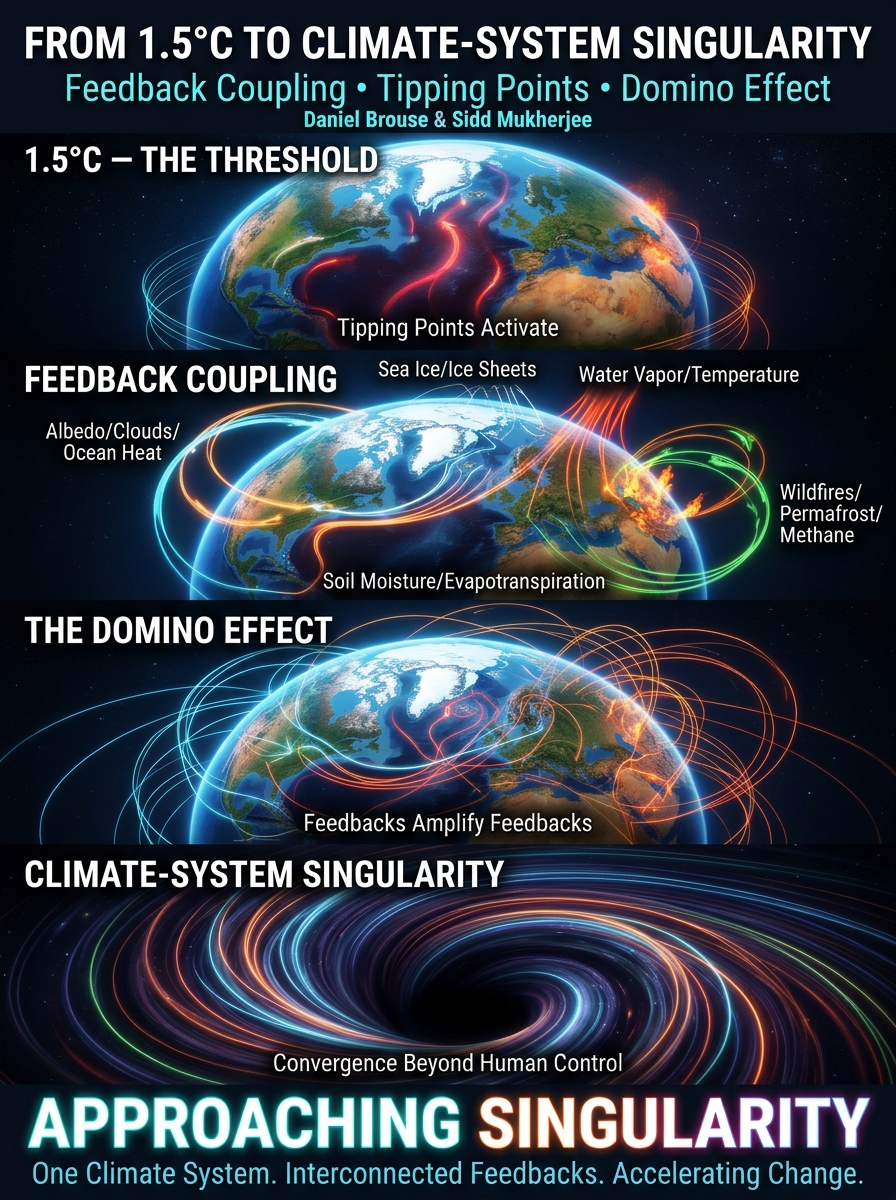
From 1.5°C Warming to Feedback Coupling, Tipping Points, and the Domino Effect
Earth’s climate system is entering a new phase. As global warming exceeds critical thresholds, climate feedbacks increasingly interact, reinforce one another, and trigger cascading changes across the planet.
The Emerging Progression
🌡️ 1.5°C Warming → Increasing pressure on planetary tipping points.
🔄 Feedback Coupling → Climate processes begin reinforcing one another.
🧊 Tipping Points → Ice sheets, oceans, forests, and other systems become increasingly unstable.
🌪️ Domino Effect → Interconnected feedbacks amplify changes across the Earth system.
Climate change is no longer just about rising temperatures. It is about an increasingly interconnected system in which one change amplifies another.
📖 Explore the paper, examine the emerging feedback connections, and discover the scientific sources and research behind this framework.
Feedback Coupling, Tipping Points, and the Domino Effect
1. The 1.5°C Threshold: Tipping Points Activate
The 2023–2026 four-year average is projected to surpass 1.5°C above preindustrial levels. This is no longer simply a projection of future warming. We are observing the consequences of an increasingly interconnected climate feedback system in real time.
3. Climate-System Singularity: Convergence of Feedback Networks
As individual feedbacks emerge, couple, and organize into self-reinforcing networks, those networks increasingly interact and converge toward a unified, interconnected climate system.
A climate-system singularity represents a critical tipping point where interacting feedbacks drive increasingly uncontrollable and irreversible planetary change. It is analogous to a gravitational singularity, such as a black hole, where converging forces produce a point beyond which conventional predictions and control break down. In the climate system, this represents a trajectory toward increasingly unpredictable, self-reinforcing change that becomes progressively decoupled from human policy intervention.
1. IPCC (2021) — Climate Change 2021: The Physical Science Basis, Chapter 7: Earth’s Energy Budget, Climate Feedbacks, and Climate Sensitivity. Covers water vapor, clouds, surface albedo, and interconnected climate feedback processes. IPCC Chapter 7
2. IPCC (2023) — Climate Change 2023: Synthesis Report. Documents increasing risks of abrupt and irreversible climate changes, including tipping-point risks between 1.5°C and 2.5°C. IPCC Synthesis Report
3. Global Tipping Points Report (2025). Comprehensive scientific assessment of interacting Earth-system tipping elements and cascading risks. 2025 Report and downloads
4. Nature Geoscience (2025) — Destabilization of Earth System Tipping Elements. Examines interactions among Greenland, Antarctic, AMOC, and Amazon tipping elements. Read scientific paper
5. IPCC (2021) — Chapter 5: Global Carbon and Other Biogeochemical Cycles and Feedbacks. Covers permafrost, vegetation, soil carbon, ocean carbon exchange, and greenhouse gas feedbacks. IPCC Chapter 5
6. WMO (2026) — Global Annual to Decadal Climate Update 2026–2035. Provides current temperature projections and the probability of temporarily exceeding 1.5°C. WMO Climate Update
Additional research and original work
7. Daniel Brouse and Sidd Mukherjee — Climate Feedback and Tipping-Point Network. Original research
8. Daniel Brouse and Sidd Mukherjee — Observable Climate Feedback Coupling. Original research
An Interfaith Synthesis of Ecological Ethics, Earth’s Energy Imbalance, and Integrated Climate Stewardship
By Daniel Brouse
Overview
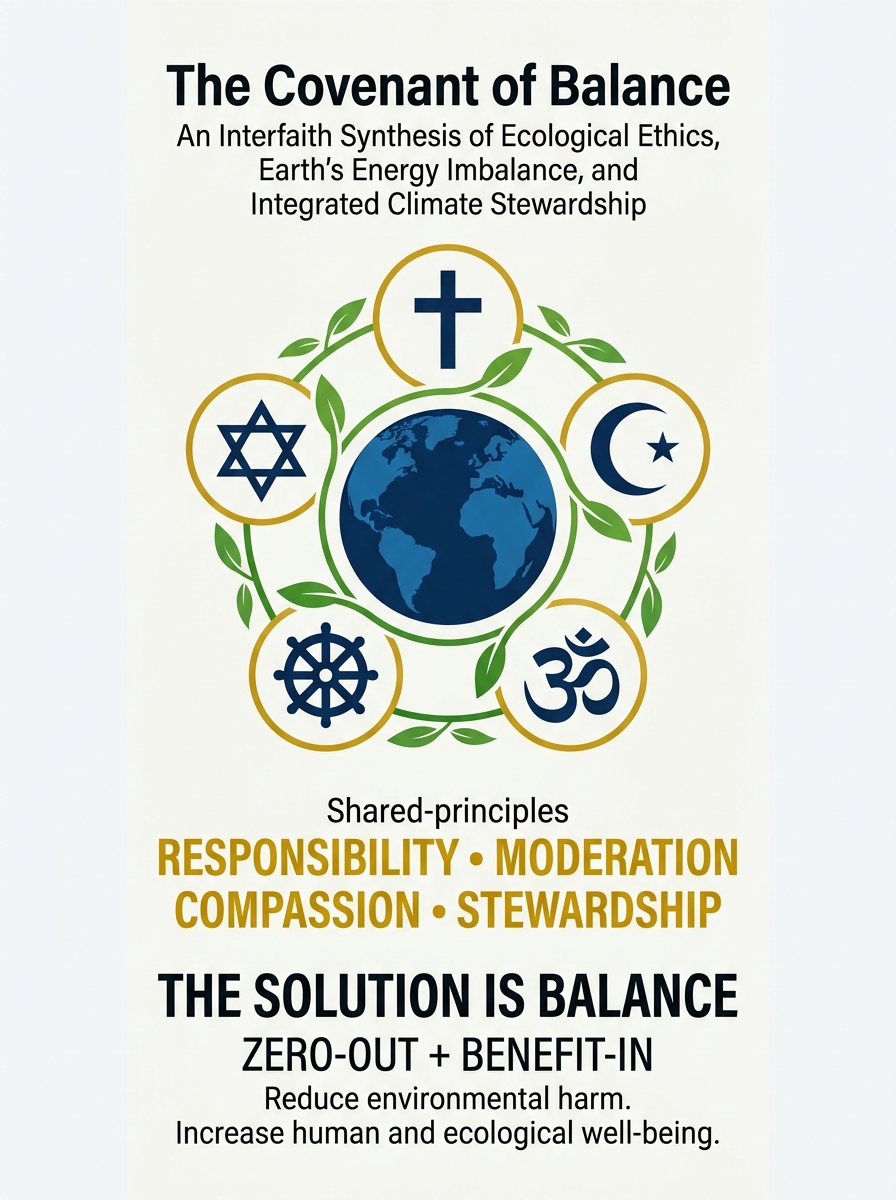
THE COVENANT OF BALANCE An Interfaith Synthesis of Ecological Ethics, Earth’s Energy Imbalance, and Integrated Climate Stewardship
What do Christianity, Islam, Judaism, Buddhism, and Hinduism have in common when it comes to protecting our planet?
Although these five religious traditions differ in their beliefs and practices, each offers ethical principles that can help guide humanity toward a more responsible relationship with the Earth.
Christianity emphasizes creation care and stewardship. Islam teaches Mīzān—balance—and responsible trusteeship. Judaism emphasizes bal tashchit—avoiding needless destruction and waste. Buddhism highlights interdependence, compassion, and mindful consumption. Hinduism emphasizes dharma, responsibility, and minimizing harm.
Different traditions. Different teachings. A shared recognition that our actions have consequences.
THE SCIENCE: Earth’s energy imbalance is driving climate change. Greenhouse gases trap additional energy in the Earth system, warming the oceans, atmosphere, and land while contributing to ice loss, rising seas, and ecological disruption. Interacting climate feedbacks can amplify these changes.
THE ETHICS: Our responsibility extends beyond ourselves—to other people, vulnerable communities, future generations, and the living systems that sustain us.
THE SOLUTION: BALANCE.
My paper connects these five religious traditions with two complementary frameworks:
Humanity’s Greatest Threat Is Humanity: Energy Imbalance → Climate Change → The Solution = Balance
ZERO-OUT means reducing actual sources of environmental harm. BENEFIT-IN means improving affordability, efficiency, resilience, comfort, and quality of life while protecting the natural systems on which we depend.
This is not a claim that all religions teach the same thing or agree on every environmental issue. It is an invitation to identify common ethical ground and turn shared concerns into practical, measurable action.
We do not need to share one religion to share responsibility for the Earth.
Five traditions. One interconnected planet. A common responsibility.
THE SOLUTION IS BALANCE.
Read the paper:
The Covenant of Balance: An Interfaith Synthesis of Ecological Ethics, Earth’s Energy Imbalance, and Integrated Climate Stewardship
Introduction
Humanity faces a profound ecological challenge: our economic systems, patterns of consumption, and exploitation of natural resources are disrupting the balance of Earth’s interconnected systems. Climate change is a central expression of this disruption, driven primarily by the accumulation of greenhouse gases that trap additional energy within the Earth system. Addressing this crisis requires scientific understanding, economic transformation, practical action, and an ethical framework capable of motivating change across cultures and societies.
This paper synthesizes five major religious traditions—Christianity, Islam, Judaism, Buddhism, and Hinduism—with two complementary frameworks: “Humanity’s Greatest Threat Is Humanity: Energy Imbalance → Climate Change → The Solution = Balance” and “Integrated Climate Stewardship.” Christianity is considered broadly across its Catholic, Orthodox, Protestant, evangelical, and other traditions. Pope Francis’s Laudato si’ and Laudate Deum are examined as influential Catholic contributions within the wider Christian conversation, alongside broader Christian teachings and initiatives concerning creation care.
Despite their theological differences, these traditions offer overlapping principles of responsibility, restraint, compassion, justice, and care for the living world. Their ethical insights can be connected with climate science and translated into practical action through Integrated Climate Stewardship: ZERO-OUT + BENEFIT-IN. This approach emphasizes eliminating or substantially reducing actual sources of environmental harm while bringing tangible benefits into daily life through lower costs, improved resource efficiency, greater resilience, and healthier communities.
The central proposition is that a sustainable future requires balance at multiple levels: physical, ecological, economic, social, and ethical. Religious traditions can help articulate why that balance matters; science can explain the physical processes involved; and practical stewardship can help translate shared values into measurable action.
1. Introduction: A Shared Responsibility for Our Common Home
Humanity is part of an interconnected living system. The atmosphere, oceans, forests, soils, freshwater systems, and countless forms of life interact through physical, chemical, and biological processes. Human societies depend on these systems for food, water, energy, shelter, health, and economic activity.
Yet many prevailing economic practices treat the natural world as an effectively unlimited source of materials and an unlimited destination for waste. The resulting pressures include climate change, biodiversity loss, deforestation, pollution, soil degradation, freshwater stress, and the depletion of natural resources.
Climate change makes the consequences of this imbalance particularly visible. Greenhouse gas emissions alter Earth’s energy balance, while interacting feedbacks and ecological changes can amplify the resulting impacts. The consequences extend beyond temperature: they include changes in precipitation, ice loss, sea-level rise, ecosystem disruption, agricultural stress, and risks to human health and economic stability.
The problem is scientific, but it is also ethical. Science can measure changing conditions and investigate their causes. It cannot, by itself, determine the full moral responsibilities of individuals, institutions, governments, or economic systems.
Religious and philosophical traditions have long explored questions of responsibility, restraint, justice, compassion, and humanity’s relationship with the natural world. Although their beliefs and practices differ, they offer resources for examining the values that shape human behavior.
This paper brings five traditions into conversation:
Christianity, including Catholic, Orthodox, Protestant, evangelical, and other Christian perspectives.
Islam, particularly the principles of Mīzān and Khilāfah.
Judaism, including the principle of bal tashchit.
Buddhism, including interdependence, compassion, and mindful consumption.
Hinduism, including dharma, ahimsa, and reverence for the Earth.
The purpose is not to suggest that these traditions are identical or that their followers agree on every environmental question. It is to identify meaningful areas of convergence and connect them to a practical framework for ecological responsibility.
2. Christianity: Creation Care, Stewardship, and Love of Neighbor
Christian environmental ethics draws on a broad range of biblical teachings and theological traditions. Across Catholic, Orthodox, Protestant, evangelical, and other Christian communities, creation care has been understood through concepts such as stewardship, responsibility, humility, justice, and love of neighbor. Interpretations differ, and environmental responsibility is not expressed uniformly across all denominations.
Several biblical passages are particularly relevant.
Genesis 2:15 describes humanity’s placement in the garden of Eden to work it and keep it. This passage supports an understanding of human responsibility that includes both productive use and protection of the natural world.
Psalm 24:1 declares that the Earth belongs to the Lord. This can be understood as a challenge to the assumption that human ownership confers unlimited moral permission to destroy or exhaust the resources on which other life depends.
Romans 8:19–23 portrays creation as groaning and awaiting liberation. Christian environmental thinkers have drawn on this passage to reflect on ecological suffering and the relationship between human redemption and the wider creation.
Christian traditions also emphasize love of neighbor. Environmental degradation disproportionately affects people with limited resources, including communities exposed to extreme heat, flooding, drought, pollution, food insecurity, and displacement. Climate responsibility can therefore be understood as an expression of concern for vulnerable people, future generations, and the conditions necessary for human flourishing.
Christian contributions to ecological responsibility
Several major initiatives illustrate the breadth of Christian environmental engagement.
Pope Francis’s Laudato si’: On Care for Our Common Home (2015) presents an influential Catholic account of ecological responsibility, linking environmental degradation with social inequality, consumerism, economic priorities, and the need for an integrated response. Laudate Deum (2023) further emphasizes the urgency of the climate crisis and the inadequacy of responses that fail to match the scale of the problem.
These documents are important contributions to Christian environmental thought, but they do not represent every Christian denomination or establish a single environmental doctrine binding on all Christians.
Other examples include the World Council of Churches’ work on climate justice and ecological sustainability, the Lausanne Movement’s Cape Town Commitment and its wider evangelical discussions of creation care, and environmental initiatives within evangelical Christianity, including the Evangelical Environmental Network.
Together, these efforts demonstrate that ecological responsibility is discussed across multiple Christian traditions, even where theological interpretations, political priorities, and preferred policy responses differ.
The broader Christian contribution to an interfaith framework can be expressed through three connected principles:
Creation care: The natural world is not merely a disposable storehouse of resources.
Responsible stewardship: Human power over nature entails obligations, not unlimited permission to exploit.
Love of neighbor: Environmental decisions should consider their consequences for other people, especially vulnerable communities and future generations.
These principles connect naturally with the concept of balance: humanity’s use of the Earth should sustain the conditions that make life possible rather than progressively undermine them.
3. Islam: Mīzān, Khilāfah, Tawḥīd, and Iqtisād
Islamic environmental ethics provides a particularly direct vocabulary for connecting ecological responsibility with balance.
Mīzān refers to balance, measure, and equilibrium. In the Qur’anic context, it conveys an order that should not be violated through excess or injustice. Applied to environmental responsibility, it encourages human beings to respect the limits, relationships, and conditions that sustain the natural world.
Khilāfah expresses humanity’s role as steward or trustee. Human beings exercise influence over the Earth, but that responsibility can be understood as an obligation to protect and manage creation rather than a license for unlimited exploitation.
Tawḥīd, the oneness of God, provides a theological foundation for understanding creation as an interconnected whole. Although the natural world contains immense diversity, its components exist within relationships that human activity can disrupt.
Iqtisād emphasizes moderation, economy, and avoiding excess. It challenges wasteful consumption and encourages responsible use of resources.
These principles are reflected in Al-Mizan: A Covenant for the Earth, launched in 2024 through an initiative associated with the United Nations Environment Programme’s Faith for Earth work. The document presents an Islamic framework for ecological responsibility, connecting spiritual principles with conservation, sustainability, and collective action.
Its contribution to this synthesis is the explicit connection between balance, trusteeship, moderation, and responsibility for the natural world.
4. Judaism: Bal Tashchit and Responsibility for Creation
Jewish environmental ethics includes the principle of bal tashchit, commonly understood as a prohibition against needless destruction or waste.
The principle is traditionally associated with Deuteronomy 20:19–20, which restricts the destruction of fruit-bearing trees during a siege. Its interpretation has extended into broader discussions of waste, resource conservation, and unnecessary harm.
Jewish teachings also draw on the creation narratives of Genesis, including the responsibilities associated with humanity’s place in the garden. As in Christianity, interpretations of dominion and human authority over nature vary, but Jewish environmental thought offers substantial resources for understanding human power as carrying moral obligations.
The Rabbinical Assembly’s The Green Covenant: A Jewish Pledge Toward Carbon Neutrality illustrates an effort to translate Jewish environmental values into institutional and practical commitments.
The relevance of bal tashchit extends beyond recycling or avoiding the waste of individual objects. It invites a broader question: when human activities needlessly damage ecosystems, squander resources, or impose preventable costs on future generations, what responsibility follows?
In the context of climate change, this principle supports reducing avoidable emissions, conserving energy and materials, preventing pollution, and questioning economic practices that generate unnecessary environmental damage.
5. Buddhism: Interdependence, Compassion, and Mindful Consumption
Buddhist teachings offer an ethical perspective centered on the interconnected nature of existence, the reduction of suffering, compassion, and awareness of the consequences of one’s actions.
Interdependence challenges the idea that human well-being can be separated from the well-being of other living systems. Food, water, climate, health, and economic stability depend on relationships among people, ecosystems, and physical processes.
Compassion extends ethical concern beyond the self. Environmental damage becomes relevant not only because it affects human comfort or prosperity, but also because it can cause suffering among vulnerable people and other living beings.
Mindful consumption encourages reflection on desire, attachment, and the consequences of acquiring and using material goods. It does not necessarily require rejecting technology or material comfort. Rather, it questions patterns of consumption that create harm without corresponding benefits to well-being.
The Time to Act Is Now: A Buddhist Declaration on Climate Change represents a Buddhist contribution to the climate discussion, emphasizing the relationship between climate responsibility, ethical conduct, and the need for action.
From this perspective, stewardship requires more than technical efficiency. It also involves examining the motivations and social arrangements that drive waste, excessive consumption, and disregard for the consequences of human behavior.
6. Hinduism: Dharma, Ahimsa, and Reverence for the Earth
Hindu traditions encompass a wide range of philosophies, practices, and interpretations. Environmental ethics within these traditions can draw on dharma, ahimsa, and reverence for the Earth.
Dharma can refer to duty, right conduct, and the responsibilities that sustain personal and social order. Environmental responsibility can be understood as part of fulfilling obligations to other living beings, communities, and the conditions that support life.
Ahimsa, commonly understood as nonviolence or the avoidance of harm, provides a basis for considering how human actions affect living beings and ecological systems. Its application to environmental issues varies across traditions, but it encourages attention to avoidable injury and destruction.
Hindu traditions also include forms of reverence for rivers, mountains, forests, animals, and the Earth itself. Bhūmi Devi, the Earth goddess, is one expression of the spiritual significance attributed to the Earth in Hindu traditions.
The Hindu Declaration on Climate Change, associated with the 2015 interfaith climate initiatives, articulates a Hindu contribution to the moral case for climate action and ecological responsibility.
These ideas connect environmental stewardship with duty, restraint, and respect for the living world. They encourage a view of human prosperity that does not depend on treating nature as morally irrelevant or endlessly expendable.
7. A Shared Ethical Framework Across Five Traditions
The five traditions differ in theology, scripture, spiritual practice, and their understanding of humanity’s place in creation. They should not be collapsed into a single religious doctrine. Nevertheless, their environmental teachings reveal several important areas of convergence.
Tradition
Relevant principles
Environmental implication
Christianity
Creation care, stewardship, love of neighbor
Protect creation and consider the consequences for vulnerable people and future generations
Islam
Mīzān, Khilāfah, Tawḥīd, Iqtisād
Respect balance, exercise responsible trusteeship, recognize interconnection, and avoid excess
Judaism
Bal tashchit, responsibility for creation
Prevent needless destruction and waste
Buddhism
Interdependence, compassion, mindful consumption
Reduce avoidable harm and reconsider excessive consumption
Hinduism
Dharma, ahimsa, reverence for the Earth
Fulfill responsibilities and minimize harm to living systems
These parallels are meaningful, but they are not exact equivalences. Mīzān, for example, has a specific Qur’anic and Islamic context; bal tashchit has a distinct Jewish history; and Buddhist interdependence does not simply mean the same thing as Christian stewardship or Hindu dharma.
The common ground is more practical than doctrinal: human decisions affect interconnected systems, and ethical responsibility requires attention to the consequences of those decisions.
An interfaith environmental framework can therefore rest on several shared commitments:
Reduce avoidable harm.
Use resources responsibly.
Avoid unnecessary waste and excess.
Protect the conditions that sustain life.
Consider the needs of vulnerable communities.
Recognize obligations to future generations.
Translate ethical commitments into measurable action.
This is the foundation for connecting religious ethics with the scientific and practical framework developed in the two papers considered here.
8. The Scientific Foundation: Energy Imbalance and Climate Change
Religious ethics can motivate responsibility, but climate science must establish the physical processes and evidence involved.
Earth receives energy from the Sun and returns energy to space. Over time, the amount entering and leaving the Earth system determines whether the planet gains or loses energy.
Human-caused greenhouse gas emissions have altered this balance by reducing the rate at which Earth loses energy to space. The result is a positive energy imbalance: more energy accumulates within the Earth system than leaves it.
The oceans absorb the great majority of the excess heat accumulating in the climate system. Energy is also taken up by the atmosphere, land, and cryosphere. The consequences include rising temperatures, ocean warming, melting land ice, sea-level rise, and changes in the behavior of ecosystems and atmospheric circulation.
The central distinction is that climate change is not simply a problem of elevated surface temperature. Temperature is one indicator of a wider physical process involving energy storage, redistribution, and changes across interconnected systems.
From imbalance to interacting feedbacks
Climate systems contain feedback processes that can amplify or moderate an initial change. Examples include:
Ice and snow loss, which reduces reflectivity and allows more solar energy to be absorbed.
Changes in atmospheric water vapor, which affect the greenhouse effect.
Changes in clouds, which can alter both incoming solar radiation and outgoing infrared radiation.
Changes in ecosystems and vegetation, which can influence carbon storage, surface reflectivity, moisture, and local climate.
Ocean circulation changes, which redistribute heat and influence regional climate patterns.
These processes do not all operate in the same direction or with the same strength. Their effects depend on location, timescale, and the interactions among physical and biological systems.
The broader scientific concern is that feedbacks can interact. Multiple changes may reinforce one another, increase stress on ecosystems, and make the consequences of continued warming more severe.
The distinction between an ethical principle and a physical measurement is essential. Religious concepts of balance can help explain why disruption is morally significant, but they are not substitutes for observations, measurements, and scientific models. Conversely, climate science can describe physical changes without independently determining every ethical obligation arising from them.
The synthesis proposed here uses each framework for its appropriate purpose: ethics clarifies responsibility, science investigates the physical problem, and stewardship translates both into action.
9. Humanity’s Greatest Threat Is Humanity: Energy Imbalance → Climate Change → The Solution = Balance
The paper Humanity’s Greatest Threat Is Humanity: Energy Imbalance → Climate Change → The Solution = Balance presents balance as a central organizing principle for understanding the climate crisis and responding to it.
The sequence begins with human activities that alter Earth’s energy balance. These activities include greenhouse gas emissions from fossil fuels, land-use changes, and other human-caused influences on the climate system.
The resulting energy imbalance drives warming and contributes to changes in oceans, ice, weather patterns, ecosystems, and the distribution of heat and moisture.
The effects then interact with human systems. Agricultural disruption can affect food prices and availability. Environmental damage can increase economic losses and displacement. Resource stress can intensify existing inequalities and political pressures.
This sequence does not mean that every climate impact follows one inevitable pathway, or that every feedback leads to collapse. It means that environmental, economic, and social risks are connected and should not be evaluated as isolated problems.
Balance is the proposed solution in the sense of restoring conditions that support long-term stability and human flourishing. Physically, that requires reducing greenhouse gas emissions and ultimately bringing the climate system toward a sustainable energy balance. Ecologically, it requires protecting and restoring the systems that support life. Economically, it requires reconsidering practices that depend on unlimited material throughput and the externalization of environmental costs.
Ethically, balance means recognizing that short-term gains for some can impose lasting costs on others.
The religious traditions examined here provide different reasons for accepting these responsibilities. Their shared contribution is not a claim that the Earth must remain static or that all change is harmful. Rather, they support the principle that human power should be exercised with regard for consequences, limits, and obligations to others.
Integrated Climate Stewardship translates environmental responsibility into a practical framework for everyday life, businesses, institutions, and public policy.
Its central formula is:
ZERO-OUT + BENEFIT-IN
ZERO-OUT means eliminating or substantially reducing actual sources of environmental harm wherever practical. This includes reducing unnecessary energy use, fossil fuel consumption, waste, pollution, and resource-intensive activities.
BENEFIT-IN means choosing changes that also produce tangible benefits: lower utility bills, reduced operating costs, greater resilience, improved comfort, healthier living conditions, and more efficient use of resources.
The framework is intended to make climate stewardship a practical part of ordinary life rather than an obligation dependent entirely on sacrifice, charitable contributions, or distant technological promises.
Examples include:
Improving building efficiency and reducing unnecessary heating and cooling.
Using targeted heating and cooling rather than conditioning unused spaces.
Reducing electricity and hot-water demand.
Repairing, reusing, and maintaining products to extend their useful lives.
Reducing food waste and choosing efficient food-storage and preparation practices.
Using durable, efficient equipment when the total costs and environmental benefits justify it.
Protecting trees, soil, water, and vegetation where they provide measurable ecological benefits.
Improving household and community resilience to heat, storms, flooding, and power interruptions.
Not every action will be appropriate for every household or region. Costs, safety, building conditions, local climate, access to technology, and the environmental impacts of equipment all matter. The goal is to identify measures that produce real net benefits rather than simply shifting environmental costs from one place to another.
Why benefits matter
Climate communication often emphasizes costs, restrictions, and sacrifices. These are sometimes unavoidable, particularly when major structural changes are necessary. But stewardship can also produce immediate personal and social benefits.
Lower energy demand can reduce bills. Durable products can reduce replacement costs. Improved building performance can increase comfort. Better preparedness can limit losses during disruptions. Reducing waste can save money while reducing pressure on natural resources.
These benefits can make climate action more accessible to people who might otherwise see it as financially burdensome or disconnected from their daily lives.
The approach also helps distinguish genuine emissions reductions from accounting exercises. Offsets do not automatically eliminate the underlying source of pollution, and their quality varies. ZERO-OUT prioritizes direct reductions; BENEFIT-IN encourages additional improvements that support ecological and human well-being.
The framework does not imply that individual household measures alone can solve climate change. Electricity generation, industrial production, transportation, agriculture, infrastructure, and public policy remain essential. Individual action is most effective when supported by changes in the larger systems that shape available choices.
11. Economic Balance: Prosperity Without Ecological Destruction
Economic systems are human institutions, not independent forces beyond human responsibility. Their incentives, rules, and measures of success influence how resources are extracted, distributed, consumed, and discarded.
Traditional measures of economic activity can rise while natural capital declines. Gross domestic product, for example, does not by itself distinguish between productive investment, resource depletion, environmental restoration, and expenditures required to repair damage.
An economy can therefore report growth while imposing costs on ecosystems, public health, future generations, or communities that lack the power to avoid those costs.
A more integrated understanding of prosperity considers not only the production of goods and services but also the durability of the ecological systems on which economic activity depends.
This does not require rejecting markets, innovation, or economic growth in every form. It requires evaluating economic activity according to its full consequences rather than treating environmental costs as someone else’s problem.
A practical stewardship framework asks:
Does this activity meet a genuine need or produce a meaningful benefit?
Can the same benefit be achieved with less energy or fewer materials?
Are environmental costs being imposed on other people or future generations?
Does the activity strengthen or undermine long-term resilience?
Can waste be prevented at the source rather than managed after it occurs?
Do the financial incentives reward conservation and efficiency, or excessive extraction and disposal?
These questions connect the religious principle of moderation with economic accountability. They also connect scientific knowledge about finite ecological capacities with the practical task of designing better incentives and institutions.
The aim is not balance for its own sake as an abstract slogan. It is an economic system that can support human well-being without progressively undermining the natural systems that make prosperity possible.
12. Justice, Vulnerability, and Future Generations
Environmental damage is not distributed evenly. Communities differ in their exposure to hazards, their access to resources, their capacity to recover, and their historical contribution to environmental pressures.
Low-income households may have fewer options for improving inefficient housing or recovering from extreme weather. Coastal communities may face growing flood and erosion risks. Agricultural communities may be exposed to changing rainfall patterns, heat, and crop stress. People with limited access to healthcare, reliable infrastructure, or financial reserves may suffer disproportionately from environmental disruption.
These inequalities make climate stewardship a question of justice as well as physical science.
Christian teachings on love of neighbor, Islamic concepts of trusteeship and justice, Jewish obligations against needless destruction, Buddhist compassion, and Hindu principles of duty and minimizing harm can all contribute to discussions of how environmental costs and responsibilities should be shared.
The traditions do not necessarily prescribe identical policies. Nevertheless, their ethical resources support asking who benefits from environmentally damaging activities, who bears the costs, and whose needs are excluded from decision-making.
Future generations are particularly important because they cannot participate directly in current decisions, even though they may inherit the consequences. Stewardship therefore requires a time horizon longer than an election cycle, quarterly earnings report, or individual consumer decision.
A balanced approach must consider the rights and needs of people who have little influence over the choices that shape their future.
13. Indigenous Knowledge and Local Stewardship
Indigenous peoples and local communities hold diverse traditions of environmental knowledge, place-based observation, and resource management. These traditions are not uniform, and they should not be romanticized as though every community has identical practices or perspectives.
In many places, however, Indigenous knowledge contributes valuable understanding of ecosystems, seasonal changes, species relationships, fire management, water, soils, and long-term landscape stewardship.
Such knowledge can complement scientific research when collaboration respects community authority, cultural context, and rights over traditional knowledge. It should not be appropriated without consent or treated as a substitute for the participation of the people who hold it.
The interfaith framework developed here reinforces the importance of humility: no single institution, discipline, or tradition possesses every insight required to address complex environmental problems.
Effective stewardship draws on scientific evidence, local experience, ethical reflection, and the participation of communities directly affected by environmental decisions.
14. From Shared Values to Measurable Action
An interfaith agreement on environmental responsibility becomes meaningful when it leads to action. Broad ethical commitments can be translated into a practical program for households, congregations, schools, businesses, communities, and governments.
Individuals and households
Measure energy and resource use before choosing improvements.
Reduce avoidable consumption and waste.
Prioritize practical efficiency measures with favorable costs and benefits.
Protect and restore local ecosystems where feasible.
Prepare for climate-related hazards.
Evaluate actions according to actual outcomes rather than appearances.
Faith communities
Incorporate creation care and environmental responsibility into education and community service.
Improve the efficiency of buildings and facilities.
Reduce food, water, energy, and material waste.
Support vulnerable households facing environmental hazards.
Encourage cooperation among religious traditions without erasing their differences.
Publish measurable goals and report progress honestly.
Businesses and institutions
Identify environmental costs throughout operations and supply chains.
Reduce emissions and waste at their sources.
Evaluate investments using long-term costs and risks.
Improve product durability, repairability, and resource efficiency.
Avoid presenting symbolic commitments as substitutes for measurable reductions.
Governments and public institutions
Align infrastructure and energy decisions with credible climate science.
Support efficiency improvements and practical emissions reductions.
Protect public health and communities exposed to environmental hazards.
Incorporate environmental costs into economic decision-making.
Encourage innovation while evaluating its full environmental consequences.
Provide transparent data so progress can be independently assessed.
A common standard of accountability
Regardless of the religious, philosophical, or secular motivation behind an action, its environmental performance should be evaluated using evidence.
Relevant measures include energy consumption, greenhouse gas emissions, waste generation, water use, ecosystem condition, financial cost, resilience, and health outcomes.
Ethical intention matters, but good intentions alone do not establish that a practice is environmentally effective. Similarly, a measurable improvement does not eliminate the need to consider justice, consent, or other ethical questions.
The combination of moral purpose and measurable results provides a stronger basis for lasting stewardship.
15. An Interfaith Covenant of Balance
The traditions examined in this paper can contribute to a common commitment without requiring agreement on every theological question.
Such a covenant might be expressed through the following principles:
Respect the conditions that sustain life. Recognize that human prosperity depends on interconnected physical, ecological, and social systems.
Exercise power responsibly. Treat technological, economic, and political influence as carrying obligations to other people and the natural world.
Reduce needless harm. Avoid waste, pollution, and destructive practices when effective alternatives are available.
Practice moderation without rejecting well-being. Distinguish genuine human needs and benefits from unnecessary consumption that imposes disproportionate costs.
Protect the vulnerable. Consider the people and communities most exposed to environmental harm and least able to recover.
Preserve opportunities for future generations. Avoid decisions that create preventable, long-lasting damage for people who cannot participate in current choices.
Turn values into action. Establish practical goals, measure results, and revise ineffective approaches.
Cooperate across differences. Work with people of different religions, philosophies, and scientific disciplines while respecting their distinct beliefs and perspectives.
This covenant is a proposed synthesis, not an official declaration adopted by the five religious traditions. Its purpose is to identify a shared practical direction that can support cooperation without pretending that important differences do not exist.
16. Conclusion: The Solution Is Balance
Climate change is a physical consequence of a disrupted Earth energy balance, but the decisions that contribute to it are made within human economic, political, cultural, and ethical systems.
The scientific challenge is to understand the changes occurring across the Earth system, reduce the human causes of warming, and protect the ecological systems that sustain life. The ethical challenge is to recognize responsibility for the consequences of human choices. The practical challenge is to translate that responsibility into effective, affordable, and measurable action.
Christianity, Islam, Judaism, Buddhism, and Hinduism approach these questions through distinct teachings and traditions. Their concepts should not be treated as interchangeable, and their followers do not hold a single universal position on every environmental issue. Yet each tradition offers resources for considering responsibility, restraint, compassion, justice, or humanity’s relationship with the living world.
Christian creation care, Islamic Mīzān, Jewish bal tashchit, Buddhist interdependence, and Hindu dharma provide different ethical paths toward examining the consequences of human behavior. These paths can converge in practical commitments to reduce harm, conserve resources, protect vulnerable communities, and preserve the conditions necessary for future life.
The two complementary frameworks considered here connect these commitments with scientific understanding and everyday practice.
“Humanity’s Greatest Threat Is Humanity: Energy Imbalance → Climate Change → The Solution = Balance” identifies the disruption of Earth’s energy balance as a central physical dimension of the climate crisis and presents balance as a guiding principle for the response.
“Integrated Climate Stewardship” translates that principle into the practical formula ZERO-OUT + BENEFIT-IN: reduce actual sources of environmental harm while creating tangible benefits through efficiency, affordability, resilience, and improved quality of life.
Balance does not mean keeping every natural system unchanged, returning humanity to a preindustrial past, or requiring every community to follow the same path. It means recognizing physical limits, respecting ecological relationships, accounting for the consequences of economic activity, and exercising human power responsibly.
Religious ethics can help explain why stewardship matters. Climate science can establish what is happening and evaluate possible responses. Economic analysis can help identify costs, incentives, and opportunities. Practical action can turn these insights into measurable improvements.
The ultimate goal is not simply to slow environmental damage. It is to build a way of living and organizing society that supports human well-being while preserving the natural systems on which that well-being depends.
Humanity does not need to share one religion to share responsibility for the Earth. Nor must every person agree on the same philosophical foundation before cooperating on practical solutions.
We can begin with a common recognition: our choices matter because we are part of the system we are changing.
The solution is balance—understood scientifically, pursued ethically, and practiced every day.
References and Further Reading
Francis. Laudato si’: On Care for Our Common Home. Encyclical, June 18, 2015. Vatican.
Francis. Laudate Deum: Apostolic Exhortation to All People of Good Will on the Climate Crisis. October 4, 2023. Vatican.
United Nations Environment Programme, Faith for Earth. Al-Mizan: A Covenant for the Earth. Launched in 2024.
The Rabbinical Assembly. The Green Covenant: A Jewish Pledge Toward Carbon Neutrality. 2011.
The Time to Act Is Now: A Buddhist Declaration on Climate Change. Buddhist declaration and related climate-action materials.
Hindu Declaration on Climate Change. 2015.
World Council of Churches. Climate justice and ecological sustainability initiatives and resources.
Lausanne Movement. The Cape Town Commitment. 2010.
Evangelical Environmental Network. Resources on Christian environmental stewardship.
United Nations. Interfaith and faith-based initiatives addressing climate change and environmental responsibility, including the 2016 interfaith statement presented at the United Nations General Assembly.
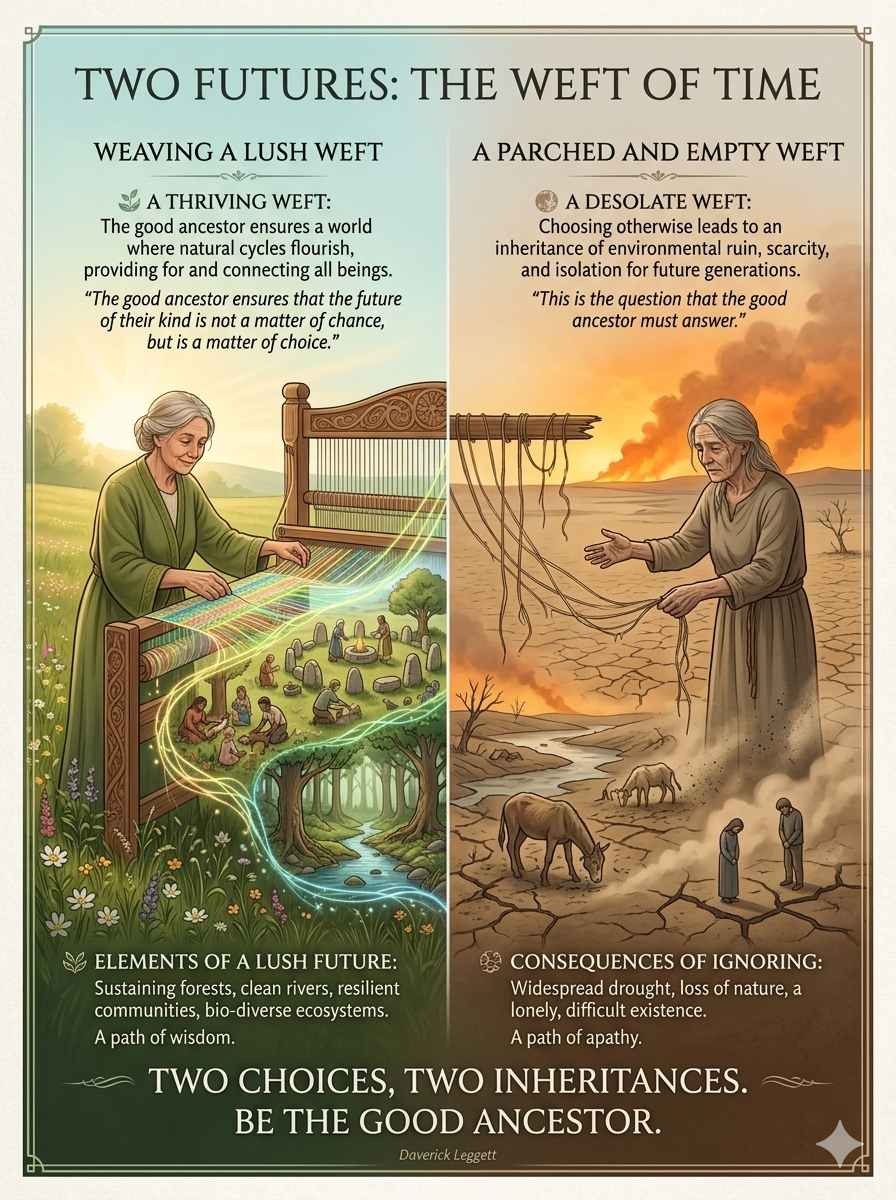
Every day I walk a hundred years to the hill where my great, great granddaughter sits. I carry words of blessing and reach to touch her back.
But feeling me near she turns, sad-eyed and heavy with grief.
“What was it like?” she asks, “when the great whales swam, when the birds sang you awake, when the rains came soft, and the soil smelled sweet underfoot?”
And the blessings catch in my throat.
On darker days she turns, her famished face charred, and eyes sunk in their bony orbits, burn with curses.
And the blessings froth at my mouth with the poisonous spume of betrayal.
On the darkest of all days I walk the hundred years and find no one there.
Let today be the bright day. Let today be the bright day I lay my hand upon her back.
And, feeling me near, she turns and blesses me, saying,
“Your love was fierce enough, sweet ancestor, your love was fierce enough.”
When I began this journey more than three decades ago, I wasn’t a climate researcher. I was a financial planner specializing in business, economics, estate planning, and risk management. My academic background included economics, philosophy, and extensive study in physics, calculus, statistics, and systems analysis. My career focused on a simple question:
How do you create the best possible future for the people who come after you?
In the early 1990s, I met a brilliant scientist named Sidd. We shared a curiosity about complex systems and a desire to test ideas rather than simply debate them. Together, we began an experiment that has now spanned more than thirty years.
Our goal was unusual. We wanted to build what we jokingly called a one-size-fits-all, bulletproof shareware estate plan—not for one family, but for every family on Earth.
At the same time, I was helping pioneer some of the earliest privately owned web servers. Before commercial hosting became commonplace, we were operating online while many organizations were still connected through universities. It was the same era when Yahoo! itself was running from Stanford University.
By 1995, our website, KingArthur.com, was attracting millions of visitors each month. The internet gave us something few researchers had ever possessed: the ability to interact directly with millions of people across cultures, countries, religions, and generations.
One question became central to our experiment:
“When it comes to your life and what you leave behind, what is the single most important thing?”
We expected many people to answer with wealth, success, fame, or legacy.
Instead, they overwhelmingly answered something much simpler.
Among people under fifty, the most common answer was their children.
Among those over fifty, the answer shifted to their grandchildren.
The experiment revealed something profound. The greatest wealth most people hope to preserve is not money. It is the opportunity for future generations to experience the same joys they have experienced themselves.
In other words, the ultimate estate plan is remarkably simple:
To my children’s children’s children.
The greatest inheritance most of us hope to leave is not a larger bank account. It is the chance for our descendants to raise children of their own, watch them grow, and someday become grandparents themselves.
When we began this experiment, I did not have grandchildren.
Today I do.
That changes everything.
Coincidentally, I was recently asked a question that perfectly captured the purpose of this work:
“Can you play with me on this? I’m wearing my nutritional ecologist hat here, and I’m in a municipal-level discussion that is trying to zoom out seven generations while also identifying the baby steps needed over the next four-year election cycle.”
My immediate thought was:
Exactly.
That is what this experiment has always been about.
An estate plan should not end with our children—or even our grandchildren. It should extend seven generations into the future.
My grandchildren deserve the opportunity to become grandparents themselves. Their grandchildren deserve the same opportunity.
That is entirely achievable—but only if we make wise decisions today.
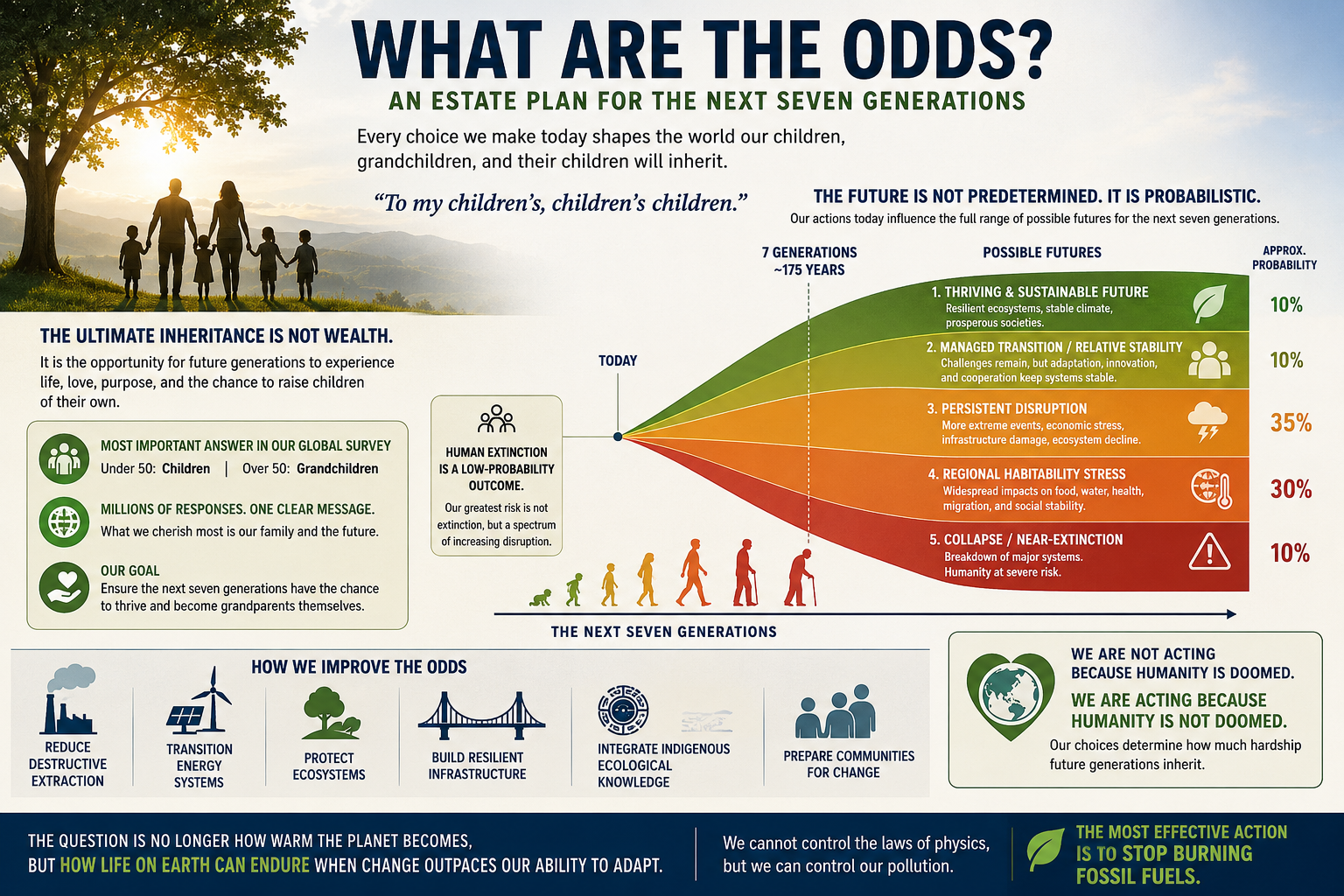
The graph that follows illustrates that idea.
Every choice we make now influences the range of possible futures available to the next seven generations.
Some outcomes are relatively optimistic. Some involve increasing climate disruption.
Some are far more severe.
Importantly, human extinction remains a low-probability outcome.
The far more likely future is not one of sudden extinction, but one that spans a spectrum of increasing disruption—affecting ecosystems, agriculture, infrastructure, economies, public health, migration, and regional habitability.
The probabilities are not fixed. They are shaped by the decisions humanity makes over the coming decades.. including today.
That changes the conversation entirely.
The question is no longer:
“Are humans going extinct?”
The more important question is:
“How difficult do we want life to be for the next seven generations?”
That question naturally leads to practical priorities:
Reduce destructive extraction of fossil fuels and natural resources.
Transition to cleaner and more resilient energy systems.
Protect and restore forests, wetlands, and other ecosystems.
Build infrastructure capable of withstanding future climate conditions.
Integrate Indigenous ecological knowledge alongside modern science.
Prepare communities to adapt to unavoidable change.
The most important message is this:
We are not acting because humanity is doomed.
We are acting because humanity is not doomed.
Our choices today determine how much hardship future generations inherit.
Ultimately, this is not simply a discussion about climate change.
It is an estate planning exercise on a planetary scale.
The question is no longer how warm the planet becomes.
The question is how well civilization—and the generations that follow us—can endure as environmental change accelerates faster than our ability to adapt.
We cannot rewrite the laws of physics. But we can decide how much pollution we continue to add to the atmosphere.
The most effective step we can take is also the simplest:
Stop burning fossil fuels as quickly and responsibly as possible, while building a more resilient world for the generations that follow.
A child’s financial future can be strengthened by using multiple savings vehicles, each designed for a different purpose. Rather than choosing only one account, families can combine them strategically to maximize government benefits, tax advantages, and long-term wealth creation.
Step 1: Capture the Free Government Contribution
For children born between 2025 and 2028, families should consider opening a Trump Account through Trump Accounts.gov as soon as possible to qualify for the initial $1,000 government contribution and any eligible corporate matching contributions.
The key advantage is that this initial deposit provides a foundation of invested capital that can compound for decades. When started early, even a relatively small contribution can grow substantially through the power of long-term investment returns.
Step 2: Use a 529 Plan for Education Savings
After securing available government contributions, families can direct additional college savings into a 529 education savings plan.
A 529 plan offers:
Tax-free growth on qualified education expenses
Tax-free withdrawals for eligible college, vocational, and educational costs
The ability for family members to contribute over time
For parents and grandparents specifically saving for education, a 529 plan remains one of the most efficient tools for building a dedicated education fund.
Step 3: Transition to a Custodial Roth IRA for Long-Term Wealth
Once a child has earned income from a legitimate job—such as babysitting, lawn care, summer employment, or other documented work—a Custodial Roth IRA can become a powerful wealth-building tool.
A Roth IRA allows:
Tax-free investment growth
Tax-free qualified withdrawals in retirement
The potential to use contributions (not earnings) later for certain purposes, such as a first-home purchase
Starting a Roth IRA during childhood gives decades of compounding potential and can help transform early earnings into a future home down payment or retirement asset.
The Three-Account Strategy: A Lifetime Financial Roadmap
The most powerful approach is not choosing between accounts—it is using each account for its intended purpose:
Trump Account → Capture free government and matching contributions
529 Plan → Build a tax-advantaged education fund
Custodial Roth IRA → Create lifelong tax-free wealth
By combining these tools, families can provide children with a financial foundation that supports education, home ownership, and long-term financial independence. The earlier the process begins, the greater the benefit of decades of compound growth.
Q:“Has Earth ever experienced a climate change with this combination of speed, acceleration, and simultaneous disruption across Earth?”
There is no comparison in the geological record. The present is revealing a system changing at a rate that may be outside the range experienced throughout human civilization and perhaps for millions of years.
Q: “What Are the Immediate Impacts?
A: More extreme weather.
Severe weather is becoming more frequent, more intense, and more persistent, with extreme events lasting longer and affecting larger areas.
Bottom line: We cannot control the laws of physics, but we can control the amount of heat-trapping gases we add to the atmosphere. The most effective action is to phase out fossil fuel combustion as quickly as possible.
Q: What Causes Climate Change?
A: Human activities.
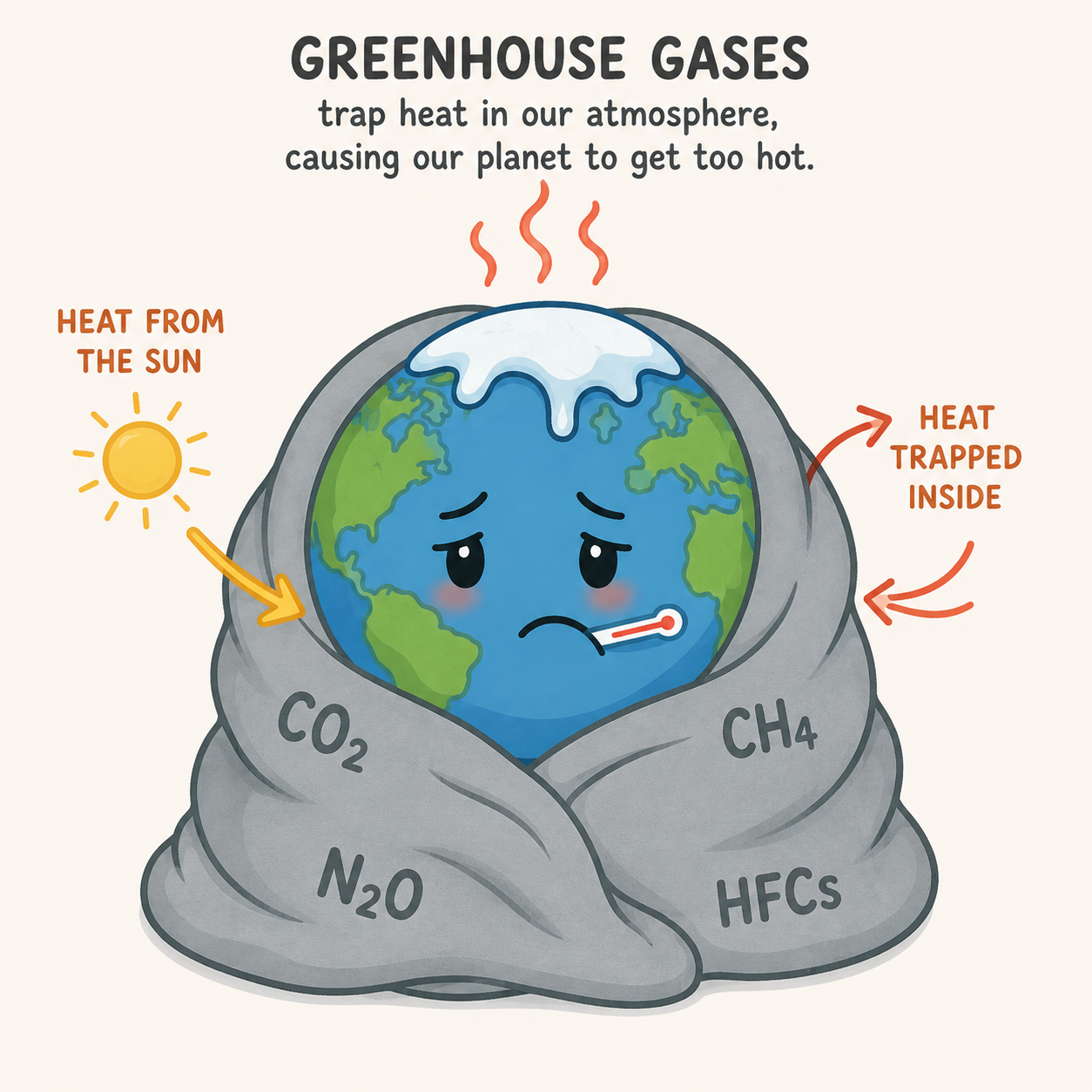
The primary driver of modern global warming is the increase in greenhouse gases released through human activities, especially the burning of fossil fuels. Carbon dioxide (CO2) and other greenhouse gases act like an insulating layer in the atmosphere, absorbing and re-emitting infrared radiation. This slows the loss of heat from Earth to space, creating an energy imbalance that causes the planet to warm.
Q: What Is Climate Change?
A: Climate change is energy transfer.
The phrase “global warming” is often misunderstood. While it correctly describes rising average temperatures, it does not tell the whole story. The real issue is the rapid buildup and movement of extra heat energy throughout Earth’s climate system.
Global warming is the beginning of climate change—not the end of it.
When greenhouse gases trap additional heat, that energy does not simply make the air warmer. It is continually transformed into other forms of energy, including:
Kinetic energy: Stronger winds and more powerful storms.
Gravitational potential energy: Greater vertical motion in the atmosphere and heavier rainfall.
Latent heat: More energy available to fuel hurricanes and atmospheric rivers.
Radiant energy: Increased trapping of infrared heat that amplifies warming.
Chemical energy: Wildfires and other processes that release additional greenhouse gases.
Electrical energy: More lightning in highly energetic thunderstorms.
More than 90% of this excess heat is absorbed by the oceans, not the atmosphere. The oceans act like a giant heat reservoir, storing energy and releasing it slowly over time. Because of this thermal inertia, the climate can continue changing even if emissions begin to decline.
By 2025, global temperatures had exceeded the long-recognized 1.5°C (2.7°F) warming threshold. To many people, an increase of 1.5°C may sound small. In Earth’s climate system, it is not.
Small increases in average temperature can produce much larger changes in temperature differences, air pressure, and atmospheric moisture. These changes alter weather patterns, intensify storms, increase heavy rainfall, and make many extreme events more severe.
What we are witnessing are not simply isolated weather events. They are increasingly extreme energy events occurring within an interconnected Earth system.
To understand climate change, it helps to think not only in terms of degrees of warming, but also in terms of joules of energy and how that energy moves through the atmosphere, oceans, ice, and living ecosystems.
Q: How Fast Is the Climate Changing?
A: The climate appears to be changing at an exceptionally rapid pace—faster than at any time in human history and possibly faster than at any time in the past several million years.
Many past climate transitions unfolded over centuries, thousands of years, or longer. The modern climate system is experiencing simultaneous changes across the atmosphere, oceans, cryosphere, and biosphere over time scales measured in decades.
Climate change is often measured in degrees, but degrees alone cannot describe the full magnitude of the transformation now underway. The defining feature of the modern climate system is not simply that Earth is warmer than it was in the past, but that multiple components of the Earth system are changing simultaneously at rates that challenge the ability of natural systems, ecosystems, and human societies to adapt.
Historical climate records remain essential for understanding how the planet responds to changes in energy balance. However, the current climate trajectory represents a fundamentally different challenge: a rapidly accelerating transition occurring across the atmosphere, oceans, cryosphere, and biosphere within decades rather than centuries or millennia. The question is no longer only how much the climate has changed, but how quickly the rate of change itself is increasing and how those changes interact through a highly connected planetary system.
The past reveals what climate systems can do.
The present is revealing a system changing at a rate that may be outside the range experienced throughout human civilization and perhaps for millions of years.
Beyond Temperature: What Climate Change Really Means
Climate change is often framed around a simple comparison:
How much colder were ice ages than the climate before the Industrial Revolution?
While historical temperature comparisons remain scientifically important, they no longer capture the most significant feature of modern climate change.
The more important question today is:
Has Earth ever experienced a climate transition with this combination of speed, acceleration, and simultaneous disruption across so many interconnected systems?
Based on modern observations, there is no clear geological example of a sustained, decade-scale acceleration occurring simultaneously across numerous components of the Earth system. Rising temperatures are occurring alongside accelerating changes in oceans, ice sheets, ecosystems, atmospheric moisture, and extreme weather patterns. It is this convergence of rapid changes—not temperature alone—that defines the modern climate era. This may represent the most rapid large-scale climate change event in Earth’s history, based on the rate and simultaneous disruption now being observed across multiple interconnected Earth systems.
The Growing Risk of Ecosystem Collapse
Humans are unlikely to face immediate extinction under foreseeable climate scenarios. Our species possesses technological capabilities, global communication networks, and a remarkable ability to adapt to changing conditions.
Many other species, however, do not have those advantages.
The greatest biological danger posed by rapid climate change is not a single catastrophic event. It is the gradual breakdown of ecosystems that support biodiversity, food production, and the stability of the biosphere itself.
Research increasingly shows that climate-driven local extinctions are accelerating. Some temperate regions have experienced unexpectedly high biodiversity losses associated with rapidly increasing temperature extremes. In certain areas, maximum temperatures have risen by approximately 6°F (3.3°C) in only about 25 years, creating environmental conditions that exceed the ability of many species to adapt or migrate.
Ecosystems Already Showing Signs of Stress
Several major ecosystems are exhibiting characteristics consistent with ecological disruption and increasing instability:
Global Coral Reefs: Marine heatwaves and ocean acidification are causing repeated mass bleaching events and widespread mortality.
The Amazon Rainforest: Increasing drought, heat, and deforestation are reducing resilience and raising concerns about large-scale ecosystem transformation.
Oceanic Kelp Forests: Rising ocean temperatures and marine heatwaves are causing extensive losses of kelp ecosystems that support diverse marine life.
The Arctic Tundra: Rapid warming, thawing permafrost, and shifting vegetation are fundamentally altering one of Earth’s most climate-sensitive regions.
Species Most Vulnerable to Continued Warming
Some groups of organisms appear particularly vulnerable because they occupy narrow ecological niches or depend on highly synchronized environmental conditions.
Among the most at-risk are:
Temperate freshwater species
Marine shellfish and pteropods
Migratory birds
Insects
Great apes
The loss of these organisms can have consequences far beyond individual extinctions because each species is connected to larger ecological networks.
The Real Threat: Losing Ecological Stability
The defining danger of rapid climate change is not simply that individual species cannot survive warmer temperatures.
The larger threat is that entire networks of life are being pushed beyond their capacity to adjust.
Ecosystems depend on timing, balance, and intricate relationships that evolved over millions of years. Plants flower at specific times to coincide with pollinators. Predators and prey maintain dynamic balances. Migratory species depend on seasonal cues that have remained relatively stable throughout human history.
When climate change occurs faster than evolution, migration, and adaptation can respond, ecosystems do not smoothly transition to new conditions. Instead, they experience disruption, cascading losses, and fundamental reorganization.
The result is not merely a warmer planet. It is the transformation of the biosphere itself.
The Global Insect Collapse: An Early Warning Signal
One of the clearest indicators of accelerating ecological disruption is the worldwide decline of insect populations.
Insects form the biological foundation of most terrestrial ecosystems. They pollinate crops and wild plants, decompose organic material, recycle nutrients, and provide food for countless birds, fish, amphibians, reptiles, and mammals.
Scientific studies paint a concerning picture:
More than 40% of known insect species are experiencing population declines.
Approximately one-third of insect species are considered threatened with extinction over the coming decades.
Long-term analyses suggest that global insect abundance has fallen by roughly 45% over the past 40 years.
The United Nations has reported that insects are disappearing at rates estimated to be eight times faster than mammals, birds, or reptiles.
Because insects support so many ecological processes, their decline serves as an early warning signal of broader ecosystem instability. Reduced pollination, disrupted food webs, and diminished nutrient cycling can trigger cascading effects that extend throughout the biosphere.
Climate Change Is About More Than Degrees
Climate change is often discussed in terms of global average temperature—1°C, 2°C, or 3°C of warming. But the defining characteristic of the modern climate system is not simply how warm the planet becomes.
It is the unprecedented pace of change and the simultaneous disruption occurring across interconnected physical and biological systems.
The central question of climate change is therefore no longer:
“How different is today’s temperature from the past?”
The more consequential question is:
“How do ecosystems and societies respond when multiple Earth systems begin changing faster than they can adapt?”
The answer to that question may determine not only the future of individual species, but the stability of the biosphere upon which human civilization ultimately depends.
Conclusion
The question is no longer how warm the planet becomes, but how life on Earth can endure when change outpaces our ability to adapt.
Bottom line: We cannot control the laws of physics, but we can control the amount of heat-trapping gases we add to the atmosphere. The most effective action is to phase out fossil fuel combustion as quickly as possible.
Feedback Loops → Tipping Points → Acceleration → Domino Effect Feedback loops amplify climate change and can push interconnected Earth systems past critical tipping points. As tipping points are crossed, they can trigger additional feedback loops and destabilize other climate systems. This cascading “Domino Effect” compresses timescales, accelerates change, and increases the risk of rapid, nonlinear climate transformations.
A Directory of Research Papers on the Health Impacts of Human-Caused Climate Change
Human-caused climate change is no longer simply an environmental issue—it has become one of the defining public health challenges of the twenty-first century.
In addition to the direct deaths caused by heatwaves, floods, hurricanes, droughts, wildfires, and other extreme weather events, climate change is creating multiple interconnected physiological and environmental stressors that reduce health, accelerate disease, increase mortality, and diminish quality of life.
These papers examine the growing body of scientific evidence demonstrating how rising temperatures, air pollution, disrupted sleep, humidity, pathogens, altered microbiomes, ozone pollution, and cascading ecological feedback loops collectively threaten human health.
Climate change affects nearly every organ system in the human body. Many of these health impacts occur long before temperatures reach fatal levels, reducing physical performance, cognitive function, immune resilience, cardiovascular health, and overall longevity.
Featured Research
Heat Stress & Environmental Limits
How climate feedbacks push human physiology toward its limits.
Heat Kills and Maims
The growing danger of extreme heatwaves.
REM Sleep
How warming nights disrupt the brain’s restorative sleep.
Gut Microbiome
Climate-driven dysbiosis and gastrointestinal health.
Nighttime Heat
Why warm nights dramatically increase health risks.
Humid Heat
Understanding deadly combinations of heat and humidity.
Human Survivability
Emerging physiological limits under extreme heat.
Disease & Pathogens
The expanding risks from pathogens and vector-borne disease.
Accelerated Aging
How heat damages cells and shortens life expectancy.
Tropospheric Ozone
A silent threat to human health.
Air Pollution
Climate change and the growing respiratory health crisis.
WARNING: Heat can kill you and will reduce your health and wellbeing, whether you believe it or not. Please read the facts. The state of the climate is not normal.
Human-Caused Climate Change and Heatwave Trends
Human-caused climate change has fundamentally altered global weather patterns, making heatwaves more frequent, more intense, and longer-lasting. According to the Intergovernmental Panel on Climate Change (IPCC) Sixth Assessment Report, it is virtually certain that extreme heat events have intensified across nearly all inhabited land regions since the 1950s.
How Heatwaves Have Changed
Frequency: Heatwaves that once occurred roughly once per decade in a pre-industrial climate now occur several times more often under current warming levels of approximately 1.2°C–1.4°C. In the United States, observations indicate a substantial increase in the annual number of extreme heat events since the mid-20th century.
Intensity: Modern heatwaves are measurably hotter. Globally, a 10-year heat extreme is now about 1.2°C (2.2°F) more intense than it would have been in the absence of human-caused warming. In some regions, such as Western Europe, individual heatwaves have been amplified by 2°C–3.5°C due to fossil-fuel-driven climate change. Nighttime temperatures are increasing even faster than daytime highs, reducing recovery time for both human and natural systems.
Duration: Heatwaves are also lasting longer and persisting over larger regions, often driven by stationary high-pressure systems known as “heat domes.” In the United States, the length of the heatwave season has expanded by approximately 40+ days since the mid-20th century.
Attribution and Likelihood of Extreme Heat
Extreme event attribution studies—such as those conducted by the World Weather Attribution (WWA) network—quantify how human-caused greenhouse gas emissions alter the probability of specific weather extremes.
Key findings include:
Many severe multi-day heatwaves are now at least 10 to 100 times more likely than in a pre-industrial climate.
Exceptionally hot nights and prolonged heat events in Europe, Asia, and North America show some of the strongest increases in likelihood.
The most extreme heat events studied in attribution science would have been extremely unlikely or effectively impossible without human-induced warming, depending on the event and region analyzed.
Health Impacts of Extreme Heat
Climate Extremes & Cellular Breakdown
One death per minute: The surge in heat-related deaths now equates to roughly one fatality every minute worldwide.
Rising exposure: The average person has endured 19 days per year of life-threatening heat over the past four years — nearly all attributed to human-caused warming.
Severe health impacts: Extreme heat leads to heatstroke, dehydration, kidney injury, and worsens existing heart and lung diseases.
Prolonged exposure to extreme heat accelerates biological aging, damaging tissues and shortening telomeres at a cellular level.
These changes increase the likelihood of chronic diseases such as cancer, dementia, and diabetes — all of which are also made worse by pollution and infection.
Heat stress also undermines mental health and increases rates of depression, anxiety, and even suicide.
Epigenetic Changes: The Molecular Convergence of Climate Stressors
A critical link between these health risks is the role of epigenetic changes — chemical modifications that influence how genes are expressed without altering the DNA sequence itself. These changes act like a dimmer switch or on/off toggle for genes, activating or silencing certain genetic pathways.
Extreme heat, ozone exposure, and other pollution are all known to trigger epigenetic modifications.
These shifts can activate high-risk genes linked to cancer, diabetes, cardiovascular conditions, and neurological disorders.
When multiple stressors are present, these epigenetic changes do not just add up — they compound, increasing long-term vulnerability across multiple organ systems.
This molecular-level disruption represents a shared mechanism across climate-related health threats, amplifying the feedback loops that push individuals toward chronic illness and premature death. It also raises concerns about transgenerational impacts, where stress-induced epigenetic changes in one generation may increase disease risk in the next.
Climate Change Feedback Loop
As temperatures rise, cooling demand increases sharply. This drives a cascading set of system stresses:
higher electricity demand during heat waves
strain on generation and transmission infrastructure
increased water demand in some regions for cooling and supply stability
and, in grids still reliant on fossil fuels, increased emissions during peak demand periods
This creates a reinforcing sequence:
more heat → more cooling demand → higher energy use → higher emissions → further warming → more heat
In practice, what emerges is not a single isolated feedback loop, but a coupled network of reinforcing systems—biophysical (permafrost thaw, forest stress and mortality, wildfire regimes, hydrological intensification) and socioeconomic (energy demand, infrastructure constraints, and grid response). These systems can interact nonlinearly, particularly under sustained warming and extreme heat conditions.
The key point is that these feedbacks are already operating, but their magnitude, interaction strength, and long-term dominance relative to human emissions vary by region, sector, and timeframe. Reducing risk ultimately depends on rapidly reducing greenhouse gas emissions, especially from fossil fuel combustion, while adapting infrastructure to rising heat extremes.
Conclusion
Heat can kill you and will reduce your health and wellbeing, whether you believe it or not. Please read the facts. The state of the climate is not normal.
I happen to be in a somewhat unusual position geographically—I’m between the Limerick and Peach Bottom nuclear plants, so a significant portion of my electricity comes from nuclear generation. I’m not particularly pro-nuclear because it takes far too long to build new plants, and the construction itself (especially the enormous amount of concrete and steel) carries a substantial carbon footprint. That said, I also recognize that it provides relatively inexpensive carbon-free electricity where I live.
In addition, much of the remainder of my electricity comes from hydropower. Even so, hydro isn’t especially high on my list of “green” energy sources. Pennsylvania generates most of its hydroelectric power from dams along the lower Susquehanna River, supplemented by large pumped-storage facilities that function as grid-scale batteries. Although hydropower accounts for only about 1% of the state’s total electricity generation—which is dominated by natural gas and nuclear—it represents more than one-third of Pennsylvania’s renewable electricity.
Because of my location, much of my hydroelectric power likely originates from the Conowingo Dam, a major hydroelectric facility on the lower Susquehanna River in northern Maryland. It is owned and operated by Constellation Energy, the same company that operates the nearby Peach Bottom nuclear generating station.
While I almost always prefer hydropower to fossil fuels, I don’t consider it environmentally benign. Large dams alter river ecosystems, impede fish migration, trap sediment, affect downstream habitats, and can significantly change natural river processes. Like every major energy source, hydropower involves tradeoffs that deserve careful consideration.
Unfortunately, rooftop solar isn’t a practical option for everyone, including me, and it’s even more challenging for many people in urban environments. Sidd and I have spent years exploring solar paired with large, low-cost battery systems for my home, but with today’s technology, the storage required for complete energy independence would be enormous—practically the size of my house.
My view is that there isn’t a one-size-fits-all solution. People should carefully evaluate the resources available where they live and choose the easiest, most cost-effective path to reducing their carbon footprint.
I don’t know if you saw my recent post about DIY climate control. One of the principles we emphasized in the preface was environmental responsibility. For our evaporative cooling experiments, we didn’t use potable water indiscriminately. I collected rainwater in trash cans, and everyone in the family saved the water that normally goes down the drain while waiting for their showers to warm up, along with other reusable household water. The goal was to reduce both energy use and water waste by making use of water that would otherwise have been discarded. http://membrane.com/global_warming/Water-Into-Electricity/
The original purpose of Solutions to the Fossil Fuel Economy and the Myths Accelerating Climate and Economic Collapse was to focus on practical solutions rather than assigning blame. Since its publication, however, many readers have interpreted that emphasis as minimizing the responsibility of fossil fuel companies. This addendum clarifies that both interpretations can be true simultaneously.
I began my career as an economist specializing in risk management before turning my attention to humanity’s largest systemic risk—climate change. My work spans economics, systems science, statistics, and climate physics. Together with physicist Sidd Mukherjee, I co-originated the Nonlinear Acceleration Hypothesis, a framework describing how interacting physical, ecological, health, and socioeconomic feedbacks can accelerate climate impacts beyond traditional linear projections.
My work has consistently argued that climate change is both a physical and an economic problem. It cannot be understood through atmospheric science alone, nor through economics alone. Rather, it emerges from the interaction of nonlinear Earth-system processes and human decision-making.
Shared Responsibility Does Not Eliminate Corporate Accountability
Fossil fuel consumption is fundamentally a supply-and-demand system. Producers cannot exist without consumers, and consumers cannot purchase what is not supplied. Responsibility therefore exists on multiple levels.
Recognizing consumer responsibility does not absolve fossil fuel companies of their own responsibilities.
Oil and gas companies have exercised enormous influence through lobbying, political advocacy, public relations campaigns, strategic communications, and efforts to delay or weaken climate policy. Those actions deserve careful scrutiny and, where appropriate, legal accountability.
At the same time, it is equally inaccurate to argue that consumers possess no agency whatsoever. While choices are often constrained by infrastructure, income, geography, and available technology, millions of individuals, businesses, and governments have successfully reduced fossil fuel dependence through efficiency improvements, electrification, renewable energy adoption, and changes in consumption patterns.
The issue is therefore not one of assigning exclusive blame to either producers or consumers. Climate change is the product of interacting economic incentives, political institutions, technological development, consumer behavior, and physical climate feedbacks.
Understanding that complexity is essential if society intends to solve the problem rather than merely redistribute blame.
Corporate Accountability
My work has also extensively examined legal and economic mechanisms for holding fossil fuel companies accountable, including:
climate litigation,
consumer protection law,
human rights frameworks,
carbon pricing and taxation,
restitution,
treble-damage recovery, and
broader climate liability frameworks.
Those topics are discussed in detail throughout the following papers, which complement the original economics article rather than contradict it.
The Fossil Fuel Industry
Oil and gas companies unquestionably bear significant responsibility for the climate crisis. Decades of internal research, lobbying, public relations campaigns, political influence, and efforts to delay emissions reductions have been extensively documented. Protecting market share and shareholder value frequently took precedence over communicating known climate risks or accelerating the transition to lower-carbon energy sources.
Those actions deserve public scrutiny and, where appropriate, legal accountability.
However, acknowledging corporate misconduct does not eliminate the role of consumer demand. Energy markets function through supply and demand. Producers extract, refine, and distribute fossil fuels because governments, businesses, and consumers continue to purchase them across transportation, electricity generation, manufacturing, agriculture, aviation, shipping, and residential heating.
This is not a moral judgment; it is an economic reality.
Consumers often operate within real constraints. Infrastructure, housing, public transportation, income, local utility policies, and technology availability all influence individual choices. Some households possess far greater flexibility than others. Nevertheless, constrained choice is not the same as no choice. Millions of households and businesses have reduced fossil fuel consumption through energy efficiency, electrification, renewable energy, improved building design, vehicle selection, and changes in consumption patterns. Each reduction weakens demand at the margin.
Likewise, governments influence both supply and demand through regulation, taxation, subsidies, infrastructure investments, and public procurement. Climate policy therefore operates across every level of society rather than through a single actor.
The climate crisis emerged from interacting physical, economic, technological, and political systems. Effective solutions require addressing each component simultaneously.
Existing Work on Corporate Accountability
Contrary to claims that emphasizing consumer responsibility somehow absolves fossil fuel producers, much of my work focuses specifically on legal and economic accountability for corporate misconduct.
The following papers examine those issues in detail.
Climate Change and Accountability
Climate Change and Accountability: Legal Challenges, Consumer Rights, and Human Rights in the Fight Against Fossil Fuels
This paper examines the legal foundations for climate litigation, including consumer fraud, public nuisance, deceptive marketing, human rights claims, restitution, and the application of legal principles similar to those successfully employed against the tobacco industry.
The Economics of Climate Change
Climate change is fundamentally different from most economic shocks.
Traditional recessions eventually recover. Financial crises stabilize. Commodity shortages resolve. Climate change does not naturally return to equilibrium within human timescales because excess greenhouse gases and accumulated ocean heat continue influencing the climate system for decades to centuries.
As University of Cape Town researcher Christopher Trisos observed:
“For people, other species, ecosystems, and the world we live in, we’ve entered the Age of Loss and Damage, but we’re just at the start.”
Likewise, following the record-breaking Northern Hemisphere summer of 2023, United Nations Secretary-General António Guterres warned:
“Climate breakdown has begun.”
These statements reflect a growing recognition that climate damages are no longer primarily future risks—they have become ongoing economic realities.
The Age of Loss and Damage
Climate economics must therefore evolve beyond traditional Integrated Assessment Models (IAMs), many of which assume smooth, gradual damage functions that underestimate systemic risk.
My work argues that climate damages arise from interacting nonlinear feedbacks operating simultaneously across physical, ecological, health, financial, insurance, agricultural, infrastructure, and geopolitical systems.
Understanding those interactions requires integrating:
economics,
systems science,
statistics,
atmospheric physics,
ecology,
public health, and
risk management.
The resulting framework is consistent with the Nonlinear Acceleration Hypothesis, which recognizes that climate impacts increasingly reinforce one another through cascading feedback loops rather than simple linear cause-and-effect relationships.
Accounting for Climate Damages
One objective of climate economics is not merely estimating annual losses, but accounting for the full societal burden imposed by delayed mitigation and continued emissions.
Quantifying the Climate Tax
Quantifying the Climate Tax: The Full Ledger of Harm
This paper estimates the annual economic burden currently imposed by climate change on American households.
The analysis concludes that the direct annual climate burden already approaches $6,000 per person, while the broader long-term burden—including infrastructure degradation, ecosystem loss, health impacts, insurance instability, productivity losses, and deferred damages imposed on future generations—is substantially larger.
Climate change is therefore functioning as an invisible tax already embedded throughout the economy.
The Legal Foundation for Treble Damages
American law has long recognized that ordinary compensation is insufficient when misconduct is deliberate, deceptive, or socially destructive.
Treble damages appear throughout U.S. law, including:
Sherman Act antitrust litigation,
RICO actions,
False Claims Act enforcement, and
numerous state consumer protection statutes.
Their purpose extends beyond compensation. They deter future misconduct while recognizing that direct damages frequently underestimate total societal harm.
A comparable framework may be appropriate when evaluating climate-related damages if plaintiffs establish that institutions knowingly delayed mitigation while externalizing foreseeable risks onto the public.
Justice, Restitution, and Climate Liability
Applying a justice framework to climate economics raises three related questions:
Did organizations knowingly externalize foreseeable climate damages?
Have those damages fallen disproportionately upon vulnerable populations and future generations?
Should legal remedies reflect deterrence as well as compensation?
These questions extend beyond economics into ethics, law, and public policy, but they are increasingly becoming central to climate litigation worldwide.
The Cost of Inaction
The companion paper,
The Full Economic Burden: An Ensemble-Based Probabilistic Framework
develops an ensemble-based probabilistic framework for estimating the long-term economic consequences of accelerating climate change.
Under the median ensemble projection, annual U.S. climate-related economic losses increase nearly tenfold, rising from approximately $2.1 trillion in 2025 to $19.5 trillion by 2050 (constant 2025 dollars).
Rather than projecting a steady increase in damages, the analysis demonstrates how interacting physical, ecological, health, financial, and socioeconomic feedbacks can transform climate change into an accelerating systemic economic burden.
Under the median ensemble scenario, cumulative U.S. climate-related losses between 2025 and 2050 approach $200 trillion (constant 2025 dollars).
These projections illustrate a central conclusion of the Nonlinear Acceleration Hypothesis: delayed responses, thermal inertia, interacting feedbacks, and tipping cascades can produce economic impacts that grow substantially faster than traditional linear or quadratic damage models anticipate.
Conclusion
Climate responsibility should never be framed as an either-or proposition.
Corporations that knowingly delayed climate action should be held accountable through transparent governance, appropriate regulation, and where justified, legal remedies.
Governments bear responsibility for designing policies that correctly price externalities, accelerate innovation, and remove barriers to decarbonization.
Businesses bear responsibility for reducing emissions throughout their operations and supply chains.
Consumers also retain agency through the choices they make within the constraints they face.
Climate change emerged from the interaction of all of these systems. Lasting solutions will require accountability and action across all of them.