bookmark_borderHow Long COVID May Affect Memory Through the Gut

by Daniel Brouse

A University of Pennsylvania study suggests that persistent COVID-related changes in the gut may contribute to memory problems and brain fog in some people with long COVID by reducing serotonin, a chemical messenger involved in communication between the gut and brain.

The proposed chain of events

  1. The virus persists: Researchers found traces of SARS-CoV-2 in the stool of some long COVID patients months after infection, suggesting that the virus may remain in the gut.
  2. Inflammation continues: Persistent viral material may keep the immune system activated, causing ongoing inflammation.
  3. Serotonin production falls: Inflammation may interfere with the gut’s ability to absorb tryptophan, an essential building block for serotonin.
  4. Gut–brain communication is disrupted: Lower serotonin may affect signaling through the vagus nerve, which carries information between the gut and brain.
  5. Memory may suffer: Experiments in mice linked this pathway to memory problems. Boosting serotonin using tryptophan-related compounds or SSRI antidepressants improved memory in the animals.

Why the findings matter

The research identifies a possible biological link between persistent gut infection, inflammation, reduced serotonin, and neurological symptoms. If confirmed in humans, serotonin levels might eventually help researchers identify a subset of long COVID patients who could benefit from targeted treatment.

Important limitations

  • The pathway appears to affect only a subset of people with long COVID.
  • Although researchers found associations in human patients, key cause-and-effect relationships were demonstrated in mice.
  • Long COVID likely has multiple biological causes, so this mechanism cannot explain every case of brain fog or memory impairment.
  • Clinical trials are needed to determine whether SSRIs or supplements are safe and effective for treating these symptoms.

Bottom line: The study offers a plausible explanation for how long COVID may affect memory through the gut–brain connection. It is an important research lead, not yet proof that low serotonin causes brain fog in people or that raising serotonin will treat it. SSRIs and supplements should not be started for long COVID without medical guidance.

Original Research

COVID (and other conditions) destroys good gut bacteria resulting in a compromised immune system. Gut bacteria play several key roles in your health that include communicating with your immune system and producing vitamins. Without good gut bacteria it does not matter how vitamin rich your diet. Your body can not metabolize most vitamins without good gut bacteria. Most people start fermenting good gut bacteria from their mother’s breast milk. The best way to re-establish your good gut bacteria is to consume breast milk for at least 6 months. Alternatively, you need to get all the right ingredients for fermentation including the proper 300 to 500 bacterial types, chemicals for the reaction, and lots of fiber. Fiber is crucial in maintaining good gut health. Juicing and/or blending destroys most of the fiber. The best sources of dietary fiber are:
beans, whole grains, brown rice, popcorn, nuts, baked potato with skin, berries, and bran cereal.

COVID Updates and Research

bookmark_borderThe Great Deceiver: Donald Trump, Christian Nationalism, the End Times, and the Moral Responsibility to Protect Humanity

By Daniel Brouse

Introduction: Faith, Science, and Political Accountability

I’m a fiscally conservative Republican economist who has been registered Republican since 1980. I also hold a degree in philosophy, with a concentration in morals and ethics, and have studied Christianity extensively, including reading the Bible in depth multiple times.

My family lineage can be traced to the Tribe of Judah and the family of Jesus. I’ve spent decades studying eschatology, particularly the biblical significance of my given name, Daniel, and the subject of the End Times. I’ve also conducted an extensive examination of the Book of Revelation.

Although I generally keep my religious beliefs separate from my scientific work, I’ve been analyzing Donald Trump’s conduct since the 1990s. My conclusions are informed by decades of economic analysis, moral philosophy, scientific research, and biblical study.

This paper brings those perspectives together to examine a question that extends beyond ordinary partisan politics: What happens when political power, religious certainty, deception, and disregard for human consequences converge?

My argument is that Trump’s conduct deserves serious scrutiny not because he is necessarily the literal Antichrist described in biblical prophecy, but because his political actions, public statements, and alliances raise profound moral questions about deception, authoritarianism, environmental destruction, Christian nationalism, and the treatment of vulnerable human beings.

1. My First Moral and Ethical Assessment of Trump

During the 1990s, I conducted a moral and ethical experiment involving Trump’s publicly traded business interests in the context of a widows-and-orphans fund.

Of all the businesses examined in that study, Trump’s was the only one in which I concluded that funds intended for widows and orphans had been stolen.

That experience left a lasting impression on my assessment of his character. It also established a personal foundation for my subsequent examination of Trump’s business practices, public conduct, and political career.

The conclusion was not based on whether I liked his personality, agreed with his politics, or approved of his business ambitions. It arose from an assessment of conduct against a moral standard: how people and institutions behave when entrusted with resources that affect others, particularly vulnerable people.

That distinction remains fundamental. Wealth, power, popularity, and claims of religious conviction do not exempt anyone from moral accountability.

2. The Great Deceiver: A Decade of Dangerous Consequences

Over the past decade, I’ve watched Trump develop into what I consider the Great Deceiver: a politician whose repeated falsehoods have undermined public trust, public health, and public safety.

His conduct during COVID-19, his rejection of climate science, and his decisions affecting foreign aid have contributed to consequences that, in my assessment, include millions of needless deaths. These actions belong in any serious examination of large-scale human suffering and crimes against humanity.

The term “Great Deceiver” is my moral and political characterization of Trump’s conduct. I use it deliberately because deception is not merely a personal failing when practiced by someone wielding enormous political power. It can shape public behavior, distort the understanding of reality, undermine institutions, and influence decisions affecting millions of lives.

During a public health emergency, misinformation can interfere with efforts to protect people. When a political leader repeatedly dismisses established scientific evidence, the consequences can extend beyond rhetoric into policy and public behavior. When decisions affect humanitarian assistance, the consequences can reach people who have little control over the political decisions that determine whether they receive help.

Climate change presents an equally serious moral problem. Rejecting established climate science and obstructing effective responses can increase risks to public health, food security, infrastructure, ecosystems, and future generations.

On September 23, 2025, Trump addressed the United Nations General Assembly and called climate change “the greatest con job ever perpetrated on the world.” This was a public and unmistakable expression of his rejection of mainstream climate science and international climate action. Source: Reuters, September 23, 2025.

These are not simply disagreements over the details of environmental policy. They concern the consequences of dismissing an extensive body of scientific evidence while exercising power over decisions that affect the lives of others.

The moral question is straightforward: When a political leader’s statements and decisions contribute to preventable suffering, what responsibility does that leader bear?

That question deserves examination regardless of party affiliation.

3. Is Trump the Antichrist?

Regarding the Antichrist, I agree with one part of the argument made by those who believe the figure described in biblical prophecy will be difficult to recognize: I don’t believe Trump is literally the Antichrist described in Scripture.

But that conclusion does not eliminate my concerns about his conduct or the movements he supports.

The concern is that Trump is helping advance political and religious movements that could bring about catastrophic consequences under the banner of Christianity. I see a dangerous convergence of Christian Zionism, white nationalism, and authoritarian politics, alongside an alarming relationship between elements of the Trump political network and the broader Epstein scandal.

The distinction matters. One can reject the claim that a political leader is literally the Antichrist while still examining whether that leader’s actions embody forms of deception, hypocrisy, cruelty, or destructive ambition that religious teachings warn against.

Biblical discernment should not be reduced to identifying a single individual who matches a prophetic description. It should also involve examining conduct, motives, consequences, and the treatment of other people.

A person can invoke God, Scripture, and Christian identity while pursuing policies that contradict the ethical principles those beliefs are supposed to uphold.

The question is not simply whether Trump fits a particular interpretation of Revelation. It is whether Christians are applying their moral teachings consistently when evaluating him.

4. Christian Zionism, Biblical Prophecy, and the War With Iran

The connection between Christian Zionism and Trump’s foreign policy deserves particular scrutiny.

Support for Israel among evangelical Christians is not exclusively theological; it also reflects strategic, cultural, historical, and political considerations. However, for some Christian Zionist constituencies, support for Israel is tied to specific interpretations of biblical prophecy and the End Times.

When prophetic expectations become intertwined with decisions about war, the consequences can extend far beyond theology.

The concern is that religious interpretations of history and prophecy can become entangled with political calculations in ways that make military escalation appear divinely justified or historically inevitable. When that happens, the ordinary requirements of foreign policy—evidence, strategic judgment, proportionality, diplomacy, and consideration of human consequences—risk being subordinated to a narrative of prophetic destiny.

The Trump administration’s confrontation with Iran in 2026 has intensified these concerns. The United States and Israel launched strikes against Iran in February 2026, and the conflict subsequently developed into a prolonged confrontation. The administration’s handling of the war has raised questions about its strategic objectives, its exit strategy, and the economic and human costs. Source: Reuters, October 8, 2026.

The relationship among the Trump administration, Christian Zionist organizations, and the war raises serious questions about the relative influence of American national interests, military strategy, religious prophecy, and domestic political pressures.

There is also a political contradiction within Trump’s coalition. An America First constituency has opposed prolonged foreign entanglements, while influential evangelical constituencies support policies toward Israel that some understand through a biblical, prophetic framework.

These positions are not necessarily irreconcilable, and Christian Zionists do not all share one interpretation of prophecy or one position on military action. Nevertheless, the tension deserves examination.

The concern is that the language of Christianity can be used to justify political decisions whose consequences include war, suffering, displacement, and death. A policy does not become morally defensible simply because its supporters attach religious meaning to it.

If religious conviction is influencing decisions about war, then those convictions must be examined alongside the evidence, strategic objectives, and human consequences of the decisions themselves.

5. The Epstein Scandal and the Ideology of Human Worth

The Epstein scandal raises additional questions about the ideological environment surrounding powerful political, financial, and social networks.

Publicly released statements attributed to Jeffrey Epstein include arguments that increased atmospheric carbon dioxide benefits plants and that climate change could serve as a mechanism for reducing overpopulation. Other statements attributed to him express disturbing views about executing elderly and infirm people and make racist claims about African music and learning.

These statements, if accurately represented in their original context, reveal a worldview in which human lives can be evaluated according to their perceived usefulness, with some people effectively treated as expendable.

That is the kind of thinking that raises concerns about eugenics, ecofascism, and a grotesque version of survival of the fittest.

The issue is not simply whether someone disputes climate policy or believes that population growth creates environmental pressures. It is the moral distinction between addressing environmental problems in ways that protect human dignity and treating human suffering or death as a desirable means of achieving an ideological objective.

Recognizing that distinction is essential.

The term “ecofascism” refers to the danger of combining authoritarian power, hierarchical judgments about human worth, and environmental or population arguments that rationalize unequal human survival. It is a warning about an ideological pattern, not a claim that every person skeptical of climate policy subscribes to that worldview.

Similarly, statements attributed to Epstein do not, by themselves, establish that Trump personally shares every belief expressed in them. My concern is the broader environment in which extreme wealth, political influence, racial hierarchy, authoritarianism, and disregard for environmental threats can intersect.

The questions are legitimate and serious: What values are being promoted? Whose lives are being treated as expendable? And what happens when people with immense resources and influence begin to regard some populations as less deserving of protection than others?

These questions belong in any serious examination of the moral consequences of concentrated power.

6. Deception, Political Loyalty, and the Surrender of Moral Judgment

This is why term “Great Deceiver” relevant.

Deception does not have to look like a mysterious biblical figure who charms everyone. It can also operate through political loyalty, religious certainty, propaganda, and the conviction that one’s own side is incapable of wrongdoing.

A leader need not persuade everyone. It may be enough to maintain the loyalty of a sufficiently committed group that interprets every criticism as persecution, every contradiction as a conspiracy, and every failure as someone else’s fault.

Under those conditions, evidence can lose its ability to change minds. Political identity becomes more important than independent judgment, and loyalty becomes a substitute for evaluating facts.

This creates a serious moral danger within religious communities. When a political leader claims to represent Christian values, supporters may be tempted to defend the leader rather than assess whether the leader’s conduct actually reflects those values.

But Scripture demands more than declarations of faith. It calls for discernment about character, conduct, hypocrisy, truthfulness, compassion, justice, and the treatment of the vulnerable.

Merely claiming Christian values does not demonstrate that a person practices them.

The fundamental problem with Trump’s most devoted followers is when they appear unwilling to apply the same moral standards to their political leader that they would apply to anyone else. When evidence conflicts with political loyalty, the evidence is dismissed and loyalty becomes a substitute for judgment.

That is not faith. It is the surrender of independent moral reasoning.

A meaningful moral standard must be applied consistently. If dishonesty is wrong when practiced by political opponents, it is also wrong when practiced by a political ally. If cruelty is unacceptable when directed at people we care about, it does not become acceptable when directed at people we dislike. If Scripture is a source of moral authority, it cannot be invoked selectively to excuse the behavior of a favored leader.

The test of conviction is not how fiercely we defend our own side. It is whether we remain willing to recognize wrongdoing when doing so is uncomfortable.

7. Beyond Trump: The Larger Crisis of Human Responsibility

The problem is much deeper than Trump or any political party.

Political corruption, institutional failure, disinformation, environmental destruction, and the exploitation of vulnerable people cannot be explained by one individual alone. They emerge from broader systems of incentives, beliefs, power, and social behavior.

But recognizing the larger problem does not absolve individuals of responsibility for their own conduct.

Trump’s influence matters precisely because political leaders can amplify existing problems, normalize behavior that was once considered unacceptable, and use institutional power to make harmful decisions consequential on a much larger scale.

The same principle applies to religious institutions, corporations, governments, and individuals. No institution should be exempt from scrutiny because it claims a noble purpose. No political movement should be immune from criticism because it presents itself as the defender of a particular faith or national identity.

The challenge is to develop standards of accountability that do not depend on political affiliation, religious identity, wealth, or social status.

That requires a willingness to examine evidence, challenge deception, protect the vulnerable, and recognize the consequences of our choices.

It also requires resisting the temptation to turn every disagreement into a battle between absolute good and absolute evil. Serious moral analysis demands both conviction and intellectual honesty. Strong conclusions should be accompanied by evidence, and evidence should not be dismissed merely because it threatens a cherished belief.

The objective is not to replace one form of blind allegiance with another. It is to restore the capacity for independent moral judgment.

8. The Covenant of Balance: An Interfaith Alternative

The following paper takes a constructive approach to these problems:

The Covenant of Balance: An Interfaith Synthesis of Ecological Ethics, Economics, Climate Science, Earth’s Energy Imbalance, and Integrated Climate Stewardship

https://www.kingarthur.com/global_warming/Covenant-of-Balance.html

The paper examines Christianity, Islam, Judaism, Buddhism, and Hinduism, identifying shared ethical principles of responsibility, compassion, moderation, stewardship, and avoiding needless harm. It connects those principles with climate science, economic accountability, and practical action.

The premise is simple: We do not need to share one religion, one political philosophy, or one interpretation of Scripture to recognize that our actions have consequences for other people and the living world.

Christianity offers teachings on creation care, stewardship, and love of neighbor. Islam emphasizes Mīzān, or balance, and responsible trusteeship. Judaism includes bal tashchit, the principle of avoiding needless destruction and waste. Buddhism highlights interdependence, compassion, and mindful consumption. Hinduism offers ethical resources through dharma, responsibility, and minimizing harm.

These traditions are distinct, and their adherents do not agree on every environmental or political question. Yet they offer meaningful grounds for cooperation around the protection of human life, the reduction of suffering, responsible resource use, and the preservation of the conditions that sustain future generations.

The paper also connects these ethical principles to Earth’s physical energy imbalance and the consequences of climate change.

Its practical framework is Integrated Climate Stewardship:

ZERO-OUT + BENEFIT-IN

ZERO-OUT means reducing actual sources of environmental harm. BENEFIT-IN means creating tangible improvements in affordability, efficiency, resilience, comfort, and quality of life while protecting the ecological systems on which we depend.

This approach seeks to unite moral responsibility with measurable results. It recognizes that environmental stewardship must extend beyond declarations of concern to practical decisions by households, businesses, institutions, and governments.

The same principle applies to political and religious life. Good intentions and declarations of faith are not sufficient. Our conduct must be evaluated according to its consequences for other people and the world we share.

The Covenant of Balance is an invitation to move beyond divisions that prevent cooperation. We can disagree about theology while working together to reduce suffering. We can hold different political beliefs while insisting on truthfulness and accountability. We can approach the natural world through different ethical traditions while recognizing our common dependence on its physical and ecological systems.

My objective is to find common ground among people of different faiths and beliefs so we can work together for the common good.

9. The Moral Test: Separating the Sheep From the Goats

If we’re going to talk about separating the sheep from the goats, perhaps we should begin by applying the same standards of truth, morality, compassion, and accountability to our own political leaders that we claim to find in Scripture.

Religious language should not function as a shield against scrutiny. Claims of divine purpose should not exempt political decisions from moral examination. And the authority of Scripture should not be used selectively to condemn opponents while excusing the conduct of political allies.

The deeper question is whether our beliefs make us more willing to confront wrongdoing or more determined to defend it when it comes from our own side.

A genuine commitment to truth requires the courage to examine uncomfortable evidence. A genuine commitment to morality requires consistency. A genuine commitment to compassion requires concern for people beyond our immediate community. And a genuine commitment to stewardship requires responsibility for the consequences of our actions.

These standards should apply to everyone, including presidents, religious leaders, corporations, political movements, and ordinary citizens.

Identifying the literal Antichrist is not the most urgent task facing humanity. The more immediate responsibility is to recognize deception, resist the misuse of religious authority, challenge destructive ideologies, protect vulnerable people, and hold those in power accountable for their conduct.

The danger is not confined to one political party, one religion, or one individual. It lies in the human capacity to rationalize wrongdoing when it serves our interests, confirms our beliefs, or strengthens our allegiance to a leader.

That is why the work of moral discernment matters.

Conclusion: Faith Should Sharpen Our Judgment

This perspective comes from decades of studying economics, moral philosophy, Christianity, eschatology, and the physical systems that sustain life. Although I generally keep my religious beliefs separate from my scientific work, I see no contradiction in examining the moral consequences of political decisions through both ethical and scientific frameworks.

I do not believe Trump is literally the Antichrist described in biblical prophecy. Nevertheless, I believe his conduct, his rejection of climate science, his approach to public health and foreign policy, and his relationship with political and religious movements raise profound questions about deception, responsibility, and the consequences of concentrated power.

My assessment of Trump as the Great Deceiver reflects my judgment of his conduct and its consequences. It is not a substitute for examining the evidence, and it should not be treated as a claim that every legal or historical question surrounding his actions has already been resolved.

But neither should the seriousness of those questions be diminished by political loyalty or religious identification.

If we are concerned about deception, we must examine the behavior of those who claim to defend the truth. If we are concerned about the End Times, we must not neglect the suffering and dangers unfolding in the present. If we claim to follow Christian values, we must evaluate our conduct and our leaders against the moral responsibilities those values entail.

And if we recognize that humanity faces threats extending beyond politics—including climate change, ecological disruption, and the consequences of destructive economic systems—we must be willing to cooperate across religious and ideological boundaries.

We do not have to agree on every theological question to agree that human life matters, deception should be challenged, vulnerable people deserve protection, and the Earth must be preserved for future generations.

My hope is that people of different faiths and beliefs can find common ground in these responsibilities and act together for the common good.

The ultimate test is not whether we can convincingly claim to stand on the side of God, country, or a particular political movement. It is whether our actions reflect truth, justice, compassion, and responsibility.

Faith should sharpen our moral judgment, not blind us to reality.
bookmark_borderHumanity’s Greatest Threat Is Humanity

by Daniel Brouse

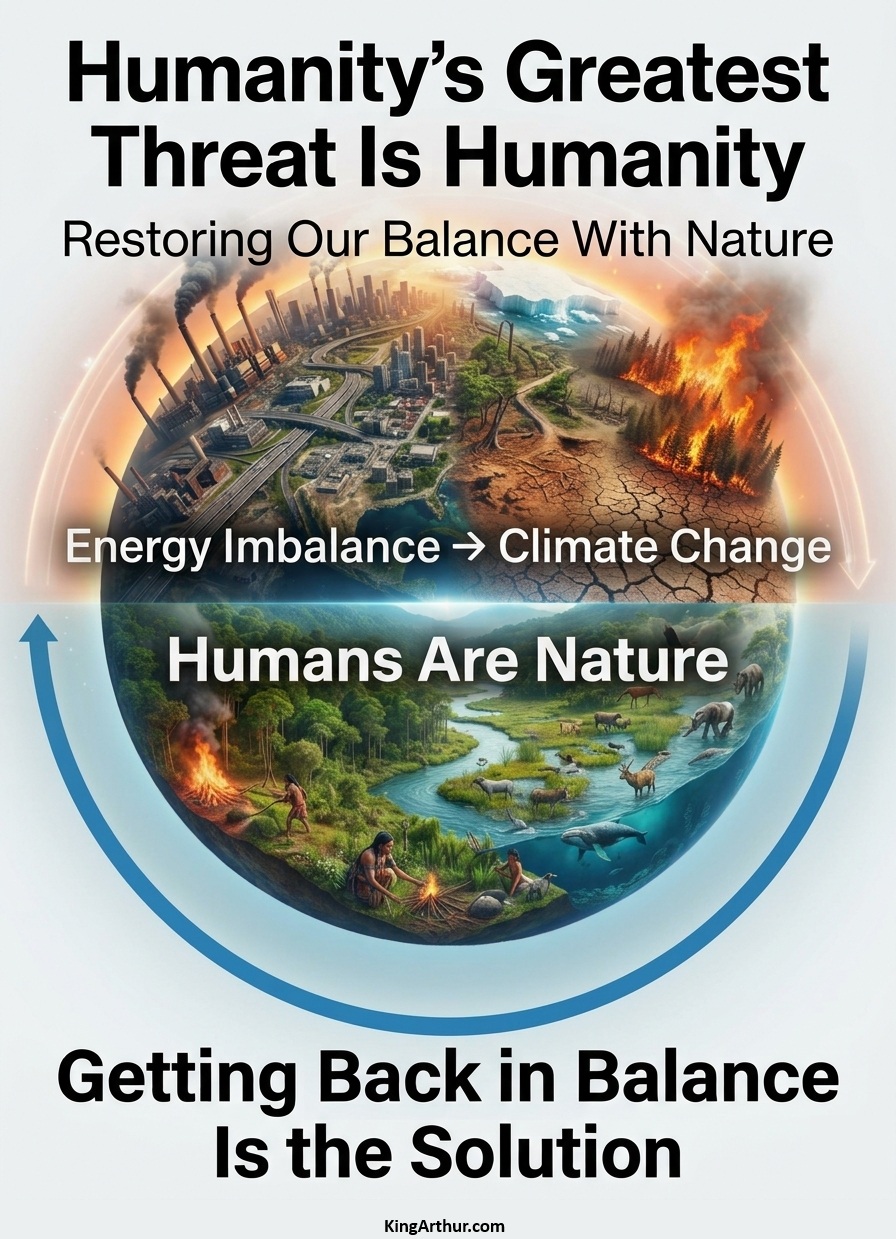
Humans are part of nature. Yet much of modern society has become fundamentally out of balance with the natural world that sustains us.

The energy imbalance is the cause of climate change. Human activity has disrupted the Earth’s natural energy balance, creating an accelerating accumulation and redistribution of energy throughout the climate system.

Getting back into balance with nature is therefore not simply an environmental objective. It is the only sustainable solution.

Indigenous Peoples: Stewards of the Earth’s Ecosystems

Indigenous Peoples protect an estimated 80% of the world’s remaining biodiversity while representing less than 5% of the global population. For millennia, Indigenous communities have lived in structural balance with the natural world, managing roughly a quarter of the Earth’s surface.

Today, their traditional ecological knowledge is increasingly recognized by international bodies such as the United Nations Framework Convention on Climate Change (UNFCCC) as a critical pillar in addressing climate change, protecting ecosystems, and maintaining planetary carbon sinks.

Scientific assessments repeatedly show that ecosystems managed by Indigenous Peoples are often in significantly better condition than ecosystems outside their territories.

Carbon and Forest Custodians

Indigenous territories cover roughly 37% of the planet’s remaining natural land and overlap with at least 36% of the world’s intact forests. Securing Indigenous land rights and legal land tenure has been shown to reduce deforestation rates, in some regions by as much as a quarter below broader regional or national averages.

These territories therefore serve not only as homes and cultural landscapes but also as major reservoirs of biodiversity and carbon.

Active Adaptation

Indigenous knowledge also represents thousands of years of practical observation and adaptation to changing environmental conditions.

Traditional controlled forest burning, for example, can reduce the accumulation of combustible material and substantially lower wildfire intensity and emissions. Indigenous communities have also developed localized agroforestry systems and cultivated highly resilient, drought-resistant crops adapted to specific environmental conditions.

These practices demonstrate an important principle: ecological knowledge is not simply about preserving nature. It is about actively managing human relationships with natural systems in ways that allow both communities and ecosystems to persist.

Cultivating Harmony: Examples of Balanced Practices

Around the world, Indigenous and local communities have developed customary laws and practices that actively protect ecological systems.

Kichwa — Ecuador

Kichwa communities maintain protected buffer zones around major rivers, giving aquatic ecosystems room to regenerate and reducing human disturbance.

Yukir — Russia

The Yukir maintain ritual silence near waterways during salmon spawning, recognizing that even temporary human disturbance can affect vulnerable life cycles.

Pocut — Kenya

The Pocut prohibit fires in designated areas during sensitive seasons, protecting pollinators and other species during critical ecological periods.

Sámi — Fennoscandia

Sámi communities work with organizations such as the Snowchange Cooperative to rewet degraded peatlands, restoring carbon storage, water systems, and fish habitat.

Kayapó — Amazon

Kayapó communities manage large Indigenous territories using traditional knowledge of forests, rivers, fire, and seasonal resources. Their territories help protect some of the Amazon’s remaining intact forests while supporting food, medicine, and cultural practices.

Māori — New Zealand

Māori communities use customary systems such as rāhui, temporary restrictions on harvesting or access, to allow fish, shellfish, forests, and other resources to recover.

Australian Aboriginal Communities

Traditional Indigenous fire management uses carefully timed, low-intensity burns to reduce fuel loads, protect biodiversity, and limit the destructive potential of larger wildfires.

Andean Indigenous Communities

Traditional agricultural systems—including terracing, water harvesting, and the cultivation of diverse crop varieties—help conserve soil and water while increasing resilience to drought and changing climate conditions.

Community Forests — Himalayas

Community-based forest management in the Himalayas has restored degraded forests, improved watersheds, and strengthened local control over natural resources through collective rules governing harvesting and regeneration.

Together, these examples reveal a common principle:

Balance with nature requires understanding that human communities are participants in ecosystems—not observers standing outside them.

The goal is not to eliminate human interaction with nature.

It is to make that interaction sustainable.

Together, these examples illustrate a broader principle:

Balance with nature requires understanding that human communities are participants in ecosystems, not external observers standing outside them.

The Lesson of Indigenous Stewardship

Indigenous communities do not represent a single culture or a single approach to nature. Their knowledge systems, customs, economies, and environments are extraordinarily diverse.

But many share a fundamental understanding that modern industrial society has increasingly forgotten:

Human beings are part of nature.

The natural world is not an unlimited storehouse of resources existing solely for human consumption. Forests, oceans, rivers, soils, wetlands, wildlife, and the atmosphere form interconnected systems upon which human civilization ultimately depends.

When those systems are pushed beyond their limits, humans do not stand outside the consequences.

We experience them.

Climate change is one manifestation of that fundamental imbalance.

The energy imbalance created by human activity is altering atmospheric circulation, ocean conditions, ice systems, ecosystems, weather patterns, and biological cycles. As individual changes interact, feedbacks can amplify the original disturbance and produce increasingly disruptive consequences.

The solution is therefore not simply to manage individual symptoms.

We must restore the balance.

That means recognizing that economic systems, technological systems, agricultural systems, and human communities all operate within the larger Earth system.

Indigenous and community-led stewardship provides thousands of examples of what that relationship can look like.

The objective is not to return humanity to the past.

It is to recover an understanding that the past has preserved:

We cannot separate ourselves from the natural systems that sustain us.

We are nature.

And if humanity is to survive and prosper, we must learn to live in balance with it.

bookmark_borderThe Hydration Myth: Why You Don’t Need Eight Glasses of Water a Day

by Daniel Brouse

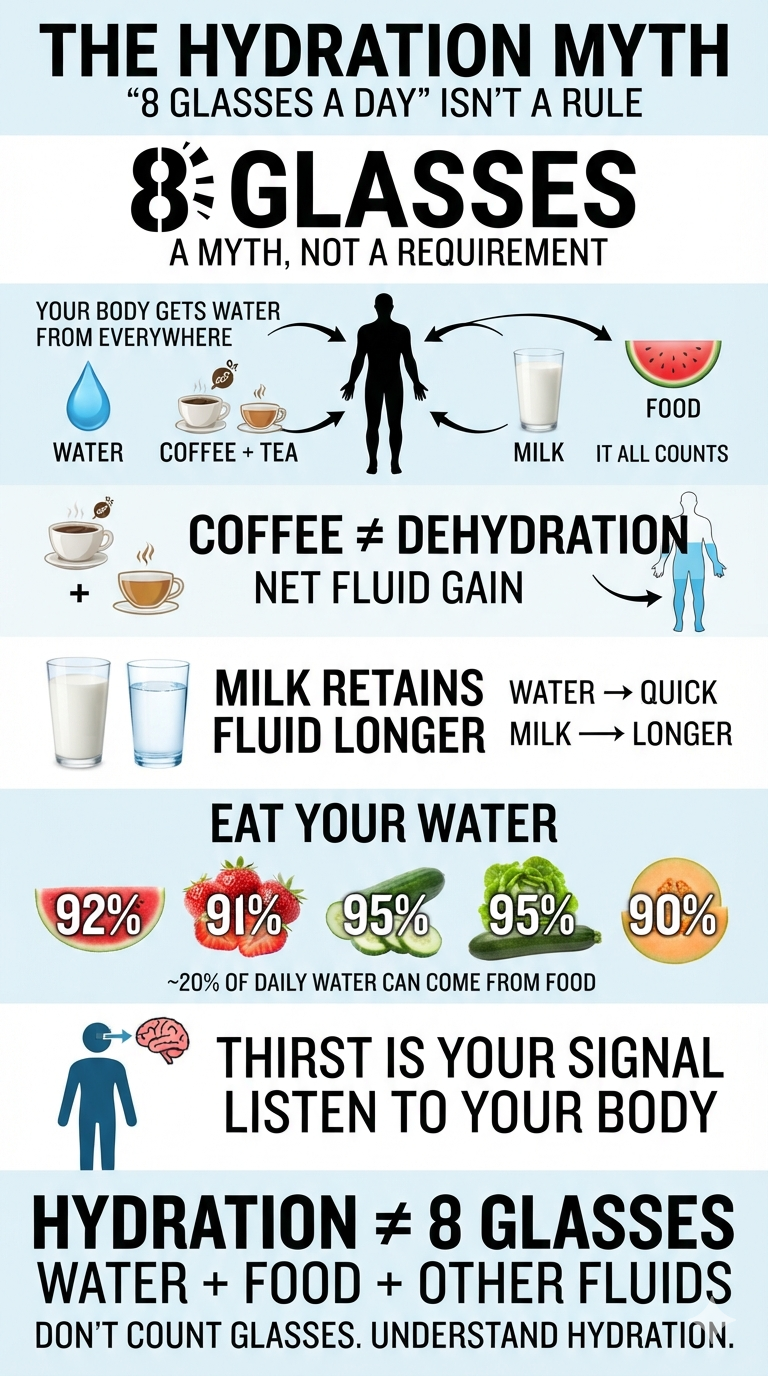
The rule to drink six to eight glasses of water a day is a myth.

The standard recommendation to drink six to eight glasses of water every day is a popular health myth that is not supported by scientific evidence. While it may serve as a convenient baseline, there is no universal requirement for everyone to drink a fixed number of glasses of water each day.

Your actual hydration needs depend heavily on your body size, health, activity level, diet, and local weather conditions.

Why the “Eight Glasses” Rule Is Flawed

It Omits Food Sources

You get roughly 20% of your daily water from food. Fruits and vegetables can contain extraordinarily high amounts of water, meaning hydration doesn’t come exclusively from what you drink.

It Counts Only Water

Coffee, tea, milk, juice, and other beverages all contribute directly to your daily fluid intake. Your body doesn’t somehow exclude the water in those beverages simply because it isn’t plain water.

Another persistent hydration myth is that coffee and tea are so diuretic that drinking them causes you to lose more fluid than you consume.

That’s not true.

It Ignores Your Body

For most healthy adults, your natural thirst mechanism is an incredibly precise indicator of when you need to drink. When you’re thirsty, drink. When you’re not thirsty, there is no scientific reason to force yourself to consume an arbitrary number of glasses simply because a popular rule says you should.

Milk Is More Hydrating Than Plain Water

Milk is actually more hydrating than plain water and keeps you hydrated for a longer period of time.

Plain water is excellent for rapid hydration, but it moves through the digestive system quickly and can result in faster fluid loss through urination. Milk contains water along with electrolytes, carbohydrates, protein, and other nutrients that slow fluid movement and help the body retain the water longer. Studies have found that milk produces less fluid loss than plain water.

This makes milk an especially effective hydrating beverage when longer-lasting fluid retention matters.

Eat Your Water

Some of the most hydrating foods on the planet are also among the most nutritious.

Melons and Berries

Watermelon: Composed of 92% water and packed with the antioxidant lycopene and potassium.

Strawberries: Contain 91% water alongside high amounts of vitamin C and inflammation-fighting fiber.

Cantaloupe: Made of 90% water and provides more than half your daily vitamin A needs per cup.

Crunchy and Leafy Vegetables

Cucumbers: Boast the highest water content of any solid food at 95% water, plus vitamin K.

Celery: Contains 95% water and provides a natural source of hydrating potassium and sodium.

Zucchini: Made of 94% water and delivers gut-friendly fiber that slows nutrient absorption.

Lettuce: Iceberg and romaine are approximately 95% water, providing an easy, volume-based hydration boost.

Liquids and Soups

Plain Yogurt or Kefir: Approximately 85% water while also providing calcium, protein, and gut-healthy probiotics.

Broths and Bouillons: Provide a high-moisture base loaded with electrolytes such as sodium, which helps the body retain fluids and prevents rapid fluid loss.

The Bottom Line

Hydration is not about hitting an arbitrary number of glasses.

Your body gets water from food and beverages—not just from plain water. Your hydration needs change with your size, activity, health, diet, temperature, and humidity.

So forget the eight-glass rule.

Drink when you’re thirsty. Eat water-rich foods. Drink more when you’re sweating or exposed to heat. And stop treating plain water as the only source of hydration.

Your body already has a sophisticated hydration system.

Listen to it.

bookmark_borderClimate Change as a Macroeconomic Threat Multiplier: Rising Healthcare Costs, Cost-of-Living Pressures, and Declining Human Longevity

by Daniel Brouse

Introduction: Climate Change as an Economic and Human Security Crisis

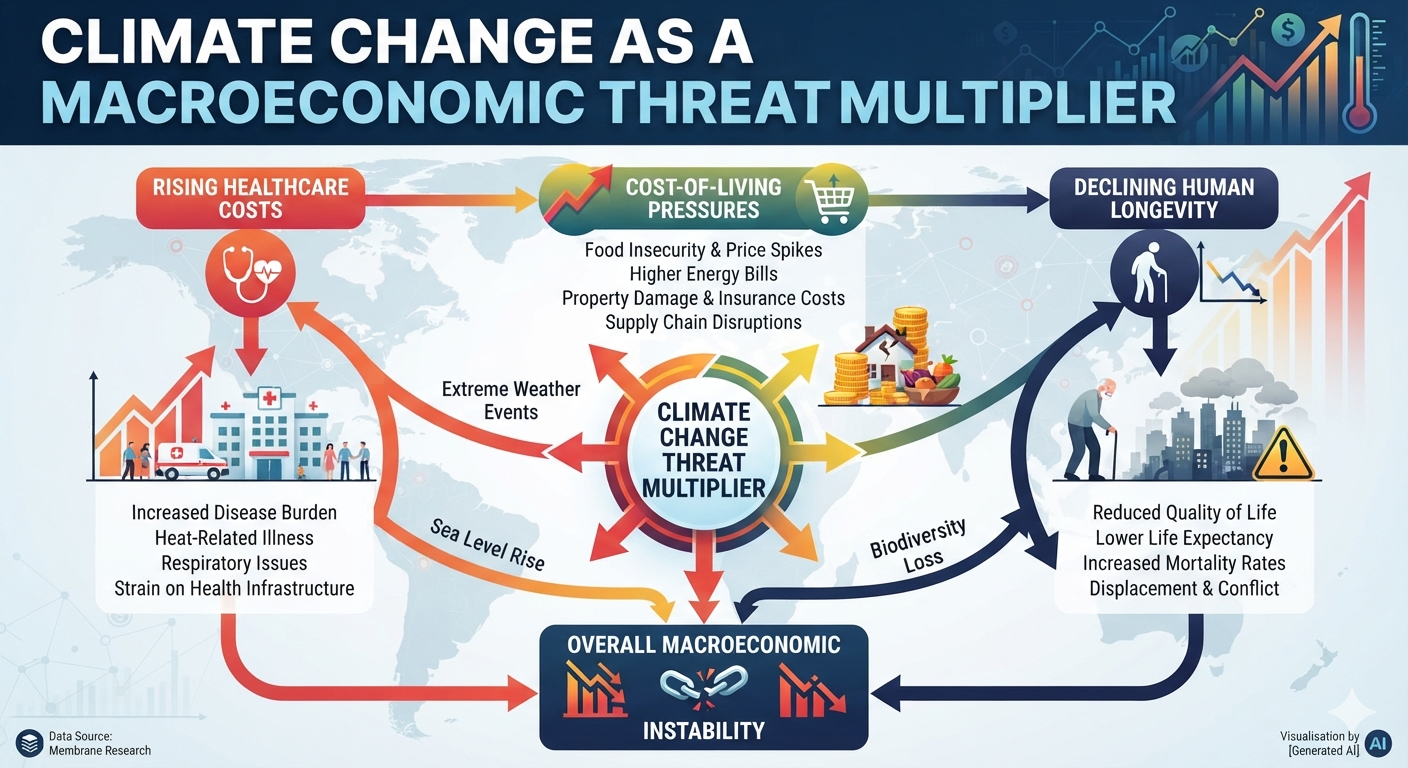
Climate change is no longer only an environmental challenge; it has become a powerful macroeconomic threat multiplier that amplifies existing social, economic, and public health vulnerabilities. Rising temperatures, increasingly extreme weather events, deteriorating air quality, and destabilized ecosystems are creating cascading financial pressures that extend from governments and businesses to individual households.

The economic consequences of climate change are increasingly visible through three interconnected pathways:

  1. Escalating healthcare costs caused by heat exposure, air pollution, infectious diseases, and climate-related disasters.
  2. Erosion of living standards through inflationary pressures on food, energy, insurance, housing, and public infrastructure.
  3. Declining human longevity as environmental stressors undermine physical health, increase mortality, and reverse decades of progress in life expectancy.

These impacts are not distributed equally. Low-income households, elderly populations, outdoor workers, and marginalized communities often face the greatest exposure while having the fewest resources to adapt. Climate change therefore transforms environmental instability into a localized economic and human health crisis.


I. Escalating Healthcare Costs: Climate Change as a Global Medical Expense Multiplier

Climate change is placing unprecedented strain on healthcare systems by increasing both the frequency and severity of climate-related illnesses while simultaneously disrupting healthcare infrastructure.

1. Trillions of Dollars in Climate-Driven Health Burdens

The financial consequences of climate-related health impacts are expected to reach historic levels.

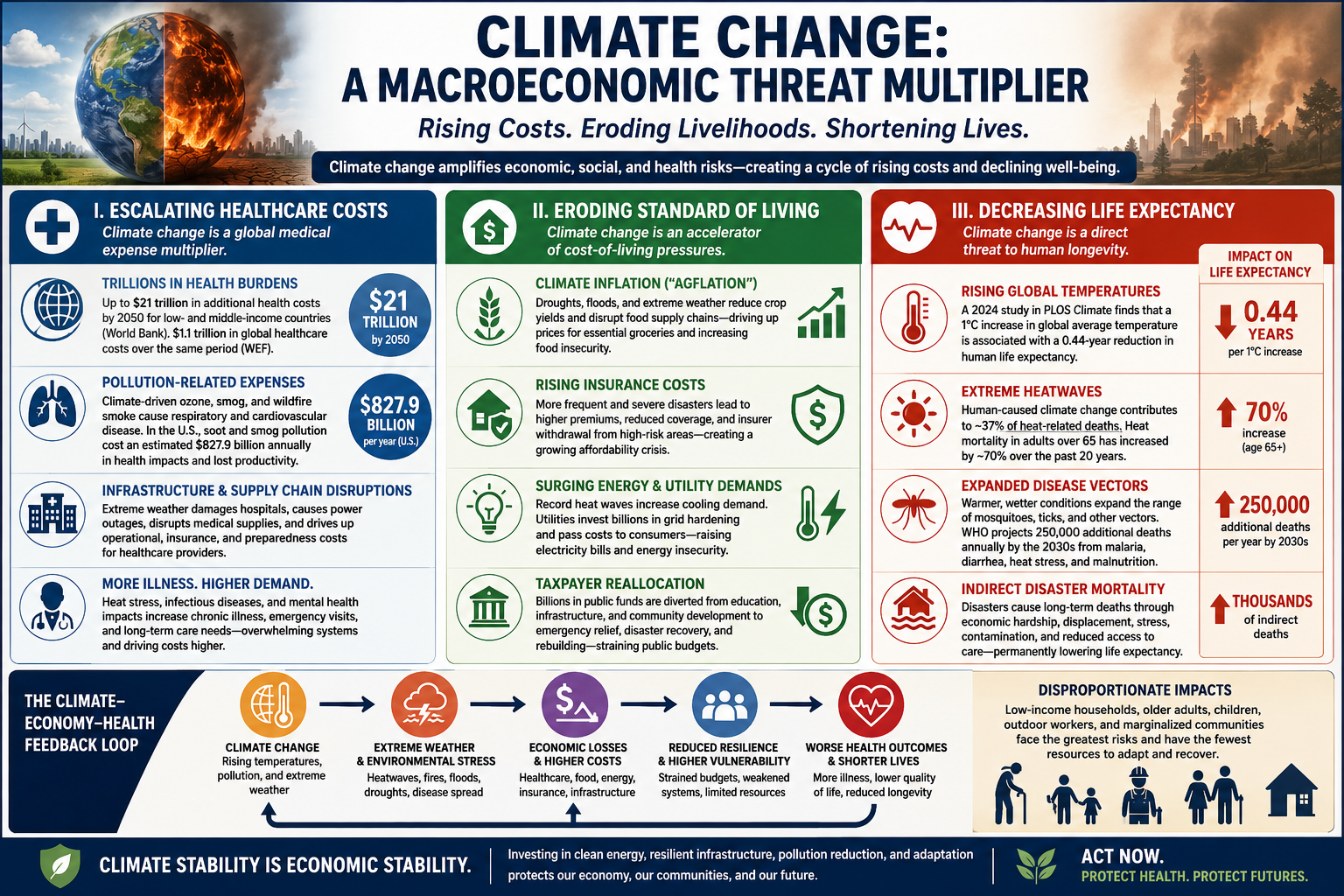
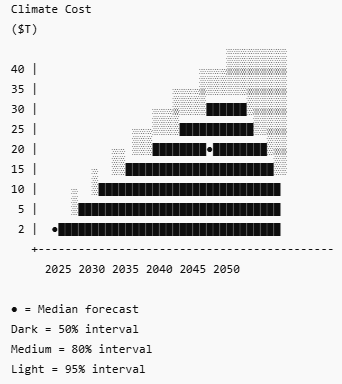
  • The World Bank estimates that climate-related health crises could impose approximately $21 trillion in additional costs by 2050 across low- and middle-income countries, reflecting increased disease burdens, reduced productivity, and expanding healthcare needs.
  • The World Economic Forum estimates that climate change could create approximately $1.1 trillion in additional global healthcare costs over the same period.

These costs represent more than direct medical expenses. They include lost productivity, reduced workforce participation, premature mortality, emergency response requirements, and infrastructure adaptation.


2. Pollution-Related Healthcare Expenses

Climate change and fossil fuel combustion are closely linked. Rising temperatures accelerate atmospheric chemical reactions that increase ground-level ozone formation, intensifying smog episodes and worsening respiratory and cardiovascular disease.

Fine particulate matter (PM2.5), ozone, wildfire smoke, and other pollutants contribute to:

  • Asthma and chronic respiratory illness
  • Heart attacks and strokes
  • Lung disease
  • Premature deaths
  • Increased emergency room visits

In the United States alone, soot and smog pollution are estimated to generate hundreds of billions of dollars annually in health-related costs, including medical expenses and lost economic productivity.

The growing frequency of wildfire smoke events demonstrates how climate impacts can transform regional air pollution into a national health emergency. Smoke from distant wildfires can travel thousands of miles, exposing millions of people far from the original source.


3. Healthcare Infrastructure and Supply Chain Disruptions

Extreme weather events increasingly threaten the operational stability of healthcare systems.

Climate-related disruptions include:

  • Hospitals losing electrical power during heat waves, hurricanes, and wildfires
  • Flooding damaging medical facilities
  • Disruptions in pharmaceutical and medical equipment supply chains
  • Increased emergency response costs
  • Higher insurance and operational expenses for healthcare providers

Hospitals are being forced to spend billions on climate resilience measures, including backup power systems, flood protection, cooling infrastructure, and emergency preparedness.


II. Eroding Standard of Living: Climate Change as a Cost-of-Living Accelerator

Climate change is increasingly becoming an economic reality experienced directly through household budgets. The same forces increasing healthcare costs are also driving inflationary pressures throughout the economy.


1. Climate Inflation and Agricultural Instability (“Agflation”)

Food systems are among the most climate-sensitive sectors of the global economy.

Rising temperatures, droughts, flooding, changing precipitation patterns, and extreme storms reduce agricultural productivity by damaging:

  • Crop yields
  • Livestock health
  • Fisheries
  • Agricultural infrastructure
  • Transportation networks

These disruptions create supply-side inflation, increasing prices for essential goods including:

  • Grains
  • Fruits and vegetables
  • Meat and dairy products
  • Transportation-dependent food products

Climate-driven food inflation disproportionately harms lower-income households because food represents a larger percentage of their monthly expenses.


2. Rising Insurance Costs and the Retreat From High-Risk Regions

The insurance industry has become one of the clearest economic indicators of accelerating climate risk.

As hurricanes, wildfires, floods, and severe storms become more frequent and destructive:

  • Insurance premiums increase dramatically.
  • Coverage becomes more restricted.
  • Insurers withdraw from vulnerable markets.
  • Property values decline in high-risk regions.

Homeowners increasingly face a difficult choice: pay rapidly increasing premiums or assume greater financial risk without adequate coverage.

This creates a growing climate affordability crisis, particularly for homeowners living in areas exposed to wildfire, coastal flooding, extreme storms, and severe weather.


3. Rising Energy Demand and Utility Costs

Climate change increases energy demand while simultaneously placing stress on energy infrastructure.

During extreme heat events:

  • Electricity consumption rises sharply due to increased air conditioning demand.
  • Utilities must invest billions in grid upgrades.
  • Transmission systems require additional protection against storms and wildfires.
  • Maintenance costs are passed onto consumers.

The result is a climate feedback loop:

Hotter temperatures → Greater cooling demand → Higher electricity consumption → Increased infrastructure costs → Higher household energy bills

Energy insecurity becomes a growing concern as vulnerable households struggle to afford cooling during dangerous heat events.


4. Taxpayer Costs and Public Financial Burdens

Climate disasters increasingly redirect public resources away from long-term investments toward emergency response and recovery.

Government spending is increasingly allocated toward:

  • Disaster relief
  • Infrastructure repairs
  • Emergency housing assistance
  • Flood recovery
  • Wildfire response
  • Agricultural assistance

These expenditures compete directly with funding for:

  • Education
  • Transportation improvements
  • Community development
  • Public health programs

Climate change therefore functions as a long-term fiscal drain, increasing government expenditures while reducing resources available for economic development.


III. Declining Human Longevity: Climate Change as a Biological Stressor

Beyond economic impacts, climate change increasingly affects the fundamental measure of human well-being: life expectancy.

The cumulative effects of extreme heat, pollution exposure, disease expansion, food insecurity, and climate disasters are slowing—and in some regions reversing—historical gains in longevity.

Climate DriverImpact on Human Health and Longevity
Rising Global TemperaturesA 2024 study published in PLOS Climate found that a 1°C increase in global average temperature is associated with approximately a 0.44-year reduction in life expectancy.
Extreme HeatwavesHuman-caused climate change is estimated to contribute to approximately 37% of heat-related deaths. Heat-related mortality among adults over age 65 has increased substantially over recent decades.
Expanded Disease Vector RangesWarmer and wetter conditions allow mosquitoes, ticks, and other disease vectors to expand into new regions, increasing risks from malaria, dengue fever, Lyme disease, and other infections.
Food and Water StressClimate disruption increases risks of malnutrition, dehydration, agricultural failure, and water insecurity, particularly in vulnerable populations.
Indirect Disaster MortalityFloods, hurricanes, wildfires, and other disasters create long-term health impacts through displacement, economic hardship, psychological stress, and environmental contamination.

IV. The Climate-Economy-Health Feedback Loop

Climate change creates a reinforcing cycle:

Climate Change → Extreme Weather → Economic Losses → Higher Costs → Reduced Adaptation Capacity → Greater Vulnerability → Increased Health Impacts

This feedback loop means climate impacts are not isolated events. A wildfire, flood, or heat wave can simultaneously damage infrastructure, increase healthcare expenses, reduce productivity, raise insurance costs, and shorten human lives.

The poorest communities often experience the strongest effects because they have fewer resources to prepare, recover, and relocate.


Conclusion: Climate Stability Is Economic Stability

Climate change represents one of the largest economic and public health challenges of the modern era. Its consequences extend far beyond environmental degradation, affecting national budgets, household finances, healthcare systems, and human survival.

The emerging reality is clear:

  • Climate change increases healthcare expenditures.
  • Climate change accelerates inflationary pressures.
  • Climate change reduces economic security.
  • Climate change threatens human longevity.

Addressing climate change is therefore not simply an environmental investment—it is an economic resilience strategy and a public health imperative. Investments in clean energy, resilient infrastructure, pollution reduction, efficient buildings, and climate adaptation can reduce future costs while protecting both human health and economic stability.

The cost of inaction is no longer measured only in degrees of warming. It is measured in rising medical bills, shrinking household budgets, damaged communities, and lost years of human life.

bookmark_borderClimate Change Health Impact Directory

Climate Change and Human Health

A Directory of Research Papers on the Health Impacts of Human-Caused Climate Change

Human-caused climate change is no longer simply an environmental issue—it has become one of the defining public health challenges of the twenty-first century.

In addition to the direct deaths caused by heatwaves, floods, hurricanes, droughts, wildfires, and other extreme weather events, climate change is creating multiple interconnected physiological and environmental stressors that reduce health, accelerate disease, increase mortality, and diminish quality of life.

These papers examine the growing body of scientific evidence demonstrating how rising temperatures, air pollution, disrupted sleep, humidity, pathogens, altered microbiomes, ozone pollution, and cascading ecological feedback loops collectively threaten human health.

Climate change affects nearly every organ system in the human body. Many of these health impacts occur long before temperatures reach fatal levels, reducing physical performance, cognitive function, immune resilience, cardiovascular health, and overall longevity.

Featured Research

Research Directory

Solutions

The overwhelming scientific evidence shows that preventing future health impacts requires reducing greenhouse gas emissions as rapidly as possible.

  • Phase out fossil fuel combustion.
  • Transition to clean renewable energy.
  • Reduce urban heat exposure.
  • Improve indoor cooling efficiency.
  • Expand public health preparedness.
  • Protect vulnerable populations.
  • Increase public awareness of heat-related illness.
  • DIY Household Climate Control — inexpensive methods for reducing indoor heat without fossil fuels.

© Membrane.com Climate Research Project

Understanding the Human Health Consequences of Climate Change

bookmark_borderClimate Change, Gut Dysbiosis, and the Human Microbiome

How Environmental Stressors Disrupt Gut Health, Sleep, and Systemic Well-Being

By Daniel Brouse

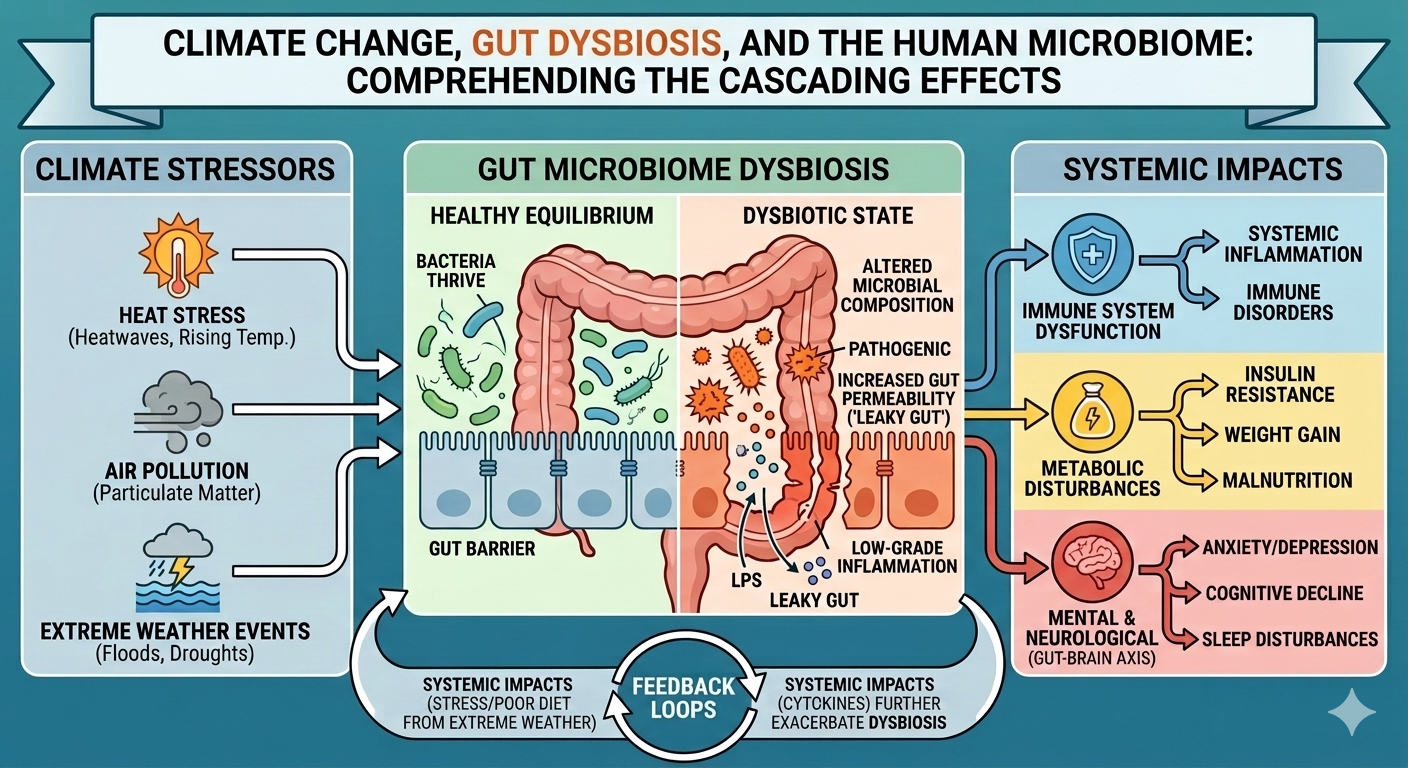
The human gut microbiome is one of the body’s most complex and essential ecosystems, influencing digestion, immunity, metabolism, and even brain function. A growing body of scientific evidence indicates that climate change is emerging as a significant environmental threat to this internal ecosystem.

Climate change can induce gut dysbiosis—an imbalance in which beneficial microorganisms decline while opportunistic or pathogenic microbes proliferate. Recent clinical reviews, including research published in The Lancet Planetary Health, suggest that climate-driven environmental changes disrupt the gut microbiome through both direct physiological stress and indirect environmental pathways. The consequences extend well beyond digestive discomfort, affecting immune regulation, sleep quality, mental health, and overall resilience.


How Climate Change Disrupts the Gut Microbiome

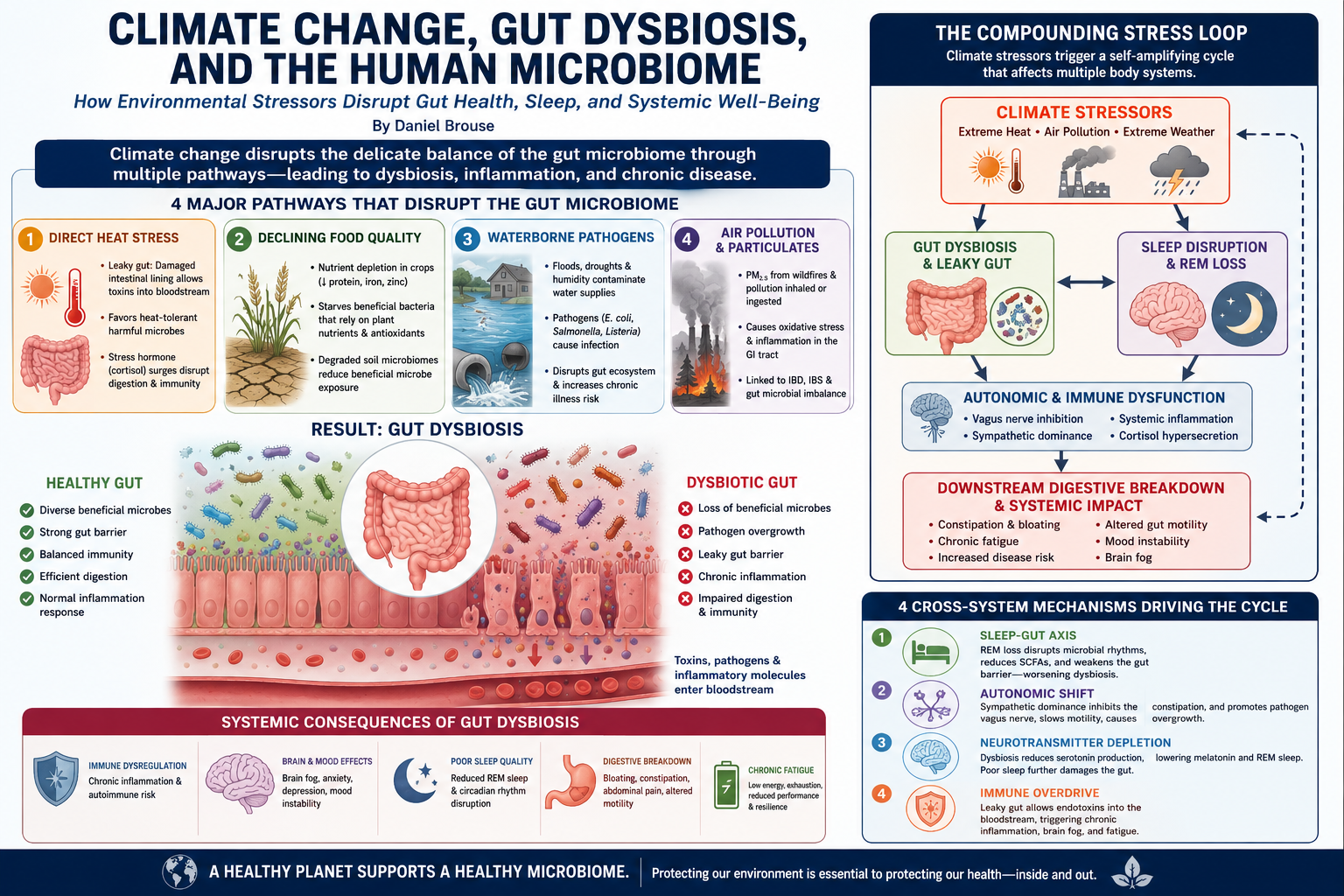
Climate change degrades the gut microbiome through several interconnected mechanisms.

1. Direct Heat Stress

Extreme heat affects far more than body temperature. It alters gastrointestinal physiology in ways that directly damage the gut ecosystem.

Increased Intestinal Permeability (“Leaky Gut”)

Heat stress weakens the intestinal barrier, increasing its permeability. This allows bacteria, endotoxins, and inflammatory compounds to enter the bloodstream, triggering systemic inflammation and immune activation.

Shift Toward Heat-Tolerant Microbes

Elevated body temperatures alter the intestinal environment, favoring heat-tolerant microbial populations while reducing beneficial bacteria that regulate metabolism, digestion, and immune function.

Stress Hormone Activation

Exposure to prolonged heat stimulates increased production of cortisol and other stress hormones. Elevated cortisol alters gut oxygen levels, immune signaling, and microbial composition while impairing normal digestive processes.


2. Declining Food Quality

Climate change is also altering the nutritional quality of the global food supply.

Nutrient Depletion

Elevated atmospheric carbon dioxide changes plant carbon-to-nitrogen ratios, reducing concentrations of essential nutrients including:

  • Protein
  • Iron
  • Zinc
  • Various micronutrients

These nutritional changes reduce both the quality of human diets and the diversity of nutrients available to gut microbes.

Starvation of Beneficial Microbes

Beneficial bacteria rely on dietary fiber, antioxidants, and complex plant compounds. As these nutrients decline, populations such as Bacteroidetes decrease while pro-inflammatory microbial groups expand.

Degraded Soil Microbiomes

The Biodiversity Hypothesis proposes that biologically rich soils contribute beneficial environmental microbes that help educate the human immune system. Climate-driven degradation of soil biodiversity reduces this microbial exposure, potentially increasing immune dysfunction and inflammatory disease.


3. Expansion of Waterborne Pathogens

Climate change increases flooding, drought, and water-system failures, all of which elevate exposure to enteric pathogens.

Common organisms include:

  • E. coli
  • Salmonella
  • Listeria

These pathogens can produce acute gastrointestinal infections while permanently altering the composition of the gut microbiome, increasing susceptibility to chronic inflammatory diseases.


4. Air Pollution and Wildfire Smoke

Climate change is increasing exposure to airborne pollutants, particularly fine particulate matter (PM₂.₅).

Although inhaled, these particles are also swallowed through mucus clearance and contaminated food or saliva.

Within the gastrointestinal tract they promote:

  • Oxidative stress
  • Local inflammation
  • Microbial imbalance
  • Increased risk of inflammatory bowel disease (IBD)
  • Increased risk of irritable bowel syndrome (IBS)

Climate Stressors Create a Compounding Health Loop

The most significant health impacts occur because climate stressors do not operate independently. Instead, they reinforce one another, creating a self-amplifying cycle that affects multiple body systems simultaneously.

                    CLIMATE STRESSORS
(Heat • Air Pollution • Extreme Weather)
│
┌────────────────┴────────────────┐
▼ ▼
Gut Dysbiosis Sleep Disruption
Leaky Gut Reduced REM Sleep
│ │
└──────────────┬──────────────────┘
▼
Autonomic & Immune Dysfunction
• Elevated Cortisol
• Reduced Vagal Activity
• Chronic Inflammation
• Sympathetic Dominance
│
▼
Digestive and Systemic Breakdown
• Constipation
• Altered Gut Motility
• Chronic Fatigue
• Mood Disorders
• Brain Fog

Cross-System Mechanisms

1. The Sleep-Gut Axis

The gut microbiome follows a circadian rhythm closely linked to the brain’s sleep-wake cycle.

Microbial “Jet Lag”

Heat waves frequently fragment sleep and reduce REM sleep, disrupting the normal daily oscillations of gut microbial populations.

Reduced Short-Chain Fatty Acid Production

Sleep deprivation decreases beneficial bacteria such as Lactobacillus and Bifidobacterium. These organisms produce short-chain fatty acids (SCFAs), which:

  • maintain the intestinal barrier,
  • reduce inflammation,
  • nourish colon cells, and
  • support immune regulation.

Reduced SCFA production weakens intestinal integrity and promotes chronic inflammation.

Worsening Leaky Gut

Poor sleep activates stress pathways that further increase intestinal permeability, amplifying the direct damage caused by heat exposure.


2. Autonomic Nervous System Dysfunction

Normal digestion depends upon the parasympathetic nervous system—the body’s “rest and digest” mode.

Heat stress, poor sleep, and pollution shift the body toward chronic sympathetic activation (“fight or flight”).

Reduced Vagus Nerve Activity

Suppression of the vagus nerve disrupts communication between the brain and the gastrointestinal tract.

Slowed Intestinal Motility

Reduced vagal activity decreases intestinal movement while heat diverts blood flow away from digestive organs toward the skin for cooling.

The result is:

  • constipation,
  • bloating,
  • abdominal discomfort, and
  • impaired digestion.

Pathogen Overgrowth

Slower intestinal transit allows opportunistic bacteria more time to multiply and produce inflammatory metabolites, further worsening dysbiosis.


3. Neurotransmitter Disruption

The gut and brain communicate continuously through the gut-brain axis.

Approximately 90% of the body’s serotonin is produced within the gastrointestinal system, largely under the influence of the gut microbiome.

Serotonin serves as the biochemical precursor to melatonin, the hormone responsible for regulating sleep.

When dysbiosis disrupts serotonin production:

  • melatonin synthesis declines,
  • sleep quality deteriorates,
  • REM sleep decreases,
  • microbial disruption worsens.

This creates a powerful positive feedback loop in which poor gut health degrades sleep, while poor sleep further damages the gut microbiome.


4. Chronic Immune Activation

Leaky gut allows bacterial endotoxins—particularly lipopolysaccharides (LPS)—to enter the bloodstream.

This condition, known as metabolic endotoxemia, activates chronic systemic inflammation.

Inflammatory molecules can cross the blood-brain barrier, contributing to:

  • brain fog,
  • fatigue,
  • impaired cognition,
  • anxiety,
  • depression,
  • emotional instability.

Conclusion

Climate change is not solely an environmental or atmospheric issue—it is increasingly becoming a public health issue that reaches into the microscopic ecosystems within our own bodies. Heat stress, declining food quality, water contamination, air pollution, and disrupted sleep all converge to reshape the human gut microbiome.

The resulting dysbiosis extends beyond digestion. It contributes to chronic inflammation, weakened immunity, impaired metabolism, sleep disruption, mood disorders, and reduced cognitive performance. Because these physiological systems are tightly interconnected, climate-induced damage to one often amplifies dysfunction in others, creating self-reinforcing cycles that become progressively more difficult to reverse.

Protecting the stability of the Earth’s climate is therefore inseparable from protecting the stability of the human microbiome. As climate change accelerates, preserving environmental health increasingly means preserving human health at its most fundamental biological level.

bookmark_borderClimate Change and REM Sleep: How a Warming Planet is Disrupting the Brain’s Most Restorative Sleep Stage

by Daniel Brouse

Preface

This summer, I began noticing a significant decline in both my overall sleep quality and, in particular, my REM (Rapid Eye Movement) sleep. After reviewing the data from my sleep tracker, I was able to link much of the disruption to elevated nighttime temperatures. Then, last night, another factor became impossible to ignore: severe thunderstorms, high winds, and frequent lightning repeatedly interrupted my sleep.

The connection became even more compelling when I realized my dog had been experiencing the same restless nights. Heat, noise, and rapidly changing weather were affecting both of us. That realization led me to a broader question: if these environmental changes are disrupting sleep in my own home, how many millions of others are experiencing the same effects?

I woke up inspired to explore the science behind these observations. This paper examines how climate change—through rising nighttime temperatures, increasing humidity, and more frequent extreme weather events—is affecting sleep quality, REM sleep, and ultimately human health and well-being.

Abstract

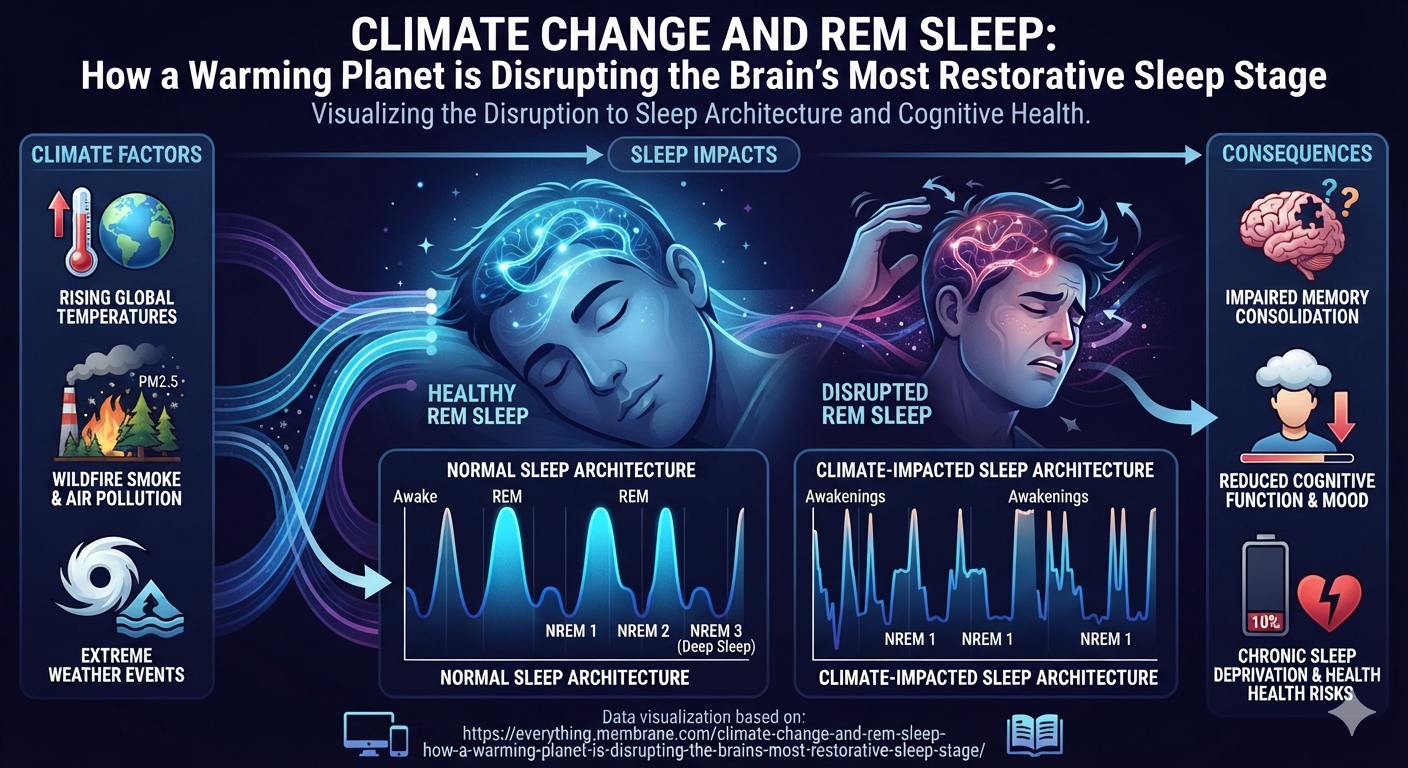
Climate change is increasingly recognized as a public health crisis extending far beyond heat-related mortality and cardiovascular disease. One of its lesser-known but rapidly emerging consequences is the degradation of human sleep, particularly Rapid Eye Movement (REM) sleep. REM sleep is essential for memory consolidation, emotional regulation, learning, creativity, and cognitive performance. A warming climate disrupts REM sleep through multiple interacting mechanisms including elevated nighttime temperatures, increased humidity, wildfire smoke, air pollution, psychological stress, and extreme weather disasters. These impacts are compounded by the increasing frequency, duration, and intensity of heatwaves and the accelerating rise in nighttime minimum temperatures. This review examines the physiological basis of REM sleep, the mechanisms through which climate change disrupts REM architecture, and the broader implications for human health and societal resilience.


Introduction

Sleep represents one of the body’s most critical restorative processes. Among its various stages, Rapid Eye Movement (REM) sleep plays a unique role in maintaining healthy brain function. During REM sleep, memories are consolidated, emotional experiences are processed, neural pathways are strengthened, and learning occurs.

Historically, sleep evolved under predictable environmental conditions characterized by cool nights and stable seasonal temperature cycles. Anthropogenic climate change is fundamentally altering these conditions. Rising greenhouse gas concentrations have increased average global temperatures while disproportionately elevating nighttime minimum temperatures. The resulting loss of nocturnal cooling increasingly prevents the human body from maintaining the thermal conditions necessary for uninterrupted REM sleep.

Climate change therefore represents not only an environmental crisis but also a growing neurological and public health challenge.


Normal REM Sleep

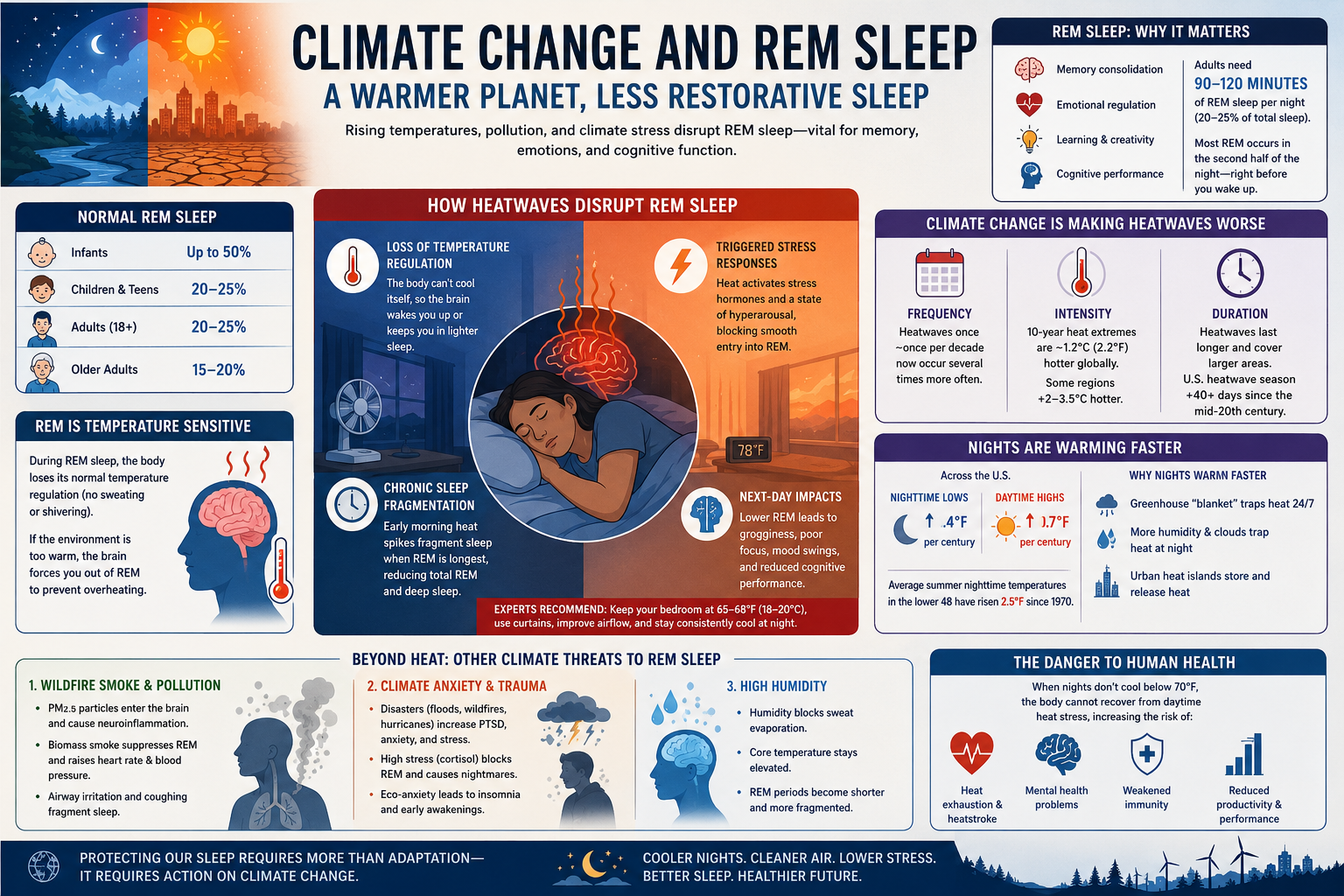
Healthy adults typically require approximately 90 to 120 minutes of REM sleep each night, representing roughly 20–25% of total sleep time. REM sleep supports numerous neurological functions, including:

  • Memory consolidation
  • Emotional regulation
  • Learning
  • Creativity
  • Cognitive flexibility
  • Neural development

REM sleep becomes progressively longer throughout the night, with the largest REM periods occurring during the final third of sleep immediately before awakening.

Age influences REM requirements:

Age GroupApproximate REM Sleep
InfantsUp to 50%
Children & Adolescents20–25%
Adults20–25%
Older Adults15–20%

Because REM occurs predominantly during the second half of the night, disturbances during early morning hours disproportionately reduce total REM sleep.


Thermoregulation During REM Sleep

REM sleep differs fundamentally from every other sleep stage because the body’s normal temperature regulation is largely suspended.

During REM sleep:

  • sweating is greatly reduced
  • shivering ceases
  • metabolic heat production decreases
  • behavioral temperature regulation becomes impossible

This temporary loss of thermoregulation makes REM sleep particularly vulnerable to elevated ambient temperatures.

If body temperature rises excessively, the brain interprets overheating as an immediate survival threat. Rather than remaining in REM sleep, protective neural circuits trigger arousal, forcing the sleeper into lighter sleep stages or complete awakening.

Consequently, REM sleep becomes the first major casualty of excessive nighttime heat.


Heatwaves and REM Sleep

Heatwaves interfere with sleep architecture through several overlapping physiological mechanisms.

Failure of Core Body Cooling

Normal sleep requires a gradual decline in core body temperature.

When nighttime temperatures remain elevated:

  • heat dissipation slows
  • skin temperature remains elevated
  • the brain struggles to initiate deeper sleep stages
  • REM duration decreases

Without adequate cooling, REM episodes become shorter and increasingly fragmented.


Activation of Stress Responses

Persistent heat activates multiple stress systems including:

  • sympathetic nervous system activation
  • elevated cortisol
  • increased heart rate
  • heightened neuronal arousal

Instead of transitioning smoothly into REM sleep, individuals remain trapped in lighter sleep characterized by repeated awakenings.


Sleep Fragmentation

Because REM sleep predominates during the second half of the night, rising early morning temperatures have an especially damaging effect.

Even brief awakenings interrupt REM cycles.

Repeated fragmentation produces:

  • reduced REM duration
  • impaired emotional regulation
  • slower reaction times
  • diminished concentration
  • poorer memory formation

Research increasingly shows that elevated nighttime temperatures reduce both REM sleep and slow-wave (deep) sleep, leaving individuals less physically and mentally restored upon waking.


Climate Change Has Intensified Heatwaves

Anthropogenic climate change has dramatically altered the characteristics of extreme heat events.

Increased Frequency

Heatwaves that historically occurred approximately once every decade now occur several times more frequently under approximately 1.2–1.4°C of global warming.

Across the United States, the annual number of extreme heat events has increased substantially since the mid-20th century.


Greater Intensity

Modern heatwaves are significantly hotter.

Globally, heat extremes that historically occurred once every ten years are now approximately 1.2°C (2.2°F) warmer than they would have been without human-caused climate change.

Some regional heatwaves have been intensified by 2–3.5°C due to anthropogenic greenhouse gas emissions.


Longer Duration

Heatwaves now persist for longer periods.

Persistent atmospheric blocking patterns, commonly known as heat domes, allow hot air masses to remain stationary for days or even weeks.

In the United States, the heatwave season has expanded by more than 40 days compared with the mid-twentieth century.


Rising Nighttime Temperatures

Perhaps the most important climate-related threat to REM sleep is the rapid rise in nighttime minimum temperatures.

Across much of the United States:

  • overnight temperatures are increasing nearly twice as fast as daytime highs
  • nighttime minimum temperatures have increased approximately 1.4°F per century
  • daytime maximum temperatures have increased roughly 0.7°F per century

Climate Central reports that average summer nighttime temperatures across the contiguous United States have risen approximately 2.5°F since 1970.

This phenomenon is known as asymmetric warming.


Why Nights Are Warming Faster

Several physical mechanisms contribute to accelerated nighttime warming.

Greenhouse Blanket Effect

Greenhouse gases continuously absorb and re-radiate outgoing infrared radiation.

During daylight hours, incoming solar radiation dominates Earth’s energy balance.

At night, however, greenhouse gases slow radiative cooling by trapping heat near the surface, preventing the Earth from shedding accumulated daytime energy.


Increased Humidity

A warmer atmosphere holds more water vapor.

Water vapor is itself a powerful greenhouse gas.

Higher humidity:

  • traps additional infrared radiation
  • slows nighttime cooling
  • prevents sweat evaporation
  • keeps body temperature elevated

This directly interferes with the physiological cooling required for REM sleep.


Increased Cloud Cover

Clouds act differently during day and night.

During daytime they reflect some incoming sunlight.

At night they behave like insulating blankets, absorbing outgoing infrared radiation and re-emitting heat back toward the surface.

The result is warmer nights.


Urban Heat Islands

Concrete, asphalt, brick, and other urban materials absorb enormous amounts of solar energy during daylight.

After sunset they slowly release stored heat.

Urban environments therefore remain significantly warmer than surrounding rural areas throughout the night, reducing opportunities for nocturnal cooling.


Wildfire Smoke and REM Sleep

Climate change has substantially increased wildfire frequency and burned area across many regions.

Wildfire smoke contains extremely high concentrations of fine particulate matter (PM₂.₅).

These microscopic particles affect REM sleep through multiple biological pathways.

Neuroinflammation

PM₂.₅ particles can enter the brain through the olfactory system.

Inflammation develops within regions involved in sleep regulation, impairing normal REM transitions.


Suppression of REM Sleep

Experimental studies have demonstrated that inhalation of biomass smoke suppresses paradoxical sleep—the scientific term for REM sleep—while simultaneously increasing nighttime heart rate and blood pressure.


Airway Irritation

Smoke exposure increases:

  • coughing
  • airway inflammation
  • respiratory resistance

These physiological disturbances repeatedly awaken sleepers from deeper sleep stages, fragmenting REM sleep.


Climate Anxiety and REM Sleep

Climate change also affects REM sleep psychologically.

Increasing exposure to floods, hurricanes, wildfires, droughts, and heatwaves elevates rates of:

  • anxiety
  • depression
  • post-traumatic stress disorder (PTSD)
  • chronic stress

Elevated cortisol levels associated with these conditions interfere with normal REM initiation.

In addition, growing concern about future climate risks—often termed eco-anxiety—can produce intrusive thoughts, nightmares, insomnia, and repeated nighttime awakenings.

Instead of facilitating healthy emotional processing, REM sleep becomes increasingly disrupted by persistent activation of the brain’s threat-detection networks.


Humidity and REM Sleep

Humidity represents another important but often overlooked consequence of climate change.

Successful REM sleep requires efficient evaporative cooling.

When humidity is high:

  • sweat evaporates poorly
  • body temperature remains elevated
  • heat loss slows
  • REM episodes become abbreviated

Rather than entering long uninterrupted REM periods near morning, sleepers cycle repeatedly through brief periods of lighter sleep.


Public Health Implications

Declining REM sleep carries consequences extending well beyond daytime fatigue.

Chronic REM deprivation has been associated with:

  • impaired memory
  • reduced learning capacity
  • diminished decision-making
  • slower reaction times
  • depression
  • anxiety disorders
  • impaired emotional regulation
  • weakened immune function
  • increased cardiovascular risk
  • reduced workplace productivity
  • higher accident rates

Because climate change affects millions of people simultaneously, widespread reductions in REM sleep may have substantial economic and societal consequences.

Sleep loss may become an increasingly important—but largely invisible—component of climate-related disease burden.


Mitigation and Adaptation

Although climate change is driving long-term warming trends, several measures can help preserve REM sleep.

Recommended strategies include:

  • Maintaining bedroom temperatures between 65–68°F (18–20°C).
  • Using blackout curtains to reduce daytime solar heating.
  • Increasing nighttime ventilation and airflow.
  • Limiting indoor heat accumulation during daytime.
  • Using air conditioning or evaporative cooling where available.
  • Reducing exposure to wildfire smoke through high-efficiency filtration.
  • Maintaining consistent sleep schedules.
  • Addressing climate-related psychological stress through appropriate mental health interventions.

Ultimately, however, adaptation alone cannot eliminate the problem. Long-term protection of human sleep requires reducing greenhouse gas emissions and slowing global warming.


Conclusion

Climate change is reshaping one of humanity’s most fundamental biological processes: sleep. Rising nighttime temperatures, prolonged heatwaves, increasing humidity, worsening wildfire smoke, deteriorating air quality, and climate-related psychological stress all converge on the same vulnerable target—REM sleep.

Unlike many climate impacts that unfold gradually over decades, sleep disruption is immediate, measurable, and experienced nightly by millions of people. Because REM sleep underpins memory, emotional regulation, learning, cognitive performance, and neurological health, its progressive loss represents a significant but underappreciated consequence of anthropogenic climate change.

As the planet continues to warm, protecting REM sleep will require both personal adaptation and systemic climate mitigation. Ensuring cooler nights, cleaner air, and a more stable climate is not merely a matter of comfort—it is essential for preserving the restorative sleep upon which human health, resilience, and cognitive function depend.

bookmark_borderClimate Responsibility and Accountability

Addendum to:

Solutions to the Fossil Fuel Economy and the Myths Accelerating Climate and Economic Collapse

http://membrane.com/global_warming/Basic-Economics.html

Climate Responsibility and Accountability

Introduction

The original purpose of Solutions to the Fossil Fuel Economy and the Myths Accelerating Climate and Economic Collapse was to focus on practical solutions rather than assigning blame. Since its publication, however, many readers have interpreted that emphasis as minimizing the responsibility of fossil fuel companies. This addendum clarifies that both interpretations can be true simultaneously.

I began my career as an economist specializing in risk management before turning my attention to humanity’s largest systemic risk—climate change. My work spans economics, systems science, statistics, and climate physics. Together with physicist Sidd Mukherjee, I co-originated the Nonlinear Acceleration Hypothesis, a framework describing how interacting physical, ecological, health, and socioeconomic feedbacks can accelerate climate impacts beyond traditional linear projections.

My work has consistently argued that climate change is both a physical and an economic problem. It cannot be understood through atmospheric science alone, nor through economics alone. Rather, it emerges from the interaction of nonlinear Earth-system processes and human decision-making.

Shared Responsibility Does Not Eliminate Corporate Accountability

Fossil fuel consumption is fundamentally a supply-and-demand system. Producers cannot exist without consumers, and consumers cannot purchase what is not supplied. Responsibility therefore exists on multiple levels.

Recognizing consumer responsibility does not absolve fossil fuel companies of their own responsibilities.

Oil and gas companies have exercised enormous influence through lobbying, political advocacy, public relations campaigns, strategic communications, and efforts to delay or weaken climate policy. Those actions deserve careful scrutiny and, where appropriate, legal accountability.

At the same time, it is equally inaccurate to argue that consumers possess no agency whatsoever. While choices are often constrained by infrastructure, income, geography, and available technology, millions of individuals, businesses, and governments have successfully reduced fossil fuel dependence through efficiency improvements, electrification, renewable energy adoption, and changes in consumption patterns.

The issue is therefore not one of assigning exclusive blame to either producers or consumers. Climate change is the product of interacting economic incentives, political institutions, technological development, consumer behavior, and physical climate feedbacks.

Understanding that complexity is essential if society intends to solve the problem rather than merely redistribute blame.

Corporate Accountability

My work has also extensively examined legal and economic mechanisms for holding fossil fuel companies accountable, including:

  • climate litigation,
  • consumer protection law,
  • human rights frameworks,
  • carbon pricing and taxation,
  • restitution,
  • treble-damage recovery, and
  • broader climate liability frameworks.

Those topics are discussed in detail throughout the following papers, which complement the original economics article rather than contradict it.

The Fossil Fuel Industry

Oil and gas companies unquestionably bear significant responsibility for the climate crisis. Decades of internal research, lobbying, public relations campaigns, political influence, and efforts to delay emissions reductions have been extensively documented. Protecting market share and shareholder value frequently took precedence over communicating known climate risks or accelerating the transition to lower-carbon energy sources.

Those actions deserve public scrutiny and, where appropriate, legal accountability.

However, acknowledging corporate misconduct does not eliminate the role of consumer demand. Energy markets function through supply and demand. Producers extract, refine, and distribute fossil fuels because governments, businesses, and consumers continue to purchase them across transportation, electricity generation, manufacturing, agriculture, aviation, shipping, and residential heating.

This is not a moral judgment; it is an economic reality.

Consumers often operate within real constraints. Infrastructure, housing, public transportation, income, local utility policies, and technology availability all influence individual choices. Some households possess far greater flexibility than others. Nevertheless, constrained choice is not the same as no choice. Millions of households and businesses have reduced fossil fuel consumption through energy efficiency, electrification, renewable energy, improved building design, vehicle selection, and changes in consumption patterns. Each reduction weakens demand at the margin.

Likewise, governments influence both supply and demand through regulation, taxation, subsidies, infrastructure investments, and public procurement. Climate policy therefore operates across every level of society rather than through a single actor.

The climate crisis emerged from interacting physical, economic, technological, and political systems. Effective solutions require addressing each component simultaneously.

Existing Work on Corporate Accountability

Contrary to claims that emphasizing consumer responsibility somehow absolves fossil fuel producers, much of my work focuses specifically on legal and economic accountability for corporate misconduct.

The following papers examine those issues in detail.

Climate Change and Accountability

Climate Change and Accountability: Legal Challenges, Consumer Rights, and Human Rights in the Fight Against Fossil Fuels

http://membrane.com/global_warming/Climate-Change-and-Cigarette-Litigation.html

This paper examines the legal foundations for climate litigation, including consumer fraud, public nuisance, deceptive marketing, human rights claims, restitution, and the application of legal principles similar to those successfully employed against the tobacco industry.

The Economics of Climate Change

Climate change is fundamentally different from most economic shocks.

Traditional recessions eventually recover. Financial crises stabilize. Commodity shortages resolve. Climate change does not naturally return to equilibrium within human timescales because excess greenhouse gases and accumulated ocean heat continue influencing the climate system for decades to centuries.

As University of Cape Town researcher Christopher Trisos observed:

“For people, other species, ecosystems, and the world we live in, we’ve entered the Age of Loss and Damage, but we’re just at the start.”

Likewise, following the record-breaking Northern Hemisphere summer of 2023, United Nations Secretary-General António Guterres warned:

“Climate breakdown has begun.”

These statements reflect a growing recognition that climate damages are no longer primarily future risks—they have become ongoing economic realities.

The Age of Loss and Damage

Climate economics must therefore evolve beyond traditional Integrated Assessment Models (IAMs), many of which assume smooth, gradual damage functions that underestimate systemic risk.

My work argues that climate damages arise from interacting nonlinear feedbacks operating simultaneously across physical, ecological, health, financial, insurance, agricultural, infrastructure, and geopolitical systems.

Understanding those interactions requires integrating:

  • economics,
  • systems science,
  • statistics,
  • atmospheric physics,
  • ecology,
  • public health, and
  • risk management.

The resulting framework is consistent with the Nonlinear Acceleration Hypothesis, which recognizes that climate impacts increasingly reinforce one another through cascading feedback loops rather than simple linear cause-and-effect relationships.

Accounting for Climate Damages

One objective of climate economics is not merely estimating annual losses, but accounting for the full societal burden imposed by delayed mitigation and continued emissions.

Quantifying the Climate Tax

Quantifying the Climate Tax: The Full Ledger of Harm

http://membrane.com/global_warming/Climate-Tax-Full-Ledger-of-Harm.html

This paper estimates the annual economic burden currently imposed by climate change on American households.

The analysis concludes that the direct annual climate burden already approaches $6,000 per person, while the broader long-term burden—including infrastructure degradation, ecosystem loss, health impacts, insurance instability, productivity losses, and deferred damages imposed on future generations—is substantially larger.

Climate change is therefore functioning as an invisible tax already embedded throughout the economy.

The Legal Foundation for Treble Damages

American law has long recognized that ordinary compensation is insufficient when misconduct is deliberate, deceptive, or socially destructive.

Treble damages appear throughout U.S. law, including:

  • Sherman Act antitrust litigation,
  • RICO actions,
  • False Claims Act enforcement, and
  • numerous state consumer protection statutes.

Their purpose extends beyond compensation. They deter future misconduct while recognizing that direct damages frequently underestimate total societal harm.

A comparable framework may be appropriate when evaluating climate-related damages if plaintiffs establish that institutions knowingly delayed mitigation while externalizing foreseeable risks onto the public.

Justice, Restitution, and Climate Liability

Applying a justice framework to climate economics raises three related questions:

  1. Did organizations knowingly externalize foreseeable climate damages?
  2. Have those damages fallen disproportionately upon vulnerable populations and future generations?
  3. Should legal remedies reflect deterrence as well as compensation?

These questions extend beyond economics into ethics, law, and public policy, but they are increasingly becoming central to climate litigation worldwide.

The Cost of Inaction

The companion paper,

The Full Economic Burden: An Ensemble-Based Probabilistic Framework

http://membrane.com/global_warming/Climate-Change-Burden-Ensemble-Based.html

develops an ensemble-based probabilistic framework for estimating the long-term economic consequences of accelerating climate change.

Under the median ensemble projection, annual U.S. climate-related economic losses increase nearly tenfold, rising from approximately $2.1 trillion in 2025 to $19.5 trillion by 2050 (constant 2025 dollars).

Rather than projecting a steady increase in damages, the analysis demonstrates how interacting physical, ecological, health, financial, and socioeconomic feedbacks can transform climate change into an accelerating systemic economic burden.

Under the median ensemble scenario, cumulative U.S. climate-related losses between 2025 and 2050 approach $200 trillion (constant 2025 dollars).

These projections illustrate a central conclusion of the Nonlinear Acceleration Hypothesis: delayed responses, thermal inertia, interacting feedbacks, and tipping cascades can produce economic impacts that grow substantially faster than traditional linear or quadratic damage models anticipate.

Conclusion

Climate responsibility should never be framed as an either-or proposition.

Corporations that knowingly delayed climate action should be held accountable through transparent governance, appropriate regulation, and where justified, legal remedies.

Governments bear responsibility for designing policies that correctly price externalities, accelerate innovation, and remove barriers to decarbonization.

Businesses bear responsibility for reducing emissions throughout their operations and supply chains.

Consumers also retain agency through the choices they make within the constraints they face.

Climate change emerged from the interaction of all of these systems. Lasting solutions will require accountability and action across all of them.

bookmark_borderThe Full Economic Burden of Climate Change in the United States

Beyond Point Estimates:

An Ensemble-Based Probabilistic Framework for Estimating the Full Economic Burden of Climate Change in the United States

Daniel Brouse and Sidd Mukherjee


Abstract

Traditional estimates of climate damages generally report single-value estimates or narrow ranges that fail to capture the cascading uncertainty inherent in coupled human-natural systems. Climate change is not a single hazard but a network of interacting physical, ecological, epidemiological, economic, and social feedbacks.

This paper proposes an ensemble-based probabilistic accounting framework that estimates the true annual economic burden of climate change in the United States as a distribution rather than a point estimate.

Using 2025 as the baseline year, we define a conservative lower bound of $2.06 trillion annually (approximately $6,050 per American) consisting only of directly attributable and well-quantified damages.

Additional categories—including infectious disease emergence, ecosystem collapse, climate migration, geopolitical instability, financial contagion, biodiversity loss, fossil-fuel subsidies, and other partially attributable systemic risks—are represented probabilistically through an ensemble framework.

Rather than producing one “correct” number, the framework generates prediction intervals describing the likely range of the true climate burden.


1. Introduction

Climate damages are fundamentally nonlinear.

Traditional integrated assessment models generally estimate expected damages using equilibrium assumptions and relatively independent variables.

Real-world climate systems behave differently.

Climate interacts simultaneously with

  • ecosystems
  • economics
  • epidemiology
  • infrastructure
  • migration
  • finance
  • agriculture
  • conflict
  • public health

Each contains reinforcing feedback loops.

The objective is therefore not prediction of a single value but estimation of a probability distribution.


2. The Climate Damage Ensemble

Define total damages as: Dₜₒₜₐₗ = Dₒᵦₛₑᵣᵥₑd + ∑ Dᵢ

where:

Observed damages represent directly attributable costs.

The remaining terms represent uncertain but plausible contributors.

Each contributor is modeled as a probability distribution.

Examples include

  • pandemic emergence
  • vector-borne disease
  • wildfire smoke
  • biodiversity collapse
  • insurance insolvency
  • migration
  • geopolitical instability
  • infrastructure failure
  • food system disruption
  • financial contagion
  • explicit fossil fuel subsidies
  • implicit fossil fuel subsidies

Each ensemble member samples every distribution simultaneously.

100,000 Monte Carlo realizations produce the final probability density.


3. Conservative Baseline

Only directly attributable damages are included.

Annual burden
$2.06 trillion

Per capita
$2.06T/340M = $6,059


4. Sources of Structural Uncertainty

Several major categories were intentionally excluded from the baseline.

Pandemic Risk

COVID-19 demonstrates the scale of possible climate-sensitive health damages.

Although attribution remains uncertain, climate change influences

  • zoonotic spillover
  • vector expansion
  • wildlife migration
  • habitat fragmentation
  • disease persistence

Long COVID alone may cost the U.S. economy tens to hundreds of billions annually.

Because attribution remains incomplete, the baseline assigns these costs zero weight.

Within the ensemble they receive probability distributions reflecting current scientific uncertainty.


Climate-Sensitive Disease

Camilo Mora et al. demonstrated that 58% of known human pathogenic diseases are aggravated by climatic hazards.

The ensemble therefore includes probabilistic estimates for

  • dengue
  • malaria
  • West Nile
  • Lyme disease
  • Zika
  • avian influenza
  • Ebola
  • future coronavirus emergence

Fossil Fuel Subsidies

The baseline excludes all subsidies.

Yet estimates range from approximately $10 billion to hundreds of billions annually depending upon accounting methodology.

The ensemble samples across this uncertainty.


5. Coupled Feedback Networks

Unlike traditional accounting, damages interact.

Examples include:

Heat → Higher electricity demand → Grid expansion → Emissions → Additional warming → More heat

Likewise:

Wildfire → Smoke → Respiratory disease → Lost labor → Lower GDP → Reduced adaptation capacity → Greater vulnerability

The ensemble models these interactions through conditional dependence rather than assuming independence.


6. Prediction Intervals

Instead of a single estimate, the framework produces confidence bands.

Illustrative example

PercentileAnnual Cost
5th$2.06T
25th$2.7T
Median~$4T
75th~$6T
90th~$8T
95th~$10T+

These values would ultimately emerge from the Monte Carlo simulation rather than being fixed assumptions.


7. Fan Charts

The preferred visualization is not a line graph. Instead, it is to plot 2025 through 2050 with widening prediction bands.

The widening fan reflects increasing uncertainty produced by nonlinear climate feedbacks.

Unlike economic forecasting, these intervals widen primarily because interacting Earth-system feedbacks amplify uncertainty over time.

YearMedian50% Low50% High80% Low80% High95% Low95% High
20252.061.902.201.702.501.502.80
20303.202.803.702.304.502.005.30
20355.204.406.203.507.603.009.00
20408.106.6010.005.2012.504.2015.20
204512.710.016.07.6020.06.0024.5
205019.515.025.011.032.08.5040.0

* In trillions of US dollars.


Figure X. Ensemble projection of the total U.S. climate burden (2025–2050). The solid center line represents the median projection from the nonlinear integrated climate-risk framework. Shaded regions denote the 50%, 80%, and 95% prediction intervals derived from an ensemble of socioeconomic, climatic, ecological, and policy pathways. Unlike conventional macroeconomic fan charts, uncertainty expands primarily because interacting Earth-system feedbacks—including accelerating warming, hydrological intensification, ecosystem degradation, insurance market instability, and infrastructure stress—produce increasingly nonlinear outcomes over time. Consequently, the widening fan reflects structural uncertainty arising from feedback amplification rather than simple forecast error accumulation.

This style closely matches the fan charts used by central banks, but adapts them to nonlinear climate-risk modeling, making it appropriate for a publication on ensemble climate-economic projections.


8. Interpretation

The conservative estimate of $2.06 trillion should not be interpreted as the expected value.

Rather, it is the lower bound supported by presently attributable damages.

The ensemble median is expected to exceed this value substantially as additional climate-sensitive costs become attributable.

Conversely, the upper tail represents systemic risks whose probabilities remain uncertain but whose consequences could dominate future economic losses.


9. Conclusion

Climate damages are not deterministic.

Neither are they adequately represented by point estimates.

A probabilistic ensemble framework better reflects the state of climate science, economics, epidemiology, ecology, and complex systems theory.

Instead of asking

“What does climate change cost?”

the scientifically appropriate question becomes

“What is the probability distribution of the total societal cost once all interacting climate feedbacks are considered?”

This framework shifts climate economics from deterministic bookkeeping toward full systemic risk analysis, consistent with modern catastrophe modeling, insurance science, and Earth-system dynamics.

Sources:

The Economic Cost of Climate Change in the United States

The Acceleration of U.S. Climate-Linked Economic Burden (1890–2040 Projection

Climate Welfare Accounting Framework: The Welfare Cost of Climate Change in the United States

The Climate Tax: The Full Ledger of Harm

Methods

1. Overview

We develop a probabilistic ensemble framework to estimate the annual economic burden of climate change in the United States.
The approach decomposes total damages into observed, directly attributable components and a set of latent, partially observable,
or structurally uncertain damage channels. These are combined within a stochastic simulation framework to generate a full probability distribution of annual climate damages.

Total damages are defined as:

DTotal = DObs + Σ Di

where DObs represents empirically observed and directly attributable damages, and Di represents uncertain damage channels modeled as stochastic processes.


2. Baseline Observed Damages (2025)

The baseline estimate DObs is constructed from sectorally disaggregated empirical loss data for the United States in 2025.
All included components meet a conservative attribution threshold requiring strong empirical linkage to climate-related hazards.

Table 1. Baseline Observed Damages (2025)

Sector Damage Category Estimated Annual Loss (USD) Data Basis
Extreme events Hurricanes, floods, droughts, wildfire direct losses 0.78T NOAA, FEMA loss estimates
Insurance & infrastructure Uninsured losses, premium escalation, rebuilding 0.32T Industry loss reports
Health impacts Heat mortality, air quality, morbidity, productivity loss 0.41T CDC, EPA burden estimates
Agriculture Yield losses, supply disruption, input volatility 0.27T USDA crop loss models
Energy system impacts Cooling demand, grid stress, peak pricing effects 0.18T EIA demand elasticity
Macro-financial impacts GDP losses, capital disruption, adaptation expenditure 0.10T IMF-style macro damage estimates

Total observed baseline:
DObs = 2.06 trillion USD (2025)

Per capita estimate:
2.06T / 340M ≈ 6,050 USD/person


3. Latent and Partially Attributable Damage Channels

We define a second class of damages Di, representing climate-linked risks that are supported by physical or epidemiological mechanisms but remain incompletely attributable in aggregate economic terms.
Each Di is modeled as a stochastic variable:

Di ~ 𝒟(θi, σi)


4. Infectious Disease and Pandemic Risk Module

Climate change may influence infectious disease dynamics via:

  • Shifts in vector ecology
  • Habitat fragmentation
  • Zoonotic spillover risk
  • Altered pathogen persistence environments

COVID-19-related impacts are excluded from DObs due to attribution uncertainty but included in ensemble tail-risk modeling.


5. Climate-Sensitive Disease Expansion Model

Following Mora et al. (Nature Climate Change), evidence indicates:

58% of known human pathogenic diseases are climate-sensitive

Disease risk is modeled as:

Dhealth,i = f(Ei, Vi, Ci)

  • Ei: exposure expansion
  • Vi: vector suitability change
  • Ci: climate hazard intensity

6. Fossil Fuel Subsidy Module

Subsidies are excluded from baseline accounting due to definitional heterogeneity.
We define a bounded distribution:

S ~ Triangular(10¹⁰, 10¹¹, 7×10¹¹)


7. Stochastic Ensemble Construction

Total damages are computed using Monte Carlo simulation:

D(k)Total = DObs + Σ Xi(k)

Where k = 1…100,000 simulations.

Distribution types include:

  • Lognormal (health, infrastructure)
  • Gamma (agriculture, extreme events)
  • Pareto (tail risk)
  • Mixture distributions (financial system risk)

8. Dependence Structure

We impose a dependency structure using a copula-based framework:

X ~ C(F1, F2, …, Fn)

Correlations reflect:

  • Heat → energy demand → emissions feedback
  • Wildfire → air quality → health → productivity
  • Drought → agriculture → inflation → macroeconomic stress

9. Fan Chart Construction

Fan charts are constructed using quantiles:

Qp(t), p ∈ {0.05, 0.25, 0.50, 0.75, 0.95}

Variance evolves as:

σ²(t) = σ₀² + α·ΔT(t) + β·Feedback Intensity(t)


10. Interpretation

DObs represents a lower-bound empirical estimate.
DTotal represents the full probabilistic damage distribution including latent and tail-risk components.

DObs ≤ E[DTotal]


11. Data Sources

  • NOAA climate disaster loss datasets
  • FEMA disaster expenditure reports
  • CDC morbidity and mortality statistics
  • USDA agricultural loss data
  • EIA energy demand data
  • IMF macroeconomic climate damage frameworks
  • IPCC AR6 assessment reports

12. Limitations

  • Partial observability of latent damage channels
  • Structural uncertainty in tail-risk distributions
  • Simplified correlation structure
  • Attribution uncertainty in health and ecological modules
  • Non-stationarity of climate–economy relationships

Results should be interpreted as probabilistic risk estimates rather than point forecasts.