bookmark_borderHow Long COVID May Affect Memory Through the Gut

by Daniel Brouse

A University of Pennsylvania study suggests that persistent COVID-related changes in the gut may contribute to memory problems and brain fog in some people with long COVID by reducing serotonin, a chemical messenger involved in communication between the gut and brain.

The proposed chain of events

  1. The virus persists: Researchers found traces of SARS-CoV-2 in the stool of some long COVID patients months after infection, suggesting that the virus may remain in the gut.
  2. Inflammation continues: Persistent viral material may keep the immune system activated, causing ongoing inflammation.
  3. Serotonin production falls: Inflammation may interfere with the gut’s ability to absorb tryptophan, an essential building block for serotonin.
  4. Gut–brain communication is disrupted: Lower serotonin may affect signaling through the vagus nerve, which carries information between the gut and brain.
  5. Memory may suffer: Experiments in mice linked this pathway to memory problems. Boosting serotonin using tryptophan-related compounds or SSRI antidepressants improved memory in the animals.

Why the findings matter

The research identifies a possible biological link between persistent gut infection, inflammation, reduced serotonin, and neurological symptoms. If confirmed in humans, serotonin levels might eventually help researchers identify a subset of long COVID patients who could benefit from targeted treatment.

Important limitations

  • The pathway appears to affect only a subset of people with long COVID.
  • Although researchers found associations in human patients, key cause-and-effect relationships were demonstrated in mice.
  • Long COVID likely has multiple biological causes, so this mechanism cannot explain every case of brain fog or memory impairment.
  • Clinical trials are needed to determine whether SSRIs or supplements are safe and effective for treating these symptoms.

Bottom line: The study offers a plausible explanation for how long COVID may affect memory through the gut–brain connection. It is an important research lead, not yet proof that low serotonin causes brain fog in people or that raising serotonin will treat it. SSRIs and supplements should not be started for long COVID without medical guidance.

Original Research

COVID (and other conditions) destroys good gut bacteria resulting in a compromised immune system. Gut bacteria play several key roles in your health that include communicating with your immune system and producing vitamins. Without good gut bacteria it does not matter how vitamin rich your diet. Your body can not metabolize most vitamins without good gut bacteria. Most people start fermenting good gut bacteria from their mother’s breast milk. The best way to re-establish your good gut bacteria is to consume breast milk for at least 6 months. Alternatively, you need to get all the right ingredients for fermentation including the proper 300 to 500 bacterial types, chemicals for the reaction, and lots of fiber. Fiber is crucial in maintaining good gut health. Juicing and/or blending destroys most of the fiber. The best sources of dietary fiber are:
beans, whole grains, brown rice, popcorn, nuts, baked potato with skin, berries, and bran cereal.

COVID Updates and Research

bookmark_borderPersistent SARS-CoV-2, Epigenetic Disruption, and the Neuroimmune Pathway: A Framework for Understanding and Managing Long COVID

by Daniel Brouse
February 3, 2026

COVID-19 and Long COVID are not simply acute respiratory illnesses. They represent a multi-system, persistent, and epigenetically disruptive disease process with long-lasting effects on the body, the brain, and society as a whole. Even a single SARS-CoV-2 infection can trigger biological changes that unfold over months or years, influencing immune regulation, mitochondrial function, autonomic stability, chronic disease risk, and economic productivity.

Persistent Viral Reservoirs

A growing body of research suggests that in some individuals, viral fragments — and possibly replication-competent virus — may persist in tissue reservoirs long after a person tests negative on standard nasal PCR tests. Viral RNA and protein fragments have been identified in organs and brain tissue months to years after initial infection. Clinically, this persistence may manifest as:

  • Brain fog

  • Debilitating fatigue

  • Dysautonomia

  • Loss of taste or smell

  • Night sweats

  • Autoimmune-like symptoms

In my own case, addressing the persistent component brought substantial relief. Post-infection mRNA vaccination appeared to stimulate a more targeted immune response, enhancing viral clearance and significantly reducing symptoms. The vaccine effectively “re-alerted” the immune system to residual viral antigens, strengthening its ability to suppress or eliminate lingering viral activity.

While symptoms became manageable, persistence is only one dimension of the disease.

Epigenetic and Organ-Level Consequences

SARS-CoV-2 infection also induces epigenetic modifications — chemical changes that alter gene expression without changing DNA sequences. These changes can:

  • Activate pro-inflammatory pathways

  • Accelerate biological aging

  • Influence cardiovascular and metabolic risk

  • Alter immune regulation

  • Increase vulnerability to neurological and autoimmune conditions

In addition, organ damage — including microvascular injury and endothelial dysfunction — may persist even after symptomatic recovery.

For most individuals infected with COVID-19, some degree of epigenetic alteration and tissue injury likely occurs. At present, there are no direct therapies that “reverse” these molecular changes. Management therefore focuses on stabilizing immune regulation, improving cellular energy production, and reducing systemic inflammation.

Long COVID as a Neuroimmune Disorder

The paper “Postural Orthostatic Tachycardia Syndrome, Myalgic Encephalomyelitis/Chronic Fatigue Syndrome and Long COVID as Neuroimmune Disorders” synthesizes emerging research linking Long COVID, POTS, and ME/CFS under a shared neuroimmune and autonomic dysfunction framework. These conditions appear to involve:

  • Chronic immune activation

  • Impaired mitochondrial energy production

  • Autonomic nervous system dysregulation

  • Microvascular abnormalities

This integrative view aligns with clinical experience and with earlier hypotheses advanced by Dr. Ade Wentzel and Robert Miller.

Mitochondrial Support: Rebuilding Cellular Energy

Fatigue in Long COVID and related conditions is strongly associated with impaired mitochondrial function and disrupted ATP production. Supporting cellular energy systems is therefore central.

Interventions with clinical support include:

  • Niacin (Vitamin B3) — supports NAD⁺ pathways essential for mitochondrial energy metabolism

  • CoQ10 (ubiquinol)

  • L-carnitine

  • Magnesium

  • B-vitamin complex

  • Omega-3 fatty acids

Niacin, in particular, may play a key role by restoring NAD⁺ balance, improving redox function, and supporting mitochondrial resilience.

These interventions do not “cure” Long COVID, but they may improve functional capacity and reduce symptom severity. Any supplementation should be coordinated with a clinician, particularly for individuals on specialized nutrition regimens such as TPN.

Calming Chronic Inflammation

Because persistent immune activation drives much of the symptom burden, reducing systemic inflammation is equally important. Foundational strategies include:

  • Consistent, restorative sleep

  • Gentle, non-crashing movement (short walks, stretching)

  • Mediterranean-style anti-inflammatory nutrition when feasible

  • Stress modulation practices (breathing exercises, mindfulness)

These approaches reduce downstream inflammatory signaling and help stabilize autonomic function over time.

A Working Framework

Long COVID appears to operate along two interacting axes:

  1. Persistent viral and immune dysregulation

  2. Epigenetic and mitochondrial disruption

Post-infection vaccination may help resolve viral persistence in some individuals. Mitochondrial support and anti-inflammatory lifestyle strategies may mitigate the chronic downstream effects.

The emerging framework is not about a single miracle treatment. It is about restoring immune precision, rebuilding cellular energy production, and calming systemic inflammation. As research evolves, this integrative model offers a practical and biologically grounded path forward for managing a complex, multi-system condition.

bookmark_borderThe Evolving Scientific Understanding of SARS-CoV-2, COVID-19, and Long COVID

by Daniel Brouse
November 22, 2025

The scientific consensus continues to strengthen around a critical reality: COVID-19 does not end when the acute infection clears. A growing body of evidence now shows that SARS-CoV-2 causes a wide spectrum of long-term health complications, driven primarily by two mechanisms—persistent infection and epigenetic disruption. Together, these processes help explain the profound and lingering health, social, and economic impacts of the pandemic.

Persistent SARS-CoV-2 Infection

Persistent COVID-19 refers to the continued presence of viral material in organs long after a person has tested negative. Viral RNA, proteins, and replication-competent virus have been detected in the brain, gut, heart, lymph nodes, lungs, and other tissues months or even years after the initial infection.

This persistence can recreate or prolong many early symptoms, including:

  • Brain fog and cognitive decline
  • Profound fatigue
  • Dysautonomia and POTS
  • Night sweats and temperature dysregulation
  • Autoimmune-like manifestations
  • Loss or distortion of taste and smell

This mechanism is now widely recognized as a driver of Long COVID, chronic inflammation, and immune dysfunction.

Post-Infection Vaccination as Therapy

Emerging research indicates that post-infection mRNA vaccination can act as a form of immunological “reset.” By reintroducing viral antigens safely, the vaccine can:

  • Stimulate targeted immune clearance of residual viral reservoirs
  • Reduce systemic inflammation
  • Improve symptoms associated with persistent infection

This therapeutic effect underscores the importance of vaccination not only for prevention but for post-infection recovery and long-term health protection.

Epigenetic Impacts of SARS-CoV-2

The second major mechanism of long-term harm is epigenetic modification. Epigenetics involves chemical tags that control whether genes are turned on or off without changing the underlying DNA sequence.

SARS-CoV-2 has been shown to induce significant epigenetic changes, which can:

  • Activate oncogenes associated with cancer
  • Increase risk for diabetes, metabolic disorders, and cardiovascular disease
  • Disrupt neurological function and accelerate brain aging
  • Trigger or worsen autoimmune conditions

These changes act as biological “switches” that can remain altered for years. When combined with other stressors—pollution, heat, poor air quality, co-infections—the effects do not simply add up; they multiply, increasing vulnerability across multiple organ systems.

Even more concerning, epigenetic shifts can be transgenerational: stress-induced modifications in one generation can be passed down, increasing disease risk in their children and grandchildren.

The Economic Fallout of Long COVID

Long COVID—defined as symptoms persisting three months after SARS-CoV-2 infection—is now understood as one of the most economically damaging mass disabling events in history.

Key findings:

  • Global prevalence: ~36% of all infected individuals
  • Annual economic burden: ~$1 trillion worldwide
  • Annual lost earnings in the U.S.: ~$170 billion
  • Long COVID leads to sustained unemployment, reduced labor force participation, and financial hardship for years after infection.

The economic burden from epigenetic damage is even harder to quantify. How do we measure:

  • Increased chronic pain, disability, and early mortality?
  • Healthcare costs spanning decades?
  • The loss of human potential?
  • The inherited burden passed to future generations?

These are the hidden costs that will shape global health for decades.

Conclusion: A Critical Warning

Climate change, pollution, and zoonotic disease are not separate threats—they are interconnected components of a dangerous biological feedback loop.

  • Extreme heat accelerates biological aging and shortens telomeres.
  • Air pollution increases susceptibility to COVID-19 and worsens outcomes.
  • COVID-19 and heat stress both trigger harmful epigenetic modifications.
  • Climate-driven shifts in pathogens increase exposure risks while weakened immune systems amplify their impact.

Together, these processes compound the long-term health consequences of SARS-CoV-2 and increase the population’s vulnerability to future pandemics.

Understanding this interplay is essential. The choices governments make now—whether to fund or defund infectious disease research, climate science, and vaccine development—will determine the health and stability of generations to come.

The Human Induced Health Collapse

bookmark_bordermRNA Breakthrough: COVID Vaccine’s Hidden Power Against Cancer

By Daniel Brouse
October 25, 2025

Covid-19 mRNA Vaccine Sparks Immune Response to Fight Cancer

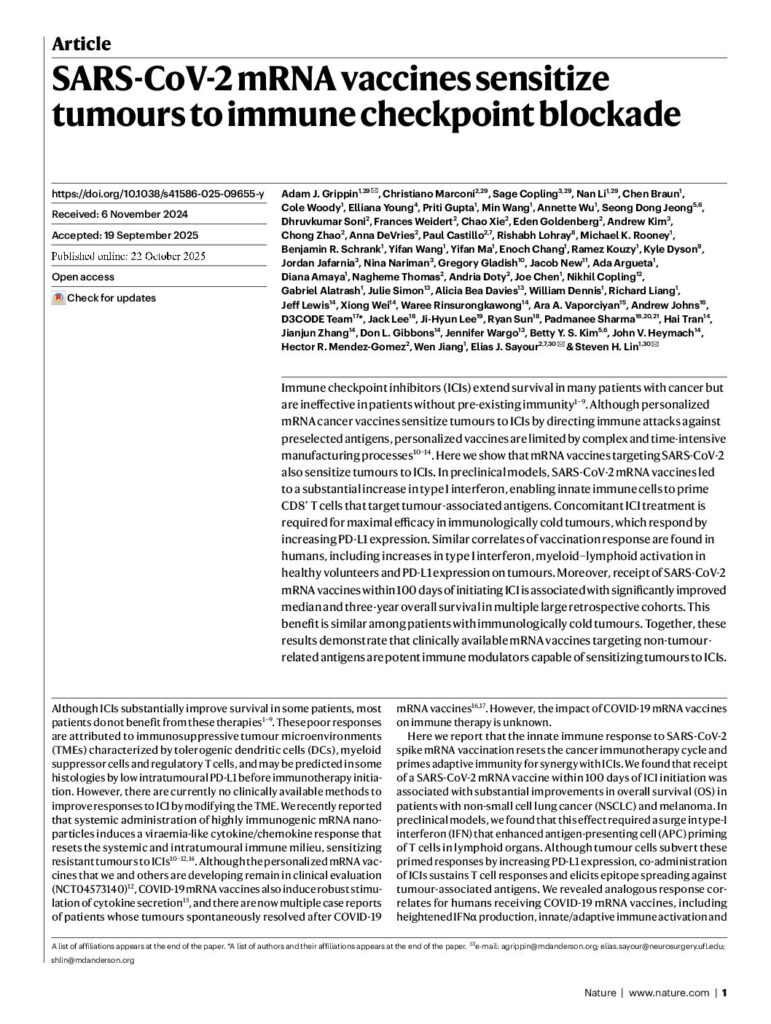
The same mRNA technology that helped the world battle COVID-19 is now showing extraordinary promise in the fight against cancer. A new study published in Nature has revealed that COVID-19 vaccines can activate a powerful immune response that appears to “wake up” the body’s natural defenses against tumors — nearly doubling the median survival length of cancer patients in some cases.

The collaborative research — led by the University of Florida and the University of Texas MD Anderson Cancer Center — analyzed the medical records of more than 1,000 cancer patients. The results suggest that the immune activation triggered by the COVID-19 mRNA vaccine may enhance the body’s anti-tumor immunity.

This marks what scientists are calling a defining moment in more than a decade of research into mRNA-based therapeutics designed to mobilize the immune system. If validated through a randomized clinical trial now being planned, the discovery could transform modern oncology.

“The implications are extraordinary — this could revolutionize the entire field of oncologic care,” said Elias Sayour, M.D., Ph.D., a UF Health pediatric oncologist and the Stop Children’s Cancer/Bonnie R. Freeman Professor for Pediatric Oncology Research. “We could design an even better, nonspecific vaccine to mobilize and reset the immune response — a universal, off-the-shelf cancer vaccine for all cancer patients.”

This breakthrough builds on Sayour’s prior eight years of work developing mRNA-lipid nanoparticle systems that deliver immune-stimulating messages to the body’s cells. The principle is simple but profound: use mRNA to retrain the immune system to recognize and destroy cancer cells, much like it does with viral infections.

The new findings reinforce the growing belief that mRNA vaccines — initially deployed to fight COVID-19 — have far-reaching applications beyond infectious disease. The technology allows scientists to rapidly program the immune system with precise instructions, unlocking a new era of personalized and universal medicine.

Jeff Coller, Ph.D., a leading mRNA scientist at Johns Hopkins University, said the study illustrates how Operation Warp Speed continues to save lives long after the pandemic’s peak.

“The results from this study demonstrate how powerful mRNA medicines truly are and that they are revolutionizing our treatment of cancer,” said Coller.

The study’s authors emphasize that while the results are preliminary, they represent a crucial step toward what many once considered science fiction — a universal cancer vaccine.

mRNA, or messenger RNA, naturally exists in every living cell, carrying the instructions needed to make proteins. The COVID-19 vaccines used synthetic mRNA to teach the immune system how to recognize and neutralize the SARS-CoV-2 virus. This same mechanism, researchers now believe, can be redirected to target cancer cells by enhancing immune surveillance and resetting dysfunctional immune pathways.

If these early results are confirmed in upcoming clinical trials, the ripple effects will be enormous — redefining not only cancer treatment but the future of immunology itself.

Reference:
Nature. mRNA vaccine-induced immune activation enhances anti-tumor response (2025). https://www.nature.com/articles/s41586-025-09655-y

COVID-19 mRNA vaccine sparks immune response to fight cancer

COVID-19 & Long COVID Science

bookmark_borderThe Deadly Nexus: Climate Change, Pathogens, and Political Denial

By Daniel Brouse
August 6, 2025

A recent study published in JAMA Health Forum, titled “Global Estimates of Lives and Life-Years Saved by COVID-19 Vaccination During 2020-2024”, provides powerful evidence of the lifesaving impact of COVID-19 vaccines. The study estimates that vaccinations prevented 2.5 million deaths globally over the 2020–2024 period. The sensitivity analysis suggests a possible range between 1.4 million and 4.0 million lives saved. Additionally, the vaccines preserved an estimated 15 million life-years, with a range of 7 to 24 million life-years spared from loss.

These findings underscore the immense value of vaccines—not only in saving lives but also in preserving health and longevity across the globe. And yet, despite this overwhelming success, vaccine research and preparedness in the U.S. is under threat.

In a controversial move, the Trump administration—under the direction of Robert F. Kennedy Jr., now serving as U.S. Secretary of Health and Human Services (HHS)—has halted federal funding for further mRNA vaccine development. In total, approximately $500 million in contracts and grants have been canceled. The cuts affect 22 projects overseen by the Biomedical Advanced Research and Development Authority (BARDA), including key partnerships with Pfizer and Moderna focused on next-generation vaccines for COVID-19 and influenza.

Kennedy claims the decision was based on concerns that current mRNA vaccines are not sufficiently effective against upper respiratory infections. Instead, HHS will shift focus to what Kennedy calls “better solutions.” However, scientists and public health experts widely disagree with this decision.

Experts argue that mRNA vaccines have proven remarkably successful, especially at preventing severe disease, hospitalization, and death. The cancellation of these projects threatens to weaken pandemic preparedness, slow down vaccine innovation, and leave the country vulnerable to future outbreaks.

Critics also point to Kennedy’s long history of anti-vaccine activism. Before joining the administration, he led the Children’s Health Defense, a group notorious for spreading vaccine misinformation. Kennedy has no formal medical or scientific qualifications, and his decisions now risk reversing hard-won public health progress.

The contrast is stark: while scientific studies confirm the critical role vaccines have played in saving millions of lives, the current political leadership is actively dismantling the infrastructure needed to build on that success. If the U.S. fails to support vaccine innovation and public health readiness, it may not only undo past gains—but also face graver consequences in the pandemics to come.

Compounding the danger of vaccine defunding is the Trump administration’s parallel attack on climate and public health science. The combination of climate denialism and anti-science policymaking is not only shortsighted—it is exponentially dangerous.

One of the most alarming but underreported consequences of climate change is the escalating risk of infectious disease outbreaks. As global temperatures rise and precipitation patterns shift, climate hazards are altering ecosystems and expanding the reach of disease vectors like mosquitoes, ticks, and rodents. These changes not only allow pathogens to survive longer and in more regions, but also increase the chances of zoonotic spillover events, where diseases jump from animals to humans as happened with COVID-19.

A landmark study published in Nature drove home the severity of this threat:

“Over half of known human pathogenic diseases can be aggravated by climate change.”

The researchers found that 58% of all infectious diseases—including malaria, dengue, Lyme disease, hantavirus, cholera, and even COVID-19—are being exacerbated by climate-related hazards such as flooding, heatwaves, drought, wildfires, and sea level rise.

“The human pathogenic diseases and transmission pathways aggravated by climatic hazards are too numerous for comprehensive societal adaptations. Managing one or two diseases is feasible. But when 58% of diseases are being affected or triggered in 1,000 different ways, it becomes clear we are not going to be able to adapt to climate change.”

This insight is chilling: the scale and speed at which pathogens are evolving and spreading outpace our current public health systems, particularly in nations that are slashing research budgets and ignoring the science.

And yet, the Trump administration has aggressively defunded both climate research and public health initiatives. Programs that once tracked and modeled disease-vector migration, climate-linked outbreaks, and early warning systems for zoonotic spillovers have been dismantled. These cuts, combined with the rollback of environmental protections and vaccine research funding, represent a systemic dismantling of our national resilience to converging crises.

Rather than preparing for a future in which climate and health threats are increasingly intertwined, the U.S. is being steered in the opposite direction—toward deliberate ignorance. The consequences are not theoretical: they are already unfolding in the form of worsening pandemics, overwhelmed health systems, and rising mortality.

It’s no longer just about failing to act. These policies represent an active acceleration of risk, amplifying the likelihood of mass death, economic collapse, and public distrust.

In an age where science offers us the tools to save lives, choosing to ignore it is not only negligent—it is lethal.

Conclusion
Health feedback loops, violent rain, and deadly humid heat are fueling an exponential rise in climate-related deaths. This lethal triad — disease, extreme heat, and intense rainfall — demonstrates that climate change is not a distant threat but a rapidly accelerating public health emergency. These stressors interact and amplify one another, creating a cascade of compounding impacts that demand urgent intervention.

All 50 U.S. states — including Alaska — are already experiencing deadly humid heat advisories. Large regions of the country are becoming uninhabitable for weeks or even months each year due to extreme heat. Wet-bulb temperatures are approaching 31°C (87.8°F) in multiple states — a physiological threshold beyond which sustained outdoor survival is impossible, even with water and shade. Meanwhile, violent rain events are killing hundreds and causing billions in annual damage. Climate-driven health feedback loops have become the leading cause of mortality in the United States — fueled by systemic interactions between temperature extremes, air quality degradation, disease vectors, and infrastructure collapse. Addressing climate change is no longer just an environmental imperative — it is a public health necessity.

Our climate model — which incorporates complex socio-economic and ecological feedback loops within a dynamic, nonlinear system — projects that global temperatures could rise by up to 9°C (16.2°F) within this century. This far exceeds earlier estimates of a 4°C rise over the next thousand years, highlighting a dramatic acceleration in global warming. We are now entering a phase of compound, cascading collapse, where climate, ecological, and societal systems destabilize through interlinked, self-reinforcing feedback loops.

We examine how human activities — such as deforestation, fossil fuel combustion, mass consumption, industrial agriculture, and land development — interact with ecological processes like thermal energy redistribution, carbon cycling, hydrological flow, biodiversity loss, and the spread of disease vectors. These interactions do not follow linear cause-and-effect patterns. Instead, they form complex, self-reinforcing feedback loops that can trigger rapid, system-wide transformations — often abruptly and without warning. Grasping these dynamics is crucial for accurately assessing global risks and developing effective strategies for long-term survival.
The Human Induced Climate Change Experiment

Trumpenomics: The Decline of the US

bookmark_borderGut Reactions: How Microbial Triggers, COVID-19, and Climate Feedback Loops Drive Chronic Illness

by Daniel Brouse
July 29, 2025

Multiple Sclerosis (MS) is a devastating autoimmune disorder in which the immune system mistakenly targets the protective myelin sheath that insulates nerve fibers, impairing communication between the brain and body. With a history of MS in my family, I’ve long explored whether its roots are hereditary, environmental, or microbial. Recent research reveals that the gut microbiome may hold the key—not only to MS, but to a broader understanding of chronic illness, infectious disease, and even climate-driven health threats.

The Microbiome and MS: A Gut-Level Discovery

A groundbreaking study by researchers at Ludwig Maximilian University of Munich (LMU) has made visible what many have long suspected: auto-aggressive T cells—central agents in MS—are activated in a specific region of the gut. Critically, this activation is microbiome-dependent.

Read the LMU study

A rare twin study involving 81 genetically identical pairs—where only one sibling developed MS—identified Eisenbergiella tayi and Lachnoclostridium as microbial suspects. These species reside in the small intestine and belong to the Lachnospiraceae family, normally thought to aid digestion. But under low-fiber diets, these bacteria switch to digesting the gut’s protective mucus layer—weakening the intestinal barrier and triggering immune surveillance systems.

This shift primes the immune system to attack, a process potentially intensified by E. tayi’s metabolic byproducts: ethanol and succinate, known stimulants of Th17 immune cells. Th17 overactivation is a known mechanism in MS, where misdirected immune responses degrade neural insulation.

The COVID-19 Connection: Microbes, Inflammation, and Immune Misfires

This microbial mechanism isn’t unique to MS. It echoes findings from studies on COVID-19, where disruptions in gut flora are tied directly to disease severity. In the study “Gut microbiota composition reflects disease severity and dysfunctional immune responses in patients with COVID-19,” researchers found:

  • COVID-19 patients exhibited dramatically altered gut microbiomes compared to non-COVID individuals.

  • These disruptions correlated with disease severity, higher inflammatory cytokines, and markers such as C-reactive protein and liver enzymes.

  • Even after the acute phase, dysbiosis persisted—possibly contributing to long-COVID symptoms.

Though SARS-CoV-2 infects the respiratory system, the gut’s immune role appears central to disease trajectory. Associations between microbial composition and immune signaling point to the gut as a regulator of inflammation—whether in neurodegeneration or viral response.

Nonlinear Feedback Loops and Climate Health Risk

What links MS, COVID-19, and climate change? The answer lies in systemic feedback loops—interconnected cycles that amplify disruption once they begin.

As rising global temperatures destabilize natural systems, they trigger multiple health-related feedback loops. These loops are not isolated or linear; instead, they feed into one another, accelerating deterioration of immune function, environmental integrity, and human health. The breakdown of one system—for example, air quality—exacerbates others, such as susceptibility to infection or chronic illness.

Case Study: COVID-19 and Air Pollution—A Deadly Spiral

The relationship between air pollution and COVID-19 is a textbook example of a compounding health feedback loop:

  1. Long-term exposure to polluted air weakens immune systems and causes chronic respiratory and cardiovascular disease.

  2. Infection with COVID-19 hits this vulnerable population harder, increasing hospitalizations and death rates.

  3. Survivors often face long-COVID complications, further compromised by ongoing pollution exposure.

  4. This cycle continues, draining resilience and pushing individuals toward chronic illness or early death.

This isn’t hypothetical. It’s observable now, and it’s worsening.

From Individuals to Systems: The Tipping Point in Public Health

These feedback loops don’t stop at the individual. They strain health systems, drain economic productivity, and destabilize entire populations. Hospitals flooded with heatstroke patients or long-COVID sufferers are not just medical crises—they are system-level tipping points. Workforce depletion, skyrocketing healthcare costs, and shortened life expectancy are cascading consequences.

And there are generational echoes. Chronic stress and inflammation—driven by microbial imbalance and environmental toxins—can trigger epigenetic changes that increase disease susceptibility in offspring. This sets in motion a transgenerational health spiral that compounds the crisis.

Conclusion: A Web of Converging Crises Demands Immediate Action

The climate crisis is a public health emergency. Its intersections with microbial dysbiosis, pollution, and immune dysfunction form a web of reinforcing threats that erode life expectancy and societal resilience.

To break these cycles, we must:

  • Reduce greenhouse gas emissions to mitigate extreme heat and its biological stressors.

  • Regulate air and water pollutants that impair immune function and gut health.

  • Support microbiome research and gut-health interventions that could prevent or treat autoimmune and infectious diseases.

  • Build resilient, climate-adaptive healthcare systems capable of withstanding compounding pressures.

Understanding the gut as a frontline in the battle for human health gives us a new lens—one that reveals not only the root causes of illness, but the urgent need for holistic, systems-level interventions. The time to act is now.

Climate-Driven Health Collapse: The Compounding Feedback Loops of Disease, Pollution, and Extreme Weather Brouse (2025)

The Human Induced Climate Change Experiment

bookmark_borderEurope Adds Vaccination as the Fourth Pillar of Heart Disease Prevention

by Daniel Brouse
July 8, 2025

Evidence continues to grow that major communicable diseases—including COVID-19, influenza, and pneumonia—can trigger or worsen cardiovascular disease. Recognizing this, the European Society of Cardiology (ESC) has issued a consensus statement recommending routine vaccinations as a standard component of cardiovascular risk management.

Traditionally, cardiovascular prevention has focused on three medical pillars:

  1. Antihypertensive medications (to control blood pressure),

  2. Lipid-lowering drugs (to manage cholesterol),

  3. Medications for diabetes management.

The ESC is now adding vaccination as the “fourth pillar” of cardiovascular prevention.

“Vaccinations have profound effects on cardiovascular risk and as such should be considered the fourth pillar of medical cardiovascular prevention,” the statement reads.

Why Vaccination Protects Your Heart

Viral and bacterial infections, including COVID-19, influenza, and pneumonia, can cause inflammation, increase clotting risk, and destabilize plaques in arteries, all of which can trigger heart attacks and strokes. Vaccination reduces the severity and likelihood of these infections, thereby lowering the risk of these cardiovascular events.

This approach is backed by robust data:

  • Flu vaccination reduces the risk of major cardiovascular events by 26% and cardiovascular death by 18% in high-risk patients.

  • COVID-19 vaccination lowers the risk of cardiac complications associated with infection, including myocarditis, arrhythmias, heart attacks, and strokes.

A Paradigm Shift in Public Health

This shift by the ESC reflects a growing understanding of the interconnectedness of infectious diseases and chronic health conditions, emphasizing prevention as a cornerstone of healthcare. It also underscores how vaccination extends beyond individual protection, benefiting broader public health while reducing healthcare burdens and costs associated with cardiovascular events.

The U.S. Should Take Note

While Europe is integrating vaccination into its heart disease prevention guidelines, the U.S. continues to face anti-science movements undermining vaccine uptake, even as cardiovascular disease remains the leading cause of death. Adopting a similar evidence-based approach would save lives, reduce healthcare costs, and improve the quality of life for millions of Americans.

Sources:

COVID-19 Science

bookmark_borderCOVID’s Lasting Toll: The Chronic Health Crisis President Trump’s Anti-Science Agenda Ignored

by Daniel Brouse
June 19, 2025

Do not let the current anti-science administration mislead you about President Donald Trump’s catastrophic handling of the COVID-19 pandemic—both during the initial outbreak and in the years that followed. His continued denial of scientific evidence, public health expertise, and global medical consensus has contributed to hundreds of thousands of avoidable deaths. Worse still, millions who survived the initial infection are now grappling with serious, long-term health complications—many of which could have been reduced or prevented with responsible leadership.

COVID-19 is not just an acute respiratory illness. Mounting research shows that even mild or moderate cases—particularly in unvaccinated individuals—can trigger persistent, systemic health problems that degrade quality of life and shorten life expectancy. Those with preexisting conditions or predisposed genetic markers are especially at risk, but even healthy individuals have suffered from post-infection damage.

The Long Shadow of COVID: A Public Health Emergency Downplayed

Scientific studies confirm that SARS-CoV-2 can cause a wide array of chronic health issues long after the virus has left the body. These include:

Systemic and Long-Term Health Impacts of COVID-19:

  • Low Iron & Elevated Cytokines: Disrupts oxygen transport, promotes chronic inflammation, and damages tissues—raising the risk of autoimmune disorders.

  • Permanent Organ Damage: Especially affecting the heart, lungs, kidneys, and brain.

  • Persistent SARS-CoV-2 RNA: Viral RNA has been found in various organs and brain tissue months after infection.

  • Gut Microbiome Disruption: Loss of healthy gut bacteria weakens the immune system and increases vulnerability to illness.

  • Epigenetic Changes & DNA Modifications: Alters how genes function, potentially leading to disease development over time.

  • Tryptophan Deficiency & Kynurenine Pathway Dysfunction: Impairs mood regulation and neurological balance.

  • Neurological Damage: Including memory loss, brain fog, and higher risk of Alzheimer’s disease.

  • Reduced Physical Capacity & Muscle Cell Death: Leads to chronic fatigue and reduced mobility.

  • Metabolic Breakdown: NAD+ depletion and IDO overactivity contribute to aging, inflammation, and tissue degeneration.

  • Autoimmune Responses & Rogue Antibodies: Cause the body to attack its own cells, with far-reaching effects.

  • New-Onset Diabetes & Cardiovascular Disease: COVID-19 has been shown to significantly increase the risk of both.

  • Vascular Disorders, Stroke, & Myocarditis: Common among even young and previously healthy patients.

  • Increased Cancer Susceptibility: Chronic inflammation and immune suppression may raise cancer risk.

  • Blood Clots & Embolisms: Dangerous complications even after recovery.

  • Hypertension and Long-Term Heart Disease: Frequently observed in post-COVID patients.

  • Multisystem Inflammatory Syndrome in Children (MIS-C): A life-threatening condition linked to COVID exposure in children.

  • Immune Dysregulation & “Cytokine Storms”: Immune system overreactions can cause severe damage and death.

“It is important to note that the severity of disease in humans is not determined only by virus replication but also by the host immune response to the infection, which may lead to dysregulation of the innate immune system, i.e., a cytokine storm.”

Alarming Evidence from New Research

A recent study titled “COVID-19 Increases the Rate of Incident Diabetes: A Case-Control Cohort Time-to-Event Study” concluded that COVID-19 significantly increases the risk of developing diabetes well after the acute phase of illness. These findings emphasize the importance of long-term monitoring and follow-up care for those who have had the virus—even once.

Who Is Responsible?

President Trump continues to dismiss scientific warnings and minimizes the long-term consequences of COVID-19. His administration’s messaging not only sowed confusion during the height of the pandemic but continues to downplay the lasting danger of post-COVID conditions. From rejecting mask mandates to undermining vaccine efforts, his leadership remains a public health liability.

The human toll of these decisions cannot be overstated. The United States now faces a surge of chronic illness—largely invisible, but devastating in its impact on families, the healthcare system, and the economy.

The Fight for Truth—and Accountability

This is not just about history—it’s about now. The chronic impacts of COVID-19 are real, well-documented, and growing. As President Trump continues to push anti-science rhetoric and obstruct investment in long COVID research and care, Americans are left to bear the consequences.

Science must guide our future—our health, our policies, and our leadership. Until then, the damage from this administration’s failures will continue to unfold, one life at a time.

Trumpenomics: The Decline of the US

Science Based Information — Covid-19

bookmark_borderFar-UVC Light: Effective for Disinfection, But Is It Safe for Humans?

by Daniel Brouse
June 8, 2025

Far-UVC light, typically at a wavelength of 222 nanometers, has gained attention as a potentially safer alternative to traditional germicidal ultraviolet light (254 nm) for disinfecting public spaces, especially during and after the COVID-19 pandemic. While Far-UVC does not penetrate the skin or eyes as deeply as conventional UV light, its safety is still under active investigation, and there are important risks to consider—particularly with prolonged or high-dose exposure.

For the skin, Far-UVC is largely absorbed by the outermost dead cell layer, the stratum corneum, which limits its ability to reach living tissues. However, studies have shown that at high enough doses, Far-UVC can still cause erythema (skin redness) and DNA damage in superficial cells. These effects may be more pronounced in people with compromised skin barriers, such as those with cuts, thin or damaged skin, or in vulnerable populations like infants. Although some animal studies suggest a low risk of tumor formation, others raise concerns about whether repeated exposure might accelerate skin aging or increase cancer risk.

The eyes are particularly vulnerable to Far-UVC. While the light does not reach the retina, it is absorbed by the cornea and conjunctiva, where it can cause irritation, dryness, and in some cases photokeratitis—an inflammation similar to a sunburn on the eye. Because the eyes lack the protective outer layers that the skin has, they are considered a high-risk area for Far-UVC exposure, especially in settings with prolonged human presence.

Another area of concern is DNA damage. Far-UVC can still induce the formation of DNA lesions, such as cyclobutane pyrimidine dimers (CPDs), even if it doesn’t penetrate deeply. While the body has mechanisms to repair such damage, the long-term implications are still unclear, and there’s ongoing debate over whether chronic, low-level exposure may increase the risk of skin cancer or systemic effects through epigenetic changes.

Adding to the uncertainty is the lack of standardized safety regulations. While organizations like the American Conference of Governmental Industrial Hygienists (ACGIH) have issued provisional exposure limits, there is no universally accepted standard for safe daily exposure, especially in workplaces, schools, or hospitals. Until more long-term research is available, the use of Far-UVC in occupied spaces should be approached with caution.

In summary, while Far-UVC may offer a promising way to disinfect air and surfaces without the same level of harm as traditional UV light, it is not without risk. Safe implementation requires strict adherence to exposure guidelines, avoiding direct eye contact, and monitoring for signs of skin or eye irritation. Long-term studies are still needed to fully understand the effects of chronic exposure, and the current scientific consensus leans toward a cautious, carefully regulated approach.

Caution and Recommendation:
Far-UVC poses unknown long-term risks to human health, particularly to the eyes and skin with repeated or prolonged exposure. While current studies suggest it may be safer than conventional UV light, the lack of definitive safety data warrants a precautionary approach. The most effective and safest use of Far-UVC is to enclose it within HVAC systems, where it can disinfect circulating air without direct human exposure. This setup not only maximizes its pathogen-killing potential but also greatly reduces the likelihood of adverse health effects, making it a preferred strategy for schools, hospitals, offices, and other occupied indoor environments.

COVID-19 & Long COVID Science

bookmark_borderIs COVID-19 Accelerating Aging? How the Virus Is Rewriting the Rules of Brain and Body Health

by Daniel Brouse
June 7, 2025

Five years after the COVID-19 pandemic began, evidence is mounting that the virus may be fundamentally altering how we age. Millions continue to suffer from Long-COVID, with cognitive decline and chronic health issues affecting both young and old. Doctors now warn that COVID doesn’t just cause short-term illness—it may lead to lasting physical and neurological damage.

Key Takeaways:

  • Long-Term Damage: COVID-19 can damage vital organs, impair brain function, and leave survivors with long-lasting disabilities—even after mild infections.

  • Viral Persistence: SARS-CoV-2 may remain in the body for months or years. Persistent spike proteins have been found in the brain’s protective layers and bone marrow, potentially fueling inflammation and raising the risk of diseases like Alzheimer’s.

  • Immune Disruption: Long-COVID often includes a weakened immune system, low iron, elevated inflammation, and higher chances of developing autoimmune disorders.

  • Genetic Changes: The virus triggers genetic and epigenetic shifts that can impair immune response, increase the risk of chronic illness (e.g., diabetes, cancer), and accelerate biological aging.

  • Nutrient Deficiencies: COVID can disrupt NAD+, tryptophan, and vitamin pathways, leading to widespread fatigue, cognitive issues, and worsened mental health.

  • Reinfection Risks: Each reinfection further raises the likelihood of hospitalization, organ damage, and death, making cumulative exposure more dangerous over time.

Conclusion:
COVID-19 is not just a passing infection—it may be a lifelong health event. With long-term consequences ranging from cognitive decline to multi-organ dysfunction, the virus appears to be reshaping the aging process itself. Tailored treatments and long-term monitoring are now essential for those affected.

COVID CHRONIC CONDITIONS

* Low Iron and Elevated Cytokines (inefficient oxygen transport, inflammatory imbalances, persistent symptoms, damage tissues, and autoimmune diseases)
* Permanent Organ Damage
* Persistent SARS-CoV-2 RNA in multiple organs and throughout the brain
* Destruction of Good Gut Bacteria Resulting in a Compromised Immune System
* Epigenetic Modifications (Changes to DNA)
* Change in Cell Fate
* Tryptophan Deficiency
* Dysfunctional Kynurenine Pathway
* Neurological Damage
* New-Onset Alzheimer’s Disease
* Reduced Exercise Capacity and Muscle Cell Death
* Down Regulating NAD+
* Up Regulating IDO
* Rogue Antibodies
* Insulin Reduction, Diabetes, High Cholesterol, Heart Disease and Stroke
* Increased Risk of Cancer
* Blood Clots
* Hypertension, Vascular Disorders, Myocarditis and Heart Disease
* Multisystem Inflammatory Syndrome in Children (MIS-C)
* Dysregulation of the innate immune system, i.e. “cytokine storm”