bookmark_borderAre Wildfires Decreasing?

No.

Global wildfire trends are more complicated than simply counting the number of fires. Scientists are increasingly concerned about the growth of extreme, high-intensity fires, the amount of carbon released, the length of fire seasons, and the expansion of fires into ecosystems that historically burned less frequently.

Did you know that major Canadian wildfires can generate ozone and ozone precursors that are transported into the United States, degrading air quality and affecting public health hundreds or even thousands of miles away? The smoke doesn’t just contain particulate pollution—it also contributes to the formation of ground-level ozone, a pollutant linked to respiratory disease, climate warming, reduced plant productivity, and diminished CO₂ sequestration. Ozone damages vegetation by impairing photosynthesis and weakening plant health, and prolonged exposure can contribute to forest decline and increased tree mortality.

And then there are the so-called “zombie fires” in parts of Canada and Siberia. These fires can smolder underground in carbon-rich peat and permafrost through the winter, re-emerging when temperatures rise. They release carbon that has been locked away for centuries or even millennia, creating an additional climate feedback that many people are unaware of.

A meaningful discussion isn’t about whether someone can find a statistic showing fewer fires in one dataset or region. It’s about understanding what is actually happening in the Earth system: larger extreme fires, longer fire seasons, increased carbon emissions, long-range ozone pollution, and emerging feedbacks from thawing permafrost. Those are the trends scientists are paying attention to.

bookmark_borderAir Quality Reaches Code Red in Philadelphia and Jersey Shore: Wildfire Smoke Sparks Health Alerts

by Daniel Brouse
July 27, 2025

Air quality levels reached Code Red across parts of Philadelphia and the Jersey Shore last evening and today, prompting urgent health warnings for residents. The alert, triggered by unhealthy concentrations of fine particulate matter (PM2.5), was in effect from the southern tip of Long Beach Island to Sea Isle City, extending inland as far as Egg Harbor.

A Code Red Air Quality Alert means the air is considered “unhealthy for all individuals,” not just those with pre-existing conditions. Public health officials strongly advised everyone—especially children, the elderly, and those with asthma, heart, or lung conditions—to limit time outdoors, avoid strenuous activity, and stay inside with filtered air whenever possible.

“These pollutant particulates can penetrate deep into the lungs,” warned local air quality experts. “Even short-term exposure can cause inflammation, trigger asthma attacks, or worsen cardiovascular symptoms.”

Wildfire Smoke From Canada the Primary Cause
The spike in pollution was caused by smoke drifting south from ongoing wildfires in Canada. This marks another chapter in a growing trend of long-distance smoke events, as climate-fueled wildfires in the northern latitudes increasingly affect air quality thousands of miles away.
Temporary Relief from Incoming Rain

Conditions improved after midnight in a few areas, thanks to an incoming band of rain, which helped wash particulates out of the atmosphere. However, the reprieve was short-lived. Code Red conditions continued Sunday. With the Canadian wildfires still actively burning, experts warn that similar air quality alerts may return in the coming days depending on wind patterns and fire behavior.

A Growing Public Health Concern
Episodes like this are becoming more frequent and severe, highlighting how climate change and transboundary pollution are converging to impact public health. As wildfire seasons lengthen and intensify globally, the U.S. Northeast and Mid-Atlantic regions may continue to see deteriorating air quality even without local fires.

Public health officials encourage residents to check the AirNow.gov or local environmental agency websites for real-time air quality updates, and to consider investing in HEPA air purifiers or using MERV-13 filters in home HVAC systems to reduce indoor exposure.

Wildfires and Climate Change
Wildfires are becoming more intense, more frequent, and more destructive in climate-sensitive regions such as Canada, the U.S. West, Southern Europe, and Australia.

In fact, unprecedented events are now unfolding. In Canada, vast swaths of boreal forest and peatland are burning year-round. Once considered permanently frozen, Canadian peat permafrost has begun to smolder even beneath the snow, releasing immense quantities of carbon dioxide and methane. These fires, known as “zombie fires,” persist underground through the winter and reignite during spring and summer. This phenomenon marks a terrifying shift in the fire-climate feedback loop.

Wildfire behavior is now directly tied to a compounding set of climate-driven feedbacks. One such loop is: Drought → Fire → Dieback. During extended drought and extreme heat, trees close their stomata to conserve water, which reduces their CO₂ uptake and weakens their resilience. At the same time, warmer, drier conditions make forests more flammable. This leads to more frequent and intense fires, which kill trees and release the carbon they had stored. The Amazon rainforest, once the planet’s largest carbon sink, is now emitting more carbon than it absorbs.

Another underappreciated factor is ozone pollution, which results from fossil fuel combustion. Ground-level ozone damages plant tissues and further inhibits their ability to absorb CO₂, compounding forest dieback and undermining global carbon sinks.

Additionally, wildfires generate “brown carbon”—a class of light-absorbing organic particles. These airborne particulates can travel thousands of miles and settle on snow and ice in Greenland, Antarctica, and mountain glaciers. By darkening the surface, brown carbon reduces the reflectivity (albedo) of ice, accelerating melting. This leads to greater freshwater runoff, destabilizing ocean circulation patterns such as the Atlantic Meridional Overturning Circulation (AMOC), and further warming the poles.

This creates a cascading carbon feedback loop: drought and heat increase wildfires; wildfires kill forests and release stored carbon; ozone and pollution further weaken vegetation; and brown carbon accelerates ice melt. All of these processes contribute more greenhouse gases to the atmosphere, amplifying climate change and locking in even more fire, drought, and environmental collapse.

Drought → Fire → Dieback → Carbon Feedback

Drought stresses trees, increasing flammability and reducing CO2 uptake. Fires release stored carbon, turning the Amazon from a carbon sink into a carbon source. Brown carbon from wildfires darkens snow and ice globally, accelerating melt and AMOC slowdown, feeding back into the system.

Ignite a Domino Effect: Albedo, Brown Carbon, Permafrost  Brouse and Mukherjee (2025)

Canadian Wildfires: Over the Tipping Point Brouse (2024)

Wildfires, Climate Change and Extreme Weather Events Brouse and Mukherjee (2024)
The Human Induced Climate Change Experiment

bookmark_borderClimate Update: Chain Reaction of Devastation

by Daniel Brouse
February 28, 2025

Human-induced climate change is directly impacting the habitability of our planet through increased thermal energy. Beyond rising temperatures, the cascading crises resulting from climate change can have immediate effects on health and wellness. The pollution caused by California wildfires, for instance, is expected to have long-term health impacts. In response to recent fires, California has temporarily suspended certain environmental protection laws to expedite rebuilding efforts.

Benzene Contamination

One significant concern is benzene exposure, which can occur through inhalation or ingestion of contaminated water.

Health Impacts of Benzene:

  • Short-term Exposure: Inhaling or ingesting benzene can cause symptoms such as nausea and vomiting.
  • Long-term Exposure: Prolonged exposure to benzene is linked to an increased risk of cancer.

Benzene contamination in California’s drinking water has emerged as a significant concern following recent wildfires. The combustion of urban infrastructure during these fires releases hazardous chemicals, including benzene, into the environment. Benzene, a known carcinogen, can infiltrate water systems through damaged pipes and compromised infrastructure.

In the aftermath of the Palisades and Eaton fires in Los Angeles, over 9,000 structures were affected, leading to contamination of municipal water supplies. Authorities have issued advisories against using tap water for drinking, cooking, or washing, recommending the use of bottled water instead. Boiling the water is discouraged, as it may not remove volatile organic compounds like benzene and could potentially concentrate them.

The process of restoring safe drinking water is complex and time-consuming. It involves extensive testing, system flushing, and infrastructure repairs, which can take from several days to months, depending on the severity of the contamination. For instance, after the Camp Fire in Paradise, California, in 2018, the town’s water supply was contaminated with benzene, and the remediation efforts extended over a prolonged period.

Residents in wildfire-prone areas are advised to stay informed through official channels and adhere to public health advisories regarding water usage. Using alternative water sources and avoiding the use of potentially contaminated tap water are crucial steps to minimize health risks associated with benzene exposure.  The best response is to avoid the area and do not rebuild.

In response to the recent wildfires, California Governor Gavin Newsom signed an executive order on January 12, 2025, suspending certain environmental regulations to expedite rebuilding efforts. This order temporarily lifts requirements under the California Environmental Quality Act (CEQA) and the California Coastal Act for development projects aimed at repairing or replacing properties damaged by the fires. While this action facilitates quicker reconstruction, it has raised concerns about potential environmental impacts due to the suspension of standard review processes.

The health impacts of wildfire-related pollution are profound. Short-term exposure to wildfire smoke can cause mild irritations like runny noses and scratchy throats, as well as more severe conditions such as bronchitis. For sensitive groups, including children, the elderly, pregnant individuals, and those with pre-existing respiratory and cardiovascular issues, the risks are even higher. Long-term exposure to pollutants from wildfire smoke has been linked to chronic respiratory diseases and an increased risk of cardiovascular problems.

Addressing the cascading crises resulting from climate change-induced events like wildfires requires a multifaceted approach. This includes implementing robust environmental protections, ensuring public health preparedness, and promoting sustainable practices to mitigate the underlying causes of climate change.

bookmark_borderClimate Change Wildfires

by Daniel Brouse and Sidd Mukherjee

About the 2023 wildfires in Hawaii, Governor Josh Green said, “For perspective, we’ve had six fire emergencies this August, we had six fire emergencies between 1953 and 2003. That’s how- how fast things are changing. I know that there is debate out there whether we should be talking about climate change or not. Well, let’s be real world, climate change is here we are in the midst of it with a hotter planet, and fiercer storms.”

Climate change is contributing to the increased intensity and frequency of wildfires through a combination of factors that create favorable conditions for wildfires to ignite, spread, and become more destructive. Here are some key ways in which climate change influences wildfires:

  1. Higher Temperatures:
    • Impact: Rising global temperatures increase the likelihood of extreme heat events.
    • Effect on Wildfires: Higher temperatures contribute to drier conditions, leading to increased evaporation and moisture loss from vegetation. Dry and hot conditions provide a more conducive environment for wildfires to ignite and spread.
  2. Drought Conditions:
    • Impact: Changes in precipitation patterns and prolonged droughts are linked to climate change.
    • Effect on Wildfires: Drought conditions result in dry vegetation, making it more susceptible to ignition. Reduced soil moisture levels also contribute to the flammability of ecosystems.
  3. Changing Rainfall Patterns:
    • Impact: Climate change alters regional rainfall patterns, leading to more intense rainfall in some areas and prolonged dry spells in others.
    • Effect on Wildfires: Areas experiencing reduced rainfall may face prolonged dry seasons, creating conditions favorable for wildfires. Intense rainfall in certain regions can lead to the growth of vegetation, which later dries out and becomes potential fuel for fires.
  4. Warming Winters:
    • Impact: Warmer winter temperatures can affect snowpack and contribute to earlier snowmelt.
    • Effect on Wildfires: Reduced snowpack and earlier snowmelt can result in drier soil and vegetation earlier in the year, extending the wildfire season and increasing the period of vulnerability to fire ignition.
  5. Extended Fire Season:
    • Impact: Changes in climate contribute to longer and more intense fire seasons.
    • Effect on Wildfires: A longer fire season means that conditions conducive to wildfires persist for a more extended period, increasing the likelihood of ignition and the potential for wildfires to become larger and more destructive.
  6. Insect Infestations:
    • Impact: Warmer temperatures allow for the proliferation of certain insects, such as bark beetles.
    • Effect on Wildfires: Insect-infested trees become more susceptible to disease and wildfire. Dead and dry trees contribute to the fuel load, increasing the intensity and spread of wildfires.
  7. Wind Patterns:
    • Impact: Changes in climate can influence wind patterns.
    • Effect on Wildfires: Changes in wind patterns can contribute to the rapid spread of wildfires. Strong winds can carry embers over long distances, leading to the ignition of new areas.
  8. Thawing Permafrost:
    • Impact: Warming temperatures contribute to the thawing of permafrost.
    • Effect on Wildfires: Thawing permafrost releases stored carbon, creating flammable conditions. It can also lead to changes in vegetation types, altering fuel availability for wildfires.

The combination of these factors creates a feedback loops, where more intense and frequent wildfires release large amounts of carbon dioxide into the atmosphere, contributing to further climate change. This cycle reinforces the importance of addressing both the causes and consequences of climate change to mitigate the impact on wildfire risk. While the beautiful sunsets during forest fires create captivating visuals, it’s essential to recognize the environmental and health impacts associated with wildfires. Wildfires can cause significant damage to ecosystems, contribute to air pollution, and pose risks to human health. The mesmerizing sunsets are a visible reminder of the interconnectedness of atmospheric processes and the far-reaching effects of natural events like wildfires.

In addition to the carbon feedback loop (the carbon emissions of Canada’s fires outweighed the combined emissions from its oil and gas, transport and agriculture sectors), the fires also cause the melting of the permafrost and zombie fires to burn in the permafrost. The permafrost collapse is a self-sustaining feedback loop/tipping point. As the permafrost melts, the peatlands emit CO2 and methane. The increase in CO2 and methane results in more warming that results in more peatland emissions. A third feedback loop is created with lightning strikes. The study Forests at Risk Due to Lightning Fires found a sensitivity of extratropical intact forests to potential increases in lightning fires, which would have far-reaching consequences for terrestrial carbon storage and biodiversity. The results show that, on a global scale, lightning is the primary ignition source of fires in temperate and boreal forests. Global warming causes more extreme weather events and conditions for lightning creating more forest fires that create more warming and more lightning strikes.

The study Wildfire as a major driver of recent permafrost thaw in boreal peatlands published in the Journal Nature Communications found wildfires have caused a quarter of permafrost thaw (2,000 square kilometres) in Western Canada’s boreal peatlands over the past 30 years. “Historically, permafrost in this area underwent a natural cycle of thawing and reforming, but given current climate conditions and projections for the future, this fire-induced thaw appears to be irreversible,” said Carolyn Gibson, who conducted the research.

On January 1, 2024, the article, Why Are Alaska’s Rivers Turning Orange?, was published in Scientific America. “Streams in Alaska are turning orange with iron and sulfuric acid. Scientists who have studied these rusting rivers agree that the ultimate cause is climate change. Kobuk Valley National Park has warmed by 2.4 degrees Celsius (4.32 degrees Fahrenheit) since 2006 and could get another 10.2 degrees C hotter by 2100, a greater increase than projected for any other national park. The heat may already have begun to thaw 40 percent of the park’s permafrost, the layer of earth just under the topsoil that normally remains frozen year-round. McPhee wanted to protect the Salmon River because humans had ‘not yet begun to change it.’ Now, less than 50 years later, we have done just that. The last great wilderness in America, which by law is supposed to be ‘untrammeled by man,’ is being trammeled from afar by our global emissions.”

NASA reported: Wildland fire experts have described Canada’s 2023 fire season as record-breaking and shocking. Over the course of a fire season that started early and ended late, blazes have burned an estimated 18.4 million hectares. Hundreds of fires exceeded 10,000 hectares (39 square miles), large enough to be considered “megafires.” These megafires were also unusually widespread this season, charring forests from British Columbia and Alberta in the west to Quebec and the Atlantic provinces in the east to the Northwest Territories and the Yukon in the north.

Though the rate of change in climate disasters’ intensity, duration, and likelihood vary according to the type of extreme weather, a “rule-of-thumb” can be derived from the Canada wildfires of 2023. The World Weather Attribution Organization found, “Climate change made the cumulative severity of Quebec’s 2023 fire season to the end of July around 50% more intense, and seasons of this severity at least seven times more likely to occur.”

50% more intense
7 x more likely

Sidd said, “Do you remember back in the early 2000’s when we thought we wouldn’t live to see the extreme changes due to global warming?”

Daniel replied, “I think 2023 is the most significant year so far. We saw confirmation of tipping points being crossed for Mountain Glacier Loss, Greenland Ice Sheet Collapse, Antarctic Ice Sheet Collapse, and potentially the Collapse of AMOC.”

Sidd continued, “We already knew that. It was Canada catching on fire that I could not believe. I never thought I’d live to see the day.”

Daniel asked, “Do you think the permafrost and peatlands will have zombie fires and cause the permafrost tipping point?”

Sidd responded, “Yes. They are gone, too. We already know from the permafrost peatland fires in Siberia.”

Daniel ponders, “Hmmmm… I guess that means my plan went up in smoke? My worst case scenario / last resort emergency plan was to escape to Canada.”

ALSO SEE:
How is All Real Estate at Risk From Climate Change? Brouse and Mukherjee (2024)
The Long-term Breathing Experiment / Brouse (2023)
Health Impacts of Air Pollution / Brouse (2023)
Climate Change: Rate of Acceleration / Brouse and Mukherjee (2023)
Toppled Tipping Points: The Domino Effect / Brouse and Mukherjee (2023)
Tree Extinction Due to Human Induced Environmental Stress / Mukherjee and Brouse (2005)
Soil Degradation and Desertification / Brouse (2024)
Create a Climate-Resilient Environment in and Around Your Home / Brouse (2024)


bookmark_borderHow is All Real Estate at Risk From Climate Change?

By Daniel Brouse and Sidd Mukherjee

Climate change poses risks to real estate in the United States in various ways, and these risks can affect property values, insurance costs, and overall property resilience. Here are some ways in which all US real estate is at risk from climate change:

  1. Sea Level Rise and Coastal Properties:
    • Coastal properties are particularly vulnerable to sea level rise, storm surges, and coastal erosion. As sea levels continue to rise due to global warming, properties near coastlines may experience increased flooding and damage from more frequent and severe storms. Storm surges in Florida are an example.
  2. Extreme Weather Events:
    • Climate change is contributing to an increase in the frequency and intensity of extreme weather events, such as hurricanes, wildfires, floods, and droughts. Properties in regions prone to these events are at risk of damage, destruction, and increased insurance costs.
  3. Temperature Extremes:
    • Rising temperatures can lead to more frequent and prolonged heatwaves, affecting property infrastructure, energy demand, and potentially decreasing property values in areas with extreme heat.
  4. Changes in Precipitation Patterns:
    • Changes in precipitation patterns, including increased violent rainfall or prolonged droughts, can impact properties by causing flooding, landslides, or water scarcity. These changes may affect property values and increase maintenance costs.
  5. Wildfires:
    • Increased temperatures and changing precipitation patterns contribute to the risk of wildfires. Properties in wildfire-prone areas face threats to both their physical structures and the surrounding environment.
  6. Homeowners and Flood Insurance Costs:
    • Flood insurance will become expensive and difficult to obtain. Climate-related risks can lead to higher insurance premiums and deductibles, particularly in high-risk areas. As the frequency and severity of climate-related events increase, insurance companies may reassess risk models and adjust pricing accordingly.
  7. Infrastructure Vulnerability:
    • Climate change can impact infrastructure such as roads, bridges, and utilities. Properties relying on vulnerable infrastructure may face challenges related to accessibility, reliability, and potential increases in repair and maintenance costs.
  8. Health Risks:
    • Humans will experience greater loss and damage to life and quality of life from air pollution, decreasing supply of potable water, extreme weather events, and disease. The greatest short term climate change risk to human health is deadly humid heat (wet-bulb temperature). Climate change can affect human health, and properties in areas prone to heatwaves, air pollution, or vector-borne diseases may face increased health risks. This could influence property values and community desirability.Almost all survivors of climate-related disasters suffer from mental distress. Of those who have not experienced climate disasters, more than two-thirds of U.S. adults (68%) have reported climate change anxiety.
  9. Regulatory Changes:
    • Governments may implement stricter building codes, zoning regulations, and disclosure requirements related to climate-related risks. Non-compliance could affect property values and lead to increased costs for property owners. Loss and damage litigation against oil companies and governments will change world economics.
  10. Shifts in Property Demand:

It’s important to note that the degree of risk varies by region and property type. Some areas may experience more immediate and severe impacts, while others may be more resilient. Assessing and mitigating these risks require a comprehensive understanding of local climate vulnerabilities and the implementation of strategies to enhance property resilience. Policymakers, real estate professionals, and property owners are increasingly recognizing the importance of addressing climate risks to ensure the long-term sustainability and value of real estate assets. Thus, our recommendation to evacuate Florida now (i.e. Managed Retreat).

Create a Climate-Resilient Environment in and Around Your Home Brouse (2024)

Managed Retreat: Relocating Due to Climate Change Extreme Weather Events Brouse (2023)

Stormwater Runoff Management for Your House Brouse (2024)

Tree Extinction Due to Human Induced Environmental Stress Mukherjee and Brouse (2005-present)

Soil Degradation and Desertification Brouse (2024)

Atmospheric Rivers Mukherjee and Brouse (2022-2023)

Violent Rain and the Substrate Brouse and Laden (2024)

The Long-term Breathing Experiment Brouse (2023)

Health Impacts of Air Pollution Brouse (2023)

Plymouth Meeting, Pennsylvania and the Substrate Daniel Brouse (2023)

Real Estate Underwater: A Florida Climate Change Case Study Daniel Brouse (2023)

Climate Change Impacts on Flood Risks and Real Estate Values Sidd Mukherjee and Daniel Brouse (2023)

Real Estate and Climate Change: Stranded on an Island Daniel Brouse (2023)

Tipping Cascades, Social-Ecological Systems, and the Hottest Year in History Brouse (2024)

All About Flood Insurance Brouse and Mukherjee (1995-present)

The Age of Loss and Damage Brouse (2023)

bookmark_borderThe Lightning Feedback Loop

by Daniel Brouse
November 11, 2023

Feedback is the process in which changing one quantity changes a second quantity, and the change in the second quantity in turn changes the first. Positive feedback loops amplify the change in the first quantity.

Studies have found lightning and forest fires are creating a feedback loop. More lightning sparks a vicious cycle, as trees and soil set ablaze release warming CO2 creating more storms and more lightning.

The study Forests at Risk Due to Lightning Fires found a sensitivity of extratropical intact forests to potential increases in lightning fires, which would have far-reaching consequences for terrestrial carbon storage and biodiversity. The results show that, on a global scale, lightning is the primary ignition source of fires in temperate and boreal forests.

“What many people may not be aware of is that lightning is the most common ignition source for fires in remote temperate and boreal forests,” says Thomas Janssen, research associate at VU Amsterdam. These forests store large amounts of carbon, which is released in the form of greenhouse gases during the fire. The research reveals that 77 % of the burned area in intact forest regions outside the tropics is due to lightning fires, and the number of strikes is expected to increase by 11 to 31 % per degree warming with ongoing climate change.

“When a thunderstorm passes through this landscape, there are thousands of lightning strikes, and some hundreds of them start little fires,” said Prof Sander Veraverbeke from the Vrije Universiteit Amsterdam, one of the authors on the research paper. “And these can grow together into mega-fire complexes that become the size of small countries. Once these fires are so big, it becomes very difficult to do anything about them.”

Toppled Tipping Points: The Domino Effect / Brouse and Mukherjee (2023)

bookmark_borderCalifornia Homeowners Insurance Consider Climate Change Prices

California use to only allow a max of 7% increase a year on homeowners insurance… and only base premiums on past payouts on a property. Not anymore.

“California will let insurance companies consider climate change when setting their prices, the state’s chief regulator announced Thursday, a move aimed at preventing insurers from fleeing the state over fears of massive losses from wildfires and other natural disasters. The rule change could mean higher rates for homeowners who are already seeing dramatic increases. Eight insurance companies doing business in California have requested rate increases of at least 20% or higher this year, according to the California Department of Insurance,” AP news reported.

“Modernizing our insurance market is not going to be easy or happen overnight. We are in really unchartered territory and we must make difficult choices when the world is changing rapidly.” California Insurance Commissioner Ricardo Lara said.

“Insurers have advanced a very powerful argument that the past is not as good a predictor of the future as it used to be,” said Amy Bach, executive director of United Policyholders. “I think the (Insurance) department did what it needed to do to try to restore a viable market. We don’t have a viable market right now in this state in a lot of areas.”

Florida and Louisiana already have a homeowners insurance crisis with companies fleeing the states. The 9th National Risk Assessment for Homeowners Insurance found 1/4 of all homes in the nation are underpriced for climate risk insurance.

More articles on Flood Insurance, Rising Sea Levels and Global Warming.

bookmark_borderClimate Change: Insurance Risk

The 9th National Risk Assessment for Homeowners Insurance found climate risks place 39 million U.S. homes at risk of losing their insurance. “Sound pricing is going to make it unaffordable to live in certain places as climate impacts emerge.”

“There’s this climate insurance bubble out there,” said Jeremy Porter, the head of climate implications at First Street and a contributor to the report. “And you can quantify it.”

“There’s no education to the public of what’s going on and where the risk is,” said Porter, explaining that most insurance models are proprietary. Even the Federal Emergency Management Agency (FEMA) doesn’t make flood insurance pricing available to the public. Homeowners must obtain coverage through a private insurance broker for a quote.

Wildfires are the fastest growing natural disaster risk. According to the report, “It’s not just wildfires – pressure on flood and wind insurance is increasing, too.”

Porter went on to say, “You don’t want someone to live in a place that always burns. They don”t belong there. We’re subsidizing people to live in harm’s way. Large numbers of people will need to be relocated away from areas that will be uninsurable. There is a reckoning on the horizon and it’s not pretty.”

Flow Speeds

The burning of fossil fuels and other human released emissions have impacted momentum’s impact. A warmer atmosphere can hold more moisture. Warmer air allows for the creation of more massive raindrops. Warmer ocean temperatures create stronger hurricanes. Hail and tornadoes form in strong thunderstorm clouds with intense updrafts, high liquid-water content, and large water droplets.

Sidd added: It’s worse than that. Wind and water flow forces scale as the square of velocity, so as flow speeds increase (say due to more intense heating or heavier rain) the damage scales as the square of the velocity.

So a twenty mile an hour wind exerts four times as much force as a ten mile an hour wind. And a forty mile an hour wind exerts sixteen times as much force as a ten mile an hour wind. A wind of fifty miles an hour exerts twenty five times and a wind of sixty miles an hour exerts thirty six times as much force as one of ten miles an hour. Then you have the density term. Water is about eight hundred times denser than air, So the force exerted by a ten mile an hour flow of water is eight hundred times that of a ten mile an hour wind. So as flow velocities go up due to climate change, force and damage scale as square of the velocities. What is not clear is how much these velocities increase with climate change. But in a sense we are seeing this already as, for example, flood and sewage systems succumb and hillsides fall down, and so on.

Climate change’s influence on wind and water flow forces caused more severe damage and deaths. The Maui wildfire of August 2023 is an example. What would have been a fairly routine wildfire was fanned out-of-control by hurricane force winds. One headline read, “Maui fires: Hawaii blazes fanned by Hurricane Dora”. Another headline read, “Hawaii wildfires kill as ‘apocalypse’ hits Maui island”. The New York Times reported, “Gov. Josh Green of Hawaii said on Thursday that the devastating wildfires that swept through western Maui and killed at least 55 people, and possibly many more, were ‘likely the largest natural disaster in Hawaii state history.'”

Both wind and water flow forces contributed to the devastation. Hurricane Dora was at least 500 miles from Hawaii yet the wind forces impacted the fire in Maui. The winds were so strong that before the fire reached Lahaina extremely hot air blew over the town. The streets were so hot they burnt people’s feet trying to flee. The surface of everything became hot. Even after people jumped into the ocean, they said the debris in the water was too hot to float on. Almost all the boats in the harbor burned.

The blast of hot air over Lahaina created the conditions for a flashpoint. A flashpoint is the temperature at which a particular organic compound gives off sufficient vapor to ignite in air. The entire town ignited so quickly that warning sirens could not be activated and people did not have time to escape.

In an unexpected twist, water flow forces also contributed to the chaos. How could water flow add to the fire emergency conditions? When people fled the heat and fire, they jumped into the sea. ABC news reported: Shawn Dougherty, of Lahaina, was among the hundreds of residents forced to flee the resort city when the wildfire began engulfing their homes.

Like others, Dougherty said his only means of survival was to jump into the ocean with his girlfriend, but while some found safety in nearby jetties, the rocks and coral tore up Dougherty’s body.

“At one point, it seemed like I might drown,” he told ABC News. “{I’m a good swimmer, but the water was just really rough because of the wind and the turbulence.”

Norway Floods 2023

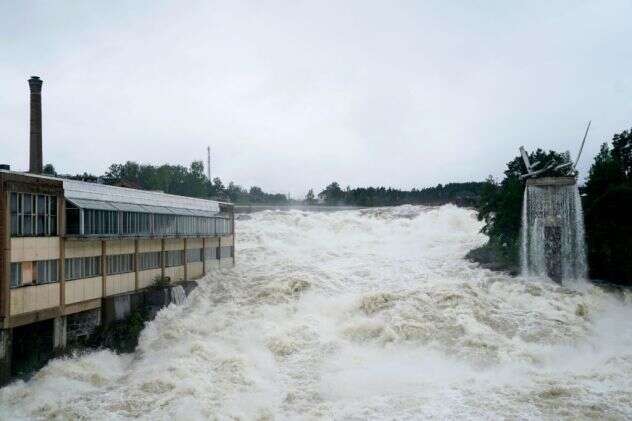
Also in August of 2023, climate change’s influence on water flow forces caused more severe damage and deaths. AccuWeather reported, “Dam bursts open as deadly flooding washes away homes in Norway. Torrents of water gushed through multiple towns across Norway and landslides cascaded down mountainsides after a deluge drenched Norway.”

Summary

By increasing the energy in the system, humans have increased flow volumes, masses and velocities leading to increased damage (and deaths.)

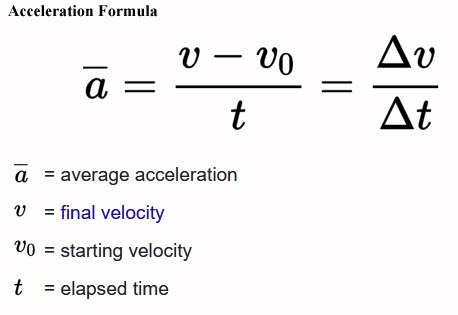
Newton’s second law: F = m * a
F = force
m = mass of an object
a = acceleration

Acceleration Formula

ALSO SEE
Climate Change: Rate of Acceleration
By 2020, there was enough data to see the “doubling period” of some anthropogenic climate affects had gone from 100 years to 10 years. For instance the rate of sea level rise has gone from about 1.5 millimeters per year to over 3 millimeters. We expect to see the doubling period to continue to shrink raising the possibility of sea levels rising a foot/year by 2050.

Tipping points and feedback loops are parts of an equation that determine the rate of acceleration in climate change.

Climate Change: The End of Times

More articles on Flood Insurance, Rising Sea Levels and Global Warming.

bookmark_borderClimate Change: Rate of Acceleration

By Daniel Brouse and Sidd Mukhurjee
August 25, 2023

How fast are humans causing the climate to change? When we started our experiments in the 1990’s, we thought the time scale was in millenniums. If climate change were happening on a linear basis, we would have been correct; however, by the late 90’s we were convinced climate change was non-linear.

By 2020, there was enough data to see the “doubling period” of some anthropogenic climate affects had gone from 100 years to 10 years. For instance the rate of sea level rise has gone from about 1.5 millimeters per year to over 3 millimeters. We expect to see the doubling period to continue to shrink raising the possibility of sea levels rising a foot/year by 2050.

Though the rate of change in climate disasters’ intensity, duration, and likelihood vary according to the type of extreme weather, a “rule-of-thumb” can be derived from the Canada wildfires of 2023. The World Weather Attribution Organization found, “Climate change made the cumulative severity of Québec’s 2023 fire season to the end of July around 50% more intense, and seasons of this severity at least seven times more likely to occur.”

50% more intense
7 x more likely

These numbers may be similar in other catastrophes like hurricanes, heat waves, droughts, floods, tornadoes, and sea level rise.

If the doubling time remains at 10 years, we could see extreme events 100% more intense and/or longer in duration, as well as, 14 times more likely to occur. As mentioned above, we expect the doubling time to be reduced. If the doubling time is 5 years, in ten years we could see 200% more intense and longer extreme weather events being 28 times more likely to occur.

At what rate is climate change accelerating?
A: Rapidly
As described above, we do not know the rate of acceleration other than to say it is more rapid than previously thought. In the summer of 2023, the extreme temperatures left most climate scientists shocked. The average earth surface temperature recorded record highs for months reaching over 3 degrees Celsius above pre-industrial levels. The Paris Agreement calls for keeping temperatures below 1.5 degrees. Scientists concur that a rise of 2 degrees will trigger feedback loops and tipping points. Triggering these tipping points results in the CO2 stored in nature to be released. Though we do not know how much carbon is stored in nature, it would be reasonable to assume that the temperature could be pushed from 3 degrees to 6 degrees above pre-industrial levels. Humans can not thrive above a rise of 1.5 degrees. Humans can not survive if the temperature rises 6 degrees.

About the 2023 wildfires in Hawaii, Governor Josh Green said, “For perspective, we’ve had six fire emergencies this August, we had six fire emergencies between 1953 and 2003. That’s how- how fast things are changing. I know that there is debate out there whether we should be talking about climate change or not. Well, let’s be real world, climate change is here we are in the midst of it with a hotter planet, and fiercer storms.”

About the catastrophic die-off of 10,000 emperor penguin chicks in the Antarctic, Dr. Caroline Holmes of the British Antarctic Survey (an expert on Antarctic sea-ice) said, “What we’re seeing right now is so far outside what we’ve observed previously. We expected change but I don’t think we expected so much change so rapidly.”

What you can do today. How to save the planet.

Climate Change: The End of Times

The Human Induced Climate Change Experiment

bookmark_borderTrees, Climate Change, and Wildfires

by Daniel Brouse
September 5, 2022

Pollution, droughts, and pests are killing many of our trees. Climate change is involved in all these causes. In addition, climate change feedback loops are accelerating the extinction of trees.

Feedback loops accelerate global warming. For example, global warming has resulted in tree deaths and deforestation. Trees are a natural carbon sink for carbon dioxide, as well as, provide shade, retain moisture, and aid in cooling. As trees die from the effects of global warming, climate change is accelerated resulting in more tree deaths. Scientists’ warning to humanity on tree extinctions, “This evidence suggests that a third of the world’s tree species are currently threatened with extinction, which represents a major ecological crisis. Large-scale extinction of tree species will lead to major biodiversity losses in other species groups and substantially alter the cycling of carbon, water and nutrients in the world’s ecosystems. Loss of tree diversity could lead to abrupt declines in ecosystem functions and services, and ultimately ecosystem collapse.”

Wildfires also are a climate change feedback loop. As the planet warms, wildfires increase. Wildfires destroy the carbon sink of forests, and spew massive amounts of greenhouse gas emissions into the atmosphere. The result is an increase in global warming. The increase in global warming results in more wildfires resulting in desertification.

In 2020, 20% of all the forests in Australia burned. Some of these forests hadn’t seen fires in the last 35,000 years. “More than 24 million hectares (59 million acres) burned during Australia’s devastating ‘Black Summer’ bushfire season of 2019-2020, which formed part of a confirmed climate change-driven trend of worsening fire weather and larger, more intense forest fires,” reported Mongabay News.

The 2021 fire season saw a record number of acres burned in the Northwestern USA and Canada. In California a total of 8,835 fires were recorded, burning 2,568,948 acres (1,039,616 ha) across the state. Over 1.4 million acres burned in Oregon and Washington. “Three times in the past five years, over 10 million acres have burned nationwide. On average, over 2 million more acres burned each year in the 2010s than during the 1990s,” reports Spokane’s KXLY.

Research published in the Proceedings of the National Academy of Sciences reports, “by 2070, around 2 billion people are expected to live in extremely hot areas” similar to the Sahara Desert.

The Human Induced Climate Change Experiment