A: In 1994, I started a publishing company with another scientist (low temperature physicist and co-builder of the Ohio States supercomputer). The name of the publishing company is The Philadelphia Spirit Experiment. As the name suggests, it is a scientific experiment in the publishing of arts and science. At the time, domain names were free and the world wide web was 6 months old. We wanted a name that both rhymed and made a good scientific pun — everything passes through the Membrane Domain. The KingArthur.com anti-IQ test launched in 1995.
We were the first record company, fine arts, science, technology, math, and engineering publisher on the web. As such, we were the first to analize web traffic. Our monthly audience is over 300 million. Innovations include: the clickable button on a webpage, MP3 distribution, pay-per-download, free streaming music, the web-based video… and interactive games to save the planet (including a $1,000,000 prize to solve the Anthropogenic Global Warming problem.
My areas of expertise include: musicology, geology, meteorology, anthropology, biology, health & wellness, sociology, security, climate change, physics, finance, economics, statistics, computer science, data science, chaos theory, political science, publishing, logic, and philosophy. In general, my aptitude is in science, technology, engineering, and math.
Reuters reported:
DAVOS, Switzerland (Reuters) – The world needs to prepare for millions of people being driven from their homes by the impact of climate change, the United Nations High Commissioner for Refugees.
Speaking to Reuters at the World Economic Forum, Filippo Grandi said a U.N. ruling this week meant those fleeing as a result of climate change deserved international protection, and that it had broad implications for governments.
The U.N. Human Rights Committee made the landmark ruling on Monday in relation to Ioane Teitiota, from the Pacific nation of Kiribati, who brought a case against New Zealand after authorities denied his claim of asylum.
“The ruling says if you have an immediate threat to your life due to climate change, due to the climate emergency, and if you cross the border and go to another country, you should not be sent back, because you would be at risk of your life, just like in a war or in a situation of persecution,” Grandi said.
“We must be prepared for a large surge of people moving against their will,” he said. “I wouldn’t venture to talk about specific numbers, it’s too speculative, but certainly we’re talking about millions here.”
Potential drivers include wildfires like those seen in Australia, rising sea levels affecting low-lying islands, the destruction of crops and livestock in sub-Saharan Africa and floods worldwide, not least in parts of the developed world.
Whereas for most of its 70 years UNHCR, the UN’s refugee agency, has worked to assist those fleeing poorer countries as a result of conflict, climate change is more indiscriminate.
“It is further proof that refugee movements and the broader issue of migration of populations … is a global challenge that cannot be confined to a few countries,” said Grandi.
70 MILLION DISPLACED
Yet the convention relating to the status of refugees, signed in 1951, made no provision for climate change as a reason for people to flee their country and seek asylum elsewhere. As climate impacts grow, legal questions become more complicated.
UNHCR, whose budget has risen from $1 billion a year in the early 1990s to $8.6 billion in 2019 as conflicts in Iraq, Afghanistan and Syria have forced civilians to flee, now assists more than 70 million forcibly displaced people.
Turkey is the largest recipient, with more than 4 million refugees and asylum seekers, the vast majority from Syria. That has strained Turkey’s public finances and led President Tayyip Erdogan to demand more assistance from Europe.
Last November, Erdogan threatened to open the door for Syrian refugees to head to Europe unless the European Union stepped up, and he is now calling for the “resettlement” of up to 1 million Syrians in the north of their homeland.
Slideshow (12 Images)
Grandi said European governments needed to think hard about solutions to the migrant crisis, which has affected them since 2015, but also show more understanding of Turkey’s situation.
“We must recognise that, for the past several years (Turkey)has been hosting the largest refugee population in the world,” he said. “There’s a lot of political talk. I concentrate on the substance of this, which is ‘let’s strengthen Turkey’s ability to host refugees until they can go back safely, voluntarily to their countries’.”
Worldwide insect populations are in decline by as much as 80%. Insects are in a downward spiral threatening a “catastrophic collapse of nature’s ecosystems”, as reported by a global scientific review.
“Unless we change our ways of producing food, insects as a whole will go down the path of extinction in a few decades. The repercussions this will have for the planet’s ecosystems are catastrophic to say the least.”
• Over 40% of insect species are threatened with extinction.
• Lepidoptera, Hymenoptera and dung beetles (Coleoptera) are the taxa most affected.
• Four aquatic taxa are imperiled and have already lost a large proportion of species.
• Habitat loss by conversion to intensive agriculture is the main driver of the declines.
• Agro-chemical pollutants, invasive species and climate change are additional causes.
“If insect species losses cannot be halted, this will have catastrophic consequences for both the planet’s ecosystems and for the survival of mankind,” said Francisco Sánchez-Bayo.
“The main cause of the decline is agricultural intensification,” Sánchez-Bayo said. “That means the elimination of all trees and shrubs that normally surround the fields, so there are plain, bare fields that are treated with synthetic fertilisers and pesticides.”The demise of insects appears to have started at the beginning of the 20th century, accelerated during the 1950’s and 1960’s and reached “alarming proportions” over the last twenty years.
“If insect species losses cannot be halted, this will have catastrophic consequences for both the planet’s ecosystems and for the survival of mankind”
In a new release from the World Health Organization (WHO), “air pollution levels remain dangerously high.” Updated estimations reveal an alarming death toll of 7 million people every year caused by ambient (outdoor) and household air pollution.
Dr. Tedros Adhanom Ghebreyesus, Director-General of WHO said, “It is unacceptable that over 3 billion people – most of them women and children – are still breathing deadly smoke every day from using polluting stoves and fuels in their homes. If we don’t take urgent action on air pollution, we will never come close to achieving sustainable development.”
Key findings:
WHO estimates that around 90% of people worldwide breathe polluted air. Over the past 6 years, ambient air pollution levels have remained high and approximatively stable, with declining concentrations in some part of Europe and in the Americas.
The highest ambient air pollution levels are in the Eastern Mediterranean Region and in South-East Asia, with annual mean levels often exceeding more than 5 times WHO limits, followed by low and middle-income cities in Africa and the Western Pacific.
Africa and some of the Western Pacific have a serious lack of air pollution data. For Africa, the database now contains PM measurements for more than twice as many cities as previous versions, however data was identified for only 8 of 47 countries in the region.
Europe has the highest number of places reporting data.
In general, ambient air pollution levels are lowest in high-income countries, particularly in Europe, the Americas and the Western Pacific.In cities of high-income countries in Europe, air pollution has been shown to lower average life expectancy by anywhere between 2 and 24 months, depending on pollution levels.
The information on how the Trump campaign obtained and exploited citizens’ privacy should serve as an example to your personal responsibility in maintaining internet security.
Do not use any Facebook game, IQ test, quiz or other third-party APP’s (applications). Never give permission allowing a third party access to your personal information. Shame on you if you allow your friends information to be accessed!
The BBC reported, “In 2014, Facebook invited users to find out their personality type via a quiz developed by Cambridge University researcher Dr Kogan called This is Your Digital Life.”
The personality quiz was used to exploit users personal information, as well as, all your friends’ personal information. Your (and your friends’) information was then sold through Cambridge Analytica to the Trump campaign and used to exploit you.
WHAT CAN YOU DO TO HELP PROTECT YOUR PRIVACY?
Privacy suggestions:
1) change your default Facebook settings (make sure you never share your friends info. by default)
2) clear your web browser’s cookies on a regular basis
3) install an ad blocker
For example, using FireFox web browser with the AdBlock Add-on https://addons.mozilla.org/en-US/firefox/addon/adblock-plus/
OR
1) just use TOR browser Download the Tor browser (free)
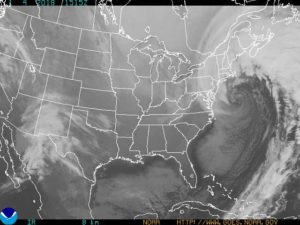
Bomb Cyclone Storm on January 4, 2018 off the Northeastern Shore
“‘Bomb cyclone’ blasting East Coast before polar vortex uncorks tremendous cold late this week. The most severe winter weather yet will assault the area late this week.” — washingtonpost.com (January 3, 2018)
The bomb cyclone blizzard was a 1,000 mile wide Nor’easter classified as a “bomb cyclone” because of its sharp drop in atmospheric pressure. “Bombogenesis, a popular term used by meteorologists, occurs when a midlatitude cyclone rapidly intensifies, dropping at least 24 millibars over 24 hours,” said NOAA.
“We are not saying that the Earth’s temperature is just going to rise. In general, as energy is added to a system, the fluctuations in the system increase. So, we expect more storms, more droughts, more wildfires, more floods, more fluctuations of all kinds. What we are saying is that weather conditions will become more volatile due to the impact of humans,” said Sidd Mukherjee and Daniel Brouse (2004)
“What use to be a once-in-a-hundred year event is now an annual event.” (2017)
“I think the public and many policymakers don’t really take those 100-year forecasts very seriously,” said Myles Allen, an Oxford scientist who is now one of the world’s leading experts in attribution science. “They are much more seriously interested in the question of what is happening now and why—which boils down to attribution.”
It use to be that scientists were reluctant to relate any single weather event to climate change; however, that has changed.
NOAA now issues a report for extreme weather events, “This report provides information on direct economic losses, deaths, and other impacts for numerous weather and climate disasters including tropical cyclones, floods, droughts and heat waves, severe storms (e.g., tornadoes, hail, and straight-line winds), wildfires, crop freeze events, and winter storms.”
The Bulletin of the American Meteorological Society now issues a special report each year assessing the impact of climate change on the previous year’s extreme events.
Scientific American reported, Myles Allen had hinted about “litigation two years before Hurricane Katrina occurred. In his Nature commentary, he mused about the possibility of massive class-action lawsuits—carrying the potential for “up to six billion plaintiffs” around the world—attempting to hold greenhouse gas emitters liable for damages.
Attribution studies could help to apportion the blame, he noted. For instance, he wrote, “If, at a given confidence level, past greenhouse-gas emissions have increased the risk of a flood tenfold, and that flood occurs, then we can attribute, at that confidence level, 90% of any damage to those past emissions.”
About 2017, NPR reported, “This year will go down in history for its extreme weather. Researchers have now definitively attributed three major extreme weather events to climate change.”
LINDA WERTHEIMER, HOST:
If you’re listening to this program from the Midwest or East Coast, well, I hope you’re nice and warm inside your house or car. President Trump took note of the frigid temperatures in the East this holiday season with this tweet – perhaps we could use a little bit of that good, old global warming.
Climate scientists note that while parts of the U.S. are much colder than average now, the world as a whole this week is warmer than the average over recent decades. One thing climate scientists have long been reluctant to say is that specific extreme weather events are the result of climate change. But NPR’s Christopher Joyce says a little-noticed study this past year did prove a link.
CHRISTOPHER JOYCE, BYLINE: This was this – a study that determined that, yes, looking at events in 2016, 27 of them – they found three that were so off the charts that they had to be the result of what we have done to the planet. They’re just beyond what is expected to be a natural event.
WERTHEIMER: What are they? What are the three events?
JOYCE: Well, one was the incredible heat that we experienced – the average temperature around the globe in 2016. It was 1.7 degrees Fahrenheit above the average in the 20th century. And that is just enormous. The second one – extreme heat waves in Asia, especially India and Pakistan. Hundreds of people died. The temperatures were just beyond belief. And the third one – one not noticed that much – but something called the blob, which was a section of water in the Bering Sea off the coast of Alaska that was just unusually warm – again, so warm that it’s just beyond what could be modeled as being – as happening in a natural world.
WERTHEIMER: But still, how do they know that this was not just weird weather – certainly, extreme, unexpected, unusual?
JOYCE: You know, again, I have to use the word model, which people are afraid of. But they’re computer models. And what you basically do is you recreate the world as it was before the Industrial Revolution and certainly before the mid-20th century when we started warming it up. And you put in all of the atmosphere. You put in the oceans, the circulation, the temperature. And you sort of create this world before we changed it. And then you create another model of the world we’re in. And you take these events, and you put them in that model of what the world used to be like. And you can tell that they couldn’t have been created by the forces that were at work before we warmed the planet.
WERTHEIMER: So those three things could not have happened absent global warming.
JOYCE: Yeah. I talked to one of the scientists who did the work – who compiled the work – Stephanie Herring of the National Oceanic and Atmospheric Administration. And this is how she put it.
(SOUNDBITE OF ARCHIVED RECORDING)
STEPHANIE HERRING: Not even one in a million. They cannot replicate them in a world without climate change is what the scientists are saying. It’s a big result, yes. It’s – again, you know, we’ve been doing this for six years, 131 papers. This is our first time seeing this.
Q: Do you know what are two of the most dangerous exposures for children and the elderly?
A: Fresh air and sunshine. Either may be hazardous; however, when fresh air and sunshine are combined, the result can be extreme.
The sun can damage your skin and cause cancer. Air pollution causes many health risks, too.
Fresh Air + Sunshine = Dangerous
Sunshine is also part of a deadly reaction. When combined with heat and volatile gases in the air, ultraviolet light causes a deadly reaction. The result is tropospheric ozone.
The dangerous ozone (O3) is created when vehicle (and other) exhaust is not completely combusted. Nitrogen Oxides (NOx) and Volatile Organic Compounds (VOCs) in the exhaust react to temperature and sunlight creating tropospheric ozone (O3).
The ozone in the air can cause permanent damage to your respiratory and immune systems. Millions of micro-explosions enter through your mouth and nose (and to some extent eyes, ears and skin)… then, if lucky, complete their short lives in your lungs. (NOTE: Lucky, for the length of their life. Unlucky, for the length of yours.)
The field of consumer behavior is a social science that studies the psychology of consumerism. There are five basic psychological tactics to marketing:
* emotional and psychological appeals
* optimize credibility by highlighting your flaws
* re-position your competition
* promote exclusivity
* introduce fear, uncertainty, and doubt (FUD)
Fear is very powerful in marketing. An example of fear advertising happened when Lyndon Johnson ran against Barry Goldwater in 1964. Johnson wanted to stoke public fear that Goldwater would cause a nuclear war. The “Daisy ad” or “Peace, Little Girl” ran only one time. It showed a little girl picking petals from a daisy, followed by a nuclear explosion and Johnson ominously stating, “These are the stakes. To make a world in which all of God’s children can live, or to go into the dark.” Johnson won, carried 44 states, and took 61% of the vote in a landslide victory.
One of the first companies to use FUD as its business model is Tupperware. They pioneered the direct marketing strategy made famous by the Tupperware party. “A Tupperware party is run by a Tupperware ‘consultant’ for a host who invites friends and neighbors into his or her home to see the product line. Tupperware hosts are rewarded with free products based on the level of sales made at their party. Parties also take place in workplaces, schools, and other community groups.”
When friends and neighbors attend a Tupperware party, the host introduces fear, uncertainty, and doubt to the participants. The consumer is made to worry what their friends and neighbors will think of them if they don’t make a purchase. There is fear of being publicly humiliated and doubt whether you will be un-friended.
The most disturbing use of FUD is Donald J. Trump. The Donald has used every trick in the book when it comes to using fear, uncertainty and doubt to motivate people. The current atmosphere makes one wonder — “Has America turned into a giant Tupperware party?”
The Biloxi-Chitimacha-Choctaw Indians have lived on the Isle de Jean Charles off the coast of Louisiana for generations. The Native Americans were originally forced to flee to the island as refugees from the Indian Removal Act in the 1830’s. Now, these indigenous people are being forced to flee due to human induced climate change. Their island is disappearing.
“There’s a lot of changes that happened on the island in my lifetime,” says tribal Chief Albert Naquin. “We could walk to our next town to the east and we could walk to the next town to the west… Where my dad and I used to trap, now they go there in boats to fish crabs. With each hurricane, there’s less and less protection.”Back when I was a child, we used to ride out the hurricane on the island and not worry about flooding. We didn’t have to worry about the winds either, because there were a lot of trees… And now it’s basically an open field. So when a hurricane comes, it’s like here we are, come and get us.” Now, it is too late to save the island. “It’s like you have a cancer and you don’t do nothing about it, and then by the time you do something about it it’s too late… we’ve basically lost all our land. It’s basically gone.”
Up through the 1960’s, the oil and and gas industry built canals and pipelines that allowed salt water intrusion to destroy the wetlands. Steady erosion, extreme weather events and rising sea level has been a recipe for disaster. The result has been the loss of a football field size piece of ground every hour.
The government has announced a climate change refugee relocation plan:
The Isle de Jean Charles (IdJC) Band of Biloxi Chitimacha Choctaw and the Lowlander Center are pleased to announce the receipt of a $48 million grant from the U.S. Department of Housing and Urban Development (HUD).
HUD and the Rockefeller Foundation announced the winners of the $1 billion National Disaster Resilience Competition (NDRC) this past week, including an award to the State of Louisiana that will provide $48 million towards the resettlement of Isle de Jean Charles.
“The people of the Isle de Jean Charles Band of Biloxi-Chitimacha-Choctaw tribe are situated on the front line of Louisiana’s coastal land loss disaster and their ancestral home is sinking into the marsh,” Pat Forbes, Executive Director of the Louisiana Office of Community Development, said. “This $48 million grant will allow the state to help them resettle their entire community to a safer place with a minimum of disruption to livelihoods and lifestyles. Together, we’ll be creating a model for resettlement of endangered coastal communities throughout the United States.”
This Tribe’s historic home in Isle de Jean Charles is facing extreme coastal land loss and will soon be unable to serve as a viable home for tribal members. “This award will allow our Tribe to design and develop a new, culturally appropriate and resilient site for our community, safely located further inland,” according to Chief Albert Naquin.
The Lowlander Center, along with a team of nationally recognized indigenous and non-indigenous professionals are implementing the resettlement process in partnership with the Tribe. The resettlement will become a living model of community cultural resilience, disaster and climate change mitigation, green building practices, environmental stewardship, and sustainable economic development.