bookmark_borderDiet And Global Warming

For quite some time, the scientific consensus has been eating meat is worse for the environment than being a vegetarian; however, a new study found a very different result. Lettuce is “over three times worse in greenhouse gas emissions than eating bacon,” according to researchers from the Carnegie Mellon University.

Paul Fischbeck, study co-author and CMU’s professor of social and decisions sciences, said: “Lots of common vegetables require more resources per calorie than you would think. Eggplant, celery and cucumbers look particularly bad when compared to pork or chicken.”

bookmark_borderClimate Change Immigrants and Refugees

By Daniel Brouse

EARTH — As human induced climate change is realized, mammals have started showing patterns of migration. Some conditions are driving animals south due to the loss of their habitat (mostly animals living on ice, such as, seals and polar bears.) Some conditions are allowing animals to migrate further north (like humpback whales.) Some conditions are forcing animals to seek higher ground, as well as, escape salt water intrusion. (eg humans that live on islands)

* NOAA recently concluded that mammals are migrating due to global warming. “Humpback and fin whales are now able to go farther north in most winters, competing with beluga whales for resources,” a scientist for the National Oceanic and Atmospheric Administration said.

* The government of the Marshall Islands has requested climate change refugee status from the United States for former Bikini island residents. “The people of Bikini came back to us and asked us to take this proposal to the US, to request the resettlement trust fund be used to settle people in the US not just the Marshall Islands,” said Tony de Brum, Foreign Minister of the Marshall Islands. “We have not seen the final text of the legislation but the request that went in was on the basis of Kili being uninhabitable because of climate change.”

* In Paris almost 200 countries have ratified a new agreement in an attempt to help mitigate climate change. Included in the deal is $100bn fund to help developing and island countries adapt to global warming.

* Long ago in the United States, FEMA started a forced plan of relocation for homes located in areas prone to flooding.

Chances are large that if you are a mammal you will become a climate change refugee.

More on the Human Induced Climate Change Experiment

bookmark_borderRare Winter Air Quality Alert for Philadelphia

Philadelphia, PA — December 7 and 8, 2015 have been declared “don’t breath in Philly days” by the EPA. It is rare to have a December air quality alert in Philadelphia, PA. It is recommended not to breath in the out-of-doors on alert days. Children, elderly and physically active individuals are most at risk for disease and death.

View the current air quality for Philadelphia.

Philadelphia Air Quality Winter 2015

More on the health risks of air pollution.

Death By Ozone

More on global warming and climate change.

bookmark_borderChina: Air Quality *Red Alert*

The air pollution in China has become so bad the government has issued their first ever Red Alert. Schools in Beijing are closing and outdoor construction is to cease. The state-run Xinhua news agency says the red alert is the highest possible, and has not been used in the city before.

The air quality is so bad that it is unhealthy to breath. The very young, old and physically active are the most prone to ill-effects. Breathing the air could result in respiratory disease or even death.

Beijing Air Quality
Beijing Air Quality

More on the health risks of air pollution.

More on global warming and climate change.

bookmark_borderLakes Expanding Dangerously

The BBC reports that the glaciers on Mount Everest are melting so fast that they are causing large lakes. No only do the lakes make it difficult to scale the mountain, but if the ice dams break up it could cause massive flooding.

“A decade or so ago, there were individual ponds on the Khumbu glacier but in the past five years or so they have begun to get larger and join up,” said Ann Rowan, who led the field study team from the universities of Sheffield and Leeds.

“Particularly, on the left hand side of the lower reaches of the glacier, there is a series of about seven or eight large ponds that are now starting to link and form a big chain,” she told the BBC.

“There is water flowing from the upper part of the glacier through the series of these ponds and that is going to encourage them to join up.

“At present, the glacier appears to be disintegrating, and may form a few large and potentially hazardous lakes on the glacier surface.”

bookmark_borderGlacier Breakup

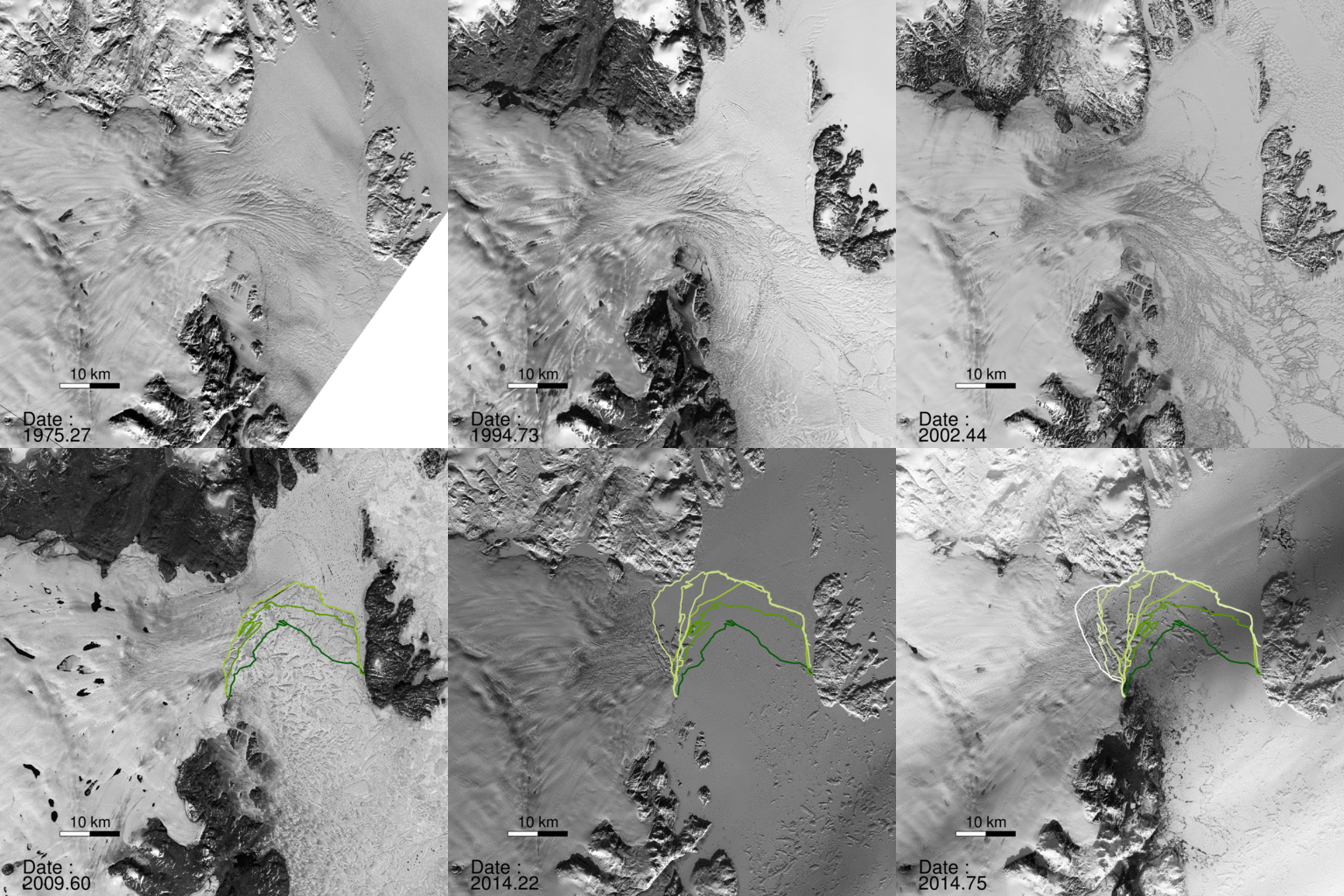
Glacier Breakup Animation
A NASA study published in the journal Science found a glacier in Greenland broke apart. “The consequences will be felt for decades to come.”

“North Greenland glaciers are changing rapidly,” said lead author Jeremie Mouginot, an assistant researcher in the Department of Earth System Science at the University of California, Irvine. “The shape and dynamics of Zachariae Isstrom have changed dramatically over the last few years. The glacier is now breaking up and calving high volumes of icebergs into the ocean, which will result in rising sea levels for decades to come.”

The scientists determined the bottom of Zachariae Isstrom is being rapidly eroded by warmer ocean water mixed with growing amounts of meltwater from the ice sheet surface. “Ocean warming has likely played a major role in triggering [the glacier’s] retreat,” Mouginot said, “but we need more oceanographic observations in this critical sector of Greenland to determine its future.”

“Zachariae Isstrom is being hit from above and below,” said the study’s senior author Eric Rignot, Chancellor’s Professor of Earth system science at UCI, and Joint Faculty Appointee at JPL. “The top of the glacier is melting away as a result of decades of steadily increasing air temperatures, while its underside is compromised by currents carrying warmer ocean water, and the glacier is now breaking away into bits and pieces and retreating into deeper ground.”

“Not long ago, we wondered about the effect on sea levels if Earth’s major glaciers in the polar regions were to start retreating,” Rignot noted. “We no longer need to wonder; for a couple of decades now, we’ve been able to directly observe the results of climate warming on polar glaciers. The changes are staggering and are now affecting the four corners of Greenland.”

bookmark_borderLargest Health Risk

The largest unnatural risk to your health is air pollution.

Air pollution is responsible for 1 in 8 deaths.

WHO reports:
In new estimates released today, WHO reports that in 2012 around 7 million people died – one in eight of total global deaths – as a result of air pollution exposure. This finding more than doubles previous estimates and confirms that air pollution is now the world’s largest single environmental health risk. Reducing air pollution could save millions of lives.
New estimates

In particular, the new data reveal a stronger link between both indoor and outdoor air pollution exposure and cardiovascular diseases, such as strokes and ischaemic heart disease, as well as between air pollution and cancer. This is in addition to air pollution’s role in the development of respiratory diseases, including acute respiratory infections and chronic obstructive pulmonary diseases.

The new estimates are not only based on more knowledge about the diseases caused by air pollution, but also upon better assessment of human exposure to air pollutants through the use of improved measurements and technology. This has enabled scientists to make a more detailed analysis of health risks from a wider demographic spread that now includes rural as well as urban areas.

Regionally, low- and middle-income countries in the WHO South-East Asia and Western Pacific Regions had the largest air pollution-related burden in 2012, with a total of 3.3 million deaths linked to indoor air pollution and 2.6 million deaths related to outdoor air pollution.

“Cleaning up the air we breathe prevents non-communicable diseases as well as reduces disease risks among women and vulnerable groups, including children and the elderly…”

Dr Flavia Bustreo, WHO Assistant Director-General Family, Women and Children’s Health

“Cleaning up the air we breathe prevents noncommunicable diseases as well as reduces disease risks among women and vulnerable groups, including children and the elderly,” says Dr Flavia Bustreo, WHO Assistant Director-General Family, Women and Children’s Health. “Poor women and children pay a heavy price from indoor air pollution since they spend more time at home breathing in smoke and soot from leaky coal and wood cook stoves.”

Included in the assessment is a breakdown of deaths attributed to specific diseases, underlining that the vast majority of air pollution deaths are due to cardiovascular diseases as follows:
Outdoor air pollution-caused deaths – breakdown by disease:

40% – ischaemic heart disease;
40% – stroke;
11% – chronic obstructive pulmonary disease (COPD);
6% – lung cancer; and
3% – acute lower respiratory infections in children.

Indoor air pollution-caused deaths – breakdown by disease:

34% – stroke;
26% – ischaemic heart disease;
22% – COPD;
12% – acute lower respiratory infections in children; and
6% – lung cancer.

The new estimates are based on the latest WHO mortality data from 2012 as well as evidence of health risks from air pollution exposures. Estimates of people’s exposure to outdoor air pollution in different parts of the world were formulated through a new global data mapping. This incorporated satellite data, ground-level monitoring measurements and data on pollution emissions from key sources, as well as modelling of how pollution drifts in the air.
Risks factors are greater than expected

“The risks from air pollution are now far greater than previously thought or understood, particularly for heart disease and strokes,” says Dr Maria Neira, Director of WHO’s Department for Public Health, Environmental and Social Determinants of Health. “Few risks have a greater impact on global health today than air pollution; the evidence signals the need for concerted action to clean up the air we all breathe.”

After analysing the risk factors and taking into account revisions in methodology, WHO estimates indoor air pollution was linked to 4.3 million deaths in 2012 in households cooking over coal, wood and biomass stoves. The new estimate is explained by better information about pollution exposures among the estimated 2.9 billion people living in homes using wood, coal or dung as their primary cooking fuel, as well as evidence about air pollution’s role in the development of cardiovascular and respiratory diseases, and cancers.

In the case of outdoor air pollution, WHO estimates there were 3.7 million deaths in 2012 from urban and rural sources worldwide.

Many people are exposed to both indoor and outdoor air pollution. Due to this overlap, mortality attributed to the two sources cannot simply be added together, hence the total estimate of around 7 million deaths in 2012.

“Excessive air pollution is often a by-product of unsustainable policies in sectors such as transport, energy, waste management and industry. In most cases, healthier strategies will also be more economical in the long term due to health-care cost savings as well as climate gains,” says Dr Carlos Dora, WHO Coordinator for Public Health, Environmental and Social Determinants of Health. “WHO and health sectors have a unique role in translating scientific evidence on air pollution into policies that can deliver impact and improvements that will save lives.”

The release of today’s data is a significant step in advancing a WHO roadmap for preventing diseases related to air pollution. This involves the development of a WHO-hosted global platform on air quality and health to generate better data on air pollution-related diseases and strengthened support to countries and cities through guidance, information and evidence about health gains from key interventions.

Later this year, WHO will release indoor air quality guidelines on household fuel combustion, as well as country data on outdoor and indoor air pollution exposures and related mortality, plus an update of air quality measurements in 1600 cities from all regions of the world.

bookmark_borderClimate Change Health Hazard

Physicians For Social Responsibility report:

High in the Earth’s atmosphere, naturally occurring ozone is essential to protecting life on Earth from the harmful ultraviolet rays of the sun. However, here on Earth’s surface, ground-level ozone is a harmful pollutant.

Source of Ozone: Ground-level ozone is formed when two major classes of air pollutants — nitrogen oxides and volatile organic compounds (VOCs) — combine with oxygen in the presence of sunlight. VOCs are emitted naturally by plant life, and also by human industrial activity: from coal combustion in power plants, from chemical plants, gasoline, oil-based paints, and auto body and print shops. Nitrogen oxides result primarily from fossil fuel combustion in power plants, industrial furnaces and boilers, and motor vehicles.

Ozone and Climate Change: Scientists have found that higher temperatures accelerate the reaction between nitrogen oxides and VOCs, creating more ozone. By 2050, climate change alone is projected to increase summertime ozone concentrations by 2 to 8 parts per billion from today’s concentrations.

Health Impacts: Ground-level ozone is associated with many respiratory and cardiovascular ailments and is harmful even to healthy people. Breathing in high ozone levels causes an effect that has been likened to “sunburn of the lungs.” It can create difficulty breathing, aggravation of asthma, development of new cases of asthma, emphysema, chronic bronchitis, and pneumonia.

Ozone can also affect the heart, leading to cardiac arrhythmia and heart attacks. It can also increase the number of low birth-weight babies in mothers exposed to high levels during pregnancy.

Health-related costs of climate change effects on ozone air pollution have been estimated at $6.5 billion annually, nationwide.

Ozone can also impact human health by inhibiting photosynthesis and plant growth, thus reducing yields from food crops.

Health Advice for Bad Air Days: The U.S. Environmental Protection Agency uses an air quality index to rank the day’s ozone levels from good to very unhealthy. Levels are highest on hot, sunny days and are exacerbated by traffic and nearby industry. People with lung disease, including asthma, children, and the elderly are advised to limit outdoor activity when levels reach a ranking over 100.

More About Death By Ozone

bookmark_borderDisappearing Islands (Climate Change Refugees)

By Daniel Brouse

THE MARSHALL ISLANDS — If your home is going underwater, you have no doubt about human induced climate change. This is the case for Bikini islanders. In the 1940’s, Bikini island was used for atomic bomb tests. The United States conducted at least 23 nuclear tests including the Bravo hydrogen bomb (the largest weapon of mass destruction at that time.) In 1946, the US relocated residents of Bikini island to another of the Marshall Islands and set up a trust fund. However, by 2011 floods, high tides and encroaching salt water began threatening their existence.

“The people of Bikini came back to us and asked us to take this proposal to the US, to request the resettlement trust fund be used to settle people in the US not just the Marshall Islands,” said Tony de Brum, Foreign Minister of the Marshall Islands. “We have not seen the final text of the legislation but the request that went in was on the basis of Kili being uninhabitable because of climate change.”

This could be the first wave of climate change refugees. It is possible that coastal cities worldwide will need to relocate during this century.

Atomic Bomb Test at Bikini Island

bookmark_borderTrans-Pacific Partnership Agreement (TPP)

by Daniel Brouse

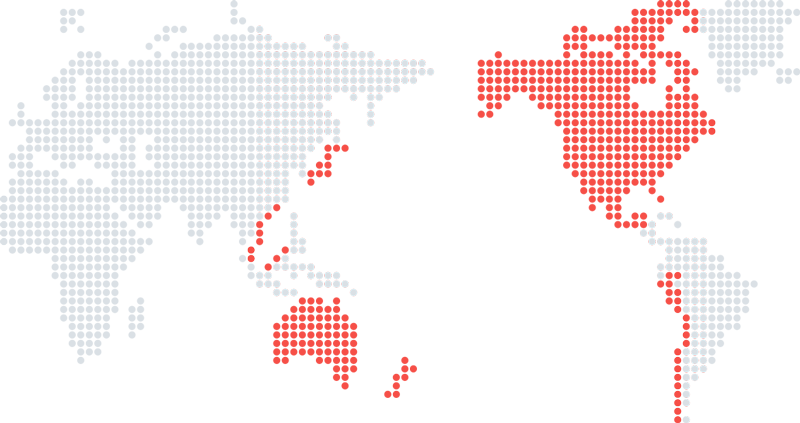
The Trans-Pacific Partnership Agreement (TPP) is a free trade agreement being negotiated by twelve countries:
Australia, Canada, Japan, Malaysia, Mexico, Peru, United States, Vietnam, Chile, Brunei, Singapore, and New Zealand. The TPP will eliminate over 18,000 taxes, tariffs and other trade barriers.

One of the largest benefits of the TPP will be protecting the environment. Participating countries will need to adopt tougher pollution standards similar to the USA. “TPP includes the most robust enforceable environment commitments of any trade agreement in history,” according the United States. “TPP requires countries to play by fair environmental rules if they want to send their goods to the United States, and upgrades NAFTA by putting fully enforceable environment obligations at the core of the agreement.” In addition, TPP helps improve conditions on the ground in TPP countries by requiring them to:
* Fulfill their obligations under the Convention on International Trade in Endangered Species of Wild Fauna and Flora (CITES) to protect and conserve iconic species, such as rhinos and elephants.
* For the first time in any trade agreement, prohibit harmful fisheries subsidies, including those that contribute to overfishing, and work to restrain new subsidy programs or enhancements to existing subsidy programs.
* Combat illegal fishing, promote sustainable fisheries management practices, and protect wetlands and important natural areas.
* Promote the long-term conservation of whales, dolphins, sharks, sea turtles, and other marine species at risk.
* Combat wildlife trafficking, illegal logging, and illegal fishing through enhanced national and regional actions.
* Protect the marine environment from ship pollution, including by implementing their obligations under MARPOL (an international agreement to prevent marine pollution).

Another benefit of the TPP will be the recognition of Intellectual Property (IP) Rights. Countries would be required to adopt standards inline with the USA. TPP copyrights are proposed to be “for the author’s life plus 70 years.”

The Agreement covers more than 40 percent of global GDP. Of the international economists questioned, the only complaint about TPP is — it doesn’t include the entire world.

Trans-Pacific Partnership Agreement (TPP) Map

Also see: GMO Rice Wins Humanitarian Award