Chaos theory emphasizes the complexity and nonlinearity of dynamic systems, and this complexity is inherent in the interactions between soil, atmosphere, and oceans in the Earth’s climate system. Here’s how these components interact with thermal energy and carbon storage:
Soil-Atmosphere Interaction:
Thermal Energy Exchange:
Soil plays a crucial role in the exchange of thermal energy with the atmosphere. The temperature of the soil surface affects the transfer of heat to the atmosphere through processes such as conduction and convection. The thermal properties of soil, including its composition and moisture content, influence this energy exchange.
Carbon Storage and Cycling:
Soil acts as a reservoir for carbon in the form of organic matter. This carbon storage is dynamic and involves complex interactions between plants, microorganisms, and the soil matrix. Soil organic carbon contributes to the global carbon cycle, affecting atmospheric CO2 concentrations.
Feedback Mechanisms:
Nonlinear feedback mechanisms between soil and atmosphere can influence climate dynamics. For example, changes in temperature and precipitation patterns may impact soil moisture, affecting vegetation growth and altering the surface energy balance.
Soil-Ocean Interaction:
Carbon Storage and Sequestration:
Oceans play a crucial role in global carbon storage. Dissolved carbon dioxide is absorbed by the ocean, forming carbonic acid. Additionally, organic matter from marine life contributes to carbon storage in ocean sediments. The exchange of carbon between soil and oceans is interconnected and can influence atmospheric CO2 levels.
Thermal Inertia:
Oceans have a high thermal inertia, meaning they can absorb and store large amounts of heat. This property moderates temperature extremes, influencing atmospheric temperature patterns. Changes in ocean temperatures can, in turn, impact regional and global climate dynamics.
Ocean Circulation and Climate:
Ocean circulation patterns, such as the Atlantic Meridional Overturning Circulation (AMOC), play a role in redistributing heat around the globe. Changes in ocean circulation can have cascading effects on atmospheric circulation patterns, influencing climate on a large scale.
Atmosphere-Soil-Ocean Coupling:
Teleconnections:
Chaos theory recognizes the concept of teleconnections, where seemingly unrelated events in one part of the Earth system influence conditions in another. For instance, changes in sea surface temperatures (linked to ocean dynamics) can affect atmospheric circulation patterns, leading to variations in precipitation and temperature on land.
Climate Variability:
The complex interactions between soil, atmosphere, and oceans contribute to climate variability. Chaos theory helps to understand the sensitivity of the climate system to initial conditions and how small perturbations in one component can lead to significant and sometimes unpredictable outcomes.
In summary, chaos theory underscores the intricate, nonlinear, and interconnected nature of the relationships between soil, atmosphere, and oceans in the context of thermal energy and carbon storage. These interactions contribute to the Earth’s climate system’s complexity, and understanding these dynamics is crucial for accurately modeling and predicting climate changes. Ongoing research and improved modeling techniques aim to enhance our understanding of these complex interactions and their implications for climate variability and change.
This has been a year of climate disasters and ice loss. A glacial lake outburst flood devastated Sikkim in India. Swiss glaciers lost 10% of their remaining ice over just two years. Sea ice around Antarctica hit all-time-low summer and winter records. Unprecedented fires raged across Canadian permafrost. Parts of the Arctic and North Atlantic saw water temperatures 4 – 6°C higher than normal. It rained far inland on Antarctica, and Greenland saw its second-highest surface melt ever.
Our message — the message of the Cryosphere – is that this insanity cannot and must not continue.
The Cryosphere – Earth’s ice sheets, sea ice, permafrost, polar oceans, glaciers and snow – is ground zero for climate change. This is because of the simple physical reality of the melting point of ice; or in the case of our rapidly acidifying polar oceans, the amount of CO2 in the atmosphere absorbed and turned to carbonic acid.
The warming impact of CO2, around 80% from fossil fuel use, already has led to steep glacier and ice sheet loss causing global sea-level rise; reduction of water resources from snowpack; growing CO2 and methane emissions from thawing permafrost; dramatic reduction of sea ice, now alarmingly low in both polar oceans; and growing evidence of stress on keystone polar marine species, such as krill, salmon and cod, from polar ocean acidification, warming and freshening. Enough. It is time to carve a line in the snow: because of what we have learned about the Cryosphere since the Paris Agreement was signed in 2015, 1.5°C is not merely preferable to 2°C. It is the only option.
Otherwise, world leaders are de facto deciding to burden humanity for centuries to millennia by displacing hundreds of millions of people from flooding coastal settlements; depriving societies of life-giving freshwater resources, disrupting delicately-balanced polar ocean and mountain ecosystems; and forcing future generations to offset long-term permafrost emissions.
This continued rise in CO2 is unacceptable.
The melting point of ice pays no attention to rhetoric, only to our actions.
“For people, for other species, for the ecosystems, for the world we live in, we’ve entered the Age of Loss and Damage, but we’re just at the start. What we are seeing already just makes you want to cry,” said Dr. Christopher Trisos (BBC Interview / MP3 Format) from the University of Cape Town. “We can’t eliminate loss and damage. It is here. That said, there is a lot we can do to limit it.”
The 20th-century surface temperature average for Earth was 13.9℃. In the first weeks of July of 2023, the average temperature was 17℃.
Q: Is it possible for humans to survive at temperatures greater than 3℃?
A: Probably not long. Humans have never done it before.
September 6, 2023: “Climate breakdown has begun,” the United Nations Secretary-General Antonio Guterres warned the world after the World Meteorological Organization (WMO) reported the world endure its hottest Northern Hemisphere summer in human history. “The dog days of summer are not just barking, they are biting,” the UN chief said in a statement after the report’s release.
“What we are observing, are not only new extremes but the persistence of these record-breaking conditions, and the impacts these have on both people and planet, are a clear consequence of the warming of the climate system,” C3S’s Climate Change Service Director Carlo Buontempo said.
Climate Breakdown is the most concerning development. Climate breakdown happens when feedback loops are created and tipping points are crossed. Plants will become extinct and many carbon sinks will vanish. The Earth’s temperature will continue to accelerate at an exponential rate no matter what humans do. Food, fresh water, and breathable air will cease to exist. Humans will likely follow in short order.
In October of 2023, the European Space Agency’s Copernicus Climate Change Service calculated that the average temperature for September was 16.38 degrees Celsius (61.48 degrees Fahrenheit) breaking the previous record set in September 2020 by a half-degree Celsius (0.9 degrees Fahrenheit). This is the largest increase in a monthly record high ever.
“It’s just mind-blowing really,” said Copernicus Director Carlo Buontempo. “Never seen anything like that in any month in our records.”
“This is not a fancy weather statistic. It’s a death sentence for people and ecosystems. It destroys assets, infrastructure, harvest,” Imperial College of London climate scientist Friederike Otto said.
On November 20, 2023, the UN’s Emission Gap Report found even if countries carried out their current emissions-reduction pledges, the world would likely continuously exceed +3C degrees of warming this century. Later that day, the International Cryosphere Climate Initiative released State of the Cryosphere Report 2023 saying, “Two degrees is too high. Our message — the message of the Cryosphere — is that this insanity cannot and must not continue. The melting point of ice pays no attention to rhetoric, only to our actions.”
New Economics
Human induced climate change is an exponential component of an unordered system (chaos theory).
The Age of Loss and Damage is a new way of thinking about economics by combining economics, climate science, statistics, and physics. Until now, economic models have been unfit to capture the full extent of climate damage. Traditionally, “integrated assessment models” (IAMs) were used to forecast “shock” events. IAMs use “quadratic function” to calculate GDP losses by squaring the temperature change, yet ignore other methods (such as the exponential function) that are better suited for rapid change. “Climate change is fundamentally different to other shocks because once it has hit, it doesn’t go away,” said Thierry Philipponnat, author of a report by Finance Watch, a Brussels-based public interest NGO on financial issues. “And if the fundamental assumption is flawed, all the rest makes little sense — if any.”
Reuters reported, “Critics say this (IAMs) choice is doomed to underplay the likely impact – particularly if the planet hits environmental tipping points in which damage is not only irreversible but happens at an ever-accelerating rate.” Thierry Philipponnat’s report, Finance in a Hot House World, concludes: “Climate risk is growing to disruptive levels throughout the financial system and the guardians of financial stability urgently need to adapt their tools to regain control.” The report calls for economic models that do not mislead, scenario analyses that prepare the market, and a new prudential tool to address the build-up of systemic climate risk.
Traditional economics is based upon the “costs and benefits” to society. Since there are no known long-term benefits of climate change to society, the Age of Loss and Damage economics focuses on the exponential costs of climate change to society.
Real Estate and Infrastructure
A warmer world will present widespread challenges across many aspects of food-energy-water security and economic development. Infrastructure including roads, bridges, sewer and water plants will become unsustainable. Personal property will suffer loss and damage as homeowners and flood insurance become increasingly difficult to obtain.
In October of 2023 climate scientist Sidd Mukherjee said, “Now I am thinking the violent rain will be a bigger problem before we die… still thinking it through. In the long run, yes, sea level rise will hit big. If you look at the history, it is episodic, and in the fast bits it can go up 3 feet every twenty years for five hundred years. But, the rain intensity is increasing faster today, and drainage cannot cope, whether in the city or out, culverts and such put in over the last hundred years cannot handle. So, I am paying a lot of attention to terrain and drainage far inland from the seacoast (like Ohio.) By drainage I don’t mean just human built. I mean that the natural streams and gullies and ravines have not evolved to a state that can handle the water volumes we see and the worse, larger volumes we will see. So expect huger erosion, steeper slopes to waterways, land collapses and such. Build out your drainage.”
In the spring of 2023, the USA suspended their national debt ceiling. Included in the debt ceiling suspension is a provision for unlimited emergency federal spending. The result is the government can continue to ignore the causes of climate change and instead give trillion-dollar subsidies to the fossil fuel industry through emergency disaster relief. Yes, another vicious circle — more fossil fuels subsidies result in more climate catastrophes resulting in more fossil fuel subsidies, etc. The end result will be additional trillions in government borrowing while the standard of living declines.
According to NOAA, in 2023 (as of November 8), there have been 25 confirmed weather/climate disaster events with losses exceeding $1 billion each to affect United States. These events included 1 drought event, 2 flooding events, 19 severe storm events, 1 tropical cyclone event, 1 wildfire event, and 1 winter storm event. This is the largest number of climate disasters recorded with a notable increase in extreme precipitation events.
The oil industry is going to be like the tobacco industry. The consumers are going to claim they were misled about the dangers of burning fossil fuels and will file lawsuits against the oil companies. You will not be able to buy oil or get insurance at a reasonable price (similar to what happened to cigarette smokers.)
Children have filed lawsuits worldwide against their governments over their basic human rights. A district court judge ruled in Held v. Montana that Montana’s Environmental Policy Act, which prohibits the state from considering the climate impact of proposed energy projects, violates the “right to a clean and healthful environment” promised by the state’s constitution.
The 9th National Risk Assessment for Homeowners Insurance found climate risks place 39 million U.S. homes at risk of losing their insurance. “Sound pricing is going to make it unaffordable to live in certain places as climate impacts emerge.”
“There’s this climate insurance bubble out there,” said Jeremy Porter, the head of climate implications at First Street and a contributor to the report. “And you can quantify it.”
“There’s no education to the public of what’s going on and where the risk is,” said Porter, explaining that most insurance models are proprietary. Even the Federal Emergency Management Agency (FEMA) doesn’t make flood insurance pricing available to the public. Homeowners must obtain coverage through a private insurance broker for a quote.
Wildfires are the fastest growing natural disaster risk. According to the report, “It’s not just wildfires – pressure on flood and wind insurance is increasing, too.”
Porter went on to say, “You don’t want someone to live in a place that always burns. They don”t belong there. We’re subsidizing people to live in harm’s way. Large numbers of people will need to be relocated away from areas that will be uninsurable. There is a reckoning on the horizon and it’s not pretty.”
The burning of fossil fuels and other human released emissions have impacted momentum’s impact. A warmer atmosphere can hold more moisture. Warmer air allows for the creation of more massive raindrops. Warmer ocean temperatures create stronger hurricanes. Hail and tornadoes form in strong thunderstorm clouds with intense updrafts, high liquid-water content, and large water droplets.
Sidd added: It’s worse than that. Wind and water flow forces scale as the square of velocity, so as flow speeds increase (say due to more intense heating or heavier rain) the damage scales as the square of the velocity.
So a twenty mile an hour wind exerts four times as much force as a ten mile an hour wind. And a forty mile an hour wind exerts sixteen times as much force as a ten mile an hour wind. A wind of fifty miles an hour exerts twenty five times and a wind of sixty miles an hour exerts thirty six times as much force as one of ten miles an hour. Then you have the density term. Water is about eight hundred times denser than air, So the force exerted by a ten mile an hour flow of water is eight hundred times that of a ten mile an hour wind. So as flow velocities go up due to climate change, force and damage scale as square of the velocities. What is not clear is how much these velocities increase with climate change. But in a sense we are seeing this already as, for example, flood and sewage systems succumb and hillsides fall down, and so on.
Climate change’s influence on wind and water flow forces caused more severe damage and deaths. The Maui wildfire of August 2023 is an example. What would have been a fairly routine wildfire was fanned out-of-control by hurricane force winds. One headline read, “Maui fires: Hawaii blazes fanned by Hurricane Dora”. Another headline read, “Hawaii wildfires kill as ‘apocalypse’ hits Maui island”. The New York Times reported, “Gov. Josh Green of Hawaii said on Thursday that the devastating wildfires that swept through western Maui and killed at least 55 people, and possibly many more, were ‘likely the largest natural disaster in Hawaii state history.'”
Both wind and water flow forces contributed to the devastation. Hurricane Dora was at least 500 miles from Hawaii yet the wind forces impacted the fire in Maui. The winds were so strong that before the fire reached Lahaina extremely hot air blew over the town. The streets were so hot they burnt people’s feet trying to flee. The surface of everything became hot. Even after people jumped into the ocean, they said the debris in the water was too hot to float on. Almost all the boats in the harbor burned.
The blast of hot air over Lahaina created the conditions for a flashpoint. A flashpoint is the temperature at which a particular organic compound gives off sufficient vapor to ignite in air. The entire town ignited so quickly that warning sirens could not be activated and people did not have time to escape.
In an unexpected twist, water flow forces also contributed to the chaos. How could water flow add to the fire emergency conditions? When people fled the heat and fire, they jumped into the sea. ABC news reported: Shawn Dougherty, of Lahaina, was among the hundreds of residents forced to flee the resort city when the wildfire began engulfing their homes.
Like others, Dougherty said his only means of survival was to jump into the ocean with his girlfriend, but while some found safety in nearby jetties, the rocks and coral tore up Dougherty’s body.
“At one point, it seemed like I might drown,” he told ABC News. “{I’m a good swimmer, but the water was just really rough because of the wind and the turbulence.”
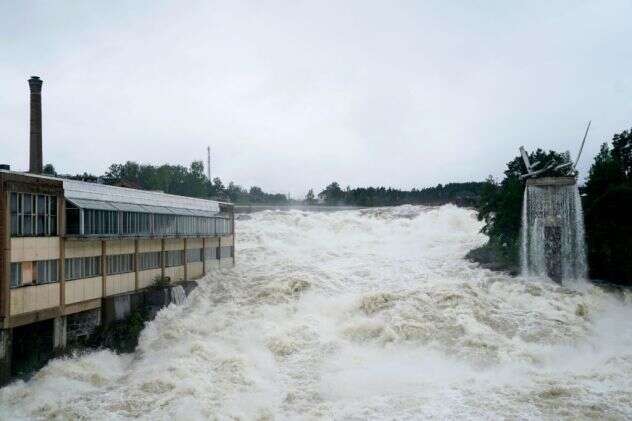
Also in August of 2023, climate change’s influence on water flow forces caused more severe damage and deaths. AccuWeather reported, “Dam bursts open as deadly flooding washes away homes in Norway. Torrents of water gushed through multiple towns across Norway and landslides cascaded down mountainsides after a deluge drenched Norway.”
Summary
By increasing the energy in the system, humans have increased flow volumes, masses and velocities leading to increased damage (and deaths.)
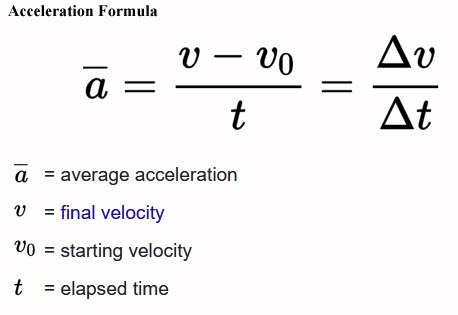
Newton’s second law: F = m * a
F = force
m = mass of an object
a = acceleration
ALSO SEE Climate Change: Rate of Acceleration
By 2020, there was enough data to see the “doubling period” of some anthropogenic climate affects had gone from 100 years to 10 years. For instance the rate of sea level rise has gone from about 1.5 millimeters per year to over 3 millimeters. We expect to see the doubling period to continue to shrink raising the possibility of sea levels rising a foot/year by 2050.
Tipping points and feedback loops are parts of an equation that determine the rate of acceleration in climate change.
Climate Change Case Study:
How to shutdown a climate denier making a “false narrative” political stand
Darren Wolfe is the self-proclaimed “world’s first authoritarian libertarian” Darren Wolfe
In this study, we show how to prove liars about climate change are lying.
According to an analysis from the Center for American Progress, there are still 139 Republicans in the 117th Congress, including 109 representatives and 30 senators, who refuse to acknowledge the scientific evidence of human-caused climate change. All 139 of these climate-denying Republicans have made recent statements casting doubt on the clear, established scientific consensus that the world is warming—and that human activity is to blame. These same 139 climate-denying Republicans have received more than $61 million in lifetime contributions from the coal, oil, and gas industries.
Darren Wolfe replied: Did human CO2 emissions cause the Medieval Warm Period? How about the Roman Warm Period? Or the Minoan Warm Period? No, they didn’t, just like they aren’t causing the Modern Warm Period now. These are natural cycles the Earth goes through.
I responded: Wrong. Everything you said is incorrect. I’m a climate scientist. Read my work. This peer reviewed paper addresses your misconception on natural cycles: Climate Change: How Long Is Ever?
And here is the basic peer reviewed primer (written at an 8th grade level) for help gaining the basic concepts. “Human induced climate change is an exponential component of an unordered system (chaos theory). That means global warming is accelerating at a rapid rate in a complex way.” Anthropogenic Global Warming: The Human Induced Climate Change Experiment
Darren Wolfe replied: I don’t see much but unsubstantiated assertions. There’s no explanation of how CO2 is causing warming. To repeat, the Earth goes through natural warming and cooling cycles. We’re in a warm one now.
I responded: Are you literate? Do you have an education? Did you read my peer reviewed papers? You have not supplied a single scientific nor peer reviewed paper. Everything you have said is incorrect, ignorant, and arrogant. Sorry, but I do not suffer fools gladly. You are a danger to yourself and others. Seek help. Get educated.
Darren Wolfe responded: Well Mr Educated, is this how you have a discussion? Insulting people and threatening legal action? You haven’t debunked a single point I’ve made. All you do is appeal to authority. BTW, the government spends $billions on climate research. Guess what side of the debate you have to be on to ride that gravy train. You worship that bought and paid for “consensus” while posting articles critical of people connected to oil companies. Both sides have monetary incentives for what they say. Even the writers of peer reviewed papers and the reviewers too. Try looking at the facts yourself and stop the threats and insults. If you’re not interested in discussions why are you posting?
I replied: You weren’t having a discussion. You were spreading lies and misinformation. And, no… there is no appeal to authority. Everything I’ve said and written is based on my own research. Not opinion. Not belief. Our research has nothing to do with government, money, nor consensus. We are the team that first concluded — “Human induced climate change is an exponential component of an unordered system (chaos theory). That means global warming is accelerating at a rapid rate in a complex way. ” So, you are completely off-base in your false assumptions… as well as your personal authoritarian point-of-view. You have yet to ask an intelligent question. If you want to learn the facts and have a meaningful discussion, why not ask some good questions?
Darren Wolfe responded: I guess I’m the world’s first authoritarian libertarian. Anyway, I’m not the one threatening legal action to silence a different POV. Who is the authoritarian now?
Let me repackage what I’ve already posted. Do you agree that the Earth goes through natural warming and cooling cycles that have nothing to do with CO2 emissions?
I replied: No. Not during the existence of humans has the Earth warmed to the levels of July 2023. That’s why I asked you to read my peer reviewed research. You also need to learn the difference between your opinion/point of view and facts. I’m not trying to silence your point of view. I’m trying to silence your dangerous and inaccurate information. What you are doing is equivalent to telling people to ignore the fire alarm in a crowded theater during a fire. So, back to your good question. No. The Earth has never been through a warming cycle like the one caused by burning fossil fuels. Climate Change: How Long Is Ever?
I replied: No. Again, you do not listen nor learn. Instead you post a misleading link… then make statements that are not true — “Actually it was warmer thousands of years ago coming out of the last ice age.” No. It was not. Shame on you. Your point of view is wrong. You should apologize and change your point of view. More importantly, you should not purposely propagate false and misleading information.
Darren Wolfe responded: What are you talking about misleading? Peak temperatures were reached thousands of years ago. Temperatures have been relatively stable since with a slight downward trend:
“By 5000 to 3000 BC average global temperatures reached their maximum level during the Holocene and are estimated by some to be 1 to 2 degrees Celsius warmer than they are today. Climatologists call this period either the Climatic Optimum or the Holocene Optimum.”
I replied: You are an idiot. Once again, you provide a bogus link written by a student years ago… and make false statements about it. You are a liar. You are WRONG. Today’s temperatures are 1.5 degrees C higher than they were 3,000 to 5,000 ago. Sit down and shut up. The next lie you post on my timeline will result in action against you. You are causing harm to my work and reputation by knowingly making false and misleading statements. Cease and Desist.
Darren Wolfe responded: Ja wohl Herr Gestapoman! You really need a shrink. I’m merely trying to have a discussion with you. Are you really so weak and insecure that you can’t handle respectful disagreement? I will cease and desist because I’m tired of your dogma. You win and freedom of speech loses. I hope you’re happy now.
I concluded: No. Freedom of speech wins! Liars lose. This is not a respectful disagreement… this has been an ignoramus making a “false narrative” political stand on a climate scientist’s page.
Since that time, forecasting has become increasing more difficult. “In general, as energy is added to a system, the fluctuations in the system increase. So, we expect more storms, more droughts, more wildfires, more floods, more fluctuations of all kinds. What we are saying is that weather conditions will become more volatile due to the impact of humans,” said Mukherjee and Brouse. (2004)
In a report published in Nature entitled Over half of known human pathogenic diseases can be aggravated by climate change, data analyst and associate professor in the Department of Geography and Environment at the University of Hawaii Manoa, Camilo Mora, said climate hazards aggravated 58% of all known human pathogens. That is over half of infectious diseases discovered since the end of the Roman Empire. 58% of an authoritative list of infectious diseases documented to have impacted humanity have already been shown to be aggravated by climatic hazards — a finding the researchers found “shocking,” Mora said.
Movement of people and animals caused by climate is one factor. Warming at higher latitudes allowed vectors and pathogens to survive winter is another factor. The report goes on to say, “The human pathogenic diseases and transmission pathways aggravated by climatic hazards are too numerous for comprehensive societal adaptations, highlighting the urgent need to work at the source of the problem: reducing GHG (Greenhouse Gas) emissions.”
This research reveals more evidence that humans will have difficulty adapting to climate change, especially those in developing countries, Mora said. “The magnitude of the vulnerability when you think about one or two diseases — okay, sure, we can deal with that,” he said. “But when you’re talking about 58% of the diseases, and 58% of those diseases can be affected or triggered in 1,000 different ways. So that, to me, was also revealing of the fact that we’re not going to be able to adapt to climate change.”
In 2023, I wrote the paper, “Climate Change: How Long Is ‘Ever’?“. When we wrote the Tunnel Under Thesis, we forecast these events would not happen for centuries. We underestimated Man’s ignorance and arrogance. Fossil fuel consumption and greenhouse gas emissions have continued to set record highs. Humans have caused chain-reactions resulting in domino-effects, snowball effects, and feedback loops.
Events we thought would not happen in our lifetimes are happening now. My last resort emergency plan was to escape to Canada. (I am a dual citizen.) This summer that plan literally went up in smoke. “Beginning in March 2023, and with increased intensity starting in June, Canada has been affected by an ongoing, record-setting series of wildfires.” — Wikipedia
All of my life I have located my office and bedrooms in the uppermost southern exposure (preferably in the tree canopy.) I love sunlight, elevation, trees, fresh air, and wildlife. It is becoming ever more obvious my dreamlife is coming to an end, and I will be forced to tunnel under. For those forward thinkers, think about your poop. Pumping sewage above ground level will be a major problem at all times. In addition, the inability to pump flood water will become deadly during extreme weather events. In July of 2020 NPR reported, “The remnants of Hurricane Ida dropped unprecedented rainfall on several eastern states, killing dozens of people. Eleven of them were Queens residents who died when their basement apartments flooded.” In August of 2022 CNN reported, “Seoul has vowed to move some of the city’s poorest families out of underground and semi-subterranean homes after 13 people were killed in flooding caused by record rainfall this week, sparking public horror and calls for government accountability.” Drowning in your own poop may result for those unprepared.
Fresh air, water, food, and light will also be problematic; however, your most severe concern will likely be security. Those with supplies will be at high risk of being raped and looted. Good luck!
What is a Corsi-Rosenthal Box and how do you build one? The Corsi-Rosenthal Box is a simple DIY air filter and purifier that outperforms and can be more effective than expensive HEPA purifiers.
Corsi-Rosenthal Boxes are made from cardboard, tape, furnace air filters, and a box fan.
Corsi-Rosenthal Box
The Corsi-Rosenthal Box was invented by Richard Corsi, PhD, of the University of California-Davis and Jim Rosenthal, CEO of Tex-Air Filters.
“One night, I just scribbled out this idea on a piece of paper,” said Corsi. “It wasn’t an original idea – people had put a single filter on a box fan before. But not with MERV 13 filters.” (MERV — minimum efficiency reporting values — is the measure of how well a filter captures particles. The higher the MERV, the more effective the filter.)
“The Corsi-Rosenthal box outperformed the HEPA filter on every sized particle,” Rosenthal said. “You have such high flow from these fans, way more flow than you get out of a commercial HEPA filter. The air goes through the filter more than once in the same period of time. It may only get 50% of the particles at first. But the second time through, it’s getting much more.”
Corsi-Rosenthal Box Test
Smoke from wildfires in Canada brought record-breaking air pollution to the United States this spring, creating dangerous air quality from Bismarck, N.D., to Denver and Detroit to New York City and Washington. According to a Washington Post analysis of smoke data through June 7 (2023) from Stanford University, 197 air quality monitoring stations have reported all-time high pollution from wildfires.
During the Air Quality Crisis of 2023 the plant-based long-term breathing experiment failed the test. After 4 days in a row of Unhealthy (151 to 200 AQI) to Hazardous (301 and higher AQI) outdoor air quality, the the plant-filtered indoor air quality was unhealthy.
Christopher suggested, “You should look into Corsi-Rosenthal… they consistently outperform high-end air filtration systems and it’s a simple DIY project.”
Sidd independently advised, “We are way beyond that (plant filtration). Put in something about Corsi-Rosenthal filters and CO2 monitors to judge ventilation.
Sooo… luckily I had a couple furnace filters, a box fan, and a case of beer. After constructing a crude Corsi-Rosenthal Box, the entire first floor was cleared of noticeable pollutants within 15 minutes. The itchy eyes, scratchy throat, and headache dissipated.
Makeshift / Emergency Corsi-Rosenthal Box
To confirm our results, we brought in the hound dog. Dogs are even more sensitive to air quality. After days of suffering in unhealthy air quality, the hound immediately laid down with his nose in the flow of the circulating Corsi-Rosenthal filtered air.
Conclusion
Air quality is already considered the number one contributing factor to death worldwide. Climate change is making poor air quality even more extreme. A combination of plant and Corsi-Rosenthal filtered air is recommended on a daily basis.
Our experiment was conducted in Southeastern Pennsylvania during an extreme air quality event; however, to our east is Philadelphia. The immediate Philadelphia area rarely has a day of Good air quality. Most summer days are Moderate to Very Unhealthy. To our west is Morgantown and Lancaster County. Even though Lancaster is a much more rural area, it continuously has some of the worst air quality in the world. So it doesn’t really matter where you live, implementing plant and Corsi-Rosenthal filtered air to the daily routine will likely improve your quality and quantity of life.
by Daniel Brouse
email help@membrane.com
May 30, 2021
COVID gets into your genes and makes alterations. Anybody that has “Long Haulers” (Post Acute COVID-19 Syndrome) can tell you about some of the resulting symptoms. COVID-19 Induced Secondary Pellagra (CISP) is one of the outcomes. CISP occurs when COVID changes your genome to chronically increase the breakdown of NAD+ and simultaneously decrease the production of NAD+ (nicotinamide adenine dinucleotide). NAD+ is in every cell and is involved in cell creation, maintenance, metabolism, and regulating cell processes. Without the ability to maintain NAD+ levels, the body’s immune system is severely compromised. For instance, you can not properly metabolize Vitamin C, Vitamin D, and zinc without NAD+. No matter how large of a megadose you take, it will not be metabolized; therefore, it will not be utilized in your immune response to any pathogen.
Not only will inadequate NAD+ levels impact your immune response, lack of NAD+ causes significant symptoms due to lack of cell regulation. A COVID NAD+ deficiency can cause a lack of serotonin regulation resulting in a lack of body temperature regulation. Dr. Ade Wentzel added, “NAD+ deficiency causes a lack of Tryptophan which is used for serotonin production and hence temperature…” Lack of cell and cytokine regulation also causes headaches, brain fog, anxiety, stress, loss of taste or smell, dizziness, fatigue, muscle aches, dermatitis, diarrhea, dementia, and death. Any activity that causes inflammation or a demand for NAD+ will result in more acute symptoms. Exercise and exertion of any kind exacerbates the condition.
The types of COVID-19 genome modifications are known as epigenetics. “Unlike genetic changes, epigenetic changes are reversible and do not change your DNA sequence, but they can change how your body reads a DNA sequence,” explains the CDC. At this time, we do not how many many genome modifications COVID makes nor how long the modifications will last.
Thousands of CISP patients have been treated successfully with a modified pellagra therapy; however, after a year of treatment, NAD+ production has not returned to normal for most patients.
In addition to genome modifications to NAD+, COVID also makes other changes. Brain fog, dizziness, tinnitus, ear aches, vertigo, and pressure in the ears are some of the symptoms associated with epigenetic changes in the upregulation of Indoleamine 2,3-dioxygenase (IDO). “IDO is an immune checkpoint molecule in the sense that it is an immunomodulatory enzyme produced by alternatively activated macrophages and other immunoregulatory cells. IDO is known to suppress T and NK cells, generate Tregs and myeloid-derived suppressor cells, and also supports angiogenesis.’ (Wikipedia)
Dr. Ade Wentzel said, “The epigenetic upregulation of IDO will determine the amount of quinolinic acid. Quinolinic acid comes from the kynurenine pathway. If the viscosity of the whole middle ear is increased then the ability to equalize will be less… same as having a cold. So, the ear isn’t equalizing correctly on increasing pressure. The same as when you land in a plane. If the viscosity in the semicircular canals is increased, the otoliths may well be lagging causing the vertigo. The otoliths usually “Float” in the semicircular canal and trigger tiny sensory hairs that allow you to detect position.”
It is possible that changes in the weather that cause changes in atmospheric pressure (Lows and Highs) may result in the same problems.
There are many other Epifactors and Transcription Factors caused by COVID. “Using integrative analyses of gene co-expression networks and de-novo pathway enrichment, we characterize different gene modules and protein pathways enriched with Transcription Factors or Epifactors relevant for SARS-CoV-2 infection. We identified EP300, MOV10, RELA, and TRIM25 as top candidates, and more than 60 additional proteins involved in the epigenetic response during viral infection that has therapeutic potential. Our results show that targeting the epigenetic machinery could be a feasible alternative to treat COVID-19.” (Nature)
“We found that exposure to the SARS-CoV-2 spike protein alone was enough to change baseline gene expression in airway cells,” said Evans who is based in the laboratory of Sharilyn Almodovar, Ph.D., at the Texas Tech University Health Sciences Center.
“This suggests that symptoms seen in patients may initially result from the spike protein interacting with the cells directly.”
The researchers analyzed expression in genes with functions related to oxidative and osmotic stress, cell death, the inflammatory response, and DNA damage, among others. They found that expression of CCL2, IL1A, IL1B, and MMP9 showed up to two-fold changes in expression after recovery.
All of these genes play a role in inflammation. CCL2 levels are increased in neuroinflammatory disorders such as epilepsy and Alzheimer’s, as well as in some autoimmune diseases like psoriasis, whereas MMP9 is needed for wound healing and recovery from lung damage.
IL1A and IL1B are part of the interleukin family of cytokines and directly produce inflammation and promote fever, as well as playing a regulatory role in the greater immune response. — — Clinical OMICs
Structural analyses have elucidated hot spots in viral binding domains, mutations, and specific proteins in the host such as the receptor angiotensin-converting enzyme 2 (ACE2) and the transmembrane protease serine 2 (TMPRSS2) to be implicated in cell entry and viral infectivity. Furthermore, epigenetic changes that regulate chromatin structure have shown a major impact in genome stabilization and maintenance of cellular homoeostasis and they have been implicated in the pathophysiology of the virus infection. Epigenetic research has revealed that global DNA methylation along with ACE2 gene methylation and post-translational histone modifications may drive differences in host tissue-, biological age- and sex-biased patterns of viral infection. Moreover, modulation of the host cells epigenetic landscape following infection represents a molecular tool used by viruses to antagonize cellular signalling as well as sensing components that regulate the induction of the host innate immune and antiviral defence programmes in order to enhance viral replication and infection efficiency.
— Epigenetic mechanisms regulating COVID-19 infection (NIH)
“Viral proteins encoded by SARS-CoV-2 disrupt critical components of human cells’ molecular machinery and disable responses to infection. Researchers in the US describe how specific viral proteins bind to human RNAs involved in RNA splicing, protein translation, and protein trafficking, and in doing so suppress the host cell’s coordination of a key antiviral defense known as the type I interferon response.”
— SARS-CoV-2 Disables Key Components of Human Cells’ Defense System
“[COVID-19] interferes with protein trafficking to the cell membrane upon infection. Disruption of each of these essential cellular functions acts to suppress the interferon response to viral infection. Our results uncover a multipronged strategy utilized by SARS-CoV-2 to antagonize essential cellular processes to suppress host defenses.
— SARS-CoV-2 Disrupts Splicing, Translation, and Protein Trafficking to Suppress Host Defenses
COVID-19 genetic changes have been found to cause Reverse-transcribed SARS-CoV-2 RNA.
How many different modifications to your genes does COVID-19 make? How long will the alterations last? We don’t know.
“Not all epigenetic changes are permanent. Some epigenetic changes can be added or removed in response to changes in behavior or environment.” Most of a person’s lifetime epigenetic changes have to do with aging. Infections and behaviors, like smoking, also can cause epigentic changes. Most of a smoker’s epigenetic changes revert back after a year of not smoking. Perhaps the COVID epigentic changes will go away over time. Unfortunately, COVID also does insertions. Insertions can not be reverted. The biggest unknown for COVID is the possibility — “if the insertion is in a tumor suppressor, for example, and disrupts that gene, then cancer can be a concern.”
Most experts are of the opinion that “the preexisting state may well determine the final outcome when there is genetic upregulation. COVID is choosing those that may well already have some subclinical symptoms of upregulated pathways.” In the case of cancer and tumor suppression, it appears COVID chooses people that have reduced P53 just like other coronavirus do (P53 is the tumor suppression gene.) Therefore, COVID is unlikely to cause insertions into the gene and be an additional cancer risk.
We do know there is upregulation of genes by COVID and these genes are related to abnormal T-cell, macrophage function, and abnormal humoral immunity. The epigenetic changes related to NAD+ have reverted in some cases after 13 months of treatment. The longer one has left it before getting help the harder and longer it takes for the epigenetics to revert. Currently, we are monitoring cases of epigenetic reversion as more people reach 12 months of treatment.
Post–COVID-19 Associated with Immune Cell Infiltration and Altered Gene Expression
COVID causes long-term immune dysfunction. “These findings indicate that T cell–mediated inflammation persists in the olfactory epithelium long after SARS-CoV-2 has been eliminated from the tissue, suggesting a mechanism for long-term post–COVID-19 smell loss.”
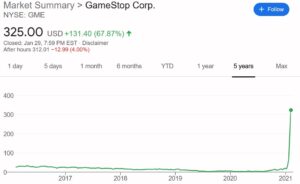
Last week we got to watch the angry young investors invest irrationally making billions of dollars for their favorite hedge funds and the ultra-rich to the tune of 17 billion dollars! Wasn’t that fun?
GameStop (GME) Stock Chart
“Ironically, the army of anti-establishment Reddit traders fattened the fortunes of some of the world’s ultra-rich: Chewy co-founder Ryan Cohen added $1.8 billion; Chinese billionaires Larry Chen and Wang Jianlin added $4.2 billion and $773 million, respectively; and Tootsie Roll CEO Ellen Gordon added $185 million, to name a few.—Andrew Mach”
If you thought that was exciting, stay tuned for the next two weeks as the angry young investors play “Catch the Falling Knife” with their favorite hedge funds. Risk management experts forecast the angry young investors will lose an additional $20 billion to Wall Street.
Spoiler alert: It will be a tragic ending. After the angry young investors put all their money in a bad investment, what will they do next?
You asked: Can you tell me more about the ultra-rich that made billions?
I reply: More important are the hedge funds that made $15-20 billion. You can’t find those numbers easily because they made their money from the positions they already owned (the other side of Melvin Capital’s short sales / puts). There is some reporting you can dig up on it, such as, MUST Asset Management — “GameStop Corp. GME disclosed early Thursday that one of its largest shareholders, South Korea–based MUST Asset Management Inc., no longer held any shares of the videogame and consumer electronics retailer’s shares. MUST had previously owned 3.3 million shares, or about 4.7% of all shares outstanding, which made it GameStop’s ninth largest shareholder, according to data provided by FactSet.”
You question: Are you saying the Reddit gang actually HELPED long position hedge funds as they hurt short position ones?
I respond: Exactly. In this first round 20 billion was transferred from one set of hedge funds to another set of hedge funds. Now, in the next part of the tragedy, the reddit gang will lose their GameStop investment to the same hedge funds… an additional $20 billion or so.
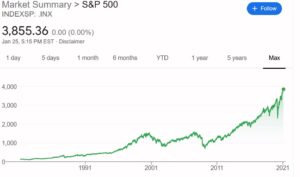
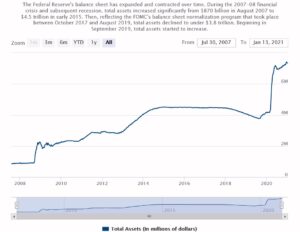
S&P 500 Rise since Fed and Treasury InterventionFederal Reserve Bank Balance Sheet 2020
We were talking about a graph of the record high stock market… and, I said:
You definitely need to keep this graph with it… the main reason the stock market is at this level is because the Federal Reserve has been buying stocks and bonds… lots of them. (That’s over 7 trillion pictured in the graph.) The old, bankers’ saying is “you can’t fight the fed”.
You asked: So, what will happen next?
I replied:
It all depends on how long the Fed can print money. A goodly portion of the bond and equity markets are owned by the Fed. (aka us / socialism / communism) . The US can do this because the dollar is the world reserve currency. Unfortunately for us, the Trump administration has put the dollar’s status in jeopardy. My guess is we have some time… until the dollar implodes. When the dollar implodes, the artificially inflated real estate, bond, and equity markets will collapse. Something like the next 10-20 years all your assets will be worthless.
You asked: do you think Janet will be Yellen and Screamin’ about this practice?
I replied:
Sad to say, no. The gov’t started propping up the private sector in 2008-2009. That was suppose to unwind. There was no unwinding under Yellen…. the real unwinding was suppose to happen under Trump. In 2017, the unwinding stopped… in 2020, the spigot was opened wide and trillions more were pumping in. Now, it is essential to keep the markets from collapsing. Thus, I expect Yellen will be forced to “Buy high and sell low”. Obviously, a failing investment practice.
ETFs are stocks as are Fannie Mae, Freddie Mac, and Ginnie Mae. Nobody knows exactly what the Fed buys, but it is widely believed the Fed started buying S&P 500 ETFs in 2020. In any event, 7 trillion in public and private debt and equities has a significant impact on artificially inflating real estate and the stock market.
You replied:
I understand it as “ETF’s” are “Exchange Traded Funds” and can be ANY investment vehicle.
To your point the Fed is documented to have made ETF Corporate Bond purchases last year …
What I could use your help on is in seeing how the (to Tom’s point) rather nominal $8 billion purchase is causing the dramatic effect seen in the graph.
I responded:
Yes. “An exchange-traded fund is a type of investment fund and exchange-traded product, i.e. they are traded on stock exchanges as stocks.” The reason(s) it bolsters the stock market include: purchases of corporate bond ETFs; purchase of equity based ETFs; purchase of specific corporate debt (eg Amazon, VISA, Kroger); most importantly the lowering of interest rates so that corporations can borrow money at near zero percent and use the money to purchase back their own stock. These are just a few ways the FED is propping up the stock market. Less direct but just as significant is the inflation of real estate (through purchase of mortgage backed securities.) The inflated value of real estate gives individuals the ability to invest (or not cashout) in the stock market. That is to say, if real estate was not inflated right now, people would be cashing out their 401k and IRAs to survive.
The Fed started doing these dirty deals in 2008. When I say dirty deals, I mean using their authority to maintain liquidity in the markets to interfere in private assets and equity. Since 2008, they have gone further and further over the line. In 2008-2009 it was focused mainly on real estate and large purchases (automobiles). In 2020, the Fed added direct and indirect ownership in corporations. For instance, airline debt… $2.2 million in Southwest Airlines debt. This allowed Southwest to borrow billions to keep afloat during the pandemic. Here is an article that explains a lot of it… “the Federal Reserve announced the deployment of additional “tools to support households, businesses, and the U.S. economy overall in this challenging time.” “Overall, $1 trillion in investment-grade bonds have been issued this year, nearly as much as all of 2019, along with tens of billions more in junk bonds from risky companies, which the Fed has also signaled that it would purchase.”
Something that is very important to consider… what is the difference between owning stock in the corporation or junk bonds issued by that corporation? That is to say, what happens to the Fed’s asset when the corporation goes bankrupt? What happens to the Fed’s good bonds when that company is taken over?
You said:
Something we should all remember … zooming back on the nation with a fresh alien perspective is a great exercise and skill …
We have a median household income barely budge since 1980 even after the majority of households went to duel income. It’s about 62,000 against 300% increases in real estate, health insurance and college costs …
Meanwhile market capitalization, cash reserves and productivity for corporations skyrocketed and the wealth gap of a tiny minority of both private individuals and elected officials skyrocketed …
To say “nothing to see here” is impossible if you look from afar …
This is one thing, the Fed, we can focus on for a better understanding. Thanks Daniel Brouse for initiating the discussion.
I add:
Agreed. The best case scenario for the USA would be to eliminate all existing Federal taxes. Establish a Federal pollution tax. Give every American 40k/year stipend.
The FED really does openly keep 2 sets of books. In general, both the Treasury and the Fed do not want to publicly disclose exactly what they are doing. 1) they don’t want to endanger private companies or industries by giving the impression that a company is in trouble 2) they don’t want the markets to undermine their efforts by trying to profit from their actions. A public example of this is in 2008-2009 when all the big banks were forced to take TARP money… whether they needed it or not. [The Fed and the Treasury have two sets of books… one for the public and one that is classified. It’s why we don’t know what stocks they are buying.)
“Making matters worse, the proportion of buybacks funded by corporate bonds reached as high as 30% in both 2016 and 2017,” according to JP Morgan Chase.
The Fed is buying stocks and bonds. And, the Fed is in cahoots with the Treasury (where do you think the Treasury borrows the money from?) The Fed has purchased trillions of dollars in direct and indirect purchase of stocks and bonds. It started in 2008 and continues to this day. US citizens have ownership in many airlines, cruise ships, real estate, General Motors, Chrysler, a multitude of banks and mortgage companies, insurance companies, and much more. That is not to mention the billions and billions lent to corporations to buy back their own stocks. This is the Fed’s money buying stocks. This is The Fed using the money multiplier to bolster the stock market since 2008.
You ask:
I tried to find data on the “stocks” you are referring to and can’t … does one of the articles you attached above have info.
This also pulls in my skepticism that the media is covering everything it should be … but I just can’t find any info so I could use sources.
I reply:
Yes. You can find out about many of the stocks owned by the government. It is a bit tangled. But, you can follow the money. Ask where the money to purchase the assets comes from? A: The Fed. Corporations and the Treasury obtain near zero interest rate money from the Fed. So, in many cases, how the Fed pays for the stocks becomes obscured. It often takes the private sector years so figure out the cash flow. We don’t know that much about 2020… except what was revealed in the CARES act, as well as, the pattern of stock buy backs (there was a big dip in buy backs in the 2nd quarter that coincides with the stock market.) You will have to dig a bit to find the names of the stocks… but they include airlines (Alaska Airlines, Allegiant Air, American Airlines, Delta Air Lines, Frontier Airlines, Hawaiian Airlines, JetBlue Airways, United Airlines, SkyWest Airlines, and Southwest Airlines), cruise ships, and supply chain companies like Amazon and Kruger. Some of the stock buybacks that lineup with the market include MGM, Best Buy, Qualcomm, Kansas City Southern, Lennar, Cummins and Xerox. The acquisition of stocks and stock options from earlier periods has been better routed out by analysts… all of the companies listed in “red” are all on the list: https://projects.propublica.org/bailout/list
You wondered: Am I missing something … these appear to be loans, not stock purchases, yes?
I explain: In 2008 the Federal Reserve and the Treasury colluded on circumventing the restriction on the both the Fed and the Treasury. Now, they are working in concert. You can no longer differentiate between the Fed and the Treasury. Quantitative Easing (QE) and the Troubled Asset Relief Program TARP) completely changed how things worked. (You can see it in the original chart above.) In most instances, the Treasury enters into stock ownership agreements and uses the Fed’s money to complete the deal. So, is it the Fed? or is it the Treasury? is the wrong the question… the right question is “Is it the Fed and treasury? The answer is yes. Now, most of the purchases/deals are under the CARES act. This is in addition to the Fed’s direct investment in public and private bonds, as well as, equities. The Fed is buy ETF’s and individual stocks, as well as… but the public can not find out exactly which ones.
It is very convoluted and in my opinion illegal. Neither the Fed nor the Treasury should be intervening / competing in the private markets. It costs the average citizen a lot of money.
The simplest way to explain is comparing it to an individual trading options with a margin account. In this scenario, the Treasury would be the account holder and the Fed would be the broker — “Buying on margin involves borrowing money from a broker to purchase stock. A margin account increases your purchasing power and allows you to use someone else’s money to increase financial leverage. Margin trading confers a higher profit potential than traditional trading but also greater risks.”
The most important part might be to start with the fact that there should be NO assets on the Fed’s balance sheet. The Fed is suppose to be the banks’ bank… regulating banks to maintain their liquidity and control inflation. Q. Is the Fed part of the government? A. No. The Federal Reserve Banks are not government agencies. The Federal Reserve is quasi-governmental. The Fed is not suppose to lend money to anyone other than member banks and only “overnight” to meet reserve requirements. (Reserve requirements are suppose to be to ensure banks remain solvent.)
Though this is not rocket science, it is convoluted high finance shell games. Very similar to investigating money laundering.
Economics and civics should be taught in every grade K-12 IMHO