bookmark_borderCreative Destruction in the Age of Artificial Intelligence: How Endogenous Growth Theory Explains Today’s AI Stock Market Bubble

by Daniel Brouse
October 13, 2025

The Theory: Innovation, Growth, and Creative Destruction

Joel Mokyr, Philippe Aghion, and Peter Howitt Nobel Prize winning work advanced what’s known as endogenous growth theory, which emphasizes that technological progress is not something that just happens outside the economy (“exogenously”) but rather emerges from within it — from incentives, competition, and human ingenuity.

1. Aghion & Howitt – The Schumpeterian Model of Creative Destruction

Their core idea builds on Joseph Schumpeter’s notion of creative destruction:

  • Economic growth results from new innovations that make old technologies obsolete.

  • Entrepreneurs and firms invest in research and development (R&D) to gain temporary monopoly profits.

  • But those profits are eroded as new innovations arise, replacing the old technologies in a perpetual cycle.

This process is inherently disruptive — some firms and workers lose out while the economy as a whole advances.  Aghion and Howitt’s mathematical framework formalized this dynamic, showing how policies that encourage innovation — such as intellectual property rights, education, and competition — can accelerate long-run growth.

2. Joel Mokyr – Technological Revolutions and the “Culture of Growth”

Mokyr provided the historical and cultural context. He argued that the Industrial Revolution wasn’t a random event, but the result of a cultural shift toward experimentation, curiosity, and tolerance for failure.
In other words, progress comes not only from inventions themselves, but from societies that reward innovation and permit “creative destruction” to play out.


Connection to Today’s AI Stock Market Bubble

Now let’s apply this to today’s markets, especially the so-called “AI boom” or “AI bubble” of the 2020s.

1. Innovation-Driven Expectations

AI represents the next major general-purpose technology, much like the steam engine, electricity, or the internet. According to the Aghion–Howitt model, such technologies can trigger long periods of high growth by spawning new industries, raising productivity, and replacing outdated methods.

However — as with every technological revolution — the market tends to overprice the early promise. Investors project rapid and universal adoption long before the productivity gains materialize.
This is classic in early phases of creative destruction: massive capital pours into the “new thing,” often faster than the real economy can absorb it.

2. Creative Destruction in Real Time

AI is already destroying and creating value:

  • Winners: chip manufacturers (NVIDIA, AMD), cloud providers, and leading AI platforms.

  • Losers: traditional software firms, smaller labor-intensive industries, and certain white-collar sectors vulnerable to automation.

This mirrors the mechanism Aghion and Howitt described — innovation shifts profits and productivity across the economy, while creative destruction eliminates older structures.

3. The Bubble Mechanism

The AI stock bubble arises when:

  • Investors focus on potential future monopoly rents of innovation leaders (e.g., OpenAI, Microsoft, NVIDIA).

  • They overestimate the speed and scale of productivity spillovers.

  • The expectation of continuous innovation feeds speculative growth loops — firms are valued not on present earnings but on anticipated technological dominance.

This speculative behavior has historical precedent:

  • Railroad boom (1840s)

  • Electricity and radio bubbles (1920s)

  • Dot-com bubble (1990s–2000s)

Each reflected a genuine technological breakthrough, but financial markets priced in decades of progress almost overnight.

4. Mokyr’s Cultural Insight

Mokyr’s emphasis on cultural attitudes toward innovation helps explain why the bubble exists at all.
Modern tech culture — particularly in Silicon Valley — celebrates disruption and treats exponential growth as inevitable. The “AI hype” is as much cultural and psychological as it is economic:

  • The belief that “if we don’t invest now, we’ll miss the revolution” drives valuations higher.

  • Social narratives around AI (from AGI dreams to existential risk) amplify both fear and greed, core emotional drivers in financial bubbles.

5. The Long-Term Payoff

Despite the bubble, endogenous growth theory predicts that the underlying innovation cycle will eventually justify much of the investment — just not as fast or evenly as markets expect.
After each crash, the surviving technologies and firms lay the foundation for the next era of sustained productivity growth.


Thus, while the AI stock market bubble may burst, the AI technological revolution will likely continue reshaping the economy — improving productivity, transforming industries, and generating new waves of creative destruction.

It would not be unreasonable to suggest that as much as 90% of today’s companies could face creative destruction within the next decade, including members of the so-called “Magnificent Seven” tech giants. History shows that no company—no matter how dominant—remains immune to technological upheaval.

Artificial intelligence represents a general-purpose technology capable of reshaping nearly every industry, from manufacturing and finance to entertainment and healthcare. As automation, machine learning, and generative AI continue to advance, they are likely to collapse traditional cost structures, eliminate redundant business models, and redistribute profits toward entirely new players.

The “Mag 7” firms—Apple, Microsoft, Alphabet, Amazon, Meta, NVIDIA, and Tesla—currently appear invincible, much like IBM in the 1980s or Yahoo in the early 2000s. Yet their dominance depends on maintaining proprietary advantages in algorithms, data, and computing infrastructure. As AI becomes more open-source, decentralized, and commoditized, those moats could shrink quickly. A new generation of innovators may rise on more efficient models, more agile platforms, or disruptive uses of AI that make even the current leaders look obsolete.

In short, creative destruction doesn’t spare its own champions. The same technological forces that built the modern tech giants could dismantle them—proving once again that in an age of accelerating innovation, staying dominant is harder than becoming dominant.


In Summary

Concept Economic Theory Relation to AI Bubble
Endogenous growth Innovation arises from within the economy Firms are racing to internalize and monetize AI capabilities
Creative destruction New technologies displace old ones AI is already rendering older business models obsolete
Temporary monopoly profits Innovators earn short-term gains Market leaders (NVIDIA, Microsoft, OpenAI) enjoy outsized valuations
Speculative overshoot Early overvaluation of innovation potential AI stocks trade on promise, not earnings
Cultural driver (Mokyr) Societies that glorify progress fuel innovation Tech optimism and “AI evangelism” inflate the bubble

bookmark_borderConstructive Capitalism: How Consumer-Driven Activism Builds a Better Economy

By Daniel Brouse

December 15, 2024

The vast majority of people in business do not aim to exploit the poor or middle class. On the contrary, most understand that the consumer is the driving force behind the economy. Without consumer demand, businesses have no foundation for growth or profitability. This basic principle underscores why a narrative pitting the “rich” against the middle and lower classes is not only divisive but also fundamentally flawed.

Addressing the Real Issue: Ignorance and Arrogance

The widespread anger directed at wealthy individuals or corporations often stems from misconceptions. Rich and successful individuals are not inherently adversaries. The real problem lies in the ignorance and arrogance that fuel an artificial sense of class warfare. This imaginary battle does not serve to bridge gaps or create solutions. Instead, it perpetuates anger, which only leads to further frustration and stagnation.

Constructive Engagement Through Shareholder Activism

Rather than engaging in unproductive outrage, a more meaningful approach would be to invest in the companies you criticize and become a shareholder activist. This strategy allows individuals to influence corporate behavior from within, promoting accountability and ethical practices. Shareholder activism has proven effective in driving real change, offering a productive alternative to simply venting frustrations.

For example, in the 1990s, I was directly impacted by Microsoft’s monopolistic practices. Rather than merely complaining, I purchased a single share of MSFT and established a shareholder activist website. Over the course of a few years, my efforts—combined with those of other activists—led to meaningful changes within the company. This approach proved successful and underscored the power of direct engagement.

I applied the same principle to other businesses, many of which no longer exist today due to various factors, including activism challenging their unethical practices. One notable example is MP3.com, which faced significant scrutiny and ultimately could not sustain its operations.

The Role of Business in Economic Growth

Most people in business understand that the health of the economy—and by extension, their own success—depends on a thriving middle class and consumer base. Exploitation is not a sustainable strategy; companies flourish when they offer value and foster trust with their customers. Businesses that focus on creating innovative products, providing excellent services, and contributing to their communities are the ones that stand the test of time.

Fighting Fictional Battles is Counterproductive

Engaging in a war against a fictional enemy, such as the generalized “rich,” is self-defeating and counterproductive. It diverts attention from actionable solutions and fosters resentment without achieving meaningful results. By redirecting this energy toward constructive efforts—such as education, activism, or entrepreneurship—individuals can make a genuine impact on the systems they seek to improve.

TAKE OWNERSHIP

Being a shareholder, even owning a single share, offers specific legal protections and rights that are valuable regardless of the number of shares you own. Here are some key points to consider:

  1. Legal Protections:
    As a shareholder, you are shielded by certain protections. For example, it becomes significantly harder for a company to sue you for defamation because your status as a shareholder gives you standing to voice criticisms and concerns about the company’s governance and performance.
  2. Rights to Hold the Company Accountable:
    Shareholders have the right to sue the company if it acts against their best interests. This applies whether you own one share or a significant portion. While owning more shares increases your influence in voting matters, the legal rights to initiate or participate in actions such as derivative lawsuits are not dependent on the size of your holdings.
  3. The Power of Collective Action:
    If you join forces with other shareholders, your collective voice holds more weight, especially in class-action lawsuits. For instance, shareholder groups often come together to challenge decisions that negatively impact shareholder value, such as excessive executive compensation or breaches of fiduciary duty.
  4. Real-World Example – Elon Musk and Tesla:
    A notable case involved Tesla shareholders suing the company in a Delaware court over Elon Musk’s compensation package, which they argued was excessively large and not in the best interests of the shareholders. The court ruled in favor of the shareholders, demonstrating the power and importance of shareholder rights in holding even influential executives accountable.

By owning shares, you gain a legal and ethical stake in the company’s operations, enabling you to contribute to its accountability and direction. Whether your aim is advocacy or profit, being a shareholder grants you a platform to engage meaningfully with corporate governance.

Examining the Costs and Benefits of a Microsoft Monopoly

MP3.com: A Consumer Behavior Case Study

Business and the Economy

bookmark_borderThe Golden Rule of Sustainability: Applying Game Theory to the Climate Crisis

Hypothesis:

The Golden Scales Of Justice

Q: Do unto others, as you would have them do unto you. Or, what?
A: Or, the elimination of all players is possible.

PROOF

Introduction

A proof of The Golden Rule.

The Golden Rule can be applied to economics similarly to Nash’s Equilibrium (or Le Chatelier’s Principle in chemistry):

“The best responses of all players are in accordance with each other.”
— John Nash, Jr.

If a dynamic equilibrium is disturbed by changing the conditions, the position of equilibrium moves to counteract the change.
— A statement of Le Chatelier’s Principle

Q: What happens when the responses of all players are not aligned?
A: Justification

CLIMATE CHANGE AND GAME THEORY

John Nash’s quote, “The best responses of all players are in accordance with each other,” reflects the principle of a Nash Equilibrium in game theory, where each participant in a system acts in a way that is optimal given the actions of others. Applying this concept to the climate crisis reveals important insights about global cooperation and collective action:


1. Climate Crisis as a Multi-Player Game

The climate crisis involves multiple “players”—countries, corporations, and individuals—each with their own interests and strategies. For example:

  • Countries may prioritize economic growth, which could conflict with reducing emissions.
  • Corporations might focus on profits, even at the expense of environmental sustainability.
  • Individuals often weigh personal convenience against the broader impact of their actions.

To address the crisis effectively, all players must align their actions toward a common goal: mitigating climate change.


2. Nash Equilibrium and Climate Action

The quote emphasizes that the most effective solution arises when all players’ strategies are consistent with each other, meaning:

  • Nations implement policies that balance economic development with sustainability.
  • Corporations innovate to reduce carbon footprints without sacrificing profitability.
  • Individuals adopt eco-friendly behaviors in line with societal and governmental expectations.

If any group deviates—e.g., a country refuses to cut emissions while others do—it disrupts the equilibrium and undermines collective progress.


3. The Challenge of Misaligned Incentives

Currently, many players act in ways that benefit themselves in the short term but harm the global effort. For example:

  • Some countries prioritize fossil fuel exploitation over renewable energy.
  • Corporations may lobby against environmental regulations to lower costs.
  • Individuals often resist lifestyle changes, such as reducing consumption or switching to sustainable practices.

This lack of coordination leads to a “tragedy of the commons,” where shared resources (e.g., the atmosphere) are depleted to the detriment of all.


4. Application to Global Climate Agreements

Global initiatives, such as the Paris Agreement, aim to create a Nash Equilibrium by aligning the actions of all players:

  • Countries agree to emission reduction targets that balance fairness and effectiveness.
  • International mechanisms, like carbon pricing, incentivize corporations to innovate sustainably.
  • Public awareness campaigns encourage individuals to support climate-friendly policies and lifestyles.

When each player sees the benefits of cooperating rather than acting selfishly, the system moves toward an equilibrium that benefits everyone.

Conclusion

Nash’s insight underscores the need for collective alignment to solve the climate crisis. The “best responses” for each player must be designed with global coordination in mind. Only through mutual cooperation and aligned strategies can humanity achieve a sustainable equilibrium and address this existential challenge.


A Simplified Example: The Bar Scenario

John Nash’s famous concept of the Nash Equilibrium can be understood through a simplified example often referred to as The Bar Scenario. Here’s how it works:

The Scenario

Three men are in a bar, and they all want to pair up with one of three women. Among the women, one is considered the most attractive, and all three men initially aim to approach her. The situation unfolds as follows:

  1. Everyone Wants the “Most Attractive” Woman
    If all three men target the same woman, she can only accept one of them (assuming she even agrees). The other two men are left to compete for the remaining women, who are less receptive because they feel like second choices. This results in a suboptimal outcome for most of the men and women.
  2. A Better Strategy Emerges
    If each man decides rationally to approach a different woman based on their preferences and the anticipated actions of the others, they avoid direct competition. This coordination leads to a more favorable outcome for everyone involved.

Key Insight: Nash Equilibrium

The Nash Equilibrium is reached when each player (in this case, the men) chooses a strategy that maximizes their payoff, given the strategies of the others. Importantly:

  • None of the men can improve their outcome by changing their strategy unilaterally.
  • They consider the likely choices of others when making their own decisions.

In the bar scenario, the Nash Equilibrium would be a situation where the men strategically distribute themselves among the women, ensuring no one is left with a worse option.

Implications of Nash’s Discovery

Nash showed that in any game involving rational players, there exists a point (or multiple points) where everyone’s strategies stabilize because changing one’s strategy doesn’t yield a better outcome. This principle applies far beyond bars—encompassing economics, politics, biology, and more.

The bar analogy effectively captures the essence of strategic decision-making, where individual choices are interdependent, and cooperation or competition shapes the results.

The Bar Scenario and Climate Change

The Bar Scenario analogy, derived from Nash’s concept of equilibrium, can be applied to climate change to explain how individual and collective decisions by nations, corporations, and individuals can lead to either cooperation or competition in addressing the crisis. Here’s how it relates:


The Climate Crisis as a “Bar Scenario”

Imagine nations (or other stakeholders) as the men in the bar and the “women” as the available solutions to climate change—such as renewable energy, carbon capture, reforestation, or fossil fuel reduction. Each nation has its preferences, resources, and goals, but their choices are interdependent because they share the same “climate system.”


Scenario 1: Everyone Chooses Self-Interest (Competing for the “Most Attractive” Option)

If all nations prioritize short-term economic growth (analogous to everyone targeting the “most attractive woman” in the bar), they focus on exploiting fossil fuels or delaying meaningful climate action. This competition creates:

  • Overburdened resources (e.g., continued reliance on finite fossil fuels).
  • Global warming impacts (e.g., extreme weather, sea level rise) that affect everyone, leaving the majority worse off.
  • A “tragedy of the commons,” where shared resources (like the atmosphere) are depleted by selfish behavior.

Scenario 2: Cooperation for a Balanced Strategy

If nations coordinate and distribute their efforts—prioritizing different climate solutions based on their strengths—everyone benefits more in the long term. For example:

  • Renewable energy: Solar-rich nations focus on solar power, while wind-rich nations expand wind energy.
  • Reforestation: Countries with vast landmass invest in reforestation, absorbing carbon dioxide.
  • Technology development: Wealthier nations lead in funding and deploying innovative technologies like carbon capture.

This approach resembles the Nash Equilibrium, where each player (nation) chooses a strategy that maximizes their benefit while aligning with the strategies of others.


Key Lessons from the Bar Scenario

  1. Mutual Benefit Requires Coordination
    Just as the men in the bar avoid competing for the same woman, nations must coordinate to avoid duplicative or counterproductive efforts.
  2. Short-Term Self-Interest Harms the Group
    When nations act solely in self-interest (e.g., subsidizing fossil fuels for economic growth), they undermine the global effort to mitigate climate change, leaving everyone worse off.
  3. Equilibrium is Sustainable
    A Nash Equilibrium in climate action would be achieved when every nation’s strategy contributes to the global effort, and no nation benefits from deviating unilaterally.

Real-World Application

Global agreements like the Paris Accord aim to create a cooperative framework where nations:

  • Commit to specific emission reduction targets.
  • Share resources and technology.
  • Balance economic needs with environmental responsibility.

However, achieving this equilibrium requires trust, accountability, and incentives for all players to stay committed—challenges highlighted by the Bar Scenario.

By aligning strategies and recognizing shared stakes, humanity can “win” the climate game, just as the bar scenario resolves when cooperation prevails.

The Human Induced Climate Change Experiment

Business and the Economy

bookmark_borderTaxation in a Changing World: Challenges, Inefficiencies, and Paths to Sustainability

by Daniel Brouse
December 3, 2024

Taxation is a complex and often misunderstood subject, particularly in discussions around income inequality and the role of billionaires in the economy. Many posts oversimplify or misrepresent the nature of taxation and its broader impacts. Developing a nuanced understanding of taxation, including its economic effects and societal implications, is crucial to forming informed opinions.

The Tax Cuts and Jobs Act (TCJA) of 2017 was the most recent significant change to personal and corporate income taxes in the United States. For individuals, the TCJA lowered tax rates across most income brackets, increased the standard deduction, and limited certain deductions such as the state and local tax (SALT) deduction. These changes are scheduled to sunset at the end of 2025, at which point pre-TCJA tax rates and deductions would be reinstated unless Congress enacts new legislation. Both major political parties have expressed varying levels of support for extending or modifying these provisions, emphasizing the middle-class tax benefits they provide.

Taxes as a Net Cost to Society

From an economic perspective, taxation imposes costs beyond the direct financial burden on individuals or businesses. These include:

  1. Administrative Costs: The resources spent by governments and taxpayers to comply with tax laws.
  2. Economic Distortions: Taxes can alter incentives, potentially discouraging productive activities like investment or work in favor of tax-advantaged alternatives.
  3. Wealth Redistribution: While taxation can address income inequality, poorly designed tax systems may have unintended consequences, such as discouraging innovation or entrepreneurship.

However, taxes also fund essential public services and infrastructure, contributing to societal stability and growth. The challenge lies in designing tax systems that balance revenue generation with minimal economic disruption.

The Unsustainability of Taxation

Increasing taxes to sustain social services is becoming increasingly unsustainable, particularly in aging populations. Governments worldwide are grappling with the long-term fiscal challenges posed by demographic shifts, rising healthcare costs, and pension obligations.

European Examples: Lessons in Fiscal Strain

Countries like France illustrate the challenges of maintaining social safety nets. In 2023, France raised its retirement age from 62 to 64 to address shortfalls in its pension system. The move sparked widespread protests, strikes, and significant political backlash, threatening the stability of the government. The resistance reflects a broader societal tension between the expectation of robust social benefits and the economic reality of funding them.

Other European nations, such as Germany and Italy, face similar issues, with rapidly aging populations putting unprecedented strain on public finances. For example, Germany has introduced policies to increase immigration in an attempt to mitigate workforce shortages and stabilize its pension system.

The U.S. Context: Social Security and Medicare

In the United States, Social Security and Medicare are on similarly precarious trajectories. Both programs rely on payroll taxes, which are increasingly insufficient to cover costs due to a declining worker-to-retiree ratio. As of 2023, projections indicate that the Social Security Trust Fund will be depleted by 2034, at which point benefits could be reduced by approximately 20-25% if no reforms are enacted. Medicare faces a similar shortfall, with its Hospital Insurance Trust Fund projected to run out by 2028.

Proposed solutions to these issues—such as raising the retirement age, increasing payroll taxes, or reducing benefits—are politically contentious and face significant public opposition.

Why Taxation Alone Cannot Solve the Problem

While raising taxes might appear to be a straightforward solution, it faces several challenges:

  1. Economic Growth: Higher tax rates, particularly on income or capital, can discourage investment, entrepreneurship, and labor participation, potentially slowing economic growth.
  2. Population Dynamics: Aging populations mean fewer workers to support a growing number of retirees. Even significantly higher taxes on the billionaires will not generate enough revenue to sustain rising costs.
  3. Public Backlash: As seen in France, attempts to reform tax and benefit structures often lead to widespread protests, making meaningful policy changes politically risky.

Toward Sustainable Solutions

The unsustainability of taxation highlights the need for broader systemic reforms:

  • Economic Growth Strategies: Policies that encourage workforce participation, innovation, and productivity can help offset the fiscal impact of aging populations.
  • Healthcare Reforms: Addressing inefficiencies and cost drivers in healthcare systems can reduce the burden on public finances.
  • Demographic Solutions: Encouraging higher birth rates or increasing immigration can help stabilize the worker-to-retiree ratio. Mass immigration is likely the only viable solution for addressing both short-term and long-term challenges.
  • Private Sector Integration: Expanding private retirement savings programs and healthcare options can alleviate some pressure on public systems.

The Best Use of Taxation

Ideally, taxation should focus primarily on fossil fuel combustion. Pollution from fossil fuels is the leading cause of death globally. While the cost of human life is immeasurable, the associated increase in healthcare expenses places a significant burden on the economy. Additionally, the societal costs of climate change—driven largely by fossil fuel combustion—likely represent an even greater economic and environmental challenge. Redirecting taxation in this way could incentivize cleaner energy alternatives while addressing these critical issues. A 100% tax on a barrel of oil and a 1,000% tax on a ton of coal could significantly reduce wealth inequality while simultaneously fostering a sustainable economy.

Wealth Taxes Are Illogical

Business and the Economy

bookmark_borderThe Hidden Price of Progress: Unraveling the Economic, Environmental, and Human Costs of Climate Change

by Daniel Brouse
November 29, 2024 / Black Friday

The exact cost of climate change is challenging to calculate due to the sheer complexity of the issue and the myriad variables that are difficult to quantify. However, specific climate-related events provide tangible examples of its economic and societal impacts.

Climate Disasters
For instance, the 2019 droughts in Taiwan significantly disrupted the global semiconductor industry, which relies heavily on water and energy for production. This disruption led to a worldwide chip shortage, inflating the costs of consumer goods like automobiles, electronics, and household appliances. Similarly, Hurricane Ida in 2021 caused widespread damage to infrastructure, leading to shortages and price hikes in building materials such as lumber and concrete.

In 2022 and 2023, extreme weather events, including droughts, wildfires, and floods, disrupted agricultural supply chains, resulting in shortages and rising costs of staple commodities like chocolate, beef, chicken, sugar, and grains. The cascading effects of these shortages stretched global food systems and increased the burden on consumers.

More recently, Hurricanes Helene and Milton in 2024 highlighted the fragility of critical supply chains. These storms devastated production facilities for intravenous (IV) solutions, causing a 60% reduction in hospital supply, and severely impacted the availability of pure quartz, an essential component in semiconductor manufacturing, leading to a 99% reduction in the global supply. These shortages not only affected healthcare and technology sectors but also underscored the ripple effects of climate-induced disasters on global economies.

Beyond immediate material shortages, the costs of climate change manifest in infrastructure damage, insurance payouts, healthcare costs from pollution and heatwaves, and long-term economic losses due to diminished agricultural productivity and displaced populations. Together, these factors demonstrate that climate change is not just an environmental issue but a profound economic challenge with cascading effects across industries and societies.

Consumption Feedback Loops
The larger, though perhaps less evident, feedback loops associated with climate change are of profound concern. One of the most critical examples is the escalating cycle of energy consumption driven by rising global temperatures. As temperatures increase, populations worldwide—particularly in regions like India and Texas—are consuming more energy to maintain personal climate control, primarily through air conditioning and other cooling systems. This surge in energy demand is most pronounced during extreme heatwaves when electricity grids are strained, often relying on fossil fuels to meet peak loads.

This phenomenon creates a self-reinforcing feedback loop. The increased use of energy generates more greenhouse gas emissions, particularly carbon dioxide and methane, which exacerbate global warming. In turn, this accelerates the frequency and intensity of extreme heat events, further driving up energy demand. For instance, the International Energy Agency (IEA) has documented that cooling-related energy demand is the fastest-growing use of electricity in buildings globally, with air conditioning alone responsible for a significant portion of annual carbon emissions.

The loop is not only a climate problem but also an economic and social one. Many regions, especially in developing countries, face energy poverty and unreliable electricity grids. These areas are disproportionately vulnerable, as they lack the infrastructure and resources to cope with rising temperatures, leading to increased mortality and economic strain. Moreover, the reliance on fossil fuel-generated electricity in many parts of the world perpetuates dependence on non-renewable energy sources, hindering the transition to cleaner energy systems.

To break this cycle, investments in renewable energy, energy-efficient cooling technologies, and better urban planning are critical. For example, innovations in passive cooling designs, reflective building materials, and the widespread adoption of solar-powered air conditioning systems could help mitigate this feedback loop. Addressing these interconnected challenges will require both technological innovation and policy intervention to ensure that efforts to adapt to climate change do not inadvertently worsen the problem.

Insurance
The impact of climate change on insurance rates and coverage illustrates the growing and unsustainable costs of climate-related disasters. In high-vulnerability areas like coastal properties and states such as Florida, Louisiana, Mississippi, Georgia, Oklahoma, Texas, Arizona, Arkansas, Alabama, New Mexico, Nevada, Colorado, California, and Washington, the convergence of rising insurance premiums, frequent natural disasters, and declining property values creates a compounding crisis. For example, in Florida, Louisiana, and California, taxpayers already subsidize homeowner insurance premiums due to the inability of private insurers to bear the mounting risks alone. In Florida, the state-owned insurer, Citizens Property Insurance Corporation, has become the largest insurer, a testament to the scale of market withdrawal by private companies.

As climate-related disasters—such as hurricanes, wildfires, and floods—increase in both frequency and intensity, the economic strain on both taxpayers and insurance systems is becoming unsustainable. Florida’s reliance on taxpayer-backed insurance, for instance, exposes state finances to significant risk, particularly after events like Hurricane Ian in 2022, which caused catastrophic losses. Taxpayer-funded bailouts of insurance systems and rising deficits could divert resources from other critical areas, further exacerbating economic instability.

The real estate market in these high-risk zones is also feeling the effects. With increasing difficulty in obtaining or affording insurance, properties are losing value, and homeowners face the growing prospect of being unable to sell or refinance. Liquidating properties in such areas might mitigate individual financial risks, but widespread devaluation could trigger broader economic repercussions, including localized housing market collapses.

Insurance costs across sectors—including crop insurance, property insurance, real estate policies, and transportation coverage—are projected to rise annually as risk assessments become more climate-focused. In agriculture, extreme weather events such as droughts and floods are already inflating premiums for crop insurance, threatening the viability of farms. Similarly, transportation insurers face rising costs due to infrastructure damage from climate-related disasters, such as washed-out roads and disrupted supply chains.

To address these challenges, systemic reforms are necessary. This includes redesigning insurance models to incorporate climate resilience, investing in mitigation measures like improved infrastructure and flood defenses, and implementing policies that discourage development in high-risk zones. Without such changes, the cycle of rising costs and escalating risks will continue to burden individuals, businesses, and governments.

Measuring the Cost of Declining Life Expectancy and Quality of Life

Quantifying the cost of declining life expectancy and quality of life is fraught with complexity. How do we assign a monetary value to something as personal and multifaceted as health or the years a person can expect to live? Nonetheless, the impacts of declining life expectancy and deteriorating health outcomes in the United States are increasingly visible and consequential.

U.S. life expectancy, which remained relatively stable between 2014 and 2019, experienced a dramatic decline in recent years. In 2019, life expectancy was 78.8 years, but by 2020, it dropped to 77 years, marking the most significant single-year decline since World War II. This trend continued into 2021, with life expectancy falling further to 76.1 years. While the COVID-19 pandemic played a major role in these shifts, it also highlighted systemic vulnerabilities that climate change is likely to exacerbate.

Climate Change and Health Outcomes

The health consequences of climate change are vast and far-reaching, posing challenges to both life expectancy and quality of life:

  1. Increased Pollution and Respiratory Diseases
    Air pollution remains the leading environmental contributor to premature death worldwide, and climate change worsens its impact. Higher temperatures intensify ground-level ozone and particulate matter, both of which are linked to respiratory and cardiovascular diseases. Wildfires—becoming more frequent and intense due to climate change—release massive amounts of toxic smoke, further degrading air quality and increasing respiratory illnesses.
  2. Cardiovascular Strain from Heat Waves
    Heat waves, amplified by global warming, disproportionately affect vulnerable populations, including the elderly, infants, and those with pre-existing health conditions. Heat-related cardiovascular strain is a growing concern, especially in regions unaccustomed to extreme temperatures.
  3. Zoonotic Diseases and Pandemics
    Rising global temperatures and habitat disruptions are driving the spread of zoonotic diseases, as seen with increased cases of dengue fever, Lyme disease, and other vector-borne illnesses. This trend not only endangers public health but also imposes additional strain on already overstretched healthcare systems.
  4. Healthcare Supply Chain Disruptions
    Severe weather events, such as hurricanes and floods, disrupt healthcare delivery by damaging infrastructure and supply chains. For instance, Hurricane Helene in 2024 caused a severe shortage of IV solutions, demonstrating how climate-related disruptions can ripple through the healthcare system with life-threatening consequences.

Economic and Insurance Implications

Climate-related health challenges will inevitably drive up healthcare demand and costs, impacting individuals, businesses, and governments. Higher treatment costs for chronic diseases, coupled with increased hospitalization rates due to heat and pollution, suggest that health insurance premiums will rise significantly. However, the economic impact is not straightforward. While increased mortality might reduce some long-term healthcare costs for individuals who die younger, the societal and economic costs of lost productivity, caregiving burdens, and the emotional toll on families are substantial.

A Critical Intersection of Public Policy and Health

The decline in life expectancy, compounded by climate change, underscores the urgent need for comprehensive public health and environmental policies. Reducing greenhouse gas emissions, improving air quality, and preparing healthcare systems for climate-induced disruptions are essential steps. Additionally, increased investment in climate adaptation—such as heat-resistant infrastructure and wildfire management—can mitigate some of the health impacts, ultimately improving both quality of life and life expectancy.

In conclusion, climate change is reshaping public health in profound ways. As life expectancy trends downward and quality of life diminishes, the urgency of addressing climate-driven health risks becomes more evident. Collaborative efforts between policymakers, healthcare providers, and environmental scientists are critical to safeguarding future generations from the escalating costs of climate change on human health.

The Human Induced Climate Change Experiment

bookmark_borderPolitical Insight: The Reverse Psychology of “Trump Derangement Syndrome”

I’ve studied what’s often labeled “Trump Derangement Syndrome” since the 1990s, and I believe the root causes include issues like racism and elements of white supremacy. Supporting someone with such views inevitably supports these ideologies, even indirectly. Some of Trump’s base might not identify as white supremacists but are drawn in due to lack of awareness on these matters. There is also a segment of his supporters motivated by a desire to dismantle government institutions. However, this faction often lacks a foundation in political science, international economics, technology, math, and science, leaving them more susceptible to conspiracy theories and propaganda.

This may also explain why a substantial portion of his supporters are white men without a college education, as they are statistically shown to be more targeted by such messaging.

For more insight into this phenomenon, consider exploring sources on fascism. Former President Donald Trump displays certain elements often associated with fascist ideologies. These features generally align with authoritarian tendencies, disregard for democratic norms, promotion of nationalism, and targeting of perceived enemies. Here are some specific points frequently highlighted in this argument:

1. Authoritarianism and Centralized Power: Fascism typically emphasizes a strong leader who consolidates power by undermining democratic institutions. Trump’s actions often challenged democratic norms, from his comments on judiciary independence to his pressure on the Justice Department to pursue political opponents. During his presidency, he was also criticized for praising and building relationships with authoritarian leaders like Vladimir Putin and Kim Jong-un, which some argued normalized authoritarian governance on the world stage.

2. Nationalism and Xenophobia: Fascist ideologies frequently promote an “us vs. them” mentality, positioning the nation or ethnic majority as superior. Trump’s rhetoric around immigration, particularly his depiction of certain groups as criminals or threats, resonates with this exclusionary nationalism. The proposed border wall and the travel ban targeting predominantly Muslim countries have been cited as examples of policies that foster a nationalistic, exclusionary stance.

3. Disregard for the Media and Facts: Fascist regimes historically have delegitimized the press to stifle opposition and control narratives. Trump’s frequent labeling of the media as “the enemy of the people” and dismissing unflattering reports as “fake news” exemplified a combative approach to the press. This undermining of media credibility can contribute to an environment where only the leader’s narrative is seen as legitimate.

4. Use of Propaganda and Conspiracy: Fascism often relies on propaganda and unfounded narratives to create loyalty and distrust toward institutions. Trump’s promotion of unfounded theories, such as claims of widespread voter fraud and the “Deep State” working against him, have been criticized as attempts to sway public perception and undermine faith in the democratic process. This has parallels to the way fascist leaders use conspiracy theories to justify overreaching power.

5. Cult of Personality: A hallmark of fascism is the elevation of a leader to near-mythical status, promoting loyalty to the leader rather than democratic institutions. Trump’s rallies, the branding of “Trumpism,” and his personal, direct appeal to supporters over traditional party structures created a unique political movement centered on his identity. This “cult of personality” can promote loyalty to an individual rather than to democratic values and systems.

The Original DJT Ticker Symbol: Donald T. Trump

Drill, Baby, Drill (How Hate and Ignorance Distort Economic Perspectives)

The Economic Monsters: Inflation and Interest Rates

bookmark_borderPolitical Overview of Economics

The latest economic analysis of the presidential candidates suggests that Trump’s fiscal policies could increase the federal deficit by an estimated $7-10 trillion over the next decade, primarily due to his proposed tax cuts and spending plans. Trump’s approach centers on lowering taxes, particularly for high-income earners and corporations, while increasing defense and infrastructure spending. This combination is likely to drive the deficit up significantly without matching revenue increases. Additionally, Trump plans to shift the tax burden from income-based taxes to consumption taxes, which disproportionately impacts lower- and middle-income households, as consumption taxes tend to be regressive.

In contrast, Kamala Harris’s fiscal policies are projected to have a much smaller effect on the federal deficit, with some analyses suggesting her approach may be close to net-neutral. Harris emphasizes maintaining and slightly increasing government revenue by raising taxes on the wealthy and corporations, while also focusing on targeted spending, such as expanding healthcare and education access.

However, it’s important to note that economic forecasts have limitations, particularly when considering non-concrete policy claims. For example, statements about “going after corporate gouging” or “building affordable housing” are often more rhetorical than substantive, as the details necessary to evaluate the financial feasibility of these promises are lacking. Consequently, these claims are typically excluded from rigorous economic projections because they lack clear policy frameworks or mechanisms for implementation.

This discrepancy between promises and reality is a common challenge in political economic analysis, as voters are often presented with grand ideas that may not withstand financial scrutiny.

Tariffs, Inflation, and the Climate
While the “Inflation Reduction Act” includes substantial subsidies for electric vehicles (EVs), Biden has maintained Trump’s China tariffs, and even imposed a 25% tariff on Chinese EVs, citing unsubstantiated claims that China is subsidizing its EV manufacturers. Another significant issue is the unfounded rhetoric around “corporate price gouging,” when the real culprit is supply and demand. Consumers’ insatiable appetite for mass consumption is what drives prices up, and it’s also a key factor in the looming climate catastrophe.

Climate-related inflation is a very real economic issue. For example, homeowners’ insurance has increased by 34% in the past five years, largely due to climate-related disasters. And this is just the beginning. In fact, it’s estimated that 25% of properties in the U.S. may become uninsurable within the next decade. Given this reality, claims about building affordable housing are unrealistic unless these foundational issues are addressed. These are the kinds of economic challenges that need to be tackled before I can give my endorsement.

Accepting Accountability
The government’s actions reveal a troubling mix of ignorance and indifference, turning what were once “worst-case” climate predictions into our current “best-case” scenarios. Updated climate models, now incorporating social-ecological factors, project that global temperatures could rise by as much as 9°C within this century — a drastic increase compared to previous estimates of a 4°C rise over the next millennium. Such extreme warming could push the planet toward a critical “wet-bulb” temperature threshold, where heat and humidity exceed the human body’s capacity to cool itself, posing severe and potentially lethal health risks. The need for decisive and immediate action has never been more urgent as climate change continues to spiral beyond control.

Unfortunately, that’s the reality. The root of the problem lies with us — the people. Government officials simply reflect our choices. Until consumer demands become more socially responsible, we’ll continue to get exactly what we want — and deserve. Each person bears the responsibility to minimize pollution, discontinue the use of fossil fuels, reduce consumption, and foster a culture of love and care. Only then can we drive the collective action needed to address the climate crisis and build a sustainable future.

Additional Resources
While biogeophysical factors can be studied using math, physics, and historical records, socio-economic systems pose greater challenges due to the unintended consequences of human behavior and inexplicable consumer choices.

Have you ever seen A Beautiful Mind, the movie about John Forbes Nash Jr.? One of our earlier papers on climate change, “The Golden Rule’s Social Justification,” draws heavily on Nash’s Nobel-winning work on Game Theory. Interestingly, it aligns closely with other core scientific, moral, and ethical principles. For a societal view, see the companion paper, Never Wake a Sleeping Giant.

Business & Economics

bookmark_borderYour National Debt

by Daniel Brouse
June 8, 2023

The Economic Monsters: Inflation and Interest Rates
I Economic Forecast = Inflation (2018)
II Inflation Bites (2022)
III U.S. Mass Consumption Results in Global Economic Disparity, Inequity, and Poverty (2023)
IV Investment Recommendation: Savings Bonds / I Bonds (2023)

Part V: Your National Debt

The federal government currently has $31.83 trillion in federal debt. So, what does that mean to you?

Some economists say it doesn’t mean anything. As long as the U.S. dollar remains the world’s reserve currency, the federal government can spend without limit. Other economists disagree.

Here is what to watch for:
1. a declining influence of the dollar as the world reserve currency
The dollar has been falling out of favor with many world economies. The dollar has also been sanctioned to be used by many countries and companies. Though efforts by groups like BRICS (Brazil, Russia, India, China, and South Africa) to form their own reserve currency will likely fail, the overall dependency on the dollar is weakening. The dollar will not be able to go on with “business as usual”.

2. the amount of debt (bills, notes, bonds) being sold by the Treasury
In 2023, Congress suspended the debt ceiling. During the April – June 2023 quarter and the Treasury said, “Treasury expects to borrow $726 billion in privately-held net marketable debt, assuming an end-of-June cash balance of $550 billion. The borrowing estimate is $449 billion higher than announced in January 2023.” Now that the debt ceiling has been suspended the Treasury is staring a $1tn borrowing drive. The trillion-dollar borrowing spree will have many impacts. For instance The Financial Times reports, “analysts fear scale of new issuance following debt ceiling fight will push up yields and suck cash out of deposits.” As investors pull their savings out of bank accounts and put it into high yielding Treasuries, this will put an added burden on the already struggling banking sector and further put into play the role of the Federal Reserve.

3. the amount of national debt being bought by the Federal Reserve
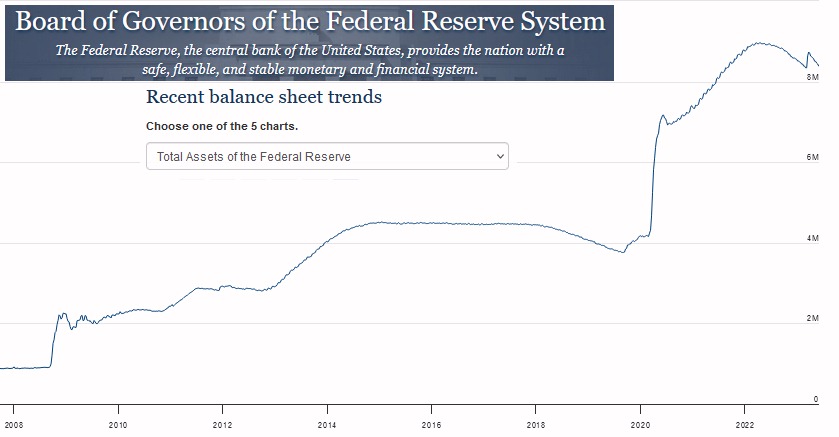
What will the Federal Reserve do? In the Spring of 2022, the Fed said they would not only stop buying Treasuries, but they would also start selling their Treasury assets. Initially, the Fed said the inflation was transitory. They were wrong. In order to fight inflation, the Fed needed to raise interest rates and reduce their assets (Treasuries). The Federal Reserve really shouldn’t be holding assets in the first place. During the financial crisis of 2007-2014, the Federal Reserve started buying trillions of dollars of assets including Treasury securities. Then during the COVID financial crisis, the Fed bought trillions more. In 2022, the Fed did stop buying Treasuries and as the securities matured, the Fed did not participate in as many Treasury rollovers. (Treasury rollover describes the process by which principal payments from maturing Treasury securities held by the SOMA are reinvested in newly auctioned securities.) However, in the graph below you see a sudden uptick in 2023.

Federal Reserve Balance Sheet Assets

The spike in assets in the Spring of 2023 was due to bank failures. The failing banks had billions of dollars in Treasuries that had lost value due to the rising interest rates. When interest rates go up, the value of existing lower yielding securities goes down. So, the Fed bought the devalued assets at full face value. The Fed may also have intervened in the markets to prop up the price of marketable securities in the open market.

What’s Next?
All of these interventions by the Fed have failed to bring inflation down to an acceptable level. Now the Treasury is going to borrow an addition 1 trillion dollars further increasing the demands on borrowing, interest rates, and the banking system. In fact, anything further the Fed does may stoke inflation. If the Fed buys more Treasuries, interest rates will be subsidized lower stimulating inflation. It will in effect be the same as printing money. Rising interest rates will increase the National Debt. Increasing the National Debt will raise interest rates. It is a vicious circle.

While our fiscal and monetary mess is unraveling, the costs of climate change are growing exponentially. Included in the debt ceiling suspension is a provision for unlimited emergency federal spending. Unfortunately this means that the government can continue to ignore the causes of climate change and instead give trillion dollar subsidies to the fossil fuel industry through emergency disaster relief. Yes, another vicious circle — more fossil fuels subsidies result in more climate catastrophes… resulting in more fossil fuel subsidies, etc. The end result will be additional trillions in government borrowing while the standard of living declines.

Recommendations
Given the above, our outlook and recommendations remain the same — persistent inflation and higher interest rates. Individual investors should max-out their annual I Bonds of up to $10k. Leftover saving should be invested in 4-week and 26-week Treasury bills. At maturity securities should be rolled over for the same length of time UNTIL interest rates peak. At that time, longer maturities should be considered.

BONUS
You can make all your transactions commission free at Treasury Direct. Marketable Treasuries are issued at a discounted rate. That means you get paid your interest in advance (giving you an even higher rate of return.)

The Economic Monsters: Inflation and Interest Rates

  1. Economic Forecast = Inflation (2018)
  2. Inflation Bites (2022)
  3. U.S. Mass Consumption Results in Global Economic Disparity, Inequity, and Poverty (2023)
  4. Investment Recommendation: Savings Bonds / I Bonds
  5. Your National Debt

Business & Economics

bookmark_borderThe Federal Reserve, the Treasury, and You

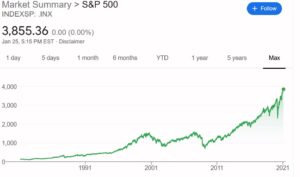
S&P 500 Rise since Fed and Treasury Intervention
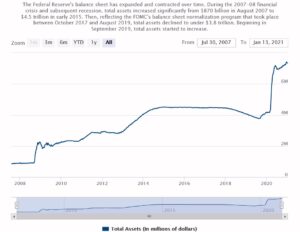
Federal Reserve Bank Balance Sheet 2020

We were talking about a graph of the record high stock market… and, I said:
You definitely need to keep this graph with it… the main reason the stock market is at this level is because the Federal Reserve has been buying stocks and bonds… lots of them. (That’s over 7 trillion pictured in the graph.) The old, bankers’ saying is “you can’t fight the fed”.

You asked: So, what will happen next?

I replied:
It all depends on how long the Fed can print money. A goodly portion of the bond and equity markets are owned by the Fed. (aka us / socialism / communism) . The US can do this because the dollar is the world reserve currency. Unfortunately for us, the Trump administration has put the dollar’s status in jeopardy. My guess is we have some time… until the dollar implodes. When the dollar implodes, the artificially inflated real estate, bond, and equity markets will collapse. Something like the next 10-20 years all your assets will be worthless.

You asked: do you think Janet will be Yellen and Screamin’ about this practice?

I replied:
Sad to say, no. The gov’t started propping up the private sector in 2008-2009. That was suppose to unwind. There was no unwinding under Yellen…. the real unwinding was suppose to happen under Trump. In 2017, the unwinding stopped… in 2020, the spigot was opened wide and trillions more were pumping in. Now, it is essential to keep the markets from collapsing. Thus, I expect Yellen will be forced to “Buy high and sell low”. Obviously, a failing investment practice.

ETFs are stocks as are Fannie Mae, Freddie Mac, and Ginnie Mae. Nobody knows exactly what the Fed buys, but it is widely believed the Fed started buying S&P 500 ETFs in 2020. In any event, 7 trillion in public and private debt and equities has a significant impact on artificially inflating real estate and the stock market.

You replied:
I understand it as “ETF’s” are “Exchange Traded Funds” and can be ANY investment vehicle.
To your point the Fed is documented to have made ETF Corporate Bond purchases last year …
What I could use your help on is in seeing how the (to Tom’s point) rather nominal $8 billion purchase is causing the dramatic effect seen in the graph.

I responded:
Yes. “An exchange-traded fund is a type of investment fund and exchange-traded product, i.e. they are traded on stock exchanges as stocks.” The reason(s) it bolsters the stock market include: purchases of corporate bond ETFs; purchase of equity based ETFs; purchase of specific corporate debt (eg Amazon, VISA, Kroger); most importantly the lowering of interest rates so that corporations can borrow money at near zero percent and use the money to purchase back their own stock. These are just a few ways the FED is propping up the stock market. Less direct but just as significant is the inflation of real estate (through purchase of mortgage backed securities.) The inflated value of real estate gives individuals the ability to invest (or not cashout) in the stock market. That is to say, if real estate was not inflated right now, people would be cashing out their 401k and IRAs to survive.

The Fed started doing these dirty deals in 2008. When I say dirty deals, I mean using their authority to maintain liquidity in the markets to interfere in private assets and equity. Since 2008, they have gone further and further over the line. In 2008-2009 it was focused mainly on real estate and large purchases (automobiles). In 2020, the Fed added direct and indirect ownership in corporations. For instance, airline debt… $2.2 million in Southwest Airlines debt. This allowed Southwest to borrow billions to keep afloat during the pandemic. Here is an article that explains a lot of it… “the Federal Reserve announced the deployment of additional “tools to support households, businesses, and the U.S. economy overall in this challenging time.” “Overall, $1 trillion in investment-grade bonds have been issued this year, nearly as much as all of 2019, along with tens of billions more in junk bonds from risky companies, which the Fed has also signaled that it would purchase.”

Something that is very important to consider… what is the difference between owning stock in the corporation or junk bonds issued by that corporation? That is to say, what happens to the Fed’s asset when the corporation goes bankrupt? What happens to the Fed’s good bonds when that company is taken over?

You said:
Something we should all remember … zooming back on the nation with a fresh alien perspective is a great exercise and skill …
We have a median household income barely budge since 1980 even after the majority of households went to duel income. It’s about 62,000 against 300% increases in real estate, health insurance and college costs …
Meanwhile market capitalization, cash reserves and productivity for corporations skyrocketed and the wealth gap of a tiny minority of both private individuals and elected officials skyrocketed …
To say “nothing to see here” is impossible if you look from afar …
This is one thing, the Fed, we can focus on for a better understanding. Thanks Daniel Brouse for initiating the discussion.

I add:
Agreed. The best case scenario for the USA would be to eliminate all existing Federal taxes. Establish a Federal pollution tax. Give every American 40k/year stipend.

The FED really does openly keep 2 sets of books. In general, both the Treasury and the Fed do not want to publicly disclose exactly what they are doing. 1) they don’t want to endanger private companies or industries by giving the impression that a company is in trouble 2) they don’t want the markets to undermine their efforts by trying to profit from their actions. A public example of this is in 2008-2009 when all the big banks were forced to take TARP money… whether they needed it or not. [The Fed and the Treasury have two sets of books… one for the public and one that is classified. It’s why we don’t know what stocks they are buying.)

“Making matters worse, the proportion of buybacks funded by corporate bonds reached as high as 30% in both 2016 and 2017,” according to JP Morgan Chase.

The Fed is buying stocks and bonds. And, the Fed is in cahoots with the Treasury (where do you think the Treasury borrows the money from?) The Fed has purchased trillions of dollars in direct and indirect purchase of stocks and bonds. It started in 2008 and continues to this day. US citizens have ownership in many airlines, cruise ships, real estate, General Motors, Chrysler, a multitude of banks and mortgage companies, insurance companies, and much more. That is not to mention the billions and billions lent to corporations to buy back their own stocks. This is the Fed’s money buying stocks. This is The Fed using the money multiplier to bolster the stock market since 2008.

You ask:
I tried to find data on the “stocks” you are referring to and can’t … does one of the articles you attached above have info.

This also pulls in my skepticism that the media is covering everything it should be … but I just can’t find any info so I could use sources.

I reply:

Yes. You can find out about many of the stocks owned by the government. It is a bit tangled. But, you can follow the money. Ask where the money to purchase the assets comes from? A: The Fed. Corporations and the Treasury obtain near zero interest rate money from the Fed. So, in many cases, how the Fed pays for the stocks becomes obscured. It often takes the private sector years so figure out the cash flow. We don’t know that much about 2020… except what was revealed in the CARES act, as well as, the pattern of stock buy backs (there was a big dip in buy backs in the 2nd quarter that coincides with the stock market.) You will have to dig a bit to find the names of the stocks… but they include airlines (Alaska Airlines, Allegiant Air, American Airlines, Delta Air Lines, Frontier Airlines, Hawaiian Airlines, JetBlue Airways, United Airlines, SkyWest Airlines, and Southwest Airlines), cruise ships, and supply chain companies like Amazon and Kruger. Some of the stock buybacks that lineup with the market include MGM, Best Buy, Qualcomm, Kansas City Southern, Lennar, Cummins and Xerox. The acquisition of stocks and stock options from earlier periods has been better routed out by analysts… all of the companies listed in “red” are all on the list: https://projects.propublica.org/bailout/list

You wondered: Am I missing something … these appear to be loans, not stock purchases, yes?

I explain: In 2008 the Federal Reserve and the Treasury colluded on circumventing the restriction on the both the Fed and the Treasury. Now, they are working in concert. You can no longer differentiate between the Fed and the Treasury. Quantitative Easing (QE) and the Troubled Asset Relief Program TARP) completely changed how things worked. (You can see it in the original chart above.) In most instances, the Treasury enters into stock ownership agreements and uses the Fed’s money to complete the deal. So, is it the Fed? or is it the Treasury? is the wrong the question… the right question is “Is it the Fed and treasury? The answer is yes. Now, most of the purchases/deals are under the CARES act. This is in addition to the Fed’s direct investment in public and private bonds, as well as, equities. The Fed is buy ETF’s and individual stocks, as well as… but the public can not find out exactly which ones.

It is very convoluted and in my opinion illegal. Neither the Fed nor the Treasury should be intervening / competing in the private markets. It costs the average citizen a lot of money.

The simplest way to explain is comparing it to an individual trading options with a margin account. In this scenario, the Treasury would be the account holder and the Fed would be the broker — “Buying on margin involves borrowing money from a broker to purchase stock. A margin account increases your purchasing power and allows you to use someone else’s money to increase financial leverage. Margin trading confers a higher profit potential than traditional trading but also greater risks.”

The most important part might be to start with the fact that there should be NO assets on the Fed’s balance sheet. The Fed is suppose to be the banks’ bank… regulating banks to maintain their liquidity and control inflation. Q. Is the Fed part of the government? A. No. The Federal Reserve Banks are not government agencies. The Federal Reserve is quasi-governmental. The Fed is not suppose to lend money to anyone other than member banks and only “overnight” to meet reserve requirements. (Reserve requirements are suppose to be to ensure banks remain solvent.)

Though this is not rocket science, it is convoluted high finance shell games. Very similar to investigating money laundering.

Economics and civics should be taught in every grade K-12 IMHO

bookmark_borderThe Economic Costs of COVID Re-openings

The mortality rate for COIVD is between 7-8% in PA. (* The actual mortality rate is closer to 14%) It has been since the pandemic started, and still is. An estimated additional 15% of the recovered have permanent disabilities. What is the cost of life and health on the economy? The benefit-cost analysis of a human life is generally accepted as US$10 million/dead person. [It is also referred to as the cost of life, value of preventing a fatality (VPF) and implied cost of averting a fatality (ICAF).]

But, what is the cost of lifelong disability? (COD/cost of a disability) That cost is much more difficult to calculate. How much does it cost to keep me alive? How much pain and suffering must I endure? And, how widely does the cost vary from disability to disability? If I need O2 the rest of my life… or if my leg is amputated… or neurological damage, etc.?

So, if the economy benefits by X amount by reopening early… what is the offsetting cost (X-VPF-COD)?
It seems to me this is a no-brainer. Without a doubt, it will be a negative number: X < VPF+COD Answer: Stop the spread. Stop the dead. Make the bread.

COVID-19 Index