bookmark_borderThe Real Cost of Fossil Fuels: How Trump’s Policies Accelerate Economic Collapse

by Daniel Brouse
December 10, 2025

Fossil-fuel combustion isn’t just environmentally destructive — it is the single most expensive human activity in the global economy. The illusion of “affordable energy” collapses the moment you account for the actual economic costs: healthcare burdens, lost productivity, infrastructure damage, climate-driven disasters, agricultural losses, ecosystem collapse, and trillions in government subsidies that mask the true market price of oil, gas, and coal.

When you add these direct and indirect costs together, the losses outweigh the benefits by trillions of dollars every single year.

Yet Donald Trump continues to weaponize disinformation, promoting anti-economic, white-nationalist energy policies built entirely on propaganda—not reality. And the data proves it.

Energy Prices: What Actually Happened

Trump repeatedly claims he “made energy cheap” and “brought prices down.”
That is a lie.

Here are the actual numbers:

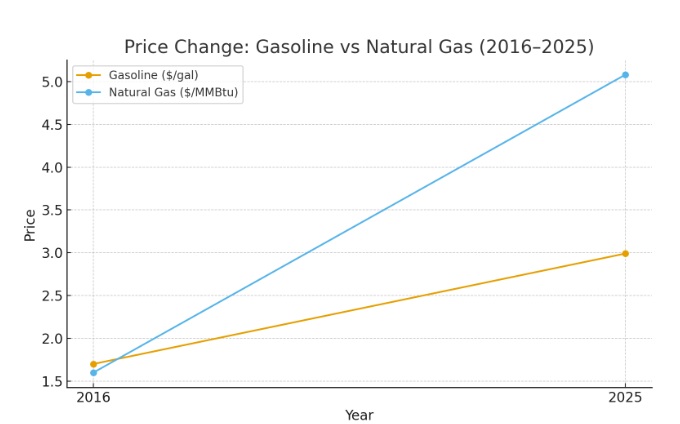
Gasoline

  • January 2016: $1.70/gallon
  • December 2025: ~$2.99/gallon
    ➡️ ↑ 76% increase

Natural Gas (Henry Hub Spot)

  • January 2016: ~$1.60 per MMBtu
  • December 2025: ~$5.08 per MMBtu
    ➡️ ↑ 217% increase

The truth is blunt:
Fuel prices are dramatically higher today than when Trump first took office—and that volatility is a direct consequence of policy choices, not some inevitable market swing. The biggest financial hit isn’t just at the gas pump, but on every electric bill in the country. Natural gas is still the backbone of U.S. power generation, so when its price spikes, electricity costs rise right along with it.

Trump made the situation dramatically worse by opening U.S. natural gas to heightened global demand, driving domestic prices even higher. And instead of strengthening the most affordable, stable, and sustainable energy sources—solar and wind—he’s actively undermined them. The result is a manufactured energy crisis that harms households, businesses, and the long-term health of the U.S. economy.

Trump’s Economic Agenda: A Blueprint for Collapse

Modern economic debates have been hijacked by emotional rhetoric and short-term political wins. But basic economics tells us:

  • Protectionism and tariffs shrink economies.
  • Nationalism and anti-immigration policies reduce labor supply, innovation, and GDP growth.
  • Populist attacks on institutions increase risk, weaken currency stability, and scare away investment.
  • Deregulation of fossil fuels amplifies long-term costs while accelerating climate-driven economic shocks.

These are not theoretical risks.
They are happening right now.

Capitalism Is Becoming Uninsurable

Perhaps the most alarming warning comes from Gunther Thallinger of Allianz SE, one of the world’s largest global insurers:

The pace and scale of climate-related destruction is beginning to exceed the insurance industry’s ability to function.

Insurance is the keystone stabilizer of capitalism.
If insurers can no longer price risk:

  • mortgages fail
  • banks collapse
  • property markets implode
  • businesses cannot operate
  • governments cannot finance disaster recovery
  • investment markets unravel

This is how capitalism collapses from within — not through ideology, but through mathematical certainty.

Climate Change: A Cascading, Nonlinear Health Crisis

Climate change is not just melting ice sheets.
It is unraveling the biological, ecological, and medical systems humans depend on.

Warming temperatures trigger reinforcing health feedback loops:

  • extreme heat → cardiovascular deaths → weakened population resilience
  • air pollution → chronic disease → higher mortality + healthcare costs
  • food system instability → malnutrition → reduced cognitive development
  • ecosystem collapse → infectious disease spread → rising pandemics
  • infrastructure failures → water contamination → chronic illness

These loops interact, amplify, and accelerate one another.
They are nonlinear, meaning each degree of warming creates exponentially greater harm.

This translates directly into:

  • shorter life expectancy
  • declining quality of life
  • skyrocketing healthcare costs
  • reduced labor productivity
  • shrinking economic output
  • destabilized communities
  • massive, permanent losses in human capital

The Bottom Line

Trump’s fossil-fuel agenda isn’t just anti-science.
It is anti-economic, anti-health, and anti-American.

By clinging to the most expensive and destructive energy system ever created, we are:

  • sabotaging our economy
  • accelerating financial collapse
  • undermining national security
  • destabilizing global markets
  • shortening human life
  • destroying the conditions necessary for civilization to function

A livable future — and a stable economy — requires recognizing that clean energy is not a cost.
It is the only economic path that ensures survival.

* Our probabilistic, ensemble-based climate model — which incorporates complex socio-economic and ecological feedback loops within a dynamic, nonlinear system — projects that global temperatures are becoming unsustainable this century. This far exceeds earlier estimates of a 4°C rise over the next thousand years, highlighting a dramatic acceleration in global warming. We are now entering a phase of compound, cascading collapse, where climate, ecological, and societal systems destabilize through interlinked, self-reinforcing feedback loops.

What Can I Do?
The single most important action you can take to help address the climate crisis is simple: stop burning fossil fuels. There are numerous actions you can take to contribute to saving the planet. Each person bears the responsibility to minimize pollution, discontinue the use of fossil fuels, reduce consumption, and foster a culture of love and care. The Butterfly Effect illustrates that a small change in one area can lead to significant alterations in conditions anywhere on the globe. Hence, the frequently heard statement that a fluttering butterfly in China can cause a hurricane in the Atlantic. Be a butterfly and affect the world.

→ “Solutions to the Fossil Fuel Economy and the Myths Accelerating Climate and Economic Collapse.“

The Climate Crisis: Violent Rain | Deadly Humid Heat | Health Collapse | Extreme Weather Events | Insurance | Trees and Deforestation | Soil | Rising Sea Level | Food and Water | Updates

Tipping points and feedback loops drive the acceleration of climate change. When one tipping point is toppled and triggers others, the cascading collapse is known as the Domino Effect.

The Human Induced Climate Change Experiment
Gasoline and Gas Prices 2016 to 2026

Trumpenomics

bookmark_borderClimate Chain-Reaction: How Nonlinear Feedback Loops Are Driving Runaway Global Warming

by Daniel Brouse and Sidd Mukherjee
December 3, 2025

Earth’s climate is a nonlinear, chaotic system composed of tightly interdependent subsystems—atmosphere, hydrosphere, cryosphere, lithosphere, and biosphere. Drawing from chaos theory, nonlinear thermodynamics, and emerging observations of accelerating climate instability, this paper examines how feedback loops and tipping points are now interacting in a compounding, cascading sequence similar to the self-accelerating chain-reaction of a nuclear explosion.

Human-induced climate change is no longer a slow, linear warming trend; it has entered a phase defined by feedback-driven acceleration, where each stage amplifies the next. This chain-reaction dynamic is rapidly pushing the climate toward states previously considered centuries away.

1. Ignition: Fossil Fuels, Pollution, and Initial Forcing

The chain reaction begins with the combustion of fossil fuels. This produces:

  • Greenhouse gases: CO₂, CH₄, and tropospheric ozone (O₃)

  • Particulate pollution: PM₂.₅ and other aerosols

  • Secondary health effects: heart disease, stroke, respiratory failure, and compounding stress on human physiological systems

Fine particulate pollution and ozone feed directly into a health-driven feedback loop—weakening human resilience, increasing mortality, reducing labor productivity, and indirectly accelerating global warming through economic disruption and heightened energy demand.

Meanwhile, CO₂ and methane trap longwave radiation, raising global temperatures and injecting more thermal energy into every component of the climate system.

2. Atmospheric Moisture Feedback: The First Major Amplifier

A fundamental physical law governs what happens next: warmer air holds more water vapor, and water vapor is itself the most powerful greenhouse gas on the planet.

  • For every 1°C (1.8°F) of warming, the atmosphere can hold ~7% more moisture.

  • Over 10°C, water-holding capacity nearly doubles.

  • Increased evaporation → increased atmospheric moisture → increased back-radiation → more warming → more evaporation.

This is a classic positive feedback loop.

More water vapor also supercharges extreme precipitation events, creating catastrophic inland and coastal flooding, particularly in regions like the Mid-Atlantic United States where river basins, stormwater systems, and aging infrastructure are already overwhelmed.

3. Permafrost Thaw, Boreal Forest Collapse, and the Carbon Bomb

As global temperatures rise, the Arctic warms 3–4 times faster than the global average—a phenomenon known as polar amplification. This triggers the next phase of the chain reaction:

Permafrost Thaw

  • Releases vast stores of CO₂ and CH₄ trapped for millennia

  • Destabilizes soils, infrastructure, and entire ecosystems

  • Forms thaw lakes that leak methane at accelerating rates

Zombie Fires and Boreal Wildfires

The thawing cryosphere has enabled:

  • “Zombie fires” smoldering underground year-round

  • Record-breaking boreal forest fires in Canada, Alaska, and Siberia

  • Fire emissions now exceeding the annual fossil-fuel emissions of countries like Canada

These fires convert carbon sinks into carbon sources—an irreversible shift.

4. Ocean Heating, Jet Stream Disruption, and the Breakdown of Planetary Circulation

The oceans absorb over 90% of the excess heat trapped by anthropogenic greenhouse gases. This thermal accumulation drives multiple destabilizing processes:

  • Weakening of the AMOC (Atlantic Meridional Overturning Circulation)

  • Slowing and increased waviness of the jet stream

  • Prolonged heat domes, atmospheric blocking, and stalled storm systems

  • Intensification of tropical cyclones through ocean heat content

These system-level shifts introduce chaotic behavior into global weather patterns—persistent drought where water is needed, and supersaturated storms where the atmosphere is already overloaded.

5. The Scale of Heat Accumulation: A Planet-Wide Nuclear Equivalent

The increase in Earth’s thermal energy is almost impossible for the human mind to process. The planet currently gains heat at a rate equivalent to:

  • Several Hiroshima-sized atomic bombs per second

  • 400,000–1,000,000 Hiroshima bombs per day

Between 1971 and 2020, Earth accumulated roughly 380 zettajoules of additional heat—equivalent to: ~25 billion Hiroshima bombs of energy

Most of this energy is now locked in the oceans, driving stratification, deoxygenation, coral die-off, species collapse, and further disruption of heat distribution mechanisms.

Unlike a nuclear bomb—which expends its chain reaction in microseconds—Earth’s climatic chain reaction is continuous, compounding, and accelerating.

6. Runaway Phase: When Drivers Become Amplifiers

As described in the linked papers (“Drivers and Amplifiers,” “Non-Linear Acceleration,” “Runaway Phase”), the boundary between “cause” and “effect” begins to dissolve:

  • Warming creates more warming.

  • Melting creates more melting.

  • Extinction accelerates more extinction.

  • Infrastructure failures multiply future failures.

  • Human health decline increases vulnerability to further environmental shocks.

At this stage, feedback loops interact, producing nonlinear acceleration. These interactions include:

  • Ice-albedo loss

  • Methane release

  • Soil respiration increases

  • Ocean stratification and reduced carbon uptake

  • Vegetation dieback

  • Wildfire-carbon amplification

  • Population displacement and weakened institutional response capacity

This is the signature of a system entering runaway dynamics.

Conclusion: A Planet in a Chain Reaction

Climate drivers and amplifiers now form an interconnected series of cascading feedback loops that are accelerating global warming far beyond linear predictions. The climate is no longer responding to “emissions alone”; it is responding to its own destabilization.

Earth’s climate chain reaction is not theoretical or distant—it is unfolding in real time.

To interrupt this runaway process, humanity must:

  • Rapidly eliminate fossil fuel combustion

  • Restore carbon sinks

  • Rebuild resilient infrastructure

  • Reduce pollution

  • Strengthen global cooperation rather than retreat into isolation

Without decisive action, the chain reaction will continue until multiple tipping points lock the planet into an unlivable state.

Infectious disease vectors, violent rain, and deadly humid heat now stand among the greatest threats of climate change, no longer future warnings but present realities. This deadly triad — rising infectious diseases, escalating heat extremes, and intense rainfall events — has begun driving an exponential increase in climate-related deaths worldwide. These hazards do not operate in isolation; they amplify one another’s impacts, creating cascading risks that strain health systems, destabilize communities, and accelerate global mortality. Climate change has become a full-scale health crisis, demanding urgent, systemic action before these accelerating threats overwhelm society’s ability to respond.

* Our probabilistic, ensemble-based climate model — which incorporates complex socio-economic and ecological feedback loops within a dynamic, nonlinear system — projects that global temperatures are becoming unsustainable this century. This far exceeds earlier estimates of a 4°C rise over the next thousand years, highlighting a dramatic acceleration in global warming. We are now entering a phase of compound, cascading collapse, where climate, ecological, and societal systems destabilize through interlinked, self-reinforcing feedback loops.

What Can I Do?
The single most important action you can take to help address the climate crisis is simple: stop burning fossil fuels. There are numerous actions you can take to contribute to saving the planet. Each person bears the responsibility to minimize pollution, discontinue the use of fossil fuels, reduce consumption, and foster a culture of love and care. The Butterfly Effect illustrates that a small change in one area can lead to significant alterations in conditions anywhere on the globe. Hence, the frequently heard statement that a fluttering butterfly in China can cause a hurricane in the Atlantic. Be a butterfly and affect the world.

The Human Induced Climate Change Experiment

bookmark_borderThe Evolving Scientific Understanding of SARS-CoV-2, COVID-19, and Long COVID

by Daniel Brouse
November 22, 2025

The scientific consensus continues to strengthen around a critical reality: COVID-19 does not end when the acute infection clears. A growing body of evidence now shows that SARS-CoV-2 causes a wide spectrum of long-term health complications, driven primarily by two mechanisms—persistent infection and epigenetic disruption. Together, these processes help explain the profound and lingering health, social, and economic impacts of the pandemic.

Persistent SARS-CoV-2 Infection

Persistent COVID-19 refers to the continued presence of viral material in organs long after a person has tested negative. Viral RNA, proteins, and replication-competent virus have been detected in the brain, gut, heart, lymph nodes, lungs, and other tissues months or even years after the initial infection.

This persistence can recreate or prolong many early symptoms, including:

  • Brain fog and cognitive decline
  • Profound fatigue
  • Dysautonomia and POTS
  • Night sweats and temperature dysregulation
  • Autoimmune-like manifestations
  • Loss or distortion of taste and smell

This mechanism is now widely recognized as a driver of Long COVID, chronic inflammation, and immune dysfunction.

Post-Infection Vaccination as Therapy

Emerging research indicates that post-infection mRNA vaccination can act as a form of immunological “reset.” By reintroducing viral antigens safely, the vaccine can:

  • Stimulate targeted immune clearance of residual viral reservoirs
  • Reduce systemic inflammation
  • Improve symptoms associated with persistent infection

This therapeutic effect underscores the importance of vaccination not only for prevention but for post-infection recovery and long-term health protection.

Epigenetic Impacts of SARS-CoV-2

The second major mechanism of long-term harm is epigenetic modification. Epigenetics involves chemical tags that control whether genes are turned on or off without changing the underlying DNA sequence.

SARS-CoV-2 has been shown to induce significant epigenetic changes, which can:

  • Activate oncogenes associated with cancer
  • Increase risk for diabetes, metabolic disorders, and cardiovascular disease
  • Disrupt neurological function and accelerate brain aging
  • Trigger or worsen autoimmune conditions

These changes act as biological “switches” that can remain altered for years. When combined with other stressors—pollution, heat, poor air quality, co-infections—the effects do not simply add up; they multiply, increasing vulnerability across multiple organ systems.

Even more concerning, epigenetic shifts can be transgenerational: stress-induced modifications in one generation can be passed down, increasing disease risk in their children and grandchildren.

The Economic Fallout of Long COVID

Long COVID—defined as symptoms persisting three months after SARS-CoV-2 infection—is now understood as one of the most economically damaging mass disabling events in history.

Key findings:

  • Global prevalence: ~36% of all infected individuals
  • Annual economic burden: ~$1 trillion worldwide
  • Annual lost earnings in the U.S.: ~$170 billion
  • Long COVID leads to sustained unemployment, reduced labor force participation, and financial hardship for years after infection.

The economic burden from epigenetic damage is even harder to quantify. How do we measure:

  • Increased chronic pain, disability, and early mortality?
  • Healthcare costs spanning decades?
  • The loss of human potential?
  • The inherited burden passed to future generations?

These are the hidden costs that will shape global health for decades.

Conclusion: A Critical Warning

Climate change, pollution, and zoonotic disease are not separate threats—they are interconnected components of a dangerous biological feedback loop.

  • Extreme heat accelerates biological aging and shortens telomeres.
  • Air pollution increases susceptibility to COVID-19 and worsens outcomes.
  • COVID-19 and heat stress both trigger harmful epigenetic modifications.
  • Climate-driven shifts in pathogens increase exposure risks while weakened immune systems amplify their impact.

Together, these processes compound the long-term health consequences of SARS-CoV-2 and increase the population’s vulnerability to future pandemics.

Understanding this interplay is essential. The choices governments make now—whether to fund or defund infectious disease research, climate science, and vaccine development—will determine the health and stability of generations to come.

The Human Induced Health Collapse

bookmark_borderThe Non-Linear Acceleration of Climate Change: Evidence, Confirmation, and the Emerging Domino Effect

By Sidd Mukherjee and Daniel Brouse
November 22, 2025

In the 1990s, we developed what became known as The Non-Linear Acceleration Hypothesis—the proposition that climate change is not progressing linearly but is accelerating exponentially. Working together, with Sidd’s background as a Doctor of Physics from Ohio State and my own experimental and observational analyses, we produced the foundational evidence for this theory. By the early 2000s, our work had evolved into a recognized climate framework, validated repeatedly through independent replication and supported by an expanding body of empirical data. Over the decades, this body of confirmation has solidified into the scientific consensus we see today.

Shrinking Doubling Times and Escalating Impacts

One of the most compelling indicators of nonlinear acceleration is the dramatic contraction of the doubling time of climate impacts—the interval in which damage effectively doubles due to interacting feedback processes. In the mid-20th century, the doubling time was on the order of 100 years. By the early 2000s, it had fallen to 10 years, and recent analyses show that it has now plunged to approximately 2 years.

This means that the impacts of climate change today are twice as severe as they were two years ago. If the doubling time remains constant, they will be four times worse in two years, eight times worse in four years, and potentially sixty-four times worse within a decade. These estimates are conservative; the doubling period continues to shorten as feedbacks intensify. With no meaningful global mitigation underway, the trajectory is unmistakable and vastly more catastrophic than previously projected.

Hansen’s Confirmation of the Acceleration Hypothesis

We have long regarded Dr. James E. Hansen as one of the principal founders of modern climate science. In April 2025, Hansen’s paper Global Warming Acceleration: Impact on Sea Ice provided a direct, data-driven confirmation of our hypothesis. His analysis demonstrated that global warming is accelerating, and that climate sensitivity is higher than IPCC estimates, fundamentally altering expectations for 21st-century warming.

Hansen concluded that IPCC models underestimate both climate sensitivity and key feedback processes. Under current emissions levels, he projects that warming by 2100 is likely to exceed 7°C, dramatically raising the probability of crossing multiple climate tipping points.

In November 2025, Hansen, Kharecha, and Morgan published Warning! This “Colorful Chart” Is Censored by IPCC, offering further confirmation.

Accelerated Forcing Growth

Their analysis centers on a chart showing the five-year running mean of the annual increase in greenhouse gas forcing. Over the past 15 years, they find that the rate of increase has surged to ~0.5 W/m² per decade—far higher than IPCC projections. This acceleration is not reflected in IPCC scenarios and is fundamentally incompatible with its claims of remaining “pathways” to 1.5°C or 2°C.

Implications for Climate Scenarios

  • Current forcing trajectories align closely with RCP 8.5, the high-end “business-as-usual” pathway.
  • They diverge sharply from RCP 2.6, the scenario often used for policy optimism.
  • Achieving RCP 2.6 today would require $2.4–5 trillion per year using current technology.
  • RCP 2.6 also presumes unrealistic levels of biomass burning plus carbon capture, which Hansen calls politically and practically unviable.

Critique of IPCC’s Modeling and Transparency

Hansen and colleagues argue that the IPCC relies too heavily on Integrated Assessment Models (IAMs), which they describe as opaque “dark boxes”—tools that embed assumptions that are rarely examined in public-facing science.

They highlight that:

  • Scientists have not adequately communicated the severity of accelerating forcings.
  • Carbon pricing is vastly more effective than prescriptive international agreements.
  • Missed opportunities since the Montreal Protocol have allowed forcings to climb unchecked.
  • Early COP negotiations excluded nuclear power from the Clean Development Mechanism—a decision they view as scientifically indefensible.

Climate Sensitivity and Near-Term Risk

Hansen’s findings, along with related analyses, suggest climate sensitivity in the range of 4–5°C per CO₂ doubling, substantially above many IPCC estimates. They warn that without extraordinary action within the next 5–10 years, Earth could be locked into a high-warming trajectory that destabilizes major climate systems.

Strengths of Hansen’s Argument

  • Data-driven approach grounded in measured forcings with ~10% uncertainty.
  • Clear policy relevance connecting forcing to cost, mitigation feasibility, and economic risk.
  • Strong emphasis on accelerating risk, consistent with observed feedback behavior.
  • Valid critique of IAM transparency, echoing long-standing concerns within the scientific community.

Broader Implications

If Hansen et al. are correct, the window for avoiding catastrophic warming is significantly narrower than models suggest. Their work underscores the need for:

  • Greater transparency in climate modeling
  • Rapid implementation of carbon pricing
  • Reevaluation of technological pathways
  • Public communication that aligns with empirical reality

Their findings also increase the urgency of addressing the accelerating feedback loops we identified decades ago.

The Domino Effect: Cascading Tipping Points

Building on nonlinear thermodynamics and chaos theory, we now know that climate tipping points are not isolated events—they interact. As major systems destabilize, they trigger secondary failures, creating a cascade of compounded impacts.

Our recent synthesis of 2024–2025 data shows:

  • CO₂ concentrations, fossil fuel emissions, and global temperatures all reached record highs.
  • Natural carbon sinks are beginning to convert into carbon sources.
  • Feedbacks across ice loss, ocean circulation, albedo decline, and atmospheric chemistry are synchronizing.
  • These interactions are driving what we call the Domino Effect—a system-wide cascade that threatens global habitability within this century.

* Our probabilistic, ensemble-based climate model — which incorporates complex socio-economic and ecological feedback loops within a dynamic, nonlinear system — projects that global temperatures are becoming unsustainable this century. This far exceeds earlier estimates of a 4°C rise over the next thousand years, highlighting a dramatic acceleration in global warming. We are now entering a phase of compound, cascading collapse, where climate, ecological, and societal systems destabilize through interlinked, self-reinforcing feedback loops.

What Can I Do?
The single most important action you can take to help address the climate crisis is simple: stop burning fossil fuels. There are numerous actions you can take to contribute to saving the planet. Each person bears the responsibility to minimize pollution, discontinue the use of fossil fuels, reduce consumption, and foster a culture of love and care. The Butterfly Effect illustrates that a small change in one area can lead to significant alterations in conditions anywhere on the globe. Hence, the frequently heard statement that a fluttering butterfly in China can cause a hurricane in the Atlantic. Be a butterfly and affect the world.

→ “Solutions to the Fossil Fuel Economy and the Myths Accelerating Climate and Economic Collapse.“

Tipping points and feedback loops drive the acceleration of climate change. When one tipping point is toppled and triggers others, the cascading collapse is known as the Domino Effect.

The Human Induced Climate Change Experiment
bookmark_borderThe Real “Fact” About Immigration: Trump’s Lie vs. America’s Reality

When Donald Trump declared, “FACT: Criminal illegal aliens are cashing in on taxpayer-funded Medicaid, while Democrats hold America hostage in a shutdown to make sure it stays that way,” he wasn’t stating a fact. He was spreading one of the most persistent and destructive myths in modern American politics.

Let’s be clear: that statement is pure propaganda, not fact.

Immigrants Pay Billions — and Receive Almost Nothing in Return

The truth is that undocumented workers contribute far more in taxes than they ever receive in benefits. They do not qualify for federal programs such as Medicaid, Medicare, or Social Security, and they are ineligible for unemployment insurance or most forms of public assistance.

Yet they continue to pay into the very systems that exclude them. According to the Institute on Taxation and Economic Policy (ITEP), undocumented immigrants contribute more than $11 billion annually in state and local taxes. Additionally, they pay an estimated $13 billion each year into Social Security — funds they will never collect.

That’s not “cashing in.” That’s subsidizing the American safety net that many of Trump’s supporters themselves rely on.

Immigrants Are Driving U.S. Economic Growth

Over the last five years, immigrants — both documented and undocumented — have been responsible for roughly 80% of total U.S. GDP growth. They’ve filled labor shortages in essential industries such as agriculture, healthcare, and construction, helped stabilize housing markets, and bolstered the Social Security system through consistent tax contributions.

Without immigration, the U.S. would already be facing a labor and economic collapse. Immigration is not a drain on America — it’s the engine keeping the country running.

The Real Hostage Crisis: Truth and Humanity

Trump’s accusation that Democrats are “holding America hostage” is ironic given his own record. The current government shutdown is a product of Trump’s political brinkmanship — his refusal to compromise unless his demands are met. The result? Hundreds of thousands of federal workers unpaid, critical services frozen, and families without food or medical assistance — all while Trump deflects blame toward immigrants and the opposing party.

This isn’t leadership. It’s governance by blackmail, wrapped in racism and fueled by fear.

Trumpism: Politics of Division, Not Protection

The MAGA movement has turned xenophobia and misinformation into political strategy. Trump’s message isn’t about protecting Americans — it’s about scapegoating immigrants to distract from his administration’s failures in fiscal management, public health, and national security.

The data tells a very different story: immigrants strengthen America — economically, culturally, and morally. The real threat to the nation comes from policies built on lies, fear, and hatred.

Conclusion: Call the Lie What It Is

Trump’s claim isn’t a “fact.” It’s another racist, fear-based fabrication designed to manipulate voters who don’t know the numbers — or who have been conditioned not to believe them.

America’s prosperity has always depended on the labor, innovation, and resilience of immigrants. Pretending otherwise isn’t just dishonest — it’s self-destructive.

If Trump truly cared about America’s future, he’d start by telling the truth.


Trumpenomics

bookmark_borderOne Death Every Minute: How Climate Change is Unraveling Human Health

By Daniel Brouse
November 3, 2025

A recent report from The Lancet Countdown on Health and Climate Change has issued a stark warning: extreme heat is now killing one person every minute across the globe — and the toll is rising. The report, authored by more than 128 experts from institutions including the World Health Organization (WHO), reveals that escalating temperatures driven by human activity are triggering a worldwide public health emergency.

Key Findings

  • One death per minute: The surge in heat-related deaths now equates to roughly one fatality every minute worldwide.
  • Rising exposure: The average person has endured 19 days per year of life-threatening heat over the past four years — nearly all attributed to human-caused warming.
  • Severe health impacts: Extreme heat leads to heatstroke, dehydration, kidney injury, and worsens existing heart and lung diseases.
  • Disproportionate vulnerability: The elderly, children, and those with chronic illnesses are at greatest risk.
  • Economic collapse in slow motion: In 2024 alone, extreme heat caused the loss of 639 billion labor hours, inflicting devastating economic damage — especially in the world’s poorest nations.

But this crisis extends far beyond heatwaves. Climate change is fueling a cascade of interconnected health breakdowns, each reinforcing the next.


The Expanding Web of Climate-Driven Disease

Climate change is no longer just an environmental issue — it is a full-scale health crisis. Rising global temperatures are destabilizing natural systems and triggering multiple biological feedback loops. These feedbacks are not linear; they are exponential, amplifying one another to accelerate global illness, premature death, and systemic collapse.

1. Infectious Disease Pathogens

  • Zoonotic spillover: Deforestation, warming, and habitat loss drive animals and humans into closer contact, enabling viruses like Ebola, COVID-19, and avian flu to spread faster.
  • Vector expansion: Mosquitoes and ticks are colonizing new latitudes and altitudes, carrying malaria, dengue, and Zika into regions previously untouched.

2. Environmental Pathogens and Pollution

  • Airborne toxins: Ground-level ozone, PM2.5, and wildfire smoke inflame lungs, weaken immunity, and contribute to millions of premature deaths each year.
  • Chronic disease link: Air pollution intensifies cardiovascular disease, COPD, asthma, cancer — and even neurological decline.
  • Pandemic amplification: Pollution exposure increased vulnerability to severe COVID-19 outcomes, creating a deadly synergy between chronic exposure and infection.

3. Climate Extremes and Cellular Breakdown

  • Accelerated aging: Chronic heat exposure damages tissues, shortens telomeres, and accelerates cellular aging.
  • Disease amplification: These cellular changes heighten risk for cancer, dementia, diabetes, and cardiovascular disease — all worsened by pollution and infection.
  • Mental health crisis: Heat stress fuels spikes in anxiety, depression, and suicide rates, adding psychological strain to the physical toll.

Epigenetic Damage: The Invisible Legacy of Climate Stress

At the molecular level, climate stress leaves biological fingerprints. Epigenetic changes — chemical modifications that control how genes are switched on or off — form the link between environmental damage and disease.

  • Extreme heat, ozone, and viral infection (including COVID-19) are known to induce epigenetic modifications.
  • These shifts can activate high-risk genes tied to cancer, diabetes, cardiovascular disease, and neurodegeneration.
  • When multiple climate stressors overlap, the effects don’t just accumulate — they compound, deepening vulnerability across multiple organ systems.

Even more concerning is their transgenerational impact. Stress-induced epigenetic changes in parents can alter gene expression in their offspring, predisposing future generations to disease before they are even born. The climate crisis is literally writing itself into our DNA.

Systemic Breakdown: The Health Infrastructure Tipping Point

As these biological, environmental, and social stressors converge, health systems face compound overload — more patients, fewer resources, and skyrocketing costs. Hospitals and clinics are already struggling with surging heat-related emergencies, air-quality illnesses, and vector-borne infections.
The reinforcing nature of these crises pushes public health infrastructure toward collapse, undermining economies and shortening lifespans.


Conclusion: Converging Crises, Urgent Response

The climate crisis is a health emergency on a planetary scale. The interaction between infectious disease, pollution, and extreme heat forms a web of compounding damage that is shortening lives and destabilizing societies.

Without immediate, coordinated action — including the rapid phaseout of fossil fuels, global investment in climate-resilient healthcare, and regulation of pollutants — these feedback loops will accelerate beyond control.

This is not just about saving the planet’s ecosystems.
It is about saving ourselves.

The Climate Crisis: Deadly Humid Heat | Health Collapse | Extreme Weather Events | Insurance

The Human Induced Climate Change Experiment

bookmark_bordermRNA Breakthrough: COVID Vaccine’s Hidden Power Against Cancer

By Daniel Brouse
October 25, 2025

Covid-19 mRNA Vaccine Sparks Immune Response to Fight Cancer

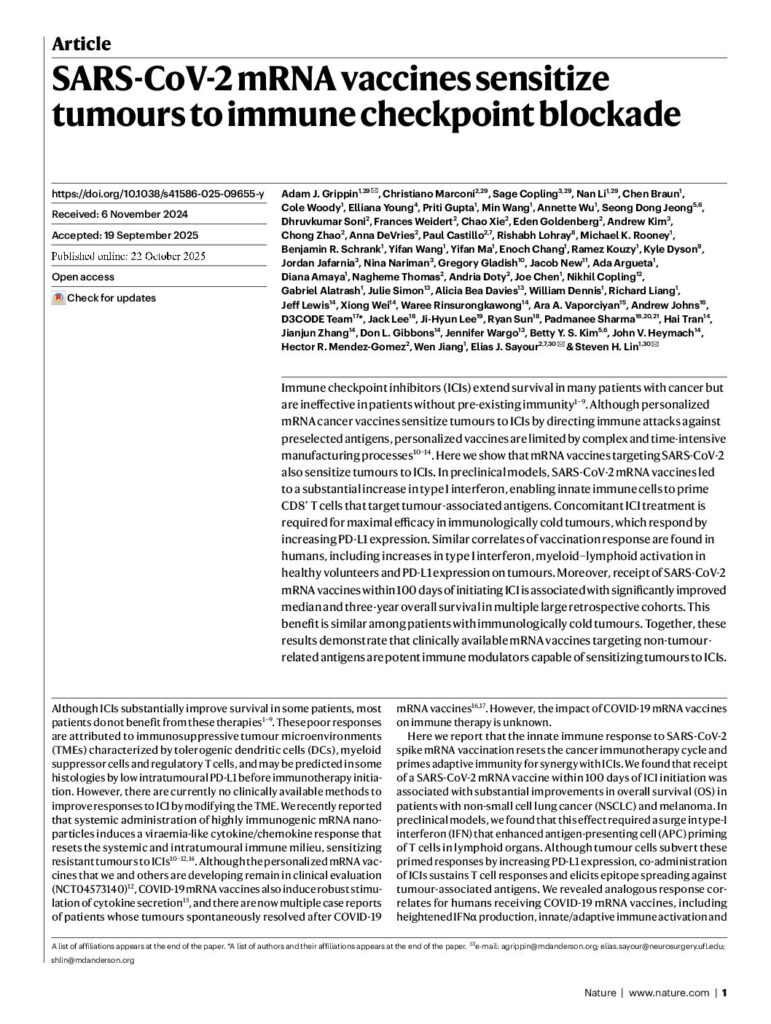
The same mRNA technology that helped the world battle COVID-19 is now showing extraordinary promise in the fight against cancer. A new study published in Nature has revealed that COVID-19 vaccines can activate a powerful immune response that appears to “wake up” the body’s natural defenses against tumors — nearly doubling the median survival length of cancer patients in some cases.

The collaborative research — led by the University of Florida and the University of Texas MD Anderson Cancer Center — analyzed the medical records of more than 1,000 cancer patients. The results suggest that the immune activation triggered by the COVID-19 mRNA vaccine may enhance the body’s anti-tumor immunity.

This marks what scientists are calling a defining moment in more than a decade of research into mRNA-based therapeutics designed to mobilize the immune system. If validated through a randomized clinical trial now being planned, the discovery could transform modern oncology.

“The implications are extraordinary — this could revolutionize the entire field of oncologic care,” said Elias Sayour, M.D., Ph.D., a UF Health pediatric oncologist and the Stop Children’s Cancer/Bonnie R. Freeman Professor for Pediatric Oncology Research. “We could design an even better, nonspecific vaccine to mobilize and reset the immune response — a universal, off-the-shelf cancer vaccine for all cancer patients.”

This breakthrough builds on Sayour’s prior eight years of work developing mRNA-lipid nanoparticle systems that deliver immune-stimulating messages to the body’s cells. The principle is simple but profound: use mRNA to retrain the immune system to recognize and destroy cancer cells, much like it does with viral infections.

The new findings reinforce the growing belief that mRNA vaccines — initially deployed to fight COVID-19 — have far-reaching applications beyond infectious disease. The technology allows scientists to rapidly program the immune system with precise instructions, unlocking a new era of personalized and universal medicine.

Jeff Coller, Ph.D., a leading mRNA scientist at Johns Hopkins University, said the study illustrates how Operation Warp Speed continues to save lives long after the pandemic’s peak.

“The results from this study demonstrate how powerful mRNA medicines truly are and that they are revolutionizing our treatment of cancer,” said Coller.

The study’s authors emphasize that while the results are preliminary, they represent a crucial step toward what many once considered science fiction — a universal cancer vaccine.

mRNA, or messenger RNA, naturally exists in every living cell, carrying the instructions needed to make proteins. The COVID-19 vaccines used synthetic mRNA to teach the immune system how to recognize and neutralize the SARS-CoV-2 virus. This same mechanism, researchers now believe, can be redirected to target cancer cells by enhancing immune surveillance and resetting dysfunctional immune pathways.

If these early results are confirmed in upcoming clinical trials, the ripple effects will be enormous — redefining not only cancer treatment but the future of immunology itself.

Reference:
Nature. mRNA vaccine-induced immune activation enhances anti-tumor response (2025). https://www.nature.com/articles/s41586-025-09655-y

COVID-19 mRNA vaccine sparks immune response to fight cancer

COVID-19 & Long COVID Science

bookmark_border100% TACO: Trump’s Reckless Tariff on Life-Saving Medicines

Protectionism, White Nationalism, and the Collapse of U.S. Economic Credibility

Donald Trump has just announced one of the most dangerous and reckless policies of his presidency: a 100% tariff on all branded or patented pharmaceutical products, unless the manufacturer is currently building a plant in the United States.

“Starting October 1st, 2025, we will be imposing a 100% Tariff on any branded or patented Pharmaceutical Product, unless a Company IS BUILDING their Pharmaceutical Manufacturing Plant in America,” Trump declared on Truth Social. The tariff exemption would only apply if a company had already broken ground on U.S. facilities.

While generic drugs—representing the majority of U.S. imports—are excluded, the real impact falls on life-saving branded medicines, including cancer treatments, biologics, vaccines, and advanced therapies. Nathalie Moll, director-general of the European pharma lobby EFPIA, warned bluntly: “Tariffs on medicines, however excessive, will create the worst of all worlds. Patients will be denied access to life-saving treatments.”

The pharmaceutical industry had previously been spared from Trump’s earlier “reciprocal tariff” packages, but this announcement breaks with prior commitments made to the EU and other trading partners. The EU’s 15% tariff ceiling deal, which included a “no stacking” clause, now appears to be in jeopardy. Switzerland, despite agreeing to steep tariffs in August, had exempted pharmaceuticals—until now. The UK, lacking any pharma-specific trade agreement, is scrambling for clarity.

In an attempt to appease Washington, drugmakers like AstraZeneca, GSK, Novartis, and Roche have already announced new U.S. investments, though many projects remain in the planning stage. Analysts caution that even these companies could face tariffs until actual construction is underway, leaving them vulnerable to immediate disruption.

Financial markets reflected the uncertainty: AstraZeneca and Roche shares initially fell before recovering. Still, the longer-term threat is not to investors but to patients, who may face higher drug costs, restricted supply, and delayed access to new treatments.

This tariff bombshell highlights the hypocrisy of Trump’s economic nationalism. For years, Trump has attacked foreign countries for subsidizing industries like farming or steel while quietly supporting similar “Trump-socialist” policies at home, including stakes in U.S. Steel, Intel, and other politically favored corporations. His latest tariffs expand this protectionist playbook to essential medicines—a sector where the costs of political gamesmanship are measured not in dollars but in human lives.

The announcement came alongside new tariffs of 25% on imported heavy-duty trucks and 50% on kitchen and bathroom cabinets—further evidence of Trump’s broader war against free trade. Rather than strengthening America’s position, these moves isolate the U.S., alienate allies, undermine credibility, and expose consumers to higher costs across essential goods.

This is not an “America First” policy. It is protectionism and white nationalism masquerading as economic strategy. If enacted, it could mark not only the collapse of Trump’s economic credibility but also the decline of U.S. global leadership. By weaponizing access to life-saving medicine, Trump has crossed a line that could cost lives, destabilize markets, and fracture alliances.

The question now is simple: Will Trump TACO out before America does?

Trumpenomics: The Decline of the USA

bookmark_borderThe Gut Clock: How Microbial Rhythms Shape Health, Sleep, and Metabolism

by Daniel Brouse
September 9, 2025

The gut microbiome goes through several important shifts over the course of a day, and these changes are tightly linked to the body’s circadian rhythm. These microbial populations do not operate randomly; they follow a daily cycle, synchronizing with light–dark patterns and feeding–fasting intervals. When fasting periods extend too long, or when meals are poorly timed, this rhythm can be disrupted—throwing off the delicate balance of microbial activity.

Daily microbial cycles play a central role in regulating the sleep–wake cycle. Certain microbial groups become more active in the morning to help stimulate metabolism and promote alertness, while others dominate at night, supporting rest, repair, and the production of neurotransmitters that influence sleep quality. Disrupting this cycle can impair both sleep and metabolic health, creating a feedback loop where poor sleep further destabilizes the gut microbiome, and vice versa.

A growing body of evidence shows that not just the substance of meals but also their timing is one of the most significant factors in long-term health outcomes. Eating late at night or consuming heavily processed foods with added sugars can spike blood glucose, disrupt blood pressure regulation, and increase the risk of insulin resistance, diabetes, and hypertension. Conversely, aligning meal timing with the body’s circadian rhythm improves glucose tolerance, cardiovascular stability, and even cognitive performance.

The best practice, according to nutrition science, is to eat larger meals earlier in the day—when the body’s metabolism is most efficient—and to keep dinner light, simple, and consumed at least three hours before sleep (and preferably longer). Avoiding processed foods and added sugars in the evening is particularly important, as late-night consumption forces the body to work against its natural rhythm.

Many people assume raw is always best, but certain vegetables actually become more nutritious when cooked, because heat breaks down cell walls, reduces antinutrients, or enhances bioavailability of key compounds. Here are the big ones:

Tomatoes

  • Nutrient Boosted: Lycopene (a powerful antioxidant linked to reduced risk of cancer and heart disease).

  • Why: Heat processing significantly increases lycopene bioavailability, even though vitamin C decreases.

  • Best Methods: Roasting, simmering into sauce, or slow cooking with olive oil (fat helps absorption).

Carrots

  • Nutrient Boosted: Beta-carotene (precursor to vitamin A, supports vision and immunity).

  • Why: Cooking breaks down tough cell walls, making beta-carotene up to 3x more available.

  • Best Methods: Steaming or roasting; avoid over-boiling which leaches nutrients into water.

Spinach, Kale, and Other Leafy Greens

  • Nutrient Boosted: Calcium, magnesium, and iron.

  • Why: Cooking reduces oxalates, compounds that block absorption of these minerals.

  • Best Methods: Light steaming or sautéing.

Asparagus

  • Nutrient Boosted: Ferulic acid and certain antioxidants.

  • Why: Heat releases more antioxidants from the cell walls.

  • Best Methods: Steaming or roasting.

Mushrooms

  • Nutrient Boosted: Antioxidants like ergothioneine and polyphenols.

  • Why: Heat amplifies antioxidant levels while preserving minerals.

  • Best Methods: Grilling or microwaving (boiling leaches nutrients).

Broccoli (and cruciferous family)

  • Mixed Bag: Vitamin C decreases with heat, but indole-3-carbinol and carotenoids become more available.

  • Pro Tip: Light steaming (not boiling) preserves sulforaphane, the anti-cancer compound.

Pumpkin & Winter Squash

  • Nutrient Boosted: Beta-carotene.

  • Why: Like carrots, cooking breaks down plant cell walls.

  • Best Methods: Baking or roasting.

 Rule of Thumb:

  • Steaming and roasting generally retain the most nutrients.

  • Boiling causes losses into the water (unless you drink it in soups/stews).

  • Pairing with healthy fats (olive oil, avocado, nuts) boosts absorption of fat-soluble vitamins (A, D, E, K).

As the old saying goes, and as modern science now validates:
“Eat breakfast like a king, lunch like a prince, and dinner like a pauper.”

Nutrition, Health, and Wellness

bookmark_borderHealth and Quality of Life in Florida

by Daniel Brouse
September 3, 2025

Florida faces mounting challenges in health, education, and climate resilience—each reinforcing the state’s declining quality of life.

Life Expectancy
Florida’s life expectancy has fallen sharply. Recent estimates put it at ~77.5 years, down from 79 in 2019, with COVID-19 and drug overdoses driving much of the decline. The state now lags far behind leaders such as Hawaii and California, which exceed 80 years.

Education
Educational outcomes remain uneven. Florida consistently ranks low in national comparisons, and with the state sitting 50th in overall teacher pay, the quality of instruction is threatened by underfunding and high turnover.

Climate and Insurance Vulnerability
Florida is one of the most climate-vulnerable states in the U.S. Its state-owned insurer, Citizens Property Insurance Corporation, is now the largest taxpayer-funded insurance program in the nation—a bailout many describe as the biggest act of state-level socialism in U.S. history. With the largest coastal population living in low-elevation zones, Florida faces severe flooding risks. More than 590,000 South Florida residents—many socially or medically vulnerable—are directly threatened. Hurricanes and tropical storms bring lethal flooding, prolonged power outages, healthcare disruptions, and cascading long-term effects on mental health, maternal health, and community stability.

Skin Cancer
The Blue Cross Blue Shield Association reports that ~7.1% of Floridians have been diagnosed with skin cancer—including basal cell carcinoma, squamous cell carcinoma, and melanoma. This ranks Florida among the highest in the nation for skin cancer burden, driven by high UV exposure and inadequate protection.

Heat-Related Illness
Between 2005–2012, Florida recorded 23,981 non-work-related emergency department visits, 4,816 hospitalizations, and 139 deaths from heat-related illness (HRI) during the warm season (May–October). Work-related HRI also caused thousands of cases, particularly among outdoor laborers. Pregnant individuals are disproportionately at risk: from 2020–2024, the state averaged 28 pregnancy heat-risk days per year, 19 attributable directly to climate change, raising risks of preterm birth, low birth weight, and long-term health complications. Looking forward, Florida’s annual days with a heat index above 100°F are expected to rise from about 25 today to 105 by 2050, and 141 by 2100—a dramatic escalation that will make outdoor work and daily living increasingly hazardous.

The Human Induced Climate Change Experiment