bookmark_borderBreathing in Danger: The Health Crisis of Air Pollution and How to Protect Yourself

by Daniel Brouse
August 6, 2025

Over the past several years, extreme air pollution events have become alarmingly common across the United States and beyond. If you’ve been noticing hazy skies, itchy eyes, or difficulty breathing, you’re not alone—and you’re not imagining things. With increasingly frequent wildfires, industrial emissions, and fossil fuel combustion, the air we breathe is becoming more dangerous by the day.

In these conditions, checking your home’s air purification systems is not just advisable—it’s essential. The list of diseases and health disorders linked to poor air quality is long and alarming. According to the World Health Organization, the following have all been directly associated with exposure to airborne pollutants:

  • Respiratory and cardiovascular diseases: asthma, bronchitis, COPD, emphysema, pneumonia, strokes, and heart attacks

  • Neurological and developmental impacts: Alzheimer’s disease, dementia, impaired brain development in children, cognitive decline

  • Cancers and systemic illnesses: lung cancer, liver disease, kidney disease, gastrointestinal disorders, and reproductive harm

  • Skin and eye damage: cataracts, dry eyes, corneal inflammation, permanent vision damage, and various skin diseases

  • Immune system dysfunction: increased susceptibility to infections and autoimmune disorders

  • Premature death: due to heart, lung, and systemic organ failure

Eye Irritation and Vision Loss

One of the most immediate effects of poor air quality is eye irritation. Short-term symptoms include burning, itching, dryness, blurred vision, watery eyes, and sensitivity to light. Long-term exposure to airborne particulates—especially PM2.5 and ozone—has been linked to chronic inflammation of the eyes, conjunctivitis, corneal abrasion, and even degenerative conditions such as cataracts and macular degeneration, which can lead to irreversible vision loss.

Particulate matter and chemical pollutants can accumulate in the tear film and on the surface of the eye, leading to persistent inflammation and oxidative stress. These conditions are especially dangerous for those with preexisting eye issues or contact lens wearers.

Eye Protection During Pollution Events

To reduce your risk:

  • Avoid going outside during high AQI events, especially when AQI is above 100.

  • Wear wraparound protective eyewear or sealed goggles if you’re outdoors for extended periods.

  • Use lubricating eye drops (artificial tears) to flush out irritants and relieve dryness.

  • Avoid rubbing your eyes, which can worsen inflammation and increase the risk of infection.

  • Indoors, maintain good air filtration to reduce indoor pollutants that can irritate your eyes.

Air Quality Maintenance and Indoor Protection

To protect your lungs and heart, clean or change your HVAC and air conditioner filters every two weeks, especially during high-pollution events. Better yet, use air purification units with HEPA filters or build your own Corsi-Rosenthal Box for a low-cost, high-efficiency solution.

What Is Particulate Matter?

The U.S. Environmental Protection Agency (EPA) defines particulate matter (PM) as a mixture of solid particles and liquid droplets suspended in the air. These particles range in size from visible dust and soot to microscopic toxins that can only be seen with an electron microscope. PM2.5—the finest and most dangerous type—can penetrate deep into your lungs, bloodstream, and even your eyes.

Breathing particle-laden air is comparable to smoking cigarettes. On days with an Air Quality Index (AQI) in the “Unhealthy” range, simply breathing can be as harmful as smoking a half-pack of cigarettes per day. Engaging in physical activity outdoors can magnify this damage, potentially reaching the equivalent of two packs a day.

The Cumulative Effect

The more particulate matter you inhale—or absorb through the eyes or skin—the greater your risk. Vulnerable populations—such as children, the elderly, and those with preexisting conditions—face an even higher danger. Long-term exposure increases the odds of strokes, heart disease, cancer, dementia, and chronic lung damage.

However, there’s hope. Just like quitting smoking reduces health risks over time, limiting your exposure to pollution can significantly lower your chance of developing serious complications.

Prevention: The Best Medicine

Here are key steps to take:

  • Avoid outdoor exercise on days with an AQI over 50.

  • On moderate to poor air quality days, wear an N95 mask and protective eyewear when outside.

  • Indoors, use HEPA purifiers or build a Corsi-Rosenthal Box—a DIY air purifier made from a box fan and high-efficiency filters. It is more affordable and, in many cases, more effective than commercial air purifiers.

How to Build a Corsi-Rosenthal Box

The Corsi-Rosenthal Box is an innovative, community-designed air filter that uses MERV-13 filters arranged in a cube with a box fan mounted on top. It’s a highly effective and inexpensive way to reduce indoor particle pollution. You can build one at home for under $100 with simple materials available at most hardware stores.

Build and run a Corsi-Rosenthal Box filter.

Final Thoughts

Air pollution is not just a distant environmental concern—it is an active and worsening public health emergency. From vision loss to heart failure, its reach is systemic and deadly. In the absence of meaningful political leadership on air quality, it is crucial for individuals and families to take personal protective action.

If you’re breathing—or seeing—today, you have a reason to act.

Health Impacts of Air Pollution
Build a Corsi-Rosenthal Box filter
Indoor Air Pollution: How to Purify the Air, Aromatic Plants, and Phytoncides
The Human Induced Climate Change Experiment

bookmark_borderThe Deadly Nexus: Climate Change, Pathogens, and Political Denial

By Daniel Brouse
August 6, 2025

A recent study published in JAMA Health Forum, titled “Global Estimates of Lives and Life-Years Saved by COVID-19 Vaccination During 2020-2024”, provides powerful evidence of the lifesaving impact of COVID-19 vaccines. The study estimates that vaccinations prevented 2.5 million deaths globally over the 2020–2024 period. The sensitivity analysis suggests a possible range between 1.4 million and 4.0 million lives saved. Additionally, the vaccines preserved an estimated 15 million life-years, with a range of 7 to 24 million life-years spared from loss.

These findings underscore the immense value of vaccines—not only in saving lives but also in preserving health and longevity across the globe. And yet, despite this overwhelming success, vaccine research and preparedness in the U.S. is under threat.

In a controversial move, the Trump administration—under the direction of Robert F. Kennedy Jr., now serving as U.S. Secretary of Health and Human Services (HHS)—has halted federal funding for further mRNA vaccine development. In total, approximately $500 million in contracts and grants have been canceled. The cuts affect 22 projects overseen by the Biomedical Advanced Research and Development Authority (BARDA), including key partnerships with Pfizer and Moderna focused on next-generation vaccines for COVID-19 and influenza.

Kennedy claims the decision was based on concerns that current mRNA vaccines are not sufficiently effective against upper respiratory infections. Instead, HHS will shift focus to what Kennedy calls “better solutions.” However, scientists and public health experts widely disagree with this decision.

Experts argue that mRNA vaccines have proven remarkably successful, especially at preventing severe disease, hospitalization, and death. The cancellation of these projects threatens to weaken pandemic preparedness, slow down vaccine innovation, and leave the country vulnerable to future outbreaks.

Critics also point to Kennedy’s long history of anti-vaccine activism. Before joining the administration, he led the Children’s Health Defense, a group notorious for spreading vaccine misinformation. Kennedy has no formal medical or scientific qualifications, and his decisions now risk reversing hard-won public health progress.

The contrast is stark: while scientific studies confirm the critical role vaccines have played in saving millions of lives, the current political leadership is actively dismantling the infrastructure needed to build on that success. If the U.S. fails to support vaccine innovation and public health readiness, it may not only undo past gains—but also face graver consequences in the pandemics to come.

Compounding the danger of vaccine defunding is the Trump administration’s parallel attack on climate and public health science. The combination of climate denialism and anti-science policymaking is not only shortsighted—it is exponentially dangerous.

One of the most alarming but underreported consequences of climate change is the escalating risk of infectious disease outbreaks. As global temperatures rise and precipitation patterns shift, climate hazards are altering ecosystems and expanding the reach of disease vectors like mosquitoes, ticks, and rodents. These changes not only allow pathogens to survive longer and in more regions, but also increase the chances of zoonotic spillover events, where diseases jump from animals to humans as happened with COVID-19.

A landmark study published in Nature drove home the severity of this threat:

“Over half of known human pathogenic diseases can be aggravated by climate change.”

The researchers found that 58% of all infectious diseases—including malaria, dengue, Lyme disease, hantavirus, cholera, and even COVID-19—are being exacerbated by climate-related hazards such as flooding, heatwaves, drought, wildfires, and sea level rise.

“The human pathogenic diseases and transmission pathways aggravated by climatic hazards are too numerous for comprehensive societal adaptations. Managing one or two diseases is feasible. But when 58% of diseases are being affected or triggered in 1,000 different ways, it becomes clear we are not going to be able to adapt to climate change.”

This insight is chilling: the scale and speed at which pathogens are evolving and spreading outpace our current public health systems, particularly in nations that are slashing research budgets and ignoring the science.

And yet, the Trump administration has aggressively defunded both climate research and public health initiatives. Programs that once tracked and modeled disease-vector migration, climate-linked outbreaks, and early warning systems for zoonotic spillovers have been dismantled. These cuts, combined with the rollback of environmental protections and vaccine research funding, represent a systemic dismantling of our national resilience to converging crises.

Rather than preparing for a future in which climate and health threats are increasingly intertwined, the U.S. is being steered in the opposite direction—toward deliberate ignorance. The consequences are not theoretical: they are already unfolding in the form of worsening pandemics, overwhelmed health systems, and rising mortality.

It’s no longer just about failing to act. These policies represent an active acceleration of risk, amplifying the likelihood of mass death, economic collapse, and public distrust.

In an age where science offers us the tools to save lives, choosing to ignore it is not only negligent—it is lethal.

Conclusion
Health feedback loops, violent rain, and deadly humid heat are fueling an exponential rise in climate-related deaths. This lethal triad — disease, extreme heat, and intense rainfall — demonstrates that climate change is not a distant threat but a rapidly accelerating public health emergency. These stressors interact and amplify one another, creating a cascade of compounding impacts that demand urgent intervention.

All 50 U.S. states — including Alaska — are already experiencing deadly humid heat advisories. Large regions of the country are becoming uninhabitable for weeks or even months each year due to extreme heat. Wet-bulb temperatures are approaching 31°C (87.8°F) in multiple states — a physiological threshold beyond which sustained outdoor survival is impossible, even with water and shade. Meanwhile, violent rain events are killing hundreds and causing billions in annual damage. Climate-driven health feedback loops have become the leading cause of mortality in the United States — fueled by systemic interactions between temperature extremes, air quality degradation, disease vectors, and infrastructure collapse. Addressing climate change is no longer just an environmental imperative — it is a public health necessity.

Our climate model — which incorporates complex socio-economic and ecological feedback loops within a dynamic, nonlinear system — projects that global temperatures could rise by up to 9°C (16.2°F) within this century. This far exceeds earlier estimates of a 4°C rise over the next thousand years, highlighting a dramatic acceleration in global warming. We are now entering a phase of compound, cascading collapse, where climate, ecological, and societal systems destabilize through interlinked, self-reinforcing feedback loops.

We examine how human activities — such as deforestation, fossil fuel combustion, mass consumption, industrial agriculture, and land development — interact with ecological processes like thermal energy redistribution, carbon cycling, hydrological flow, biodiversity loss, and the spread of disease vectors. These interactions do not follow linear cause-and-effect patterns. Instead, they form complex, self-reinforcing feedback loops that can trigger rapid, system-wide transformations — often abruptly and without warning. Grasping these dynamics is crucial for accurately assessing global risks and developing effective strategies for long-term survival.

The Human Induced Climate Change Experiment

Trumpenomics: The Decline of the US

bookmark_borderPersistent COVID-19, the Aging Brain, and Gut Microbiome

By Daniel Brouse
July 29, 2025

While researchers continue to unravel the long-term effects of COVID-19, a growing body of evidence suggests the virus — and even the global pandemic experience itself — may be accelerating brain aging.

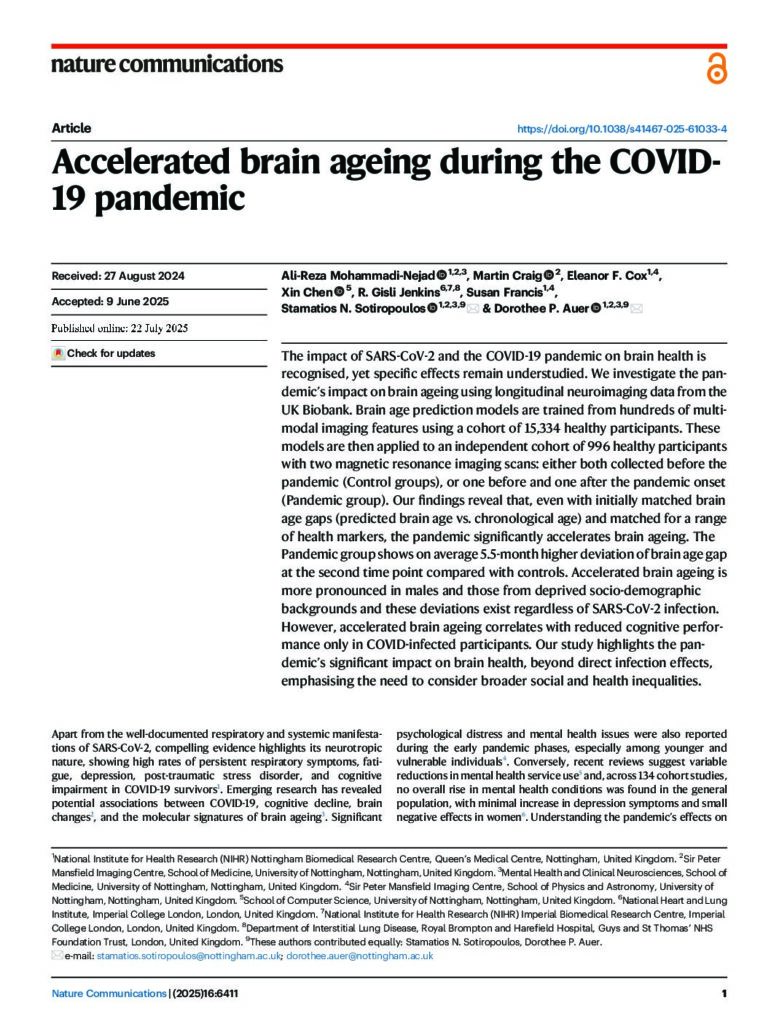
One particularly striking study, published in Nature Communications and titled “Accelerated Brain Ageing During the COVID-19 Pandemic”, reveals that the pandemic may have aged our brains by nearly six months — even in individuals who never tested positive for the virus.

Gut-Brain Connection: A Lasting Impact?

Though the precise biological mechanism remains unclear, other studies have found that SARS-CoV-2 can linger in the gut long after acute infection, triggering disruptions to the microbiome — the community of microbes in our digestive system. These microbiome shifts are now being linked to neurological symptoms, cognitive decline, and even mood disorders. The emerging science points to a possible gut-brain axis disruption that may help explain persistent symptoms like brain fog and memory issues reported in long-COVID cases.

The Study: Brain Aging and Cognitive Decline

The UK Biobank study analyzed longitudinal neuroimaging data from 15,334 healthy individuals to train brain age prediction models. These models were then applied to a smaller group of 996 participants who had undergone two MRI scans — one before the pandemic and one after.

Participants were divided into two groups:

  • Control Group: Two MRIs conducted before the pandemic.

  • Pandemic Group: One MRI before and one after the pandemic began.

Despite being matched for age, sex, and general health, the results were sobering:

On average, individuals scanned after the pandemic onset showed a 5.5-month increase in brain age compared to controls.

Even more concerning, this effect was observed regardless of whether a participant had contracted COVID-19. However, among those who had been infected, the brain aging also correlated with measurable declines in cognitive performance.

Who Is Most at Risk?

The study also found that men and individuals from lower socio-economic backgrounds were more likely to exhibit greater signs of accelerated brain aging. This underscores the pandemic’s disproportionate toll on vulnerable populations and points to the long-term consequences of social inequality on health — even at the neurological level.

Why This Matters

These findings raise urgent questions about how pandemics — and public health crises in general — affect our brains and long-term cognitive health. With growing evidence that COVID-19 can persist in the body, especially the gut, and cause systemic effects, researchers are calling for greater awareness, ongoing monitoring, and expanded health support — not just for those with long COVID, but for the broader public as well.

“Our study highlights the pandemic’s significant impact on brain health, beyond direct infection effects,” the authors write, “emphasizing the need to consider broader social and health inequalities.”

Final Thought

Whether through viral persistence, social stressors, or a complex interplay of both, the pandemic has left a measurable mark on our brains. As we move forward, protecting brain health will require not just treatment of acute infections, but also long-term strategies for cognitive support, mental health care, and addressing systemic disparities.

Destruction of Good Gut Bacteria Resulting in a Compromised Immune System

COVID-19 and Long-COVID

Accelerated Brain Ageing During the COVID-19 Pandemic

bookmark_borderThree Economic Shocks Hitting You This Month: Health, Nutrition, and Education Under Attack

by Daniel Brouse
July 19, 2025

Starting this month, three interconnected economic impacts will begin hitting households and communities across the country—especially in rural areas—threatening health, nutrition, and education in ways that will ripple through local economies.

1. Health: Rising Insurance Costs and Rural Hospital Closures
Key parts of the Affordable Care Act are expiring, with average health insurance premiums expected to rise by 15%. This increase won’t just burden individuals with private insurance; it will trigger a chain reaction as more people are priced out of coverage, increasing the number of uninsured. Hospitals and health systems—particularly rural facilities already operating on thin margins—will face additional financial strain as uncompensated care rises. Simultaneously, reductions in Medicaid funding will further destabilize rural healthcare infrastructure, with many hospitals expected to close, leaving large geographic areas without critical health services and further harming local economies.

2. Nutrition: SNAP Cuts and Community Health
Millions of recipients of SNAP (food stamp) benefits will lose eligibility this month due to new policy changes and funding cuts. The immediate consequence will be increased food insecurity, with families struggling to meet basic nutritional needs. Poor nutrition leads to chronic health issues, which will add to the strain on already overburdened healthcare systems, particularly in rural areas. Additionally, the reduction in SNAP spending will remove millions of dollars in local food purchases, hurting grocery stores, farmers markets, and small businesses in these communities, creating a cascading economic slowdown.

3. Education: Public Broadcasting and the Erosion of Free Education
Congressional rescission of previously allocated funds will slash federal support for public broadcasting in the Philadelphia region and beyond. Local stations like WHYY (Philadelphia’s NPR and PBS affiliate), WDIY (Lehigh Valley Public Radio), WPSU (State College region), and WXPN (Philadelphia’s nonprofit public radio station) will face significant funding cuts, reducing their ability to deliver free educational programming, independent news, and arts coverage. This is more than just a cultural loss; it undermines local education efforts, diminishes civic engagement, and removes crucial platforms for local artists and scientists. Communities already struggling with underfunded educational systems, particularly in rural areas, will be hardest hit by these cuts.

The Broader Ripple Effects
These three impacts are deeply interconnected:

  • Reduced nutrition leads to increased healthcare needs.

  • Reduced access to education and independent media weakens community knowledge, civic participation, and local arts ecosystems.

  • Healthcare and nutrition crises drive local economic contraction, business closures, and further community decline.

Musicians, educators, healthcare workers, and small business owners are already raising alarms. As these cuts take effect, the strain will move beyond individuals to entire communities, deepening inequality and accelerating the decline of rural America’s economic and cultural vitality.

Trumpenomics: The Decline of the US

The Human Induced Climate Change Experiment

bookmark_borderFiscal Policy in the Chaos: How America’s Current Path Accelerates Economic Collapse

by Daniel Brouse
July 17, 2025

I’ve been getting a lot of great questions about two nonlinear, dynamic systems: climate collapse and economic collapse. Just as the climate system consists of interconnected subsystems, so too does the world economy. This chapter examines how current U.S. fiscal policy is a critical driver within this chaotic system, accelerating the collapse of the American and, by extension, the global economy.

The Three Subsystems Driving Collapse

The current fiscal policy can be viewed as three interacting subsystems, each contributing to an exponential acceleration of collapse:

1️⃣ Anti-Immigration and Mass Deportation

Capitalism depends on population growth. The U.S. has an aging population and declining birth rates, making mass immigration essential for economic stability. Without it, the economy faces a death spiral: fewer workers, reduced consumer demand, lower tax revenues, and collapsing support for programs like Medicare and Social Security.

For the past five years, immigration has accounted for 80% of U.S. GDP growth. Ending immigration and pursuing mass deportation will likely be the first domino to fall, triggering lower demand, labor shortages, and the unraveling of America’s fragile social safety net. It will also accelerate the adoption of AI and robotics, ensuring these jobs never return.

2️⃣ Tariffs: The Hidden Consumption Tax

Tariffs are regressive consumption taxes that fall hardest on the poor and middle class. Consumer spending drives the U.S. economy, and rising prices from tariffs reduce purchasing power, creating a feedback loop of lower demand, declining business revenues, layoffs, and economic contraction.

Tariffs marketed as “protecting American jobs” are, in practice, a stealth tax on every consumer, funding unrelated policy goals while weakening the core engine of economic growth.

3️⃣ The Big Ugly Bill: A Bomb Under the Economy

Trump’s “One Big Beautiful Bill (Act)” is not a strategy for energy independence or economic growth; it is a reckless gamble trading long-term planetary and economic stability for a mirage of short-term gains.

Key impacts of the bill include:

  • Gutting science and promoting climate collapse, starting with the destabilization of the insurance industry as climate disasters become uninsurable.

  • Slashing Medicaid, pushing the cost of health care back onto the private sector and individuals, straining household finances, and increasing medical bankruptcies.

  • Spending billions on anti-immigration enforcement and mass deportations, resulting in a net economic loss while worsening demographic decline.

  • Creating unsustainable debt: The bill will add trillions to the deficit, creating a positive feedback loop:

    • Massive government borrowing drives up interest rates.

    • Rising rates increase the cost of borrowing.

    • Higher interest payments balloon the deficit further.

    • In addition, the Big Ugly Act quietly raised the debt ceiling by trillions, removing near-term borrowing constraints. Almost immediately after the bill’s passage, the U.S. Treasury announced it would issue $1 trillion in new debt to replenish its cash reserves and finance the growing deficit. This surge of Treasury issuance will flood the market with short-term bills and long-term bonds, further driving up interest rates as the government competes for scarce capital. Higher rates, in turn, increase the cost of servicing the debt, creating a self-reinforcing cycle of borrowing and rising interest expenses that threaten the long-term sustainability of the U.S. economy.

Is it really trillions of dollars billions?

The debt ceiling was increased by $5 trillion, raising the limit from around $36 trillion to approximately $41 trillion under the “One Big Beautiful Bill” reconciliation package.

Following the legislation’s passage, the Treasury immediately began issuing new debt. Recent projections estimate between $900 billion and $1.6 trillion in short-term T‑bill issuances over the next 18 months—as part of a total issuance effort likely exceeding $1 trillion.

So yes, it’s literally trillions—a $5 trillion increase in borrowing authority, with over $1 trillion already entering the market to fund current operations and replenish Treasury balances.

Already in 2025, the U.S. is spending $1 trillion annually on interest payments, surpassing the entire military budget and many key domestic spending programs. This rising interest burden crowds out critical investments, hollowing out the nation’s capacity to address infrastructure, education, and climate resilience.

A Cascade of Self-Destruction: How Protectionism, Corruption, and Extremism Are Undermining America
This disastrous fiscal policy, rooted in protectionism and white nationalism, is compounded by a cascade of other self-destructive actions. Among these are the covert funding of a proxy war in Gaza by the notorious GHF—a private militia corporation established under Trump in Delaware—which uses U.S. citizens in combat roles actively participating in acts of genocide. It also includes the systematic undermining of the Federal Reserve’s independence, attacks on the rule of law and the justice system, rampant conflicts of interest, nepotism, and entrenched corruption. Pathological lying, racism, and bigotry further erode America’s credibility, while the administration’s pattern of acting as an unreliable trading partner and military ally weakens longstanding alliances and global stability.

A System Destabilizing Itself

The combined effect of anti-immigration policies, regressive tariffs, and unsustainable debt expansion is creating a self-reinforcing system of instability. Each subsystem interacts with the others, amplifying the risk of a systemic collapse of the U.S. economy, which as a major subsystem of the global economy, could trigger a worldwide crisis.

As with the climate system, feedback loops in the economic system accelerate collapse once tipping points are crossed. Without fundamental policy changes, these current fiscal choices may mark the end of U.S. exceptionalism and push the world into a prolonged period of instability and decline.

The Big Beautiful Bill Shell Game: Funding Deportation While Killing Growth

Trumpenomics: The Decline of the US

The Human Induced Climate Change Experiment

bookmark_borderTrump Finalizes 50% Tariff on Copper, Proposes 200% Tariff on Pharmaceuticals: A Recipe for Inflation and Economic Harm

by Daniel Brouse
July 8, 2025

At a cabinet meeting today, President Trump announced that his administration has finalized a 50% tariff on imported copper, which will go into effect later this month, and is considering imposing a 200% tariff on pharmaceuticals in the coming weeks.

These drastic moves will have severe ripple effects across the U.S. economy:

Copper is critical for electrical systems, construction, clean energy, and manufacturing. A 50% tariff will raise costs for infrastructure projects, slow the clean energy transition, and increase prices for housing, electronics, and consumer goods. This will further fuel inflation at a time when many Americans are already struggling with high living expenses.

Pharmaceuticals are essential to public health, and a 200% tariff would directly increase the cost of imported medications. Instead of reducing drug prices and easing burdens on families, seniors, and those with chronic conditions, this move would exponentially increase healthcare costs across the country. Pharmaceutical companies will likely pass these costs directly to consumers, leading to higher insurance premiums, increased out-of-pocket expenses, and further strain on Medicare, Medicaid, and hospital systems.

These tariffs risk triggering retaliatory trade measures from key partners, worsening global supply chain disruptions, and increasing shortages of critical medical and industrial supplies.

In summary, these policies will:
* Increase inflation in housing, energy, healthcare, and consumer sectors.
* Raise medication costs, worsening public health burdens and financial stress on families.
* Slow renewable energy deployment due to higher copper costs.
* Harm American competitiveness while damaging global trade relationships.
* Disproportionately hurt low- and middle-income Americans while failing to address the true causes of inflation.

At a time when the economy is showing signs of stress, these actions will do the opposite of providing relief, risking long-term damage to American competitiveness while endangering public health and financial stability.

Instead of addressing structural issues with healthcare pricing, supply chain resilience, and clean energy investment, these tariffs will further destabilize an already fragile economy—pushing the U.S. closer to permanent decline and the end of U.S. exceptionalism.

Trumpenomics: The Decline of the US

bookmark_borderEurope Adds Vaccination as the Fourth Pillar of Heart Disease Prevention

by Daniel Brouse
July 8, 2025

Evidence continues to grow that major communicable diseases—including COVID-19, influenza, and pneumonia—can trigger or worsen cardiovascular disease. Recognizing this, the European Society of Cardiology (ESC) has issued a consensus statement recommending routine vaccinations as a standard component of cardiovascular risk management.

Traditionally, cardiovascular prevention has focused on three medical pillars:

  1. Antihypertensive medications (to control blood pressure),

  2. Lipid-lowering drugs (to manage cholesterol),

  3. Medications for diabetes management.

The ESC is now adding vaccination as the “fourth pillar” of cardiovascular prevention.

“Vaccinations have profound effects on cardiovascular risk and as such should be considered the fourth pillar of medical cardiovascular prevention,” the statement reads.

Why Vaccination Protects Your Heart

Viral and bacterial infections, including COVID-19, influenza, and pneumonia, can cause inflammation, increase clotting risk, and destabilize plaques in arteries, all of which can trigger heart attacks and strokes. Vaccination reduces the severity and likelihood of these infections, thereby lowering the risk of these cardiovascular events.

This approach is backed by robust data:

  • Flu vaccination reduces the risk of major cardiovascular events by 26% and cardiovascular death by 18% in high-risk patients.

  • COVID-19 vaccination lowers the risk of cardiac complications associated with infection, including myocarditis, arrhythmias, heart attacks, and strokes.

A Paradigm Shift in Public Health

This shift by the ESC reflects a growing understanding of the interconnectedness of infectious diseases and chronic health conditions, emphasizing prevention as a cornerstone of healthcare. It also underscores how vaccination extends beyond individual protection, benefiting broader public health while reducing healthcare burdens and costs associated with cardiovascular events.

The U.S. Should Take Note

While Europe is integrating vaccination into its heart disease prevention guidelines, the U.S. continues to face anti-science movements undermining vaccine uptake, even as cardiovascular disease remains the leading cause of death. Adopting a similar evidence-based approach would save lives, reduce healthcare costs, and improve the quality of life for millions of Americans.

Sources:

COVID-19 Science

bookmark_borderA Timeline of Genocide: From the Crusades to Gaza Under Netanyahu and Trump

by Daniel Brouse
July 8, 2025

It is difficult to pinpoint exactly when genocide in the Middle East began. Some might argue it traces back to the Crusades, when European Christians waged brutal campaigns to capture Jerusalem from Muslim rule. Spanning from 1095 to 1291, the Crusades saw the First Crusade (1096–1099) succeed in capturing Jerusalem, while subsequent attempts to maintain Christian control led to centuries of bloodshed, with Jerusalem changing hands multiple times. Estimates of casualties range from one to three million deaths, with millions more injured or subjected to sexual violence.

Fast forward to 1948: the creation of the state of Israel displaced hundreds of thousands of Palestinians, denying them the right of return to their homes. Since the 1967 Six-Day War, Israel has occupied and expanded settlements in the West Bank and Gaza, entrenching a system of apartheid and control over Palestinian lives.

Gaza Under Siege

On October 7, 2023, Palestinian militants launched an attack demanding an end to the siege and the open-air prison conditions of Gaza, where over two million people have been blockaded for years. In response, under the guise of “self-defense,” Israel launched what has become a systematic ethnic cleansing campaign in Gaza.

The scale of death and suffering is staggering:

  • Total Deaths: As of July 3, 2025, over 57,000 Palestinian deaths have been reported in Gaza, according to the Gaza Health Ministry. A Lancet study estimated 64,260 deaths from traumatic injuries by June 2024, with later estimates suggesting the toll may be between 77,000 to 109,000, a devastating portion of Gaza’s pre-war population.

  • Civilian Proportion: Scholars estimate that around 80% of those killed are civilians. A UN Human Rights Office study found that 70% of those killed in residential bombings were women and children.

  • Women and Children: More than half of the casualties are women and children. UNICEF reports over 14,500 children killed, with many more buried under rubble. Countless others face amputation and surgery without anesthesia due to the collapse of medical supply chains, while fuel blockades prevent bakeries and hospitals from operating, driving families into starvation.

  • Indirect Deaths: Beyond immediate casualties, tens of thousands are dying from starvation, preventable diseases, and lack of medical care, with one study estimating over 62,000 deaths from starvation alone.

Targeting Journalists and Aid Workers

The siege on Gaza has also been a siege on truth and humanitarian aid:

  • Journalists: As of May 14, 2025, 179 journalists and media workers have been killed, including 171 Palestinians, while dozens more cases remain under investigation.

  • Healthcare Workers: Over 1,150 healthcare workers have been killed, collapsing Gaza’s medical infrastructure.

  • Humanitarian Aid Workers: At least 343 aid workers, including 253 UN staff, have been killed, with numbers continuing to rise.

The Evolving Genocide Under Trump and Netanyahu

When Donald Trump took office, a ceasefire and stable humanitarian aid systems were in place. This changed in February 2025 when the Gaza Humanitarian Foundation (GHF), a private nonprofit incorporated in Delaware in coordination with Trump, began operations in Gaza. Instead of providing relief, GHF has been implicated in war crimes, using private armed contractors to control aid, shooting civilians, and enforcing a system of starvation as a weapon.

On February 4, 2025, Trump explicitly stated that he wanted the United States to “take over” and “own” the Gaza Strip, proposing the relocation of Palestinians to other countries while the U.S. would “redevelop” Gaza into the “Riviera of the Middle East,” a plan reminiscent of colonial displacement policies.

Despite an active ICC warrant for war crimes, Netanyahu met with Trump at the White House on July 7, 2025. Publicly billed as ceasefire negotiations, the meeting cemented a policy of rejecting Palestinian statehood while seeking third countries to forcibly displace Palestinians from Gaza. Netanyahu declared that Israel would maintain the siege on Gaza indefinitely, reinforcing a strategy of permanent subjugation and displacement.

Conclusion: A Genocide in Full View

This genocide is unfolding in real time, enabled by the complicity and direct involvement of powerful leaders. It is not an isolated chapter but part of a continuum of violence stretching from the Crusades to the present, rooted in colonial ambitions, religious zealotry, and authoritarian politics.

To witness this genocide and remain silent is to be complicit. The global community must reckon with the realities of what is happening in Gaza: the systematic eradication of a people, their culture, and their future under the banners of “security” and “order.” This genocide is being conducted in full view of the world—and it demands accountability, now.

Evangelical Christianity and Israel
If you’re curious about the driving force behind US support for Israel, it’s ironically rooted in Evangelical Christianity. Many Evangelical Christians believe they can hasten the “second coming of Christ” by bringing about the apocalypse. According to their interpretation of the Bible, this involves Israel reclaiming Jerusalem, Jesus returning, and ultimately eliminating all Jews. For numerous “Christian Zionists,” especially influential evangelists aligned with the Republican Party, support for Israel is less about political strategy and more about its supposed role in biblical prophecy. In this worldview, war is not something to be avoided but embraced as a divine necessity—an inevitable and even celebratory step toward Jesus’ rule from the Temple Mount in Jerusalem. The fate of Jews and Palestinians is, to put it mildly, seen as collateral damage.

Trumpenomics: The Decline of the US

bookmark_borderHow to Protect Your Kids from Hidden Chemical Exposures

by Daniel Brouse
July 7, 2025

The study, “Exposures to Contemporary and Emerging Chemicals among Children Aged 2 to 4 Years in the United States Environmental Influences on Child Health Outcome (ECHO) Cohort,” reveals that U.S. preschoolers are routinely exposed to dangerous levels of toxic chemicals. This landmark research shows that children are absorbing a complex mix of both legacy and emerging chemicals—many of which are not currently tracked in national surveys. Exposure levels are especially high among more vulnerable subgroups, with substitutes like DINCH and newer pesticides increasingly found in children’s bodies. The findings underscore the urgent need for expanded monitoring and stronger environmental protections focused on children’s health.

Air fresheners and scented candles may seem harmless, but they can release a range of harmful chemicals into your home’s air, including phthalates, volatile organic compounds (VOCs), and formaldehyde. These chemicals can irritate the eyes, nose, and throat, trigger asthma attacks, and may interfere with hormone function, especially in young children whose bodies are still developing. Some scented products also release ultrafine particles that can penetrate deep into the lungs, increasing the risk of respiratory problems over time. Choosing fragrance-free cleaning products and using fresh air ventilation or natural options like baking soda for odor control can help reduce your family’s exposure to these hidden dangers while keeping your home safer and healthier.

Practical Takeaways for Parents:

  • Choose products labeled “phthalate-free,” “paraben-free,” and “fragrance-free.”

  • Avoid plastics with recycling codes #3, #6, and #7.

  • Maintain hygiene through frequent handwashing, good ventilation, and regular dust cleaning.

  • Reduce pesticide exposure by washing produce thoroughly or choosing organic when possible.

Exposures to Contemporary and Emerging Chemicals Among Children Aged 2 to 4 Years in the United States Environmental Influences on Child Health Outcomes (ECHO) Cohort

bookmark_borderThe “Big and Brutally Ugly Bill” Just Passed—and Many Voters Don’t Even Realize They’re the Ones Getting Crushed

by Daniel Brouse
July 4, 2025

The “Big and Brutally Ugly Bill” being signed into law today will hit many Americans hard—especially those who don’t even realize it. Ironically, many of the voters who supported these cuts are the same ones who will feel the pain most directly in their daily lives.

One overlooked detail is that many states, including Pennsylvania, don’t call their Medicaid programs “Medicaid.” In Pennsylvania, the program is referred to as “Medical Assistance,” and you may also see or hear names like HealthChoices, Behavioral HealthChoices, and Community HealthChoices, which represent different branches of the program and services offered.

Adding to the confusion, the insurance plans under Medical Assistance are often administered by private insurers with familiar names like Blue Cross, UPMC, Aetna, and others. To many recipients, it may look and feel like they are covered by a “regular” health insurance plan, without realizing that these plans are funded by the state’s Medical Assistance program.

Under the new bill, thousands of Pennsylvania households are expected to lose all medical coverage, including prescription assistance for life-saving medications, nursing care, and other critical services. These cuts will disproportionately harm elderly residents, people with disabilities, low-income working families, and children—many of whom are unaware that their health plans are tied to the Medicaid system now being gutted.

The most tragic irony is that the vast majority of these households voted for Trump and support these cuts without realizing they are supporting policies that will destroy their lives. They may cheer the bill’s passage without understanding it will take away the medications and care they or their children need to survive.

While politicians celebrate “big wins” with catchy slogans and social media posts, the reality is that the “Big and Brutally Ugly Bill” is a massive rollback of healthcare for the most vulnerable Americans, disguised under layers of branding and confusion that will leave many voters shocked when they show up for a doctor’s appointment only to find out they no longer have coverage.

If you or someone you know uses “HealthChoices” or “Medical Assistance” in Pennsylvania, or a similarly named program in another state, it is critical to check your eligibility immediately and prepare for potential disruptions in your care and prescriptions as the impacts of this bill take effect.

Trumpenomics: The Decline of the US