bookmark_borderEconomic Outlook 2025 – 2035

During the first Trump administration, tax cuts initially accelerated economic growth but led to increased federal deficit spending, which soon drove up borrowing costs and ultimately slowed the economy. While many attributed the initial supply chain issues and inflationary pressures primarily to the COVID-19 pandemic, the first inflationary event was actually sparked by climate change—the 2019 drought in Taiwan. Taiwan, a global center for microchip production, saw its chip manufacturing severely impacted by this drought, which reduced the water supply crucial for chip fabrication and forced some facilities to shut down temporarily. This disruption marked the beginning of supply chain issues that rippled through multiple sectors, creating shortages and fueling inflation.

The climate-induced inflationary cycle was further amplified by multi-billion dollar climate-related disasters, from severe hurricanes and wildfires to extended droughts. These events impacted insurance costs significantly, leading to spikes in homeowners’ and auto insurance premiums. President Trump’s proposed “Drill, baby, drill” approach, which prioritizes expanding fossil fuel extraction, is likely to exacerbate these issues by accelerating climate change effects, driving further economic instability, and intensifying the inflationary cycle tied to environmental damage.

The impact on health and wellness in the United States is already evident in a significant decline in life expectancy and quality of life. After remaining generally flat between 2014 and 2019, U.S. life expectancy saw a sharp decline, dropping from 78.8 years in 2019 to 77 years in 2020, the largest single-year decline since World War II. This trend continued into 2021, with life expectancy falling further to about 76.1 years. These factors contribute to a worrying trend of early mortality and diminished quality of life, which poses long-term implications for the economy and the healthcare system.

In addition to these factors, climate change is likely to accelerate the decline in life expectancy and increase health risks. Pollution, already the leading contributor to death globally, is expected to worsen with climate change, increasing respiratory issues, cardiovascular diseases, and other pollution-related health conditions. Climate change impacts, such as severe weather events, also disrupt healthcare supplies and logistics, as seen during Hurricane Helene when IV solution shortages spiked. Rising temperatures are anticipated to drive up the rate and transmission of zoonotic diseases, further straining healthcare resources and costs.

While these factors generally point toward increased healthcare demand and costs, the impact on health insurance rates remains complex. On one hand, higher medical needs and treatment costs suggest rising insurance premiums. However, as life expectancy shortens, some individuals may not incur long-term healthcare costs, potentially offsetting some insurance expenses. In any scenario, climate change is a critical factor affecting both personal and public health outcomes.

The proposed economic policies in the next Trump administration would likely include substantial corporate tax cuts along with significant taxes and tariffs, which are expected to primarily impact consumer costs. This approach could lead to a dramatic increase in the federal deficit due to reduced corporate tax revenue and heightened consumer prices. With increased deficit spending, the federal government will likely need to borrow heavily, which could spur inflation and push interest rates higher as the government competes with the private sector for financing.

As inflation and interest rates rise, this could create a “debt spiral” in which the government must borrow even more just to cover mounting interest payments on the national debt. According to projections, if these policies are enacted, federal interest payments could exceed $3 trillion over the next decade, with an estimated $1.7 trillion in annual interest payments by 2034. This feedback loop could lead to further economic strain, as inflation erodes consumer purchasing power and the cost of borrowing increases for businesses and individuals alike. Such policies, if enacted, could thus deepen fiscal instability and exacerbate the ongoing climate-driven inflation pressures impacting essential goods and services.

RECOMMENDATIONS FOR ASSETS
Investors may see an initial stock market surge followed by a period of prolonged decline as the economy faces mounting fiscal and environmental pressures. With this volatility in mind, it may be prudent to prioritize secure, inflation-protected investments. Treasury I-Bonds are a sound choice, offering inflation protection and low risk; however, they are capped at a maximum investment of $10,000 per individual per year. Additionally, 4-week Treasury bills could serve as an effective, low-risk short-term option due to their liquidity and lower exposure to interest rate volatility.

Real estate should be approached cautiously, with a focus on how climate change is affecting property values and insurance availability. Areas with high vulnerability to climate-driven disasters, such as coastal properties and locations in Florida, Louisiana, Mississippi, Georgia, Oklahoma, Texas, Arizona, Arkansas, Alabama, New Mexico, Nevada, Colorado, California, and Washington, may face increased insurance premiums, frequent natural disasters, and dwindling property values. Liquidating properties in these areas may help mitigate financial risk, especially as the insurance industry reassesses coverage availability in high-risk zones. Insurance costs — particularly in areas prone to climate-related disasters — are expected to rise annually, impacting crop, property, real estate and transportation insurance premiums indefinitely.

RECOMMENDATIONS FOR LIABILITIES
Borrowing costs are expected to rise considerably, making it critical to secure fixed-rate loans whenever possible. Investors and homeowners should lock in fixed-rate mortgages sooner rather than later to hedge against future interest rate hikes. Variable-rate financing, including adjustable-rate mortgages (ARMs) and other forms of variable loans, could become unsustainable as rates continue to increase. By opting for fixed-rate options, borrowers can better protect themselves from the uncertainty of future rate fluctuations and potential inflationary pressures on their monthly payments.
Trumpenomics: The Decline of the US

The Human Induced Climate Change Experiment

Climate Change and Insurance: Costs, Availability, and Sustainability

Balancing the Books: How Public-Private Healthcare Models Can Sustain Economic Growth

Taxation in a Changing World: Challenges, Inefficiencies, and Paths to Sustainability

Wealth Taxes Are Illogical

The Cost of Climate Change: Rising Homeowners Insurance Rates

bookmark_borderPolitical Insight: The Reverse Psychology of “Trump Derangement Syndrome”

I’ve studied what’s often labeled “Trump Derangement Syndrome” since the 1990s, and I believe the root causes include issues like racism and elements of white supremacy. Supporting someone with such views inevitably supports these ideologies, even indirectly. Some of Trump’s base might not identify as white supremacists but are drawn in due to lack of awareness on these matters. There is also a segment of his supporters motivated by a desire to dismantle government institutions. However, this faction often lacks a foundation in political science, international economics, technology, math, and science, leaving them more susceptible to conspiracy theories and propaganda.

This may also explain why a substantial portion of his supporters are white men without a college education, as they are statistically shown to be more targeted by such messaging.

For more insight into this phenomenon, consider exploring sources on fascism. Former President Donald Trump displays certain elements often associated with fascist ideologies. These features generally align with authoritarian tendencies, disregard for democratic norms, promotion of nationalism, and targeting of perceived enemies. Here are some specific points frequently highlighted in this argument:

1. Authoritarianism and Centralized Power: Fascism typically emphasizes a strong leader who consolidates power by undermining democratic institutions. Trump’s actions often challenged democratic norms, from his comments on judiciary independence to his pressure on the Justice Department to pursue political opponents. During his presidency, he was also criticized for praising and building relationships with authoritarian leaders like Vladimir Putin and Kim Jong-un, which some argued normalized authoritarian governance on the world stage.

2. Nationalism and Xenophobia: Fascist ideologies frequently promote an “us vs. them” mentality, positioning the nation or ethnic majority as superior. Trump’s rhetoric around immigration, particularly his depiction of certain groups as criminals or threats, resonates with this exclusionary nationalism. The proposed border wall and the travel ban targeting predominantly Muslim countries have been cited as examples of policies that foster a nationalistic, exclusionary stance.

3. Disregard for the Media and Facts: Fascist regimes historically have delegitimized the press to stifle opposition and control narratives. Trump’s frequent labeling of the media as “the enemy of the people” and dismissing unflattering reports as “fake news” exemplified a combative approach to the press. This undermining of media credibility can contribute to an environment where only the leader’s narrative is seen as legitimate.

4. Use of Propaganda and Conspiracy: Fascism often relies on propaganda and unfounded narratives to create loyalty and distrust toward institutions. Trump’s promotion of unfounded theories, such as claims of widespread voter fraud and the “Deep State” working against him, have been criticized as attempts to sway public perception and undermine faith in the democratic process. This has parallels to the way fascist leaders use conspiracy theories to justify overreaching power.

5. Cult of Personality: A hallmark of fascism is the elevation of a leader to near-mythical status, promoting loyalty to the leader rather than democratic institutions. Trump’s rallies, the branding of “Trumpism,” and his personal, direct appeal to supporters over traditional party structures created a unique political movement centered on his identity. This “cult of personality” can promote loyalty to an individual rather than to democratic values and systems.

The Original DJT Ticker Symbol: Donald T. Trump

Drill, Baby, Drill (How Hate and Ignorance Distort Economic Perspectives)

The Economic Monsters: Inflation and Interest Rates

bookmark_borderThe Trump Trade

Why have interest rates been going up after the Fed cut rates? Because investors concur that Trump’s economic polices will be harmful to the economy, drive up inflation, and explode the national debt. Investors have been making “Trump Trades” based on this concern. Unfortunately, a large number of investors — approximately 75% — currently expect that Donald Trump will win the election.

One reason many believe Trump’s economic policies, particularly his tariffs, would be detrimental to the economy is their potential to drive up inflation. Tariffs on imported goods increase costs for businesses and consumers, as companies pass on higher import taxes in the form of price hikes. This can stoke inflation, especially if the targeted imports include essential goods or raw materials (like steel and aluminum). Tariffs also raise uncertainty, disrupt global supply chains, and result in retaliatory tariffs from other countries, further driving up costs for U.S. exports.

Another major concern is the national debt. Analysis of Trump’s economic plan suggests that his policies could increase the national debt by an additional $10-20 trillion over the next decade. This is largely due to a combination of aggressive tax cuts, which reduce federal revenue, and increased government spending, particularly on military and infrastructure projects. While tax cuts can stimulate short-term economic growth, they often fail to generate enough revenue to offset the loss, resulting in long-term debt accumulation.
Moreover, Trump’s tariffs and trade wars further burden the economy by reducing international trade, increasing costs for businesses, and weakening the competitiveness of U.S. industries abroad. These trade disruptions can also negatively impact GDP growth, limiting the government’s ability to manage the national debt. With interest payments on the debt projected to rise significantly in the coming years. In fiscal year 2024, the U.S. government is projected to pay approximately $892 billion in interest on the national debt. This figure is expected to rise significantly in the coming years, reaching $1 trillion in 2025 and $1.7 trillion by 2034. Over the next decade, total net interest payments are estimated to amount to $12.9 trillion. These figures do not account for potential changes in debt repayments that could result from a Trump presidency​

The economic strain from Trump’s policies could push the U.S. into an unsustainable fiscal situation.

For historical reference see “The Great Depression.” Tariffs, especially the Smoot-Hawley Tariff of 1930, played a significant role in deepening the Great Depression.

Agricultural Sector Collapse: U.S. farmers were particularly vulnerable to tariffs. They had benefited from international markets, especially after World War I, when European agriculture had been disrupted. The Smoot-Hawley Tariff and the subsequent retaliatory tariffs drastically reduced demand for American agricultural products abroad, leading to falling prices and farm bankruptcies. This deepened rural poverty and unemployment.

Investor and Consumer Confidence: The tariff policy also hurt investor and consumer confidence. Businesses feared the impacts of the trade war, leading them to cut back on production and investment. Consumers, already cautious due to the economic downturn, faced rising prices on imported goods. This further depressed consumption and business activity, worsening the economic contraction.

Business & Economics

bookmark_borderThe Politics of Climate Change

By Daniel Brouse

As a climate scientist, I have studied the impact of politics on the climate for decades, and the United States ranks among the least prepared countries globally. It also has one of the highest percentages of climate change deniers. Politicians exacerbate this issue by obstructing necessary efforts to combat climate change. The Republican Party, in particular, often dismisses climate change as a manufactured crisis and advocates for increased fossil fuel production. This stance is ironic, as human industrial activities, which are heavily dependent on fossil fuels, are a primary driver of climate change.

Despite some efforts under President Biden to address these issues, the U.S. continues to be the world’s largest producer of oil, including crude oil, natural gas liquids, and other petroleum products. Both political parties have largely opted to provide unlimited emergency funding for climate disasters rather than investing in preventive measures. In 2023, the United States experienced an unprecedented number of climate-related disasters, with 28 major weather and climate events, each causing over a billion dollars in damages. These ranged from hurricanes and wildfires to severe storms and flooding, with some events costing hundreds of billions of dollars individually.

In June 2024, a significant Supreme Court decision severely restricted the Environmental Protection Agency’s (EPA) authority, limiting its ability to enforce environmental protection laws. This ruling marked a drastic shift, undermining decades of regulatory progress aimed at mitigating environmental damage and climate change. It effectively nullified the EPA’s power to regulate emissions and enforce environmental standards, which is a critical setback in the fight against climate change.

The government’s actions, or lack thereof, reflect a dangerous combination of arrogance and ignorance. This situation makes the worst-case predictions for climate change seem like optimistic scenarios. Revised climate models now suggest that global temperatures could rise by as much as 9°C within this century, compared to earlier projections of a 4°C increase over the next millennium. Such a dramatic temperature rise could push Earth toward a “wet-bulb” temperature threshold, where the combination of heat and humidity makes it impossible for the human body to cool itself through perspiration, leading to potentially fatal heat stress.

* Our climate model uses chaos theory in an attempt to adequately account for humans and forecasts a global average temperature increase of 9 degrees Celsius above pre-industrial levels. Everybody has the responsibility not to pollute. There are plenty of things you can do to help save the planet. Stop using fossil fuels. Consume less. Love more. Here is a list of additional actions you can take.

The Human Induced Climate Change Experiment

bookmark_borderEconomics: The Impact of Hate on Political Perspectives and Social Cohesion

By Daniel Brouse
August 2, 2024

“Whereof one cannot speak, thereof one must be silent.” — Ludwig Wittgenstein

For decades, I have been actively involved in promoting the education of world economics. In recent years, I’ve observed a troubling phenomenon: certain segments of the population appear resistant to educational outreach, a condition that seems to split along political lines. While the majority of the population, approximately 60-80%, remains receptive to learning, there is a persistent bias of hate that obstructs rational thinking among the extremes — approximately 10-20% on both the far-right and the far-left.

On the far-right, this bias manifests as an “us against them” mentality, characterized by white supremacy and misogyny. This perspective often arises from fear, envy and jealousy, leading to a distorted worldview. For example:

  1. The invasion at the border: This issue is often framed in xenophobic terms, disregarding the complex socio-economic factors involved.
  2. Moral judgments on government: The government is seen as an inherently corrupt and amoral entity, rather than a system created to serve public needs.
  3. Attack on intellectual disciplines: There is a disdain for intelligence, science, and economics, driven by a lack of comprehension and a desire to undermine established knowledge. Climate change denial and inaction are the greatest threats to both the economy and the environment.

On the far-left, a similar bias of hate is expressed through class warfare rhetoric, such as the demonization of wealth and the desire to redistribute wealth aggressively. This bias also stems from fear, envy and jealousy, manifesting in ways such as:

  1. Tax wealth/eat the rich: This slogan captures the simplistic view that the wealthy should bear the brunt of societal costs, ignoring the complexities of economic systems.
  2. Moral judgments on corporate actions: Corporations are often labeled as inherently greedy or evil, rather than being seen as entities driven by market forces and shareholder interests.
  3. Attack on quantitative disciplines: Like their far-right counterparts, there is often a dismissal of complex subjects like mathematics and economics, which are perceived as tools of oppression.

Both extremes exhibit a resistance to rational thinking, hindered by deeply entrenched biases. These biases not only prevent understanding but also create a dangerous divide that hinders constructive dialogue and problem-solving in society. The challenge lies in finding ways to bridge these gaps and foster a more informed and rational public discourse.

Climate Science: The Influence of Love and Hate

Politicians Hinder Fight Against Climate Change

Business and Economics

The Human Induced Climate Change Experiment

bookmark_borderDrill, Baby, Drill (How Hate and Ignorance Distort Economic Perspectives)

By Daniel Brouse
July 19, 2024

“Perhaps most importantly is the repeated use of the phrase ‘Drill, Baby, Drill’.”

Economic Update:
If Trump wins, great news for the very few people whose primary income comes from government securities interest! Unfortunately, very, very bad news for everyone else.

Tariffs, protectionism, lack of immigration, and nationalism are all detrimental to the economy. Tariffs and protectionist policies can lead to trade wars, higher consumer prices, and disruptions in the supply chain, which can stifle economic growth. Limiting immigration reduces the labor force and can slow down innovation and productivity, as immigrants often contribute significantly to economic dynamism. Nationalism can lead to isolationist policies that hinder international cooperation and trade, further damaging the economy. Over the last several years, approximately 80% of economic growth can be attributed to immigration.

Should Trump win, there is a concern that the U.S. may face economic decline similar to his six personal bankruptcies. His previous administration’s policies on tariffs, immigration restrictions, and nationalist rhetoric have already shown signs of economic strain. Continued implementation of such policies could exacerbate these issues, leading to a weakened economy and reduced global competitiveness for the U.S. It is crucial to adopt inclusive and cooperative economic strategies to foster sustainable growth and stability.

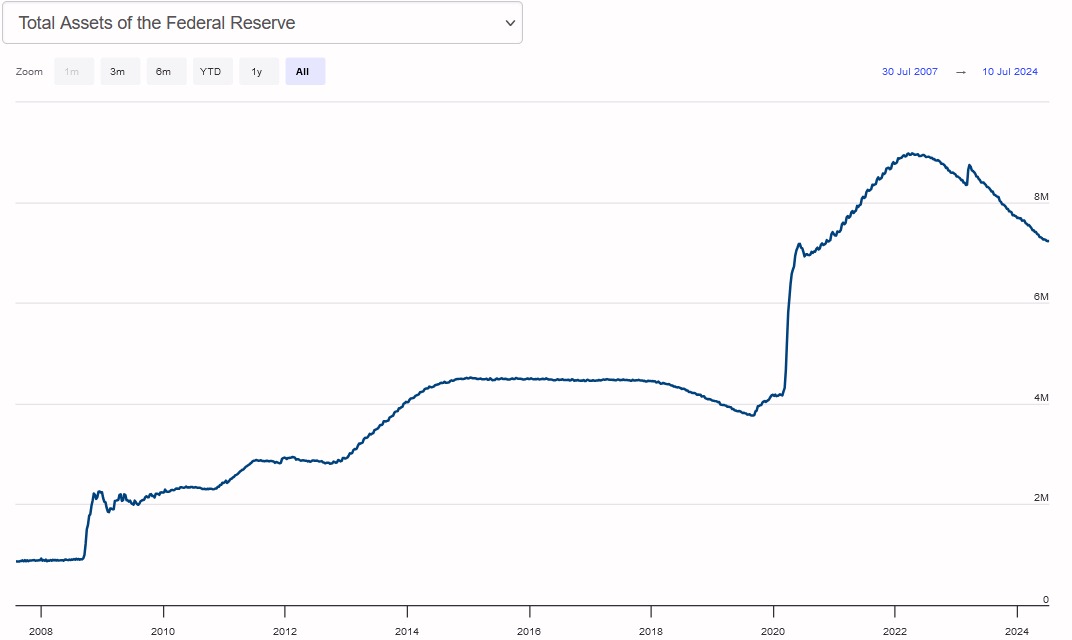
Interest rates are likely to spike and remain high for an extended period. In 2019, under the Trump administration, the Federal Reserve balance sheet saw a massive increase of $4 trillion in a very short period. This unprecedented expansion of the money supply, combined with the administration’s tax cuts and significant government spending, contributed to record inflation levels. The rapid increase in the money supply, aimed at stimulating the economy, led to an oversupply of currency, diminishing its value and driving prices up.

Federal Reserve's Balance Sheet / Assets
Federal Reserve’s Balance Sheet / Assets

The former President has also made claims that he will lower interest rates if he returns to office. The good news is that he doesn’t have the authority to directly lower rates, as this is the Federal Reserve’s responsibility. However, what used to be reassuring news is now less so. With the rollback of Chevron regulations, potential economic instability could lead to disastrous consequences, including further inflationary pressures and financial market disruptions.

Additionally, the tax cuts, while boosting short-term economic growth, significantly reduced federal revenue, leading to increased borrowing and higher national debt. The substantial government spending further exacerbated this issue, creating a fiscal environment prone to inflation. As a result, the Federal Reserve had to raise interest rates to combat inflation and stabilize the economy.

High interest rates can slow down economic growth by making borrowing more expensive for consumers and businesses, potentially leading to reduced investments and spending. This can create a challenging economic environment, underscoring the need for balanced fiscal policies that promote sustainable growth without leading to excessive inflation.

The former President recently stated that he wants a ‘weaker dollar.’ A devalued dollar on international markets can lead to numerous economic challenges, including significant impacts on inflation and interest rates. A weaker dollar makes U.S. exports cheaper and more competitive abroad, potentially boosting manufacturing and trade. However, it also increases the cost of imports, leading to higher prices for consumer goods and contributing to inflation.

Additionally, a weaker dollar can affect interest rates as the Federal Reserve may adjust monetary policy to manage inflationary pressures, impacting borrowing costs for consumers and businesses. Another concern is the impact on foreign investment. Treasury securities are popular among foreign investors because they are considered a safe investment. However, if the dollar devalues, the return on these investments may decrease when converted back to the investor’s local currency. To attract foreign investment despite the weaker dollar, the U.S. may need to offer higher interest rates on Treasury securities.

These economic landmines highlight the complexities and potential risks associated with currency devaluation.

Perhaps most importantly is the repeated use of the phrase ‘Drill, Baby, Drill’. The phrase encapsulates a harmful approach to energy policy that prioritizes fossil fuel extraction over sustainable practices. Climate change, exacerbated by such policies, poses the most severe threat not only to our environment but also to our economy.

In 2023, the U.S. experienced a record number of climate disasters, each exceeding one billion dollars in damages, with a total of 28 separate weather and climate-related events. Some of these individual events cost the U.S. economy hundreds of billions of dollars. The frequency and severity of these events are alarming, reflecting the accelerating pace of climate change.

The economic impact of climate change is expected to be staggering, with projections indicating it could cost the U.S. economy trillions of dollars. The financial burdens arise from various sources, including the destruction of infrastructure, increased healthcare costs due to climate-related illnesses, disruptions to agriculture and food supply, and the need for extensive disaster relief and recovery efforts. One of the primary drivers of the current inflation spike is the rising cost of homeowners insurance due to climate disaster-related claims. Short sellers anticipate that within ten years, 25% of U.S. properties will be uninsurable. These costs will continue to rise unless significant measures are taken to mitigate climate change and transition to a more sustainable energy system.

Moreover, the long-term economic effects of climate change can hinder economic growth, reduce productivity, and increase social inequalities. Proactive investments in renewable energy, climate resilience, and sustainable practices are essential to curtail the financial and environmental impacts of climate change. These measures are crucial to protect both the environment and the economy from the devastating impacts of climate change.

Trumpenomics: The Decline of the US

Economic Outlook 2025 – 2035

Protectionism 101: Trump Economics

The Human Induced Climate Change Experiment

bookmark_borderShipping Pollution (Sulfur Emissions and Climate Change)

by Daniel Brouse

There are several critical issues associated with marine fuel pollution used in international shipping. Shipping pollution is a global problem, spreading air pollution across the world. Historically, marine fuels have contained higher levels of sulfur due to the lower cost of lower-grade fuel oil. However, heavy fuel oil contains, on average, 2700 times more sulfur than road fuel. Sulfur in fuel leads to emissions of sulfur dioxide (SO2) and contributes to the formation of secondary particulate matter (PM), which is highly detrimental to both human health and the environment.

Acid rain is a consequence of chemical reactions initiated when compounds like sulfur dioxide and nitrogen oxides are released into the atmosphere. These substances can rise into the upper atmosphere, where they mix and react with water, oxygen, and other chemicals, forming more acidic pollutants known as acid rain. Acid rain, when absorbed by the ground, can dissolve essential nutrients like magnesium and calcium, crucial for the health of trees. Additionally, it releases aluminum into the soil, hindering trees’ ability to absorb water. This influx of chemicals also alters the chemistry of seawater, reducing its pH and capacity to store carbon. Ocean acidification, often dubbed “osteoporosis of the sea,” can erode the minerals essential for the shells and skeletons of marine life, including oysters, clams, lobsters, shrimp, and coral reefs.

Exposure to particulate matter (PM10 and PM2.5) poses numerous health risks, compromising respiratory and cardiac health. PM2.5, in particular, can deeply penetrate the lungs, causing inflammation and damage to lung tissue. Currently, approximately 7 million people die each year from exposure to particulate matter, with millions more experiencing severe health complications. Health impacts of air pollution encompass a wide range of ailments, including Alzheimer’s disease, asthma, bronchitis, cancer, cataracts, chronic obstructive pulmonary disease (COPD), dementia, developmental damage, emphysema, gastrointestinal disorders, heart ailments, heart attacks, immune system dysfunction, ischaemic heart disease, impaired brain development in children, kidney disease, liver disease, lung disease, premature death, pneumonia, nasal and upper respiratory tract health problems, neurological disorders, reproductive harm, respiratory system failure, skin diseases, and strokes.

The Restriction of Sulfur in Marine Fuel
In 2020, the International Maritime Organization (IMO) introduced regulations imposing strict limits on the sulfur content of marine fuels. These rules mandated a reduction in the maximum percentage of sulfur from 3.5% to 0.5% for all ships operating worldwide.

The restriction on sulfur in marine fuel has indirectly contributed to increased ocean surface temperatures. As sulfur emissions from marine fuels decrease, ships transition to cleaner fuels with lower sulfur content. However, these cleaner fuels often contain higher levels of carbon dioxide (CO2), a potent greenhouse gas. The increased CO2 emissions from ships burning cleaner fuels exacerbate global warming, leading to elevated ocean surface temperatures. This phenomenon underscores the broader impact of human activities on climate change, driving overall increases in global temperatures, including those of the Earth’s oceans.

According to a NASA-led analysis, global average sea level rose by approximately 0.3 inches (0.76 centimeters) from 2022 to 2023. When our paper, “Climate Change: Rate of Acceleration“, was authored in 2023, the swift acceleration of this trend was unforeseen. Initially projected to double over 100 years, the rate of sea level rise dramatically escalated, shortening the doubling period to just 10 years by 2020. Recent observations suggest a further compression of this doubling period to a mere 2 years, raising significant concerns. It is imperative to acknowledge and address this alarming trend, hoping it is not indicative of a new norm but rather an anomaly.

Sidd elaborated, stating, “I suspect this is linked to the large jump in sea surface temperature last year, perhaps due to the restriction on sulfur in marine fuel. The rapid warming and expansion of the ocean’s surface warrant close observation to determine if this trend is sustained.”

Health and Wellness
Humans will experience greater loss and damage to life and quality of life from air pollution, decreasing supply of potable water, extreme weather events, disease, and other adverse health outcomes The greatest short term climate change risk to human health is deadly humid heat (wet-bulb temperature).

The environmental changes and uncertainties associated with climate change can contribute to mental health issues, including anxiety, depression, and post-traumatic stress disorder (PTSD). Almost all survivors of climate-related disasters suffer from mental distress and experience PTSD. Of those who have not experienced climate disasters, over two-thirds of U.S. adults (68%) report having climate change anxiety.

* Our climate model employs chaos theory to comprehensively consider human impacts and projects a potential global average temperature increase of 9 degrees Celsius above pre-industrial levels.

The Human Induced Climate Change Experiment

bookmark_borderEarth’s Vital Signs

by Daniel Brouse

Earth
Earth

Human-induced climate change serves as a dynamic and intricate component within an unordered system, guided by chaos theory. This suggests that global warming is undergoing exponential acceleration in a complex manner. The pace at which climate change is accelerating can be described as rapid, as evident in the intensity, duration, and likelihood of climate disasters. Drawing insights from the 2023 Canada wildfires, the World Weather Attribution Organization reported, “Climate change made the cumulative severity of Quebec’s 2023 fire season to the end of July around 50% more intense, and seasons of this severity at least seven times more likely to occur.”

Key Findings: Extreme weather and climate-related disasters have become 50% more intense and 7 times more likely.

In the 20th century, Earth’s surface temperature averaged 13.9℃. However, in the initial weeks of July 2023, the average temperature surged to 17℃. Human activities have propelled global temperatures more than 3℃ for parts of the year, with the entire period from February 2023 to February 2024 registering 1.5℃ above pre-industrial levels. A rise of 1.5 degrees already compromises human well-being, making much of the Earth uninhabitable.

As of 2024, humanity has surpassed seven critical tipping points, including Mountain Glacier Loss, Greenland Ice Sheet Collapse, Antarctic Ice Sheet Collapse, AMOC (Atlantic Meridional Overturning Circulation) Collapse, Amazon Rainforest Dieback, Coral Reef Die-Off, and Northern Permafrost Collapse. Crossing these tipping points triggers self-sustaining feedback loops independent of human activity. While the exact carbon stored in nature remains uncertain, an assumption could be made that temperatures might surge from 3 to 6 degrees above pre-industrial levels. Thriving beyond a 1.5-degree rise becomes impossible for humans. If an additional 3 degrees Celsius is added, the temperature and humidity would approach a wet-bulb temperature unsuitable for human life.

What Can I Do?
There exist numerous actions individuals can take to contribute to saving the planet. Each person bears the responsibility to minimize pollution, discontinue the use of fossil fuels, reduce consumption, and foster a culture of love and care. The Butterfly Effect illustrates that a small change in one area can lead to significant alterations in conditions anywhere on the globe. Hence, the frequently heard statement that a fluttering butterfly in China can cause a hurricane in the Atlantic. Be a butterfly and influence the world.

The Human Induced Climate Change Experiment

bookmark_borderGreenland Atmospheric Rivers

by Sidd Mukherjee

Historically in the United States, atmospheric rivers (AR) have been associated with the West Coast. Now, AR activity is getting more attention on the East Coast.

Atmospheric rivers have been putting serious rainfall melt on Greenland for the last decade, too.

Darker snow surfaces absorb more sunlight and melt quicker. This effect is visible in Greenland. Box et al.,”Greenland ice sheet albedo feedback: thermodynamics and atmospheric drivers,” The Cryosphere, v6, pp821 et seq., doi:10.5194/tc-6-821-2012 state: ” Thus, intraseasonal summer albedo variability exceeds 0.50 over parts of the ice sheet where a snow layer ablates by mid-summer, exposing an impurity-rich ice surface …” Prof. Box is now investigating soot from North American wildfires as a factor in the darkening of Greenland.
— from News from the Ice Wars:An Occasional Bulletin

“Furthermore, our investigation of the short- and long-term relationships between moisture transport vents and modeled GrIS surface properties proves that this correspondence between the years of enhanced AR activity and anomalous GrIS mass loss is not a coincidence. Strong AR impacts cause increased melt in all areas of the GrIS and decreased SMB in the ablation zone during summer, and warm seasons with above-average GrIS melt extent are characterized by anomalously strong moisture transport by ARs over Greenland. ARs typically result in SMB gains in the GrIS ablation zone during nonsummer seasons and in the accumulation zone during all seasons. However, the intense summer SMB losses in the ablation zone during years of enhanced moisture transport outweigh the positive AR contributions to SMB in other regions and seasons. The scaling of melt versus snowfall in Figures 9 and 11 shows that the magnitude of mass loss from summer melt in the ablation zone has a much greater upper limit than mass gain from snowfall.”

In this paper see especially Fig. 9.

Then in 2018, Neff publishes again: more on atmospheric rivers causing the full surface melt in greenland in 2012.
— from Atmospheric River Impacts on Greenland Ice Sheet SurfaceMass Balance

“Rainfall at the Greenland ice sheet Summit 14 August 2021, was delivered by an atmospheric river (AR). Extreme surface ablation expanded the all-Greenland bare ice area to near-record-high with snowline climbing up to 788 ± 90 m. Ice sheet wet snow extent reached 46%, a record high for the 15–31 August AMSR data since 2003. Heat-driven firn deflation averaged 0.14 ± 0.05 m at four accumulation area automatic weather stations (AWSs). Energy budget calculations from AWS data indicate that surface heating from rainfall is much smaller than from either the sensible, latent, net-longwave or solar energy fluxes. ”

“Rainfall heat transfer contributed just 2% to the calculated melting at a 2,200 m elevation western ice sheet site (CP1 a.k.a. Crawford Point). Condensation or sensible heat transfer from the warm air mass was a far more powerful heat source. The observed amount of melting delivered by the AR could have happened without rain- fall. Yet, the impacts of rain and meltwater refreeze are considerable provided that percolation delivers the melt below where the heat can be radiated away and that refreeze-at-depth occurs. We found no evidence for the latter condition because the rainfall amount was not extreme and the surface was already melting hours before the rain- fall. Understanding any changes to the frequency and intensity of ARs appears to be a more important research target than the heat content of the liquid precipitation ARs may or may not produce Further, while rainfall that does not percolate and refreeze may not have strong surface thermodynamic impacts, rainfall contribution to the hydraulics of Greenland ice (Doyle et al., 2015) may be more consequential to ablation through ice sheet flow acceleration.”

open access, read all about it. The Watson river discharge described in the paper drains the saddle between north and south domes and is an area that i watch closely for signs of collapse. I suppose this is one.
— from Greenland Ice Sheet Rainfall, Heat and Albedo Feedback Impacts From the Mid-August 2021 Atmospheric River

ALSO SEE:
West Coast Atmospheric Rivers Brouse (2023)

East Coast Atmospheric Rivers Brouse (2023)

The Reign of Violent Rain Brouse and Mukherjee (2023)

The Age of Loss and Damage Brouse (2023)

Climate Change Impacts on Flood Risks and Real Estate Values Sidd Mukherjee and Daniel Brouse (2023)

bookmark_borderThe Age of Loss and Damage

by Daniel Brouse

“For people, for other species, for the ecosystems, for the world we live in, we’ve entered the Age of Loss and Damage, but we’re just at the start. What we are seeing already just makes you want to cry,” said Dr. Christopher Trisos (BBC Interview / MP3 Format) from the University of Cape Town. “We can’t eliminate loss and damage. It is here. That said, there is a lot we can do to limit it.”

The 20th-century surface temperature average for Earth was 13.9℃. In the first weeks of July of 2023, the average temperature was 17℃.
Q: Is it possible for humans to survive at temperatures greater than 3℃?
A: Probably not long. Humans have never done it before.

September 6, 2023: “Climate breakdown has begun,” the United Nations Secretary-General Antonio Guterres warned the world after the World Meteorological Organization (WMO) reported the world endure its hottest Northern Hemisphere summer in human history. “The dog days of summer are not just barking, they are biting,” the UN chief said in a statement after the report’s release.

“What we are observing, are not only new extremes but the persistence of these record-breaking conditions, and the impacts these have on both people and planet, are a clear consequence of the warming of the climate system,” C3S’s Climate Change Service Director Carlo Buontempo said.

Climate Breakdown is the most concerning development. Climate breakdown happens when feedback loops are created and tipping points are crossed. Plants will become extinct and many carbon sinks will vanish. The Earth’s temperature will continue to accelerate at an exponential rate no matter what humans do. Food, fresh water, and breathable air will cease to exist. Humans will likely follow in short order.

In October of 2023, the European Space Agency’s Copernicus Climate Change Service calculated that the average temperature for September was 16.38 degrees Celsius (61.48 degrees Fahrenheit) breaking the previous record set in September 2020 by a half-degree Celsius (0.9 degrees Fahrenheit). This is the largest increase in a monthly record high ever.

“It’s just mind-blowing really,” said Copernicus Director Carlo Buontempo. “Never seen anything like that in any month in our records.”

“This is not a fancy weather statistic. It’s a death sentence for people and ecosystems. It destroys assets, infrastructure, harvest,” Imperial College of London climate scientist Friederike Otto said.

On November 20, 2023, the UN’s Emission Gap Report found even if countries carried out their current emissions-reduction pledges, the world would likely continuously exceed +3C degrees of warming this century. Later that day, the International Cryosphere Climate Initiative released State of the Cryosphere Report 2023 saying, “Two degrees is too high. Our message — the message of the Cryosphere — is that this insanity cannot and must not continue. The melting point of ice pays no attention to rhetoric, only to our actions.”

New Economics

Human induced climate change is an exponential component of an unordered system (chaos theory).

The Age of Loss and Damage is a new way of thinking about economics by combining economics, climate science, statistics, and physics. Until now, economic models have been unfit to capture the full extent of climate damage. Traditionally, “integrated assessment models” (IAMs) were used to forecast “shock” events. IAMs use “quadratic function” to calculate GDP losses by squaring the temperature change, yet ignore other methods (such as the exponential function) that are better suited for rapid change. “Climate change is fundamentally different to other shocks because once it has hit, it doesn’t go away,” said Thierry Philipponnat, author of a report by Finance Watch, a Brussels-based public interest NGO on financial issues. “And if the fundamental assumption is flawed, all the rest makes little sense — if any.”

Reuters reported, “Critics say this (IAMs) choice is doomed to underplay the likely impact – particularly if the planet hits environmental tipping points in which damage is not only irreversible but happens at an ever-accelerating rate.” Thierry Philipponnat’s report, Finance in a Hot House World, concludes: “Climate risk is growing to disruptive levels throughout the financial system and the guardians of financial stability urgently need to adapt their tools to regain control.” The report calls for economic models that do not mislead, scenario analyses that prepare the market, and a new prudential tool to address the build-up of systemic climate risk.

Traditional economics is based upon the “costs and benefits” to society. Since there are no known long-term benefits of climate change to society, the Age of Loss and Damage economics focuses on the exponential costs of climate change to society.

Health and Wellness
Humans will experience greater loss and damage to life and quality of life from air pollution, decreasing supply of potable water, extreme weather events, and disease. The greatest short term climate change risk to human health is deadly humid heat (wet-bulb temperature).

Real Estate and Infrastructure
A warmer world will present widespread challenges across many aspects of food-energy-water security and economic development. Infrastructure including roads, bridges, sewer and water plants will become unsustainable. Personal property will suffer loss and damage as homeowners and flood insurance become increasingly difficult to obtain.

In October of 2023 climate scientist Sidd Mukherjee said, “Now I am thinking the violent rain will be a bigger problem before we die… still thinking it through. In the long run, yes, sea level rise will hit big. If you look at the history, it is episodic, and in the fast bits it can go up 3 feet every twenty years for five hundred years. But, the rain intensity is increasing faster today, and drainage cannot cope, whether in the city or out, culverts and such put in over the last hundred years cannot handle. So, I am paying a lot of attention to terrain and drainage far inland from the seacoast (like Ohio.) By drainage I don’t mean just human built. I mean that the natural streams and gullies and ravines have not evolved to a state that can handle the water volumes we see and the worse, larger volumes we will see. So expect huger erosion, steeper slopes to waterways, land collapses and such. Build out your drainage.”

In the spring of 2023, the USA suspended their national debt ceiling. Included in the debt ceiling suspension is a provision for unlimited emergency federal spending. The result is the government can continue to ignore the causes of climate change and instead give trillion-dollar subsidies to the fossil fuel industry through emergency disaster relief. Yes, another vicious circle — more fossil fuels subsidies result in more climate catastrophes resulting in more fossil fuel subsidies, etc. The end result will be additional trillions in government borrowing while the standard of living declines.

According to NOAA, in 2023 (as of November 8), there have been 25 confirmed weather/climate disaster events with losses exceeding $1 billion each to affect United States. These events included 1 drought event, 2 flooding events, 19 severe storm events, 1 tropical cyclone event, 1 wildfire event, and 1 winter storm event. This is the largest number of climate disasters recorded with a notable increase in extreme precipitation events.

Law Suits
What will create the change needed? Loss and damage litigation against oil companies and governments will change world economics.

The oil industry is going to be like the tobacco industry. The consumers are going to claim they were misled about the dangers of burning fossil fuels and will file lawsuits against the oil companies. You will not be able to buy oil or get insurance at a reasonable price (similar to what happened to cigarette smokers.)

Children have filed lawsuits worldwide against their governments over their basic human rights. A district court judge ruled in Held v. Montana that Montana’s Environmental Policy Act, which prohibits the state from considering the climate impact of proposed energy projects, violates the “right to a clean and healthful environment” promised by the state’s constitution.

Also see: Climate Change: How Long Is “Ever”? / Brouse (2023)

The Human Induced Climate Change Experiment