bookmark_borderEvangelical Christianity and Israel

If you’re curious about the driving force behind US support for Israel, it’s ironically rooted in Evangelical Christianity. Many Evangelical Christians believe they can hasten the “second coming of Christ” by bringing about the apocalypse. According to their interpretation of the Bible, this involves Israel reclaiming Jerusalem, Jesus returning, and ultimately eliminating all Jews. For numerous “Christian Zionists,” particularly influential evangelists aligned with the Republican Party, their support for Israel is deeply tied to its role in the supposed end times: Jesus’ return, a final battle at Armageddon, and Jesus ruling from the Temple Mount in Jerusalem. In this worldview, war is not to be avoided but embraced as something inevitable, desired by God, and even celebratory. The fate of Jews and Palestinians is, to put it mildly, seen as collateral damage.

Christian Zionists anticipate and hope for a war to end all wars, leading to a Christian-dominated world that they believe will bring peace by vanquishing evil. According to their interpretation, only those who accept Jesus as their savior will benefit from these predicted events, while nonbelievers — including Jews and Muslims — will not survive them.

The establishment of Israel in 1948 was seen as a fulfillment of end-times prophecy, specifically regarding the second coming of Christ. This message was often preached in churches, with the belief that end-times prophecy was unfolding before their eyes and that God required their assistance to accelerate the process toward an apocalyptic Armageddon, ultimately leading to Christ’s return. Those who opposed Israel were often viewed as aligning with “the Antichrist,” and according to biblical prophecy, their fate would be dire. This belief isn’t confined to fringe groups but is a widespread evangelical belief influencing real political events in the US and Israel-Palestine.

It’s noteworthy that many of these Evangelical Christians also played a significant role in influencing the Supreme Court’s decision to overturn Roe v. Wade. Currently, approximately 50 members of Congress convene weekly for a Bible study session. Previously, these meetings took place at the White House. Ralph Kim Drollinger, a former professional basketball player turned clergyman, spearheaded the “White House Bible Study Group.” This study group, sponsored by 10 cabinet members, held weekly meetings on Wednesdays during the Trump administration.

The Christian Zionist Agenda: Ethnic Cleansing as Prophecy

I’m starting to realize that hardly anyone in the United States knows the truth: the U.S. now has boots on the ground in Gaza, participating directly in genocide. Under President Trump, a private military force disguised as a “humanitarian” organization has been deployed, with American citizens in combat roles actively shooting unarmed, starving men, women, and children who are desperately seeking aid.

There should be no doubt in anyone’s mind: what you are witnessing is an ethnic cleansing of the Palestinian people, orchestrated by a white supremacist, racist, Evangelical Christian, antisemitic U.S. government. This is not simply about geopolitical interests or security; it is a religiously fueled, extremist project.

Trump, along with his “supervisor of racism” Stephen Miller, are leading figures among Christian Zionists who believe they are fulfilling prophecy by bringing on the “Second Coming” and the “End of Times.” This belief system calls for an apocalyptic war and the eradication of Jews and Muslims from “The Holy Land,” to clear the way for Jesus’ return on the Temple Mount.

In this worldview, the systematic starvation, mass displacement, and extermination of Palestinians is not a tragedy to be avoided, but a goal to be achieved. This ideology, once confined to fringe pulpits, has captured the highest levels of U.S. power and is now directly shaping foreign and military policy in Gaza.

Christian Zionists are weaponizing religion to justify genocide, using U.S. military might and taxpayer funding to implement policies rooted in ethnic cleansing. This is not an abstract theological debate—it is the material reality of bombs falling on children, food blockades starving families, and bullets killing people at aid lines.

And it is happening right now, in your name, with your money.

Trumpenomics: The Decline of the US

bookmark_borderCostly Disasters: Hurricanes

By Daniel Brouse

In the United States, hurricanes stand out as the most financially burdensome type of climate-related disaster. While the number of disasters related to extreme weather events such as rain, hail, and wind, resulting in over a billion dollars in damage may be higher, the sheer magnitude of damage caused by a single hurricane surpasses them. For example, in 2023, there were 17 extreme weather events, each causing over a billion dollars in damage, but no hurricanes occurred. However, Hurricane Ida alone incurred an estimated $75 billion in damages, making it the costliest disaster of 2021.

In 2023, the world experienced an El Niño phase, which typically reduces hurricane activity. However, the climate pattern shifted towards La Niña in 2024. La Niña patterns often amplify the Atlantic hurricane season, particularly concerning when paired with months-long streaks of record warmth across the Atlantic Ocean.

Unfortunately, even scientists are failing to see (let alone forecast) the rapid acceleration in climate change. Due to their complexity, the impacts of the Domino Effect are being underestimated. Tipping points are Critical Milestones that directly impact the rate of acceleration in climate change by multiplying the number and intensity of feedback loops. The Domino Effect is also known as “tipping cascades” in climate science. Cascading impacts in relation to tipping points include cascading impacts across biogeophysical and social systems. Until recently, scientist have been drastically underestimating the social-ecological systems. The University of Exeter reports, “There is a notable lack of topic clusters dedicated to how humans will be impacted by climate-related tipping cascades.”

Previous climate models have inadequately incorporated “social-ecological systems” as human involvement was not a significant factor in past climate changes. Unfortunately, the United States ranks among the least prepared countries globally, with the highest percentage of climate deniers. The Republican party dismisses it as a manufactured crisis and plans to increase fossil fuel production, exacerbating the situation. Political extremists asserting that the climate crisis is manufactured employ an ironic term, considering that human manufacturing activities are the primary driver of climate change. Both political parties have concurred to allocate unlimited emergency funding for climate disasters instead of proactively preventing them. Last year, the US witnessed a record number of over a billion-dollar climate disasters, totaling 28 separate weather and climate-related events. It is due to this arrogance and ignorance that “worst-case scenarios” are now “best-case scenarios” for the acceleration of climate change. These factors have altered our climate model, shifting the projected maximum temperature rise from 4 degrees Celsius over the next millennium to a probable increase of 9 degrees Celsius this century.

* Our climate model employs chaos theory to comprehensively consider human impacts and projects a potential global average temperature increase of 9 degrees Celsius above pre-industrial levels.

How is All Real Estate at Risk From Climate Change?

The Human Induced Climate Change Experiment

bookmark_borderEarth’s Vital Signs

by Daniel Brouse

Earth
Earth

Human-induced climate change serves as a dynamic and intricate component within an unordered system, guided by chaos theory. This suggests that global warming is undergoing exponential acceleration in a complex manner. The pace at which climate change is accelerating can be described as rapid, as evident in the intensity, duration, and likelihood of climate disasters. Drawing insights from the 2023 Canada wildfires, the World Weather Attribution Organization reported, “Climate change made the cumulative severity of Quebec’s 2023 fire season to the end of July around 50% more intense, and seasons of this severity at least seven times more likely to occur.”

Key Findings: Extreme weather and climate-related disasters have become 50% more intense and 7 times more likely.

In the 20th century, Earth’s surface temperature averaged 13.9℃. However, in the initial weeks of July 2023, the average temperature surged to 17℃. Human activities have propelled global temperatures more than 3℃ for parts of the year, with the entire period from February 2023 to February 2024 registering 1.5℃ above pre-industrial levels. A rise of 1.5 degrees already compromises human well-being, making much of the Earth uninhabitable.

As of 2024, humanity has surpassed seven critical tipping points, including Mountain Glacier Loss, Greenland Ice Sheet Collapse, Antarctic Ice Sheet Collapse, AMOC (Atlantic Meridional Overturning Circulation) Collapse, Amazon Rainforest Dieback, Coral Reef Die-Off, and Northern Permafrost Collapse. Crossing these tipping points triggers self-sustaining feedback loops independent of human activity. While the exact carbon stored in nature remains uncertain, an assumption could be made that temperatures might surge from 3 to 6 degrees above pre-industrial levels. Thriving beyond a 1.5-degree rise becomes impossible for humans. If an additional 3 degrees Celsius is added, the temperature and humidity would approach a wet-bulb temperature unsuitable for human life.

What Can I Do?
There exist numerous actions individuals can take to contribute to saving the planet. Each person bears the responsibility to minimize pollution, discontinue the use of fossil fuels, reduce consumption, and foster a culture of love and care. The Butterfly Effect illustrates that a small change in one area can lead to significant alterations in conditions anywhere on the globe. Hence, the frequently heard statement that a fluttering butterfly in China can cause a hurricane in the Atlantic. Be a butterfly and influence the world.

The Human Induced Climate Change Experiment

bookmark_borderGravity, Sea Level Rise and Surge

by Daniel Brouse and Sidd Mukherjess

In general, the coasts that are seeing the largest storm surges are the same areas that are experiencing the fastest rate of sea level rise. The sea level does not rise at the same rate for most coastlines. Some of the conditions that determine the sea level at any given location include: water temperature (thermal expansion), circulation, ocean floor contour, ice melt, ocean dynamics, and Earth’s uneven gravity field.

Idalia Storm Surge 2023

The Shape of Things to Come
For the foreseeable future, storm surges will offer a good forecast of future sea level rise. Hurricane Idalia’s storm surge (pictured / 2023), brought a 10-15 storm surge to the northern coast of Florida. In 2022, Hurricane Ida brought a 14-20 foot storm surge to the southern coast of Florida. Ida also made landfall in Southeastern USA. Plaquemines Parish on the east bank of the Mississippi River had an estimated storm surge of at least 14 feet. Grand Isle, Louisiana, which was located just east of the landfall, was struck by 10.2 feet and rendered uninhabitable after the storm.

We know these areas of the United States will see sea levels rise at least 10-15 feet because it has already happened. Although it was only for hours, you wouldn’t want to live there during those hours. Not to mention, the frequency of these extreme weather events is rising exponentially. Thus, our recommendation to evacuate Florida now (i.e. Managed Retreat.) The billions of dollars spent to rebuild after Hurricane Ida will all be for naught. Allowing building will needlessly endanger property and lives. Parts of the world have already seen storm surges of 40 feet. I expect most North American coastlines will see sea levels rise, if only temporarily, by 20-40 feet this century. Within a generation, these areas could be submerged most of the time.

Don’t Be Fooled by Relative Variations
The level of the oceans is rising; however, some climate change deniers may try to claim that sea level is receding. Yes, in some instances certain areas will see a decline in the relative sea level. As ice melt accelerates, gravity and glacial isostatic adjustment will have a greater impact on where the sea level rises the most. Greenland is a good example. Greenland has one of the largest land ice sheets. You might think the sea would rise the fastest closest to the melt. “Greenland is like a bowl with large cracks in its sides.” The giant ice mass has sunk the ground, as well as, added a huge mass on top of it. Much of Greenland’s ice melt is just kind-of hanging out in the bowl. Two things are happening to change that:
1) As the ice mass melts, it exerts less gravitational pull on the surrounding water and the water gets pulled toward the equator.
2) At the same time, the Earth is rebounding under the bowl as the mass moves away. Much will depend on the extent and speed of the rebound. Though we don’t know how fast the rebound will happen, NASA has a satellite program gathering better data by measuring the gravitational pull on the satellite (GRACE Tellus Gravity Recovery & Climate Experiment).

At the same time that Greenland is “rising”, many cities are sinking. Alexandria, Amsterdam, Bangkok, Charleston, Miami, New Orleans, New York, Chicago, and Norfolk are all “caving in.” Houston is the 10th-fastest sinking city in the world, and the U.S. city sinking the fastest.

Sidd added, “As the ice melts off Greenland, sea level will rise around Antarctica and drop around Greenland, and as the ice melts in Antarctica, sea will rise around Greenland and drop around Antarctica. In general, sea levels fall where the ice is melting and rise on the other side of the world. There is a small effect on earth rotation and polar direction, but not enough to worry about.”

Measuring Sea Level Rise
So, one of the biggest questions in the future is how do you measure sea level rise? From where the land was pre-industrial, where the land is today, or where the land is tomorrow? In any event, the Earth crossed tipping points which make extreme sea level rise inevitable and irreversible. Planners should plan on it.

Sidd reiterated, “That 270 feet of sea level rise will take a long time. I would be more careful about the violent rain than the ice melt.”

Greenland and the Collapse of the East Antarctic Ice Sheet

Sea Level Rise: Then and Now

Climate Change: Rate of Acceleration

Flood Insurance

The Human Induced Climate Change Experiment

bookmark_borderClimate Change: Atmospheric Rivers

Extreme Rainfall–surge Hazard Risk Basics and Atmospheric Rivers Brouse (2022)

West Coast Atmospheric Rivers Brouse (2023)

East Coast Atmospheric Rivers Brouse (2023)

Greenland Atmospheric Rivers Mukherjee (2023)

ALSO SEE:

Real Estate and Flood Insurance Brouse and Mukherjee (1999 to present)
The Reign of Violent Rain Brouse and Mukherjee (2023)
The Age of Loss and Damage Brouse (2023)
Climate Change Impacts on Flood Risks and Real Estate Values Sidd Mukherjee and Daniel Brouse (2023)

bookmark_borderWest Coast Atmospheric Rivers

by Daniel Brouse

As the Earth warms, the air will hold more moisture. More moisture-laden air moves over land and creates atmospheric rivers (Pineapple Express). The Journal EOS in the article Atmospheric Rivers Spur High-Tide Floods on U.S. West Coast said, “Atmospheric rivers are narrow bands of moisture that travel across the lower troposphere, generally at the leading edges of massive low-pressure systems. At their peak, they can carry as much water through the sky as the Amazon River does on land. They unleash intense winds and heavy rain as they surge across the Pacific Ocean, eventually making landfall on the U.S. West Coast, contributing to many high-tide flooding events.”

The atmospheric rivers also bring heavy rainfall inland causing extreme flooding. In October of 2021 NOAA said, “a convergence of storms brought more than half a foot of rain to parts of the Bay area in addition to strong winds, flash floods, and mud/landslides. They also bring the potential for heavy snow to higher elevations in the Sierra Nevada mountain range.” (Atmospheric River Hits the West Coast)

In December 2022 and January 2023, California experienced nine back-to-back atmospheric rivers; the longest stretch of continuous atmospheric river conditions on record. NOAA went on to report, “Several atmospheric rivers struck in March 2023, bringing heavy rain and snowfall to much of the West. According to the California Department of Water Resources, the statewide snowpack was among the deepest ever recorded for the end of March — 237% of normal.”

In October of 2023, a tropical storm turned into category 5 Hurricane Otis in a record 12-hour intensification. Hurricane expert Kerry Emanual said Otis was supercharged by global warming. Historically, hurricanes’ intensification was driven by ocean surface temperatures. Otis was additionally supercharged by increasing temperatures deeper in the ocean. Hurricane Otis became the strongest on record to hit Mexico’s Pacific coast. NOAA reported, “When Otis first hit, mudslides outside the city in mountainous terrain prevented crews from traveling to the city to provide aid, and according to the Associated Press, the 10,000 troops that were deployed to the area lacked the tools needed to clear mud and downed trees off roads.”

ALSO SEE:
East Coast Atmospheric Rivers Brouse (2023)

The Reign of Violent Rain Brouse and Mukherjee (2023)

The Age of Loss and Damage Brouse (2023)

Climate Change Impacts on Flood Risks and Real Estate Values Sidd Mukherjee and Daniel Brouse (2023)


bookmark_borderThe Age of Loss and Damage

by Daniel Brouse

“For people, for other species, for the ecosystems, for the world we live in, we’ve entered the Age of Loss and Damage, but we’re just at the start. What we are seeing already just makes you want to cry,” said Dr. Christopher Trisos (BBC Interview / MP3 Format) from the University of Cape Town. “We can’t eliminate loss and damage. It is here. That said, there is a lot we can do to limit it.”

The 20th-century surface temperature average for Earth was 13.9℃. In the first weeks of July of 2023, the average temperature was 17℃.
Q: Is it possible for humans to survive at temperatures greater than 3℃?
A: Probably not long. Humans have never done it before.

September 6, 2023: “Climate breakdown has begun,” the United Nations Secretary-General Antonio Guterres warned the world after the World Meteorological Organization (WMO) reported the world endure its hottest Northern Hemisphere summer in human history. “The dog days of summer are not just barking, they are biting,” the UN chief said in a statement after the report’s release.

“What we are observing, are not only new extremes but the persistence of these record-breaking conditions, and the impacts these have on both people and planet, are a clear consequence of the warming of the climate system,” C3S’s Climate Change Service Director Carlo Buontempo said.

Climate Breakdown is the most concerning development. Climate breakdown happens when feedback loops are created and tipping points are crossed. Plants will become extinct and many carbon sinks will vanish. The Earth’s temperature will continue to accelerate at an exponential rate no matter what humans do. Food, fresh water, and breathable air will cease to exist. Humans will likely follow in short order.

In October of 2023, the European Space Agency’s Copernicus Climate Change Service calculated that the average temperature for September was 16.38 degrees Celsius (61.48 degrees Fahrenheit) breaking the previous record set in September 2020 by a half-degree Celsius (0.9 degrees Fahrenheit). This is the largest increase in a monthly record high ever.

“It’s just mind-blowing really,” said Copernicus Director Carlo Buontempo. “Never seen anything like that in any month in our records.”

“This is not a fancy weather statistic. It’s a death sentence for people and ecosystems. It destroys assets, infrastructure, harvest,” Imperial College of London climate scientist Friederike Otto said.

On November 20, 2023, the UN’s Emission Gap Report found even if countries carried out their current emissions-reduction pledges, the world would likely continuously exceed +3C degrees of warming this century. Later that day, the International Cryosphere Climate Initiative released State of the Cryosphere Report 2023 saying, “Two degrees is too high. Our message — the message of the Cryosphere — is that this insanity cannot and must not continue. The melting point of ice pays no attention to rhetoric, only to our actions.”

New Economics

Human induced climate change is an exponential component of an unordered system (chaos theory).

The Age of Loss and Damage is a new way of thinking about economics by combining economics, climate science, statistics, and physics. Until now, economic models have been unfit to capture the full extent of climate damage. Traditionally, “integrated assessment models” (IAMs) were used to forecast “shock” events. IAMs use “quadratic function” to calculate GDP losses by squaring the temperature change, yet ignore other methods (such as the exponential function) that are better suited for rapid change. “Climate change is fundamentally different to other shocks because once it has hit, it doesn’t go away,” said Thierry Philipponnat, author of a report by Finance Watch, a Brussels-based public interest NGO on financial issues. “And if the fundamental assumption is flawed, all the rest makes little sense — if any.”

Reuters reported, “Critics say this (IAMs) choice is doomed to underplay the likely impact – particularly if the planet hits environmental tipping points in which damage is not only irreversible but happens at an ever-accelerating rate.” Thierry Philipponnat’s report, Finance in a Hot House World, concludes: “Climate risk is growing to disruptive levels throughout the financial system and the guardians of financial stability urgently need to adapt their tools to regain control.” The report calls for economic models that do not mislead, scenario analyses that prepare the market, and a new prudential tool to address the build-up of systemic climate risk.

Traditional economics is based upon the “costs and benefits” to society. Since there are no known long-term benefits of climate change to society, the Age of Loss and Damage economics focuses on the exponential costs of climate change to society.

Health and Wellness
Humans will experience greater loss and damage to life and quality of life from air pollution, decreasing supply of potable water, extreme weather events, and disease. The greatest short term climate change risk to human health is deadly humid heat (wet-bulb temperature).

Real Estate and Infrastructure
A warmer world will present widespread challenges across many aspects of food-energy-water security and economic development. Infrastructure including roads, bridges, sewer and water plants will become unsustainable. Personal property will suffer loss and damage as homeowners and flood insurance become increasingly difficult to obtain.

In October of 2023 climate scientist Sidd Mukherjee said, “Now I am thinking the violent rain will be a bigger problem before we die… still thinking it through. In the long run, yes, sea level rise will hit big. If you look at the history, it is episodic, and in the fast bits it can go up 3 feet every twenty years for five hundred years. But, the rain intensity is increasing faster today, and drainage cannot cope, whether in the city or out, culverts and such put in over the last hundred years cannot handle. So, I am paying a lot of attention to terrain and drainage far inland from the seacoast (like Ohio.) By drainage I don’t mean just human built. I mean that the natural streams and gullies and ravines have not evolved to a state that can handle the water volumes we see and the worse, larger volumes we will see. So expect huger erosion, steeper slopes to waterways, land collapses and such. Build out your drainage.”

In the spring of 2023, the USA suspended their national debt ceiling. Included in the debt ceiling suspension is a provision for unlimited emergency federal spending. The result is the government can continue to ignore the causes of climate change and instead give trillion-dollar subsidies to the fossil fuel industry through emergency disaster relief. Yes, another vicious circle — more fossil fuels subsidies result in more climate catastrophes resulting in more fossil fuel subsidies, etc. The end result will be additional trillions in government borrowing while the standard of living declines.

According to NOAA, in 2023 (as of November 8), there have been 25 confirmed weather/climate disaster events with losses exceeding $1 billion each to affect United States. These events included 1 drought event, 2 flooding events, 19 severe storm events, 1 tropical cyclone event, 1 wildfire event, and 1 winter storm event. This is the largest number of climate disasters recorded with a notable increase in extreme precipitation events.

Law Suits
What will create the change needed? Loss and damage litigation against oil companies and governments will change world economics.

The oil industry is going to be like the tobacco industry. The consumers are going to claim they were misled about the dangers of burning fossil fuels and will file lawsuits against the oil companies. You will not be able to buy oil or get insurance at a reasonable price (similar to what happened to cigarette smokers.)

Children have filed lawsuits worldwide against their governments over their basic human rights. A district court judge ruled in Held v. Montana that Montana’s Environmental Policy Act, which prohibits the state from considering the climate impact of proposed energy projects, violates the “right to a clean and healthful environment” promised by the state’s constitution.

Also see: Climate Change: How Long Is “Ever”? / Brouse (2023)

The Human Induced Climate Change Experiment

bookmark_borderTreasury Auctions and Record Budget Deficits

by Daniel Brouse
November 9, 2023

Attention armchair economists, investors, and homeowners:
the 30-year Treasury auction was “bad” today
… when I say bad, I mean bad for those not investing in Treasuries.

What does it mean? The government went to borrow money today, and people didn’t want to lend them money. The 30-year interest rate spiked higher. This is because the government is borrowing record amounts of money.

A Double Whammy
This has two negative feedback loops.
1) the higher interest rates mean the government has to borrow more money to make the interest payments… resulting in higher budget deficits… resulting in more borrowing… resulting in higher interest rates, etc.
2) the government is borrowing the current trillions of dollars over the next couple years… but they have yet to spend it… spending the trillions will result in inflation… which will result in higher interest rates… causing a larger deficit… requiring more borrowing, etc.

The Greatest Risks to the US Economy

  1. Climate Change
  2. Government Spending / Debt
  3. Lack of Immigration

Human induced climate change is an exponential component of an unordered system (chaos theory).

The Age of Loss and Damage is a new way of thinking about economics by combining economics, climate science, statistics, and physics. Until now, economic models have been unfit to capture the full extent of climate damage. Traditionally, “integrated assessment models” (IAMs) were used to forecast “shock” events. IAMs use “quadratic function” to calculate GDP losses by squaring the temperature change, yet ignore other methods (such as the exponential function) that are better suited for rapid change. “Climate change is fundamentally different to other shocks because once it has hit, it doesn’t go away,” said Thierry Philipponnat, author of a report by Finance Watch, a Brussels-based public interest NGO on financial issues. “And if the fundamental assumption is flawed, all the rest makes little sense — if any.”

Reuters reported, “Critics say this (IAMs) choice is doomed to underplay the likely impact – particularly if the planet hits environmental tipping points in which damage is not only irreversible but happens at an ever-accelerating rate.” Thierry Philipponnat’s report, Finance in a Hot House World, concludes: “Climate risk is growing to disruptive levels throughout the financial system and the guardians of financial stability urgently need to adapt their tools to regain control.” The report calls for economic models that do not mislead, scenario analyses that prepare the market, and a new prudential tool to address the build-up of systemic climate risk.

Traditional economics is based upon the “costs and benefits” to society. Since there are no known long-term benefits of climate change to society, the Age of Loss and Damage economics focuses on the exponential costs of climate change to society.

Loss and damage litigation against oil companies and governments will change world economics.

Real Estate and Infrastructure
A warmer world will present widespread challenges across many aspects of food-energy-water security and economic development. Infrastructure including roads, bridges, sewer and water plants will become unsustainable. Personal property will suffer loss and damage as homeowners and flood insurance become increasingly difficult to obtain.

In October of 2023 Dr. Sidd Mukherjee said, “Now I am thinking the violent rain will be a bigger problem before we die… still thinking it through. In the long run, yes, sea level rise will hit big. If you look at the history, it is episodic, and in the fast bits it can go up 3 feet every twenty years for five hundred years. But, the rain intensity is increasing faster today, and drainage cannot cope, whether in the city or out, culverts and such put in over the last hundred years cannot handle. So, I am paying a lot of attention to terrain and drainage far inland from the seacoast (like Ohio.) By drainage I don’t mean just human built. I mean that the natural streams and gullies and ravines have not evolved to a state that can handle the water volumes we see and the worse, larger volumes we will see. So expect huger erosion, steeper slopes to waterways, land collapses and such. Build out your drainage.”

In the spring of 2023, the USA suspended their national debt ceiling. Included in the debt ceiling suspension is a provision for unlimited emergency federal spending. The result is the government can continue to ignore the causes of climate change and instead give trillion-dollar subsidies to the fossil fuel industry through emergency disaster relief. Yes, another vicious circle — more fossil fuels subsidies result in more climate catastrophes resulting in more fossil fuel subsidies, etc. The end result will be additional trillions in government borrowing while the standard of living declines.

According to NOAA, in 2023 (as of November 8), there have been 25 confirmed weather/climate disaster events with losses exceeding $1 billion each to affect United States. These events included 1 drought event, 2 flooding events, 19 severe storm events, 1 tropical cyclone event, 1 wildfire event, and 1 winter storm event. This is the largest number of climate disasters recorded with a notable increase in extreme precipitation events (violent rain).

Meanwhile, the US politicians also fail to address the declining and aging population. By restricting immigration, the government is forcing the acceleration of AI and robotics technology. Although this is great for “productivity”, neither AI nor robots pay taxes. The US economy is based on population growth. Increased emergency spending and a declining tax base results in insolvency.

Economic Update: Inflation, Interest Rates, AI, Consumer Spending, Climate Change, and Fiscal Policy

bookmark_borderClimate Change: Insurance Risk

The 9th National Risk Assessment for Homeowners Insurance found climate risks place 39 million U.S. homes at risk of losing their insurance. “Sound pricing is going to make it unaffordable to live in certain places as climate impacts emerge.”

“There’s this climate insurance bubble out there,” said Jeremy Porter, the head of climate implications at First Street and a contributor to the report. “And you can quantify it.”

“There’s no education to the public of what’s going on and where the risk is,” said Porter, explaining that most insurance models are proprietary. Even the Federal Emergency Management Agency (FEMA) doesn’t make flood insurance pricing available to the public. Homeowners must obtain coverage through a private insurance broker for a quote.

Wildfires are the fastest growing natural disaster risk. According to the report, “It’s not just wildfires – pressure on flood and wind insurance is increasing, too.”

Porter went on to say, “You don’t want someone to live in a place that always burns. They don”t belong there. We’re subsidizing people to live in harm’s way. Large numbers of people will need to be relocated away from areas that will be uninsurable. There is a reckoning on the horizon and it’s not pretty.”

Flow Speeds

The burning of fossil fuels and other human released emissions have impacted momentum’s impact. A warmer atmosphere can hold more moisture. Warmer air allows for the creation of more massive raindrops. Warmer ocean temperatures create stronger hurricanes. Hail and tornadoes form in strong thunderstorm clouds with intense updrafts, high liquid-water content, and large water droplets.

Sidd added: It’s worse than that. Wind and water flow forces scale as the square of velocity, so as flow speeds increase (say due to more intense heating or heavier rain) the damage scales as the square of the velocity.

So a twenty mile an hour wind exerts four times as much force as a ten mile an hour wind. And a forty mile an hour wind exerts sixteen times as much force as a ten mile an hour wind. A wind of fifty miles an hour exerts twenty five times and a wind of sixty miles an hour exerts thirty six times as much force as one of ten miles an hour. Then you have the density term. Water is about eight hundred times denser than air, So the force exerted by a ten mile an hour flow of water is eight hundred times that of a ten mile an hour wind. So as flow velocities go up due to climate change, force and damage scale as square of the velocities. What is not clear is how much these velocities increase with climate change. But in a sense we are seeing this already as, for example, flood and sewage systems succumb and hillsides fall down, and so on.

Climate change’s influence on wind and water flow forces caused more severe damage and deaths. The Maui wildfire of August 2023 is an example. What would have been a fairly routine wildfire was fanned out-of-control by hurricane force winds. One headline read, “Maui fires: Hawaii blazes fanned by Hurricane Dora”. Another headline read, “Hawaii wildfires kill as ‘apocalypse’ hits Maui island”. The New York Times reported, “Gov. Josh Green of Hawaii said on Thursday that the devastating wildfires that swept through western Maui and killed at least 55 people, and possibly many more, were ‘likely the largest natural disaster in Hawaii state history.'”

Both wind and water flow forces contributed to the devastation. Hurricane Dora was at least 500 miles from Hawaii yet the wind forces impacted the fire in Maui. The winds were so strong that before the fire reached Lahaina extremely hot air blew over the town. The streets were so hot they burnt people’s feet trying to flee. The surface of everything became hot. Even after people jumped into the ocean, they said the debris in the water was too hot to float on. Almost all the boats in the harbor burned.

The blast of hot air over Lahaina created the conditions for a flashpoint. A flashpoint is the temperature at which a particular organic compound gives off sufficient vapor to ignite in air. The entire town ignited so quickly that warning sirens could not be activated and people did not have time to escape.

In an unexpected twist, water flow forces also contributed to the chaos. How could water flow add to the fire emergency conditions? When people fled the heat and fire, they jumped into the sea. ABC news reported: Shawn Dougherty, of Lahaina, was among the hundreds of residents forced to flee the resort city when the wildfire began engulfing their homes.

Like others, Dougherty said his only means of survival was to jump into the ocean with his girlfriend, but while some found safety in nearby jetties, the rocks and coral tore up Dougherty’s body.

“At one point, it seemed like I might drown,” he told ABC News. “{I’m a good swimmer, but the water was just really rough because of the wind and the turbulence.”

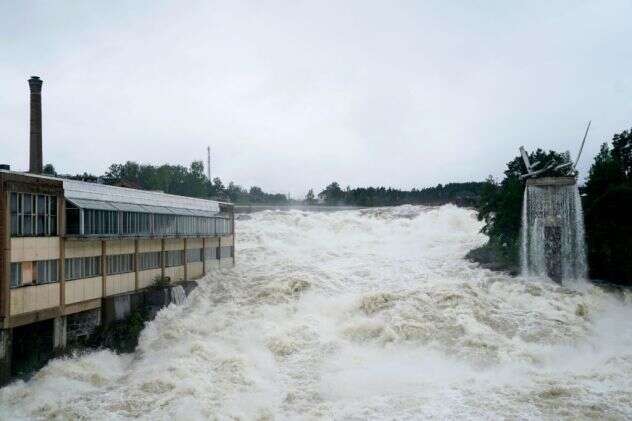
Norway Floods 2023

Also in August of 2023, climate change’s influence on water flow forces caused more severe damage and deaths. AccuWeather reported, “Dam bursts open as deadly flooding washes away homes in Norway. Torrents of water gushed through multiple towns across Norway and landslides cascaded down mountainsides after a deluge drenched Norway.”

Summary

By increasing the energy in the system, humans have increased flow volumes, masses and velocities leading to increased damage (and deaths.)

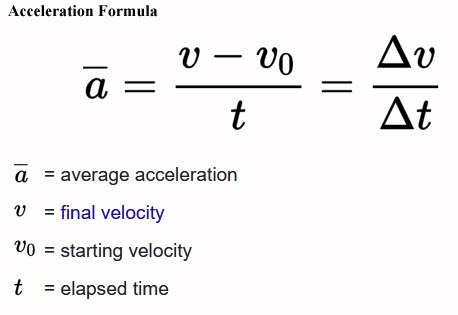
Newton’s second law: F = m * a
F = force
m = mass of an object
a = acceleration

Acceleration Formula

ALSO SEE
Climate Change: Rate of Acceleration
By 2020, there was enough data to see the “doubling period” of some anthropogenic climate affects had gone from 100 years to 10 years. For instance the rate of sea level rise has gone from about 1.5 millimeters per year to over 3 millimeters. We expect to see the doubling period to continue to shrink raising the possibility of sea levels rising a foot/year by 2050.

Tipping points and feedback loops are parts of an equation that determine the rate of acceleration in climate change.

Climate Change: The End of Times

More articles on Flood Insurance, Rising Sea Levels and Global Warming.

bookmark_borderClimate Denial Part II: Freedom of Speech

by Daniel Brouse
Climate Scientist

Climate Denial Part I: A Climate Denier Making a “False Narrative” Political Stand

Climate Denial Part II: Freedom of Speech, Authority, and Regulation

According to an analysis from the Center for American Progress, there are still 139 Republicans in the 117th Congress, including 109 representatives and 30 senators, who refuse to acknowledge the scientific evidence of human-caused climate change. All 139 of these climate-denying Republicans have made recent statements casting doubt on the clear, established scientific consensus that the world is warming—and that human activity is to blame. These same 139 climate-denying Republicans have received more than $61 million in lifetime contributions from the coal, oil, and gas industries.

Michael Bierly asked:
which is worse — the gop denying it or the dems accepting it verbally yet doing nothing about it?

I responded:
Both are equally responsible for this part: “In the spring of 2023, the USA suspended their national debt ceiling. Included in the debt ceiling suspension is a provision for unlimited emergency federal spending. The result is the government can continue to ignore the causes of climate change and instead give trillion-dollar subsidies to the fossil fuel industry through emergency disaster relief. Yes, another vicious circle — more fossil fuels subsidies result in more climate catastrophes resulting in more fossil fuel subsidies, etc. The end result will be additional trillions in government borrowing while the standard of living declines.” — Daniel Brouse

After I asked Darren Wolfe to stop posting climate denial lies on my page, Darren replied:
I guess I’m the world’s first authoritarian libertarian. Anyway, I’m not the one threatening legal action to silence a different POV. Who is the authoritarian now?

Let me repackage what I’ve already posted. Do agree that the Earth goes through natural warming and cooling cycles that have nothing to do with CO2 emissions?

I replied:
No. Not during the existence of humans has the Earth warmed to the levels of July 2023. That’s why I asked you to read my peer reviewed research. You also need to learn the difference between your opinion/point of view and facts. I’m not trying to silence your point of view. I’m trying to silence your dangerous and inaccurate information. What you are doing is equivalent to telling people to ignore the fire alarm in a crowded theater during a fire. So, back to your good question. No. The Earth has never been through a warming cycle like the one caused by burning fossil fuels.

Darren Wolfe:
Ja wohl Herr Gestapoman! You really need a shrink. I’m merely trying to have a discussion with you. Are you really so weak and insecure that you can’t handle respectful disagreement? I will cease and desist because I’m tired of your dogma. You win and freedom of speech loses. I hope you’re happy now.

Daniel Brouse:
No. Freedom of speech wins! Liars lose. This is not a respectful disagreement… this has been an ignoramus making a “false narrative” political stand on a climate scientist’s page.

Oliver Kocher said:
I find there certainly isn’t scientific consensus about catastrophic, human caused climate change, it’s just that those who don’t agree with the agenda are minimized and have their voices silenced. And besides, the idea of “consensus” being the right thing to go by is sketchy at best. Remember when the Copernican theory of the solar system was “consensus” and people were jailed or worse for disagreeing? Or as a more recent example, COVID 19. Consensus certainly wasn’t a sure thing on that, but those who disagreed were threatened, cancelled, and silenced, just to find out a year later that many of them were right, and their very valid concerns were often at least partially correct. So, your claim of consensus is a logical fallacy of “appeal to authority.”

I replied:
Sorry to say, but you are wrong. When you disagree with facts you are not exercising freedom of speech. You are committing fraud or libel. Science has nothing to do with consensus. 1 = 1. Nevertheless, there is also consensus: “A 2021 report by Cornell University found that 99.9% of more than 88,000 climate change studies agree that humans have accelerated the phenomenon, largely due to carbon emissions.” It’s when you use fraudulent consensus like Darren did (in Part I) that you get yourself into legal trouble.

Ken V Kaplan added:
Oliver Kocher, it’s people like you who put people like them in Congress. To compare Copernican theory with CC denial is preposterous. The empirical evidence is incontrovertible that over 90% of Covid deaths once vaccines were introduced (hundreds of thousands) were among the unvaccinated.
Look the frack around and wake up. You live in a developed country that relies on air conditioning. Others aren’t so lucky. People got third degree burns in AZ from the pavement. The new normal is once in a 100 year disasters are now common. And it will get worse.

Oliver Kocher:
So consensus that agrees with you is right, but consensus that disagrees with you is “fraudulent.” Got it. That’s awfully convenient.

Ken V Kaplan:
Oliver Kocher, there is no actual consensus against CC except for deep deniers about man made CC. Your stement is an example of “false equivalence.” Daniel is an expert in this field. What are your credentials?
BTW, look around. What the hell do you think is happening? 100-500 year occurances are now yearly, on every front, hurricanes, fires, droughts, floods, you name it.
People in AZ got frigging third degree burns from the pavement. Without AC the state would be uninhabitable. You can’t get insurance in Fla.
This is just the beginning.

Daniel Brouse:
Oliver Kocher, no. That’s not what I said. I said my research is not based on consensus… our team are the originators of the hypothesis. Since that time we have gone on to prove our hypothesis, as well as, get 80,000 studies to confirm our results. Now our hypothesis has become theory. That means it is fact. It has nothing to do with consensus. Another fact is people need education about politics, economics, and science. Normally this problem would be only of concern to the individual; however, when people spread dangerous, deadly misinformation, it becomes my concern.

Oliver Kocher:
Daniel Brouse, ok. How am I an authoritarian libertarian? That doesn’t even make sense.
In addition, I do not deny that the climate is changing. I question whether that change is caused by human activity, and more specifically, if it is, whether the impact of the US is sufficient to change the course of said climate change. It is part of the nature of climate to change, so no, I’m not a climate change denier, I’m just skeptical of the alleged cause and theorized effects of it.

Daniel Brouse:
An authoritarian libertarian means you insist on your opinion of “freedom of speech”. You are not free to make false scientific claims. I’m not saying you have, but Darren has. You are allowed to say that you are skeptical of whatever you believe. However, if your opinion is wrong about a fact… expressing that opinion makes you a liar, at best.

“Our team are the originators of the hypothesis. Since that time we have gone on to prove our hypothesis, as well as, get 80,000 studies to confirm our results. Now our hypothesis has become theory. That means it is fact.” If you are skeptical of the facts I have presented (and are supported by over 80,000 independent studies), then prove me wrong with your own scientific study. Otherwise, you should learn these new facts… new to you.

FACT: Human induced climate change is an exponential component of an unordered system (chaos theory). That means global warming is accelerating at a rapid rate in a complex way.

What you can do today. How to save the planet.

The Human Induced Climate Change Experiment