bookmark_borderProtectionism: The Costs and Benefits of Trade Wars

by Daniel Brouse

Protectionism is the theory or practice of shielding a country’s domestic industries from foreign competition by restricting imports. There are no known benefits to protectionism. The costs of protectionism include being financially destructive, negatively impacting health and wellness, as well as, causing death. (also see: )

Following are a few examples:

GOLDEN RICE AND THE TRANS PACIFIC PARTNERSHIP
Trade restrictions are often put on agricultural products in an effort for a country to protect its farmers. The result is to harm the general population. Rice is a good example of a crop that is widely protected by trade restrictions. USA Rice states, “The barriers range from ongoing phytosanitary restrictions by Colombia on imports of U.S. paddy rice; a discriminatory and very complex tariff regime in the EU; the trade distorting impact of Thailand’s rice support program; government management of rice imports in Japan and Taiwan; and Korea’s new rice import regime.”

The United States Patent and Trademark Office stated, “Despite current interventions, vitamin A deficiency is the leading killer of children globally (2-3 million annually) and also the leading cause of childhood blindness (500,000 cases annually). Most cases arise in Asia where the staple food eaten by 3.5 billion people daily, white rice, lacks vitamin A sources typically found in meat and leafy vegetables. These deaths and blindness are preventable.”

In 2015, Golden Rice won a humanitarian award. Not only is Golden Rice more nutritious than white rice, it is also less harmful to the environment (since less of it needs to be grown.) There are numerous health benefits from Golden Rice including β-Carotene that provides vitamin A to children. It is estimated that millions of children’s lives could be saved and childhood blindness could be dramatically reduced.

The Trans-Pacific Partnership Agreement (TPP) would have eliminated trade restrictions on Golden Rice by the participating countries.

1930 SMOOT-HAWLEY TARIFF ACT
The Tariff Act of 1930 was signed into law on June 17, 1930 by President Herbert Hoover. The act raised U.S. tariffs on over 20,000 imported products. The tariffs imposed an effective tax rate of 60% on many of the goods. The Act also started a trade war with America’s trading partners resulting in reduced American exports and imports by more than 50% contributing to The Great Depression.

Historians estimate at least 3 million civilians died from the Great Depression in the United States, mostly young children, the elderly and women. The main causes were:

  1. malnutrition
  2. infectious disease
  3. attempted child birth
  4. starvation
  5. suicide

THE SHOE TAX
The shoe tax is a remnant of the Smoot–Hawley Act. United States’ shoe tariffs are 10 times higher than the average U.S. tariff rate. According to the U.S. International Trade Commission, in 2011 shoes accounted for 1 percent of merchandise imports, but  provided 7.9 percent of U.S. tariff revenue.

Regressive taxes disproportionately hurt the poor. A regressive tax “imposes a greater burden (relative to resources) on the poor than on the rich.” The money paid in taxes has a larger impact on the ability of lower-income households to satisfy their basic needs, like food, clothing, healthcare and shelter.

PHARMACEUTICAL TARIFFS
In 2006 the WTO said scrapping the tariffs on medicines and drug ingredients would result in “effective action to improve access to medicines and medical devices needed to treat a wide variety of diseases effectively and ensure that these goods reach patients expeditiously at a lower cost.”

“It is ironic that many of the countries that are in urgent need of cheap medicines also have a significant tax added to drugs and medical devices they import,” said Peter Allgeier, the US ambassador to the WTO.

The National Institute of Health stated:
A group of countries, including members of the European Union, Canada, the United States, Japan, Switzerland, and Norway, agreed to eliminate import tariffs on thousands of finished drugs and intermediate ingredients in the Uruguay round trade talks between 1986 and 1994. As a result, out of an average global trade in drugs worth $145bn between 1999 and 2001, $114bn was covered by the initiative. But almost $33bn is still subject to duty, the joint proposal noted.

AL-SHIFA PHARMACEUTICAL FACTORY
Operation Infinite Reach was the codename for an American cruise missile strike on a pharmaceutical plant in Sudan. After helping Sudan build a pharmaceutical factory, the United States blew it up. Initially, the U.S. claimed the plant was making chemical weapons. Eventually, the U.S. admitted there was no evidence the plant was making chemical weapons. The side-effects to the local population included:

  • no supplies of chloroquine (the standard treatment for malaria)
  • relief workers fleeing the country resulting in starvation
  • fostering the attack of 9/11

The trade disruption is estimated to have killed or maimed hundreds of thousands of people many of which were children.

BABY FORMULA IN CHINA
For years China had stiff tariffs on imported baby formula. The lack of competition forced the price higher and the quality lower. In 2012, China’s consumer quality regulator found an “unusual amount” of mercury in baby formula produced by Yili Industrial Group Co. “At present, the country has no standards on mercury limits in milk powder. But to be responsible to consumers, the company decided to recall all related products,” said the company.

It is unclear how many children have been malnourished or poisoned due to China’s trade policy. Under free-trade agreements, such as the TPP, countries can not put tariffs on the product and the product must meet the health and safety standards of the USA.
bookmark_borderUS Corporate Taxes

By Daniel Brouse

The United States is the only country that taxes domestic corporations on their worldwide income at the federal and state levels. “The IRS reminds you to report your worldwide income on your U.S. tax returns.”

The United States has the highest corporate tax rate in the world. Federal tax rates on corporate taxable income vary from 15% to 39%.

The United States imposes double taxation on corporate dividends. The IRS says, “The profit of a corporation is taxed to the corporation when earned, and then is taxed to the shareholders when distributed as dividends. This creates a double tax.”

The non-competitive corporate tax rate inhibits businesses from starting in the USA, as well, as encourages business to move out of the USA.

An analysis by the Center for Data Analysis (CDA) of a reduction in the corporate income tax rate to 25 percent shows substantial growth for the U.S. economy:

  • The number of jobs in the U.S. would grow
  • U.S. real gross domestic product would rise
  • A typical family of four’s after-tax income would rise on average by $2,484 per year
  • U.S. capital stock would grow; and Gross private domestic investment would increase

bookmark_borderThe Panama Papers

By Daniel Brouse

The Panama Papers is the name being attached to the world’s largest data breach. A Panama law firm known for offshore business structures had 11,000,000 files stolen. Most of the activities did not take place in Panama, so the name is a bit misleading. Most of the transactions took place in territories, such as, the British Virgin Islands.

An anonymous “whistle blower” gave the data to a German newspaper. The German newspaper is sharing the data with the ICIJ. The International Consortium of Investigative Journalists has hundreds of journalist from around the world working on analyzing the data.

Not About Taxes. About Corruption.
Contrary to common conspiracy theorists, most of the findings do not have to do with tax evasion. Almost all of the named parties are using the shell companies to hide money for other reasons. So far, all of the Americans mentioned are already known criminals.

The names taking the international headlines are mostly political leaders that have been hiding money from their own governments (because they are corrupt and need to hide their ill-gotten gains.) These officials would gladly pay taxes on the money, but they can’t explain how the money was earned. This isn’t about the taxes. This is about laundering money.

The Prime Minister of Iceland stepped down when it was revealed he had hid millions of dollars during his disclosure to Parliament. Vladimir Putin is said to be hiding money from his government in an account set-up under his cellist. The Chinese leaders are accused of the same behavior.

The others being named are individuals placed on sanctions, convicted criminals, and shell companies for the proceeds from Ponzi schemes. In addition to personal corruption, there is also evidence of sanctioned States committing violations. The law firm, Mossack Fonseca, “helped firms subject to sanctions”, such as, links to North Korea’s nuclear weapons program. Another rogue State utilizing the black market is Syria. Mossack Fonseca serviced Assad cousin’s firms despite Syria being on the world watch list.

The current count is:
World Leaders 12
Sanctioned individuals or companies 33

bookmark_borderThe FED (Federal Reserve Bank)

by Daniel Brouse

The FED tries to control our spending… and that ain’t easy.

It seems to happen around election time — all these wacky posts about the FED. (Luckily, I’ve a degree in international economics for just such an occasion.) If you are posting about the FED, please remember these facts:
* The FED regulates banks to the best of their ability. (They also try to keep inflation and employment under control.) It is called “monetary policy”.
* No one owns the FED as it is part of our government oversight.
* Those that borrow money from the FED fund the FED (usually banks foot the bill.)
* The FED has too little power and no control over fiscal policy (spending).
* If we control our own spending, the FED doesn’t do anything.

Though I hated it happening, thank God the FED went beyond their powers. When the Fiscal Policy of “us” USA citizens was (and still is) in crisis, the FED was forced to intervene in an unprecedented manner; however, even under these circumstances the FED made money for USA citizens. (The “bailouts” made billions of dollars for the Treasury. OUTFLOWS: $617 billion / INFLOWS: $681 billion) Please blame us before blaming the FED. Check out your responsibility for fiscal policy.

bookmark_borderTrans-Pacific Partnership Agreement (TPP)

by Daniel Brouse

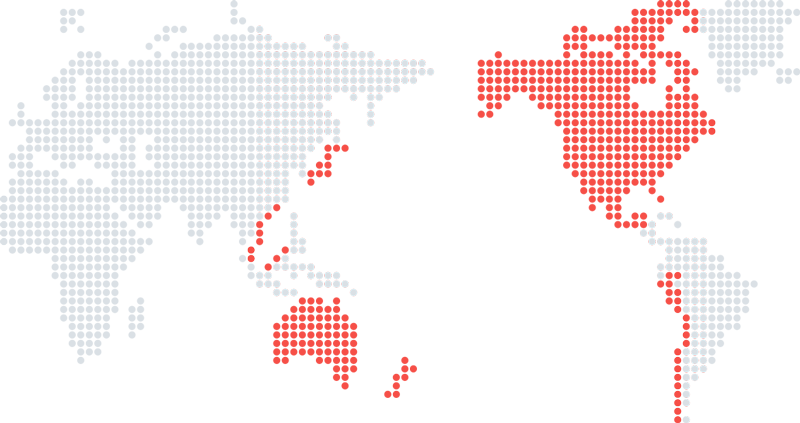
The Trans-Pacific Partnership Agreement (TPP) is a free trade agreement being negotiated by twelve countries:
Australia, Canada, Japan, Malaysia, Mexico, Peru, United States, Vietnam, Chile, Brunei, Singapore, and New Zealand. The TPP will eliminate over 18,000 taxes, tariffs and other trade barriers.

One of the largest benefits of the TPP will be protecting the environment. Participating countries will need to adopt tougher pollution standards similar to the USA. “TPP includes the most robust enforceable environment commitments of any trade agreement in history,” according the United States. “TPP requires countries to play by fair environmental rules if they want to send their goods to the United States, and upgrades NAFTA by putting fully enforceable environment obligations at the core of the agreement.” In addition, TPP helps improve conditions on the ground in TPP countries by requiring them to:
* Fulfill their obligations under the Convention on International Trade in Endangered Species of Wild Fauna and Flora (CITES) to protect and conserve iconic species, such as rhinos and elephants.
* For the first time in any trade agreement, prohibit harmful fisheries subsidies, including those that contribute to overfishing, and work to restrain new subsidy programs or enhancements to existing subsidy programs.
* Combat illegal fishing, promote sustainable fisheries management practices, and protect wetlands and important natural areas.
* Promote the long-term conservation of whales, dolphins, sharks, sea turtles, and other marine species at risk.
* Combat wildlife trafficking, illegal logging, and illegal fishing through enhanced national and regional actions.
* Protect the marine environment from ship pollution, including by implementing their obligations under MARPOL (an international agreement to prevent marine pollution).

Another benefit of the TPP will be the recognition of Intellectual Property (IP) Rights. Countries would be required to adopt standards inline with the USA. TPP copyrights are proposed to be “for the author’s life plus 70 years.”

The Agreement covers more than 40 percent of global GDP. Of the international economists questioned, the only complaint about TPP is — it doesn’t include the entire world.

Trans-Pacific Partnership Agreement (TPP) Map

Also see: GMO Rice Wins Humanitarian Award

bookmark_borderTop Myths Busted

by Daniel Brouse

1. GMO Foods Are Bad
2. Sandy Hook Was a Drill
3. 9/11 Was a Government Conspiracy
4. Contrails Contain Chemicals (Chemtrails)
5. [Request your myth to be busted.]

1. GMO Foods Are Bad
Humans have been genetically modifying foods for thousands of years. There is no evidence that eating GMO food is more harmful. Recently, GMO plants have been improved significantly and have been purposely modified for increased health benefits. Purple carrots that contain anthocyanins are an example. If you have any concerns about GMO’s, instead of spreading rumors… grow your own food!

2. Sandy Hook Was a Drill
In the aftermath of the Sandy Hill shootings, there was initial oversight by the State Police. This caused some confusion in the mass media with information that was being provided by the local police and the federal agencies. That is not to say that there have not been live action drills in the USA. In 1999, the military lowered armed troops from Blackhawk helicopters into the city of Camden with live ammo. Another example is the coordinated dismantling of Occupy Philly and Occupy Oakland by Homeland Security. The point being — it was obvious to everyone when it was a drill. The eye-witnesses in Sandy Hook make it evident this was not staged by the military.

3. 9/11 Was a Government Conspiracy
The 9/11 conspiracy crowd tends to focus on how buildings in New York collapsed. As far as scientists can tell, they collapsed in ways consistent with the unique event. Those perpetuating the conspiracy myth tend to leave out the other two sites. The plane that came down in Pennsylvania was occupied by the former quarterback of West Chester University. He is the one that yelled “Let’s roll!” before the passengers tried to take the plane back. He has become a local hero. There are also witnesses in Washington at the the Pentagon. If you have a doubt, try explaining Cantor Fitzgerald.

4. Contrails Contain Chemicals (Chemtrails)
The clouds that are formed from air passing through jet engines and being super-cooled are called contrails. They contain only H2O from the atmosphere. That is not to say that chemicals don’t come out of planes. They do. It is known as exhaust and usually can’t be seen with the naked eye. The exhaust comes out of a different part of the plane and is completely separate from the contrails; however, the exhaust from jets is a significant problem and is scheduled to be the first worldwide tax:

International Civil Aviation Organization (ICAO) — The aviation sector will attempt to negotiate by 2016 a market-based mechanism (taxes, tradeable permits or carbon offsets) to tackle emissions from flying.

bookmark_borderFirst Global Pollution Tax

The United Nations’ aviation agency (International Civil Aviation Organization) approved the initial steps in implementing a worldwide tax on greenhouse gas emissions from airplanes. If the proposal gets accepted, it would take effect in 2022.

The European Union had been seeking a more robust agreement:
“While we would have liked more countries to accept our regional scheme, progress was made overall,” the EU’s Climate Change Commissioner, Connie Hedegaard, said in a statement. “We will now factor this in when, together with the member states and the European Parliament, we decide on the way forward with the EU ETS (Emissions Trading Scheme).”

At least the United Nations initiative would invoke the first global effort to reduce greenhouse gases and hopefully pave the way for reductions in other industries.

More on taxing pollution.
More on global warming.

bookmark_borderAre Bio-fuels Worse for the Environment?

by Daniel Brouse
The Membrane Domain

Q: Are bio-fuels, ethanol, and re-cycled restaurant oils worse for the environment?
A: Yes.

The more volatile nature and ozone emissions used as a fossil fuel substitute appear to be much more harmful to the environment than fossil fuels.  Though fossil fuels need to be eliminated as soon as possible, care should be taken.


CALIFORNIA, USA — State officials have argued since 1999 that the volatility of ethanol, a fuel blend made from corn that evaporates easily, contributes to smog by increasing ozone levels and adding particulates to the air.


REFERENCES:
End The Use Of Bio-fuels

Does Ethanol Use Result in More Air Pollution? More Bad Ozone?

Dying Trees

Land and Water Degradation Lead to Food Shortages

bookmark_borderJust Say No To Taxes

by Daniel Brouse

I suggested that there should be little (to no) taxes.

You responded:
How does any of this function
without taxation…?
I would like to know your thinking on this…
it doesn’t seem to be working now
and sure doesn’t favor poor to middle class…
but I think this is too long to write?

I respond:
There are a few ways one can look upon it. Here are two of the shorter versions —

1) Evolution
In the beginning there was Adam and Lilith. There were no taxes. For more generations than I can count, the world got along fine without taxes. In fact, humans prospered in the Garden Of Edan without taxation until we evolved into corrupt beings.

2) Exploitation And Corruption
An economic evaluation of taxation reveals a costs and benefits shutout. That is to say, there are no known benefits to taxation. On the other hand, there are at least a trillion costs to taxing (see the National Deficit for a an exhaustive list.) A small sampling includes…
The cost of taxing productive people
The cost of corruption inherent in collecting money
The cost of additional bureaucracy
The cost of removing the efficiency inherent in the competition of the free market place

You may want to think of it this way… every adult in the USA owes about $42,614.99 just for the Iraq War. (And, that is if we pay off the debt today. Oh, yeah. The cost of life and limb is not included.)

Next time, in order to be fair to everyone… maybe we should be required to pay the tax in advance… instead of 1% of the population footing 40% of the bill?

Additional resources: Occupy Wall Street? Occupy Yourself