bookmark_borderThe Rise of Public Sadism and Cruelty

Headline: “Woman Who Shot Her Dog Will Head Us Homeland Security”
Kristi Noem faced widespread backlash in April this year when she wrote in a memoir that she shot to death an “untrainable” dog that she “hated” on her family farm.

The Rise of Public Sadism and Cruelty
Part of my recent study reveals a disturbing trend among Trump supporters: a shared tendency toward cruelty and sadism. If someone finds sadism amusing, it not only highlights a lack of empathy but may also point to underlying mental health issues. This behavior reflects a troubling mindset that demands attention and critical examination. The unchecked destruction of the environment, the erosion of governmental structures, and the growing normalization of cruelty paint a dire and unmistakable picture of our future.

History Repeats Itself
There are similar studies examining the rise of public sadism and cruelty in Nazi Germany, focusing on psychological, sociopolitical, and cultural factors. Scholars often explore how propaganda, dehumanization of marginalized groups, and the ideology of the regime created a culture where cruelty was normalized or even celebrated.

Key works include:
* Christopher Browning’s “Ordinary Men” – Examines how regular people participated in atrocities due to peer pressure, ideology, and situational factors.
* Hannah Arendt’s “Eichmann in Jerusalem” – Discusses the “banality of evil” and how ordinary individuals can commit acts of cruelty under systemic influence.
* Harald Welzer’s studies – Focus on group dynamics and the psychological processes enabling public sadism.

These works suggest that societal and institutional factors can deeply influence individual behavior, fostering environments where cruelty flourishes.

Trump’s Normalization of Hate and Cruelty
The rise in cruelty and the normalization of sadism among Trump supporters are evident in several unsettling examples. Kristi Noem’s appointment as Homeland Security Director follows her unapologetic boasting about killing an “untrainable” dog she despised, which received applause from supporters. Similarly, Stephen Miller’s reemergence as Deputy Chief of Staff highlights far-right cruelty, including his infamous role in family separations, anti-immigrant policies, and white nationalist rhetoric. Many Trump supporters are referring to the extensive list of controversial and empathy-lacking nominations and appointments as their ‘dream team.’

Parallels and Common Ideologies of the Far-Right
The parallels between far-right movements in the United States and Israel often revolve around shared ideologies regarding nationalism, militarism, and resistance to pluralism or inclusive political solutions, such as a two-state resolution in the Israeli-Palestinian conflict. Here are the connections:

1. Leaders and Roles

  • Marco Rubio as Secretary of State and Mike Huckabee as Ambassador to Israel would likely reflect a U.S. foreign policy stance aligned with far-right priorities. Both figures are known for strong pro-Israel positions, frequently aligning with Israeli right-wing policies that resist concessions to Palestinians.
  • Rubio has expressed unwavering support for Israeli military actions and has consistently opposed conditions placed on U.S. aid to Israel. Huckabee, a vocal evangelical Christian, has supported Israeli settlements in the West Bank, which are considered illegal under international law, and has dismissed the feasibility of a two-state solution.

2. Obstruction to a Two-State Solution

  • Both U.S. and Israeli far-right groups reject a two-state solution as a viable path to peace. They often promote the idea of complete Israeli sovereignty over contested territories, undermining efforts at diplomacy. This rejectionism aligns with policies that exacerbate the plight of Palestinians in the occupied territories.

3. Dehumanizing Rhetoric

  • Dehumanizing language, such as referring to Arabs as “animals” or “subhuman,” is a characteristic shared by extreme factions. Such language has been condemned internationally for fostering hatred and justifying violence. Leaders in both far-right movements have used rhetoric that frames Palestinians and Arabs as existential threats, often downplaying civilian casualties in military actions.

4. Deliberate Infliction of Pain

  • Far-right movements in both countries have been criticized for policies that appear to prolong suffering, such as withholding critical resources. For example:
    • Bombing Civilian Areas: Disregard for civilian casualties, including children, during military operations, has been a hallmark of critiques against Israeli far-right policies. Similar rhetoric in the U.S. far-right justifies collateral damage in conflicts by portraying it as necessary for national security.
    • Withholding Pain Medication and Food Supplies: Policies restricting medical and humanitarian aid to Gaza, for instance, have drawn international condemnation, with critics likening them to collective punishment.

5. Pleasure in Suffering

  • The far-right in both countries often appears to derive satisfaction from “owning” perceived adversaries, which aligns with the broader critique of cruelty as a political tool. Public comments, social media posts, and political statements sometimes celebrate the suffering of the “enemy,” reflecting an absence of empathy.

These actions and attitudes contribute to broader concerns about the erosion of democratic values, human rights, and possibilities for peaceful coexistence. While these parallels are not absolute and do not apply to all members of either movement, they highlight concerning trends in both countries.

Normalization of Hate and Cruelty: A Culture of Relishing Pain and Suffering
This shift in societal norms is mirrored in online behavior, where Trump supporters often express amusement or approval through emojis and comments, reinforcing the acceptability of these attitudes. Social media has amplified this trend, enabling the public normalization of sadistic and hateful behaviors across political and ideological divides.

The phrase “own the libs” has gained popularity in certain political and cultural contexts, often used to describe actions or statements aimed at provoking, humiliating, or frustrating perceived liberal or progressive individuals. Examining the phrase reveals two troubling implications:

  1. Pleasure in Cruelty:
    • The expression reflects a willingness to act out of spite rather than genuine political or ideological discourse. It shifts the goal from engaging in meaningful debate to simply inflicting emotional or intellectual discomfort on others.
    • This aligns with concepts like “schadenfreude,” the pleasure derived from another’s misfortune, and demonstrates an erosion of empathy in political and cultural exchanges. Instead of focusing on constructive policy or shared goals, the phrase celebrates antagonism for its own sake.
  2. Evocation of Slavery Imagery:
    • The term “own” carries dark historical connotations tied to the enslavement of human beings, particularly in the United States. Historically, to “own” a person was to assert absolute control and dehumanize them, stripping away autonomy and dignity.
    • While the phrase is not always used with an explicit reference to slavery, its invocation in the context of political dominance or humiliation can unintentionally (or in some cases, intentionally) echo the power dynamics and cruelty associated with slavery.

By celebrating domination and deriving satisfaction from others’ discomfort, “own the libs” perpetuates a culture of divisiveness and cruelty. Furthermore, the historical baggage of “ownership” as a concept cannot be entirely divorced from its use, especially in a country still grappling with the legacy of slavery. It’s a stark reminder of how language can carry unintended or overlooked implications that resonate deeply with historical injustices.

Here’s a detailed analysis of specific cases highlighting the acceptance and promotion of hate and cruelty among Trump supporters:

1. Family Separation Policy at the Border

  • Policy Details: Under the Trump administration, the “Zero Tolerance” immigration policy led to the separation of thousands of children from their families at the U.S.-Mexico border.
  • Public Reaction: Many Trump supporters defended the policy as necessary for border security, with some even mocking the suffering of separated families. Social media posts from supporters often celebrated the policy as “tough love” for immigrants.

2. Mockery of Disabled Reporter

  • Incident: During his 2016 campaign, Trump mocked Serge Kovaleski, a reporter with a physical disability.
  • Supporter Response: Rather than condemning the act, many Trump supporters dismissed criticism as “overreaction” and cheered the event, framing it as an example of Trump being “unfiltered.”

3. Protests Against Social Justice Movements

  • Examples: Counter-protests against Black Lives Matter demonstrations often included violent rhetoric and displays of aggression, such as driving vehicles into crowds or brandishing firearms.
  • Public Behavior: Trump supporters frequently labeled protesters as “thugs” or “terrorists” and expressed glee over incidents where protesters were injured or arrested.

4. Targeting of LGBTQ+ Rights

  • Policy Actions: The Trump administration rolled back protections for transgender people in areas such as military service and healthcare.
  • Cultural Reinforcement: Trump supporters celebrated these moves as victories against “wokeness” and often used social media to ridicule or attack LGBTQ+ individuals.

5. Online Harassment Campaigns

  • Patterns: Trump supporters frequently organize harassment campaigns targeting journalists, academics, and activists, especially women and minorities, often using threats of violence or dehumanizing language.
  • Notable Examples: Victims like Ilhan Omar and Alexandria Ocasio-Cortez have faced a barrage of racist and sexist attacks, with some threats amplified by Trump himself.

6. Support for Political Violence

  • January 6 Capitol Attack: The storming of the Capitol in 2021 was a culmination of violent rhetoric normalized within Trump-supporting circles.
  • Post-Event Celebration: Many supporters referred to the event as a “patriotic act,” dismissing the deaths and injuries caused.

These examples reflect a cultural normalization of cruelty, where acts of aggression or policies causing harm are not only justified but often celebrated within the Trump-supporting base.
 

bookmark_borderEconomic Outlook 2025 – 2035

During the first Trump administration, tax cuts initially accelerated economic growth but led to increased federal deficit spending, which soon drove up borrowing costs and ultimately slowed the economy. While many attributed the initial supply chain issues and inflationary pressures primarily to the COVID-19 pandemic, the first inflationary event was actually sparked by climate change—the 2019 drought in Taiwan. Taiwan, a global center for microchip production, saw its chip manufacturing severely impacted by this drought, which reduced the water supply crucial for chip fabrication and forced some facilities to shut down temporarily. This disruption marked the beginning of supply chain issues that rippled through multiple sectors, creating shortages and fueling inflation.

The climate-induced inflationary cycle was further amplified by multi-billion dollar climate-related disasters, from severe hurricanes and wildfires to extended droughts. These events impacted insurance costs significantly, leading to spikes in homeowners’ and auto insurance premiums. President Trump’s proposed “Drill, baby, drill” approach, which prioritizes expanding fossil fuel extraction, is likely to exacerbate these issues by accelerating climate change effects, driving further economic instability, and intensifying the inflationary cycle tied to environmental damage.

The impact on health and wellness in the United States is already evident in a significant decline in life expectancy and quality of life. After remaining generally flat between 2014 and 2019, U.S. life expectancy saw a sharp decline, dropping from 78.8 years in 2019 to 77 years in 2020, the largest single-year decline since World War II. This trend continued into 2021, with life expectancy falling further to about 76.1 years. These factors contribute to a worrying trend of early mortality and diminished quality of life, which poses long-term implications for the economy and the healthcare system.

In addition to these factors, climate change is likely to accelerate the decline in life expectancy and increase health risks. Pollution, already the leading contributor to death globally, is expected to worsen with climate change, increasing respiratory issues, cardiovascular diseases, and other pollution-related health conditions. Climate change impacts, such as severe weather events, also disrupt healthcare supplies and logistics, as seen during Hurricane Helene when IV solution shortages spiked. Rising temperatures are anticipated to drive up the rate and transmission of zoonotic diseases, further straining healthcare resources and costs.

While these factors generally point toward increased healthcare demand and costs, the impact on health insurance rates remains complex. On one hand, higher medical needs and treatment costs suggest rising insurance premiums. However, as life expectancy shortens, some individuals may not incur long-term healthcare costs, potentially offsetting some insurance expenses. In any scenario, climate change is a critical factor affecting both personal and public health outcomes.

The proposed economic policies in the next Trump administration would likely include substantial corporate tax cuts along with significant taxes and tariffs, which are expected to primarily impact consumer costs. This approach could lead to a dramatic increase in the federal deficit due to reduced corporate tax revenue and heightened consumer prices. With increased deficit spending, the federal government will likely need to borrow heavily, which could spur inflation and push interest rates higher as the government competes with the private sector for financing.

As inflation and interest rates rise, this could create a “debt spiral” in which the government must borrow even more just to cover mounting interest payments on the national debt. According to projections, if these policies are enacted, federal interest payments could exceed $3 trillion over the next decade, with an estimated $1.7 trillion in annual interest payments by 2034. This feedback loop could lead to further economic strain, as inflation erodes consumer purchasing power and the cost of borrowing increases for businesses and individuals alike. Such policies, if enacted, could thus deepen fiscal instability and exacerbate the ongoing climate-driven inflation pressures impacting essential goods and services.

RECOMMENDATIONS FOR ASSETS
Investors may see an initial stock market surge followed by a period of prolonged decline as the economy faces mounting fiscal and environmental pressures. With this volatility in mind, it may be prudent to prioritize secure, inflation-protected investments. Treasury I-Bonds are a sound choice, offering inflation protection and low risk; however, they are capped at a maximum investment of $10,000 per individual per year. Additionally, 4-week Treasury bills could serve as an effective, low-risk short-term option due to their liquidity and lower exposure to interest rate volatility.

Real estate should be approached cautiously, with a focus on how climate change is affecting property values and insurance availability. Areas with high vulnerability to climate-driven disasters, such as coastal properties and locations in Florida, Louisiana, Mississippi, Georgia, Oklahoma, Texas, Arizona, Arkansas, Alabama, New Mexico, Nevada, Colorado, California, and Washington, may face increased insurance premiums, frequent natural disasters, and dwindling property values. Liquidating properties in these areas may help mitigate financial risk, especially as the insurance industry reassesses coverage availability in high-risk zones. Insurance costs — particularly in areas prone to climate-related disasters — are expected to rise annually, impacting crop, property, real estate and transportation insurance premiums indefinitely.

RECOMMENDATIONS FOR LIABILITIES
Borrowing costs are expected to rise considerably, making it critical to secure fixed-rate loans whenever possible. Investors and homeowners should lock in fixed-rate mortgages sooner rather than later to hedge against future interest rate hikes. Variable-rate financing, including adjustable-rate mortgages (ARMs) and other forms of variable loans, could become unsustainable as rates continue to increase. By opting for fixed-rate options, borrowers can better protect themselves from the uncertainty of future rate fluctuations and potential inflationary pressures on their monthly payments.

Trumpenomics: The Decline of the US

The Human Induced Climate Change Experiment

Climate Change and Insurance: Costs, Availability, and Sustainability

Balancing the Books: How Public-Private Healthcare Models Can Sustain Economic Growth

Taxation in a Changing World: Challenges, Inefficiencies, and Paths to Sustainability

Wealth Taxes Are Illogical

The Cost of Climate Change: Rising Homeowners Insurance Rates

bookmark_borderPolitical Insight: The Reverse Psychology of “Trump Derangement Syndrome”

I’ve studied what’s often labeled “Trump Derangement Syndrome” since the 1990s, and I believe the root causes include issues like racism and elements of white supremacy. Supporting someone with such views inevitably supports these ideologies, even indirectly. Some of Trump’s base might not identify as white supremacists but are drawn in due to lack of awareness on these matters. There is also a segment of his supporters motivated by a desire to dismantle government institutions. However, this faction often lacks a foundation in political science, international economics, technology, math, and science, leaving them more susceptible to conspiracy theories and propaganda.

This may also explain why a substantial portion of his supporters are white men without a college education, as they are statistically shown to be more targeted by such messaging.

For more insight into this phenomenon, consider exploring sources on fascism. Former President Donald Trump displays certain elements often associated with fascist ideologies. These features generally align with authoritarian tendencies, disregard for democratic norms, promotion of nationalism, and targeting of perceived enemies. Here are some specific points frequently highlighted in this argument:

1. Authoritarianism and Centralized Power: Fascism typically emphasizes a strong leader who consolidates power by undermining democratic institutions. Trump’s actions often challenged democratic norms, from his comments on judiciary independence to his pressure on the Justice Department to pursue political opponents. During his presidency, he was also criticized for praising and building relationships with authoritarian leaders like Vladimir Putin and Kim Jong-un, which some argued normalized authoritarian governance on the world stage.

2. Nationalism and Xenophobia: Fascist ideologies frequently promote an “us vs. them” mentality, positioning the nation or ethnic majority as superior. Trump’s rhetoric around immigration, particularly his depiction of certain groups as criminals or threats, resonates with this exclusionary nationalism. The proposed border wall and the travel ban targeting predominantly Muslim countries have been cited as examples of policies that foster a nationalistic, exclusionary stance.

3. Disregard for the Media and Facts: Fascist regimes historically have delegitimized the press to stifle opposition and control narratives. Trump’s frequent labeling of the media as “the enemy of the people” and dismissing unflattering reports as “fake news” exemplified a combative approach to the press. This undermining of media credibility can contribute to an environment where only the leader’s narrative is seen as legitimate.

4. Use of Propaganda and Conspiracy: Fascism often relies on propaganda and unfounded narratives to create loyalty and distrust toward institutions. Trump’s promotion of unfounded theories, such as claims of widespread voter fraud and the “Deep State” working against him, have been criticized as attempts to sway public perception and undermine faith in the democratic process. This has parallels to the way fascist leaders use conspiracy theories to justify overreaching power.

5. Cult of Personality: A hallmark of fascism is the elevation of a leader to near-mythical status, promoting loyalty to the leader rather than democratic institutions. Trump’s rallies, the branding of “Trumpism,” and his personal, direct appeal to supporters over traditional party structures created a unique political movement centered on his identity. This “cult of personality” can promote loyalty to an individual rather than to democratic values and systems.

The Original DJT Ticker Symbol: Donald T. Trump

Drill, Baby, Drill (How Hate and Ignorance Distort Economic Perspectives)

The Economic Monsters: Inflation and Interest Rates

bookmark_borderClimate Change: Camelot’s Resurgence

Camelot’s Resurgence: A Musical Odyssey Through Mythical Metaphors of Climate Change at the Round Table

The legend of King Arthur, the Round Table, and Camelot can be metaphorically related to human-induced climate change in various ways:

  1. Unified Effort and Global Cooperation:
    • Metaphor: The Round Table represents equality and unity among Arthur’s knights, highlighting the idea of collaboration and shared responsibility.
    • Climate Change Connection: Addressing climate change requires global cooperation and shared efforts. The metaphor suggests that, like the knights gathered around the Round Table, nations need to unite in facing the common challenge of climate change.
  2. Camelot as a Sustainable Utopia:
    • Metaphor: Camelot is often portrayed as an idealized, utopian kingdom where justice, equality, and chivalry prevail.
    • Climate Change Connection: The metaphor implies that addressing climate change requires envisioning and striving for sustainable and environmentally conscious societies. Camelot serves as a symbol for the kind of world we should aim to create to mitigate the impact of climate change.
  3. The Sword in the Stone as Responsibility:
    • Metaphor: Arthur pulling the sword from the stone signifies his acceptance of responsibility and destiny as the rightful king.
    • Climate Change Connection: The metaphor can be linked to the acknowledgment of the responsibility humans hold in causing and mitigating climate change. Just as Arthur takes up the responsibility of leading, humanity must take responsibility for its impact on the environment.
  4. The Betrayal of Lancelot and Guinevere as Human Failings:
    • Metaphor: The affair between Lancelot and Guinevere, leading to Camelot’s downfall, represents the betrayal and moral failings of individuals within the kingdom.
    • Climate Change Connection: The metaphor reflects the human tendencies that contribute to environmental degradation, such as exploitation of natural resources, overconsumption, and the neglect of sustainable practices.
  5. Mordred’s Betrayal as Ignoring Warning Signs:
    • Metaphor: Mordred’s betrayal, often driven by a thirst for power, represents the consequences of ignoring warning signs and neglecting the environment.
    • Climate Change Connection: The metaphor aligns with the consequences of ignoring early warnings and scientific evidence regarding climate change. Human actions, driven by short-term interests, can lead to irreversible damage.

In summary, the King Arthur legend serves as a metaphor for the collective human experience in facing challenges like climate change. It emphasizes the importance of unity, responsibility, sustainability, and the consequences of moral failings and neglect.

From the album: Camelot’s Resurgence

bookmark_borderThe Federal Reserve, the Treasury, and You

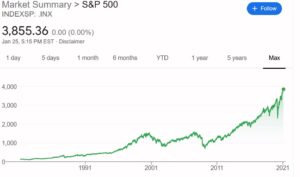
S&P 500 Rise since Fed and Treasury Intervention
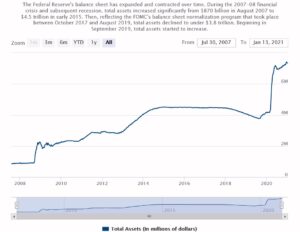
Federal Reserve Bank Balance Sheet 2020

We were talking about a graph of the record high stock market… and, I said:
You definitely need to keep this graph with it… the main reason the stock market is at this level is because the Federal Reserve has been buying stocks and bonds… lots of them. (That’s over 7 trillion pictured in the graph.) The old, bankers’ saying is “you can’t fight the fed”.

You asked: So, what will happen next?

I replied:
It all depends on how long the Fed can print money. A goodly portion of the bond and equity markets are owned by the Fed. (aka us / socialism / communism) . The US can do this because the dollar is the world reserve currency. Unfortunately for us, the Trump administration has put the dollar’s status in jeopardy. My guess is we have some time… until the dollar implodes. When the dollar implodes, the artificially inflated real estate, bond, and equity markets will collapse. Something like the next 10-20 years all your assets will be worthless.

You asked: do you think Janet will be Yellen and Screamin’ about this practice?

I replied:
Sad to say, no. The gov’t started propping up the private sector in 2008-2009. That was suppose to unwind. There was no unwinding under Yellen…. the real unwinding was suppose to happen under Trump. In 2017, the unwinding stopped… in 2020, the spigot was opened wide and trillions more were pumping in. Now, it is essential to keep the markets from collapsing. Thus, I expect Yellen will be forced to “Buy high and sell low”. Obviously, a failing investment practice.

ETFs are stocks as are Fannie Mae, Freddie Mac, and Ginnie Mae. Nobody knows exactly what the Fed buys, but it is widely believed the Fed started buying S&P 500 ETFs in 2020. In any event, 7 trillion in public and private debt and equities has a significant impact on artificially inflating real estate and the stock market.

You replied:
I understand it as “ETF’s” are “Exchange Traded Funds” and can be ANY investment vehicle.
To your point the Fed is documented to have made ETF Corporate Bond purchases last year …
What I could use your help on is in seeing how the (to Tom’s point) rather nominal $8 billion purchase is causing the dramatic effect seen in the graph.

I responded:
Yes. “An exchange-traded fund is a type of investment fund and exchange-traded product, i.e. they are traded on stock exchanges as stocks.” The reason(s) it bolsters the stock market include: purchases of corporate bond ETFs; purchase of equity based ETFs; purchase of specific corporate debt (eg Amazon, VISA, Kroger); most importantly the lowering of interest rates so that corporations can borrow money at near zero percent and use the money to purchase back their own stock. These are just a few ways the FED is propping up the stock market. Less direct but just as significant is the inflation of real estate (through purchase of mortgage backed securities.) The inflated value of real estate gives individuals the ability to invest (or not cashout) in the stock market. That is to say, if real estate was not inflated right now, people would be cashing out their 401k and IRAs to survive.

The Fed started doing these dirty deals in 2008. When I say dirty deals, I mean using their authority to maintain liquidity in the markets to interfere in private assets and equity. Since 2008, they have gone further and further over the line. In 2008-2009 it was focused mainly on real estate and large purchases (automobiles). In 2020, the Fed added direct and indirect ownership in corporations. For instance, airline debt… $2.2 million in Southwest Airlines debt. This allowed Southwest to borrow billions to keep afloat during the pandemic. Here is an article that explains a lot of it… “the Federal Reserve announced the deployment of additional “tools to support households, businesses, and the U.S. economy overall in this challenging time.” “Overall, $1 trillion in investment-grade bonds have been issued this year, nearly as much as all of 2019, along with tens of billions more in junk bonds from risky companies, which the Fed has also signaled that it would purchase.”

Something that is very important to consider… what is the difference between owning stock in the corporation or junk bonds issued by that corporation? That is to say, what happens to the Fed’s asset when the corporation goes bankrupt? What happens to the Fed’s good bonds when that company is taken over?

You said:
Something we should all remember … zooming back on the nation with a fresh alien perspective is a great exercise and skill …
We have a median household income barely budge since 1980 even after the majority of households went to duel income. It’s about 62,000 against 300% increases in real estate, health insurance and college costs …
Meanwhile market capitalization, cash reserves and productivity for corporations skyrocketed and the wealth gap of a tiny minority of both private individuals and elected officials skyrocketed …
To say “nothing to see here” is impossible if you look from afar …
This is one thing, the Fed, we can focus on for a better understanding. Thanks Daniel Brouse for initiating the discussion.

I add:
Agreed. The best case scenario for the USA would be to eliminate all existing Federal taxes. Establish a Federal pollution tax. Give every American 40k/year stipend.

The FED really does openly keep 2 sets of books. In general, both the Treasury and the Fed do not want to publicly disclose exactly what they are doing. 1) they don’t want to endanger private companies or industries by giving the impression that a company is in trouble 2) they don’t want the markets to undermine their efforts by trying to profit from their actions. A public example of this is in 2008-2009 when all the big banks were forced to take TARP money… whether they needed it or not. [The Fed and the Treasury have two sets of books… one for the public and one that is classified. It’s why we don’t know what stocks they are buying.)

“Making matters worse, the proportion of buybacks funded by corporate bonds reached as high as 30% in both 2016 and 2017,” according to JP Morgan Chase.

The Fed is buying stocks and bonds. And, the Fed is in cahoots with the Treasury (where do you think the Treasury borrows the money from?) The Fed has purchased trillions of dollars in direct and indirect purchase of stocks and bonds. It started in 2008 and continues to this day. US citizens have ownership in many airlines, cruise ships, real estate, General Motors, Chrysler, a multitude of banks and mortgage companies, insurance companies, and much more. That is not to mention the billions and billions lent to corporations to buy back their own stocks. This is the Fed’s money buying stocks. This is The Fed using the money multiplier to bolster the stock market since 2008.

You ask:
I tried to find data on the “stocks” you are referring to and can’t … does one of the articles you attached above have info.

This also pulls in my skepticism that the media is covering everything it should be … but I just can’t find any info so I could use sources.

I reply:

Yes. You can find out about many of the stocks owned by the government. It is a bit tangled. But, you can follow the money. Ask where the money to purchase the assets comes from? A: The Fed. Corporations and the Treasury obtain near zero interest rate money from the Fed. So, in many cases, how the Fed pays for the stocks becomes obscured. It often takes the private sector years so figure out the cash flow. We don’t know that much about 2020… except what was revealed in the CARES act, as well as, the pattern of stock buy backs (there was a big dip in buy backs in the 2nd quarter that coincides with the stock market.) You will have to dig a bit to find the names of the stocks… but they include airlines (Alaska Airlines, Allegiant Air, American Airlines, Delta Air Lines, Frontier Airlines, Hawaiian Airlines, JetBlue Airways, United Airlines, SkyWest Airlines, and Southwest Airlines), cruise ships, and supply chain companies like Amazon and Kruger. Some of the stock buybacks that lineup with the market include MGM, Best Buy, Qualcomm, Kansas City Southern, Lennar, Cummins and Xerox. The acquisition of stocks and stock options from earlier periods has been better routed out by analysts… all of the companies listed in “red” are all on the list: https://projects.propublica.org/bailout/list

You wondered: Am I missing something … these appear to be loans, not stock purchases, yes?

I explain: In 2008 the Federal Reserve and the Treasury colluded on circumventing the restriction on the both the Fed and the Treasury. Now, they are working in concert. You can no longer differentiate between the Fed and the Treasury. Quantitative Easing (QE) and the Troubled Asset Relief Program TARP) completely changed how things worked. (You can see it in the original chart above.) In most instances, the Treasury enters into stock ownership agreements and uses the Fed’s money to complete the deal. So, is it the Fed? or is it the Treasury? is the wrong the question… the right question is “Is it the Fed and treasury? The answer is yes. Now, most of the purchases/deals are under the CARES act. This is in addition to the Fed’s direct investment in public and private bonds, as well as, equities. The Fed is buy ETF’s and individual stocks, as well as… but the public can not find out exactly which ones.

It is very convoluted and in my opinion illegal. Neither the Fed nor the Treasury should be intervening / competing in the private markets. It costs the average citizen a lot of money.

The simplest way to explain is comparing it to an individual trading options with a margin account. In this scenario, the Treasury would be the account holder and the Fed would be the broker — “Buying on margin involves borrowing money from a broker to purchase stock. A margin account increases your purchasing power and allows you to use someone else’s money to increase financial leverage. Margin trading confers a higher profit potential than traditional trading but also greater risks.”

The most important part might be to start with the fact that there should be NO assets on the Fed’s balance sheet. The Fed is suppose to be the banks’ bank… regulating banks to maintain their liquidity and control inflation. Q. Is the Fed part of the government? A. No. The Federal Reserve Banks are not government agencies. The Federal Reserve is quasi-governmental. The Fed is not suppose to lend money to anyone other than member banks and only “overnight” to meet reserve requirements. (Reserve requirements are suppose to be to ensure banks remain solvent.)

Though this is not rocket science, it is convoluted high finance shell games. Very similar to investigating money laundering.

Economics and civics should be taught in every grade K-12 IMHO

bookmark_borderDaniel Brouse: About the Author

Q: Any background on membrane .com?

A: In 1994, I started a publishing company with another scientist (low temperature physicist and co-builder of the Ohio States supercomputer). The name of the publishing company is The Philadelphia Spirit Experiment. As the name suggests, it is a scientific experiment in the publishing of arts and science. At the time, domain names were free and the world wide web was 6 months old. We wanted a name that both rhymed and made a good scientific pun — everything passes through the Membrane Domain. The KingArthur.com anti-IQ test launched in 1995.

We were the first record company, fine arts, science, technology, math, and engineering publisher on the web. As such, we were the first to analize web traffic. Our monthly audience is over 300 million. Innovations include: the clickable button on a webpage, MP3 distribution, pay-per-download, free streaming music, the web-based video… and interactive games to save the planet (including a $1,000,000 prize to solve the Anthropogenic Global Warming problem.

My areas of expertise include: musicology, geology, meteorology, anthropology, biology, health & wellness, sociology, security, climate change, physics, finance, economics, statistics, computer science, data science, chaos theory, political science, publishing, logic, and philosophy. In general, my aptitude is in science, technology, engineering, and math.

— Daniel Brouse

bookmark_borderA Capitalist Growth Economy

International Economics 101

“On a finite planet, endless economic growth is impossible.”

1) The US is built on a “capitalist growth economy”
2) A capitalistic growth economy is dependent on population growth
3) Inbreeding of ignorant racists is not a growth economy strategy (such as Germany did through World War II)
4) Immigration (such as Germany is doing now) is the answer

The United States should learn from Germany’s lessons.

Trade Wars, Teriffs, Taxes and Trade Restriction

Financial Forecast and Economic Outlook

bookmark_borderAbout Homo naledi

by Daniel Brouse

Homo naledi bones
Homo naledi bones

In 2015, a new human-like species discovered in South Africa was named Homo naledi. Neledi is a Sotho name originated in South Africa meaning “the morning shining star”.

Homo naledi is different than any other primitive human. Naledi has a tiny brain that is about the size of a gorilla’s. The pelvis and shoulders are primitive, as well. Since it has a more progressive shaped skull, small teeth, and long legs and modern-looking feet, it was put into the same genus as humans.

“I saw something I thought I would never see in my career. It was a moment that 25 years as a paleoanthropologist had not prepared me for,” Prof Berger said.

Originally, the fossils were discovered in September 2013. While exploring the Rising Star cave system in South Africa, Rick Hunter and Steven Tucker of the Speleological Exploration Club (SEC) found a hidden chamber. The remains were thought to be 2 to 3 million years old; however, in 2017 new radiological dating estimated the bones were only 200 to 300 thousand years old.

It is quite possible Homo naledi and Homo Sapien were living together. Now, the search is on for DNA evidence to determine if there was inner-breeding.

bookmark_borderRadical Christian Terrorists and the Zombie Apocalypse

EARTH — Imagine a group of radical Christians taking over the government and trying to bring on the Rapture (aka The Apocalypse) and the Second Coming.

You no longer need to imagine. A conspiracy of Evangelical Christians are trying to facilitate The End Of Times. They want to fulfill biblical prophecies including:

  1. The Revival of the Roman Empire
  2. The Emergence of the Antichrist
  3. The Covenant with Israel
  4. Three Periods Between the Rapture and the Second Coming
  5. The War with Russia
  6. The Great Tribulation: Armageddon

The Radical Christian Terrorists believe they will be “saved” when these events occur.

ESCHATOLOGY
Eschatology is the part of theology concerned with death, judgment, and the final destiny of the soul and of humankind.

THE RAPTURE / ZOMBIE APOCALYPSE
Daniel 12
The Time of the End

2 Many of those who are dead in the ground will awake, these to everlasting life, but the others to disgrace and everlasting contempt.

Thessalonians 4:17
17 Then we who are alive and remain will be caught up together with them in the clouds to meet the Lord in the air, and so we shall always be with the Lord.

In Christian eschatology, the Rapture refers to the prophesied event when “Christian believers who have died will be raised and believers who are still alive and remain shall be caught up together with them (the resurrected dead believers) in the clouds to meet the Lord Jesus Christ in the air.”

APOCALYPSE
The apocalypse is the complete and final destruction of the world as prophesied in the biblical books of Daniel and Revelation (the last book of the Bible.)

The Four Horsemen of the Apocalypse in the book of Revelation are horsemen on white, red, black, and pale horses. The riders are often seen as symbolizing:

  1. Conquest, Pestilence, the Christ or the Antichrist
  2. War
  3. Famine
  4. Death

“The Christian apocalyptic vision is that the four horsemen are to set a divine apocalypse upon the world as harbingers of the Last Judgment.”

Revelation 6:7-8
When the Lamb broke the fourth seal, I heard the voice of the fourth living creature saying, “Come.” I looked, and behold, an ashen (pale) horse; and he who sat on it had the name Death; and Hades was following with him. Authority was given to them over a fourth of the earth, to kill with sword and with famine and with pestilence and by the wild beasts of the earth.

  • The first seal is broken and the first of the four living creatures introduces a white horse whose crowned rider, equipped with a bow, goes out to conquer.
  • The second seal is broken and the second of the four living creatures introduces a red horse, whose rider wields a great sword.
  • The third seal is broken and the third of the four living creatures introduces a black horse, whose rider carries a pair of scales, goes out.
  • The fourth seal is broken and the fourth of the four living creatures introduces an ashen horse comes out, whose rider has the name Death and Hades follows him.
  • The fifth seal is broken revealing the souls of those who had been slain for the “Word of God”.
  • The sixth seal is broken “and there was a great earthquake; and the sun became black as sackcloth made of hair, and the whole moon became like blood; and the stars of the sky fell to the earth, The sky was split apart, every mountain and island were moved out of their places.”
  • Mankind hides themselves in the caves and mountains acknowledging the presence of Him who sits on the throne and the wrath of the Lamb.

bookmark_borderTrade War! What Is It Good For?

By Daniel Brouse

International Economics 101
What do you think of when you hear the term “trade war”?
The costs and benefits to society are very similar to traditional warfare.
1) Financial Cost. A war is expensive. In a trade war, huge tariffs are placed on the purchase of imports. A tariff is a sales tax paid for by the citizen. Quite often this tax can be as high as 45% or the product even banned altogether. The tax is paid by the citizen to their government. The financial loss from the in-efficiency of paying large taxes is a tremendous burden on the country’s own citizens. In addition, there are usually large costs to the private sector. These costs can include high interest rates, inflation and loss of value to liquid assets. The standard of living declines.
2) Casualties / Loss Of Life. Millions of people are maimed or die in a trade war. The easiest examples in recent history would be the impacts on baby formula or pharmaceuticals. Hundreds-of-thousands of children, as well as, adults in need of medication died because these items were targeted in trade wars. Another example is maiming children by targeting vitamin A (causing childhood blindness.) Typically, trade wars impact the most vulnerable first — babies, the sick and the elderly.