bookmark_borderClimate Change, Inflation, and You

Currently, a major contributor to inflation is the surge in homeowners’ insurance costs, propelled by the unprecedented number of climate disasters in 2023. California, Louisiana, and Florida are now dependent on government assistance to manage the financial burden of residential property insurance.

Flood insurance will become expensive and difficult to obtain.

NOAA: A historic year of U.S. billion-dollar weather and climate disasters

In 2023, the U.S. experienced 28 separate weather and climate disasters costing at least 1 billion dollars. That number puts 2023 into first place for the highest number of billion-dollar disasters in a calendar year and included:

  • 1 winter storm/cold wave event (across the northeast U.S. in early-February).
  • 1 wildfire event (firestorm destroying town of Lahaina on Maui Island of Hawaii).
  • 1 drought and heat wave event (focused across the central and southern U.S.).
  • 4 flooding events (in California, Florida, and across the eastern and northeastern U.S.).
  • 2 tornado outbreaks (across the central and eastern U.S.).
  • 2 tropical cyclones (Idalia in Florida and Typhoon Mawar in Guam).
  • 17 severe weather/hail events (across many parts of the country).

2023 was also deadly, causing at least 492 direct or indirect fatalities — the 8th most disaster-related fatalities for the contiguous U.S. since 1980.

* Our climate model employs chaos theory to comprehensively consider human impacts and projects a potential global average temperature increase of 9 degrees Celsius above pre-industrial levels.

What Can I Do?
There are numerous actions you can take to contribute to saving the planet. Each person bears the responsibility to minimize pollution, discontinue the use of fossil fuels, reduce consumption, and foster a culture of love and care. Be a butterfly and affect the world. The Butterfly Effect illustrates that a small change in one area can lead to significant alterations in conditions anywhere on the globe. Hence, the frequently heard statement that a butterfly in China can cause a hurricane in the Atlantic.

Here is a list of additional actions you can take.

How is All Real Estate at Risk From Climate Change?

bookmark_borderClimate Change: Camelot’s Resurgence

Camelot’s Resurgence: A Musical Odyssey Through Mythical Metaphors of Climate Change at the Round Table

The legend of King Arthur, the Round Table, and Camelot can be metaphorically related to human-induced climate change in various ways:

  1. Unified Effort and Global Cooperation:
    • Metaphor: The Round Table represents equality and unity among Arthur’s knights, highlighting the idea of collaboration and shared responsibility.
    • Climate Change Connection: Addressing climate change requires global cooperation and shared efforts. The metaphor suggests that, like the knights gathered around the Round Table, nations need to unite in facing the common challenge of climate change.
  2. Camelot as a Sustainable Utopia:
    • Metaphor: Camelot is often portrayed as an idealized, utopian kingdom where justice, equality, and chivalry prevail.
    • Climate Change Connection: The metaphor implies that addressing climate change requires envisioning and striving for sustainable and environmentally conscious societies. Camelot serves as a symbol for the kind of world we should aim to create to mitigate the impact of climate change.
  3. The Sword in the Stone as Responsibility:
    • Metaphor: Arthur pulling the sword from the stone signifies his acceptance of responsibility and destiny as the rightful king.
    • Climate Change Connection: The metaphor can be linked to the acknowledgment of the responsibility humans hold in causing and mitigating climate change. Just as Arthur takes up the responsibility of leading, humanity must take responsibility for its impact on the environment.
  4. The Betrayal of Lancelot and Guinevere as Human Failings:
    • Metaphor: The affair between Lancelot and Guinevere, leading to Camelot’s downfall, represents the betrayal and moral failings of individuals within the kingdom.
    • Climate Change Connection: The metaphor reflects the human tendencies that contribute to environmental degradation, such as exploitation of natural resources, overconsumption, and the neglect of sustainable practices.
  5. Mordred’s Betrayal as Ignoring Warning Signs:
    • Metaphor: Mordred’s betrayal, often driven by a thirst for power, represents the consequences of ignoring warning signs and neglecting the environment.
    • Climate Change Connection: The metaphor aligns with the consequences of ignoring early warnings and scientific evidence regarding climate change. Human actions, driven by short-term interests, can lead to irreversible damage.

In summary, the King Arthur legend serves as a metaphor for the collective human experience in facing challenges like climate change. It emphasizes the importance of unity, responsibility, sustainability, and the consequences of moral failings and neglect.

From the album: Camelot’s Resurgence

bookmark_borderSpace Debris and Data Security

Cyber Security at the Membrane Domain
Hire Cyber Security Experts


Committed to promoting safety and transparency in the space domain, U.S. Strategic Command maintains a registry of tens of thousands of man-made objects in space and shares the information freely with anyone who seeks it through a command-run website.

Air Force Space Command, recognizing that collisions could damage orbiting satellites and cause more space junk, started the database as a pilot program before turning the project over to Stratcom in 2010, said Air Force Col. Lina Cashin, Stratcom’s division chief for space, cyber and deterrence policy and security cooperation.

The project, which involves regular tracking of old rocket bodies, debris and about 1,000 active satellites, has become one of Stratcom’s most universally popular products, Cashin said.

Space-Track.org has 85,000 account holders in 185 countries.

In addition to providing basic satellite catalog data to all account holders, Stratcom provides more advanced data services on request. The command also has agreements in place with 35 commercial companies to expedite information-sharing, and hopes to enter similar agreements with space-faring nations to better support their space operations, Cashin said.

Space situational awareness is crucial to Stratcom’s efforts to understand what is going on in space and to cope with the increasing amount of space debris, she explained.

Both the National Space Policy and the National Security Space Strategy call on the United States to be a leader in sharing satellite positional information to the greatest extent possible, Cashin said.

“We think that providing more transparency on the data that we have to satellite owners and operators — whether they are commercial, intergovernmental or foreign entities — promotes a more stable environment in space,” Cashin said.

“We want to share information with the rest of the world that we think can help them, and in turn help us be more responsible space operators.”

The registry serves a two-fold mission for those with satellites in orbit or planning to launch them, she explained. Nations and commercial companies can tap basic satellite data to plan space launches that won’t collide with objects already in space. And in the event that one of their satellites comes dangerously close to another object, Stratcom provides emergency notification so they can adjust course, if necessary.

During 2012, the command provided orbital data to 90 commercial and foreign organizations and 180 U.S. entities, Air Force Gen. C. Robert Kehler, Stratcom’s commander, reported to Congress last month.

“We received nearly 500,000 satellite observations and screened over 1,000 active satellites on a daily basis,” he told the Senate and House armed services committees. Based on those screenings, he said, the command issued more than 10,000 warnings of potential collisions, supported 75 “avoidance maneuvers” to prevent them and filled more than 300 requests for orbital data from 85 entities.

“Those numbers will go [up] every year,” Kehler told Congress. He emphasized the need for improvements to Stratcom’s space situational awareness capabilities and established “rules of the road” that govern behavior in space and allow the command to detect problems as they occur.

Space has changed dramatically since the Russians launched Sputnik in 1957, Cashin said. Sixty nations are now considered “space-faring,” with others anxious to join them to take advantage of the communication, navigation and other capabilities satellites and other space-based assets provide.

That makes space situational awareness more important than ever before in what Cashin characterized as an increasingly congested, competitive and contested domain.

In addition to the tens of thousands of fist-size manmade objects Stratcom regularly monitors, those too small to be tracked with current sensors could reach into the hundreds of thousands, she said.

The collision of an Iridium Communication Inc. satellite and a Russian Kosmos satellite in 2009 generated some 2,200 pieces of trackable debris. China’s anti-satellite test in 2007 generated more than 4,500 pieces — more than 3,000 of them still in orbit, and many to remain so for hundreds of years, Cashin said.

Meanwhile, space is increasingly competitive as more countries, civilian agencies and commercial companies jockey for an advantage within increasingly limited real estate.

Particularly coveted is the area of geosynchronous orbit at an altitude of about 22,000 miles directly over the equator, explained Air Force Brig. Gen. David Thompson, Stratcom’s deputy director for global operations. This orbit provides the best location for communications satellites, all requiring separation from other satellites to prevent interference.

“Those specific spots and those orbits are increasingly scarce, increasingly expensive and increasingly sought-after,” Thompson said.

That’s made space more contested as users want to take advantage of what it offers — and sometimes deny others’ access in the process.

Kehler told Congress he’s made a priority of ensuring that space capabilities that have become integral to the American way of warfare are available “whenever and wherever they are needed.”

The general also emphasized the importance of promoting trust and collaboration in space, a global common shared by nations and nongovernmental space operators around the globe.

Cashin reiterated the importance of promoting trust and collaboration in space.

“We are shifting to be completely transparent and share with our allies and partners so we can promote a … safe and stable space environment that benefits us all,” Cashin said. “As space becomes increasingly congested, competitive and contested, collaboration with our allies is more important now than ever before.”

By Donna Miles, from www.defense.gov
American Forces Press Service
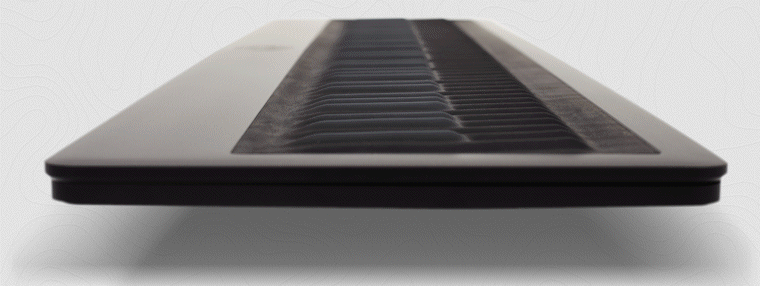
bookmark_borderThe New Seaboard Keyboard

A British start-up company has invented a new type of piano.

“Evolved from the piano keyboard, the Seaboard is a new musical instrument which bridges the gap between acoustic and digital music by putting the control of pitch, volume and timbre right at your fingertips.”

The way in which you touch the keys changes the sound. For instance, you can bend notes similar to how you would on a guitar.

Seaboard Keyboard
Seaboard Keyboard

“The patent-pending SEA Interface is ROLI’s disruptive platform sensor technology. SEA stands for Sensory, Elastic and Adaptive. SEA Interfaces are highly precise, information-rich, and pressure-sensitive, and can be built in any form factor. They enable seamless transitions between discrete and continuous input, and capture three-dimensional gestures while simultaneously providing the user with tactile feedback.”


bookmark_borderNASA Crashing Rockets Into the Moon

PASADENA, CA. — NASA conducted a  lunar surface impact mission of its twin Gravity Recovery and Interior Laboratory (GRAIL) spacecraft Monday, Dec. 17. The event was broadcast on NASA Television and streamed on the agency’s website.

The two probes hit a mountain near the lunar north pole at approximately 2:28 p.m. Monday, bringing their successful prime and extended science missions to an end.

Commentary originated from the control room at NASA’s Jet Propulsion Laboratory (JPL) in Pasadena, Calif.

Data from the GRAIL twins are allowing scientists to learn about the moon’s internal structure and composition in unprecedented detail. The two probes are being sent purposely into the moon because they do not have enough altitude or fuel to continue science operations.


Last Flight for GRAIL’s Twin Spacecraft

This animation shows the final flight path for NASA’s twin Gravity Recovery and Interior Laboratory (GRAIL) mission spacecraft, which will impact the moon on Dec. 17, 2012, around 2:28 p.m. PST. Their successful prime and extended science missions now completed, the twin GRAIL spacecraft Ebb and Flow are being sent purposefully into the moon because their low orbit and fuel state precludes further scientific operations.

The animations were created from data obtained by NASA’s Lunar Reconnaissance Orbiter.

Image credit: NASA/JPL-Caltech/GSFC/ASU

bookmark_borderScientists Jailed Over Earthquake

ITALY — Six of Italy’s top seismologists and natural disaster scientists, as well as, a government official have been sentenced to prison terms over the 2009 L’Aquila earthquake. The quake killed 300 people and destroyed the city.

The court ruled the scientists guilty of manslaughter and sentenced them to 6 years in jail.

Over 5000 international scientists sent an open letter to President Giorgio Napolitano denouncing the trial.

Enzi Boschi (former president of Italy’s National Institute of Geophysics and Volcanology) said, ”I am disappointed and devastated. I thought I would be cleared. I still don’t understand of what I am accused.”

bookmark_borderNew Planet Discovered Much Like Ours

A new planet was discovered orbiting the closest star to the sun, Alpha Centauri. Roughly the same mass as Earth, it is the lightest planet ever found orbiting another star. With surface temperatures of 1,200 degrees, it could not support life; however, it does spark curiosity in further exploration of Alpha Centauri.

Astronomer Geoffrey Marcy exclaimed, “This is close enough you can almost spit there.”

“The discovery that our nearest neighbor has rocky planets is the story of the decade. I’d bet $100 that there are other planets that are there as well,” said astronomer Debra Fisher.

bookmark_borderSkidving at the Speed of Sound

A human has broken the speed of sound during free fall. Felix Baumgartner is the first to break the sound barrier without a vehicle. Staring from a balloon near the edge of space 24 miles up, Felix reached a maximum speed of 834 mph and fell for over 4 minutes. He had to wear a special pressurized suit so his innards wouldn’t seep from his orifices.