bookmark_borderA Storm Brewing in Global Trade

by Daniel Brouse
March 12, 2025

Daily Market Update: A Storm Brewing in Global Trade

While domestic markets remained relatively calm, international markets reacted with volatility to the latest round of tariffs, escalating trade tensions worldwide.

In Trump 1.0, steel and aluminum tariffs were introduced at 25% on steel and 10% on aluminum, selectively targeting a handful of nations. Today, those tariffs have returned—but this time, they are 25% across the board, applying to all steel and aluminum imports, regardless of their origin. This marks a significant escalation in protectionist policies, with the potential to destabilize supply chains and increase costs for U.S. manufacturers and consumers alike.

The global response has been swift. Retaliatory tariffs are already being discussed, with several key trading partners preparing countermeasures. Even Australia, a long-standing U.S. ally that was previously exempt, is now expressing frustration, with one prominent economist summing up the sentiment as: “What the fuck?”

The Impact: Higher Costs, Fewer Jobs, and Economic Instability

Historically, tariffs of this nature have had disastrous economic consequences. The last round of steel and aluminum tariffs under Trump led to a net loss of 75,000 U.S. manufacturing jobs, and each job “saved” cost taxpayers nearly $900,000. Prices on everything from automobiles to canned goods surged, making life more expensive for American families.

This time, the impact is likely to be even worse. A broad, across-the-board tariff will strain international relations, drive inflation, and trigger widespread retaliation. U.S. companies reliant on imported metals will face higher costs, leading to job cuts, reduced investment, and lower economic growth.

The Markets React: Uncertainty Takes Hold

While the full effects will take time to unfold, the immediate market reaction has been one of caution and concern. The tariffs add another layer of economic uncertainty at a time when global markets are already grappling with inflation, geopolitical instability, and rising interest rates. Investors are wary, and market volatility is expected to increase in the coming weeks.

Final Thoughts: Repeating History’s Mistakes

Despite clear evidence from his first term that tariffs did more harm than good, Trump is doubling down on failed economic policies that increase costs, eliminate jobs, and weaken the U.S. economy. The previous steel and aluminum tariffs were an economic disaster, and this round—hitting more industries, more countries, and more supply chains—will only accelerate the damage.

As trade partners prepare their countermeasures, the question is no longer if the U.S. economy will suffer, but how badly.

… and oh, yeah… these aren’t the real tariffs, yet. They come April 2.

bookmark_borderWorld Economics 101: The United States and Global Trade Dynamics

by Daniel Brouse
February 28, 2025

World Economics 101: For Dummies
The world is a big place. The USA is a small part of it. Though we have the largest economy, it is only a fraction of the overall world economy. The US is completely dependent on a strong world economy.

The US has been bullying the world since January. We have started a global trade war and alienated every one of our significant trading partners. Not only is our leadership bullying, they are also lying about our closest allies.

Historically, this has not ended well. The last time is known as The Great Depression. Our current trajectory is much worse.


The global economy is an intricate network of interconnected markets, with the United States playing a pivotal yet proportionate role. While the U.S. boasts the world’s largest national economy, it constitutes only a fraction of the overall global economic landscape. This interdependence underscores the necessity for robust international trade relationships to sustain economic health domestically and globally.

Escalation of Trade Tensions

Since January 2025, the U.S. has adopted an assertive trade policy, initiating tariffs that have strained relations with key trading partners. On February 1, President Donald Trump signed executive orders imposing tariffs on imports from Canada, Mexico, and China, citing national security concerns under the International Emergency Economic Powers Act. These measures included a 10% tariff on all Chinese imports, effective February 4, with an additional 10% increase announced on February 27, set to commence on March 4. Tariffs on Canadian and Mexican imports were initially suspended for 30 days but are slated to take effect on March 4.

These actions have prompted retaliatory threats from affected nations. China has vowed to implement necessary countermeasures in response to U.S. tariffs, while Canada and Mexico have also indicated intentions to retaliate if tariffs are enforced.

Historical Parallels and Economic Implications

The current trajectory bears resemblance to protectionist policies of the past, notably those preceding the Great Depression. The Smoot-Hawley Tariff Act of 1930, which imposed high tariffs on numerous imports, led to a significant contraction in international trade. This protectionist stance is widely regarded as a factor that exacerbated the global economic downturn during that era.

Economists express concern that the escalation of trade wars could precipitate adverse outcomes, including inflation, disrupted supply chains, and a slowdown in economic growth. The automotive sector, in particular, faces potential challenges due to increased production costs and diminished export opportunities.

In summary, while the United States maintains a significant position within the global economy, its prosperity is intricately linked to healthy international trade relations. The recent adoption of aggressive trade policies and the ensuing retaliatory measures from key partners may pose substantial risks to both domestic and global economic stability.

bookmark_borderClimate Change and Policy Shifts Threaten U.S. Housing Market Stability

by Daniel Brouse
February 20, 2025

Projected Devaluation of U.S. Homes Due to Climate Change

Recent analyses indicate that climate change poses a significant threat to the U.S. housing market. Over the next five years, it’s projected that at least 20% of U.S. homes will experience devaluation due to climate-related impacts. In certain vulnerable markets, property values could decline by up to 30% within this period. By 2055, approximately 84% of all U.S. homes may suffer devaluation, resulting in an estimated $1.47 trillion in losses. This timeline aligns with the typical 30-year mortgage term, underscoring the long-term financial risks for homeowners and lenders.

Insurance Market as an Indicator of Real Estate Vulnerability

The availability and cost of homeowners insurance are critical factors influencing mortgage approvals and, consequently, home valuations. Insurance is often considered the ‘canary in the coal mine’ for real estate, signaling emerging risks associated with climate change. High-vulnerability regions, particularly coastal areas in states like Florida, Louisiana, and California, are confronting a compounded crisis. The convergence of escalating insurance premiums, frequent natural disasters, and declining property values is placing immense strain on both homeowners and insurance systems. In Florida, for instance, the state-owned Citizens Property Insurance Corporation has become the largest insurer, reflecting the significant withdrawal of private companies from the market due to unmanageable risks.

Historical Context and Accelerating Climate Change Impacts

Traditionally, real estate has been regarded as a stable and appreciating investment, often outpacing general inflation rates. Since 1963, while inflation has risen by 896%, housing prices have surged by more than 2,350%. However, climate change is disrupting this paradigm. Scientific observations have documented a non-linear acceleration of climate change impacts, with the doubling time of these effects shrinking from approximately 100 years to just a few years. This rapid acceleration suggests that the adverse consequences of climate change on real estate are intensifying at an unprecedented rate.

Policy Changes and Their Potential Exacerbation of Climate Risks

Recent policy shifts under the Trump administration may further exacerbate these challenges. The administration has rescinded numerous environmental regulations and executive orders aimed at mitigating climate change. Notably, President Trump signed 26 executive orders on January 20, 2025, which included the repeal of approximately 80 prior executive actions focused on energy, environmental, and natural resource agendas. These actions reflect a strategic shift towards promoting domestic fossil energy production and reducing regulatory oversight, potentially accelerating environmental degradation.

Additionally, the administration has proposed reforms to key entities in the U.S. housing finance system, specifically Fannie Mae, Freddie Mac, and the Federal Housing Administration (FHA). The proposed privatization of Fannie Mae and Freddie Mac could lead to increased mortgage rates, adversely affecting housing affordability. Furthermore, the potential elimination of the Consumer Financial Protection Bureau (CFPB) may reduce oversight in the housing market, increasing the risk of predatory practices. These reforms could introduce significant uncertainty into the housing market, influencing home prices and overall economic stability.

The Trump administration has also announced plans to dismantle the Federal Emergency Management Agency (FEMA) and rescind all updates to floodplain maps. Homeland Security Secretary Kristi Noem supports reallocating FEMA’s responsibilities to state and local authorities, citing operational inefficiencies and flawed responses to recent disasters.  President Trump has signed an executive order revoking the Federal Flood Risk Management Standard, effectively halting enforcement of updated floodplain maps.  Critics argue that these actions could leave states unprepared for natural disasters and increase vulnerability to flooding leaving homeowners and lenders underwater.

Conclusion

The intersection of accelerating climate change impacts and recent policy shifts presents a formidable challenge to the U.S. housing market. Homeowners, investors, and policymakers must recognize and address these converging threats to safeguard the stability and value of real estate assets in the face of an evolving environmental and regulatory landscape.

Sources:

The Human Induced Climate Change Experiment

bookmark_borderProtectionism 101: Trump Economics

Most of Trump’s policies are based on common misconceptions and in fact contradict established economic principles. To begin with, the U.S. government often subsidizes companies to keep operations domestic. This can make our products more expensive and our businesses less efficient and competitive. A notable example is electric vehicles (EVs). The U.S. heavily subsidizes EVs, yet we claim we are not, instead asserting that China does this without evidence. Consequently, we impose a 100% tariff on Chinese EVs. As a result, the U.S. lacks competitively priced, domestically produced EVs. Our EV industry has become uncompetitive and inefficient, while China has emerged as the powerhouse of EV manufacturing worldwide. This is just one example of how U.S. misunderstandings of trade have led to our own decline while contributing to China’s rise. These policies have been both Republican and Democratic. Trump’s policies, which are even more misguided and are intended to do this to every industry, are set to accelerate our decline rapidly. World economists estimate that our economy will be devastated within 1 year and 9 months.

For more information on this example see “BYD” and NEV sales. For another devastating example of protectionism see “Deep Seek” and large language model AI.

Protectionist policies have significantly influenced the global landscape of artificial intelligence (AI) and electric vehicles (EVs), creating distinct winners and losers across various industries.

Beneficiaries:

  • China:
    • BYD: A leading Chinese EV manufacturer, BYD has capitalized on domestic support and reduced foreign competition due to protectionist measures.
    • DeepSeek: This Hangzhou-based AI startup has emerged as a formidable player, developing advanced AI models like DeepSeek-R1. Notably, DeepSeek achieved these advancements at a fraction of the typical cost and energy consumption, democratizing AI development and enabling smaller firms to compete.

Adversely Affected:

  • United States:
    • Automotive Companies: Major U.S. automakers such as Ford and General Motors face challenges from increased tariffs and restricted access to international markets, impacting their competitiveness in the EV sector.
    • Technology Firms: Leading tech companies, including Nvidia, Intel, IBM, Qualcomm, Cerebras Systems, Graphcore, Tesla, Baidu, OpenAI, SambaNova, Microsoft, and Apple, have encountered setbacks due to protectionist policies. For instance, Nvidia experienced a significant decline in market capitalization following DeepSeek’s announcement of its R1 model, highlighting the disruptive potential of emerging competitors. For an idea of how costly protectionism can be to the US, Nvidia lost $593 billion in market value the day Deep Seek was announced.

The ripple effects of protectionism extend beyond these industries, notably impacting the energy sector—encompassing electricity, natural gas, and nuclear power—due to shifts in production and consumption patterns driven by evolving trade policies.

Beyond economic implications, protectionist measures can lead to significant technological and military consequences, as nations may struggle to access critical innovations or maintain strategic advantages in key sectors.

If you are interested in a historical example, the Smoot-Hawley Tariff Act of 1930 raised tariffs on imports to the United States, which contributed to the Great Depression. In fact, Trump’s policies, combined with bypassing the law and ignoring the Constitution by not having Congress codify legislation, make it appear as though our current economic downturn is accelerating. This is why world leaders and economists are not overly concerned; most agree they will tolerate current U.S. policies creating economic instability and that the collapsing economy will occur before the midterms. After the midterms, he will likely be toothless, if not impeached.

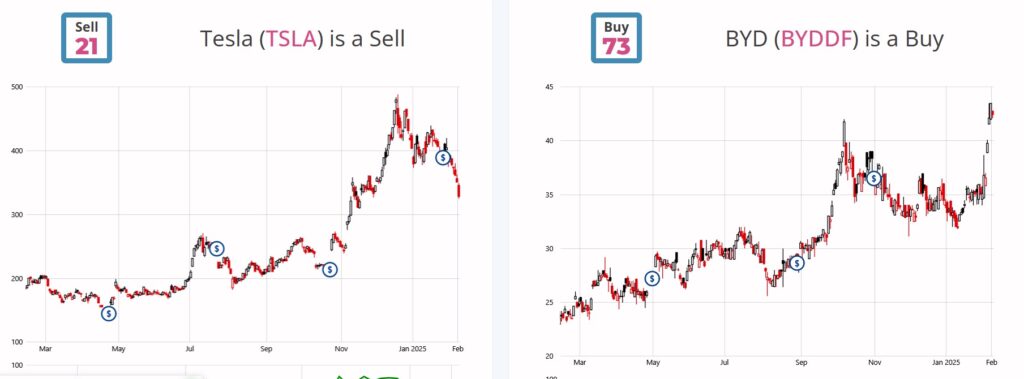
UPDATES: BYD’s Breakthrough Charging Tech Exposes the Pitfalls of U.S. Protectionism in the EV Market

How BYD Surpassed Tesla: The Role of Innovation, Tariffs, and Free Market Dynamics

Tesla vs. BYD
Tesla vs. BYD

MORE EDUCATIONAL MATERIALS ON TRUMP TARIFFS

Déjà Vu Economics: How Trump’s Deregulation and Tariff Policies Mirror the Road to the Great Depression

Trumpenomics: How Tariffs, Policy Cuts, and Labor Shortages Are Devastating American Farmers

The Devastating Impact of Trump’s Steel and Aluminum Tariffs

World Economics 101: The United States and Global Trade Dynamics

The Lies Behind Trump’s Terror Economics

Trumpenomics: The Decline of the US

bookmark_borderThe Lies Behind Trump’s Terror Economics

Article originally published February 4, 2025 in anticipation of tariffs on Mexico and Canada

The primary purpose of Trump’s tariffs is not economic growth or national security—it’s to fund his anti-humanity policies, particularly the billions of dollars required for mass deportation. Unfortunately, both his tariff policies and immigration restrictions have devastating effects on the U.S. economy, creating a dangerous cycle of economic instability and political deception.

Violation of Existing Trade Agreements

One of the most glaring contradictions in Trump’s proposal is that the United States already has a free-trade agreement with Mexico and Canada: the United States-Mexico-Canada Agreement (USMCA). This deal, which was implemented and widely touted as a signature achievement of Trump’s first term, replaced NAFTA and strengthened trade relations between the three nations. Imposing new tariffs would directly violate the terms of the USMCA, undermining the agreement and potentially sparking retaliation or trade disputes.

Circumventing Congressional Authority

Tariffs are a matter that traditionally requires Congressional approval under U.S. law. Trump’s plan to bypass this requirement involves declaring Mexico and Canada as security threats to justify the tariffs through executive action. While this approach exploits legal loopholes, it would almost certainly face challenges in court. Congress has constitutionally enshrined authority over trade, and using national security as a pretext for tariffs risks further eroding trust in executive restraint.

Trump’s Tariff Reversal: A Fake Victory

On February 3, 2025, Trump abruptly suspended the implementation of additional tariffs on Mexico and Canada. While he claimed this as a major negotiating victory, the reality tells a different story. The so-called “concessions” from Mexico and Canada were, in fact, pre-existing agreements that Trump has simply rebranded to appear as new achievements.

For example, in 2019, Trump secured an agreement with Mexico to deploy 15,000 troops to its southern border to curb migration. Now, the recently announced deployment of 10,000 troops is not an increase, but a reduction from that agreement. Similarly, the so-called “deal” with Canada was already announced in December 2024 under President Biden. Trump’s claims of securing new victories are nothing more than political theater designed to mask the damage caused by his reckless policies.

The Economic Damage and Republican Civil War

While the temporary tariff suspension is a win for the economy, common sense, and humanity, it is unlikely to last. Trump still needs to raise revenue to fund his disastrous immigration enforcement plans, and tariffs remain one of his primary tools to do so. These import taxes, however, disproportionately harm American consumers and businesses, leading to higher prices, supply chain disruptions, and reduced economic growth.

This presents a major dilemma for Trump and the Republican Party. Trump was already the largest contributor to the national debt during his first term, and economic forecasts indicate that his current policies could add more to the debt than all Democratic presidents combined throughout U.S. history. Given the Republican Party’s long-standing tradition of advocating for fiscal responsibility, Trump’s reckless spending could spark an all-out civil war within the GOP. The Freedom Caucus, known for its hardline stance on debt and government spending, is likely to lead the charge against Trump’s economic policies.

The Bigger Picture: Trump’s Economic Deception

Trump’s so-called “America First” economic strategy is built on a foundation of deception. His tariffs are nothing more than hidden taxes on the American people, and his immigration policies are not just inhumane—they are economically catastrophic. As his administration scrambles to balance contradictory goals of mass deportation and economic stability, the cracks in his strategy are already showing.

The real question is whether the Republican Party will continue to enable Trump’s reckless economic agenda or whether the internal conflict over fiscal responsibility will finally force a reckoning. One thing is clear: Trump’s terror economics is a losing game—not just for him, but for the entire country.


More Trump Lies and Consequences:

Trump’s Proposed Tariffs on Mexico and Canada: A Policy Analysis

Trumpenomics: How Tariffs, Policy Cuts, and Labor Shortages Are Devastating American Farmers

The Devastating Impact of Trump’s Steel and Aluminum Tariffs

World Economics 101: The United States and Global Trade Dynamics

Protectionism 101: Trump Economics

bookmark_borderThe Economic and Diplomatic Consequences of Trump’s Tariff Expansion

by Daniel Brouse
February 2, 2025

In November 2024, President Trump announced plans to levy new tariffs on Canada and Mexico, while also increasing tariffs on China. This policy shift, formalized through an executive order on February 1, 2025, imposed 25% tariffs on Canadian and Mexican imports and increased tariffs on Chinese goods by an additional 10%, bringing the total to 35% on most products. further escalating trade tensions. Additionally, the administration signaled plans to impose tariffs on the European Union and all oil and gas imports. These aggressive trade policies raise significant economic and diplomatic concerns, with historical precedent suggesting that such measures could have severe long-term consequences.

Economic Ramifications of Tariffs

Tariffs function as taxes on imports, costs that are often passed down to businesses and consumers. The newly imposed 25% tariffs on goods from Mexico and Canada, along with the increased tariffs on Chinese imports, have the following potential consequences:

  • Higher Prices for Consumers: American consumers will face rising costs on everyday necessities such as food, automobiles, electronics, and industrial goods. As businesses absorb these costs, they are likely to pass them on through higher prices.
  • Supply Chain Disruptions: The U.S. economy relies on deeply integrated supply chains with Mexico and Canada, particularly in the automotive, agriculture, and manufacturing sectors. Increased tariffs disrupt cross-border production, making goods more expensive and less competitive in global markets.
  • Retaliatory Tariffs Hurting U.S. Exporters: Canada and Mexico are the United States’ top trading partners, and both countries are expected to retaliate with their own tariffs on American goods. This will make U.S. exports less competitive, leading to declining sales and potential job losses in export-driven industries.
  • Heightened Inflationary Pressures: At a time when inflation remains a concern, higher import costs could exacerbate inflation, reducing consumer purchasing power and slowing economic growth.

Diplomatic and Geopolitical Consequences

Trade policies are not just economic decisions—they have far-reaching diplomatic implications. Implementing tariffs on two of America’s strongest allies and largest trading partners could have several repercussions:

  • Strained Relations with Canada and Mexico: Both countries have been key security and trade allies. Alienating them through aggressive trade measures undermines diplomatic relations and weakens North American economic cooperation at a time when global competition, particularly from China, necessitates stronger regional unity.
  • Reduced Trust in U.S. Trade Agreements: By unilaterally imposing tariffs, the U.S. risks being seen as an unreliable trade partner. This could deter future negotiations and complicate efforts to secure beneficial trade deals.
  • Global Trade Uncertainty: The expansion of tariffs to include the European Union and energy imports could trigger broader trade disputes, further fragmenting global trade networks and slowing economic recovery efforts worldwide.

Historical Parallels: A Dangerous Precedent

The last time the U.S. pursued such aggressive protectionist policies was in the lead-up to the Great Depression. The Smoot-Hawley Tariff Act of 1930, which significantly raised tariffs on foreign goods, triggered retaliatory measures from trading partners, severely reducing global trade and deepening the economic downturn. Economists widely regard these policies as having exacerbated the Depression.

Trump’s 2025 tariff expansion mirrors this historical precedent, increasing the risk of trade wars, economic contraction, and prolonged global instability. At a time when the U.S. economy is facing challenges such as inflation, supply chain vulnerabilities, and international competition, the imposition of widespread tariffs could prove to be an ill-advised economic gamble with far-reaching consequences.

Conclusion

While proponents of protectionist policies argue that tariffs can protect domestic industries, the reality is often far more damaging. Higher costs, disrupted supply chains, diplomatic fallout, and retaliatory measures outweigh any short-term economic gains. History has shown that aggressive tariff policies rarely lead to long-term prosperity—rather, they invite economic hardship and global instability. If history is any guide, these new tariffs may be a prelude to severe economic consequences, echoing the mistakes of the past.

bookmark_borderEvangelical Christianity, Eschatology, and Political Influence

Background

U.S. support for Israel is deeply intertwined with Evangelical Christian beliefs, particularly those concerning the end times. Many Evangelicals subscribe to the idea that they can hasten the “Second Coming of Christ” by setting the stage for an apocalyptic conflict. According to their interpretation of the Bible, this involves Israel reclaiming Jerusalem, Jesus returning, and ultimately eliminating all Jews who do not convert.

For numerous “Christian Zionists,” especially influential evangelists aligned with the Republican Party, support for Israel is less about political strategy and more about its supposed role in biblical prophecy. In this worldview, war is not something to be avoided but embraced as a divine necessity—an inevitable and even celebratory step toward Jesus’ rule from the Temple Mount in Jerusalem. The fate of Jews and Palestinians alike is, at best, collateral damage.

Ironically, the same Evangelical Christians who claim to worship Jesus have developed a near-cult-like devotion to President Donald Trump, seeing him as an instrument of God’s plan. This allegiance has led them to abandon traditional Christian ethics in favor of political power plays, reinforcing their apocalyptic vision.

Eschatology: The Study of the End Times

The theological study of the end times is called eschatology. Derived from the Greek word eschatos, meaning “last” or “final,” eschatology explores the biblical concepts of the Second Coming of Christ, the final judgment, and humanity’s ultimate destiny.

Christian eschatology varies widely across denominations but generally includes key themes such as the Tribulation, the Rapture, the Antichrist, the Millennial Kingdom, and the New Heaven and New Earth. The primary biblical sources for these beliefs include the Book of Revelation, the Book of Daniel, Matthew 24, and 1 Thessalonians 4–5.

The Antichrist and the False Prophet

The Bible describes two primary figures who play a pivotal role in the end times: the Antichrist and the False Prophet.

The Antichrist is portrayed as a powerful world leader who deceives nations, exalts himself above God, and demands worship. According to 2 Thessalonians 2:3-4, he is called the “man of lawlessness” who will oppose everything associated with God and proclaim himself divine. He will use deception and false miracles, as described in 2 Thessalonians 2:9-10, performing signs and wonders to mislead people. Revelation 13:7 further states that he will have authority over all nations, wage war against God’s people, and establish global control while demanding loyalty and worship.

Working alongside the Antichrist is the False Prophet, a religious figure who deceives people into worshiping the Antichrist and enforces his rule. Revelation 13:12-14 states that the False Prophet will perform great signs, even calling down fire from heaven, deceiving the inhabitants of the earth. He will implement the infamous “Mark of the Beast,” which will be required for economic participation (Revelation 13:16-17). Together, they will establish a counterfeit kingdom in opposition to God, using political power, false miracles, and religious influence to lead people astray. However, their reign will ultimately end in their destruction at Christ’s second coming (Revelation 19:20).

The Bible warns believers to remain vigilant, as the spirit of the Antichrist is already present in the world (1 John 4:3). Jesus himself warns in Matthew 24:24 that false messiahs and false prophets will perform great signs to deceive even the elect. Ultimately, the Antichrist and the False Prophet represent a final rebellion against God, but their defeat is assured through Christ’s return and judgment. Believers are urged to remain steadfast in faith and avoid being misled by deception.

False Prophets and Their Modern Influence

The Bible repeatedly warns against false prophets who mislead people for personal gain, political power, or ideological influence. These warnings remain highly relevant today in the context of misinformation, manipulation, and the rise of leaders who claim to have all the answers while deceiving the public.

Examples of modern false prophets can be seen in:

  1. Political and Religious Manipulation – Leaders and influencers use fear, rhetoric, and false promises to manipulate people, often positioning themselves as the only solution to societal problems.
  2. Misinformation and Conspiracy Theories – The internet has allowed false prophets—those who spread lies and propaganda—to reach and deceive even well-educated individuals.
  3. Cult-Like Followings – Some leaders gain unwavering loyalty, convincing their followers to reject facts, critical thinking, and morality in favor of blind allegiance.
  4. False Promises of Salvation – Whether in politics, religion, or business, many claim to offer prosperity, security, or “the truth” while actually leading people into harm.

The warning in Matthew 24:24 serves as a reminder to stay vigilant, question what we are told, and remain rooted in truth, discernment, and ethical reasoning. The willingness of Christian Zionists to embrace war and deception for the sake of an apocalyptic vision highlights the dangers of unchecked religious extremism in shaping political policy. If history teaches us anything, it is that those who seek to manipulate faith for power often lead their followers—and the world—toward destruction.


Evangelical Christianity and Israel

If you’re curious about the driving force behind US support for Israel, it’s ironically rooted in Evangelical Christianity. Many Evangelical Christians believe they can hasten the “second coming of Christ” by bringing about the apocalypse. According to their interpretation of the Bible, this involves Israel reclaiming Jerusalem, Jesus returning, and ultimately eliminating all Jews. For numerous “Christian Zionists,” especially influential evangelists aligned with the Republican Party, support for Israel is less about political strategy and more about its supposed role in biblical prophecy. In this worldview, war is not something to be avoided but embraced as a divine necessity—an inevitable and even celebratory step toward Jesus’ rule from the Temple Mount in Jerusalem.
bookmark_borderAvian Influenza: Lessons from History and the Looming Public Health Threat

by Daniel Brouse

Bird flu, or avian influenza, has been known and circulating for over a century. The first documented outbreak in poultry was in Italy in 1878, described as a “fowl plague.” It wasn’t until the mid-20th century that the disease was recognized as being caused by influenza A viruses. Over time, the virus has evolved, becoming a significant threat to both avian and human populations.

Timeline of Significant Developments

  • 1878: The first recorded description of bird flu as a fowl plague in Italy.
  • 1955: Scientists identified the causative agent as a type A influenza virus.
  • 1997: The H5N1 strain of avian influenza caused the first known human infections in Hong Kong, marking a significant point of concern due to its potential to jump species.
  • 2000s: H5N1 outbreaks spread across Asia, Europe, and Africa, with sporadic human cases reported. Other strains like H7N9 also emerged as threats.
  • 2020s: Bird flu outbreaks, particularly of the H5N1 strain, became more widespread, impacting multiple continents and leading to significant economic and public health challenges.

Thus, avian influenza has been circulating in wild birds and domestic poultry for over 140 years, with heightened awareness and research since the late 20th century due to its zoonotic potential.

Recent Developments: Economic and Public Health Impact

By 2020, H5N1 outbreaks had spread to every continent, leading to the culling of countless chickens. In Lancaster County, Pennsylvania, alone, millions of chickens were culled in just one month. This had a profound economic impact, leading to a significant spike in the price of chicken meat and eggs. The phrase, “What about the price of eggs?” became a colloquial reference to the crisis, highlighting bird flu’s far-reaching consequences.

Zoonotic Diseases: The Same Mistake Twice

Bird flu’s potential to jump species and infect humans has long been a concern. However, recent developments show that this concern is no longer hypothetical. The virus is now spreading in a wide variety of species, including cats, mice, and other mammals. Alarmingly, there has been a noticeable increase in human hospitalizations and deaths attributed to the disease.

The world has faced a similar scenario with COVID-19, another zoonotic disease that made the jump from animals to humans. For COVID-19, governments and health organizations rapidly developed and implemented free testing, which was crucial in determining the extent of human infections and curbing its spread. Vaccinations further helped mitigate the pandemic’s impact. Yet, inexplicably, there is no systematic testing for bird flu, despite its growing threat.

The Case for Immediate Action

An effective bird flu vaccine already exists, but it has not yet been approved for widespread use. This inaction mirrors early missteps in the COVID-19 pandemic and underscores a failure to learn from past experiences. Testing and vaccination are proven strategies for controlling zoonotic diseases, yet bird flu has not received the urgent attention it demands.

The stakes are high. Without systematic testing and the deployment of vaccines, bird flu will continue to spread unchecked, increasing the risk of a global pandemic. Immediate and coordinated action is necessary to:

  1. Implement widespread testing for bird flu in both animals and humans.
  2. Expedite the approval and distribution of the bird flu vaccine.
  3. Enhance surveillance of zoonotic diseases to prevent future pandemics.

In conclusion, the lessons from COVID-19 must not be ignored. The world cannot afford to repeat the same mistakes, especially when the tools to address the threat of bird flu are already within reach. The time to act is now.

Health and Wellness

bookmark_borderThe Importance of Embracing Science Over Astrology, Religion, and False Beliefs

by Daniel Brouse

Astronomy is firmly grounded in science, whereas astrology is not. Advocating astrology undermines scientific understanding and fosters false beliefs. A notable example of the harm caused by astrology was the long-held belief that the Sun revolved around the Earth. Similarly, some Indigenous peoples of the Americas relied on the Moon’s cycle to calculate time. While practical in some contexts, this approach lacked the precision of modern astronomical methods and, more importantly, hindered the transition from a hunter-gatherer lifestyle to an agricultural society.

The Sun and the Moon are the only celestial objects with a significant influence on Earth, though the Moon’s impact pales in comparison to that of the Sun. The Sun’s heliosphere serves as the most critical protector of the solar system. Ultimately, one would benefit far more, both psychologically and socially, by embracing and advancing scientific knowledge.

The real anti-science issue stems from politics and selfishness, with religion also playing a significant role. Ironically, many religions denounce astrology as sorcery or the work of the devil, when in reality, both are rooted in false beliefs. This is where the false belief begins: “The issue with astrology is that the planets, etc., are metaphorical representations of energetic forces within a holistic framework.” The cosmos are not representations of energetic forces. This argument is akin to trying to prove the existence of God. By the logical Law of Identity, God does not “exist” as a definable entity. Similarly, under the same law, so-called “energetic forces” do not exist as tangible realities. These false beliefs—whether in religion, astrology, or other metaphysical constructs—foster ignorance, arrogance, and intolerance.

Humans interact with and experience the fundamental forces of nature, but they do not inherently “possess” them in the sense of generating or controlling them. Here’s how humans relate to the fundamental forces of nature:

  1. Gravity
    • Humans experience gravity as a force that keeps them grounded on Earth. Every object with mass, including humans, exerts gravitational force, but it’s negligible compared to celestial bodies like Earth.
  2. Electromagnetic Force
    • Humans interact with the electromagnetic force in various ways. Our nervous systems use electrical signals for communication, and our bodies generate weak electromagnetic fields. Electromagnetic forces govern the behavior of atoms and molecules in our bodies, enabling chemical reactions and cellular functions.
  3. Strong Nuclear Force
    • This force holds protons and neutrons together in the nucleus of atoms. While humans don’t “possess” this force, it is fundamental to the structure of the atoms that make up our bodies.
  4. Weak Nuclear Force
    • Responsible for certain types of radioactive decay and subatomic processes. Like the strong force, it operates at the atomic level, indirectly influencing humans as part of the natural processes that sustain the universe.

Forces Humans Can Influence:

Humans can harness and manipulate some natural forces, such as:

  • Electromagnetism (e.g., through technology like electricity and magnetism).
  • Mechanical Forces (e.g., applying physical forces for movement or building structures).

While humans don’t “possess” these forces in a direct sense, they are an intrinsic part of the natural world and integral to our existence.

bookmark_borderAnthony Fauci: A Case Study in Public-Private Healthcare

by Daniel Brouse
December 19, 2024

The United States arguably has one of the most advanced healthcare systems in the world, a feat achieved despite having one of the least healthy populations globally. The true challenge in improving health, economic stability, and overall well-being in the U.S. lies in individual lifestyle choices and personal responsibility. Many Americans remain undereducated about critical topics such as health, wellness, and financial management. Compounding these challenges are unhealthy habits, such as reliance on fossil fuels, consumption of processed foods, and insufficient physical activity.

Despite these obstacles, the U.S. healthcare system—a unique public-private partnership—continues to stand out. While some advocate for universal healthcare modeled after other nations, many of those systems are struggling under economic pressures. For instance, France has faced years of civil unrest driven partly by the unsustainable costs of its national healthcare system, leading to government instability. Similarly, Canada’s healthcare model is under strain, illustrated by the resignation of its finance minister and calls for the Prime Minister to step down. The UK’s National Health Service (NHS) is also plagued by long treatment delays, nationwide nursing strikes, and reports of patient deaths while awaiting care. Germany, Italy, and Greece, among others, are facing similar demise.  Even China, often viewed as an example of universal healthcare success, is grappling with economic strain from an aging population and has faced public protests over healthcare policies.

An example of the U.S. system’s strength is its response to the COVID-19 pandemic. Pfizer-BioNTech and Moderna, two companies with strong U.S. ties, developed groundbreaking mRNA vaccines with significant financial and logistical support from the U.S. government. Initiatives like Operation Warp Speed accelerated the development and distribution of COVID-19 vaccines, showcasing the efficacy of the public-private partnership. While China’s Sinopharm and Sinovac vaccines were developed earlier, they relied on traditional inactivated virus technology, whereas the U.S.-supported vaccines utilized the innovative mRNA approach, which proved more effective in preventing severe disease and death. Everybody in the U.S. was offered multiple doses of the vaccine free of charge.

Much of this success can be attributed to Dr. Anthony Fauci, who served as the director of the National Institute of Allergy and Infectious Diseases (NIAID) from 1984 to 2022. Throughout his career, Dr. Fauci spearheaded research efforts on infectious diseases like HIV/AIDS, tuberculosis, and malaria, as well as emerging threats like Zika, Ebola, and COVID-19. His leadership and expertise during the COVID-19 pandemic were instrumental in coordinating the largest public-private healthcare initiative in history, leading to the rapid development of revolutionary vaccines that saved millions of lives worldwide.

However, Dr. Fauci’s career has not been without controversy. Critics argued that his early approach to the HIV/AIDS epidemic focused too heavily on vaccine development at the expense of expanding treatment strategies. Antiretroviral therapy (ART), which suppresses the HIV virus to undetectable levels in the blood, has proven highly effective in preventing transmission—a principle summarized by the phrase “Undetectable = Untransmittable” (U=U). ART has transformed HIV from a deadly disease into a manageable condition, but the U.S. lagged behind in championing its widespread adoption during the early years of the epidemic.

Fauci’s reputation shifted dramatically during the COVID-19 pandemic. Amid widespread misinformation and political interference, particularly from then-President Trump, Dr. Fauci became a steadfast advocate for science and public health. His insistence on factual communication and his role in developing the first effective mRNA vaccines solidified his legacy. Under his leadership, Pfizer-BioNTech and Moderna developed the world’s first mRNA vaccines, which not only curbed the pandemic but also laid the groundwork for future medical innovations.

The U.S. healthcare system’s ability to respond to such crises highlights the strength of its public-private model. While individual lifestyle changes remain a critical component of improving health outcomes, the innovative and collaborative nature of the U.S. healthcare system continues to position it as a global leader in medical advancement.

Balancing the Books: How Public-Private Healthcare Models Can Sustain Economic Growth

Health and Wellness