bookmark_borderFlorida’s Condo Collapse: Climate Physics, Soaring Costs, and the End of Coastal Wealth

by Daniel Brouse
July 6, 2025

Insurance: The First Casualty of Climate Collapse in Florida and Beyond

Check out the powerful physics explained below — Wind and water forces scale with the square of velocity (v²)

Yesterday, we discussed the failing insurance markets in Texas. Today, we turn to Florida, where the insurance industry is buckling under the accelerating impacts of climate change. Insurance companies are the canaries in the coal mine of capitalism, the first to feel the collapse of markets as the climate crisis intensifies. Since the 1990s, we have been writing papers warning of this trajectory, hoping to help avert systemic collapse. Sadly, those warnings went unheeded.

Now, Allianz SE board member Gunther Thallinger has sounded the alarm: the rising costs of climate-driven disasters are threatening to break the financial sector’s ability to function—beginning with insurance.
Speaking as both a top executive at Allianz and chair of its investment board, Thallinger warns that the world is rapidly approaching temperature thresholds beyond which many climate risks will simply become uninsurable. And without insurance, the machinery of modern finance—mortgages, real estate, infrastructure, and industry—grinds to a halt.

“Heat and water destroy capital,” Thallinger wrote in a widely discussed LinkedIn post. “Flooded homes lose value. Overheated cities become uninhabitable. Entire asset classes are degrading in real time.”

FLORIDA

Florida is on the front lines of the climate crisis—and its collapsing condo market is the latest casualty. Once seen as an affordable path to homeownership, condos across the state are rapidly becoming unaffordable, unsellable, and on the path to worthlessness.

The reasons are stark:

  • Skyrocketing insurance premiums that have doubled or tripled following increasingly destructive hurricanes.

  • Special assessments for building upgrades and resilience that can reach $7,200 or more per unit, with little warning.

  • HOA fees rising 25% or higher, pushing monthly costs beyond what many owners can bear.

  • Limited financing as lenders flee risky flood zones, making it harder for buyers to close on purchases.

What looks like an “affordable” $320,000 condo quickly becomes a financial trap. One owner saw their HOA fee soar to nearly $800 per month while facing a sudden $7,200 assessment, all while insurance doubled. Now, they can’t sell at anywhere near the purchase price—and may be forced to walk away.

Florida is also unique in that its largest insurer is now its own socialized state-run system (Citizens Insurance), a sign of a broken private insurance market unable to price climate risk in a rapidly changing environment.

The Physics Behind the Crisis

The non-linear acceleration of climate change is multiplying the rate of sea level rise, violent rain, storm surge, and the destructive power of wind and water. These forces are not increasing gradually but exponentially, as global heating accelerates the hydrological cycle, intensifies storms, and raises baseline sea levels.

Here’s why this matters physically:

  • Wind and water forces scale with the square of velocity (v²).

    • A 20 mph wind exerts 4x the force of a 10 mph wind.

    • A 40 mph wind exerts 16x the force of a 10 mph wind.

    • A 60 mph wind exerts 36x the force of a 10 mph wind.

  • Water is 800 times denser than air, so a 10 mph flow of water exerts 800x the force of a 10 mph wind.

As climate change increases storm intensities and rainfall rates, these forces compound damage at an exponential scale. For example:

  • Heavier rainfall collapses drainage and sewage systems.

  • Storm surges from rising seas undermine foundations.

  • Hillsides fail under violent rain.

  • Wind intensifies beyond design limits of existing structures.

This is not theoretical. We are witnessing it now:

  • Hurricanes that were once “500-year events” are now “5-year events.”

  • Rainfall rates that dump a foot of water in an hour are destroying infrastructure.

  • Florida’s flood maps are outdated, leaving properties exposed to uninsured and uninsurable risks.

A Systemic Economic Risk

Florida’s condo collapse is a warning for all coastal and river-adjacent economies. As climate change accelerates, insurance and maintenance costs will outpace property value gains, leading to:

  • Mass sell-offs and plunging property values.

  • Local tax base erosion, making community resilience investments harder.

  • Banking and mortgage system stresses as collateral loses value.

The dream of coastal living is colliding with the physics of climate change and the arithmetic of exponential risk. Without a massive rethinking of urban planning, insurance structures, and climate mitigation, Florida’s condo collapse is only the first domino in a cascading series of economic failures driven by climate physics.

This is not about politics—it is about physics, finance, and the survival of communities in a rapidly heating world.

* This climate model employs chaos theory
The Human Induced Climate Change Experiment

bookmark_borderTexas Flood Disaster: At Least 22 Dead, 20 Girls Missing as “500-Year Floods” Become Regular Events

by Daniel Brouse
July 4, 2025

It rained 12 inches in just one hour, and the river rose 26 feet in only 45 minutes.

Search and rescue operations continue along the Guadalupe River in Texas after catastrophic flooding killed at least 22 people and left at least 20 girls missing, local authorities confirmed. The full scope of the disaster remains unclear as emergency crews navigate washed-out roads and unstable riverbanks while families wait for news.

The flooding followed a series of violent storms that dumped record-breaking rainfall across central Texas, transforming streets into rivers and sending walls of water down river valleys in the middle of the night. Entire communities were inundated within hours, leaving people stranded on rooftops or swept away by the current.

Events like this, once classified as “500-year floods,” are no longer rare. Due to climate change, extreme rainfall events have become significantly more frequent and severe. For every 1°C (1.8°F) rise in temperature, the atmosphere holds about 7% more water vapor, fueling heavier downpours when storms occur. What was once a flood expected twice in a millennium now occurs every five to ten years in many regions.

Violent rain is just one facet of the climate crisis. Warming oceans, disrupted jet streams, and intensified atmospheric rivers are driving a sharp increase in the frequency and severity of extreme weather events globally, transforming what were once rare “freak” occurrences into the new normal. Communities across Texas and beyond are already experiencing these impacts, with mounting human and economic costs.

Texas has quickly become one of the most challenging states in which to find reasonably priced insurance. As climate risks accelerate, insurance companies are withdrawing from high-risk areas, leaving many Texans unable to obtain coverage at any price. In some regions of the state, insurance is no longer available at all, leaving families and businesses vulnerable to devastating losses as extreme weather events become more frequent and severe.

Exponential Acceleration: The Shrinking Climate Doubling Period

Recent research on climate system “doubling periods“ reveals that what once took 100 years to worsen is now accelerating to as little as 2-5 years. Heatwaves are already five times more likely due to current warming, projected to become 10 times more likely within five years and 20 times more likely within a decade if emissions and feedback loops continue unchecked. This acceleration is not a theoretical abstraction: it is driven by the non-linear collapse of systems such as the AMOC, jet streams, and global hydrological cycles, creating conditions for more intense, frequent, and deadly storms and floods. Traditional climate models continue to underestimate these compounding, cascading effects, leaving communities unprepared for disasters like the floods devastating Texas.

Policy Failures and the Cost of Climate Denial

The severity of this disaster is not just a product of nature but of policy choices. The Trump administration’s sustained climate denial, efforts to discredit scientific institutions, and defunding of agencies such as NOAA and the National Weather Service have deeply undermined the nation’s ability to prepare for and respond to extreme weather events. By ending investments in clean energy, cutting climate research, and silencing scientific guidance, the administration has left communities across the United States vulnerable to a rapidly intensifying climate crisis. The Texas floods are yet another tragic reminder that ignoring science has deadly, escalating costs—turning preventable disasters into national tragedies.

Closing Thought

As search efforts continue, the tragedy unfolding along the Guadalupe River is a stark reminder that climate change is not a distant threat but a current reality reshaping safety and security across the United States. It calls for urgent investment in resilient infrastructure and a transition away from fossil fuels, whose continued use is supercharging storms, flooding, and other extreme weather events.

The Human Induced Climate Change Experiment

bookmark_borderPolar Vortex Disruptions, Rossby Waves, and a New Threats to the Stratosphere: Why Our Jet Streams Are Becoming Unrecognizable

by Daniel Brouse
July 2, 2025

Recent severe weather across North America—record-breaking tornado outbreaks, prolonged flooding, and deadly heat domes—are not random. They are tied to deep disruptions in the polar vortex and jet stream, driven by interconnected climate processes that are accelerating in a nonlinear way.

The Role of Rossby Waves and SSW Events

Rossby waves, the large-scale meanders in high-altitude winds, are critical in shaping weather patterns. Under normal conditions, they help distribute heat across the planet. However, as the Arctic warms faster than the equator, the jet stream weakens and these waves become more amplified and sluggish, leading to stuck weather patterns—like prolonged droughts or rain events.

Sudden Stratospheric Warming (SSW) events, where polar stratospheric temperatures can rise by 50°C (90°F) within days, also play a critical role. These events weaken and displace the polar vortex, often sending lobes of cold air far south while warm air surges into the Arctic. This winter and spring, two significant SSW events (February and April) contributed to polar vortex instability, creating pathways for extreme weather, including the tornado outbreaks and historic flooding that swept through the Midwest and South.

Stratospheric Ozone: A New Threat from Reentering Satellites

While climate-induced circulation changes are a well-known driver of stratospheric instability, an emerging concern is the rising impact of low Earth orbit satellites burning up on reentry. As we increase satellite launches for global internet and other services, thousands of small satellites will reenter Earth’s atmosphere, burning up and releasing aluminum oxide and other particulates into the stratosphere.

These particulates can catalyze reactions that deplete stratospheric ozone, weakening the protective layer that shields life from harmful ultraviolet radiation. Loss of stratospheric ozone also alters the temperature gradients in the stratosphere, which further destabilizes the polar vortex and influences jet stream behavior.

Nonlinear Acceleration and Underestimated Risks

Most climate models still underrepresent the combined effects of Rossby wave amplification, frequent SSW events, and stratospheric ozone depletion on atmospheric circulation. These feedbacks are now interacting with warming oceans, melting Arctic ice, and a weakening Atlantic Meridional Overturning Circulation (AMOC), creating compounding effects that accelerate the climate system’s instability.

This is not just an academic observation: these disruptions are directly linked to the intensification and persistence of extreme weather events, impacting food security, economic stability, and public health across the globe.

Why This Matters Now

  • Polar vortex disruptions are increasing, leading to more extreme cold surges and heat domes.
  • Jet stream elongation and stagnation are fueling floods, droughts, and heatwaves.
  • Stratospheric ozone loss from reentering satellites could accelerate these processes further.
  • We are crossing tipping points faster than predicted, while many still underestimate how quickly these interconnected systems can collapse.

If we fail to understand these dynamics, adaptation will be reactive and inadequate. As a climate scientist focusing on the interplay between the AMOC, jet stream instability, and wet-bulb thresholds under nonlinear system collapse, I see this as one of the most urgent threats facing the stability of societies worldwide.

Read: Solutions to the Fossil Fuel Economy and the Myths Accelerating Climate and Economic Collapse

The Converging Collapse: AMOC, Jet Streams, and Deadly Wet-Bulb Temperatures Brouse (2025)

Philadelphia’s Heat Dome: Wet-Bulb Temperatures Signal a Climate Tipping Point Brouse (2025)

Burning to Stay Cool: How Our Fight Against Heat Is Fueling Climate Collapse Brouse (2025)

Weakened Atlantic Meridional Overturning Circulation causes the historical North Atlantic Warming Hole Kai-Yuan Li & Wei Liu (2025)

The Reign of Violent Rain Brouse and Mukherjee (2023-2024)

Climate Change, the Jet Stream, and East Coast Atmospheric Rivers Brouse (2024)

Climate Change and Deadly Humid Heat Brouse (2023)

Climate Change: Rate of Acceleration Brouse and Mukherjee (2023-2024)

Tipping points and feedback loops drive the acceleration of climate change. When one tipping point is breached and triggers others, the cascading collapse is known as the Domino Effect.

The Human Induced Climate Change Experiment

bookmark_borderThe Converging Collapse: AMOC, Jet Streams, and Deadly Wet-Bulb Temperatures

by Daniel Brouse
June 28, 2025

Climate Change Is System Collapse, Not Just Warming

The narrative of “climate change as gradual warming” is dangerously outdated. We are witnessing the destabilization of the Earth’s core regulatory systems, driving abrupt, non-linear climate acceleration:

1. The Atlantic Meridional Overturning Circulation (AMOC) is weakening at 1–3 Sv per century, disrupting global heat transport, altering weather patterns, and expanding the North Atlantic Warming Hole (NAWH).

2. Jet streams are slowing and becoming wavier due to Arctic amplification, leading to persistent, severe weather events.

3. Wet-bulb temperatures are increasing, pushing regions toward thresholds where human survival without artificial cooling is impossible.

How the Jet Stream Fits In

As our Jet Stream and Atmospheric Rivers analysis details, Arctic amplification reduces the polar-equator temperature gradient, weakening the jet stream. This:

  • Stalls weather systems, creating prolonged heatwaves, floods, and droughts.

  • Fuels atmospheric rivers, which repeatedly drench the same regions, overwhelming infrastructure and agriculture, as well as increase the frequency of violent rain events.

  • Drives heat domes, as seen in the Pacific Northwest and Southern Europe, turning “rare” extremes into annual events.

The weakening AMOC amplifies these effects by:

  • Altering North Atlantic sea surface temperatures and pressure systems.

  • Influencing storm tracks, Nor’easter behavior, and hurricane paths.

  • Further destabilizing the jet stream, creating a feedback loop between ocean and atmospheric breakdown.

The Wet-Bulb Threat: A Direct Human Health Crisis

As our Wet-Bulb Temperature research explains:

  • For every 1°C (1.8°F) of warming, the air holds ~7% more moisture, increasing humidity.

  • Wet-bulb temperature—when heat and humidity combine to prevent effective sweating—crossing 35°C (95°F) becomes lethal within hours to humans without artificial cooling.

  • Cities like Miami are already regularly crossing dangerous thresholds, while India, the Persian Gulf, and parts of the U.S. South surpass these limits with increasing frequency.

Because water vapor is itself a potent greenhouse gas, this creates another feedback loop, trapping more heat and further accelerating warming.

Doubling Periods: Exponential Acceleration

Our findings on the shrinking climate doubling period (from 100 years to as little as 2–5 years) are critical:

  • Heatwaves are now 5x more likely, projected to become 10x within 5 years and 20x within a decade.

  • This acceleration is driven by non-linear system collapses in the AMOC, jet streams, and hydrological cycles, which traditional models underestimate.

  • These shifts are not just theoretical; they are being measured now.

Why This Matters

The convergence of:

  • A weakening AMOC

  • A wavering jet stream

  • Rising lethal wet-bulb temperatures

  • Exponential climate acceleration

is driving:

  • Mass migration (climate refugees fleeing heat, floods, and drought)

  • Food and water insecurity (crops failing under heat stress, floods destroying infrastructure, aquifers depleted)

  • Economic instability (insurance collapse, supply chain disruptions, rising disaster recovery costs)

  • Health crises (heatstroke, waterborne diseases, mosquito-borne diseases expanding range)

The public, media, and policymakers consistently underestimate these compounding risks, assuming linear changes in a non-linear system.

What We Must Do

  • Rapidly decarbonize, particularly by taxing fossil fuels at 100%+ rates rather than productivity or income, aligning incentives with planetary survival.

  • A managed retreat from non-climate-resilient infrastructure, especially for cooling, flood defenses, and water conservation.

  • Monitor AMOC, jet stream, and wet-bulb thresholds closely for early warnings of catastrophic shifts.

  • Communicate clearly that these systems are interconnected, and collapse in one accelerates collapse in others. Most importantly, multiple tipping points have already been crossed, making systemic collapse no longer a distant threat but an inevitable trajectory we are now on.

Final Thought

The AMOC, jet stream, and wet-bulb crises are not distant warnings; they are active drivers of today’s accelerating climate collapse. Understanding their interplay is essential for any serious discussion on climate, economics, or human survival.

The Human Induced Climate Change Experiment

bookmark_borderClimate Denial and Disaster Capitalism: How $1.4 Billion in Hurricane Helene Aid Exposes the Cost of Ignoring Science

by Daniel Brouse
May 6, 2025

The $1.4 billion in federal grants allocated to North Carolina for Hurricane Helene recovery is a textbook example of what’s wrong with President Trump’s economic and environmental legacy. These funds, distributed through the U.S. Department of Housing and Urban Development’s (HUD) Community Development Block Grant–Disaster Recovery (CDBG-DR) program, are intended as a last resort—supporting long-term disaster recovery when all other avenues, such as insurance and FEMA aid, have been exhausted.

But what we’re witnessing isn’t just a recovery plan—it’s a glaring indictment of policy failure. This is not how we should be dealing with climate change or taxpayer-funded bailouts. Instead of investing in long-term climate solutions, resilience, and retreat from high-risk zones, we are using public funds to rebuild the same homes, roads, and infrastructure that were just destroyed—knowing full well they’ll likely be destroyed again.

The irony is painful. Had the federal government seriously acted on the warnings of climate scientists—like those championed by Al Gore over two decades ago—this entire crisis could have been mitigated or even avoided. Instead, climate denial and deregulation became official policy under Trump. Science was sidelined, fossil fuel interests were protected, and now American taxpayers are footing the bill.

And this is just the beginning. Rebuilding in disaster-prone areas not only wastes money, it also contributes to a vicious cycle of destruction, insurance collapse, and economic displacement. The rebuilt infrastructure won’t survive intensifying storms, floods, and heat waves—so this $1.4 billion won’t be the last federal handout. Meanwhile, private insurers are fleeing high-risk states, leaving public programs—funded by all of us—to pick up the pieces.

Just look to Florida, Louisiana, and California for a glimpse of what’s to come. In Florida, Citizens Property Insurance Corporation—the state-run insurer of last resort—has become the top provider in many regions. Premiums have skyrocketed, in some cases reaching 20 times the cost of coverage in more stable states like Pennsylvania. Much of Florida’s coastal real estate has become virtually uninsurable.

California’s FAIR Plan tells a similar story. Originally created in 1968 to help homeowners in wildfire-prone areas who couldn’t get private coverage, it was supposed to be a temporary solution. Today, it’s one of the largest providers in the state, a reflection of how many private insurers have simply walked away from the growing risks of climate-exacerbated disasters.

Perhaps the most glaring contradiction of all is the Republican embrace of socialized risk. The very politicians who deny the reality of climate change and preach free-market values are the same ones who rely on publicly funded insurance backstops and disaster aid to subsidize rebuilding in increasingly uninhabitable regions.

Until we align economic policy with climate science, the cycle will repeat: denial, disaster, bailout, rebuild, repeat. And each time, the cost—in taxpayer dollars, in displaced families, in lost lives—will grow.

Trumpenomics: The Decline of the US

The Human Induced Climate Change Experiment

bookmark_borderThe Race Against Time: Climate Crisis vs. the United States

by Daniel Brouse
April 12, 2025

Abstract
Humanity stands at a historic crossroads where the accelerating pace of climate change threatens to overtake both our capacity for response and the viability of the global economic system itself. Recent models indicate that without immediate intervention, climate change could cause the collapse of capitalism as we know it—potentially as soon as 2050. At the same time, U.S. political developments—particularly Trump-era trade, fiscal, and environmental policies—may unintentionally hasten this collapse. The central question becomes: Will the U.S. economic system implode before climate change forces its hand, or has irreversible damage already been done?

I. Climate Change: From Hypothesis to Imminent Catastrophe

In the 1990s, we proposed a hypothesis: that climate change would not follow a linear trajectory but would instead accelerate non-linearly—driven by feedback loops such as polar ice melt, permafrost thaw, ocean acidification, and carbon release from soil and forests. Over the following decades, this hypothesis evolved into an established scientific theory, now widely accepted by the international scientific community.

Through collaboration with a physicist from Ohio State University, we observed a startling trend in the “doubling time” of climate impacts. Originally pegged at around 100 years, this timeframe has since shrunk to 10 years, and now—alarmingly—approaches just 2. That means climate-related damages could be 64 times worse a decade from now than they are today. These aren’t worst-case scenarios; they are conservative models assuming no further acceleration.

Our latest models integrate not only geophysical systems but also social, political, and economic feedback loops. The results are grim: we now forecast a potential 9°C rise in global temperatures within this century—a rate that would make much of the planet uninhabitable and render large-scale human migration and system failure unavoidable.

II. A New Threat Emerges: Trumpenomics and the War on Global Stability

Ironically, the Trump administration—through its aggressive trade, credit, and isolationist policies—has accelerated the very breakdown of capitalism that climate change is expected to cause.

The imposition of widespread tariffs, especially those based on falsified “reciprocal” trade deficits, has triggered not just a trade war, but a credit war. This combination has never before been tested in modern economic history. During Trump’s first term, the stage was set. Now, in his second term, the global economy is being subjected to a real-time, uncontrolled experiment.

The administration’s “drill, baby, drill” energy policy, paired with unprecedented regulatory rollbacks, has only deepened the climate crisis. Yet, from an economic systems perspective, it is the trade and credit dislocations that may deliver the first major blow.

III. Global Trade, Capital Flows, and the Liquidity Death Spiral

Most people think of tariffs as mere taxes on goods. But in today’s complex financial system, their impact extends far beyond the shipping yard.

When the U.S. imports less, foreign exporters earn fewer dollars. This reduces their ability to invest in U.S. Treasuries—the bedrock of the global financial system. As demand for Treasuries falls, yields rise, borrowing costs spike, and credit conditions tighten. This sets off a self-reinforcing liquidity crisis, undermining everything from consumer lending to corporate investment.

The risk is real and growing: a scenario where the U.S. dollar loses its global reserve status is no longer the stuff of academic theory. Should this occur, the fallout would include:

  • Exploding U.S. borrowing costs

  • A collapse in consumer purchasing power

  • Capital flight from U.S. markets

  • Severe contraction in both trade and credit

  • Domestic political and social unrest on a scale not seen in modern history

IV. The Tipping Point: Will Climate Collapse or Economic Collapse Win the Race?

The economic trajectory of the U.S. under Trump’s policies suggests that a post-capitalist transition may be triggered by domestic fiscal instability rather than climate catastrophe alone. In other words, the United States may be the first nation to economically implode under the dual weight of environmental and self-inflicted economic collapse.

Complicating matters, the U.S. is simultaneously dealing with aging infrastructure, mounting national debt, deteriorating public health, climate-related disasters, and rising political extremism—all of which erode resilience and reduce the chances of a coordinated national response.

This raises a chilling question: Will the collapse of the U.S. economy accelerate faster than climate change itself—or are we already too late to avoid either fate?

The U.S. dollar’s decline from global dominance — driven by unprecedented political dysfunction and fiscal recklessness — is unraveling the myth of American exceptionalism. Once the cornerstone of international finance, the United States now risks becoming a net liability to the world economy. Paradoxically, this economic unraveling may carry a sliver of hope. If Trump’s economic collapse marks the end of mass consumption, over-leveraged capitalism, and fossil fuel dependency, it could trigger a sharp drop in global emissions and slow the pace of climate change. Such a forced degrowth scenario–where contraction curbs carbon output–might buy humanity precious time to adapt, innovate, and survive. But this path would come at a steep cost: to livelihoods, political stability, and America’s standing in the world.

Conclusion: What Comes After?

Regardless of which crisis arrives first, one outcome is increasingly likely: the U.S. standard of living will fall sharply, and life expectancy may follow. Whether that post-collapse society can still be sustainable—or even enjoyable—will depend on the decisions we make in the next few years.

Our only hope is to treat this as a true “race against time” and respond with urgency, humility, and collective will. The future depends not just on science and economics, but on whether we can choose survival over ideology, cooperation over conflict, and truth over convenience.

The Human Induced Climate Change Experiment

bookmark_borderClimate Change Fuels Devastating Floods in Australia: Record Rainfall and Economic Fallout

by Daniel Brouse
April 1, 2025

The devastating floods occurring in Australia today have been significantly influenced by climate change. As global temperatures rise, the atmosphere can hold more moisture, leading to more intense and prolonged rainfall events. This increase in heavy precipitation elevates the risk of severe flooding. ​

In Queensland, for instance, the recent deluge has resulted in unprecedented rainfall, with Townsville nearing its annual rainfall record within just three months. This excessive rainfall has caused rivers to overflow, inundating vast areas and leading to the loss of over 100,000 livestock.

Climate change not only intensifies rainfall but also contributes to more extreme weather patterns, including prolonged droughts followed by sudden, heavy downpours. This variability exacerbates the severity of flooding, as parched soils are less able to absorb water, increasing runoff into rivers and floodplains. ​

The economic and social impacts of these climate-induced floods are profound. Beyond the immediate damage to property and infrastructure, the agricultural sector faces significant losses, with livestock casualties and crop destruction leading to increased food prices and economic hardship for communities. ​

Addressing the root causes of climate change by reducing greenhouse gas emissions is crucial to mitigate the frequency and severity of such extreme weather events in the future.

The Human Induced Climate Change Experiment

bookmark_borderHow Climate Change Accelerates Erosion: Causes, Impacts, and Risks

by Daniel Brouse
March 27, 2025

Soil is a vital component of the climate system and highly vulnerable to change. Erosion and degradation have severe short-term impacts and can ultimately lead to desertification.

Erosion Feedback Loop

Climate change accelerates erosion by altering weather patterns, increasing extreme weather events, and disrupting land and water interactions. More intense rainfall, rising sea levels, and prolonged droughts all contribute to faster soil loss and degradation.

In turn, erosion exacerbates climate change through multiple feedback mechanisms:

  • Reduced Vegetation Cooling: The loss of plant cover decreases evapotranspiration, which helps regulate temperatures, leading to further warming.

  • Albedo Changes: As fertile, dark soil is stripped away, exposed lighter-colored subsoil or sand reflects more or less sunlight, disrupting local and global climate patterns.

  • Carbon Release: Erosion exposes and breaks down organic matter in soil, releasing stored carbon dioxide and methane into the atmosphere, further fueling climate change.

  • Water Cycle Disruptions: Degraded soils hold less moisture, reducing cloud formation and precipitation in some areas while increasing flood risks elsewhere.

This self-reinforcing cycle makes erosion not just a consequence of climate change but also a driver, worsening environmental instability over time.

Climate change intensifies erosion in multiple ways by altering weather patterns, increasing extreme weather events, and changing land and water interactions. Here are the key mechanisms:

1. Increased Rainfall Intensity

  • Heavier Downpours: Warmer air holds more moisture, leading to more intense rainfall. This enhances surface runoff, stripping away topsoil and deepening gullies.

  • More Frequent Storms: Stronger storms produce flash floods that erode riverbanks, coastal areas, and hillsides more aggressively.

2. Rising Sea Levels & Coastal Erosion

  • Stronger Waves & Storm Surges: Rising sea levels push tides further inland, eroding coastlines at an accelerated rate.

  • Saltwater Intrusion: Weakens coastal soils, making them more vulnerable to erosion.

  • Loss of Protective Barriers: Higher temperatures contribute to coral reef and ice cap loss, reducing natural barriers against wave action.

3. Increased Droughts & Vegetation Loss

  • Soil Drying & Cracking: Frequent droughts cause soils to dry out and become less cohesive, making them more prone to wind erosion.

  • Vegetation Decline: Heat stress, wildfires, and shifting climate zones kill plants that anchor the soil, leading to more erosion from wind and water.

4. Melting Permafrost & Landslides

  • Thawing Permafrost: Releases previously frozen organic material, causing ground instability and slumping.

  • More Landslides: Unstable, thawing soils on slopes increase the risk of landslides, especially in mountainous regions.

5. Glacial Retreat & River Erosion

  • Faster Glacier Melting: Increases sediment transport in rivers, leading to changes in riverbanks and deltas.

  • Altered River Courses: More meltwater can change river flow patterns, leading to unexpected erosion and sedimentation.

6. Stronger Wind Erosion

  • Desertification Expansion: Hotter, drier conditions turn more land into deserts, exposing it to wind erosion.

  • Dust Storms: More frequent and intense, carrying away nutrient-rich topsoil and worsening land degradation.

Overall Impact

Erosion worsened by climate change not only depletes fertile soils and damages infrastructure but also increases sedimentation in rivers, harming aquatic ecosystems. Coastal communities face greater risks, and agricultural lands lose productivity, exacerbating food insecurity.

More Resources

Soil Degradation and Desertification

The Decline of Penn’s Sylvania: Trees and Temperate Zones

The Album ‘Wood You Save the Trees?’ by The Beatless Sense Mongers

Create a sustainable and climate-resilient environment in and around your home and prevent soil degradation.

bookmark_borderClimate Change’s Impact on Florida Insurance

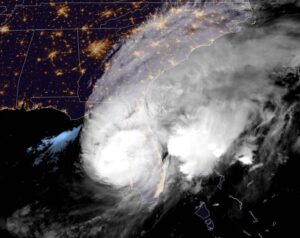
Hurricane Milton is expected to cause over $100 billion in insurance claims, creating even more challenges for Florida homeowners in obtaining insurance. On top of that, the cost to the public and government is projected to exceed an additional $50 billion, adding to the financial strain on taxpayers and the state. Much of the damage from Milton came from the powerful winds and the unprecedented number of tornadoes it spawned. The eastern side of Florida saw the most severe impacts, with over 30 tornadoes causing extensive damage and the highest number of fatalities and potential financial losses.

Citizens Property Insurance Corporation, Florida’s state-backed insurer, has become the largest insurance provider in the state due to the exodus of private insurance companies. Many companies are pulling out due to increasing risks from hurricanes and other extreme weather events driven by climate change. Citizens, however, faces significant financial strain. As hurricane damage grows more frequent and severe, Florida taxpayers are likely to face an unsustainable burden in covering reconstruction costs. The situation highlights the ongoing vulnerability of Florida’s real estate market, and if you haven’t already sold property in the state, it might be a case of better late than never.

The growing frequency and intensity of storms, combined with the financial instability of the insurance industry in Florida, make future investments in the region highly risky. As climate change continues to escalate, the risks are only expected to worsen.

It’s important to note that the degree of risk varies by region and property type. Some areas may experience more immediate and severe impacts, while others may be more resilient. Assessing and mitigating these risks require a comprehensive understanding of local climate vulnerabilities and the implementation of strategies to enhance property resilience. Policymakers, real estate professionals, and property owners are increasingly recognizing the importance of addressing climate risks to ensure the long-term sustainability and value of real estate assets. Thus, our recommendation to evacuate Florida now (i.e. Managed Retreat).

* Our climate model employs chaos theory to comprehensively consider human impacts and projects a potential global average temperature increase of 9℃ above pre-industrial levels.

Hurricane Milton / October 9, 2024

How is All Real Estate at Risk From Climate Change?

Flood Insurance

The Human Induced Climate Change Experiment

bookmark_borderRaindrops Are Increasing in Size Due to Climate Change

By Daniel Brouse
October 1, 2024

There is growing evidence that raindrops are increasing in size due to climate change and rising temperatures. Several studies suggest that global warming is influencing precipitation patterns, including the size and intensity of raindrops. Here’s a summary of the key points:

1. Increased Water Vapor in the Atmosphere

  • Warmer air holds more moisture, as described by the Clausius-Clapeyron equation. For every 1°C (1.8°F) rise in temperature, the atmosphere can hold about 7% more water vapor. This increased moisture can result in larger raindrops, as more water is available for cloud formation and precipitation.

2. Enhanced Convection

  • Rising temperatures lead to stronger convection (vertical air movement), which is a key process in storm formation. Stronger updrafts can suspend larger water droplets in the atmosphere for longer periods, allowing them to grow before falling as rain. This can lead to larger raindrops in storms.

3. Heavier Rainfall Events

  • There has been a documented increase in the frequency and intensity of heavy rainfall events globally. Larger and heavier raindrops are more likely in such events because more water is being concentrated in intense, short bursts of rain. For example, a study by the U.S. National Climate Assessment found that heavy rainfall has increased in many regions of the United States, especially in the Northeast.

4. Studies and Observations

  • Satellite observations and ground-based radar data have detected an increase in the size of raindrops over certain regions. A study published in Nature Communications in 2020 showed that storm systems in tropical and subtropical regions were producing larger raindrops as global temperatures increased.
  • In urban areas, which experience localized warming due to the “urban heat island” effect, researchers have observed both an increase in rainfall intensity and larger raindrops compared to rural areas.

5. Impact of Aerosols

  • Climate change also affects the distribution and concentration of aerosols in the atmosphere. These tiny particles serve as nuclei around which raindrops form. With more aerosols in some regions due to human activities, raindrops can take longer to coalesce, potentially leading to larger drops as they fall.

6. Feedback Loops

  • The increase in extreme weather events, such as tropical storms and hurricanes, which are intensified by climate change, also leads to heavier rain with larger raindrops. These storms draw more water vapor from the warming oceans, contributing to bigger raindrops when they make landfall.

Conclusion:

While more research is ongoing, there is substantial evidence that climate change is leading to larger raindrops due to increased atmospheric moisture, enhanced convection, and more intense storm systems. These changes contribute to more severe rainfall events, which are linked to greater flooding and erosion.

Violent Rain
What turns these severe weather events into ‘violent rain events’ is the application of the drag equation and flow dynamics.

Mass and velocity are just part of the equation; density also plays a key role. The combination of these variables increases the intensity of flow forces. Wind and water forces scale with the square of velocity, meaning that as flow speeds increase—due to more intense heating or heavier rainfall—the damage scales accordingly. According to drag physics, force is proportional to density times the square of velocity (v2v2).

About the Human Induced Climate Change Experiment