bookmark_borderEvaporation: Death by Corn Sweat

by Daniel Brouse and Sidd Mukherjee
August 10, 2025

Introduction: Observing a Vanishing Pool

I’ve been researching evaporation for decades, but sometimes the most telling experiments happen in my own backyard. At the start of this pool season, rainfall far exceeded evaporation. Then, for the past two months, the balance flipped: with little rain and intense heat, the pool lost about 10 inches of water solely from evaporation. This small observation mirrors what’s happening globally — a shift toward higher net water loss as temperatures climb.

The 2003 Invention: Cooling Through Evaporation

In 2003, I invented Solar Powered Climate Control: Energy Transfer Through Evaporation. The idea was simple: collect rainwater and drip it over the roof on hot days. As the water evaporated, it absorbed heat from the structure, removing massive amounts of energy from the building.

When water evaporates, it transitions from liquid to vapor, a phase change that requires a huge energy input. In our experiments, Sidd calculated:

“For every cubic foot of water that evaporated, it took 61,000 BTU with it.”

The results were remarkable: my electric bill dropped by two-thirds. Back then, I saw evaporation as a potential climate solution. Now, I see how climate change itself is supercharging evaporation — and in ways that can harm as much as help.

The Physics of Evaporation

Evaporation is among the most powerful natural cooling mechanisms on Earth. The latent heat of evaporation, L, measures the energy required to transform water into vapor without changing its temperature:

  • L = 8,094 BTU per gallon

  • 1 BTU = 1,055 Joules

  • 1 calorie raises the temperature of 1 gram of water by 1°C

  • Levaporation = 536 calories/gram

This means that even small amounts of evaporating water move massive amounts of energy from the surface into the atmosphere — energy that doesn’t just disappear, but fuels storms and weather extremes.

Climate Change and Evaporation’s Double-Edged Sword

Evaporation cools surfaces locally, but globally it adds more water vapor to the atmosphere. According to the Clausius-Clapeyron equation, for every 1°C increase in temperature, air can hold about 7% more water vapor. In regions of the U.S. that are experiencing +10°C seasonal anomalies, the atmosphere can now hold about 70% more water vapor than in the past.

This fuels several dangerous trends:

  • Stronger storms — The extra moisture is energy for hurricanes, atmospheric rivers, and severe thunderstorms.

  • More intense rainfall — Raindrops are becoming larger and faster, increasing their momentum (p = mv). Higher drop count per second boosts total impact force.

  • Flash flood severity — With more raindrops falling at higher velocities, momentum and destructive power increase significantly.

  • Erosion & soil degradation — Heavy rains strip away topsoil, reducing agricultural capacity.

Flow Dynamics: Scaling Forces with Climate Change

The drag equation shows that force increases with the square of velocity and is proportional to fluid density. This means:

  • Doubling wind speed quadruples its force.

  • Water is ~800× denser than air, so water flow at the same speed exerts ~800× the force of wind.

As climate change drives higher wind and water speeds, the destructive potential grows exponentially. A modest increase in velocity can translate into catastrophic increases in force — toppling trees, collapsing infrastructure, and scouring soil.

Evaporation, Drought, and the Feedback Loop

Warming oceans — particularly in the tropics — are releasing increasing amounts of water vapor into the atmosphere. Atmospheric rivers transport this moisture and energy inland, fueling more intense rainfall events.

On land, rising temperatures are accelerating evaporation from both plants and soil. By 2025, “corn sweat” had even entered weather forecasts. This term refers to the large amounts of water vapor released by corn plants through transpiration—the process by which plants draw water from their roots, move it up through the stalk, and release it into the air from tiny pores in their leaves.

A mature cornfield can release several thousand gallons of water per acre per day into the atmosphere during peak growing season. The effect is so pronounced that meteorologists now factor corn sweat into heat index forecasts for states like Iowa, Illinois, and Nebraska.

While this moisture can increase local humidity to dangerous levels for people, it’s also a sign of stress for the plants themselves. High heat and increased transpiration can sap soil moisture, reduce yields, and inflict economic losses across agricultural regions already strained by climate change.

But here’s the climate “whiplash” problem:

  • More extreme rainfall events lead to floods, soil loss, and infrastructure collapse.

  • More extreme droughts follow because warmer air strips moisture from the ground faster, especially when relative humidity remains low despite higher absolute humidity.

As soil moisture evaporates away, ecosystems degrade. Once soil structure collapses, desertification can set in — a feedback loop that is much harder to reverse than to prevent.

From My Pool to the Planet

Measuring the water loss in my swimming pool is straightforward. Measuring the net evaporation of the Earth’s soils, forests, and croplands is far more complex — but the trend is clear. Net evaporation is rising. Precipitation is becoming more extreme but also less reliable. Soil degradation is accelerating.

What began as an experiment in using evaporation to mitigate heat now reveals a stark reality: climate change is pushing evaporation into a new role as a driver of instability.

Soil Degradation and Desertification
The Rapid Acceleration of Soil Degradation and Desertification Part II
The Converging Collapse: AMOC, Jet Streams, and Deadly Wet-Bulb Temperatures
Climate Change and Deadly Humid Heat
Burning to Stay Cool: How Our Fight Against Heat Is Fueling Climate Collapse
Solar Powered Climate Control: Energy Transfer Through Evaporation
Understanding Urban Heat Islands: Causes, Data, and Climate Context
Ignite a Domino Effect: Albedo, Brown Carbon, AMOC, Permafrost, Amazon Rainforest Dieback, Sea Level Rise Pulses, Hydroclimate Whiplash, and Arctic Sea Ice
The Human Induced Climate Change Experiment

bookmark_borderThe Year of the Flood: 2025 and the Rise of Hydroclimate Whiplash

by Daniel Brouse
July 29, 2025

The year 2025 is rapidly becoming known as “The Year of the Flood”—a tipping point in the era of hydroclimate whiplash, where extreme fluctuations between drought and deluge are reshaping life across the globe. Fueled by intensifying climate change, these events are no longer anomalies—they are becoming the new normal.

Beijing Drowns on the Edge of a Desert

Beijing, perched near the edge of the Gobi Desert in northern China, is no stranger to arid conditions. But this summer, it’s the opposite extreme that’s proving deadly. Prolonged and intense rainfall has led to the deaths of at least 30 people, with dozens more missing. Infrastructure has buckled—over 130 villages have lost electricity, and numerous roads have been rendered impassable by floodwaters. The devastation in Beijing is a stark illustration of how even historically dry regions are now facing increasingly unpredictable and violent precipitation events.

Pakistan’s Monsoon Nightmare Repeats

Just weeks ago, northern Pakistan was hit by catastrophic flash floods that claimed at least 32 lives. Now, a fresh warning has been issued as glacial lake outburst floods (GLOFs) threaten to compound the crisis. Above-average monsoon rains, especially in the mountainous Khyber Pakhtunkhwa province, are once again putting millions at risk. With the scars of the historic 2022 floods still fresh, the nation faces another round of devastation. As glacial melt accelerates in the warming Himalayas, this region finds itself trapped in a deadly feedback loop: warming causes more melt, which raises flood risk, which destroys infrastructure and livelihoods—further reducing resilience for the next climate blow.

America’s Floodplain Nation

In the United States, 2025 has already shattered records for flood frequency and severity. From the Gulf Coast to New England, and from California to the Midwest, communities have faced what used to be considered 1,000-year and 500-year floods—terms that now feel obsolete. These once-rare events have become shockingly routine, exposing the inadequacy of outdated risk maps, insurance models, and urban planning systems. States like Vermont, Kentucky, Texas, and Nevada have all experienced extreme flooding this year, with damages reaching into the tens of billions and displacing thousands.

The Bigger Picture: A Planet in Precipitation Chaos

What we are witnessing is not just a bad weather year—it’s a planetary system unraveling in real-time. Climate scientists have long warned of hydroclimate instability as global temperatures rise. Warmer air holds more moisture, leading to both prolonged droughts and more intense storms. This is hydroclimate whiplash: the pendulum swing from dry to deluge, now moving faster and hitting harder. Infrastructure built for 20th-century weather patterns is proving woefully inadequate for 21st-century climate extremes.

The costs—economic, social, and ecological—are mounting. Insurance companies are pulling out of flood-prone areas, government relief programs are stretched thin, and marginalized communities are disproportionately affected. Meanwhile, the cumulative psychological toll of disaster fatigue—constantly recovering, rebuilding, and bracing for the next blow—cannot be overstated.

Conclusion

2025 may be remembered as the year the world finally woke up to the brutal new reality of climate-driven flooding. But unless these floods catalyze serious action—from aggressive emissions cuts to global resilience planning—the years to come could make 2025 look like a warning unheeded. We are now living in the era of the flood. The question is: What will we do with that knowledge?

Hydroclimate Whiplash: America’s Flood Disaster Signals Accelerating Climate Chaos Brouse (2025)

1,000-Year Flood Hits Chapel Hill: Another Warning Sign of a Warming World Brouse (2025)

Florida’s Real Estate Collapse: Climate Physics, Soaring Costs, and the End of Coastal Wealth Brouse (2025)

Texas Flood Disaster: 500-Year Floods Become Regular Events Brouse (2025)

The Human Induced Climate Change Experiment

bookmark_borderTurkey Breaks All-Time Heat Record with Scorching 50.5°C (122.9°F)

by Daniel Brouse
July 27, 2025

Turkey’s Environment Ministry confirmed that the country has recorded its highest temperature ever as meteorologists measured a blistering 50.5°C (122.9°F) in the southeastern district of Silopi on Friday. This extreme reading not only sets a new national heat record, but also underscores the region’s growing vulnerability to climate-driven extreme weather events.

This milestone reflects a broader trend of escalating heatwaves across the Middle East, North Africa, and southern Europe—regions already under pressure from prolonged droughts, declining water reserves, and agricultural stress. Scientists warn that such extreme temperatures will become more frequent and more severe as climate change accelerates, especially in areas already prone to arid conditions.

The Turkish government has issued heat advisories and urged citizens to remain indoors during peak hours, stay hydrated, and avoid strenuous activity. Public health officials are also monitoring for heat-related illnesses, particularly among the elderly and those with preexisting health conditions.

This record-setting temperature is yet another stark reminder of the urgent need for global climate action, regional heat adaptation strategies, and strengthened infrastructure to protect vulnerable populations.

URGENT CLIMATE WARNING
Our most recent climate model — now updated to include socio-economic and ecological feedback loops within a dynamic, nonlinear framework — projects up to 9°C global warming by 2100. This far exceeds prior estimates and indicates we are entering a phase of compound, cascading collapse.

At this level of heating, many regions will become uninhabitable due to heat stress, sea-level rise, food system failure, and forced migration. Wet-bulb temperatures in the U.S. are already nearing 31°C (87.8°F) — a physiological limit beyond which human life cannot be sustained outdoors for long, even with water and shade.

This is not hypothetical. The climate system is tipping now.

Immediate mitigation and adaptation are essential to preserve habitable zones and public health—and to avoid collapse on both ecological and economic fronts.

Tipping points and feedback loops drive the acceleration of climate change. When one tipping point is toppled and triggers others, the cascading collapse is known as the Domino Effect.

The Climate Crisis: Violent Rain | Deadly Humid Heat | Health Collapse | Extreme Weather Events | Insurance | Trees and Deforestation | Rising Sea Level | Food and Water | Updates

The Human Induced Climate Change Experiment

bookmark_borderHow Extreme Heat Accelerates Aging and Cuts Life Expectancy

by Daniel Brouse
July 25, 2025

Extreme heat doesn’t just make you uncomfortable—it makes you age faster. Prolonged exposure to high temperatures accelerates biological aging by damaging cells and tissues, undermining human health at the molecular level.

“An accelerated biological age is the ‘canary in the coal mine’ for future risk of earlier onset of diseases such as cancer, dementia, and diabetes, and early death,” explained Jennifer Ailshire, professor of gerontology and sociology at the University of Southern California Leonard Davis School of Gerontology.

Climate Change and Heat Waves Are Reducing Lifespans

As climate change drives increasingly severe and longer-lasting heat waves, life expectancy is likely to decrease. This is not a distant projection but a direct, ongoing reality. Extreme heat disrupts sleep, increases dehydration, and places chronic stress on the cardiovascular and respiratory systems, worsening preexisting conditions and triggering new ones.

This is just one example of how climate change is reducing both the quantity and quality of human life. The impacts of extreme heat are not evenly distributed: older adults, children, outdoor workers, and low-income communities face disproportionate risks due to limited access to cooling, healthcare, and adaptive infrastructure.

The Cellular Impact of Heat on Aging

Our DNA provides the blueprint for how our bodies function, and while the sequence of our DNA is set at birth, the expression of these genes—how that blueprint is carried out—can change in response to environmental factors.

Extreme heat can trigger epigenetic changes, chemical modifications that turn genes on or off like a light switch. These changes can activate high-risk genes associated with cancer, diabetes, cardiovascular disease, and neurological disorders, increasing susceptibility to these conditions later in life.

The recent USC study found that older adults exposed to extreme heat showed markers of accelerated biological aging. This cellular aging is a predictor of early disease onset and mortality, highlighting the hidden toll of rising temperatures.

A Vicious Feedback Loop

As temperatures rise, reliance on air conditioning increases, leading to higher energy demand, which—if powered by fossil fuels—further accelerates climate change and increases heat exposure. This creates a vicious cycle of heat, emissions, and health decline.

At the same time, heat waves often coincide with higher levels of ground-level ozone and particulate pollution, compounding cellular damage and inflammation, and worsening cardiovascular and respiratory health.

The Path Forward

Mitigating climate change is a public health imperative. Policies that rapidly transition energy systems away from fossil fuels, expand urban green spaces, and improve building designs to keep people cool without excessive energy use are critical.

At the individual level, strategies to reduce heat exposure, stay hydrated, and monitor health during heat waves can help, but systemic changes are necessary to address the accelerating threat of climate-driven aging and mortality.

Conclusion

Extreme heat is not just a discomfort or inconvenience; it is a biological stressor accelerating aging, reducing lifespans, and increasing the risk of chronic disease. As climate change continues to intensify heat waves, we can expect an increase in age-related health conditions occurring earlier in life, underscoring the urgency of climate action as a health intervention.

Climate Change and the Surging Threat of Pathogen Vectors Brouse (2025)

Tipping points and feedback loops drive the acceleration of climate change. When one tipping point is toppled and triggers others, the cascading collapse is known as the Domino Effect.

The Climate Crisis: Violent Rain | Deadly Humid Heat | Disease Vectors | Extreme Weather Events | Insurance | Trees and Deforestation | Rising Sea Level | Food and Water | Updates

The Human Induced Climate Change Experiment

bookmark_borderThe Cascading Crisis: Climate Change, Pathogens, and the Future of Human Health

By Daniel Brouse
July 20, 2025

Disease vectors are among the most critical—and often underestimated—risk factors of climate change. Together with deadly humid heat and increasingly violent rain events, these three threats drive an exponential rise in climate-related deaths. Disease vectors, such as mosquitoes and ticks, expand their range and transmission seasons as the climate warms, spreading infectious diseases to new regions and populations. Meanwhile, intensifying heatwaves push human bodies past their physiological limits, while extreme rainfall and flooding multiply health risks by spreading pathogens and destroying critical infrastructure. This deadly triad—disease, heat, and violent rain—underscores how climate change is not a distant threat but a present, accelerating driver of mortality worldwide.

The Hierarchy of Interconnected Risks

My expertise on this topic follows a clear hierarchy: economics → risk management → climate change → pathogens.

These domains are deeply interconnected and critical to understanding the escalating risks shaping humanity’s future:

  • Economics determines how societies allocate resources, influencing policy priorities, investment decisions, and the speed of response to emerging threats.

  • Risk management applies these economic frameworks to reduce vulnerabilities, design early interventions, and prevent crises before they escalate.

  • Climate change is a risk multiplier, destabilizing economies, displacing populations, and creating environmental conditions that increase the frequency and severity of disasters.

  • Pathogens are a direct and rapidly growing consequence of these compounding crises, as climate change accelerates the migration, mutation, and transmission of infectious diseases globally.

Climate Change and Pathogens: A Serious Risk

One of the most concerning consequences of climate change is the surge in pathogen risks driven by rising temperatures, shifting precipitation patterns, and increased human displacement. Climate hazards directly fuel the migration of disease vectors (such as mosquitoes and ticks), expand pathogen survival zones, and increase the frequency of spillover events into human populations.

A landmark Nature study underscored the urgency of this threat:

“Over half of known human pathogenic diseases can be aggravated by climate change.”
Read the report (PDF)

Dr. Camilo Mora, lead author and associate professor at the University of Hawaii Manoa, explained:

“Climate hazards aggravated 58% of all known human pathogens. That is over half of infectious diseases discovered since the end of the Roman Empire.”

These pathways include:

  • Warmer winters and longer warm seasons that allow vectors and pathogens to survive year-round.

  • Climate-driven displacement of people and wildlife that increases cross-species transmission risks.

  • Floods, droughts, and heatwaves that expand breeding grounds while weakening public health systems.

The report warns:

“The human pathogenic diseases and transmission pathways aggravated by climatic hazards are too numerous for comprehensive societal adaptations, highlighting the urgent need to work at the source of the problem: reducing greenhouse gas emissions.”

As Dr. Mora noted:

“Managing one or two diseases is feasible. But when 58% of diseases are being affected or triggered in 1,000 different ways, it becomes clear we are not going to be able to adapt to climate change.”

Real-World Impacts: From COVID-19 to Vibrio Infections

These risks are not theoretical—they are unfolding now:

  • COVID-19 remains a stark example of how environmental disruption, global movement, and inadequate preparedness can turn a pathogen into a global crisis.

  • Avian influenza (Bird Flu) has crossed into cows and subsequently to humans, resulting in deaths. Though sustained human-to-human transmission has not yet occurred, each spillover raises the risk.

  • Vibrio vulnificus (flesh-eating bacteria) infections are rising in warming coastal waters:

    • In 2025, four Floridians have died from Vibrio infections across multiple counties.

    • The bacteria enter the body through open wounds, causing necrotizing fasciitis, and can also be contracted from eating contaminated seafood.

    • About 1 in 5 infected people die, according to the CDC.

    • Dr. Antarpreet Jutla of the University of Florida warns that infections increase after hurricanes and in warmer waters, aligning with intensifying climate patterns.

Floods as Disease Multipliers in a Warming World

The United States has experienced a record number of 1,000-year and 500-year floods this year across nearly every state, driven by a warming atmosphere’s increased ability to hold and release moisture. These extreme floods act as potent disease multipliers by:

  • Contaminating water supplies with sewage, industrial pollutants, and animal waste, creating breeding grounds for bacteria, parasites, and viruses.

  • Displacing rodents and insects, increasing human exposure to vector-borne diseases like leptospirosis, West Nile virus, and other mosquito-borne illnesses.

  • Leaving behind standing water that accelerates mosquito breeding.

  • Promoting mold growth in homes, exacerbating respiratory illnesses.

As climate change drives more frequent and intense flooding, these cascading health hazards will further strain healthcare systems, demonstrating how climate-fueled floods escalate pathogen risks in real time.

Climate Change and Lyme Disease in Pennsylvania

Climate change is fueling the spread of Lyme disease and tick-borne illnesses in Pennsylvania, which consistently reports some of the nation’s highest Lyme disease case counts. Warmer winters and longer growing seasons are expanding the range and activity period of the blacklegged tick (Ixodes scapularis), allowing it to remain active later into fall and emerge earlier in spring. Increased humidity and shifting forest ecosystems support tick survival while altering the distribution of deer and rodent hosts necessary for their lifecycle.

These climate-driven shifts increase human exposure risk, leading to higher infection rates and additional strain on healthcare systems already burdened by climate-related health challenges. As warming accelerates, Lyme and other tick-borne diseases will continue to expand in range and intensity, underscoring the deeply interconnected risks between climate change and infectious disease dynamics.

Conclusion: Interconnected Crises Require Urgent Action

Economics, risk management, climate change, and pathogens are not isolated challenges—they form an interconnected crisis that will shape our collective future.

Climate change is not just an environmental issue; it is a public health emergency, an economic destabilizer, and a risk multiplier. The rising threat of pathogens, compounded by climate disruption, proves that adaptation alone will be insufficient.

Reducing greenhouse gas emissions remains the only systemic intervention capable of mitigating these cascading risks while preserving the foundations of health, stability, and equity in human societies.


Tipping points and feedback loops drive the acceleration of climate change. When one tipping point is breached and triggers others, the cascading collapse is known as the Domino Effect.

The Climate Crisis: Violent Rain | Deadly Humid Heat | Extreme Weather Events | Insurance | Trees Deforestation | Air Pollution | Rising Sea Level | Food and Water | Updates

The Human Induced Climate Change Experiment

bookmark_borderWhy My Pool Is Losing Water—and What It Reveals About Climate Change

by Daniel Brouse
July 19, 2025

One of the most fundamental principles in science is observation. For the past couple of decades, I have observed the evaporation rate from my swimming pool steadily increasing. While it may seem like a small backyard inconvenience, it’s a clear, everyday confirmation of our warming climate.

As global temperatures rise, the atmosphere’s capacity to hold moisture increases. According to the Clausius-Clapeyron relation, for every 1°C (1.8°F) increase in temperature, the air can hold about 7% more water vapor. Many summer days now run 10° above historical averages, meaning the air can hold around 70% more water than it once did. That’s why my pool is losing water faster and faster each year.

This isn’t just about pools; it’s about our drinking water, food systems, and safety. Higher evaporation rates are depleting reservoirs and other freshwater sources, shifting water into the atmosphere, and often returning it in damaging ways. With a warmer, wetter atmosphere, we are seeing a marked increase in the intensity and frequency of extreme rainfall events. The United States has already seen record numbers of so-called “1,000-year” and “500-year” floods this year, with nearly every state experiencing damaging flash floods.

This increase in flash flooding is part of a vicious cycle: water evaporates from critical freshwater sources, the air holds more moisture, and storms unleash torrents of rain that infrastructure cannot handle, causing catastrophic flooding while failing to replenish water sources in sustainable, usable ways.

So, to all the folks in New Jersey cleaning up after yet another round of flash floods: if you happen to come across my pool water, I’d appreciate it if you could send it back.

In the meantime, we must recognize that these local observations are snapshots of a much larger global system in crisis—one that demands rapid, systemic change if we hope to stabilize water resources, protect communities, and adapt to the climate realities already unfolding around us.

* Our climate model — incorporating complex social-ecological feedback loops within a dynamic, non-linear system — projects that global temperatures could rise by up to 9°C (16.2°F) within this century. This far exceeds earlier estimates, which predicted a 4°C rise over the next thousand years, and signals a dramatic acceleration of warming.

Tipping points and feedback loops drive the acceleration of climate change. When one tipping point is breached and triggers others, the cascading collapse is known as the Domino Effect.

The Climate Crisis: Violent Rain | Deadly Humid Heat | Extreme Weather Events | Insurance | Trees Deforestation | Air Pollution | Rising Sea Level | Food and Water | Updates

The Human Induced Climate Change Experiment

bookmark_borderLightning and Climate Change

by Daniel Brouse
July 17, 2025

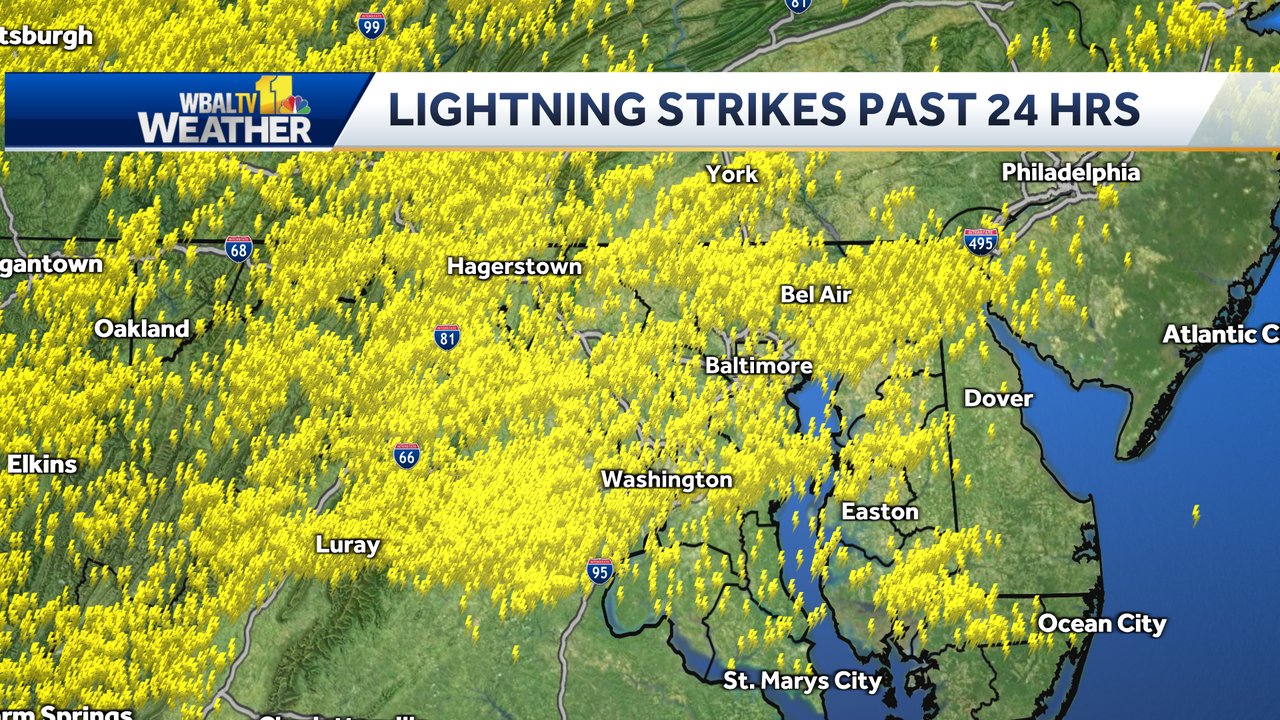
26,000 Lightning Strikes Yesterday

Lightning is an escalating concern in climate science. On July 16, 26,000 lightning bolts were recorded in our region, resulting in the death of an archery instructor and multiple injuries to children during an activity in New Jersey.


Lightning is the leading cause of wildfires in North America, including those in Canada that are driving unhealthy air quality across large parts of both Canada and the U.S.

There is an escalating climate feedback loop: increasingly intense and frequent wildfires release vast amounts of carbon dioxide and black carbon into the atmosphere, accelerating climate change. This, in turn, creates hotter, drier, and stormier conditions that increase both lightning frequency and wildfire risk. The cycle is self-reinforcing—each wildfire not only worsens the climate crisis but also sets the stage for more fires.

While the striking sunsets during wildfire season may appear beautiful, they are the visible scars of a system in distress. Wildfires devastate ecosystems, degrade air quality, and threaten human health on a massive scale. The Canadian wildfires offer a particularly stark example. Many began with lightning strikes, but they are burning through old-growth boreal forests rooted in permafrost that was once snow-covered year-round. Now, some smolder beneath the snow as “zombie fires” through the winter, reigniting in spring.

These fires are releasing more carbon dioxide than all of Canada’s human activities combined—along with vast amounts of methane, an even more potent greenhouse gas. The permafrost that once locked away both CO₂ and methane has passed a tipping point; it will not return in our lifetimes. The warmer it gets, the faster the permafrost melts, releasing more greenhouse gases, which accelerates warming even further.

This is no longer a single feedback loop but a chain reaction: melting permafrost, methane release, intensified lightning, and expanding wildfires all feed into each other. The result is a vicious, accelerating cycle that makes each year more dangerous than the last.

The Physics of Lightning — and How Climate Change Fuels It

Lightning formation is driven in part by strong updrafts within storm cells. Climate change is altering both the frequency and intensity of these updrafts. Several physical principles explain this shift, including the Clausius–Clapeyron relation and the drag equation, both of which directly influence climate dynamics.

As the atmosphere warms, it can hold about 7% more water vapor per degree Celsius. This increase produces larger raindrops and a greater number of them per square foot. Since momentum is defined as p = m × v (mass × velocity), heavier raindrops carry more momentum. When the rain falls, part of this momentum is transferred to the surrounding air, intensifying wind turbulence and strengthening updrafts—conditions that can further amplify lightning activity.

Mass and velocity are just part of the equation; density also plays a key role. The combination of these variables increases the intensity of flow forces. Wind and water forces scale with the square of velocity, meaning that as flow speeds increase — due to more intense heating or heavier rainfall — the damage scales accordingly. According to drag physics, force is proportional to density times the square of velocity.

For example, a 20-mile-an-hour wind exerts four times the force of a 10-mile-an-hour wind, while a 40-mile-an-hour wind exerts 16 times the force of a 10-mile-an-hour wind. At 50 miles an hour, the force is 25 times greater, and at 60 miles an hour, it’s 36 times greater than at 10 miles an hour. Now, add the density factor: water is about 800 times denser than air, so a 10-mile-an-hour water flow exerts 800 times the force of a 10-mile-an-hour wind.

As flow velocities increase due to climate change, the forces — and thus the damage — scale with the square of the velocities. While we may not know precisely how much velocities will rise with climate change, we’re already seeing the effects: overwhelmed flood and sewage systems, collapsing hillsides, and more.

Try This at Home

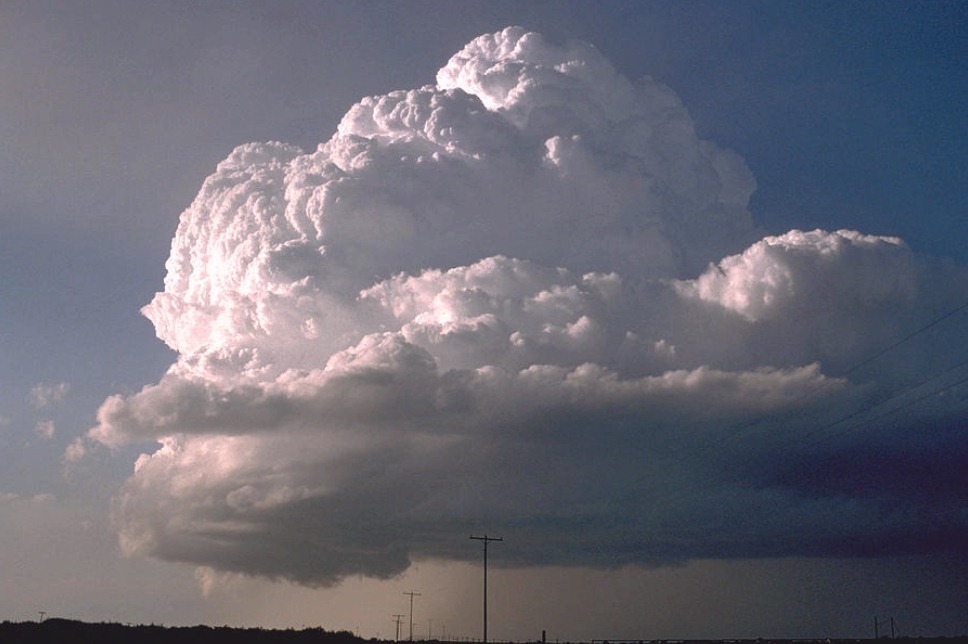
This is one of those “do-it-at-home” citizen science observations you can make for yourself. During heavy rainfall, the friction between the falling raindrops and the surrounding air can generate powerful updrafts, fueling the formation of supercells. These storms reveal themselves through the rapid growth of massive, darkening, and increasingly ominous clouds—towering higher and blacker with each passing minute. Known as Cumulonimbus clouds (Cb), often called thunderheads,, they build the immense energy that is ultimately released as lightning. 

You’ve likely seen this formation before. 

Supercell Formation
Supercell Formation
Supercell Thunderstorms
  • A supercell is a highly organized, long-lived thunderstorm with a deep, persistent, rotating updraft. This rotating updraft is called a mesocyclone.
  • Supercells are the most intense and potentially dangerous type of thunderstorm, responsible for most strong tornadoes, large hail, damaging winds, and flash flooding.
  • The rotating updraft, or mesocyclone, is what distinguishes a supercell from a regular thunderstorm. Wind shear causes horizontal vorticity, which is then tilted into a vertical column by the updraft, creating the rotation. 


Conclusion

That old saying, “You have better odds of being struck by lightning,” is becoming truer by the day.

On the bright side, the same momentum transfer from friction that helps create supercells and other deadly, extreme storm systems also keeps rain from killing you. This upward transfer of energy causes raindrops to reach terminal velocity, preventing them from accelerating endlessly—and eventually penetrating your roof and skull.

Learn more about the physics of Violent Rain

Tipping points and feedback loops drive the acceleration of climate change. When one tipping point is breached and triggers others, the cascading collapse is known as the Domino Effect.

The Climate Crisis: Violent Rain | Deadly Humid Heat | Extreme Weather Events | Insurance | Trees Deforestation | Air Pollution | Rising Sea Level | Food and Water | Updates

The Human Induced Climate Change Experiment

bookmark_borderTipping Cascades: The Nonlinear Dominoes of Climate Collapse

by Daniel Brouse
July 14, 2025

My latest deep reflection has centered on how tipping points have triggered self-sustaining feedback loops in the climate system. We knew this was coming—and it is now here. Luckily, I was prepared for that part.

What I could not fully envision in my mind’s eye was how the interplay of different tipping points would ignite a domino effect so rapidly—so, so fast.

Now, I can see it clearly: the nonlinear, dynamic dance of economic, physical, and ecological unordered systems in real time. This is pure math and science, visibly unfolding for all to see, transforming abstract models into undeniable, measurable reality.

To understand unordered systems, you must “zoom out.” Imagine standing in the eye of a hurricane, unable to grasp its structure from within, then pulling back to see the swirling system from a satellite view. Only then can you perceive its shape, patterns, and momentum. Climate science and economics share this paradox: from within, the chaos feels incomprehensible, but from a higher vantage, the pattern is clear.

I offer this perspective to help you grasp the critical reality of where we stand today:

We are witnessing at least nine major tipping points that are already in play, with dominoes falling and each accelerating the collapse of the next. Crossing these tipping points represents a threshold beyond which impacts on global ecosystems and human societies become irreversible within human timescales.

The Nine Tipping Points in Motion:

1. Greenland Ice Sheet Collapse
Accelerated melting is injecting vast freshwater into the ocean, disrupting marine ecosystems, weakening the AMOC, and raising sea levels.

2. West Antarctic Ice Sheet Collapse
Rapid destabilization threatens to raise sea levels by meters, displacing populations and eroding infrastructure globally.

3. Labrador-Irminger Seas / Subpolar Gyre Convection Collapse
Collapse of this convection disrupts the AMOC, a critical regulator of global heat distribution, weather stability, and ocean health.

4. East Antarctic Subglacial Basins Collapse
Grounded below sea level, these basins are vulnerable to rapid ice loss, accelerating sea level rise and destabilizing coastal regions.

5. Arctic Winter Sea Ice Collapse
Shrinking winter ice amplifies Arctic warming, disrupting jet streams, altering ocean currents, and triggering further heat absorption.

6. East Antarctic Ice Sheet Collapse
Long considered stable, sections of the East Antarctic are showing vulnerability to collapse, with the potential to significantly raise sea levels.

7. Amazon Rainforest Dieback
Deforestation and warming threaten the Amazon’s water recycling and carbon storage roles, turning it from a carbon sink to a carbon source.

8. Boreal Permafrost Collapse
Thawing permafrost is releasing methane and CO₂ in massive quantities, creating a powerful feedback loop of accelerated warming.

9. Atlantic Meridional Overturning Circulation (AMOC) Collapse
Potential collapse of the AMOC could lead to abrupt weather pattern shifts, including intensified droughts, storms, and regional cooling in some areas, while exacerbating global climate instability.


Tipping Cascades and The Domino Effect

These tipping points do not act in isolation. Each collapse amplifies stress on others, triggering tipping cascades:

  • Melting Greenland ice weakens the AMOC, which alters weather patterns, drying the Amazon, triggering dieback that releases CO₂, further warming the Arctic, collapsing permafrost, and amplifying ocean heating.

  • Changes in Arctic sea ice affect jet stream patterns, causing persistent heat domes, droughts, and flooding cycles, which destabilize ecosystems and food systems.

  • The weakening of the AMOC is linked to increased East Coast flooding, European storm intensification, and droughts in the Sahel, while simultaneously accelerating Antarctic ice melt.

We are seeing chaotic systems align into self-perpetuating loops, moving climate change from linear, human-driven emissions to nonlinear, nature-driven escalation.


Why This Matters Now

It is now clear: climate change has entered a phase where natural systems themselves are the drivers. Even if humans ceased all emissions today, these processes will continue for centuries or millennia, while continuing emissions add fuel to the fire.

Understanding and communicating the urgency of these tipping cascades is essential not only for scientists but for policymakers, businesses, and every individual. We must accelerate adaptation strategies while urgently reducing emissions to slow additional triggers.

The sooner we act, the more we can reduce the damage of the tipping cascades that are now unstoppable but can still be limited in scope and speed.

The Human Induced Climate Change Experiment

bookmark_borderHuman-Caused Global Warming Tripled Heat Deaths During European Heatwave

by Daniel Brouse
July 9, 2025

A rapid attribution study led by Imperial College London found that human-caused global warming increased peak temperatures during Europe’s early summer heatwave by up to 7°F, tripling heat-related deaths across 12 major cities, including Paris, London, and Madrid. Of 2,300 estimated heat deaths between June 23 and July 2, 2025, 1,500 (65%) were directly attributable to anthropogenic climate change, disproportionately affecting the elderly and medically vulnerable (88% of deaths were aged 65+).

Key findings:

  • The heatwave was 2–7°F hotter than it would have been without human-caused warming.

  • Europe has warmed twice as fast as the global average since the 1980s.

  • Climate models project heatwave days could double or triple by 2100 without drastic emissions cuts.

  • Human-induced warming is causing more “stuck” planetary wave patterns, leading to persistent heat domes and floods, which climate models often underestimate.

  • Media and political response remain inadequate, often downplaying heat danger as “fun in the sun.”

Analysis: Climate Acceleration and the Shrinking Doubling Period

The findings strongly align with our climate acceleration and shrinking doubling period analysis:

Non-linear acceleration confirmed:

  • The 2–7°F increase directly translates to exponentially greater health impacts, evident in tripled heat deaths, demonstrating the amplified sensitivity of human and natural systems to seemingly small increases in mean temperatures.

Shrinking Doubling Period (from 100 years → 10 → 2 years):

  • Heatwaves and extreme events now intensify at rates consistent with this shrinkage, as damage today is double what it was 2 years ago, with the potential for 4x in 2 years, 8x in 4 years, 64x in 10 years if emissions continue.

  • The surge in persistent heat domes and resonance patterns confirms that climate system thresholds are being crossed faster than models predict.

Feedback loops in action:

  • Increased atmospheric moisture (7% more per 1°C warming) intensifies storms and heatwave humidity, compounding mortality risk.

  • Warming oceans and disrupted jet streams lock in planetary wave patterns, amplifying the persistence of heat domes.

The cost of inaction:

  • As we noted in our prior writings, the physics of flow dynamics applies to heat: small increases in temperature can disproportionately escalate mortality and infrastructure failures, with the non-linear scaling of impacts now observable in real time.

  • Insurance and healthcare systems are unprepared for this acceleration, and the economic system will fail to handle compounding climate impacts if unaddressed.

Takeaways for your climate files:

* This event is a live demonstration of climate change’s non-linear acceleration and the shrinking doubling period, consistent with your lab’s findings.
* The climate system is behaving as predicted by tipping point and feedback loop frameworks, confirming this is not theoretical but measurable and lethal now.
* Messaging should emphasize that a few degrees of warming are not small: they translate into tripling of death rates, extreme economic losses, and systemic risks within a decade.

*Our climate model integrates geophysical systems alongside social, political, and economic feedback loops within a dynamic, nonlinear framework. The findings are sobering: we now project a potential 9°C rise in global temperatures within this century—a trajectory that would render large regions of the planet uninhabitable, drive mass human migration, and trigger systemic failures across food, water, and economic systems.

Hydroclimate Whiplash: America’s Flood Disaster Signals Accelerating Climate Chaos Brouse (2025)

1,000-Year Flood Hits Chapel Hill: Another Warning Sign of a Warming World Brouse (2025)

Florida’s Real Estate Collapse: Climate Physics, Soaring Costs, and the End of Coastal Wealth Brouse (2025)

Texas Flood Disaster: 500-Year Floods Become Regular Events Brouse (2025)

The Converging Collapse: AMOC, Jet Streams, and Deadly Wet-Bulb Temperatures Brouse (2025)

Polar Vortex Disruptions, Rossby Waves, and a New Threats to the Stratosphere: Why Our Jet Streams Are Becoming Unrecognizable Brouse (2025)

Weakened Atlantic Meridional Overturning Circulation causes the historical North Atlantic Warming Hole Kai-Yuan Li & Wei Liu (2025)

Burning to Stay Cool: How Our Fight Against Heat Is Fueling Climate Collapse Brouse (2025)

Crossing the Heat Threshold: Wet-Bulb Temperatures Signal a Climate Tipping Point Brouse (2025)

Broken: Deviation, Cracked Fractals, Climate, and Economics Brouse (2025)

The Decline of Economic Power and the Ascent of Environmental Reality Brouse (2025)

The Human Induced Climate Change Experiment

bookmark_border“1,000-Year Flood” Hits Chapel Hill: Another Warning Sign of a Warming World

by Daniel Brouse
July 7, 2025

Yesterday, Chapel Hill, North Carolina, experienced what is being described as a “1,000-year flood event” as the remnants of Tropical Storm Chantal unleashed between 8–12 inches of rain in just a few hours. Streets turned into rivers, homes and businesses were inundated, and emergency crews conducted multiple water rescues as flash floods swept through the region.

Events like these, once considered rare, are becoming disturbingly common in our rapidly warming world. A “1,000-year flood” does not mean such a flood happens only once every thousand years; it means there is a 0.1% chance of it occurring in any given year under past climate conditions. But with warming oceans, a destabilized jet stream, and an atmosphere that holds more moisture, the probability of these extreme rain events is increasing sharply.

As climate change accelerates, what was once a 1,000-year flood can become a 100-year, or even a 10-year event. Chapel Hill’s devastating flood is not just a local disaster; it is a warning signal of a global system under increasing stress, where violent rain, flash flooding, and catastrophic water events are rewriting what we once thought of as “normal.”

URGENT CLIMATE WARNING
Our most recent climate model — now incorporating economic and social feedback loops — projects up to 9°C global warming by 2100. This far exceeds prior estimates and indicates we are entering a phase of compound, cascading collapse.

At this level of heating, many regions will become uninhabitable due to heat stress, sea-level rise, food system failure, and forced migration. Wet-bulb temperatures in the U.S. are already nearing 31°C (87.8°F) — a physiological limit beyond which human life cannot be sustained outdoors for long, even with water and shade.

This is not hypothetical. The climate system is tipping now.

Immediate mitigation and adaptation are essential to preserve habitable zones and public health—and to avoid collapse on both ecological and economic fronts.

Florida’s Real Estate Collapse: Climate Physics, Soaring Costs, and the End of Coastal Wealth Brouse (2025)

Texas Flood Disaster: 500-Year Floods Become Regular Events Brouse (2025)

Tipping points and feedback loops drive the acceleration of climate change. When one tipping point is breached and triggers others, the cascading collapse is known as the Domino Effect.

The Climate Crisis: Violent Rain | Deadly Humid Heat | Extreme Weather Events | Insurance | Trees Deforestation | Air Pollution | Rising Sea Level | Food and Water | Updates

The Human Induced Climate Change Experiment