bookmark_borderThe Science They Refuse to See: Debunking Climate Denial and the Accelerating Crisis

by Daniel Brouse
September 23, 2025

Debunking Common Climate Science Denial Claims: A Scientist’s Rebuttal

Climate science denial often takes the form of oversimplified analogies or misrepresentations of complex physical processes. One common line of attack is the claim that greenhouse gases and potent molecules like methane cannot significantly affect global temperatures. Here, I provide a fact-based response that can help anyone encountering similar arguments.

The Claim

A climate denier recently argued:

  • “Without greenhouse gases, place a container of ‘greenhouse gas’ in sunlight and see if it warms 33°C more than normal air—prove it!”

  • “Methane is too rare and short-lived to matter; its atmospheric concentration is under 2 ppm.”

  • “Theoretical physics is imagination; your climate predictions are politically motivated and have not come true.”

At first glance, these statements might appear plausible to the uninformed. But a deeper look reveals serious scientific inaccuracies.

Who I Am

I am a climate scientist and economist with over 45 years of experience in research and applied systems analysis. I’ve co-authored papers on:

  • Carbon cycles

  • Jet stream dynamics

  • Albedo and brown carbon

  • Atlantic Meridional Overturning Circulation (AMOC)

  • Permafrost thaw and Amazon rainforest dieback

  • Sea-level rise pulses

  • Hydroclimate whiplash and Arctic sea ice loss

  • Tipping points in climate systems

My work employs probabilistic, ensemble-based climate models, integrating socio-economic and ecological feedbacks within dynamic, nonlinear frameworks.

In the 1990s, my lab partner—a Doctor of Physics from Ohio State—and I first hypothesized the non-linear acceleration of climate change. This theory was experimentally and observationally supported by the early 2000s and has since been independently validated, forming the foundation of the current scientific consensus.

Why the Claims Are False

1. Greenhouse Gases and Surface Warming

The assertion that greenhouse gases cannot warm the Earth unless demonstrated in a small container experiment ignores decades of physics, spectroscopy, satellite measurements, and paleoclimate data.

  • Earth’s average surface temperature of +15°C vs. -18°C without greenhouse gases comes from planetary energy balance and radiative transfer physics, not trivial experiments.

  • The greenhouse effect is directly observed in the atmosphere: infrared radiation is absorbed and re-emitted by CO₂, methane, water vapor, and other gases.

Container experiments are not needed to validate this well-established, observable process.


2. Methane is Highly Potent

It is true that methane has an atmospheric half-life of 7–12 years, but this is irrelevant to its radiative impact:

  • Methane’s molecule-for-molecule warming potential is ~80 times CO₂ over 20 years.

  • At even 2 ppm, methane significantly contributes to warming due to secondary chemical effects, including ozone formation and stratospheric water vapor.

  • Ignoring these feedback loops is scientifically inaccurate.

3. Climate Impacts Are Accelerating

The denier’s claim that “predictions have not come true” is demonstrably false. Observations show:

  • In just ten days in July 2025, the U.S. experienced hundreds of flash floods, multiple “1-in-1,000-year” and “500-year” rainfall events, hundreds of deaths, and billions of dollars in damage.

  • These extreme events are consistent with rapidly accelerating climate change, as projected by climate models integrating nonlinear feedbacks.

4. Doubling Time of Climate Impacts

  • Initially, climate effects doubled roughly every 100 years. Today, the doubling time is just two years.

  • This means the damage we see now is twice as severe as two years ago; in a decade, it could be 64 times worse.

  • These trends are observed, not theoretical, and they underscore the urgency of immediate mitigation.

The Real Political Motivation

The political bias is on the side of denial, not science:

  • Groups like the CO₂ Coalition deliberately cherry-pick data, misrepresent feedback loops, and misinform the public.

  • Denial campaigns often pose as “objective skepticism” while ignoring overwhelming evidence, downplaying the real and escalating risks of climate change.

Conclusion

Climate change is not a theoretical imagination; it is an accelerating, well-documented phenomenon backed by decades of rigorous research. Attempts to dismiss it with flawed analogies, incomplete chemistry knowledge, or misrepresented physics are propaganda, not science.

Anyone seeking to understand the climate crisis must rely on:

  • Peer-reviewed research

  • Observational data

  • Predictive modeling validated across decades

Ignoring these facts is dangerous, not clever.
The Human Induced Climate Change Experiment

bookmark_borderThe Accelerating Collapse of the AMOC–Jet Stream Feedback Loop

By Daniel Brouse
September 1, 2025

The Atlantic Meridional Overturning Circulation (AMOC) and the jet stream are unraveling much faster than science once believed possible. What was once thought to take millennia, and later centuries, has now accelerated into mere decades.

Earlier this year, I wrote about the unsettling transition from spring to summer in Pennsylvania. A damp, cool spring gave way almost overnight to record-breaking heat, scorching the state in the very first days of summer. At first glance, these whiplash conditions might seem like disconnected events. In reality, they are symptoms of a deeper crisis: the breakdown of Earth’s major circulation systems that once stabilized climate.

Two of the most important of these systems—the jet stream and the AMOC—have now crossed critical tipping points. Both govern weather across the North and Mid-Atlantic United States, and both systems now oscillate directly over Pennsylvania, placing the state in the crosshairs of instability.

Atmospheric and oceanic circulation normally work in tandem to transport thermal energy across the planet, preventing extremes. But as Arctic ice melt pours freshwater into the North Atlantic, the AMOC weakens. The sinking of dense, salty water that drives this great current is slowing, stalling the northward transport of heat. Meanwhile, the jet stream—once strong and stable—has grown irregular. With the temperature difference between the poles and the tropics shrinking, the jet stream now stalls, bends, and meanders, allowing cold Arctic air to linger while trapping heat in other regions.

The consequence is a climate marked by contradiction, where sudden swings between extremes are no longer anomalies but the new normal. What happened in Pennsylvania this year illustrates this shift: a record-wet spring with atmospheric rivers and torrential rains, followed almost immediately by drought and heat domes. Now, as summer fades to autumn, the pendulum has swung again—this time toward a stalled polar vortex draped across much of the United States.

Compounding this instability is the intensification of Rossby Waves, those giant meanders in the jet stream that now drive hydrologic whiplash. The alternating floods and droughts, combined with extremes of heat and cold, are signatures of a nonlinear, chaotic climate system spinning further out of balance.

Perhaps most alarming is the speed of this transformation. Earlier models projected AMOC collapse and jet stream destabilization unfolding over many centuries. But today, feedback loops between these systems are accelerating change by thousands of years beyond those initial predictions. If this trajectory continues, the Northeast could face summers that resemble swamps—hot, humid, and stifling—followed by winters of unprecedented severity.

The collapse is no longer theoretical. It is here, it is accelerating, and it is reshaping daily life in Pennsylvania and across the globe. The only real uncertainty left is how much worse it will get, and how quickly.

The Human Induced Climate Change Experiment

bookmark_borderStatistical Mechanics and Chaos Theory in Climate Science

by Daniel Brouse
July 31, 2025

Statistical Mechanics (SM), chaos theory, and climate science are deeply interconnected, especially in the study of complex, dynamic systems like Earth’s climate. Here’s how they relate:

1. Statistical Mechanics (SM): Understanding Many-Body Systems

SM is the branch of physics that connects the microscopic behavior of individual particles (like molecules in a gas) to the macroscopic properties (like pressure, temperature, or entropy). It deals with systems with a huge number of degrees of freedom, where exact solutions are impossible, so probabilities and ensemble averages are used.

  • Climate Application: Earth’s atmosphere and oceans are composed of trillions of interacting particles. SM allows scientists to describe bulk behavior (like temperature gradients or energy distribution) without tracking every molecule.

  • SM is also fundamental in explaining thermodynamic quantities, entropy production, and non-equilibrium systems, all central to understanding climate energy fluxes and heat transport.

2. Chaos Theory: Sensitivity and Nonlinear Dynamics

Chaos theory studies how deterministic systems (governed by known equations) can display unpredictable, sensitive, and nonlinear behavior. This is famously captured in the butterfly effect, first discovered by Edward Lorenz in climate models.

  • Climate Application: The climate system is chaotic—small changes in initial conditions can lead to vastly different outcomes (e.g., hurricane formation or El Niño events). This makes long-term weather forecasting hard, but climate trends still statistically predictable.

  • Chaos theory is used to analyze attractors, bifurcations, and phase space, helping to understand transitions like ice ages or tipping points in Earth’s climate.

3. The Bridge: SM + Chaos in Climate Science

The overlap between SM and chaos theory lies in ensemble behavior and emergent phenomena:

  • SM provides the probabilistic framework to describe ensembles of possible states, which is necessary because chaotic systems can’t be predicted deterministically over long timescales.

  • In climate science, this leads to ensemble climate modeling: running multiple simulations with slightly different initial conditions to get statistical distributions of outcomes, rather than precise predictions.

  • Concepts like ergodicity, phase transitions, and entropy production from SM are applied to climate tipping points, like the collapse of the AMOC or Arctic sea ice.

4. Practical Examples

  • Jet stream dynamics and blocking events involve nonlinear feedbacks and chaos; SM helps describe the energy distributions that lead to these patterns.

  • Cloud formation, precipitation, and radiative transfer require statistical treatment of countless particles interacting—pure SM territory.

  • Climate feedback loops (e.g., ice-albedo, water vapor, methane) exhibit both chaotic thresholds and statistical correlations observable through SM tools.

In Summary

  • Statistical Mechanics gives climate science the tools to describe how micro-level interactions create macro-level climate patterns.

  • Chaos Theory explains why these systems are sensitive and often unpredictable, especially in the short term.

  • Together, they allow for probabilistic, ensemble-based forecasting and analysis of tipping points, feedback loops, and long-term climate trends.

The Climate Domino Effect: Where Statistical Mechanics Meets Chaos

Earth’s climate system is a prime example of a highly complex, nonlinear, and coupled system, where small changes in one part can ripple into widespread disruption. This is where Statistical Mechanics (SM) and Chaos Theory provide critical insights.

1. Albedo Effect and Arctic Amplification

  • Albedo refers to the reflectivity of Earth’s surface. Ice and snow reflect sunlight; when they melt, darker surfaces absorb more heat.
  • This is a positive feedback loop—melting begets more melting. It’s statistically predictable as a trend but chaotic in timing and magnitude.
  • SM helps quantify the energy redistribution (increased net heat absorption), while chaos theory explains why Arctic Sea Ice loss can accelerate unpredictably due to nonlinear feedbacks.

2. Brown Carbon and Aerosol Feedback

  • Brown carbon from wildfires and fossil fuels changes cloud properties and atmospheric radiation.
  • It reduces albedo, warms the atmosphere, and alters precipitation patterns.
  • This introduces nonlinear radiative forcing and feedback loops—which SM models statistically, while chaos theory deals with the emergence of unpredicted regional extremes.

3. AMOC (Atlantic Meridional Overturning Circulation)

  • AMOC is a major ocean current system that regulates global heat distribution.
  • A collapse or significant slowdown due to melting Greenland ice or freshwater influx would lead to abrupt, chaotic changes in temperature, rainfall, and sea level.
  • SM helps model the thermohaline gradients and energy fluxes, while chaos theory addresses the threshold behavior and bifurcation points where stable states break down.

4. Permafrost Thaw and Methane Bursts

  • Thawing permafrost releases methane and CO₂, driving further warming—another strong feedback.
  • These emissions are statistically uncertain but probabilistically modeled through SM based on soil chemistry and thermal dynamics.
  • Their release events can be chaotic—triggered by heatwaves, wildfires, or hydrological changes, with cascading impact.

5. Amazon Rainforest Dieback

  • A weakening hydrological cycle, rising temperatures, and deforestation could push the Amazon from a carbon sink to a carbon source.
  • This is a tipping element, where a critical threshold could lead to irreversible biome shift.
  • SM models carbon fluxes and evapotranspiration, while chaos theory explains the sensitivity to local perturbations (like droughts or fire events) that can scale up to global effects.

6. Sea Level Rise Pulses

  • Melting ice sheets do not raise sea levels at a constant rate; instead, they create pulse events due to ice shelf collapse or basal melting.
  • SM helps with thermodynamic modeling of ice mass balance, while chaos theory explains the abruptness and unpredictability of glacial calving or ice cliff instability.

7. Hydroclimate Whiplash

  • This refers to extreme swings between drought and flood, now common due to jet stream disruption.
  • These swings are driven by chaotic atmospheric circulation and land-atmosphere coupling.
  • SM models moisture transport and atmospheric pressure distributions, while chaos theory helps predict the nonlinear transitions between stable and unstable weather regimes.

Why It Matters

Together, these systems represent interlinked tipping points—where a shift in one (like Arctic sea ice loss) can trigger another (like AMOC slowdown), setting off a domino effect. This is precisely the dynamic shown in Ignite-a-Domino-Effect.

  • Statistical Mechanics gives us tools to analyze ensemble behaviors, estimate probabilities, and study energy flow across climate components.
  • Chaos Theory warns us of irreversibility, nonlinear acceleration, and sensitive dependence on initial conditions—making exact predictions impossible but tipping behavior increasingly likely.

Conclusion

The combined lens of Statistical Mechanics and Chaos Theory is essential for understanding the fragile stability of Earth’s climate. The domino effect illustrated by changes in albedo, carbon cycles, and ocean circulation is not merely theoretical—it is unfolding now, with the potential to cascade into runaway warming. Recognizing the statistical probabilities and chaotic triggers is vital for meaningful climate action.

The Human Induced Climate Change Experiment

bookmark_borderInvisible Crisis: How Air Pollution Is Quietly Shortening American Lives

by Daniel Brouse
July 29 , 2025

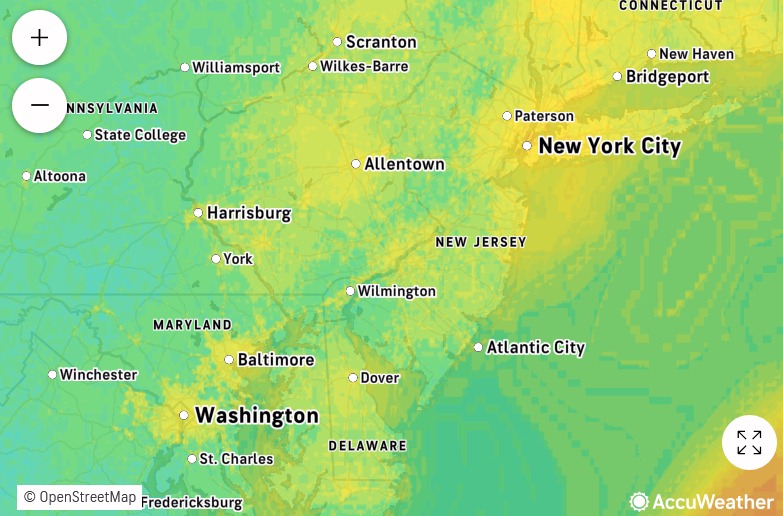
Today’s air quality map tells a story most people still fail to fully grasp: air pollution is not just a big-city problem. While it’s true that Philadelphia’s air quality is once again rated “unhealthy” today, the issue is far more widespread. Regions across Pennsylvania and surrounding states are also suffering—State College, Harrisburg, and even the Jersey Shore are experiencing poor air quality. Morgantown, West Virginia, consistently ranks among the worst in the nation, highlighting how rural and small-town America are not exempt from the invisible threat.

Air pollution is now the leading environmental cause of death in the United States. Fine particulate matter (PM2.5), ozone, nitrogen dioxide, and other airborne toxins contribute to heart disease, stroke, lung cancer, asthma, diabetes, and neurodegenerative disorders. These pollutants infiltrate the lungs, enter the bloodstream, and trigger systemic damage.

But what often gets overlooked is how air pollution initiates a health feedback loop. Exposure to chronic air pollution weakens the immune system, making the body more susceptible to both infectious and non-infectious diseases. It also causes epigenetic changes—altering how genes are expressed without changing the DNA itself—which can lead to lifelong health effects and be passed on to future generations. These changes reduce not just life expectancy, but the quality of life across one’s lifespan.

Worse still, this health feedback loop doesn’t exist in isolation—it interacts with climate-related feedback loops. For instance, warmer temperatures increase the formation of ground-level ozone and worsen wildfires, which dump more particulate pollution into the atmosphere. Simultaneously, climate-driven disruptions in agriculture and ecosystems compound the toll on human health through food insecurity and new disease vectors. The result is an accelerating cycle of harm that is exponentially shortening human lives.

What’s happening today on the air quality map is not a one-off event—it’s part of a long-term systemic crisis. The air we breathe is silently but powerfully eroding public health, disproportionately impacting children, the elderly, and frontline communities. Unless serious interventions are made at every level—from fossil fuel phase-outs to public health reforms—we are headed toward a future where the simple act of breathing becomes a daily health risk for millions.

Conclusion
Health feedback loops, violent rain, and deadly humid heat are fueling an exponential rise in climate-related deaths. This lethal triad — disease, extreme heat, and intense rainfall — demonstrates that climate change is not a distant threat but a rapidly accelerating public health emergency. These stressors interact and amplify one another, creating a cascade of compounding impacts that demand urgent intervention.

All 50 U.S. states — including Alaska — are already experiencing deadly humid heat advisories. Large regions of the country are becoming uninhabitable for weeks or even months each year due to extreme heat. Wet-bulb temperatures are approaching 31°C (87.8°F) in multiple states — a physiological threshold beyond which sustained outdoor survival is impossible, even with water and shade. Meanwhile, violent rain events are killing hundreds and causing billions in annual damage. Climate-driven health feedback loops have become the leading cause of mortality in the United States — fueled by systemic interactions between temperature extremes, air quality degradation, disease vectors, and infrastructure collapse. Addressing climate change is no longer just an environmental imperative — it is a public health necessity.

Our climate model — which incorporates complex socio-economic and ecological feedback loops within a dynamic, nonlinear system — projects that global temperatures could rise by up to 9°C (16.2°F) within this century. This far exceeds earlier estimates of a 4°C rise over the next thousand years, highlighting a dramatic acceleration in global warming. We are now entering a phase of compound, cascading collapse, where climate, ecological, and societal systems destabilize through interlinked, self-reinforcing feedback loops.

We examine how human activities — such as deforestation, fossil fuel combustion, mass consumption, industrial agriculture, and land development — interact with ecological processes like thermal energy redistribution, carbon cycling, hydrological flow, biodiversity loss, and the spread of disease vectors. These interactions do not follow linear cause-and-effect patterns. Instead, they form complex, self-reinforcing feedback loops that can trigger rapid, system-wide transformations — often abruptly and without warning. Grasping these dynamics is crucial for accurately assessing global risks and developing effective strategies for long-term survival.


The Human Induced Climate Change Experiment

bookmark_borderCriminalizing Conscience: Trump’s Crackdown on Anti-Genocide Voices

by Daniel Brouse
July 10, 2025

I am currently working on an ongoing series of articles about the escalating silencing of protest and free speech in the United States, particularly under President Trump’s renewed crackdown on those opposing the genocide in Gaza. Across the country, people here on visas who have spoken out against these war crimes are being targeted. Several student activists have been arrested, indefinitely detained, or deported simply for exercising their right to protest and speak out against the atrocities being committed.

Meanwhile, academic institutions are under siege, facing lawsuits, threats of defunding, and systematic intimidation under the false accusation of antisemitism for allowing or supporting pro-Palestinian speech on campus. This is part of a broader, deliberate strategy to criminalize dissent and label any criticism of Israel’s apartheid policies and genocide as antisemitism, effectively weaponizing these accusations to suppress human rights advocacy and academic freedom. It is not about protecting communities from hate; it is about protecting power, shielding war crimes from accountability, and silencing those who dare to call them out.

We are witnessing a dangerous erosion of First Amendment rights in the United States, where the government aligns itself with genocide abroad while persecuting those who resist it at home. This moment demands clarity: opposing genocide is not antisemitism, and demanding an end to apartheid is not hate speech. The real danger lies in the authoritarian structures that criminalize truth-telling while facilitating war crimes with impunity.

My background on this is important to understand. I am an investigative journalist with decades of experience in publishing and litigation, including over a decade spent in court defending the First Amendment. I have faced threats to my life and the safety of my family many times because of my commitment to exposing the truth. In this particular moment, the danger is even more severe.

I am a descendant of the Tribe of Judah, which makes me a Semite. Even more significantly, I am part of a bloodline that includes Princess Diana, and some believe it traces back to Jesus himself. This lineage has been targeted for centuries by those in power, from the Vatican to the Freemasons, seeking to erase it. Despite these risks, I believe it is necessary to speak out. Silence in the face of genocide, apartheid, and the suppression of truth is not an option, no matter how significant the personal cost.

Perhaps most urgently, I want to share what I recently explained to a friend who asked whether it would be safer to discuss Gaza in person over coffee rather than here:

“I think both are important. It would be great to get together, and I’d enjoy seeing you again. At the same time, I know it’s best for me to discuss these things publicly. Once I publish the truth to millions of people, it actually makes me safer. My bigger concern is for those around me.

Have you seen my post about Ahmed Alkhateeb? Since I started sharing his situation, his children were shot at. I’m aware that Israeli intelligence knows everything going in and out, including his location, and that’s what truly worries me. So yes, I believe it’s important to keep saying these things here.”

I am sharing this here because it also relates to our friends in Gaza and the harsh reality of surveillance and risk tied to our activism. My main concern now is the “flow of money.” Anyone who donates to GoFundMe campaigns or other aid channels supporting Gaza is at risk of arrest or jail under the current U.S. crackdown on speech and activism. More critically, those funds can be traced to specific mobile phones in Gaza, putting recipients at extreme risk of being located and executed. This is something we need to consider carefully as we move forward, balancing our urgent desire to help with the grave dangers imposed by the systems we are fighting.

This is a moment that requires courage, clarity, and collective action. We cannot allow authoritarianism to dictate who lives and who dies, who speaks and who is silenced. If we believe in freedom, it must include the freedom to call out genocide—and the freedom to stand in solidarity with those who suffer under it.

Evangelical Christianity and Israel
If you’re curious about the driving force behind US support for Israel, it’s ironically rooted in Evangelical Christianity. Many Evangelical Christians believe they can hasten the “second coming of Christ” by bringing about the apocalypse. According to their interpretation of the Bible, this involves Israel reclaiming Jerusalem, Jesus returning, and ultimately eliminating all Jews. For numerous “Christian Zionists,” especially influential evangelists aligned with the Republican Party, support for Israel is less about political strategy and more about its supposed role in biblical prophecy. In this worldview, war is not something to be avoided but embraced as a divine necessity—an inevitable and even celebratory step toward Jesus’ rule from the Temple Mount in Jerusalem. The fate of Jews and Palestinians is, to put it mildly, seen as collateral damage.

Trumpenomics: The Decline of the US

bookmark_borderTrump’s Tariffs, Debt, and the Collapse of Capitalism: An Ironic Path to Slowing Climate Change

by Daniel Brouse
June 29, 2025

Regarding Trump’s tariffs, while he did negotiate a few deals, the reality is that the tariffs themselves raised prices for many goods before any deals were even on the table, hitting consumers immediately. Ironically, the Trump tariffs represent the largest tax increase in U.S. history, even as Trump claims his “Big Beautiful Bill” is the largest tax cut ever—when in fact, it is largely the extension of preexisting tax cuts with marginal additional cuts that primarily benefit the wealthy.

It’s also a fact that U.S. debt and deficits ballooned under his first term, contributing to the economic pressures we’re all feeling now. The Fed’s balance sheet was set to start unwinding until COVID hit, after which, under Trump, it exploded by several trillions to its highest level in history, flooding the system with liquidity while interest rates were kept near zero. During Trump’s first term, about $7.8 trillion was added to the national debt, followed by another $6.7 trillion under Biden. Now, Trump’s current term is projected to add another $7–10 trillion, driven by deficits, tax cuts without offsets, and rising interest costs on the expanding debt.

Immigration, Labor, and the Collapse of Capitalism

Trump’s anti-immigration policies have further accelerated the decline in U.S. prosperity and the collapse of capitalism by choking off the labor supply essential for a healthy economy. By restricting both legal and undocumented immigration, the U.S. has faced labor shortages across critical sectors—from agriculture and food processing to healthcare, construction, and high-tech industries—driving up business costs and worsening inflation. Capitalism depends on a growing labor force to sustain consumption, production, and economic expansion. In fact, immigration has accounted for 80% of U.S. GDP growth over the last five years and is the only hope for sustaining Social Security, Medicaid, and Medicare as the U.S. population rapidly ages. By cutting off the inflow of workers while simultaneously promoting tax cuts and deficit spending, Trump’s policies have created a situation where there are not enough workers to support the economy’s needs, weakening productivity while forcing companies to either raise prices or move operations abroad. This labor squeeze, paired with rising costs and collapsing demand, accelerates the breakdown of the consumer-driven system that capitalism requires to survive.

The Broken Math, Explained

As I detailed in The Broken Math of Today’s Economy: A Simplified Look, these policies are having unintended and compounding consequences:

Instead of bringing manufacturing and jobs back to the U.S., Trump’s white nationalism, trade wars and tariffs have effectively put America’s best companies on sale to foreign buyers. Now, companies like Nvidia, Google, Amazon, and even defense contractors like Lockheed Martin and Palantir are being snapped up at a discount by China and others, thanks to a weakening dollar and policy-induced instability.

Inflation and interest rates are directly tied to these policies. As shown in my 2018 paper, The Economic Monsters: Inflation and Interest Rates, I forecasted that Trump’s fiscal and trade policies would ignite inflation while destabilizing interest rates. Those predictions came true, and my follow-up papers published during Biden’s administration show how continuing these policies has kept the inflationary fires burning.

Climate destruction is another area where Trump’s policies have made the situation worse, as I discussed in Trump’s Climate Destruction. Ironically, the collapse of capitalism driven by these policies may end up reducing emissions in the long run by choking off the relentless consumerism that drives climate change.

This Is Not a Team Sport

Something some seem to be missing is that I’m a Republican. I thought Biden’s economic policies were terrible, and Kamala’s were even worse. But it is Trump’s policies that are driving the collapse of the dollar as the world’s reserve currency while pushing capitalism toward collapse.

Ironically, that’s what actually gives me hope. Trump is tanking the U.S. economy so quickly that the resulting collapse of consumerism may slow global warming and save us from ourselves. Go, Trump, go!

If we want to fix the country, we need to stop treating economic policy like a team sport and start focusing on what policies, spending, and decisions are actually doing to real people’s lives, regardless of who is in office.

I don’t rely on wishful thinking or party loyalty—I rely on math, data, and facts, and I encourage you to verify the numbers yourself. If we’re being fair, this crisis didn’t start with Trump or Biden; it began under the Bush administration with the launch of quantitative easing and the “printing of money” that has continued under every administration since, turning into an addiction that has now come due.

Trump’s tariffs and economic policies, paired with bipartisan fiscal irresponsibility, are driving inflation, destabilizing interest rates, collapsing the dollar’s global position, and ironically putting the U.S. economy on a crash course that may be the only thing fast enough to slow climate change.

The question we need to ask is simple: Are we ready to face these realities and demand policies that prioritize sustainability and stability over short-term political wins, or will we continue riding this collapse, hoping it saves us from ourselves?

Trumpenomics: The Decline of the US

The Human Induced Climate Change Experiment

bookmark_borderCOVID’s Lasting Toll: The Chronic Health Crisis President Trump’s Anti-Science Agenda Ignored

by Daniel Brouse
June 19, 2025

Do not let the current anti-science administration mislead you about President Donald Trump’s catastrophic handling of the COVID-19 pandemic—both during the initial outbreak and in the years that followed. His continued denial of scientific evidence, public health expertise, and global medical consensus has contributed to hundreds of thousands of avoidable deaths. Worse still, millions who survived the initial infection are now grappling with serious, long-term health complications—many of which could have been reduced or prevented with responsible leadership.

COVID-19 is not just an acute respiratory illness. Mounting research shows that even mild or moderate cases—particularly in unvaccinated individuals—can trigger persistent, systemic health problems that degrade quality of life and shorten life expectancy. Those with preexisting conditions or predisposed genetic markers are especially at risk, but even healthy individuals have suffered from post-infection damage.

The Long Shadow of COVID: A Public Health Emergency Downplayed

Scientific studies confirm that SARS-CoV-2 can cause a wide array of chronic health issues long after the virus has left the body. These include:

Systemic and Long-Term Health Impacts of COVID-19:

  • Low Iron & Elevated Cytokines: Disrupts oxygen transport, promotes chronic inflammation, and damages tissues—raising the risk of autoimmune disorders.

  • Permanent Organ Damage: Especially affecting the heart, lungs, kidneys, and brain.

  • Persistent SARS-CoV-2 RNA: Viral RNA has been found in various organs and brain tissue months after infection.

  • Gut Microbiome Disruption: Loss of healthy gut bacteria weakens the immune system and increases vulnerability to illness.

  • Epigenetic Changes & DNA Modifications: Alters how genes function, potentially leading to disease development over time.

  • Tryptophan Deficiency & Kynurenine Pathway Dysfunction: Impairs mood regulation and neurological balance.

  • Neurological Damage: Including memory loss, brain fog, and higher risk of Alzheimer’s disease.

  • Reduced Physical Capacity & Muscle Cell Death: Leads to chronic fatigue and reduced mobility.

  • Metabolic Breakdown: NAD+ depletion and IDO overactivity contribute to aging, inflammation, and tissue degeneration.

  • Autoimmune Responses & Rogue Antibodies: Cause the body to attack its own cells, with far-reaching effects.

  • New-Onset Diabetes & Cardiovascular Disease: COVID-19 has been shown to significantly increase the risk of both.

  • Vascular Disorders, Stroke, & Myocarditis: Common among even young and previously healthy patients.

  • Increased Cancer Susceptibility: Chronic inflammation and immune suppression may raise cancer risk.

  • Blood Clots & Embolisms: Dangerous complications even after recovery.

  • Hypertension and Long-Term Heart Disease: Frequently observed in post-COVID patients.

  • Multisystem Inflammatory Syndrome in Children (MIS-C): A life-threatening condition linked to COVID exposure in children.

  • Immune Dysregulation & “Cytokine Storms”: Immune system overreactions can cause severe damage and death.

“It is important to note that the severity of disease in humans is not determined only by virus replication but also by the host immune response to the infection, which may lead to dysregulation of the innate immune system, i.e., a cytokine storm.”

Alarming Evidence from New Research

A recent study titled “COVID-19 Increases the Rate of Incident Diabetes: A Case-Control Cohort Time-to-Event Study” concluded that COVID-19 significantly increases the risk of developing diabetes well after the acute phase of illness. These findings emphasize the importance of long-term monitoring and follow-up care for those who have had the virus—even once.

Who Is Responsible?

President Trump continues to dismiss scientific warnings and minimizes the long-term consequences of COVID-19. His administration’s messaging not only sowed confusion during the height of the pandemic but continues to downplay the lasting danger of post-COVID conditions. From rejecting mask mandates to undermining vaccine efforts, his leadership remains a public health liability.

The human toll of these decisions cannot be overstated. The United States now faces a surge of chronic illness—largely invisible, but devastating in its impact on families, the healthcare system, and the economy.

The Fight for Truth—and Accountability

This is not just about history—it’s about now. The chronic impacts of COVID-19 are real, well-documented, and growing. As President Trump continues to push anti-science rhetoric and obstruct investment in long COVID research and care, Americans are left to bear the consequences.

Science must guide our future—our health, our policies, and our leadership. Until then, the damage from this administration’s failures will continue to unfold, one life at a time.

Trumpenomics: The Decline of the US

Science Based Information — Covid-19

bookmark_borderRethinking AI: Innovation, Misconceptions, and the Power of Open Knowledge

by Daniel Brouse
June 18, 2025

A couple of important points to consider:

First, AI is a tool—but it’s unlike most traditional tools because it is intelligent and capable of learning. That distinction often gets lost in general discussions. What’s also critical to understand is that there are many different types of AI. Generalizing about “AI” as if it were a single entity is both misleading and harmful. In fact, condemning all AI based on the behavior or risks of a subset is akin to discrimination—it’s intellectually lazy and, in some ways, not unlike racism. So it’s essential not to classify all AI as inherently “bad.”

Most public concern today focuses on large language models (LLMs)—specifically generative AI, like the kind that creates text, images, or code. However, this is just one branch of artificial intelligence. When it comes to AI used in music composition, visual art creation, or scientific modeling, these systems often do not rely on large-scale language processing. Many are smaller, more efficient models with far less environmental impact. Their energy consumption is minimal, and their societal benefits—particularly in medicine, climate science, and education—are profound.

Another widely misunderstood issue is the accusation that AI “steals” intellectual property. AI models learn in a way that is fundamentally similar to how humans learn: through exposure, pattern recognition, and synthesis. Claiming AI “steals” because it was trained on public data is as absurd as accusing an artist of theft for being inspired by the Statue of David after visiting a museum. By that logic, every musician who ever studied Bach or Coltrane would be guilty of plagiarism. It’s simply not how creativity or learning works—whether you’re a person or a machine.

Perhaps more fundamentally, it’s worth reexamining the concept of “intellectual property theft” itself. My colleague Sidd and I were among the early pioneers of industrial applications on the World Wide Web—contributing to developments such as streaming music, shopping carts, clickable buttons, and other core components of today’s digital ecosystem. We made a deliberate choice not to patent our inventions. Instead, we placed them in the public domain so others could build upon them freely.

Why? Because without open access to ideas and innovation, technological progress stalls. If everyone guarded their contributions behind a wall of patents, the rate of advancement would slow dramatically. Creativity thrives in environments where ideas are shared, not hoarded.

Ultimately, AI is not the enemy. Like any powerful tool, it demands thoughtful oversight and responsible use—but it also holds extraordinary potential for good. The real danger lies in misunderstanding or misrepresenting what AI is and how it works.

The Story of Glistening Trail Records

bookmark_borderConstitutional Crisis Brews as President Trump Deploys National Guard Over ICE Protests in California

by Daniel Brouse
June 8, 2025

In a volatile and potentially unconstitutional series of events, President Donald Trump has ordered the deployment of the National Guard in California in response to growing protests against controversial Immigration and Customs Enforcement (ICE) operations on U.S. soil.

The protests erupted after reports surfaced of military-style ICE raids targeting immigrant communities, sparking public outrage and civil unrest in several California cities, including Los Angeles, San Francisco, and Sacramento. Critics argue that the ICE actions—described by some as resembling military occupation tactics—violate both civil liberties and the separation of federal and state powers.

Governor Gavin Newsom has strongly condemned both the raids and the federal response, stating, “California will not stand by while its residents are terrorized by federal agencies acting outside the bounds of constitutional authority.” Legal experts and civil rights groups have also raised alarms, suggesting the President’s use of the National Guard to quell protests could breach the Posse Comitatus Act, which restricts the use of the U.S. military for domestic law enforcement.

“This is not just about immigration anymore,” said ACLU legal director Maya Walker. “This is about whether the President can use federal force to suppress dissent in a state that disagrees with his policy.”

The Trump administration, however, maintains that the actions are necessary to maintain public order and enforce immigration laws, with the President tweeting, “We will not allow lawlessness and anarchy to take over our cities. ICE is doing a great job protecting our borders.” Meanwhile, the Secretary of Defense has confirmed that the Marines are on standby.

Constitutional scholars warn this confrontation could lead to a historic legal battle between state and federal authority. With tensions escalating and the legality of Trump’s actions being called into question, the situation represents one of the most significant challenges to American federalism in recent memory.

As protests continue and legal challenges mount, the nation watches closely to see whether the courts—or Congress—will intervene in what may become a defining constitutional moment of the Trump presidency. Yes, this is deeply troubling. Many political observers have long warned about the potential for such outcomes. The use of the military to suppress protests represents an extreme and dangerous escalation. Additionally, actions such as sanctioning Harvard, deporting activists, and filing lawsuits against ABC and CBS News — along with punitive measures against the Associated Press — raise serious concerns about the erosion of democratic norms and press freedom. These tactics bear disturbing similarities to authoritarian regimes of the past.

Trumpenomics: The Decline of the US

bookmark_borderIntegrating Chaos: New Climate Models Project Up to 9°C Warming This Century

by Daniel Brouse
April 6, 2025

How can the climate breakdown and collapse of the climate system be explained through chaos theory?

Great question — this is one of those rare cases where chaos theory isn’t just useful — it’s necessary to understand what’s happening with the climate system.

In a nutshell:

The climate system is a non-linear, complex, feedback-driven system — exactly the kind of system chaos theory was developed to describe.

Chaos Theory Basics (quick refresher)

Chaos theory studies how small changes in initial conditions can lead to wildly different outcomes in complex systems. This is often called sensitive dependence on initial conditions — or famously, the butterfly effect.

In chaotic systems:

  • Behavior looks random, but is deterministic underneath.

  • Predictability breaks down over time.

  • Feedback loops accelerate instability.

  • Thresholds or tipping points matter more than averages.

The Climate System is a Classic Chaotic System

Climate Feature Chaos Theory Concept Example in Climate Breakdown
Feedback Loops Positive/Negative Feedback Melting ice reduces reflectivity → warms faster. Dying forests release CO₂ → warms faster.
Sensitive Dependence Butterfly Effect Tiny changes in Arctic ice cover alter the jet stream → extreme weather thousands of miles away.
Non-linearity Disproportionate Outcomes +1°C doesn’t mean “a little worse” → it can mean entirely new weather patterns, droughts, floods, collapse.
Tipping Points Critical Thresholds Collapse of Greenland Ice Sheet or Amazon rainforest sets off irreversible global changes.
Attractors Shifting Stability Zones The climate might “prefer” certain stable states (ice age vs warm period) — human forcing could push us into a new, hostile attractor.

Chaos Theory Explains Why Climate Collapse Feels Sudden

  1.  Long period of relative stability (homeostasis in chaos theory terms).

  2.  Hidden stresses build slowly (greenhouse gases, deforestation, pollution).

  3.  System nears a critical threshold (edge of chaos).

  4.  Seemingly small trigger (like a bad El Niño year) causes cascading failures:

    • ocean currents stall

    • food systems fail

    • regional collapses emerge

    • global feedbacks accelerate

The Frightening Part (but also the scientific truth)

Climate breakdown isn’t a slow, smooth, linear decline.
It’s a chaotic, non-linear system heading for phase shifts, tipping points, and potential collapse.

That’s why decades of “x degrees = y impacts” models are failing.
Real-world climate disruption is jumping ahead faster than expected — because the system is moving into a chaotic regime.

A Final Visual Metaphor (from chaos theory)

Imagine Earth’s climate as a ball rolling in a valley:

  • Stable = ball stays in the valley bottom.

  • We’ve pushed the ball up the slope (burning fossil fuels).

  • The higher it goes, the more unstable.

  • At some point the ball tips over into another valley — a new stable state (but maybe hostile to life as we know it).

 This is what collapse looks like in chaos theory.

Bottom Line

Climate change isn’t just “getting hotter.”
It’s a chaotic transition, where:

  • Local events become global.

  • Predictability evaporates.

  • System stability breaks.

  • Collapse happens not slowly — but in lurches, jumps, and phase changes.

Our updated climate model, which integrates complex social-ecological dynamics with the non-linear, feedback-driven behavior of physical systems, indicates global temperatures could rise by as much as 9°C this century.