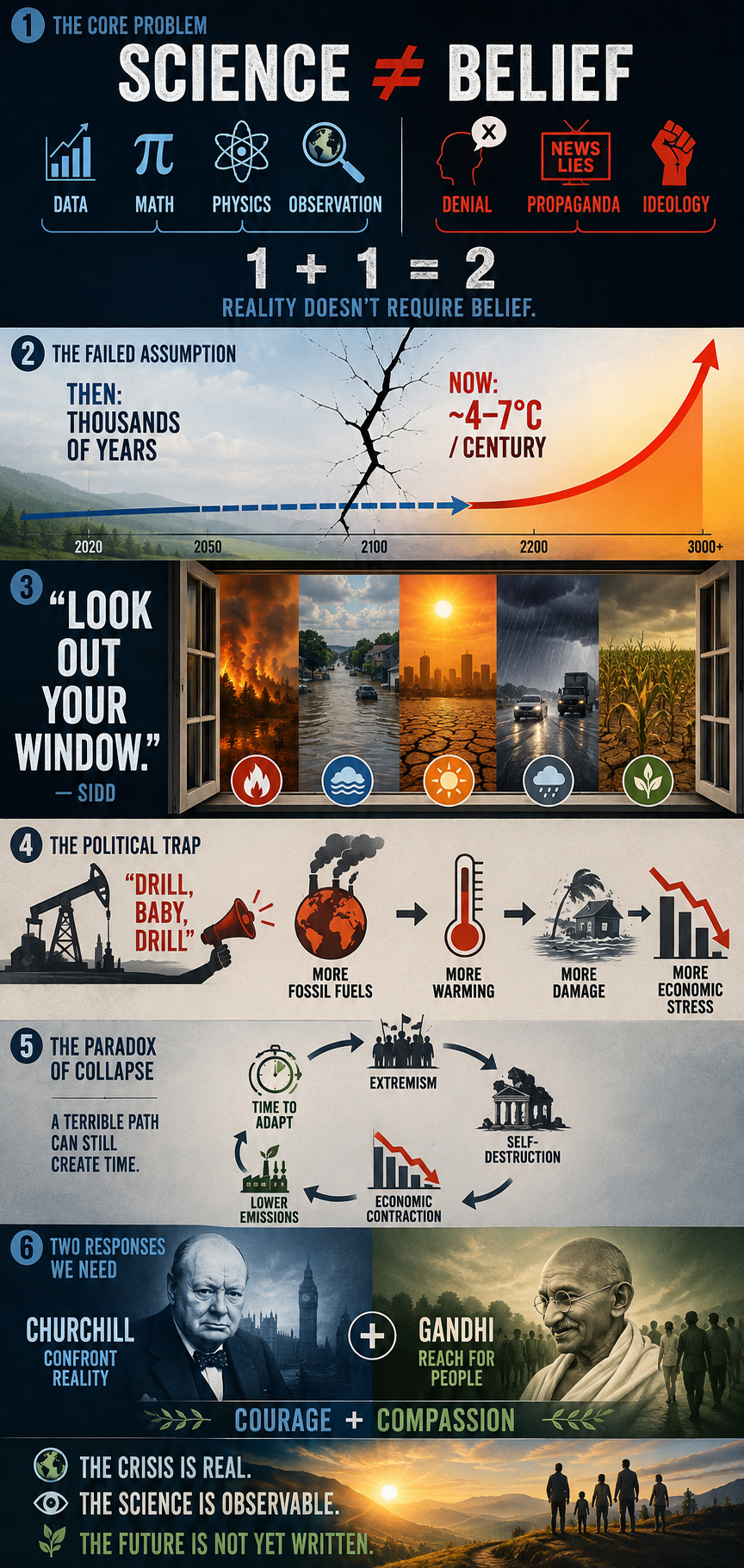
About Denialism and Ecofascism: Science Is Science
The Observation Glad to know you’re watching out! At the same time, this divisiveness—when we desperately need everyone to pull together because it’s a CRISIS, right?—makes me somehow deeply sad.
That’s a big job right there… How do we reach those who seem furthest away from any kind of understanding? We need both a Winston Churchill and a Mahatma Gandhi in this endeavor…
The Response Agreed. Both denialism and ecofascism are ideologies that ultimately defy logic. In very different ways, they can become a kind of combination of self-destruction and destruction of others.
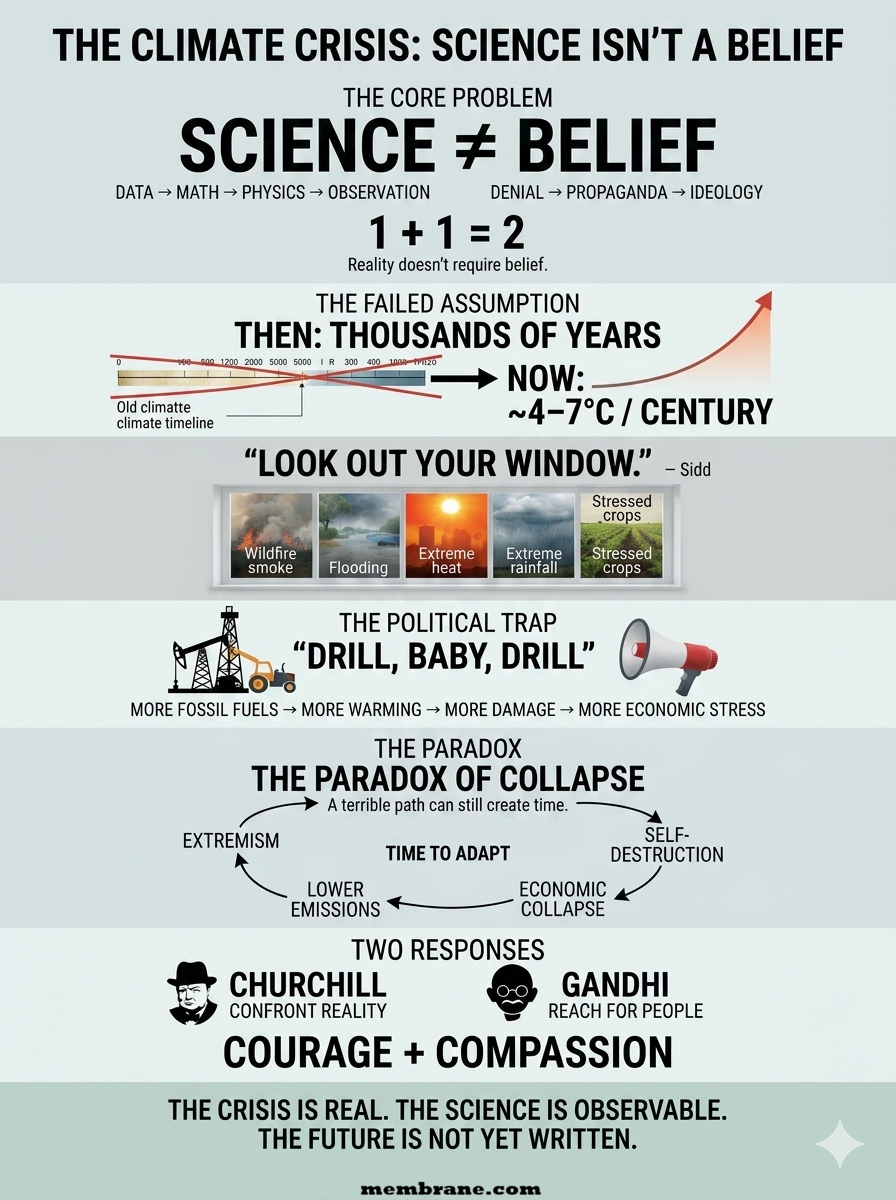
I’ve spent years battling misinformation, propaganda, and rhetoric. To the best of my knowledge, neither Sidd nor I have successfully converted—or even educated—a single committed denier. Climate science has somehow been transformed into a “belief” system. But science has nothing to do with belief. 1 + 1 = 2. If someone refuses to “believe” that, what exactly can you do?
From the beginning, our work has been based on observations, data, mathematics, and the laws of physics. So yes, I think this is at the heart of the crisis. When we started this work, we genuinely believed humanity would eventually take action. We thought we had thousands, if not tens of thousands, of years to adapt. That was the one thing we got wrong.
A couple of years ago, after explaining my continuing attempts to reach climate deniers, I asked Sidd what we could possibly do. His response was essentially, “Dude, just tell them to look out their window.” It sounds simplistic, but there is profound truth in it. The consequences are becoming increasingly difficult to deny.
Since then, we’ve had to rebuild much of our modeling. A +4°C world within thousands of years is no longer the worst-case scenario we worry about. The possibility of 4–7°C of warming within a century has become a much more serious concern in our work.
And then there is the political dimension. The rise of white-nationalist and authoritarian governments in the U.S. and elsewhere has made an already difficult problem considerably harder. Paradoxically, though, history offers one small reason for hope: fascism ultimately fails. It is inherently self-destructive.
The “drill, baby, drill” mentality is economically and environmentally self-defeating. A severe economic contraction could, ironically, buy humanity some time for adaptation while drastically reducing emissions. That is hardly the future anyone should want, but history has repeatedly demonstrated that systems built on extremism and authoritarianism eventually consume themselves.
So yes—we desperately need both the Churchill and Gandhi dimensions: the willingness to confront reality without flinching, and the willingness to keep reaching for people rather than giving up on them. I’m just not sure humanity has ever faced a crisis where we needed both quite this badly.
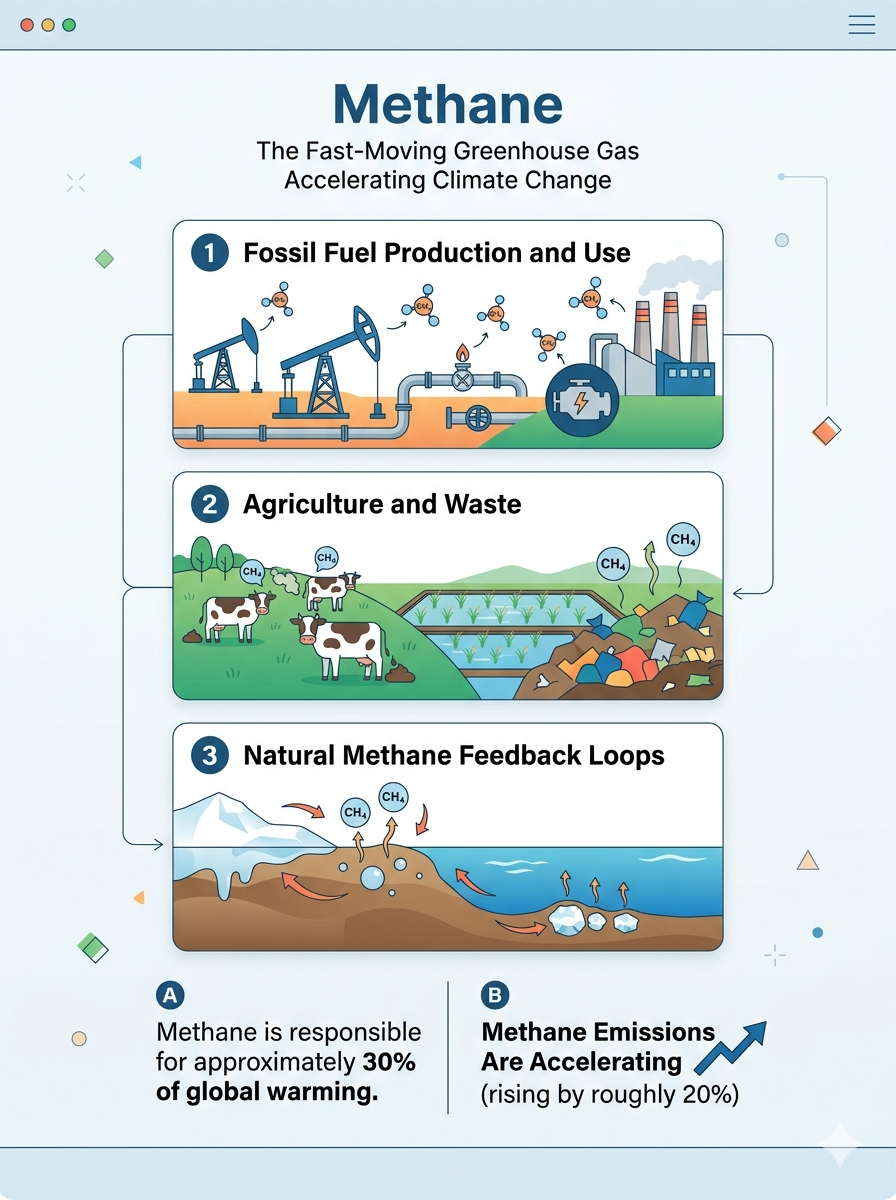
Introduction: The Fast-Moving Greenhouse Gas Accelerating Climate Change
Methane has become a rapid link between climate feedbacks and tipping points.
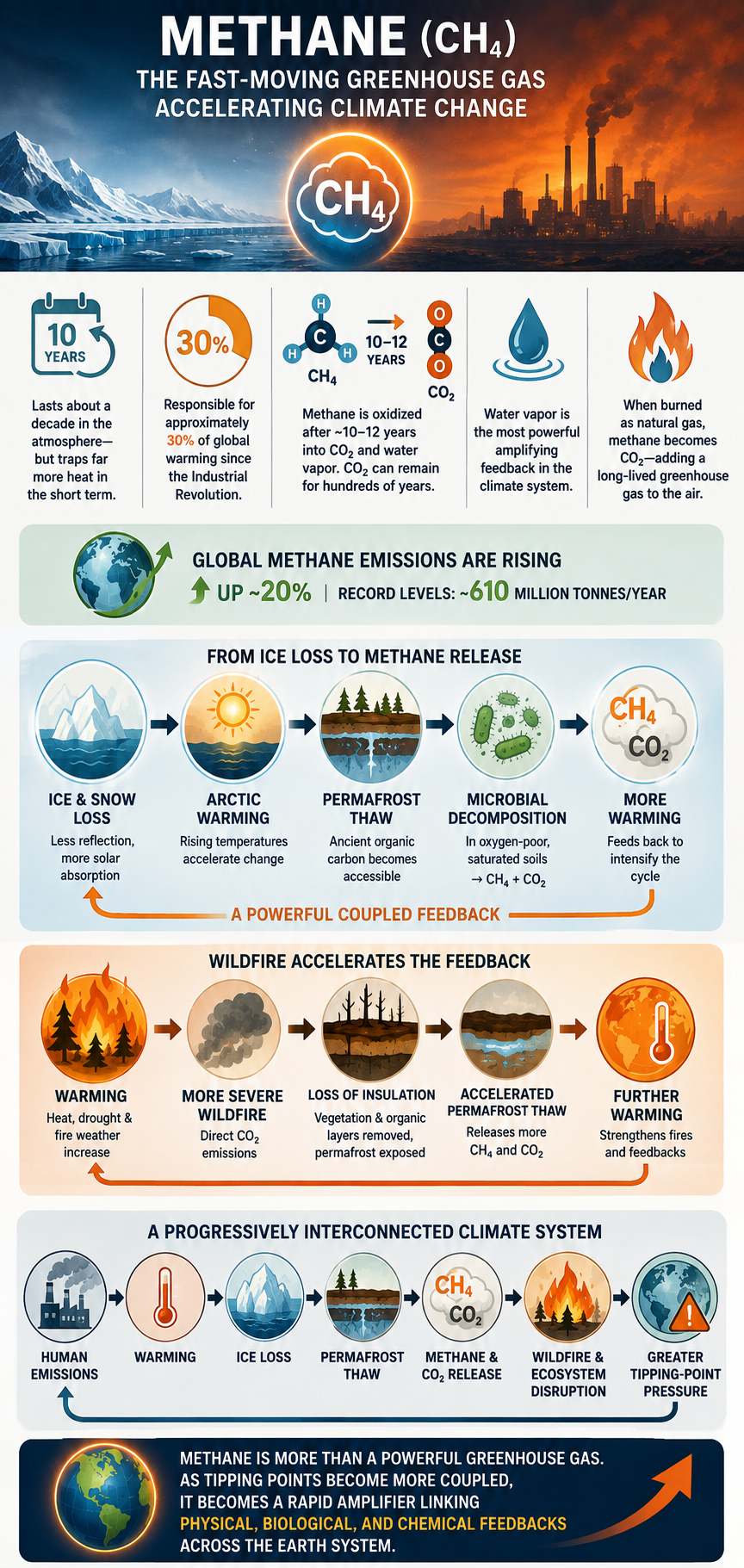
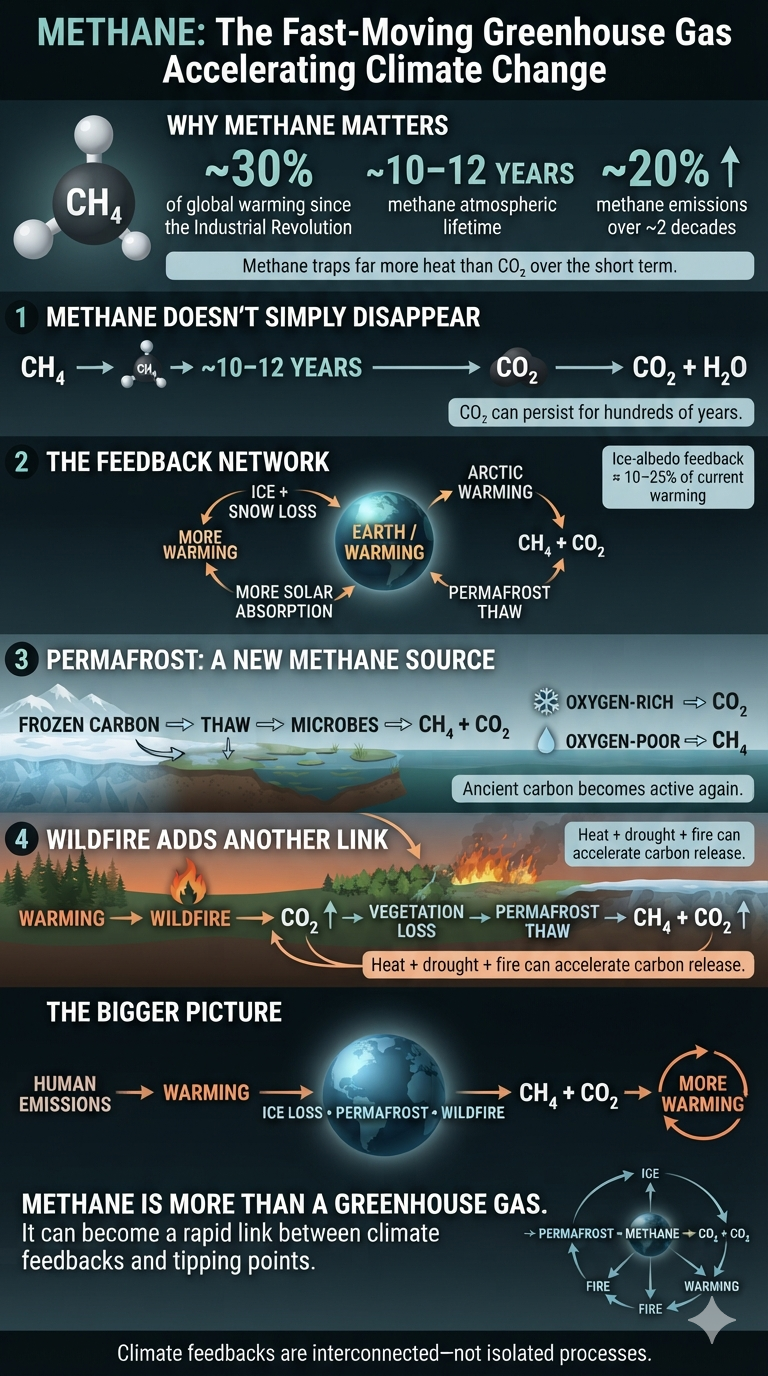
Methane (CH₄), the primary component of natural gas, is one of the most powerful greenhouse gases driving modern climate change. Although methane remains in the atmosphere for only about a decade—far less time than carbon dioxide (CO₂)—it traps substantially more heat over short time horizons, making it a critical driver of near-term warming. Additionally, when methane is oxidized after roughly 10–12 years, its carbon is ultimately converted into CO₂, which can remain in the atmosphere and continue influencing the climate system for hundreds of years.
Methane is responsible for approximately 30% of the global warming experienced since the Industrial Revolution. It also contributes to longer-term warming because atmospheric methane is eventually oxidized primarily into carbon dioxide and water vapor. Water vapor is the most powerful amplifying feedback in the climate system, intensifying warming initiated by other greenhouse gases. When methane is burned as natural gas, its carbon is converted directly into CO₂, adding a long-lived greenhouse gas to the atmosphere.
Global methane emissions have increased dramatically over the past two decades, rising by roughly 20% and reaching record levels of approximately 610 million tonnes annually. The growing concern, however, is not simply the amount of methane being emitted by human activities. It is the increasing number of coupled climate feedbacks capable of generating additional methane as the planet warms.
One of the most important connections begins with the ice-albedo feedback. The ice-albedo effect is estimated to account for approximately 10–25% of current global warming. As snow and ice melt, darker land and ocean surfaces absorb more solar radiation rather than reflecting it back into space, amplifying regional and global warming. The ice-albedo feedback does not directly inject greenhouse gases into the atmosphere. Instead, its significance is that it can accelerate other processes that do.
Among the most important is permafrost thaw. Increasing Arctic temperatures are penetrating frozen soils that contain enormous quantities of ancient organic carbon. As permafrost thaws, previously frozen organic matter becomes accessible to microorganisms. Under oxygen-rich conditions, decomposition primarily produces CO₂. In saturated, oxygen-poor environments, however, microbial decomposition can produce methane (CH₄).
The result is a newly coupled climate feedback:
Ice and snow loss → greater solar absorption → Arctic warming → permafrost thaw → microbial decomposition → CH₄ + CO₂ → additional warming
This process is particularly concerning because permafrost thaw can occur much more rapidly than the millennial timescales often associated with gradual carbon release. Abrupt thaw, thermokarst formation, changing hydrology, and wildfire can accelerate the mobilization of previously frozen carbon over years to decades.
Wildfire adds another important connection. Increasing heat, drought, and changes in vegetation and fire weather are contributing to more severe and persistent wildfire conditions in some northern ecosystems. Fires release large quantities of CO₂ directly into the atmosphere while simultaneously removing vegetation and insulating organic layers that protect permafrost from summer heat.
In boreal regions of Canada and Siberia, this creates another powerful coupled feedback:
Warming → more severe wildfire → direct CO₂ emissions → loss of insulating vegetation and soil → accelerated permafrost thaw → additional CO₂ and CH₄ → further warming
The methane feedback therefore cannot be considered in isolation. It is increasingly embedded within a network of interacting climate feedbacks and tipping points.
As warming approaches and crosses critical thresholds, the climate system can shift from one dominated primarily by direct human greenhouse-gas emissions toward one in which natural feedbacks increasingly contribute additional greenhouse gases. Ice loss can accelerate permafrost thaw; permafrost thaw can increase methane and CO₂ emissions; wildfire can accelerate both atmospheric CO₂ accumulation and permafrost degradation; and the resulting warming can intensify the original processes.
The central concern is therefore not simply that methane emissions are increasing. It is that warming itself is increasingly activating new methane sources and strengthening existing feedbacks at the same time that other tipping points are being approached or crossed.
This creates a progressively more interconnected climate system:
Human emissions → warming → ice loss → permafrost thaw → methane and CO₂ release → more warming → greater wildfire and ecosystem disruption → additional greenhouse-gas release → further tipping-point pressure
Methane is consequently more than a powerful greenhouse gas. As climate tipping points become increasingly coupled, it can become a rapid amplifier linking physical, biological, and chemical feedbacks across the Earth system.
The Heat-Trapping Power of Methane
A Short-Lived but Extremely Powerful Greenhouse Gas
Methane has a unique climate profile:
Characteristic
Raw Methane (CH4)
Combusted Methane (CO2)
Immediate Heat-Trapping Effect
Extremely high
Moderate
Global Warming Potential (20 years)
More than 80 times stronger than CO2
Baseline
Atmospheric Lifespan
About 10–12 years
Centuries
Primary Climate Risk
Leaks, venting, and natural feedbacks
Long-term accumulation after combustion
Because methane is so powerful in the short term, rapid methane reductions can have an immediate effect on slowing global warming. However, continued emissions create a dangerous cycle because warming itself can trigger additional natural methane releases.
Methane’s Two Pathways to Carbon Dioxide
A critical question is often overlooked when comparing natural gas combustion with methane emissions:
If methane eventually breaks down into carbon dioxide in the atmosphere, does allowing methane to escape ultimately produce the same amount of CO₂ as burning it?
In terms of carbon atoms, essentially yes. One molecule of methane (CH₄) contains one carbon atom. Whether that methane is burned immediately or eventually oxidized in the atmosphere, that carbon can ultimately become approximately one molecule of CO₂.
But the climate consequences are dramatically different because of the pathway and timing.
1. Combustion: Immediate Conversion to CO₂
When methane is burned in a power plant, furnace, stove, engine, or flare, the conversion occurs almost immediately:
CH₄ + 2O₂ → CO₂ + 2H₂O
The carbon in methane is converted directly into carbon dioxide.
The climate consequence is therefore dominated by long-lived CO₂, which remains in the atmosphere and affects the climate system for centuries or longer.
But combustion also eliminates methane’s period of extremely strong short-term heat trapping.
2. Atmospheric Oxidation: Methane First, CO₂ Later
When methane escapes directly into the atmosphere, it does not immediately become CO₂.
Instead, atmospheric chemistry gradually oxidizes methane, primarily through reactions involving hydroxyl radicals (OH). The process occurs through a series of intermediate chemical reactions before the carbon ultimately becomes CO₂.
Methane has an atmospheric lifetime of roughly a decade, meaning that a large fraction of an emission is removed from the atmosphere over approximately 10–12 years.
During that period, however, the methane itself is an exceptionally powerful greenhouse gas.
The sequence is therefore:
Methane leak → approximately 10–12 years of intense methane warming → atmospheric oxidation → CO₂ → centuries of additional warming
This creates a crucial distinction:
Burning methane converts it to CO₂ immediately.
Leaking methane delays the CO₂ conversion—but adds a period of extremely powerful methane warming first.
That is why preventing methane leakage can produce a disproportionately large near-term climate benefit.
Why the Carbon Source Matters
The eventual conversion of methane into CO₂ does not mean that all methane emissions have identical climate consequences.
The critical distinction is where the methane’s carbon came from.
Fossil Methane: Adding Ancient Carbon
Methane extracted from natural gas and other fossil fuel deposits contains carbon that has been isolated from the active atmosphere-biosphere carbon cycle for millions of years.
When fossil methane is:
burned, its carbon becomes CO₂ immediately;
leaked, its carbon initially produces powerful methane warming and is then largely converted into atmospheric CO₂.
Either way, fossil methane represents a net transfer of geological carbon into the active atmosphere-climate system.
Biogenic Methane: Carbon Cycling Through the Biosphere
Methane produced by livestock, wetlands, and other biological processes is different.
Much of this methane originates from carbon that plants recently removed from atmospheric CO₂ through photosynthesis.
This is part of the short-term biological carbon cycle, rather than the introduction of ancient fossil carbon.
That distinction, however, does not make biogenic methane harmless.
Methane can produce substantial warming during the decade or so that it remains in the atmosphere. Its eventual return to CO₂ does not erase that temporary but powerful climate forcing.
The Key Distinction
The important question is therefore not simply:
“Does methane eventually become CO₂?”
It does.
The more important questions are:
“What happens before it becomes CO₂?”
and
“Where did its carbon come from?”
That distinction explains why methane is such a critical climate-control target.
The chemistry may ultimately return methane’s carbon to CO₂, but the climate system experiences the methane phase first—and that phase is extraordinarily powerful.
Major Sources of Methane Emissions
Methane emissions come from both human activities and natural systems.
1. Fossil Fuel Production and Use
The fossil fuel industry remains one of the largest sources of human-caused methane emissions.
Major sources include:
Oil and natural gas extraction: methane leaks during drilling, processing, storage, and transportation.
Coal mining: methane trapped in coal seams escapes during extraction.
Natural gas infrastructure: pipelines, compressors, and storage facilities can release large quantities of methane.
Despite industry commitments to reduce leakage, global fossil fuel methane emissions remain near record levels, estimated at roughly 120–150 million tonnes annually.
Recent tracking shows:
Oil operations contribute approximately 45 Mt/year of methane emissions.
Coal mining contributes approximately 43 Mt/year.
Natural gas systems contribute approximately 36 Mt/year.
Satellite observations have also identified frequent “super-emitter” events, where enormous methane releases occur from individual facilities, coal mines, and aging oil fields.
2. Agriculture and Waste
Human activities account for the majority of long-term methane growth.
Livestock Production
Ruminant animals such as cattle and sheep produce methane through digestion. Their manure also releases methane when stored in oxygen-poor conditions.
Agriculture contributes approximately 35–40% of human-caused methane emissions, driven largely by:
Expanding cattle and dairy production.
Increased global demand for meat and dairy products.
Manure management systems.
Landfills and Organic Waste
Modern waste systems create ideal methane-producing conditions.
When food waste and other organic materials are buried in landfills, they decompose without oxygen, producing methane that can escape into the atmosphere.
Rapid urbanization and rising consumption have increased landfill methane emissions worldwide.
3. Natural Methane Feedback Loops
One of the most concerning developments is that climate change itself is beginning to increase methane emissions from natural systems.
Warming Wetlands: A Climate Feedback Loop
Tropical wetlands have become a major contributor to the recent acceleration in atmospheric methane growth.
Research from NOAA and the University of Colorado indicates that tropical wetlands, especially in South America and Africa, have become dominant sources of the recent methane surge.
Wetlands accounted for approximately 40% of the increase in methane emissions between 2000 and 2022, demonstrating how climate change can activate self-reinforcing feedback loops.
Methane Emissions Are Accelerating
Global methane emissions have increased dramatically over the past two decades, rising by roughly 20% and reaching record levels of approximately 610 million tonnes annually.
Atmospheric monitoring from organizations including NOAA and the International Energy Agency (IEA) shows methane concentrations continuing a steep upward trend.
This acceleration is being driven by three interacting forces:
Expanding fossil fuel extraction and infrastructure leaks.
Growing agricultural and waste emissions.
Climate-driven natural feedback loops, especially warming wetlands.
Why Methane Matters for Climate Stability
Methane represents one of the fastest opportunities to slow near-term warming because it has such a powerful short-term climate impact.
Reducing methane emissions from:
Fossil fuel leaks,
Livestock systems,
Landfills,
and industrial operations
could rapidly reduce the rate of warming.
However, continued warming threatens to unlock additional natural methane emissions from wetlands, permafrost, and other carbon-rich ecosystems. These feedbacks create the risk of a self-reinforcing cycle:
More warming → More methane release → More greenhouse warming → More ecosystem disruption → More methane release
Methane is therefore not only a pollutant—it is a critical indicator of whether Earth’s climate system is moving toward stabilization or accelerating disruption.
The Growing Methane Feedback: From Ice-Melt Acceleration to Tipping-Point Amplification
The ice-albedo feedback is one of the fastest climate feedbacks operating today. As Arctic sea ice and snow cover disappear, darker surfaces absorb more solar energy, accelerating regional warming.
But the climate system does not stop at the ice-albedo feedback.
As warming crosses additional thresholds, carbon-cycle feedbacks can become increasingly important—and methane can become a powerful amplifier of that warming.
This creates a critical transition in the climate system:
Ice loss accelerates warming → warming destabilizes frozen carbon stores → microbial activity increases → methane emissions increase → methane adds additional warming → more tipping points become vulnerable
The significance of methane is therefore not limited to today’s emissions. Its greater danger may lie in the possibility that warming itself progressively activates new methane sources.
1. Permafrost: A Gateway to Additional Methane
Permafrost contains enormous quantities of frozen organic carbon accumulated over thousands of years.
While frozen, much of this carbon remains relatively isolated from microbial decomposition. As temperatures rise and permafrost thaws, previously frozen organic material becomes available to microorganisms.
The resulting greenhouse-gas emissions depend on local conditions.
In oxygen-rich soils, decomposition produces primarily CO₂.
In saturated, oxygen-poor soils and wetlands, anaerobic decomposition can produce substantial quantities of methane (CH₄).
The important point is that permafrost thaw can turn a previously inactive carbon reservoir into an increasingly active source of greenhouse gases.
2. Why Methane Becomes More Important as Warming Accelerates
Methane is especially important because it is an extremely powerful greenhouse gas over short timescales.
When methane emissions increase, the atmosphere experiences a rapid additional warming influence. Although methane eventually oxidizes into CO₂, its initial warming effect is much stronger than that of an equivalent amount of CO₂ over the first several decades.
This makes methane particularly important during periods when the climate system is approaching or crossing tipping points.
The sequence can become:
Initial warming → methane release → rapid additional warming → greater probability of crossing another threshold
Once another tipping system begins to destabilize, it can generate additional warming or greenhouse-gas emissions of its own.
3. Tipping Points Can Transform the Methane Feedback
The importance of methane should therefore be considered as part of a network of interacting tipping points, rather than as an isolated feedback.
For example:
Arctic warming ↓ Sea-ice loss ↓ Ice-albedo feedback strengthens ↓ Additional Arctic warming ↓ Permafrost thaw increases ↓ Microbial decomposition accelerates ↓ CH₄ emissions increase ↓ Additional atmospheric warming ↓ Further ice loss and permafrost thaw
This network can become even more complicated as other climate thresholds are approached.
Warming can alter precipitation patterns, increase wildfire activity, change Arctic hydrology, and transform previously frozen or oxygen-rich soils into waterlogged environments where methane production becomes more favorable.
Consequently, the methane feedback can strengthen not simply because temperatures rise, but because warming changes the physical conditions controlling where and how methane is produced.
4. From External Forcing to Internal Amplification
This distinction is fundamental.
At the beginning of anthropogenic warming, the primary forcing comes from human emissions of greenhouse gases.
But as warming increases, the climate system itself can begin generating additional greenhouse-gas emissions.
Methane is particularly important in this transition because it can provide a rapid amplification mechanism inside a much slower carbon-cycle response.
Permafrost does not need to release all of its stored carbon to become climatically important. Even a progressively increasing methane contribution can amplify warming during the critical period when other tipping points are becoming increasingly vulnerable.
5. Methane as a Tipping-Point Multiplier
This is why the methane feedback should not be evaluated solely by comparing today’s methane emissions with today’s CO₂ emissions.
The more important question is:
Does continued warming activate new methane sources that were previously largely dormant?
If the answer is yes, methane changes from being primarily an emissions-control problem into an increasingly important Earth-system feedback problem.
The distinction can be summarized as:
Before tipping-point activation: Human emissions → methane emissions → warming
As tipping points are crossed: Human emissions → warming → permafrost and wetland changes → additional methane → more warming
With multiple interacting tipping points: Warming → ice loss → greater solar absorption → permafrost thaw → methane release → additional warming → further tipping-point activation → additional greenhouse-gas release
This is the critical danger.
The climate system does not have to experience one enormous methane release for the feedback to matter. A progressively increasing methane contribution, coupled with other feedbacks, can help push the system across additional thresholds.
The Emerging Climate Dynamic
The ice-albedo feedback may be one of the fastest visible accelerators of Arctic warming today.
But as warming continues, the relative importance of methane-producing feedbacks can increase because previously frozen carbon becomes biologically active and environmental conditions become increasingly favorable for methane production.
The resulting system can be viewed as a progression:
The critical issue is therefore not whether methane will suddenly become the dominant driver of climate change.
It is whether methane feedbacks become an increasingly important amplifier at precisely the time when the climate system is becoming more vulnerable to cascading tipping points.
That possibility makes methane one of the most important short-term feedbacks to monitor as the planet moves deeper into a warmer and increasingly nonlinear climate state.
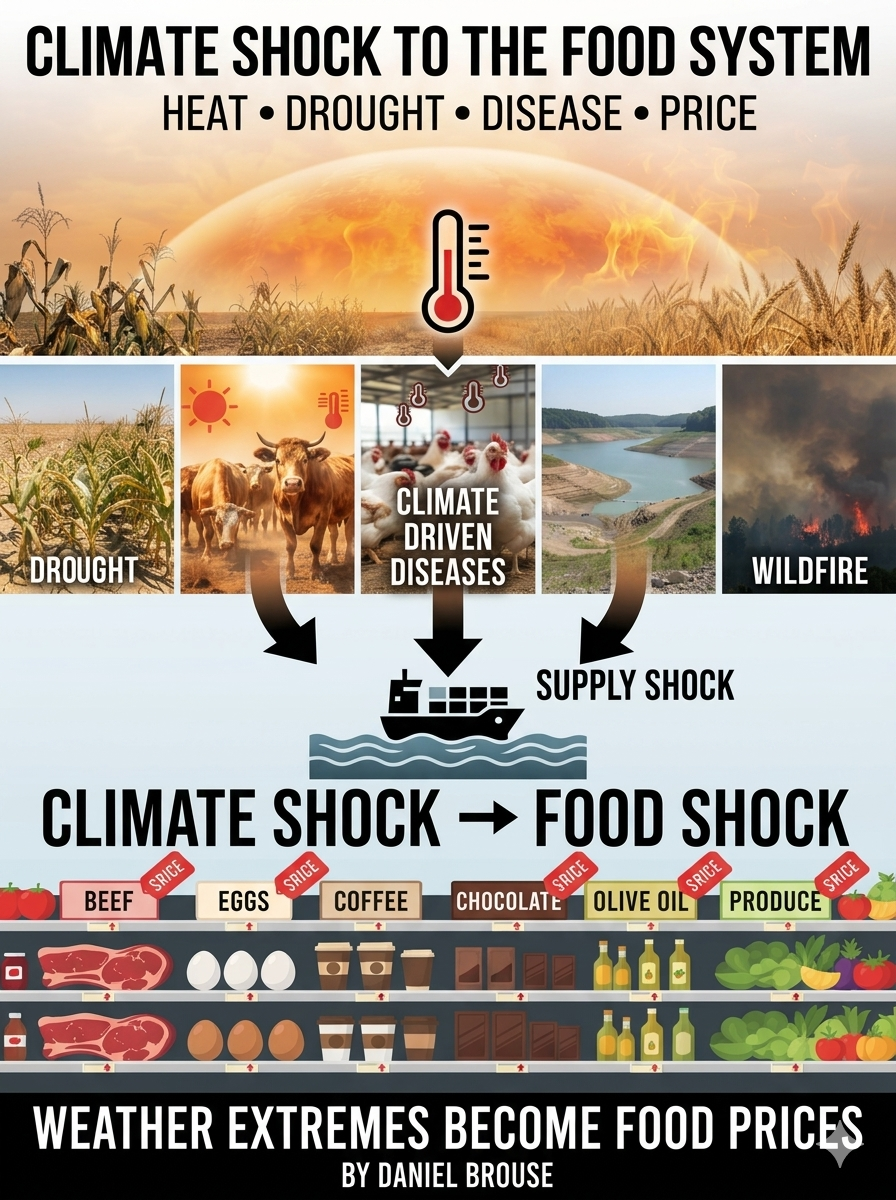
How Extreme Heat, Drought, Disease, and Global Supply Disruptions Are Reshaping Agriculture and Raising Food Prices
Introduction
Climate change is increasingly affecting agriculture through multiple, interconnected pathways. Extreme heat, prolonged drought, erratic rainfall, declining water availability, wildfire, shifting pest and disease pressures, and disruptions to livestock production are converging to create a more volatile global food system.
The consequences extend far beyond individual farms. When climate extremes reduce harvests or livestock productivity, they can simultaneously tighten global supplies, increase production costs, disrupt international trade, and raise food prices for consumers.
The result is a climate-driven agricultural feedback loop:
And because modern food systems are globally interconnected, a crop failure thousands of miles away can eventually appear as a higher price on an American grocery shelf.
1. The Agricultural Climate Shock
Severe droughts, extreme heatwaves, and increasingly erratic rainfall are placing growing pressure on agricultural production.
Major agricultural regions across Europe and North America have experienced significant crop stress from rapid soil drying, water restrictions, excessive heat, and premature crop maturation. In some regions and individual crops, harvest losses have reached extraordinary levels.
Severe Drought and Heat
Intense summer heat can:
Dry out topsoil before crops reach maturity
Reduce corn, wheat, soybean, and vegetable yields
Accelerate crop maturation before plants reach their full potential
Increase irrigation requirements
Reduce pasture productivity
Increase livestock heat stress
When extreme heat arrives during critical stages such as flowering, pollination, or grain filling, even short-lived temperature spikes can produce disproportionately large losses.
Water Shortages
Agriculture is increasingly competing with municipal, industrial, ecological, and energy demands for limited water supplies.
Low river levels, depleted reservoirs, declining groundwater, and prolonged drought have forced irrigation restrictions in portions of Europe and the United States.
Water scarcity creates a second-order effect: farmers may not simply harvest less. They may also reduce the acreage they plant in the first place.
Livestock Stress
Extreme heat is equally damaging to animal agriculture.
Heat-stressed cattle and other livestock often eat less, gain weight more slowly, reproduce less efficiently, and become more vulnerable to illness. Dairy cattle can experience substantial reductions in milk production during periods of severe heat.
Pests, Weeds, and Plant Disease
Climate disruption is also changing the biological environment in which crops grow.
Warmer temperatures can expand the geographic range and seasonal activity of some insects, while altered precipitation can create conditions favorable to weeds and plant pathogens.
The emerging pattern can be summarized as:
“Wetter wets. Drier dries. Greater volatility.”
The agricultural problem is not simply that the planet is becoming warmer. It is that weather conditions are becoming increasingly difficult to manage.
2. The Economic Shock
Agricultural losses propagate rapidly through the economy.
Financial Pressure on Farmers
When yields decline, farmers receive less revenue per acre while many costs remain fixed or increase.
At the same time, drought and heat can require:
Additional irrigation
More expensive feed
Higher fuel consumption
Additional pest and disease management
Greater fertilizer expenditures
Emergency infrastructure repairs
This creates a dangerous combination:
Lower Output + Higher Costs = Collapsing Margins
Higher Food Prices
When production falls faster than demand, commodity prices rise.
The effect can move through the food system in stages:
Together, these pressures can reduce domestic production while increasing costs for beef, poultry, eggs, and dairy.
4. Beef and Cattle: Heat, Drought, Fire, and Herd Contraction
The U.S. cattle industry has experienced a historically small cattle inventory after years of drought, elevated feed costs, and herd liquidation.
Extreme Heat
Prolonged triple-digit temperatures across portions of the Plains and Midwest can cause severe cattle heat stress.
Heat-stressed cattle consume less feed, gain weight more slowly, and can experience reduced reproductive performance.
The effects become particularly serious when extreme heat coincides with drought and poor pasture conditions.
Drought and Forage Destruction
Drought reduces the availability of grass, hay, alfalfa, and other livestock feed.
Wildfires can compound the problem by destroying grazing land, fencing, water infrastructure, barns, and other ranch assets.
Smoke exposure can also create respiratory stress for animals.
Feed Scarcity
When drought reduces forage production, ranchers may have to purchase expensive supplemental feed.
That creates an economic dilemma:
Buy Expensive Feed → Absorb Large Losses
or
Sell Breeding Animals → Shrink the Herd
Large-scale liquidation can temporarily increase beef supplies but ultimately reduces the nation’s productive cattle base.
The long-term consequence is a tighter supply of beef and greater vulnerability to subsequent climate shocks.
5. Poultry and Eggs: H5N1 and Climate-Sensitive Disease Risk
The poultry industry has faced an extraordinary challenge from Highly Pathogenic Avian Influenza (H5N1).
Millions of domestic birds have been lost through infection and mandatory depopulation measures designed to prevent further transmission.
Climate change should not be treated as the sole cause of the outbreak. However, climate-driven changes in temperature, precipitation, migration timing, habitat, and wildlife distribution can alter the ecological conditions under which infectious diseases circulate.
Changing Wild-Bird Migration
Wild waterfowl are important reservoirs and carriers of avian influenza viruses.
Changes in climate and weather can affect:
Migration timing
Migration routes
Stopover locations
Habitat availability
Population concentration
These changes can alter opportunities for viruses to move between wild birds and commercial poultry.
Extreme Weather and Disease Transmission
Highly variable weather can also change where and when migrating birds congregate.
That can create new opportunities for pathogen transmission and increase biosecurity challenges for poultry producers.
The Depopulation Problem
H5N1 can be devastating to commercial poultry operations.
When infection is detected, strict disease-control protocols can require entire flocks to be destroyed to prevent further spread.
For producers, this creates a severe economic shock:
Infection → Flock Depopulation → Lost Production → Reduced Supply → Higher Prices
The impact is especially severe for smaller producers with limited financial reserves.
Cross-Species Transmission
The emergence of H5N1 infections in additional mammalian species, including dairy cattle, has demonstrated the capacity of the virus to move beyond traditional avian hosts.
That creates a more complicated agricultural disease environment and increases the importance of surveillance, biosecurity, and rapid containment.
6. The U.S. Breadbasket Under Pressure
The United States is one of the world’s most important agricultural producers, but American agriculture is not insulated from climate disruption.
Midwest Yield Pressure
Extreme heat and drought can reduce yields of rain-fed corn and soybeans.
Higher atmospheric carbon dioxide can provide some benefits to certain crops under some conditions, but those benefits can be overwhelmed when heat, water stress, nutrient limitations, and other environmental pressures become sufficiently severe.
The critical issue is therefore not simply:
“More CO₂ = More Growth.”
It is:
CO₂ Benefit − Heat Stress − Water Stress − Other Constraints = Actual Yield
When environmental constraints become severe, theoretical fertilization benefits may provide little protection against major crop losses.
Western Water Crisis
The American West faces a particularly difficult agricultural challenge.
Persistent drought, declining reservoir levels, groundwater depletion, and competing demands for water have forced reductions in irrigation and planted acreage in some agricultural regions.
California’s Central Valley illustrates the problem.
Reduced water availability can threaten the production of fruits, nuts, vegetables, and other high-value crops that depend heavily on irrigation.
Livestock and Dairy
Heat stress also affects cattle and dairy production.
Extreme temperatures can reduce feed intake, fertility, growth rates, and milk production.
The resulting loss is both biological and economic.
7. Climateflation: When Global Weather Hits the American Grocery Store
The climate vulnerability of American food prices does not stop at the nation’s borders.
The United States depends heavily on imports for many commodities, including coffee, cocoa, tropical produce, olive oil, sugar, wine, and other agricultural products.
Consequently, extreme weather overseas can become inflation at home.
This phenomenon can be described as climateflation:
Climate Shock Abroad → Global Supply Reduction → Higher Commodity Prices → Higher U.S. Import Costs → Higher Retail Prices
8. Cocoa and Chocolate
The Climate Shock
A large share of global cocoa production is concentrated in West Africa, particularly Côte d’Ivoire and Ghana.
Changing rainfall patterns, extreme precipitation, heat, and plant disease can simultaneously threaten production.
Black pod disease and other pathogens can become particularly damaging when environmental conditions favor their spread.
The U.S. Impact
When cocoa supplies tighten, American manufacturers face higher input costs.
The consequences can include:
Higher chocolate prices
Smaller package sizes
Recipe reformulation
Substitution of some expensive ingredients
Reduced product margins
The consumer may therefore experience climate disruption not as a failed harvest in West Africa, but as a smaller chocolate bar costing more money.
9. Olive Oil
The Climate Shock
Mediterranean agriculture is particularly exposed to heat and drought.
Spain, Italy, and Greece—major olive-producing regions—have experienced severe weather conditions capable of damaging flowering, fruit development, and harvests.
Repeated poor harvests can create persistent supply shortages.
The U.S. Impact
Because the United States imports most of its olive oil, reduced European production can rapidly affect American prices.
A climate-driven decline in Mediterranean production therefore becomes an American grocery-store problem.
10. Coffee
Coffee is another highly climate-sensitive commodity.
Brazil and Vietnam are among the world’s largest coffee producers, making weather conditions in those countries important to global supply.
Heat, drought, excessive rainfall, and shifting disease pressures can damage coffee production and affect both Arabica and Robusta supplies.
For American consumers, the climate signal may ultimately appear as a more expensive cup of coffee.
11. Sugar
Global sugar production is also vulnerable to weather extremes.
Drought, irregular monsoons, heat, and El Niño-related precipitation changes can reduce sugarcane production in major producing countries such as India and Thailand, as well as in parts of Central and South America.
Because the United States operates under a managed sugar import system, global shortages can translate into higher costs for American food manufacturers.
Those costs can eventually appear in:
Candy
Baked goods
Soft drinks
Processed foods
12. Fruits and Vegetables
The United States imports substantial quantities of fresh produce from Mexico, Central America, and South America, particularly during the winter months.
Extreme heat, drought, flooding, and severe storms in producing regions can produce localized crop failures.
When supply contracts, U.S. consumers can experience sharp price volatility in commodities such as:
Avocados
Limes
Tomatoes
Berries
Other fresh produce
The grocery store therefore functions as the final link in a global climate-sensitive supply chain.
13. Wine and Spirits
Climate disruption is also reshaping beverage agriculture.
Traditional wine-producing regions in France, Italy, and Spain face combinations of:
Extreme heat
Drought
Late-season frost
Wildfire
Altered precipitation
Mexico’s blue-agave production is similarly exposed to changing rainfall and temperature patterns.
When harvests decline, producers and distributors may have to seek alternative sources, accept higher input costs, or pass those costs on to consumers.
14. The Hidden Vulnerability: Global Food Interdependence
The greatest danger may not be any single crop failure.
It is the coupling of multiple failures.
A drought in the American Midwest can affect corn and soybean production.
A heatwave in Europe can reduce wheat or vegetable output.
Drought in Brazil can affect coffee.
Heat and disease can damage cocoa production in West Africa.
Mediterranean drought can reduce olive oil.
Disease outbreaks can devastate poultry.
When these disruptions occur independently, markets can sometimes compensate.
But when several occur simultaneously, the world’s food system has fewer buffers.
This produces a potentially dangerous nonlinear effect:
One Climate Shock → Manageable
Multiple Simultaneous Shocks → Systemic Stress
15. The Agricultural Feedback Loop
Climate change therefore creates more than isolated agricultural disasters.
It creates interacting feedbacks.
Climate → Agriculture
Heat + Drought + Flooding + Fire + Disease
↓
Lower Crop and Livestock Productivity
↓
Reduced Food Supply
↓
Higher Commodity Prices
↓
Higher Production Costs
↓
Higher Food Prices
↓
Economic Stress
At the same time, declining agricultural productivity can increase pressure to expand production into marginal lands, intensify irrigation, increase fertilizer use, or otherwise compensate for declining yields.
The result is a system under increasing stress from multiple directions.
Conclusion: From Weather Extremes to Food-System Instability
Climate change is increasingly becoming an agricultural problem, an economic problem, and a food-security problem simultaneously.
The threat does not depend on a single catastrophic harvest failure.
The greater danger lies in the simultaneous accumulation of smaller disruptions across interconnected agricultural systems.
Extreme heat stresses crops and livestock.
Drought reduces water and forage.
Wildfire destroys pasture and infrastructure.
Disease attacks crops and animals.
Changing ecological conditions can alter pest and pathogen pressures.
International trade then transmits these disruptions across borders.
The American consumer may ultimately experience the result as a higher price for beef, eggs, coffee, chocolate, olive oil, produce, wine, or everyday processed foods.
The emerging pattern is therefore clear:
Climate Change
↓
More Extreme and Erratic Weather
↓
Agricultural Stress
↓
Lower and More Volatile Production
↓
Tighter Global Food Supplies
↓
Higher Production and Transportation Costs
↓
Food Inflation
↓
Greater Economic and Social Vulnerability
The food system is not a collection of isolated farms.
It is a globally interconnected network.
And as climate extremes intensify, the vulnerability of that network increasingly depends not only on how much food the world can produce—but on whether multiple agricultural shocks arrive at the same time.
That is where climate risk can transform from a collection of local disasters into a systemic food-security problem.
Climate change is no longer simply a future environmental threat. It is increasingly affecting American households through higher costs, declining air quality, extreme heat, infrastructure disruptions, property damage, and changing patterns of disease.
Although catastrophic floods, hurricanes, wildfires, and other disasters dominate the headlines, the most widespread climate impact may be less dramatic: the steady financial pressure climate change places on everyday household budgets. Food prices, insurance premiums, utility bills, and the costs of maintaining homes and communities are all increasingly influenced by a changing climate.
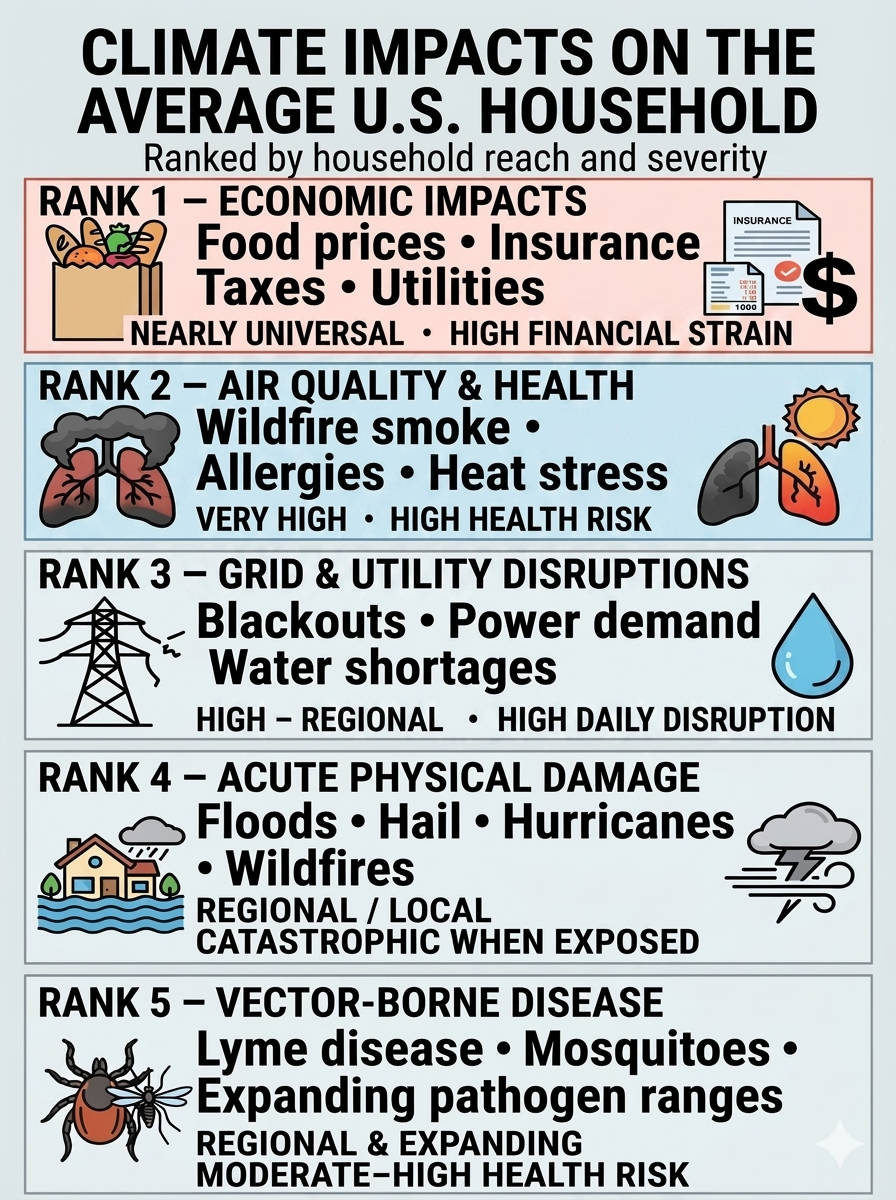
The impacts are not distributed equally. Some are nearly universal, while others are concentrated in particular regions or communities. The ranking below therefore considers two factors: how widely households are exposed and how severely the impact can disrupt everyday life.
Ranking of Climate Impacts on the Average U.S. Household
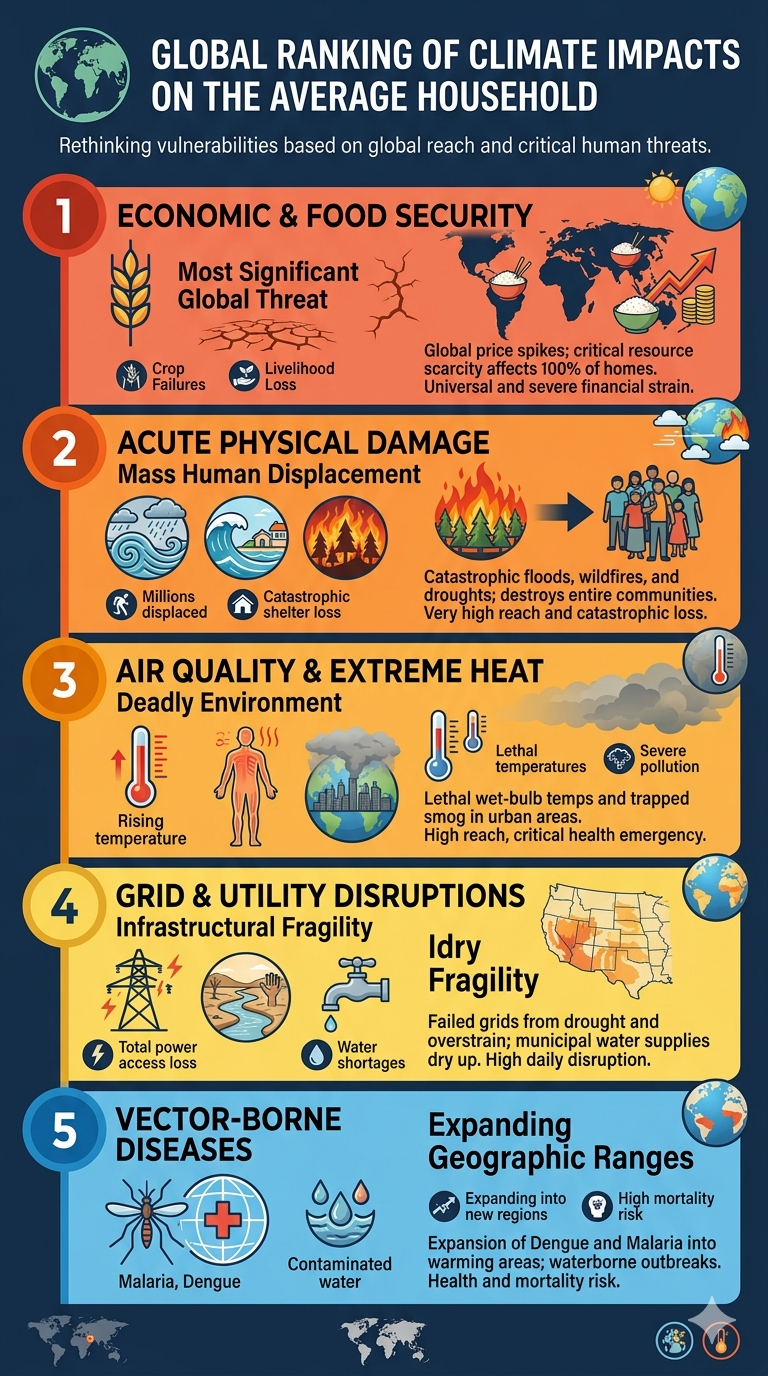
Global Ranking of Climate Impacts on the Average Household
The ranking below shifts the order of impacts based on global reach and the immediate threat to human life and livelihoods across developing and developed nations alike.
Rank
Impact Category
Primary Global Household Threats
Ubiquity
Severity
1
Economic & Food Security
Global food price spikes, crop failures, loss of agricultural livelihoods
1. Economic Impacts: The Most Universal Climate Burden
Economic impacts rank first because households do not have to live in a flood zone, wildfire corridor, or hurricane-prone region to pay the economic costs of climate change. Climate-related costs increasingly reach Americans through food prices, insurance premiums, utility bills, taxes, public fees, and the rising cost of maintaining homes and infrastructure.
Climate change can therefore function as a cost multiplier, increasing expenses both directly and indirectly.
Climate-Driven Food Inflation
Drought, extreme heat, excessive rainfall, and other weather disruptions can reduce agricultural yields and interfere with food production and supply chains. Because food markets are interconnected, production losses in one region can influence prices far beyond the location of the original climate event.
The effects can reach everyday staples and commodities such as coffee, wheat, corn, beef, fruits, and vegetables.
The result is a climate-related cost that can reach virtually every household through the grocery bill—even when the household is hundreds or thousands of miles from the drought, flood, or heatwave affecting agricultural production.
The Insurance Crisis
Insurance is one of the clearest mechanisms through which climate risk is transferred directly to households.
As floods, hurricanes, wildfires, severe storms, and other disasters generate increasingly costly losses, insurers may respond by raising premiums, increasing deductibles, restricting coverage, or withdrawing from particularly high-risk markets.
For homeowners, climate risk can therefore produce a double financial burden:
In some locations, the problem extends beyond affordability. Homeowners may find that certain types of coverage are difficult or impossible to obtain through conventional private insurance markets.
Rising Utility Costs
Hotter summers increase demand for air conditioning. As temperatures remain elevated for longer periods, households may need to run cooling systems more frequently and for longer durations.
That increases electricity consumption while simultaneously placing additional stress on the power grid.
Climate change can therefore affect household budgets through both higher energy consumption and the cost of maintaining a more resilient electrical system.
Water systems can face similar pressures. Drought, declining water supplies, flooding, and changing precipitation patterns may require communities to invest in new reservoirs, treatment capacity, pipelines, drainage systems, and other infrastructure.
Those investments ultimately have to be paid for.
Taxes, Assessments, and Public Costs
One of the least visible climate costs is the portion that reaches households through government budgets rather than private markets.
When climate-related disasters become more costly, governments must spend more on emergency response, disaster recovery, infrastructure repair, flood protection, stormwater management, wildfire preparedness, water systems, coastal protection, and long-term climate adaptation.
Those expenses can eventually reach households through:
Property taxes used to finance infrastructure repairs and resilience projects.
Special assessments and municipal fees for stormwater, drainage, flood control, and other local projects.
Higher utility rates needed to upgrade vulnerable water and electrical systems.
State and federal taxes that help finance disaster recovery, emergency response, agricultural assistance, infrastructure rebuilding, and resilience programs.
Public insurance and disaster programs when private insurance markets cannot absorb the full cost of catastrophic losses.
This creates an important economic chain:
Climate hazard → physical damage → insurance losses → government response → infrastructure spending → taxes, fees, and utility costs.
The household may never experience the original flood, wildfire, hurricane, or drought, yet it can still participate in paying the bill.
Rising Property and Maintenance Costs
Climate stress can also increase the cost of owning and maintaining a home.
More intense rainfall can require improved drainage. Stronger storms can increase demand for roofing and exterior repairs. Heat can accelerate deterioration of infrastructure and building materials. Flooding and wildfire risk can require additional mitigation measures.
At the same time, widespread disasters can create temporary shortages of construction materials, contractors, equipment, and skilled labor, increasing repair costs.
The Hidden Climate Cost
Taken together, these effects mean that climate change does not have to destroy your home to affect your household finances.
A household can experience climate-related costs through:
Higher grocery prices
Higher insurance premiums
Higher electricity and water bills
Higher taxes and public fees
Higher repair and maintenance costs
Together, these expenses create a growing household climate burden—even when a family never experiences a major climate disaster firsthand.
The important point is that climate change is not simply a collection of isolated disasters. It is increasingly an economic force that propagates through markets, insurance systems, government budgets, and household expenses.
For the average American household, this may ultimately be the most widespread way climate change is experienced: not as one catastrophic event, but as a persistent accumulation of additional costs.
2. Air Quality & Chronic Health: A Widespread Physical Exposure
Climate change also affects the quality of the air people breathe.
Wildfire Smoke
Wildfire smoke can travel hundreds or even thousands of miles, carrying fine particulate matter such as PM₂.₅ into communities far from the original fire.
These particles can penetrate deep into the respiratory system and aggravate existing respiratory and cardiovascular problems. As wildfire activity and smoke exposure increase in some regions, air-quality impacts are no longer limited to communities immediately adjacent to fires.
Longer Allergy Seasons
Warmer temperatures can alter plant growing seasons and extend periods of pollen production.
For people with asthma or seasonal allergies, longer or more intense pollen seasons can mean more days of symptoms, greater medication use, and reduced quality of life.
Heat Stress
Rising baseline temperatures also increase the frequency and duration of dangerous heat.
Homes without adequate cooling, outdoor workplaces, and communities with limited access to cooling resources can be particularly vulnerable. Extreme heat is not merely uncomfortable—it can place substantial physiological stress on the human body.
3. Grid & Utility Disruptions: Climate Stress on Essential Infrastructure
Modern households depend on electricity, water, transportation, telecommunications, and other infrastructure every day.
Climate extremes can place additional stress on these systems.
Power Grid Failures
Extreme heat can push electricity demand toward peak levels as households and businesses increase air-conditioning use.
At the same time, extreme weather can damage transmission lines, substations, transformers, and other infrastructure.
The consequences can range from higher electricity costs to localized outages and, under severe conditions, prolonged disruptions to essential services.
Water Scarcity
Drought can reduce reservoir levels, groundwater availability, and other sources of municipal water.
Communities may respond with conservation requirements, watering restrictions, infrastructure investments, or higher water costs.
Water stress can therefore become both an environmental problem and a household financial problem.
4. Acute Physical Damage: Catastrophic Where It Strikes
Floods, hurricanes, wildfires, severe thunderstorms, hail, and high winds can cause enormous damage to homes, vehicles, businesses, and infrastructure.
This category ranks fourth not because the damage is minor, but because exposure is geographically concentrated.
A household directly hit by a major disaster can experience losses vastly greater than those associated with ordinary climate-related inflation.
Floods and Flash Floods
Intense rainfall can overwhelm drainage systems and produce rapid flooding in locations that may not have traditionally been considered high-risk.
Coastal communities also face storm surge and rising sea levels that can increase the consequences of major storms.
Severe Hail and Wind
Severe convective storms can produce damaging hail and straight-line or tornadic winds.
Roofing, siding, windows, vehicles, and other property can be damaged within minutes, creating repair costs that are often compounded by rising construction and insurance expenses.
Wildfires
Wildfires can destroy homes and communities directly while also creating secondary effects through smoke, evacuation, infrastructure disruption, and insurance losses.
5. Vector-Borne Diseases: A Smaller but Expanding Risk
Climate change can also alter the geographic range and seasonal activity of disease-carrying organisms.
Tick-Borne Illnesses
Changes in temperature and seasonal conditions can affect the distribution and activity of ticks and their hosts.
In some regions, this may increase opportunities for exposure to Lyme disease and other tick-borne illnesses.
Mosquito-Borne Diseases
Changing temperature and precipitation patterns can also influence mosquito populations and the geographic conditions suitable for certain mosquito-borne diseases.
The importance of this category varies considerably by region, but changing environmental conditions can alter the boundaries of disease risk over time.
Other Pathogens
Environmental changes can also affect exposure to less common infectious diseases, including tularemia (rabbit fever), which can be transmitted through several pathways involving ticks, biting flies, infected animals, or contaminated environments.
The Basics: How Climate Change Reaches Your Household
Climate change may seem like a global-scale phenomenon, but its consequences increasingly arrive through very ordinary parts of daily life.
Your Wallet: A Rising Cost of Living
Climate change can function like a hidden cost multiplier, increasing expenses directly and indirectly.
Higher grocery bills: Weather extremes can disrupt agricultural production and food supply chains.
Higher insurance premiums: Increasing disaster losses can raise premiums, deductibles, and coverage costs.
Higher repair costs: Disasters can increase demand for construction materials, contractors, and replacement vehicles.
Higher infrastructure costs and taxes: Communities may need to spend more on flood protection, stormwater systems, water supplies, roads, and electrical infrastructure.
The result is that climate change does not need to destroy your house to affect your household finances.
Your Health: New Physical Strains
A warmer climate can change the environmental conditions in which people live.
Extended Allergy Seasons
Longer growing seasons and changing pollen patterns can increase exposure for people with seasonal allergies and asthma.
Heat Stress
More frequent and intense heat events increase risks of heat exhaustion, heatstroke, dehydration, and other heat-related illnesses.
Air Pollution
Wildfire smoke and other climate-related air-quality problems can expose people to unhealthy concentrations of fine particulate matter.
Vector-Borne Disease
Changing environmental conditions can alter the geographic and seasonal ranges of ticks, mosquitoes, and other disease vectors.
Your Environment: Infrastructure and Safety
Climate change also affects the physical systems surrounding your home.
Property Damage
Flooding, severe storms, wildfires, hail, and high winds can damage homes, vehicles, and personal property.
Travel Disruptions
Flooded roads, damaged bridges, severe storms, wildfire smoke, and extreme heat can disrupt transportation and cause delays.
Power and Water Reliability
Extreme heat, drought, storms, and other hazards can put additional pressure on electricity and water systems.
These disruptions can affect people even when their own property escapes direct physical damage.
What You Can Do
Climate change is a global problem, but households can take practical steps to reduce both personal vulnerability and unnecessary expense.
Audit Home Energy
Improve insulation, use efficient lighting and appliances, and manage heating and cooling more efficiently.
Prepare for Emergencies
Maintain a basic emergency kit, understand local flood and wildfire risks, and have a plan for prolonged power outages.
Protect Your Property
Keep gutters and drainage systems clear, maintain trees and vegetation around structures, and understand your property’s exposure to flooding, wind, wildfire, and other hazards.
Reduce Waste
Reducing food waste, conserving water, and using energy efficiently can lower household costs while reducing resource demand.
Know Your Insurance
Review deductibles, exclusions, flood coverage, and other policies before disaster strikes. Standard homeowners insurance does not necessarily cover every major climate-related hazard.
The Bottom Line
Climate change is often discussed in terms of distant environmental consequences, but for American households, the most immediate effects are increasingly personal and financial.
You may encounter climate change as:
a higher grocery bill, a larger insurance premium, a higher electric bill, a smoky summer afternoon, a longer allergy season, a power outage, a flooded road, a damaged roof, or a greater risk of heat stress.
The most dramatic climate disasters will continue to make the headlines. But the deeper transformation may be quieter: climate change is becoming embedded in the ordinary economics and infrastructure of everyday life.
The question is no longer simply what will climate change do to the planet?
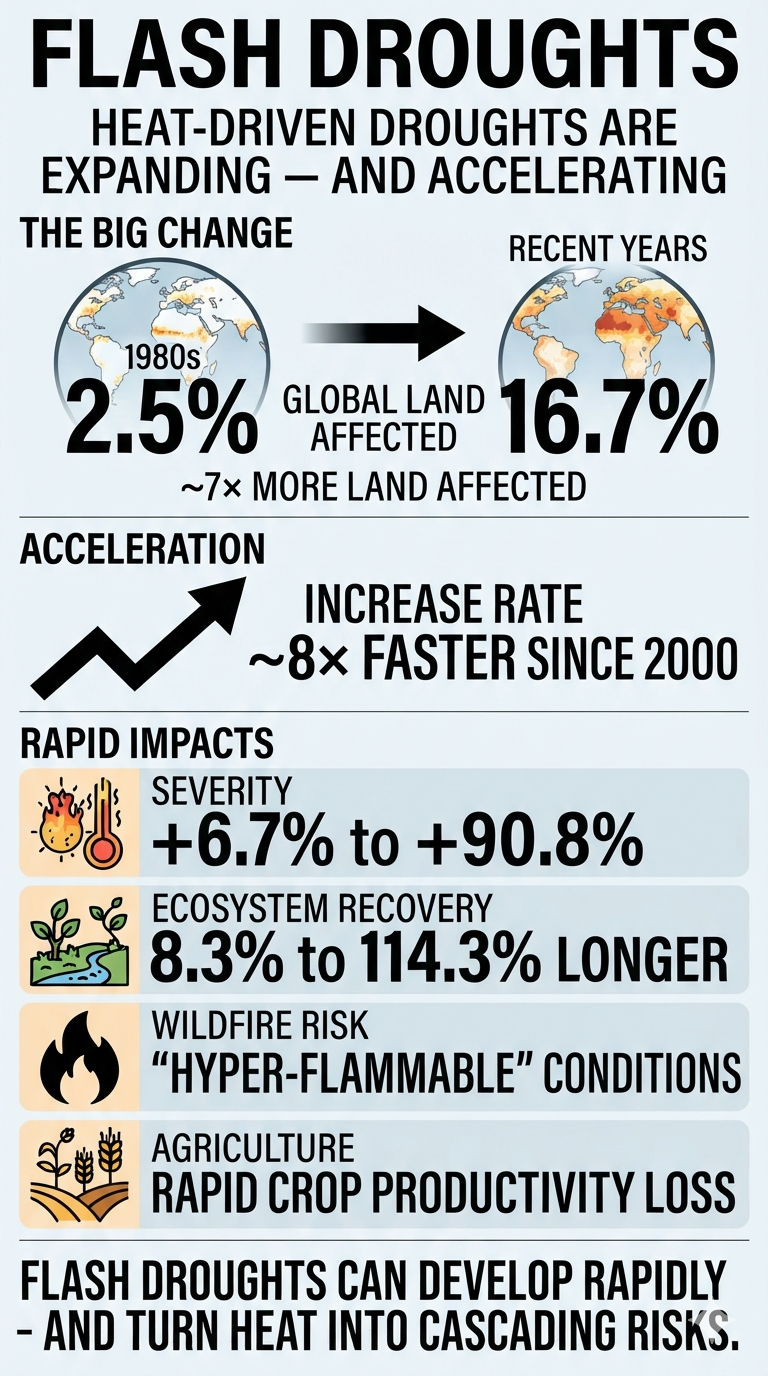
Flash droughts are one of the three fastest-accelerating climate extremes. The share of global land affected by heat-driven drought has expanded dramatically—from approximately 2.5% in the 1980s to 16.7% in recent years. The rate of increase has also accelerated, rising roughly eightfold since 2000.
This shift is important because heat-triggered droughts behave differently from conventional droughts. Rather than developing gradually over months or years, they can emerge within weeks, leaving agriculture, ecosystems, water managers, and communities with far less time to respond.
The Impact
Heat-triggered flash droughts are rapid-onset, severe moisture deficits initiated or intensified by extreme heat and unusually high atmospheric dryness, rather than simply by a prolonged lack of precipitation.
Think of the process as a high-powered hair dryer aimed at the landscape. Extreme heat and dry air rapidly pull moisture from vegetation and soils. As available moisture disappears, plants become stressed, agricultural productivity declines, wildfire danger rises, and water supplies can deteriorate—all on a timescale far shorter than that of conventional drought.
The result is a compound climate hazard in which heat and drought reinforce one another, producing impacts that can escalate rapidly.
The Mechanics of “Hair Dryer” Droughts
Conventional droughts often develop gradually, giving ecosystems and communities more time to adjust. Flash droughts can materialize within weeks, particularly when extreme heat coincides with atmospheric dryness.
1. Evapotranspiration Spike
Extreme temperatures combined with a high vapor pressure deficit (VPD) increase the atmosphere’s demand for moisture. Water is transferred from soil and vegetation into the atmosphere at an unsustainable rate.
This accelerated evapotranspiration rapidly depletes soil moisture and places plants under severe water stress.
2. Soil Overheating
Normally, evaporation of soil moisture helps cool the land surface. As soil moisture disappears, that evaporative cooling weakens.
The ground therefore heats more intensely, creating a feedback loop:
Less soil moisture → less evaporative cooling → hotter soil → greater plant stress → greater moisture loss
The result can be intense soil-temperature extremes that further damage vegetation and agricultural productivity.
3. Regional Differences
The development of heat-triggered flash droughts varies with regional climate and ecosystem characteristics.
In high-latitude and relatively wet regions, extreme heat can rapidly accelerate moisture extraction because vegetation and soils initially contain substantial amounts of water.
In subtropical regions, plants may respond by closing their stomata to conserve water. This can slow immediate moisture loss but also restrict photosynthesis and carbon uptake, increasing longer-term ecosystem stress.
Cascading Ecological Impacts
The combination of extreme heat and rapidly developing dryness can produce impacts substantially greater than those associated with conventional flash droughts.
Metric
Heat-Triggered Flash Drought
Conventional Flash Drought
Severity
6.7%–90.8% higher severity
Baseline severity
Ecosystem Recovery
8.3%–114.3% longer recovery times
Normal recovery trajectory
Wildfire Risk
Can create “hyper-flammable” conditions
Elevated baseline fire risk
Primary Agricultural Impact
Can rapidly devastate cropland productivity
General agricultural stress
These differences matter because ecosystems may not simply experience a more severe drought—they may experience a faster and more damaging transition from normal conditions to extreme environmental stress.
The Hyper-Flammability Multiplier
One of the most dangerous consequences occurs when a heat-triggered flash drought overlaps an existing conventional drought.
The slow drought has already depleted vegetation and soil moisture. The sudden arrival of extreme heat and atmospheric dryness then accelerates the drying process, pushing vegetation toward an exceptionally flammable state.
This creates a hyper-flammability multiplier:
Existing drought → Extreme heat + dry atmosphere → Rapid vegetation and soil drying → Loss of natural moisture + evaporative cooling → Hyper-flammable landscape → Faster-spreading, more intense wildfires
Once ignited, fires in these conditions can spread more rapidly, burn with greater intensity, and become substantially more difficult to contain.
A Rapidly Escalating Compound Hazard
Heat-triggered flash droughts demonstrate why temperature, atmospheric moisture, soil moisture, drought, and wildfire cannot always be treated as independent hazards.
Extreme heat can accelerate moisture loss. Moisture loss can increase land-surface temperatures. Hotter, drier vegetation becomes more flammable. Wildfires then add another layer of ecological and economic damage.
What once might have been a gradual drought can therefore become a rapidly escalating compound disaster—one capable of overwhelming agricultural, ecological, and emergency-response systems before communities have sufficient time to adapt.
The Four Main Types of Drought—and Where Flash Droughts Fit
Drought is not a single phenomenon. It can be classified according to where the water deficit occurs and how it affects the environment and society. Meteorological drought occurs when a region receives substantially less precipitation than its historical average over a defined period. Agricultural drought occurs when soil moisture falls below levels needed to support healthy plant growth, often intensified by high temperatures and accelerated evapotranspiration. Hydrological drought develops as prolonged water shortages reduce streamflow, river levels, reservoirs, lakes, and groundwater supplies. Socioeconomic drought occurs when limited water supplies begin affecting society, including drinking water, agriculture, energy production, industry, food prices, and other economic systems.
Where Do Flash Droughts Fit?
Flash drought is different from these four categories because it describes the speed and mechanism of drought development, rather than simply the sector or water reservoir being affected.
A flash drought can develop rapidly—often within weeks—when unusually high temperatures, atmospheric dryness, and accelerated evapotranspiration rapidly deplete soil moisture.
In other words, flash drought is best understood as a rapid-onset pathway into agricultural and potentially hydrological drought, rather than a completely separate fifth category.
Meteorological drought → reduced precipitation Heat-triggered flash drought → extreme heat + atmospheric dryness → rapid moisture loss Agricultural drought → depleted soil moisture → crop and vegetation stress Hydrological drought → depleted streams, reservoirs, and groundwater Socioeconomic drought → water shortages → impacts on people and the economy
Importantly, these pathways do not always occur in sequence. A flash drought can develop with little initial precipitation deficit when extreme heat and high atmospheric moisture demand rapidly extract water from soils and vegetation.
This is what makes heat-triggered flash droughts particularly dangerous: the landscape can transition from relatively normal conditions to severe agricultural and wildfire stress in a matter of weeks, leaving considerably less time for detection, adaptation, and response.
I’m wondering whether there is any way to quantify whether precipitation is now falling more rapidly over smaller areas and closer to where the moisture originates, potentially contributing to historically high-volume flooding. Conversely, could less precipitation falling over broader areas be contributing to worsening drought and diminishing inland snowpack? Is there any long-term tracking of atmospheric moisture transport distances that could show whether these patterns have changed over the decades?
Yes—what you’re describing is a real area of hydrologic and atmospheric research. Scientists can track both where atmospheric moisture originates and how far it travels before being precipitated out. In general, atmospheric moisture remains in the atmosphere for about 9 days before being “rained out” as precipitation.
Several measurements are useful for this:
* Integrated Vapor Transport (IVT) measures the amount and direction of water vapor being transported through the atmosphere. It is especially useful for tracking atmospheric rivers. * Back-trajectory and moisture-source models can trace air parcels backward to estimate where their moisture originated and how long it remained in the atmosphere. * Precipitable water measures the total amount of water vapor contained in an atmospheric column. * Moisture recycling ratios estimate how much precipitation comes from local/regional evaporation versus moisture transported in from elsewhere.
Long-term reanalysis datasets allow researchers to examine changes in these patterns over decades.
So your hypothesis can actually be broken into several measurable questions: Is atmospheric moisture traveling shorter distances before precipitating? Are precipitation events becoming more spatially concentrated? Is the duration or distance of moisture transport changing? Are moisture transport corridors becoming more intense?
There is an important distinction, though. A warmer atmosphere can hold substantially more water vapor—roughly **7% more per °C of warming**—which can increase the amount of moisture available to storms. At the same time, changes in circulation can alter where that moisture is transported and where it ultimately falls.
That could potentially contribute to the pattern you’re describing: **more intense precipitation over smaller areas in some regions, while other areas experience longer dry periods and declining snowpack.** But I wouldn’t assume that the moisture is necessarily traveling a shorter distance without testing it against the atmospheric-transport data.
What would be particularly interesting is to construct a **multi-decadal moisture-transport analysis** using reanalysis data. We could compare, say, 1950–1980, 1980–2000, and 2000–2025 for:
1. Average moisture-transport distance 2. Moisture residence time 3. Geographic source regions 4. IVT intensity 5. Size of precipitation footprints 6. Precipitation intensity within those footprints 7. Fraction of precipitation coming from local vs. remote moisture 8. Changes in snowpack and drought following changes in those patterns
That would let us test whether the hydrologic cycle is becoming **more spatially concentrated and more episodic**, rather than simply asking whether total precipitation is increasing or decreasing.
I think that is a very interesting question—and importantly, it is testable with existing atmospheric reanalysis and hydrologic datasets.
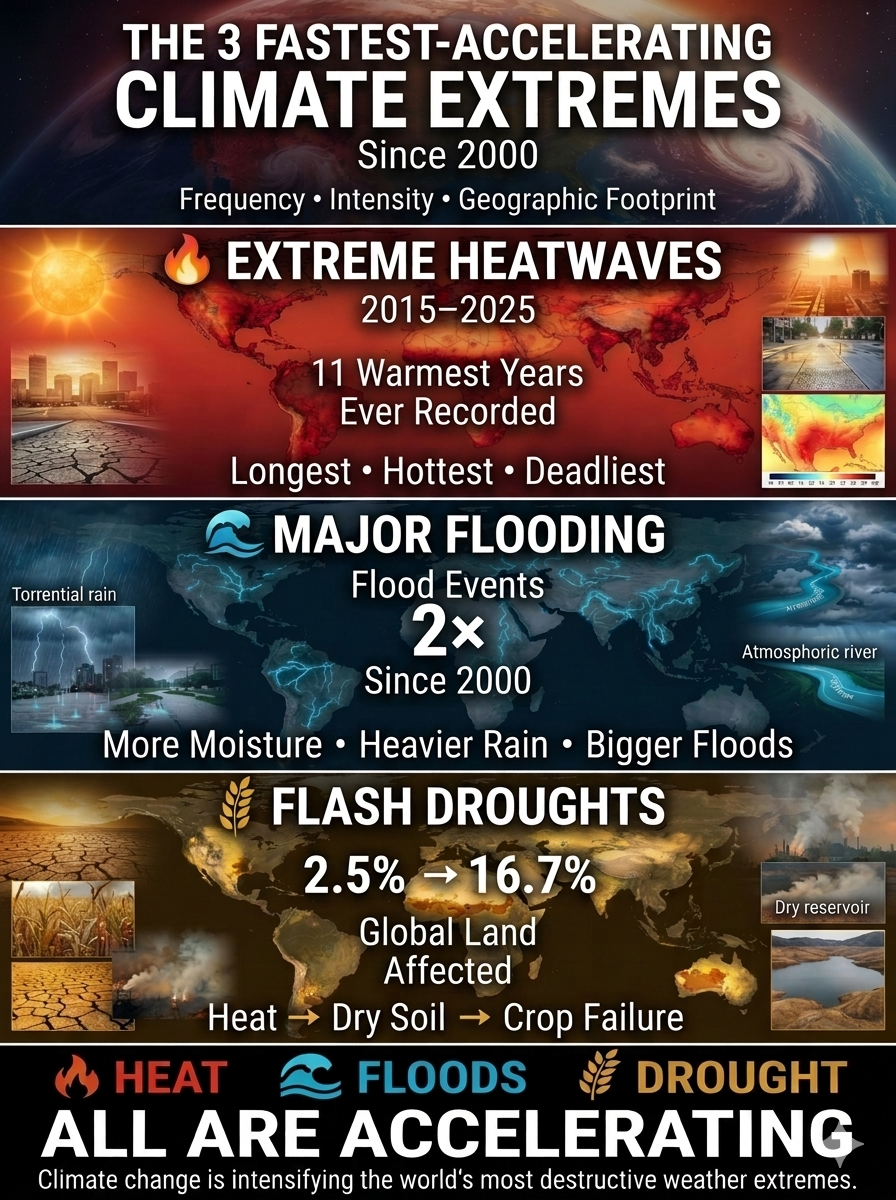
Since 2000, three climate extremes have accelerated faster than all others in their frequency, intensity, and geographic reach: extreme heatwaves, major flooding, and heat-triggered flash droughts.
1. Extreme Heatwaves The Trend: The years 2015–2025 were the 11 warmest years ever recorded globally. The Impact: Heatwaves have become dramatically longer, hotter, and more widespread, producing record-breaking temperatures on every continent. They now account for the largest share of climate-related deaths worldwide and increasingly strain power grids, agriculture, water supplies, and public health systems.
2. Major Flooding & Extreme Rainfall The Trend: According to United Nations disaster records, major flood events have more than doubled since 2000, increasing from approximately 1,389 events to more than 3,254. The Impact: As the atmosphere warms, it holds significantly more water vapor, intensifying the global water cycle. The result is a sharp rise in short-duration, high-intensity rainfall that overwhelms drainage systems, dams, rivers, and urban infrastructure.
3. Heat-Triggered Flash Droughts The Trend: The share of global land affected by heat-driven drought has expanded from 2.5% in the 1980s to 16.7% in recent years, with the rate of increase accelerating roughly eightfold since 2000. The Impact: Unlike traditional droughts that develop over months, flash droughts can emerge within weeks. Extreme heat rapidly strips moisture from soils and vegetation, triggering sudden crop failures, water shortages, wildfire risk, and severe agricultural losses before communities have time to respond.
Bottom Line: These three extremes—extreme heat, extreme flooding, and flash droughts—are no longer isolated events. They are accelerating simultaneously, amplifying one another, and reshaping climate risk across the globe. Together, they represent the clearest evidence that climate change is driving a new era of increasingly frequent, intense, and widespread extreme weather.
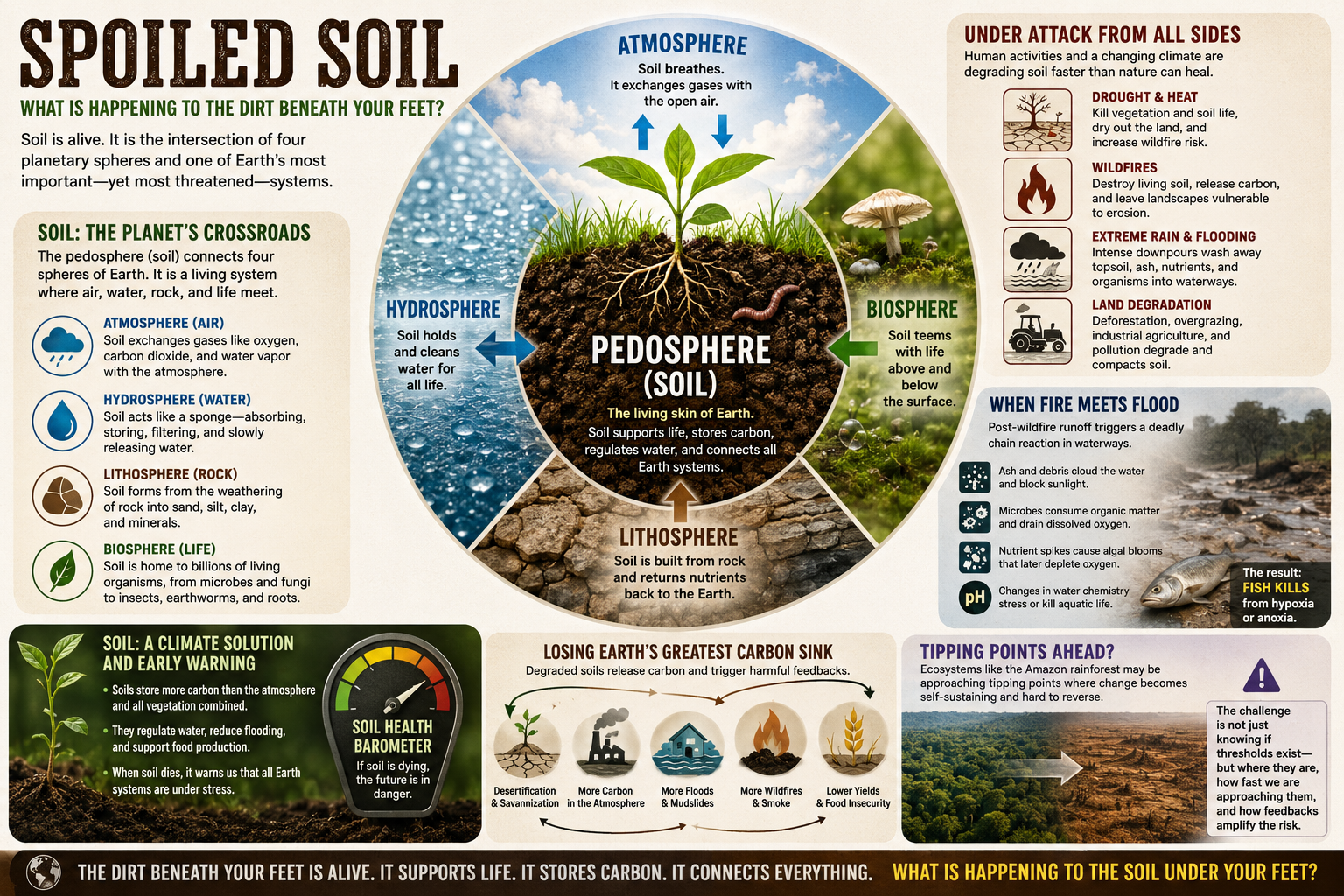
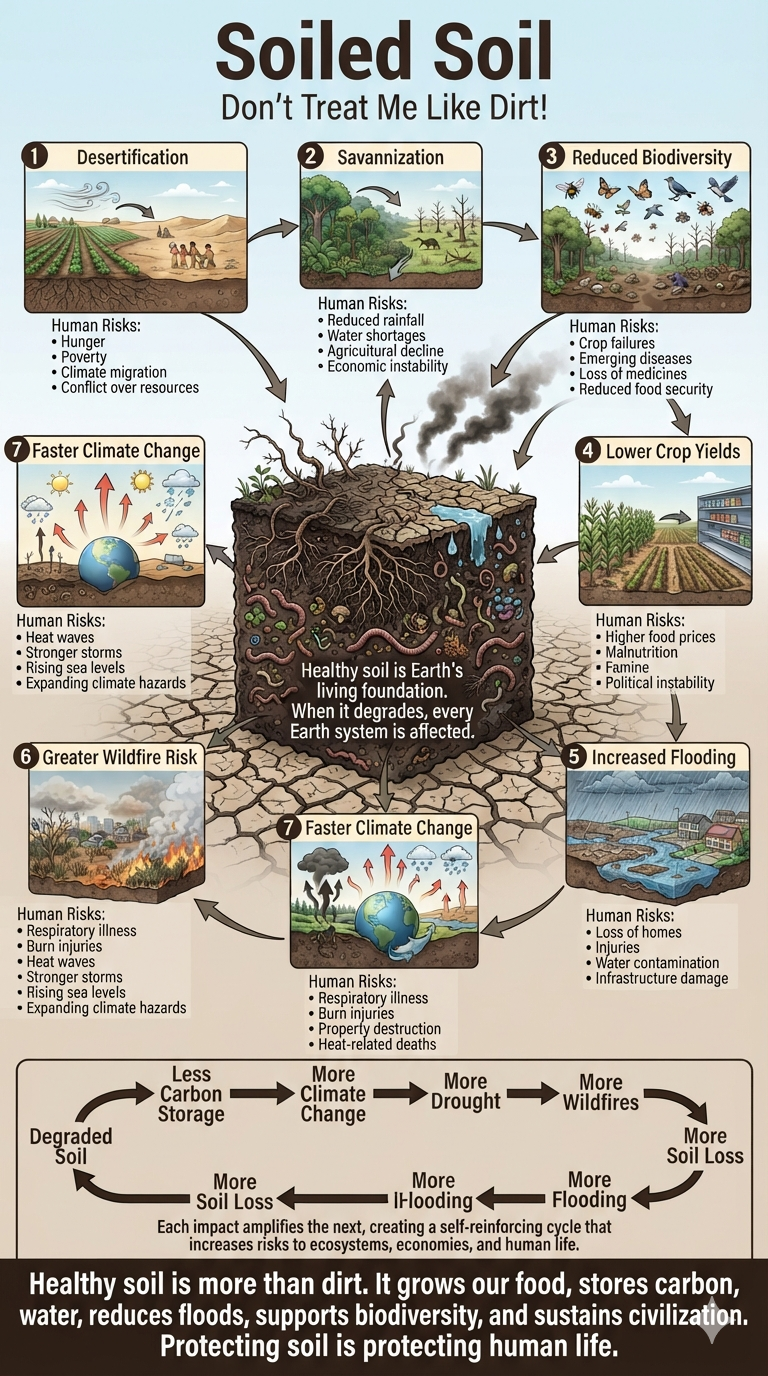
Most people think of soil as nothing more than dirt. In reality, healthy soil may be one of the most important—and overlooked—parts of Earth’s climate system. Unlike the atmosphere, oceans, or glaciers, soil is alive.
A single handful of healthy soil contains billions of living organisms: bacteria, fungi, insects, earthworms, and countless other forms of life. Together, they recycle nutrients, store carbon, filter water, and support nearly every plant on Earth. Without healthy soil, there is no healthy ecosystem.
The Planet’s Crossroads
Soil is unique because it lies at the intersection of Earth’s major systems. Scientists classify it as its own domain, the pedosphere (from the Greek pedon, meaning soil or earth).
The pedosphere connects four planetary spheres:
Atmosphere (Air): Soil constantly exchanges oxygen, carbon dioxide, methane, and water vapor with the atmosphere.
Hydrosphere (Water): Soil absorbs, stores, filters, and slowly releases water, acting like a giant natural sponge.
Lithosphere (Rock): Soil forms from the weathering of rock into sand, silt, clay, and minerals.
Biosphere (Life): Soil is home to an astonishing diversity of plants, fungi, microbes, insects, and animals.
Because every one of these systems depends on healthy soil, changes in soil often reveal changes occurring throughout the entire Earth system.
Soil: A Living Climate Indicator
Healthy soil stores enormous amounts of carbon—more than the atmosphere and all vegetation combined. It also regulates water, reduces flooding, supports agriculture, and provides habitat for countless organisms.
When soil begins to deteriorate, it serves as an early warning that multiple environmental systems are under stress.
Unfortunately, human activities are placing unprecedented pressure on soils worldwide. Climate change, deforestation, intensive agriculture, pollution, and urban development are accelerating soil degradation faster than many ecosystems can recover.
Hydroclimatic Whiplash
One of the clearest examples is hydroclimatic whiplash—rapid swings between severe drought and intense rainfall.
Extended drought weakens vegetation, dries out soils, kills soil organisms, and greatly increases wildfire risk.
Then the weather often swings in the opposite direction.
Atmospheric rivers, microbursts, and other extreme rain events produce intense runoff that washes away the already damaged landscape. Instead of soaking into healthy soil, the water carries ash, sediment, nutrients, and debris into streams, rivers, and lakes.
This creates a cascade of environmental damage.
When Fire Meets Flood
Scientists refer to these events as post-wildfire runoff or rain-on-wildfire events.
The chain reaction can be devastating:
Ash and debris cloud the water and block sunlight.
Microorganisms rapidly consume the incoming organic material, using up dissolved oxygen.
Nutrients such as nitrogen and phosphorus trigger algal blooms that later consume even more oxygen as they decay.
Changes in water chemistry stress or kill aquatic organisms.
The result is often a fish kill, caused by hypoxia (dangerously low oxygen) or anoxia (complete oxygen depletion).
What began as a wildfire on land becomes an ecological disaster throughout an entire watershed.
Losing One of Earth’s Greatest Carbon Sinks
Healthy soils are among Earth’s largest natural carbon sinks. As soils degrade, they lose their ability to store carbon and instead may release additional greenhouse gases into the atmosphere.
The consequences extend far beyond agriculture.
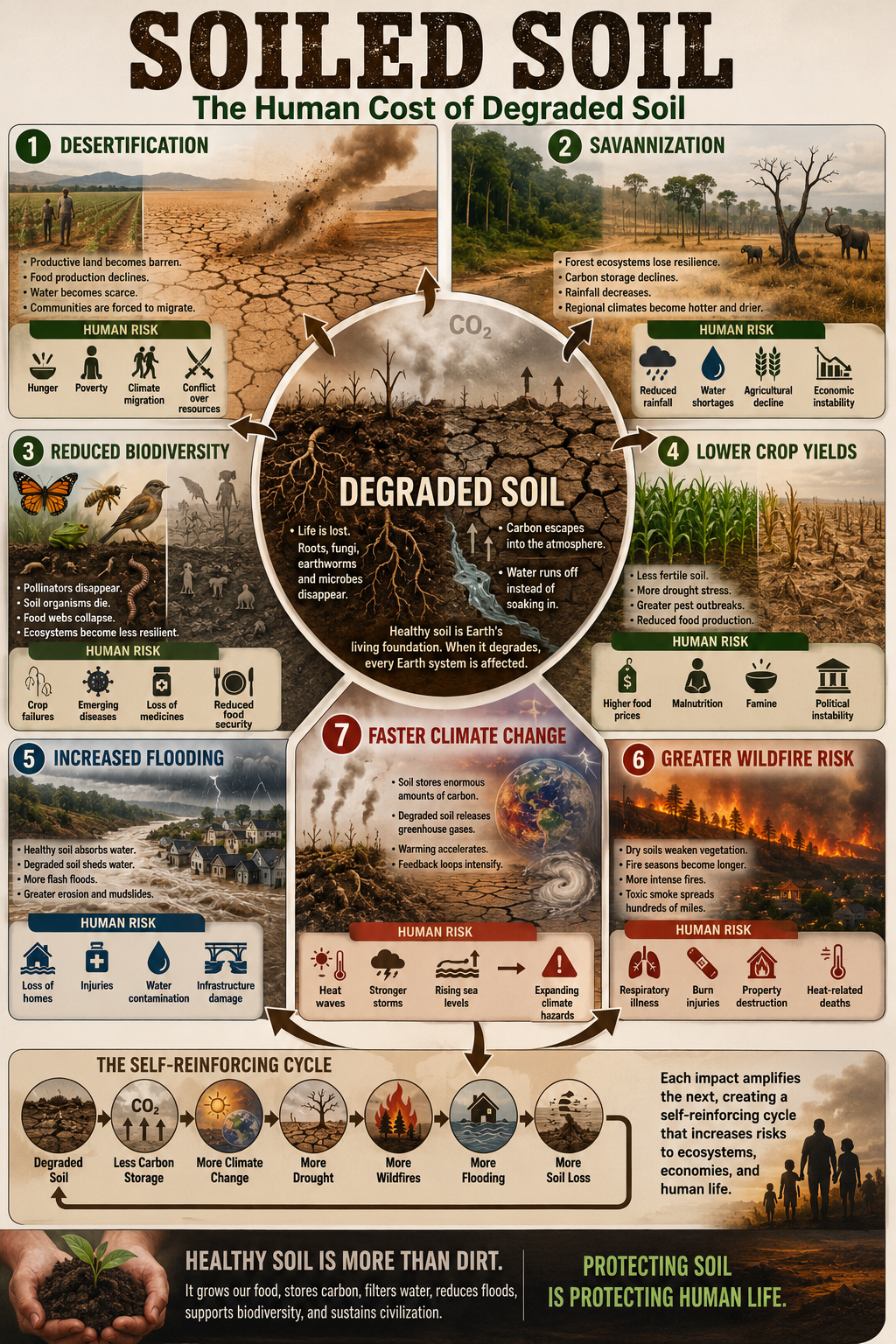
Degraded soils contribute to:
Desertification
Savannization
Reduced biodiversity
Lower crop yields
Increased flooding
Greater wildfire risk
Faster climate change
Each of these impacts can reinforce the others, creating self-amplifying feedback loops that become increasingly difficult to reverse.
Why Scientists Are Concerned
Many scientists are studying whether some of Earth’s major ecosystems are approaching critical tipping points.
One of the most closely watched examples is the Amazon rainforest. Continued warming, drought, deforestation, and fire could reduce parts of the forest’s ability to sustain itself, transforming sections into a drier, more open landscape. While considerable uncertainty remains about exactly where these thresholds lie, growing evidence suggests that several Earth systems are becoming less resilient.
The challenge is no longer simply determining whether tipping points exist.
It is identifying where they are, how quickly we are approaching them, and how multiple feedback loops may interact to accelerate change.
We often look to melting glaciers, rising seas, stronger storms, or record-breaking temperatures as signs of climate change.
But one of the clearest indicators may be much closer.
The dirt beneath your feet is not just dirt.
It is a living ecosystem, a massive carbon reservoir, a water filter, the foundation of agriculture, and the meeting place of Earth’s atmosphere, water, rock, and life.
If the soil is becoming less healthy, it is a warning that the entire planetary system is under increasing stress.
The next time you stand on the ground, consider this question:
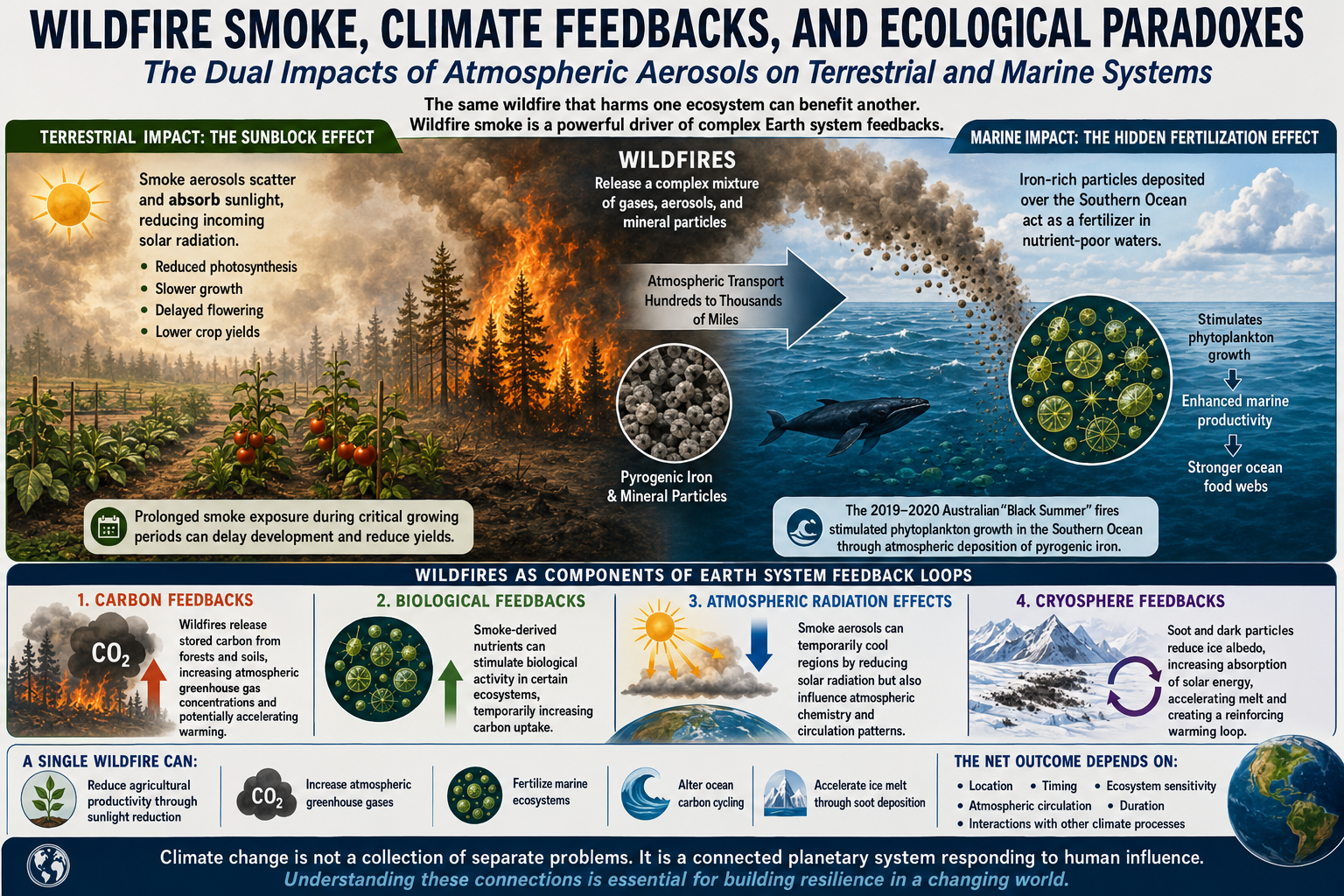
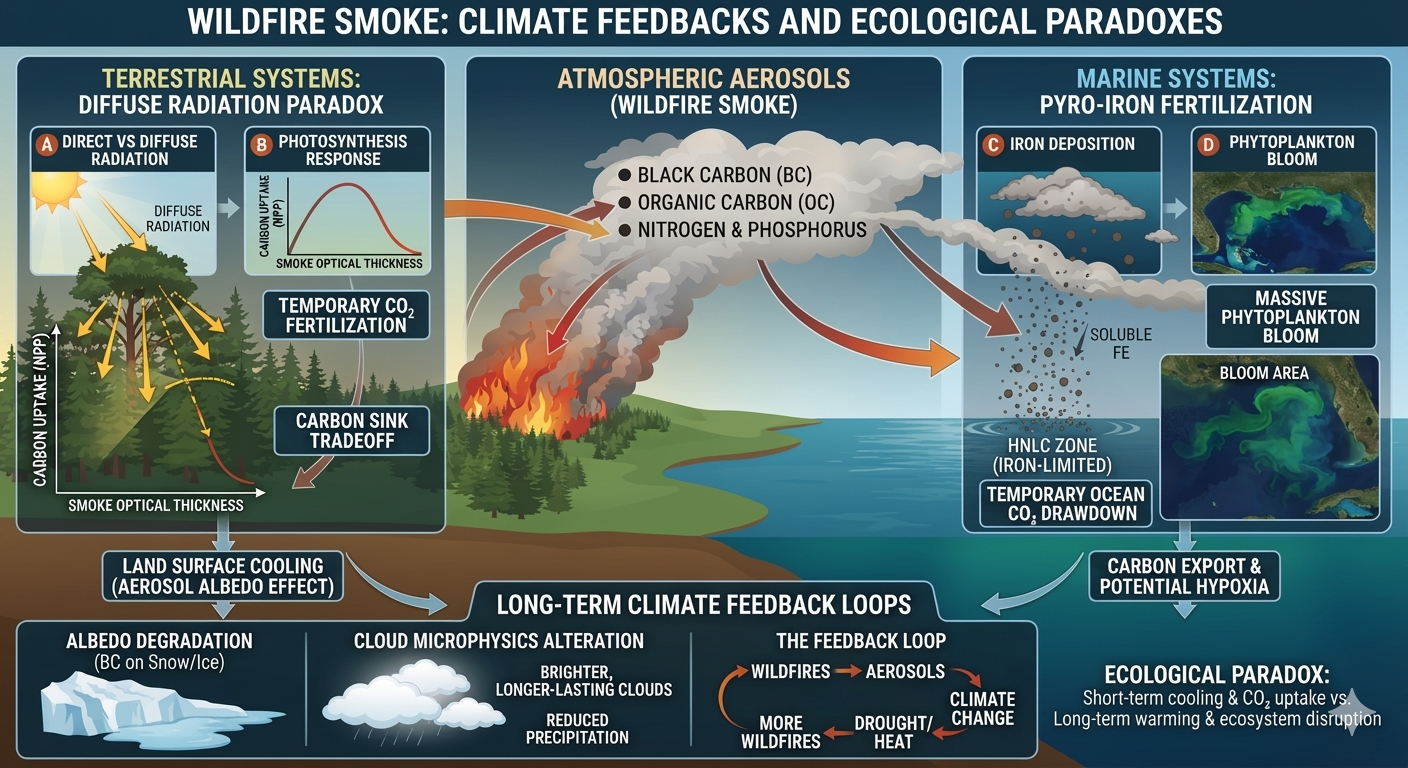
Wildfire Smoke, Climate Feedbacks, and Ecological Paradoxes: The Dual Impacts of Atmospheric Aerosols on Terrestrial and Marine Systems
Abstract
Wildfire smoke is an increasingly important variable in understanding climate impacts, ecosystem responses, and agricultural productivity. Prolonged smoke exposure can significantly reduce incoming solar radiation, creating a “sunblock” effect that suppresses photosynthesis, delays plant development, and reduces agricultural yields. However, wildfire emissions also generate complex ecological interactions that can produce unexpected secondary effects.
The same wildfire event that damages terrestrial ecosystems through heat, smoke, and carbon emissions can stimulate biological productivity in distant marine environments through nutrient deposition. The 2019–2020 Australian “Black Summer” wildfire season provides a striking example: enormous quantities of pyrogenic iron contained within smoke and ash aerosols were transported over the Southern Ocean, triggering significant phytoplankton growth. These contrasting effects demonstrate that wildfire impacts cannot be understood through a single-variable framework.
Wildfire aerosols represent a component of a broader Earth system feedback network involving atmospheric chemistry, biological productivity, carbon cycling, and cryospheric changes. Understanding these interactions is essential for accurately assessing future climate trajectories.
1. Introduction
Climate change is altering the frequency, intensity, and geographic distribution of wildfire activity. Rising temperatures, prolonged droughts, and changing atmospheric circulation patterns are contributing to longer fire seasons and more extreme fire behavior.
Wildfires are often evaluated primarily through their immediate destructive impacts:
carbon dioxide emissions,
habitat loss,
human health effects,
infrastructure damage,
agricultural disruption.
However, wildfire smoke is not merely a pollutant. It is a complex atmospheric mixture containing gases, organic compounds, black carbon, minerals, and nutrients that can interact with ecosystems thousands of miles away.
These interactions reveal an important principle of Earth system science:
A climate disturbance can simultaneously create damaging effects in one system while stimulating biological activity in another.
2. The Agricultural Impact of Wildfire Smoke
One of the most direct effects of wildfire smoke on agriculture is the reduction of incoming solar radiation.
Smoke particles suspended in the atmosphere scatter and absorb sunlight, reducing the amount of photosynthetically active radiation reaching plants. During critical growing periods, this reduction can have measurable consequences:
slower plant growth,
delayed flowering,
reduced fruit development,
lower crop yields.
Backyard gardens and small-scale agricultural systems can be particularly sensitive because they often rely on seasonal sunlight thresholds. Extended periods of smoke exposure during June through August, for example, can interrupt peak growing conditions and delay maturation until clearer atmospheric conditions return.
This effect represents a climate-related agricultural stressor that may become increasingly important as wildfire seasons expand.
3. The Hidden Fertilization Effect of Wildfires
Despite these negative impacts, wildfire emissions can also create unexpected ecological benefits in specific environments.
A notable example occurred during Australia’s Black Summer wildfire season (2019–2020). These fires were among the largest recorded in modern Australian history, releasing enormous quantities of carbon, smoke aerosols, and mineral particles into the atmosphere.
Researchers observed a major increase in phytoplankton productivity in portions of the Southern Ocean following the fires.
The mechanism was not the carbon itself, but rather pyrogenic iron contained within wildfire smoke and ash.
Iron is a limiting nutrient in many ocean regions. When wildfire-derived iron particles were transported over the ocean and deposited into nutrient-poor waters, they acted as a fertilizer, stimulating the growth of phytoplankton—microscopic marine algae that form the foundation of ocean food webs.
This created a paradox:
The wildfire released massive quantities of greenhouse gases.
The same wildfire also temporarily enhanced marine biological productivity.
4. Wildfires as Components of Earth System Feedback Loops
The wildfire example demonstrates why climate systems cannot be evaluated through isolated cause-and-effect relationships.
Wildfires interact with multiple feedback mechanisms:
4.1 Carbon Feedbacks
Wildfires release stored carbon from forests and soils, increasing atmospheric greenhouse gas concentrations and potentially accelerating warming.
4.2 Biological Feedbacks
Smoke-derived nutrients can stimulate biological activity in certain ecosystems, temporarily increasing carbon uptake.
4.3 Atmospheric Radiation Effects
Smoke aerosols can temporarily cool regions by reducing solar radiation but can also influence atmospheric chemistry and circulation patterns.
4.4 Cryosphere Feedbacks
One of the most important long-term concerns is the effect of wildfire soot and dark particles deposited onto snow and ice.
Normally, snow and ice reflect a large portion of incoming solar radiation through the ice albedo effect. When dark particles accumulate on these surfaces:
Reflectivity decreases.
More solar energy is absorbed.
Melting accelerates.
Darker surfaces are exposed.
Additional warming occurs.
This creates a reinforcing feedback loop that can accelerate ice loss.
5. The Challenge of Modeling Nonlinear Climate Systems
Wildfire impacts highlight a fundamental challenge in climate science: Earth is not a collection of independent systems.
Atmosphere, oceans, land ecosystems, and the cryosphere are interconnected through feedback mechanisms.
A single wildfire can:
reduce agricultural productivity through sunlight reduction,
increase atmospheric greenhouse gases,
fertilize marine ecosystems,
alter ocean carbon cycling,
accelerate ice melt through soot deposition.
The net outcome depends on:
location,
timing,
ecosystem sensitivity,
atmospheric circulation,
duration,
and interactions with other climate processes.
These nonlinear interactions make climate prediction challenging because small changes in one part of the system can produce unexpected consequences elsewhere.
6. Conclusion
Wildfire smoke represents a powerful example of the complexity of climate change impacts. While smoke exposure can reduce sunlight, harm crops, and threaten human health, wildfire aerosols can also transport nutrients that stimulate biological productivity in distant ecosystems.
The Australian Black Summer fires demonstrate that climate impacts are rarely purely positive or negative. They are part of a dynamic Earth system where destructive processes can simultaneously trigger secondary effects across continents and oceans.
Understanding these interactions requires moving beyond simple cause-and-effect thinking and recognizing climate change as an interconnected system of feedbacks.
The challenge ahead is not merely predicting individual climate events. It is understanding how thousands of interacting processes combine to reshape the stability of Earth’s environmental systems.
Climate change is not a collection of separate problems. It is a connected planetary system responding to human influence.