by Daniel Brouse
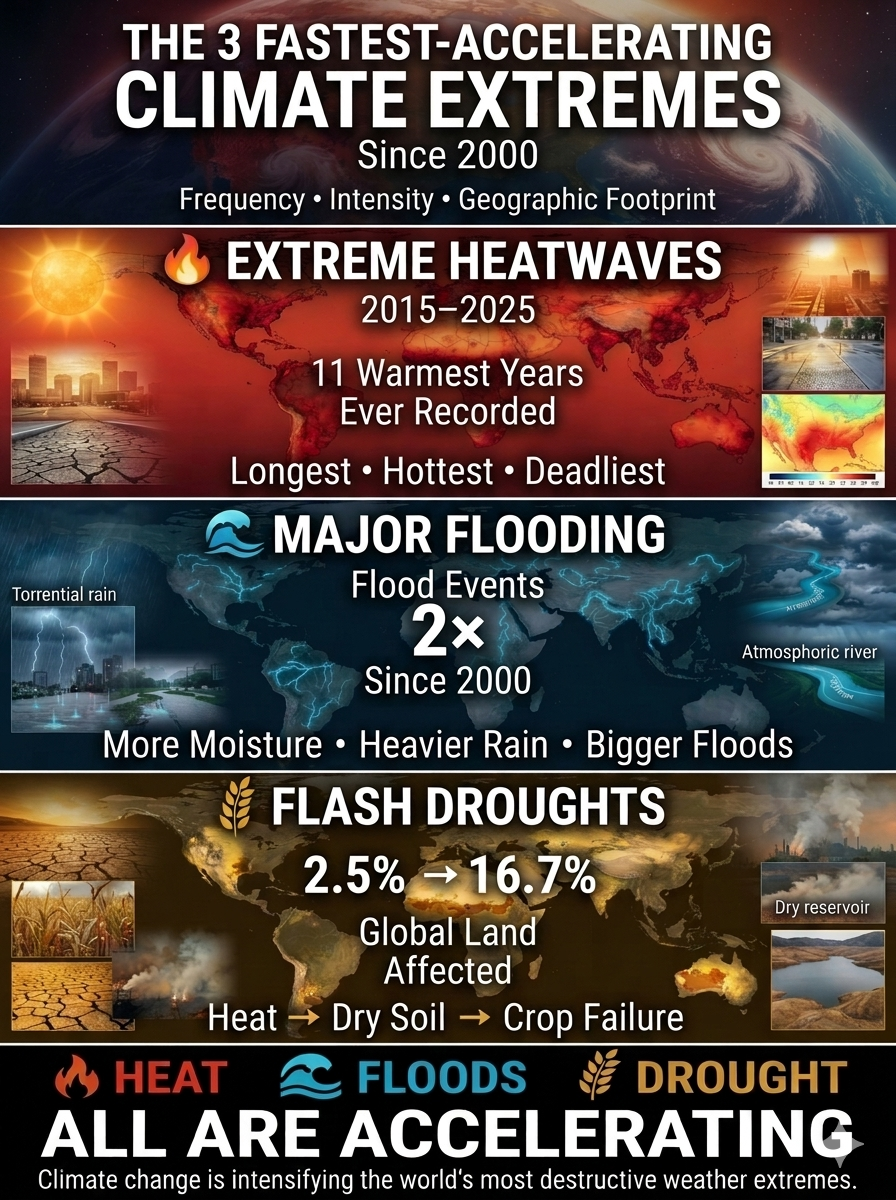
Since 2000, three climate extremes have accelerated faster than all others in their frequency, intensity, and geographic reach: extreme heatwaves, major flooding, and heat-triggered flash droughts.
1. Extreme Heatwaves
The Trend: The years 2015–2025 were the 11 warmest years ever recorded globally.
The Impact: Heatwaves have become dramatically longer, hotter, and more widespread, producing record-breaking temperatures on every continent. They now account for the largest share of climate-related deaths worldwide and increasingly strain power grids, agriculture, water supplies, and public health systems.
2. Major Flooding & Extreme Rainfall
The Trend: According to United Nations disaster records, major flood events have more than doubled since 2000, increasing from approximately 1,389 events to more than 3,254.
The Impact: As the atmosphere warms, it holds significantly more water vapor, intensifying the global water cycle. The result is a sharp rise in short-duration, high-intensity rainfall that overwhelms drainage systems, dams, rivers, and urban infrastructure.
3. Heat-Triggered Flash Droughts
The Trend: The share of global land affected by heat-driven drought has expanded from 2.5% in the 1980s to 16.7% in recent years, with the rate of increase accelerating roughly eightfold since 2000.
The Impact: Unlike traditional droughts that develop over months, flash droughts can emerge within weeks. Extreme heat rapidly strips moisture from soils and vegetation, triggering sudden crop failures, water shortages, wildfire risk, and severe agricultural losses before communities have time to respond.
Bottom Line:
These three extremes—extreme heat, extreme flooding, and flash droughts—are no longer isolated events. They are accelerating simultaneously, amplifying one another, and reshaping climate risk across the globe. Together, they represent the clearest evidence that climate change is driving a new era of increasingly frequent, intense, and widespread extreme weather.