bookmark_borderThe Alarming Rise of Political Eugenics in U.S. Public Health Policy

The Trump administration has reignited global concerns about eugenics through its direct interference in science and public health. The latest controversy centers on the firing of the CDC director, followed by the resignation of four senior colleagues in protest. Their departures, citing the politicization of the agency and the deliberate manipulation of scientific data, mark a troubling erosion of trust in one of the world’s most critical health institutions.

Compounding the crisis, Robert F. Kennedy, Jr. has advanced policies that eliminate COVID-19 vaccinations for nearly the entire population, leaving access only for a select few. This decision is widely interpreted by public health experts as an assault on the most vulnerable groups—the elderly, the immunocompromised, and those with chronic illnesses. By stripping away essential protections, these moves are viewed as a calculated attempt at social Darwinism, where the weakest are effectively abandoned to disease.

Such actions reflect a disturbing convergence of politics and ideology with echoes of eugenics. Public health policy is being weaponized not to protect life, but to selectively determine whose lives are valued. The consequences are dire—not only for those directly at risk of COVID-19, but for the precedent it sets in allowing governments to ration care and manipulate science for ideological ends.

We don’t actually know who can get vaccinated right now—it’s not clear who is eligible, and it’s not even clear if insurance will consistently cover the cost. That uncertainty isn’t accidental. The committee responsible for approving the shot has been stacked with liars and frauds and isn’t even scheduled to meet until later in September. Under normal circumstances, the booster would have been approved months ago by a legitimate board.

This eugenics push is designed to create confusion, cast doubt on science, and restrict access to life-saving care. White House Deputy Chief of Staff Stephen Miller’s ultimate aim is to control reproduction and increase the occurrence of traits he and his allies deem “desirable,” with their main thrust being to weed out the “weak” before they breed. Stephen Miller has even defended HHS Secretary Robert F. Kennedy, Jr. after the firing of CDC Director Susan Monarez, calling Kennedy “one of the world’s foremost voices, advocates, and experts on public health,” and praising him as “a crown jewel of this administration” working to “restore the credibility and integrity of the CDC as a scientific organization.”

But the danger extends to the entire population—we already saw the deadly consequences during Trump’s first administration, when millions died needlessly.

This moment demands vigilance. Scientists, health professionals, and the public must recognize the stakes: the erosion of evidence-based policy, the marginalization of vulnerable populations, and the dangerous normalization of eugenic thinking in modern governance.

Trumpenomics: The Decline of the US

bookmark_borderWhy Fasting Beyond 12 Hours Can Harm Your Health—and What to Do Instead

by Daniel Brouse
August 26, 2025

Fasting has gained popularity in recent years as a supposed way to detox, lose weight, or improve longevity. However, the science tells a more complex story. While short periods without food may not be harmful for everyone, prolonged fasting—especially beyond 12 hours—can negatively affect your health in significant ways.

The Hidden Risks of Extended Fasting

Going without food for more than half a day disrupts the delicate balance of gut bacteria, which play a central role in overall health. When your gut microbiome is weakened, it compromises your immune system and can lead to systemic issues throughout the body. Research shows that disruptions in gut bacteria are linked to inflammation, poor digestion, and weakened disease resistance.

This imbalance doesn’t stop at digestion. A compromised gut microbiome has cascading effects on:

  • The gut-brain axis, influencing mood, cognition, and mental health.

  • The liver and kidneys, which become stressed without a steady supply of nutrients.

  • The stomach and intestines, where prolonged fasting can reduce protective mucosal lining and impair digestion.

  • The cardiovascular system, as fasting can disturb electrolyte balance and blood pressure regulation.

  • Neurological function, since the brain depends on steady glucose and nutrient delivery to operate optimally.

A Better Alternative: Balanced Small Meals

Rather than fasting, a more sustainable and health-supportive approach is eating four small meals per day. These meals should prioritize whole, non-processed foods rich in fiber, vitamins, and minerals. Most importantly, they must include complete proteins—nutrients essential for maintaining muscle, supporting cellular repair, and sustaining immune function.

Complete proteins are found in meat, dairy, and eggs. At least one small meal each day should include them to ensure the body receives the full range of essential amino acids. Notably, certain beneficial gut bacteria can only be supported through the consumption of bovine protein, highlighting the unique role animal proteins play in human health.

The Takeaway

While fasting may sound like a quick fix for health or weight loss, the risks often outweigh the benefits. Extended fasting undermines gut health, weakens immunity, and stresses vital organs. A diet of four balanced small meals, rich in unprocessed foods and complete proteins, provides a safer and more effective foundation for long-term health and vitality.

The gut microbiome goes through several important shifts over the course of a day, and these changes are closely tied to the body’s circadian rhythm. When fasting periods extend too long, this rhythm can be disrupted, throwing off the natural balance of microbial populations. These daily microbial cycles play a central role in regulating the sleep–wake cycle—certain populations become more active in the morning to help the body wake up, while others support rest and recovery at night. Coffee also connects into this system: research shows that drinking about two cups in the morning is associated with longer lifespan and multiple health benefits. Interestingly, these benefits appear to be strongest when coffee and a healthy morning gut microbiome are working in harmony.

Equally critical is the role of gut bacteria in nutrient metabolism. Most vitamins—especially B vitamins and vitamin K—depend on good gut bacteria for proper absorption and utilization. Without a healthy microbiome actively working throughout the day, even a nutrient-rich diet can fall short because your body simply can’t metabolize those vitamins effectively.

So while shorter fasting windows (12 hours or less) might be manageable for some, extending beyond that risks weakening both circadian balance and vitamin metabolism—two foundations of overall health.

Good Gut Bacteria

COVID, fasting, and other conditions can destroy good gut bacteria, resulting in a compromised immune system. Gut bacteria play several key roles in maintaining health, including communicating with the immune system and producing essential vitamins. Without healthy gut bacteria, even a vitamin-rich diet may not be effective—your body cannot properly metabolize most vitamins without them.

Most people first develop beneficial gut bacteria through their mother’s breast milk. Once lost, however, good gut bacteria are very difficult to reestablish. Ideally, breastfeeding for at least six months provides the foundation, but for adults, this is obviously not an option.

To rebuild a healthy microbiome, the body needs the right conditions:

  • Diversity of bacteria: 300–500 different strains.

  • Chemical building blocks for fermentation.

  • Ample dietary fiber, which is crucial for sustaining bacterial health.

It’s important to note that juicing and blending often remove or destroy much of the fiber. The best dietary sources of fiber include:

  • Beans and legumes

  • Whole grains

  • Brown rice

  • Popcorn

  • Nuts

  • Baked potatoes with skin

  • Berries

  • Bran cereal

Additionally, resistant starch is especially beneficial for gut bacteria. Good sources include cooked and cooled rice or potatoes, as well as whole grains like barley and oats.

Understanding Good Gut Bacteria

Guide To Edible Plants and Health Foods

NAD+ Plus Immune Boosting Diet

bookmark_borderThe Meme Stock Market: Why Wall Street Is Defying Economic Gravity

Why is the stock market still rising when nearly every other economic indicator is flashing red? Bonds are weakening, real estate is cooling, manufacturing is in decline, and employment growth is softening. Yet the stock market continues to show upward momentum, seemingly disconnected from fundamentals.

The answer lies in a fundamental transformation of the market structure itself. Since the pandemic, retail investors—empowered by platforms like Robinhood and fueled by stimulus checks, social media hype, and a near zero-interest-rate environment—have reshaped trading dynamics. This new phenomenon has given rise to what I call the “meme stock market.”

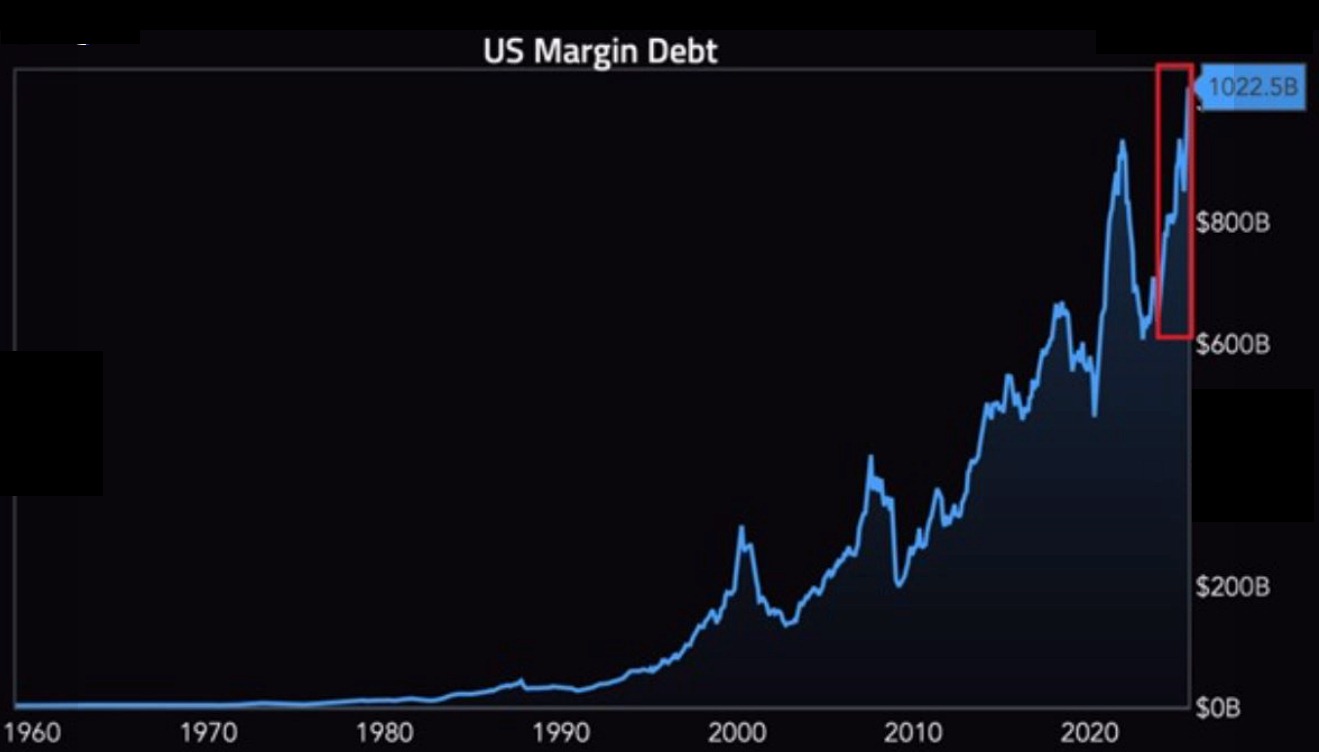
Unlike traditional investors, who rely on fundamentals such as earnings, revenue growth, or long-term sector trends, many retail traders are driven almost entirely by momentum, sentiment, and speculation. The trading models at play are not designed to build wealth over time; they are designed to exploit short-term volatility. This speculation is often amplified by leverage, margin accounts, and options trading, making swings more dramatic and less predictable.

The problem is that momentum-driven markets lack stability. They create the illusion of strength while quietly building fragility beneath the surface. As more money chases speculation rather than fundamentals, valuations drift further from reality, creating a bubble that cannot be sustained.

This bubble will almost certainly burst. And when it does, the unwinding will be severe. Because so many retail traders are using leveraged positions without effective downside protection, the correction will not simply be a normal pullback—it will be a violent contraction with significant ripple effects across the economy.

The stock market’s current behavior is not a sign of resilience but of distortion. It is being propped up by short-term speculation rather than long-term strength. Prudent investors should recognize the risks and approach this market with extreme caution.

Retail Investor’s Impact

Retail investors are individuals trading their own money through brokerage platforms, rather than through institutional structures like mutual funds, pensions, or endowments. While they don’t own the largest share of total market capitalization compared to institutions, their behavioral impact on the market is outsized relative to their percentage of ownership.

Here’s why:

  • Concentration of activity – Retail investors tend to pile into the same “meme” names or high-momentum stocks, amplifying volatility in ways that broad institutional strategies (like index funds) do not.

  • Leverage & options trading – Post-pandemic, we’ve seen an explosion of retail activity in leveraged products, including options and margin trading. For example, options volume is now dominated by contracts with less than 24 hours to expiration (“zero-day options”), and retail traders are a major driver of that activity. This behavior magnifies short-term swings.

  • Market signaling – Even though institutions hold more shares, they often respond to sentiment and volatility triggered by retail traders. In effect, retail flows can act as a spark that ignites much larger institutional moves.

  • High churn – The percentage of total market ownership by retail investors (estimated around 20–25% of U.S. equities) is less important than their trading behavior. Retail traders churn their portfolios at much higher rates than institutional investors, meaning the same dollars are moving in and out of positions far more rapidly. This turnover creates disproportionate price pressure compared to “buy and hold” strategies used by pensions and index funds.

The key issue isn’t retail investors’ overall share of ownership—it’s the outsized impact of their speculative, leveraged trading activity. Their rapid-fire churn has fundamentally reshaped market dynamics, injecting far more instability than their raw ownership percentages suggest.

As of the end of Q2 2025, Microsoft (MSFT), Apple (AAPL), and Nvidia (NVDA) together made up roughly 20% of the entire S&P 500 index. Because the index is market-cap weighted, this unprecedented concentration in just a handful of companies means that movements in these few stocks disproportionately drive the performance of the broader market.

Layer on top the influence of retail traders, whose momentum-driven strategies are detached from fundamentals, and the result is extreme volatility. In fact, on any given trading day, as much as 95% of index swings can be traced back to a combination of two forces: retail churn and the heavy concentration of market cap in a narrow set of tech giants. This creates the illusion of strength while masking deep fragility in the underlying economy.

Trumpenomics: The Decline of the US

US Margin Debt (Buying Stocks With Borrowed Money)

bookmark_borderTrump’s Attacks on the Fed and Economic Institutions Signal Escalating Risks

Last night, President Trump fired Lisa Cook from the board of the Federal Reserve—a move that has sparked widespread concern. Despite her refusal to step down, domestic markets appear relatively unshaken. However, international observers are sounding the alarm: the independence of the Federal Reserve is a cornerstone of global confidence in the U.S. economy.

Trump’s continued and increasingly aggressive efforts to undermine the Fed may be among his most destabilizing economic actions. While protectionist trade policies, tariffs, and nationalist policies already contribute to economic uncertainty, this latest move threatens the very framework that underpins financial stability. A common misunderstanding by Trump is that the Fed controls market interest rates. In reality, the Fed sets rates only for overnight lending between banks; broader market rates are determined independently by supply, demand, and investor expectations. Historically, even when the Fed has cut its short-term rates, long-term market rates have often risen in response—meaning that Trump’s interference is counterproductive to any goal of lowering borrowing costs.

These actions are eroding U.S. credibility, weakening the dollar’s status as the global reserve currency, and undermining the perception of American economic exceptionalism. Simultaneously, Trump is acquiring stakes in private firms such as U.S. Steel and Intel. The Department of Defense recently took a significant position in MP Materials, a U.S.-based rare earth minerals company. Meanwhile, Nvidia and AMD are reportedly remitting 15% of their revenue from certain AI chip sales to China to the U.S. government in exchange for export licenses. Earlier today, the Commerce Secretary signaled that the administration is exploring acquisitions of major defense contractors, including Lockheed Martin.

Together, these moves reflect a troubling shift toward a centralized, corporatist form of control, blurring the lines between government and private enterprise—a trend that many analysts view as a step toward fascism. The combination of undermining independent institutions, aggressive protectionism, and state involvement in private industry signals growing risks not only for the U.S. economy but for global financial stability.

Trumpenomics: The Decline of the US

bookmark_borderU.S. Manufacturing Hits Historic Lows: Durable Goods and Philly Fed Data Signal Economic Weakness

The latest economic indicators reveal a troubling slowdown in U.S. manufacturing. Durable goods orders and the manufacturing index both posted their worst levels since the 2020 pandemic, signaling a sharp contraction in industrial activity.

Philadelphia once again made headlines as the Philly Fed reported a historic decline in its new orders index, falling to -1.9. This marks a significant drop, reflecting weakening demand for manufactured products in the region. Economists note that a negative reading in the Philly Fed new orders index often correlates with broader declines in production, employment, and business investment, suggesting that U.S. manufacturing is under mounting stress.

The combination of sluggish durable goods orders and contracting regional manufacturing indicators underscores the potential for a broader economic slowdown. Rising trade tensions, high tariffs, and persistent supply chain disruptions are likely contributing factors, compounding challenges already posed by inflationary pressures and global uncertainty.

Analysts caution that unless consumer demand rebounds and supply chain issues are mitigated, these signals could foreshadow deeper recessional trends in the industrial sector in the months ahead.

Trumpenomics: The Decline of the US

bookmark_borderTrump’s Tariff Gambit Backfires: European Postal Services Halt Shipments to U.S.

Postal services across Europe are suspending parcel shipments to the United States amid mounting uncertainty over Donald Trump’s escalating tariff policies. At the center of the disruption is an executive order Trump signed last month, abolishing the long-standing tax exemption that allowed small packages worth less than $800 to enter the U.S. duty-free. That exemption, widely used by small European businesses, had been critical for maintaining affordable cross-border trade in consumer goods.

The new rule, which takes effect on August 29, removes a vital lifeline for entrepreneurs who relied on low-cost shipping to reach American customers. Without the exemption, even inexpensive goods—from clothing and electronics accessories to specialty foods—face complex customs procedures and potentially punishing tariffs.

The fallout has been swift. Several European postal services announced they would temporarily suspend shipments of small parcels to the U.S., citing both administrative uncertainty and cost concerns. For small exporters, this amounts to a near-total loss of access to one of the world’s largest consumer markets. For American consumers, it means higher prices, longer wait times, and fewer choices.

The move is also drawing sharp criticism for its hypocrisy. Trump and his administration frequently accuse foreign countries of erecting unfair trade barriers against U.S. products, yet this policy places one of the world’s most restrictive trade barriers on imports of everyday goods. While Trump frames the measure as “protecting American workers,” the policy risks doing the opposite—raising consumer prices at home while triggering retaliation abroad that harms American farmers, manufacturers, and exporters.

Trade experts warn that this step is part of a broader strategy of weaponizing tariffs and abandoning long-established trade norms. “The U.S. is setting a precedent that undermines its own credibility,” one European trade analyst noted. “You can’t demand open markets for American goods while shutting your own doors to small-scale imports.”

With the holiday shopping season approaching, the suspension of parcel shipments could prove particularly disruptive for small businesses and consumers on both sides of the Atlantic. Meanwhile, Brazil, China, and other competitors stand ready to fill the void, further eroding U.S. economic influence.

In effect, Trump’s latest tariff gambit risks isolating the U.S. from global supply chains, worsening inflationary pressures, and accelerating the shift of trade alliances away from America. What was once touted as a move to “make America great again” looks increasingly like a strategy to make U.S. consumers and businesses pay the price.

Trumpenomics: The Decline of the US

bookmark_borderCape Coral’s Collapse: How Climate Risk and Insurance Costs Broke Florida’s Hottest Housing Market

by Daniel Brouse
August 21, 2025

Cape Coral, Florida, has gone from one of the fastest-rising housing markets in the country to arguably the worst real estate market in the United States.

During the early years of the pandemic, the city experienced a frenzy of demand. Median home prices skyrocketed nearly 75% in just three years, climbing to $419,000 and transforming the character of a middle-income community long known as a haven for retirees and small investors. The rapid appreciation brought an illusion of prosperity—until the reality of climate risk and soaring costs set in.

Today, the streets tell a very different story. “For Sale” signs crowd nearly every block. Open houses sit empty for hours. Foreclosures are beginning to tick upward. Even homebuilders—once bullish on Cape Coral’s growth—are cutting their losses, unloading half-finished projects at steep discounts.

The Insurance Crisis Driving the Collapse

At the heart of Cape Coral’s downturn is an insurance crisis that threatens the entire state. Over the past several years, dozens of private insurers have withdrawn from Florida, citing mounting climate risks, skyrocketing reinsurance costs, and devastating losses from hurricanes like Ian and Idalia.

This exodus has left the state-owned Citizens Property Insurance Corporation as Florida’s insurer of last resort—and now its largest provider. But even state-backed coverage is not cheap. The average annual cost of homeowner’s insurance in Florida has exploded from $2,520 to $7,667 in just a few years, and that figure does not include hurricane or windstorm coverage. For many families, this cost alone makes homeownership untenable.

A Market on the Edge

Cape Coral is now emblematic of a broader reckoning. A city once marketed as “affordable paradise” faces a toxic mix of:

  • Soaring insurance costs that outpace incomes.

  • Declining availability of coverage, with exclusions leaving homeowners exposed.

  • Increasing flood and storm risk, magnified by rising seas and violent rain.

  • Eroding investor confidence, as builders and buyers walk away from projects.

In short, Cape Coral is ground zero for the collision between climate change and the housing market. It foreshadows what other coastal communities may face as climate-driven disasters intensify and insurers retreat.

The dream of Florida living—sunshine, affordability, and security—is unraveling. And unless systemic reforms address both climate resilience and insurance affordability, Cape Coral may be just the beginning of a much larger national housing crisis.

The Human Induced Climate Change Experiment

bookmark_borderAntarctica, Inevitable Sea-Level Rise, and the Cascading Impacts of Climate Change

By Daniel Brouse and Sidd Mukherjee
August 21, 2025

Introduction

The destabilization of Antarctica represents the single greatest existential threat to humanity. What was once viewed as a slow-moving process unfolding over millennia is now accelerating at a pace that outstrips scientific projections. The August 2025 paper,“Emerging Evidence of Abrupt Changes in the Antarctic Environment,” confirms that Antarctica is destabilizing far faster than anticipated, with abrupt and potentially irreversible shifts already underway.

This is not a distant warning—it is a present reality. Antarctica’s collapse threatens to unleash catastrophic sea-level rise, disrupt global ocean circulation, amplify planetary warming, and destabilize ecosystems on which billions of people depend. Its fate is intertwined with the fate of every coastal city, every agricultural system, and every human community on Earth.

For decades, scientists warned of tipping points in the Antarctic system. Today, evidence shows those tipping points have been crossed. What follows is not a gradual decline, but a cascade of rapid, nonlinear changes: collapsing ice shelves, accelerating glacial outflows, and the weakening of the Antarctic Overturning Circulation that regulates Earth’s climate balance.

The conclusion is unavoidable: the destabilization of Antarctica is not only the largest existential threat to humanity—it is the defining crisis of our time.

The Inevitable

For decades, Sidd Mukherjee has regarded Antarctica as the single greatest threat posed by climate change. As he often says, “Antarctica is the big one.”

If history is our guide, he’s right. During past warming periods, sea levels have risen episodically—long stretches of stability punctuated by sudden, dramatic surges. In the fastest episodes, sea levels rose as much as three feet every twenty years for five hundred years straight.

The Long View: 270 Feet of Sea-Level Rise

Scientific consensus expects that sea level rise will ultimately total around 270 feet over the next several millennia. This estimate accounts not only for the melting of Greenland and Antarctica but also for thermal expansion of the oceans.

Back in 1998, the State of New Jersey published Sea Level Rise in New Jersey, which depicted the Statue of Liberty partially submerged under 270 feet of water. The message was clear: coastal civilization as we know it cannot endure.

When the last Ice Age ended, the Earth experienced “Meltwater Pulse 1A”—a dramatic period roughly 14,500 years ago when sea levels surged upward by about 66 feet in just 500 years. Data from Barbados, Tahiti, and Sunda confirm that the ocean rose at astonishing rates—sometimes more than 40 mm per year. We should expect similar patterns again.

Why 270 Feet Is “The Safe Minimum”

Our estimate of 270 feet as the “safe” elevation to live is conservative. High tides, waves, storm surge, and coastal flooding make it unsafe to live anywhere below that elevation in the long run. Even at 270 feet, hazards persist:

  • Biohazards: As the waters overtake sewage plants, landfills, farms, and industrial sites, contamination will make coastal waters toxic.

  • Soil Salinization: Saltwater intrusion will sterilize farmland, destroying food supplies.

  • Islandization: Communities below ~800 feet elevation risk being cut off, effectively becoming islands. This raises issues of food, water, healthcare, and security. History suggests piracy and lawlessness could accompany widespread displacement.

For these reasons, our recommendation is blunt: managed retreat must begin now. Florida, for example, has already seen storm surges of 14–20 feet in recent years, with projections of temporary surges reaching 20–40 feet this century. Billions spent rebuilding after Hurricane Ida and other storms will ultimately be lost. It is irresponsible to continue building where retreat is the only rational option.

The Antarctic “Regime Shift”

Recent research published in Nature confirms that Antarctica is already undergoing abrupt and potentially irreversible changes:

  • Regime Shift: The continent is moving into a new climate state, characterized by drastically reduced sea ice.

  • Accelerated Melting: Glacial outflow from Thwaites and others has doubled since the 1990s.

  • Tipping Point: The West Antarctic Ice Sheet may soon pass the point of no return for unstoppable collapse.

  • Ocean Circulation Slowdown: The Antarctic Overturning Circulation—which regulates heat transport and CO₂ absorption—is weakening, undermining a key planetary stabilizer.

  • Wildlife Collapse: Emperor penguins and other species face extinction as their habitats vanish.

Planetary Consequences

  • Amplified Warming: With less ice, the Antarctic reflects less sunlight, accelerating global warming.

  • Rapid Sea-Level Rise: Even temporary pulses of 20–40 feet this century will devastate coasts. The long-term inevitability is hundreds of feet.

  • Ecosystem Disruption: Warming and acidifying Southern Ocean waters threaten krill, penguins, whales, and entire food webs.

The Driving Force

At the heart of all this is human-caused climate change. Fossil fuel emissions continue to trap heat, warming both atmosphere and ocean. Unlike the Arctic, the Antarctic is responding with alarming speed, its feedback loops less understood and far harder to predict.

The Bottom Line

The Earth has crossed tipping points that make extreme sea-level rise both inevitable and irreversible within our lifetimes. The exact timing and scale will vary by location due to gravity, isostatic rebound, and thermal expansion. But the direction is clear:

  • Coastal communities must plan for retreat.

  • Governments must end fossil fuel dependency immediately.

  • Planners must recognize that rebuilding low-lying infrastructure is wasted effort.

The world is entering a new geological epoch shaped by rising seas. The only question left is whether we plan for it—or drown in denial.

The Future Is Now

Melting ice, rising seas, and intensifying climate impacts are not distant possibilities—they are unfolding before our eyes. Each impact amplifies others, pushing the climate system into dangerous new territory.

In October 2023, Sidd Mukherjee remarked, “Now I am thinking the violent rain will be a bigger problem before we die.” His words have proven prophetic. By 2025, the world is experiencing a record-shattering year of violent rain events, marked by atmospheric rivers, catastrophic flash floods, and rainfall extremes that overwhelm infrastructure, agriculture, and human safety.

Cascading Failures, Not Gradual Change

The climate system does not degrade in a smooth, linear way. Instead, it behaves like a network of interconnected subsystems—when one falters, it destabilizes others. These interactions create cascading feedback loops that accelerate collapse.

For instance:

  • AMOC Collapse Loop: Melting at the poles injects massive amounts of freshwater into the North Atlantic, lowering salinity and density. This slows the Atlantic Meridional Overturning Circulation (AMOC), reducing the ocean’s ability to transport heat and regulate the climate. A weaker AMOC intensifies warming in the tropics and Arctic, which then accelerates ice melt, further destabilizing the system.

  • Jet Stream & Weather Extremes: Polar warming reduces the temperature gradient between the poles and the equator. This weakens and destabilizes the jet stream, causing it to meander. Stalled or “stuck” jet streams lead to prolonged droughts, heat domes, atmospheric rivers, or weeks of torrential rainfall in the same region.

  • Albedo Feedback: As reflective ice vanishes, darker land and ocean surfaces absorb more solar radiation, amplifying warming. This in turn accelerates ice melt and further reduces albedo—a reinforcing loop with no natural brake.

  • Rossby & Polar Vortex Disruptions: These shifts send frigid Arctic air southward and lock extreme weather in place, producing events like the deadly Texas freeze, followed months later by record-breaking heat waves in the same region.

The Violent Rain Era

The hydrological cycle itself is now destabilizing. A warmer atmosphere holds more moisture, and when that water is released, it falls with unprecedented intensity. We are entering what might be called the Violent Rain Era:

  • Cities flood in hours from rainfall amounts once considered “1,000-year events.”

  • Agricultural systems collapse under alternating extremes—parching droughts followed by soil-eroding floods.

  • Infrastructure built for the 20th century fails under the weight of 21st-century storms.

2025 stands as a stark marker: atmospheric rivers in California, monsoon extremes in South Asia, and deluge-level storms in Europe have all set records in rainfall intensity, duration, and damage.

From Stability to Chaos

This is only one example in a larger mosaic. Each subsystem—cryosphere, ocean, atmosphere, biosphere—feeds into the others. Their breakdown is already shifting Earth from a relatively stable climate state into a chaotic, self-reinforcing collapse.

The future is not centuries away—it is here now, arriving in the form of violent rain, collapsing coastlines, failing crops, and shattered infrastructure. The challenge is no longer about preventing climate change, but about surviving the acceleration already underway.

Ignite a Domino Effect: Albedo, Brown Carbon, AMOC, Permafrost, Amazon Rainforest Dieback, Sea Level Rise Pulses, Hydroclimate Whiplash, and Arctic Sea Ice
The Human Induced Climate Change Experiment

bookmark_borderTrump’s Tariffs Are Crushing U.S. Soy Farmers While Brazil Gains

by Daniel Brouse
August 20, 2025

Trump’s latest wave of tariffs is already sending shockwaves through the U.S. agricultural sector, with soybean farmers among the hardest hit. The American Soybean Association has warned that many growers may lose their farms this year, as the trade disruptions come at a critical moment in the harvesting season.

Soybean producers were still struggling to recover from Trump’s first trade war with China in 2019. Before that conflict, China accounted for 33% of U.S. soybean exports. That share collapsed after China retaliated with tariffs, and even by 2024, the market had only clawed back to 25% of pre-trade war levels. In other words, farmers were still operating below historical export norms when Trump reignited protectionist battles in 2025.

This year, the damage has been swift and severe. Typically, by this point in the season, about 10% of the U.S. soybean crop would already be under contract with China. Instead, there have been zero new contracts. Buyers in Beijing are turning to Brazil, which has rapidly expanded its agricultural capacity in recent years. Ironically, even though the U.S. has imposed a 50% tariff on Brazilian goods, Chinese buyers are more than willing to pay for Brazilian soy rather than navigate the uncertainty and higher costs of American exports.

The economic fallout extends far beyond the farm. With fewer contracts, rural communities are losing vital income, credit markets that finance farm operations are tightening, and American consumers face the risk of higher food prices. To make matters worse, grain operators in rural areas are refusing to accept soybeans from local farmers unless the crops are already under contract—pushing many small farmers to the brink of collapse. Meanwhile, Brazil is solidifying its position as the world’s dominant soybean exporter, seizing on U.S. trade instability to expand its global market share.

The president of the American Soybean Association summed it up starkly: these tariffs are “destroying U.S. soybean farmers.” Without swift policy changes, this year may mark not just another setback but a permanent loss of market share that America never regains.

Trumpenomics: The Decline of the US

bookmark_borderAmerica’s Quiet March Toward Socialism: Trump’s Golden Share and the State’s Expanding Grip on Industry

The United States—long celebrated as the global champion of free-market capitalism—is drifting toward state-controlled economics at a pace few could have predicted. Recent developments reveal a pattern of government intervention in critical industries that blurs the lines between capitalism, protectionism, and outright socialism.

Trump’s Golden Share in U.S. Steel

Perhaps the clearest example comes from Trump’s move to socialize U.S. Steel, in which the government has secured a “golden share.” This arrangement effectively hands Trump final say over key corporate decisions, giving the government direct control over a private enterprise that has been central to American industrial history. For a nation that once railed against state ownership in places like China, this marks a striking shift.

Taxing Tech Revenues: Nvidia and AMD

In a separate but equally significant move, Nvidia and AMD have reportedly agreed to hand over 15% of their revenue from sales of certain advanced chips to China directly to the U.S. government. While justified as a way to fund national security and counterbalance Beijing, this model effectively amounts to government revenue-sharing on private enterprise—a system more often associated with resource nationalism in petro-states than with American capitalism.

Defense Investments in Critical Minerals

The U.S. Department of Defense has also stepped into the investment space, announcing $400 million in funding for MP Materials, a key rare-earth mining and processing company. The rationale is clear: securing supply chains for critical minerals is essential for both the green energy transition and national defense. Yet this represents another case of direct taxpayer investment into private industry, expanding the government’s footprint in the market.

From Capitalism to Corporatism—and Beyond

Individually, each of these actions could be defended on strategic grounds: protecting national security, ensuring supply chain stability, or countering foreign rivals. But taken together, they signal a profound reordering of the relationship between the U.S. government and the private sector.

  • Golden shares are a hallmark of state capitalism in places like Russia and China.

  • Revenue-sharing agreements resemble socialist taxation structures designed to redistribute corporate profits.

  • Direct government investment in strategic industries pushes the U.S. closer to an industrial policy model that relies heavily on state intervention.

The end result is a creeping hybrid system—part capitalism, part state socialism—that threatens to undermine the very principles of free enterprise that the U.S. has long championed.

The Bigger Picture

Critics warn that once the government establishes itself as a direct stakeholder in industry, it rarely retreats. What begins as a national security measure often morphs into permanent control, stifling innovation and distorting markets. Meanwhile, other nations are watching closely: how can Washington preach free-market values abroad while practicing state control at home?

Conclusion

Whether labeled as protectionism, industrial policy, or socialism, these moves represent a turning point. America is no longer the free-market exemplar it once claimed to be. Instead, it is quietly embracing a model of government-steered capitalism—a path that risks undermining both economic freedom and global credibility.

Trumpenomics: The Decline of the US