Over the past several years, we’ve trained our AI agents on our own climate research to explore new ways of communicating complex scientific concepts. As a result, some of our content reflects the depth of graduate-level research while presenting it in a more accessible visual format. We’ve intentionally experimented with different styles for audiences with varying scientific backgrounds, and somewhat to our surprise, the AI-assisted graphics and visual explanations have consistently generated the highest levels of engagement. That experience has led us to an important conclusion about the role of AI in science communication:
AI-generated images, videos, and memes are already being used at scale to spread misinformation—not just by climate denialists, but also by groups promoting authoritarian and ecofascist narratives. Waiting on the sidelines doesn’t prevent that; it simply cedes the space to those who are willing to misuse the technology.
The question isn’t whether AI should be used. It’s how it’s used.
Our goal is to communicate evidence-based science more effectively. Every graphic we publish is supported by the underlying research, data, and references. The visuals aren’t a substitute for the science—they’re a gateway to it.
Scientists have often been early adopters of new tools, from computer modeling and satellite remote sensing to data visualization and machine learning. I think AI is another step in that progression. If these technologies help people understand nonlinear systems, feedback loops, and complex climate risks, then scientists should be leading by example—demonstrating how they can be used responsibly, transparently, and in service of evidence rather than propaganda.
Ultimately, if a communication tool helps more people understand the science accurately, I think we have an obligation to explore it, especially when misinformation campaigns are already doing the opposite.
Q: Is climate change extreme and alarming? A: Yes.
Q: Is a single abrupt climate shift likely to trigger immediate human extinction or a sudden global “die-off”? A: No. But the system behavior is still highly nonlinear and increasingly constrained by physical limits.
A useful way to frame the system is that there is an effective upper envelope on near-term warming over the next century or two, shaped by:
Radiative forcing saturation limits (logarithmic response of CO₂ forcing)
Ocean heat uptake capacity and thermal inertia (the oceans absorb >90% of excess heat, slowing atmospheric response)
Atmospheric physics constraints (energy balance limits on how fast surface temperature can diverge globally)
Feedback activation timing (many carbon-cycle and albedo feedbacks unfold over decades to centuries, not instantaneously)
Taken together, these factors produce a practical near-term upper bound on the order of ~9°C warming over the next century or two, assuming extreme but physically plausible feedback participation and sustained forcing.
This does not mean certainty—it defines a physical envelope, not a prediction.
Within that envelope, plausible scenario ranges remain:
Linear or weak-feedback estimates: ~3–5°C
Strong-feedback scenarios: ~6–9°C (upper-range outcomes under sustained positive feedback participation)
Long-horizon Earth system outcomes (>2+ centuries): >10°C is possible in some “Hothouse Earth” style frameworks, but not as a rapid near-term transition
With current trajectories and acceleration-based interpretations of forcing growth, the highest probability cluster remains roughly ~4–7°C this century, with uncertainty widening rapidly beyond that.
2) Tipping points: real, but not instantaneous synchronized collapse
We are already observing multiple systems approaching critical thresholds:
Amazon rainforest resilience stress
Arctic amplification and permafrost carbon vulnerability
Greenland and West Antarctic ice sheet destabilization signals
Ocean circulation weakening risk
These are best understood not as a single chain reaction, but as a network of interacting nonlinear systems.
Yes—cascading interactions are possible, and some feedbacks can reinforce others. However:
They do not occur on a synchronized timetable
They unfold over decades to centuries
They vary significantly in response time and sensitivity
So rather than a single abrupt planetary “flip,” the more physically consistent picture is:
A multi-century cascade of destabilizing subsystems, with overlapping thresholds rather than a single global singularity event.
Conclusion
Climate change is already extreme and accelerating in impact, and the system is increasingly nonlinear.
But the key distinction is this:
Not a sudden global extinction jump
Not a single-step runaway to infinity
But a bounded physical system (~few °C to upper ~9°C near-term envelope)
with compounding, cascading risks distributed across time
The danger is not one abrupt cliff—but a widening band of increasingly unstable trajectories within a physically constrained but still highly disruptive climate system.
Bottom line: We cannot control the laws of physics, but we can control the amount of heat-trapping gases we add to the atmosphere. The most effective action is to phase out fossil fuel combustion as quickly as possible.
What Is Collapse?
Let’s lower the bar then to civilization collapse and define the term. Not talking about timeframes, could you explain what that term means to you? What are some of the things that would happen? How could we recognize the start? What things would fail?
Good question. To me, civilization collapse does not mean humanity suddenly disappears. It means that the interconnected systems that support modern civilization can no longer function reliably over large regions.
Some indicators would include:
Chronic food insecurity as repeated crop failures and water shortages overwhelm agricultural adaptation.
Persistent disruptions to energy, transportation, and global supply chains.
Insurance and financial markets retreating from high-risk regions because losses become unmanageable.
Large-scale migration driven by heat, drought, flooding, sea-level rise, and ecosystem decline.
Governments increasingly shifting resources from development to emergency response and disaster recovery.
Public health systems struggling with heat illness, infectious diseases, poor air quality, and malnutrition.
Escalating conflicts over food, water, land, and migration.
I don’t think collapse begins with a single dramatic event. It starts when extreme events become so frequent that societies spend more time recovering than adapting. The warning sign is when critical systems lose resilience and repeated shocks outpace our ability to rebuild.
Some of those early indicators are already observable today. The question isn’t whether civilization stops overnight, but whether enough interconnected systems begin failing simultaneously that they reinforce one another. That’s why many researchers focus on cascading risks and coupled feedbacks rather than isolated events.
When Is Collapse?
There isn’t a universally accepted temperature threshold at which civilization “collapses.” Civilization is an emergent property of interconnected human and natural systems, not a single physical variable.
My argument isn’t based on a hard cutoff like “X°C = collapse.” It’s based on the increasing probability of systemic failure as multiple risks become coupled. Climate science provides the physical forcing, while ecology, economics, engineering, public health, and history help us understand how societies respond to repeated, compounding shocks.
That’s why we use a probabilistic, ensemble-based approach rather than deterministic predictions. We aren’t claiming to know the exact year or exact temperature at which civilization fails. We’re evaluating the likelihood that interacting stresses—food and water insecurity, ecosystem degradation, infrastructure failures, migration, financial instability, conflict, and public health crises—begin reinforcing one another faster than societies can adapt.
History shows that civilizations rarely collapse for a single reason. They typically experience multiple interacting pressures that erode resilience over time. Our work extends that systems perspective to a globalized civilization operating within a rapidly changing climate.
In fact, I would argue that we’re already seeing early signs of self-reinforcing societal feedbacks at approximately 1.5°C of warming. Rising disaster costs strain insurance markets, infrastructure, and government budgets. Food and water insecurity contribute to migration and political instability. Repeated extreme events reduce resilience, making recovery from the next disaster more difficult. These interacting pressures don’t constitute “collapse” by themselves, but they are consistent with the early stages of a cascading systemic process.
We also know that the climate system has substantial thermal inertia. The heat already stored in the oceans will continue influencing the climate for decades, even as emissions are reduced. That means many climate impacts will continue to intensify before stabilizing, extending both the duration of environmental stress and the societal challenges associated with adaptation.
So I would frame it less as “civilization collapses at 4°C or 6°C” and more as “the probability of cascading, systemic disruption increases as nonlinear climate and societal feedbacks intensify.” The exact threshold isn’t the point; the trajectory and the growing interconnectedness of the risks are.
Ecofascism
I think we’re already seeing early-stage societal feedbacks emerge. I’m not saying civilization has “collapsed,” but that some of the reinforcing dynamics associated with systemic decline are becoming visible. Financial stress from repeated disasters, insurance retreat, food and water insecurity, migration, political polarization, and declining institutional resilience don’t occur in isolation—they increasingly interact and amplify one another.
One example that concerns me is the emergence of ecofascist narratives. Ecofascism reframes environmental crisis through an authoritarian lens, portraying environmental degradation as justification for exclusion, coercion, or the suffering of groups considered expendable. Rather than focusing on reducing emissions and building resilience, it redirects the conversation toward hierarchy and scapegoating.
Whether we ultimately call this the beginning of “collapse” is partly a matter of definition. What matters to me is recognizing that climate, ecological, economic, and social systems are increasingly coupled. As those feedbacks strengthen, the probability of cascading disruptions rises, even though the exact trajectory remains uncertain.
* Our conclusions are based on decades of research and the development of a probabilistic, ensemble-based climate model that incorporates complex socioeconomic and ecological feedbacks within a dynamic, nonlinear Earth system. Rather than assuming simple linear warming, the model examines how interacting feedbacks can accelerate change and produce a range of plausible futures.
We examine how human activities—deforestation, fossil fuel combustion, industrial agriculture, land-use change, and resource consumption—interact with Earth system processes such as carbon cycling, thermal energy redistribution, the hydrological cycle, biodiversity loss, and disease ecology. These interactions do not behave as simple cause-and-effect relationships. They create interconnected, self-reinforcing feedback loops that can produce abrupt, system-wide changes as thresholds are crossed.
Our current assessment is that the climate system is entering a phase where compound, cascading disruptions become increasingly likely, with climate, ecological, economic, and societal stresses reinforcing one another. We also continually compare our work with observations and the research of other scientists, including James Hansen, whose recent analyses likewise point to a faster pace of warming than many earlier projections.
Note From the Author
It’s an interesting balance in social media land. On one side are the denialists; on the other, the doomers. Ironically, the doomers can end up reinforcing the denialists—if extinction is framed as inevitable, then “what difference does it make?” becomes a permission structure to disengage or even to “party like there’s no tomorrow.”
In that sense, both extremes often stop short of engaging with the underlying physics, atmospheric chemistry, economics, and nonlinear feedback dynamics. Each becomes entrenched in its own ideological loop, which then reinforces itself.
The key point is straightforward: we cannot change the laws of physics, but we can control how much heat-trapping gas we add to the atmosphere. The most effective lever we have is to phase out fossil fuel combustion as rapidly as possible.
A Directory of Research Papers on the Health Impacts of Human-Caused Climate Change
Human-caused climate change is no longer simply an environmental issue—it has become one of the defining public health challenges of the twenty-first century.
In addition to the direct deaths caused by heatwaves, floods, hurricanes, droughts, wildfires, and other extreme weather events, climate change is creating multiple interconnected physiological and environmental stressors that reduce health, accelerate disease, increase mortality, and diminish quality of life.
These papers examine the growing body of scientific evidence demonstrating how rising temperatures, air pollution, disrupted sleep, humidity, pathogens, altered microbiomes, ozone pollution, and cascading ecological feedback loops collectively threaten human health.
Climate change affects nearly every organ system in the human body. Many of these health impacts occur long before temperatures reach fatal levels, reducing physical performance, cognitive function, immune resilience, cardiovascular health, and overall longevity.
Featured Research
Heat Stress & Environmental Limits
How climate feedbacks push human physiology toward its limits.
Heat Kills and Maims
The growing danger of extreme heatwaves.
REM Sleep
How warming nights disrupt the brain’s restorative sleep.
Gut Microbiome
Climate-driven dysbiosis and gastrointestinal health.
Nighttime Heat
Why warm nights dramatically increase health risks.
Humid Heat
Understanding deadly combinations of heat and humidity.
Human Survivability
Emerging physiological limits under extreme heat.
Disease & Pathogens
The expanding risks from pathogens and vector-borne disease.
Accelerated Aging
How heat damages cells and shortens life expectancy.
Tropospheric Ozone
A silent threat to human health.
Air Pollution
Climate change and the growing respiratory health crisis.
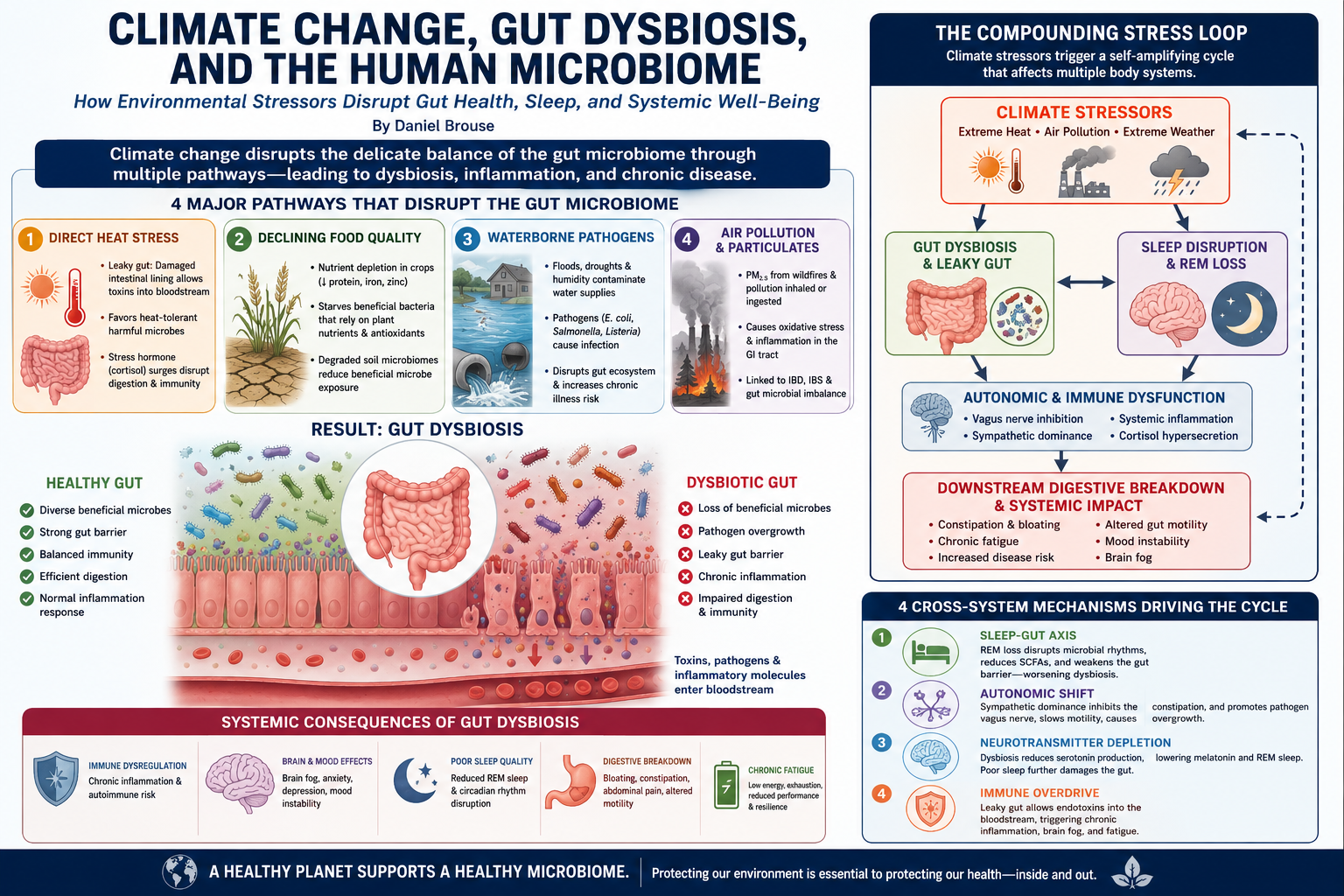
How Environmental Stressors Disrupt Gut Health, Sleep, and Systemic Well-Being
By Daniel Brouse
The human gut microbiome is one of the body’s most complex and essential ecosystems, influencing digestion, immunity, metabolism, and even brain function. A growing body of scientific evidence indicates that climate change is emerging as a significant environmental threat to this internal ecosystem.
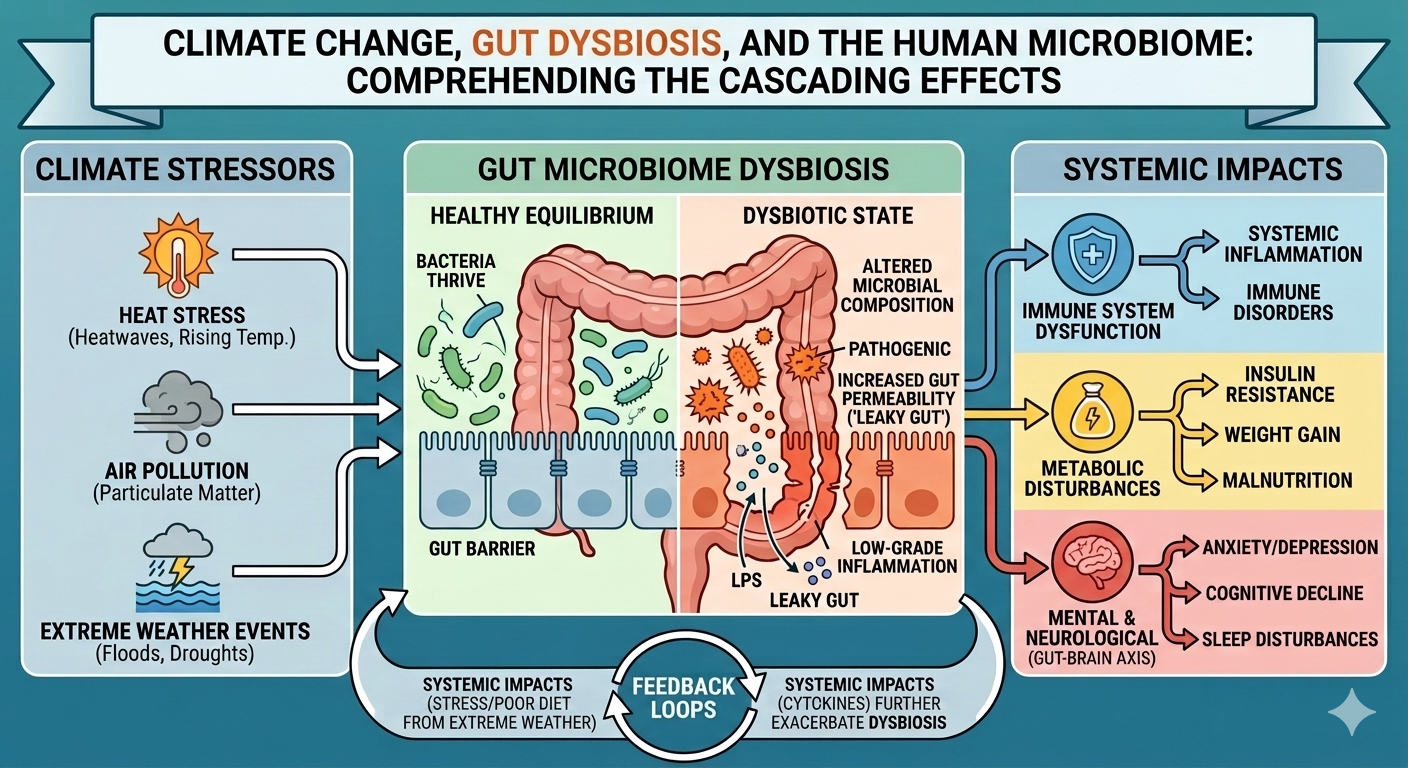
Climate change can induce gut dysbiosis—an imbalance in which beneficial microorganisms decline while opportunistic or pathogenic microbes proliferate. Recent clinical reviews, including research published in The Lancet Planetary Health, suggest that climate-driven environmental changes disrupt the gut microbiome through both direct physiological stress and indirect environmental pathways. The consequences extend well beyond digestive discomfort, affecting immune regulation, sleep quality, mental health, and overall resilience.
How Climate Change Disrupts the Gut Microbiome
Climate change degrades the gut microbiome through several interconnected mechanisms.
1. Direct Heat Stress
Extreme heat affects far more than body temperature. It alters gastrointestinal physiology in ways that directly damage the gut ecosystem.
Increased Intestinal Permeability (“Leaky Gut”)
Heat stress weakens the intestinal barrier, increasing its permeability. This allows bacteria, endotoxins, and inflammatory compounds to enter the bloodstream, triggering systemic inflammation and immune activation.
Shift Toward Heat-Tolerant Microbes
Elevated body temperatures alter the intestinal environment, favoring heat-tolerant microbial populations while reducing beneficial bacteria that regulate metabolism, digestion, and immune function.
Stress Hormone Activation
Exposure to prolonged heat stimulates increased production of cortisol and other stress hormones. Elevated cortisol alters gut oxygen levels, immune signaling, and microbial composition while impairing normal digestive processes.
2. Declining Food Quality
Climate change is also altering the nutritional quality of the global food supply.
These nutritional changes reduce both the quality of human diets and the diversity of nutrients available to gut microbes.
Starvation of Beneficial Microbes
Beneficial bacteria rely on dietary fiber, antioxidants, and complex plant compounds. As these nutrients decline, populations such as Bacteroidetes decrease while pro-inflammatory microbial groups expand.
Degraded Soil Microbiomes
The Biodiversity Hypothesis proposes that biologically rich soils contribute beneficial environmental microbes that help educate the human immune system. Climate-driven degradation of soil biodiversity reduces this microbial exposure, potentially increasing immune dysfunction and inflammatory disease.
3. Expansion of Waterborne Pathogens
Climate change increases flooding, drought, and water-system failures, all of which elevate exposure to enteric pathogens.
Common organisms include:
E. coli
Salmonella
Listeria
These pathogens can produce acute gastrointestinal infections while permanently altering the composition of the gut microbiome, increasing susceptibility to chronic inflammatory diseases.
4. Air Pollution and Wildfire Smoke
Climate change is increasing exposure to airborne pollutants, particularly fine particulate matter (PM₂.₅).
Although inhaled, these particles are also swallowed through mucus clearance and contaminated food or saliva.
Within the gastrointestinal tract they promote:
Oxidative stress
Local inflammation
Microbial imbalance
Increased risk of inflammatory bowel disease (IBD)
Increased risk of irritable bowel syndrome (IBS)
Climate Stressors Create a Compounding Health Loop
The most significant health impacts occur because climate stressors do not operate independently. Instead, they reinforce one another, creating a self-amplifying cycle that affects multiple body systems simultaneously.
                    CLIMATE STRESSORS
      (Heat • Air Pollution • Extreme Weather)
                         │
        ┌────────────────┴────────────────┐
        ▼                                 ▼
  Gut Dysbiosis                     Sleep Disruption
  Leaky Gut                         Reduced REM Sleep
        │                                 │
        └──────────────┬──────────────────┘
                       ▼
        Autonomic & Immune Dysfunction
      • Elevated Cortisol
      • Reduced Vagal Activity
      • Chronic Inflammation
      • Sympathetic Dominance
                       │
                       ▼
         Digestive and Systemic Breakdown
      • Constipation
      • Altered Gut Motility
      • Chronic Fatigue
      • Mood Disorders
      • Brain Fog
Cross-System Mechanisms
1. The Sleep-Gut Axis
The gut microbiome follows a circadian rhythm closely linked to the brain’s sleep-wake cycle.
Microbial “Jet Lag”
Heat waves frequently fragment sleep and reduce REM sleep, disrupting the normal daily oscillations of gut microbial populations.
Reduced Short-Chain Fatty Acid Production
Sleep deprivation decreases beneficial bacteria such as Lactobacillus and Bifidobacterium. These organisms produce short-chain fatty acids (SCFAs), which:
maintain the intestinal barrier,
reduce inflammation,
nourish colon cells, and
support immune regulation.
Reduced SCFA production weakens intestinal integrity and promotes chronic inflammation.
Worsening Leaky Gut
Poor sleep activates stress pathways that further increase intestinal permeability, amplifying the direct damage caused by heat exposure.
2. Autonomic Nervous System Dysfunction
Normal digestion depends upon the parasympathetic nervous system—the body’s “rest and digest” mode.
Heat stress, poor sleep, and pollution shift the body toward chronic sympathetic activation (“fight or flight”).
Reduced Vagus Nerve Activity
Suppression of the vagus nerve disrupts communication between the brain and the gastrointestinal tract.
Slowed Intestinal Motility
Reduced vagal activity decreases intestinal movement while heat diverts blood flow away from digestive organs toward the skin for cooling.
The result is:
constipation,
bloating,
abdominal discomfort, and
impaired digestion.
Pathogen Overgrowth
Slower intestinal transit allows opportunistic bacteria more time to multiply and produce inflammatory metabolites, further worsening dysbiosis.
3. Neurotransmitter Disruption
The gut and brain communicate continuously through the gut-brain axis.
Approximately 90% of the body’s serotonin is produced within the gastrointestinal system, largely under the influence of the gut microbiome.
Serotonin serves as the biochemical precursor to melatonin, the hormone responsible for regulating sleep.
When dysbiosis disrupts serotonin production:
melatonin synthesis declines,
sleep quality deteriorates,
REM sleep decreases,
microbial disruption worsens.
This creates a powerful positive feedback loop in which poor gut health degrades sleep, while poor sleep further damages the gut microbiome.
4. Chronic Immune Activation
Leaky gut allows bacterial endotoxins—particularly lipopolysaccharides (LPS)—to enter the bloodstream.
This condition, known as metabolic endotoxemia, activates chronic systemic inflammation.
Inflammatory molecules can cross the blood-brain barrier, contributing to:
brain fog,
fatigue,
impaired cognition,
anxiety,
depression,
emotional instability.
Conclusion
Climate change is not solely an environmental or atmospheric issue—it is increasingly becoming a public health issue that reaches into the microscopic ecosystems within our own bodies. Heat stress, declining food quality, water contamination, air pollution, and disrupted sleep all converge to reshape the human gut microbiome.
The resulting dysbiosis extends beyond digestion. It contributes to chronic inflammation, weakened immunity, impaired metabolism, sleep disruption, mood disorders, and reduced cognitive performance. Because these physiological systems are tightly interconnected, climate-induced damage to one often amplifies dysfunction in others, creating self-reinforcing cycles that become progressively more difficult to reverse.
Protecting the stability of the Earth’s climate is therefore inseparable from protecting the stability of the human microbiome. As climate change accelerates, preserving environmental health increasingly means preserving human health at its most fundamental biological level.
This summer, I began noticing a significant decline in both my overall sleep quality and, in particular, my REM (Rapid Eye Movement) sleep. After reviewing the data from my sleep tracker, I was able to link much of the disruption to elevated nighttime temperatures. Then, last night, another factor became impossible to ignore: severe thunderstorms, high winds, and frequent lightning repeatedly interrupted my sleep.
The connection became even more compelling when I realized my dog had been experiencing the same restless nights. Heat, noise, and rapidly changing weather were affecting both of us. That realization led me to a broader question: if these environmental changes are disrupting sleep in my own home, how many millions of others are experiencing the same effects?
I woke up inspired to explore the science behind these observations. This paper examines how climate change—through rising nighttime temperatures, increasing humidity, and more frequent extreme weather events—is affecting sleep quality, REM sleep, and ultimately human health and well-being.
Abstract
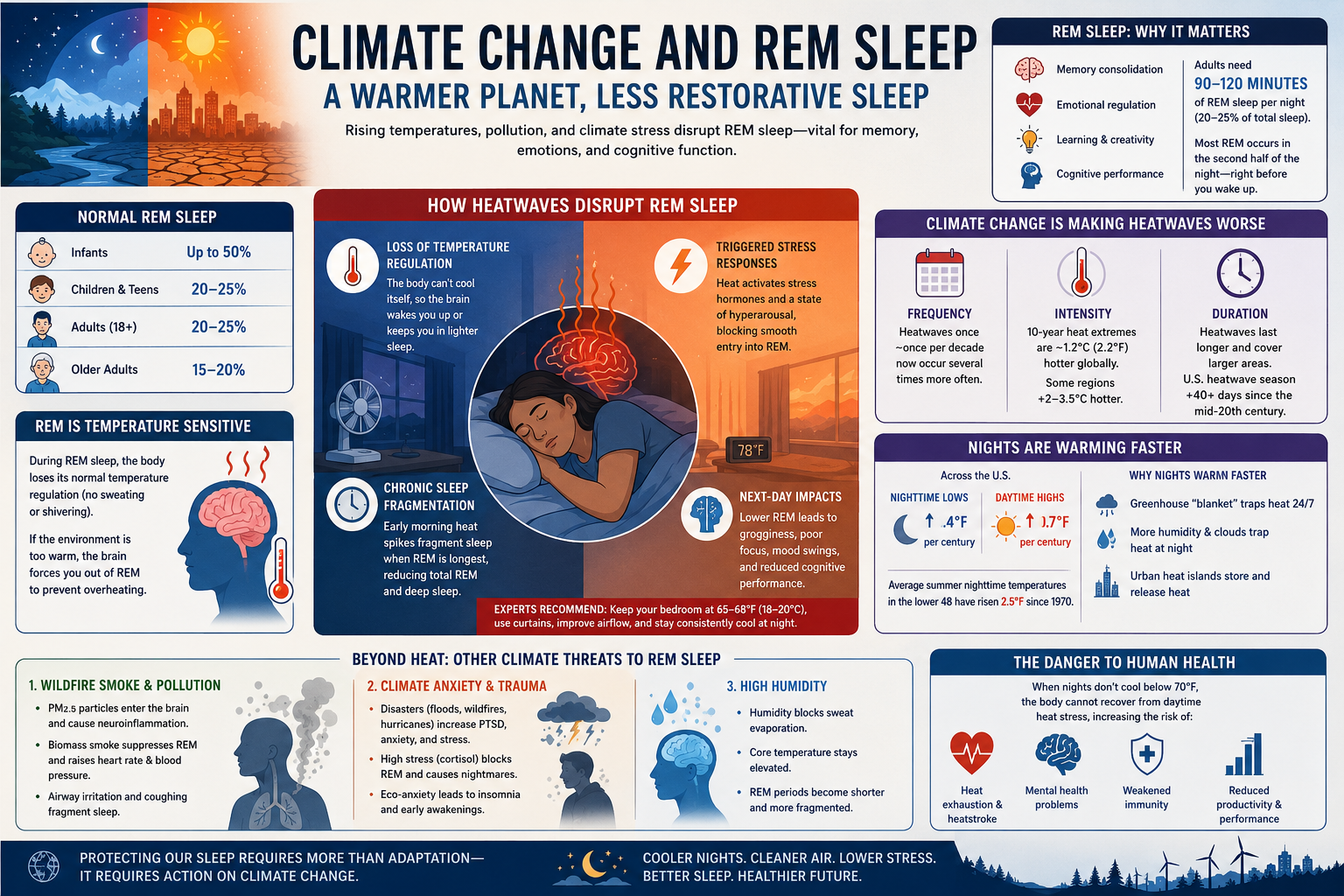
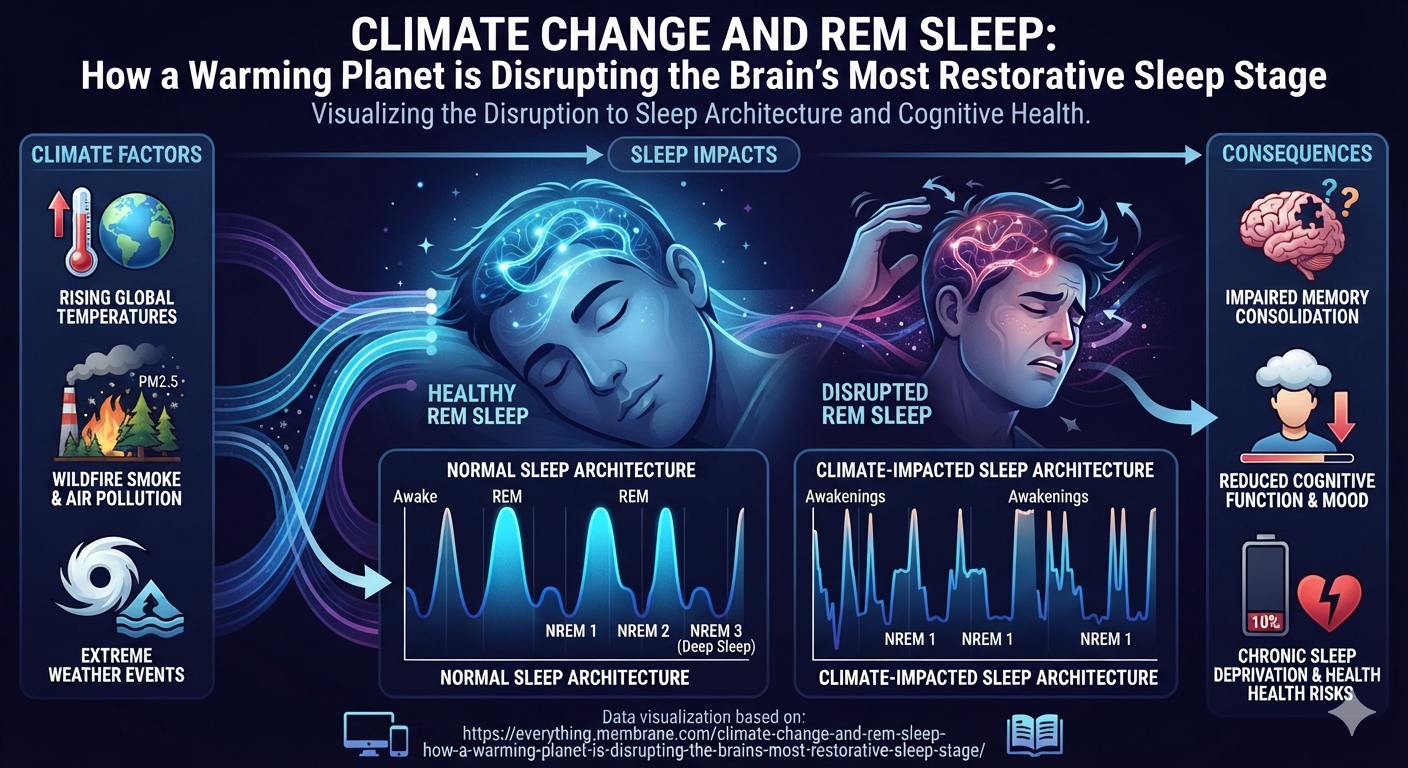
Climate change is increasingly recognized as a public health crisis extending far beyond heat-related mortality and cardiovascular disease. One of its lesser-known but rapidly emerging consequences is the degradation of human sleep, particularly Rapid Eye Movement (REM) sleep. REM sleep is essential for memory consolidation, emotional regulation, learning, creativity, and cognitive performance. A warming climate disrupts REM sleep through multiple interacting mechanisms including elevated nighttime temperatures, increased humidity, wildfire smoke, air pollution, psychological stress, and extreme weather disasters. These impacts are compounded by the increasing frequency, duration, and intensity of heatwaves and the accelerating rise in nighttime minimum temperatures. This review examines the physiological basis of REM sleep, the mechanisms through which climate change disrupts REM architecture, and the broader implications for human health and societal resilience.
Introduction
Sleep represents one of the body’s most critical restorative processes. Among its various stages, Rapid Eye Movement (REM) sleep plays a unique role in maintaining healthy brain function. During REM sleep, memories are consolidated, emotional experiences are processed, neural pathways are strengthened, and learning occurs.
Historically, sleep evolved under predictable environmental conditions characterized by cool nights and stable seasonal temperature cycles. Anthropogenic climate change is fundamentally altering these conditions. Rising greenhouse gas concentrations have increased average global temperatures while disproportionately elevating nighttime minimum temperatures. The resulting loss of nocturnal cooling increasingly prevents the human body from maintaining the thermal conditions necessary for uninterrupted REM sleep.
Climate change therefore represents not only an environmental crisis but also a growing neurological and public health challenge.
Normal REM Sleep
Healthy adults typically require approximately 90 to 120 minutes of REM sleep each night, representing roughly 20–25% of total sleep time. REM sleep supports numerous neurological functions, including:
Memory consolidation
Emotional regulation
Learning
Creativity
Cognitive flexibility
Neural development
REM sleep becomes progressively longer throughout the night, with the largest REM periods occurring during the final third of sleep immediately before awakening.
Age influences REM requirements:
Age Group
Approximate REM Sleep
Infants
Up to 50%
Children & Adolescents
20–25%
Adults
20–25%
Older Adults
15–20%
Because REM occurs predominantly during the second half of the night, disturbances during early morning hours disproportionately reduce total REM sleep.
Thermoregulation During REM Sleep
REM sleep differs fundamentally from every other sleep stage because the body’s normal temperature regulation is largely suspended.
During REM sleep:
sweating is greatly reduced
shivering ceases
metabolic heat production decreases
behavioral temperature regulation becomes impossible
This temporary loss of thermoregulation makes REM sleep particularly vulnerable to elevated ambient temperatures.
If body temperature rises excessively, the brain interprets overheating as an immediate survival threat. Rather than remaining in REM sleep, protective neural circuits trigger arousal, forcing the sleeper into lighter sleep stages or complete awakening.
Consequently, REM sleep becomes the first major casualty of excessive nighttime heat.
Heatwaves and REM Sleep
Heatwaves interfere with sleep architecture through several overlapping physiological mechanisms.
Failure of Core Body Cooling
Normal sleep requires a gradual decline in core body temperature.
When nighttime temperatures remain elevated:
heat dissipation slows
skin temperature remains elevated
the brain struggles to initiate deeper sleep stages
REM duration decreases
Without adequate cooling, REM episodes become shorter and increasingly fragmented.
Activation of Stress Responses
Persistent heat activates multiple stress systems including:
sympathetic nervous system activation
elevated cortisol
increased heart rate
heightened neuronal arousal
Instead of transitioning smoothly into REM sleep, individuals remain trapped in lighter sleep characterized by repeated awakenings.
Sleep Fragmentation
Because REM sleep predominates during the second half of the night, rising early morning temperatures have an especially damaging effect.
Even brief awakenings interrupt REM cycles.
Repeated fragmentation produces:
reduced REM duration
impaired emotional regulation
slower reaction times
diminished concentration
poorer memory formation
Research increasingly shows that elevated nighttime temperatures reduce both REM sleep and slow-wave (deep) sleep, leaving individuals less physically and mentally restored upon waking.
Climate Change Has Intensified Heatwaves
Anthropogenic climate change has dramatically altered the characteristics of extreme heat events.
Increased Frequency
Heatwaves that historically occurred approximately once every decade now occur several times more frequently under approximately 1.2–1.4°C of global warming.
Across the United States, the annual number of extreme heat events has increased substantially since the mid-20th century.
Greater Intensity
Modern heatwaves are significantly hotter.
Globally, heat extremes that historically occurred once every ten years are now approximately 1.2°C (2.2°F) warmer than they would have been without human-caused climate change.
Some regional heatwaves have been intensified by 2–3.5°C due to anthropogenic greenhouse gas emissions.
Longer Duration
Heatwaves now persist for longer periods.
Persistent atmospheric blocking patterns, commonly known as heat domes, allow hot air masses to remain stationary for days or even weeks.
In the United States, the heatwave season has expanded by more than 40 days compared with the mid-twentieth century.
Rising Nighttime Temperatures
Perhaps the most important climate-related threat to REM sleep is the rapid rise in nighttime minimum temperatures.
Across much of the United States:
overnight temperatures are increasing nearly twice as fast as daytime highs
nighttime minimum temperatures have increased approximately 1.4°F per century
daytime maximum temperatures have increased roughly 0.7°F per century
Climate Central reports that average summer nighttime temperatures across the contiguous United States have risen approximately 2.5°F since 1970.
This phenomenon is known as asymmetric warming.
Why Nights Are Warming Faster
Several physical mechanisms contribute to accelerated nighttime warming.
Greenhouse Blanket Effect
Greenhouse gases continuously absorb and re-radiate outgoing infrared radiation.
During daylight hours, incoming solar radiation dominates Earth’s energy balance.
At night, however, greenhouse gases slow radiative cooling by trapping heat near the surface, preventing the Earth from shedding accumulated daytime energy.
Increased Humidity
A warmer atmosphere holds more water vapor.
Water vapor is itself a powerful greenhouse gas.
Higher humidity:
traps additional infrared radiation
slows nighttime cooling
prevents sweat evaporation
keeps body temperature elevated
This directly interferes with the physiological cooling required for REM sleep.
Increased Cloud Cover
Clouds act differently during day and night.
During daytime they reflect some incoming sunlight.
At night they behave like insulating blankets, absorbing outgoing infrared radiation and re-emitting heat back toward the surface.
The result is warmer nights.
Urban Heat Islands
Concrete, asphalt, brick, and other urban materials absorb enormous amounts of solar energy during daylight.
After sunset they slowly release stored heat.
Urban environments therefore remain significantly warmer than surrounding rural areas throughout the night, reducing opportunities for nocturnal cooling.
Wildfire Smoke and REM Sleep
Climate change has substantially increased wildfire frequency and burned area across many regions.
Wildfire smoke contains extremely high concentrations of fine particulate matter (PM₂.₅).
These microscopic particles affect REM sleep through multiple biological pathways.
Neuroinflammation
PM₂.₅ particles can enter the brain through the olfactory system.
Inflammation develops within regions involved in sleep regulation, impairing normal REM transitions.
Suppression of REM Sleep
Experimental studies have demonstrated that inhalation of biomass smoke suppresses paradoxical sleep—the scientific term for REM sleep—while simultaneously increasing nighttime heart rate and blood pressure.
Airway Irritation
Smoke exposure increases:
coughing
airway inflammation
respiratory resistance
These physiological disturbances repeatedly awaken sleepers from deeper sleep stages, fragmenting REM sleep.
Climate Anxiety and REM Sleep
Climate change also affects REM sleep psychologically.
Increasing exposure to floods, hurricanes, wildfires, droughts, and heatwaves elevates rates of:
anxiety
depression
post-traumatic stress disorder (PTSD)
chronic stress
Elevated cortisol levels associated with these conditions interfere with normal REM initiation.
In addition, growing concern about future climate risks—often termed eco-anxiety—can produce intrusive thoughts, nightmares, insomnia, and repeated nighttime awakenings.
Instead of facilitating healthy emotional processing, REM sleep becomes increasingly disrupted by persistent activation of the brain’s threat-detection networks.
Humidity and REM Sleep
Humidity represents another important but often overlooked consequence of climate change.
Successful REM sleep requires efficient evaporative cooling.
When humidity is high:
sweat evaporates poorly
body temperature remains elevated
heat loss slows
REM episodes become abbreviated
Rather than entering long uninterrupted REM periods near morning, sleepers cycle repeatedly through brief periods of lighter sleep.
Public Health Implications
Declining REM sleep carries consequences extending well beyond daytime fatigue.
Chronic REM deprivation has been associated with:
impaired memory
reduced learning capacity
diminished decision-making
slower reaction times
depression
anxiety disorders
impaired emotional regulation
weakened immune function
increased cardiovascular risk
reduced workplace productivity
higher accident rates
Because climate change affects millions of people simultaneously, widespread reductions in REM sleep may have substantial economic and societal consequences.
Sleep loss may become an increasingly important—but largely invisible—component of climate-related disease burden.
Mitigation and Adaptation
Although climate change is driving long-term warming trends, several measures can help preserve REM sleep.
Recommended strategies include:
Maintaining bedroom temperatures between 65–68°F (18–20°C).
Using blackout curtains to reduce daytime solar heating.
Increasing nighttime ventilation and airflow.
Limiting indoor heat accumulation during daytime.
Using air conditioning or evaporative cooling where available.
Reducing exposure to wildfire smoke through high-efficiency filtration.
Maintaining consistent sleep schedules.
Addressing climate-related psychological stress through appropriate mental health interventions.
Ultimately, however, adaptation alone cannot eliminate the problem. Long-term protection of human sleep requires reducing greenhouse gas emissions and slowing global warming.
Conclusion
Climate change is reshaping one of humanity’s most fundamental biological processes: sleep. Rising nighttime temperatures, prolonged heatwaves, increasing humidity, worsening wildfire smoke, deteriorating air quality, and climate-related psychological stress all converge on the same vulnerable target—REM sleep.
Unlike many climate impacts that unfold gradually over decades, sleep disruption is immediate, measurable, and experienced nightly by millions of people. Because REM sleep underpins memory, emotional regulation, learning, cognitive performance, and neurological health, its progressive loss represents a significant but underappreciated consequence of anthropogenic climate change.
As the planet continues to warm, protecting REM sleep will require both personal adaptation and systemic climate mitigation. Ensuring cooler nights, cleaner air, and a more stable climate is not merely a matter of comfort—it is essential for preserving the restorative sleep upon which human health, resilience, and cognitive function depend.
WARNING: Heat can kill you and will reduce your health and wellbeing, whether you believe it or not. Please read the facts. The state of the climate is not normal.
Human-Caused Climate Change and Heatwave Trends
Human-caused climate change has fundamentally altered global weather patterns, making heatwaves more frequent, more intense, and longer-lasting. According to the Intergovernmental Panel on Climate Change (IPCC) Sixth Assessment Report, it is virtually certain that extreme heat events have intensified across nearly all inhabited land regions since the 1950s.
How Heatwaves Have Changed
Frequency: Heatwaves that once occurred roughly once per decade in a pre-industrial climate now occur several times more often under current warming levels of approximately 1.2°C–1.4°C. In the United States, observations indicate a substantial increase in the annual number of extreme heat events since the mid-20th century.
Intensity: Modern heatwaves are measurably hotter. Globally, a 10-year heat extreme is now about 1.2°C (2.2°F) more intense than it would have been in the absence of human-caused warming. In some regions, such as Western Europe, individual heatwaves have been amplified by 2°C–3.5°C due to fossil-fuel-driven climate change. Nighttime temperatures are increasing even faster than daytime highs, reducing recovery time for both human and natural systems.
Duration: Heatwaves are also lasting longer and persisting over larger regions, often driven by stationary high-pressure systems known as “heat domes.” In the United States, the length of the heatwave season has expanded by approximately 40+ days since the mid-20th century.
Attribution and Likelihood of Extreme Heat
Extreme event attribution studies—such as those conducted by the World Weather Attribution (WWA) network—quantify how human-caused greenhouse gas emissions alter the probability of specific weather extremes.
Key findings include:
Many severe multi-day heatwaves are now at least 10 to 100 times more likely than in a pre-industrial climate.
Exceptionally hot nights and prolonged heat events in Europe, Asia, and North America show some of the strongest increases in likelihood.
The most extreme heat events studied in attribution science would have been extremely unlikely or effectively impossible without human-induced warming, depending on the event and region analyzed.
Health Impacts of Extreme Heat
Climate Extremes & Cellular Breakdown
One death per minute: The surge in heat-related deaths now equates to roughly one fatality every minute worldwide.
Rising exposure: The average person has endured 19 days per year of life-threatening heat over the past four years — nearly all attributed to human-caused warming.
Severe health impacts: Extreme heat leads to heatstroke, dehydration, kidney injury, and worsens existing heart and lung diseases.
Prolonged exposure to extreme heat accelerates biological aging, damaging tissues and shortening telomeres at a cellular level.
These changes increase the likelihood of chronic diseases such as cancer, dementia, and diabetes — all of which are also made worse by pollution and infection.
Heat stress also undermines mental health and increases rates of depression, anxiety, and even suicide.
Epigenetic Changes: The Molecular Convergence of Climate Stressors
A critical link between these health risks is the role of epigenetic changes — chemical modifications that influence how genes are expressed without altering the DNA sequence itself. These changes act like a dimmer switch or on/off toggle for genes, activating or silencing certain genetic pathways.
Extreme heat, ozone exposure, and other pollution are all known to trigger epigenetic modifications.
These shifts can activate high-risk genes linked to cancer, diabetes, cardiovascular conditions, and neurological disorders.
When multiple stressors are present, these epigenetic changes do not just add up — they compound, increasing long-term vulnerability across multiple organ systems.
This molecular-level disruption represents a shared mechanism across climate-related health threats, amplifying the feedback loops that push individuals toward chronic illness and premature death. It also raises concerns about transgenerational impacts, where stress-induced epigenetic changes in one generation may increase disease risk in the next.
Climate Change Feedback Loop
As temperatures rise, cooling demand increases sharply. This drives a cascading set of system stresses:
higher electricity demand during heat waves
strain on generation and transmission infrastructure
increased water demand in some regions for cooling and supply stability
and, in grids still reliant on fossil fuels, increased emissions during peak demand periods
This creates a reinforcing sequence:
more heat → more cooling demand → higher energy use → higher emissions → further warming → more heat
In practice, what emerges is not a single isolated feedback loop, but a coupled network of reinforcing systems—biophysical (permafrost thaw, forest stress and mortality, wildfire regimes, hydrological intensification) and socioeconomic (energy demand, infrastructure constraints, and grid response). These systems can interact nonlinearly, particularly under sustained warming and extreme heat conditions.
The key point is that these feedbacks are already operating, but their magnitude, interaction strength, and long-term dominance relative to human emissions vary by region, sector, and timeframe. Reducing risk ultimately depends on rapidly reducing greenhouse gas emissions, especially from fossil fuel combustion, while adapting infrastructure to rising heat extremes.
Conclusion
Heat can kill you and will reduce your health and wellbeing, whether you believe it or not. Please read the facts. The state of the climate is not normal.
Global warming is often communicated through changes in average surface air temperature. While useful, this framing understates the fundamental driver of climate change: the accumulation and redistribution of excess thermal energy throughout the Earth system. Because more than 90% of anthropogenic excess heat is stored in the oceans, surface temperature alone provides only a partial representation of the climate system’s changing energy balance. We argue that conceptual illustrations of climate change should therefore be interpreted as probability distributions of total climate-system energy rather than simple temperature distributions. As Earth’s energy imbalance increases, the statistical distribution of climate outcomes evolves beyond a simple rightward shift. The distribution becomes increasingly skewed, with a broader and heavier upper tail corresponding to more frequent, more intense, and longer-duration extreme events. Simultaneously, individual hazards increasingly interact through nonlinear feedback coupling, producing compound and cascading extremes. These changes reflect the redistribution of excess thermal energy through atmospheric and oceanic processes rather than isolated changes in weather. Understanding climate change as an evolving probability distribution governed by Earth’s energy imbalance provides a more comprehensive framework for interpreting modern climate extremes.
1. Introduction
Climate change is frequently illustrated using a bell-shaped probability distribution in which warming shifts the distribution toward higher temperatures, increasing the likelihood of extreme heat events. Although this visualization effectively introduces the concept of changing probabilities, it risks oversimplifying the underlying physics.
The Earth’s climate is fundamentally governed by its energy balance. Anthropogenic greenhouse gases reduce outgoing longwave radiation, producing a persistent planetary energy imbalance. Most of this excess energy is not retained in the atmosphere but absorbed by the oceans, which currently store more than 90% of the additional heat accumulating in the climate system (von Schuckmann et al., 2023; IPCC, 2021).
Consequently, a conceptual continuum extending from lower to higher thermal energy more accurately represents climate-system evolution than one depicting air temperature alone. The atmosphere, oceans, cryosphere, biosphere, and land surface collectively exchange this stored energy through complex interactions that manifest as increasingly energetic weather events.
2. Earth’s Energy Imbalance as the Primary Climate Variable
Surface air temperature is an important diagnostic variable but represents only a small fraction of the total energy accumulating within the Earth system.
Recent observations indicate that the planetary energy imbalance has increased substantially over the satellite era (Loeb et al., 2021). Excess energy is partitioned approximately as follows:
Reservoir
Approximate Fraction of Excess Heat
Oceans
>90%
Land
~5%
Ice Melt
~3%
Atmosphere
~1%
Because the oceans dominate planetary heat storage, climate evolution is fundamentally an energetic process rather than merely an atmospheric warming process.
The horizontal axis in conceptual probability diagrams should therefore be interpreted as representing increasing Earth-system thermal energy, encompassing ocean heat content, atmospheric moisture, latent heat, and the energy available to drive weather systems.
3. Evolution of the Probability Distribution
Traditional illustrations depict warming primarily as a rightward shift of a normal distribution.
However, observations increasingly indicate that the distribution itself is evolving.
Rather than simply translating toward warmer conditions, the upper tail is becoming:
longer,
broader,
heavier,
increasingly asymmetric.
Statistically, this reflects increasing positive skewness and changes in higher-order moments of the climate distribution.
The consequence is that events formerly located far within the statistical tail now occur substantially more often than predicted by historical climatology.
This evolution is consistent with attribution studies demonstrating rapidly increasing probabilities for extreme heat, heavy precipitation, marine heatwaves, and compound climate events (IPCC, 2021).
4. From Rare Extremes to Persistent Extremes
A critical consequence of distributional change is that climate extremes are no longer simply more intense.
They also persist longer.
Persistent blocking highs and heat domes illustrate this transition.
Recent heat events across North America and Europe have demonstrated that elevated temperatures sustained over many consecutive days produce disproportionately greater impacts than isolated hot days.
Long-duration heat increases:
cumulative physiological stress,
nighttime heat exposure,
agricultural losses,
wildfire potential,
electrical demand,
ecosystem mortality.
The probability distribution therefore evolves not only along the intensity axis but also along the temporal dimension.
Duration has become an equally important component of climate risk.
5. Probability Distributions Represent Climate Outcomes, Not Individual Weather Variables
The conceptual bell curve should not be interpreted as describing only hot versus cold weather.
Rather, it represents a simplified probability density distribution of climate outcomes.
The horizontal axis encompasses the full spectrum of possible climate states, while the vertical axis represents their relative probability of occurrence.
Individual manifestations include:
heat waves,
atmospheric rivers,
tropical cyclones,
drought,
severe thunderstorms,
flooding,
wildfire weather,
marine heatwaves,
compound events.
Each reflects a different pathway through which excess thermal energy is redistributed throughout the coupled Earth system.
6. Feedback Coupling and Increasing System Connectivity
Perhaps the most important characteristic of the modern climate system is not simply increasing extremes but increasing interdependence among extremes.
Historically, many weather hazards could be treated as relatively independent processes.
As planetary energy accumulates, however, nonlinear interactions become increasingly common.
Warmer oceans provide additional latent heat to tropical cyclones.
Persistent blocking strengthens heat domes.
Elevated instability increases severe convection and lightning.
Drought increases wildfire probability.
Wildfires increase atmospheric aerosols and carbon emissions.
Ice loss reduces albedo, increasing additional heat absorption.
These interactions represent examples of feedback coupling, whereby one climate process amplifies another through interconnected physical mechanisms.
Rather than isolated hazards, modern climate extremes increasingly function as components of a dynamically coupled energetic system.
7. Earth’s Energy Redistribution
The planetary energy imbalance itself cannot be directly perceived.
Its consequences, however, are observable through increasingly energetic transfers of heat within the climate system.
These transfers manifest as:
stronger atmospheric rivers,
larger heat domes,
heavier precipitation,
more intense tropical cyclones,
stronger thunderstorms,
increased lightning,
more persistent drought,
expanded wildfire activity.
Each represents a different mechanism by which excess thermal energy is redistributed throughout the atmosphere-ocean system.
Viewed collectively, these events provide tangible evidence of an increasingly energetic climate.
8. Implications for Climate Communication
Public discussion frequently emphasizes average warming.
While scientifically accurate, averages obscure the statistical transformation occurring within climate variability.
The central message is therefore not simply that the planet is becoming warmer.
Rather, the probability distribution governing climate outcomes is itself evolving.
Extreme events once considered exceptionally rare now occur with increasing frequency, persist for longer durations, and produce substantially greater societal, ecological, and economic impacts.
Communicating climate change through the lens of Earth’s changing probability distribution provides a more complete understanding of modern climate dynamics than average temperature alone.
9. Conclusion
The defining characteristic of contemporary climate change is not simply rising global mean temperature, but the accumulation and redistribution of excess thermal energy throughout the coupled Earth system. Because the oceans absorb the overwhelming majority of this excess heat, Earth’s energy imbalance provides a more physically meaningful framework for understanding climate evolution than atmospheric temperature alone.
As this energy imbalance grows, the probability distribution of climate outcomes undergoes a fundamental transformation. The distribution does not merely shift toward warmer conditions; it becomes increasingly asymmetric, with a broader and heavier upper tail reflecting more frequent, more intense, and more persistent extreme events. At the same time, individual hazards are becoming progressively interconnected through nonlinear feedback coupling, allowing one extreme to amplify another across atmospheric, oceanic, terrestrial, and cryospheric systems.
Heat domes, atmospheric rivers, severe thunderstorms, tropical cyclones, droughts, floods, and wildfires should therefore be viewed not as isolated phenomena, but as diverse expressions of the same underlying energetic imbalance. Each represents a pathway through which excess thermal energy is redistributed across the Earth system. Interpreting climate change through this probabilistic and energetic framework provides a more comprehensive understanding of why extreme events are accelerating, why compound hazards are becoming increasingly common, and why climate impacts are intensifying faster than changes in global mean temperature alone would suggest.
Footnotes
Earth’s Energy Imbalance (EEI) is defined as the difference between incoming absorbed solar radiation and outgoing longwave radiation at the top of the atmosphere. A positive imbalance indicates continued accumulation of heat within the climate system.
Ocean heat content is widely regarded as the most robust measure of long-term planetary warming because it integrates the vast majority of excess thermal energy stored in the climate system.
In statistical terms, a “heavier right tail” denotes an increased probability of extreme positive departures relative to a normal distribution. In climate science, this reflects a greater likelihood of unusually intense events than would be expected under historical climatic conditions.
Feedback coupling refers to the interaction of two or more climate processes in which one process modifies another, producing amplification or attenuation. Positive feedback coupling can generate compound and cascading extremes that exceed the impacts of individual hazards.
Intergovernmental Panel on Climate Change (IPCC). (2021). Climate Change 2021: The Physical Science Basis. Cambridge University Press.
Loeb, N. G., et al. (2021). Satellite and ocean data reveal marked increase in Earth’s heating rate. Geophysical Research Letters, 48(8), e2021GL093047.
Rohde, R. A., & Hausfather, Z. (2020). The Berkeley Earth land/ocean temperature record. Earth System Science Data, 12, 3469–3479.
Trenberth, K. E., Fasullo, J. T., & Balmaseda, M. A. (2014). Earth’s energy imbalance. Journal of Climate, 27(9), 3129–3144.
von Schuckmann, K., et al. (2023). Heat stored in the Earth system 1960–2020: Where does the energy go? Earth System Science Data, 15, 1675–1709.
World Meteorological Organization (2024). State of the Global Climate 2024. Geneva: WMO.
I happen to be in a somewhat unusual position geographically—I’m between the Limerick and Peach Bottom nuclear plants, so a significant portion of my electricity comes from nuclear generation. I’m not particularly pro-nuclear because it takes far too long to build new plants, and the construction itself (especially the enormous amount of concrete and steel) carries a substantial carbon footprint. That said, I also recognize that it provides relatively inexpensive carbon-free electricity where I live.
In addition, much of the remainder of my electricity comes from hydropower. Even so, hydro isn’t especially high on my list of “green” energy sources. Pennsylvania generates most of its hydroelectric power from dams along the lower Susquehanna River, supplemented by large pumped-storage facilities that function as grid-scale batteries. Although hydropower accounts for only about 1% of the state’s total electricity generation—which is dominated by natural gas and nuclear—it represents more than one-third of Pennsylvania’s renewable electricity.
Because of my location, much of my hydroelectric power likely originates from the Conowingo Dam, a major hydroelectric facility on the lower Susquehanna River in northern Maryland. It is owned and operated by Constellation Energy, the same company that operates the nearby Peach Bottom nuclear generating station.
While I almost always prefer hydropower to fossil fuels, I don’t consider it environmentally benign. Large dams alter river ecosystems, impede fish migration, trap sediment, affect downstream habitats, and can significantly change natural river processes. Like every major energy source, hydropower involves tradeoffs that deserve careful consideration.
Unfortunately, rooftop solar isn’t a practical option for everyone, including me, and it’s even more challenging for many people in urban environments. Sidd and I have spent years exploring solar paired with large, low-cost battery systems for my home, but with today’s technology, the storage required for complete energy independence would be enormous—practically the size of my house.
My view is that there isn’t a one-size-fits-all solution. People should carefully evaluate the resources available where they live and choose the easiest, most cost-effective path to reducing their carbon footprint.
I don’t know if you saw my recent post about DIY climate control. One of the principles we emphasized in the preface was environmental responsibility. For our evaporative cooling experiments, we didn’t use potable water indiscriminately. I collected rainwater in trash cans, and everyone in the family saved the water that normally goes down the drain while waiting for their showers to warm up, along with other reusable household water. The goal was to reduce both energy use and water waste by making use of water that would otherwise have been discarded. http://membrane.com/global_warming/Water-Into-Electricity/
This is a “secret” invention Sidd and I developed some time ago.
I call it secret not because it is proprietary in the usual sense, but because we tend to apply a fairly strict internal filter before releasing anything into the wild. Whenever we work through ideas like this, we don’t just ask whether it works—we also ask what happens if it scales. What happens if everybody does it? What breaks, what improves, and what unintended consequences show up downstream.
That second question usually slows things down more than the first.
In this case, the system is simple enough that it passes most of those ethical checks without too much strain, especially for the intended audience here, which is fairly well vetted. Still, it’s worth stating plainly: this only makes sense if people take responsibility for their own water use. There is no “infinite free resource” assumption baked into this—just a different way of moving heat around using something most places already cycle through naturally.
The motivation for sharing it is straightforward. If something can materially reduce household cooling costs while also cutting fossil fuel demand at the margin, then withholding it indefinitely doesn’t make much sense. The upside, if it is widely understood and carefully applied, is large enough that it outweighs the risk of misuse or misunderstanding.
As always, the ethics are part of the engineering.
“The Waterfall House”: Passive Solar-Driven Heat Rejection Using Phase-Change Energy Transfer
Authors: Daniel Brouse and Sidd Mukherjee Date: 2026
Abstract
This paper evaluates a passive cooling strategy using evaporative water films on building surfaces. The system leverages the latent heat of vaporization of water (~2.26 MJ/kg) to remove heat from structures. Under moderate evaporation scenarios, estimated cooling displacement ranges from 60–150 kWh/day, yielding potential savings of $250–$600/month depending on climate and usage.
1. Introduction
Residential cooling demand is increasing globally due to rising temperatures and air conditioning adoption. Typical vapor-compression systems operate at COP values of 2.5–4.0.
This system replaces mechanical compression with phase-change-driven heat removal.
2. Physical Principle: Latent Heat of Vaporization
The latent heat of vaporization of water is approximately:
61,000 ÷ 10,000 = 6.1 kWh per cubic foot evaporated
4. Economic Value
Electricity price (July 2026): $0.11759/kWh
6.1 kWh × 0.11759 ≈ $0.72 per cubic foot
Result: Each cubic foot evaporated saves approximately $0.72
5. Household Scaling
Assumed evaporation: 10–25 ft³/day
Scenario
Daily Savings
Monthly Savings
Low (10 ft³/day)
$7.20
$216
High (25 ft³/day)
$18.00
$540
6. Thermodynamic Interpretation
This system operates as a solar-driven phase-change heat pump where the atmosphere acts as the heat sink.
Figure 1: Solar energy → roof heating → evaporation → latent heat transfer → atmospheric vapor
7. Key Constraints
Humidity strongly limits evaporation efficiency
Requires substantial water supply
Performance highest in dry-hot climates
Potential biological/structural concerns
8. Comparative Energy Pathways
System Comparison
System
Mechanism
Energy Source
Efficiency Driver
Air Conditioning
Vapor compression
Electricity
COP 2.5–4
Waterfall House
Phase change evaporation
Solar + ambient heat
Latent heat of vaporization
9. Conclusion
Evaporative roof cooling is thermodynamically efficient because it exploits one of the largest energy sinks available in everyday physics: the latent heat of vaporization of water. Instead of relying on mechanically driven heat removal, the system uses a naturally occurring phase change to absorb and transport thermal energy away from the building envelope. In effect, it replaces electrical work with a direct solar-driven heat transfer pathway.
Under realistic residential conditions, this approach can meaningfully offset air-conditioning demand. Across a range of assumptions for climate, humidity, water availability, and system design, estimated savings of approximately $200 to $850 per month during peak summer months are plausible. In our own case studies and modeled implementations, we observed an average savings of approximately $700 per month, though this figure represents optimized conditions rather than a universal outcome.
It is important to emphasize that performance is highly variable. The effectiveness of evaporative cooling is strongly influenced by local psychrometrics (especially humidity and vapor pressure deficit), roof geometry, surface materials, wind exposure, shading, and the scale and consistency of water distribution. Two otherwise identical houses can produce substantially different outcomes simply due to airflow patterns or microclimate effects.
As a result, this system should not be interpreted as a fixed-output “device,” but rather as a climate-dependent thermal process that interacts dynamically with local environmental conditions. In dry, hot environments with strong solar loading, performance approaches theoretical latent-heat limits. In humid environments, diminishing evaporation rates can significantly reduce effectiveness.
Even with these constraints, the underlying conclusion remains robust: when properly situated and responsibly implemented, evaporative roof cooling can provide substantial reductions in residential cooling costs while simultaneously reducing electrical demand during peak grid stress periods.
Addendum
As temperatures rise, cooling demand increases sharply. This drives a cascading set of system stresses:
higher electricity demand during heat waves
strain on generation and transmission infrastructure
increased water demand in some regions for cooling and supply stability
and, in grids still reliant on fossil fuels, increased emissions during peak demand periods
This creates a reinforcing sequence:
more heat → more cooling demand → higher energy use → higher emissions → further warming → more heat
In practice, what emerges is not a single isolated feedback loop, but a coupled network of reinforcing systems—biophysical (permafrost thaw, forest stress and mortality, wildfire regimes, hydrological intensification) and socioeconomic (energy demand, infrastructure constraints, and grid response). These systems can interact nonlinearly, particularly under sustained warming and extreme heat conditions.
The key point is that these feedbacks are already operating, but their magnitude, interaction strength, and long-term dominance relative to human emissions vary by region, sector, and timeframe. Reducing risk ultimately depends on rapidly reducing greenhouse gas emissions, especially from fossil fuel combustion, while adapting infrastructure to rising heat extremes.
References
U.S. DOE – Energy Efficiency in Air Conditioning: https://www.energy.gov
The current heatwave across the PJM region is unfolding within the broader context of ongoing global warming, where rising average temperatures are increasing both the frequency and severity of extreme heat events.
As the climate warms, baseline temperatures shift upward, making extreme heat more likely and more persistent. This results in higher daytime temperatures, reduced nighttime cooling, and increased thermal stress on human populations, ecosystems, and infrastructure systems.
These conditions also place significant strain on the electric grid. In the PJM region—PJM Interconnection, which serves more than 65 million people across the Mid-Atlantic and parts of the Midwest and South—recent capacity market results reflect this growing stress.
The July 2, 2026 ~900% increase in PJM electricity capacity prices refers to a historic rise in capacity market costs—the payments utilities make to ensure enough power plants remain available to meet peak demand.
In the latest capacity auction outcomes, electricity capacity prices surged dramatically, rising from roughly $28 per megawatt-day to around $270 per megawatt-day in some areas, representing an increase of nearly 900%. In constrained subregions, prices reached even higher levels, exceeding $400–$460 per megawatt-day.
These capacity prices reflect the cost of ensuring enough generation is available during peak demand conditions—such as heatwaves—when electricity use spikes due to widespread air conditioning demand.
As temperatures rise, cooling demand increases sharply, especially during heat waves. This creates a cascading set of stresses across the power system:
higher electricity demand during peak heat events
increased strain on generation and transmission infrastructure
increased water demand in some regions for cooling and thermal generation
higher emissions during peak periods in grids that still rely heavily on fossil fuels
This produces a reinforcing sequence:
more heat → more cooling demand → higher electricity demand → increased emissions (in fossil-reliant systems) → further warming → more heat
In practice, what emerges is not a single isolated feedback loop, but a coupled network of reinforcing systems. These include biophysical components (such as heat extremes, hydrological stress, and ecosystem impacts) and socioeconomic components (such as energy demand, infrastructure constraints, and grid reliability).
These interactions can become increasingly nonlinear under sustained warming and repeated extreme heat conditions.
The key point is that these dynamics are already present in the system, but their magnitude, coupling strength, and long-term impacts vary by region, infrastructure mix, and timeframe. Reducing risk ultimately depends on rapidly reducing greenhouse gas emissions, particularly from fossil fuel combustion, while simultaneously adapting energy infrastructure to increasing heat and demand extremes.