When Weather Becomes Climate
By Daniel Brouse
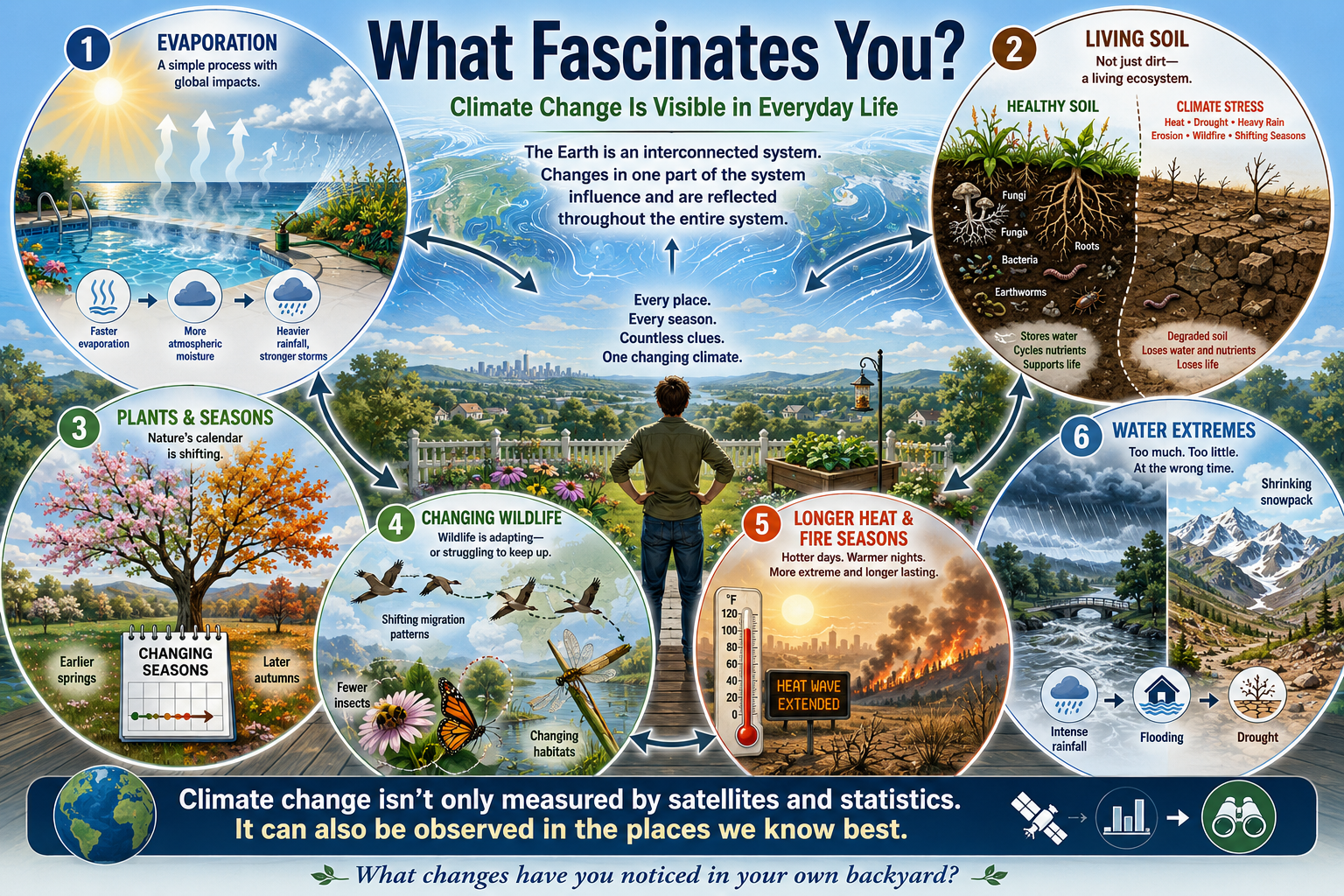
Earth functions as a single interconnected system, and climate is one of its defining components. For much of modern science, climatology focused primarily on identifying individual causes and effects. Today, that focus has expanded toward understanding the behavior of the entire Earth system.
The dynamics of complex nonlinear systems were once considered highly abstract, requiring sophisticated mathematical models to visualize their behavior. That is no longer the case. What was once theoretical has become increasingly observable. In many respects, the behavior of the climate system can now be seen simply by looking outside.
Climatologists, economists, ecologists, and other researchers are increasingly observing climate feedbacks operating across the entire Earth system. Rather than isolated events or independent variables, we are witnessing interconnected processes that reinforce one another across atmospheric, oceanic, ecological, and human systems.
Historically, weather and climate were treated as distinct concepts. Weather described short-term atmospheric conditions, while climate represented long-term statistical patterns. As the climate system becomes increasingly unstable, however, weather is reflecting those long-term changes with growing frequency and intensity. The distinction remains scientifically valid, but climate change is becoming visible through the character of everyday weather.
Before 2023, scientists understood that climate tipping points were possible, and numerous positive feedback mechanisms had already been identified. After 2023, evidence increasingly suggested that many of these feedbacks were interacting simultaneously, with multiple tipping elements showing signs of destabilization. Instead of isolated feedback loops, researchers began observing a network of interconnected processes capable of amplifying one another.
By 2026, many of Earth’s major circulation systems appear to be influencing one another in ways that are faster, stronger, and more interconnected than previously anticipated. These interactions are occurring across multiple scales, increasing the complexity of the global climate response.
Examples include the interaction between jet stream variability, Rossby wave amplification, and changes in the Atlantic Meridional Overturning Circulation (AMOC). Likewise, large-scale ocean-atmosphere interactions involving ENSO and Pacific–Atlantic climate coupling continue to reshape regional weather patterns around the globe.
Understanding the mathematics of nonlinear dynamics and chaos theory remains valuable, but it is no longer necessary to appreciate that the climate system is behaving differently. The evidence is increasingly visible in the frequency, persistence, and interconnected nature of the weather people experience.
In that sense, one of the defining characteristics of our time is that climate is no longer perceived only through long-term averages and scientific graphs. It is increasingly recognized through the weather unfolding outside our windows.
Why Weather Is Becoming Climate
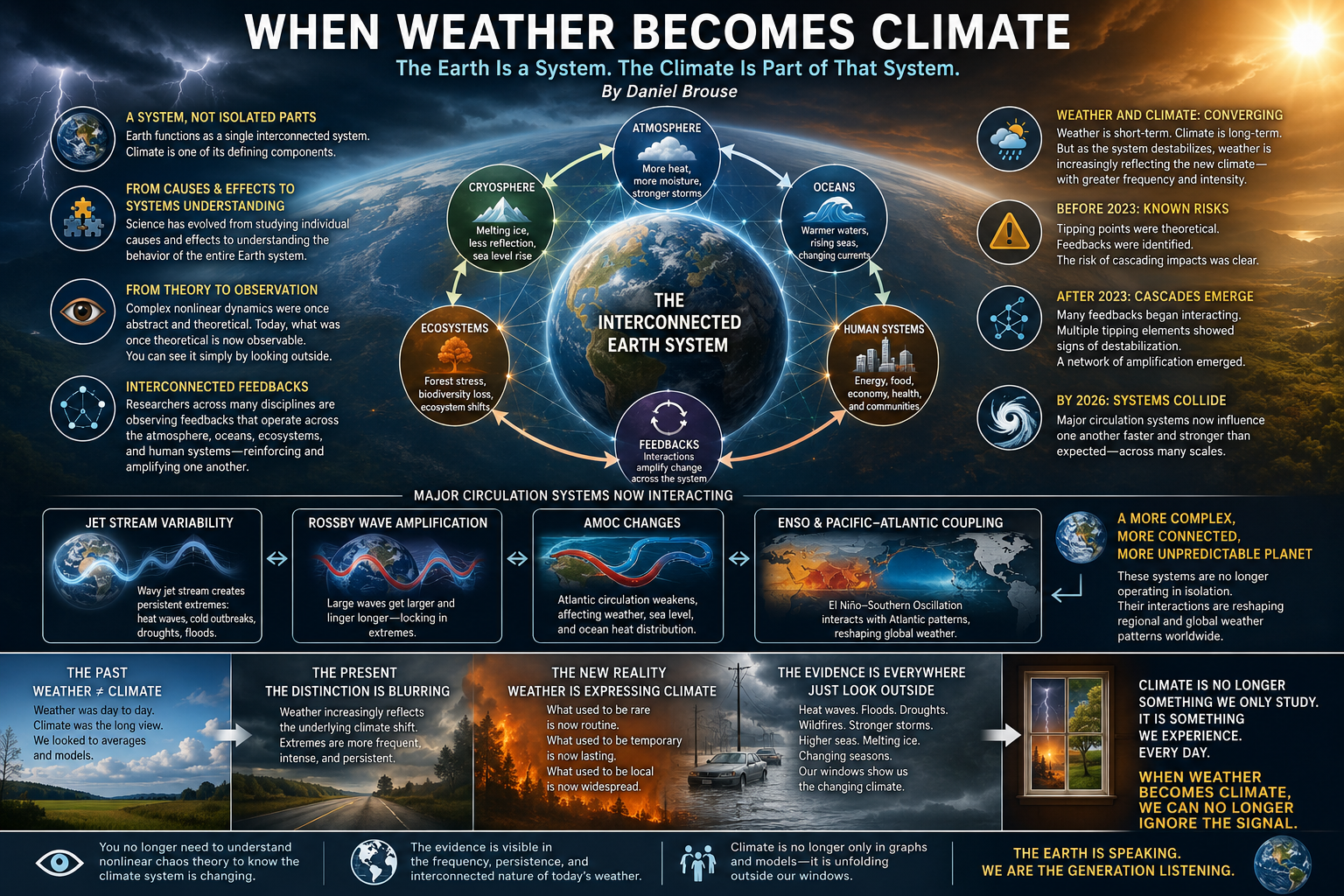
The distinction between weather and climate has not disappeared. Weather remains the day-to-day state of the atmosphere, while climate describes long-term averages and the underlying behavior of the Earth system. What has changed is the degree to which climate is now shaping weather in real time.
As greenhouse gases accumulate and the planet stores more heat, every component of the climate system contains more energy. Warmer oceans evaporate more water, the atmosphere holds more moisture, and circulation patterns are increasingly disrupted by changes in temperature gradients between the tropics and the poles. These changes alter not only the intensity of individual weather events but also the persistence and interaction of entire weather patterns.
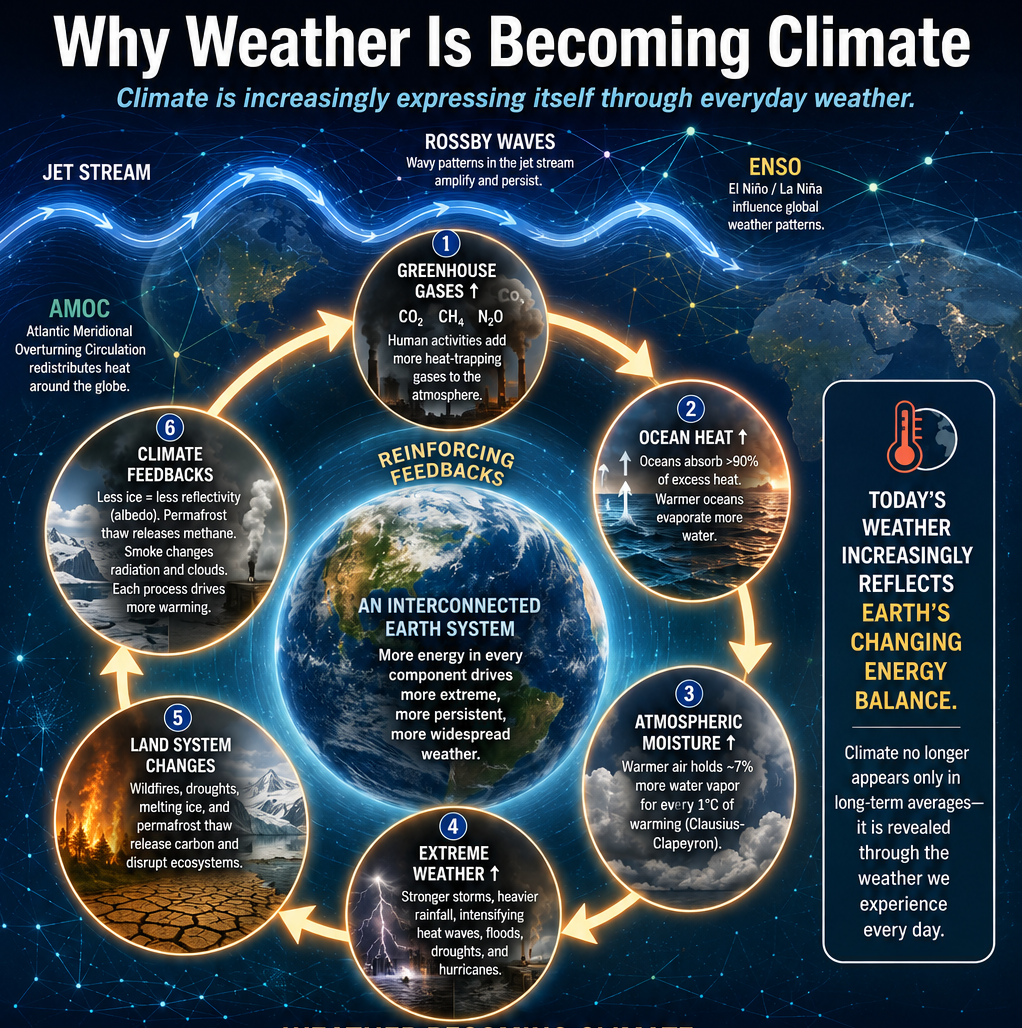
The result is a network of reinforcing feedbacks. A warming ocean fuels stronger atmospheric rivers and hurricanes. Droughts increase wildfire activity, while wildfire smoke alters atmospheric chemistry and solar radiation. Reduced snow and ice decrease Earth’s reflectivity, allowing additional warming. Permafrost thaw releases greenhouse gases that contribute to further warming. Each process influences others, producing cascading effects across the Earth system.
These interactions also affect the planet’s major circulation systems. Changes in the jet stream, Rossby wave amplification, ENSO, the Atlantic Meridional Overturning Circulation (AMOC), and other large-scale patterns increasingly influence one another. Rather than operating as largely independent phenomena, they are becoming components of an interconnected global system whose behavior is nonlinear and capable of rapid transitions.
This systems perspective helps explain why extreme weather events are becoming more persistent, widespread, and synchronized. Heat waves, floods, droughts, wildfires, and severe storms are no longer viewed simply as isolated disasters. They are increasingly understood as different expressions of the same underlying climate dynamics.
In this sense, weather has become one of the most visible indicators of climate change. The climate system is no longer revealing itself only through decades of averaged temperature records or scientific models. It is increasingly expressing itself through the weather that people experience every day. As nonlinear feedbacks continue to strengthen, weather is becoming the language through which climate communicates its changing state and at what rate.
What Fascinates You?
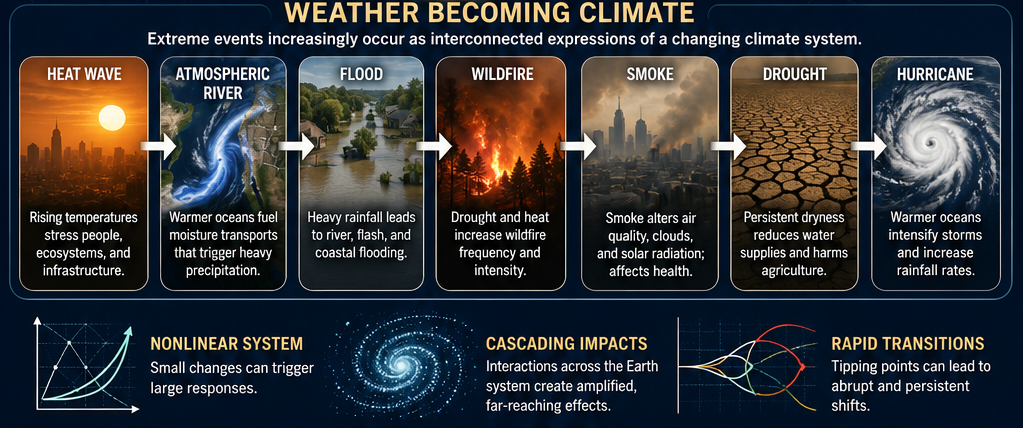
One of the remarkable aspects of climate change is that it no longer exists only in scientific journals or satellite imagery. It can be observed in countless ways during everyday life. Once you begin looking at the Earth as an interconnected system, signs of change seem to appear everywhere.
I find evaporation especially fascinating. It is one of the simplest processes to observe, yet it connects directly to the global climate system. I notice how quickly water disappears from a swimming pool after a hot, humid day. I see gardens requiring more frequent watering. At the global scale, the same process is evident in warmer oceans that transfer more water vapor into the atmosphere, fueling heavier downpours, stronger storms, and atmospheric rivers that are becoming increasingly familiar in regions where they were once uncommon.
I am equally fascinated by soil. Healthy soil is not simply dirt—it is a living ecosystem filled with fungi, bacteria, earthworms, insects, roots, and organic matter. It stores water, cycles nutrients, and supports nearly all terrestrial life. Yet I also see soil under stress. Extended heat, drought, intense rainfall, erosion, wildfire, and changing seasons are degrading soils in many places. The ground beneath our feet is quietly telling the story of a changing climate.
Others may notice different changes. Some watch the timing of blossoms in the spring or leaves in the autumn. Others observe declining insect populations, shifting bird migrations, warmer nights, disappearing snow cover, longer wildfire seasons, or increasingly persistent heat waves. Farmers may recognize changing growing seasons, while anglers notice warmer streams and changing fish populations. Every landscape offers its own clues.
Climate change is often discussed in terms of global averages and long-term statistics, but it is also a collection of countless local observations. The Earth system expresses itself through the places we know best.
So, what fascinates you?
What changes have you noticed in your own backyard, neighborhood, or community? The answers to that question may be among the most compelling evidence that weather is increasingly revealing the changing character of our climate.