bookmark_borderMilitarized Aid and War Crimes: The Gaza Humanitarian Foundation’s Deadly Operations Under Trump

by Daniel Brouse
July 6, 2025

The Gaza Humanitarian Foundation (GHF), a private nonprofit incorporated in Delaware in February 2025 in cooperation with Donald Trump, stands at the center of mounting international outrage and investigation following allegations of grave human rights abuses in Gaza.

Originally established as an “alternative aid channel” amid the dismantling of UNRWA, GHF has received support and logistical backing from the U.S. and Israeli governments, employing private security contractors to distribute food and water through heavily fortified aid hubs. However, multiple eyewitness reports, satellite imagery analyses, and independent humanitarian monitors have accused GHF personnel of shooting unarmed, starving women and children attempting to access these critical supplies. Estimates indicate that over 700 civilians have been shot, most within proximity of GHF-controlled distribution centers, with many incidents involving GHF personnel or GHF-coordinated security forces.

GHF has also been accused of using starvation as a weapon of war in Gaza by restricting the flow of aid to areas deemed politically noncompliant, violating international law and multiple Geneva Convention provisions. Humanitarian organizations, including Doctors Without Borders and the International Committee of the Red Cross, have condemned the foundation’s operations, warning that GHF’s approach is militarizing and politicizing aid delivery, resulting in the collective punishment of civilians.

Additional reports allege GHF’s cooperation with Israeli intelligence agencies, including the use of facial recognition software at checkpoints and distribution sites to identify and target individuals for arrest or extrajudicial execution. Several documented cases suggest that individuals flagged during aid collection were later detained or found dead under suspicious circumstances, raising concerns of systematic extrajudicial killings coordinated under the guise of humanitarian relief.

International law experts and human rights advocates argue that these actions constitute war crimes, including forced displacement, ethnic cleansing, and the use of starvation as a weapon. The United Nations has opened preliminary investigations, and the International Criminal Court (ICC) is reportedly reviewing evidence for potential prosecution of individuals involved, including senior GHF officials and affiliated government partners.

The situation in Gaza is not isolated in the scope of Trump’s activities. Donald Trump has also been implicated in war crimes in Ukraine and Iran, where his support for aggressive military actions, civilian-targeting operations, and violations of sovereignty have drawn condemnation from international legal bodies and further tarnished the United States’ standing on human rights.

Critics argue that GHF exemplifies the dangers of privatized, militarized humanitarian intervention, particularly under leadership driven by political agendas rather than human needs. By bypassing established relief networks, leveraging surveillance technology for political ends, and utilizing lethal force against desperate civilians, GHF has transformed aid into an instrument of violence and control in one of the world’s most vulnerable regions.

As investigations continue, the Gaza Humanitarian Foundation and its backers may become a defining case study in how humanitarian cover can be exploited to commit war crimes, enforce political objectives, and further erode the rule of law in global conflict zones.

Evangelical Christianity and Israel
If you’re curious about the driving force behind US support for Israel, it’s ironically rooted in Evangelical Christianity. Many Evangelical Christians believe they can hasten the “second coming of Christ” by bringing about the apocalypse. According to their interpretation of the Bible, this involves Israel reclaiming Jerusalem, Jesus returning, and ultimately eliminating all Jews. For numerous “Christian Zionists,” especially influential evangelists aligned with the Republican Party, support for Israel is less about political strategy and more about its supposed role in biblical prophecy. In this worldview, war is not something to be avoided but embraced as a divine necessity—an inevitable and even celebratory step toward Jesus’ rule from the Temple Mount in Jerusalem. The fate of Jews and Palestinians is, to put it mildly, seen as collateral damage.

Trumpenomics: The Decline of the US

bookmark_borderHow Bombing Iran Creates the Greatest Modern Threat to U.S. Homeland Security

The U.S. bombed the Al-Shifa pharmaceutical plant in Khartoum, Sudan on August 20, 1998.

This military strike occurred as part of Operation Infinite Reach, a response to the August 7, 1998 U.S. embassy bombings in Kenya and Tanzania, which were carried out by al-Qaeda. The Clinton administration claimed the Al-Shifa plant was linked to chemical weapons production and had ties to Osama bin Laden—claims that were later widely disputed and remain controversial.


Time Between the Bombing and 9/11:

The September 11 attacks happened on September 11, 2001.

So, the time between the U.S. bombing of the Sudanese pharmaceutical plant and 9/11 was:

3 years and 22 days

This event is sometimes cited in discussions of al-Qaeda’s motivations and recruitment, as it was viewed in much of the Muslim world as an unjustified and disproportionate U.S. attack on civilian infrastructure—especially since the Al-Shifa plant produced over half of Sudan’s medicines, including treatments for malaria and tuberculosis.

Trump Tragedies and Acts of Terror

The bombing of Iran reflects many of the same strategic missteps and legal violations that plagued past U.S. interventions—from Sudan to Iraq, Libya, and Afghanistan. But this time, the consequences are even more egregious. The current administration has not only abandoned diplomacy and international norms—it has discarded even the pretense of accountability. The lack of Congressional authorization, open defiance of international law, and direct threats against global institutions mark a profoundly dangerous departure from the rule of law. Rather than learning from the failures of the past, Trump’s policies have escalated them—amplifying conflict, putting civilians at greater risk, and inching the world closer to irreversible catastrophe.

Compounding the crisis is the Trump administration’s reckless staffing of critical national security positions. At the time of the Iran bombing, the U.S. counterterrorism program was reportedly being overseen by a 22-year-old political appointee, who was intoxicated while on duty. This was not just a lapse in judgment—it was an alarming display of institutional failure at a moment of grave national and international risk. The elevation of an unqualified, impaired individual to such a vital post underscores the administration’s disregard for professionalism, competence, and the basic safety of the American people.

This illegal war—launched without Congressional debate or authorization—has significantly heightened the global terror threat. By destabilizing Iran and dismantling nuclear oversight mechanisms, the administration has created a volatile vacuum, one that intelligence experts warn could inspire retaliatory attacks and long-term regional chaos. History has shown time and again that unjustified military aggression fuels radicalization, particularly when civilians are caught in the crossfire. Groups that previously had limited support can gain legitimacy and recruits by pointing to U.S. actions as evidence of imperialism, hypocrisy, or religious persecution.

Security analysts have already raised alarms that these events could provoke domestic attacks on U.S. soil, either through coordinated foreign plots or lone-wolf actors radicalized by images of U.S. aggression abroad. The combination of high-profile civilian casualties, a perceived war on Islam, and the lack of international legal justification gives extremists a powerful propaganda tool—and an excuse to strike back.

Most disturbingly, this war appears to have little to do with legitimate national security concerns and far more to do with ideological extremism, racism, and religious bigotry. From the earliest days of Trump’s political rise, he has framed Muslim-majority nations as existential threats, often conflating political opposition with religious identity. His Muslim travel ban, inflammatory rhetoric about “radical Islamic terrorism,” and disdain for multilateral diplomacy reveal a worldview shaped less by security strategy and more by xenophobia. The current aggression toward Iran fits squarely within that pattern: a campaign driven by demonization of the other, not by evidence-based threat assessments or rational defense policy.

In such a context, placing critical responsibilities in the hands of the inexperienced and unfit is more than negligence—it is a betrayal of public trust and a reckless endangerment of national security, both at home and abroad. This is not a war for peace or protection; it is a war fueled by prejudice, political theater, and willful disregard for human life.

Conclusion:

History has shown us the consequences of launching military strikes under the guise of preemption or retaliation without true self-defense. From Operation Infinite Reach and the destruction of Sudan’s pharmaceutical plant, to the protracted conflicts in Afghanistan and Iraq, U.S. military actions not grounded in legitimate self-defense have not only failed to eliminate threats—they have multiplied them. Bombing another sovereign nation, especially one with nuclear and biological infrastructure, risks igniting widespread instability, retaliatory terrorism, and environmental catastrophe. Moreover, such actions violate international law and may constitute war crimes, particularly when they involve targeting civilian infrastructure or failing to exhaust diplomatic alternatives. Rather than ensuring security, these strikes entrench the United States in unending wars, inflame anti-American sentiment, and make the homeland more vulnerable than ever. If we ignore these lessons, we are not just repeating history—we are worsening it.

Unauthorized and Unraveled: Trump’s Reckless War with Iran Has Unleashed Global Peril

Trump’s Complicity in Global War Crimes: Ukraine, Gaza, and Iran
Evangelical Christianity and Israel
If you’re curious about the driving force behind US support for Israel, it’s ironically rooted in Evangelical Christianity. Many Evangelical Christians believe they can hasten the “second coming of Christ” by bringing about the apocalypse.

Trumpenomics: The Decline of the US

bookmark_borderUnauthorized and Unraveled: Trump’s Reckless War with Iran Has Unleashed Global Peril

To go to war with Iran without Congressional approval is not only unconstitutional—it’s a direct violation of both U.S. and international law. Yet that’s exactly what has occurred. Under President Trump’s direction, the United States has entered a dangerous and destabilizing conflict that was not only preventable, but entirely manufactured by his administration’s failed diplomacy and reckless decision-making.

Let’s be clear: there was no immediate threat from Iran. Intelligence analysts, international nuclear watchdogs, and even U.S. defense officials confirmed that Iran was in compliance with the Joint Comprehensive Plan of Action (JCPOA)—better known as the Iran Nuclear Deal—when Trump unilaterally withdrew from it in 2018. Despite U.S. unreliability in upholding its commitments, Iran continued to adhere to the deal’s terms for an extended period, including allowing unfettered access to inspectors and refraining from enriching uranium to weapons-grade levels.

Multiple authorities estimated that, even if Iran wanted to build a nuclear weapon (for which there was and remains no credible evidence), it would take at least a year to do so. In other words, the idea of an imminent threat was fiction—manufactured for political posturing and distraction.

Now, with Trump’s undeclared war on Iran in motion, the situation has gone from stable to terrifying. There are no more inspections. No one knows the status or security of Iran’s nuclear materials. According to multiple reports, Iran has moved its enriched uranium to undisclosed and unsecured locations, increasing the risk of proliferation and potential weaponization under a veil of secrecy.

Worse yet, the initial U.S. strikes reportedly bombed nuclear and biological research facilities, raising alarms about the possible release of radiation and pathogens into the environment—endangering not just the region, but the global community. This kind of reckless escalation invites catastrophic consequences, both immediate and long-term.

As if the strategic errors weren’t damning enough, the Trump administration’s personnel decisions have only magnified the danger. At the time of the bombing, the U.S. counterterrorism program was being led by a 22-year-old political appointee—reportedly intoxicated while on duty. This wasn’t just a lapse in judgment; it was a chilling display of negligence during a moment of extreme national and international risk.

This illegal war, launched without Congressional authorization, has significantly increased the terror threat both at home and abroad. Intelligence officials warn that destabilizing Iran and eliminating nuclear oversight not only fuels regional chaos but also provides new motivation for extremist retaliation. The appointment of an unqualified, impaired individual to oversee counterterrorism amid such a volatile escalation is a profound betrayal of public trust—and a reckless endangerment of national security.

Conclusion: Catastrophe by Design

This war with Iran wasn’t inevitable. It was engineered—through sabotage of diplomacy, disengagement from international norms, and blatant disregard for Congressional authority. The result is a far more dangerous world: no inspections, no transparency, and nuclear materials on the move.

The recklessness isn’t just staggering—it’s criminal. And it must be met with accountability, not applause.

Trumpenomics: The Decline of the US

bookmark_borderTrump’s Complicity in Global War Crimes: Ukraine, Gaza, and Iran

Introduction

Despite branding himself as a “man of peace,” President Donald Trump’s actions during the first five months of his second term have contributed to a disturbing escalation of global conflict. From enabling brutal regimes to undermining international law, Trump’s role in supporting war crimes across multiple regions—Ukraine, Gaza, and Iran—marks one of the most troubling legacies of any U.S. president in modern history.

Empty Promises of Peace

Trump repeatedly claimed that wars would “never happen” under his leadership, and that global conflicts would end on “day one” of his return to office. These assertions have proven not only false but dangerously misleading. In reality, Trump’s rhetoric and policy decisions have emboldened authoritarian leaders, undermined international institutions, and fueled deadly military campaigns.


I. Ukraine: Enabling Putin’s War Crimes

Russian President Vladimir Putin stands accused by the International Criminal Court (ICC) of war crimes, including the abduction and forced relocation of thousands of Ukrainian children. His military has carried out widespread bombing campaigns targeting civilians, hospitals, and critical infrastructure across Ukraine.

Rather than holding Putin accountable, Trump has amplified Kremlin disinformation and echoed many of Moscow’s false narratives about the war. He has reportedly obstructed or delayed vital military aid and intelligence sharing with Ukraine—actions that have directly weakened Ukraine’s ability to defend itself. With Trump’s backing, Putin has become further emboldened in carrying out crimes against humanity and violating international law with impunity.


II. Gaza: Complicity in Collective Punishment

In Gaza, Trump has offered unwavering support to Israeli Prime Minister Benjamin Netanyahu, who is himself under investigation for war crimes. Trump not only endorses Netanyahu’s harshest policies but has also taken the unprecedented step of threatening ICC judges after the court issued arrest warrants.

Trump has advocated for the mass expulsion of Palestinians from Gaza, a stance that violates international law and potentially constitutes ethnic cleansing. His affiliated organization, the Gaza Humanitarian Foundation (GHF), has faced allegations of deliberately blocking aid and participating in the targeting of civilians attempting to access food and medical relief. Both GHF and Israeli forces have been accused of weaponizing hunger, a recognized war crime under the Geneva Conventions.

At the same time, Trump has worked to dismantle the United Nations Relief and Works Agency (UNRWA), the principal international body providing aid to Palestinians, effectively undermining humanitarian lifelines for millions.


III. Iran: Driving a New Conflict

Trump’s role in destabilizing Iran began in his first term when he withdrew the U.S. from the Joint Comprehensive Plan of Action (JCPOA), also known as the Iran nuclear deal. In his second term, he has escalated tensions further by demanding that Iran abandon even peaceful nuclear activities, while offering continued military and diplomatic cover to Israel—one of the few nations in the region with an undeclared nuclear arsenal.

Most recently, Trump has supported an unprovoked military campaign against Iran, providing logistical and material support to allied nations executing the offensive. Legal experts and human rights advocates argue that this constitutes participation in an illegal war of aggression—a recognized crime under international law.

IV. Other War Crimes and Violations of International Law

Trump’s pattern of disregard for international law extends beyond Ukraine, Gaza, and Iran. One of the most brazen examples occurred during his first term: the assassination of Iranian General Qassem Soleimani. Ordered in January 2020, the drone strike that killed Soleimani—on Iraqi soil and without Congressional approval—was widely condemned by international legal scholars as a violation of international law and Iraqi sovereignty. Soleimani was a high-ranking government official, and his killing was neither in response to an imminent threat nor sanctioned by the United Nations. It set a dangerous precedent for extrajudicial assassinations of state actors and further deteriorated diplomatic channels between Iran, Iraq, and the United States.

The United Nations’ Special Rapporteur on extrajudicial, summary, or arbitrary executions stated that the killing was “unlawful” under international law. The action also violated the UN Charter, which prohibits the use of force against the territorial integrity or political independence of any state, unless undertaken in self-defense or with Security Council authorization. No such justification applied to the Soleimani strike.

Moreover, Trump’s frequent use of military force without Congressional authorization—whether through drone strikes, cyberattacks, or conventional bombing campaigns—runs counter to both U.S. constitutional norms and international war statutes. His assertion that bombing sovereign nations does not constitute an act of war defies both common sense and established legal standards. Article I of the U.S. Constitution reserves the power to declare war to Congress, and international law, including the Geneva Conventions and the Rome Statute of the International Criminal Court, affirms that acts of aggression, including unprovoked bombing campaigns, can constitute war crimes.

Under Trump’s leadership, the U.S. has increasingly sidelined international institutions and legal norms, escalating a doctrine of “might makes right” in global affairs. His administration has threatened ICC judges, sanctioned international legal bodies, and withdrawn from cooperative agreements—all while embracing authoritarian leaders and discrediting human rights frameworks.

The consequence is not just legal or diplomatic damage—it’s a growing cycle of perpetual war, where military interventions replace strategy, and retribution replaces diplomacy. History has shown—from Operation Infinite Reach to the invasions of Afghanistan and Iraq—that bombing countries without self-defense not only violates international law, it guarantees long-term instability, insurgency, and blowback.

Conclusion: A Legacy of Escalation and Impunity

Trump’s actions have had devastating consequences across multiple regions. In Ukraine, his refusal to confront Putin and amplification of Kremlin propaganda have emboldened a regime accused of war crimes and prolonged a brutal invasion. In Gaza, his unwavering support for Netanyahu, coupled with the dismantling of humanitarian infrastructure, has intensified collective punishment and deepened civilian suffering. In Iran, his reckless aggression—punctuated by the unlawful assassination of General Qassem Soleimani and ongoing support for unprovoked bombing campaigns—has brought the world closer to environmental catastrophe and full-scale war.

Beyond these individual cases, Trump has promoted a dangerous doctrine: that bombing sovereign nations without Congressional approval or international authorization is somehow not an act of war. This defies both U.S. constitutional law and international legal standards, and it echoes the same flawed logic that led to the quagmires of Iraq and Afghanistan. The result is not peace, but a blueprint for permanent, unaccountable conflict.

Taken together, Trump’s foreign policy constitutes not just a moral failure, but a consistent pattern of enabling war crimes, violating international law, and accelerating global instability. His legacy is not diplomacy—it is escalation, impunity, and an ever-mounting human toll.

Trumpenomics: The Decline of the US

bookmark_borderThe Unraveling of American Leadership: How Trump’s Policies Are Reshaping the Global Order and Undermining U.S. Credibility

by Daniel Brouse
April 20, 2025

Donald Trump’s economic, immigration, and environmental policies have had significant ripple effects that are altering the global order and undercutting America’s role as a global leader. Here’s a breakdown of how each domain contributes to these broader consequences:

1. Economic Policies: Nationalism Over Globalism

Tariffs and Trade Wars:

Trump’s use of tariffs, especially against China and even traditional allies like the EU and Canada, disrupted global supply chains and undermined trust in the U.S. as a reliable trade partner. Instead of fostering a rules-based global economy, this approach favored ad hoc, transactional negotiations, creating uncertainty.

  • Impact: Destabilized global trade norms, encouraged other nations to seek alternatives to U.S.-dominated institutions, and hurt U.S. manufacturers and farmers via retaliatory tariffs.

  • Result: Accelerated the emergence of regional trade blocs (e.g., China’s RCEP, EU-Mercosur deal) and weakened the WTO’s influence.

Deficit Spending Without Structural Reform:

Trump pushed through major tax cuts (e.g., 2017 Tax Cuts and Jobs Act) disproportionately benefiting the wealthy and corporations, with no corresponding cuts in spending. This exacerbated long-term deficits and debt without improving productivity.

  • Impact: Fed an overheating economy pre-pandemic and constrained the government’s ability to respond to future crises.

  • Result: Undermined U.S. fiscal credibility and created inflationary pressures that eroded global confidence in the dollar as a stable reserve currency.

2. Immigration Policies: Erosion of Human Capital and Global Trust

Restrictionism and Deterrence:

The Trump administration cut legal immigration levels, enacted bans on several Muslim-majority countries, and used family separation as a deterrent—policies widely condemned as inhumane.

  • Impact: Weakened the U.S. as a magnet for global talent, particularly in STEM fields, undermining innovation and economic competitiveness.

  • Result: Countries like Canada, Australia, and Germany increasingly attract high-skill immigrants who once preferred the U.S.

Global Image and Soft Power:

By closing doors and demonizing immigrants, Trump damaged the U.S.’s image as a land of opportunity and moral leadership.

  • Result: Lost soft power, especially among allies and global youth, eroding the moral foundation of U.S. leadership.

3. Environmental Policies: Accelerating Climate Collapse and Global Isolation

Withdrawal from the Paris Agreement:

Trump’s decision to pull out of the Paris Climate Accord isolated the U.S. from nearly every other country on Earth in global climate efforts.

  • Impact: Delayed climate action during a critical decade and gave cover for other lagging countries to stall progress.

  • Result: Damaged U.S. credibility on environmental leadership and led to China and the EU stepping in to fill the void.

Rollback of Domestic Environmental Protections:

By gutting EPA regulations, weakening the Clean Power Plan, and promoting fossil fuels over renewables, Trump accelerated environmental degradation at home.

  • Impact: Increased pollution and carbon emissions, undermining long-term sustainability and economic health.

  • Result: Made the U.S. economy more vulnerable to climate risks—wildfires, storms, floods—while ignoring clean energy opportunities that other nations are rapidly seizing.

Global Consequences: Changing the World Order

Erosion of Alliances and Institutions:

Trump undermined NATO, threatened to pull out of longstanding agreements (e.g., WHO, WTO), and prioritized transactional diplomacy.

  • Impact: Allies question whether the U.S. will honor its commitments, pushing Europe to explore strategic autonomy and Asian countries to hedge with China.

  • Result: A multipolar world is accelerating, with China, the EU, and even regional blocs gaining influence at America’s expense.

Loss of Confidence in U.S. Leadership:

Perhaps most importantly, Trump’s erratic leadership style, disdain for expert advice, and embrace of authoritarian figures has fostered global skepticism.

  • Impact: The U.S. is no longer seen as a predictable or principled leader on major global issues—from pandemics to democracy promotion to climate change.

  • Result: A decline in American credibility, making it harder to form coalitions, lead on values, or coordinate global responses to crises.

Outlook: A Nation in Retreat

If Trump’s influence persists or returns in full via another term, the damage to U.S. leadership could become permanent. The consequences include:

  • A weakened U.S. dollar as global reserves diversify.

  • Brain drain in reverse, with innovators choosing more stable nations.

  • Loss of green energy dominance, with China and the EU leading.

  • A damaged reputation that undermines diplomacy, trade, and investment.

In sum, Trump’s policies—rooted in short-termism, xenophobia, and anti-globalism—are diminishing U.S. leadership, weakening global institutions, and accelerating the long-term decline of America’s credibility and economic future. If not reversed, this shift could mark the end of the U.S.-led liberal world order.

The Human Induced Climate Change Experiment

Trumpenomics: The Decline of the US

bookmark_borderThe Race Against Time: Climate Crisis vs. the United States

by Daniel Brouse
April 12, 2025

Abstract
Humanity stands at a historic crossroads where the accelerating pace of climate change threatens to overtake both our capacity for response and the viability of the global economic system itself. Recent models indicate that without immediate intervention, climate change could cause the collapse of capitalism as we know it—potentially as soon as 2050. At the same time, U.S. political developments—particularly Trump-era trade, fiscal, and environmental policies—may unintentionally hasten this collapse. The central question becomes: Will the U.S. economic system implode before climate change forces its hand, or has irreversible damage already been done?

I. Climate Change: From Hypothesis to Imminent Catastrophe

In the 1990s, we proposed a hypothesis: that climate change would not follow a linear trajectory but would instead accelerate non-linearly—driven by feedback loops such as polar ice melt, permafrost thaw, ocean acidification, and carbon release from soil and forests. Over the following decades, this hypothesis evolved into an established scientific theory, now widely accepted by the international scientific community.

Through collaboration with a physicist from Ohio State University, we observed a startling trend in the “doubling time” of climate impacts. Originally pegged at around 100 years, this timeframe has since shrunk to 10 years, and now—alarmingly—approaches just 2. That means climate-related damages could be 64 times worse a decade from now than they are today. These aren’t worst-case scenarios; they are conservative models assuming no further acceleration.

Our latest models integrate not only geophysical systems but also social, political, and economic feedback loops. The results are grim: we now forecast a potential 9°C rise in global temperatures within this century—a rate that would make much of the planet uninhabitable and render large-scale human migration and system failure unavoidable.

II. A New Threat Emerges: Trumpenomics and the War on Global Stability

Ironically, the Trump administration—through its aggressive trade, credit, and isolationist policies—has accelerated the very breakdown of capitalism that climate change is expected to cause.

The imposition of widespread tariffs, especially those based on falsified “reciprocal” trade deficits, has triggered not just a trade war, but a credit war. This combination has never before been tested in modern economic history. During Trump’s first term, the stage was set. Now, in his second term, the global economy is being subjected to a real-time, uncontrolled experiment.

The administration’s “drill, baby, drill” energy policy, paired with unprecedented regulatory rollbacks, has only deepened the climate crisis. Yet, from an economic systems perspective, it is the trade and credit dislocations that may deliver the first major blow.

III. Global Trade, Capital Flows, and the Liquidity Death Spiral

Most people think of tariffs as mere taxes on goods. But in today’s complex financial system, their impact extends far beyond the shipping yard.

When the U.S. imports less, foreign exporters earn fewer dollars. This reduces their ability to invest in U.S. Treasuries—the bedrock of the global financial system. As demand for Treasuries falls, yields rise, borrowing costs spike, and credit conditions tighten. This sets off a self-reinforcing liquidity crisis, undermining everything from consumer lending to corporate investment.

The risk is real and growing: a scenario where the U.S. dollar loses its global reserve status is no longer the stuff of academic theory. Should this occur, the fallout would include:

  • Exploding U.S. borrowing costs

  • A collapse in consumer purchasing power

  • Capital flight from U.S. markets

  • Severe contraction in both trade and credit

  • Domestic political and social unrest on a scale not seen in modern history

IV. The Tipping Point: Will Climate Collapse or Economic Collapse Win the Race?

The economic trajectory of the U.S. under Trump’s policies suggests that a post-capitalist transition may be triggered by domestic fiscal instability rather than climate catastrophe alone. In other words, the United States may be the first nation to economically implode under the dual weight of environmental and self-inflicted economic collapse.

Complicating matters, the U.S. is simultaneously dealing with aging infrastructure, mounting national debt, deteriorating public health, climate-related disasters, and rising political extremism—all of which erode resilience and reduce the chances of a coordinated national response.

This raises a chilling question: Will the collapse of the U.S. economy accelerate faster than climate change itself—or are we already too late to avoid either fate?

The U.S. dollar’s decline from global dominance — driven by unprecedented political dysfunction and fiscal recklessness — is unraveling the myth of American exceptionalism. Once the cornerstone of international finance, the United States now risks becoming a net liability to the world economy. Paradoxically, this economic unraveling may carry a sliver of hope. If Trump’s economic collapse marks the end of mass consumption, over-leveraged capitalism, and fossil fuel dependency, it could trigger a sharp drop in global emissions and slow the pace of climate change. Such a forced degrowth scenario–where contraction curbs carbon output–might buy humanity precious time to adapt, innovate, and survive. But this path would come at a steep cost: to livelihoods, political stability, and America’s standing in the world.

Conclusion: What Comes After?

Regardless of which crisis arrives first, one outcome is increasingly likely: the U.S. standard of living will fall sharply, and life expectancy may follow. Whether that post-collapse society can still be sustainable—or even enjoyable—will depend on the decisions we make in the next few years.

Our only hope is to treat this as a true “race against time” and respond with urgency, humility, and collective will. The future depends not just on science and economics, but on whether we can choose survival over ideology, cooperation over conflict, and truth over convenience.

The Human Induced Climate Change Experiment

bookmark_borderProtectionism 101: Trump Economics

Most of Trump’s policies are based on common misconceptions and in fact contradict established economic principles. To begin with, the U.S. government often subsidizes companies to keep operations domestic. This can make our products more expensive and our businesses less efficient and competitive. A notable example is electric vehicles (EVs). The U.S. heavily subsidizes EVs, yet we claim we are not, instead asserting that China does this without evidence. Consequently, we impose a 100% tariff on Chinese EVs. As a result, the U.S. lacks competitively priced, domestically produced EVs. Our EV industry has become uncompetitive and inefficient, while China has emerged as the powerhouse of EV manufacturing worldwide. This is just one example of how U.S. misunderstandings of trade have led to our own decline while contributing to China’s rise. These policies have been both Republican and Democratic. Trump’s policies, which are even more misguided and are intended to do this to every industry, are set to accelerate our decline rapidly. World economists estimate that our economy will be devastated within 1 year and 9 months.

For more information on this example see “BYD” and NEV sales. For another devastating example of protectionism see “Deep Seek” and large language model AI.

Protectionist policies have significantly influenced the global landscape of artificial intelligence (AI) and electric vehicles (EVs), creating distinct winners and losers across various industries.

Beneficiaries:

  • China:
    • BYD: A leading Chinese EV manufacturer, BYD has capitalized on domestic support and reduced foreign competition due to protectionist measures.
    • DeepSeek: This Hangzhou-based AI startup has emerged as a formidable player, developing advanced AI models like DeepSeek-R1. Notably, DeepSeek achieved these advancements at a fraction of the typical cost and energy consumption, democratizing AI development and enabling smaller firms to compete.

Adversely Affected:

  • United States:
    • Automotive Companies: Major U.S. automakers such as Ford and General Motors face challenges from increased tariffs and restricted access to international markets, impacting their competitiveness in the EV sector.
    • Technology Firms: Leading tech companies, including Nvidia, Intel, IBM, Qualcomm, Cerebras Systems, Graphcore, Tesla, Baidu, OpenAI, SambaNova, Microsoft, and Apple, have encountered setbacks due to protectionist policies. For instance, Nvidia experienced a significant decline in market capitalization following DeepSeek’s announcement of its R1 model, highlighting the disruptive potential of emerging competitors. For an idea of how costly protectionism can be to the US, Nvidia lost $593 billion in market value the day Deep Seek was announced.

The ripple effects of protectionism extend beyond these industries, notably impacting the energy sector—encompassing electricity, natural gas, and nuclear power—due to shifts in production and consumption patterns driven by evolving trade policies.

Beyond economic implications, protectionist measures can lead to significant technological and military consequences, as nations may struggle to access critical innovations or maintain strategic advantages in key sectors.

If you are interested in a historical example, the Smoot-Hawley Tariff Act of 1930 raised tariffs on imports to the United States, which contributed to the Great Depression. In fact, Trump’s policies, combined with bypassing the law and ignoring the Constitution by not having Congress codify legislation, make it appear as though our current economic downturn is accelerating. This is why world leaders and economists are not overly concerned; most agree they will tolerate current U.S. policies creating economic instability and that the collapsing economy will occur before the midterms. After the midterms, he will likely be toothless, if not impeached.

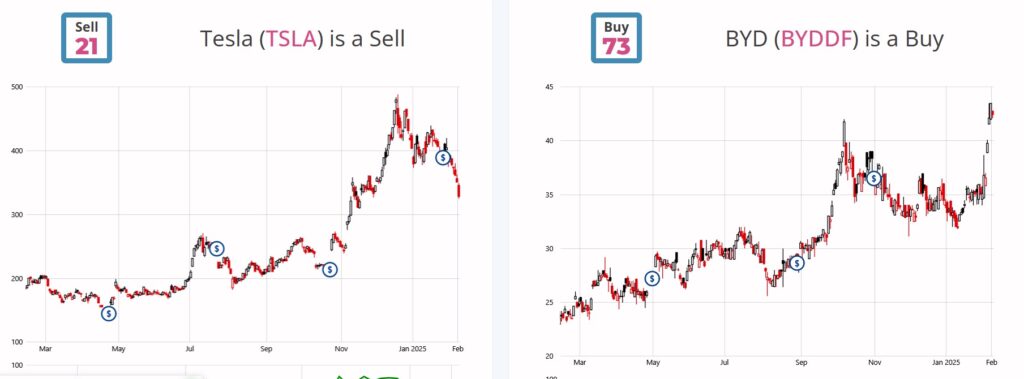
UPDATES: BYD’s Breakthrough Charging Tech Exposes the Pitfalls of U.S. Protectionism in the EV Market

How BYD Surpassed Tesla: The Role of Innovation, Tariffs, and Free Market Dynamics

Tesla vs. BYD
Tesla vs. BYD

MORE EDUCATIONAL MATERIALS ON TRUMP TARIFFS

Déjà Vu Economics: How Trump’s Deregulation and Tariff Policies Mirror the Road to the Great Depression

Trumpenomics: How Tariffs, Policy Cuts, and Labor Shortages Are Devastating American Farmers

The Devastating Impact of Trump’s Steel and Aluminum Tariffs

World Economics 101: The United States and Global Trade Dynamics

The Lies Behind Trump’s Terror Economics

Trumpenomics: The Decline of the US

bookmark_borderTerror Threats in the USA

Today there are two groups of terrorists in the United States that rank far above any other groups:
1) Evangelical Christians
2) Anarchists

How do you identify members of these hate groups? Well, the Alt-right (radical and Evangelical Christians) are easy to spot. We keep that “basket of deplorables” in our Cabinet. [See Executive Branch U.S.A. 2017]

Anarchists Symbol
Anarchists Symbol

Q: How do you identify an anarchist?
A: Black masks, the anarchist symbol, flags, etc.
2) They like to set fires, rip things down, break windows, fences and other barriers.
3) You can not pay them; however, they will steal from you. They do not believe in ownership of property nor money. They have no boss.

“A black bloc is a tactical strategy used by anarchists, in which individuals wear black clothing, scarves, sunglasses, ski masks, motorcycle helmets with padding, or other face-concealing and face-protecting items.” — Wikipedia

WARNING: Please do not falsely accuse thy neighbor. Anarchists love to hi-jack peaceful protests and turn them violent and ugly. Do not be fooled. The hi-jackers are NOT the same group as the peaceful protesters. They are not liberal students, paid leftist protesters, black lives matter, anti-war, anti-trump supporters or supporters of any kind.

WARNING II: Do not allow the Alt-right to hi-jack the anarchists or all hell will break loose. (Thank you, The Management)

Anarchists At The Inauguration of the President of the United States

Anarchists At Berkeley University

The Anarchists Vs. The Antichrist
The Alt-right Christians and Anarchists, have the same goal — Armageddon.

The radical Christians want to bring on the Armageddon so the Rapture will occur, and they will be “saved” (aka the cleansing of the Earth.)

The anarchists goal is “abolishing all coercive structures” resulting in the cleansing of the Earth. In order for the anarchists to achieve their goal they must take-out the Alt-right government.

Will these two families fight like South Philly Mob families or Chicago gangs?

See also: Radical Christian Terrorists and the Zombie Apocalypse

bookmark_borderRadical Christian Terrorists and the Zombie Apocalypse

EARTH — Imagine a group of radical Christians taking over the government and trying to bring on the Rapture (aka The Apocalypse) and the Second Coming.

You no longer need to imagine. A conspiracy of Evangelical Christians are trying to facilitate The End Of Times. They want to fulfill biblical prophecies including:

  1. The Revival of the Roman Empire
  2. The Emergence of the Antichrist
  3. The Covenant with Israel
  4. Three Periods Between the Rapture and the Second Coming
  5. The War with Russia
  6. The Great Tribulation: Armageddon

The Radical Christian Terrorists believe they will be “saved” when these events occur.

ESCHATOLOGY
Eschatology is the part of theology concerned with death, judgment, and the final destiny of the soul and of humankind.

THE RAPTURE / ZOMBIE APOCALYPSE
Daniel 12
The Time of the End

2 Many of those who are dead in the ground will awake, these to everlasting life, but the others to disgrace and everlasting contempt.

Thessalonians 4:17
17 Then we who are alive and remain will be caught up together with them in the clouds to meet the Lord in the air, and so we shall always be with the Lord.

In Christian eschatology, the Rapture refers to the prophesied event when “Christian believers who have died will be raised and believers who are still alive and remain shall be caught up together with them (the resurrected dead believers) in the clouds to meet the Lord Jesus Christ in the air.”

APOCALYPSE
The apocalypse is the complete and final destruction of the world as prophesied in the biblical books of Daniel and Revelation (the last book of the Bible.)

The Four Horsemen of the Apocalypse in the book of Revelation are horsemen on white, red, black, and pale horses. The riders are often seen as symbolizing:

  1. Conquest, Pestilence, the Christ or the Antichrist
  2. War
  3. Famine
  4. Death

“The Christian apocalyptic vision is that the four horsemen are to set a divine apocalypse upon the world as harbingers of the Last Judgment.”

Revelation 6:7-8
When the Lamb broke the fourth seal, I heard the voice of the fourth living creature saying, “Come.” I looked, and behold, an ashen (pale) horse; and he who sat on it had the name Death; and Hades was following with him. Authority was given to them over a fourth of the earth, to kill with sword and with famine and with pestilence and by the wild beasts of the earth.

  • The first seal is broken and the first of the four living creatures introduces a white horse whose crowned rider, equipped with a bow, goes out to conquer.
  • The second seal is broken and the second of the four living creatures introduces a red horse, whose rider wields a great sword.
  • The third seal is broken and the third of the four living creatures introduces a black horse, whose rider carries a pair of scales, goes out.
  • The fourth seal is broken and the fourth of the four living creatures introduces an ashen horse comes out, whose rider has the name Death and Hades follows him.
  • The fifth seal is broken revealing the souls of those who had been slain for the “Word of God”.
  • The sixth seal is broken “and there was a great earthquake; and the sun became black as sackcloth made of hair, and the whole moon became like blood; and the stars of the sky fell to the earth, The sky was split apart, every mountain and island were moved out of their places.”
  • Mankind hides themselves in the caves and mountains acknowledging the presence of Him who sits on the throne and the wrath of the Lamb.

bookmark_borderProtectionism: The Costs and Benefits of Trade Wars

by Daniel Brouse

Protectionism is the theory or practice of shielding a country’s domestic industries from foreign competition by restricting imports. There are no known benefits to protectionism. The costs of protectionism include being financially destructive, negatively impacting health and wellness, as well as, causing death. (also see: )

Following are a few examples:

GOLDEN RICE AND THE TRANS PACIFIC PARTNERSHIP
Trade restrictions are often put on agricultural products in an effort for a country to protect its farmers. The result is to harm the general population. Rice is a good example of a crop that is widely protected by trade restrictions. USA Rice states, “The barriers range from ongoing phytosanitary restrictions by Colombia on imports of U.S. paddy rice; a discriminatory and very complex tariff regime in the EU; the trade distorting impact of Thailand’s rice support program; government management of rice imports in Japan and Taiwan; and Korea’s new rice import regime.”

The United States Patent and Trademark Office stated, “Despite current interventions, vitamin A deficiency is the leading killer of children globally (2-3 million annually) and also the leading cause of childhood blindness (500,000 cases annually). Most cases arise in Asia where the staple food eaten by 3.5 billion people daily, white rice, lacks vitamin A sources typically found in meat and leafy vegetables. These deaths and blindness are preventable.”

In 2015, Golden Rice won a humanitarian award. Not only is Golden Rice more nutritious than white rice, it is also less harmful to the environment (since less of it needs to be grown.) There are numerous health benefits from Golden Rice including β-Carotene that provides vitamin A to children. It is estimated that millions of children’s lives could be saved and childhood blindness could be dramatically reduced.

The Trans-Pacific Partnership Agreement (TPP) would have eliminated trade restrictions on Golden Rice by the participating countries.

1930 SMOOT-HAWLEY TARIFF ACT
The Tariff Act of 1930 was signed into law on June 17, 1930 by President Herbert Hoover. The act raised U.S. tariffs on over 20,000 imported products. The tariffs imposed an effective tax rate of 60% on many of the goods. The Act also started a trade war with America’s trading partners resulting in reduced American exports and imports by more than 50% contributing to The Great Depression.

Historians estimate at least 3 million civilians died from the Great Depression in the United States, mostly young children, the elderly and women. The main causes were:

  1. malnutrition
  2. infectious disease
  3. attempted child birth
  4. starvation
  5. suicide

THE SHOE TAX
The shoe tax is a remnant of the Smoot–Hawley Act. United States’ shoe tariffs are 10 times higher than the average U.S. tariff rate. According to the U.S. International Trade Commission, in 2011 shoes accounted for 1 percent of merchandise imports, but  provided 7.9 percent of U.S. tariff revenue.

Regressive taxes disproportionately hurt the poor. A regressive tax “imposes a greater burden (relative to resources) on the poor than on the rich.” The money paid in taxes has a larger impact on the ability of lower-income households to satisfy their basic needs, like food, clothing, healthcare and shelter.

PHARMACEUTICAL TARIFFS
In 2006 the WTO said scrapping the tariffs on medicines and drug ingredients would result in “effective action to improve access to medicines and medical devices needed to treat a wide variety of diseases effectively and ensure that these goods reach patients expeditiously at a lower cost.”

“It is ironic that many of the countries that are in urgent need of cheap medicines also have a significant tax added to drugs and medical devices they import,” said Peter Allgeier, the US ambassador to the WTO.

The National Institute of Health stated:
A group of countries, including members of the European Union, Canada, the United States, Japan, Switzerland, and Norway, agreed to eliminate import tariffs on thousands of finished drugs and intermediate ingredients in the Uruguay round trade talks between 1986 and 1994. As a result, out of an average global trade in drugs worth $145bn between 1999 and 2001, $114bn was covered by the initiative. But almost $33bn is still subject to duty, the joint proposal noted.

AL-SHIFA PHARMACEUTICAL FACTORY
Operation Infinite Reach was the codename for an American cruise missile strike on a pharmaceutical plant in Sudan. After helping Sudan build a pharmaceutical factory, the United States blew it up. Initially, the U.S. claimed the plant was making chemical weapons. Eventually, the U.S. admitted there was no evidence the plant was making chemical weapons. The side-effects to the local population included:

  • no supplies of chloroquine (the standard treatment for malaria)
  • relief workers fleeing the country resulting in starvation
  • fostering the attack of 9/11

The trade disruption is estimated to have killed or maimed hundreds of thousands of people many of which were children.

BABY FORMULA IN CHINA
For years China had stiff tariffs on imported baby formula. The lack of competition forced the price higher and the quality lower. In 2012, China’s consumer quality regulator found an “unusual amount” of mercury in baby formula produced by Yili Industrial Group Co. “At present, the country has no standards on mercury limits in milk powder. But to be responsible to consumers, the company decided to recall all related products,” said the company.

It is unclear how many children have been malnourished or poisoned due to China’s trade policy. Under free-trade agreements, such as the TPP, countries can not put tariffs on the product and the product must meet the health and safety standards of the USA.