bookmark_borderTrade War! What Is It Good For?

By Daniel Brouse

International Economics 101
What do you think of when you hear the term “trade war”?
The costs and benefits to society are very similar to traditional warfare.
1) Financial Cost. A war is expensive. In a trade war, huge tariffs are placed on the purchase of imports. A tariff is a sales tax paid for by the citizen. Quite often this tax can be as high as 45% or the product even banned altogether. The tax is paid by the citizen to their government. The financial loss from the in-efficiency of paying large taxes is a tremendous burden on the country’s own citizens. In addition, there are usually large costs to the private sector. These costs can include high interest rates, inflation and loss of value to liquid assets. The standard of living declines.
2) Casualties / Loss Of Life. Millions of people are maimed or die in a trade war. The easiest examples in recent history would be the impacts on baby formula or pharmaceuticals. Hundreds-of-thousands of children, as well as, adults in need of medication died because these items were targeted in trade wars. Another example is maiming children by targeting vitamin A (causing childhood blindness.) Typically, trade wars impact the most vulnerable first — babies, the sick and the elderly.

bookmark_borderHottest Year

By Daniel Brouse
For The Human Induced Climate Change Experiment

2016 was Earth’s warmest year in at least the last 125,000 years. It marks the third record year in a row.

NOAA reported, “The globally averaged temperature over land and ocean surfaces for 2016 was the highest among all years since record keeping began in 1880. During the final month, the December combined global land and ocean average surface temperature was the third highest for December in the 137-year record . During 2016, the globally-averaged land surface temperature was 2.57°F (1.43°C) above the 20th century average. This was the highest among all years in the 1880–2016 record, surpassing the previous record of 2015 by 0.18°F (0.10°C).”

Experts believe that a 1.5°C to 2°C increase is a tipping point that could make global warming irreversible. The 1.43°C increase is of grave concern.

Arctic ice also reached a record low. “Recent trends in the decline of Arctic polar sea ice extent continued in 2016.” The estimated average annual sea ice extent in the Arctic was approximately 3.92 million square miles. The smallest annual average on record.

bookmark_borderTrump Security Breach

For months, the security community has known that both the DNC and GOP were hacked. The DNC hack was used to undermine Hillary. The GOP / Trump hacks were meant for blackmailing Trump. No surprises here.

U.S. security agencies were aware of Donald Trump’s security breaches since last summer. The information was in the public domain by August of 2016. The Donald was given a copy of the report long before the story appeared in the New York Times.

In a hearing before the Senate Select Committee on Intelligence, FBI director James Comey said attackers penetrated GOP organizations and stole Republican National Committee emails. “There was evidence that there was hacking directed at state-level organizations and the RNC…. Information was harvested from there, but it was old stuff. None of that was released”, Comey said.

Back in August of 2016 digital security firm ThreatConnect said, “We believe DC Leaks is another Russian-backed influence outlet.” DC Leaks had released 300 stolen emails from Republican targets including the staffs of Sen. John McCain, Lindsey Graham, Michele Bachmann and party officials in several states.

In October of 2016, Richard Andres, a cybersecurity and national security strategy expert with the U.S. military’s National War College said, “What we’ve been seeing here in the U.S. so far is mild by comparison to what they do in their own backyard. If they continue to escalate, we should expect to increasingly see false flag operations designed to implicate various political actors, falsified leaks, blackmail, false calls to their opponents’ political supporters and more

The Russians have gained accessed to the DNC and GOP mainly through “spearphishing.” Spearphishing is when a hacker gets someone to click on an email, attachment, link or photo. Malware is then installed on the victim’s computer that allows hackers to exploit the network. “Essentially people are opening their front door and letting them in,” said Toni Gidwani, a former Defense Intelligence Agency official whose ThreatConnect cybersecurity firm has investigated many of the hacks. “It’s something they keep coming back to because it works.”

It is not a matter of politics. It is a matter of national security. All sides need people to go to jail over the security breaches — Republicans, Democrats and Russians.

On January 11, Donald Trump tried to skirt the issue during a press conference and said he didn’t have any business in Russia. These statements were very misleading, if not an out-an-out lie. Donald Trump has substantial investment from Russians for businesses in other countries. After Trump went bankrupt 6 times, he was unable to readily borrow money from any reputable institution. Instead, he took money from Russian oligarchs and Russian mobs.

In 2008, Donald Trump Jr. attended a real estate conference and stated, “Russians make up a pretty disproportionate cross-section of a lot of our assets. We see a lot of money pouring in from Russia.”

Bayrock is a Russian backed business that has been implicated in money laundering. The Financial Times reported, “The Republican presidential nominee and Bayrock were both based in Trump Tower and they joined forces to pursue deals around the world — from New York, Florida, Arizona and Colorado in the US to Turkey, Poland, Russia and Ukraine. Their best-known collaboration — Trump SoHo, a 46-storey hotel-condominium completed in 2010 — was featured in Mr Trump’s NBC television show The Apprentice.”

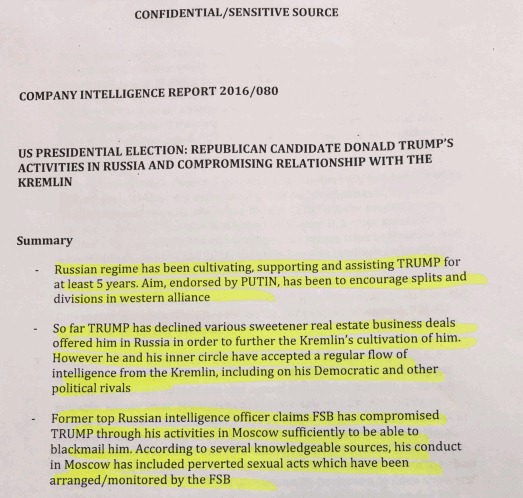
THE REPORT:
Trump Intelligence Allegations

Trump Intelligence Allegations

MORE

Russia Attempts to Hack Electric Grid
Malware associated with a Russian hacking operation, Grizzly Steppe, was found on a Burlington Electric computer. It appears as though Russia was trying to access the power grid; however, the infected computer was not connected to the network. “Vermonters and all Americans should be both alarmed and outraged that one of […]

Russia And Cybersecurity
Cozy Bear and Fancy Bear are two hacking organizations from Russia. Cozy Bear (classified as advanced persistent threat APT29) are believed to be associated with Russian intelligence. Fancy Bear (also known as APT28, Pawn Storm, Sofacy Group, Sednit and STRONTIUM) is a cyber espionage group believed to be sponsored by the […]

bookmark_borderFrance Ups Cybersecurity

France said the number of cyber attacks against the defence ministry have doubled each year. 24,000 attacks had been thwarted in 2016.

Security services have warded off attacks aimed at “tarnishing the image of the ministry as well as strategic attacks – harassment, surveillance, espionage – and even attempts to disrupt our drone systems,” Defence Minister Jean-Yves Le Drian said. “Thankfully, our defences were sufficient and none of these attacks were successful.”

“France reserves the right to respond by all means it deems appropriate,” he said. “That could be through the cyber arsenal at our disposal but also by conventional means. Everything would depend on the effects of the attack.”

“If there was an attempt to influence or manipulate the US presidential election, it would be a very serious incident. If it were led by a state government, it would be an intolerable interference. Targeting a country’s electoral process is an attack on its democratic foundations and its sovereignty, he added. Of course our services have discussed the issue, if only to learn lessons for the future,” said Le Drian

France plans to deploy 2,600 “digital soldiers” by 2019.

bookmark_borderAntarctic Glacial Ice Melt

Australia’s ABC news reports:

Scientists hope to discover how warm water is reaching one of the world’s largest glaciers, causing it to melt rapidly.

Lead author Steve Rintoul said it was the first time scientists had been able to test the hypothesis that warm ocean waters were driving the glacier’s thinning.

“We knew the Totten has been thinning faster than other glaciers in East Antarctica, but nobody has known exactly why until we took these measurements,” he said.

“We found that warmer ocean water is reaching the cavity through this channel at temperatures capable of melting the ice shelf at the point where it meets ground.

Dr Rintoul said it was important to be able to predict the Totten glacier’s future behaviour, because it contained enough sea ice to raise global sea levels by about 3.5 metres.

“So the real importance of the research is that it helps provide some clues about how sea level might change in the future.”

The publication of the research today comes as scientists make their way back to the Totten glacier, where they hope to find more clues about what controls the amount of warm water reaching the glacier.

A team of about 30 scientists, technicians and PhD students left Hobart on December 8 and plan to arrive at the glacier in late December.

Dr. Rintoul said their goal was to learn more about the pathways that bring the warm water up from the deep ocean.

“Understanding the physical processes delivering heat to the ice shelf will help us assess the vulnerability of the East Antarctic ice sheet to future changes in the Southern Ocean,” he said.

“What we have shown is that warm water reaches the glacier. What we need to know is what’s going to happen in the future.

Dr. Tas van Ommen from the Australian Antarctic Division said it would be concerning to see an increase in the Totten glacier’s natural melt rate.

“If its natural melt rate was to increase because of changes in ocean circulation, that would then add to the sea level rise that we see from glaciers already melting in Antarctica, particularly in the West.

“So we are concerned to track that and to be able to predict what might happen in the future.”

bookmark_borderUS Bans North Ocean Oil Exploration

United States-Canada Joint Arctic Leaders’ Statement
THE WHITE HOUSE
Office of the Press Secretary

In March, President Obama and Prime Minister Trudeau announced a new partnership to embrace opportunities and confront challenges in the changing Arctic, with Indigenous and Northern partnerships, and responsible, science-based leadership. Over the past year, both countries have engaged a range of partners and stakeholders, including Indigenous peoples and Northern communities, state, provincial and territorial governments, nongovernmental organizations and businesses. Those consulted have expressed a strong desire for real and long-term opportunities to build strong families, communities, and robust economies. Today, President Obama and Prime Minister Trudeau are proud to launch actions ensuring a strong, sustainable and viable Arctic economy and ecosystem, with low-impact shipping, science based management of marine resources, and free from the future risks of offshore oil and gas activity. Together, these actions set the stage for deeper partnerships with other Arctic nations, including through the Arctic Council.

Science-based approach to oil and gas:

In March, the United States and Canada committed that commercial activities will occur only if the highest safety and environmental standards are met, and if they are consistent with national and global climate and environmental goals. Today – due to the important, irreplaceable values of its Arctic waters for Indigenous, Alaska Native and local communities’ subsistence and cultures, wildlife and wildlife habitat, and scientific research; the vulnerability of these ecosystems to an oil spill; and the unique logistical, operational, safety, and scientific challenges and risks of oil extraction and spill response in Arctic waters – the United States is designating the vast majority of U.S. waters in the Chukchi and Beaufort Seas as indefinitely off limits to offshore oil and gas leasing, and Canada will designate all Arctic Canadian waters as indefinitely off limits to future offshore Arctic oil and gas licensing, to be reviewed every five years through a climate and marine science-based life-cycle assessment.[i]

Supporting strong Arctic communities:

In March, both countries committed to defining new approaches and exchanging best practices to strengthen the resilience of Arctic communities and continuing to support the well-being of Arctic residents, in particular respecting the rights and territory of Indigenous peoples.

Recently, in direct response to requests from Alaska Native communities, President Obama created the Northern Bering Sea Climate Resilience Area protecting the cultural and subsistence resources of over 80 tribes as well as one of the largest seasonal migrations of marine mammals in the world of bowhead and beluga whales, walrus, ice seals, and sea birds. The United States also launched an interagency Economic Development Assessment Team in the Nome region of Alaska to identify future investment opportunities, with other regions to follow. In addition, the Arctic Funders Collaborative (AFC), a group of 11 U.S., Canadian, and international philanthropic foundations, announced the coordination and mobilization of an estimated $27 million in resources for programs across the Arctic over the next three years.

Today, for its part, Canada is committing to co-develop a new Arctic Policy Framework, with Northerners, Territorial and Provincial governments, and First Nations, Inuit, and Métis People that will replace Canada’s Northern Strategy. The Framework will include priority areas identified by the Minister of Indigenous and Northern Affairs’ Special Representative, such as education, infrastructure, and economic development. The Framework will include an Inuit-specific component, created in partnership with Inuit, as Inuit Nunangat comprises over a third of Canada’s land mass and over half of Canada’s coast line, and as Inuit modern treaties govern this jurisdictional space. In parallel, Canada is reducing the reliance of Northern communities on diesel, by deploying energy efficiency and renewable power. Canada will also, with Indigenous and Northern partners, explore how to support and protect the future of the Arctic Ocean’s “last ice area” where summer ice remains each year.

Low impact shipping corridors:

In March, the United States and Canada committed to working together to establish consistent policies for ships operating in the region. Today, both countries are launching the first processes ever to identify sustainable shipping lanes throughout their connected Arctic waters, in collaboration with Northern and Indigenous partners. The U.S. Coast Guard is launching a Port Access Route Study (PARS) in the Beaufort and Chukchi Seas.[ii] Results from this analysis may be used to establish vessel routing measures including traffic separation schemes, recommended routes, Areas To Be Avoided, or other instruments such as fairways where no structures may be erected. The Canadian Coast Guard and Transport Canada is implementing Northern Marine Transportation Corridors, determining what infrastructure and navigational and emergency response services are needed. Canada is also launching a new program to support training curriculum for Northerners, particularly Indigenous peoples, to join the marine field, as well as programming to support marine infrastructure and safety equipment for communities.

In addition, the U.S. Coast Guard, in consultation with industry, Indigenous communities, and the State of Alaska, has begun a strategy to phase down the use of Heavy Fuel Oil (HFO) in the Arctic. The Canadian Coast Guard is conducting similar outreach and consultations to develop proposals to phase down the use of HFO in 2017. The United States and Canada will each, or jointly, propose a plan for consideration at the International Maritime Organization’s spring 2017 meeting.

Science-based management of Arctic fisheries:

In March, the United States and Canada called for a binding international agreement to prevent the opening of unregulated fisheries in the Central Arctic Ocean and to build on a precautionary, science-based approach to commercial fishing that both countries have put in place in their Arctic waters. Today, the United States commits to supporting and strengthening existing commercial fishing closures in the Beaufort and Chukchi Seas, and to conducting scientific research to improve our understanding of the Arctic. Canada commits to working with Northern and Indigenous communities to build world-leading and abundant Arctic fisheries – based on science – that firstly benefit Northern communities. Together, the United States’ and Canada’s actions will create the largest contiguous area of well-regulated fisheries in the world.

Both countries reaffirm their commitment to a legally binding agreement to prevent unregulated commercial fisheries in the Arctic High Seas until an internationally recognized Regional Fishery Management Organization is in place to provide effective management. Both countries are working towards such an agreement in the coming months.

[i] Taking into account the respective obligations of the United States and Canada under international law to protect and preserve the marine environment, these steps also support the goals of various international frameworks and commitments concerning pollution, including those reflected in the 1990 International Convention on Oil Pollution Preparedness, Response, and Cooperation, the 2013 Agreement on Cooperation on Marine Oil Pollution Preparedness and Response in the Arctic, and the U.S.-Canada Joint Marine Pollution Contingency Plan. Furthermore, with respect to areas of the Beaufort Sea where the U.S.-Canada maritime boundary has not yet been agreed, these practical arrangements are without prejudice to either side’s position and demonstrate self-restraint, taking into account the principle of making every effort not to jeopardize or hamper reaching a final maritime boundary agreement.

[ii] In conducting this study, and consistent with existing authorities, the Coast Guard will consider traditional knowledge from local communities, the effects of shipping and vessel pollution on the marine environment, marine mammal migratory pathways and other biologically important areas, subsistence whaling, hunting, and fishing, and the needs of maritime safety and commerce.
bookmark_borderCarbon Offsetting and Reduction

The United Nations has initiated the first “worldwide” pollution tax. The International Civil Aviation Organization’s global carbon offsetting system is aimed at slowing the growth of emissions from commercial flights.

Carbon Offsetting and Reduction Scheme for International Aviation (CORSIA)

The role of a global MBM scheme is to complement a broader basket of measures to achieve the global aspirational goal (of carbon-neutral growth from 2020 onward.)

According to the Assembly Resolution, the average level of CO2 emissions from international aviation covered by the scheme between 2019 and 2020 represents the basis for carbon neutral growth from 2020, against which emissions in future years are compared. In any year from 2021 when international aviation CO2 emissions covered by the scheme exceed the average baseline emissions of 2019 and 2020, this difference represents the sector’s offsetting requirements for that year.

The CORSIA is implemented in phases, starting with participation of States on a voluntary basis, followed by participation of all States except the exempted States, as follows:

  • Pilot phase (from 2021 through 2023) and first phase (from 2024 through 2026) would apply to States that have volunteered to participate in the scheme; and
  • Second phase (from 2027 through 2035) would apply to all States that have an individual share of international aviation activities in RTKs in year 2018 above 0.5 per cent of total RTKs or whose cumulative share in the list of States from the highest to the lowest amount of RTKs reaches 90 per cent of total RTKs, except Least Developed Countries (LDCs), Small Island Developing States (SIDS) and Landlocked Developing Countries (LLDCs) unless they volunteer to participate in this phase.

States that voluntarily decide to participate the CORSIA may join the scheme from the beginning of a given year, and should notify ICAO of their decision to join by June 30 the preceding year.

It is important to note that, regardless of the phased implementation or exemptions under the CORSIA, all States with aircraft operators undertaking international flights are requested to compile and transmit aggregated emissions information of their operators to ICAO, as part of the activities included in the States’ implementation of a monitoring, reporting and verification (MRV) system.

The CORSIA calls for international aviation to address and offset its emissions through the reduction of emissions elsewhere (outside of the international aviation sector), involving the concept of “emissions units”. One emissions unit thereby represents one tonne of CO2. Two main types of emissions units exist: “offset credits” from crediting mechanisms and “allowances” from emissions trading schemes.

Offsetting could be through the acquisition and redemption of emissions units, arising from different sources of emissions reductions achieved through mechanisms (e.g. UNFCCC’s Clean Development Mechanism), programmes (e.g. REDD+) or projects (e.g. substituting coal-fired stoves with solar cookers). The buying and selling of eligible emissions units happens through a carbon market. The carbon market is a commodity market with the underlying commodity being emissions units. Like any commodity market, it is driven by the law of supply (eligible emissions units offered from different sources) and demand (eligible emissions units purchased by aircraft operators to offset their international aviation emissions under the CORSIA).​​

bookmark_borderTrump to Trash the Environment

United States of America — The world watches in dismay as Donald Trump appoints Myron Ebell, a professional climate change denier, to head his EPA transition team. During his campaign, Trump said that climate change is a hoax. Slate magazine reports, “Trump had tweeted in 2012 that global warming “was created by and for the Chinese in order to make U.S. manufacturing non-competitive.” He has also has previously called it a ‘hoax.'”

During his campaign, Trump also threaten to pull out of the Paris Climate Pact (which the US has already signed.) The Paris Accord is meant to prevent the world from reaching “the point of no return” — limit the temperature increase to 1.5 degrees Celsius. 2016 is already forecast to be the hottest year on record with the global average temperature 1.75°F above the 20th century average of 57.4°F.

Diplomats from around the world have voiced their concern. “A carbon tariff against the United States is an option for us,” Rodolfo Lacy Tamayo, Mexico’s under secretary for environmental policy and planning, said in a New York Times interview. He added, “We will apply any kind of policy necessary to defend the quality of life for our people, to protect our environment and to protect our industries.”

“I renew my offer to President-elect Trump to come to Fiji and see the effects of climate change,” said the island nation’s prime minister, Frank Bainimarama.

Now, Trump has appointed a professional climate change denier to dismantle the EPA (Environmental Protection Agency). Activists at the United Nations’ Paris talks depicted Myron Ebell, a climate contrarian, as one of seven “climate criminals” wanted for “destroying our future.” Now, Trump has appointed Ebell as head of the EPA transition team.

Municipalities throughout the U.S. are scrambling to take action prior to Trumps’ inauguration. The Baltimore Sun reports:
he Hogan administration’s petition filed this week urging the U.S. Environmental Protection Agency to crack down on 19 out-of-state, upwind coal-fired power plants that pollute Maryland’s air is certainly a welcome development. Maryland’s environment secretary had more or less promised such action earlier this year when he declined to join a multi-state lawsuit seeking similar enforcement by the federal agency.

The strategy might even prove productive if action is taken in the waning days of the Obama administration, which has expressed concern not only about toxic pollutants like sulfur dioxide that can be particularly harmful to people with asthma or other breathing problems, but carbon dioxide and other greenhouse gases that contribute to climate change. Maryland is imperiled by all of the above and needs federal authorities to act given that as much as 70 percent of the state’s air pollution can be traced to upwind sources.

So why does it sound like Maryland is asking for Marquess of Queensbury rules in the face of a street brawl? Most likely because Donald Trump was elected president last week and, in his first act of environmental stewardship named Myron Ebell, a professional climate change denier, to head his EPA transition team. The appointment came as no surprise given how often Mr. Trump attacked EPA’s efforts to protect public health and safety during the campaign, but it surely set the stage for what is coming next.

Here’s another clue: Those offending coal-burning plants are located in Indiana, Kentucky, Ohio, Pennsylvania and West Virginia. What else do they all have in common besides dirty air? They all supported Mr. Trump. How did Maryland do in this regard? Hillary Clinton won 60.5 percent of the vote, one of her best showings in the nation.

More on Climate Change

bookmark_borderLiving Planet Report: the Decline of Wildlife

The World Wildlife Fund Reports — Global wildlife could plunge to a 67 per cent level of decline in just the fifty-year period ending this decade as a result of human activities, according to WWF’s Living Planet Report 2016. The report shows how people are overpowering the planet for the first time in Earth’s history and highlights the changes needed in the way society is fed and fuelled.

According to the report, global populations of fish, birds, mammals, amphibians and reptiles have already declined by 58 per cent between 1970 and 2012, the most recent year with available data. This places the world on a trajectory of a potential two-thirds decline within a span of the half-century ending in 2020.

Fortunately, 2020 is also a year of great promise. In that same year, commitments made under the Paris climate deal will kick in, and the first environmental actions under the globe’s new sustainable development plan are due. If implemented, these measures, along with meeting international biodiversity targets set for 2020, can help achieve the reforms needed in the world’s food and energy systems to protect wildlife across the globe.

“Wildlife is disappearing within our lifetimes at an unprecedented rate,” said Marco Lambertini, Director General of WWF International. “This is not just about the wonderful species we all love; biodiversity forms the foundation of healthy forests, rivers and oceans. Take away species, and these ecosystems will collapse along with the clean air, water, food and climate services that they provide us. We have the tools to fix this problem and we need to start using them now if we are serious about preserving a living planet for our own survival and prosperity.”

The WWF report uses the Living Planet Index, provided by the Zoological Society of London (ZSL), to monitor trends in wildlife abundance. This index reports how wildlife populations have changed in size, rather than the specific number of animals that have been lost or gained.

“Human behaviour continues to drive the decline of wildlife populations globally, with particular impact in freshwater habitats. Importantly however, these are declines, they are not yet extinctions – and this should be a wake-up call to marshal efforts to promote the recovery of these populations,” said Professor Ken Norris, Director of Science at ZSL.

Additional evidence of a man-made era
The top threats to species identified in the report are directly linked to human activities, including habitat loss, degradation and overexploitation of wildlife.

The report’s findings provide additional evidence that the planet is entering completely unchartered territory in its history in which humanity is shaping changes on the Earth, including a possible sixth mass extinction. Researchers are already calling this period the Anthropocene. Understanding why we are moving into this new epoch enables us to identify solutions for restoring the ecosystems we depend upon.

According to the report, food production to meet the complex demands of an expanding human population is leading the race in the destruction of habitats and overexploitation of wildlife. At present, agriculture occupies about one-third of the Earth’s total land area and accounts for almost 70 per cent of water use.

The Living Planet Report 2016 outlines solutions to reform the way we produce and consume food to help ensure that the world is well-fed in a sustainable way. The report also focuses on the fundamental changes required in the global energy and finance systems to meet the sustainability needs of future generations.

Pushing the planet to its limits
Living Planet Report 2016 draws on leading research about the scale and impact of human activity on our planet. One such framework, developed by the Stockholm Resilience Centre in collaboration with partners, demonstrates that humanity has surpassed four out of nine Planetary Boundaries – safe thresholds for critical Earth system processes that maintain life on the planet.

In a special foreword in the report, Planetary Boundaries lead researcher Johan Rockström underlines the need for an urgent transition to a world that works within Earth’s safe operating space.

The report also features research from the Global Footprint Network that shows that while we only have one Earth, humanity is currently using the resources of 1.6 planets to provide the goods and services we use each year.

“No matter how you add it up, the math does not look good. The more we continue to exceed Earth’s limits, the more damage we do to our own future,” said Lambertini. “We are at a decisive moment in time when we can seize the solutions to steer our food, energy and finance systems in a more sustainable direction.”

Charting the way forward
The WWF report demonstrates that we need to rethink how we produce, consume, measure success and value the natural environment.

Adequately protecting the environment alongside economic and social development requires an urgent system change by individuals, businesses and governments to move from a short-sighted approach to a visionary approach that values future generations.

In one example, the report shows how smallholder farmers in Kenya work with local authorities and the food industry to manage the natural resources of Lake Naivasha, the country’s second largest freshwater body, a biodiversity hotspot and a significant contributor to its GDP.

The report also illustrates the positive momentum that is building by highlighting recent global agreements on climate change and sustainable development. In particular, the report recognizes the 2030 Agenda for Sustainable Development as an essential guide to decision-making that can ensure that the environment is valued alongside economic and social interests.

“A strong natural environment is the key to defeating poverty, improving health and developing a just and prosperous future. We have proven that we know what it takes to build a resilient planet for future generations, we just need to act on that knowledge,” Lambertini added.

Living Planet Report 2016: Risk and resilience in a new era is the eleventh edition of WWF’s biennial flagship publication. The report tracks over 14,000 vertebrate populations of over 3,700 species from 1970 to 2012.

bookmark_border20 Dead in Pygmy Caterpillar Tax Protests

20 people are dead in the Congo after Pygmies and Bantu ethnic groups clashed over a new caterpillar collection tax.

Caterpillars are a food staple of the hunter-gatherer people. A local official said the civil war was cause by a disagreement over the harvest of the insects.

“The attacks since Sunday left four (Bantu) Lubas and 16 Pygmies dead in a row over the tax traditionally paid to the Bantus by the Pygmies,” said local official Kalunga Mawazo.

A priest (who asked not to be identified) said that “the Pygmies believe they now have the same rights as citizens as the others. They refused to pay this illegal tax and shot two Luba people dead with arrows when they demanded payment.”