bookmark_borderEarth at the Threshold: CO₂ Acceleration, Systemic Feedback Loops, and the Coming Era of Rapid Sea-Level Rise

by Daniel Brouse and Sidd Mukherjee
November 17, 2025

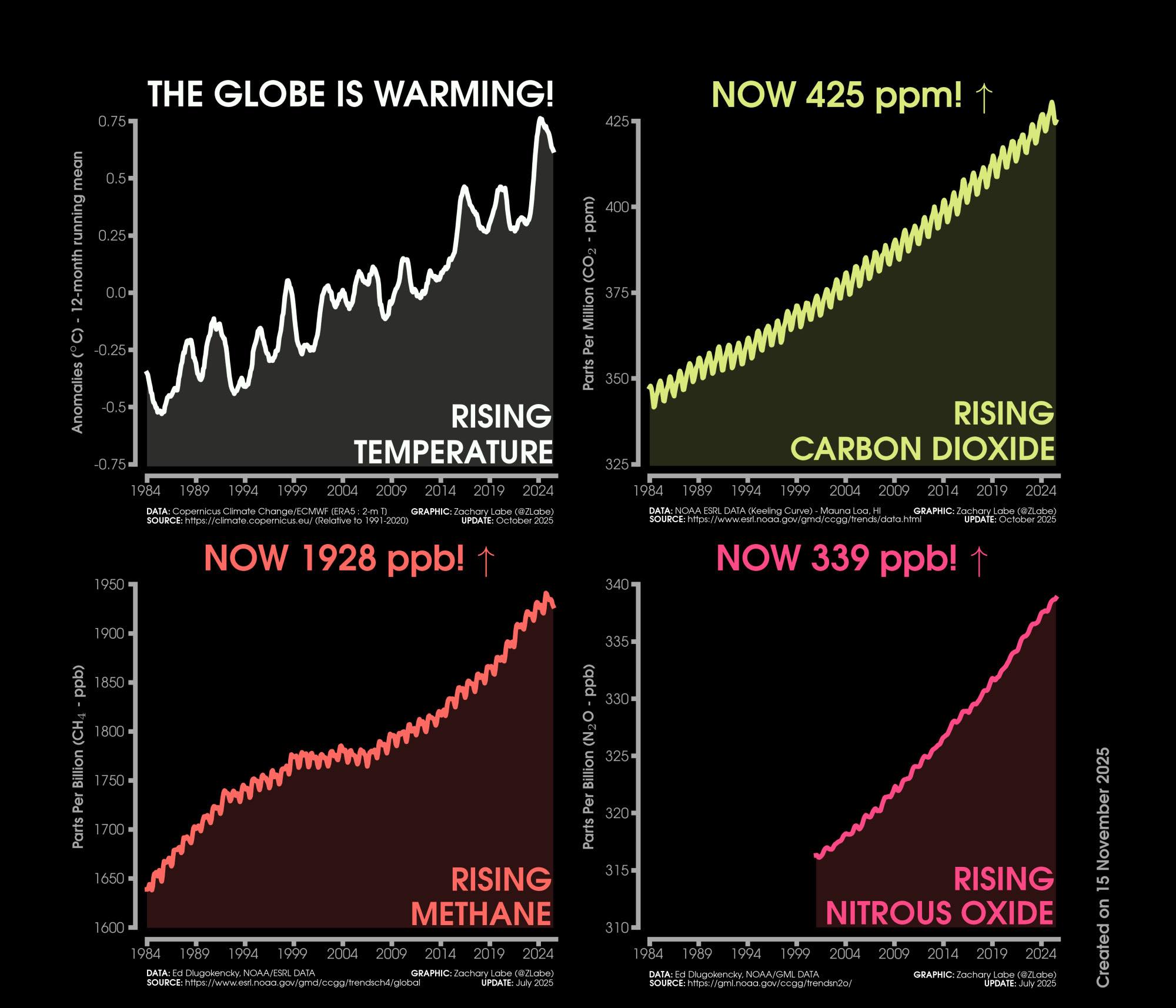
CO₂ is only one component in a vast, interconnected climate system — but it remains the most significant driver of human-caused warming. While water vapor, clouds, aerosols, and ocean circulation all play essential roles, CO₂ is the primary forcing mechanism we directly control. And today, it is rising at a speed unprecedented in Earth’s recent geological history.

According to the World Meteorological Organization (2025) and the Global Carbon Project (2025), the year 2024 marked the most extreme convergence of climate records ever observed. Atmospheric CO₂ levels reached 422.7 ppm, the highest in three million years, with a record annual increase of 3.75 ppm. Monthly readings peaked at 426.91 ppm in June 2024 — a value that would have been unimaginable even a generation ago.

Accelerating Emissions and the Collapse of “Natural Buffers”

Global fossil fuel and cement emissions rose to 37.4 gigatons of CO₂ in 2024, a 0.8% increase from 2023. The growth was driven by:

  • Coal expansion across Asia

  • Post-pandemic industrial rebound

  • Sharp increases in liquefied natural gas (LNG) production, particularly in the United States

While often marketed as a “bridge fuel,” methane leakage from LNG infrastructure — over 80 times more potent than CO₂ over 20 years — has erased its supposed climate advantage. These cumulative emissions are now overwhelming the buffering capacity of the oceans, cryosphere, and biosphere.

This record convergence signals a fundamental phase transition in the Earth system. Regions that once absorbed carbon, stabilized temperature, and moderated climate extremes are now flipping into self-reinforcing feedback loops. What was once a slow climb in global heat content is now taking on the characteristics of nonlinear acceleration.

Glaciers, Cryosphere Collapse, and the Finality of “Point of No Return”

The WMO issued one of its starkest warnings in 2023:

“The world’s glaciers melted at dramatic speed last year and saving them is effectively a lost cause…
Antarctic sea ice fell to its lowest extent on record.
Some European glaciers are literally off the charts.”

WMO Secretary-General Petteri Taalas summarized the situation bluntly:

“We have already lost the melting-of-the-glaciers game.
The CO₂ concentration is now simply too high.”

In the Swiss Alps alone, 6.2% of total glacier mass vanished in a single summer, the greatest loss in the entire observational record.

Taalas further warned that disappearing glaciers will:

  • Reduce global freshwater supply

  • Impair agriculture

  • Destabilize river transport and hydrology

  • Accelerate sea-level rise far beyond prior projections

For decades, sea-level rise was expected to unfold over millennia. But with runaway CO₂ growth and feedback amplification, that timeline is rapidly collapsing into decades.

How Fast Could Sea Levels Rise? A Scientific Exchange

A natural question follows:
Could this trigger the fastest sea-level rise in Earth’s history?

Physicist Sidd Mukherjee offered the following expert assessment:

“It depends on what you mean by ‘ever.’
In terms of human civilization: yes, likely.”

He notes:

  • The total global ice inventory can produce ~200 feet of sea-level rise.

  • Greenland and West Antarctica may already be committed to collapse.

Breakdown of likely contributions:

  • Greenland: ~20 feet over 100–300 years

  • West Antarctica: ~10 feet, potentially in decades to a century

Average over a century:

  • ~20 feet → 2 inches per year (50 mm/year), 10x the current rate

But the average masks the danger. Sea-level rise will likely arrive in pulses, not a smooth curve:

“We could dawdle along at half an inch per year, then suddenly experience a couple of years with a foot of rise annually.”

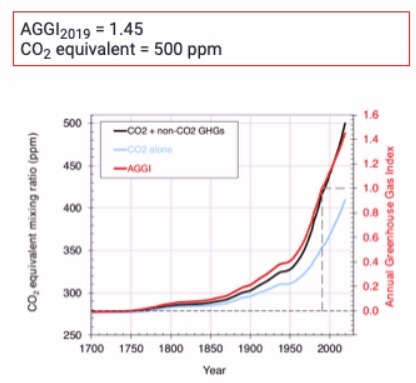
If CO₂-equivalent concentrations can be stabilized near 500 ppm, there may still be a chance to preserve East Antarctica, the largest remaining ice sheet. But if it destabilizes:

“Expect another couple hundred feet of sea-level rise.”

A Civilization-Level Threshold

We are now witnessing the early stages of a global system crossing into a new and dangerous mode of operation — one defined by:

  • Rapid CO₂ accumulation

  • Collapsing carbon sinks

  • Accelerating ocean heat storage

  • Cryosphere destabilization

  • Intensified extreme weather

The question is no longer whether these changes are occurring, but how quickly, and how prepared we are for the consequences.

Humanity is approaching — and in some cases passing — thresholds that earlier generations believed were centuries away. The decisions made in the next decade will determine whether sea-level rise is measured in inches, feet, or tens of feet within a single human lifetime.

WARNING

* Our probabilistic, ensemble-based climate model — which incorporates complex socio-economic and ecological feedback loops within a dynamic, nonlinear system — projects that global temperatures are becoming unsustainable this century. This far exceeds earlier estimates of a 4°C rise over the next thousand years, highlighting a dramatic acceleration in global warming. We are now entering a phase of compound, cascading collapse, where climate, ecological, and societal systems destabilize through interlinked, self-reinforcing feedback loops.

What Can I Do?
The single most important action you can take to help address the climate crisis is simple: stop burning fossil fuels. There are numerous actions you can take to contribute to saving the planet. Each person bears the responsibility to minimize pollution, discontinue the use of fossil fuels, reduce consumption, and foster a culture of love and care. The Butterfly Effect illustrates that a small change in one area can lead to significant alterations in conditions anywhere on the globe. Hence, the frequently heard statement that a fluttering butterfly in China can cause a hurricane in the Atlantic. Be a butterfly and affect the world.

Tipping points and feedback loops drive the acceleration of climate change. When one tipping point is toppled and triggers others, the cascading collapse is known as the Domino Effect.

The Climate Crisis: Violent Rain | Deadly Humid Heat | Health Collapse | Extreme Weather Events | Insurance | Trees and Deforestation | Soil | Rising Sea Level | Food and Water | Updates

The Human Induced Climate Change Experiment
bookmark_borderEstate Planning & Real Estate Ownership: What Property Owners Should Know

by Daniel Brouse

November 16, 2025

Many property owners don’t realize they already have a form of estate plan in place—simply through how their name is listed on the deed. Whether you own a home, a vacant lot, or an investment property, the structure of your ownership determines what happens to the property when you die, who inherits it, and who inherits the associated liabilities.

Even without a will or trust, your deed sets the foundation of your estate plan. It controls how the property transfers, whether probate is required, and what financial or legal obligations pass to heirs or co-owners.

Below is a clear overview of how real estate ownership works and why reviewing your deed is essential.


1. Your Deed: The First Part of Your Estate Plan

Every deed contains key language describing how the property is owned. That language determines:

  • Whether the property avoids probate
  • Whether your will applies
  • Who inherits your ownership interest
  • Who inherits your financial obligations
  • How creditors can pursue the property

Most co-owned properties fall into one of two structures:


Two Primary Forms of Real Estate Co-Ownership

1. Joint Tenancy (Joint Tenants with Right of Survivorship)

Who can use it:
Anyone — spouses, partners, siblings, friends, investors, etc.

Key features:

  • Each owner has an equal share
  • Automatic right of survivorship
    (When one owner dies, their share transfers instantly to the surviving owners)
  • Avoids probate
  • Can be broken unilaterally by selling or transferring an interest
    (This converts the ownership to Tenancy in Common, which has no survivorship rights)

Example:
If three siblings own a property as joint tenants and one dies, the surviving two automatically inherit that share.


2. Tenants by the Entirety

Who can use it:
Married couples (and in some states, legally joined partners).

Key features:

  • The couple is treated as one legal entity
  • Automatic survivorship
  • Strong creditor protection:
    A creditor of one spouse alone generally cannot force the sale of the property
  • Neither spouse can sever the ownership unilaterally — both must agree

Example:
If one spouse dies, the surviving spouse automatically becomes 100% owner. A creditor pursuing only the deceased spouse cannot attach the home.


Key Differences (Simplified)

FeatureJoint TenantsTenants by the Entirety
Who can ownAnyoneMarried couples only
SurvivorshipYesYes (automatic)
Can one person break it?YesNo
Creditor protectionLimitedStrong
Created byDeed languageDeed + marital status

In plain English:

  • Joint Tenancy = Equal co-owners with survivorship, but anyone can break it.
  • Tenants by the Entirety = Married couple acting as one unit, with strong protections.

2. Who Owns Your Property If You Die?

This depends entirely on what your deed says.

If your deed includes rights of survivorship:

The co-owner(s) inherit automatically — your will does not apply.

If your deed has no survivorship language:

Your share becomes part of your estate, and probate is required.

If you are the sole owner:

Your property passes into your estate, and the executor must resolve:

  • Outstanding assessments
  • Debts tied to the property
  • Liens
  • Transfer restrictions
  • Title complications
  • Ongoing HOA/POA obligations, if applicable

This process can be lengthy and costly.


3. Assets vs. Liabilities: What Your Heirs Actually Inherit

When you pass real estate to someone, you are not only giving them property—you are transferring everything attached to it, such as:

  • Unpaid taxes
  • HOA/POA dues
  • Special assessments
  • Fines
  • Liens
  • Compliance obligations
  • Exposure to lawsuits

Some heirs accept property willingly; others may walk away once they realize the financial burden.


4. A Practical Example: Why Understanding Ownership Matters

Suppose you own a property and owe:

  • Unpaid dues
  • A special assessment
  • Fines
  • Attorney fees
  • Other community association charges

If you pass away:

  • Your estate or your co-owner(s) are responsible for the full amount
  • The property cannot be sold or transferred until the debt is satisfied
  • Creditors may attach liens or seek judgment
  • In some cases, the property may be forced into a sheriff sale or tax sale

If you have co-owners:

  • All co-owners are jointly and severally liable
  • Creditors can seek 100% of the debt from any one owner

These issues often surprise families who expected a simple inheritance.


5. Liability Exposure from Property Ownership

Real estate ownership can carry more than financial obligations. In certain situations—especially where infrastructure, shared property, or HOA/POA governance is involved—owners may be exposed to:

  • Civil liability
  • Joint and several liability for damages
  • Responsibility for the full cost of claims, not just their share
  • Legal action connected to negligence affecting common property
  • Potential criminal liability in extreme cases involving regulatory failures

If a community-governed asset fails (e.g., a dam, roadway, retaining structure, or safety feature), and investigations attribute fault to the association, every owner listed on the deed may be named in legal actions, depending on state law and circumstances.


Final Thoughts

Your deed isn’t just a piece of paper — it is a legally binding estate plan that determines:

  • Who inherits your property
  • Who inherits your debts
  • Whether probate is required
  • Whether your will matters
  • How creditors can pursue the property
  • How easily your heirs can sell or transfer the property
  • What legal exposure you leave behind

Given the financial and legal implications of property ownership, this is an excellent time to:

  • Review your deed
  • Confirm your form of ownership
  • Discuss survivorship planning
  • Update or create a will
  • Consider whether a trust is appropriate
  • Consult an estate attorney if you have questions

Real estate is often the most valuable—and most complicated—asset people pass on. Understanding your deed now can save your heirs significant time, cost, and stress later.

PART 2:  Can a well-executed will reduce confusion and streamline the process when grief is scrambling your thoughts?

A well-executed will can reduce confusion — but it really depends on what “well-executed” means to the heirs, creditors, and debtors involved. In some situations, a solid will is critically important. In others, it’s almost irrelevant.

What many people don’t realize is that, in most cases, a will still goes through probate — a court process that often becomes a breeding ground for disputes. In fact, the best way to “avoid probate issues” is to structure your estate so that there is nothing left to fight about, not simply to rely on the will.

A classic example: a mother dies before the father. If the home and major assets were jointly owned, the mother’s will is meaningless with respect to those items. Even if she leaves “the keys to the kingdom” to her son, he still doesn’t get them — everything passes automatically to the surviving spouse. This misunderstanding frequently leads to bad outcomes, like children suing a surviving parent because they don’t understand how estate law actually works. In turn, that parent often changes their own will out of frustration or self-protection.

That’s why, when we talk about a “well-executed” will, the best approach is to make it as future-proof and universal as possible. Ideally, your assets and liabilities should already be set up to transfer automatically — through titling, beneficiary designations, and proper structuring — so that the will becomes largely irrelevant for probate and litigation purposes. A will should be a fallback, not the main mechanism.

bookmark_borderMichael Burry Pulls the Plug: “The Only Winning Move Is Not to Play”

by Daniel Brouse
November 13, 2025

Michael Burry — the contrarian investor immortalized in The Big Short for predicting the 2008 housing collapse — appears to be stepping away from outside capital once again. In a recent move that has caught the attention of Wall Street and retail investors alike, Burry reportedly closed his fund to external investors, signing off with the cryptic message: “The only winning move is not to play.”

Burry’s warning seems aimed squarely at what he views as an unsustainable artificial intelligence (AI) bubble — one that echoes the euphoria of the dot-com era. Tech valuations, he argues, have divorced from fundamentals, with speculative capital chasing narratives rather than earnings. His message suggests that investors have learned little from history — only this time, the correction could be accelerated by broader economic and environmental pressures.

In addition to his bearish view on AI, Burry has taken an aggressive stance against U.S. real estate — a market he once famously shorted. But this time, his rationale isn’t limited to overvaluation or interest rate risk. Burry has cited climate change as a structural threat to real estate itself. Rising sea levels, extreme weather, and infrastructure degradation, he predicts, will render vast portions of American property uninsurable and ultimately uninhabitable.

According to Burry, the trajectory is grim: Almost all U.S. real estate is going to go from worth less to worthless. It’s a statement that cuts against decades of belief in property as the safest store of value — and one that challenges the very foundation of the “American Dream.”

Whether his latest retreat marks a temporary pause or a permanent exit remains to be seen. But if Burry’s track record is any indication, his warnings deserve attention. In 2008, he was mocked before being proven right. If history rhymes, today’s exuberance may again meet tomorrow’s reckoning — and once more, Michael Burry will be the man who saw it coming.

Insurance

bookmark_borderTrump’s 50-Year Mortgage Proposal: A “Game-Changer” or Another Financial Time Bomb?

President Donald Trump recently pushed the idea of introducing a 50-year mortgage — a proposal that immediately drew attention and controversy. Federal Housing Finance Agency (FHFA) director Bill Pulte, who oversees Fannie Mae and Freddie Mac, quickly responded on social media, claiming that they are “working on it,” and calling the idea “a complete game-changer.”

At first glance, the idea seems appealing: a longer mortgage term means smaller monthly payments. For example, using the latest median U.S. home price of $415,200 (as of September, according to the National Association of Realtors) and a 6.3% interest rate, a typical 30-year fixed-rate mortgage with 20% down would result in a monthly payment of $2,056 for principal and interest. Extending that term to 50 years would drop the payment to $1,823 — saving roughly $233 per month.

But the apparent savings come at a steep long-term cost. A 50-year mortgage would dramatically slow equity accumulation, leaving homeowners with far less ownership for decades. Meanwhile, interest payments would balloon by roughly 40%, enriching lenders while saddling borrowers with longer-term debt obligations. It’s a short-term fix with long-term consequences — much like Trump’s broader economic policies.

For a $415,200 home with 20% down ($83,040), the loan amount would be $332,160. At a 6.3% fixed interest rate over 50 years, the numbers work out as follows:

💰 Monthly payment: ≈ $1,823

📈 Total paid over 50 years: ≈ $1,093,553

💸 Total interest paid: ≈ $761,393

That means you’d pay more than double the original loan amount in interest alone — a stark reminder that lower monthly payments come at an enormous long-term cost.

TRUMPENOMICS

Critics argue that the 50-year mortgage would mirror the fiscal irresponsibility that has defined Trump’s business and political record. From his bankrupt casinos and failed airline, to Trump University, and now his record expansion of the national debt, Trump has consistently favored policies that create the illusion of affordability while deferring — and amplifying — the real costs down the line.

Just as Trump’s fiscal policies have driven the national debt to historic highs and eroded confidence in U.S. credit markets, a 50-year mortgage would extend household debt burdens to unsustainable lengths, undermining generational wealth building and worsening inequality.

In essence, Trump’s “game-changer” is nothing new — it’s another financial sleight of hand: borrow more now, pay far more later. Like his business ventures and economic strategies, it prioritizes short-term optics over long-term stability, leaving others to clean up the mess once the façade collapses.

Do you know who’s actually thinks this is a good idea? William J. Pulte, the director of the Federal Housing Finance Agency (FHFA) — the agency that oversees Fannie Mae and Freddie Mac — has been publicly supporting the idea. He’s also the grandson of the founder of PulteGroup, one of the largest homebuilders in the U.S. (NYSE: PHM, currently trading around $120.17/share). So yes, there are definitely people who think it’s a good idea — particularly those who stand to profit from expanding debt, extending loan terms, and keeping the housing market artificially inflated.

MOST IMPORTANTLY

What troubles me most is the combination of debt and denial. Real estate climate models now project that as much as 80% of U.S. real estate could shift from “worth less” to literally worthless within the coming decades due to rising sea levels, heat stress, and insurance market collapse. This turns the historic pathway to self-generated wealth — homeownership, the cornerstone of the American Dream — into a financial trap. Encouraging longer-term mortgages in this environment means locking younger generations into permanent negative equity, where the mortgage will always exceed the home’s actual value. It’s the inversion of the American Dream — buying into a system that’s already upside down.

Trumpenomics

The Human Induced Climate Change Experiment
bookmark_borderClimate Denial, Drought, and the Death of Capitalism: How Trump’s Anti-Science Policies Are Driving Economic Collapse

President Trump recently claimed that his administration is working to reduce record-high beef prices — a crisis he attributed to drought impacting U.S. cattle ranchers. Yet what he failed to acknowledge is that the drought itself is a direct consequence of the very climate crisis his administration continues to deny. The irony is stark: the same policies that prop up fossil fuel production and reject climate science are now dismantling the foundations of American capitalism.

The Western U.S. — once a global breadbasket and livestock powerhouse — is facing a multi-decade megadrought, worsened by rising temperatures, declining snowpack, and shifting precipitation patterns. Extreme heat accelerates evaporation, depleting both soil moisture and surface water. Pastures have withered, feed costs have soared, and cattle herds have been culled to historic lows. This has driven beef prices to record highs, threatening not just ranchers but the entire food supply chain — from processing plants to grocery shelves.

Under normal circumstances, capitalism adjusts through innovation and efficiency. But when leadership denies the root cause — in this case, anthropogenic climate change — markets cannot adapt. Trump’s policies of fossil fuel expansion, regulatory rollbacks, and environmental deregulation amount to state-sponsored self-sabotage. His administration’s energy and agricultural agendas reward short-term extraction while destroying the long-term natural capital — clean water, arable soil, and stable climate — that all economic systems depend on.

Trump’s climate denial isn’t just anti-scientific; it’s anti-capitalist in the truest sense. A functioning market requires stable conditions and predictable risk. Climate chaos destroys both. Droughts, floods, and fires are driving up insurance costs, collapsing crop yields, and creating food insecurity. Supply shocks ripple through every industry — from beef to banking — as climate volatility erodes investor confidence and undermines global trade.

By rejecting climate science, Trump’s administration is ensuring that capitalism itself becomes unsustainable. The free market cannot function on a dying planet. The laws of physics do not yield to political ideology or corporate lobbying. As the drought deepens and prices rise, the invisible hand of the market is being scorched by the very flames of denial it helped ignite.

If America wants capitalism to survive, it must end the illusion that economic growth and climate denial can coexist. The longer Trump and his allies cling to fossil-fueled delusion, the faster both our environment — and our economy — will collapse.

Trumpenomics

Climate Science

bookmark_borderNeptune Flood IPO: Riding the Rising Tide of Climate Risk

by Daniel Brouse
October 1, 2025

Neptune Flood, the largest private flood insurance company in the U.S., went public today, October 1, 2025, with its initial public offering (IPO) on the New York Stock Exchange under the ticker symbol “NP.” The St. Petersburg, Florida-based company raised $368 million by selling over 18 million shares at $20 per share, pricing at the top of its marketed range.

The IPO underscores the growing intersection between climate change, financial markets, and technological disruption. For decades, the flood insurance sector in the United States has been dominated by the National Flood Insurance Program (NFIP), a government-run system long criticized for outdated risk maps, cross-subsidized premiums, and mounting losses as extreme weather intensifies.

Neptune Flood is positioning itself as a market-based alternative. By leveraging artificial intelligence, machine learning, and big data, the company provides instant, risk-adjusted quotes—a major departure from the slow, bureaucratic processes of traditional insurance systems. Its model appeals to homeowners and businesses seeking coverage in areas where climate-driven flooding has rendered NFIP or private insurers either too slow, too expensive, or unwilling to underwrite risk.

But the company’s growth also highlights a troubling trend: vast regions of the U.S. are becoming increasingly uninsurable due to climate change. Rising sea levels, heavier rainfall, and stronger hurricanes are driving up both the frequency and severity of flood events. Where government-backed programs once absorbed much of the cost, private insurers like Neptune are stepping in with higher-cost policies tailored to high-risk consumers willing to pay for coverage.

While investors are attracted to Neptune’s profitability and data-driven underwriting, critics argue that its model may accelerate inequality in climate resilience. Wealthier homeowners and businesses may be able to afford Neptune’s “climate risk premium,” while middle- and lower-income households are left exposed or priced out of protection entirely. This could widen the gap between those who can adapt financially to climate change and those who cannot.
As Neptune Flood begins its life as a publicly traded company, its trajectory will serve as a bellwether for how private capital navigates the growing risks of climate change. Whether it represents a genuine solution or simply a profitable adaptation to a failing system remains to be seen—but one thing is clear: the tide of climate risk is rising, and financial markets are now deeply invested in who sinks and who swims.

Is this a good stock to short?

Actually, it’s not that simple. Neptune’s AI model incorporates climate risk directly into its premium setting, which gives it a built-in hedge—if people are willing (or forced) to pay the extraordinary premiums, Neptune stays profitable. As FEMA gradually steps back from subsidized coverage and shifts toward managed retreat, the private flood insurance market is only going to grow.

That said, there’s a real wild card here: states like Florida are already socializing homeowners’ insurance with taxpayer money. That creates a distorted market where Neptune may find itself competing not just with other insurers, but with its own state government’s artificially underpriced coverage.

So, shorting them might not be as obvious as it looks. This is one of those stocks where climate, policy, and economics will collide in unpredictable ways. Definitely worth watching.

* Our climate model employs chaos theory to comprehensively consider human impacts and projects a potential global average temperature increase of 9℃ above pre-industrial levels.

Tipping points and feedback loops drive the acceleration of climate change. When one tipping point is breached and triggers others, the cascading collapse is known as the Domino Effect.

The Human Induced Climate Change Experiment

bookmark_borderCape Coral’s Collapse: How Climate Risk and Insurance Costs Broke Florida’s Hottest Housing Market

by Daniel Brouse
August 21, 2025

Cape Coral, Florida, has gone from one of the fastest-rising housing markets in the country to arguably the worst real estate market in the United States.

During the early years of the pandemic, the city experienced a frenzy of demand. Median home prices skyrocketed nearly 75% in just three years, climbing to $419,000 and transforming the character of a middle-income community long known as a haven for retirees and small investors. The rapid appreciation brought an illusion of prosperity—until the reality of climate risk and soaring costs set in.

Today, the streets tell a very different story. “For Sale” signs crowd nearly every block. Open houses sit empty for hours. Foreclosures are beginning to tick upward. Even homebuilders—once bullish on Cape Coral’s growth—are cutting their losses, unloading half-finished projects at steep discounts.

The Insurance Crisis Driving the Collapse

At the heart of Cape Coral’s downturn is an insurance crisis that threatens the entire state. Over the past several years, dozens of private insurers have withdrawn from Florida, citing mounting climate risks, skyrocketing reinsurance costs, and devastating losses from hurricanes like Ian and Idalia.

This exodus has left the state-owned Citizens Property Insurance Corporation as Florida’s insurer of last resort—and now its largest provider. But even state-backed coverage is not cheap. The average annual cost of homeowner’s insurance in Florida has exploded from $2,520 to $7,667 in just a few years, and that figure does not include hurricane or windstorm coverage. For many families, this cost alone makes homeownership untenable.

A Market on the Edge

Cape Coral is now emblematic of a broader reckoning. A city once marketed as “affordable paradise” faces a toxic mix of:

  • Soaring insurance costs that outpace incomes.

  • Declining availability of coverage, with exclusions leaving homeowners exposed.

  • Increasing flood and storm risk, magnified by rising seas and violent rain.

  • Eroding investor confidence, as builders and buyers walk away from projects.

In short, Cape Coral is ground zero for the collision between climate change and the housing market. It foreshadows what other coastal communities may face as climate-driven disasters intensify and insurers retreat.

The dream of Florida living—sunshine, affordability, and security—is unraveling. And unless systemic reforms address both climate resilience and insurance affordability, Cape Coral may be just the beginning of a much larger national housing crisis.

The Human Induced Climate Change Experiment

bookmark_borderU.S. Halts Beach Replenishment Funding for the First Time in 29 Years, Leaving Shore Towns Exposed

by Daniel Brouse
July 22, 2025

For the first time since 1996, Congress has allocated zero dollars for federal beach replenishment, halting nearly three decades of continuous support for projects that combat beach erosion along the U.S. coast. Typically, Congress sets aside $100 million to $200 million annually for these efforts, which involve dredging sand from offshore sites and depositing it on eroding beaches to protect coastal infrastructure, tourism economies, and property values.

This year, however, the federal budget earmarked nothing for these projects, and it remains uncertain whether any funding will be restored in next year’s budget as lawmakers debate spending priorities amid rising climate-related costs.

The immediate impact is already being felt:

  • Two planned beach nourishment projects at the Jersey Shore (Avalon, Stone Harbor, and Ocean City) for 2025 were canceled.

  • Planned replenishment in parts of Maryland and Delaware has also been paused indefinitely.

  • Shore towns that have reliably supported federal beach projects for decades now face the financial and environmental consequences of erosion without federal assistance.

“This is the first time in 29 years this has happened,” said Scott Wahl, business administrator for Avalon, NJ, noting that the town will not receive a “hydraulic fill” this cycle, a process that uses large pipes to pump dredged sand onto beaches. “You’re looking at tens of millions of dollars that will now fall on local communities.”

The Philadelphia district of the U.S. Army Corps of Engineers, which manages replenishment projects in heavily trafficked Shore towns, confirmed it had two projects eligible for “periodic nourishment” in 2025 (Avalon-Stone Harbor and North Ocean City), both of which were last nourished in 2023. However, without federal funding, these projects are now suspended.

Climate Change Intensifies Coastal Vulnerability

The halt in funding comes at a time when climate change and sea-level rise are accelerating coastal erosion, increasing the frequency and intensity of storms, and placing additional strain on fragile beach ecosystems and coastal infrastructure. Delays in nourishment can lead to:

  • Greater storm damage to homes, roads, and utilities.

  • Loss of protective dunes and wetlands that buffer inland flooding.

  • Economic losses for tourism-dependent communities.

Contractor Bottlenecks and Rising Costs

Dan Ginolfi of the American Coastal Coalition warns that delaying projects only compounds the challenges. The limited number of dredging contractors and strict environmental timing windows for projects mean any delay increases demand and inflates costs.

“If we can’t get those projects done in a certain amount of time,” Ginolfi said, “it increases the demand on the dredgers. The cost of dredging is already sky-high, and that just snowballs.”

A Looming Coastal Crisis

This funding freeze leaves local governments scrambling to find alternative funding sources, which could mean higher local taxes, special assessments, or deferred maintenance, all while the climate crisis increases the urgency of shoreline protection.

Without federal beach replenishment, coastal communities are left exposed to worsening erosion, economic disruption, and the risk of catastrophic losses from future storms, further highlighting the need for systemic climate adaptation strategies and sustainable shoreline management.

Beach Replenishment Is Becoming Unsustainable

While beach replenishment has historically helped protect coastal infrastructure and tourism economies, it is no longer a sustainable long-term solution in the face of accelerating climate change. The increased frequency and severity of storms wash away replenished sand more quickly, requiring ever more frequent and costly projects to maintain minimal beach widths. Meanwhile, sea-level rise accelerates erosion rates and increases the likelihood of storm surge damage, making each replenishment effort less effective and shorter-lived. This cycle of “sand dumping and washout” is becoming financially and environmentally untenable, highlighting the need for alternative coastal adaptation measures such as strategic retreat, dune restoration, and wetland buffers to protect communities in a warming world.

The Human Induced Climate Change Experiment

bookmark_borderClimate-Fueled Insurance and Tax Hikes Are Driving Mortgage Delinquencies

by Daniel Brouse
July 21, 2025

Mortgage delinquencies are climbing across the United States, with southern states like Florida, Georgia, and South Carolina facing the steepest increases. A major driver? Escrow payments — which cover property taxes and insurance premiums — have surged by 62% nationally over the last five years, a spike fueled largely by rising insurance costs and property taxes tied to climate-related disasters.

Climate Disasters Driving Costs

Extreme weather fueled by climate change has become the primary reason for soaring insurance premiums and local government costs. Hurricanes, floods, and severe storms damage infrastructure, triggering higher taxes to fund repairs and resilience projects. Insurers, burdened by record claims, are raising premiums or exiting high-risk markets altogether, forcing homeowners to pay significantly more to protect their properties.

This financial squeeze hits households hard, especially in states vulnerable to climate extremes. Those without conventional mortgages are particularly at risk since conventional loans often require adequate flood and disaster insurance, providing a buffer many lower-income or first-time buyers lack.

Data Snapshot: Where Delinquencies Are Rising Fastest

Here are the top 10 states with the largest year-over-year increases in serious mortgage delinquencies:

State All Loans Conventional FHA Loans VA Loans YOY Change % Escrow Change (2019–2024)
Florida 1.43% 1.05% 3.09% 4.11% 38 bps 62%
South Carolina 1.05% 0.67% 2.55% 3.96% 20 bps 37%
Georgia 1.12% 0.71% 2.66% 3.71% 18 bps 38%
Nebraska 0.81% 0.48% 1.75% 3.68% 16 bps 43%
Texas 1.11% 0.74% 2.54% 3.41% 16 bps 21%
North Carolina 0.83% 0.57% 1.88% 3.18% 15 bps 49%
Louisiana 1.87% 1.25% 3.96% 5.44% 14 bps 52%
Colorado 0.55% 0.41% 1.73% 2.56% 13 bps 62%
Indiana 1.09% 0.66% 2.62% 4.01% 13 bps 49%
Oklahoma 1.24% 0.70% 2.72% 3.53% 13 bps 38%

(Source: Cotality, 2025)

State-Specific Stress Points

Take Florida: Property taxes there have jumped nearly 50% in five years while insurance premiums, particularly in hurricane- and flood-prone regions, have soared. Combined, these increases have driven the average escrow payment up 62% — on top of mortgage principal and interest — leaving many households financially exposed.

South Carolina has seen 14 insurers collapse between 2020 and 2023, leading to higher premiums for the remaining customers. Meanwhile, Georgia’s average property taxes rose by more than $700 in just five years, with median home prices surging 65% since 2019 as the climate-fueled migration and development boom continue.

Mississippi, with the nation’s highest overall delinquency rate, faces the worst of these intersecting crises. It has the lowest median household income in the country while ranking among the top 15 states most at risk for hurricane storm surge damage, making climate resilience and affordability a daily struggle for many residents.

Climate Disasters Compound Payment Challenges

Natural disasters directly disrupt mortgage payments by displacing families and damaging properties, forcing costly repairs before insurance payouts arrive. For example, Hurricane Helene devastated Asheville, NC, in 2024, and within a year, delinquencies in the region rose 1%. Even when homeowners catch up on delayed payments, subsequent premium hikes often increase monthly housing costs permanently, threatening long-term affordability.

Bottom Line: A Climate-Fueled Housing Crisis

The data is clear: climate change is destabilizing the housing market by driving up insurance and tax costs, leading to rising mortgage delinquencies and financial insecurity. Without systemic climate action to curb emissions and build resilient infrastructure, the intersection of climate extremes and the housing market will continue to erode financial stability across the United States.

The Human Induced Climate Change Experiment

bookmark_borderWalk the Poop Before You Talk the Transition

By Daniel Brouse

July 18, 2025

Now that many people are finally waking up to the collapse of the climate and social systems, I hope my background as an economist focused on risk management can help illuminate the path forward. Ideally, we would have followed sound risk management decades ago to avoid reaching this crisis point. But here we are, and so we must shift to Plan B: A New Economy.

The Real Sustainability Test

Everyone talks about sustainability, but few understand what it requires at the most basic level: the ability to feed yourself and manage your waste without destroying your ecosystem.

Before we can credibly debate carbon markets, degrowth, or circular economies, we need to prove we can survive a single day in a truly self-sustaining way:

✅ Feed yourself for a day using methods that do not degrade soil, water, or biodiversity and that could scale for years.
✅ Secure clean water in a way that is sustainable long-term, without polluting the source or requiring massive energy inputs.
✅ Dispose of your own waste safely, ensuring you do not contaminate soil or water, or create disease vectors that harm your community or yourself.

The single most important thing you can do: go the distance.
Bury your waste far away from where you live, eat, drink, and grow your food. This simple action protects your water, your soil, and your health—more effectively than any untested high-tech solution.

Sustaining yourself for a day sounds simple until you try it. So, first do it. Once you can do it for a day, you need to scale it to weeks, months, and years—and then to your family, friends, and community.

The Hardest Part: Human Waste

Here’s the hard truth: the most important part of transitioning to a new economy is how you handle your poop.

Everyone wants to talk about electrification, AI, and green jobs, but no one wants to talk about the sanitation systems that prevent us from killing ourselves and our environment. Yet if we cannot manage our waste sustainably, any talk of a “sustainable economy” is hollow.

Before you join debates about transitioning to a post-carbon world, demonstrate you can literally walk the poop before you talk the transition.

Why Indigenous Practices Matter

This is not a new challenge. Indigenous communities across North America managed to live sustainably for millennia, disposing of human waste in ways that protected water sources, preserved soil health, and maintained community health.

They:

  • Buried waste away from water sources and habitation areas.

  • Moved camps periodically to prevent overloading any one location.

  • Used natural cover materials (soil, ash, plant matter) to accelerate decomposition and reduce contamination risks.

These practices were not merely cultural—they were effective, practical risk management strategies rooted in a deep understanding of land stewardship.

A Thought Experiment (That Should Become Reality)

If you think your solutions will save the world, start by proving you can:

  • Feed yourself for one day, sustainably.

  • Manage your waste for one day, sustainably.

  • Scale it to your family and community.

If your solutions fail at this basic level, they will fail at the societal level too. Conversely, if you can solve these fundamental challenges, you will be equipped with the grounded knowledge and humility needed to help design a real transition strategy for a collapsing climate and society.

Indigenous American Indians

Here is a clear, evidence-based overview on how many Indigenous American Indian communities traditionally managed human waste to avoid contaminating soil and water:

1️⃣ General Principles

  • Burial at a distance
    Waste was typically buried away from camps and water sources, using small personal latrines or digging cat holes, ensuring pathogens did not enter water supplies.

  • Site rotation
    Camps and waste sites were moved periodically, preventing concentration of waste in one location.

  • Choice of location
    Latrines were placed:

    • Downwind from camps

    • Far from streams, springs, or rivers (commonly 100+ feet)

    • On higher or well-drained ground to reduce runoff risk.


2️⃣ Region-Specific Practices

  • Plains & Nomadic Tribes (e.g., Lakota, Comanche)

    • Dug shallow pits when staying in one place.

    • Covered waste with soil and natural materials.

    • Moved frequently, allowing the environment to naturally decompose waste.

  • Southwest (e.g., Hopi, Pueblo)

    • In permanent villages, used designated latrine areas outside the living quarters.

    • Some used ash or sand to cover waste, aiding desiccation and reducing odors and flies.

  • Pacific Northwest & Woodlands

    • Waste was buried away from water sources, critical in forested or riparian zones.

    • Camps were often near water, but latrines were carefully sited at a safe distance and covered.

  • Arctic & Subarctic (e.g., Inuit)

    • In frozen conditions, waste was sometimes frozen and disposed of in designated snow areas.

    • In summer, waste was placed far from freshwater sources.


3️⃣ Why This Protected Soil and Water

✅ Burial with soil isolated pathogens from insects and animals.

✅ Distance from water reduced fecal contamination, protecting drinking and fishing sources.

✅ Organic decomposition in small, distributed quantities allowed soil microbes and sunlight to neutralize pathogens naturally.

✅ Rotation and mobility prevented soil overload and nutrient leaching in a single location.


4️⃣ Important Context

  • While Indigenous practices varied widely across regions and tribes, their relationship with land emphasized maintaining the health of water and soil.

  • There was no single universal method, but core principles of burial, distance, and rotation were nearly universal.

  • The single most important thing you can do: go the distance.
    Bury your waste far away from where you live, eat, drink, and grow your food. This simple action protects your water, your soil, and your health—more effectively than any high-tech solution you don’t actually use.

Trumpenomics: The Decline of the US

The Human Induced Climate Change Experiment