DIY Climate Control: Save Money, Reduce Waste, and Cut Greenhouse Gas Emissions
by Daniel Brouse
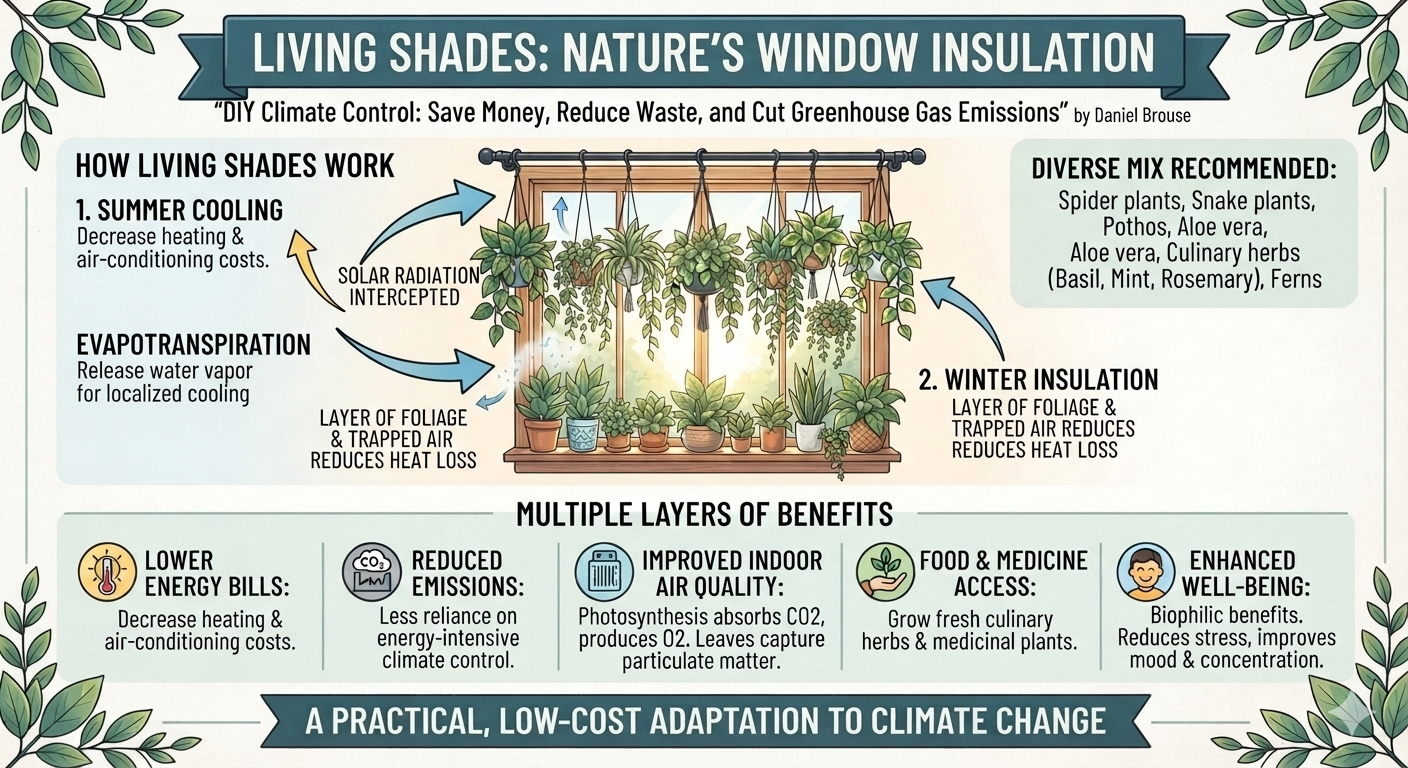
One of the simplest and most affordable ways to improve your home’s energy efficiency is to create living shades. Instead of installing traditional curtains or blinds, mount a sturdy black iron pipe above each window and suspend a collection of houseplants from it. Complement the hanging plants with additional plants on the windowsill, creating a dense layer of living vegetation between the window and the room.
A diverse mix of plants works best. Excellent choices include:
Spider plants
Snake plants
Pothos and other trailing vines
Aloe vera
Culinary herbs such as basil, mint, oregano, rosemary, and thyme
Ferns and other leafy houseplants
As the plants mature, they naturally form a living curtain that performs several useful functions simultaneously.
How Living Shades Work
Plants intercept a portion of incoming solar radiation before it enters the room. Through evapotranspiration, they also release water vapor that provides localized evaporative cooling around windows. During winter, the layer of foliage and trapped air provides modest insulation that helps reduce heat loss.
Unlike synthetic window coverings, living shades continuously improve indoor environmental quality while producing no waste and requiring very little energy to operate.
Benefits
Living shades can help:
Lower indoor temperatures during sunny weather.
Reduce winter heat loss through windows.
Decrease heating and air-conditioning costs.
Improve household energy efficiency.
Reduce greenhouse gas emissions associated with home energy use.
Increase indoor humidity during dry winter months.
Capture small amounts of airborne particulate matter on leaf surfaces.
Absorb carbon dioxide while producing oxygen through photosynthesis.
Improve indoor air quality and occupant comfort.
Provide fresh culinary herbs and medicinal plants.
Increase household resilience by producing small quantities of food year-round.
Create a calming, attractive indoor environment.
While individual houseplants should not be viewed as major carbon sinks, a home filled with vegetation contributes to a healthier indoor ecosystem while reducing reliance on energy-intensive climate control.
Beyond Energy Savings: The Health Benefits of Indoor Nature
The benefits of living plants extend beyond lower utility bills.
A growing body of research shows that exposure to vegetation can reduce stress, improve mood, enhance concentration, and promote psychological well-being. Collectively, these effects are known as biophilic health benefits, reflecting humanity’s innate connection to the natural world.
In Japan, the practice of intentionally immersing oneself in nature is known as Shinrin-yoku, or forest bathing. Research has shown that spending time around plants and trees can lower stress hormones, reduce blood pressure, improve immune function, and promote relaxation. While a living room cannot replace a forest, incorporating abundant indoor vegetation brings many of these restorative qualities into everyday life.
Living shades therefore provide multiple layers of value:
Lower energy bills.
Reduced greenhouse gas emissions.
Improved indoor air quality.
Increased food and medicinal plant production.
Enhanced physical comfort.
Better mental health and overall well-being.
As climate change drives higher temperatures and rising energy costs, living shades represent a practical, low-cost adaptation strategy that transforms ordinary windows into productive, energy-saving ecosystems.
🌎 Climate Change and Personal Finances: The Rising Cost of a Changing Climate
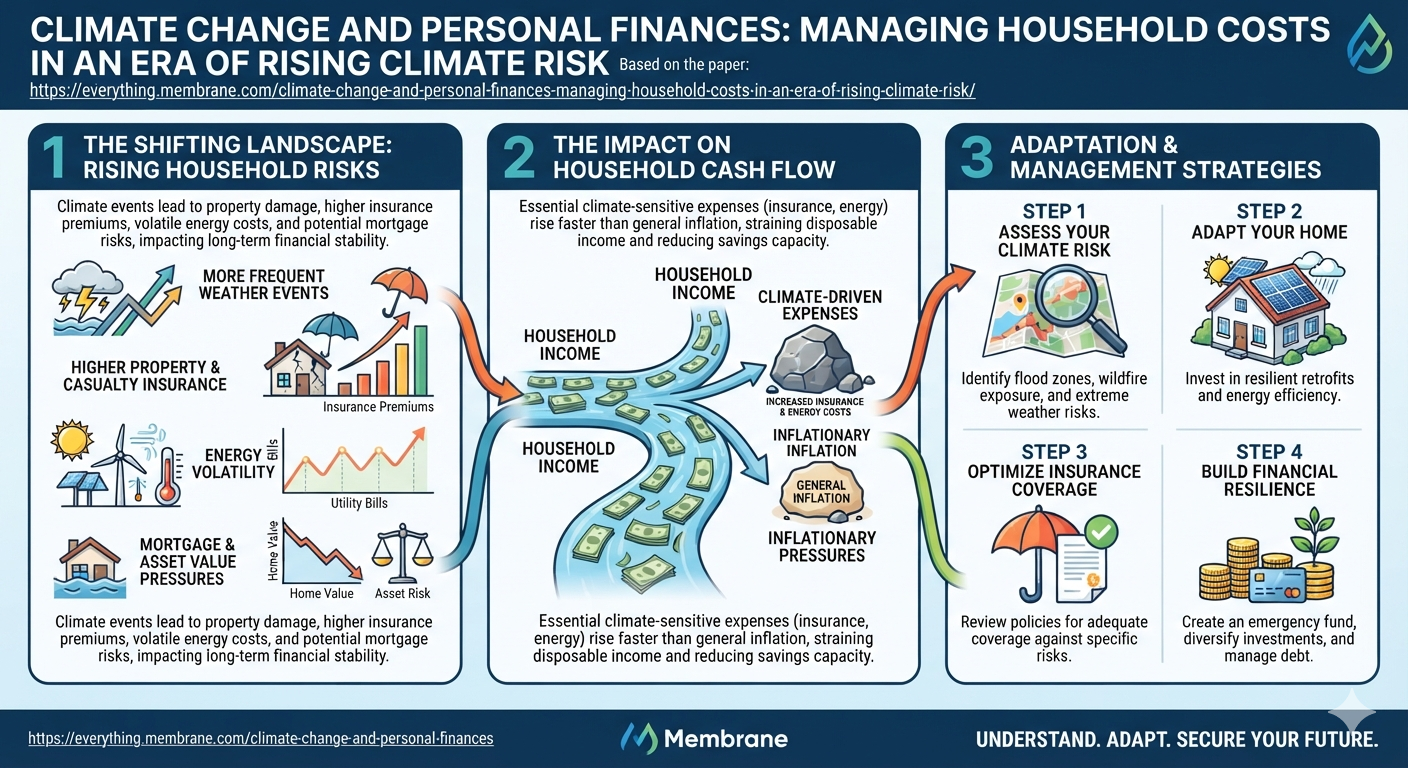
Climate change is no longer only an environmental challenge—it is becoming a growing financial challenge for households everywhere.
While headline inflation may appear moderate, the costs most affected by climate change are rising faster than many household incomes.
🔥 Extreme heat is increasing electricity demand and stressing energy infrastructure. ⛈️ Severe storms and hail events are driving higher comprehensive auto insurance costs. 🏠 Floods, hurricanes, wildfires, and extreme weather are pushing homeowners insurance premiums higher. 🌾 Droughts, floods, and shifting growing conditions are increasing food-price volatility. 🔨 Climate-related damage and rebuilding costs are raising housing expenses.
A new economic reality is emerging:
Climate-sensitive expenses are becoming a larger share of household budgets.
The financial impacts of climate change are not limited to major disasters. They appear in recurring expenses—monthly utility bills, insurance premiums, repair costs, and the price of everyday goods.
Building financial resilience means preparing for this changing economic landscape:
✅ Reduce high-interest debt ✅ Build emergency savings ✅ Improve home energy efficiency ✅ Review insurance coverage ✅ Invest in weather protection and resilience ✅ Plan for increasing climate-related costs
Climate change is reshaping not only our environment, but also the economics of everyday life.
📊 Read the full report:
“Climate Change and Personal Finances: Managing Household Costs in an Era of Rising Climate Risk”
Climate change is no longer simply an environmental issue. It has become an economic force that influences nearly every aspect of household finances. Extreme weather, rising insurance losses, damaged infrastructure, disruptions to agriculture, and increasing energy demand are reshaping the cost of living.
While the overall inflation rate captures broad price changes across the economy, climate change increasingly creates uneven inflation. Some goods remain relatively stable, while climate-sensitive sectors experience much faster price growth.
Understanding these trends allows households to better prepare for an increasingly volatile financial future.
Overall Inflation
The Consumer Price Index for All Urban Consumers (CPI-U) currently reflects annual inflation of approximately 3.5%.
Although this represents moderate overall inflation, it masks significant differences among individual household expenses. Energy, insurance, housing, and weather-sensitive goods continue to experience above-average price increases, while wages have largely kept pace only with headline inflation.
As climate change intensifies, these differences are expected to become even more pronounced.
Household Price Trends
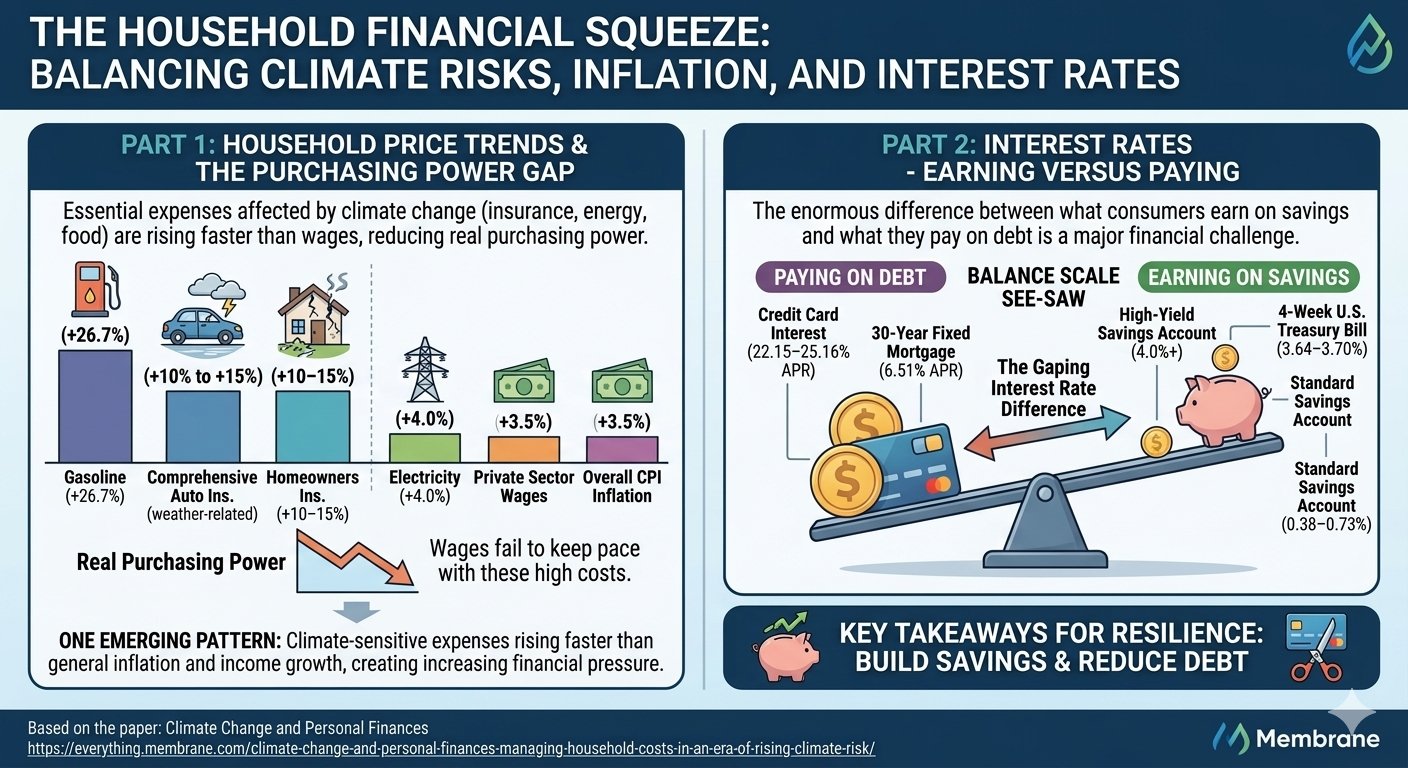
Major components of household budgets are experiencing dramatically different rates of inflation. Essential expenses increasingly affected by climate change—such as insurance, energy, housing repairs, and food—are rising faster than average wage gains. As a result, many households are experiencing a decline in real purchasing power despite wages keeping pace with headline inflation.
Household Expense
Annual Change
Overall CPI Inflation
+3.5%
Gasoline
+26.7%
Electricity
+4.0%
Comprehensive Auto Insurance (weather-related losses)
+10% to +15%
Homeowners Insurance
+10–15%
Private Sector Wages
+3.5%
One consistent pattern is emerging:
One consistent pattern is emerging: climate-sensitive expenses are rising faster than overall inflation and household income growth, creating increasing financial pressure for families adapting to a changing climate.
Energy Costs
Energy remains one of the largest sources of household inflation.
Gasoline prices have risen sharply due to geopolitical tensions, supply disruptions, refinery constraints, and transportation bottlenecks. While climate change is not the sole cause of gasoline inflation, extreme weather increasingly disrupts oil production, refining capacity, pipelines, and shipping routes.
Electricity prices have also continued to climb.
Several factors contribute:
Increased demand during prolonged heat waves
Expansion of electric transmission infrastructure
Grid modernization
Storm damage and repairs
Higher fuel and maintenance costs
As summers become hotter and heat waves last longer, residential electricity demand for air conditioning continues to increase.
The Insurance Crisis
Perhaps no household expense illustrates climate change more clearly than insurance.
Insurers base premiums on expected future losses—not past averages.
As hurricanes, wildfires, hailstorms, tornadoes, flooding, and severe convective storms become more destructive, insurance companies are paying record claims.
These losses eventually appear as:
Higher premiums
Larger deductibles
Reduced coverage
More exclusions
Non-renewals
Complete withdrawal from high-risk markets
Homeowners insurance has become one of the fastest-growing household expenses in many regions.
In some states, premiums have doubled within only a few years.
For households, insurance is increasingly becoming a direct monthly cost of climate change.
Comprehensive Auto Insurance and Climate Risk
Unlike collision insurance, which covers accidents between vehicles, comprehensive automobile insurance protects against damage caused by natural hazards and other non-collision events. As climate change increases the frequency and severity of extreme weather, comprehensive claims have risen substantially.
Common climate-related comprehensive claims include:
Hail damage
Falling trees and branches during windstorms
Flash flood damage
Hurricane storm surge
Wildfire damage
Tornado debris
Lightning strikes
Wind-blown objects
Ice and snow damage
Large hailstorms alone now produce billions of dollars in insured vehicle losses each year. Modern vehicles are particularly vulnerable because aluminum body panels, panoramic glass roofs, advanced sensors, cameras, and radar systems are expensive to repair or replace.
Flash flooding has also become one of the fastest-growing sources of comprehensive auto losses. Vehicles caught in flooded roadways often suffer catastrophic engine, electrical, and electronic damage, resulting in total-loss claims.
As insurers pay increasing numbers of weather-related claims, many companies have adjusted comprehensive premiums, increased deductibles, or refined risk models based on regional exposure to hail, flooding, hurricanes, wildfires, and severe convective storms.
While collision coverage is primarily influenced by driving behavior, repair costs, and accident frequency, comprehensive insurance increasingly reflects the financial consequences of a changing climate. For many households, the rising cost of comprehensive coverage has become another indirect expense associated with more frequent and more destructive extreme weather events.
Food Prices
Although food inflation fluctuates from year to year, climate change is placing increasing pressure on agricultural production.
Extreme heat, drought, flooding, hurricanes, and shifting growing seasons reduce crop yields while increasing production costs.
Examples include:
Heat-stressed livestock
Drought-reduced grain harvests
Flood-damaged vegetables
Disease outbreaks
Pollinator decline
Water shortages
The result is greater price volatility at grocery stores.
Consumers may increasingly experience periods where staple foods rise rapidly following major climate disasters.
Housing Costs
Housing costs are increasingly influenced by climate risk.
Construction materials become more expensive following disasters.
Labor shortages emerge after major storms.
Building codes become stricter.
Flood-resistant construction, stronger roofing systems, improved insulation, and wildfire-resistant materials all increase upfront construction costs while reducing long-term risk.
Mortgage lenders are also beginning to incorporate climate risk into property valuations.
Properties facing repeated flooding, wildfire exposure, or coastal erosion may experience declining values while insurance costs continue rising.
Wages and Purchasing Power
Private-sector wages have increased approximately 3.5% over the past year.
While this roughly matches headline inflation, it does not fully offset the faster growth of essential household expenses such as insurance, electricity, housing, and healthcare.
As a result, many households experience “cost-of-living compression,” where income keeps pace with average inflation but fails to keep pace with the expenses that matter most.
Interest Rates: Earning Versus Paying
One of the largest financial challenges facing households is the enormous difference between what consumers earn on savings and what they pay on debt.
Financial Instrument
Typical Rate
Credit Card Interest
22.15–25.16% APR
30-Year Fixed Mortgage
6.51% APR
High-Yield Savings Account
4.0%+
4-Week U.S. Treasury Bill
3.64–3.70%
Standard Savings Account
0.38–0.73%
The modern banking system rewards households that maintain liquidity while imposing extremely high costs on revolving debt.
Credit card interest rates frequently exceed 20%, making high-interest debt one of the largest obstacles to long-term financial security.
Conversely, households that maintain emergency savings can now earn meaningful returns through high-yield savings accounts and short-term Treasury securities.
Climate Change and Financial Risk
Climate change introduces several new forms of financial risk that traditional household budgeting rarely considered:
Increasing insurance premiums
Larger deductibles
Rising utility bills
Disaster repair costs
Temporary job interruptions after extreme weather
Declining property values in high-risk areas
Higher food prices
Greater investment volatility
These risks compound over time, making financial resilience increasingly important.
Strategies for Financial Resilience
Households can take practical steps to reduce their financial vulnerability to climate-related economic shocks.
Build an Emergency Fund
Maintaining three to six months of living expenses provides flexibility following disasters, temporary unemployment, or unexpected repairs.
Eliminate High-Interest Debt
Paying down credit cards earning 22–25% interest often provides a greater guaranteed return than most investments.
Improve Energy Efficiency
Investments such as insulation, efficient appliances, heat pumps, smart thermostats, and LED lighting can reduce utility costs while improving comfort during heat waves.
Review Insurance Coverage
Homeowners should regularly review policy limits, deductibles, exclusions, flood coverage, and replacement-cost estimates to ensure protection reflects today’s risks.
Diversify Investments
Diversification across asset classes, industries, and geographic regions can help reduce exposure to climate-related disruptions affecting any single sector.
Prepare for Extreme Weather
Emergency supplies, backup power, important documents, evacuation plans, and home maintenance can reduce both financial losses and recovery time after disasters.
The Economics of Adaptation
One of the defining economic realities of the coming decades will be the growing cost of adaptation.
Communities will invest billions in:
Stronger electrical grids
Flood-control systems
Coastal defenses
Wildfire mitigation
Stormwater infrastructure
More resilient buildings
Expanded emergency response capabilities
Although these investments require substantial upfront spending, they often cost far less than rebuilding after repeated disasters. For individual households, similar investments—such as reinforcing roofs, improving drainage, elevating utilities in flood-prone areas, or increasing home energy efficiency—can reduce future repair costs, lower insurance claims, and improve long-term resilience.
Conclusion
Climate change is increasingly shaping household finances through higher insurance premiums, rising energy costs, greater food-price volatility, and growing expenditures on disaster preparedness and infrastructure. At the same time, high borrowing costs amplify the financial strain on families carrying significant debt.
The central challenge is no longer simply inflation, but the uneven way inflation affects climate-sensitive expenses. Insurance, utilities, housing, and food are consuming a larger share of household budgets, even when overall inflation appears moderate.
Building emergency savings, reducing high-interest debt, investing in energy efficiency, maintaining appropriate insurance coverage, and preparing for extreme weather can strengthen financial resilience. As climate risks continue to evolve, households that proactively adapt their financial strategies will be better positioned to absorb future economic shocks and maintain long-term financial stability.
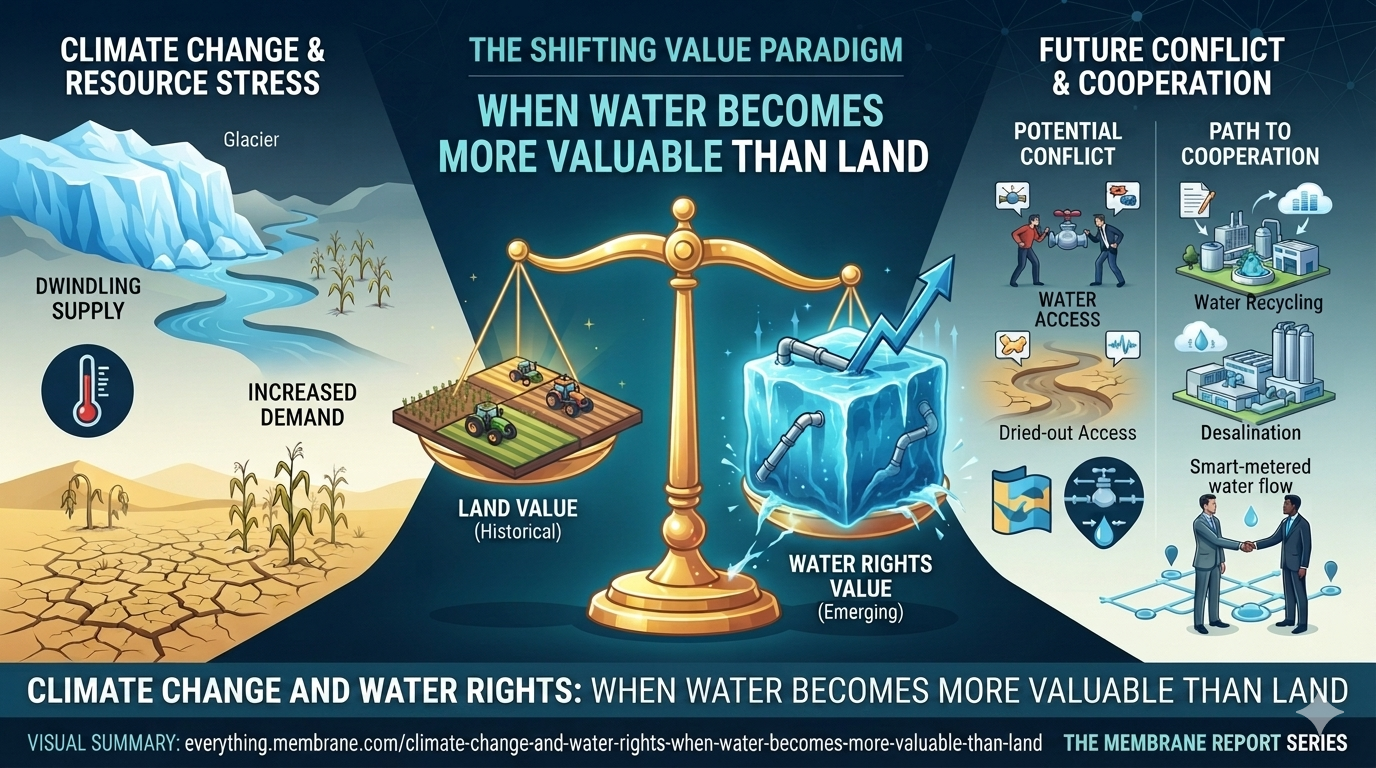
Climate change is making water security impossible to ignore. You don’t need a scientific report to see it—just look out your window. Floods, droughts, shrinking reservoirs, and increasing competition for freshwater are becoming part of everyday life.
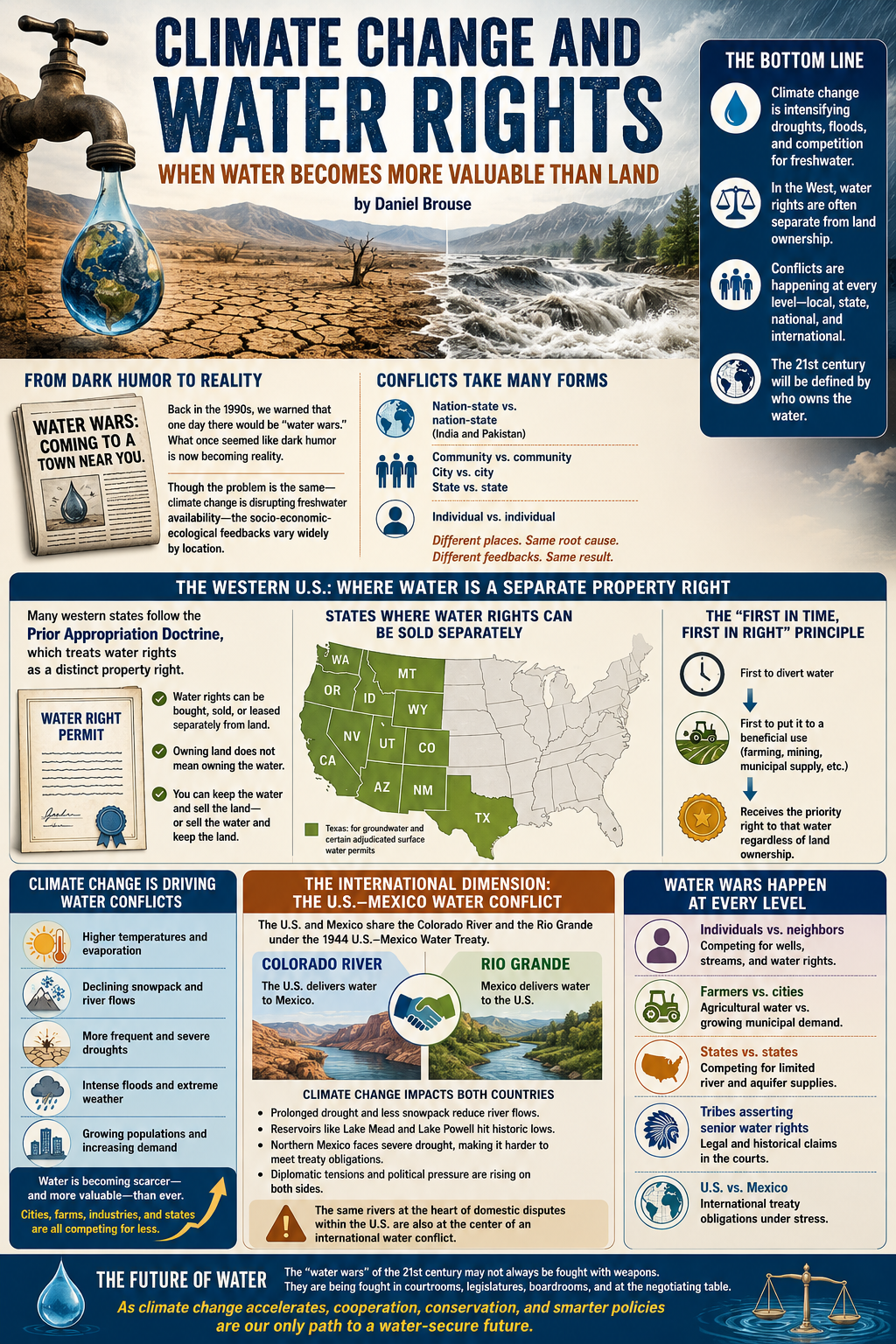
Back in the 1990s, we warned that one day there would be “water wars.” We jokingly wrote headlines like, “Water Wars: Coming to a Town Near You.” Unfortunately, what once seemed like dark humor is steadily becoming reality.
The underlying problem is the same everywhere: climate change is disrupting the availability of freshwater. However, the resulting socio-economic and ecological feedbacks vary dramatically depending on geography, politics, and legal systems. In some regions, conflicts arise between nations, such as India and Pakistan over shared river systems. In others, disputes occur between neighboring communities, businesses, or even individual property owners.
The western United States provides one of the clearest examples of these emerging water conflicts. Unlike most of the eastern United States, many western states treat water rights as separate from land ownership.
Water Rights Are Not Always Property Rights
In much of the western United States, water rights can be bought, sold, or leased independently of the land itself. These states generally follow the Prior Appropriation Doctrine, a legal framework that treats water rights as a distinct form of property.
Under this system, owning land does not necessarily mean owning the water that flows across or beneath it. Likewise, someone can retain ownership of valuable water rights even after selling the associated land.
States Where Water Rights Can Be Sold Separately
States that commonly allow water rights to be severed from real estate include:
Colorado
Arizona
California
Nevada
New Mexico
Utah
Wyoming
Montana
Idaho
Washington
Oregon
Texas (for groundwater and certain adjudicated surface water permits)
The “First in Time, First in Right” Principle
These states generally operate under the principle of “first in time, first in right.”
The first individual or entity to divert water and put it to a legally recognized beneficial use—such as agriculture, mining, industry, or municipal supply—receives a priority right to continue using that water.
Because the right is tied to beneficial use rather than land ownership, water rights become a separate economic asset. A farmer, for example, may sell a ranch while retaining the associated water rights, or sell those rights to a nearby city while continuing to own the land.
Climate Change Is Increasing the Value of Water
As climate change intensifies droughts, reduces snowpack, alters river flows, and increases evaporation, freshwater is becoming an increasingly scarce resource. In many regions, water rights are appreciating faster than the land they once served.
Cities are purchasing agricultural water rights to supply growing populations. Farmers compete with municipalities, industries, and neighboring states for limited supplies. Rivers that once flowed year-round now run seasonally, while reservoirs experience historic lows followed by damaging floods.
The result is an expanding marketplace where water is increasingly treated as a financial asset rather than simply a natural resource.
The Future of Water Conflicts
The “water wars” we predicted decades ago have already begun. They may not always resemble armed conflicts between nations. More often, they take the form of lawsuits, interstate compacts, regulatory battles, infrastructure disputes, and competition between agriculture, industry, municipalities, and environmental interests.
As climate change accelerates, freshwater will become one of the defining economic and political issues of the 21st century. In many regions, the question will no longer be who owns the land—it will be who owns the water.
The International Dimension: The U.S.–Mexico Water Conflict
The western United States is not only experiencing domestic “water wars” between states, cities, farmers, and industries—it is also involved in an increasingly contentious international dispute with Mexico over many of the same river systems.
The conflict centers primarily on the Colorado River and the Rio Grande, which are governed by the 1944 U.S.–Mexico Water Treaty. Under the treaty, the United States delivers water from the Colorado River to Mexico, while Mexico provides water from tributaries feeding the Rio Grande to the United States.
For decades, the agreement functioned reasonably well because both countries generally had sufficient water supplies. Climate change has dramatically altered that equation.
Prolonged drought, declining snowpack in the Rocky Mountains, higher temperatures, and increased evaporation have reduced river flows throughout the American Southwest. Reservoirs such as Lake Mead and Lake Powell have reached historically low levels, forcing difficult decisions about how increasingly scarce water should be allocated.
At the same time, northern Mexico has experienced severe drought, making it difficult to meet its treaty obligations to deliver water to the United States. The resulting shortages have led to diplomatic disputes, political pressure, and growing tensions between agricultural users, municipalities, and federal governments on both sides of the border.
What makes this conflict particularly significant is that it is driven by the very same rivers already at the center of domestic disputes within the United States. States such as California, Arizona, Nevada, Colorado, New Mexico, and Texas are competing with one another for diminishing supplies while simultaneously relying on international agreements that are becoming more difficult to satisfy under a changing climate.
In effect, the Colorado River and Rio Grande now support multiple layers of competition:
Individuals versus neighboring landowners.
Farmers versus rapidly growing cities.
States versus other states.
Native American tribes asserting senior water rights.
The United States versus Mexico under international treaty obligations.
As climate change continues to reduce the reliability of freshwater supplies, these overlapping legal, economic, and political conflicts are likely to intensify. The future of water management will require not only engineering and conservation but also new approaches to interstate and international cooperation. The “water wars” of the 21st century are no longer a prediction—they are unfolding simultaneously at the local, state, national, and international levels.
A Capital Preservation Strategy for an Uncertain Future
By Daniel Brouse
Introduction: Avoid the Minsky Moment
A “Minsky Moment” refers to a sudden, major collapse of asset prices following a long period of market growth and speculative risk-taking. Named after American economist Hyman Minsky and coined by Paul McCulley of PIMCO in 1998, the concept explains why long periods of economic stability inherently build the foundation for severe financial crises.
Climate change is no longer just an environmental issue—it is becoming a financial planning issue. Rising insurance costs, increasing weather-related losses, higher inflation risks, and growing economic uncertainty make protecting capital more important than ever.
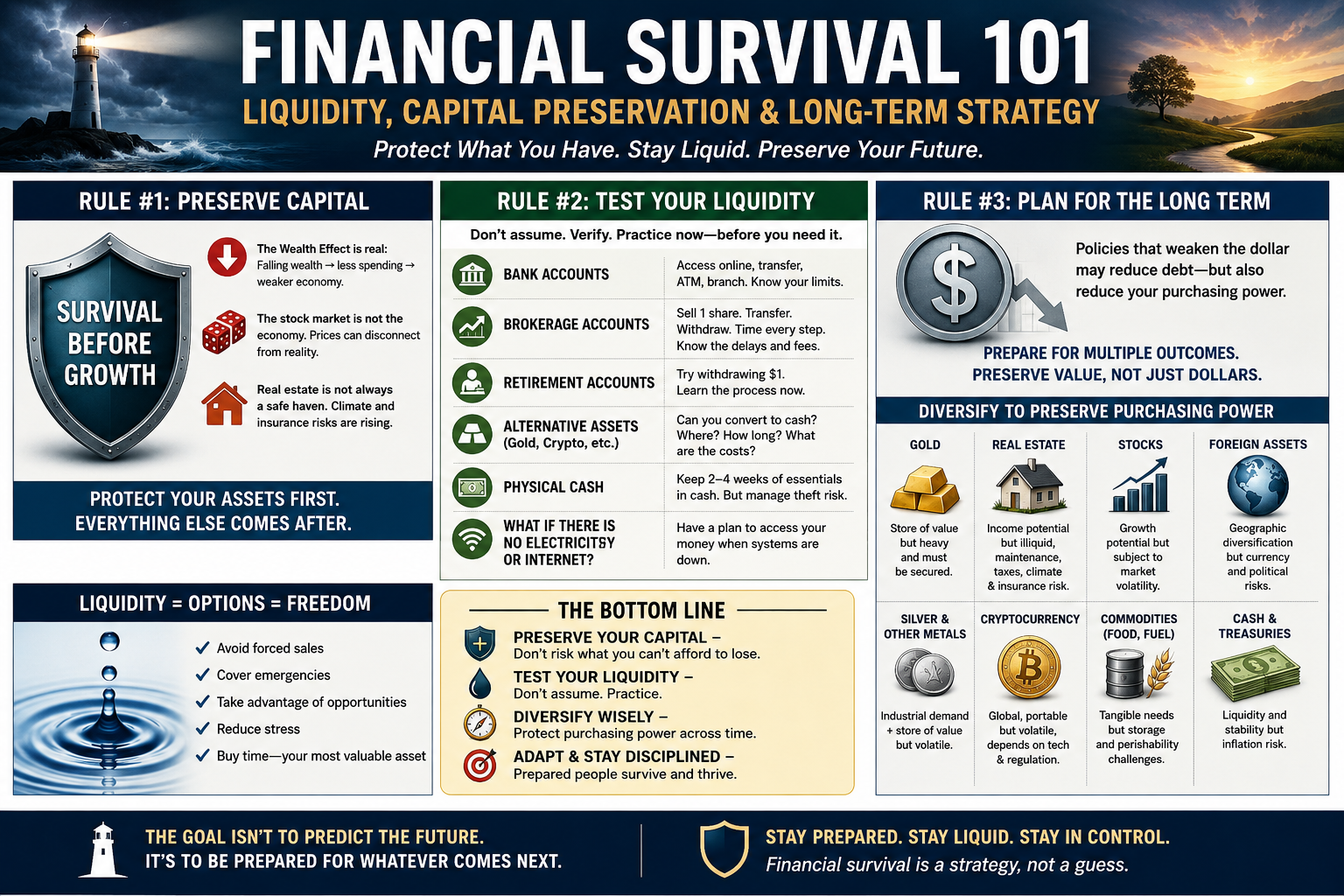
The first objective of any sound financial plan is not maximizing returns. It is ensuring that your savings remain available, secure, and able to preserve purchasing power. Liquidity gives you flexibility when unexpected expenses arise, while capital preservation prevents temporary market disruptions from becoming permanent financial losses.
One of the simplest and most effective strategies is to combine a high-yield savings account with a TreasuryDirect account that invests in short-term U.S. Treasury Bills.
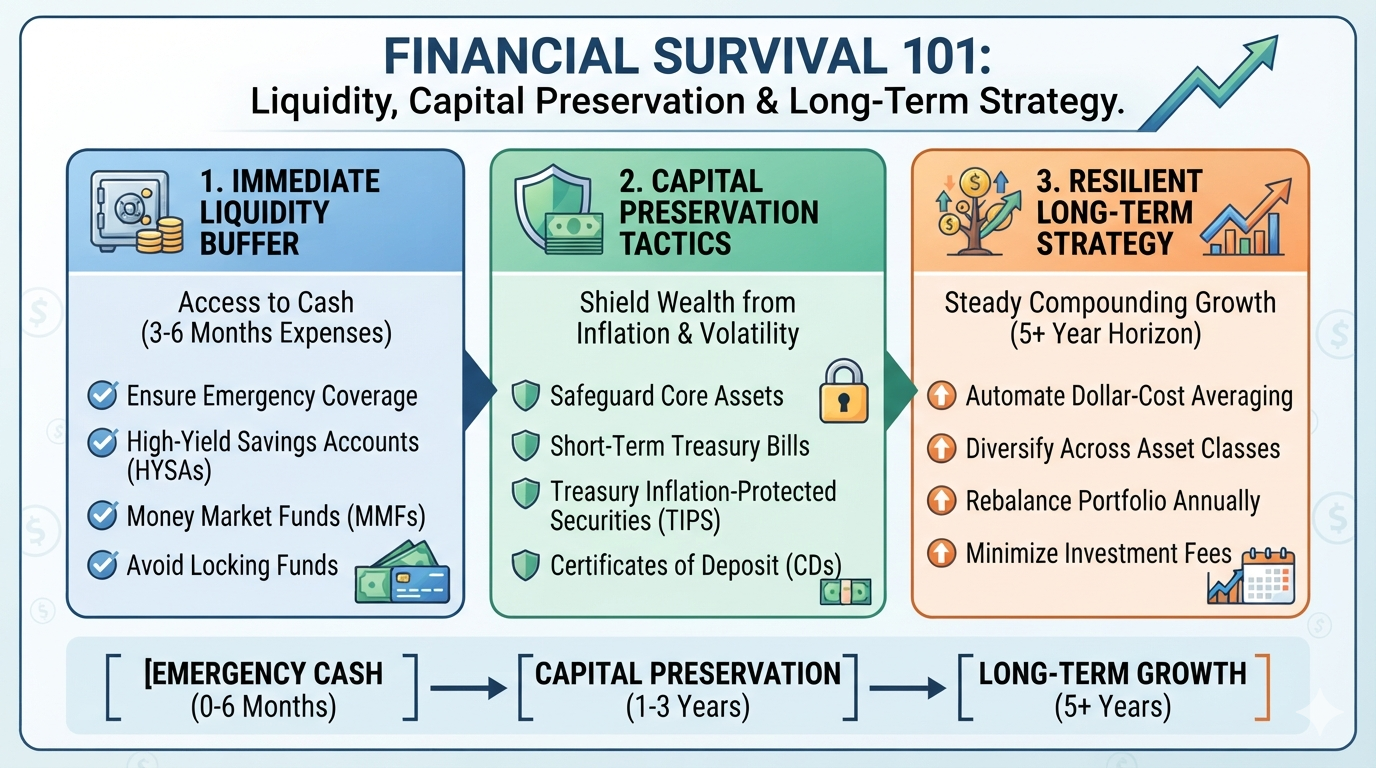
Step 1: Build an Immediate Liquidity Buffer
Every financial plan should begin with readily accessible cash.
Financial advisors generally recommend maintaining three to six months of living expenses in highly liquid accounts that can be accessed immediately during emergencies.
Good options include:
High-Yield Savings Accounts (HYSA)
Money Market Accounts
Money Market Mutual Funds
Unlike long-term investments, these accounts allow you to pay for unexpected expenses without selling stocks or bonds during a market decline.
A high-yield savings account serves as the foundation of your liquidity strategy.
Step 2: Open a TreasuryDirect Account
Once you’ve accumulated several hundred dollars beyond your emergency cash reserve, consider opening a TreasuryDirect account with the U.S. Treasury.
TreasuryDirect allows individuals to purchase Treasury securities directly from the federal government without brokerage fees.
Among the available securities, 4-week Treasury Bills (T-Bills) are particularly attractive for capital preservation.
Why 4-Week Treasury Bills?
Treasury Bills are considered one of the safest investments in the world because they are backed by the full faith and credit of the United States government.
Additional advantages include:
Extremely low default risk
Monthly maturity
High liquidity
Competitive interest rates
Exempt from state and local income taxes
Because they mature every four weeks, they provide exceptional flexibility if economic conditions change.
Understanding How Treasury Bills Work
Treasury Bills are sold through regularly scheduled government auctions.
Unlike traditional savings accounts, T-Bills are purchased at a discount to their face value.
For example:
Purchase Price: $99.60
Face Value at Maturity: $100.00
The $0.40 difference represents your interest earnings.
When the bill matures four weeks later, the Treasury pays the full face value directly into your account.
Funds used to purchase the bill are automatically withdrawn from your linked bank account after the auction.
Why Short-Term Bills Are Safer Than Long-Term Bonds
Many investors assume all Treasury securities carry identical risk.
They do not.
There is a critical distinction between:
Treasury Bills (4-week to 52-week)
Treasury Notes (2-10 years)
Treasury Bonds (20-30 years)
Longer-term bonds are highly sensitive to interest rate changes.
If inflation increases or interest rates rise, existing bonds decline in market value. Investors who need to sell before maturity can lose a substantial portion of their principal.
Short-term Treasury Bills largely avoid this problem.
Because they mature every month, your principal is quickly returned, allowing you to reinvest at current interest rates.
In today’s uncertain economic environment, short-term T-Bills generally provide much greater flexibility and significantly lower interest-rate risk than longer-term government bonds.
Automate the Process
TreasuryDirect allows investors to automatically reinvest maturing Treasury Bills.
For example:
Purchase a 4-week Treasury Bill.
Set it to automatically roll over for up to 12 cycles.
Each month, your principal purchases a new Treasury Bill.
Your interest is deposited back into your bank account.
This creates a largely automated income stream while maintaining monthly access to your capital.
As interest accumulates in your savings account, it can eventually be invested into additional Treasury Bills, creating a gradual compounding effect.
I Bonds: Protection Against Inflation
Another useful Treasury investment is the Series I Savings Bond (I Bond).
Unlike Treasury Bills, I Bonds are specifically designed to protect purchasing power during periods of inflation.
Their interest rate consists of:
A fixed rate
An inflation-adjusted rate that changes every six months
When inflation rises, I Bond yields increase accordingly.
During the inflation surge of 2022, newly issued I Bonds briefly paid annualized rates above 9%, illustrating how they can provide meaningful protection during periods of rapidly rising prices.
Additional advantages include:
Exempt from state and local income taxes
Federal taxes deferred until redemption
Potential education tax benefits if used for qualified higher education expenses and eligibility requirements are met
Because I Bonds cannot be redeemed during their first year and incur a modest interest penalty if redeemed before five years, they are best viewed as a medium-term inflation hedge rather than an emergency fund.
Retirement Accounts
Capital preservation becomes even more important inside retirement accounts.
Money that cannot easily be replaced should generally avoid unnecessary risk.
If you are nearing retirement—or simply wish to reduce volatility—consider investments that prioritize preservation of principal while earning yields comparable to short-term Treasury Bills or other low-risk cash equivalents.
The objective is not to chase maximum returns but to ensure retirement savings remain available when needed.
Building a Layered Financial Strategy
A resilient financial plan consists of three distinct layers.
Time Horizon
Objective
Typical Investments
0–6 Months
Immediate liquidity
High-yield savings accounts, money market funds
1–3 Years
Capital preservation
4-week Treasury Bills, I Bonds, short-term Treasury funds, short-term CDs
10+ Years
Long-term growth
Diversified stock index funds, international equities, retirement accounts
This layered approach allows each dollar to serve a specific purpose rather than forcing every investment to accomplish every objective. While there is no one-size-fits-all allocation, your age, financial obligations, income stability, and future plans should guide how much you keep in each layer.
For individuals following a prudent capital preservation strategy, a sample allocation might look like this:
Age 50 and older: Approximately 80% in immediate liquidity, 15% in capital preservation investments such as short-term Treasury Bills and I Bonds, and 5% in long-term growth investments.
Age 30–50: Approximately 50% in immediate liquidity, 40% in capital preservation, and 10% in long-term growth investments.
Under age 30: Approximately 20% in immediate liquidity, 60% in capital preservation, and 20% in long-term growth investments.
These allocations prioritize financial flexibility and preservation of principal in an era of increasing economic uncertainty. Younger investors generally have more time to recover from financial setbacks and can afford somewhat greater exposure to long-term growth assets, while those approaching or entering retirement often benefit from emphasizing liquidity and protecting accumulated wealth. Individual circumstances vary, however, so these percentages should be viewed as a prudent framework rather than a universal rule.
Long-Term Investing PrinciplesAfter establishing sufficient liquidity and protecting core capital, long-term wealth creation still depends on disciplined planning, risk management, and consistent investing.
Traditional investment principles remain important, but today’s financial environment requires a broader understanding of risk. Investors should consider not only market performance but also their ability to access capital, protect assets, and adapt to changing economic conditions.
Key principles include:
Maintain adequate liquidity and access to cash. A strong financial plan requires readily available funds to handle emergencies, unexpected expenses, and investment opportunities without being forced to sell assets at unfavorable times.
Evaluate insurance exposure. Rising insurance costs, coverage limitations, and changing underwriting standards can significantly affect personal finances and asset values. This applies not only to homeowners insurance but also to auto and rental insurance, which are increasingly influenced by climate-related risks. For example, hail damage is one of the leading causes of auto insurance claims, and the increasing frequency and severity of severe storms can contribute to higher premiums and reduced coverage availability. Renters can also be affected as rising property insurance costs are often passed through in the form of higher rents and fees.
Assess climate-related financial risks. Property location, extreme weather exposure, infrastructure resilience, and changing insurance availability are increasingly important factors in long-term financial planning. Climate risks can influence property values, mortgage decisions, municipal finances, and the overall cost of living in vulnerable areas.
Rebalance periodically. Adjust your portfolio over time to maintain your intended allocation among liquidity, capital preservation, and growth investments.
Minimize investment expenses. Lower fees allow more of your returns to compound over time. Favor cost-efficient investment vehicles such as low-cost index funds and ETFs when appropriate.
Markets will inevitably fluctuate, but disciplined long-term investing, combined with sound risk management and financial flexibility, has historically rewarded patient investors. The goal is not simply to maximize returns—it is to build a resilient financial foundation capable of adapting to changing economic, environmental, and personal circumstances.
Climate Change and Financial Resilience
Climate change introduces new financial risks that previous generations rarely considered.
Increasingly, homeowners and investors must account for:
Rising insurance premiums
More frequent weather-related disasters
Inflationary pressures from supply disruptions
Higher infrastructure costs
Regional declines in real estate values
Greater economic uncertainty
These risks do not necessarily mean financial collapse is imminent. However, they do reinforce the importance of maintaining adequate liquidity and protecting principal. Investors with readily available cash are better positioned to handle emergencies, adapt to changing market conditions, and take advantage of opportunities that arise during periods of economic stress.
Conclusion
Successful investing begins with preserving financial flexibility.
A high-yield savings account provides immediate liquidity. Short-term Treasury Bills offer one of the safest ways to earn competitive returns while protecting principal. I Bonds provide an additional layer of inflation protection for longer-term savings.
Together, these tools create a strong foundation for financial resilience in an increasingly uncertain world.
No investment strategy can eliminate risk entirely, but maintaining liquidity, preserving capital, and investing for long-term growth can help individuals and families navigate economic volatility—including the growing financial challenges associated with climate change—with greater confidence and stability.
Capital preservation has always been a cornerstone of sound financial planning. In periods of heightened economic uncertainty, however, it becomes the overriding priority.
The goal is not to maximize returns at all costs. It is to ensure that you retain enough purchasing power and financial flexibility to navigate whatever comes next.
One concept increasingly influencing both Wall Street and Main Street is the Wealth Effect.
When household wealth rises—through higher stock prices, appreciating home values, or growing retirement accounts—people generally feel more confident. They spend more, borrow more, and invest more.
The opposite is equally true.
When people perceive themselves to be poorer, they begin cutting expenses. Vacations are postponed. New cars aren’t purchased. Home renovations are delayed. Restaurants see fewer customers. Businesses experience lower sales, which often leads to reduced hiring and layoffs.
The decline becomes self-reinforcing.
What begins as falling asset prices can eventually slow the broader economy.
The Stock Market Is Not the Economy
One of the biggest mistakes investors make is assuming that the stock market and the economy move together.
Over long periods they are related.
Over shorter periods they often are not.
Modern financial markets are increasingly driven by institutional trading, derivatives, leverage, algorithmic trading, and investor sentiment. Prices can become disconnected from underlying economic fundamentals for extended periods.
That means:
Rising stock prices do not necessarily mean the economy is healthy.
Falling stock prices do not automatically signal economic collapse.
Markets frequently overshoot in both directions.
Investors should avoid making emotional decisions based solely on market movements.
Real Estate Is Not Always a Safe Haven
For generations, real estate has been viewed as one of the safest long-term investments.
That assumption deserves closer examination.
Unlike stocks or bank deposits, real estate is highly illiquid. Selling a property can take weeks or months, and transactions involve significant costs, including commissions, taxes, legal fees, inspections, and financing contingencies.
Climate-related risks are adding another layer of uncertainty.
In many regions, insurance premiums have risen dramatically or insurers have withdrawn from markets altogether. Mortgage lenders are increasingly evaluating climate exposure, flood risk, wildfire danger, and long-term property resilience.
Some coastal communities, wildfire-prone regions, and flood zones are already experiencing declining property values, slower sales, or reduced insurance availability.
Examples include portions of:
California wildfire zones
Coastal Florida
Louisiana
Low-lying Atlantic and Gulf Coast communities
These trends do not mean that all real estate is at immediate risk. Many properties may remain attractive for decades. However, location-specific climate and insurance risks are becoming increasingly important considerations in short- and medium-term financial planning. Over the longer term, climate change is expected to affect virtually all real estate to varying degrees. The nature and severity of those risks will differ by location, but no property is likely to remain entirely insulated from changing climate conditions, rising insurance costs, evolving regulations, or shifting market preferences.
Real estate should no longer be evaluated solely by neighborhood, schools, and appreciation potential. Future insurability, financing availability, infrastructure resilience, and climate exposure are becoming equally important.
Step Two: Liquidity
What Good Are Assets If You Can’t Use Them?
After protecting capital comes a second priority:
Liquidity.
Liquidity measures how quickly an asset can be converted into usable cash without suffering significant losses.
During normal times, liquidity is often taken for granted.
During financial stress, it becomes priceless.
Many investors discover too late that assets they believed were readily available actually require days, weeks, or months to access.
That is why liquidity should be tested—not assumed.
Perform Your Own Liquidity Stress Test
Think of this as a financial fire drill.
You hope you’ll never need it.
But you’ll be grateful you’ve practiced.
Bank Accounts
Can you:
Access funds through online banking?
Use a debit card?
Transfer money electronically?
Withdraw cash from an ATM?
Obtain larger amounts from a local branch?
What is your backup plan if electricity, internet access, or electronic payments become unavailable?
Know your daily withdrawal limits.
Understand your bank’s policies before an emergency occurs.
Brokerage Accounts
Try the complete process:
Sell one share of a stock or ETF.
Transfer the proceeds to your checking account.
Withdraw cash.
Time every step.
Record:
Settlement delays
Transfer times
Bank holds
Fees
Unexpected obstacles
A brokerage balance isn’t liquid until the money reaches your wallet.
Retirement Accounts
Many retirement accounts allow withdrawals under certain circumstances.
Even if taxes or penalties apply, learn the mechanics now.
Understanding the paperwork, timing, and restrictions before an emergency reduces stress later.
Precious Metals
If you own gold or silver, ask yourself:
Where would I sell it?
How quickly could I receive payment?
Would I receive fair market value?
Would payment be immediate?
Owning precious metals is different from converting them into cash.
Practice the process.
Cryptocurrency
Crypto markets operate around the clock, but converting digital assets into spendable cash involves several steps.
Can you:
Sell cryptocurrency?
Transfer proceeds to your bank?
Withdraw physical cash?
What is your backup plan if electricity, internet access become temporarily unavailable?
Test a small transaction.
Don’t wait until markets become volatile.
Cash on Hand
Most financial planners recommend maintaining an emergency reserve.
Consider keeping enough physical cash to cover several weeks of essential expenses while avoiding excessive amounts that create theft or security risks.
Cash remains useful during temporary disruptions to banking networks, power outages, or payment systems.
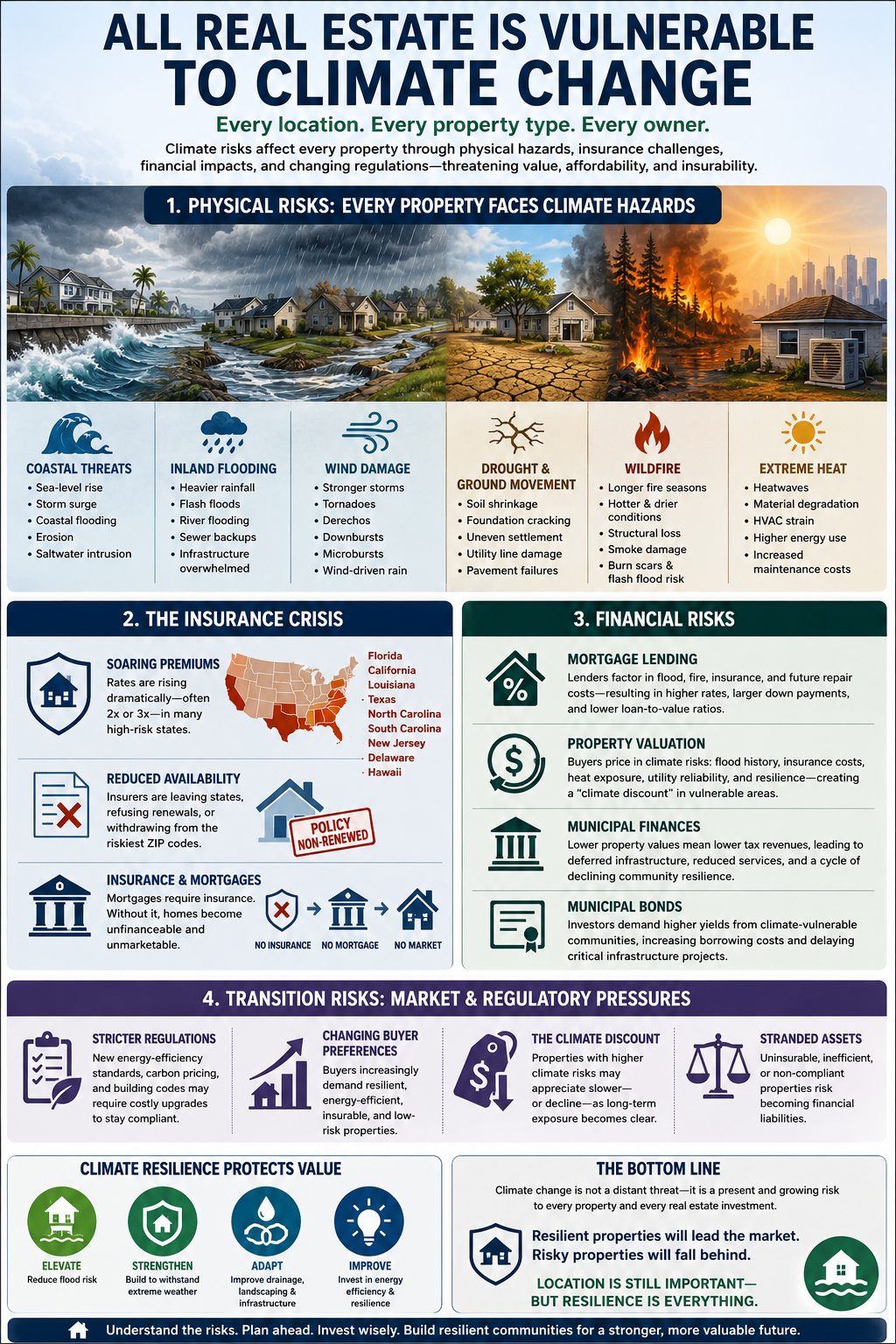
Understanding the Physical, Financial, and Market Risks Facing Property Owners
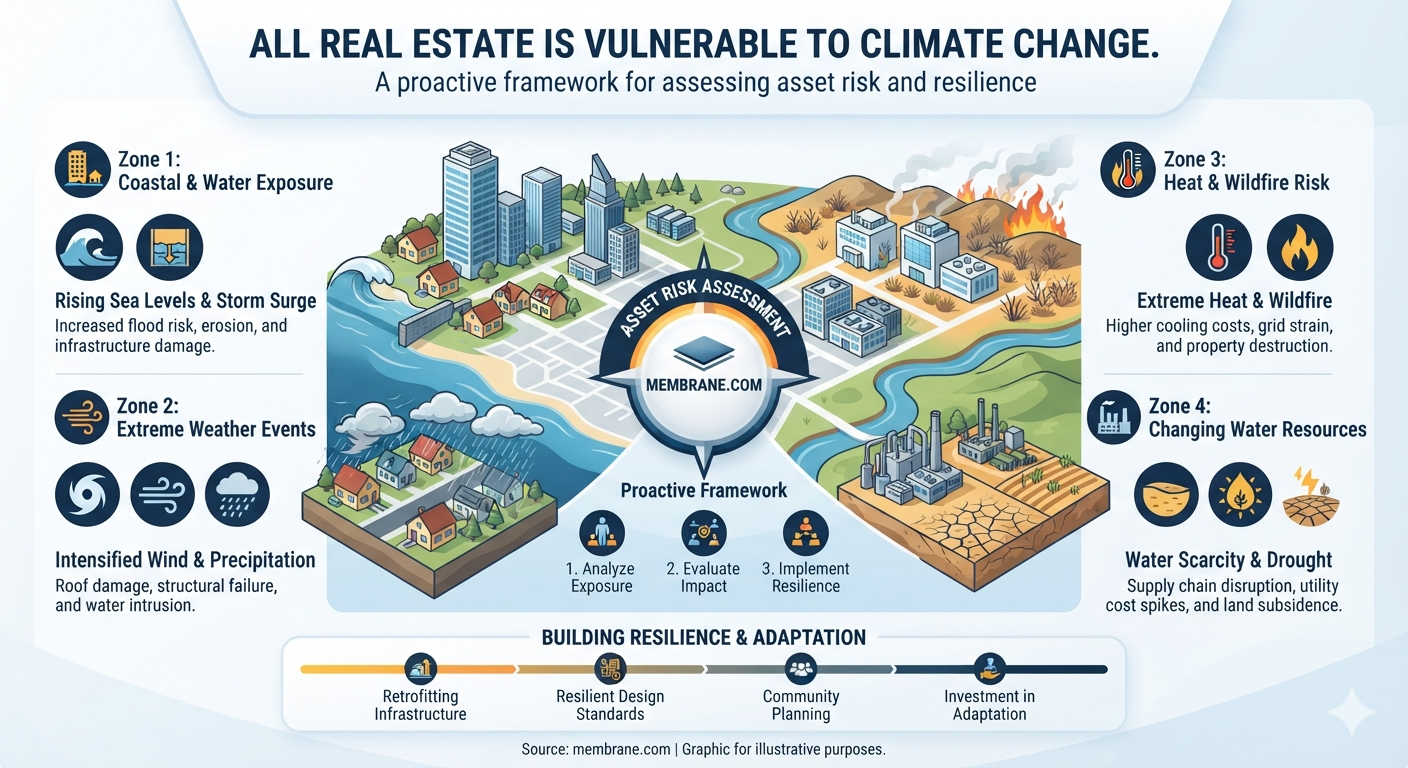
For generations, real estate has been viewed as one of the safest long-term investments. Land cannot be manufactured, buildings can be improved, and population growth has historically supported rising property values. Climate change is altering many of the assumptions that have underpinned real estate markets for decades.
Contrary to popular belief, climate risk is not confined to beachfront homes or wildfire-prone forests. Every property is exposed to climate-related risks, although the specific hazards vary by location. These risks extend far beyond physical damage. They increasingly affect insurance availability, mortgage lending, municipal finances, infrastructure reliability, property values, and long-term market liquidity.
The vulnerability of real estate can be understood through four interconnected categories: physical risks, insurance risks, financial and lending risks, and transition risks.
1. Physical Risks: Every Property Faces Climate Hazards
Climate change is increasing both the frequency and intensity of many weather-related hazards. Every region experiences different threats, but no location is completely immune.
Coastal Regions
Coastal properties face some of the most visible climate risks, including:
Rising sea levels
More frequent nuisance flooding
Stronger storm surges
Accelerated shoreline erosion
Saltwater intrusion into groundwater
Even modest sea-level rise significantly increases flood frequency because storm surges begin from a higher baseline.
Inland Flooding
Many inland communities once considered “safe” are experiencing increasing flood losses.
Warmer air holds approximately 7% more water vapor for every 1°C of warming, increasing the potential for intense rainfall events. As storms become more moisture-laden, drainage systems designed for twentieth-century rainfall often become overwhelmed.
Consequences include:
Flash flooding
River flooding
Basement flooding
Sewer backups
Road washouts
Bridge failures
Properties located well outside traditional floodplains are increasingly experiencing damaging floods.
Wind Damage
For much of the United States, wind represents the largest source of insured property losses.
Climate change is increasing atmospheric energy available for:
Severe thunderstorms
Derechos
Tornado outbreaks
Downbursts
Microbursts
Hurricane wind fields
Roofs, siding, windows, and mature trees are particularly vulnerable. Wind-driven rain often causes damage even when structures remain standing.
Wildfire
Longer fire seasons, hotter temperatures, and more frequent droughts have dramatically expanded wildfire risk.
Wildfires threaten real estate through:
Direct structural destruction
Smoke damage
Utility failures
Water contamination
Long-term reductions in property desirability
Burn scars also increase the likelihood of flash flooding and debris flows during subsequent rainstorms.
Drought and Ground Movement
Extended drought affects soils in complex ways.
Clay-rich soils shrink as they dry, causing:
Foundation cracking
Uneven settlement
Utility line damage
Pavement failures
Conversely, periods of heavy rainfall following drought can produce rapid soil expansion that further stresses structures.
Extreme Heat
Heat affects virtually every building.
Higher temperatures accelerate deterioration of:
Roofing materials
Asphalt pavement
Exterior paints
Sealants
HVAC systems
Buildings require more cooling energy while mechanical systems experience greater wear, increasing maintenance and operating costs.
2. The Insurance Crisis
Insurance is becoming one of the most important climate risks facing property owners.
Historically, insurance spread risk across large geographic regions. As climate-related losses increase, that model is becoming increasingly difficult to sustain.
Rising Premiums
Many homeowners and commercial property owners have experienced substantial premium increases.
States experiencing particularly rapid increases include:
Florida
California
Louisiana
Texas
North Carolina
South Carolina
New Jersey
Delaware
Hawaii
In many communities, insurance costs are rising faster than home values.
Reduced Availability
Some insurers are:
Leaving entire states
Declining to insure specific ZIP codes
Refusing policy renewals
Restricting coverage amounts
Increasing deductibles
As private insurers withdraw, many homeowners are forced into state-sponsored insurers of last resort, which often provide less comprehensive coverage at higher cost.
Most mortgage lenders require continuous hazard insurance throughout the life of the loan.
If insurance becomes unavailable or unaffordable:
Mortgage approvals become more difficult.
Existing homeowners may violate loan requirements.
Buyers qualify for smaller loans.
Market demand declines.
Property values weaken.
Without insurance, many homes effectively become difficult or impossible to finance.
3. Financial Risks Beyond Property Damage
Climate change affects real estate markets even before disasters occur.
Financial institutions increasingly incorporate climate risk into lending and investment decisions.
Mortgage Lending
Banks and mortgage investors evaluate:
Flood exposure
Wildfire risk
Insurance availability
Future repair costs
Local infrastructure resilience
Higher perceived risk may result in:
Larger down payment requirements
Higher interest rates
Reduced loan-to-value ratios
Shorter lending horizons
Properties once viewed as routine collateral may gradually become more difficult to finance.
Property Valuation
Real estate markets depend heavily on expectations of future value.
Buyers increasingly consider:
Flood history
Fire history
Heat exposure
Insurance costs
Utility reliability
Local resilience investments
Two otherwise identical homes may command significantly different prices simply because one carries greater long-term climate risk.
Municipal Finances
Local governments rely heavily on property taxes.
If climate risks reduce property values, municipalities may experience:
Lower tax revenues
Deferred infrastructure maintenance
Reduced public services
Higher municipal borrowing costs
This creates a feedback loop in which deteriorating infrastructure further reduces property values.
Municipal Bonds
Cities and counties finance roads, schools, water systems, and flood-control projects through municipal bonds.
Increasing climate risks may lead investors to demand higher yields from municipalities perceived as vulnerable. Higher borrowing costs can delay infrastructure improvements, making communities even more susceptible to future climate impacts.
Credit rating agencies are paying increasing attention to long-term climate resilience when evaluating municipal creditworthiness.
4. Transition Risks
Not all climate risks arise from weather.
Many result from changes in markets, technology, regulations, and consumer preferences.
Energy Efficiency Requirements
Governments are gradually adopting stricter standards for:
Building efficiency
Carbon emissions
Appliance performance
Building electrification
Energy benchmarking
Older buildings may require expensive upgrades to remain competitive.
Changing Buyer Preferences
Homebuyers increasingly ask questions such as:
Is the property insurable?
How often does it flood?
What are annual insurance costs?
Does the home have backup power?
Is the roof hurricane-rated?
Are energy costs manageable?
These considerations increasingly influence purchasing decisions.
The Emerging Climate Discount
Economists have begun describing the possibility of a “climate discount” or “climate bubble.”
Properties with elevated climate risks may experience slower appreciation—or outright depreciation—as markets increasingly recognize long-term exposure.
Unlike traditional real estate cycles, climate-related devaluation may persist because the underlying physical risks continue to evolve.
5. Climate Risk Is Becoming a Core Investment Risk
Climate change is transforming real estate from an asset class valued primarily by location into one increasingly valued by resilience.
Future property performance will depend not only on neighborhood desirability but also on:
Infrastructure quality
Flood protection
Insurance availability
Building efficiency
Utility reliability
Community adaptation efforts
Investors, lenders, insurers, and homebuyers are already incorporating these factors into financial decisions.
Conclusion
Climate change does not mean that all real estate will suddenly lose value or become uninhabitable. Real estate will remain one of the world’s largest and most important asset classes. However, the factors that determine value are changing.
The greatest risk is not a sudden collapse of the housing market but a gradual repricing of climate risk. Some properties may remain highly desirable for decades, while others may face increasing costs from insurance, maintenance, financing, and regulatory compliance.
Understanding these risks allows homeowners, investors, developers, lenders, and policymakers to make informed decisions. Investments in resilient construction, improved infrastructure, energy efficiency, and thoughtful land-use planning can reduce long-term vulnerability and help preserve property values.
The future of real estate will increasingly be determined not simply by location, location, location, but by location, resilience, and adaptability.
“Climate change is increasing the amount of energy violent rain events contain, amplifying how much damage they can inflict.”
The physics of wind and rain are important to understand: their destructive force increases nonlinearly with velocity and is further amplified by density and mass. Even relatively small increases in wind speed or rainfall intensity can produce disproportionately larger impacts and damage.
This principle applies to all extreme energy events. At its core, climate change is an energy imbalance. As excess heat accumulates within the Earth system, more energy becomes available to drive storms, floods, droughts, heatwaves, and wildfires. As the energy intensifies, so do its manifestations.
As of late 2025 and early 2026, negative equity—homes worth less than the outstanding mortgage—has reached its highest level since early 2018. While national averages remain relatively modest, localized distress is accelerating in several rapidly expanded Sunbelt markets. The primary drivers are declining property values in high climate-risk regions, surging insurance costs, and the long-term economic consequences of climate science denial.
This paper examines the emerging geographic concentration of underwater mortgages and links it to intensifying physical climate impacts, rising insurance instability, and policy failures at the state level.
1. The Reemergence of Negative Equity
Negative equity surged during the 2008 housing collapse, then steadily declined over the following decade as home prices rose. However, recent data indicate a reversal of that trend in specific metropolitan regions.
Although the national share of underwater mortgages remains contained, several Southern markets now show rates at or near one in ten homes:
Lakeland, FL: 10.8% of mortgaged homes underwater
Cape Coral, FL: 10.1%
Austin, TX: 9.2%
San Antonio, TX: 8.8%
These figures represent concentrated financial stress rather than a uniform national downturn. The pattern is not random. The affected markets share two characteristics:
Rapid population growth during 2020–2023.
Escalating exposure to climate-related risk.
2. Climate Risk as an Economic Variable
In Florida and Texas, property insurance costs have risen at some of the fastest rates in the nation. Insurers have withdrawn from high-risk zip codes, reduced coverage, or sharply increased premiums. In Florida, the state has effectively become the largest insurer of private residential property through public backstopping mechanisms—an implicit socialization of climate risk.
In several high-risk counties, properties are increasingly:
Difficult to insure
Expensive to maintain
Exposed to repeated flood, heat, hurricane, or wildfire events
Certain regions are now experiencing conditions that render them effectively uninhabitable for extended periods—averaging roughly 20 days per year of dangerous heat indices or severe disruption from storms, flooding, or infrastructure failure.
As actuarial risk catches up with political rhetoric, markets are repricing climate exposure. The result is declining home values in precisely those areas where physical risk is rising fastest.
3. The Cost of Climate Science Denial
A notable irony underlies this trend. Many of the states and municipalities experiencing the sharpest housing corrections have historically minimized or denied the economic implications of climate science.
During the COVID-19 pandemic—an event linked in part to ecological disruption and zoonotic spillover intensified by environmental degradation—policy responses varied sharply by state. Some jurisdictions rejected public health guidance and climate science simultaneously, framing both as ideological rather than empirical issues.
This created a migration dynamic: individuals seeking fewer regulations relocated to states publicly downplaying both pandemic and climate risks. In many cases, this influx drove rapid appreciation in real estate values from 2020–2023. Buyers paid premium prices under the assumption of continued growth and minimal regulatory constraint.
However, markets eventually reconcile with physics. As insurance costs soared and climate events intensified, property valuations began correcting downward. Homes purchased at inflated prices are now becoming increasingly difficult to sell, and in some cases effectively illiquid.
Negative equity in these markets is therefore not simply a cyclical housing adjustment—it is an early-stage repricing of climate exposure.
4. Systemic Risk and Forward Outlook
Housing represents the largest asset class in the United States and the primary store of wealth for middle-income households. Concentrated declines in climate-exposed regions pose several systemic risks:
Mortgage default pressures
Municipal tax base erosion
State-level insurance backstop liabilities
Migration pressures toward lower-risk regions
If insurance markets continue withdrawing from high-risk areas, and if adaptation investments fail to keep pace with intensifying hazards, negative equity may expand geographically beyond current hotspots.
Conclusion
The current rise in negative equity is not a replay of 2008 driven by subprime lending excess. It is an early signal of climate-adjusted asset repricing. Markets in Florida and Texas are illustrating how physical climate risk, insurance instability, and policy denial can converge into measurable financial stress.
Climate change is no longer a distant environmental issue. It is a balance-sheet issue, a mortgage-market issue, and an insurance-solvency issue. As climate impacts accelerate, property values in high-risk regions will increasingly reflect not ideology, but thermodynamics.
Much of the United States is already experiencing severe, measurable impacts of climate change on freshwater availability. These changes are not abstract predictions — they are unfolding in real time, impacting drinking water supplies, agriculture, ecosystems, and energy production. From the rapidly drying West to the saltwater-intruded aquifers of Florida and New Jersey, the nation’s water security is under unprecedented strain.
The Western U.S.: From Drought to Permanent Aridification
For decades, the Western United States has cycled through droughts, but the current crisis is fundamentally different. Scientists increasingly refer to the region’s condition not as a drought — which implies a temporary deviation — but aridification, a long-term drying driven by rising temperatures.
Record Lows in Major Reservoirs
The Colorado River Basin, which serves 40 million people across seven states and Mexico, is the clearest example of how climate change is reshaping water security.
Lake Mead
Lake Mead, the country’s largest reservoir, has dropped to the lowest levels since it was filled in the 1930s. The enormous white “bathtub ring” etched into its canyon walls is visible proof of its historic decline.
In 2021, the federal government declared the first-ever Tier 1 water shortage, triggering mandatory cuts — most notably for Arizona and Nevada. Mead’s decline has grown so severe that it threatens hydroelectric generation at the Hoover Dam.
Lake Powell
Upstream, Lake Powell has fared no better. Water levels have approached the minimum power pool, the threshold below which the Glen Canyon Dam’s turbines can no longer operate. Federal officials have had to take emergency actions, including releasing water from upstream reservoirs and withholding water traditionally sent downstream.
Unprecedented Federal Mandates and Local Water Restrictions
The worsening crisis has forced all levels of government to intervene:
1. Federal Water Reductions
The Bureau of Reclamation has required massive cuts — 2 to 4 million acre-feet annually across the basin.
Arizona lost 18% of its entire Colorado River allocation in a single year.
2. Urban Water Conservation
Cities dependent on the river — including Las Vegas, Phoenix, and Los Angeles — have introduced aggressive conservation programs and, in some cases, mandatory rationing. Despite efforts to diversify water portfolios, long-term water security remains precarious.
3. Agricultural Fallout
Agriculture, which consumes roughly 70–80% of Colorado River water, is being forced into drastic measures. Farmers are:
shifting away from water-intensive crops,
adopting new irrigation technologies, or
fallowing land entirely.
The economic implications reach far beyond the farm gate.
How Climate Change Is Driving the Collapse
The Colorado River Compact, signed in 1922, dramatically overestimated the river’s annual flow. Climate change has transformed a historically strained system into an outright failing one.
Reduced Snowpack and Early Melt
Warmer winters mean less snowfall in the Rockies and Sierra Nevada. What snow does fall melts too early, disrupting the timing of spring runoff — the pulse that has always sustained the river through summer.
Increased Evaporation and Soil Moisture Loss
Higher temperatures accelerate evaporation from reservoirs and rivers. Meanwhile, parched soils absorb more water before it reaches tributaries and main stems.
A 2023 study found that human-caused warming has removed the equivalent of an entire Lake Mead from the basin since 2000.
This is not natural variability — it is climate-driven hydrological destabilization.
The Pacific Northwest: Myths and Realities of the Lower Snake River Dams
Some political voices claim the lower Snake River dams are essential for regional energy security. The data says otherwise:
They contribute less than 4% of the Northwest’s electricity.
They operate at a small fraction of theoretical capacity.
As run-of-river dams, they offer minimal storage — unlike major storage systems such as Grand Coulee.
They require tens of millions in taxpayer subsidies to remain operational.
They are a leading driver of salmon population collapse, threatening tribal treaty rights and devastating ecosystems and fisheries.
Labeling dam removal as “climate craziness” ignores hydrology, ecology, economics, and modern grid modeling.
Florida: Freshwater on the Brink
While the West grapples with aridification, Florida faces a different climate-driven threat: saltwater intrusion.
Saltwater Invading Drinking Water Aquifers
South Florida’s primary freshwater source, the Biscayne Aquifer, is becoming increasingly contaminated as rising sea levels push saltwater inland. This process accelerates when rainfall declines, river flows weaken, and groundwater pumping intensifies.
Emergency Water Purchases in Tampa
A stark illustration of the crisis:
Tampa is currently buying 10 million gallons of water per day,
an action officials describe as “very rare” — especially this early in the year.
Saltwater intrusion and diminished river flows are forcing utilities into emergency measures far earlier than in previous decades. And this isn’t just a Florida problem — it’s unfolding across the Eastern U.S.
Along the Delaware River, saltwater has been pushing farther upstream than ever recorded, killing cedar forests in New Jersey and threatening Philadelphia’s drinking water supply. Large stretches of the East Coast and Gulf Coast are experiencing the same accelerating pattern.
Louisiana’s coastline remains deeply damaged and largely infertile even decades after Hurricane Katrina, and successive storms have further degraded ecosystems and freshwater systems across Louisiana, Alabama, Texas, and the Florida Panhandle.
Climate-driven hydrological collapse is no longer a regional issue — it’s a national one.
A National Crisis: Different Regions, Same Driver
From the drying reservoirs of the West to the compromised aquifers of the Southeast, America’s water systems are being reshaped by the same underlying force: climate-driven hydrological disruption.
The consequences are already visible:
collapsing reservoirs
failing aquifers
disappearing snowpack
rising salinity
ecological devastation
increased water costs
declining hydroelectric capacity
agricultural instability
regional economic stress
This is not a future scenario — it is the present, and it is accelerating.
* Our probabilistic, ensemble-based climate model — which incorporates complex socio-economic and ecological feedback loops within a dynamic, nonlinear system — projects that global temperatures are becoming unsustainable this century. This far exceeds earlier estimates of a 4°C rise over the next thousand years, highlighting a dramatic acceleration in global warming. We are now entering a phase of compound, cascading collapse, where climate, ecological, and societal systems destabilize through interlinked, self-reinforcing feedback loops.
What Can I Do? The single most important action you can take to help address the climate crisis is simple: stop burning fossil fuels. There are numerous actions you can take to contribute to saving the planet. Each person bears the responsibility to minimize pollution, discontinue the use of fossil fuels, reduce consumption, and foster a culture of love and care. The Butterfly Effect illustrates that a small change in one area can lead to significant alterations in conditions anywhere on the globe. Hence, the frequently heard statement that a fluttering butterfly in China can cause a hurricane in the Atlantic. Be a butterfly and affect the world.
Q: Can you address the concerns if the deed is titled in a living trust?
Great question — and yes, living trusts add another layer that’s important to understand.
If your property is part of a HOA/POA and is titled in a living trust, the key issue is this: The trust owns the property, but the trustee (and successor trustees) still inherit all of the same responsibilities and liabilities that any deeded owner would.
Here’s what that means in practical terms:
1. A living trust avoids probate — but it does not avoid HOA/POA obligations
Even though the trust bypasses the probate process, the property itself is still bound by:
Dues
Special assessments
Covenants and restrictions
Liens
Fines
Legal and financial exposure related to infrastructure failures or negligence
The trust simply changes who is responsible for managing those obligations.
2. The trustee steps into the owner’s shoes
Whoever is serving as trustee at the time of your death is legally responsible for:
Paying assessments
Resolving debts
Maintaining compliance
Handling any legal claims
And because trustees often accept the role without understanding the liabilities, this can create real problems — especially in a high-risk or high-liability community.
3. Beneficiaries do not automatically become owners
A trust does not give beneficiaries automatic deed ownership. The trustee must transfer the property to them — and cannot transfer it until:
All debts are paid
All liens cleared
All POA requirements satisfied
If property conditions or assessments are unresolved, the trust can be stuck holding the property indefinitely.
4. Trusts do not shield beneficiaries or trustees from liability
Many people assume a trust provides liability protection. In reality:
The trustee can be personally liable for unpaid assessments or mishandled obligations.
The trust estate can be pursued for damages.
In extreme cases (e.g., catastrophic dam failure), trustees and sometimes beneficiaries may be named in lawsuits or investigations.
5. If the trust is poorly written, things get messy fast
Common issues I’ve already seen:
No successor trustee named
Beneficiaries disagree about whether to sell
Trustee refuses to take responsibility
Trust language conflicts with POA requirements
The trust cannot dispose of the property because assessments aren’t paid
A trust helps with probate — but it doesn’t solve the core challenges of owning property with shared liabilities.
Bottom line
A living trust changes how the property passes, but not what the property is or the obligations attached to it.
If your deed is titled in a trust:
The trustee inherits the POA obligations and liabilities
The trust must resolve all debts before distribution
Liability exposure remains, especially in communities with infrastructure obligations
An estate attorney should review both the deed and the trust document together