bookmark_borderAir Quality Reaches Code Red in Philadelphia and Jersey Shore: Wildfire Smoke Sparks Health Alerts

by Daniel Brouse
July 27, 2025

Air quality levels reached Code Red across parts of Philadelphia and the Jersey Shore last evening and today, prompting urgent health warnings for residents. The alert, triggered by unhealthy concentrations of fine particulate matter (PM2.5), was in effect from the southern tip of Long Beach Island to Sea Isle City, extending inland as far as Egg Harbor.

A Code Red Air Quality Alert means the air is considered “unhealthy for all individuals,” not just those with pre-existing conditions. Public health officials strongly advised everyone—especially children, the elderly, and those with asthma, heart, or lung conditions—to limit time outdoors, avoid strenuous activity, and stay inside with filtered air whenever possible.

“These pollutant particulates can penetrate deep into the lungs,” warned local air quality experts. “Even short-term exposure can cause inflammation, trigger asthma attacks, or worsen cardiovascular symptoms.”

Wildfire Smoke From Canada the Primary Cause
The spike in pollution was caused by smoke drifting south from ongoing wildfires in Canada. This marks another chapter in a growing trend of long-distance smoke events, as climate-fueled wildfires in the northern latitudes increasingly affect air quality thousands of miles away.
Temporary Relief from Incoming Rain

Conditions improved after midnight in a few areas, thanks to an incoming band of rain, which helped wash particulates out of the atmosphere. However, the reprieve was short-lived. Code Red conditions continued Sunday. With the Canadian wildfires still actively burning, experts warn that similar air quality alerts may return in the coming days depending on wind patterns and fire behavior.

A Growing Public Health Concern
Episodes like this are becoming more frequent and severe, highlighting how climate change and transboundary pollution are converging to impact public health. As wildfire seasons lengthen and intensify globally, the U.S. Northeast and Mid-Atlantic regions may continue to see deteriorating air quality even without local fires.

Public health officials encourage residents to check the AirNow.gov or local environmental agency websites for real-time air quality updates, and to consider investing in HEPA air purifiers or using MERV-13 filters in home HVAC systems to reduce indoor exposure.

Wildfires and Climate Change
Wildfires are becoming more intense, more frequent, and more destructive in climate-sensitive regions such as Canada, the U.S. West, Southern Europe, and Australia.

In fact, unprecedented events are now unfolding. In Canada, vast swaths of boreal forest and peatland are burning year-round. Once considered permanently frozen, Canadian peat permafrost has begun to smolder even beneath the snow, releasing immense quantities of carbon dioxide and methane. These fires, known as “zombie fires,” persist underground through the winter and reignite during spring and summer. This phenomenon marks a terrifying shift in the fire-climate feedback loop.

Wildfire behavior is now directly tied to a compounding set of climate-driven feedbacks. One such loop is: Drought → Fire → Dieback. During extended drought and extreme heat, trees close their stomata to conserve water, which reduces their CO₂ uptake and weakens their resilience. At the same time, warmer, drier conditions make forests more flammable. This leads to more frequent and intense fires, which kill trees and release the carbon they had stored. The Amazon rainforest, once the planet’s largest carbon sink, is now emitting more carbon than it absorbs.

Another underappreciated factor is ozone pollution, which results from fossil fuel combustion. Ground-level ozone damages plant tissues and further inhibits their ability to absorb CO₂, compounding forest dieback and undermining global carbon sinks.

Additionally, wildfires generate “brown carbon”—a class of light-absorbing organic particles. These airborne particulates can travel thousands of miles and settle on snow and ice in Greenland, Antarctica, and mountain glaciers. By darkening the surface, brown carbon reduces the reflectivity (albedo) of ice, accelerating melting. This leads to greater freshwater runoff, destabilizing ocean circulation patterns such as the Atlantic Meridional Overturning Circulation (AMOC), and further warming the poles.

This creates a cascading carbon feedback loop: drought and heat increase wildfires; wildfires kill forests and release stored carbon; ozone and pollution further weaken vegetation; and brown carbon accelerates ice melt. All of these processes contribute more greenhouse gases to the atmosphere, amplifying climate change and locking in even more fire, drought, and environmental collapse.

Drought → Fire → Dieback → Carbon Feedback

Drought stresses trees, increasing flammability and reducing CO2 uptake. Fires release stored carbon, turning the Amazon from a carbon sink into a carbon source. Brown carbon from wildfires darkens snow and ice globally, accelerating melt and AMOC slowdown, feeding back into the system.

Ignite a Domino Effect: Albedo, Brown Carbon, Permafrost  Brouse and Mukherjee (2025)

Canadian Wildfires: Over the Tipping Point Brouse (2024)

Wildfires, Climate Change and Extreme Weather Events Brouse and Mukherjee (2024)
The Human Induced Climate Change Experiment

bookmark_borderClimate-Driven Health Collapse: The Compounding Feedback Loops of Disease, Pollution, and Extreme Weather

by Daniel Brouse — July 26, 2025

Climate change is not just an environmental issue — it is a cascading health crisis. As rising global temperatures disrupt natural systems, they initiate multiple interconnected health feedback loops that reinforce and amplify one another. These loops do not operate in isolation, nor do they follow a predictable or linear trajectory. Instead, the breakdown of one subsystem accelerates the collapse of others, resulting in nonlinear, compounding effects that degrade both the quality and quantity of human life.

Health Feedback Loops: Not Just Additive — Exponential

There are at least three major categories of climate-related health stressors that interact and reinforce each other:

1. Infectious Disease Pathogens

  • Zoonotic diseases such as COVID-19, Ebola, and avian influenza are spreading more rapidly due to deforestation, warming temperatures, and habitat loss — conditions that increase human-animal contact and vector range.

  • Climate-sensitive vectors (like mosquitoes) expand into new regions, introducing dengue, malaria, and Zika to previously unaffected populations.

2. Environmental Pathogens & Pollution

  • Ground-level ozone, particulate matter (PM2.5), and wildfire smoke directly damage lungs and weaken immune response.

  • Air pollution is responsible for millions of premature deaths annually and is a major co-factor in cardiovascular disease, chronic obstructive pulmonary disease (COPD), asthma, and cancer.

  • Pollution exposure also increases the risk of infection, as seen with COVID-19 morbidity patterns.

3. Climate Extremes & Cellular Breakdown

  • Prolonged exposure to extreme heat accelerates biological aging, damaging tissues and shortening telomeres at a cellular level.

  • These changes increase the likelihood of chronic diseases such as cancer, dementia, and diabetes — all of which are also made worse by pollution and infection.

  • Heat stress also undermines mental health and increases rates of depression, anxiety, and even suicide.

Epigenetic Changes: The Molecular Convergence of Climate Stressors

A critical link between these health risks is the role of epigenetic changes — chemical modifications that influence how genes are expressed without altering the DNA sequence itself. These changes act like a dimmer switch or on/off toggle for genes, activating or silencing certain genetic pathways.

  • Extreme heat, ozone exposure, and COVID-19 infection are all known to trigger epigenetic modifications.

  • These shifts can activate high-risk genes linked to cancer, diabetes, cardiovascular conditions, and neurological disorders.

  • When multiple stressors are present, these epigenetic changes do not just add up — they compound, increasing long-term vulnerability across multiple organ systems.

This molecular-level disruption represents a shared mechanism across climate-related health threats, amplifying the feedback loops that push individuals toward chronic illness and premature death. It also raises concerns about transgenerational impacts, where stress-induced epigenetic changes in one generation may increase disease risk in the next.

Case Study: COVID-19 and Air Pollution — A Deadly Feedback Loop

Consider how air pollution and COVID-19 create a self-reinforcing health spiral:

  1. Long-term air pollution exposure causes underlying conditions (respiratory disease, cardiovascular disease, immune suppression).

  2. Infection with COVID-19 worsens these existing conditions, leading to more severe illness and higher mortality risk.

  3. Post-infection, continued pollution exposure leads to long COVID complications and recurring hospitalizations.

  4. The repeated cycle exhausts the body’s defenses — a negative feedback loop that continues until systemic collapse or death.

This is not a hypothetical. It is happening now.

Health System Overload and the Tipping Point

When these health stressors converge, they don’t just affect individuals — they strain public health systems, increase medical costs, and undermine economic productivity. The reinforcing nature of these loops means we are hurtling toward tipping points in healthcare infrastructure, workforce resilience, and population longevity.

Conclusion: Converging Crises, Urgent Response

The climate crisis is also a health crisis. The compounding effects of infectious disease, environmental pollution, and extreme heat form a web of destabilization that shortens lives and overwhelms systems. Without rapid action to reduce greenhouse gas emissions, regulate pollutants, and build climate-resilient healthcare systems, these feedback loops will escalate beyond control.

References:

Tipping points and feedback loops drive the acceleration of climate change. When one tipping point is toppled and triggers others, the cascading collapse is known as the Domino Effect.

The Human Induced Climate Change Experiment

bookmark_borderGlobal Courts Shift Climate Change from Moral Imperative to Legal Obligation

by Daniel Brouse
July 23, 2025

“The ICJ opinion explicitly connects environmental degradation with the erosion of fundamental human rights, including the rights to life, health, food, water, and cultural integrity.”

The International Court of Justice (ICJ), the UN’s highest judicial body, issued a landmark opinion today (July 23, 2025), declaring that states have clear legal obligations under international law to prevent and address climate harm. Requested by Vanuatu and supported by a coalition of climate-vulnerable nations, this opinion will help reshape the global legal landscape on climate accountability and justice.

States Have a Legal Duty to Prevent Climate Harm

The ICJ clarified that countries are legally required to take meaningful action to mitigate and adapt to climate change, emphasizing that failure to do so violates existing international commitments. The opinion underscores that states cannot ignore the growing body of climate science and must act in line with principles of prevention and precaution to avoid transboundary harm.

Opening the Door for Climate Reparations

While advisory opinions are non-binding, the ICJ’s analysis could form the backbone of future efforts by climate-impacted nations to seek compensation from major polluters for climate-related loss and damage. The ruling provides a legal foundation that may bolster claims for reparations and reinforce the “polluter pays” principle in international law.

Human Rights and Climate Justice Intertwined

The ICJ opinion explicitly connects environmental degradation with the erosion of fundamental human rights, including the rights to life, health, food, water, and cultural integrity. By framing climate harm as a human rights issue, the ruling strengthens the legal arguments of vulnerable communities seeking justice for the disproportionate impacts of climate change.

A Precedent for Climate Litigation and Policy

Although the ICJ’s advisory opinions do not compel direct enforcement, they carry significant legal weight and are often used by courts, policymakers, and international bodies as authoritative interpretations of international law. This opinion is expected to guide domestic and international courts in climate litigation, shape policy decisions, and influence future negotiations under the UN climate framework.

Part of a Growing International Legal Momentum

The ICJ’s decision follows a wave of significant international rulings that are collectively shifting the climate crisis from the realm of policy debates into enforceable legal obligations:

  • In May 2024, the International Tribunal for the Law of the Sea (ITLOS) clarified that states must reduce greenhouse gas emissions under the Law of the Sea, framing ocean protection as inseparable from climate action.

  • Earlier this month, the Inter-American Court of Human Rights (IACHR) ruled that states have a duty to prevent and remedy climate crisis-induced loss and damage, including regulating corporate actors and ensuring access to justice for affected communities.

These decisions reflect a growing global recognition that climate inaction is not only environmentally negligent but also a breach of legal responsibilities owed to current and future generations.

Potential Future Developments

  • Global Legal and Policy Impact: Governments, legal experts, and civil society organizations are expected to study the ICJ’s opinion closely to clarify accountability frameworks and liability mechanisms for climate harm.

  • Acceleration of Climate Litigation: The ruling may inspire new lawsuits worldwide seeking damages or stronger emissions reductions, further pressuring states and corporations to take meaningful climate action.

  • The Ecocide Debate: Discussions at the International Criminal Court (ICC) continue regarding the potential recognition of “ecocide” as an international crime against humanity, though expanding the Rome Statute remains a politically and legally challenging process.

A Turning Point for Climate Accountability

What will drive the change we need? Litigation over loss and damage against oil companies and governments will help fundamentally reshape global economics.

Just as tobacco litigation changed the smoking industry, the oil industry now faces a similar reckoning. Consumers and communities, misled for decades about the dangers of burning fossil fuels, are filing lawsuits to hold oil companies accountable for climate damage. As with cigarettes, this will make fossil fuels harder to buy and insure, driving a shift away from dependence on oil.

At the same time, young people around the world are suing their governments for failing to protect their basic human rights. In Held v. Montana, a district court ruled that Montana’s Environmental Policy Act—which prohibited consideration of climate impacts in energy decisions—violated the state constitution’s guarantee of “a clean and healthful environment.” This is part of a rising wave of youth-led legal actions demanding that governments take responsibility for the climate crisis.

These court rulings represent a pivotal moment in the global climate effort. By establishing that states and corporations have binding legal obligations to prevent climate harm and protect human rights, these decisions are transforming the climate emergency from a moral plea into a legal imperative. They are creating enforceable pathways for accountability, justice, and reparations for those most vulnerable to the escalating impacts of climate change.


The Human Induced Climate Change Experiment

bookmark_borderU.S. Halts Beach Replenishment Funding for the First Time in 29 Years, Leaving Shore Towns Exposed

by Daniel Brouse
July 22, 2025

For the first time since 1996, Congress has allocated zero dollars for federal beach replenishment, halting nearly three decades of continuous support for projects that combat beach erosion along the U.S. coast. Typically, Congress sets aside $100 million to $200 million annually for these efforts, which involve dredging sand from offshore sites and depositing it on eroding beaches to protect coastal infrastructure, tourism economies, and property values.

This year, however, the federal budget earmarked nothing for these projects, and it remains uncertain whether any funding will be restored in next year’s budget as lawmakers debate spending priorities amid rising climate-related costs.

The immediate impact is already being felt:

  • Two planned beach nourishment projects at the Jersey Shore (Avalon, Stone Harbor, and Ocean City) for 2025 were canceled.

  • Planned replenishment in parts of Maryland and Delaware has also been paused indefinitely.

  • Shore towns that have reliably supported federal beach projects for decades now face the financial and environmental consequences of erosion without federal assistance.

“This is the first time in 29 years this has happened,” said Scott Wahl, business administrator for Avalon, NJ, noting that the town will not receive a “hydraulic fill” this cycle, a process that uses large pipes to pump dredged sand onto beaches. “You’re looking at tens of millions of dollars that will now fall on local communities.”

The Philadelphia district of the U.S. Army Corps of Engineers, which manages replenishment projects in heavily trafficked Shore towns, confirmed it had two projects eligible for “periodic nourishment” in 2025 (Avalon-Stone Harbor and North Ocean City), both of which were last nourished in 2023. However, without federal funding, these projects are now suspended.

Climate Change Intensifies Coastal Vulnerability

The halt in funding comes at a time when climate change and sea-level rise are accelerating coastal erosion, increasing the frequency and intensity of storms, and placing additional strain on fragile beach ecosystems and coastal infrastructure. Delays in nourishment can lead to:

  • Greater storm damage to homes, roads, and utilities.

  • Loss of protective dunes and wetlands that buffer inland flooding.

  • Economic losses for tourism-dependent communities.

Contractor Bottlenecks and Rising Costs

Dan Ginolfi of the American Coastal Coalition warns that delaying projects only compounds the challenges. The limited number of dredging contractors and strict environmental timing windows for projects mean any delay increases demand and inflates costs.

“If we can’t get those projects done in a certain amount of time,” Ginolfi said, “it increases the demand on the dredgers. The cost of dredging is already sky-high, and that just snowballs.”

A Looming Coastal Crisis

This funding freeze leaves local governments scrambling to find alternative funding sources, which could mean higher local taxes, special assessments, or deferred maintenance, all while the climate crisis increases the urgency of shoreline protection.

Without federal beach replenishment, coastal communities are left exposed to worsening erosion, economic disruption, and the risk of catastrophic losses from future storms, further highlighting the need for systemic climate adaptation strategies and sustainable shoreline management.

Beach Replenishment Is Becoming Unsustainable

While beach replenishment has historically helped protect coastal infrastructure and tourism economies, it is no longer a sustainable long-term solution in the face of accelerating climate change. The increased frequency and severity of storms wash away replenished sand more quickly, requiring ever more frequent and costly projects to maintain minimal beach widths. Meanwhile, sea-level rise accelerates erosion rates and increases the likelihood of storm surge damage, making each replenishment effort less effective and shorter-lived. This cycle of “sand dumping and washout” is becoming financially and environmentally untenable, highlighting the need for alternative coastal adaptation measures such as strategic retreat, dune restoration, and wetland buffers to protect communities in a warming world.

The Human Induced Climate Change Experiment

bookmark_borderClimate-Fueled Insurance and Tax Hikes Are Driving Mortgage Delinquencies

by Daniel Brouse
July 21, 2025

Mortgage delinquencies are climbing across the United States, with southern states like Florida, Georgia, and South Carolina facing the steepest increases. A major driver? Escrow payments — which cover property taxes and insurance premiums — have surged by 62% nationally over the last five years, a spike fueled largely by rising insurance costs and property taxes tied to climate-related disasters.

Climate Disasters Driving Costs

Extreme weather fueled by climate change has become the primary reason for soaring insurance premiums and local government costs. Hurricanes, floods, and severe storms damage infrastructure, triggering higher taxes to fund repairs and resilience projects. Insurers, burdened by record claims, are raising premiums or exiting high-risk markets altogether, forcing homeowners to pay significantly more to protect their properties.

This financial squeeze hits households hard, especially in states vulnerable to climate extremes. Those without conventional mortgages are particularly at risk since conventional loans often require adequate flood and disaster insurance, providing a buffer many lower-income or first-time buyers lack.

Data Snapshot: Where Delinquencies Are Rising Fastest

Here are the top 10 states with the largest year-over-year increases in serious mortgage delinquencies:

State All Loans Conventional FHA Loans VA Loans YOY Change % Escrow Change (2019–2024)
Florida 1.43% 1.05% 3.09% 4.11% 38 bps 62%
South Carolina 1.05% 0.67% 2.55% 3.96% 20 bps 37%
Georgia 1.12% 0.71% 2.66% 3.71% 18 bps 38%
Nebraska 0.81% 0.48% 1.75% 3.68% 16 bps 43%
Texas 1.11% 0.74% 2.54% 3.41% 16 bps 21%
North Carolina 0.83% 0.57% 1.88% 3.18% 15 bps 49%
Louisiana 1.87% 1.25% 3.96% 5.44% 14 bps 52%
Colorado 0.55% 0.41% 1.73% 2.56% 13 bps 62%
Indiana 1.09% 0.66% 2.62% 4.01% 13 bps 49%
Oklahoma 1.24% 0.70% 2.72% 3.53% 13 bps 38%

(Source: Cotality, 2025)

State-Specific Stress Points

Take Florida: Property taxes there have jumped nearly 50% in five years while insurance premiums, particularly in hurricane- and flood-prone regions, have soared. Combined, these increases have driven the average escrow payment up 62% — on top of mortgage principal and interest — leaving many households financially exposed.

South Carolina has seen 14 insurers collapse between 2020 and 2023, leading to higher premiums for the remaining customers. Meanwhile, Georgia’s average property taxes rose by more than $700 in just five years, with median home prices surging 65% since 2019 as the climate-fueled migration and development boom continue.

Mississippi, with the nation’s highest overall delinquency rate, faces the worst of these intersecting crises. It has the lowest median household income in the country while ranking among the top 15 states most at risk for hurricane storm surge damage, making climate resilience and affordability a daily struggle for many residents.

Climate Disasters Compound Payment Challenges

Natural disasters directly disrupt mortgage payments by displacing families and damaging properties, forcing costly repairs before insurance payouts arrive. For example, Hurricane Helene devastated Asheville, NC, in 2024, and within a year, delinquencies in the region rose 1%. Even when homeowners catch up on delayed payments, subsequent premium hikes often increase monthly housing costs permanently, threatening long-term affordability.

Bottom Line: A Climate-Fueled Housing Crisis

The data is clear: climate change is destabilizing the housing market by driving up insurance and tax costs, leading to rising mortgage delinquencies and financial insecurity. Without systemic climate action to curb emissions and build resilient infrastructure, the intersection of climate extremes and the housing market will continue to erode financial stability across the United States.

The Human Induced Climate Change Experiment

bookmark_borderClimate Change, Capitalism, and the Collapse of Insurance: California as a Case Study

by Daniel Brouse
July 19, 2025

California offers a stark preview of what to expect as the U.S. property insurance market begins to unravel under the weight of climate change. Insurers continue to withdraw from wildfire-prone and flood-prone areas, despite recent policy efforts aimed at stabilizing the market. The January 2025 Los Angeles wildfires alone generated billions in claims, leaving insurers scrambling to pay out as damages escalate beyond modeled expectations.

This collapse is visible in the growing number of households nationwide unable to find private property coverage, forcing them into state-chartered “insurers of last resort.” The share of coverage provided by these state-backed plans is a key metric for assessing the health of a state’s insurance market—and the trends are alarming.

In California, the state-chartered FAIR Plan is experiencing unprecedented growth as private insurers exit the voluntary market. Between September 2023 and June 2025, FAIR Plan policies nearly doubled from 330,000 to 610,000, reflecting a growing climate-driven insurance crisis. As climate change drives more destructive wildfires, flash floods, and extreme weather, insurers are dropping policies or refusing to renew coverage, forcing more Californians to turn to the FAIR Plan for basic protection.

Rising Exposure, Rising Risk

By June 2025, the FAIR Plan’s total exposure ballooned to $650 billion, a 42% increase since September 2024 and a staggering 289% increase since Fiscal Year 2021. This exposes the plan—and by extension, the state’s taxpayers and remaining insurers—to massive financial risk should large-scale disasters continue, which is increasingly likely under warming conditions.

In February 2025, following the catastrophic Los Angeles wildfires that caused tens of billions in damages, California Insurance Commissioner Ricardo Lara authorized the FAIR Plan to impose $1 billion in assessments on the state’s insurers to pay wildfire claims. It was the first such assessment since the 1994 Northridge earthquake, highlighting the scale and frequency of modern climate-driven disasters.

Shifting Policy Under Pressure

To address the growing crisis, Commissioner Lara has launched a new strategy aimed at stabilizing the insurance market. A key policy change now allows insurers to use forward-looking climate models to set rates—a practice previously barred under Proposition 103, the landmark consumer protection law passed in 1988.

“This is about reforming the limits of Proposition 103 and delivering on the promise of insurance access for every Californian,” Lara stated.

The decision has sparked intense debate. Consumer groups oppose the policy, warning that it allows insurers to use opaque, proprietary climate models to justify higher rates without accountability. Conversely, insurers and environmental advocates argue that this shift is necessary, enabling the use of science-based risk projections rather than backward-looking claims data in a rapidly changing climate.

A Harbinger for the Nation

California’s insurance turmoil is not an isolated incident but a leading indicator for the broader U.S. market. As climate change accelerates, states like Florida, Louisiana, and Texas are witnessing similar patterns of insurance withdrawal and reliance on last-resort state insurers, driven by increasing hurricane, flood, and wildfire risks. This trend signals a growing incompatibility between capitalism’s risk pricing mechanisms and the systemic, accelerating risks of climate change.

The collapse of private insurance markets under climate stress is not merely a financial problem but a systemic threat to housing stability, municipal solvency, and economic resilience. As disasters become more frequent and severe, the cost of maintaining insurance will skyrocket, pushing millions into underinsurance or complete uninsurance.

Conclusion

California’s experience is a warning: climate change is already breaking the assumptions underpinning private insurance, and capitalism’s profit models are proving incompatible with a destabilizing climate system. While policy adjustments such as allowing climate modeling for rate-setting may temporarily slow the collapse, they are insufficient to address the root cause—continued fossil fuel emissions and land-use practices that exacerbate climate risks.

Unless systemic mitigation efforts are accelerated and adaptation plans are implemented at scale, California’s insurance crisis will become the norm across the nation, with devastating consequences for homeowners, local economies, and the financial stability of states.

The Human Induced Climate Change Experiment

bookmark_borderWhy My Pool Is Losing Water—and What It Reveals About Climate Change

by Daniel Brouse
July 19, 2025

One of the most fundamental principles in science is observation. For the past couple of decades, I have observed the evaporation rate from my swimming pool steadily increasing. While it may seem like a small backyard inconvenience, it’s a clear, everyday confirmation of our warming climate.

As global temperatures rise, the atmosphere’s capacity to hold moisture increases. According to the Clausius-Clapeyron relation, for every 1°C (1.8°F) increase in temperature, the air can hold about 7% more water vapor. Many summer days now run 10° above historical averages, meaning the air can hold around 70% more water than it once did. That’s why my pool is losing water faster and faster each year.

This isn’t just about pools; it’s about our drinking water, food systems, and safety. Higher evaporation rates are depleting reservoirs and other freshwater sources, shifting water into the atmosphere, and often returning it in damaging ways. With a warmer, wetter atmosphere, we are seeing a marked increase in the intensity and frequency of extreme rainfall events. The United States has already seen record numbers of so-called “1,000-year” and “500-year” floods this year, with nearly every state experiencing damaging flash floods.

This increase in flash flooding is part of a vicious cycle: water evaporates from critical freshwater sources, the air holds more moisture, and storms unleash torrents of rain that infrastructure cannot handle, causing catastrophic flooding while failing to replenish water sources in sustainable, usable ways.

So, to all the folks in New Jersey cleaning up after yet another round of flash floods: if you happen to come across my pool water, I’d appreciate it if you could send it back.

In the meantime, we must recognize that these local observations are snapshots of a much larger global system in crisis—one that demands rapid, systemic change if we hope to stabilize water resources, protect communities, and adapt to the climate realities already unfolding around us.

* Our climate model — incorporating complex social-ecological feedback loops within a dynamic, non-linear system — projects that global temperatures could rise by up to 9°C (16.2°F) within this century. This far exceeds earlier estimates, which predicted a 4°C rise over the next thousand years, and signals a dramatic acceleration of warming.

Tipping points and feedback loops drive the acceleration of climate change. When one tipping point is breached and triggers others, the cascading collapse is known as the Domino Effect.

The Climate Crisis: Violent Rain | Deadly Humid Heat | Extreme Weather Events | Insurance | Trees Deforestation | Air Pollution | Rising Sea Level | Food and Water | Updates

The Human Induced Climate Change Experiment

bookmark_borderWalk the Poop Before You Talk the Transition

By Daniel Brouse

July 18, 2025

Now that many people are finally waking up to the collapse of the climate and social systems, I hope my background as an economist focused on risk management can help illuminate the path forward. Ideally, we would have followed sound risk management decades ago to avoid reaching this crisis point. But here we are, and so we must shift to Plan B: A New Economy.

The Real Sustainability Test

Everyone talks about sustainability, but few understand what it requires at the most basic level: the ability to feed yourself and manage your waste without destroying your ecosystem.

Before we can credibly debate carbon markets, degrowth, or circular economies, we need to prove we can survive a single day in a truly self-sustaining way:

✅ Feed yourself for a day using methods that do not degrade soil, water, or biodiversity and that could scale for years.
✅ Secure clean water in a way that is sustainable long-term, without polluting the source or requiring massive energy inputs.
✅ Dispose of your own waste safely, ensuring you do not contaminate soil or water, or create disease vectors that harm your community or yourself.

The single most important thing you can do: go the distance.
Bury your waste far away from where you live, eat, drink, and grow your food. This simple action protects your water, your soil, and your health—more effectively than any untested high-tech solution.

Sustaining yourself for a day sounds simple until you try it. So, first do it. Once you can do it for a day, you need to scale it to weeks, months, and years—and then to your family, friends, and community.

The Hardest Part: Human Waste

Here’s the hard truth: the most important part of transitioning to a new economy is how you handle your poop.

Everyone wants to talk about electrification, AI, and green jobs, but no one wants to talk about the sanitation systems that prevent us from killing ourselves and our environment. Yet if we cannot manage our waste sustainably, any talk of a “sustainable economy” is hollow.

Before you join debates about transitioning to a post-carbon world, demonstrate you can literally walk the poop before you talk the transition.

Why Indigenous Practices Matter

This is not a new challenge. Indigenous communities across North America managed to live sustainably for millennia, disposing of human waste in ways that protected water sources, preserved soil health, and maintained community health.

They:

  • Buried waste away from water sources and habitation areas.

  • Moved camps periodically to prevent overloading any one location.

  • Used natural cover materials (soil, ash, plant matter) to accelerate decomposition and reduce contamination risks.

These practices were not merely cultural—they were effective, practical risk management strategies rooted in a deep understanding of land stewardship.

A Thought Experiment (That Should Become Reality)

If you think your solutions will save the world, start by proving you can:

  • Feed yourself for one day, sustainably.

  • Manage your waste for one day, sustainably.

  • Scale it to your family and community.

If your solutions fail at this basic level, they will fail at the societal level too. Conversely, if you can solve these fundamental challenges, you will be equipped with the grounded knowledge and humility needed to help design a real transition strategy for a collapsing climate and society.

Indigenous American Indians

Here is a clear, evidence-based overview on how many Indigenous American Indian communities traditionally managed human waste to avoid contaminating soil and water:

1️⃣ General Principles

  • Burial at a distance
    Waste was typically buried away from camps and water sources, using small personal latrines or digging cat holes, ensuring pathogens did not enter water supplies.

  • Site rotation
    Camps and waste sites were moved periodically, preventing concentration of waste in one location.

  • Choice of location
    Latrines were placed:

    • Downwind from camps

    • Far from streams, springs, or rivers (commonly 100+ feet)

    • On higher or well-drained ground to reduce runoff risk.


2️⃣ Region-Specific Practices

  • Plains & Nomadic Tribes (e.g., Lakota, Comanche)

    • Dug shallow pits when staying in one place.

    • Covered waste with soil and natural materials.

    • Moved frequently, allowing the environment to naturally decompose waste.

  • Southwest (e.g., Hopi, Pueblo)

    • In permanent villages, used designated latrine areas outside the living quarters.

    • Some used ash or sand to cover waste, aiding desiccation and reducing odors and flies.

  • Pacific Northwest & Woodlands

    • Waste was buried away from water sources, critical in forested or riparian zones.

    • Camps were often near water, but latrines were carefully sited at a safe distance and covered.

  • Arctic & Subarctic (e.g., Inuit)

    • In frozen conditions, waste was sometimes frozen and disposed of in designated snow areas.

    • In summer, waste was placed far from freshwater sources.


3️⃣ Why This Protected Soil and Water

✅ Burial with soil isolated pathogens from insects and animals.

✅ Distance from water reduced fecal contamination, protecting drinking and fishing sources.

✅ Organic decomposition in small, distributed quantities allowed soil microbes and sunlight to neutralize pathogens naturally.

✅ Rotation and mobility prevented soil overload and nutrient leaching in a single location.


4️⃣ Important Context

  • While Indigenous practices varied widely across regions and tribes, their relationship with land emphasized maintaining the health of water and soil.

  • There was no single universal method, but core principles of burial, distance, and rotation were nearly universal.

  • The single most important thing you can do: go the distance.
    Bury your waste far away from where you live, eat, drink, and grow your food. This simple action protects your water, your soil, and your health—more effectively than any high-tech solution you don’t actually use.

Trumpenomics: The Decline of the US

The Human Induced Climate Change Experiment

bookmark_borderHiding the Evidence: The Trump Administration’s Latest Move to Bury Climate Data

by Daniel Brouse
July 17 2025

The Trump administration on Monday took yet another step to make it harder for Americans to find major, legally mandated scientific assessments detailing how climate change is endangering the nation and its people.

Earlier this month, official government websites that hosted the authoritative, peer-reviewed National Climate Assessments went dark. These sites provide critical information to state and local governments and the public about what to expect in their communities from a warming world and how best to adapt. At the time, the White House claimed NASA would host the reports to comply with the 1990 law requiring their publication, and NASA initially said it would comply.

On Monday, however, NASA abruptly reversed course, announcing it would no longer host the reports.

“The USGCRP [the government program that oversees and used to host the report] met its statutory requirements by presenting its reports to Congress. NASA has no legal obligations to host globalchange.gov’s data,”
— NASA Press Secretary Bethany Stevens, in an email.

This means no data from the National Climate Assessment or the government science office that coordinated the work will be available on NASA’s website.

This reversal is particularly striking because, on July 3, NASA publicly stated:

“All preexisting reports will be hosted on the NASA website, ensuring continuity of reporting.”

Now, that promise has been broken.

“This document was written for the American people, paid for by taxpayers, and it contains vital information we need to keep ourselves safe in a changing climate, as the disasters that continue to mount demonstrate so tragically and clearly,” said Katharine Hayhoe, Texas Tech climate scientist, chief scientist at The Nature Conservancy, and co-author of several National Climate Assessments.

By systematically removing public access to critical climate data, the Trump administration is not only ignoring scientific reality but actively undermining the tools Americans need to protect themselves from worsening climate impacts. This calculated opacity comes at a time when the frequency of extreme weather, floods, wildfires, and heatwaves is escalating rapidly, making timely, science-based adaptation planning more essential than ever.

The Great Race Against Time: Trump vs. Mother Nature

Donald Trump has consistently dismissed the science of climate change, calling it a hoax and dismissing policies aimed at addressing it as “The Green New Scam.” His repeated use of the phrase “Drill, Baby, Drill” symbolizes an energy policy that prioritizes fossil fuel extraction over sustainable alternatives. These policies have only intensified the climate crisis, posing severe risks not only to the environment but to the global economy as well. If left unchecked, Donald Trump’s economic and environmental policies will render the planet uninhabitable for future generations.

The evidence is irrefutable: climate change is accelerating at an alarming pace, and the associated costs—both economic and human—are rising exponentially. Immediate, decisive action is essential to reduce greenhouse gas emissions and prevent further environmental collapse. Our updated climate model, now grounded in chaos theory and incorporating complex social-ecological factors within a dynamic, non-linear framework, predicts that global temperatures could increase by up to 9°C this century—far surpassing the previous estimate of a 4°C rise over the next thousand years. Such extreme warming will render large portions of the planet uninhabitable within this century, threatening the stability of ecosystems and human societies alike.

The Human Induced Climate Change Experiment

Trumpenomics: The Decline of the US

bookmark_borderLightning and Climate Change

by Daniel Brouse
July 17, 2025

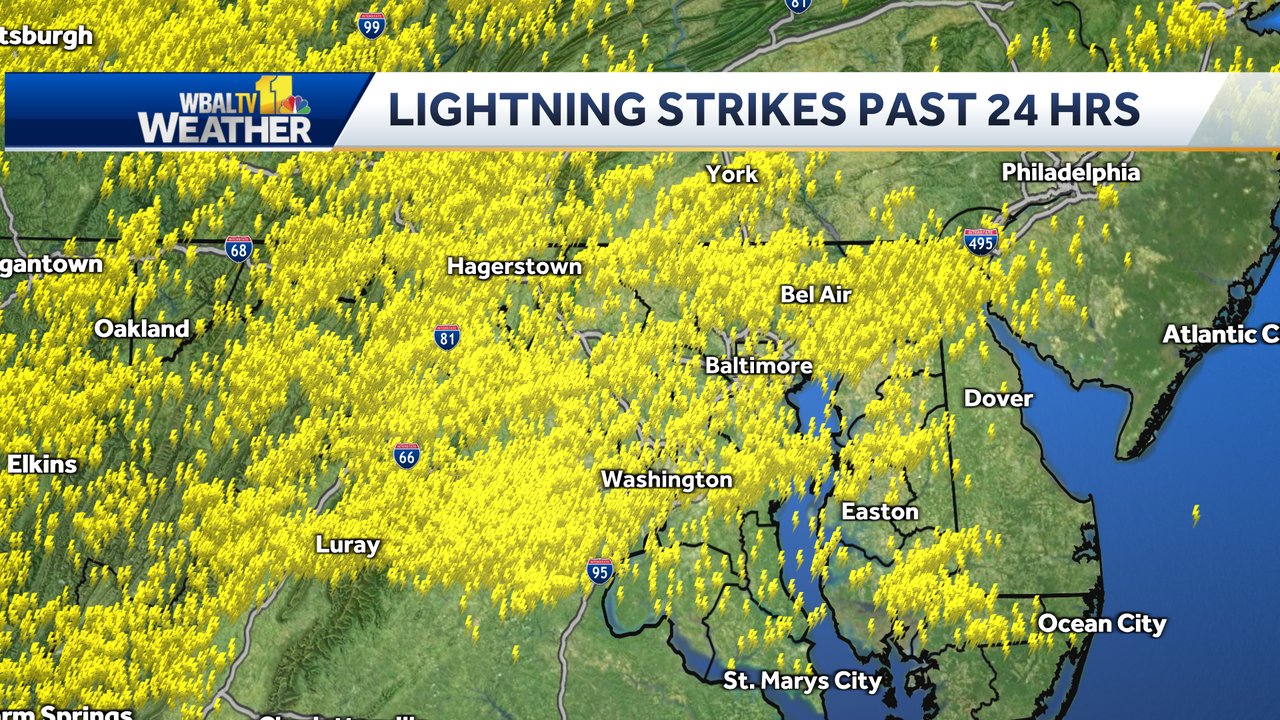
26,000 Lightning Strikes Yesterday

Lightning is an escalating concern in climate science. On July 16, 26,000 lightning bolts were recorded in our region, resulting in the death of an archery instructor and multiple injuries to children during an activity in New Jersey.


Lightning is the leading cause of wildfires in North America, including those in Canada that are driving unhealthy air quality across large parts of both Canada and the U.S.

There is an escalating climate feedback loop: increasingly intense and frequent wildfires release vast amounts of carbon dioxide and black carbon into the atmosphere, accelerating climate change. This, in turn, creates hotter, drier, and stormier conditions that increase both lightning frequency and wildfire risk. The cycle is self-reinforcing—each wildfire not only worsens the climate crisis but also sets the stage for more fires.

While the striking sunsets during wildfire season may appear beautiful, they are the visible scars of a system in distress. Wildfires devastate ecosystems, degrade air quality, and threaten human health on a massive scale. The Canadian wildfires offer a particularly stark example. Many began with lightning strikes, but they are burning through old-growth boreal forests rooted in permafrost that was once snow-covered year-round. Now, some smolder beneath the snow as “zombie fires” through the winter, reigniting in spring.

These fires are releasing more carbon dioxide than all of Canada’s human activities combined—along with vast amounts of methane, an even more potent greenhouse gas. The permafrost that once locked away both CO₂ and methane has passed a tipping point; it will not return in our lifetimes. The warmer it gets, the faster the permafrost melts, releasing more greenhouse gases, which accelerates warming even further.

This is no longer a single feedback loop but a chain reaction: melting permafrost, methane release, intensified lightning, and expanding wildfires all feed into each other. The result is a vicious, accelerating cycle that makes each year more dangerous than the last.

The Physics of Lightning — and How Climate Change Fuels It

Lightning formation is driven in part by strong updrafts within storm cells. Climate change is altering both the frequency and intensity of these updrafts. Several physical principles explain this shift, including the Clausius–Clapeyron relation and the drag equation, both of which directly influence climate dynamics.

As the atmosphere warms, it can hold about 7% more water vapor per degree Celsius. This increase produces larger raindrops and a greater number of them per square foot. Since momentum is defined as p = m × v (mass × velocity), heavier raindrops carry more momentum. When the rain falls, part of this momentum is transferred to the surrounding air, intensifying wind turbulence and strengthening updrafts—conditions that can further amplify lightning activity.

Mass and velocity are just part of the equation; density also plays a key role. The combination of these variables increases the intensity of flow forces. Wind and water forces scale with the square of velocity, meaning that as flow speeds increase — due to more intense heating or heavier rainfall — the damage scales accordingly. According to drag physics, force is proportional to density times the square of velocity.

For example, a 20-mile-an-hour wind exerts four times the force of a 10-mile-an-hour wind, while a 40-mile-an-hour wind exerts 16 times the force of a 10-mile-an-hour wind. At 50 miles an hour, the force is 25 times greater, and at 60 miles an hour, it’s 36 times greater than at 10 miles an hour. Now, add the density factor: water is about 800 times denser than air, so a 10-mile-an-hour water flow exerts 800 times the force of a 10-mile-an-hour wind.

As flow velocities increase due to climate change, the forces — and thus the damage — scale with the square of the velocities. While we may not know precisely how much velocities will rise with climate change, we’re already seeing the effects: overwhelmed flood and sewage systems, collapsing hillsides, and more.

Try This at Home

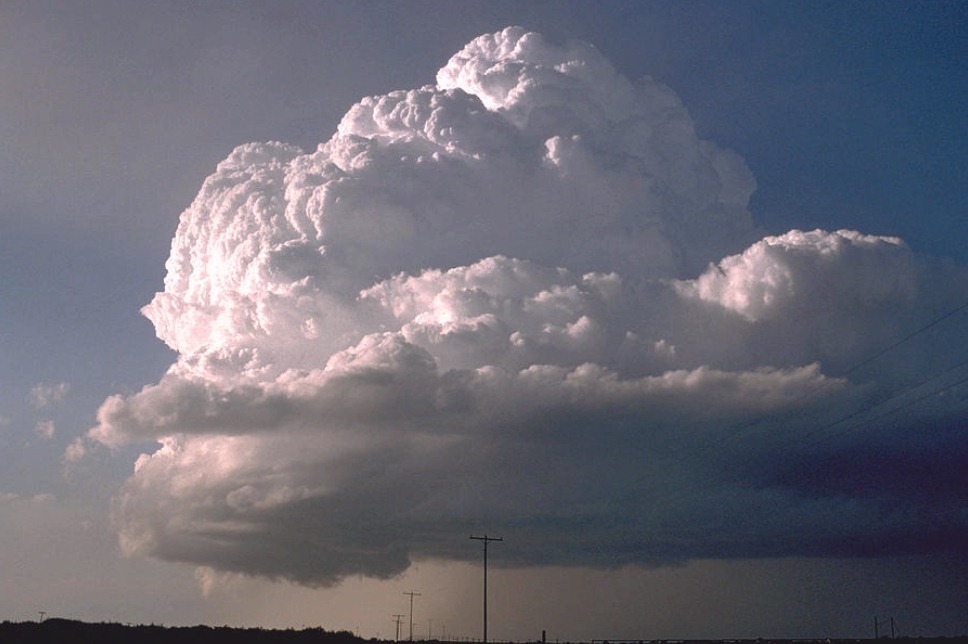
This is one of those “do-it-at-home” citizen science observations you can make for yourself. During heavy rainfall, the friction between the falling raindrops and the surrounding air can generate powerful updrafts, fueling the formation of supercells. These storms reveal themselves through the rapid growth of massive, darkening, and increasingly ominous clouds—towering higher and blacker with each passing minute. Known as Cumulonimbus clouds (Cb), often called thunderheads,, they build the immense energy that is ultimately released as lightning. 

You’ve likely seen this formation before. 

Supercell Formation
Supercell Formation
Supercell Thunderstorms
  • A supercell is a highly organized, long-lived thunderstorm with a deep, persistent, rotating updraft. This rotating updraft is called a mesocyclone.
  • Supercells are the most intense and potentially dangerous type of thunderstorm, responsible for most strong tornadoes, large hail, damaging winds, and flash flooding.
  • The rotating updraft, or mesocyclone, is what distinguishes a supercell from a regular thunderstorm. Wind shear causes horizontal vorticity, which is then tilted into a vertical column by the updraft, creating the rotation. 


Conclusion

That old saying, “You have better odds of being struck by lightning,” is becoming truer by the day.

On the bright side, the same momentum transfer from friction that helps create supercells and other deadly, extreme storm systems also keeps rain from killing you. This upward transfer of energy causes raindrops to reach terminal velocity, preventing them from accelerating endlessly—and eventually penetrating your roof and skull.

Learn more about the physics of Violent Rain

Tipping points and feedback loops drive the acceleration of climate change. When one tipping point is breached and triggers others, the cascading collapse is known as the Domino Effect.

The Climate Crisis: Violent Rain | Deadly Humid Heat | Extreme Weather Events | Insurance | Trees Deforestation | Air Pollution | Rising Sea Level | Food and Water | Updates

The Human Induced Climate Change Experiment