bookmark_borderEconomic Survival 101: Liquidity & Long-Term Strategy

by Daniel Brouse

Capital Preservation is Survival Rule #1

Capital preservation has always been important — but in today’s economic environment, it has become absolutely critical. The phrase dominating Wall Street has been “The Wealth Effect.” Normally, the stock market and the real economy are loosely connected — the ups and downs of stock prices don’t immediately ripple through everyday life. But these aren’t normal times.

The sharp contraction in wealth is not just a stock market story anymore — it’s spreading. It’s affecting real people, real spending, and real businesses.

This is The Wealth Effect in action.

Why It Matters

When people feel poorer, they spend less — not just on luxuries, but on everything. Airline stocks, hotel chains, cruise lines, car companies, and even high-end retailers are feeling the squeeze. Discretionary spending is collapsing.

Remember: the stock market is often called a “leading indicator” — it signals where the economy is heading, not where it’s been. But right now, it’s more like a real-time broadcast of wealth destruction.

Preserving capital was the first step.

Now comes step two:

Liquidity Testing: What Good Are Assets If You Can’t Use Them?

Liquidity is a word investors throw around, but in times of crisis, liquidity becomes survival.

Liquidity simply means: How fast — and with how little friction — can you turn something into usable cash?

But here’s the catch: liquidity isn’t just theoretical. You need to test it.

Practical Liquidity Drills

  1. Bank Accounts:
    Can you access your money digitally (debit card, online transfer)?
    Can you physically withdraw it (ATMs, branch visits)?

  2. Brokerage Accounts:
    Sell a single share of stock.
    Move that money to your checking account.
    Then, physically withdraw it.

See how long that takes. Time every step. Note every fee. Every delay. Every “unexpected problem.” This is your liquidity test.

  1. Retirement Accounts:
    Try withdrawing $1. Even if there’s a penalty, learn the process now — not when you’re desperate.

  2. Alternative Assets:
    Gold: Can you sell an ounce and get cash today? Where? How?
    Bitcoin or Crypto: Can you convert $1 worth to local currency — and then get that in your hand?

  3. Physical Cash:
    Do you have enough for at least 2-4 weeks of emergency needs — but not so much that it creates storage and theft risk?

This is not paranoia. This is rehearsal. When you’re hungry, the person with practice will eat first.

Long-Term Economic Survival Planning

Liquidity is for short-term survival. But what about the long-term?

There’s an uncomfortable possibility investors need to consider: If current economic policies — particularly those championed by Trump and his allies — stay in place, we could be heading toward intentional dollar devaluation.

Trump has openly said he favors a weaker dollar to juice exports and reduce debt burdens. That sounds fine on cable news. But in the real world, a falling dollar means your savings buy less and less — possibly very quickly.

What Happens If The Dollar Weakens Dramatically?

In that environment, capital preservation shifts from holding dollars to holding value — and that’s a very different skillset.

But each alternative comes with its own risks:

Asset Challenge
Gold Heavy, hard to store, risk of theft
Bitcoin Not physical, depends on electricity/internet, no intrinsic value
Real Estate Illiquid, maintenance costs, tax exposure
Commodities (Food/Fuel) Perishable, storage issues, not scalable
Foreign Currencies Complex, geopolitical risks
Precious Metals (Silver, Platinum) Similar to gold, but less portable

Bottom Line: Adapt or Lose

→ First, protect your assets. Preserve what you have.
→ Second, test your liquidity. Don’t assume. Verify.
→ Third, begin developing an exit strategy from the dollar — not out of fear, but out of discipline.

This is Economic Survival 101.

The people who survive economic storms are not always the richest. They’re the most prepared, the most adaptable, and the most liquid.

Are you?

RESOURCES:

Capital Preservation

Trumpenomics: The Decline of the US

bookmark_borderTariff Theater: Trump’s Economic War on the World — Including Penguins

by Daniel Brouse
April 5, 2025

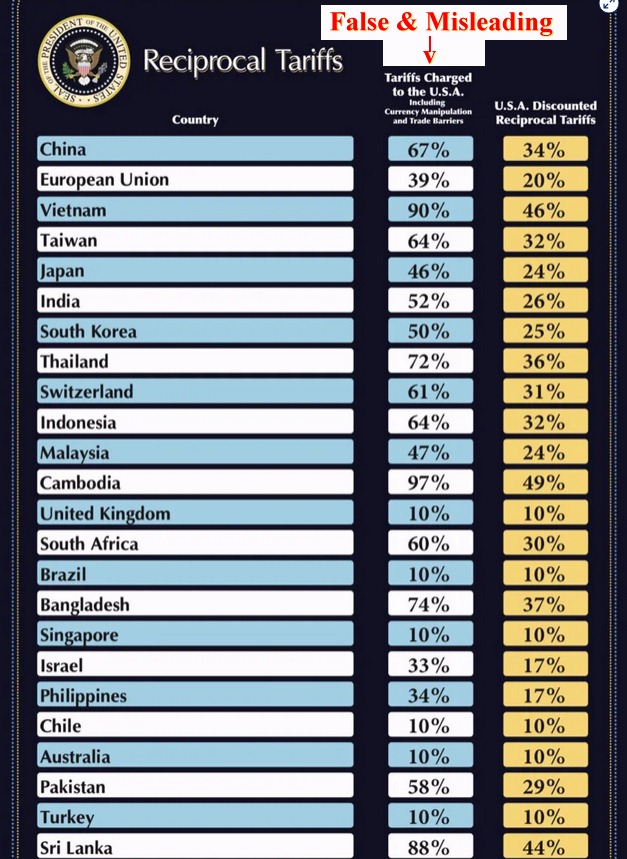
The tariffs announced on what Trump dubbed “Liberation Day” featured a chart titled Tariffs Charged to the U.S.A., purporting to show the crushing rates foreign countries supposedly impose on American goods. But these numbers were completely fabricated — not grounded in trade data or economic principles. Instead, Trump’s team appears to have confused tariffs with trade deficits, using the size of the U.S. trade deficit with each country to create a fictional “tariff rate.”

This fundamental misunderstanding is emblematic of much of Trump’s economic worldview — one that runs counter to decades of established economic theory.

In reality, U.S. trade deficits have long benefited American consumers by allowing access to cheaper foreign goods, while the strength of the dollar fuels domestic spending. The U.S. essentially trades inexpensive paper money for real goods — raw materials, finished products, and even luxury items — while foreign countries often recycle those dollars back into U.S. Treasuries, helping finance America’s debt.

Yet Trump continues to argue that trade deficits equal theft.

Trump’s Trade Narrative: Economic Victimhood

In speeches and social media posts in April 2025, Trump has claimed:

“For too long, corrupt foreign leaders — even from the poorest countries — have slapped massive tariffs on American products while flooding our markets with their goods, often duty-free. It’s been a one-sided scam — they’ve taken our jobs, stolen our industries, and destroyed entire American communities.”

Trump alleges that:

  • Foreign tariffs make U.S. farmers and manufacturers uncompetitive.

  • The U.S. has been the “piggy bank” of the world.

  • New tariffs will “level the playing field” and force “fair deals.”

Supporters call this economic justice. Critics call it economic vandalism.  Wall Street has already rebranded “Liberation Day” as The Big Mistake.

Tariff Theater: Trump’s Economic War on the World — Including Penguins

Lesotho: Targeting One of the World’s Poorest Nations

Among the most striking examples of Trump’s tariff policy is Lesotho — a tiny, landlocked kingdom in southern Africa and one of the poorest nations in the world. The U.S. has imposed a staggering 50% tariff on its exports — the highest tariff applied to any sovereign country.

Lesotho’s economy depends heavily on textiles exported under the African Growth and Opportunity Act (AGOA), and diamond exports to the U.S. are another vital revenue source. In 2024, Lesotho exported about $237 million in goods to the U.S.

The 50% tariff threatens to devastate Lesotho’s fragile economy, potentially wiping out thousands of jobs in a country where nearly half the population already lives below the poverty line.

Tariffs on Penguins: Heard and McDonald Islands

In perhaps the most surreal example of Trump’s trade war, a 10% tariff was imposed on the Heard and McDonald Islands — an uninhabited Australian territory in the sub-Antarctic populated only by penguins and seals.

With no human population and no meaningful exports, the islands became a global punchline. Memes exploded online mocking Trump’s “penguin tariff” as the ultimate symbol of policy absurdity.

Economic Isolation — and Global Backlash

Trump’s tariff strategy has triggered a wave of retaliatory measures, trade disruptions, and diplomatic backlash. Analysts warn that the U.S. is rapidly isolating itself from global supply chains, allies, and markets.

The economic damage has been swift and severe — not just abroad but at home, as higher consumer prices, supply shortages, and market instability ripple through the U.S. economy.

As one critic put it:

“Trump didn’t just pick a trade war — he picked one with the entire planet.”


RESOURCES:

Dumbfoundingly Dumb Tariffs

China Hits Back: 84% Tariff Targets U.S. Farmers First

Protectionism 101: Trump Economics

Capital Preservation During Trumpenomics

bookmark_borderDump Trump: Buy and Hold Doesn’t Hold Anymore

by Daniel Brouse
April 4, 2025

For those relying solely on the “buy and hold” investment strategy, it’s time to seriously question whether that approach still makes sense. I’ve previously advised a gradual and orderly withdrawal from the equities market in preparation for what I’ve referred to as “Trump 2.0.”

Is it too late to get out? No — but time may be running out. If you haven’t lived through times like these before, you need to understand that many companies won’t survive what’s coming. Whatever wealth you still have invested in stocks could ultimately go to zero. For many, it will.

A perfect historical example is Donald J. Trump (DJT) Hotels & Casinos in the late 1990s. As part of a business ethics experiment, I created a “widows and orphans” portfolio that included DJT stock. Trump later drove the company into bankruptcy, and shareholders — many of them retirees and low-risk investors — lost everything. The stock’s value went to zero and never came back.

History has a way of repeating itself for those who forget its lessons. Now is the time to rethink blind faith in any one strategy — especially one built for a different era.

Capital Preservation During Trumpenomics

Trumpenomics: The Decline of the US

bookmark_borderInterest Rate Confusion: What Does the Trade War Mean for Interest Rates?

by Daniel Brouse
April 4, 2025

The answer: it’s complicated — and highly uncertain.

In the short term, interest rates have dropped to recent lows. Markets are increasingly pricing in the likelihood of a recession due to escalating global trade tensions. As a result, expectations are rising that the Federal Reserve may begin cutting interest rates in an attempt to cushion the economic blow and stimulate demand.

However, the medium-term outlook is far more complex. The imposition of widespread tariffs and retaliatory measures may lead to a sharp increase in prices for imported goods — especially raw materials, components, and consumer products — potentially fueling inflation. This “stagflation” scenario, where inflation rises even as growth slows, could force the Fed to reverse course and hike rates, much like it did in the wake of the COVID-19 pandemic, when interest rates surged above 9%.

On the other hand, some economists warn of a looming global depression. The combination of collapsing international trade, a strong dollar, weakening demand for commodities (including a sharp drop in oil prices), and plummeting consumer confidence could trigger a sustained deflationary spiral. In this case, we may see interest rates fall even further — possibly to near-zero levels — similar to what occurred during the Great Depression.

In short, the global trade war has created an unprecedented economic paradox. Whether we face inflation, deflation, or both in alternating waves, one thing is clear: interest rates are likely to be volatile and unpredictable for the foreseeable future.

Trumpenomics: The Decline of the US

bookmark_borderMarket Chaos: VIX Surges 39.56% Amid Escalating Trade War Fears

by Daniel Brouse
April 3, 2025

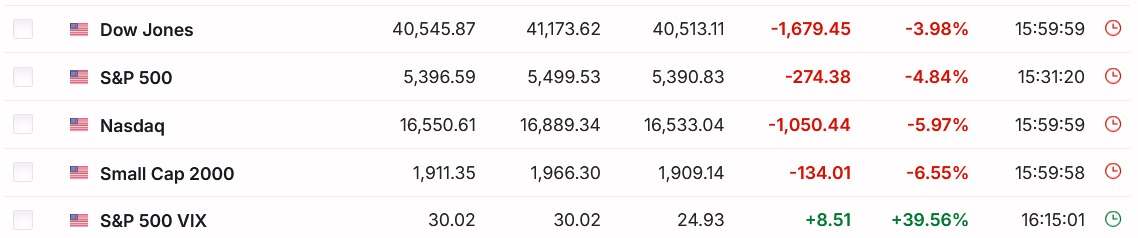
The VIX (Volatility Index), often called the “fear gauge,” measures market expectations of volatility over the next 30 days. A 39.56% spike in the VIX is highly significant and suggests extreme uncertainty and fear among investors.

Key Implications of Today’s VIX Surge:

  1. Panic Selling & Market Turmoil – A spike of this magnitude indicates that investors are rushing to hedge against potential losses, suggesting widespread concern about the stability of financial markets.

  2. Unprecedented Trade War Concerns – This surge likely reflects the market’s reaction to the sweeping tariffs imposed by the U.S. on 180 countries, which could disrupt global supply chains, increase costs, and slow economic growth.

  3. Historical Context – The last time the VIX saw a spike of this scale was during major economic crises, such as the 2008 financial meltdown or the COVID-19 market crash in 2020. This suggests that investors believe the current trade war could have long-term recessionary effects.

  4. Liquidity & Credit Market Strain – Rising volatility can impact corporate borrowing, investment decisions, and economic confidence, potentially leading to tighter credit conditions and reduced consumer spending.

  5. Potential for a Bear Market – If this volatility persists, it could mark the beginning of a prolonged downturn similar to what was seen in the Great Depression or the 2008 financial crisis.

In short, today’s 39.56% VIX spike signals extreme fear and uncertainty, with investors bracing for significant market disruptions due to escalating trade tensions.

VIX Surges 39.56% Amid Escalating Trade War Fears


  • On April 2, President Trump unilaterally declared a trade war against the rest of the world, imposing protectionist tariffs on 180 countries—calling it “Liberation Day.” This action was taken without congressional approval and in direct violation of the Constitution.
  • US Vs. Everyone
    A coalition of world leaders from diverse countries has come together to voice concerns about the U.S. tariff policies under President Donald Trump. Countries such as Australia, Canada, Japan, New Zealand, Taiwan, South Korea, and other major U.S. partners have not only condemned Trump’s actions but have also voiced the potential economic damage these tariffs could inflict. These nations are now positioning themselves to take collective action, highlighting a shift in the global dynamic that risks isolating the U.S. on the international stage.European Commission President Ursula von der Leyen was particularly vocal in her remarks, emphasizing the far-reaching consequences of these trade policies. “The consequences will be dire for millions of people around the world. We are ready to respond,” she declared, signaling Europe’s readiness to take countermeasures. The European Union, along with other countries, is preparing a coordinated response to the tariffs, which could include retaliatory tariffs. economic sanctions, and boycotts.


Trumpenomics: The Decline of the US

bookmark_borderTrade War!

by Daniel Brouse
April 3, 2025

On April 2, President Trump unilaterally declared a trade war against the rest of the world, imposing protectionist tariffs on 180 countries — calling it “.” This action was taken without congressional approval and in direct violation of the Constitution.

A coalition of world leaders from diverse countries has come together to voice concerns about the U.S. tariff policies under President Donald Trump. Their unified response signals the growing unease surrounding the economic fallout of the administration’s trade strategies, with several nations, including some of the U.S.’s closest allies, standing in opposition.

Countries such as Australia, Canada, Japan, New Zealand, Taiwan, South Korea, and other major U.S. partners have not only condemned Trump’s actions but have also voiced the potential economic damage these tariffs could inflict. These nations are now positioning themselves to take collective action, highlighting a shift in the global dynamic that risks isolating the U.S. on the international stage.

European Commission President Ursula von der Leyen was particularly vocal in her remarks, emphasizing the far-reaching consequences of these trade policies. “The consequences will be dire for millions of people around the world. We are ready to respond,” she declared, signaling Europe’s readiness to take countermeasures. The European Union, along with other countries, is preparing a coordinated response to the tariffs, which could include retaliatory tariffs. economic sanctions, and boycotts.

The economic impact of these tariffs is already being felt globally. While the U.S. has claimed that the trade war aims to level the playing field and protect American workers, the reality is that the tariffs have resulted in price hikes for goods ranging from electronics to agricultural products. U.S. businesses that rely on imported components have seen their production costs rise, and consumers are beginning to feel the pinch as goods become more expensive.

In response to these actions, other global powers are turning to alternative trade agreements, deepening their economic ties with each other while distancing themselves from the U.S. For example, the European Union and China have accelerated discussions on trade deals, and regional partnerships in Asia are being strengthened in response to the U.S.’s shift toward protectionism.

Countries that are traditionally aligned with the U.S. are now facing a tough choice. The diplomatic and economic fallout from the ongoing trade war is forcing them to re-evaluate their relationships with the U.S., and many are beginning to look for ways to mitigate the risks posed by the tariffs. For instance, Canada has signaled that it will seek greater market access in Europe, while Japan is exploring opportunities to diversify its trading partners beyond the U.S.

On April 4, 2025, China announced the imposition of a 34% tariff on all imports from the United States, effective April 10. This action was taken in direct response to the U.S.’s recent implementation of tariffs on Chinese goods. In addition to the tariffs, China has placed over two dozen American companies on export control and corporate blacklists, further escalating trade tensions between the two nations. These measures represent significant steps in the ongoing trade dispute, signaling a deepening of economic tensions

While the long-term effects of this trade war are still uncertain, the immediate reality is clear: a broad coalition of nations is taking a stand against the tariffs and is preparing for a future where the U.S. is increasingly isolated on the global economic stage. The global economy, already grappling with the fallout from the COVID-19 pandemic, now faces the added challenge of navigating a more fragmented and unpredictable trade environment.

As the U.S. continues down its path of protectionism, the rest of the world is responding with a unified front, signaling a seismic shift in global trade dynamics and the economic future of many nations.

The markets have not experienced anything like this since the Great Depression due to the unprecedented combination of extreme tariffs, global economic isolation, and retaliatory trade measures. While previous economic downturns, including the Great Recession of 2008, were triggered by financial crises, the current situation is unique in that it is a government-induced trade war that is disrupting global commerce on a scale not seen in nearly a century.

Key Parallels to the Great Depression

  1. Massive Tariffs and Global Retaliation
    The Smoot-Hawley Tariff Act of 1930 is widely blamed for exacerbating the Great Depression by imposing steep tariffs on over 20,000 imported goods, triggering retaliatory tariffs from U.S. trading partners. This led to a collapse in global trade, deepening the economic downturn. The current tariff war echoes this historic mistake, as sweeping new U.S. tariffs are provoking strong countermeasures from other nations, disrupting supply chains, and reducing economic activity.

  2. Economic Isolation of the U.S.
    Just as the U.S. turned inward during the Great Depression, today’s aggressive tariff policies have caused world leaders to unite in isolating the U.S. economically. Countries that were once major U.S. trading partners, including allies like Canada, Japan, and the European Union, are now forging alternative trade agreements that exclude the U.S., reducing American influence in global markets.

  3. Collapse in Global Trade and Manufacturing
    During the Great Depression, world trade plummeted by over 60% due to protectionist policies. The current trade war is causing similar disruptions. Supply chains that have taken decades to build are being dismantled almost overnight as businesses struggle with rising costs, supply shortages, and lost access to foreign markets. Global manufacturing indices are already showing contraction, reminiscent of the sharp declines seen in the early 1930s.

  4. Stock Market Freefall
    While the stock market crashed in 1929 due to speculation and economic instability, the current market decline is fueled by trade uncertainty and rising fears of a deep recession. Investors are witnessing a bear market unlike any in modern history, with volatility levels spiking as corporations issue warnings about declining profits, supply shortages, and increased costs.

  5. Skyrocketing Unemployment Risks
    In the aftermath of the Great Depression, U.S. unemployment soared to 25%, largely due to a collapse in demand and international trade. While today’s employment figures remain strong, major industries, including agriculture, manufacturing, and retail, are now at risk due to the trade war’s impact. Farmers, for example, are already struggling under retaliatory tariffs, and companies dependent on imported goods are being forced to raise prices or cut jobs. If this trend continues, the economy could slide into a severe recession, pushing unemployment higher.

  6. Collapse in Business Investment
    Just like in the early 1930s, businesses today are putting investment plans on hold due to uncertainty. The uncertainty surrounding tariffs, supply chain disruptions, and potential retaliatory measures makes long-term planning nearly impossible for companies. This leads to reduced expansion, hiring freezes, and lower capital spending, all of which were key contributors to the economic stagnation of the Great Depression.

A Crisis of This Magnitude Has Not Been Seen in Nearly 100 Years

While past recessions were driven by financial collapses (such as 2008’s mortgage crisis or the dot-com bubble in 2000), this economic crisis is entirely policy-driven. The sheer scale of the tariffs, combined with global retaliation and the isolation of the U.S., has created a trade collapse not seen since the 1930s. If history is any guide, the consequences could be severe, with prolonged economic hardship, market instability, and lasting damage to U.S. credibility in global trade.

The Great Depression vs. The Climate Crisis: Why the Stock Market May Never Recover


Trump’s Sector-Specific Tariffs

Trumpenomics: The Decline of the US

bookmark_borderFighting a Mean Bear Market in a Trade War

by Daniel Brouse
April 3, 2025

Today, one of the stock market indices officially entered into bear market territory. A bear market is typically defined as a decline of 20% or more from recent highs in a broad market index, such as the Russell 2,000 Small-cap stocks. This downturn signals a shift in investor sentiment, where pessimism takes hold, and uncertainty about the future of the economy can lead to widespread selling.

Bear markets are often triggered by a combination of factors, including economic slowdowns, tightening monetary policy, rising interest rates, or geopolitical instability. These market conditions can cause investors to lose confidence in the future earnings potential of companies, leading to a sell-off in stocks. During a bear market, investors may be more risk-averse, seeking safer investments like bonds or cash.

While bear markets can be unsettling, they are a normal part of the market cycle, and historically, markets have eventually recovered. However, the duration and severity of a bear market can vary, and it is difficult to predict when the downturn will end.

This bear market is likely to be different from any in the last 100 years, largely due to the unique circumstances surrounding the ongoing trade war and its ripple effects throughout the global economy.

  1. Global Supply Chain Disruptions: Unlike past bear markets, this one is heavily influenced by the disruption of global supply chains caused by tariffs, trade restrictions, and geopolitical tensions. The trade war, particularly between the U.S. and China, has led to higher costs for many goods, impacting not only international trade but also domestic industries. Many companies that rely on cheap imported goods, materials, or components are seeing increased costs, which is affecting profitability and, in turn, stock prices. This is something we’ve rarely seen on such a global scale in previous bear markets.

  2. Tariffs and Inflationary Pressures: The trade war has imposed significant tariffs on goods, especially in industries like technology, automotive, and agriculture. These tariffs can increase the price of consumer goods and production costs, leading to inflationary pressures. While inflation is a typical concern during economic slowdowns, the added complexity of tariffs exacerbates these pressures and could delay or hinder any potential recovery. The impact of tariffs on key industries, such as tech, also adds a new layer of uncertainty to the market.

  3. Longer Recovery Period: In past bear markets, the recovery often came when the economy and investor confidence began to rebound. However, in this case, the ongoing trade war and the potential for further escalations suggest that the recovery might be slower and more prolonged. Trade wars can create lasting disruptions in markets, and tariffs can remain in place for an extended period, creating an environment of uncertainty and volatility that may delay the return to positive growth.

  4. Unprecedented Economic and Political Uncertainty: The combination of economic factors, such as the tariffs imposed under the trade war, with political instability and tensions, makes this bear market distinct. Past bear markets, such as those caused by the 2008 financial crisis, were primarily driven by financial imbalances and market speculation. The current bear market, however, is being heavily influenced by trade policies that have widespread geopolitical implications, adding a layer of complexity that investors have not faced before on such a scale.

  5. Global Impact of Protectionism: The trade war has led to a rise in protectionist policies around the world, which could lead to a reshaping of international trade relationships. Unlike previous bear markets, the trade war could result in long-term shifts in global trade patterns, with countries looking to secure more self-sufficiency or diversify their supply chains away from traditional partners. This can create added volatility as industries adapt to new market dynamics.

In conclusion, while bear markets are a natural part of economic cycles, the ongoing trade war adds unprecedented complexity to the situation. The disruption of global trade, inflationary pressures, and extended uncertainty may make this bear market more unique and prolonged compared to those seen in the past 100 years. The outcome will likely depend on how governments and businesses adapt to this new era of trade tensions, protectionism and most importantly — a trade war.

Trade War!

Over the past 24 hours, a diverse group of world leaders has voiced concerns about the tariff policies and united to isolate the U.S. on the global stage. Countries from around the world, including some of America’s closest allies such as Australia, Canada, Japan, New Zealand, Taiwan, South Korea, and other major U.S. partners, have condemned President Donald Trump’s actions. European Commission President Ursula von der Leyen stated, “The consequences will be dire for millions of people around the world. We are ready to respond.”

The Great Depression vs. The Climate Crisis: Why the Stock Market May Never Recover


Trump’s Sector-Specific Tariffs

Trumpenomics: The Decline of the US

bookmark_borderHow Tariffs on Guitars and Pianos Could Impact the Next Generation of Musicians

by Daniel Brouse
April 3, 2025

An economist just referenced Little Richard to illustrate how tariffs might impact young musicians. Little Richard, known for his energetic vocals and piano playing, also had a band called “The Upsetters,” and while he wasn’t primarily a guitarist, he had notable guitarists in his band, including Jimi Hendrix. Due to tariffs on guitars, the next “Little Richard Band” may not be able to afford a starter instrument, potentially depriving future generations of groundbreaking artists.

The new tariffs will significantly impact the price of pianos, depending on their country of origin and the materials used in their construction. Many pianos, especially more affordable models, are imported from China, and if tariffs are imposed on Chinese-made pianos or parts, the price for consumers could rise. With the proposed tariffs on China totaling up to 114%, the cost of Chinese-made pianos could increase substantially. Additionally, pianos from countries like Japan, South Korea, and Indonesia face substantial tariff increases. Additionally, labor shortages and increased shipping costs resulting from tariffs on freight could further drive up piano prices. Retaliatory tariffs from other countries could disrupt the supply chain for piano parts or finished products, potentially making American-made pianos more expensive. It’s likely that both imported and domestically produced pianos could become much more expensive due to these tariffs.

The imposition of tariffs on countries that supply musical instruments and their components—particularly China, Canada, Mexico, and the EU—along with tariffs on wood, metal, and electronics, raises production costs for manufacturers, resulting in higher retail prices for consumers, including for starter guitars and other musical instruments. The combined taxes could exceed 100%, potentially leading to a halt in imports of more affordable instruments. This, in turn, would make it harder for young musicians to access the tools they need to start their musical journey, potentially limiting the next generation of groundbreaking artists.


Trump’s Sector-Specific Tariffs

Trumpenomics: The Decline of the US

bookmark_borderLiberation (From Your Money) Day: Largest Tax Increase in History

April 2, 2025

On April 2, 2025, President Donald Trump announced a series of new tariffs under the “Liberation Day” initiative, targeting multiple countries and sectors. The key measures include:​

  • Universal Tariff: A minimum 10% tariff on all U.S. imports. ​

  • Country-Specific Tariff Examples:

    • China: 34% tariff on imports. Although challenging to calculate precisely, this appears to bring the total tax on imports from China to 165% (updated). It also remains unclear whether the tax on EVs will now rise to 265%.

    • Taiwan: 32% tariff on imports. Taiwan’s semiconductors are currently exempt; however, the U.S. administration is still evaluating the possibility of imposing tariffs of up to 100% on Taiwanese chips and related electronic devices.
    • European Union: 20% tariff on imports.

    • Japan: 24% tariff on imports. ​

    • Vietnam: 46% tariff on imports. ​

    • United Kingdom: 10% tariff on all goods. ​

    • Canada: 25% tariff on goods, with a 10% tariff specifically on energy products. ​

    • Mexico: 25% tariff on all products. ​

    • Australia: Tariffs imposed on beef exports to the U.S., citing Australia’s ban on American beef due to mad cow disease concerns.

There are at least 180 country-specific tariffs, in addition to sector-specific tariffs on industries such as automobiles, steel, and aluminum. Calculating the total sales tax impact requires complex assessments, factoring in tariffs on individual components, the country of origin for each part, and any additional sector-based levies. This layered tariff structure makes it difficult for businesses to accurately predict final costs and pricing for imported goods, especially since most products contain some imported materials. For example, 55% of fresh fruits and 32% of fresh vegetables consumed in the U.S. are imported, meaning the price of a salad could rise by 45%. In Pennsylvania, where there is a 6% sales tax, the new tariffs on a purchase from China could result in a total sales tax of 172%, including the state’s 6%. If it’s an electric vehicle (EV), the tax could reach 272%. Another estimate suggests that the cost of lumber for new construction could rise by $25,000. Most drywall comes from Mexico or China, so this would add a substantial tax burden. Metals, such as aluminum, steel, and copper, are also being taxed on a sector basis, adding to the overall cost. All of these factors are likely to double the cost of building a home.

Tariff Theater: Trump’s Economic War on the World — Including Penguins

Tariff Theater: Trump’s Economic War on the World — Including Penguins

The tariffs announced on what Trump dubbed “Liberation Day” featured a chart titled Tariffs Charged to the U.S.A., purporting to show the crushing rates foreign countries supposedly impose on American goods. But these numbers were completely fabricated — not grounded in trade data or economic principles. Instead, Trump’s team appears to have confused tariffs with trade deficits, using the size of the U.S. trade deficit with each country to create a fictional “tariff rate.”

This fundamental misunderstanding is emblematic of much of Trump’s economic worldview — one that runs counter to decades of established economic theory.

In reality, U.S. trade deficits have long benefited American consumers by allowing access to cheaper foreign goods, while the strength of the dollar fuels domestic spending. The U.S. essentially trades inexpensive paper money for real goods — raw materials, finished products, and even luxury items — while foreign countries often recycle those dollars back into U.S. Treasuries, helping finance America’s debt.

Yet Trump continues to argue that trade deficits equal theft.

Trump’s Trade Narrative: Economic Victimhood

In speeches and social media posts in April 2025, Trump has claimed:

“For too long, corrupt foreign leaders — even from the poorest countries — have slapped massive tariffs on American products while flooding our markets with their goods, often duty-free. It’s been a one-sided scam — they’ve taken our jobs, stolen our industries, and destroyed entire American communities.”

Trump alleges that:

  • Foreign tariffs make U.S. farmers and manufacturers uncompetitive.

  • The U.S. has been the “piggy bank” of the world.

  • New tariffs will “level the playing field” and force “fair deals.”

Supporters call this economic justice. Critics call it economic vandalism.

Lesotho: Targeting One of the World’s Poorest Nations

Among the most striking examples of Trump’s tariff policy is Lesotho — a tiny, landlocked kingdom in southern Africa and one of the poorest nations in the world. The U.S. has imposed a staggering 50% tariff on its exports — the highest tariff applied to any sovereign country.

Lesotho’s economy depends heavily on textiles exported under the African Growth and Opportunity Act (AGOA), and diamond exports to the U.S. are another vital revenue source. In 2024, Lesotho exported about $237 million in goods to the U.S.

The 50% tariff threatens to devastate Lesotho’s fragile economy, potentially wiping out thousands of jobs in a country where nearly half the population already lives below the poverty line.

Tariffs on Penguins: Heard and McDonald Islands

In perhaps the most surreal example of Trump’s trade war, a 10% tariff was imposed on the Heard and McDonald Islands — an uninhabited Australian territory in the sub-Antarctic populated only by penguins and seals.

With no human population and no meaningful exports, the islands became a global punchline. Memes exploded online mocking Trump’s “penguin tariff” as the ultimate symbol of policy absurdity.

Economic Isolation — and Global Backlash

Trump’s tariff strategy has triggered a wave of retaliatory measures, trade disruptions, and diplomatic backlash. Analysts warn that the U.S. is rapidly isolating itself from global supply chains, allies, and markets.

The economic damage has been swift and severe — not just abroad but at home, as higher consumer prices, supply shortages, and market instability ripple through the U.S. economy.

As one critic put it:

“Trump didn’t just pick a trade war — he picked one with the entire planet.”

Full List of Countries Hit With Reciprocal Tariffs

Country Tariffs Charged to the U.S.A. (%) U.S.A. Discounted Reciprocal Tariffs (%)
China 67 34
European Union 39 20
Vietnam 90 46
Taiwan 64 32
Japan 46 24
India 52 26
South Korea 50 25
Thailand 72 36
Switzerland 61 31
Indonesia 64 32
Malaysia 47 24
Cambodia 97 49
United Kingdom 10 10
South Africa 60 30
Brazil 10 10
Bangladesh 74 37
Singapore 10 10
Israel 33 17
Philippines 34 17
Chile 10 10
Australia 10 10
Pakistan 58 29
Turkey 10 10
Sri Lanka 88 44
Colombia 10 10
Peru 10 10
Nicaragua 36 18
Norway 30 15
Costa Rica 17 10
Jordan 40 20
Dominican Republic 10 10
United Arab Emirates 10 10
New Zealand 20 10
Argentina 10 10
Ecuador 12 10
Guatemala 10 10
Honduras 10 10
Madagascar 93 47
Myanmar (Burma) 88 44
Tunisia 55 28
Kazakhstan 54 27
Serbia 74 37
Egypt 10 10
Saudi Arabia 10 10
El Salvador 10 10
Côte d’Ivoire 41 21
Laos 95 48
Botswana 74 37
Trinidad and Tobago 12 10
Morocco 10 10
Papua New Guinea 15 10
Malawi 34 17
Liberia 10 10
British Virgin Islands 10 10
Afghanistan 49 10
Zimbabwe 35 18
Benin 10 10
Barbados 10 10
Monaco 10 10
Syria 81 41
Uzbekistan 10 10
Republic of the Congo 10 10
Djibouti 10 10
French Polynesia 10 10
Cayman Islands 10 10
Kosovo 10 10
Curaçao 10 10
Vanuatu 44 22
Rwanda 10 10
Sierra Leone 10 10
Mongolia 10 10
San Marino 10 10
Antigua and Barbuda 10 10
Bermuda 10 10
Eswatini 10 10
Marshall Islands 10 10
Saint Pierre and Miquelon 99 50
Saint Kitts and Nevis 10 10
Turkmenistan 10 10
Grenada 10 10
Sudan 10 10
Turks and Caicos Islands 10 10
Aruba 10 10
Montenegro 10 10
Saint Helena 15 10
Kyrgyzstan 10 10
Yemen 10 10
Saint Vincent and the Grenadines 10 10
Niger 10 10
Saint Lucia 10 10
Nauru 59 30
Equatorial Guinea 25 13
Iran 10 10
Libya 61 31
Samoa 10 10
Guinea 10 10
Timor-Leste 10 10
Montserrat 10 10
Chad 26 13
Mali 10 10
Algeria 59 30
Oman 10 10
Uruguay 10 10
Bahamas 10 10
Lesotho 99 50
Ukraine 10 10
Bahrain 10 10
Qatar 10 10
Mauritius 80 40
Fiji 63 32
Iceland 10 10
Kenya 10 10
Liechtenstein 73 37
Guyana 76 38
Haiti 10 10
Bosnia and Herzegovina 70 35
Nigeria 27 14
Namibia 42 21
Brunei 47 24
Bolivia 20 10
Panama 10 10
Venezuela 29 15
North Macedonia 65 33
Ethiopia 10 10
Ghana 17 10
Moldova 61 31
Angola 63 32
Democratic Republic of the Congo 22 11
Jamaica 10 10
Mozambique 31 16
Paraguay 10 10
Zambia 33 17
Lebanon 10 10
Tanzania 10 10
Iraq 78 39
Georgia 10 10
Senegal 10 10
Azerbaijan 10 10
Cameroon 22 11
Uganda 20 10
Albania 10 10
Armenia 10 10
Nepal 10 10
Sint Maarten 10 10
Falkland Islands 82 41
Gabon 10 10
Kuwait 10 10
Togo 10 10
Suriname 10 10
Belize 10 10
Maldives 10 10
Tajikistan 10 10
Cabo Verde 10 10
Burundi 10 10
Guadeloupe 10 10
Bhutan 10 10
Martinique 10 10
Tonga 10 10
Mauritania 10 10
Dominica 10 10
Micronesia 10 10
Gambia 10 10
French Guiana 10 10
Christmas Island 10 10
Andorra 10 10
Central African Republic 10 10
Solomon Islands 10 10
Mayotte 10 10
Anguilla 10 10
Cocos (Keeling) Islands 10 10
Eritrea 10 10
Cook Islands 10 10
South Sudan 10 10
Comoros 10 10
Kiribati 10 10
Sao Tome and Principe 10 10
Norfolk Island 58 29
Gibraltar 10 10
Tuvalu 10 10
British Indian Ocean Territory 10 10
Tokelau 10 10
Guinea-Bissau 10 10
Svalbard and Jan Mayen 10 10
Heard and McDonald Islands 10 10
Reunion 73 37

Dumbfoundingly Dumb Tariffs

China Hits Back: 84% Tariff Targets U.S. Farmers First

EU’s Trade Counterattack: Tariffs Designed to Target U.S. Red States


On April 2, President Trump unilaterally declared a trade war against the rest of the world, imposing protectionist tariffs on 180 countries — calling it “Liberation Day.” This action was taken without congressional approval and in direct violation of the Constitution.

Trump’s Sector-Specific Tariffs

Trumpenomics: The Decline of the US

bookmark_borderTrump’s Record Breaking Tax Increase

by Daniel Brouse
April 1, 2025

Republicans and Libertarians Implement the Largest Tax Increase in U.S. History

Despite historically opposing taxation in all forms—often citing the Boston Tea Party as a foundational principle—Republicans and Libertarians are now enacting what amounts to the largest tax increase in U.S. history. Their longstanding stance that taxation justifies revolution contrasts sharply with their current policies, which impose an unprecedented financial burden on American households.

Historic Impact: Tariffs as the Largest Regressive Tax Increase

According to Treasury Secretary Peter Navarro, the newly announced tariffs will constitute the largest tax increase since 1951. As a percentage of GDP, they could rank as the most significant tax hike in U.S. history. However, what sets these tariffs apart is their extreme regressivity—placing a disproportionate burden on lower-income households.

Unlike progressive tax policies that scale with income, tariffs function as a hidden tax embedded in the cost of goods. Lower- and middle-income Americans, who spend a larger share of their earnings on essential goods, will bear the brunt of these price increases. As a result, this policy will exacerbate economic inequality while contradicting the long-standing anti-tax rhetoric of its proponents.

This shift represents not only a fundamental contradiction in ideology but also a high-stakes economic gamble that could fuel inflation, reduce consumer spending, and destabilize the economy. The only historical parallel to such a sweeping and regressive tax increase is the economic collapse that followed the protectionist policies of the Great Depression.


Trump’s Sector-Specific Tariffs

Trumpenomics: The Decline of the US