bookmark_borderTrump’s Trade War Shows His Economic Ignorance—and Americans Will Pay the Price

Trump’s global trade war continues to reveal his profound lack of understanding of business, economics, and the realities of global trade. His repeated claims that trade deficits are a threat to the United States not only demonstrate economic illiteracy but actively harm the nation’s prosperity, standard of living, and even life expectancy.

Trade Deficits: A Sign of Economic Strength, Not Weakness
In the context of the U.S. economy, trade deficits are not inherently bad; they often reflect high domestic demand, a strong dollar, and a healthy investment environment. Americans benefit from trade deficits through access to lower-cost goods and services, allowing them to spend and invest more in other areas of the economy. Moreover, dollars sent abroad through trade deficits often return to the U.S. through foreign investments in Treasury securities, real estate, and American businesses, helping to keep interest rates lower and fueling economic growth.

Ignoring the Full Picture: Goods vs. Services
Trump’s misguided focus on goods trade deficits ignores the modern reality that services are a critical component of global trade. When accounting for services, the United States is a net exporter, with sectors like banking, finance, intellectual property, entertainment, and technology bringing in substantial foreign income. China, in particular, is a major importer of U.S. services, including financial services, legal expertise, and consulting.

Trump’s single-minded tariff strategy threatens these valuable service relationships by provoking retaliation, undermining trust, and increasing the risk for American firms operating abroad.

Real-World Consequences: Retaliation and Risk Abroad
The consequences of Trump’s needless trade wars are already surfacing. Fears about the safety of American employees abroad have been reignited after reports that an employee of Wells Fargo was banned from leaving China, potentially in retaliation amid rising U.S.-China trade tensions. These retaliatory measures can disrupt the flow of business, undermine investment certainty, and endanger American citizens, while accomplishing nothing to improve domestic manufacturing or employment.

Trump Doesn’t Hold All the Cards—And This Isn’t a Game
Trump’s rhetoric implies that the U.S. can dictate global trade unilaterally, failing to understand that trade is an interconnected system, not a zero-sum card game. Other nations hold leverage, including the ability to restrict U.S. firms, block exports, or retaliate through other channels, harming U.S. consumers, businesses, and workers.

Economic Consequences Americans Will Feel

  • Higher consumer prices as tariffs act as taxes on Americans.

  • Weakened U.S. service exports due to retaliation and disrupted relationships.

  • Increased risk for American firms abroad, reducing investment and expansion opportunities.

  • Reduced global cooperation, harming climate and security partnerships critical for long-term stability.

In the end, Trump’s approach will not bring back lost manufacturing jobs, will not improve American wages, and will not strengthen the U.S. economy. Instead, it is a reckless gamble that ignores economic fundamentals, endangers American workers and businesses, and diminishes the nation’s global standing.

Trumpenomics: The Decline of the US

bookmark_borderWhy My Pool Is Losing Water—and What It Reveals About Climate Change

by Daniel Brouse
July 19, 2025

One of the most fundamental principles in science is observation. For the past couple of decades, I have observed the evaporation rate from my swimming pool steadily increasing. While it may seem like a small backyard inconvenience, it’s a clear, everyday confirmation of our warming climate.

As global temperatures rise, the atmosphere’s capacity to hold moisture increases. According to the Clausius-Clapeyron relation, for every 1°C (1.8°F) increase in temperature, the air can hold about 7% more water vapor. Many summer days now run 10° above historical averages, meaning the air can hold around 70% more water than it once did. That’s why my pool is losing water faster and faster each year.

This isn’t just about pools; it’s about our drinking water, food systems, and safety. Higher evaporation rates are depleting reservoirs and other freshwater sources, shifting water into the atmosphere, and often returning it in damaging ways. With a warmer, wetter atmosphere, we are seeing a marked increase in the intensity and frequency of extreme rainfall events. The United States has already seen record numbers of so-called “1,000-year” and “500-year” floods this year, with nearly every state experiencing damaging flash floods.

This increase in flash flooding is part of a vicious cycle: water evaporates from critical freshwater sources, the air holds more moisture, and storms unleash torrents of rain that infrastructure cannot handle, causing catastrophic flooding while failing to replenish water sources in sustainable, usable ways.

So, to all the folks in New Jersey cleaning up after yet another round of flash floods: if you happen to come across my pool water, I’d appreciate it if you could send it back.

In the meantime, we must recognize that these local observations are snapshots of a much larger global system in crisis—one that demands rapid, systemic change if we hope to stabilize water resources, protect communities, and adapt to the climate realities already unfolding around us.

* Our climate model — incorporating complex social-ecological feedback loops within a dynamic, non-linear system — projects that global temperatures could rise by up to 9°C (16.2°F) within this century. This far exceeds earlier estimates, which predicted a 4°C rise over the next thousand years, and signals a dramatic acceleration of warming.

Tipping points and feedback loops drive the acceleration of climate change. When one tipping point is breached and triggers others, the cascading collapse is known as the Domino Effect.

The Climate Crisis: Violent Rain | Deadly Humid Heat | Extreme Weather Events | Insurance | Trees Deforestation | Air Pollution | Rising Sea Level | Food and Water | Updates

The Human Induced Climate Change Experiment

bookmark_borderThree Economic Shocks Hitting You This Month: Health, Nutrition, and Education Under Attack

by Daniel Brouse
July 19, 2025

Starting this month, three interconnected economic impacts will begin hitting households and communities across the country—especially in rural areas—threatening health, nutrition, and education in ways that will ripple through local economies.

1. Health: Rising Insurance Costs and Rural Hospital Closures
Key parts of the Affordable Care Act are expiring, with average health insurance premiums expected to rise by 15%. This increase won’t just burden individuals with private insurance; it will trigger a chain reaction as more people are priced out of coverage, increasing the number of uninsured. Hospitals and health systems—particularly rural facilities already operating on thin margins—will face additional financial strain as uncompensated care rises. Simultaneously, reductions in Medicaid funding will further destabilize rural healthcare infrastructure, with many hospitals expected to close, leaving large geographic areas without critical health services and further harming local economies.

2. Nutrition: SNAP Cuts and Community Health
Millions of recipients of SNAP (food stamp) benefits will lose eligibility this month due to new policy changes and funding cuts. The immediate consequence will be increased food insecurity, with families struggling to meet basic nutritional needs. Poor nutrition leads to chronic health issues, which will add to the strain on already overburdened healthcare systems, particularly in rural areas. Additionally, the reduction in SNAP spending will remove millions of dollars in local food purchases, hurting grocery stores, farmers markets, and small businesses in these communities, creating a cascading economic slowdown.

3. Education: Public Broadcasting and the Erosion of Free Education
Congressional rescission of previously allocated funds will slash federal support for public broadcasting in the Philadelphia region and beyond. Local stations like WHYY (Philadelphia’s NPR and PBS affiliate), WDIY (Lehigh Valley Public Radio), WPSU (State College region), and WXPN (Philadelphia’s nonprofit public radio station) will face significant funding cuts, reducing their ability to deliver free educational programming, independent news, and arts coverage. This is more than just a cultural loss; it undermines local education efforts, diminishes civic engagement, and removes crucial platforms for local artists and scientists. Communities already struggling with underfunded educational systems, particularly in rural areas, will be hardest hit by these cuts.

The Broader Ripple Effects
These three impacts are deeply interconnected:

  • Reduced nutrition leads to increased healthcare needs.

  • Reduced access to education and independent media weakens community knowledge, civic participation, and local arts ecosystems.

  • Healthcare and nutrition crises drive local economic contraction, business closures, and further community decline.

Musicians, educators, healthcare workers, and small business owners are already raising alarms. As these cuts take effect, the strain will move beyond individuals to entire communities, deepening inequality and accelerating the decline of rural America’s economic and cultural vitality.

Trumpenomics: The Decline of the US

The Human Induced Climate Change Experiment

bookmark_borderWalk the Poop Before You Talk the Transition

By Daniel Brouse

July 18, 2025

Now that many people are finally waking up to the collapse of the climate and social systems, I hope my background as an economist focused on risk management can help illuminate the path forward. Ideally, we would have followed sound risk management decades ago to avoid reaching this crisis point. But here we are, and so we must shift to Plan B: A New Economy.

The Real Sustainability Test

Everyone talks about sustainability, but few understand what it requires at the most basic level: the ability to feed yourself and manage your waste without destroying your ecosystem.

Before we can credibly debate carbon markets, degrowth, or circular economies, we need to prove we can survive a single day in a truly self-sustaining way:

✅ Feed yourself for a day using methods that do not degrade soil, water, or biodiversity and that could scale for years.
✅ Secure clean water in a way that is sustainable long-term, without polluting the source or requiring massive energy inputs.
✅ Dispose of your own waste safely, ensuring you do not contaminate soil or water, or create disease vectors that harm your community or yourself.

The single most important thing you can do: go the distance.
Bury your waste far away from where you live, eat, drink, and grow your food. This simple action protects your water, your soil, and your health—more effectively than any untested high-tech solution.

Sustaining yourself for a day sounds simple until you try it. So, first do it. Once you can do it for a day, you need to scale it to weeks, months, and years—and then to your family, friends, and community.

The Hardest Part: Human Waste

Here’s the hard truth: the most important part of transitioning to a new economy is how you handle your poop.

Everyone wants to talk about electrification, AI, and green jobs, but no one wants to talk about the sanitation systems that prevent us from killing ourselves and our environment. Yet if we cannot manage our waste sustainably, any talk of a “sustainable economy” is hollow.

Before you join debates about transitioning to a post-carbon world, demonstrate you can literally walk the poop before you talk the transition.

Why Indigenous Practices Matter

This is not a new challenge. Indigenous communities across North America managed to live sustainably for millennia, disposing of human waste in ways that protected water sources, preserved soil health, and maintained community health.

They:

  • Buried waste away from water sources and habitation areas.

  • Moved camps periodically to prevent overloading any one location.

  • Used natural cover materials (soil, ash, plant matter) to accelerate decomposition and reduce contamination risks.

These practices were not merely cultural—they were effective, practical risk management strategies rooted in a deep understanding of land stewardship.

A Thought Experiment (That Should Become Reality)

If you think your solutions will save the world, start by proving you can:

  • Feed yourself for one day, sustainably.

  • Manage your waste for one day, sustainably.

  • Scale it to your family and community.

If your solutions fail at this basic level, they will fail at the societal level too. Conversely, if you can solve these fundamental challenges, you will be equipped with the grounded knowledge and humility needed to help design a real transition strategy for a collapsing climate and society.

Indigenous American Indians

Here is a clear, evidence-based overview on how many Indigenous American Indian communities traditionally managed human waste to avoid contaminating soil and water:

1️⃣ General Principles

  • Burial at a distance
    Waste was typically buried away from camps and water sources, using small personal latrines or digging cat holes, ensuring pathogens did not enter water supplies.

  • Site rotation
    Camps and waste sites were moved periodically, preventing concentration of waste in one location.

  • Choice of location
    Latrines were placed:

    • Downwind from camps

    • Far from streams, springs, or rivers (commonly 100+ feet)

    • On higher or well-drained ground to reduce runoff risk.


2️⃣ Region-Specific Practices

  • Plains & Nomadic Tribes (e.g., Lakota, Comanche)

    • Dug shallow pits when staying in one place.

    • Covered waste with soil and natural materials.

    • Moved frequently, allowing the environment to naturally decompose waste.

  • Southwest (e.g., Hopi, Pueblo)

    • In permanent villages, used designated latrine areas outside the living quarters.

    • Some used ash or sand to cover waste, aiding desiccation and reducing odors and flies.

  • Pacific Northwest & Woodlands

    • Waste was buried away from water sources, critical in forested or riparian zones.

    • Camps were often near water, but latrines were carefully sited at a safe distance and covered.

  • Arctic & Subarctic (e.g., Inuit)

    • In frozen conditions, waste was sometimes frozen and disposed of in designated snow areas.

    • In summer, waste was placed far from freshwater sources.


3️⃣ Why This Protected Soil and Water

✅ Burial with soil isolated pathogens from insects and animals.

✅ Distance from water reduced fecal contamination, protecting drinking and fishing sources.

✅ Organic decomposition in small, distributed quantities allowed soil microbes and sunlight to neutralize pathogens naturally.

✅ Rotation and mobility prevented soil overload and nutrient leaching in a single location.


4️⃣ Important Context

  • While Indigenous practices varied widely across regions and tribes, their relationship with land emphasized maintaining the health of water and soil.

  • There was no single universal method, but core principles of burial, distance, and rotation were nearly universal.

  • The single most important thing you can do: go the distance.
    Bury your waste far away from where you live, eat, drink, and grow your food. This simple action protects your water, your soil, and your health—more effectively than any high-tech solution you don’t actually use.

Trumpenomics: The Decline of the US

The Human Induced Climate Change Experiment

bookmark_borderFiscal Policy in the Chaos: How America’s Current Path Accelerates Economic Collapse

by Daniel Brouse
July 17, 2025

I’ve been getting a lot of great questions about two nonlinear, dynamic systems: climate collapse and economic collapse. Just as the climate system consists of interconnected subsystems, so too does the world economy. This chapter examines how current U.S. fiscal policy is a critical driver within this chaotic system, accelerating the collapse of the American and, by extension, the global economy.

The Three Subsystems Driving Collapse

The current fiscal policy can be viewed as three interacting subsystems, each contributing to an exponential acceleration of collapse:

1️⃣ Anti-Immigration and Mass Deportation

Capitalism depends on population growth. The U.S. has an aging population and declining birth rates, making mass immigration essential for economic stability. Without it, the economy faces a death spiral: fewer workers, reduced consumer demand, lower tax revenues, and collapsing support for programs like Medicare and Social Security.

For the past five years, immigration has accounted for 80% of U.S. GDP growth. Ending immigration and pursuing mass deportation will likely be the first domino to fall, triggering lower demand, labor shortages, and the unraveling of America’s fragile social safety net. It will also accelerate the adoption of AI and robotics, ensuring these jobs never return.

2️⃣ Tariffs: The Hidden Consumption Tax

Tariffs are regressive consumption taxes that fall hardest on the poor and middle class. Consumer spending drives the U.S. economy, and rising prices from tariffs reduce purchasing power, creating a feedback loop of lower demand, declining business revenues, layoffs, and economic contraction.

Tariffs marketed as “protecting American jobs” are, in practice, a stealth tax on every consumer, funding unrelated policy goals while weakening the core engine of economic growth.

3️⃣ The Big Ugly Bill: A Bomb Under the Economy

Trump’s “One Big Beautiful Bill (Act)” is not a strategy for energy independence or economic growth; it is a reckless gamble trading long-term planetary and economic stability for a mirage of short-term gains.

Key impacts of the bill include:

  • Gutting science and promoting climate collapse, starting with the destabilization of the insurance industry as climate disasters become uninsurable.

  • Slashing Medicaid, pushing the cost of health care back onto the private sector and individuals, straining household finances, and increasing medical bankruptcies.

  • Spending billions on anti-immigration enforcement and mass deportations, resulting in a net economic loss while worsening demographic decline.

  • Creating unsustainable debt: The bill will add trillions to the deficit, creating a positive feedback loop:

    • Massive government borrowing drives up interest rates.

    • Rising rates increase the cost of borrowing.

    • Higher interest payments balloon the deficit further.

    • In addition, the Big Ugly Act quietly raised the debt ceiling by trillions, removing near-term borrowing constraints. Almost immediately after the bill’s passage, the U.S. Treasury announced it would issue $1 trillion in new debt to replenish its cash reserves and finance the growing deficit. This surge of Treasury issuance will flood the market with short-term bills and long-term bonds, further driving up interest rates as the government competes for scarce capital. Higher rates, in turn, increase the cost of servicing the debt, creating a self-reinforcing cycle of borrowing and rising interest expenses that threaten the long-term sustainability of the U.S. economy.

Is it really trillions of dollars billions?

The debt ceiling was increased by $5 trillion, raising the limit from around $36 trillion to approximately $41 trillion under the “One Big Beautiful Bill” reconciliation package.

Following the legislation’s passage, the Treasury immediately began issuing new debt. Recent projections estimate between $900 billion and $1.6 trillion in short-term T‑bill issuances over the next 18 months—as part of a total issuance effort likely exceeding $1 trillion.

So yes, it’s literally trillions—a $5 trillion increase in borrowing authority, with over $1 trillion already entering the market to fund current operations and replenish Treasury balances.

Already in 2025, the U.S. is spending $1 trillion annually on interest payments, surpassing the entire military budget and many key domestic spending programs. This rising interest burden crowds out critical investments, hollowing out the nation’s capacity to address infrastructure, education, and climate resilience.

A Cascade of Self-Destruction: How Protectionism, Corruption, and Extremism Are Undermining America
This disastrous fiscal policy, rooted in protectionism and white nationalism, is compounded by a cascade of other self-destructive actions. Among these are the covert funding of a proxy war in Gaza by the notorious GHF—a private militia corporation established under Trump in Delaware—which uses U.S. citizens in combat roles actively participating in acts of genocide. It also includes the systematic undermining of the Federal Reserve’s independence, attacks on the rule of law and the justice system, rampant conflicts of interest, nepotism, and entrenched corruption. Pathological lying, racism, and bigotry further erode America’s credibility, while the administration’s pattern of acting as an unreliable trading partner and military ally weakens longstanding alliances and global stability.

A System Destabilizing Itself

The combined effect of anti-immigration policies, regressive tariffs, and unsustainable debt expansion is creating a self-reinforcing system of instability. Each subsystem interacts with the others, amplifying the risk of a systemic collapse of the U.S. economy, which as a major subsystem of the global economy, could trigger a worldwide crisis.

As with the climate system, feedback loops in the economic system accelerate collapse once tipping points are crossed. Without fundamental policy changes, these current fiscal choices may mark the end of U.S. exceptionalism and push the world into a prolonged period of instability and decline.

The Big Beautiful Bill Shell Game: Funding Deportation While Killing Growth

Trumpenomics: The Decline of the US

The Human Induced Climate Change Experiment

bookmark_borderHiding the Evidence: The Trump Administration’s Latest Move to Bury Climate Data

by Daniel Brouse
July 17 2025

The Trump administration on Monday took yet another step to make it harder for Americans to find major, legally mandated scientific assessments detailing how climate change is endangering the nation and its people.

Earlier this month, official government websites that hosted the authoritative, peer-reviewed National Climate Assessments went dark. These sites provide critical information to state and local governments and the public about what to expect in their communities from a warming world and how best to adapt. At the time, the White House claimed NASA would host the reports to comply with the 1990 law requiring their publication, and NASA initially said it would comply.

On Monday, however, NASA abruptly reversed course, announcing it would no longer host the reports.

“The USGCRP [the government program that oversees and used to host the report] met its statutory requirements by presenting its reports to Congress. NASA has no legal obligations to host globalchange.gov’s data,”
— NASA Press Secretary Bethany Stevens, in an email.

This means no data from the National Climate Assessment or the government science office that coordinated the work will be available on NASA’s website.

This reversal is particularly striking because, on July 3, NASA publicly stated:

“All preexisting reports will be hosted on the NASA website, ensuring continuity of reporting.”

Now, that promise has been broken.

“This document was written for the American people, paid for by taxpayers, and it contains vital information we need to keep ourselves safe in a changing climate, as the disasters that continue to mount demonstrate so tragically and clearly,” said Katharine Hayhoe, Texas Tech climate scientist, chief scientist at The Nature Conservancy, and co-author of several National Climate Assessments.

By systematically removing public access to critical climate data, the Trump administration is not only ignoring scientific reality but actively undermining the tools Americans need to protect themselves from worsening climate impacts. This calculated opacity comes at a time when the frequency of extreme weather, floods, wildfires, and heatwaves is escalating rapidly, making timely, science-based adaptation planning more essential than ever.

The Great Race Against Time: Trump vs. Mother Nature

Donald Trump has consistently dismissed the science of climate change, calling it a hoax and dismissing policies aimed at addressing it as “The Green New Scam.” His repeated use of the phrase “Drill, Baby, Drill” symbolizes an energy policy that prioritizes fossil fuel extraction over sustainable alternatives. These policies have only intensified the climate crisis, posing severe risks not only to the environment but to the global economy as well. If left unchecked, Donald Trump’s economic and environmental policies will render the planet uninhabitable for future generations.

The evidence is irrefutable: climate change is accelerating at an alarming pace, and the associated costs—both economic and human—are rising exponentially. Immediate, decisive action is essential to reduce greenhouse gas emissions and prevent further environmental collapse. Our updated climate model, now grounded in chaos theory and incorporating complex social-ecological factors within a dynamic, non-linear framework, predicts that global temperatures could increase by up to 9°C this century—far surpassing the previous estimate of a 4°C rise over the next thousand years. Such extreme warming will render large portions of the planet uninhabitable within this century, threatening the stability of ecosystems and human societies alike.

The Human Induced Climate Change Experiment

Trumpenomics: The Decline of the US

bookmark_borderLightning and Climate Change

by Daniel Brouse
July 17, 2025

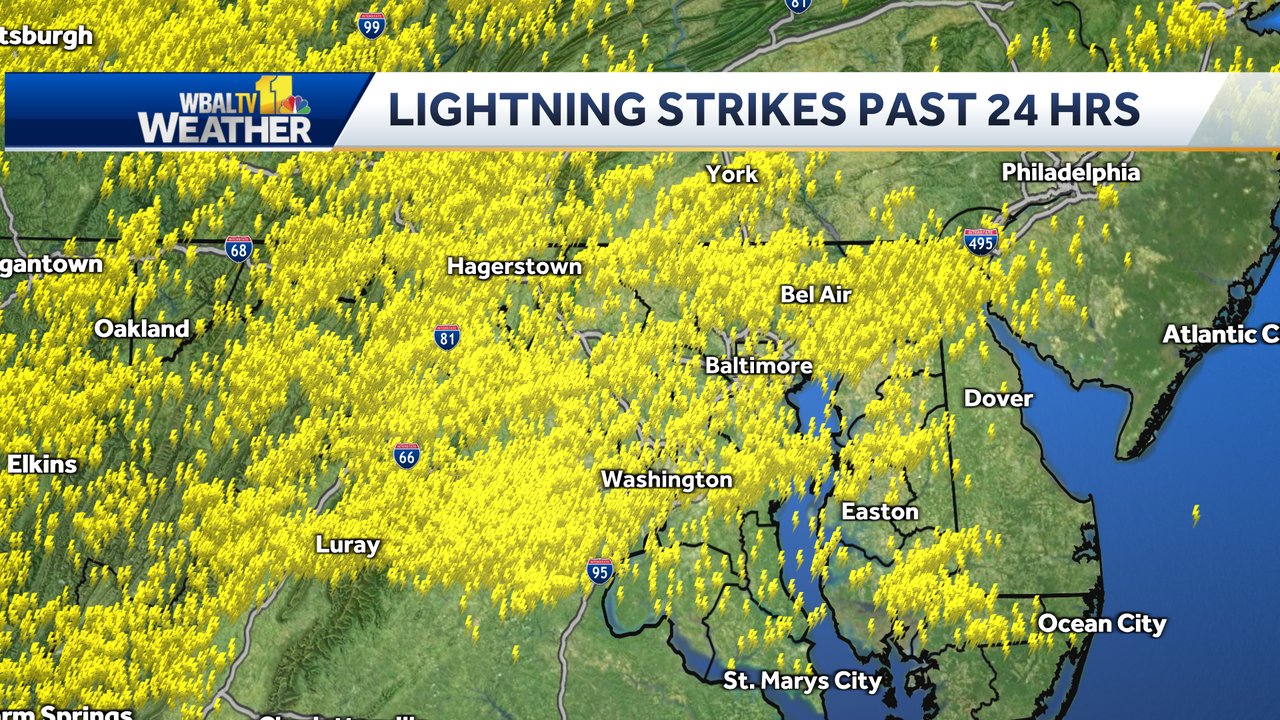
26,000 Lightning Strikes Yesterday

Lightning is an escalating concern in climate science. On July 16, 26,000 lightning bolts were recorded in our region, resulting in the death of an archery instructor and multiple injuries to children during an activity in New Jersey.


Lightning is the leading cause of wildfires in North America, including those in Canada that are driving unhealthy air quality across large parts of both Canada and the U.S.

There is an escalating climate feedback loop: increasingly intense and frequent wildfires release vast amounts of carbon dioxide and black carbon into the atmosphere, accelerating climate change. This, in turn, creates hotter, drier, and stormier conditions that increase both lightning frequency and wildfire risk. The cycle is self-reinforcing—each wildfire not only worsens the climate crisis but also sets the stage for more fires.

While the striking sunsets during wildfire season may appear beautiful, they are the visible scars of a system in distress. Wildfires devastate ecosystems, degrade air quality, and threaten human health on a massive scale. The Canadian wildfires offer a particularly stark example. Many began with lightning strikes, but they are burning through old-growth boreal forests rooted in permafrost that was once snow-covered year-round. Now, some smolder beneath the snow as “zombie fires” through the winter, reigniting in spring.

These fires are releasing more carbon dioxide than all of Canada’s human activities combined—along with vast amounts of methane, an even more potent greenhouse gas. The permafrost that once locked away both CO₂ and methane has passed a tipping point; it will not return in our lifetimes. The warmer it gets, the faster the permafrost melts, releasing more greenhouse gases, which accelerates warming even further.

This is no longer a single feedback loop but a chain reaction: melting permafrost, methane release, intensified lightning, and expanding wildfires all feed into each other. The result is a vicious, accelerating cycle that makes each year more dangerous than the last.

The Physics of Lightning — and How Climate Change Fuels It

Lightning formation is driven in part by strong updrafts within storm cells. Climate change is altering both the frequency and intensity of these updrafts. Several physical principles explain this shift, including the Clausius–Clapeyron relation and the drag equation, both of which directly influence climate dynamics.

As the atmosphere warms, it can hold about 7% more water vapor per degree Celsius. This increase produces larger raindrops and a greater number of them per square foot. Since momentum is defined as p = m × v (mass × velocity), heavier raindrops carry more momentum. When the rain falls, part of this momentum is transferred to the surrounding air, intensifying wind turbulence and strengthening updrafts—conditions that can further amplify lightning activity.

Mass and velocity are just part of the equation; density also plays a key role. The combination of these variables increases the intensity of flow forces. Wind and water forces scale with the square of velocity, meaning that as flow speeds increase — due to more intense heating or heavier rainfall — the damage scales accordingly. According to drag physics, force is proportional to density times the square of velocity.

For example, a 20-mile-an-hour wind exerts four times the force of a 10-mile-an-hour wind, while a 40-mile-an-hour wind exerts 16 times the force of a 10-mile-an-hour wind. At 50 miles an hour, the force is 25 times greater, and at 60 miles an hour, it’s 36 times greater than at 10 miles an hour. Now, add the density factor: water is about 800 times denser than air, so a 10-mile-an-hour water flow exerts 800 times the force of a 10-mile-an-hour wind.

As flow velocities increase due to climate change, the forces — and thus the damage — scale with the square of the velocities. While we may not know precisely how much velocities will rise with climate change, we’re already seeing the effects: overwhelmed flood and sewage systems, collapsing hillsides, and more.

Try This at Home

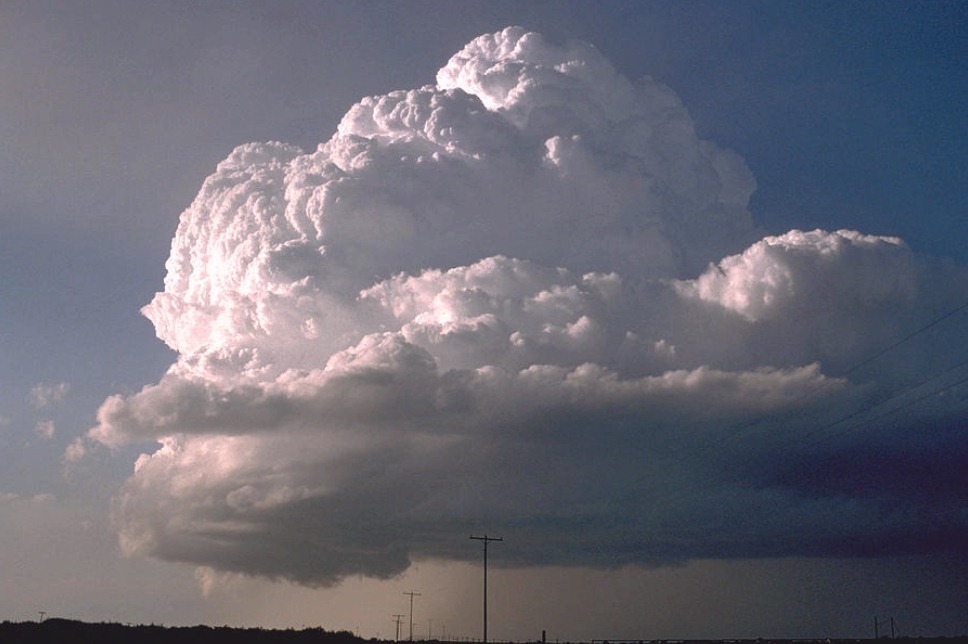
This is one of those “do-it-at-home” citizen science observations you can make for yourself. During heavy rainfall, the friction between the falling raindrops and the surrounding air can generate powerful updrafts, fueling the formation of supercells. These storms reveal themselves through the rapid growth of massive, darkening, and increasingly ominous clouds—towering higher and blacker with each passing minute. Known as Cumulonimbus clouds (Cb), often called thunderheads,, they build the immense energy that is ultimately released as lightning. 

You’ve likely seen this formation before. 

Supercell Formation
Supercell Formation
Supercell Thunderstorms
  • A supercell is a highly organized, long-lived thunderstorm with a deep, persistent, rotating updraft. This rotating updraft is called a mesocyclone.
  • Supercells are the most intense and potentially dangerous type of thunderstorm, responsible for most strong tornadoes, large hail, damaging winds, and flash flooding.
  • The rotating updraft, or mesocyclone, is what distinguishes a supercell from a regular thunderstorm. Wind shear causes horizontal vorticity, which is then tilted into a vertical column by the updraft, creating the rotation. 


Conclusion

That old saying, “You have better odds of being struck by lightning,” is becoming truer by the day.

On the bright side, the same momentum transfer from friction that helps create supercells and other deadly, extreme storm systems also keeps rain from killing you. This upward transfer of energy causes raindrops to reach terminal velocity, preventing them from accelerating endlessly—and eventually penetrating your roof and skull.

Learn more about the physics of Violent Rain

Tipping points and feedback loops drive the acceleration of climate change. When one tipping point is breached and triggers others, the cascading collapse is known as the Domino Effect.

The Climate Crisis: Violent Rain | Deadly Humid Heat | Extreme Weather Events | Insurance | Trees Deforestation | Air Pollution | Rising Sea Level | Food and Water | Updates

The Human Induced Climate Change Experiment

bookmark_borderTipping Points, Feedback Loops, and the Accelerating Collapse of Earth’s Climate Systems

By Daniel Brouse and Sidd Mukherjee
July 16, 2025

Introduction

Research and development incorporating complex social-ecological feedback loops within a dynamic, non-linear system is profoundly challenging. A small window into this complexity can be seen in the interactions among the Albedo Feedback Loop, Brown Carbon Feedback Loop, Freshwater–AMOC Disruption Loop, Permafrost–Methane Feedback Loop, Amazon Rainforest Dieback Feedback Loop, Sudden Sea Level Rise Pulses (“Cork Release” Events), Hydroclimate Whiplash, and Arctic Sea Ice Feedback.

Combined Consequences

These interlinked, reinforcing feedbacks can:

  • Drive non-linear, abrupt climate shifts.

  • Cause sudden sea level rise pulses (feet per year for consecutive years).

  • Collapse the AMOC, disrupting weather, food systems, and rainfall patterns.

  • Trigger Amazon dieback, increasing global CO₂.

  • Result in mass displacement, famine, and water crises.

Tipping Points Igniting a Domino Effect

We knew tipping points would eventually trigger self-sustaining feedback loops in the climate system—and now, they have arrived. I was prepared for that part.

What I could not fully envision was how rapidly the interplay among these tipping points would ignite a domino effect—so, so fast.

Now, I see it clearly: the nonlinear, dynamic dance of economic, physical, and ecological systems unfolding in real time. Abstract models are transforming into undeniable, measurable reality before our eyes.

Cascading System Failures

The breakdown of climate subsystems will not follow a smooth, linear decline. Instead, as one subsystem fails, it accelerates the failure of others, creating cascading, compounding effects across the entire climate system.

There are too many interconnected subsystems to list exhaustively, but consider one example:
The collapse of the AMOC slows ocean circulation, leading to hotter tropics and a warmer Arctic. This accelerates polar ice melt, causing sea levels to rise more rapidly while injecting large volumes of freshwater into the North Atlantic, further destabilizing the AMOC in a reinforcing loop.

At the same time, a disrupted climate system increases droughts in the Amazon, pushing the rainforest toward dieback and desertification. As the Amazon loses its ability to recycle rainfall and sequester carbon, it further amplifies global warming, which then accelerates ice melt, sea level rise, and AMOC collapse.

This example is just one piece of a much larger mosaic of cascading feedback loops already unfolding, shifting the climate system from a stable state to a chaotic, accelerating collapse.:

Albedo Feedback and Ice Melt

As ice melts, darker surfaces are exposed, absorbing more heat and causing further melt. Sea ice melt increases ocean heat but does not directly raise sea levels, whereas land ice melt in Greenland and Antarctica not only raises sea levels but alters ocean salinity and temperature, destabilizing the AMOC.

Greenland and Antarctica contain “corks” holding vast meltwater reservoirs. Once these corks break, sudden sea level pulses of 1–3 feet per year for multiple years could occur, with unpredictable impacts on the AMOC and global climate systems.

East Antarctic Ice Sheet: The Giant Unknown

The East Antarctic Ice Sheet (EAIS) holds enough ice to raise global sea levels by 170 feet if fully destabilized. Will it collapse slowly over centuries or could warming oceans and ice cliff instabilities trigger rapid collapse, displacing massive water volumes and causing tsunamis? We do not know, but early destabilization within the next 100 years is increasingly likely.

Sidd Mukherjee’s Perspective: Context and Probabilities

Sidd Mukherjee frames it this way:

“Mmmm… how long is ‘ever’? I don’t think there is enough ice globally to do more than ~200 feet of sea level rise total.”

He estimates:

  • Greenland: Effectively lost, 100–300 years, +20 feet.

  • West Antarctica: Likely to collapse within decades to a century, +10 feet.

This implies ~20–30 feet over the next century (~2 inches/year, 10x today’s rate), with potential for “pulse” events:

“We could dawdle along at half an inch a year, then see a few years at a foot per year.”

The wildcard remains the EAIS: stable under <500 ppm CO₂ equivalents, but if destabilized, catastrophic sea level rise would follow.

What is the AMOC?

The Atlantic Meridional Overturning Circulation (AMOC), including the Gulf Stream, transports warm surface water northward and cold, dense water southward at depth, regulating regional climates, distributing heat, and driving the global nutrient cycle.

How Melting Greenland Ice Affects the AMOC

  • Freshwater Injection reduces salinity and density, inhibiting North Atlantic sinking.

  • Sea Level Rise alters pressure gradients and stratifies waters, weakening the AMOC.

  • Cooling Surface Waters from meltwater can inhibit sinking even if cooled.

  • Gravitational Redistribution from Greenland’s mass loss pulls water away toward the equator, subtly impacting current patterns.

How Antarctic Melt Impacts the AMOC Indirectly

  • Freshwater input reduces Southern Ocean salinity, altering deep water formation.

  • Global sea level rise shifts ocean stratification.

  • Gravitational effects from Antarctic melt redistribute water toward the equator.

Combined, these impacts weaken the AMOC, alter heat distribution, shift weather patterns, and create feedback loops affecting ice melt and rainfall.

How Polar Melting Accelerates Amazon Dieback

Feedback Loops in Motion

  • Albedo Effect & Ice Melt accelerate warming, leading to further ice loss.

  • AMOC Slowing disrupts rainfall patterns in the tropics, increasing Amazon drought.

  • Reduced Rainfall & Higher Temperatures stress Amazon trees, reducing transpiration and rainfall recycling.

  • Storm Pattern Changes damage forests and increase vulnerability.

  • Hydroclimate Whiplash—rapid swings between drought and heavy rain—erode soils, reduce regrowth, and increase mortality, leading to more CO₂ emissions.

The Rio Negro Case Study

The Rio Negro’s black waters, rich in dissolved organic carbon (DOC), typically aid long-term carbon sequestration as DOC is flushed to the ocean. Record-low river levels in 2023 reduced this export while exposing DOC to sunlight, increasing CO₂ emissions. The Rio Negro and Amazon Rivers now serve as a live case study for how hydroclimate whiplash, Amazon dieback, and carbon cycle disruptions interact with AMOC slowdown.

Drought → Fire → Dieback → Carbon Feedback

Drought stresses trees, increasing flammability and reducing CO₂ uptake. Fires release stored carbon, turning the Amazon from a carbon sink into a carbon source. Brown carbon from wildfires darkens snow and ice globally, accelerating melt and AMOC slowdown, feeding back into the system.

Why It Matters

The Amazon dieback is not an isolated crisis; it is tied to polar processes through atmospheric and oceanic feedback loops. Without rapid fossil fuel reduction, the interconnected:

  • Albedo feedback,

  • Ice melt and sea level rise,

  • AMOC slowdown,

  • Amazon drought-fire-carbon feedback,

will accelerate the collapse of Earth’s climate regulators, threatening global food systems, weather stability, and habitability.

The Human Induced Climate Change Experiment

bookmark_borderKey Climate Feedback Loops & Consequences

by Daniel Brouse July 16, 2025

1️⃣ Albedo Feedback Loop

  • Melting ice and snow expose darker surfaces (rock, ocean, vegetation).
  • Dark surfaces absorb more solar energy, accelerating local warming.
  • More warming causes more ice to melt, reinforcing the cycle.

Consequences:

  • Faster ice melt in Greenland, West Antarctica, mountain glaciers.
  • Increased local and global temperatures.
  • Sea level rise accelerates.

2️⃣ Brown Carbon Feedback Loop

  • Wildfires produce brown carbon (light-absorbing organic particles).
  • Brown carbon settles on ice and snow, darkening surfaces.
  • Reduces albedo, accelerating ice melt.
  • More ice melt further exposes darker surfaces (rock/ocean), reinforcing warming.

Consequences:

  • Faster Greenland and Antarctic ice sheet collapse.
  • Increased global temperatures.
  • More wildfires globally, creating additional brown carbon.

3️⃣ Freshwater–AMOC Disruption Loop

  • Melting land ice from Greenland and Antarctica releases freshwater into oceans.
  • Freshwater lowers salinity and density, slowing the AMOC (Atlantic Meridional Overturning Circulation).
  • Slower AMOC alters global heat and moisture distribution, increasing polar warming.
  • Increased polar warming drives more ice melt.

Consequences:

  • Disrupted weather patterns (droughts in Amazon, floods elsewhere).
  • Regional cooling in parts of Europe while polar regions warm.
  • Further AMOC weakening in a reinforcing loop.

4️⃣ Permafrost–Methane Feedback Loop

  • Warming thaws permafrost, releasing methane and CO₂.
  • Methane is 86x more potent than CO₂ over 20 years.
  • Released greenhouse gases accelerate warming, thawing more permafrost.

Consequences:

  • Rapid increase in atmospheric greenhouse gas concentrations.
  • Acceleration of polar and global warming.
  • Potentially abrupt climate shifts.

5️⃣ Amazon Rainforest Dieback Feedback Loop

  • Higher temperatures and droughts reduce rainfall and humidity in the Amazon.
  • Ozone and heat stress reduce photosynthesis and tree health.
  • Increased wildfires release CO₂ and brown carbon.
  • Deforestation and fires reduce rainforest water recycling, causing further drying.

Consequences:

  • Amazon shifts from carbon sink to carbon source.
  • Loss of biodiversity.
  • Increased CO₂ levels accelerate global warming.
  • Brown carbon feeds into the ice-albedo-brown carbon loop.

6️⃣ Sudden Sea Level Rise Pulses (“Cork Release” Events)

  • Greenland and Antarctica hold meltwater in subglacial and surface basins (“corks” held by ice dams and land shape).
  • When these corks fail (via hydrofracturing, glacial retreat, or collapse), sudden freshwater release into oceans can occur.

Consequences:

  • Sea level may jump 1–3 feet per year for several years, instead of millimeters per year.
  • Coastal cities (e.g., Philly, Camden, Miami, Dhaka) rapidly become uninhabitable.
  • Accelerated freshwater pulses further slow the AMOC.

7️⃣ Arctic Sea Ice Feedback

  • Loss of sea ice exposes warm, dark ocean water, absorbing heat.
  • Warmer Arctic water increases methane hydrate destabilization on shallow Arctic shelves.
  • Methane release further accelerates Arctic warming.

Consequences:

  • Disruption of the jet stream, increasing extreme weather (heat waves, polar vortex events).
  • Further ice melt and accelerated warming.

⚠️ Combined Consequences

These interlinked, reinforcing feedbacks can:
✅ Drive non-linear, abrupt climate shifts.
✅ Cause sudden sea level pulses (feet/year for consecutive years).
✅ Collapse AMOC and disrupt weather, food systems, and rainfall patterns.
✅ Trigger Amazon dieback, increasing global CO₂.
✅ Result in mass displacement, famine, and water crises.

The Human Induced Climate Change Experiment

bookmark_borderRethinking Collapse: Cascading Feedbacks

by Daniel Brouse and Sidd Mukherjee
July 16, 2025

Introduction

The Interaction of: Albedo Feedback Loop, Brown Carbon Feedback Loop, Freshwater–AMOC Disruption Loop, Permafrost–Methane Feedback Loop, Amazon Rainforest Dieback Feedback Loop, Sudden Sea Level Rise Pulses (“Cork Release” Events), Hydroclimate Whiplash, and Arctic Sea Ice Feedback

Combined Consequences

These interlinked, reinforcing feedbacks can:
* Drive non-linear, abrupt climate shifts.
* Cause sudden sea level pulses (feet/year for consecutive years).
* Collapse AMOC and disrupt weather, food systems, and rainfall patterns.
* Trigger Amazon dieback, increasing global CO₂.
* Result in mass displacement, famine, and water crises.

Research and Development Incorporating Complex Social-Ecological Feedback Loops Within a Dynamic, Non-Linear System is an extremely complex subject. A small example of this complexity can be seen in the interaction of the Albedo Feedback Loop, Brown Carbon Feedback Loop, Freshwater–AMOC Disruption Loop, Permafrost–Methane Feedback Loop, Amazon Rainforest Dieback Feedback Loop, Sudden Sea Level Rise Pulses (“Cork Release” Events), Hydroclimate Whiplash, and Arctic Sea Ice Feedback.

Lately, my deep reflection has centered on how tipping points have triggered self-sustaining feedback loops within the climate system. We knew this was coming—and now it is here. I was prepared for that part.

What I could not fully envision was how quickly the interplay of these tipping points would ignite a domino effect—so, so fast.

Now, I can see it clearly: the nonlinear, dynamic dance of economic, physical, and ecological systems in real time. This is pure math and science visibly unfolding, transforming abstract models into undeniable, measurable reality.

I’ve been reflecting further on the collapse of Atlantic currents and want to share another angle. The breakdown of these subsystems will not follow a smooth, linear decline. As one subsystem fails, it accelerates the failure of others, creating cascading, compounding effects within the climate system. There are too many interconnected subsystems to count, but let’s consider one example involving AMOC collapse and sea level rise.

We can start with the “albedo” feedback loop: as ice melts, it exposes darker surfaces, which absorb more heat, warming the surface further, and causing even more ice to melt. When this happens with sea ice, it increases ocean temperatures, which can affect the AMOC, but it doesn’t directly raise sea levels.

Land ice, however, is far more concerning. The albedo feedback loop accelerates glacier melt in Greenland and Antarctica, which not only raises sea levels but also changes the temperature and salinity of the ocean, having a much more direct and significant impact on the AMOC’s stability.

Many people don’t realize that Greenland and Antarctica contain giant “corks” holding back enormous quantities of fresh water in the form of ice and meltwater lakes. These corks, created by the underlying topography and ice dams, are precarious. For example, Greenland is shaped like a bowl, with meltwater pooling inside it. Once these corks break, we could see sudden pulses of sea level rise—potentially 1–3 feet per year for several consecutive years.

At that point, we truly do not know what will happen to the AMOC and other climate systems, as nothing like this has occurred within human history. What is clear is that as these cascading, nonlinear feedback loops accelerate, the climate system will become increasingly unstable, with each tipping point amplifying the next. We could likely see this within the next 50 years.

East Antarctic Ice Sheet Collapse: The Largest Unknown

An even larger, deeply unsettling unknown is the potential collapse of the East Antarctic Ice Sheet (EAIS)—a colossal risk with consequences we can barely begin to model. The EAIS holds the largest single store of ice on the planet, containing enough to raise global sea levels by over 170 feet if fully destabilized.

But what happens when it begins to go? Will it gradually slide off over centuries, or could destabilization occur much faster, driven by warming oceans, ice cliff instabilities, and subglacial melt? Could sections of the ice sheet collapse abruptly, displacing massive volumes of water and triggering tsunamis? How quickly would sea levels rise simply from displacement alone, before the ice even begins to melt in the ocean?

We do not yet know exactly how this will unfold, but it is likely we will witness the early stages within the next 100 years, if not sooner. Could this result in the fastest sea level rise in human history? It is not out of the question.


Sidd Mukherjee’s Perspective: Context and Probabilities

Sidd Mukherjee replied with his characteristically precise perspective:

“Mmmm… how long is ‘ever’? I don’t think there is enough ice globally to do more than ~200 feet of sea level rise total.”

He estimates:

  • Greenland: Effectively lost, will melt in place over 100–300 years, raising sea levels by ~20 feet.

  • West Antarctica: Also lost, could collapse rapidly—within decades to a century—adding ~10 feet.

  • Combined, this suggests ~20–30 feet of sea level rise over the next century, translating to an average of ~2 inches per year (10x the current rate).

However, Sidd highlights the pulse nature of collapse:

“We could dawdle along at half an inch a year, then see a few years at a foot per year.”

The wildcard is the East Antarctic Ice Sheet. If we manage to hold atmospheric CO₂ equivalents to ~500 ppm, it may remain largely stable. But if destabilized, it could eventually contribute another 170–200 feet of sea level rise, with catastrophic consequences for coastal cities, food systems, and global infrastructure.

What is the AMOC?

The Atlantic Meridional Overturning Circulation (AMOC) is a system of ocean currents, including the Gulf Stream, that transports warm, salty surface water northward and cold, dense water southward at depth. It is critical for:

  • Regulating regional climates (e.g., warming Europe)

  • Distributing heat across the planet

  • Driving the global nutrient cycle.

How melting Greenland land ice affects the AMOC

Freshwater Injection Reduces Salinity

  • Greenland’s glaciers and ice sheet are land ice, so when they melt, they add freshwater directly into the North Atlantic.

  • This reduces the salinity and density of surface waters, making them less likely to sink in the North Atlantic (the “engine” of the AMOC).

 Sea Level Rise and Pressure Changes

  • Melting ice increases local sea level in the North Atlantic, which can reduce vertical mixing and stratify the water column, further weakening the sinking mechanism.

  • It also changes pressure gradients across the Atlantic, potentially altering current speeds.

Cooling of Surface Waters

  • Melting ice cools local sea surface temperatures near Greenland, which can at first counteract warming, but if the surface water is too fresh, it still won’t sink even if cooled.

Gravitational Redistribution (“Water Pull”)

  • Greenland’s ice mass exerts gravitational pull on surrounding water. As Greenland loses mass, water is pulled away toward the equator, which raises sea levels in the Southern Hemisphere and equatorial regions while initially lowering local sea level near Greenland. This redistribution can alter ocean current patterns and the AMOC’s stability.

How Antarctica’s melt impacts the AMOC indirectly

 Southern Freshwater Input

  • Antarctic land ice melt primarily affects the Southern Ocean, reducing salinity and potentially impacting the formation of Antarctic Bottom Water, which feeds into global deep ocean currents.

Global Sea Level Rise

  • As Antarctic land ice melts, global sea levels rise, subtly changing pressure balances and stratification patterns across ocean basins, including the Atlantic.

Equatorial Water Pull

  • Like Greenland, Antarctica’s mass loss reduces its gravitational pull on water, causing water to redistribute away from Antarctica toward the equator, raising sea levels in equatorial regions.

Combined Impact on the AMOC

  • Stratification & Reduced Sinking: Freshwater from Greenland (and eventually Antarctica’s indirect influence) leads to less dense surface waters in the North Atlantic, preventing sinking and weakening the AMOC.

  • Altered Heat Distribution: A weakened AMOC means less warm water is transported north, leading to regional cooling in Europe but potential warming of tropical Atlantic waters.

  • Feedback Loops: Weakened AMOC can affect precipitation patterns, Arctic sea ice melt, and storm tracks, which can further influence ice melt, creating feedback loops.

Why it matters

If the AMOC weakens significantly or collapses:

  • Europe may face extreme cold spells despite global warming.

  • Tropical regions may see intensified storms and heatwaves.

  • Global weather patterns could shift abruptly.

  • Marine ecosystems would be disrupted by changes in nutrient and heat distribution.

The melting of Greenland and Antarctica’s land ice is thus not only a driver of sea level rise but a key destabilizer of Earth’s climate regulation systems like the AMOC, with cascading impacts on global habitability.

How Arctic and Antarctic Melting Accelerate Amazon Rainforest Dieback

The Feedback Loops In Motion

Albedo Effect & Ice Melt

  • As Arctic and Antarctic ice melts, darker ocean/land surfaces are exposed, absorbing more solar energy.

  • This accelerates local and global warming, leading to faster ice melt in Greenland and Antarctica.

  • Ice melt increases sea level rise and changes ocean salinity, contributing to AMOC weakening.

AMOC Slowing

  • The AMOC distributes heat globally; when it slows due to freshwater from melting ice, it disrupts weather patterns:

    • Alters rainfall distribution in the tropics.

    • Contributes to regional drying in the Amazon basin.

    • Shifts the Intertropical Convergence Zone (ITCZ), which impacts the Amazon’s rainfall cycles.

Impacts on the Amazon Rainforest

Reduced Rainfall & Longer Droughts

  • The Amazon depends on consistent rainfall, much of which it recycles itself.

  • AMOC weakening and altered tropical rainfall patterns reduce moisture transport into the basin, increasing the frequency and severity of droughts.

Higher Temperatures

  • Global and regional warming driven by greenhouse gases and the albedo feedback increase surface temperatures in the Amazon.

  • Higher temperatures increase evaporation and plant stress, compounding drought impacts.

Storm Pattern Changes

  • Shifting storm tracks can:

    • Decrease rainfall in the Amazon.

    • Increase extreme weather events, leading to tree damage and forest vulnerability.

Hydroclimate Whiplash

Hydroclimate whiplash—the rapid swings between extreme drought and intense rainfall—creates a destructive feedback loop accelerating Amazon dieback. Droughts stress trees, leading to increased mortality, while intense rains after droughts can erode nutrient-poor soils and wash away organic matter before it can contribute to healthy regrowth. In the Amazon, these rapid shifts weaken the forest’s resilience, leading to more vegetation death, less transpiration, and therefore less rainfall, perpetuating the cycle. As trees die and decompose during prolonged droughts, they release more carbon into the atmosphere, intensifying global warming and further drying conditions that continue to reduce rainfall across the basin. This dynamic is critical in the context of the Rio Negro, whose black waters are rich in dissolved organic carbon (DOC) sourced from forest soils and decaying vegetation. Under normal rainfall conditions, much of this DOC is flushed toward the ocean, aiding in long-term carbon sequestration as the carbon sinks to the seafloor. However, record-low river levels in 2023 due to drought reduced this export, while exposing more DOC to photo-oxidation under intense sunlight, leading to additional CO₂ emissions. As the Rio Negro and Amazon Rivers continue to experience these unprecedented drought conditions, they serve as a case study for how hydroclimate whiplash, Amazon dieback, and disruptions in the carbon cycle may interact with broader climate systems, including the slowing or collapse of the AMOC, underscoring the interconnected risks we now face.

Positive Feedback: Drought → Fire → Dieback

Drought & Heat Stress:

  • Stressed trees close stomata, reducing CO₂ uptake and weakening forest resilience.

  • Warmer, drier conditions make forests more flammable.

Fire & Mortality:

  • Drought conditions lead to more frequent and intense forest fires.

  • Fires release stored carbon, turning the Amazon from a carbon sink to a carbon source.

 Ozone Poisoning:

  • Ozone pollution, driven by fossil fuel combustion, further reduces plant CO₂ uptake, compounding forest decline.

Brown Carbon from Wildfires

  • As climate change and droughts increase wildfires globally (including in the Amazon, boreal forests, and other regions), they produce “brown carbon” (light-absorbing organic particles) that travel via wind currents.

  • When this brown carbon settles on snow and ice in Greenland, Antarctica, and mountain glaciers, it darkens the ice surface, reducing reflectivity (albedo), causing faster melting

Carbon Feedback Loop:

  • Dying and burning forests release CO₂, further warming the planet, which accelerates polar ice melt and deepens the AMOC slowdown, feeding back into the cycle.

Why It Matters

The Amazon dieback is not an isolated crisis:

  • It is tied to polar processes through atmospheric and oceanic feedback loops.

  • It represents a tipping point where global systems interact, pushing each other toward collapse.

Without rapid fossil fuel reduction, the interconnected:

  • Albedo feedback,

  • Ice melt and sea level rise,

  • AMOC slowdown,

  • and Amazon drought-fire-carbon feedback

will accelerate the collapse of one of Earth’s most critical climate regulators, impacting global food systems, weather stability, and habitability.
The Human Induced Climate Change Experiment