bookmark_borderLiving Shades: Nature’s Window Insulation

DIY Climate Control: Save Money, Reduce Waste, and Cut Greenhouse Gas Emissions

by Daniel Brouse

One of the simplest and most affordable ways to improve your home’s energy efficiency is to create living shades. Instead of installing traditional curtains or blinds, mount a sturdy black iron pipe above each window and suspend a collection of houseplants from it. Complement the hanging plants with additional plants on the windowsill, creating a dense layer of living vegetation between the window and the room.

A diverse mix of plants works best. Excellent choices include:

  • Spider plants
  • Snake plants
  • Pothos and other trailing vines
  • Aloe vera
  • Culinary herbs such as basil, mint, oregano, rosemary, and thyme
  • Ferns and other leafy houseplants

As the plants mature, they naturally form a living curtain that performs several useful functions simultaneously.

How Living Shades Work

Plants intercept a portion of incoming solar radiation before it enters the room. Through evapotranspiration, they also release water vapor that provides localized evaporative cooling around windows. During winter, the layer of foliage and trapped air provides modest insulation that helps reduce heat loss.

Unlike synthetic window coverings, living shades continuously improve indoor environmental quality while producing no waste and requiring very little energy to operate.

Benefits

Living shades can help:

  • Lower indoor temperatures during sunny weather.
  • Reduce winter heat loss through windows.
  • Decrease heating and air-conditioning costs.
  • Improve household energy efficiency.
  • Reduce greenhouse gas emissions associated with home energy use.
  • Increase indoor humidity during dry winter months.
  • Capture small amounts of airborne particulate matter on leaf surfaces.
  • Absorb carbon dioxide while producing oxygen through photosynthesis.
  • Improve indoor air quality and occupant comfort.
  • Provide fresh culinary herbs and medicinal plants.
  • Increase household resilience by producing small quantities of food year-round.
  • Create a calming, attractive indoor environment.

While individual houseplants should not be viewed as major carbon sinks, a home filled with vegetation contributes to a healthier indoor ecosystem while reducing reliance on energy-intensive climate control.

Beyond Energy Savings: The Health Benefits of Indoor Nature

The benefits of living plants extend beyond lower utility bills.

A growing body of research shows that exposure to vegetation can reduce stress, improve mood, enhance concentration, and promote psychological well-being. Collectively, these effects are known as biophilic health benefits, reflecting humanity’s innate connection to the natural world.

In Japan, the practice of intentionally immersing oneself in nature is known as Shinrin-yoku, or forest bathing. Research has shown that spending time around plants and trees can lower stress hormones, reduce blood pressure, improve immune function, and promote relaxation. While a living room cannot replace a forest, incorporating abundant indoor vegetation brings many of these restorative qualities into everyday life.

Living shades therefore provide multiple layers of value:

  • Lower energy bills.
  • Reduced greenhouse gas emissions.
  • Improved indoor air quality.
  • Increased food and medicinal plant production.
  • Enhanced physical comfort.
  • Better mental health and overall well-being.

As climate change drives higher temperatures and rising energy costs, living shades represent a practical, low-cost adaptation strategy that transforms ordinary windows into productive, energy-saving ecosystems.

bookmark_borderClimate Change as a Macroeconomic Threat Multiplier: Rising Healthcare Costs, Cost-of-Living Pressures, and Declining Human Longevity

by Daniel Brouse

Introduction: Climate Change as an Economic and Human Security Crisis

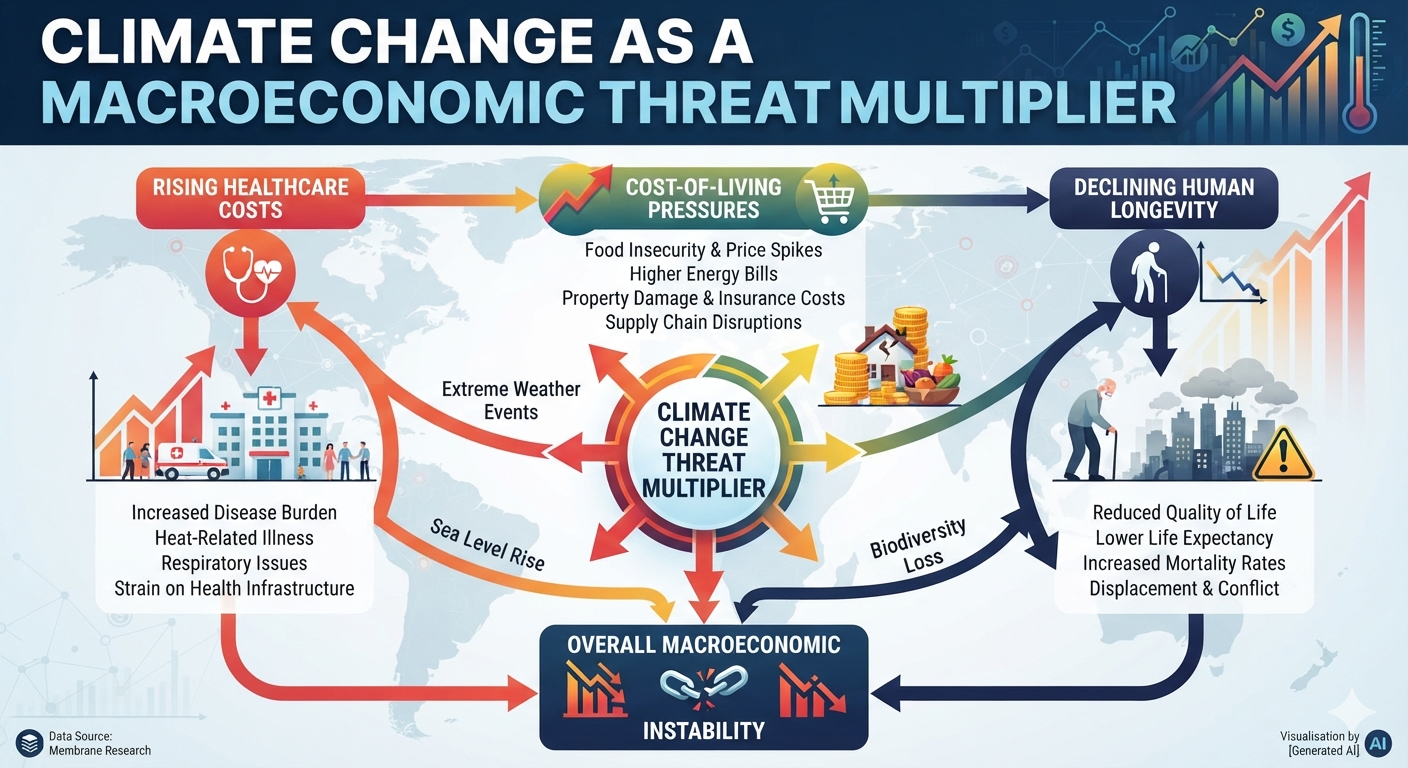
Climate change is no longer only an environmental challenge; it has become a powerful macroeconomic threat multiplier that amplifies existing social, economic, and public health vulnerabilities. Rising temperatures, increasingly extreme weather events, deteriorating air quality, and destabilized ecosystems are creating cascading financial pressures that extend from governments and businesses to individual households.

The economic consequences of climate change are increasingly visible through three interconnected pathways:

  1. Escalating healthcare costs caused by heat exposure, air pollution, infectious diseases, and climate-related disasters.
  2. Erosion of living standards through inflationary pressures on food, energy, insurance, housing, and public infrastructure.
  3. Declining human longevity as environmental stressors undermine physical health, increase mortality, and reverse decades of progress in life expectancy.

These impacts are not distributed equally. Low-income households, elderly populations, outdoor workers, and marginalized communities often face the greatest exposure while having the fewest resources to adapt. Climate change therefore transforms environmental instability into a localized economic and human health crisis.


I. Escalating Healthcare Costs: Climate Change as a Global Medical Expense Multiplier

Climate change is placing unprecedented strain on healthcare systems by increasing both the frequency and severity of climate-related illnesses while simultaneously disrupting healthcare infrastructure.

1. Trillions of Dollars in Climate-Driven Health Burdens

The financial consequences of climate-related health impacts are expected to reach historic levels.

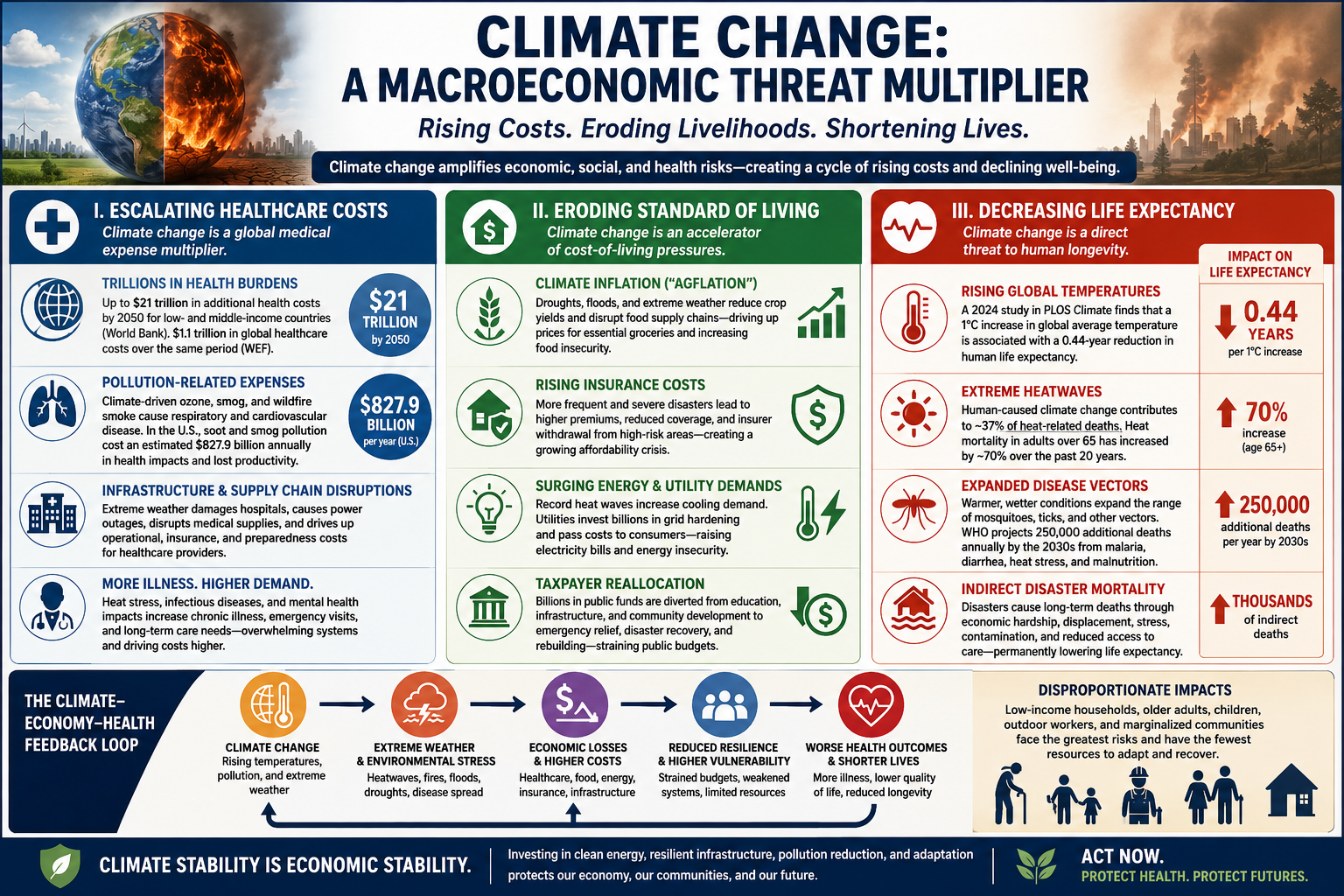
  • The World Bank estimates that climate-related health crises could impose approximately $21 trillion in additional costs by 2050 across low- and middle-income countries, reflecting increased disease burdens, reduced productivity, and expanding healthcare needs.
  • The World Economic Forum estimates that climate change could create approximately $1.1 trillion in additional global healthcare costs over the same period.

These costs represent more than direct medical expenses. They include lost productivity, reduced workforce participation, premature mortality, emergency response requirements, and infrastructure adaptation.


2. Pollution-Related Healthcare Expenses

Climate change and fossil fuel combustion are closely linked. Rising temperatures accelerate atmospheric chemical reactions that increase ground-level ozone formation, intensifying smog episodes and worsening respiratory and cardiovascular disease.

Fine particulate matter (PM2.5), ozone, wildfire smoke, and other pollutants contribute to:

  • Asthma and chronic respiratory illness
  • Heart attacks and strokes
  • Lung disease
  • Premature deaths
  • Increased emergency room visits

In the United States alone, soot and smog pollution are estimated to generate hundreds of billions of dollars annually in health-related costs, including medical expenses and lost economic productivity.

The growing frequency of wildfire smoke events demonstrates how climate impacts can transform regional air pollution into a national health emergency. Smoke from distant wildfires can travel thousands of miles, exposing millions of people far from the original source.


3. Healthcare Infrastructure and Supply Chain Disruptions

Extreme weather events increasingly threaten the operational stability of healthcare systems.

Climate-related disruptions include:

  • Hospitals losing electrical power during heat waves, hurricanes, and wildfires
  • Flooding damaging medical facilities
  • Disruptions in pharmaceutical and medical equipment supply chains
  • Increased emergency response costs
  • Higher insurance and operational expenses for healthcare providers

Hospitals are being forced to spend billions on climate resilience measures, including backup power systems, flood protection, cooling infrastructure, and emergency preparedness.


II. Eroding Standard of Living: Climate Change as a Cost-of-Living Accelerator

Climate change is increasingly becoming an economic reality experienced directly through household budgets. The same forces increasing healthcare costs are also driving inflationary pressures throughout the economy.


1. Climate Inflation and Agricultural Instability (“Agflation”)

Food systems are among the most climate-sensitive sectors of the global economy.

Rising temperatures, droughts, flooding, changing precipitation patterns, and extreme storms reduce agricultural productivity by damaging:

  • Crop yields
  • Livestock health
  • Fisheries
  • Agricultural infrastructure
  • Transportation networks

These disruptions create supply-side inflation, increasing prices for essential goods including:

  • Grains
  • Fruits and vegetables
  • Meat and dairy products
  • Transportation-dependent food products

Climate-driven food inflation disproportionately harms lower-income households because food represents a larger percentage of their monthly expenses.


2. Rising Insurance Costs and the Retreat From High-Risk Regions

The insurance industry has become one of the clearest economic indicators of accelerating climate risk.

As hurricanes, wildfires, floods, and severe storms become more frequent and destructive:

  • Insurance premiums increase dramatically.
  • Coverage becomes more restricted.
  • Insurers withdraw from vulnerable markets.
  • Property values decline in high-risk regions.

Homeowners increasingly face a difficult choice: pay rapidly increasing premiums or assume greater financial risk without adequate coverage.

This creates a growing climate affordability crisis, particularly for homeowners living in areas exposed to wildfire, coastal flooding, extreme storms, and severe weather.


3. Rising Energy Demand and Utility Costs

Climate change increases energy demand while simultaneously placing stress on energy infrastructure.

During extreme heat events:

  • Electricity consumption rises sharply due to increased air conditioning demand.
  • Utilities must invest billions in grid upgrades.
  • Transmission systems require additional protection against storms and wildfires.
  • Maintenance costs are passed onto consumers.

The result is a climate feedback loop:

Hotter temperatures → Greater cooling demand → Higher electricity consumption → Increased infrastructure costs → Higher household energy bills

Energy insecurity becomes a growing concern as vulnerable households struggle to afford cooling during dangerous heat events.


4. Taxpayer Costs and Public Financial Burdens

Climate disasters increasingly redirect public resources away from long-term investments toward emergency response and recovery.

Government spending is increasingly allocated toward:

  • Disaster relief
  • Infrastructure repairs
  • Emergency housing assistance
  • Flood recovery
  • Wildfire response
  • Agricultural assistance

These expenditures compete directly with funding for:

  • Education
  • Transportation improvements
  • Community development
  • Public health programs

Climate change therefore functions as a long-term fiscal drain, increasing government expenditures while reducing resources available for economic development.


III. Declining Human Longevity: Climate Change as a Biological Stressor

Beyond economic impacts, climate change increasingly affects the fundamental measure of human well-being: life expectancy.

The cumulative effects of extreme heat, pollution exposure, disease expansion, food insecurity, and climate disasters are slowing—and in some regions reversing—historical gains in longevity.

Climate DriverImpact on Human Health and Longevity
Rising Global TemperaturesA 2024 study published in PLOS Climate found that a 1°C increase in global average temperature is associated with approximately a 0.44-year reduction in life expectancy.
Extreme HeatwavesHuman-caused climate change is estimated to contribute to approximately 37% of heat-related deaths. Heat-related mortality among adults over age 65 has increased substantially over recent decades.
Expanded Disease Vector RangesWarmer and wetter conditions allow mosquitoes, ticks, and other disease vectors to expand into new regions, increasing risks from malaria, dengue fever, Lyme disease, and other infections.
Food and Water StressClimate disruption increases risks of malnutrition, dehydration, agricultural failure, and water insecurity, particularly in vulnerable populations.
Indirect Disaster MortalityFloods, hurricanes, wildfires, and other disasters create long-term health impacts through displacement, economic hardship, psychological stress, and environmental contamination.

IV. The Climate-Economy-Health Feedback Loop

Climate change creates a reinforcing cycle:

Climate Change → Extreme Weather → Economic Losses → Higher Costs → Reduced Adaptation Capacity → Greater Vulnerability → Increased Health Impacts

This feedback loop means climate impacts are not isolated events. A wildfire, flood, or heat wave can simultaneously damage infrastructure, increase healthcare expenses, reduce productivity, raise insurance costs, and shorten human lives.

The poorest communities often experience the strongest effects because they have fewer resources to prepare, recover, and relocate.


Conclusion: Climate Stability Is Economic Stability

Climate change represents one of the largest economic and public health challenges of the modern era. Its consequences extend far beyond environmental degradation, affecting national budgets, household finances, healthcare systems, and human survival.

The emerging reality is clear:

  • Climate change increases healthcare expenditures.
  • Climate change accelerates inflationary pressures.
  • Climate change reduces economic security.
  • Climate change threatens human longevity.

Addressing climate change is therefore not simply an environmental investment—it is an economic resilience strategy and a public health imperative. Investments in clean energy, resilient infrastructure, pollution reduction, efficient buildings, and climate adaptation can reduce future costs while protecting both human health and economic stability.

The cost of inaction is no longer measured only in degrees of warming. It is measured in rising medical bills, shrinking household budgets, damaged communities, and lost years of human life.

bookmark_borderClimate Change and Personal Finances: Managing Household Costs in an Era of Rising Climate Risk

by Daniel Brouse

🌎 Climate Change and Personal Finances: The Rising Cost of a Changing Climate

Climate change is no longer only an environmental challenge—it is becoming a growing financial challenge for households everywhere.

While headline inflation may appear moderate, the costs most affected by climate change are rising faster than many household incomes.

🔥 Extreme heat is increasing electricity demand and stressing energy infrastructure.
⛈️ Severe storms and hail events are driving higher comprehensive auto insurance costs.
🏠 Floods, hurricanes, wildfires, and extreme weather are pushing homeowners insurance premiums higher.
🌾 Droughts, floods, and shifting growing conditions are increasing food-price volatility.
🔨 Climate-related damage and rebuilding costs are raising housing expenses.

A new economic reality is emerging:

Climate-sensitive expenses are becoming a larger share of household budgets.

The financial impacts of climate change are not limited to major disasters. They appear in recurring expenses—monthly utility bills, insurance premiums, repair costs, and the price of everyday goods.

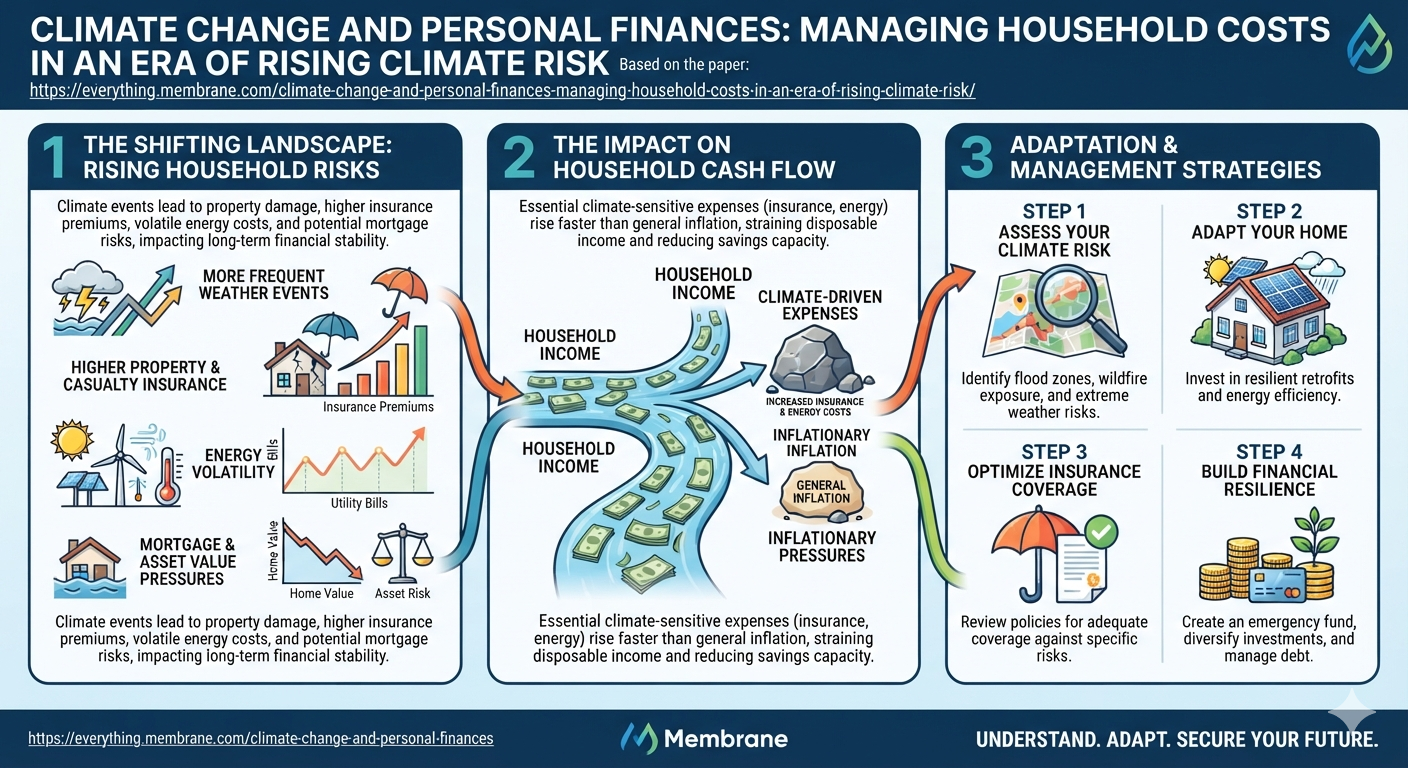
Building financial resilience means preparing for this changing economic landscape:

✅ Reduce high-interest debt
✅ Build emergency savings
✅ Improve home energy efficiency
✅ Review insurance coverage
✅ Invest in weather protection and resilience
✅ Plan for increasing climate-related costs

Climate change is reshaping not only our environment, but also the economics of everyday life.

📊 Read the full report:

“Climate Change and Personal Finances: Managing Household Costs in an Era of Rising Climate Risk”

Climate change is no longer simply an environmental issue. It has become an economic force that influences nearly every aspect of household finances. Extreme weather, rising insurance losses, damaged infrastructure, disruptions to agriculture, and increasing energy demand are reshaping the cost of living.

While the overall inflation rate captures broad price changes across the economy, climate change increasingly creates uneven inflation. Some goods remain relatively stable, while climate-sensitive sectors experience much faster price growth.

Understanding these trends allows households to better prepare for an increasingly volatile financial future.


Overall Inflation

The Consumer Price Index for All Urban Consumers (CPI-U) currently reflects annual inflation of approximately 3.5%.

Although this represents moderate overall inflation, it masks significant differences among individual household expenses. Energy, insurance, housing, and weather-sensitive goods continue to experience above-average price increases, while wages have largely kept pace only with headline inflation.

As climate change intensifies, these differences are expected to become even more pronounced.


Household Price Trends

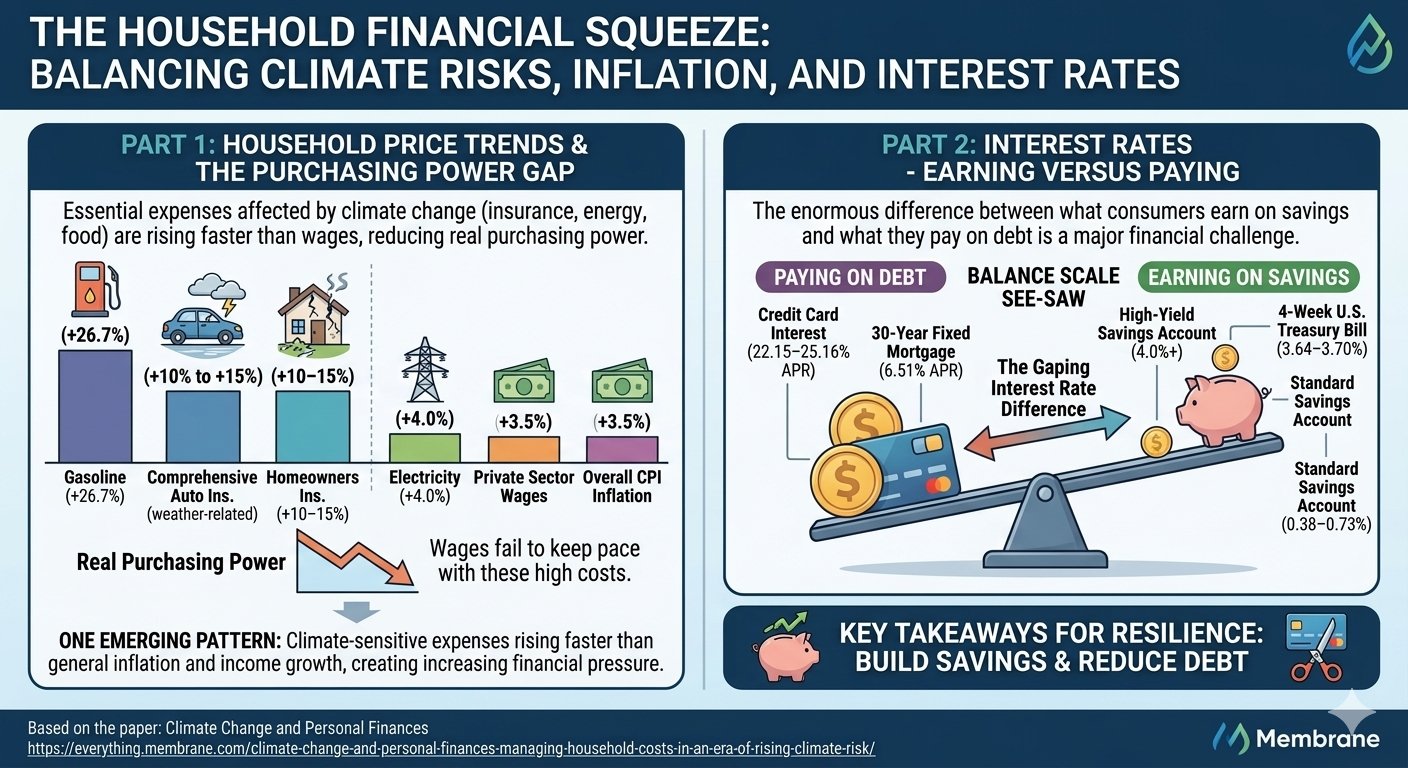
Major components of household budgets are experiencing dramatically different rates of inflation. Essential expenses increasingly affected by climate change—such as insurance, energy, housing repairs, and food—are rising faster than average wage gains. As a result, many households are experiencing a decline in real purchasing power despite wages keeping pace with headline inflation.

Household ExpenseAnnual Change
Overall CPI Inflation+3.5%
Gasoline+26.7%
Electricity+4.0%
Comprehensive Auto Insurance (weather-related losses)+10% to +15%
Homeowners Insurance+10–15%
Private Sector Wages+3.5%

One consistent pattern is emerging:

One consistent pattern is emerging: climate-sensitive expenses are rising faster than overall inflation and household income growth, creating increasing financial pressure for families adapting to a changing climate.


Energy Costs

Energy remains one of the largest sources of household inflation.

Gasoline prices have risen sharply due to geopolitical tensions, supply disruptions, refinery constraints, and transportation bottlenecks. While climate change is not the sole cause of gasoline inflation, extreme weather increasingly disrupts oil production, refining capacity, pipelines, and shipping routes.

Electricity prices have also continued to climb.

Several factors contribute:

  • Increased demand during prolonged heat waves
  • Expansion of electric transmission infrastructure
  • Grid modernization
  • Storm damage and repairs
  • Higher fuel and maintenance costs

As summers become hotter and heat waves last longer, residential electricity demand for air conditioning continues to increase.


The Insurance Crisis

Perhaps no household expense illustrates climate change more clearly than insurance.

Insurers base premiums on expected future losses—not past averages.

As hurricanes, wildfires, hailstorms, tornadoes, flooding, and severe convective storms become more destructive, insurance companies are paying record claims.

These losses eventually appear as:

  • Higher premiums
  • Larger deductibles
  • Reduced coverage
  • More exclusions
  • Non-renewals
  • Complete withdrawal from high-risk markets

Homeowners insurance has become one of the fastest-growing household expenses in many regions.

In some states, premiums have doubled within only a few years.

For households, insurance is increasingly becoming a direct monthly cost of climate change.

Comprehensive Auto Insurance and Climate Risk

Unlike collision insurance, which covers accidents between vehicles, comprehensive automobile insurance protects against damage caused by natural hazards and other non-collision events. As climate change increases the frequency and severity of extreme weather, comprehensive claims have risen substantially.

Common climate-related comprehensive claims include:

  • Hail damage
  • Falling trees and branches during windstorms
  • Flash flood damage
  • Hurricane storm surge
  • Wildfire damage
  • Tornado debris
  • Lightning strikes
  • Wind-blown objects
  • Ice and snow damage

Large hailstorms alone now produce billions of dollars in insured vehicle losses each year. Modern vehicles are particularly vulnerable because aluminum body panels, panoramic glass roofs, advanced sensors, cameras, and radar systems are expensive to repair or replace.

Flash flooding has also become one of the fastest-growing sources of comprehensive auto losses. Vehicles caught in flooded roadways often suffer catastrophic engine, electrical, and electronic damage, resulting in total-loss claims.

As insurers pay increasing numbers of weather-related claims, many companies have adjusted comprehensive premiums, increased deductibles, or refined risk models based on regional exposure to hail, flooding, hurricanes, wildfires, and severe convective storms.

While collision coverage is primarily influenced by driving behavior, repair costs, and accident frequency, comprehensive insurance increasingly reflects the financial consequences of a changing climate. For many households, the rising cost of comprehensive coverage has become another indirect expense associated with more frequent and more destructive extreme weather events.


Food Prices

Although food inflation fluctuates from year to year, climate change is placing increasing pressure on agricultural production.

Extreme heat, drought, flooding, hurricanes, and shifting growing seasons reduce crop yields while increasing production costs.

Examples include:

  • Heat-stressed livestock
  • Drought-reduced grain harvests
  • Flood-damaged vegetables
  • Disease outbreaks
  • Pollinator decline
  • Water shortages

The result is greater price volatility at grocery stores.

Consumers may increasingly experience periods where staple foods rise rapidly following major climate disasters.


Housing Costs

Housing costs are increasingly influenced by climate risk.

Construction materials become more expensive following disasters.

Labor shortages emerge after major storms.

Building codes become stricter.

Flood-resistant construction, stronger roofing systems, improved insulation, and wildfire-resistant materials all increase upfront construction costs while reducing long-term risk.

Mortgage lenders are also beginning to incorporate climate risk into property valuations.

Properties facing repeated flooding, wildfire exposure, or coastal erosion may experience declining values while insurance costs continue rising.


Wages and Purchasing Power

Private-sector wages have increased approximately 3.5% over the past year.

While this roughly matches headline inflation, it does not fully offset the faster growth of essential household expenses such as insurance, electricity, housing, and healthcare.

As a result, many households experience “cost-of-living compression,” where income keeps pace with average inflation but fails to keep pace with the expenses that matter most.


Interest Rates: Earning Versus Paying

One of the largest financial challenges facing households is the enormous difference between what consumers earn on savings and what they pay on debt.

Financial InstrumentTypical Rate
Credit Card Interest22.15–25.16% APR
30-Year Fixed Mortgage6.51% APR
High-Yield Savings Account4.0%+
4-Week U.S. Treasury Bill3.64–3.70%
Standard Savings Account0.38–0.73%

The modern banking system rewards households that maintain liquidity while imposing extremely high costs on revolving debt.

Credit card interest rates frequently exceed 20%, making high-interest debt one of the largest obstacles to long-term financial security.

Conversely, households that maintain emergency savings can now earn meaningful returns through high-yield savings accounts and short-term Treasury securities.


Climate Change and Financial Risk

Climate change introduces several new forms of financial risk that traditional household budgeting rarely considered:

  • Increasing insurance premiums
  • Larger deductibles
  • Rising utility bills
  • Disaster repair costs
  • Temporary job interruptions after extreme weather
  • Declining property values in high-risk areas
  • Higher food prices
  • Greater investment volatility

These risks compound over time, making financial resilience increasingly important.


Strategies for Financial Resilience

Households can take practical steps to reduce their financial vulnerability to climate-related economic shocks.

Build an Emergency Fund

Maintaining three to six months of living expenses provides flexibility following disasters, temporary unemployment, or unexpected repairs.

Eliminate High-Interest Debt

Paying down credit cards earning 22–25% interest often provides a greater guaranteed return than most investments.

Improve Energy Efficiency

Investments such as insulation, efficient appliances, heat pumps, smart thermostats, and LED lighting can reduce utility costs while improving comfort during heat waves.

Review Insurance Coverage

Homeowners should regularly review policy limits, deductibles, exclusions, flood coverage, and replacement-cost estimates to ensure protection reflects today’s risks.

Diversify Investments

Diversification across asset classes, industries, and geographic regions can help reduce exposure to climate-related disruptions affecting any single sector.

Prepare for Extreme Weather

Emergency supplies, backup power, important documents, evacuation plans, and home maintenance can reduce both financial losses and recovery time after disasters.


The Economics of Adaptation

One of the defining economic realities of the coming decades will be the growing cost of adaptation.

Communities will invest billions in:

  • Stronger electrical grids
  • Flood-control systems
  • Coastal defenses
  • Wildfire mitigation
  • Stormwater infrastructure
  • More resilient buildings
  • Expanded emergency response capabilities

Although these investments require substantial upfront spending, they often cost far less than rebuilding after repeated disasters. For individual households, similar investments—such as reinforcing roofs, improving drainage, elevating utilities in flood-prone areas, or increasing home energy efficiency—can reduce future repair costs, lower insurance claims, and improve long-term resilience.


Conclusion

Climate change is increasingly shaping household finances through higher insurance premiums, rising energy costs, greater food-price volatility, and growing expenditures on disaster preparedness and infrastructure. At the same time, high borrowing costs amplify the financial strain on families carrying significant debt.

The central challenge is no longer simply inflation, but the uneven way inflation affects climate-sensitive expenses. Insurance, utilities, housing, and food are consuming a larger share of household budgets, even when overall inflation appears moderate.

Building emergency savings, reducing high-interest debt, investing in energy efficiency, maintaining appropriate insurance coverage, and preparing for extreme weather can strengthen financial resilience. As climate risks continue to evolve, households that proactively adapt their financial strategies will be better positioned to absorb future economic shocks and maintain long-term financial stability.

bookmark_borderIce in a Warming World: Climate Change, Giant Hail, and the Nonlinear Escalation of Severe Convective Storms

by Daniel Brouse

Climate Change and Hailstorms

One of the most common misconceptions about climate change is that a warmer planet should produce less ice. In reality, the opposite is increasingly true for severe thunderstorms. While winters are warming and snow cover is declining in many regions, the atmosphere is becoming more energetic, more moisture-laden, and more capable of producing exceptionally large hail.

Hailstorms illustrate one of the central themes found throughout modern climate science: global warming is not simply making the planet warmer—it is making the atmosphere more unstable. The climate system is undergoing a nonlinear increase in available energy, atmospheric moisture, and circulation instability. The result is not gradual change, but an acceleration toward more powerful and destructive weather extremes.

Hail is one manifestation of this broader transition.


Severe Convective Energy Events

Hailstorms are among the most energetic convective weather systems on Earth. They develop inside powerful thunderstorms where intense upward air currents repeatedly lift developing ice particles through layers of supercooled water.

Each trip through the storm adds another layer of ice.

If the updraft remains strong enough, hailstones continue growing until gravity finally overcomes the upward force.

The stronger the storm, the larger the hail.

Large hail has become one of the fastest-growing sources of weather-related insurance losses worldwide, producing billions of dollars in damage each year to:

  • Homes
  • Roofs
  • Windows
  • Solar panels
  • Vehicles
  • Crops
  • Electrical infrastructure
  • Aircraft

Unlike heavy rainfall, which loses much of its kinetic energy through atmospheric friction, hailstones maintain tremendous momentum. Baseball-sized hail can strike the ground at speeds exceeding 100 mph (160 km/h), while the largest hailstones exceed 150 mph.

At those velocities, hail becomes a dangerous projectile capable of causing severe injuries and fatalities.


A Warmer Atmosphere Produces Bigger Hail

The same physical processes described in previous papers—especially the increasing atmospheric water vapor driven by the Clausius-Clapeyron relationship—also fuel hail growth.

Every degree Celsius of warming allows the atmosphere to hold approximately 7% more water vapor.

That additional moisture provides thunderstorms with more latent heat energy.

When this latent heat is released during condensation, it strengthens thunderstorm updrafts dramatically.

The result is a positive feedback:

  • More warming
  • More atmospheric moisture
  • More latent heat release
  • Stronger thunderstorms
  • Stronger updrafts
  • Larger hail

This is another example of Earth’s climate system amplifying itself through reinforcing feedback loops rather than responding linearly.


Updrafts: Nature’s Giant Ice Factory

Imagine a lava lamp operating at maximum power.

Instead of blobs of wax rising through liquid, enormous columns of warm, moisture-rich air accelerate upward through the atmosphere.

Inside these towers:

  • Water droplets freeze.
  • Ice particles are lifted thousands of feet upward.
  • Supercooled water freezes onto existing hailstones.
  • The growing hailstone falls.
  • The updraft catches it again.
  • Another layer forms.

This process repeats many times.

The stronger the updraft, the longer the hailstone remains suspended.

Eventually the hailstone becomes too heavy.

Then gravity wins.

The result is giant hail capable of catastrophic destruction.

As climate warming strengthens convective energy, these powerful updrafts are becoming increasingly common.


Why Small Hail Is Declining

Climate change does not necessarily increase every type of hail.

In fact, many regions may experience fewer small hail events.

This occurs because freezing levels are rising.

As temperatures increase:

  • Snow melts sooner.
  • Ice melts higher in the atmosphere.
  • Small hailstones completely melt before reaching the ground.
  • Large hailstones survive.

The result is a dramatic shift in hail size distribution.

Instead of numerous harmless pea-sized hailstones, storms increasingly produce fewer—but much larger and more destructive—hailstones.

Current projections suggest that by the end of this century:

  • Large hail events may increase by 38–47%
  • Small hail events may decrease by 4–8%

This represents another example of the climate system shifting toward extremes rather than averages.


Geography Is Changing

Historically, the world’s most active hail regions included:

  • The U.S. Great Plains
  • Argentina
  • South Africa
  • Northern India
  • Central Europe

Today, climate models suggest these regions are changing.

Increasing hail environments are projected across:

  • The U.S. Midwest
  • Ohio Valley
  • Northeast
  • Southeastern United States
  • Canada
  • Northern Europe
  • New Zealand’s South Island

The traditional “Hail Alley” of the Great Plains is expected to expand eastward while favorable atmospheric conditions migrate poleward as global temperatures rise.

These geographic shifts mirror changes already observed in atmospheric rivers, jet stream behavior, and storm tracks.


Changing Seasons

The timing of severe hailstorms is also evolving.

Rather than occurring primarily during midsummer, favorable conditions are increasingly appearing during:

  • Early spring
  • Late fall
  • Even portions of winter

Warmer winters allow severe thunderstorms to develop during months that historically experienced relatively stable atmospheric conditions.

This creates new risks for agriculture.

Winter wheat and other cool-season crops become increasingly vulnerable to destructive hail during critical stages of development.


Climate Change Is Increasing Financial Losses

Few weather hazards have produced such rapidly escalating insured losses.

Since 2008:

  • U.S. hail-related insurance claims have increased approximately fivefold.
  • Annual insured losses now regularly exceed tens of billions of dollars.
  • Vehicle damage has become one of the largest components of weather-related insurance costs.

One of the most striking recent examples occurred in northern Italy during 2023.

A series of severe thunderstorms produced approximately $8.6 billion in damages while dropping a European-record hailstone measuring nearly 19 centimeters (7.5 inches) in diameter.

Across North America, giant hail is increasingly damaging:

  • Solar farms
  • Wind facilities
  • Data centers
  • Warehouses
  • Airports
  • Distribution centers

As urban development expands into storm-prone regions, exposure continues to rise even as the storms themselves become more intense.

The result is a compounding economic feedback between climate risk and infrastructure vulnerability.


Human Safety

Although hail is often viewed as primarily a property hazard, it is increasingly becoming a public health concern.

Large hail can:

  • Cause traumatic brain injuries
  • Fracture bones
  • Damage eyesight
  • Kill livestock
  • Trigger multi-vehicle accidents
  • Force aircraft into emergency landings

As giant hail events become more common, so do reports of injuries and fatalities.

The danger is amplified because hail often accompanies tornadoes, destructive straight-line winds, flash flooding, and frequent lightning, creating multiple simultaneous hazards.


A Symptom of a More Energetic Climate

Large hail is not an isolated phenomenon.

It is part of the same global pattern documented throughout this body of work.

The accelerating increase in atmospheric water vapor, ocean heat content, jet stream instability, atmospheric rivers, bomb cyclones, extreme rainfall, wildfire behavior, and severe convective storms all point to the same underlying driver:

An atmosphere containing more energy.

As Arctic amplification weakens the temperature gradient between the poles and the tropics, atmospheric circulation becomes increasingly distorted. Rossby waves become more amplified, blocking patterns persist longer, and weather systems slow or stall. At the same time, warmer oceans and land surfaces inject additional heat and moisture into the atmosphere, providing more fuel for explosive thunderstorms.

When these large-scale circulation changes coincide with abundant moisture and intense surface heating, the result is an environment capable of generating stronger updrafts, larger hail, heavier rainfall, more damaging winds, and more frequent tornado outbreaks. Hail therefore should not be viewed as an isolated weather event, but as one expression of a broader shift toward higher-energy atmospheric dynamics.


The Shift to Extremes

One consistent pattern emerges:

Climate Change → Energy Imbalance → More Atmospheric Moisture + Greater Instability → Stronger Storm Dynamics → More Frequent & More Severe Weather Extremes → Hotter Heat Waves → Wetter Atmospheric Rivers → Larger Wildfires → More Intense Flash Floods → Stronger Hurricanes → Giant Hailstorms

This is the hallmark of nonlinear climate change: a progressive shift from moderate conditions toward increasingly severe outcomes as Earth’s energy imbalance grows. Hail is another visible indicator that the climate system is moving beyond historical norms, where extremes become more common and their impacts more costly.

Understanding hail in this broader context helps connect individual weather disasters to the larger transformation underway in the Earth’s climate system. Rather than isolated anomalies, these events are increasingly linked by the same physical processes: rising atmospheric moisture, greater available energy, and amplifying feedbacks that are reshaping weather across the globe.

bookmark_borderAir Pollution Protection: Practical Strategies for a Changing Climate

by Daniel Brouse

Reducing Exposure to Smoke, Ozone, and Fine Particulate Pollution

Climate change, air pollution, and human health are becoming increasingly intertwined in a self-reinforcing feedback system. Rising temperatures accelerate the formation of ground-level ozone, while hotter, drier conditions fuel larger and more frequent wildfires that release enormous quantities of smoke and toxic gases. These pollutants damage human health, weaken forests and ecosystems that normally absorb carbon dioxide, and further accelerate climate change.

Protecting yourself from air pollution is no longer just a concern during isolated pollution events—it has become an essential part of climate resilience.


1. Avoid Exposure Whenever Possible

The most effective protection against air pollution is to avoid breathing polluted air whenever possible.

Monitor local air quality forecasts daily, especially during:

  • Wildfire events
  • Heat waves
  • Temperature inversions
  • High ozone alerts
  • Dust storms
  • Heavy traffic periods

Air quality is commonly reported using the Air Quality Index (AQI), which primarily measures particulate pollution (PM₂.₅ and PM₁₀). However, harmful pollutants such as ground-level ozone (O₃), nitrogen dioxide (NO₂), sulfur dioxide (SO₂), and numerous volatile organic compounds (VOCs) can fluctuate rapidly and may not always be reflected by a single AQI number.

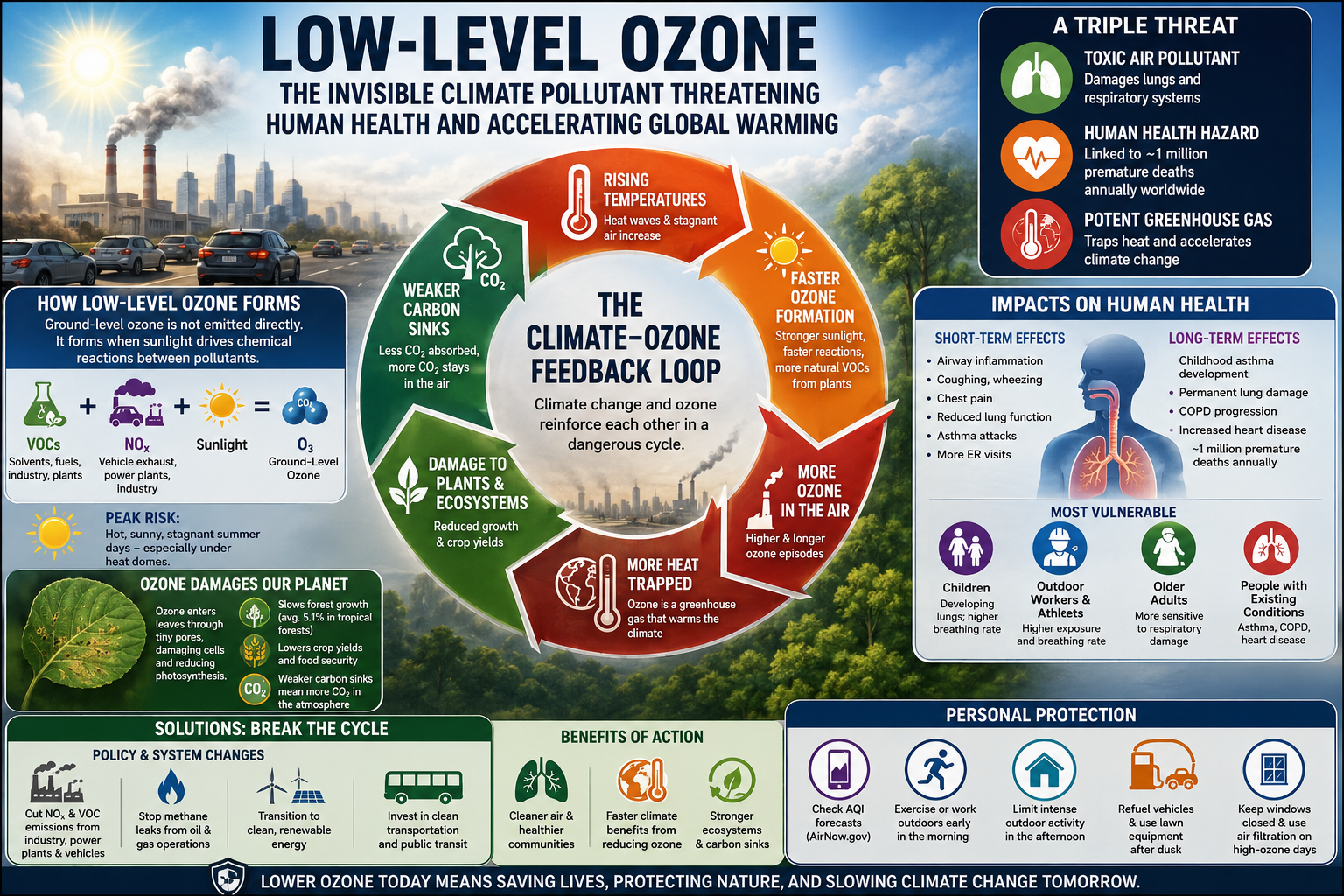
Ground-level ozone deserves special attention because it is largely invisible. Peak ozone concentrations often occur on warm, sunny afternoons when ultraviolet (UV) radiation drives chemical reactions between nitrogen oxides (NOₓ) and volatile organic compounds released from vehicles, power plants, industrial facilities, and wildfire smoke.

Clear skies do not necessarily mean clean air. Even when the AQI appears acceptable, hot, sunny, and stagnant conditions can rapidly generate dangerous levels of ground-level ozone. If these conditions are present, use your best judgment and limit outdoor activity.


2. Wear Appropriate Respiratory Protection

Sometimes avoiding outdoor exposure is impossible. When you must be outside, proper respiratory protection becomes essential.

Particulate Pollution

For wildfire smoke and airborne particles:

  • N95 respirators
  • KN95 respirators
  • P100 respirators

These masks are highly effective at filtering fine particulate matter (PM₂.₅) when they fit properly.

Ozone and Toxic Gases

Particulate masks alone do not protect against gases.

Ground-level ozone, formaldehyde, benzene, and many wildfire gases pass directly through standard N95 and HEPA filters.

Protection from gaseous pollutants requires:

  • Activated carbon filters
  • Activated charcoal cartridges
  • Combination particulate/carbon respirators

Activated carbon chemically adsorbs many gaseous pollutants before they reach your lungs.


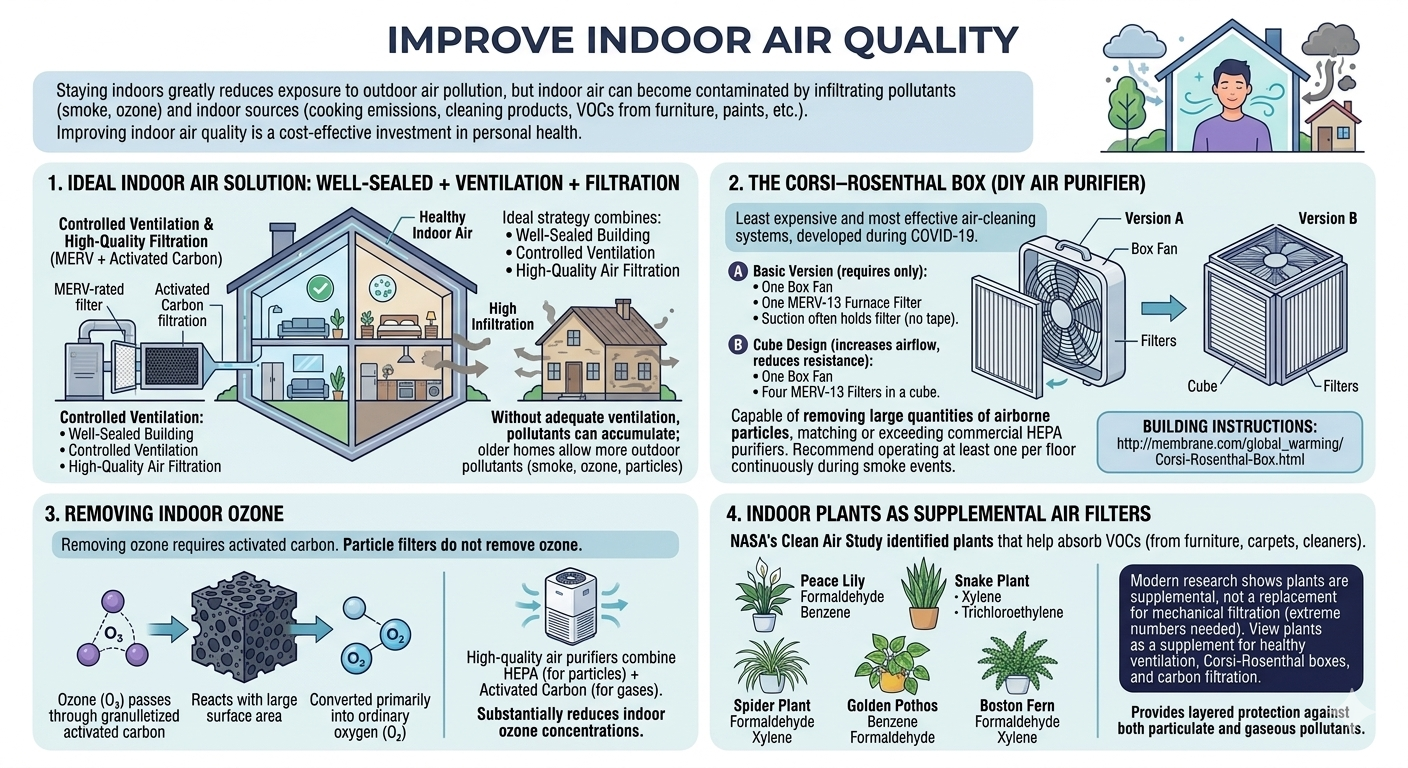
3. Improve Indoor Air Quality

Staying indoors greatly reduces exposure to outdoor air pollution, but indoor air can still become contaminated by infiltrating smoke, ozone, and other outdoor pollutants, as well as indoor sources such as cooking emissions, cleaning products, and volatile organic compounds (VOCs) released from furniture, flooring, paints, adhesives, and building materials.

Improving indoor air quality is one of the most cost-effective investments in personal health. However, there is an important trade-off. Better insulation and tighter building construction improve energy efficiency by reducing heating and cooling losses, but they also reduce the natural exchange of indoor and outdoor air. Without adequate ventilation and air filtration, pollutants generated indoors can accumulate to unhealthy levels. Conversely, older or less airtight homes provide greater natural ventilation but also allow more outdoor pollutants—including wildfire smoke, ozone, pollen, and fine particulate matter—to enter the living space.

The ideal solution is to combine a well-sealed, energy-efficient building with controlled ventilation and high-quality air filtration. Mechanical ventilation systems equipped with MERV-rated filters and activated carbon filtration, along with portable air cleaners such as Corsi–Rosenthal Boxes, can maintain healthy indoor air while minimizing the infiltration and buildup of harmful pollutants.


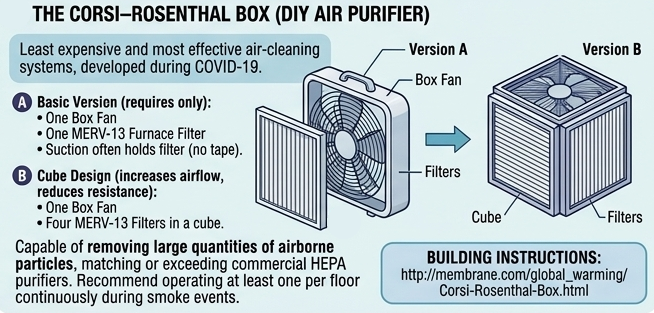
The Corsi–Rosenthal Box

One of the least expensive and most effective air-cleaning systems is the Corsi–Rosenthal Box.

Developed during the COVID-19 pandemic, this simple do-it-yourself air purifier combines:

  • A standard box fan
  • One to five high-efficiency furnace filters (typically MERV-13)

Together they create an air filtration system capable of removing large quantities of airborne particles, often matching or exceeding the performance of many commercial HEPA air purifiers costing hundreds of dollars.

A basic version requires only:

  • one box fan
  • one MERV-13 furnace filter

The fan’s suction often holds the filter securely in place without tape.

Adding four filters in the familiar cube design increases airflow while reducing resistance, producing an exceptionally efficient whole-room air cleaner.

For homes experiencing recurring wildfire smoke, many experts recommend operating at least one Corsi–Rosenthal Box continuously during smoke events on each floor.


Removing Indoor Ozone

Particle filters—including fiberglass filters, MERV filters, and HEPA filters—do not remove ozone.

Removing ozone requires activated carbon.

Granular or pelletized activated carbon filters are particularly effective because they provide large surface areas for chemical reactions.

As ozone (O₃) passes through activated carbon, it reacts with the carbon surface and is converted primarily into ordinary oxygen (O₂), substantially reducing indoor ozone concentrations.

Many high-quality air purifiers now combine:

  • HEPA filtration for particles
  • Activated carbon for gases

This combination provides protection against both wildfire smoke and ozone.

For more information about building a Corsi–Rosenthal Box, see:

http://membrane.com/global_warming/Corsi-Rosenthal-Box.html


4. Use Indoor Plants as Supplemental Air Filters

Indoor plants can improve local air quality while providing numerous psychological and environmental benefits.

NASA’s landmark Clean Air Study identified several plants that help absorb volatile organic compounds (VOCs) released from furniture, carpets, paints, adhesives, and household cleaners.

Among the most effective are:

  • Peace Lily
  • Snake Plant
  • Spider Plant
  • Golden Pothos
  • Boston Fern

These plants can reduce concentrations of compounds such as:

  • formaldehyde
  • benzene
  • xylene
  • trichloroethylene

However, modern research has shown that although plants are helpful in small spaces, extremely large numbers of plants would be required to equal the air-cleaning capacity of a modern HVAC system.

Indoor plants should therefore be viewed as a supplement—not a replacement—for mechanical air filtration.

The best strategy combines:

  • healthy ventilation
  • Corsi–Rosenthal Boxes
  • activated carbon filtration
  • indoor plants

Together these provide layered protection against both particulate and gaseous pollutants.


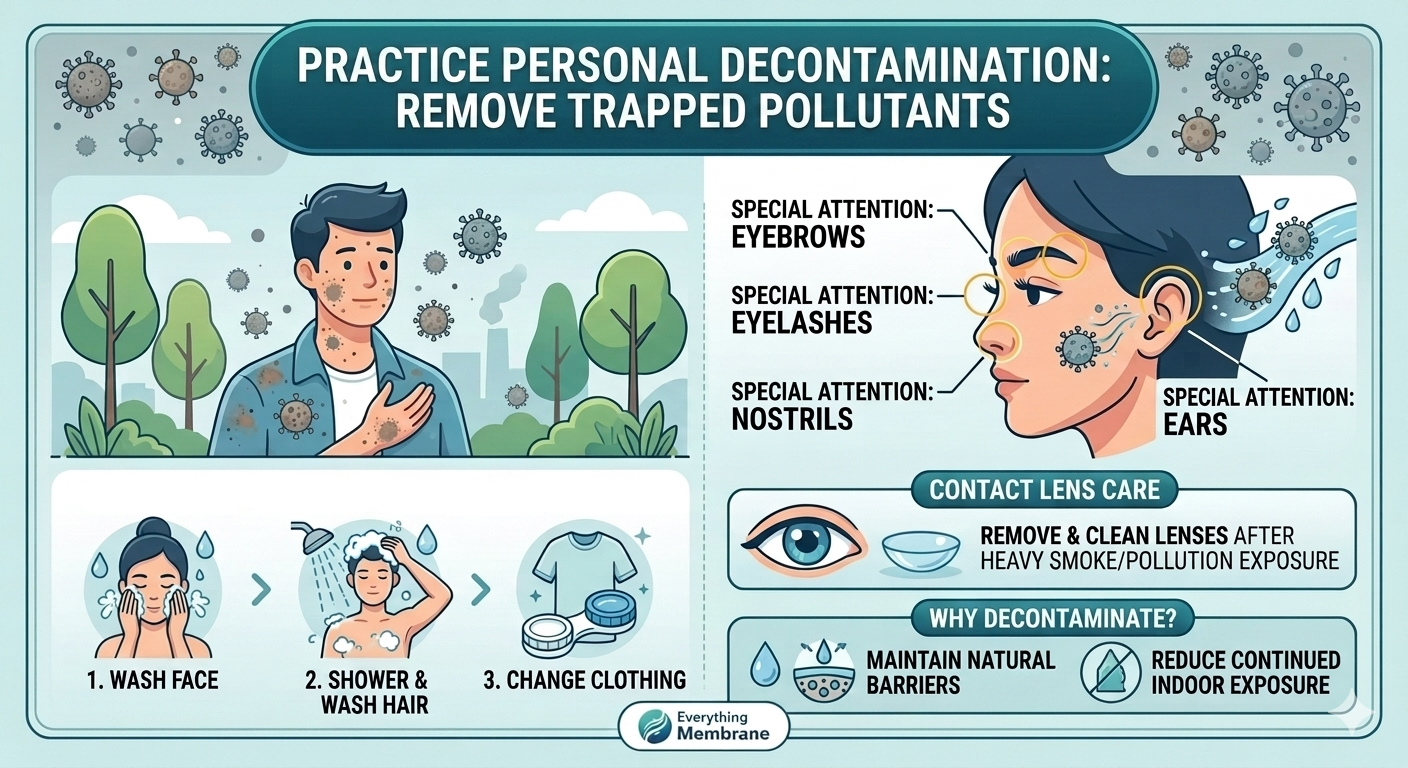
5. Practice Personal Decontamination

Air pollution does not only enter the body through the lungs.

Smoke particles, soot, pollen, heavy metals, and chemical residues accumulate on the skin, hair, clothing, and facial features throughout the day.

After returning indoors following exposure:

  • Wash your face thoroughly.
  • Shower if exposure was prolonged.
  • Wash your hair.
  • Change contaminated clothing.
  • Rinse exposed skin with soap and water.

Special attention should be given to:

  • eyebrows
  • eyelashes
  • nostrils
  • ears

These areas naturally trap airborne particles before they enter deeper into the respiratory system. Removing accumulated contaminants helps maintain the effectiveness of these natural protective barriers while reducing continued exposure indoors.

People who wear contact lenses may also benefit from removing and cleaning them after heavy smoke or pollution exposure, as pollutants can irritate the eyes and adhere to lens surfaces.


6. Long-Term Protection

While personal protective measures reduce individual exposure, they cannot eliminate the growing threat posed by worsening air pollution.

Long-term protection requires reducing the underlying causes of pollution by limiting greenhouse gas emissions, improving energy efficiency, reducing fossil fuel combustion, preventing catastrophic wildfires, and protecting forests and wetlands that naturally filter the atmosphere.

As climate change accelerates, episodes of dangerous air quality are expected to become more frequent, longer-lasting, and geographically widespread. Preparing homes with effective air filtration, maintaining appropriate respiratory protection, and staying informed about local air quality conditions are becoming essential components of climate adaptation.


Conclusion

The atmosphere is changing rapidly, bringing with it increasing levels of wildfire smoke, ground-level ozone, fine particulate matter, and other airborne pollutants. These hazards threaten respiratory health, cardiovascular function, neurological well-being, and overall quality of life.

Fortunately, many of the most effective protective measures are simple and affordable. Monitoring air quality, minimizing outdoor exposure during pollution events, using properly fitted respirators, improving indoor air filtration with systems such as the Corsi–Rosenthal Box, incorporating activated carbon filtration, maintaining indoor plants, and practicing thorough personal hygiene can dramatically reduce daily exposure.

As climate-driven air pollution becomes an increasingly common reality, proactive protection is no longer optional—it is an essential part of safeguarding both individual health and community resilience.

bookmark_borderAtmospheric Rivers: How Climate Change Is Reshaping Earth’s Atmospheric Circulation

By Daniel Brouse & Sidd Mukherjee

Overview

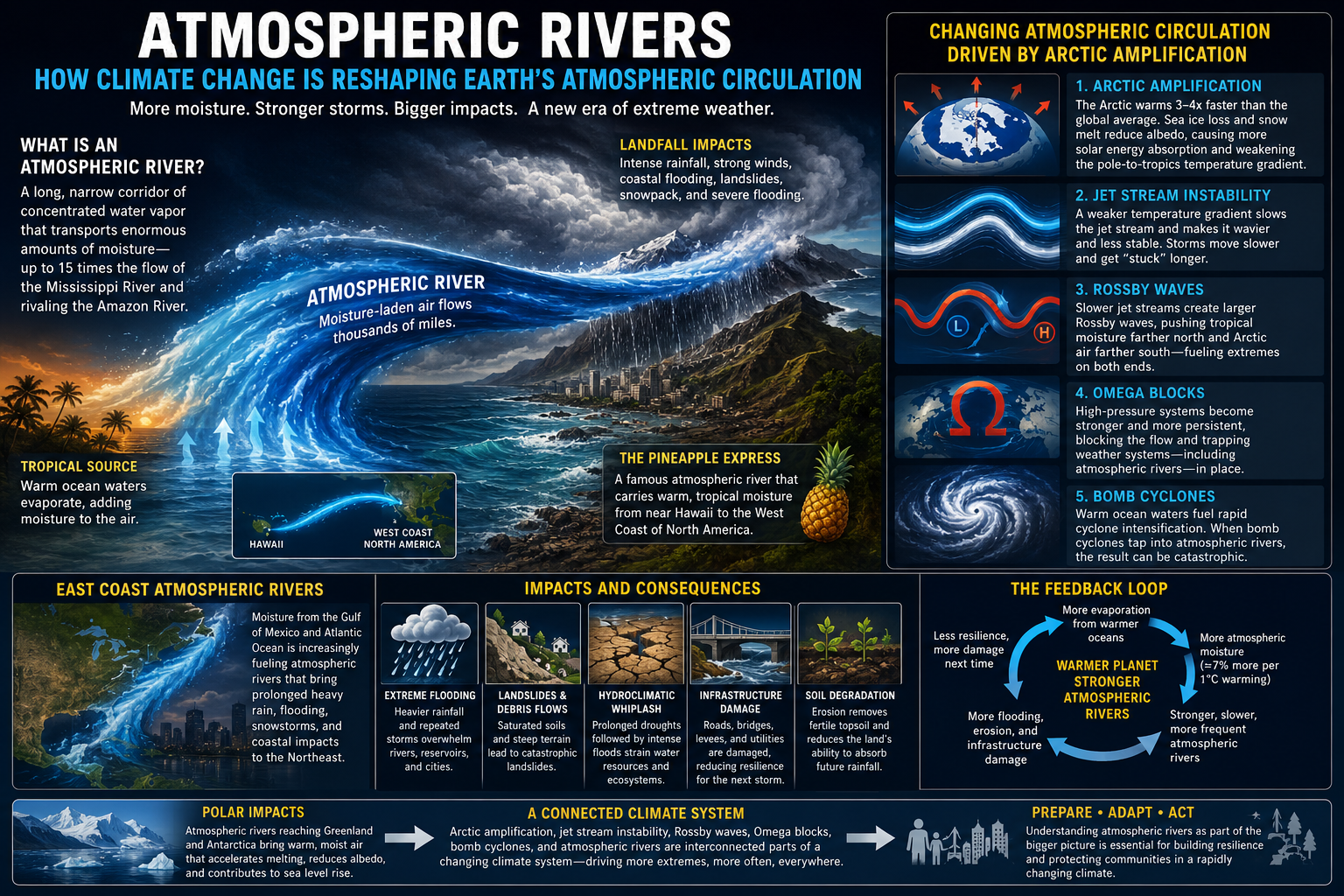
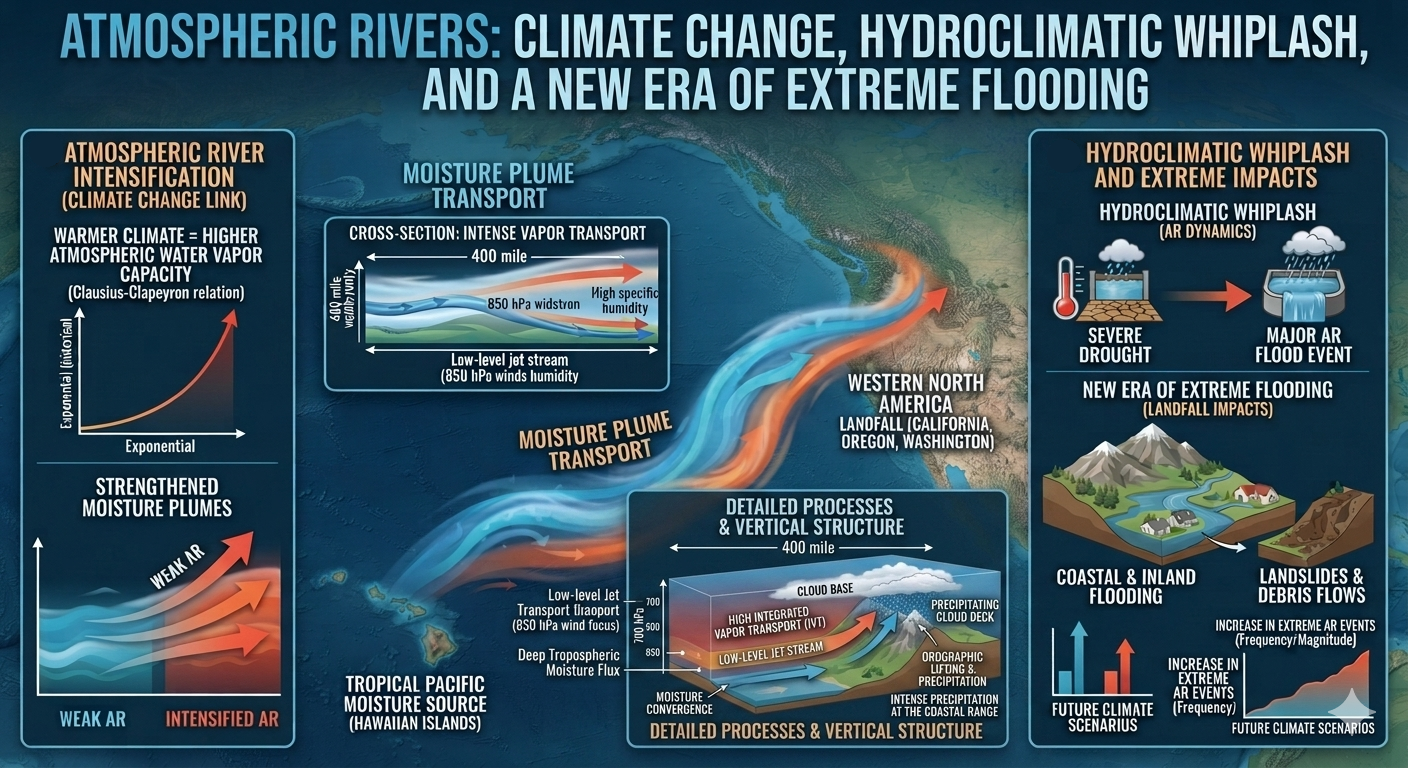
Atmospheric rivers are among the most powerful weather systems on Earth. These long, narrow corridors of concentrated water vapor transport immense quantities of moisture through the atmosphere, acting as airborne rivers that connect the tropics with higher latitudes.

At their peak, atmospheric rivers can carry as much water through the sky as the Amazon River carries on land. When they make landfall, they release torrential rainfall, hurricane-force winds, mountain snowfall, flooding, and landslides.

Historically, atmospheric rivers have been an essential part of Earth’s hydrologic cycle, replenishing reservoirs and snowpacks. Today, however, human-induced climate change is fundamentally changing their behavior. A warmer atmosphere, warmer oceans, and rapidly changing atmospheric circulation patterns are producing stronger, wetter, slower-moving, and increasingly destructive atmospheric rivers.

Rather than isolated weather events, atmospheric rivers are becoming part of a larger transformation of Earth’s climate system.


What Are Atmospheric Rivers?

Atmospheric rivers (ARs) are narrow bands of exceptionally moist air that transport water vapor thousands of miles through the atmosphere. Although they occupy only a small fraction of the atmosphere, they account for nearly 90% of the poleward transport of water vapor outside the tropics.

When these moisture streams encounter mountains or colder air masses, the water vapor condenses into intense rain or snow.

The strongest atmospheric rivers can transport more than fifteen times the average flow of the Mississippi River and rival the discharge of the Amazon River.


The Pineapple Express

The best-known atmospheric river is the Pineapple Express, which transports warm tropical moisture from near Hawaii to western North America.

These storms have always occurred, but today they are producing more extreme flooding because:

  • Ocean temperatures are higher.
  • Evaporation is increasing.
  • The atmosphere contains more water vapor.
  • Storms often move more slowly than they once did.

California’s recent years of devastating floods illustrate this transition toward more powerful atmospheric rivers.


Why Climate Change Is Intensifying Atmospheric Rivers

According to the Clausius-Clapeyron relationship, every 1°C of warming allows the atmosphere to hold approximately 7% more water vapor.

This additional moisture increases:

  • rainfall rates
  • storm duration
  • flood severity
  • snowfall at higher elevations
  • moisture transport over thousands of miles

Meanwhile, record ocean heat dramatically increases evaporation, providing an ever-growing supply of atmospheric moisture.

The result is an atmosphere capable of producing unprecedented precipitation events.


Arctic Amplification: Changing the Planet’s Atmospheric Engine

Atmospheric rivers do not occur independently.

They are guided by Earth’s large-scale atmospheric circulation.

One of the most profound consequences of climate change is Arctic amplification—the Arctic warming roughly three to four times faster than the global average.

As sea ice disappears and snow cover declines, Earth’s reflective surface shrinks. Dark ocean water absorbs more solar energy, accelerating warming and reducing the temperature difference between the Arctic and the tropics.

This weakened temperature gradient fundamentally changes atmospheric circulation.


Jet Stream Instability

The polar jet stream is powered largely by the temperature contrast between cold Arctic air and warmer subtropical air.

As Arctic amplification weakens this contrast, the jet stream slows and becomes increasingly unstable.

Instead of flowing in relatively smooth west-to-east patterns, the jet stream develops larger north-south waves that linger over regions for extended periods.

A slower jet stream allows weather systems to stall, dramatically increasing the duration of extreme weather.

Atmospheric rivers that once passed in a day may now persist for several days, greatly increasing rainfall totals.


Rossby Waves

The large undulations in the jet stream are known as Rossby waves.

As the jet stream slows, Rossby waves become larger and more amplified.

These amplified waves transport tropical heat and moisture farther poleward while allowing Arctic air to plunge farther south.

The result is greater weather extremes:

  • prolonged heat waves
  • persistent drought
  • repeated atmospheric rivers
  • severe flooding
  • extreme winter outbreaks

Because atmospheric rivers often travel along these Rossby wave patterns, changes in wave behavior directly influence where flooding occurs and how long storms remain over one location.


Omega Blocks

Sometimes Rossby waves become so amplified that they form nearly stationary high-pressure systems resembling the Greek letter Ω (Omega).

These Omega blocks can persist for days or even weeks.

An Omega block effectively traps weather systems on either side.

For atmospheric rivers, this can be disastrous.

Instead of moving inland and weakening, repeated moisture streams may be directed into the same region, producing multiple rounds of flooding over already saturated ground.

Many of the catastrophic flood events observed during the past decade have involved stalled atmospheric rivers interacting with blocking patterns.


Bomb Cyclones

Atmospheric rivers frequently interact with rapidly strengthening low-pressure systems known as bomb cyclones.

A bomb cyclone develops when atmospheric pressure falls at least 24 millibars within 24 hours.

Warm ocean waters provide enormous amounts of latent heat that fuel explosive cyclone development.

When bomb cyclones intercept atmospheric rivers, the result can include:

  • hurricane-force winds
  • torrential rainfall
  • coastal flooding
  • storm surge
  • mountain blizzards
  • widespread infrastructure damage

These compound events represent one of the most destructive combinations in modern weather.


East Coast Atmospheric Rivers

Atmospheric rivers were once viewed primarily as a West Coast phenomenon.

Recent research, however, has documented increasingly frequent atmospheric rivers affecting the eastern United States.

Moisture drawn northward from the Gulf of Mexico and the Atlantic Ocean now fuels atmospheric rivers that move along the East Coast.

These systems often produce:

  • multi-day flooding
  • inland flash flooding
  • severe river flooding
  • heavy snowfall in winter
  • coastal erosion
  • compound flooding when combined with storm surge and high tides

The Northeast has experienced a noticeable increase in prolonged heavy-rain events consistent with stronger atmospheric rivers.


Greenland and Antarctica

One of the most alarming developments is the increasing frequency of atmospheric rivers reaching Greenland and Antarctica.

These storms transport unusually warm, moisture-rich air into polar regions.

Their impacts include:

  • rainfall replacing snowfall
  • accelerated surface melting
  • reduced nighttime cooling from cloud cover
  • darker snow surfaces
  • increased meltwater production

The resulting loss of reflectivity (albedo) accelerates melting even further.

This creates a powerful positive climate feedback that contributes directly to accelerating sea-level rise.


Atmospheric Rivers and Hydroclimatic Whiplash

Atmospheric rivers are becoming central drivers of hydroclimatic whiplash—rapid swings between prolonged drought and extreme flooding.

During drought:

  • soils harden
  • vegetation dies
  • infiltration decreases

When an atmospheric river arrives, rainfall can no longer soak into the ground efficiently.

Instead, water rapidly becomes runoff, producing flash floods, landslides, debris flows, and catastrophic erosion.

Climate change is increasing both extremes simultaneously.


Infrastructure Feedbacks and Soil Degradation

Repeated atmospheric river events are creating an emerging infrastructure feedback.

Floodwaters damage:

  • roads
  • bridges
  • levees
  • railroads
  • dams
  • drainage systems
  • water treatment facilities
  • electrical infrastructure

As infrastructure weakens, future storms cause even greater damage.

Meanwhile, repeated flooding strips away fertile topsoil, destabilizes slopes, weakens forests, and reduces agricultural productivity.

Healthy soils normally absorb rainfall like a sponge.

Degraded soils cannot.

This increases runoff, erosion, and future flooding, creating another reinforcing climate feedback.


Atmospheric Rivers Within Earth’s Nonlinear Climate System

Atmospheric rivers illustrate that climate change is not simply making storms stronger.

It is reorganizing Earth’s atmospheric circulation.

Arctic amplification slows the jet stream.

A slower jet stream produces larger Rossby waves.

Rossby waves encourage Omega blocks.

Blocking patterns stall atmospheric rivers.

Warmer oceans feed both atmospheric rivers and bomb cyclones.

The atmosphere carries more moisture.

Floods become larger.

Soils degrade.

Infrastructure weakens.

Ice melts faster.

Sea level rises.

Each component reinforces the others.

Rather than isolated weather events, atmospheric rivers are becoming one element of an interconnected system of nonlinear climate feedbacks.


Conclusion

Atmospheric rivers have always been an essential part of Earth’s climate system, but they are entering a new era. Human-induced warming is fundamentally altering the atmosphere’s ability to transport moisture while simultaneously reshaping the large-scale circulation patterns that govern where storms form, how long they persist, and how much destruction they produce.

Arctic amplification, jet stream instability, Rossby wave amplification, Omega blocking patterns, bomb cyclones, and expanding East Coast atmospheric rivers are not isolated phenomena. They are interconnected expressions of a climate system being pushed beyond its historical equilibrium.

As global temperatures continue to rise and the oceans accumulate additional heat, atmospheric rivers are expected to become more frequent, more intense, and more geographically widespread. Their growing role in hydroclimatic whiplash, polar ice-sheet melting, infrastructure failure, and cascading climate feedbacks makes them one of the defining hazards of the twenty-first century.

Understanding atmospheric rivers as part of this larger network of interacting climate processes is essential for improving forecasts, strengthening infrastructure, and preparing societies for a future in which extreme precipitation events become increasingly common.

bookmark_borderImportant Reminder: Wildfire Smoke

by Daniel Brouse

Ground-level ozone is one of the most harmful air pollutants. It damages the lungs, worsens heart and respiratory disease, and contributes to millions of premature deaths each year. Avoid exposure.

Wildfire smoke carries far more than fine particulate matter (PM₂.₅). It also contains ozone (O₃) and the chemical precursors that create ozone, including nitrogen oxides (NOₓ) and volatile organic compounds (VOCs). When the smoke thins enough for sunlight to break through—even if the sky still appears hazy—ultraviolet (UV) radiation rapidly accelerates the chemical reactions that produce ground-level ozone.

This means that those intermittent periods when you briefly see the sun can coincide with the highest ozone concentrations near the ground—the air you breathe. UV light acts as the energy source that breaks apart nitrogen dioxide (NO₂), releasing oxygen atoms that quickly combine with ordinary oxygen (O₂) to form ozone (O₃). As long as sunlight, NOₓ, and VOCs are present, ozone production can continue for hours, even many miles downwind from the fire.

As a result, air quality can remain hazardous even when the smoke appears lighter or less visible. For sensitive individuals—including children, older adults, people with asthma or COPD, and anyone with heart or lung disease—these sunny breaks can actually represent one of the most dangerous times to be outdoors. Whenever wildfire smoke is present, continue to monitor local air quality and limit outdoor activity until both particulate pollution and ozone levels have returned to safe ranges.

bookmark_borderTree Extinction Due to Human Induced Environmental Stress

by Daniel Brouse & Sidd Mukherjee

(Originally titled: “Foliage Spoilage & the Trees’ Canopy Collapse”)
A study by The Membrane Domain (2005–ongoing)

I. Overview

Long-term field observations, remote-sensing data, and new climate-biosphere models now converge on a disturbing conclusion: Earth’s forests are undergoing rapid, nonlinear decline driven by a cascading series of human-induced stressors.

What began in 2001 as a study of visible canopy loss has evolved into documentation of a global systemic collapse. Satellite evidence confirms that large forest regions–including the African tropical moist broadleaf biome–have already shifted from net carbon sinks to net sources in a period of only seven years (Mensah et al. 2025).

These processes are not isolated. They are coupled, mutually reinforcing feedback loops capable of accelerating tree mortality far faster than traditional models predicted.

II. Sampling of Contributing Variables

A. Ozone Pollution: A Major Driver of Global Tree Decline

Pollution remains one of the most significant drivers of global tree decline—and one of the most underestimated.

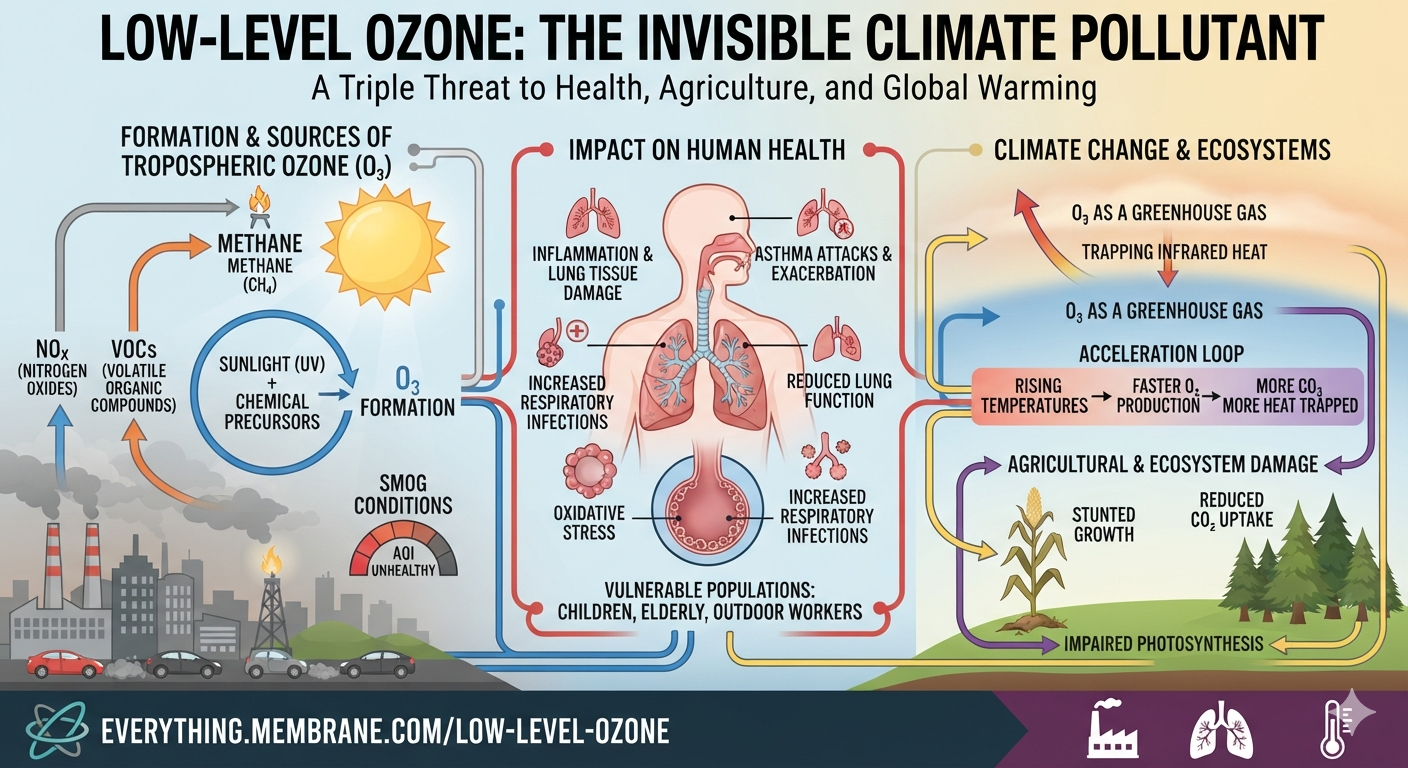
At the center of this crisis is tropospheric ozone (O₃), a toxic oxidant produced through the atmospheric reactions of combustion byproducts, including nitrogen dioxide (NO₂), volatile organic compounds (VOCs), and methane (CH₄). Unlike the protective ozone layer in the stratosphere, ground-level ozone is a powerful biological toxin that damages vegetation, disrupts ecosystem function, and weakens Earth’s natural carbon storage capacity.

Climate change is increasingly understood not as a single forcing mechanism, but as a complex network of interacting atmospheric, ecological, chemical, and biological feedback loops. While carbon dioxide (CO₂) remains the dominant anthropogenic greenhouse gas, secondary feedback systems are becoming increasingly important in determining the trajectory, intensity, and structure of future warming.

Among these feedbacks, ozone occupies a uniquely important position because it functions simultaneously as:

  • a greenhouse gas;
  • a regulator of atmospheric chemistry;
  • a biological stressor;
  • and a climate feedback multiplier.

The ozone-driven feedback pathway can be summarized as:

Combustion → Ozone Formation → Vegetation Damage → Reduced Carbon Uptake → Increased Atmospheric CO₂ → Additional Warming → Increased Wildfire Activity → Additional Ozone Formation

Unlike many climate variables that operate primarily within a single subsystem, ozone directly connects:

  • atmospheric chemistry,
  • ecosystem health,
  • wildfire dynamics,
  • plant physiology,
  • atmospheric circulation,
  • and global carbon cycling.

As a result, ozone amplification mechanisms can accelerate warming indirectly by weakening the very biological systems responsible for removing carbon dioxide from the atmosphere.


Ozone-Induced Vegetation Damage

Ozone enters plant leaves through stomata, where it reacts with plant tissues and generates oxidative stress. This process damages cellular structures, disrupts normal plant metabolism, and reduces the ability of vegetation to capture and store carbon.

Ozone exposure:

  • damages foliage and suppresses photosynthesis;
  • reduces stomatal conductance and plant growth;
  • diminishes drought and heat tolerance;
  • increases vulnerability to pests, pathogens, and wildfire.

Decades of research demonstrate that ozone exposure can reduce plant growth by 10–40%, depending on species sensitivity, ozone concentration, and duration of exposure. In many cases, ozone exposure does not merely slow growth—it can kill plants outright, either through direct damage to leaves and roots or by weakening their ability to survive additional environmental stressors.

This creates a compounding cycle of ecosystem vulnerability. Ozone-stressed vegetation becomes increasingly susceptible to drought, extreme heat, insects, disease, and fire, accelerating forest decline and undermining the natural systems that sustain human civilization.


Ozone and Declining Global Carbon Uptake

The impacts of ozone pollution extend beyond individual trees. Forests, grasslands, wetlands, and soils have historically absorbed a substantial fraction of human carbon emissions, functioning as critical components of Earth’s climate regulation system.

Increasing ozone exposure threatens this stabilizing mechanism.

As ozone suppresses photosynthesis and damages vegetation:

  • forest productivity declines;
  • drought resilience weakens;
  • carbon storage capacity deteriorates;
  • ecosystem mortality increases.

Multiple peer-reviewed studies confirm that ozone pollution has significantly reduced net primary productivity (NPP), particularly in sensitive agricultural regions and forest ecosystems. In some ecosystems, productivity losses have been measured at 20–70%, depending on species sensitivity and exposure levels.

More concerning, global observations indicate that forest carbon sinks are under increasing stress, with some regions showing reduced carbon uptake and movement toward carbon neutrality or carbon-source behavior. This transition represents a major threat because it removes one of Earth’s most important mechanisms for moderating atmospheric CO₂ concentrations.


Ozone, Wildfires, and Cascading Climate Feedbacks

Ozone pollution is deeply interconnected with fossil fuel combustion, warming, drought, and wildfire activity.

Fossil fuel combustion increases both CO₂ emissions and ozone precursors. Ozone then damages vegetation, reducing ecosystem resilience and increasing vulnerability to drought, pests, disease, and wildfire. Wildfires release additional CO₂ and generate new ozone precursors, reinforcing the cycle.

The resulting feedback loop is:

Fossil Fuel Combustion → Increased CO₂ and Ozone Precursors → Tropospheric Ozone Formation → Vegetation Stress → Reduced Carbon Storage → Increased Warming → Drought and Wildfire Intensification → Additional CO₂ and Ozone Formation

All forms of carbon combustion generate ozone precursors, and less efficient combustion processes can produce greater ozone formation per unit of energy released due to incomplete combustion. These interacting processes create a reinforcing system in which atmospheric pollution and climate change amplify one another.

The result is a transition toward a state of compound, cascading instability, where multiple reinforcing feedback mechanisms accelerate ecosystem disruption beyond what would be expected from linear climate responses alone.


Long-Term Field Observations: Pennsylvania Forest Decline

Long-term field observations in Pennsylvania illustrate these broader ecosystem dynamics.

Since 2003, old-growth trees have consistently experienced approximately 40% foliage loss over multi-year intervals, eventually leading to premature mortality. This decline is evident not only in canopy density but also in vertical forest structure, with canopy height declining by approximately 33% over the same period.

These localized observations mirror the broader global pattern of declining forest resilience. Increasing ozone exposure, combined with rising temperatures and other environmental stressors, is contributing to progressive canopy degradation and ecosystem instability.


Ozone as a Climate Multiplier

The greatest danger of ozone pollution is its ability to weaken Earth’s natural climate regulation systems.

Historically, forests and other terrestrial ecosystems removed large quantities of CO₂ from the atmosphere. However, increasing ozone stress threatens this essential function by reducing plant productivity and weakening ecosystem resilience.

As ozone exposure increases:

  • forests absorb less carbon;
  • vegetation becomes less resilient to climate extremes;
  • ecosystem recovery slows;
  • mortality rates increase;
  • wildfires increase
  • and carbon storage capacity declines.

Over time, ecosystems that once acted as powerful carbon sinks may transition toward carbon neutrality and, in severely stressed regions, become net sources of carbon emissions.

Ozone therefore represents a critical climate multiplier: a human-generated pollutant that simultaneously contributes to warming, damages vegetation, reduces carbon uptake, and weakens one of Earth’s most important mechanisms for regulating atmospheric carbon concentrations.

Further reading: The Ozone Feedback Theory: Tropospheric Ozone as a Driver of Ecosystem Decline, Carbon Sink Failure, and Climate Acceleration

B. Wildfires: A Growing Threat to Forests

Wildfires are emerging as a major threat to global carbon sequestration capacity. Fire seasons are lengthening, while wildfires are becoming more frequent, widespread, and intense. This represents a global phenomenon, with regions such as Canada and Siberia becoming areas of particular concern due to the scale of their forests, the amount of carbon stored in vegetation and soils, and the potential for large-scale feedback effects.

Healthy forests function as critical carbon sinks by absorbing atmospheric CO₂ through photosynthesis and storing carbon in biomass and soils. However, increasingly severe wildfires can rapidly reverse this process by releasing decades to centuries of stored carbon back into the atmosphere.

The wildfire feedback cycle is accelerating:

Climate Warming → Hotter and Drier Conditions → Increased Vegetation Stress → Larger Wildfires → CO₂ and Methane Emissions → Additional Warming → More Extreme Fire Conditions

Wildfires contribute to climate destabilization through multiple pathways:

  • Carbon dioxide (CO₂) emissions: Burning forests releases large quantities of stored carbon, reducing the ability of ecosystems to offset human emissions.
  • Methane (CH₄) emissions: Incomplete combustion produces methane, a highly potent greenhouse gas that further amplifies warming.
  • Ozone formation: Wildfire emissions release nitrogen oxides (NOₓ) and volatile organic compounds (VOCs), which contribute to the formation of tropospheric ozone. This ozone further damages surviving vegetation and reduces future carbon uptake.
  • Ecosystem degradation: Severe fires can destroy mature forests, damage soils, eliminate seed sources, and slow or prevent natural regeneration.

Canada and Siberia are especially important because their vast boreal forests store enormous quantities of carbon. As warming accelerates, these ecosystems are increasingly vulnerable to drought, insect outbreaks, permafrost degradation, and extreme fire events. The resulting emissions create a dangerous feedback loop in which forests that historically served as long-term carbon sinks increasingly become sources of atmospheric carbon.

The interaction between wildfire emissions, ozone pollution, methane release, and declining vegetation resilience represents a compound climate feedback system:

Wildfire → CO₂ + Methane + Ozone Precursors → Increased Atmospheric Warming → Vegetation Stress → Greater Fire Risk

As these feedback mechanisms intensify, wildfire activity becomes more than a regional ecological disturbance—it becomes a global factor capable of accelerating carbon-cycle disruption and undermining one of Earth’s most important climate stabilization systems.

C. Water Stress: Climatic Whiplash

Modern forests are increasingly exposed to climatic whiplash—rapid and extreme transitions between opposite water-related stresses. Instead of experiencing gradual seasonal changes, many ecosystems now face abrupt shifts from prolonged drought to intense rainfall, creating physiological instability that trees are poorly adapted to withstand. These alternating extremes disrupt root systems, weaken tree defenses, accelerate disease, and increase mortality.


1. Drought: Hydraulic Failure and Forest Decline

Recent decades have experienced an unprecedented increase in the frequency, duration, and severity of drought events. Rising temperatures intensify drought by increasing evaporation, drying soils, and increasing atmospheric demand for water. Even when annual precipitation remains relatively stable, warmer conditions can create effective drought by causing plants to lose water faster than ecosystems can replenish it.

During prolonged drought, trees experience several cascading stresses:

  • Hydraulic failure: As soil moisture declines, trees struggle to transport water from roots to leaves through their vascular systems. Extreme water deficits can cause air bubbles (embolism) to form in xylem vessels, interrupting water flow and leading to canopy dieback.
  • Reduced photosynthesis: Stomata close to conserve water, limiting carbon dioxide uptake and reducing the tree’s ability to produce energy.
  • Carbon starvation: Continued drought forces trees to consume stored energy reserves for survival, leaving fewer resources for growth, reproduction, and defense.
  • Increased vulnerability to pests and pathogens: Water-stressed trees produce fewer defensive compounds, allowing insects such as bark beetles and fungal diseases to spread more easily.
  • Wildfire amplification: Dry vegetation, dead branches, and weakened forests create more available fuel, increasing fire intensity and ecosystem damage.

Drought stress is especially damaging when combined with rising temperatures because heat and water loss reinforce each other. A hotter atmosphere can extract more moisture from vegetation, producing a feedback loop in which stressed forests become increasingly unable to recover.


2. Excess Rain and Acid Rain: Flooding, Nutrient Loss, and Soil Degradation

Climate change is also increasing the occurrence of extreme precipitation events, creating the opposite form of water stress. Intense rainfall can overwhelm soils, saturate root zones, and damage forests through erosion, nutrient loss, and chemical changes.

Excess rainfall—often occurring after drought conditions—creates a form of hydrological shock:

  • Root oxygen deprivation: Waterlogged soils prevent roots from receiving sufficient oxygen, impairing nutrient uptake and causing root decay.
  • Soil erosion: Heavy rainfall removes topsoil, organic matter, and essential minerals needed for long-term forest productivity.
  • Nutrient leaching: Increased precipitation can wash away calcium, magnesium, potassium, and other micronutrients from the soil profile, weakening tree growth and resilience.
  • Canopy damage: Severe storms, high winds, and saturated branches can cause physical injury, broken limbs, and increased susceptibility to pathogens.

In addition, rainfall can become more chemically damaging when combined with atmospheric pollutants. Acid deposition, produced primarily from sulfur dioxide (SO₂) and nitrogen oxides (NOₓ), alters soil chemistry by lowering pH and disrupting nutrient availability. Acidic precipitation can:

  • Dissolve essential minerals from soils.
  • Mobilize toxic metals such as aluminum, which can damage fine roots.
  • Reduce beneficial microbial activity needed for nutrient cycling.
  • Impair trees’ ability to absorb water and nutrients.

The interaction between excessive rainfall and acidification creates a compounding stress: water may be abundant, yet the soil environment becomes increasingly hostile to plant survival.


3. The Drought–Flood Cycle: A New Ecological Stress Pattern

The greatest threat is not drought or excessive rainfall alone, but the increasing frequency of rapid transitions between extremes. A forest weakened by drought may not recover when heavy rains arrive because damaged roots, depleted energy reserves, and altered soils reduce its ability to absorb and utilize water.

This creates a destructive cycle:

Drought → Root damage → Reduced resilience → Extreme rainfall → Soil disruption → Disease expansion → Greater drought vulnerability

As climate variability intensifies, forests are increasingly subjected to conditions outside their historical range. The result is a destabilized water cycle in which trees experience simultaneous stress from too little water, too much water, and declining water quality—accelerating canopy loss, ecosystem degradation, and forest mortality.

Further reading: Will Tree Species Survive Climate Change?

C. Soil Degradation and Insect Apocalypse

1. Why Soil May Be the Most Important Piece of the Climate Change Puzzle

Global warming is driven by an increase in thermal energy within Earth’s climate system. This system is composed of interconnected subsystems, including the atmosphere, oceans, land, and biosphere. Because these components interact continuously through complex feedback mechanisms, climate change is not a simple linear process but a dynamic system governed by nonlinear relationships.

Chaos theory highlights the complexity and sensitivity of these interconnected systems, and nowhere is this complexity more evident than in the interactions between soil, the atmosphere, oceans, and living organisms.

What makes soil uniquely important in addressing the climate crisis is that soil is alive. Unlike the atmosphere and oceans, which are primarily composed of inorganic matter and respond mainly through physical and chemical processes, soil is a dynamic biological system containing billions of organisms, including fungi, bacteria, microbes, insects, and plant roots.

These organisms regulate essential Earth-system processes, including:

  • carbon sequestration;
  • nutrient cycling;
  • water storage and infiltration;
  • plant productivity;
  • ecosystem resilience;
  • and atmospheric carbon exchange.

Healthy soil provides one of the most adaptable and powerful natural mechanisms for slowing climate feedback loops. It functions not merely as a physical substrate for plant growth, but as a living carbon reservoir capable of storing enormous quantities of organic carbon.


Soil as a Global Carbon Reservoir

Healthy soils act as major carbon sinks by capturing carbon dioxide (CO₂) through plant growth and transferring carbon into organic matter. Microbial communities and soil organisms then stabilize and store this carbon for extended periods.

However, when soil becomes degraded, this stored carbon is released back into the atmosphere, accelerating climate change.

Soil degradation creates a destructive cycle:

Soil Damage → Reduced Carbon Storage → Increased Atmospheric CO₂ → Additional Warming → Further Soil Stress

When soil ecosystems collapse, they can enter a state of desertification—a transformation in which once-productive land loses biological function and becomes increasingly unable to support vegetation.

Desertification represents a critical loss of ecosystem capacity. As soils become barren:

  • carbon sequestration declines;
  • moisture retention decreases;
  • erosion accelerates;
  • biodiversity collapses;
  • and land becomes increasingly vulnerable to drought and extreme heat.

The result is a shift from soil functioning as a climate stabilizer to becoming a contributor to climate instability.


Soil Degradation and Desertification

Erosion

Loss of topsoil through deforestation, overgrazing, intensive agriculture, and poor land management removes the most biologically active and carbon-rich layer of soil. This reduces fertility, water retention, and ecosystem productivity.

Loss of Soil Structure

Disturbance from intensive agriculture, deforestation, and chemical degradation reduces soil porosity and infiltration capacity. Compacted soils limit root growth, reduce water absorption, and increase runoff and erosion.

Decreased Carbon Sequestration

The loss of organic matter reduces the soil’s ability to store carbon. As microbial communities decline and soil structure deteriorates, carbon previously locked underground can return to the atmosphere.

Loss of Biodiversity

Healthy soils depend on diverse microbial, fungal, plant, and animal communities. Declining biodiversity weakens nutrient cycling, reduces ecosystem resilience, and limits the ability of soils to recover from climate stress.

Increased Climate Vulnerability

Degraded soils amplify climate extremes by increasing:

  • drought severity through reduced water retention;
  • flooding through increased runoff;
  • heat stress through loss of vegetation cover;
  • and wildfire risk through increased dryness and vegetation stress.

Saltwater Intrusion and Soil Collapse

Rising seas and changing hydrological patterns are increasing saltwater intrusion into coastal soils. Increased salinity creates multiple stress pathways:

  • reduced plant growth and impaired nutrient uptake;
  • degradation of soil structure through chemical disruption;
  • compaction and poor drainage;
  • nutrient imbalance affecting plant metabolism;
  • salt toxicity that damages vegetation and reduces biodiversity.

Once soils become highly saline, restoration is often difficult, expensive, and resource-intensive.


Desertification and Savannization

Desertification transforms fertile ecosystems into increasingly arid and unproductive landscapes. This process reduces vegetation cover, decreases carbon storage, accelerates erosion, and creates additional warming feedbacks.

Savannization represents a major biome transition in which dense forests—particularly tropical forests—shift toward open savanna ecosystems. This transformation can occur when moisture recycling declines and fire feedbacks intensify.

The loss of forests reduces evapotranspiration, decreases regional rainfall generation, and creates conditions that further reinforce ecosystem drying.


2. Insect Collapse: The Hidden Breakdown of Earth’s Biological Infrastructure

Climate change is not only transforming the atmosphere, oceans, and visible landscapes of Earth. It is also disrupting one of the planet’s most important hidden systems: the living biological network beneath and within ecosystems.

Soil and insect communities exist in a highly interconnected relationship. Insects regulate critical ecological processes, including:

  • decomposition;
  • nutrient cycling;
  • carbon storage;
  • soil aeration;
  • water movement;
  • and the physical structure of soil.

As global temperatures rise and extreme weather events intensify, these relationships are being pushed beyond their historical limits.

Soil insects, particularly ectothermic organisms whose body temperatures are controlled by environmental conditions, are highly vulnerable to:

  • rising temperatures;
  • drought;
  • flooding;
  • habitat destruction;
  • pesticide exposure;
  • and ecosystem instability.

At the same time, declining insect populations weaken the biological processes that maintain soil health. As insects disappear, decomposition slows, nutrient cycling is disrupted, and soil structure deteriorates.

This creates a destructive feedback loop:

Climate Warming → Insect Decline → Soil Degradation → Reduced Carbon Storage → Increased Atmospheric CO₂ → Additional Warming → Further Insect Decline

The collapse of soil-insect systems represents far more than a biodiversity crisis. It threatens one of Earth’s largest carbon reservoirs and one of humanity’s most important life-support systems.

As subterranean ecosystems deteriorate, the impacts extend upward into:

  • agricultural productivity;
  • forest health;
  • wildfire dynamics;
  • atmospheric carbon cycling;
  • food security;
  • and human health.

The decline of soil biodiversity represents a fundamental disruption of the biological infrastructure that supports planetary stability. As these hidden ecosystems weaken, Earth’s ability to regulate climate and sustain life becomes increasingly compromised.

D. Pests

1. Insects and Worms

Insect collapse, soil invertebrate disruption, and worm invasions are novel climate-linked stressors.

2. Invasive Species

Invasive insects and plants–including ailanthus, emerald ash borer, and Asian longhorn beetle–destabilize forests.

3. Short, Warm Winters

  • At -17.8 °C: only 5% of emerald ash borer larvae die
  • At -34 °C: 98% mortality

E. Climate Change Feedback Loops

  1. Warming → drought → tree death → reduced carbon sink → more warming
  2. Ozone formation → reduced NPP → increased CO₂ → enhanced warming
  3. Wildfires → GHG release → more warming → more fires
  4. Permafrost thaw → CO₂ and CH₄ release → boreal forest die-off

Example: Amazon Rainforest Dieback

IV. Conclusion

Conclusion

The evidence presented throughout this paper points to a single overarching conclusion: the global decline of trees is not being driven by one environmental stressor, but by the convergence of many reinforcing stressors acting simultaneously. Ozone pollution, prolonged drought, extreme rainfall, soil degradation, insect collapse, wildfire, invasive pests, and a warming climate are no longer isolated problems. They interact through complex feedback loops that weaken forests faster than they can recover.

Trees evolved under relatively stable climatic conditions. Today’s rapidly changing environment is pushing many species beyond their physiological limits. Chronic ozone exposure reduces photosynthesis and weakens plant defenses. Water stress alternates between prolonged drought and extreme flooding, damaging root systems and disrupting nutrient cycling. Degraded soils lose their ability to store carbon and support healthy microbial communities. Declining insect populations impair decomposition and nutrient recycling, while larger, more frequent wildfires release enormous quantities of carbon dioxide, methane, and ozone precursors back into the atmosphere. Each stressor amplifies the others, producing cascading effects throughout the biosphere.

The consequences extend far beyond the loss of forests themselves. Trees regulate atmospheric carbon dioxide, moderate local and regional climates, recycle water through evapotranspiration, stabilize soils, protect biodiversity, and sustain the ecological processes upon which agriculture and human civilization depend. As forests decline, these essential ecosystem services weaken, increasing the likelihood of additional climate feedbacks that further accelerate environmental change.

Perhaps the most troubling aspect of this process is that forests are not simply victims of climate change—they are also one of Earth’s primary defenses against it. As tree mortality increases, the planet loses one of its largest natural carbon sinks, reducing its capacity to remove carbon dioxide from the atmosphere precisely when that function is needed most. A weakening biosphere becomes less capable of buffering human emissions, allowing warming to accelerate through self-reinforcing feedback mechanisms.

Despite the magnitude of these challenges, the trajectory is not predetermined. Many of the primary drivers of forest decline—including fossil fuel combustion, ozone precursor emissions, habitat destruction, unsustainable land management, and ecosystem fragmentation—are the direct result of human activity. Actions that reduce air pollution, restore soils, protect mature forests, improve watershed management, reduce wildfire risk, conserve biodiversity, and rapidly transition to low-emission energy systems can strengthen ecosystem resilience and slow the progression of these feedback loops.

The future of Earth’s forests will play a central role in determining the future of Earth’s climate. Protecting trees is no longer simply an issue of conservation or biodiversity—it is a prerequisite for maintaining the stability of the global climate system and the ecological foundation upon which human societies depend. Understanding the interconnected nature of these environmental stressors is therefore essential if we are to preserve both the world’s forests and the life-support systems they sustain.
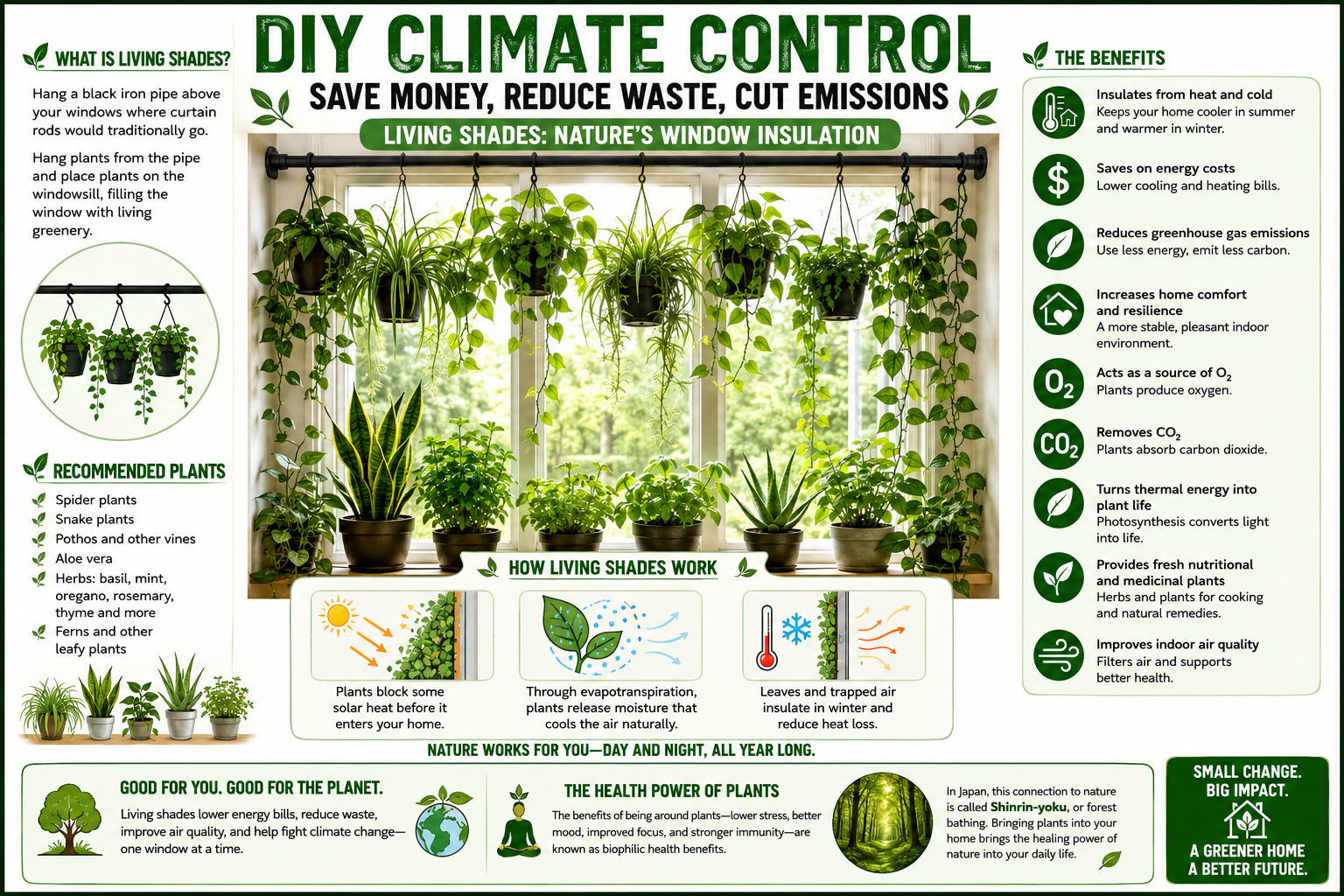
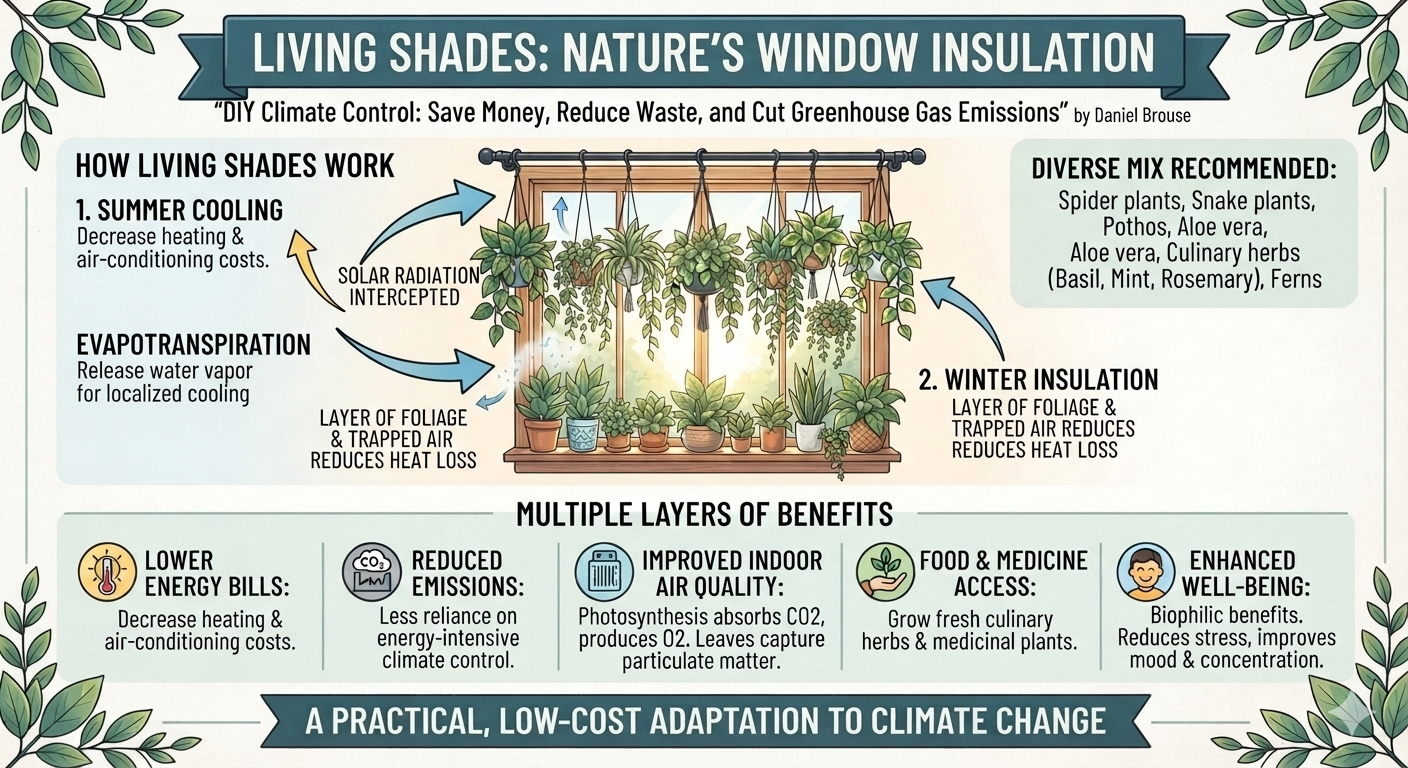
bookmark_borderLow-Level Ozone: The Invisible Climate Pollutant Threatening Human Health and Accelerating Global Warming

by Daniel Brouse

Introduction

Low-level ozone (tropospheric ozone) has emerged as one of the most dangerous yet underappreciated pollutants affecting both human health and Earth’s climate system. Unlike the protective ozone layer high in the stratosphere, ground-level ozone is a toxic gas that damages the lungs, weakens ecosystems, reduces agricultural productivity, and traps heat in the atmosphere.

Ozone is also a key component of a powerful climate feedback loop. As temperatures rise, ozone formation accelerates. In turn, ozone damages forests and other vegetation that normally remove carbon dioxide from the atmosphere, weakening these natural carbon sinks while simultaneously acting as a greenhouse gas itself.

Because ozone is highly reactive and short-lived, measuring its full health impacts is challenging. Current research estimates that long-term exposure to ozone contributes to approximately one million premature deaths worldwide each year, although the true burden may be substantially higher due to the difficulty of isolating ozone exposure from other air pollutants.

Low-level ozone therefore represents a dangerous triple threat:

  • A highly reactive air pollutant
  • A major human health hazard
  • A potent short-lived greenhouse gas

The Formation of Low-Level Ozone

Ground-level ozone is the primary ingredient of urban smog. Unlike many pollutants, it is not emitted directly from vehicles or industrial facilities. Instead, it forms through sunlight-driven chemical reactions involving precursor pollutants.

Ozone Formation

Volatile Organic Compounds (VOCs) + Nitrogen Oxides (NOₓ) + Sunlight → Ozone (O₃)

Major Sources of Ozone Precursors

Nitrogen oxides (NOₓ) originate from:

  • Motor vehicles
  • Power plants
  • Industrial boilers
  • Ships and aircraft

Volatile Organic Compounds (VOCs) originate from:

  • Gasoline vapors
  • Chemical manufacturing
  • Paints and solvents
  • Oil and gas production
  • Vegetation (especially during hot weather)

Methane also contributes to background ozone formation on a global scale.

Because sunlight powers these reactions, ozone concentrations typically peak during hot, sunny, stagnant summer afternoons, particularly beneath persistent high-pressure systems and heat domes.


Human Health Impacts

When inhaled, ozone behaves like a powerful oxidizing chemical that attacks delicate lung tissue. It inflames the respiratory system, damages airway cells, and reduces lung function within minutes of exposure.

Many physicians describe ozone as acting like “sandpaper on the lungs.”

Short-Term Health Effects

Acute exposure may cause:

  • Airway inflammation
  • Chest pain during deep breathing
  • Persistent coughing
  • Wheezing
  • Shortness of breath
  • Reduced lung capacity
  • Increased asthma attacks
  • More emergency room visits

Long-Term Health Effects

Repeated exposure has been associated with:

  • Childhood asthma development
  • Permanent lung tissue damage
  • Reduced lung growth
  • Chronic Obstructive Pulmonary Disease (COPD) progression
  • Increased cardiovascular disease
  • Elevated risk of premature death

Current global estimates attribute roughly one million premature deaths annually to ozone exposure.

NOTE: to effectively filter ozone, you need a respirator equipped with an activated carbon (charcoal) layer or organic vapor chemical cartridges. Standard particulate masks (like basic N95s) will only filter dust, not harmful ozone gas.


Who Is Most Vulnerable?

Although ozone affects everyone, several populations experience substantially greater risk.

Children

Children breathe more air per pound of body weight than adults while their lungs are still developing, making them particularly susceptible to permanent respiratory damage.

Older Adults

Age-related declines in lung function and higher rates of cardiovascular disease increase sensitivity to ozone exposure.

Outdoor Workers and Athletes

Construction workers, landscapers, agricultural workers, first responders, and athletes inhale much larger volumes of air during physical activity, resulting in higher ozone doses.

People with Existing Health Conditions

Individuals with:

  • Asthma
  • COPD
  • Emphysema
  • Chronic bronchitis
  • Heart disease

often experience significantly worsened symptoms during high-ozone events.


The Climate-Ozone Feedback Loop

Climate change and ozone pollution reinforce one another through a powerful positive feedback loop.

Rising Temperatures
         │
         ▼
 Faster Ozone Formation
         │
         ▼
 More Greenhouse Warming
         │
         ▼
 Increased Heat Waves
         │
         ▼
 More Ozone Formation

At the same time:

Higher Ozone
      │
      ▼
Plant Damage
      │
      ▼
Reduced Photosynthesis
      │
      ▼
Weaker Carbon Sinks
      │
      ▼
Higher Atmospheric CO₂
      │
      ▼
More Global Warming

These interconnected feedbacks accelerate both climate change and declining air quality.


The Ozone Climate Penalty

One of the most concerning consequences of climate change is the ozone climate penalty.

Even if emissions of NOₓ and VOCs remain unchanged, warmer temperatures alone increase ozone production by:

  • Accelerating atmospheric chemical reactions
  • Increasing the frequency of stagnant air masses
  • Producing longer-lasting heat domes
  • Extending the ozone season
  • Increasing wildfire smoke, which adds additional ozone precursors

As global temperatures continue to rise, ozone episodes become both more frequent and more intense.


Stressed Ecosystems Produce More Ozone

Plants themselves contribute to ozone formation.

During hot weather, many tree species release larger amounts of natural volatile organic compounds (especially isoprene).

Normally these emissions are harmless.

However, when mixed with human-produced NOₓ pollution, they significantly increase ozone production.

This creates another reinforcing feedback:

Higher temperatures → More natural VOC emissions → More ozone → More warming


Ozone as a Greenhouse Gas

Tropospheric ozone is also a significant short-lived climate pollutant.

It absorbs infrared radiation escaping from Earth’s surface, trapping heat within the lower atmosphere.

Although ozone remains in the atmosphere for only weeks, it is continuously regenerated through pollution, making it an important contributor to ongoing global warming.

Reducing ozone precursors can therefore improve both air quality and climate within relatively short timeframes.


Destruction of Carbon Sinks

One of ozone’s most overlooked impacts is its damage to global vegetation.

Ozone enters plants through microscopic leaf openings called stomata.

Once inside, it damages cells responsible for photosynthesis.

Consequences include:

  • Slower forest growth
  • Reduced crop yields
  • Lower photosynthetic efficiency
  • Increased tree mortality
  • Reduced carbon sequestration

Research indicates that ozone exposure has reduced tropical forest growth by approximately 5%, significantly weakening one of Earth’s largest natural carbon sinks.

As forests lose their ability to absorb carbon dioxide, more CO₂ remains in the atmosphere, accelerating climate change.


Breaking the Feedback Loop

Reducing ozone pollution requires both public policy and individual action.

Policy Solutions

Reduce Ozone Precursors

  • Strengthen NOₓ emission standards
  • Reduce methane leaks from oil and gas production
  • Limit industrial VOC emissions
  • Improve vehicle emission controls

Transition to Clean Energy

Replacing fossil fuels with renewable energy simultaneously reduces:

  • NOₓ emissions
  • VOC emissions
  • Methane leakage
  • Carbon dioxide emissions

This provides immediate health benefits while slowing climate change.


Personal Protection

Individuals can reduce their exposure during ozone episodes by:

  • Monitoring the Air Quality Index (AQI)
  • Limiting strenuous outdoor activity during the afternoon
  • Exercising early in the morning
  • Keeping windows closed on high-ozone days
  • Using indoor air filtration when available
  • Delaying vehicle refueling and gasoline-powered lawn equipment use until evening
  • Following local air quality alerts

Conclusion

Low-level ozone is far more than an urban air pollutant. It is a toxic oxidant that harms nearly every organ system, weakens forests and crops, reduces Earth’s capacity to absorb carbon dioxide, and contributes directly to global warming.

As climate change intensifies, rising temperatures create conditions that generate even more ozone, establishing a dangerous positive feedback loop in which warming degrades air quality, and degraded air quality accelerates further warming.

Breaking this cycle requires reducing fossil fuel emissions, limiting methane and ozone precursors, protecting vulnerable populations during high-ozone events, and accelerating the transition to cleaner energy systems. Because ozone is a short-lived climate pollutant, reducing its formation offers one of the fastest opportunities to improve public health while slowing the pace of climate change.

bookmark_borderAir Quality and Climate Change: The Hidden Health Crisis of Global Warming

by Daniel Brouse

Air pollution and climate change are deeply interconnected because both are driven primarily by the combustion of fossil fuels. Many of the same pollutants that degrade local air quality—including ground-level ozone (O₃), methane (CH₄), and black carbon (soot)—also act as powerful climate forcers that accelerate global warming.

The relationship is bidirectional: climate change worsens air pollution, while air pollution further accelerates climate change through multiple reinforcing feedback loops.

Shared Sources

Approximately 85% of global air pollution and the majority of greenhouse gas emissions originate from burning fossil fuels for transportation, electricity generation, industry, and agriculture. Reducing fossil fuel consumption therefore provides one of the greatest opportunities to improve both climate stability and public health simultaneously.

Climate Change Worsens Air Pollution

As temperatures rise, air quality deteriorates through several mechanisms:

  • Ground-Level Ozone: Hot, sunny, stagnant weather accelerates the chemical reactions that produce ground-level ozone—the primary ingredient of urban smog. Climate warming increases both the frequency and severity of dangerous ozone episodes.
  • Wildfire Smoke: Rising temperatures, prolonged droughts, and changing precipitation patterns increase the frequency and intensity of wildfires. Smoke from these fires releases enormous quantities of fine particulate matter (PM₂.₅), causing hazardous air quality over vast regions.
  • Longer Pollution Episodes: Heat domes and stagnant high-pressure systems trap pollutants near the ground for extended periods, allowing contaminants to accumulate to unhealthy concentrations.

Air Pollution: The World’s Leading Environmental Killer

Air pollution is the leading environmental risk factor for premature death. Each year, exposure to polluted air contributes to an estimated 7.9–8.1 million premature deaths worldwide—approximately one out of every eight deaths globally. This exceeds the annual mortality attributed to tobacco use.

Nearly 90% of this health burden results from chronic noncommunicable diseases that are either caused or worsened by long-term exposure to polluted air.

Major Health Effects

Microscopic pollutants, particularly fine particulate matter (PM₂.₅), penetrate deep into the lungs and enter the bloodstream, triggering widespread inflammation throughout the body.

Cardiovascular Disease

Air pollution significantly increases the risk of heart attacks, strokes, hypertension, and heart failure. Approximately one-quarter of all global deaths from ischemic heart disease are linked to polluted air.

Chronic Respiratory Disease

Long-term exposure contributes directly to:

  • Chronic Obstructive Pulmonary Disease (COPD)
  • Emphysema
  • Chronic bronchitis
  • Severe asthma

Air pollution accounts for roughly half of all deaths from chronic respiratory diseases worldwide.

Neurological Disease

Growing evidence links chronic air pollution exposure to cognitive decline, Alzheimer’s disease, and other forms of dementia. Recent global estimates attribute more than 625,000 dementia-related deaths annually to poor air quality.

Cancer

The World Health Organization classifies outdoor air pollution as a Group 1 (Class 1) human carcinogen, the same highest-risk category used for tobacco smoke and asbestos. Long-term exposure substantially increases the risk of lung cancer.

Metabolic and Developmental Disorders

Research also links air pollution to:

  • Type 2 diabetes
  • Low birth weight
  • Premature birth
  • Miscarriage
  • Childhood developmental disorders
  • Reduced cognitive development

Global Mortality by Pollution Source

Most pollution-related deaths result from three primary exposure pathways:

SourceEstimated Annual Deaths
Ambient PM₂.₅ (outdoor pollution)4.9 million
Household air pollution (solid fuels)2.8 million
Ground-level ozone (O₃)470,000

Together, these exposure pathways account for approximately 8 million premature deaths every year.

Most Vulnerable Populations

The health burden of air pollution is not evenly distributed.

Young Children

More than 700,000 children under age five die annually from respiratory infections associated with polluted air, making air pollution the second-leading environmental risk factor for early childhood mortality.

Older Adults

Adults over age 60 experience the highest rates of pollution-related cardiovascular disease, respiratory illness, stroke, and dementia.

Low- and Middle-Income Countries

Approximately 90% of outdoor air pollution deaths occur in developing nations, where rapid industrialization, heavy reliance on fossil fuels, and limited access to healthcare combine to create disproportionate health risks.


Air Pollution and Climate Feedback Loops

Air pollution is not merely a consequence of climate change—it also reinforces it.

Several important feedback loops illustrate this interaction:

Fossil Fuel Combustion → Greenhouse Gas Emissions → Global Warming → More Wildfires → More Smoke (PM₂.₅ and Black Carbon) → Additional Atmospheric Heating

Global Warming → Higher Temperatures → Increased Ground-Level Ozone → Poorer Air Quality → Greater Public Health Impacts

Extreme Heat → Increased Air Conditioning Demand → Higher Electricity Consumption → Greater Fossil Fuel Use (where grids remain carbon-intensive) → More Greenhouse Gas Emissions → Additional Warming

These reinforcing cycles demonstrate why improving air quality is also an effective climate mitigation strategy.


A Practical Climate Adaptation Tool

While reducing greenhouse gas emissions remains essential, individuals can take practical steps to reduce their exposure to worsening air pollution.

One of the simplest, least expensive, and most effective indoor air filtration systems is the Corsi–Rosenthal Box.

Constructed from four or five high-efficiency furnace filters and a standard box fan, a Corsi–Rosenthal Box can remove large amounts of smoke, dust, pollen, and airborne particulate matter at a fraction of the cost of commercial air purifiers.

Its energy efficiency is particularly important because it helps improve indoor air quality without significantly increasing electricity demand. This is especially valuable as climate change drives greater air-conditioning use, creating another reinforcing feedback loop:

More Heat → More Air Conditioning → Greater Energy Demand → More Greenhouse Gas Emissions (where electricity is fossil-fuel based) → Additional Warming

A Corsi–Rosenthal Box helps break part of this cycle by providing highly effective air filtration using very little electricity.

Whether you’re protecting yourself from wildfire smoke, urban smog, allergens, or airborne viruses, it is one of the most cost-effective climate adaptation tools available.

Do yourself, your family, your pets, and even your houseplants a favor—build a DIY Corsi–Rosenthal Box.

Corsi–Rosenthal Box Instructions

Corsi–Rosenthal Box Instructions