bookmark_borderReal Estate Value and Rising Sea Level

“A very simple way of thinking about it is that it will be tens of thousands of dollars per resident in places that may not have a large tax base”

“Globally, the question of equity is even more acute, with cities in developed nations far better able to fund climate change adaptation projects than in developing countries.”

“Miami Forever Bond”

“The problem with investing in resilience is where is the cash flow ? What we’re doing is protecting against future damage, but there’s not a new positive cash flow. You’re not creating new value. You’re protecting against the loss of existing value. One way or another we’ve got to pay for this …”

https://e360.yale.edu/features/who-will-pay-for-the-huge-costs-of-holding-back-rising-seas

[ Comment: “Miami Forever Bond” ?!! Sell that sucker short.]

https://insideclimatenews.org/news/04082019/climate-change-ratings-agencies-financial-risk-cities-companies

https://www.theguardian.com/us-news/2019/aug/06/california-collapsing-beach-deaths-highlight-climate-fueled-erosion-crisis

http://climatechangepsychology.blogspot.com/2019/04/science-oceans-tallest-waves-are.html

https://www.fastcompany.com/90391923/the-east-coast-is-sinking-under-water-this-photographer-is-documenting-it-as-it-disappears

https://www.thestar.com/opinion/contributors/2019/08/19/washed-out-family-bike-ride-a-climate-change-harbinger-for-all.html

https://www.climatecentral.org/news/ocean-at-the-door-new-homes-in-harms-way-zillow-analysis-21953

That last link has a zillow study that is quite limited in that it looks only at homes built since 2009, but is useful. That first Yale link has a link to another study as well.

sidd

bookmark_borderDo You Need Flood Insurance?

by Daniel Brouse and Sidd Mukherjee

There’s a thing about climate change and a rising sea level that took me a while to grasp… a lot of the water isn’t actually in the sea. As more water accumulates in the sea and the temperature rises, more energy is also being stored in the sea. Now, we are seeing more of that sea and energy transferred to the land.

More energy is being stored in the sea. One of the results is higher sea level. But another is more intense rain on land, the water comes inland through the air as well. As you may have noticed, the rising sea level is causing flooding in Pennsylvania, as well as, sinking the shore.

“Climate change is in general increasing the frequency and intensity of heavy rainfall storms,” said Andreas Prein, a project scientist with the National Center for Atmospheric Research. “If you look at the records, mostly it’s the water that kills most people.”

“The ingredients are there for a real catastrophe if the flood control infrastructure simply gets overwhelmed,” he said.

The New York Times reported: In recent years, researchers have found that hurricanes have lingered longer, as Barry is expected to do, and dumped more rainfall — a sign of climate change, said Christina Patricola, a research scientist at Lawrence Berkeley National Laboratory, and a co-author of a study that found that climate change is making tropical cyclones wetter.

Though storms can form at any time, the Atlantic hurricane season stretches from June 1 through Nov. 30 because that is typically when the Atlantic Ocean’s waters are warm enough to sustain storms. But the oceans are now warmer than ever: They have absorbed more than 90 percent of the heat caused by human-released greenhouse gas emissions.

Do you need flood insurance?

  • Homeowners insurance does NOT cover flooding
  • Flood insurance is obtained through the government’s flood insurance program
  • Flood insurance does not cover the basement of a house
  • Flood insurance covers a lifetime maximum of $250,000 in coverage
    This means if you make a claim for $150,000 the maximum coverage for the life of the property drops to $100,000.

The Human Induced Climate Change Experiment

bookmark_borderPollution Kills

by Daniel Brouse and Sidd Mukherjee

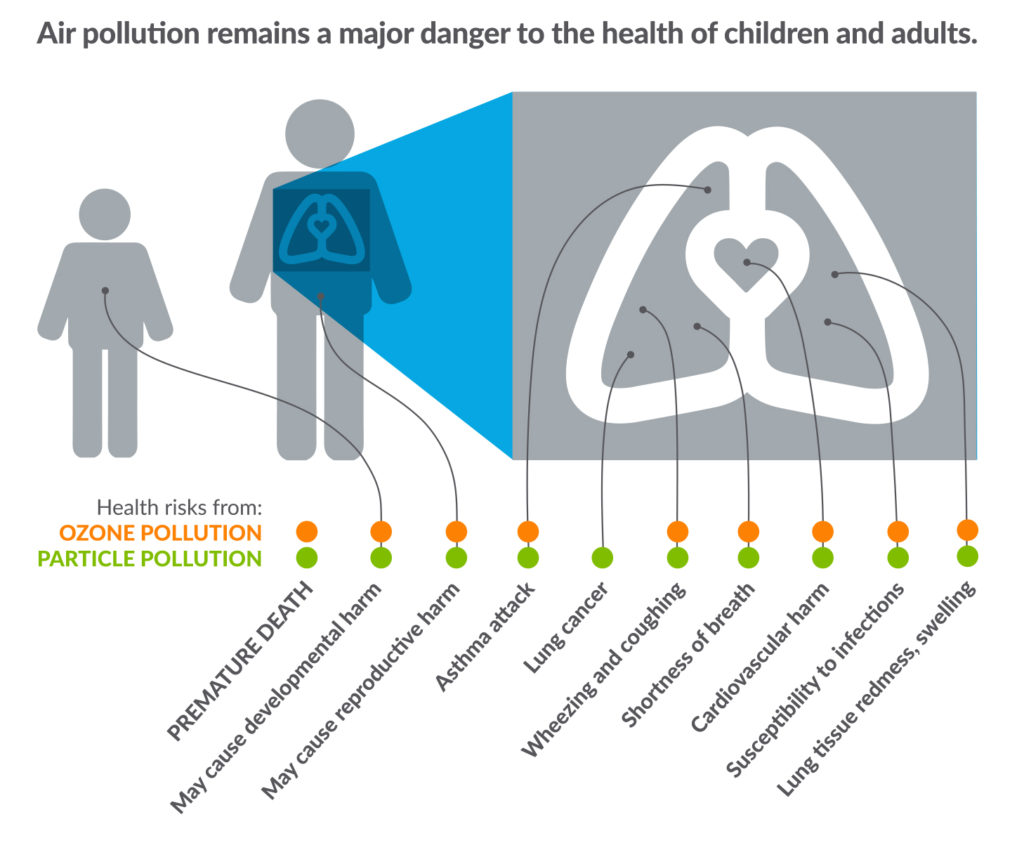
Pollution will kill you. Usually, it is a slow, painful death.

For the last 20 years, the American Lung Association has analyzed data from official air quality monitors to compile the “State of the Air” report. The most recent report found the United States recorded more days with hazardous air quality than ever. “Hazardous” as air that reaches “emergency conditions” on the government’s air quality index. “More than 4 in 10 people live where pollution levels are too often dangerous to breathe.”

Philadelphia-Reading-Camden, PA-NJ-DE-MD rank as the 21st worst city for ozone and the 18th worst for “Year Round Particle Pollution”. Pittsburgh-New Castle-Weirton, PA-OH-WV ranked 7th worst for year round particle pollution. Lancaster, PA ranked 15th worst for particle pollution.

“Two types of air pollution dominate in the U.S.: ozone and particle pollution1. These two pollutants threaten the health and the lives of millions of Americans. Thanks to the Clean Air Act, the U.S. has far less of both pollutants now than in the past. Still, nearly 141.1 million people live in counties where monitors show unhealthy levels of one or both—meaning the air a family breathes could shorten life or cause lung cancer and other harmful effects. It may be hard to imagine that pollution could be invisible, but ozone is. It is currently one of the least-well-controlled pollutants in the United States. And, it is also one of the most dangerous” the Association reports.

Air Pollution, Health and Wellness

The Institute of Health Metrics and Evaluation at the University of Washington that 5 million deaths per year could be attributed to stroke, heat attack, diabetes, lung cancer and chronic lung disease that resulted from air pollution.

The journal Lancet Planetary Health found air pollution is linked to diabetes.

The National Academy of Sciences published a study that found a significant impact from exposure to air pollution on cognitive performance.

“Today it feels like the future of our kids and our country is at stake,” said former Obama EPA chief Gina McCarthy, now director of the Center for Climate, Health and the Global Environment at the Harvard School of Public Health. “We do not have the cleanest air and we have not crossed the finish line when it comes to pollution.”

Vote for parks. Trees and plants help abate pollution.
If you can, move away from the traffic.
Consider wearing masks.

bookmark_borderWill Tree Species Survive Climate Change?

A Pennsylvania Department of Conservation and Natural Resources article reported:

The theory of evolution suggests that species will adapt to changing environmental conditions. The belief is that these changes occur over long periods of geologic time.

But, instead of warming over a period of 1,000 years, the climate is changing faster due to human activity — several degrees per century (100 years).

Due to the rate of climate change, the gradual natural selection of genetic traits that allow species to adapt and reproduce over time may not be enough to preserve the abundance of tree species in Pennsylvania.

Some tree species won’t be able to thrive here as the climate continues to change faster than the plants can adapt.

Northern species like mountain maple, American beech, balsam fir, paper birch, and quaking aspen are especially at risk. Our climate may warm too quickly for these species to adapt before dying out.

Yet, warming due to climate change is not the only threat to the commonwealth’s trees.

Wetter Conditions Impact Many Tree Species

Raining.jpg
Rainy day in Penn’s Woods.

Last year (2018), many areas of the state set records for number of days of rain and total annual rainfall.

Climate change scientists forecasted that the northeastern U.S. climate would become not only warmer, but wetter — which is be proving to be true.

Since 1991, heavy rain events have increased more than 30 percent when compared to the 1901-1960 period. (source: National Climate Assessment)

Many Pennsylvania tree species do not thrive in continuous soggy conditions; and could significantly decline across the state over the long term.

The American mountain ash is a species which may suffer double risk due to its northern habit and upland site preference.

Given current climate trends and future considerations, it wouldn’t make much sense to plant northern/upland species.

A more practical strategy would be to choose climate change-resilient trees to replace those we lose.

Climate Change-Resilient Trees for Pennsylvania

Climate change-resilient trees for Pennsylvania should be southern tree species that tolerate or prefer wetter soil.

Species meeting these criteria include:

  • Sycamore
  • Hackberry
  • Boxelder
  • Eastern redbud

hackberry.JPG
Bark of Hackberry tree.

IMG_0524 (2).jpg
Spring blooms on Eastern redbud tree.

Suitable trees for a warming climate, but well-drained sites include several oak and hickory varieties:

  • Pin oak
  • Black oak
  • Shagbark hickory
  • Mockernut hickory

Other adaptable species likely to be climate change-resilient include:

  • Slippery elm
  • Black gum
  • Shortleaf pine
  • Eastern hophornbeam

New Thinking in Forest Management

Tree Planting.jpg
Newly planted trees in forest.

Climate change doesn’t mean the end of Penn’s Woods, but it does require new thinking when examining what tree species we should plant.

Savvy growers may want to think about choosing trees with fungal and insect resistance — as some southern pests are moving northward.

Climate change caused by human activities will outpace some native trees’ ability to adapt and persist.

Wise choices for replacements could be part of the solution to ensure that our forests remain healthy, viable, and productive.

For more information about climate change predictions for tree species, see Appendix E in DCNR’s Climate Change Adaptation and Mitigation Plan (PDF).

Foliage Spoilage & the Trees’ Canopy Collapse

The Human Induced Climate Change Experiment

bookmark_borderFlood Buyouts, Savings and Climate Change

The AP article Flood buyout costs rise as storms intensify, seas surge reports:
“‘… nearly half of the homeowners in Mosby signed up in 2016 for a program in which the government would buy and then demolish their properties rather than paying to rebuild them over and over. They’re still waiting for offers, joining thousands of others across the country in a slow-moving line to escape from flood-prone homes.

Patience is wearing thin in Mosby, a town of fewer than 200 people with a core of lifelong residents and some younger newcomers drawn by the cheap prices of its modest wood-frame homes. Residents watched nervously this past week as high waters again threatened the town.

“It really is frustrating, because here we are, we’re coming through a wet season. There’s a chance that we could possibly flood, and we’re still waiting,” said Jason Stooksbury, an alderman who oversees the town’s efforts to curb flooding. “It’s not a good situation, but what are you going to do — it’s the government process.”’

With more extreme weather events, flooding “is going to become more and more of an issue, and there will be more and more properties that are at risk of total loss or near total loss,” said Democratic U.S. Rep. Peter DeFazio of Oregon, chairman of the House Transportation and Infrastructure Committee, which has jurisdiction over FEMA. “Then the question is: Are we just going to keep selling them insurance and building in the same place?”

An article in Barrons Young People Blame Climate Change for Their Small Retirement Accounts states:
‘”Some 88% of millennials — a higher percentage than any other age group — accept that climate change is happening, and 69% say it will impact them in their lifetimes. Engulfed in a constant barrage of depressing news stories, many young people are skeptical about saving for an uncertain future.

“I want to hope for the best and plan for a future that is stable and secure, but, when I look at current events and at the world we are predicting, I do not see how things could not be chaotic in 50 years,” Rodriguez says. “The weather systems are already off, and I don’t think it’s hyperbolic to be a little apocalyptic.”’

An article in WIRED entitled For the Midwest, Epic Flooding Is the Face of Climate Change reports:
“Fierce storms lashed across the central US this week, unleashing hundreds of powerful tornadoes that carved a path of destruction through parts of Missouri and Oklahoma Wednesday night, and left at least three dead. While the worst of the violent winds has passed, the region is now bracing for massive flooding, following record amounts of rain brought by the severe weather system and with more expected over the weekend. And it’s coming on the heels of the wettest 12 months the US has seen since record-keeping began in 1895.

That’s according to the National Oceanic and Atmospheric Administration, which earlier this year predicted that two-thirds of the states in the lower 48 would risk major or moderate flooding between March and May. “This is shaping up to be a potentially unprecedented flood season, with more than 200 million people at risk for flooding in their communities,” Ed Clark, director of NOAA’s National Water Center said in the agency’s spring outlook report.

So far, it’s proven prescient—with rivers from North Dakota east to Ohio and south to Louisiana all overflowing their banks in recent weeks. The damage to homes, businesses, and farms is likely to rise into the hundreds of millions of dollars.”

“n South Bend, Indiana, where Notre Dame is located, the city is still recovering from back-to-back biblical deluges—a 500-year flood last spring preceded by a 1,000-year flood in 2016 that broke all historical records. Fellow South Bender Mayor Pete Buttigieg has referenced the series of extreme weather disasters on the presidential campaign trail, linking them to climate change. “It’s not just happening in the North Pole, it’s happening in communities like mine,” he told the Late Show host Stephen Colbert in February. “That’s an emergency.”

Besides all the damage to homes, businesses, and municipal infrastructure, increasingly frequent flooding events in the Midwest would have a huge impact on the nation’s ability to produce food. Wet fields make it difficult for farmers to operate their large, heavy planting machinery without getting stuck. And seedlings struggle to develop root systems when there’s too much moisture in the ground.”
The Human Induced Climate Change Experiment

bookmark_borderClimate Ignorance and Insane Real Estate Deals

An article in Splinter urges Sell Your Florida Property Now. “We all know, in a theoretical way, that climate change is going to turn the state of Florida into a narrow peninsula of watery broken dreams. But I bet you are not scared enough!”

In a Bloomberg article, Lenders Scolded for Climate Ignorance in ‘Insane’ Florida Real Estate Deals, the authors point out the increased risk of purchasing real estate in Florida due to global warming.

That kind of market neglect means the Florida economy can be expected to “go to hell,” warned Spencer Glendon, a senior fellow at the Woods Hole Research Center and a former partner and director of investment research at Wellington Management. “No one should be lending for 30 years in most of Florida,” he said. “During that time frame, insurance will disappear and terminal values” — future resale income — “will shrink. I tell my parents that it’s fine to rent in Florida, but it’s insane to own or to lend.”

“I don’t know whether the right price is half-price or 60% or 20%, but if it’s at 100%, I know it’s the wrong price,” Glendon said.

bookmark_borderAir Quality And Asthma

A report published in JAMA entitled “Association of Changes in Air Quality With Incident Asthma in Children in California, 1993-2014” confirms air pollution increases childhood asthma incidence.

“Conclusions and Relevance: Among children in Southern California, decreases in ambient nitrogen dioxide and PM2.5 between 1993 and 2014 were significantly associated with lower asthma incidence.”

“There’s been a concerted effort in California over the period of this study to reduce motor vehicle emissions in general and diesel emissions in particular,” John Balmes, an environmental health professor at the University of California, says. “And I think this study shows that it’s paying off.”

When LA’s Air Got Better, Kids’ Asthma Cases Dropped NPR

Deaths and Ailments Attributed to Climate Change and Pollution

bookmark_borderGroundwater Rise

Goundwater rise is a problem that will be exasperated by global warming and sea level rise. As the sea level rises, ocean water will inundate the coast, as well as, push groundwater up toward the surface inland.

“Water will leach inside homes through basement cracks. Toilets may become chronically backed up. Raw sewage may seep through manholes. Brackish water will corrode sewer and water pipes and inundate building foundations. And most hazardous of all, water percolating upward may flow through contaminants buried in the soil, spreading them underground and eventually releasing them into people’s homes.”
— Kristina Hill, professor of urban and environmental design at UC Berkeley
(Bay Nature magazine / Spring 2019)

The Human Induced Climate Change Experiment

bookmark_borderClimate Change: Suspension Of Belief

by Daniel Brouse

In the 1990’s, a team of real estate professionals, property management specialists, and climate change scientists starting working on a plan to mitigate the effects of global warming on residential real estate.

There are two major problems with developing a plan:
1) Unintended Consequences
The impact of climate change is wide reaching and compounded by feedback loops. For instance, it is easy to forecast rising sea levels will impact coastal communities; however, it is less obvious that wildfires in California will render the air quality unfit for breathing. If coastal homeowners relocate to areas affected by air quality, their pollution will only exacerbate the air quality and wildfire problems.

2) Suspension Of Belief
People don’t want to believe climate change will ruin their lives. Because they don’t want to believe it, they do not prepare nor take action to prevent global warming. The result is — by the time people believe it, their property has become a liability instead of an asset. How can you sell your property at a loss and afford to move? The answer is you cannot. Instead, you will become a climate refugee.

Florida could be the “wake-up call” for the U.S. population. In 2017, Zillow published a research report entitled, “Climate Change and Housing: Will a Rising Tide Sink All Homes?“. The report forecasts that by 2100, “one in eight Florida homes would be under water.” There are already people who can not afford to pay taxes on submerged land where they can no longer live.

The most immediate threat to property values is flood insurance. Did you know flood insurance and flood insurance risk has been a burden on the federal government since 1950? Flood insurance has become an unsustainable FEMA program. Many of the private partners of the program, such as State Farm and Nationwide, have stopped underwriting flood insurance policies. The National Flood Insurance Program was $24 billion in debt at the beginning of 2014. According to the National Flood Insurance Program (NFIP) Borrowing Authority, “On September 22, 2017, FEMA borrowed the remaining $5.825 billion from the Treasury, reaching the NFIP’s authorized borrowing limit of $30.425 billion. On October 26, 2017, $16 billion of NFIP debt was cancelled to make it possible for the program to pay claims for Hurricanes Harvey, Irma, and Maria.”

NFIP offers two types of coverage for homeowners: building property coverage up to $250,000 and contents coverage up to $100,000. Many people in Florida have already found out their flood insurance didn’t cover their losses. Now, many are finding they can not obtain any insurance.

Rob DePiazza, a St. Augustine artist, is re-building his home out of shipping containers after Hurricane Irma destroyed his property. He said, “We actually stayed in the house for Irma because I felt comfortable with the tree not coming down, and then, at like five in the morning, it fell. My biggest problem was insurance. I didn’t have enough coverage because the thing that you don’t anticipate is when you have storms like two hurricanes back to back. Make sure your insurance is up-to-date and enough to cover rebuilding in this kind of climate.” Now, he is unable to obtain any insurance.

If a property is uninsurable, it is likely worthless.

More About Flood Insurance

bookmark_borderThe Collapse Of Nature

Worldwide insect populations are in decline by as much as 80%. Insects are in a downward spiral threatening a “catastrophic collapse of nature’s ecosystems”, as reported by a global scientific review.

“Unless we change our ways of producing food, insects as a whole will go down the path of extinction in a few decades. The repercussions this will have for the planet’s ecosystems are catastrophic to say the least.”

The review was published in the journal Science Direct is entitled, “Worldwide decline of the entomofauna: A review of its drivers” by Francisco Sánchez-Bayo, Kris A.G.Wyckhuys, etal.

Highlights

• Over 40% of insect species are threatened with extinction.
• Lepidoptera, Hymenoptera and dung beetles (Coleoptera) are the taxa most affected.
• Four aquatic taxa are imperiled and have already lost a large proportion of species.
• Habitat loss by conversion to intensive agriculture is the main driver of the declines.
• Agro-chemical pollutants, invasive species and climate change are additional causes.

“If insect species losses cannot be halted, this will have catastrophic consequences for both the planet’s ecosystems and for the survival of mankind,” said Francisco Sánchez-Bayo.

“The main cause of the decline is agricultural intensification,” Sánchez-Bayo said. “That means the elimination of all trees and shrubs that normally surround the fields, so there are plain, bare fields that are treated with synthetic fertilisers and pesticides.”The demise of insects appears to have started at the beginning of the 20th century, accelerated during the 1950’s and 1960’s and reached “alarming proportions” over the last twenty years.

“If insect species losses cannot be halted, this will have catastrophic consequences for both the planet’s ecosystems and for the survival of mankind”

The Human Induced Climate Change Experiment