bookmark_borderYouth Mental Health in the Era of Accelerating Climate Extremes: Psychological Trauma, Agency, and the Emerging Molecular Health Crisis

Daniel Brouse
February 2, 2026

Abstract

Recent peer-reviewed research published in Nature (2026), PNAS, and a January 2026 analysis in Taylor & Francis Online converges on a stark conclusion: climate change now constitutes a measurable and escalating threat to youth mental health. Extreme weather exposure, chronic climate disruption, and perceived governmental inaction are driving significant increases in post-traumatic stress disorder (PTSD), depression, anxiety, and climate-related distress among children and adolescents worldwide.

Approximately half of reported psychological burden appears directly linked to lived exposure to climate disasters; the remaining burden reflects a crisis of agency — young people’s recognition of existential threat coupled with limited power to alter outcomes. Simultaneously, escalating heat exposure and pollution are exerting measurable biological stress at the cellular and epigenetic level. Together, these findings suggest that climate change is not only an environmental and economic emergency but a multi-generational public health crisis spanning mental and physical domains.

1. Introduction

The climate system’s accelerating instability is increasingly mirrored in the psychological health of younger generations. Unlike abstract environmental concerns of prior decades, today’s youth are growing up amid direct, recurrent, and intensifying exposure to floods, hurricanes, tornadoes, extreme rainfall, landslides, drought, extreme heat, bomb cyclones, wind shear events, hailstorms, wildfires, and zoonotic disease outbreaks.

The cumulative effect is no longer speculative. It is clinically observable.

Research in Nature (2026) and related analyses demonstrate that climate change is contributing to measurable increases in PTSD, depression, anxiety disorders, and chronic distress among children and adolescents. Many young people report feelings of betrayal and abandonment, citing perceived governmental inaction in the face of escalating evidence.

2. Widespread Distress and Solastalgia

A defining feature of this crisis is the phenomenon of solastalgia — often described as “homesickness while still at home.”

Unlike eco-anxiety, which is anticipatory fear about future environmental collapse, solastalgia arises when one’s immediate home environment is visibly degraded. It is the distress of watching familiar landscapes burn, flood, dry, or decay.

Key findings indicate:

  • Increasing climate-related disasters and heat exposure are directly associated with higher rates of anxiety, depression, and PTSD in children.
  • Communities repeatedly exposed to extreme events exhibit compounding psychological harm.
  • Emotional distress often intensifies when environmental change alters identity, place attachment, and cultural continuity.

The PTSD reported by youth is frequently rooted in direct lived experience — evacuations, home loss, displacement, community destruction, and prolonged instability.

3. Direct Exposure and the Paradox of Agency

A study published in PNAS finds that direct experience with climate-related disasters correlates strongly with increased eco-anxiety and functional impairment. However, the same exposure can also catalyze adaptation behaviors and activism.

This introduces a paradox.

Approximately 50% of mental health burden appears to stem from direct trauma exposure. The remaining burden relates to agency — or lack thereof.

Children and adolescents possess the cognitive capacity to understand the existential dimensions of climate destabilization. Their distress is amplified not by ignorance, but by insight. What compounds the trauma is the recognition that decision-making power rests largely with adults whose responses are often perceived as insufficient, dismissive, or delayed.

The psychological strain thus reflects both trauma and moral injury.

4. Climate Change as a Dual Health Crisis

The emerging data suggest that climate change must be understood as both a mental and physical health emergency.

4.1 Heat Mortality and Rising Exposure

  • Global heat-related deaths now approximate one fatality per minute during peak periods.
  • Over the past four years, the average person has endured approximately 19 days annually of life-threatening heat exposure, largely attributable to anthropogenic warming.
  • Extreme heat contributes to heatstroke, dehydration, acute kidney injury, cardiovascular stress, and respiratory complications.
  • Heat exposure worsens pre-existing heart and lung diseases and increases hospitalization rates.

Heat stress also directly exacerbates depression, anxiety, aggression, and suicide risk.

5. Climate Extremes and Cellular Breakdown

Prolonged exposure to extreme heat accelerates biological aging. Research indicates:

  • Tissue damage linked to chronic heat stress.
  • Telomere shortening, a marker of accelerated cellular aging.
  • Increased risk of chronic diseases including cancer, dementia, and diabetes.

These risks are compounded by pollution exposure and infectious disease burden. Climate-related stressors do not act in isolation; they interact and amplify vulnerability across organ systems.

6. Epigenetic Changes: The Molecular Convergence of Climate Stressors

A critical and emerging dimension of this crisis involves epigenetic modification — chemical changes that regulate gene expression without altering the underlying DNA sequence.

Epigenetic mechanisms function as molecular switches, activating or silencing genes in response to environmental stimuli.

Extreme heat, tropospheric ozone exposure, and COVID-19 infection have all been associated with epigenetic alterations linked to:

  • Cardiovascular disease
  • Diabetes
  • Cancer susceptibility
  • Neurodegenerative disorders
  • Immune dysregulation

When multiple stressors occur simultaneously — heat, pollution, infection, psychological trauma — their effects compound rather than merely accumulate. These converging stressors may increase lifetime disease risk and potentially influence transgenerational health outcomes.

This represents a shared biological pathway through which climate destabilization translates into long-term systemic illness.

7. Intergenerational Implications

The possibility that stress-induced epigenetic modifications may influence subsequent generations raises profound ethical and policy implications. Climate-driven biological stress today may shape disease risk tomorrow.

Thus, the youth mental health crisis is not an isolated psychological phenomenon. It is embedded within broader ecological, physiological, and social systems undergoing rapid destabilization.

8. Conclusion

The emerging research makes clear that climate change is a cascading public health emergency affecting both mind and body.

Youth mental distress reflects:

  • Direct trauma from climate disasters,
  • Chronic environmental degradation (solastalgia),
  • Existential awareness without adequate agency.

Simultaneously, climate stressors are accelerating cellular aging, increasing chronic disease risk, and potentially altering gene expression across generations.

Addressing climate anxiety cannot be separated from addressing climate change itself. Tangible mitigation, adaptation, and accountability are not only environmental imperatives — they are mental health interventions.

Recognizing adult responsibility in driving this crisis may be uncomfortable. Yet acknowledging that responsibility may be the first step toward restoring both ecological stability and psychological resilience.

The climate crisis is no longer abstract. It is lived, felt, and embodied — particularly by those who will inherit its consequences.
The Human Induced Climate Change Experiment

bookmark_borderCracked Fractals: Climate Thermodynamics, Insurance Instability, and Sovereign Debt Transmission in Late-Stage Capitalism

by Daniel Brouse (February 2, 2026 update to an ongoing study)

Abstract

The relationships between climate physics and modern financial structure are complex, dynamic, and fundamentally non-linear. This paper examines the transmission mechanisms linking climate destabilization to structural fragility within advanced capitalist economies. Drawing on thermodynamics, actuarial science, and sovereign debt dynamics, it argues that the insurance sector functions as the primary systemic tripwire between physical climate risk and financial abstraction. Evidence from Florida and California demonstrates how accelerating climate losses are already migrating from private balance sheets to public backstops. As these liabilities propagate through municipal bonds, mortgage-backed securities, and ultimately federal debt, the system exhibits the instability patterns of complex systems approaching critical thresholds—what I describe as “cracked fractals.” The convergence of climate acceleration and fiscal overextension suggests not isolated sectoral stress, but the emergence of systemic collapse dynamics.

1. Introduction: Nonlinear Coupling of Climate and Capital

Climate systems and financial systems share defining characteristics: feedback loops, lag structures, threshold behavior, and sensitivity to compounding shocks. Both are governed by non-linear dynamics. Small perturbations can produce outsized consequences when systems are near critical states.

In previous work, I have described the interaction between climate destabilization and financial fragility through a “Domino Effect” framework. The metaphor applies equally to ice sheets and balance sheets. When one structural support fails, stress redistributes across the network. In tightly coupled systems, redistribution accelerates failure elsewhere.

The central analytical question is not whether climate change affects the economy—it demonstrably does—but how physical climate risk transmits into financial architecture, and where the first irreversible fractures appear.

2. Insurance as Systemic Tripwire

The insurance sector occupies the interface between physical risk and financial abstraction. It translates meteorological volatility into actuarial pricing and reserve allocation. When tail risks accelerate beyond historical probability distributions, actuarial tables lose predictive reliability. At that point, the system’s shock absorbers begin to fail.

This failure mode is already visible in:

  • Property insurance withdrawals from high-risk geographies
  • Rapid repricing of premiums
  • Reinsurance market tightening
  • Escalating deductibles and coverage exclusions

Insurance does not create climate risk; it prices it. When pricing becomes impossible, risk migrates.

3. Florida and California: Real-Time Case Studies

Florida and California provide contemporary illustrations of this transmission dynamic.

Florida:
Repeated hurricane losses have driven private insurers into insolvency or retreat. Citizens Property Insurance Corporation—the state-backed insurer of last resort—has become the largest property insurer in the state. Citizens is ultimately backed by policyholder surcharges and post-event assessments that function as a quasi-tax. Climate risk has therefore migrated from private capital to public balance sheets. This model is politically expedient but structurally fragile: if losses outpace premium growth and reserve accumulation, the public backstop itself becomes a destabilizing liability.

California:
Escalating wildfire losses have led major carriers to pause or withdraw new policies. Exposure has shifted toward the California FAIR Plan, increasing the state’s implicit fiscal exposure. As in Florida, the public sector has become the de facto reinsurer of last resort.

In both cases, actuarial strain precedes broader financial contagion. Insurance is the first derivative that breaks.

4. Contagion Pathways

Once insurance destabilizes, transmission channels are straightforward:

  1. Municipal Infrastructure Bonds
    Communities facing repeated disasters encounter rising borrowing costs and impaired credit ratings.
  2. Mortgage-Backed Securities (MBS)
    Real estate values depend on insurability. If coverage becomes unaffordable or unavailable, collateral assumptions underlying MBS structures erode.
  3. Federal Backstops and U.S. Treasuries
    Disaster recovery increasingly migrates to federal balance sheets. As sovereign exposure rises, climate risk becomes embedded in national debt markets.

Bond markets rarely collapse in isolation. They absorb and socialize losses until confidence fractures. Insurance is simply the earliest visible fracture plane.

5. Cracked Fractals and Statistical Deviation

The U.S. economy and climate system increasingly resemble complex systems approaching critical thresholds—what I term “cracked fractals.” These fragile branching patterns represent fragmented stability and inflection points beyond which recovery becomes progressively constrained.

Key indicators—including federal deficits, disaster recovery expenditures, housing unaffordability, and insurance exposure—are now running 2 to 3 standard deviations above historical norms. When multiple independent systems deviate simultaneously at that magnitude, the signal is structural, not cyclical.

Through the lens of chaos theory and nonlinear dynamics, such clustering of extreme deviations indicates tightening feedback loops. Climate volatility increases fiscal strain; fiscal strain reduces adaptive capacity; diminished adaptation increases climate damages. The system begins to fracture along its weakest seams.

6. Integrating Thermodynamics, Actuarial Science, and Sovereign Debt

Climate acceleration is thermodynamically grounded. Greenhouse gas accumulation increases radiative forcing, intensifies energy imbalances, and drives nonlinear physical responses. These physical processes do not negotiate with financial models.

Simultaneously, sovereign debt expansion in advanced economies has accelerated. Aging populations and slowing labor-force growth undermine the growth assumptions that traditionally support debt sustainability. In several Western nations, restrictive immigration policies further weaken demographic resilience, while rapid advances in automation and AI introduce structural labor displacement that complicates income growth, tax base stability, and long-term fiscal balance.

Overlaying these trends are trillions of dollars in climate-related healthcare expenditures, infrastructure repair, disaster recovery, and supply chain disruption. As these costs compound, fiscal space narrows. When exponential climate acceleration meets expanding sovereign liabilities, the result is a coupled instability—what can be described as a domino effect across thermodynamic and financial domains.

Both systems—climate and sovereign debt—exhibit trajectories that are unsustainable under current structural assumptions.

7. Conclusion

The destabilization of insurance markets in high-risk states is not a regional anomaly; it is an early-stage manifestation of a broader structural convergence. Climate thermodynamics and financial architecture are not separate systems—they are dynamically coupled.

Insurance represents the first systemic derivative to fail because it directly translates physical volatility into financial liability. As that failure propagates through municipal finance, mortgage markets, and sovereign debt, the risk becomes nationalized and eventually globalized.

The emerging pattern is not cyclical stress but nonlinear convergence toward structural thresholds. Recognizing insurance instability as the primary transmission mechanism clarifies both the scale of the risk and the urgency of structural reform.


References and Related Work

Brouse, D. (2025). Deviation, Cracked Fractals, Climate, and Economics.
http://membrane.com/global_warming/Cracked-Fractals-Deviations.html

Brouse, D. et al. Insurance Collapse – Introduction.
http://membrane.com/global_warming/Insurance-Collapse-intro.html

Brouse, D. Systemic Collapse.
http://membrane.com/global_warming/Systemic-Collapse.html

Brouse, D. Social-Ecological Feedbacks.
http://membrane.com/global_warming/Social-Ecological-Feedbacks.html

Brouse, D. Dollars and Demise.
http://membrane.com/global_warming/Dollars-Demise.html

Additional materials available at:
http://membrane.com/global_warming/

bookmark_borderCyclogenesis

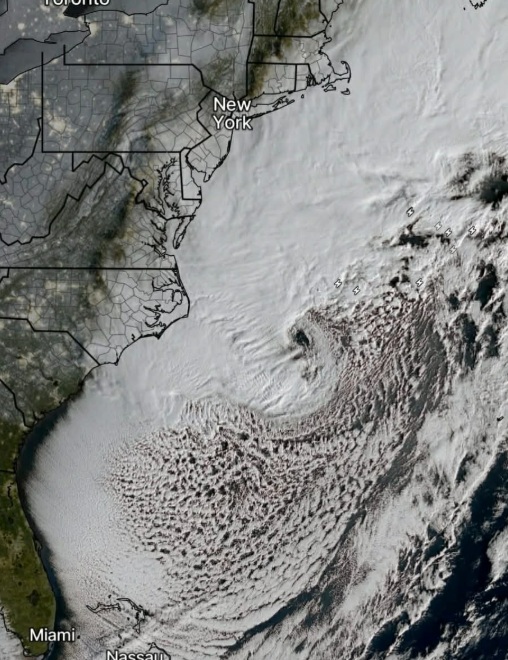
Bomb cyclones (rapidly intensifying mid-latitude extratropical cyclones) are fundamentally driven by baroclinic instability — the conversion of temperature gradients into kinetic energy. Polar amplification is altering those gradients and the background circulation in ways that can favor more extreme storm behavior.

Bomb Cyclone of the East Coast 2026
Bomb Cyclone striking the U.S. East Coast, 2026 — a rapidly intensifying winter storm fueled by sharp temperature contrasts and anomalously warm Atlantic waters.

Here’s how the mechanism works.
1. The Energy Source: Temperature Gradients
Mid-latitude cyclones intensify when:
Cold, dense Arctic air collides with
Warm, moist subtropical air

The stronger the horizontal temperature contrast, the greater the available potential energy for storm development.

Polar amplification complicates this picture.

While the average equator-to-pole temperature gradient is weakening, the structure of that gradient is becoming more uneven and episodic. Instead of a smooth gradient, we now see:

Extreme Arctic warming
Increased sea surface temperatures in the western Atlantic
Larger, sharper localized contrasts during cold-air outbreaks

When Arctic air spills southward over abnormally warm ocean waters, explosive cyclogenesis becomes more likely.

The ocean heat is the fuel.

2. Warmer Oceans = More Latent Heat Release
Bomb cyclones intensify when surface pressure drops ≥ 24 mb in 24 hours.

One of the key accelerants is latent heat release from condensing water vapor.

Because:
Warmer air holds ~7% more moisture per °C (Clausius–Clapeyron relation)

Western Atlantic SSTs are significantly warmer than late 20th-century averages

Arctic amplification contributes to open-water heat release in fall and early winter

Storms now tap into greater moisture and ocean heat reservoirs.

This increases:
Pressure falls
Wind speeds
Precipitation intensity
Storm surge potential
The thermodynamic ceiling is higher.

3. Jet Stream Destabilization
Polar amplification reduces the equator-to-pole temperature gradient on average, which weakens and slows the jet stream.

A slower jet stream tends to:
Meander more (amplified Rossby waves)
Stall weather systems
Create deeper troughs and ridges

These amplified waves can:
Pull Arctic air farther south
Inject subtropical moisture farther north
Enhance upper-level divergence (critical for surface pressure drops)
That combination supports explosive cyclogenesis.

So even if the mean gradient weakens, the waviness and variability of the jet can enhance storm intensification events.

4. Arctic Sea Ice Loss
Reduced sea ice contributes in two ways:
Heat Flux into the Atmosphere
Open water releases stored summer heat in autumn and winter, increasing lower-atmosphere instability.

Enhanced Moisture Supply
More evaporation from ice-free Arctic waters adds atmospheric moisture that can feed developing systems.

This modifies the polar air mass characteristics feeding mid-latitude storms.

5. Intensity
Observed trends suggest:
Greater precipitation rates
Higher wind extremes in some basins
Increased rapid deepening events in the North Atlantic

More extreme compound events (cold + heavy snow + coastal flooding)

Frequency trends are more regionally variable, but the tail risk distribution is thickening — meaning the most extreme storms are becoming more extreme.

6. Nonlinear Feedback Context
In our broader framework of nonlinear climate acceleration:

Bomb cyclones represent:
A dynamical response to polar amplification
A thermodynamic response to warmer oceans
A circulation response to jet destabilization

They are not isolated phenomena. They are manifestations of interacting feedback loops:
Ice-albedo feedback
Ocean heat uptake
Jet stream destabilization
Moisture amplification
The system is not simply warming — it is reorganizing energetically.

Bottom Line

Polar amplification does not just warm the Arctic. It alters:
Temperature gradients
Jet stream behavior
Ocean heat distribution
Moisture availability

Those changes create conditions that favor:
More intense rapid cyclogenesis events
Greater precipitation extremes
Larger pressure drops
Stronger winds and storm surge

Bomb cyclones are one visible symptom of a climate system shifting toward higher-energy variability rather than smooth linear warming.

They are dynamical expressions of amplification.

The Human Induced Climate Change Experiment

bookmark_border2026: Confirmation of Nonlinear Climate Acceleration in the Arctic–North Atlantic System

Daniel Brouse and Sidd Mukherjee
Ongoing Study

Abstract

Recent observational evidence from the Arctic–North Atlantic system indicates that climate change is not proceeding linearly but is accelerating through interacting feedback mechanisms. Arctic amplification has intensified beyond earlier projections, coinciding with destabilization of large-scale atmospheric circulation patterns, increased Greenland Ice Sheet mass loss, nonlinear cryospheric events, and measurable geophysical responses such as rapid isostatic rebound. This paper synthesizes multi-decadal satellite, atmospheric, oceanographic, and cryospheric observations through early 2026, arguing that the collapse of doubling times across key indicators—Arctic temperature anomalies, sea-ice loss, ice mass balance, and circulation variability—confirms a regime shift toward accelerated climate disruption.

1. Introduction

Three decades ago, we proposed that anthropogenic climate forcing would manifest through nonlinear acceleration rather than gradual linear warming. Increasing greenhouse gas concentrations alter Earth’s radiative balance, while feedback loops—albedo loss, water vapor amplification, permafrost carbon release, ocean circulation shifts—compress the “doubling time” of key climate indicators.

As of early 2026, the Arctic provides the clearest confirmation of this hypothesis. Observations demonstrate extreme amplification, destabilized jet stream dynamics, Greenland hydrological disruption, and geophysical rebound occurring at rates inconsistent with linear change.

2. Arctic Amplification and Circulation Destabilization

2.1 Arctic Warming Rates

Arctic amplification has long been observed at approximately three to four times the global mean warming rate (Serreze & Barry, 2011; IPCC AR6, 2021). Since 2006, some Arctic regions have exhibited warming exceeding double the global rate, with episodic winter anomalies reaching 10–20× the hemispheric average during extreme events.

This amplification accelerates:

  • Sea-ice loss, reducing albedo and enhancing ocean heat absorption.
  • Permafrost thaw, increasing methane and CO₂ release.
  • Ocean–atmosphere heat exchange, destabilizing circulation patterns.

The Arctic is transitioning toward a warmer, seasonally ice-diminished state (Overland et al., 2019).

2.2 Jet Stream, Rossby Waves, and SSW Events

As the equator-to-pole temperature gradient weakens, the polar jet stream slows and becomes more meridional (Francis & Vavrus, 2012; Mann et al., 2017). Amplified Rossby waves lead to “stuck” weather regimes—persistent droughts, floods, and cold-air outbreaks.

Sudden Stratospheric Warming (SSW) events—rapid stratospheric temperature increases of up to 50°C within days—disrupt the polar vortex (Baldwin et al., 2021). When displaced, Arctic air masses surge southward while anomalous warmth intrudes northward.

In early 2026, Utqiaġvik (Barrow), Alaska—within the polar night—recorded January temperatures above 40°F, exceeding the previous 36°F January record set in 2017. Concurrently, mid-latitude regions such as the northeastern United States experienced record cold outbreaks. These extremes exemplify circulation destabilization rather than contradiction of warming.

3. Greenland Ice Sheet: Nonlinear Dynamics

3.1 Mass Loss and Sea-Level Contribution

Greenland has lost approximately 169 ± 12 gigatons of ice per year since 2002 (IMBIE Team, 2020), contributing ~14 mm to global mean sea-level rise (SLR). Roughly half of this loss arises from surface melt and runoff, which are projected to intensify under continued Arctic warming.

Recent satellite data show global SLR rates accelerating from ~1.5 mm/yr (1990s) to over 5 mm/yr in 2024–2025 (NASA, 2025), consistent with collapsing doubling times in cryospheric contribution.

3.2 Subglacial Outburst Flood (2025)

The 2025 study Outburst of a Subglacial Flood from the Surface of the Greenland Ice Sheet documented a ~90 million m³ upward-draining flood through ice previously assumed frozen to bedrock. The event fractured the ice sheet and altered downstream glacier flow, demonstrating two-way coupling between basal hydrology and surface melt processes—dynamics not fully represented in current models.

Such nonlinear hydrological feedbacks accelerate ice-sheet instability.

3.3 Dickson Fjord Mega-Tsunami (2023)

In September 2023, a glacier-destabilized landslide in Greenland’s Dickson Fjord triggered a 200-meter mega-tsunami. The resulting seiche generated a global seismic signal lasting nine days, initially classified as an unidentified seismic object (Svennevig et al., 2023; Global Seismology Network data).

The landslide was attributed to glacier retreat destabilizing mountain slopes—an example of cryosphere–lithosphere coupling under warming conditions.

4. Isostatic Rebound and Regional Sea-Level Effects

Greenland’s ice sheet depresses the lithosphere. As ice mass decreases, elastic and viscoelastic rebound occurs. GPS measurements indicate uplift rates exceeding 8 mm/yr in southeastern Greenland (Khan et al., 2016).

Key implications:

  • Local relative sea level may fall, despite global SLR.
  • Crustal stress redistribution may influence seismicity.
  • Peripheral glacier melt contributes up to ~30% of elastic rebound in some regions.

While rebound offsets local sea level temporarily, global redistribution of meltwater increases coastal risk worldwide.

5. Feedback Loop Convergence

The Arctic–Greenland system now exhibits interacting feedback loops:

  • Ice-albedo feedback
  • Ocean stratification and AMOC weakening (Caesar et al., 2021)
  • Permafrost carbon release
  • Jet stream destabilization
  • Subglacial hydrological acceleration

These processes reduce doubling times of climate indicators. Nonlinear acceleration is evident not only in temperature trends but in circulation extremes, cryospheric fracture events, and geophysical responses.

6. Conclusion

The evidence through early 2026 supports the conclusion that climate change is accelerating via interconnected feedback loops rather than progressing linearly. Arctic amplification, destabilized atmospheric circulation, nonlinear Greenland hydrology, accelerating sea-level rise, and rapid isostatic rebound collectively indicate regime-level transition.

The compression of doubling times across these indicators confirms a shift toward exponential intensification. Future projections must incorporate coupled nonlinear dynamics and tipping elements to avoid systematic underestimation of risk.


References

Greenland Slip Sliding Away Mukherjee (2001)
SLR Exponential Fit Mukherjee (2004)
Greenland If the Ice Were Gone Mukherjee (2013)
Sea-Level Rise: Greenland and the Collapse of the East Antarctic Ice Sheet Brouse and Mukherjee (2022)
Baldwin, M. P., et al. (2021). Sudden stratospheric warmings. Reviews of Geophysics.
Caesar, L., et al. (2021). Current Atlantic Meridional Overturning Circulation weakest in a millennium. Nature Geoscience.
Francis, J. A., & Vavrus, S. J. (2012). Evidence linking Arctic amplification to extreme weather. Geophysical Research Letters.
IMBIE Team (2020). Mass balance of the Greenland Ice Sheet from 1992–2018. Nature.
IPCC (2021). AR6 Working Group I Report.
Khan, S. A., et al. (2016). Greenland ice mass loss and crustal uplift. Science Advances.
Mann, M. E., et al. (2017). Influence of anthropogenic warming on planetary waves. Scientific Reports.
NASA (2025). Global Mean Sea Level from Satellite Altimetry.
Overland, J. E., et al. (2019). The urgency of Arctic change. Nature Climate Change.
Serreze, M. C., & Barry, R. G. (2011). Processes and impacts of Arctic amplification. Global and Planetary Change.
Svennevig, K., et al. (2023). Seismic signature of Greenland fjord landslide and seiche event. Geophysical Research Letters.

The Human Induced Climate Change Experiment

bookmark_borderWinter Survival 101: Heat

Why you need to own — and know how to operate — a generator before the storm hits

In a winter storm, the greatest risk is often not snow itself — it’s the loss of heat. When electricity goes out, most modern home heating systems stop working. Gas and oil furnaces require electric ignition and blowers. Heat pumps are fully electric. Even many pellet and boiler systems rely on electric controls.

If the power is out for hours — or days — your home can become uninhabitable quickly.

Leaving Isn’t Always an Option

For many families, abandoning home and staying in a hotel sounds reasonable — until everyone else has the same plan. During widespread outages, hotel rooms fill quickly. Roads may be unsafe. Gas stations may be closed.

There’s also the problem of your house itself. If you leave without properly winterizing:

  • Radiators can freeze and burst
  • Water pipes can crack
  • Toilets and traps can freeze
  • Water damage can destroy walls, floors, and ceilings

Anyone with water-filled plumbing should learn how to winterize their home before an emergency. That means knowing how to:

  • Shut off the main water supply
  • Drain pipes and radiators
  • Add antifreeze (where appropriate)
  • Protect vulnerable plumbing in crawlspaces or exterior walls

Practice this in advance. Emergencies are not the time to read instructions for the first time.

If You Stay: Practice, Practice, Practice

If your plan is to remain at home during a winter outage, the most essential piece of equipment is a generator.

And here’s the rule:
Never purchase survival equipment during a crisis. Buy ahead of time and learn how to use it safely.

Every winter, there are reports of preventable deaths caused by improper generator use. The danger is not hypothetical — it is real and recurring.

Practice Under Real Conditions

Don’t just start your generator once on a sunny afternoon in October. Practice:

  • Starting it in subfreezing temperatures
  • Starting it at night
  • Operating it in the dark
  • Connecting loads safely
  • Refueling it properly

Cold weather changes everything — fuel flow, oil viscosity, battery performance (if electric start), and your own dexterity while wearing gloves.

Generator Safety: Non-Negotiable Rules

  1. Always operate a generator outside.
    Never in a garage. Not even with the door open.
    Not under a porch. Not near windows.
  2. Keep it at least 20 feet from your home, with exhaust directed away from doors and windows.
  3. Install carbon monoxide (CO) detectors on every level of your home and near sleeping areas. Test them regularly and keep spare batteries.

Carbon monoxide is odorless and invisible. It can kill in minutes.

Size Matters — But So Does Portability

Purchase a generator that is:

  • Small enough for you to move safely
  • Large enough to power critical heating systems
  • Capable of running for at least 8 hours on a tank

Many smaller portable generators cannot power large 240-volt loads such as:

  • Central electric furnaces
  • Large electric baseboard heating systems
  • Central air systems

TThough most properly sized portable generators can power essential heating components such as:

  • Gas or oil furnace ignition systems
  • Furnace or boiler blower motors
  • Circulation pumps for hydronic heat

They are not easily connected directly to these systems. Safe operation typically requires a professionally installed transfer switch or interlock system. Pre-wiring by a licensed electrician ensures the generator can supply these components without risking backfeed, equipment damage, or injury.

Beyond heat, prioritize:

  • One refrigerator (if needed)
  • Minimal lighting
  • Phone and device charging

Be cautious with space heaters. While some portable generators can run one small electric space heater, running multiple heaters quickly exceeds capacity. Electric resistance heaters draw significant wattage and are usually an inefficient use of generator power compared to running your primary heating system’s blower or pump.

Before a storm, calculate the startup and running wattage of each device and test your setup safely. The goal isn’t comfort — it’s preventing frozen pipes and maintaining safe indoor temperatures.

A smaller generator is often safer, easier to manage, and more fuel-efficient.

About Solar and Battery Generators

Battery and solar generators have their place, but in prolonged freezing conditions, they are often inadequate for whole-home heat. Cold temperatures reduce battery efficiency significantly. If you rely on one, test its performance in winter conditions — not just in theory.

Proper Electrical Connection

If possible, install a transfer switch or interlock system professionally. This allows you to power circuits safely without risking backfeeding into utility lines — which can kill utility workers.

If using extension cords:

  • Use heavy-duty outdoor-rated cords
  • Avoid overloading circuits
  • Keep connections dry and elevated from snow

Never plug a generator directly into a wall outlet.

Fuel Storage and Readiness

Fuel planning is part of survival planning.

  • Store fuel in approved containers
  • Keep it in a safe, ventilated location
  • Rotate fuel every few months
  • Use fuel stabilizer
  • Keep extra oil for maintenance

Cold weather thickens oil. Your generator may require winter-grade oil for easier starting.

Store Smart

Store your generator somewhere accessible but protected. A warm storage area can make cold starts easier — but never run it indoors to “warm it up.”

Clear snow from the area where you will place it before you need it. Think ahead about:

  • Where it will sit
  • How cords will run
  • How you will access it in deep snow

Heating Strategy Beyond Electricity

Even with a generator, think in layers:

  • Dress in thermal layers indoors
  • Close off unused rooms
  • Insulate windows with plastic film kits
  • Use heavy curtains
  • Seal drafts

If you have a fireplace or wood stove, maintain it properly and keep a supply of dry wood. Never use outdoor propane heaters or grills inside.

Food Strategy in Winter

In freezing temperatures, nature becomes your freezer.

If the power is out:

  • Move frozen food to a garage or sealed cooler outdoors
  • Use snow or ice in sealed containers inside your refrigerator
  • Open refrigerator doors sparingly

Treat your refrigerator like an old-fashioned icebox.

Protecting Your Plumbing While Staying

If interior temperatures drop:

  • Let faucets drip slightly
  • Open cabinet doors under sinks
  • Keep interior doors open for airflow
  • Focus heat on areas with plumbing

If temperatures approach freezing indoors and you cannot maintain heat, winterize before pipes burst.

Final Thought

Winter survival is less about gear and more about preparation and competence. The difference between inconvenience and catastrophe is often practice.

Buy early. Test often. Respect the risks.
And when the storm comes, you’ll be responding — not improvising.

BONUS QUESTION

Another serious risk from this storm is roof collapse. I specifically looked into whether intentionally melting snow from the inside — by increasing interior heat — would help reduce that risk.

The answer is no.

Reduce Internal Heat Loss (Counterintuitive but Critical)

When heat escapes into the attic, it:

  • Melts snow unevenly
  • Causes meltwater to refreeze at the eaves
  • Builds ice dams
  • Adds concentrated ice weight along roof edges

Trying to “melt it off” from inside actually increases structural stress rather than relieving it.

Instead:

  • Keep attic access doors tightly closed
  • Avoid excessively raising indoor temperatures
  • Seal obvious attic air leaks if they are safely accessible

The goal is a uniformly cold roof surface, not partial melting. Consistent cold prevents uneven melt–refreeze cycles and reduces the formation of heavy ice concentrations.

bookmark_borderExtreme Energy Events: How a Warming Planet Converts Heat Into Destruction

by Daniel Brouse and Sidd Mukherjee
December 18, 2025

From “Global Warming” to System-Wide Energy Overload

The phrase global warming is widely misunderstood. While it accurately describes a rise in Earth’s average temperature, it fails to capture the true source of risk: a rapid increase in total energy within the Earth system. Heat is only the entry point. Once added, that energy is transformed, transferred, and amplified through atmospheric, oceanic, and terrestrial processes.

In 2025, global mean temperatures exceeded the long-recognized 1.5 °C threshold. To a lay observer, this may sound insignificant. It is not. Earth’s climate is a nonlinear system. Small average increases translate into large, destabilizing changes in circulation, moisture, pressure, and momentum—producing what are better described as extreme energy events.

What Are Extreme Energy Events?

Terms like heat waves or extreme weather describe symptoms, not mechanisms. The real driver is energy—thermal, kinetic, latent, and gravitational—moving through a destabilized system.

Extreme energy events include:

  • Violent precipitation and flash flooding
  • Extreme winds and pressure-gradient-driven storms
  • Rapid thermal and moisture swings (“climate whiplash”)
  • Coastal storm surge and marine heatwaves
  • Convective, solid, and chemical energy releases (hail, microbursts, wildfire)

These events are becoming more frequent and more destructive because energy scales nonlinearly.

Violent Rain: When Moisture Becomes Momentum

A critical mistake is equating climate change solely with heat. As air warms, it holds more water vapor—about 7% more moisture per 1 °C of warming. Over a 10 °C increase, moisture capacity nearly doubles.

This excess moisture does not fall gently.

Larger and more numerous raindrops increase mass (m), and falling from greater heights increases velocity (v). Momentum (p = mv) rises sharply. Upon impact, that momentum transfers to surfaces and to runoff, increasing erosion, infrastructure failure, and flood velocity.

Flow forces scale with the square of velocity (v²). Even modest increases in rainfall intensity dramatically increase destructive power.

Because water is ~800 times denser than air, fast-moving floodwater exerts exponentially greater force than wind at the same speed.

In July 2025 alone, hundreds of flash floods occurred across the United States, including multiple so‑called 1‑in‑1,000‑year rainfall events in Texas, New Mexico, North Carolina, Florida, and Illinois—statistics that no longer describe rarity, but systemic change.

Extreme Wind: Pressure, Acceleration, and Failure

As temperature gradients shift and circulation destabilizes, pressure contrasts intensify and reorganize. The result is stronger, more erratic winds.

Wyoming Wind Event — December 17, 2025

  • Peak gust: 144 mph near Smoot, Wyoming
  • Location: Mount Coffin weather station—one of the windiest sites in the state
  • Context: One of the strongest recorded gusts in Wyoming history

Transportation Impacts

  • Dozens of tractor‑trailers blown over statewide
  • 39 blowover incidents responded to by Wyoming Highway Patrol between December 9–12
  • Repeated closures of I‑80 and I‑25 to high‑profile vehicles

These were not isolated anomalies; they were the mechanical outcome of a hotter, more unstable atmosphere.

Rapid Pressure Gradients: The Hidden Engine

Wind is driven by pressure gradients. As climate energy increases, these gradients sharpen.

Bomb Cyclones (Explosive Cyclogenesis)

  • Defined by pressure drops ≥ 24 mb in 24 hours
  • Produce hurricane‑force winds and extreme precipitation

Notable examples include record‑breaking North Atlantic and Pacific storms whose pressures rival major hurricanes.

Hurricanes and Tropical Cyclones

These systems are extreme pressure machines. Tight gradients around the eye wall accelerate winds to catastrophic speeds. Rapid intensification has become increasingly common as ocean heat content rises.

Localized Gradient Events

  • Derechos and squall lines: Long‑lived straight‑line windstorms
  • Santa Ana winds: Pressure‑driven downslope accelerations fueling megafires
  • Tornadoes: Among the steepest pressure gradients on Earth, capable of 300‑knot winds

Coastal Storm Surge: When Pressure Lifts the Sea

Atmospheric pressure alone can raise sea level. Roughly 1 cm of sea‑level rise occurs for every 1 mb pressure drop.

Deep low‑pressure systems can elevate ocean levels by half a meter before wind is even considered. When combined with wave energy and rising baseline seas, the result is catastrophic coastal flooding.

Climate Whiplash: Rapid Energy Reversals

A destabilized system oscillates.

  • Hydroclimate whiplash: Drought rapidly followed by extreme flooding
  • Flash freezes: Sudden thermal energy loss causing infrastructure collapse

These shifts strain ecosystems and human systems designed for gradual change.

Marine, Solid, and Convective Energy Events

  • Marine heatwaves: Long‑lasting ocean heat anomalies devastating fisheries and coral reefs
  • Rogue waves: Spontaneous high‑energy wave convergence
  • Severe hail: Sustained by intense convective updrafts
  • Microbursts: Localized downdrafts exceeding 90 mph
  • Wildfires: Massive chemical energy releases enabled by heat, dryness, and wind

Alignment With Tipping Points and Cascading Collapse

This framework of extreme energy events directly aligns with—and physically underpins—tipping-point theory and cascading-collapse dynamics.

Extreme Energy as the Mechanism of Tipping Points

Tipping points are not abstract thresholds; they are energy thresholds. A system appears stable while excess energy is absorbed internally—through ocean heat uptake, cryosphere melt, soil moisture loss, or atmospheric moisture loading. Once buffering capacity is exhausted, the system reorganizes abruptly.

Examples include:

  • Jet stream destabilization once polar amplification erodes the equator-to-pole temperature gradient
  • AMOC weakening as freshwater input disrupts density-driven circulation
  • Cryosphere collapse when latent heat thresholds are exceeded and albedo feedbacks flip sign

Extreme energy events are therefore the observable phase transition—the moment when stored energy is released into motion, flow, and force.

Cascading Collapse: When One Failure Accelerates the Next

Earth’s climate is a tightly coupled system. When one component crosses a tipping point, it injects energy or removes stability from adjacent systems, accelerating their failure.

For example:

  • Arctic amplification weakens the jet stream → stalled Rossby waves → prolonged heat domes and floods → soil moisture loss → wildfire → atmospheric aerosol loading → further circulation disruption.
  • Ocean heat uptake delays surface warming → stratification increases → circulation slows → marine heatwaves intensify → ecosystem collapse → reduced carbon uptake → accelerated atmospheric warming.

Each collapse feeds energy forward, amplifying stress on the next subsystem. This is why observed change is no longer sequential—it is simultaneous.

Nonlinearity: Why Change Appears Sudden

In nonlinear systems, stress accumulates invisibly. The release is abrupt.

Extreme energy events mark the transition from:

  • Energy accumulation → energy expression
  • Buffering → breakdown
  • Variability → instability

This explains why multiple “once-in-1,000-year” events are now occurring within the same season, across unrelated regions, and through different physical mechanisms.

From Climate Risk to Systems Failure

Our tipping-point and cascading-collapse work emphasizes a critical insight: the danger is not the magnitude of warming alone, but the synchronization of failures.

Extreme energy events are the connective tissue between:

  • Climate physics
  • Infrastructure collapse
  • Economic destabilization
  • Ecological failure
  • Human habitability limits

They are how abstract thresholds become lived reality.

The Core Reality

Climate change is not simply warming the planet—it is pushing multiple Earth systems past energetic thresholds simultaneously.

Once tipping points are crossed, the system no longer returns to its prior state. Energy flows reconfigure permanently, cascades accelerate, and collapse becomes self-reinforcing.

We are no longer approaching this phase.

We are inside it.


* Our probabilistic, ensemble-based climate model — which incorporates complex socio-economic and ecological feedback loops within a dynamic, nonlinear system — projects that global temperatures are becoming unsustainable this century. This far exceeds earlier estimates of a 4°C rise over the next thousand years, highlighting a dramatic acceleration in global warming. We are now entering a phase of compound, cascading collapse, where climate, ecological, and societal systems destabilize through interlinked, self-reinforcing feedback loops.

We examine how human activities — such as deforestation, fossil fuel combustion, mass consumption, industrial agriculture, and land development — interact with ecological processes like thermal energy redistribution, carbon cycling, hydrological flow, biodiversity loss, and the spread of disease vectors. These interactions do not follow linear cause-and-effect patterns. Instead, they form complex, self-reinforcing feedback loops that can trigger rapid, system-wide transformations — often abruptly and without warning. Grasping these dynamics is crucial for accurately assessing global risks and developing effective strategies for long-term survival.

What Can I Do?
The single most important action you can take to help address the climate crisis is simple: stop burning fossil fuels. There are numerous actions you can take to contribute to saving the planet. Each person bears the responsibility to minimize pollution, discontinue the use of fossil fuels, reduce consumption, and foster a culture of love and care. The Butterfly Effect illustrates that a small change in one area can lead to significant alterations in conditions anywhere on the globe. Hence, the frequently heard statement that a fluttering butterfly in China can cause a hurricane in the Atlantic. Be a butterfly and affect the world.

Tipping points and feedback loops drive the acceleration of climate change. When one tipping point is breached and triggers others, the cascading collapse is known as the Domino Effect.

The Climate Crisis: Violent Rain | Deadly Humid Heat | Health Collapse | Extreme Weather Events | Insurance Collapse | Forest Collapse | Soil Collapse | Rising Sea Level | Food and Water Collapse | Updates

The Human Induced Climate Change Experiment

bookmark_borderEnergy Events: Extreme Wind as a Climate Signal

by Daniel Brouse
December 17, 2025

Climate change is not simply warming the planet; it is fundamentally increasing the amount of energy circulating through the Earth system. As thermal energy accumulates in the atmosphere and oceans, it is increasingly expressed through extreme “energy events” — wind, precipitation, heat, and rapid pressure gradients — rather than through gradual, evenly distributed change.

One of the clearest manifestations of this trend is the growing intensity and frequency of extreme wind events. These are not isolated anomalies. They are the mechanical outcome of a hotter, more chaotic atmosphere with destabilized circulation patterns and amplified pressure contrasts.

Record-Breaking Wind Event in Wyoming

On December 17, 2025, Wyoming experienced an extraordinary and dangerous wind event that underscores this accelerating trend.

Wind Gust and Location

  • Peak Gust: A confirmed wind gust of 144 mph was recorded near Smoot, Wyoming.
  • Recording Station: The measurement was taken at a weather station atop Mount Coffin, one of the windiest and most meteorologically exposed locations in the state.
  • Significance: This 144 mph gust ranks among the strongest ever recorded in Wyoming. It exceeded other extreme gusts documented the same day, including 123 mph in Red Canyon and 121 mph in Lincoln County, illustrating the spatial extent and severity of the event.

Such wind speeds are similar to those found in category 4 hurricanes, despite occurring far inland and outside of tropical systems — a hallmark of increasingly energized mid-latitude weather.

Impacts on Transportation and Public Safety

The sustained and extreme winds across mid-December 2025 created severe hazards, particularly for high-profile vehicles.

  • Dozens of Blowovers: By December 17, dozens of semi-trucks had been blown over across the state due to powerful crosswinds.
  • Mass Incidents: Earlier in the same week (December 9–12), the Wyoming Highway Patrol responded to 39 separate vehicle blowovers, the vast majority involving tractor-trailers.
  • Hazardous Hotspots: Repeated incidents were concentrated along major freight corridors, including Interstate 80 near Cooper Cove and Interstate 25 near Wheatland and Wyo Hill.
  • Closures: As conditions deteriorated, large sections of I-25 and I-80 were closed to light and high-profile vehicles to prevent further accidents and potential loss of life.

These disruptions are not merely logistical inconveniences; they reflect growing systemic risk to transportation infrastructure in a climate that increasingly produces wind extremes beyond historical design thresholds.

Why Climate Change Drives Extreme Wind

Extreme wind events are tightly linked to atmospheric energy imbalance. As greenhouse gases trap additional heat:

  • Temperature gradients intensify, particularly where warm air masses collide with rapidly changing cold air intrusions.
  • Jet stream instability increases, leading to stronger pressure differentials and more violent surface winds.
  • Storm systems slow and deepen, allowing energy to accumulate rather than dissipate quickly.

In this context, record wind gusts are not random outliers. They are mechanical expressions of a hotter, more unstable atmosphere operating under nonlinear dynamics.

A Warning Signal, Not an Outlier

The Wyoming wind event of December 2025 should be understood as a warning signal. As climate change accelerates, extreme wind events are becoming more frequent, more intense, and more geographically widespread. Infrastructure, freight systems, emergency services, and public safety planning are increasingly misaligned with the realities of this new atmospheric regime.

What occurred in Wyoming is not a glimpse of a distant future. It is evidence that the future is already here — and that extreme energy events are becoming a defining feature of the climate system we now inhabit.


* Our probabilistic, ensemble-based climate model — which incorporates complex socio-economic and ecological feedback loops within a dynamic, nonlinear system — projects that global temperatures are becoming unsustainable this century. This far exceeds earlier estimates of a 4°C rise over the next thousand years, highlighting a dramatic acceleration in global warming. We are now entering a phase of compound, cascading collapse, where climate, ecological, and societal systems destabilize through interlinked, self-reinforcing feedback loops.

We examine how human activities — such as deforestation, fossil fuel combustion, mass consumption, industrial agriculture, and land development — interact with ecological processes like thermal energy redistribution, carbon cycling, hydrological flow, biodiversity loss, and the spread of disease vectors. These interactions do not follow linear cause-and-effect patterns. Instead, they form complex, self-reinforcing feedback loops that can trigger rapid, system-wide transformations — often abruptly and without warning. Grasping these dynamics is crucial for accurately assessing global risks and developing effective strategies for long-term survival.

What Can I Do?
The single most important action you can take to help address the climate crisis is simple: stop burning fossil fuels. There are numerous actions you can take to contribute to saving the planet. Each person bears the responsibility to minimize pollution, discontinue the use of fossil fuels, reduce consumption, and foster a culture of love and care. The Butterfly Effect illustrates that a small change in one area can lead to significant alterations in conditions anywhere on the globe. Hence, the frequently heard statement that a fluttering butterfly in China can cause a hurricane in the Atlantic. Be a butterfly and affect the world.

Tipping points and feedback loops drive the acceleration of climate change. When one tipping point is breached and triggers others, the cascading collapse is known as the Domino Effect.

The Climate Crisis: Violent Rain | Deadly Humid Heat | Health Collapse | Extreme Weather Events | Insurance Collapse | Forest Collapse | Soil Collapse | Rising Sea Level | Food and Water Collapse | Updates

The Human Induced Climate Change Experiment

bookmark_borderThe Dismantling of U.S. Climate Science Under the Trump Administration

In 2025, the Trump administration initiated an unprecedented rollback of federal climate science infrastructure, targeting core research institutions, observational systems, and legal frameworks that have underpinned U.S. and global climate understanding for decades. The most striking move came on December 16, 2025, with the announcement that the National Center for Atmospheric Research (NCAR) would be broken up—marking the first time a major national climate modeling center has been intentionally dismantled by executive action.

Administration officials framed these actions not as budgetary or structural reforms, but as an ideological purge of what they described as politically motivated science.

Official Rhetoric Targeting Climate Science

Senior administration figures used explicitly political and anti-scientific language to justify the dismantling of climate research institutions:

  • “Climate Alarmism”: White House Budget Director Russell Vought labeled NCAR “one of the largest sources of climate alarmism in the country,” asserting that its research exaggerated risks.
  • “Left-wing Climate Lunacy”: Other senior officials described NCAR as a “premier research stronghold for left-wing climate lunacy.”
  • “Green New Scam”: The administration argued that dismantling NCAR was necessary to eliminate what it called “Green New Scam research activities.”
  • “Con Job” and “Hoax”: These attacks mirrored President Trump’s broader rhetoric throughout 2025, including his September address to the United Nations in which he described climate change as “the greatest con job ever perpetrated on the world” and “the biggest hoax ever.”

This language represents a departure from prior policy disagreements over climate mitigation and instead signals a direct rejection of the scientific enterprise itself.

Key Climate Science Dismantling Actions (2025)

National Center for Atmospheric Research (NCAR)

NCAR, headquartered in Boulder, Colorado, has been a global leader in climate and atmospheric modeling for more than six decades. In December 2025, the administration announced plans to “break up” the institution. While some operational weather forecasting functions may be reassigned, NCAR’s core climate modeling, paleoclimate research, and Earth system science programs face immediate dissolution. Researchers warn that the loss of NCAR’s integrated modeling capacity will severely impair long-term climate projection and extreme-weather attribution.

National Oceanic and Atmospheric Administration (NOAA)

Following policy guidance from Project 2025, the administration proposed cutting NOAA’s budget by nearly 25%, reducing funding from approximately $6.1 billion to $4.5 billion. Proposed actions include:

  • Eliminating the Office of Oceanic and Atmospheric Research (OAR), NOAA’s primary climate research arm.
  • Permanently closing more than two dozen facilities, including:
    • The National Severe Storms Laboratory
    • The Mauna Loa Observatory, which has maintained the world’s longest continuous CO₂ record since the 1950s.
  • Ending the public tracking of “billion-dollar disaster” statistics, a dataset widely used by insurers, emergency planners, and economists.

NASA Earth Science Division

Budget proposals seek to reduce NASA’s Earth science funding by roughly 50%, lowering it to approximately $1 billion. These cuts would cancel or indefinitely delay next-generation satellite missions designed to monitor sea-level rise, ice-sheet dynamics, atmospheric aerosols, and ocean heat content—key indicators of accelerating climate change.

U.S. Global Change Research Program (USGCRP)

The administration has restructured the USGCRP, which coordinates climate research across 13 federal agencies. Several congressionally mandated climate assessment reports have been removed from public access, disrupting continuity in national climate risk assessment and long-term planning.

Policy and Regulatory Rollbacks

These institutional changes are accompanied by sweeping regulatory reversals:

  • Paris Agreement: On January 22, 2025, President Trump formally withdrew the United States from the Paris Climate Accord for a second time.
  • EPA Endangerment Finding: The Environmental Protection Agency is moving to rescind the 2009 Endangerment Finding, the legal basis for regulating greenhouse gases under the Clean Air Act.
  • Inflation Reduction Act (IRA): Major provisions of the IRA have been dismantled, halting billions in clean energy tax credits and canceling approximately $8 billion in climate-related funding previously allocated to 16 states.

Impacts on the Scientific Workforce

By December 2025, more than 200,000 civil servants had exited the federal workforce, including thousands of scientists and technical staff from NASA, NOAA, and the National Science Foundation. Climate researchers warn that the loss of institutional memory, observational continuity, and modeling capacity will take decades to rebuild—if rebuilding remains politically possible.

Experts across disciplines caution that dismantling these institutions “undermines the factual backbone” of climate risk assessment, leaving the United States—and the global community—less prepared for accelerating extreme weather, infrastructure failures, food system shocks, and economic instability.

A Structural Break in Climate Governance

Taken together, these actions represent not a routine policy shift but a structural rupture in U.S. climate governance. For the first time, federal climate science infrastructure is being actively dismantled while climate-driven disasters are accelerating in frequency, intensity, and cost. The long-term consequences extend beyond environmental policy, affecting national security, economic stability, public health, and global scientific cooperation.

The choice is no longer whether change is coming, but whether we act quickly enough to remain biologically capable of surviving it.


* Our probabilistic, ensemble-based climate model — which incorporates complex socio-economic and ecological feedback loops within a dynamic, nonlinear system — projects that global temperatures are becoming unsustainable this century. This far exceeds earlier estimates of a 4°C rise over the next thousand years, highlighting a dramatic acceleration in global warming. We are now entering a phase of compound, cascading collapse, where climate, ecological, and societal systems destabilize through interlinked, self-reinforcing feedback loops.

We examine how human activities — such as deforestation, fossil fuel combustion, mass consumption, industrial agriculture, and land development — interact with ecological processes like thermal energy redistribution, carbon cycling, hydrological flow, biodiversity loss, and the spread of disease vectors. These interactions do not follow linear cause-and-effect patterns. Instead, they form complex, self-reinforcing feedback loops that can trigger rapid, system-wide transformations — often abruptly and without warning. Grasping these dynamics is crucial for accurately assessing global risks and developing effective strategies for long-term survival.

What Can I Do?
The single most important action you can take to help address the climate crisis is simple: stop burning fossil fuels. There are numerous actions you can take to contribute to saving the planet. Each person bears the responsibility to minimize pollution, discontinue the use of fossil fuels, reduce consumption, and foster a culture of love and care. The Butterfly Effect illustrates that a small change in one area can lead to significant alterations in conditions anywhere on the globe. Hence, the frequently heard statement that a fluttering butterfly in China can cause a hurricane in the Atlantic. Be a butterfly and affect the world.

Tipping points and feedback loops drive the acceleration of climate change. When one tipping point is breached and triggers others, the cascading collapse is known as the Domino Effect.

The Climate Crisis: Violent Rain | Deadly Humid Heat | Health Collapse | Extreme Weather Events | Insurance Collapse | Forest Collapse | Soil Collapse | Rising Sea Level | Food and Water Collapse | Updates

The Human Induced Climate Change Experiment

bookmark_borderHow the “Global Average” Is Hiding the Real Climate Emergency

by Daniel Brouse
December 16, 2025

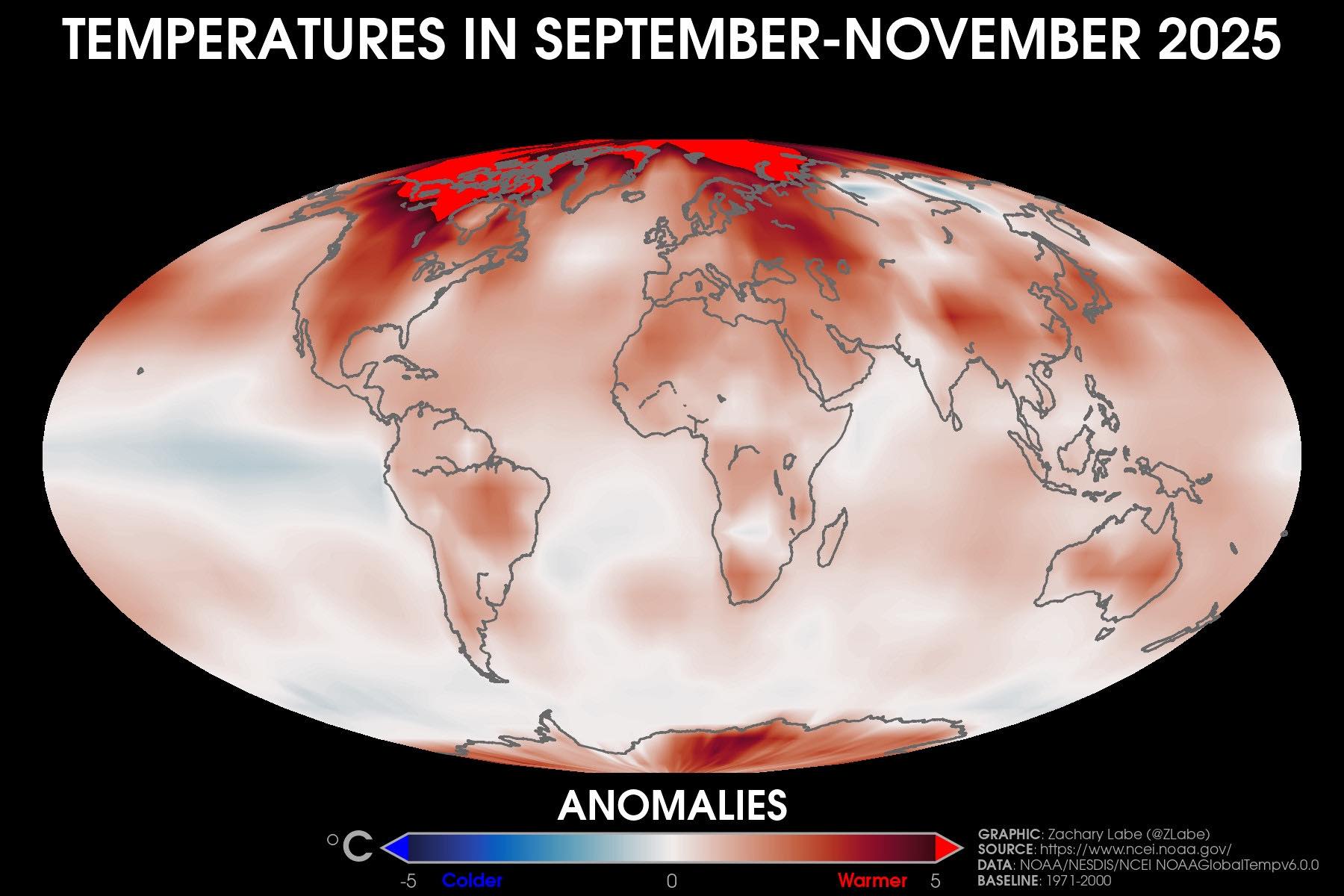
Q3 2025: Extreme Global Temperature Anomalies

Autumn (September–November) climate data reveal two features that matter far more than the global average: what is happening at the poles and what is happening at the equator.

Both the Arctic and Antarctic are experiencing record-breaking temperatures—warming at rates up to 20 times faster than much of the rest of the planet, visible as deep red anomalies on global maps. This extreme polar amplification is not a regional curiosity; it is destabilizing the foundational circulation systems that regulate Earth’s climate, including the jet stream, the Atlantic Meridional Overturning Circulation (AMOC), and the Pacific Meridional Overturning Circulation (PMOC).

As a direct consequence, the Northeastern United States is now experiencing sharp climate whiplash: record cold conditions this week, followed by unseasonably warm temperatures days later. These are not random swings—they are signatures of a circulation system that is losing coherence.

The Poles: Where Climate Change Is Accelerating Fastest

The polar regions act as the planet’s thermal anchors. Normally, the large temperature contrast between the equator and the poles powers a fast, stable jet stream and robust ocean circulation. But as the Arctic warms nearly four times faster than the global average, and Antarctic ice loss accelerates, that temperature gradient is collapsing.

With less contrast to drive it, the jet stream weakens and becomes increasingly wavy and prone to stalling. This allows weather patterns to linger—producing prolonged heatwaves, extended cold outbreaks, persistent flooding, and flash droughts. At the same time, freshwater from polar melt is disrupting deep-water formation in the North Atlantic, weakening the AMOC and altering global heat transport.

The Equator: The Illusion of Cooling

The other key feature in the data is a small blue patch along the equatorial Pacific—a weak La Niña signal. This localized cooling will likely prevent 2025 from being recorded as the single hottest year on record by slightly suppressing the global mean temperature.

But this is precisely where the global average becomes misleading.

Oceans absorb the vast majority of excess heat and require far more energy to warm than air or land. A small cooling anomaly in the tropical Pacific can therefore offset massive heating elsewhere in the global average—especially at the poles—without reducing actual climate risk.

In other words, the planet can appear “less hot” on paper while becoming far more dangerous in reality.

Why “Global Average Temperature” Misleads

A 3 °C increase in the global average temperature sounds abstract and manageable. In reality, it masks extreme regional outcomes that determine human survivability.

  • The Arctic is already warming more than four times faster than the global mean, with localized increases exceeding 10 °C. In 2025, parts of the Arctic are running as much as 20 °C above normal.

  • Land and air temperatures rise far faster than ocean averages.

  • Human limits are governed not by global means, but by regional extremes and wet-bulb temperatures—the point at which heat and humidity overwhelm the body’s ability to cool itself.

When policymakers talk about “holding warming below 1.5 °C,” they are referring to a blended average across oceans, land, and atmosphere. But oceans absorb over 90% of the excess heat trapped by greenhouse gases, heavily damping the apparent rise in the global mean.

This creates a dangerous illusion of control.

The Ocean Heat Mask

Recent deep-ocean studies show that even the deepest layers of the ocean are warming. A change of just 0.1 °C in ocean temperature represents an enormous amount of stored energy. If that heat were redistributed over land, it would be equivalent to roughly a 35 °C increase—a level incompatible with large-scale human survival.

The oceans are acting as a temporary buffer, hiding the true magnitude of warming while simultaneously destabilizing themselves through:

  • Increased stratification

  • Slowing circulation

  • Oxygen loss

  • Ecosystem collapse

During 2025, the Pacific Ocean has been running approximately 1.6 °C above its long-term average—a deviation of six standard deviations above the mean. In climate science, values this far from normal variability are essentially off the charts.

The Thresholds That Matter

Two temperature thresholds now demand urgent attention:

  • ~1.5 °C global average warming
    This marks the widespread activation of major climate tipping points—ice sheet instability, circulation slowdown, ecosystem collapse.

  • ~9 °C land and air warming
    This represents the upper boundary of human physiological survivability across much of the planet.

These are not distant, theoretical limits. They are rapidly approaching—and in some regions, already being exceeded.

The climate crisis is no longer about slow, linear warming. It is about where the heat is accumulating, how it is destabilizing Earth’s life-support systems, and how misleading averages are masking the speed and severity of the transformation now underway.

* Our probabilistic, ensemble-based climate model — which incorporates complex socio-economic and ecological feedback loops within a dynamic, nonlinear system — projects that global temperatures are becoming unsustainable this century. This far exceeds earlier estimates of a 4°C rise over the next thousand years, highlighting a dramatic acceleration in global warming. We are now entering a phase of compound, cascading collapse, where climate, ecological, and societal systems destabilize through interlinked, self-reinforcing feedback loops.

We examine how human activities — such as deforestation, fossil fuel combustion, mass consumption, industrial agriculture, and land development — interact with ecological processes like thermal energy redistribution, carbon cycling, hydrological flow, biodiversity loss, and the spread of disease vectors. These interactions do not follow linear cause-and-effect patterns. Instead, they form complex, self-reinforcing feedback loops that can trigger rapid, system-wide transformations — often abruptly and without warning. Grasping these dynamics is crucial for accurately assessing global risks and developing effective strategies for long-term survival.

Tipping points and feedback loops drive the acceleration of climate change. When one tipping point is breached and triggers others, the cascading collapse is known as the Domino Effect.

The Climate Crisis: Violent Rain | Deadly Humid Heat | Health Collapse | Extreme Weather Events | Insurance | Trees and Deforestation | Rising Sea Level | Food and Water

The Human Induced Climate Change Experiment

Runaway Feedbacks: Can Earth Warm 9°C This Century?

bookmark_borderPolar Bear Plunge: Will Humans Follow? (Adaptation Part II)

Polar Bear Plunge: Will Humans Follow?

Adaptation Part II

Daniel Brouse
December 14, 2025

Abstract

In The Plight of the Penguin: Will Humans Follow? (Adaptation Part I), I examined how multiple penguin species—despite short-term behavioral flexibility—are failing to adapt to the pace and scale of anthropogenic climate change. This second paper extends that analysis to the Arctic, focusing on polar bears as a living stress test for biological adaptation under rapid warming. Together, penguins and polar bears frame the planetary poles as early-warning systems for human survivability. While limited genetic and epigenetic responses are emerging in some species, the evidence suggests that nonlinear climate dynamics and cascading feedback loops are outpacing adaptive capacity—first in wildlife, and increasingly in humans.

I. From Penguins to Polar Bears: A Shared Signal

Penguin populations across the Southern Hemisphere are undergoing rapid collapse as climate change, ocean warming, disrupted food webs, and direct human exploitation destabilize their ecosystems. While a handful of species show limited, short-term adaptability, the majority are now projected to decline irreversibly within this century.

The Emperor Penguin, African Penguin, Yellow-eyed Penguin, Erect-crested Penguin, Galápagos Penguin, Macaroni Penguin, and Southern Rockhopper Penguin have all failed to adapt to accelerating environmental change. Current projections place several of these species on extinction trajectories within decades—some potentially much sooner.

These collapses are not isolated ecological tragedies. They are biological signals. Penguins evolved for cold, stable systems; when those systems destabilize beyond critical thresholds, even highly specialized and once-resilient species fail. This same pattern—rapid environmental change overwhelming adaptive capacity—now appears in the Arctic.

II. Polar Bears: The Arctic’s Canary

Polar bears (Ursus maritimus) provide one of the clearest real-time examples of how climate change drives species toward physiological and ecological limits. The Arctic is warming between three and twenty times faster than the global average, making it an early indicator of future conditions elsewhere.

Sea ice loss is the single most important driver of polar bear decline. Bears depend on stable ice platforms to hunt seals; as these platforms vanish, bears are forced into longer swims, nutritional stress, isolation, and reproductive failure. This season alone, polar bears have been documented swimming up to 80 miles in search of ice and prey. Many juveniles do not survive these journeys.

As a result, polar bear populations across most regions are declining rapidly, with increasing mortality among cubs and subadults.

III. A Glimmer of Adaptation — and Its Limits

There is, however, a narrow and sobering glimmer of hope: genetic response under extreme stress.

Recent research led by Alice Godden, building on earlier University of Washington work, examined blood samples from polar bear populations in northeastern and southeastern Greenland. The southeastern group inhabits a significantly warmer climate zone—conditions similar to what much of the Arctic is expected to experience later this century.

In this southern population, researchers identified differences in gene activity related to:

  • Heat stress response
  • Aging
  • Metabolism and digestion

These findings suggest that climate stress is actively influencing gene regulation. As Godden noted, this may represent the first documented case of rising temperatures driving genomic change in a mammal.

In the Springer Nature paper “Diverging transposon activity among polar bear sub-populations inhabiting different climate zones,” the authors describe how transposable elements (TEs)—mobile sections of DNA—are behaving differently across subpopulations. These elements can accelerate genetic change under environmental stress.

In essence, different groups of polar bears are experiencing different sections of their DNA being activated or altered at different rates, closely linked to their local climate conditions. Godden described this as a form of the species being forced to “rewrite its own DNA”—a desperate survival mechanism in response to melting sea ice.

IV. Why This Does Not Mean Polar Bears Are Safe

Despite this remarkable finding, the implications are grim. The same research estimates that two-thirds of the global polar bear population could be gone by 2050, with total extinction likely by the end of the century if current warming trends continue.

The Arctic Ocean has repeatedly recorded record-high temperatures in recent years. Reduced sea ice has:

  • Eliminated hunting platforms
  • Increased fasting duration
  • Forced dietary shifts toward low-fat, plant-based or scavenged food sources

These changes are driving physiological stress and may be altering body composition and morphology. Adaptation, in this context, does not mean recovery—it means buying time.

As Godden emphasized, these findings do not reduce extinction risk. At best, they offer a narrow genetic blueprint for how adaptation might occur—if warming slows enough to allow it.

V. Humans and the Myth of Superior Adaptation

A common assumption is that humans, by virtue of intelligence and technology, will adapt where other species fail. This belief is not supported by the bulk of current scientific evidence.

Unlike polar bears, whose genetic shifts may offer limited resilience, human biological changes under climate stress are increasingly maladaptive. Even more troubling, many of these changes are epigenetic and transgenerational—meaning they can be passed on to future generations.

Adaptation, in humans, is beginning to resemble degradation.

VI. Climate Extremes and Cellular Breakdown

The health impacts of climate change are no longer abstract projections; they are measurable and accelerating.

  • One death per minute: Heat-related mortality now averages roughly one fatality per minute worldwide.
  • Rising exposure: Over the past four years, the average person has experienced 19 days per year of life-threatening heat, nearly all attributable to human-caused warming.
  • Severe health impacts: Extreme heat causes heatstroke, dehydration, kidney injury, and exacerbates cardiovascular and respiratory disease.

Prolonged heat exposure accelerates biological aging, damages tissues, and shortens telomeres at the cellular level. These processes increase the risk of:

  • Cancer
  • Dementia
  • Diabetes
  • Cardiovascular disease

Mental health is also affected. Heat stress correlates with increased rates of depression, anxiety, aggression, and suicide.

VII. Epigenetics: The Molecular Convergence of Climate Stressors

A critical mechanism linking these outcomes is epigenetic change—chemical modifications that regulate gene expression without altering DNA sequences. These changes act like dimmer switches, activating or silencing genes in response to environmental conditions.

Climate-related stressors that drive epigenetic change include:

  • Extreme heat
  • Ozone and air pollution exposure
  • Infectious disease, including COVID-19

All three are directly connected to fossil fuel combustion and climate destabilization.

When multiple stressors act simultaneously, epigenetic effects compound rather than add, increasing vulnerability across multiple organ systems. Genes associated with cancer, metabolic disease, cardiovascular dysfunction, and neurological disorders become more likely to activate.

Of particular concern is evidence that some epigenetic changes are heritable, raising the specter of transgenerational decline—where reduced health, shortened lifespan, and heightened disease risk are passed forward even if environmental conditions later stabilize.

VIII. Conclusion: A Narrowing Window

Penguins and polar bears are not merely victims of climate change; they are indicators. Their struggles reveal the limits of biological adaptation under rapid, nonlinear environmental change.

Polar bears show that even when genetic flexibility exists, it may only delay extinction—not prevent it. Humans, meanwhile, appear to be accumulating biological damage faster than beneficial adaptation.

The lesson is stark: adaptation without mitigation is failure postponed. The window for preserving both human health and planetary biodiversity is closing, and no species—no matter how intelligent—can out-evolve a collapsing climate system.

The choice is no longer whether change is coming, but whether we act quickly enough to remain biologically capable of surviving it.

* Our climate model — which incorporates complex social-ecological feedback loops within a dynamic, non-linear system — projects that global temperatures could rise by up to 9°C (16.2°F) within this century. This far exceeds earlier estimates of a 4°C rise over the next thousand years, signaling a dramatic acceleration of warming.

We analyze how human activities (such as deforestation, fossil fuel use, and land development) interact with ecological processes (including carbon cycling, water availability, and biodiversity loss) in ways that amplify one another. These interactions do not follow simple cause-and-effect patterns; instead, they create cascading, interconnected impacts that can rapidly accelerate system-wide change, sometimes abruptly. Understanding these dynamics is essential for assessing risks and designing effective climate adaptation and mitigation strategies.

The Climate Crisis: Violent Rain | Deadly Humid Heat | Health Collapse | Extreme Weather Events | Insurance | Trees and Deforestation | Soil | Rising Sea Level | Food and Water | Updates

Tipping points and feedback loops drive the acceleration of climate change. When one tipping point is breached and triggers others, the cascading collapse is known as the Domino Effect.

The Human Induced Climate Change Experiment