bookmark_borderTipping Into the Collapse Zone: How Feedback Loops Are Transforming Earth’s Carbon Sinks Into Carbon Sources

By Daniel Brouse & Sidd Mukherjee
November 30, 2025


Introduction: The Carbon Sink Collapse Has Begun

Earth’s major carbon sinks — forests, permafrost, and peatlands — have long buffered humanity from the full force of climate change. That buffer is now failing. Evidence from satellite data, field measurements, atmospheric chemistry, and wildfire emissions shows that multiple ecosystems are crossing tipping points simultaneously. These shifts are not gradual; they are driven by nonlinear feedback loops that accelerate greenhouse gas release and destabilize the climate system.

Human activity is the root cause of this transition. Fossil fuel combustion, deforestation, land degradation, and pollution have combined to weaken and reverse the natural carbon balance, turning once-stable sinks into net greenhouse gas emitters of both CO₂ and methane.

The emerging reality is stark: Earth’s biosphere is no longer reliably absorbing carbon — it is amplifying climate change.


Africa’s Carbon Sink Reversal: A Planetary Warning

A landmark 2025 study published in Nature, Loss of tropical moist broadleaf forest has turned Africa’s forests from a carbon sink into a source, provides a crucial data point in this global shift.

Key findings include:

  • African forests and woody savannas historically served as a major carbon sink.
  • 2007–2010: Biomass increased by +439 ± 66 Tg yr⁻¹.
  • 2010–2015: Biomass shifted to a net loss of –132 ± 20 Tg yr⁻¹.
  • 2015–2017: Net biomass loss continued at –41 ± 6 Tg yr⁻¹.
  • Tropical moist broadleaf forest deforestation was the primary driver.
  • Shrub encroachment in savannas offered only limited offsetting gains.

The transition from sink to source occurred within a decade — far faster than conventional climate models predicted.

The authors warn that achieving the Glasgow Leaders’ Declaration and updating Nationally Determined Contributions under the Paris Agreement will require far more ambitious global deforestation policies, as the decline of natural carbon sinks is widening the emissions gap.


Runaway Feedback Loop #1: Permafrost Collapse and Year-Round Fire

Permafrost melt is one of the clearest demonstrations of how climate feedback loops exceed linear expectations.

Old assumption:
Permafrost would thaw gradually over millennia, releasing CO₂ and CH₄ slowly.

Observed reality:
Large swaths of permafrost are thawing abruptly, collapsing into mud, and — in an unprecedented development — burning year-round.

Wildfires in high-latitude peat soils are now releasing carbon on a scale once thought impossible in this century. Data from Canada’s record-shattering 2023 wildfire season confirms that its forests have become net carbon sources for the first time on record.
(See: Natural Resources Canada, 2023)

New Scientific Unknowns Introduced by Permafrost Fire

  • Combustion releases CO₂ rapidly, accelerating warming.
  • Some methane ignites and is converted to CO₂ — a minor “natural flaring” effect.
  • Much methane escapes unburned.
  • The ratio of burned vs. unburned methane remains poorly constrained.

The key point: permafrost carbon feedbacks are releasing greenhouse gases orders of magnitude faster than legacy climate models projected.


Runaway Feedback Loop #2: Tropospheric Ozone and the Collapse of Biospheric Productivity

Climate feedbacks are not limited to warming. The chemistry of fossil fuel combustion creates secondary pollutants that directly attack the biosphere. One of the most dangerous is tropospheric ozone — a potent phytotoxin.

Ozone’s Role in Accelerating Ecosystem Collapse

  • Reduces plant growth by 10–40% across many species.
  • Causes direct tissue damage to leaves and roots.
  • Weakens resistance to drought, pests, pathogens, and heat.
  • Leads to premature mortality in trees and crops.
  • Drives reductions in Net Primary Productivity (NPP) of 20–70% in sensitive regions.
    (See: Ground-Level Ozone and Carbon Drawdown, membrane.com)

This is not hypothetical. Global forests have shifted from carbon sinks to net carbon sources for the past two consecutive years, driven by ozone stress, wildfire emissions, and drought compounds.

Field Evidence From Pennsylvania

Our two-decade field study (2003–2025) shows:

  • Old-growth trees have lost ~40% of foliage over multi-year intervals.
  • Canopy height has declined by ~33%.
  • Mortality rates have accelerated dramatically.

These findings mirror global NPP declines and highlight ozone as an underrecognized driver of biospheric collapse.


The Feedback Web: How Warming, Ozone, Wildfire, and Ecosystem Death Reinforce Each Other

The feedback loops described here are tightly interconnected:

  1. Fossil fuel combustion → increases CO₂ + ozone precursors.
  2. Ozone → reduces plant productivity → lowers carbon uptake.
  3. Warming + drought → increase wildfire frequency.
  4. Wildfires → emit CO₂ + ozone precursors → produce more ozone.
  5. Permafrost fires → add CO₂ and CH₄ at record rates.
  6. Methane release → accelerates warming → further ozone formation.

This is not a linear sequence — it is a self-reinforcing network of processes, each amplifying the others. Earth’s regulatory systems are being destabilized simultaneously, pushing the planet toward a state of compound, cascading instability.


Crossing the Threshold Into Nonlinear Climate Behavior

Linear projections drastically underestimate the risk. Nonlinear systems behave differently:

  • Thresholds can be crossed abruptly.
  • States can shift rapidly and irreversibly.
  • Small additional forcings can trigger large-scale transformations.
  • Feedbacks can synchronize and accelerate together.

The collapse of forests, the thawing of permafrost, and the rise of global ozone stress reflect active tipping points, not future ones.

The Climate Trajectory Is Compressing

Processes once believed to unfold over centuries are now occurring within decades — or even years. Feedbacks once considered “theoretical” are already reshaping Earth’s atmosphere, hydrology, and ecosystems.

This is the central scientific question of our time:
How quickly, and through what pathways, will runaway feedbacks redefine Earth’s climate system?

Our research focuses on quantifying these acceleration rates and mapping the tipping dynamics that will determine the future of human civilization.


Additional References

http://membrane.com/global_warming/Systemic-Collapse.html
http://membrane.com/global_warming/Ozone-Low-Level.html
http://membrane.com/global_warming/Amazon-Collapse.html
http://membrane.com/global_warming/Nonlinear-Dominoes-of-Climate-Collapse.html
http://membrane.com/trees/
http://membrane.com/trees/death-by-ozone.html
bookmark_borderThe Collapse Point: How Climate Change Is Breaking Insurance — and Capitalism With It

by Daniel Breouse / November 26, 2025

As extreme weather accelerates, humanity is nearing a tipping point where insurance — and the economic system built upon it — may no longer function. One of the world’s largest insurers, Allianz SE, has issued an unusually blunt warning: the climate crisis is destabilizing global capitalism from within, and the breakdown has already begun.

Allianz board member Gunther Thallinger, who also chairs the company’s investment board, argues that rising temperatures and worsening climate disasters are pushing many risks past the limits of insurability. And when insurance fails, everything built on top of it — mortgages, real estate markets, infrastructure investment, business lending, and even municipal budgets — begins to unravel.

His message is simple and grim:
“Heat and water destroy capital.”

Flooded homes lose value. Overheated cities become uninhabitable. Billion-dollar infrastructure corrodes, warps, or burns. Entire asset classes are degrading in real time.

The consequences ripple far beyond insurance claims. They threaten the foundational assumptions of modern capitalism itself.

A Financial System on the Brink

The planet is currently on track for 2.2°C to 3.4°C of warming — well beyond the thresholds that insurers, governments, and markets are designed to withstand. Global temperatures have already surpassed 1.5°C and are projected to blow past 3°C within a decade.

At that level of heating:

  • The number and severity of disasters become too frequent to price.
  • Extreme losses arrive faster than insurers can rebuild capital.
  • Governments cannot bail out the private sector at the required scale.
  • Entire regions become economically nonviable.

The numbers already paint the picture of an economy under siege:

  • $2 trillion in climate-related damages from 2013–2023 (Aviva).
  • $400 billion in 2024 alone (Gallagher RE).
  • A fivefold increase in annual weather-related losses in Europe since the 1980s.

Insurers like Zurich now openly state that achieving net-zero emissions by 2050 is essential to prevent systemic collapse.

Thallinger’s warning:
We may not have until 2050.

In California, major carriers have already stopped writing home insurance in fire-prone regions. In Florida, companies are fleeing as storm intensities shred actuarial models. These are not hypotheticals — they are the first cracks in the global financial foundation.

When the Math Breaks Down

Insurance only works when the risks are measurable and the premiums remain affordable. Climate change destroys both conditions.

Thallinger is explicit:

“As temperatures rise to 1.5°C, 2°C, 3°C, insurers will no longer be able to offer coverage. The premiums required exceed what people or companies can pay. This is already happening.”

If insurance fails:

  • Banks cannot issue mortgages.
  • Developers cannot secure financing.
  • Cities cannot bond infrastructure.
  • Home values collapse.
  • Industries become stranded.
  • Governments face spiraling bailout demands they cannot meet.

This is the hidden climate tipping point — a systemic failure that happens quietly, through spreadsheets and canceled policies, before it erupts into a full-blown economic crisis.

What the Industry Says Must Happen (and Why It Isn’t Happening)

Klaus-Peter Röhler, another Allianz board member, outlines what is required to keep insurance viable:

1. Massive prevention and adaptation

Climate-resilient building codes, flood defenses, and infrastructure upgrades.
Europe has completed only 5% of its planned flood protection projects.
At the current pace, it will take 100 years to finish.

2. Risk-based pricing

Political pressure often forces insurers to keep premiums artificially low — a recipe for insolvency. Without prices that reflect real risk, insurers collapse sooner.

3. Government stop-loss support for extreme events

Governments should backstop only the rarest, most catastrophic disasters — not routine damage that should be prevented through better planning.

No country has successfully implemented this triad.
Some, notably the United States, demonstrate what happens when policymakers block these measures:

  • California: Wildfire risk makes coverage unavailable at any price.
  • Florida: Storm losses and dysfunctional regulation have triggered an insurance exodus.
  • State-run bailout insurers are failing under the load.

The lesson is clear: Insurability is not guaranteed.
It must be preserved — and it is being lost region by region.

What Happens Next

Allianz emphasizes that policyholders, governments, and insurers all have roles to play — but adaptation can only delay collapse if emissions continue rising.

Without rapid decarbonization:

  • More regions will become uninsurable.
  • Financial shocks will cascade into housing, banking, and municipal finance.
  • Capitalism, which relies on pricing risk, will have no mechanism to allocate it.
  • Entire coastal and heat-exposed regions could lose economic viability.

We are approaching a world in which the question will not be whether people can afford insurance — but whether insurance can afford people.

The Real Tipping Point Isn’t Just Environmental — It’s Economic

Climate change is often framed as a humanitarian crisis or an environmental challenge. It is far more than that.

It is a capital destruction engine operating on a planetary scale.

Insurance is simply the first part of the system to falter, because it is the first to directly feel the mathematical impossibility of infinite losses on a finite balance sheet. But what follows is not limited to insurers:

  • Mortgage markets fail.
  • Municipal bond markets seize up.
  • Infrastructure investment dries out.
  • Property values collapse.
  • Supply chains face continuous disruption.
  • Governments pick up costs they cannot bear.
  • Capitalism enters an unmanageable risk spiral.

Unless warming is rapidly halted, we will cross a line where risk can no longer be transferred, financed, or recovered.

That is the collapse point.

* Our probabilistic, ensemble-based climate model — which incorporates complex socio-economic and ecological feedback loops within a dynamic, nonlinear system — projects that global temperatures are becoming unsustainable this century. This far exceeds earlier estimates of a 4°C rise over the next thousand years, highlighting a dramatic acceleration in global warming. We are now entering a phase of compound, cascading collapse, where climate, ecological, and societal systems destabilize through interlinked, self-reinforcing feedback loops.

What Can I Do?
The single most important action you can take to help address the climate crisis is simple: stop burning fossil fuels.

Tipping points and feedback loops drive the acceleration of climate change. When one tipping point is toppled and triggers others, the cascading collapse is known as the Domino Effect.

The Human Induced Climate Change Experiment

bookmark_borderSudden Sea Level Pulses: How “Cork Release” Ice-Sheet Failures Could Rapidly Reshape Global Coastlines

By Daniel Brouse and Sidd Mukherjee

November 25, 2025

Introduction: The Shift From Gradual to Abrupt Sea Level Rise

Sea level rise (SLR) is one of the most revealing indicators of the accelerating pace of climate change. A century ago, global SLR was doubling roughly every 100 years. Ten years ago the doubling time had collapsed to a decade. By 2023, the doubling time had plunged to only two years.

This extraordinary acceleration led us to focus on a much more dangerous and poorly modeled phenomenon:

Sudden Sea Level Pulses (SSLPs) — rapid, stepwise jumps in sea level triggered by abrupt ice-sheet failures, subglacial “cork release” events, and ice-shelf structural collapse.

These pulses are not hypothetical. They are beginning to occur.

Examples include:

  • Greenland Subglacial Flood: A massive outburst where trapped meltwater burst through the ice, demonstrating the potential for sudden hydrofracture.
  • Alaska’s Mendenhall Glacier Outburst: A glacial flood that produced rapid, dangerous water-level increases downstream.

A detailed overview is archived at:
http://membrane.com/global_warming/Greenland-Ouburst.html

These events reveal something ice-sheet models have not yet fully integrated: meltwater can accumulate beneath ice until pressure surpasses structural integrity, causing the ice surface to fail catastrophically — a “cork release.” When this occurs at scale, sea levels can jump not millimeters per year, but multiple feet per year.

Why This Matters: The Risk of Abrupt, Multi-Foot Sea Level Jumps

The public still imagines sea level rise as a slow, linear process. But the Earth system does not behave linearly. When hydrofracture and ice-cliff collapse become common, we could face:

  • Multi-foot sea level increases within a single decade
  • 1–3 feet of rise within a single year in extreme pulse scenarios
  • Little or no time for adaptation in cities like Miami, New York, Mumbai, Lagos, and Shanghai

Current global climate models fail to incorporate most “cork release” pathways because:

  • Subglacial water transport is poorly mapped
  • Meltwater storage and pressurization are not well parameterized
  • Ice-shelf fracture mechanics are only partially resolved
  • Positive feedback loops — such as meltwater-driven lubrication and ice-cliff collapse — are not modeled dynamically

The Greenland outburst events show that ice sheets can undergo abrupt, nonlinear failures — far faster than infrastructure, economies, or governance systems can adapt.

Sidd summarized it best:

“Under-ice hydrology is hard to observe… but once enough pressure builds, ice doesn’t melt — it fractures.”

Antarctica: The System Most Likely to Produce Catastrophic Pulses

While Greenland contributes meaningfully to long-term SLR, Antarctica is the critical risk for abrupt sea level pulses.

The East Antarctic Ice Sheet (EAIS)

  • Holds ~170 feet of potential sea level rise
  • Once thought stable for millennia
  • Now showing early signs of warming-driven destabilization
  • Marine-based sectors may begin collapsing this century

The West Antarctic Ice Sheet (WAIS)

  • Highly vulnerable
  • Resting on retrograde (downward-sloping) bedrock
  • Warm ocean water is eroding the shelves from below
  • Pinning points are failing, which removes the natural “brakes”

Sidd’s assessment:

Greenland: “Effectively lost,” 100–300 years, +20 ft
West Antarctica: Likely collapse within decades to ~100 years, +10 ft

Total plausible rise by 2125: 20–30 feet, with the possibility of sudden pulses:

“We could dawdle along at half an inch a year, then see a few years at a foot per year.”

New Evidence: The Impending Failure of Thwaites Eastern Ice Shelf (TEIS)

In November 2025, Advancing Earth and Space Sciences published a landmark study:
“Evolution of Shear-Zone Fractures Presages the Disintegration of Thwaites Eastern Ice Shelf”
(https://agupubs.onlinelibrary.wiley.com/doi/10.1029/2025JF008352)

The TEIS is a keystone structure. Once it collapses, the glacier behind it — the “Doomsday Glacier” — will accelerate dramatically. The study found:

Key Findings

  1. Long-term shear fracturing (2002–2017):
    Large fractures formed parallel to flow as the shelf strained against its pinning point.
  2. Recent explosive tensile fracturing (2017–2022):
    Smaller, orthogonal fractures began proliferating, indicating that structural integrity is failing.
  3. Dynamic destabilization:
    Satellite and GPS data reveal velocity perturbations rippling across the shelf as fractures expand — a sign of imminent collapse.
  4. Transition of the pinning point from stabilizer to destabilizer:
    Echoing Benn et al. (2022), the pinning point now increases fracture stress instead of reducing it.
  5. Self-reinforcing feedback loop:
    The shelf appears to be entering the “damage-acceleration-damage” feedback proposed by Lhermitte et al. (2020), a hallmark of impending disintegration.

What This Means

When TEIS collapses — an event many glaciologists now expect within years to a decade — Thwaites Glacier could:

  • accelerate dramatically
  • initiate ice-cliff collapse
  • trigger multi-foot sea level pulses within short timescales

This is the largest currently unfolding structural failure in the cryosphere.

Cork-Release Events: A Distinct Class of Tipping Point

We define a “cork release” event as:

A sudden failure of ice or subglacial pressure systems causing rapid, high-volume discharge of water or ice into the ocean.

These events include:

  • subglacial lake drainage
  • rapid ice-shelf collapse
  • meltwater-driven hydrofracture
  • ice-cliff structural failure

Unlike gradual melt, cork-release events:

  • are nonlinear
  • occur suddenly
  • accelerate with warming
  • have global consequences within months to years
  • are triggered by thresholds that are difficult to predict

This makes them one of the most dangerous — and least modeled — climate feedbacks.

Conclusion: The Urgent Need to Model Abrupt Sea Level Change

The climate system is not simply warming. It is accelerating, destabilizing, and producing events far outside historical norms. Sea level rise will not be a smooth curve; it will be stepwise, punctuated by abrupt pulses.

To prepare for what is coming, climate science and adaptation planning must incorporate:

  • ice-shelf fracture dynamics
  • under-ice hydrology
  • subglacial pressurization
  • ice-cliff collapse physics
  • nonlinear feedbacks
  • sudden sea level pulse scenarios

Human systems are built for gradual change. The cryosphere is not.

The question is no longer if abrupt sea level pulses will occur — but how soon, how large, and how many.

* Our probabilistic, ensemble-based climate model — which incorporates complex socio-economic and ecological feedback loops within a dynamic, nonlinear system — projects that global temperatures are becoming unsustainable this century. This far exceeds earlier estimates of a 4°C rise over the next thousand years, highlighting a dramatic acceleration in global warming. We are now entering a phase of compound, cascading collapse, where climate, ecological, and societal systems destabilize through interlinked, self-reinforcing feedback loops.

What Can I Do?
The single most important action you can take to help address the climate crisis is simple: stop burning fossil fuels. There are numerous actions you can take to contribute to saving the planet. Each person bears the responsibility to minimize pollution, discontinue the use of fossil fuels, reduce consumption, and foster a culture of love and care. The Butterfly Effect illustrates that a small change in one area can lead to significant alterations in conditions anywhere on the globe. Hence, the frequently heard statement that a fluttering butterfly in China can cause a hurricane in the Atlantic. Be a butterfly and affect the world.

→ “Solutions to the Fossil Fuel Economy and the Myths Accelerating Climate and Economic Collapse.“

Tipping points and feedback loops drive the acceleration of climate change. When one tipping point is toppled and triggers others, the cascading collapse is known as the Domino Effect.

The Human Induced Climate Change Experiment

bookmark_borderThe Non-Linear Acceleration of Climate Change: Evidence, Confirmation, and the Emerging Domino Effect

By Sidd Mukherjee and Daniel Brouse
November 22, 2025

In the 1990s, we developed what became known as The Non-Linear Acceleration Hypothesis—the proposition that climate change is not progressing linearly but is accelerating exponentially. Working together, with Sidd’s background as a Doctor of Physics from Ohio State and my own experimental and observational analyses, we produced the foundational evidence for this theory. By the early 2000s, our work had evolved into a recognized climate framework, validated repeatedly through independent replication and supported by an expanding body of empirical data. Over the decades, this body of confirmation has solidified into the scientific consensus we see today.

Shrinking Doubling Times and Escalating Impacts

One of the most compelling indicators of nonlinear acceleration is the dramatic contraction of the doubling time of climate impacts—the interval in which damage effectively doubles due to interacting feedback processes. In the mid-20th century, the doubling time was on the order of 100 years. By the early 2000s, it had fallen to 10 years, and recent analyses show that it has now plunged to approximately 2 years.

This means that the impacts of climate change today are twice as severe as they were two years ago. If the doubling time remains constant, they will be four times worse in two years, eight times worse in four years, and potentially sixty-four times worse within a decade. These estimates are conservative; the doubling period continues to shorten as feedbacks intensify. With no meaningful global mitigation underway, the trajectory is unmistakable and vastly more catastrophic than previously projected.

Hansen’s Confirmation of the Acceleration Hypothesis

We have long regarded Dr. James E. Hansen as one of the principal founders of modern climate science. In April 2025, Hansen’s paper Global Warming Acceleration: Impact on Sea Ice provided a direct, data-driven confirmation of our hypothesis. His analysis demonstrated that global warming is accelerating, and that climate sensitivity is higher than IPCC estimates, fundamentally altering expectations for 21st-century warming.

Hansen concluded that IPCC models underestimate both climate sensitivity and key feedback processes. Under current emissions levels, he projects that warming by 2100 is likely to exceed 7°C, dramatically raising the probability of crossing multiple climate tipping points.

In November 2025, Hansen, Kharecha, and Morgan published Warning! This “Colorful Chart” Is Censored by IPCC, offering further confirmation.

Accelerated Forcing Growth

Their analysis centers on a chart showing the five-year running mean of the annual increase in greenhouse gas forcing. Over the past 15 years, they find that the rate of increase has surged to ~0.5 W/m² per decade—far higher than IPCC projections. This acceleration is not reflected in IPCC scenarios and is fundamentally incompatible with its claims of remaining “pathways” to 1.5°C or 2°C.

Implications for Climate Scenarios

  • Current forcing trajectories align closely with RCP 8.5, the high-end “business-as-usual” pathway.
  • They diverge sharply from RCP 2.6, the scenario often used for policy optimism.
  • Achieving RCP 2.6 today would require $2.4–5 trillion per year using current technology.
  • RCP 2.6 also presumes unrealistic levels of biomass burning plus carbon capture, which Hansen calls politically and practically unviable.

Critique of IPCC’s Modeling and Transparency

Hansen and colleagues argue that the IPCC relies too heavily on Integrated Assessment Models (IAMs), which they describe as opaque “dark boxes”—tools that embed assumptions that are rarely examined in public-facing science.

They highlight that:

  • Scientists have not adequately communicated the severity of accelerating forcings.
  • Carbon pricing is vastly more effective than prescriptive international agreements.
  • Missed opportunities since the Montreal Protocol have allowed forcings to climb unchecked.
  • Early COP negotiations excluded nuclear power from the Clean Development Mechanism—a decision they view as scientifically indefensible.

Climate Sensitivity and Near-Term Risk

Hansen’s findings, along with related analyses, suggest climate sensitivity in the range of 4–5°C per CO₂ doubling, substantially above many IPCC estimates. They warn that without extraordinary action within the next 5–10 years, Earth could be locked into a high-warming trajectory that destabilizes major climate systems.

Strengths of Hansen’s Argument

  • Data-driven approach grounded in measured forcings with ~10% uncertainty.
  • Clear policy relevance connecting forcing to cost, mitigation feasibility, and economic risk.
  • Strong emphasis on accelerating risk, consistent with observed feedback behavior.
  • Valid critique of IAM transparency, echoing long-standing concerns within the scientific community.

Broader Implications

If Hansen et al. are correct, the window for avoiding catastrophic warming is significantly narrower than models suggest. Their work underscores the need for:

  • Greater transparency in climate modeling
  • Rapid implementation of carbon pricing
  • Reevaluation of technological pathways
  • Public communication that aligns with empirical reality

Their findings also increase the urgency of addressing the accelerating feedback loops we identified decades ago.

The Domino Effect: Cascading Tipping Points

Building on nonlinear thermodynamics and chaos theory, we now know that climate tipping points are not isolated events—they interact. As major systems destabilize, they trigger secondary failures, creating a cascade of compounded impacts.

Our recent synthesis of 2024–2025 data shows:

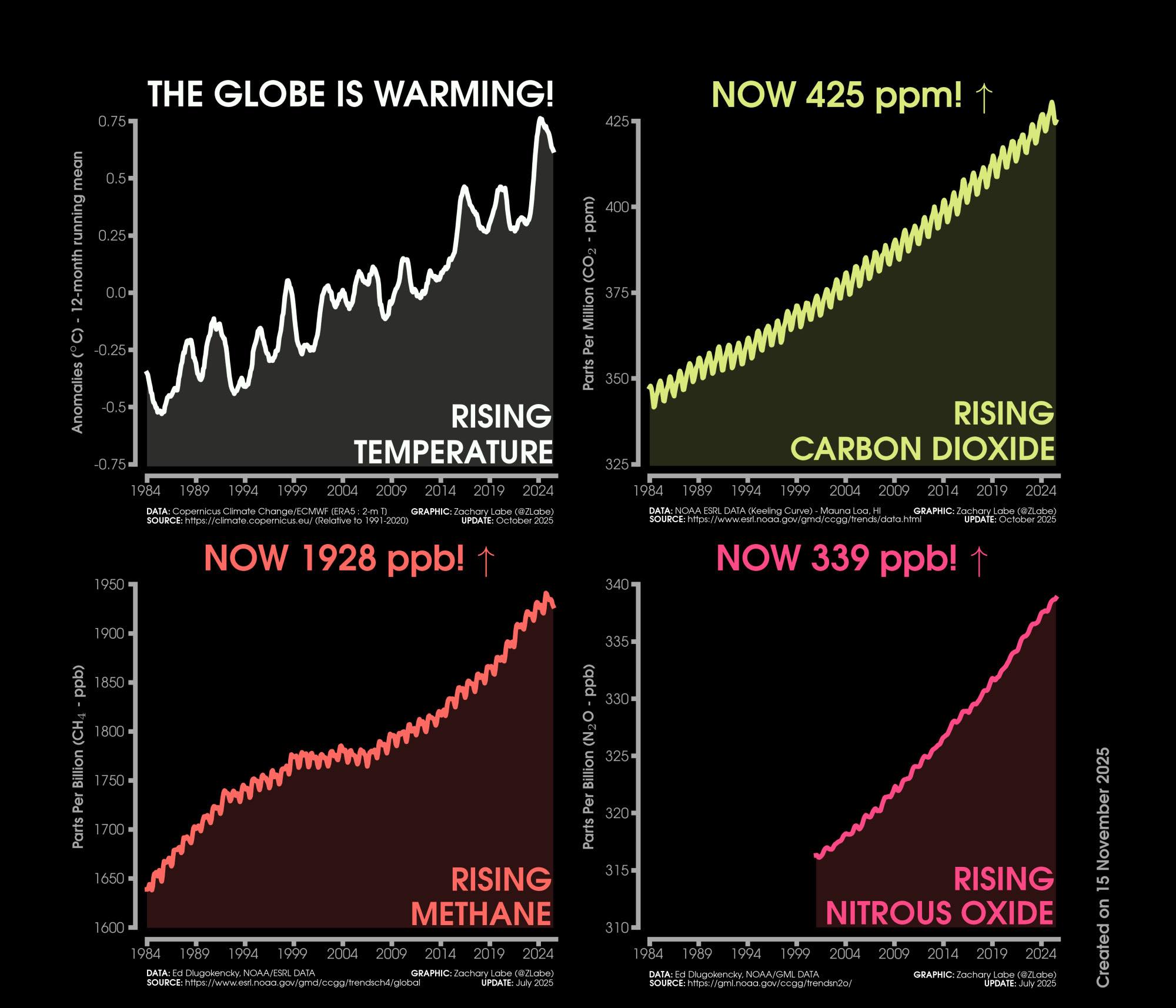
  • CO₂ concentrations, fossil fuel emissions, and global temperatures all reached record highs.
  • Natural carbon sinks are beginning to convert into carbon sources.
  • Feedbacks across ice loss, ocean circulation, albedo decline, and atmospheric chemistry are synchronizing.
  • These interactions are driving what we call the Domino Effect—a system-wide cascade that threatens global habitability within this century.

* Our probabilistic, ensemble-based climate model — which incorporates complex socio-economic and ecological feedback loops within a dynamic, nonlinear system — projects that global temperatures are becoming unsustainable this century. This far exceeds earlier estimates of a 4°C rise over the next thousand years, highlighting a dramatic acceleration in global warming. We are now entering a phase of compound, cascading collapse, where climate, ecological, and societal systems destabilize through interlinked, self-reinforcing feedback loops.

What Can I Do?
The single most important action you can take to help address the climate crisis is simple: stop burning fossil fuels. There are numerous actions you can take to contribute to saving the planet. Each person bears the responsibility to minimize pollution, discontinue the use of fossil fuels, reduce consumption, and foster a culture of love and care. The Butterfly Effect illustrates that a small change in one area can lead to significant alterations in conditions anywhere on the globe. Hence, the frequently heard statement that a fluttering butterfly in China can cause a hurricane in the Atlantic. Be a butterfly and affect the world.

→ “Solutions to the Fossil Fuel Economy and the Myths Accelerating Climate and Economic Collapse.“

Tipping points and feedback loops drive the acceleration of climate change. When one tipping point is toppled and triggers others, the cascading collapse is known as the Domino Effect.

The Human Induced Climate Change Experiment

bookmark_borderThe Silent Unraveling of Pennsylvania’s Forests: Ozone Stress, Climate Shifts, and the Race for Resilient Species

by Daniel Brouse
November 18, 2025

For decades, we have studied the trees of Pennsylvania, tracking shifts in canopy structure, species resilience, and environmental stressors. Our long-term field data reveal a profound and accelerating decline. Since 2003, old-growth trees have consistently lost about 40% of their foliage over multi-year intervals, leading to premature mortality. During the same period, canopy height has fallen by roughly one-third, a drastic structural collapse in forests that once represented stability and ecological longevity. These changes are not isolated — they mirror global patterns of forest decline — but Pennsylvania offers one of the clearest windows into the cascading pressures reshaping ecosystems worldwide.

The primary drivers of this decline are not singular. Chronic ozone exposure weakens leaf tissues, reduces photosynthetic capacity, and lowers defenses. Warming temperatures, heat stress, hydrological whiplash (extreme swings between drought and deluge), and the spread of pests and disease compound these vulnerabilities. Together, they form a multifactorial stress landscape in which even historically resilient species cannot recover. The number of tree species capable of surviving under modern conditions is shrinking rapidly.

As the canopy thins, an unexpected force rises: vines. In Pennsylvania’s forests, species like wild grape, kudzu, and bittersweet take advantage of the increased sunlight penetrating the weakened upper layers. Vines, once confined to understory limits, now climb higher each year. When they reach the diminished canopy, they smother, shade, and eventually kill the already stressed trees. This vine-driven mortality accelerates the loss of old growth and destabilizes the entire forest system — affecting biodiversity, soil retention, and wildlife habitat. What was once a finely balanced ecosystem now tilts toward collapse.

This local unraveling echoes a global trend. Across Canada, much of the northern United States, and parts of Europe, old-growth forests face similar failures. The wildfire-ravaged forests of Canada highlight the challenge: replanting the same species no longer guarantees success when temperature and moisture regimes have shifted beyond their tolerance. Trees that would have thrived for centuries can no longer survive long enough to mature. Reforestation guided by historic baselines is now a losing strategy; adaptive management that anticipates the climate of 2050–2100 is essential.

In Pennsylvania, our work increasingly focuses on identifying species suited to emerging conditions. Trees with rapid regrowth, high heat tolerance, and broader ecological plasticity show the strongest potential. Among them:

  • Red maple (swamp/soft maple): Highly adaptable, tolerant of wetter soils and shifting precipitation patterns.

  • Kousa dogwood: Resistant to many regional diseases affecting native dogwoods.

  • Cherry (black cherry): Regenerates vigorously and may outcompete slower species under stress.

By contrast, species such as many pines, which cannot regenerate from damaged tissues, fare poorly in the new climate regime.

One of the most promising candidates for future forests is the honey locust. Reaching heights of up to 100 feet and lifespans of 120–150 years, honey locusts combine durability, rapid growth, and climate resilience. Their wood is exceptionally strong — with a Janka hardness of approximately 1,700 lbf, rivaling or exceeding that of white oak and golden teak. Their natural resistance to rot, ability to recover from damage, and tolerance of heat and drought make them remarkably suited for 21st-century conditions. As hardwoods that also fix nitrogen (in some cultivars), locusts help rebuild soils damaged by erosion and extreme rainfall.

Pennsylvania’s forests are not simply changing — they are undergoing a structural transformation driven by the combined forces of chemistry, physics, biology, and climate. The decline of old-growth trees is not just an ecological signal; it is a warning. Without careful, science-guided species selection and adaptive reforestation strategies, vast stretches of eastern forests may transition into degraded ecosystems dominated by invasive vines, weakened understory growth, and fragmented canopy cover.

The future of the region’s forests hinges on acknowledging these realities and acting accordingly. The old equilibrium is gone. The question now is whether we can build a new one robust enough to survive what comes next.

ALSO SEE: The Decline of Penn’s Sylvania Brouse (2024)

Tree Extinction Due to Human Induced Environmental Stress


The Human Induced Climate Change Experiment

bookmark_borderThe Physics of Violent Rain: Turning Ordinary Storms Into Catastrophic Events

by Daniel Brouse and Sidd Mukherjee
November 18, 2025

We’ve been working specifically on the physics of what we now call violent rain, and once you fully understand latent heat, the entire climate system reveals a deeper and far more alarming complexity. Latent heat is not just a chapter in a textbook; it is the engine behind much of Earth’s atmospheric power. But the energy budget is only the entry point. The way that energy manifests — through momentum, turbulence, pressure gradients, and flow dynamics — is some of the most elegant, and now increasingly dangerous, mathematics in climate science.

The fatal mistake many people make is equating “global warming” strictly with warmer temperatures. The additional heat does not simply remain as heat. It is continually exchanged, transformed, and expressed throughout the climate system. It reappears as massive increases in atmospheric moisture, sharper pressure differentials, explosive updrafts, and an atmosphere filled with stored potential energy waiting for the right trigger to be released.

A warmer atmosphere can hold about 7% more water for every 1°C of warming. Over the full temperature anomaly we are now entering, this increased capacity nearly doubles the amount of moisture available to A warmer atmosphere can hold about 7% more water for every 1°C of warming. Over the full temperature anomaly we are now entering, this increased capacity nearly doubles the amount of moisture available to storms. This is not theoretical — it is already transforming rainfall dynamics worldwide. Parts of the world, especially the poles, are now experiencing temperature anomalies that remain more than 22°C above normal for extended periods, supercharging atmospheric moisture and destabilizing global circulation patterns.

One of the most overlooked consequences of this added energy is the rise in both raindrop size and raindrop count. Larger droplets fall faster, strike harder, and inject more energy into the air column, intensifying turbulence. Upon impact with the ground, they deliver far more kinetic energy than raindrops did even a generation ago. Using the momentum relation p = mv:

  • As mass increases, momentum increases.
  • As velocity increases, momentum increases.

More momentum means more turbulence, more kinetic energy, and more destructive rainfall.

People already sense this intuitively — the louder impact of rain on roofs, water bouncing higher off pavement, and downpours that feel physically heavier — but few connect these sensations to the underlying physics.

The destructive power of violent rain actually begins before the drops reach the ground. As storms intensify, raindrops become larger and wind velocities rise, accelerating them horizontally and vertically. Because both m (mass) and v (velocity) increase, each raindrop carries significantly more momentum than in past climates.

Stronger horizontal winds effectively act as a second gravitational pull, increasing the angle and force of impact. This is why wind-driven rain can sting the skin, shred crops, strip leaves from trees, and erode soils far more quickly than vertical rainfall alone. The increased velocity also injects more energy into the air column, amplifying turbulence, updraft strength, and pressure gradients — processes that feed storm intensification.

Once the water reaches the ground, flow dynamics dominate. Force scales with the square of velocity (v²), and density multiplies that force dramatically:

  • A 20 mph wind exerts 4× the force of a 10 mph wind.
  • A 40 mph wind exerts 16× the force.
  • A 60 mph wind exerts 36× the force.

Now apply the same physics to water, which is ~800 times denser than air:

  • A shallow 10 mph sheet of runoff exerts 800× the force of a 10 mph wind.
  • At 20 mph, the force becomes 3,200×.
  • At 40 mph — common in debris-laden flash floods — the force jumps to 12,800×.

When storms produce larger raindrops and faster-moving rain, driven by extreme heat anomalies and stronger wind fields, the resulting flows carry exponentially greater destructive potential. This is why hillsides fail more quickly, roads wash out more often, and floodwaters rise and accelerate with far greater violence in a warming climate — and why these events are unfolding years to decades ahead of earlier projections.

As rainfall intensity spikes, so do these destructive flow forces. This is why modern storms overwhelm culverts, stormwater systems, levees, dams, and hillside soils. It’s why slopes liquefy, bridges scour, and infrastructure collapses in events that used to be considered “routine.”

The mathematics is beautiful — but the consequences are devastating. Violent rain is not a metaphor — it is the physical expression of a climate system carrying far more energy, mass, and momentum than it did just a few decades ago. And every additional fraction of a degree adds more fuel to that system.

For anyone watching closely, the evidence is not abstract. It’s outside your window.

The Climate Crisis: Violent Rain | Extreme Weather Events | Insurance | Soil | Updates

The Human Induced Climate Change Experiment

bookmark_borderThe Climate Has Entered a Runaway Phase: Why “1.5°C” No Longer Describes Our Reality

By Daniel Brouse and Sidd Mukherjee
November 17, 2025

Q: What is happening with climate change?
A: It is accelerating at an exponential rate — far faster than the public narrative or old models suggest.

For years, the world was taught to focus on “holding global warming to 1.5°C.” But that number has quietly become meaningless. Not only have we likely crossed it already, the real danger is not the temperature itself — it is the tipping points that crossing that threshold has set in motion. These tipping points have triggered cascading, self-reinforcing feedback loops that are now reshaping Earth’s systems with unprecedented speed.

We are not approaching a climate crisis.
We are living inside its accelerating phase.

Why the “Global Average Temperature” Is a Misleading Metric

A global average masks extremes — the very extremes that dictate human survival.

A 3°C rise in the global mean may sound manageable, but that average blends together oceans, land, and atmosphere. Because oceans absorb ~90% of excess heat and warm far more slowly, they artificially depress the global mean. Meanwhile, the land and atmosphere — the parts humans inhabit — are warming far faster.

And nowhere is this clearer than at the poles.

The Arctic: 20× Faster Warming and Localized Surges Above 22°C

The Arctic is not warming at “four times” the global rate — it is already warming at more than 20 times the global rate in certain intervals, with localized anomalies exceeding 22°C above historical norms.

This is the engine room of planetary destabilization.

Why does this matter?

1. The moisture multiplier

For every 1°C increase, the atmosphere can hold 7% more moisture.
At +22°C anomalies, Arctic air can now hold:

22 × 7% = 154% more moisture

This surplus water vapor fuels:

  • dramatically faster sea level rise

  • explosive increases in extreme rainfall

  • larger, faster, more destructive raindrops

  • intensifying storms, hurricanes, and atmospheric rivers

Momentum of falling rain scales with mass × velocity; velocity and wind damage scale with the square of flow speed; water is 800× denser than air. The result is a nonlinear explosion in destructive power.

2. Accelerated feedback loops

An Arctic 20× hotter than average accelerates:

  • loss of sea ice

  • albedo collapse

  • permafrost thaw

  • methane release

  • stratospheric moisture injections

  • atmospheric and oceanic circulation disruption

These amplify global warming on a time-compressed schedule: not centuries, but years to decades

Oceans: Silent Heat Storage With Catastrophic Potential

A deep-ocean analysis revealed that even the abyss is warming.
A mere 0.1°C increase in deep-ocean temperature represents a staggering accumulation of heat. If redistributed to land, that heat would equate to ~35°C of warming — incompatible with human life.

In 2025, the entire Pacific is 1.6°C above average, a six-sigma anomaly — virtually impossible under natural variability. This is a planetary red alert.

Two Critical Thresholds

1.5°C – Tipping point activation

≈9°C – Human survivability limit for land and air temperatures

Both are being breached rapidly in localized regions.

Cascading Feedbacks: A System Moving Toward Runaway Behavior

In just ten days of July 2025, the U.S. saw:

  • hundreds of flash floods

  • multiple “1-in-1,000-year” rainfall events

  • widespread infrastructure failures across multiple states

This isn’t “bad weather.”
This is an unstable climate system undergoing phase transition.

Permafrost: From Slow Thaw to Permanent Fire

Old models assumed gradual thaw over millennia.

Reality:

  • formerly frozen landscapes now burn year-round

  • methane and CO₂ release is orders of magnitude faster

  • vast carbon stores are now entering the atmosphere on human timescales

  • fires may partially “flare” methane into CO₂ — but the overall emissions surge is catastrophic

The real uncertainty isn’t if this feedback accelerates warming; it’s how fast and how far it will go.

Ozone: The Overlooked Feedback Harming Ecosystems and Humans

Combustion doesn’t only emit CO₂ — it forms tropospheric ozone, a potent plant toxin.

Ozone exposure:

  • reduces plant growth 10–40%

  • kills sensitive species

  • weakens forests and crops

  • makes ecosystems more vulnerable to drought, heat, pests, and fire

Global forests — the planet’s lungs — have already shifted from carbon sinks to carbon sources.

In our Pennsylvania field site, old-growth trees have lost:

  • ~40% of foliage since 2003

  • ~33% of canopy height

This mirrors global patterns of vegetation decline and reduced carbon uptake.

And ozone harms humans directly:

  • triggers asthma

  • increases cardiovascular stress

  • causes premature death

  • disproportionately affects children and the elderly

The ozone-wildfire-warming feedback loop is now one of the strongest multipliers of climate instability.

A Planet in Nonlinear Transition

These are not distant projections.
These are real-time runaway feedbacks already visible across ecosystems, oceans, and the atmosphere.

The climate system is now governed by compound nonlinear interactions:

  • Arctic amplification

  • ocean heat accumulation

  • ozone stress

  • runaway wildfires

  • permafrost collapse

  • accelerating hydrological extremes

Each amplifies the others in ways models struggle to capture.

The central scientific question is no longer:

“Will feedback loops accelerate warming?”

It is now:

“How much time is left before cascading feedbacks overwhelm natural and human systems?”

Our research is focused on precisely this:
mapping the speed, scale, and irreversibility of climate feedbacks — and determining how close Earth is to thresholds that will define the trajectory of human civilization.


bookmark_borderEarth at the Threshold: CO₂ Acceleration, Systemic Feedback Loops, and the Coming Era of Rapid Sea-Level Rise

by Daniel Brouse and Sidd Mukherjee
November 17, 2025

CO₂ is only one component in a vast, interconnected climate system — but it remains the most significant driver of human-caused warming. While water vapor, clouds, aerosols, and ocean circulation all play essential roles, CO₂ is the primary forcing mechanism we directly control. And today, it is rising at a speed unprecedented in Earth’s recent geological history.

According to the World Meteorological Organization (2025) and the Global Carbon Project (2025), the year 2024 marked the most extreme convergence of climate records ever observed. Atmospheric CO₂ levels reached 422.7 ppm, the highest in three million years, with a record annual increase of 3.75 ppm. Monthly readings peaked at 426.91 ppm in June 2024 — a value that would have been unimaginable even a generation ago.

Accelerating Emissions and the Collapse of “Natural Buffers”

Global fossil fuel and cement emissions rose to 37.4 gigatons of CO₂ in 2024, a 0.8% increase from 2023. The growth was driven by:

  • Coal expansion across Asia

  • Post-pandemic industrial rebound

  • Sharp increases in liquefied natural gas (LNG) production, particularly in the United States

While often marketed as a “bridge fuel,” methane leakage from LNG infrastructure — over 80 times more potent than CO₂ over 20 years — has erased its supposed climate advantage. These cumulative emissions are now overwhelming the buffering capacity of the oceans, cryosphere, and biosphere.

This record convergence signals a fundamental phase transition in the Earth system. Regions that once absorbed carbon, stabilized temperature, and moderated climate extremes are now flipping into self-reinforcing feedback loops. What was once a slow climb in global heat content is now taking on the characteristics of nonlinear acceleration.

Glaciers, Cryosphere Collapse, and the Finality of “Point of No Return”

The WMO issued one of its starkest warnings in 2023:

“The world’s glaciers melted at dramatic speed last year and saving them is effectively a lost cause…
Antarctic sea ice fell to its lowest extent on record.
Some European glaciers are literally off the charts.”

WMO Secretary-General Petteri Taalas summarized the situation bluntly:

“We have already lost the melting-of-the-glaciers game.
The CO₂ concentration is now simply too high.”

In the Swiss Alps alone, 6.2% of total glacier mass vanished in a single summer, the greatest loss in the entire observational record.

Taalas further warned that disappearing glaciers will:

  • Reduce global freshwater supply

  • Impair agriculture

  • Destabilize river transport and hydrology

  • Accelerate sea-level rise far beyond prior projections

For decades, sea-level rise was expected to unfold over millennia. But with runaway CO₂ growth and feedback amplification, that timeline is rapidly collapsing into decades.

How Fast Could Sea Levels Rise? A Scientific Exchange

A natural question follows:
Could this trigger the fastest sea-level rise in Earth’s history?

Physicist Sidd Mukherjee offered the following expert assessment:

“It depends on what you mean by ‘ever.’
In terms of human civilization: yes, likely.”

He notes:

  • The total global ice inventory can produce ~200 feet of sea-level rise.

  • Greenland and West Antarctica may already be committed to collapse.

Breakdown of likely contributions:

  • Greenland: ~20 feet over 100–300 years

  • West Antarctica: ~10 feet, potentially in decades to a century

Average over a century:

  • ~20 feet → 2 inches per year (50 mm/year), 10x the current rate

But the average masks the danger. Sea-level rise will likely arrive in pulses, not a smooth curve:

“We could dawdle along at half an inch per year, then suddenly experience a couple of years with a foot of rise annually.”

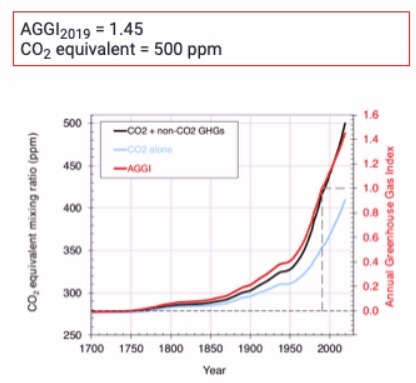
If CO₂-equivalent concentrations can be stabilized near 500 ppm, there may still be a chance to preserve East Antarctica, the largest remaining ice sheet. But if it destabilizes:

“Expect another couple hundred feet of sea-level rise.”

A Civilization-Level Threshold

We are now witnessing the early stages of a global system crossing into a new and dangerous mode of operation — one defined by:

  • Rapid CO₂ accumulation

  • Collapsing carbon sinks

  • Accelerating ocean heat storage

  • Cryosphere destabilization

  • Intensified extreme weather

The question is no longer whether these changes are occurring, but how quickly, and how prepared we are for the consequences.

Humanity is approaching — and in some cases passing — thresholds that earlier generations believed were centuries away. The decisions made in the next decade will determine whether sea-level rise is measured in inches, feet, or tens of feet within a single human lifetime.

WARNING

* Our probabilistic, ensemble-based climate model — which incorporates complex socio-economic and ecological feedback loops within a dynamic, nonlinear system — projects that global temperatures are becoming unsustainable this century. This far exceeds earlier estimates of a 4°C rise over the next thousand years, highlighting a dramatic acceleration in global warming. We are now entering a phase of compound, cascading collapse, where climate, ecological, and societal systems destabilize through interlinked, self-reinforcing feedback loops.

What Can I Do?
The single most important action you can take to help address the climate crisis is simple: stop burning fossil fuels. There are numerous actions you can take to contribute to saving the planet. Each person bears the responsibility to minimize pollution, discontinue the use of fossil fuels, reduce consumption, and foster a culture of love and care. The Butterfly Effect illustrates that a small change in one area can lead to significant alterations in conditions anywhere on the globe. Hence, the frequently heard statement that a fluttering butterfly in China can cause a hurricane in the Atlantic. Be a butterfly and affect the world.

Tipping points and feedback loops drive the acceleration of climate change. When one tipping point is toppled and triggers others, the cascading collapse is known as the Domino Effect.

The Climate Crisis: Violent Rain | Deadly Humid Heat | Health Collapse | Extreme Weather Events | Insurance | Trees and Deforestation | Soil | Rising Sea Level | Food and Water | Updates

The Human Induced Climate Change Experiment

bookmark_borderThe Silent Surge: Climate Change and the Acceleration of Food Price Inflation

Recent data indicates a clear acceleration in food price inflation — a trend now supported by both formal statistics and everyday observation. What once appeared to be temporary pandemic-era disruptions have evolved into structural pressures driven by deeper forces — among them, climate change, trade policy distortions, and systemic supply vulnerabilities.

From the perspective of both macroeconomic and climate systems analysis, the current surge in food prices is not an isolated event. Instead, it reflects the convergence of multiple feedback loops: extreme weather events, global trade realignments, and shifting ecological baselines that are altering both supply and cost structures.

Anecdotal data aligns with the statistics. Consumers are not only facing rising sticker prices but also a noticeable reduction in sales, promotions, and price competition. Items subject to international tariffs — such as bananas, coffee, and other imported produce — have seen disproportionately higher increases, suggesting that trade policy continues to amplify global cost pass-throughs.

Meanwhile, protein prices — particularly beef and poultry — have climbed at an accelerated rate, and the underlying cause is more complex than supply chain inefficiency. Climate change–driven droughts have reduced feed and water availability; fires have disrupted grazing and farmland; and floods have destroyed crop cycles critical for livestock production. Additionally, zoonotic diseases — emerging and reemerging due to warming temperatures and habitat shifts — are further reducing herd sizes and increasing production costs.

This compounding effect — where climate disruption intensifies agricultural volatility, which in turn feeds back into global markets — represents a new phase in food inflation dynamics. It suggests that food inflation is becoming not only more persistent but also more climate-sensitive, resistant to traditional monetary and fiscal interventions.

Unless aggressive adaptation and mitigation strategies are implemented — from resilient agriculture and decarbonized logistics to equitable trade frameworks — food inflation will remain one of the clearest and most immediate economic manifestations of the global climate crisis.

bookmark_borderDon the Con: How Trump Cemented His Legacy as the Dumbest World Leader in History

Trump said it best, “Smart people don’t like me.”

Trump is going down in history as the dumbest president in American history; however, that title may not be “biggly” enough for him. He is now being recognized globally as the dumbest world leader in history — a man who has willfully ignored, denied, and lied about established science, accelerating a planetary crisis that has already cost millions of lives. Trump’s science denial directly resulted in millions of preventable COVID deaths in his first term. Now, he is endangering the entire population of the world.

Trump has repeatedly dismissed climate science as a “hoax,” “bullshit,” and “the green scam.” At the United Nations, he called climate change a “con” — an irony lost on no one, coming from “Don the Con” himself, a man whose business empire was built on deceit, bankruptcies, and fraud. His record now includes criminal convictions, civil judgments, and an unparalleled legacy of scientific ignorance.

This year, Trump refused to cooperate with the COP30 global climate summit in Brazil, further cementing America’s retreat from global climate leadership. With global emissions nearly doubling in the last 33 years, few would argue that progress has met expectations. Worse, the post-COVID global consensus on tackling climate change is fracturing — led by Trump’s renewed campaign of climate disinformation and economic coercion. His administration’s new trade tariffs pressure allies such as Japan, the EU, and South Korea to buy more U.S. fossil fuels, directly undermining global decarbonization efforts.

Trump’s absence from COP30 drew sharp rebukes from world leaders. “For small island states, the climate crisis is not past tense or future tense. It is our reality. We have no way to run, no way to hide,” said Antigua and Barbuda’s Prime Minister Gaston Browne. Chilean President Gabriel Boric accused Trump of spreading “lies” about the climate crisis, while Colombian President Gustavo Petro declared, “Mr. Trump is against humankind.”

As Trump abandons both people and planet, others are stepping into the leadership void. California Governor Gavin Newsom announced he will attend COP30 in Brazil, representing the world’s fourth-largest economy. Newsom aims to strengthen climate partnerships, promote clean-energy investments, and showcase California’s model for creating jobs while cutting toxic pollution.

“As the President of the United States turns his back on people and the planet, California is inking global partnerships focused on creating jobs and cutting toxic pollution,” Newsom said. “The economic winners of the 21st century are those who build the clean-energy future. We’re doing that right now — and showing the world that climate action means jobs, clean air, and lower costs.”

While Trump clings to fossil-fueled fantasies and falsehoods, California and the world are moving forward without him. History will remember Trump not as a leader, but as a warning — a living example of how ignorance, arrogance, and greed can conspire to imperil the planet itself.

The Great Race Against Time: Trump vs. Mother Nature

Donald Trump has consistently dismissed the science of climate change, calling it a hoax and dismissing policies aimed at addressing it as “The Green New Scam.” His repeated use of the phrase “Drill, Baby, Drill” symbolizes an energy policy that prioritizes fossil fuel extraction over sustainable alternatives. These policies have only intensified the climate crisis, posing severe risks not only to the environment but to the global economy as well. If left unchecked, Donald Trump’s economic and environmental policies will render the planet uninhabitable for future generations.

The evidence is irrefutable: climate change is accelerating at an alarming pace, and the associated costs—both economic and human—are rising exponentially. Immediate, decisive action is essential to reduce greenhouse gas emissions and prevent further environmental collapse. Our updated climate model, now grounded in chaos theory and incorporating complex social-ecological factors within a dynamic, non-linear framework, predicts that global temperatures could increase by up to 9°C this century—far surpassing the previous estimate of a 4°C rise over the next thousand years. Such extreme warming will render large portions of the planet uninhabitable within this century, threatening the stability of ecosystems and human societies alike.


* Our probabilistic, ensemble-based climate model — which incorporates complex socio-economic and ecological feedback loops within a dynamic, nonlinear system — projects that global temperatures are becoming unsustainable this century. This far exceeds earlier estimates of a 4°C rise over the next thousand years, highlighting a dramatic acceleration in global warming. We are now entering a phase of compound, cascading collapse, where climate, ecological, and societal systems destabilize through interlinked, self-reinforcing feedback loops.

What Can I Do?
The single most important action you can take to help address the climate crisis is simple: stop burning fossil fuels. There are numerous actions you can take to contribute to saving the planet. Each person bears the responsibility to minimize pollution, discontinue the use of fossil fuels, reduce consumption, and foster a culture of love and care. The Butterfly Effect illustrates that a small change in one area can lead to significant alterations in conditions anywhere on the globe. Hence, the frequently heard statement that a fluttering butterfly in China can cause a hurricane in the Atlantic. Be a butterfly and affect the world.

→ “Solutions to the Fossil Fuel Economy and the Myths Accelerating Climate and Economic Collapse.“

The Human Induced Climate Change Experiment