bookmark_borderTipping Into the Collapse Zone: How Feedback Loops Are Transforming Earth’s Carbon Sinks Into Carbon Sources

By Daniel Brouse & Sidd Mukherjee
November 30, 2025


Introduction: The Carbon Sink Collapse Has Begun

Earth’s major carbon sinks — forests, permafrost, and peatlands — have long buffered humanity from the full force of climate change. That buffer is now failing. Evidence from satellite data, field measurements, atmospheric chemistry, and wildfire emissions shows that multiple ecosystems are crossing tipping points simultaneously. These shifts are not gradual; they are driven by nonlinear feedback loops that accelerate greenhouse gas release and destabilize the climate system.

Human activity is the root cause of this transition. Fossil fuel combustion, deforestation, land degradation, and pollution have combined to weaken and reverse the natural carbon balance, turning once-stable sinks into net greenhouse gas emitters of both CO₂ and methane.

The emerging reality is stark: Earth’s biosphere is no longer reliably absorbing carbon — it is amplifying climate change.


Africa’s Carbon Sink Reversal: A Planetary Warning

A landmark 2025 study published in Nature, Loss of tropical moist broadleaf forest has turned Africa’s forests from a carbon sink into a source, provides a crucial data point in this global shift.

Key findings include:

  • African forests and woody savannas historically served as a major carbon sink.
  • 2007–2010: Biomass increased by +439 ± 66 Tg yr⁻¹.
  • 2010–2015: Biomass shifted to a net loss of –132 ± 20 Tg yr⁻¹.
  • 2015–2017: Net biomass loss continued at –41 ± 6 Tg yr⁻¹.
  • Tropical moist broadleaf forest deforestation was the primary driver.
  • Shrub encroachment in savannas offered only limited offsetting gains.

The transition from sink to source occurred within a decade — far faster than conventional climate models predicted.

The authors warn that achieving the Glasgow Leaders’ Declaration and updating Nationally Determined Contributions under the Paris Agreement will require far more ambitious global deforestation policies, as the decline of natural carbon sinks is widening the emissions gap.


Runaway Feedback Loop #1: Permafrost Collapse and Year-Round Fire

Permafrost melt is one of the clearest demonstrations of how climate feedback loops exceed linear expectations.

Old assumption:
Permafrost would thaw gradually over millennia, releasing CO₂ and CH₄ slowly.

Observed reality:
Large swaths of permafrost are thawing abruptly, collapsing into mud, and — in an unprecedented development — burning year-round.

Wildfires in high-latitude peat soils are now releasing carbon on a scale once thought impossible in this century. Data from Canada’s record-shattering 2023 wildfire season confirms that its forests have become net carbon sources for the first time on record.
(See: Natural Resources Canada, 2023)

New Scientific Unknowns Introduced by Permafrost Fire

  • Combustion releases CO₂ rapidly, accelerating warming.
  • Some methane ignites and is converted to CO₂ — a minor “natural flaring” effect.
  • Much methane escapes unburned.
  • The ratio of burned vs. unburned methane remains poorly constrained.

The key point: permafrost carbon feedbacks are releasing greenhouse gases orders of magnitude faster than legacy climate models projected.


Runaway Feedback Loop #2: Tropospheric Ozone and the Collapse of Biospheric Productivity

Climate feedbacks are not limited to warming. The chemistry of fossil fuel combustion creates secondary pollutants that directly attack the biosphere. One of the most dangerous is tropospheric ozone — a potent phytotoxin.

Ozone’s Role in Accelerating Ecosystem Collapse

  • Reduces plant growth by 10–40% across many species.
  • Causes direct tissue damage to leaves and roots.
  • Weakens resistance to drought, pests, pathogens, and heat.
  • Leads to premature mortality in trees and crops.
  • Drives reductions in Net Primary Productivity (NPP) of 20–70% in sensitive regions.
    (See: Ground-Level Ozone and Carbon Drawdown, membrane.com)

This is not hypothetical. Global forests have shifted from carbon sinks to net carbon sources for the past two consecutive years, driven by ozone stress, wildfire emissions, and drought compounds.

Field Evidence From Pennsylvania

Our two-decade field study (2003–2025) shows:

  • Old-growth trees have lost ~40% of foliage over multi-year intervals.
  • Canopy height has declined by ~33%.
  • Mortality rates have accelerated dramatically.

These findings mirror global NPP declines and highlight ozone as an underrecognized driver of biospheric collapse.


The Feedback Web: How Warming, Ozone, Wildfire, and Ecosystem Death Reinforce Each Other

The feedback loops described here are tightly interconnected:

  1. Fossil fuel combustion → increases CO₂ + ozone precursors.
  2. Ozone → reduces plant productivity → lowers carbon uptake.
  3. Warming + drought → increase wildfire frequency.
  4. Wildfires → emit CO₂ + ozone precursors → produce more ozone.
  5. Permafrost fires → add CO₂ and CH₄ at record rates.
  6. Methane release → accelerates warming → further ozone formation.

This is not a linear sequence — it is a self-reinforcing network of processes, each amplifying the others. Earth’s regulatory systems are being destabilized simultaneously, pushing the planet toward a state of compound, cascading instability.


Crossing the Threshold Into Nonlinear Climate Behavior

Linear projections drastically underestimate the risk. Nonlinear systems behave differently:

  • Thresholds can be crossed abruptly.
  • States can shift rapidly and irreversibly.
  • Small additional forcings can trigger large-scale transformations.
  • Feedbacks can synchronize and accelerate together.

The collapse of forests, the thawing of permafrost, and the rise of global ozone stress reflect active tipping points, not future ones.

The Climate Trajectory Is Compressing

Processes once believed to unfold over centuries are now occurring within decades — or even years. Feedbacks once considered “theoretical” are already reshaping Earth’s atmosphere, hydrology, and ecosystems.

This is the central scientific question of our time:
How quickly, and through what pathways, will runaway feedbacks redefine Earth’s climate system?

Our research focuses on quantifying these acceleration rates and mapping the tipping dynamics that will determine the future of human civilization.


Additional References

http://membrane.com/global_warming/Systemic-Collapse.html
http://membrane.com/global_warming/Ozone-Low-Level.html
http://membrane.com/global_warming/Amazon-Collapse.html
http://membrane.com/global_warming/Nonlinear-Dominoes-of-Climate-Collapse.html
http://membrane.com/trees/
http://membrane.com/trees/death-by-ozone.html
bookmark_borderTrump’s Fiscal Volatility and the Rising Global Risk: How Political Interference Is Destabilizing the Dollar and the World Economy

There are several interlocking elements of Donald Trump’s fiscal and political strategy that are increasingly destabilizing the global economy. As international markets grow more risk-averse, the persistent uncertainty surrounding U.S. institutions — particularly the financial and judicial systems — is eroding confidence in the dollar. The global economy still relies on the dollar as its primary reserve currency, so even subtle shifts in trust can have outsized effects.

That erosion is now visible. Eurozone lenders with substantial dollar-denominated operations are being warned to bulk up their liquidity and capital buffers in anticipation of potential volatility triggered by Trump’s actions. On Wednesday, the European Central Bank issued a pointed warning: the growing instability around U.S. fiscal policy, political pressure on independent institutions, and tariff-driven disruptions could expose the global financial system to a dangerous squeeze.

The ECB has been quietly sounding the alarm since Trump’s tariff escalations and his public pressure campaign on the Federal Reserve rattled confidence in the spring. The issue is not who chairs the Fed — the chair does not unilaterally set interest rates. What matters is the perception of political influence. When a president attempts (or even appears) to steer central bank decisions, the credibility of the institution erodes. For a reserve-currency nation, credibility is not just a virtue — it is the foundation of global financial stability.

In its latest Financial Stability Review, the ECB sharpened its language. It emphasized that the handful of major eurozone banks heavily exposed to the dollar must prepare for the possibility of sudden, Trump-induced volatility.

“Capital headroom could be needed to absorb … higher currency volatility and counterparty credit risk,” the ECB wrote in its twice-yearly report. “Banks should hold liquid U.S. dollar assets to counterbalance outflows and act as a stabilising intermediary.”

The ECB also reiterated broader concerns: inflated stock market valuations, historically high global debt, trade tariffs that undermine supply chains, and the unpredictable growth of stablecoins — all factors that amplify systemic fragility.

The pattern is unmistakable. Trump’s fiscal destabilization is not confined to the United States — it radiates outward, magnifying global risk, weakening trust in the dollar, and forcing foreign institutions to brace for shocks they did not create.

The world is preparing for turbulence. The question is whether the United States is.

Trumpenomics

bookmark_borderSudden Sea Level Pulses: How “Cork Release” Ice-Sheet Failures Could Rapidly Reshape Global Coastlines

By Daniel Brouse and Sidd Mukherjee

November 25, 2025

Introduction: The Shift From Gradual to Abrupt Sea Level Rise

Sea level rise (SLR) is one of the most revealing indicators of the accelerating pace of climate change. A century ago, global SLR was doubling roughly every 100 years. Ten years ago the doubling time had collapsed to a decade. By 2023, the doubling time had plunged to only two years.

This extraordinary acceleration led us to focus on a much more dangerous and poorly modeled phenomenon:

Sudden Sea Level Pulses (SSLPs) — rapid, stepwise jumps in sea level triggered by abrupt ice-sheet failures, subglacial “cork release” events, and ice-shelf structural collapse.

These pulses are not hypothetical. They are beginning to occur.

Examples include:

  • Greenland Subglacial Flood: A massive outburst where trapped meltwater burst through the ice, demonstrating the potential for sudden hydrofracture.
  • Alaska’s Mendenhall Glacier Outburst: A glacial flood that produced rapid, dangerous water-level increases downstream.

A detailed overview is archived at:
http://membrane.com/global_warming/Greenland-Ouburst.html

These events reveal something ice-sheet models have not yet fully integrated: meltwater can accumulate beneath ice until pressure surpasses structural integrity, causing the ice surface to fail catastrophically — a “cork release.” When this occurs at scale, sea levels can jump not millimeters per year, but multiple feet per year.

Why This Matters: The Risk of Abrupt, Multi-Foot Sea Level Jumps

The public still imagines sea level rise as a slow, linear process. But the Earth system does not behave linearly. When hydrofracture and ice-cliff collapse become common, we could face:

  • Multi-foot sea level increases within a single decade
  • 1–3 feet of rise within a single year in extreme pulse scenarios
  • Little or no time for adaptation in cities like Miami, New York, Mumbai, Lagos, and Shanghai

Current global climate models fail to incorporate most “cork release” pathways because:

  • Subglacial water transport is poorly mapped
  • Meltwater storage and pressurization are not well parameterized
  • Ice-shelf fracture mechanics are only partially resolved
  • Positive feedback loops — such as meltwater-driven lubrication and ice-cliff collapse — are not modeled dynamically

The Greenland outburst events show that ice sheets can undergo abrupt, nonlinear failures — far faster than infrastructure, economies, or governance systems can adapt.

Sidd summarized it best:

“Under-ice hydrology is hard to observe… but once enough pressure builds, ice doesn’t melt — it fractures.”

Antarctica: The System Most Likely to Produce Catastrophic Pulses

While Greenland contributes meaningfully to long-term SLR, Antarctica is the critical risk for abrupt sea level pulses.

The East Antarctic Ice Sheet (EAIS)

  • Holds ~170 feet of potential sea level rise
  • Once thought stable for millennia
  • Now showing early signs of warming-driven destabilization
  • Marine-based sectors may begin collapsing this century

The West Antarctic Ice Sheet (WAIS)

  • Highly vulnerable
  • Resting on retrograde (downward-sloping) bedrock
  • Warm ocean water is eroding the shelves from below
  • Pinning points are failing, which removes the natural “brakes”

Sidd’s assessment:

Greenland: “Effectively lost,” 100–300 years, +20 ft
West Antarctica: Likely collapse within decades to ~100 years, +10 ft

Total plausible rise by 2125: 20–30 feet, with the possibility of sudden pulses:

“We could dawdle along at half an inch a year, then see a few years at a foot per year.”

New Evidence: The Impending Failure of Thwaites Eastern Ice Shelf (TEIS)

In November 2025, Advancing Earth and Space Sciences published a landmark study:
“Evolution of Shear-Zone Fractures Presages the Disintegration of Thwaites Eastern Ice Shelf”
(https://agupubs.onlinelibrary.wiley.com/doi/10.1029/2025JF008352)

The TEIS is a keystone structure. Once it collapses, the glacier behind it — the “Doomsday Glacier” — will accelerate dramatically. The study found:

Key Findings

  1. Long-term shear fracturing (2002–2017):
    Large fractures formed parallel to flow as the shelf strained against its pinning point.
  2. Recent explosive tensile fracturing (2017–2022):
    Smaller, orthogonal fractures began proliferating, indicating that structural integrity is failing.
  3. Dynamic destabilization:
    Satellite and GPS data reveal velocity perturbations rippling across the shelf as fractures expand — a sign of imminent collapse.
  4. Transition of the pinning point from stabilizer to destabilizer:
    Echoing Benn et al. (2022), the pinning point now increases fracture stress instead of reducing it.
  5. Self-reinforcing feedback loop:
    The shelf appears to be entering the “damage-acceleration-damage” feedback proposed by Lhermitte et al. (2020), a hallmark of impending disintegration.

What This Means

When TEIS collapses — an event many glaciologists now expect within years to a decade — Thwaites Glacier could:

  • accelerate dramatically
  • initiate ice-cliff collapse
  • trigger multi-foot sea level pulses within short timescales

This is the largest currently unfolding structural failure in the cryosphere.

Cork-Release Events: A Distinct Class of Tipping Point

We define a “cork release” event as:

A sudden failure of ice or subglacial pressure systems causing rapid, high-volume discharge of water or ice into the ocean.

These events include:

  • subglacial lake drainage
  • rapid ice-shelf collapse
  • meltwater-driven hydrofracture
  • ice-cliff structural failure

Unlike gradual melt, cork-release events:

  • are nonlinear
  • occur suddenly
  • accelerate with warming
  • have global consequences within months to years
  • are triggered by thresholds that are difficult to predict

This makes them one of the most dangerous — and least modeled — climate feedbacks.

Conclusion: The Urgent Need to Model Abrupt Sea Level Change

The climate system is not simply warming. It is accelerating, destabilizing, and producing events far outside historical norms. Sea level rise will not be a smooth curve; it will be stepwise, punctuated by abrupt pulses.

To prepare for what is coming, climate science and adaptation planning must incorporate:

  • ice-shelf fracture dynamics
  • under-ice hydrology
  • subglacial pressurization
  • ice-cliff collapse physics
  • nonlinear feedbacks
  • sudden sea level pulse scenarios

Human systems are built for gradual change. The cryosphere is not.

The question is no longer if abrupt sea level pulses will occur — but how soon, how large, and how many.

* Our probabilistic, ensemble-based climate model — which incorporates complex socio-economic and ecological feedback loops within a dynamic, nonlinear system — projects that global temperatures are becoming unsustainable this century. This far exceeds earlier estimates of a 4°C rise over the next thousand years, highlighting a dramatic acceleration in global warming. We are now entering a phase of compound, cascading collapse, where climate, ecological, and societal systems destabilize through interlinked, self-reinforcing feedback loops.

What Can I Do?
The single most important action you can take to help address the climate crisis is simple: stop burning fossil fuels. There are numerous actions you can take to contribute to saving the planet. Each person bears the responsibility to minimize pollution, discontinue the use of fossil fuels, reduce consumption, and foster a culture of love and care. The Butterfly Effect illustrates that a small change in one area can lead to significant alterations in conditions anywhere on the globe. Hence, the frequently heard statement that a fluttering butterfly in China can cause a hurricane in the Atlantic. Be a butterfly and affect the world.

→ “Solutions to the Fossil Fuel Economy and the Myths Accelerating Climate and Economic Collapse.“

Tipping points and feedback loops drive the acceleration of climate change. When one tipping point is toppled and triggers others, the cascading collapse is known as the Domino Effect.

The Human Induced Climate Change Experiment

bookmark_borderThe Trade Deficit Shrinks — and So Does America’s Economic Pulse

The U.S. trade deficit for August 2025 came in at $59.6 billion, down sharply from a revised $78.2 billion in July. On the surface, this might look like good news for an administration obsessed with shrinking the trade gap. In reality, it is a warning sign — and yet another indictment of Trump’s misguided, economically illiterate trade agenda.

A Smaller Trade Deficit Isn’t a Victory — It’s a Symptom of Weakness
This month’s narrowing was driven almost entirely by a drop in imports, not a boom in exports. That distinction matters. When the U.S. imports less while exporting the same amount, it doesn’t signal economic strength. It signals that consumers and businesses are pulling back, buying fewer goods, delaying purchases, and tightening their belts.

Yes, the change may superficially boost GDP in the quarter — but only because of the way GDP accounting treats imports, not because real economic conditions improved. The underlying truth is the opposite: U.S. economic momentum is slowing.

Trump’s Trade War: A Case Study in Economic Misunderstanding
Trump continues to push the debunked narrative that trade deficits are an economic threat. This belief is not just wrong — it’s dangerous. His policies reflect a fundamental misunderstanding of trade, capital flows, and the basic mechanics of a modern global economy.

For decades, economists have been clear:

  • Trade deficits are not inherently harmful.

  • They often reflect a strong dollar, high consumer demand, and a robust investment climate.

  • Americans benefit from lower-cost imported goods, which raise purchasing power and living standards.

  • Dollars spent on imports frequently return as foreign investment in the U.S., including in Treasury securities, real estate, and American companies — strengthening financial markets and keeping interest rates lower.

Trump’s fixation on eliminating the deficit ignores all of this and instead pushes policies that raise consumer prices, destabilize supply chains, and threaten American jobs, especially in industries dependent on global inputs.

Today’s Numbers Reveal the Truth Hidden Beneath the Headlines
A shrinking deficit due to falling imports is not a sign of a booming America. It is a sign of a cooling domestic economy. Consumers are spending less. Importers are ordering less. Businesses are becoming more cautious.

Trump may tout this as a win. In reality, it’s a red flag — one that economists and anyone paying attention should recognize immediately.

The administration can celebrate a smaller deficit if it wants. But the data tell a different story: America didn’t suddenly start winning; Americans simply started buying less.

Trumpenomics

bookmark_borderThe Growing Threat to Press Freedom: How Trump’s Influence Is Reaching Beyond U.S. Borders

When a reporter asked him about Epstein, he responded by snapping, “Quiet. Quiet, piggy.”

It is becoming increasingly difficult — and dangerous — to report on Donald Trump. This trend began in the United States and is now extending into the United Kingdom. Trump’s attacks on the press, combined with the increasingly aggressive behavior of his followers, have turned journalism into something that is not only economically risky but, in many cases, physically hazardous.

In the U.S., Trump has sued broadcasters, newspapers, educational institutions, and even scientific organizations. He has also called for — and in some cases initiated — criminal investigations into perceived adversaries. These tactics have created a chilling effect across the industry. News organizations must now factor in legal exposure, targeted harassment, and even threats of violence when covering stories that mention Trump.

This dynamic was highlighted by the December 2024 settlement of Trump’s defamation lawsuit against ABC News and George Stephanopoulos. The suit centered on Stephanopoulos’s on-air statement that Trump had been found “liable for rape” in the E. Jean Carroll civil case. In reality, the jury found him liable for sexual abuse — a legally significant distinction, though morally equivalent in every meaningful sense. Under normal circumstances, ABC would have fought and almost certainly won the case. But as the old lyric from Sonny Curtis of The Crickets put it: “I fought the law and the law won”; today, it often feels like you can’t fight Trump’s legal machinery and win. For many newsrooms, capitulation now appears safer than confrontation.

On November 18, 2025, Trump again demanded that ABC’s broadcast license be revoked after ABC News White House correspondent Mary Bruce asked why he has not released the Jeffrey Epstein files.

“Your news is so fake and so wrong,” Trump snapped at Bruce in the Oval Office during a meeting with Saudi Crown Prince Mohammed bin Salman.

This was not an isolated attack. FCC Chair Brendan Carr had previously threatened ABC’s broadcast license over remarks made by late-night host Jimmy Kimmel regarding the assassination of conservative activist Charlie Kirk — an extraordinary escalation that further blurs the line between regulatory authority and political retaliation.

Tragically ironic, this entire exchange took place while Trump was sitting beside — and actively making deals with — the Saudi crown prince he has now designated a major non-NATO ally. This is the same Crown Prince Mohammed bin Salman whom U.S. intelligence concluded ordered the killing of Washington Post journalist Jamal Khashoggi.

MBS has called Khashoggi’s murder “painful” for Saudi Arabia, even as he pledges nearly $1 trillion in U.S. investments — a reminder that for Trump, political loyalty and money appear to matter far more than justice for an American journalist murdered on foreign soil.


GLOBAL STRONGARM

But this pressure is no longer confined to the United States. The U.S. right wing is actively coordinating with the U.K. right wing, and this alliance is increasingly affecting British media institutions — especially the BBC. At the center of this shift is Sir Robbie Gibb, a powerful and highly controversial figure whose influence is reshaping the BBC’s editorial culture.

Trump has already initiated legal action against the BBC, a move widely seen as an extension of Gibb’s internal pressure campaign. The dispute stems from a BBC documentary on January 6th — an impartial production that included voices from the MAGA movement explaining their support for Trump. Despite this, Gibb seized on a specific edit of Trump’s January 6 speech to accuse the BBC of violating journalism standards, giving Trump a pretext to launch litigation and intensify efforts to intimidate the network.

It’s also important to note that the documentary was not broadcast in the United States and was geographically restricted from streaming, meaning its reach was limited — yet it still triggered disproportionate political retaliation. And, worth underscoring: Panorama’s “Trump: A Second Chance?” aired on 28 October 2024, before the U.S. election. Trump went on to win that election, raising even more questions about the intent behind the lawsuit. If there was no U.S. broadcast, no U.S. audience, and no demonstrable harm — and Trump won — then on what grounds can he claim $1 billion in damages? The litigation appears far less about injury and far more about intimidation.

Who Is Sir Robbie Gibb?

Appointment by Boris Johnson:
Gibb was appointed as a non-executive director to the BBC Board in 2021, during Boris Johnson’s administration. He was reappointed for a second term in May 2024.

Political Roles:
Before joining the board, Gibb served as Theresa May’s Director of Communications — placing him firmly inside the upper ranks of Conservative Party leadership.

Media Involvement:
After leaving government, Gibb worked with GB News, a right-wing broadcaster, and participated in a consortium that acquired The Jewish Chronicle. His resume blends political strategy with media influence, making him a uniquely positioned figure in shaping public narratives.


Why His Role at the BBC Is Controversial

Accusations of Bias and Political Interference:
Reports from The Guardian and other outlets describe Gibb as leading internal campaigns alleging “systemic bias” within the BBC — particularly regarding coverage of Trump, the Gaza conflict, and trans rights. These accusations have been used to exert pressure on editors and producers.

Influence on Editorial Decisions:
Insiders say Gibb has pushed for specific hires, such as Michael Prescott, who authored a memo criticizing BBC editorial standards. Such moves have raised concerns that the BBC Board is directly shaping newsroom decisions rather than maintaining a healthy, independent distance.

Alignment With the Global Right Wing:
Gibb’s political loyalties, combined with his media roles, make him a key conduit between U.K. conservatism and U.S. right-wing politics. This has created fertile ground for cross-Atlantic coordination — including Trump-aligned intimidation campaigns aimed at the BBC.


A Cross-Border Threat to Democracy

The erosion of press freedom is no longer a contained, domestic issue. Trump’s strategy — using legal pressure, public attacks, and political alliances to intimidate the press — is now being exported and replicated.

The combination of transnational political coordination, aggressive legal tactics, and direct editorial influence poses a grave threat to independent journalism. If this continues, the public may soon find itself with a press corps too intimidated to report the truth about the most powerful political figures on either side of the Atlantic.

Democracy cannot function without a free press — and the warning signs are becoming impossible to ignore.

Related Articles

The Battle for Free Speech: Jimmy Kimmel vs. MAGA Media Monopoly

Trump Faces Over 300 Lawsuits for Executive Overreach and Harm to U.S. Citizens

The Silencing of America: Journalism, Protest, and the Rise of Fear
It’s terrifying to watch American journalism go silent — not because reporters don’t care, but because many of us know exactly what happens when we speak the truth now.

The Death of the First Amendment: Trump’s War on Free Speech 
On September 18, 2025, Donald Trump declared that any television network critical of him would risk having its broadcast license revoked.

Trumpenomics: The Decline of the US

bookmark_borderEarth at the Threshold: CO₂ Acceleration, Systemic Feedback Loops, and the Coming Era of Rapid Sea-Level Rise

by Daniel Brouse and Sidd Mukherjee
November 17, 2025

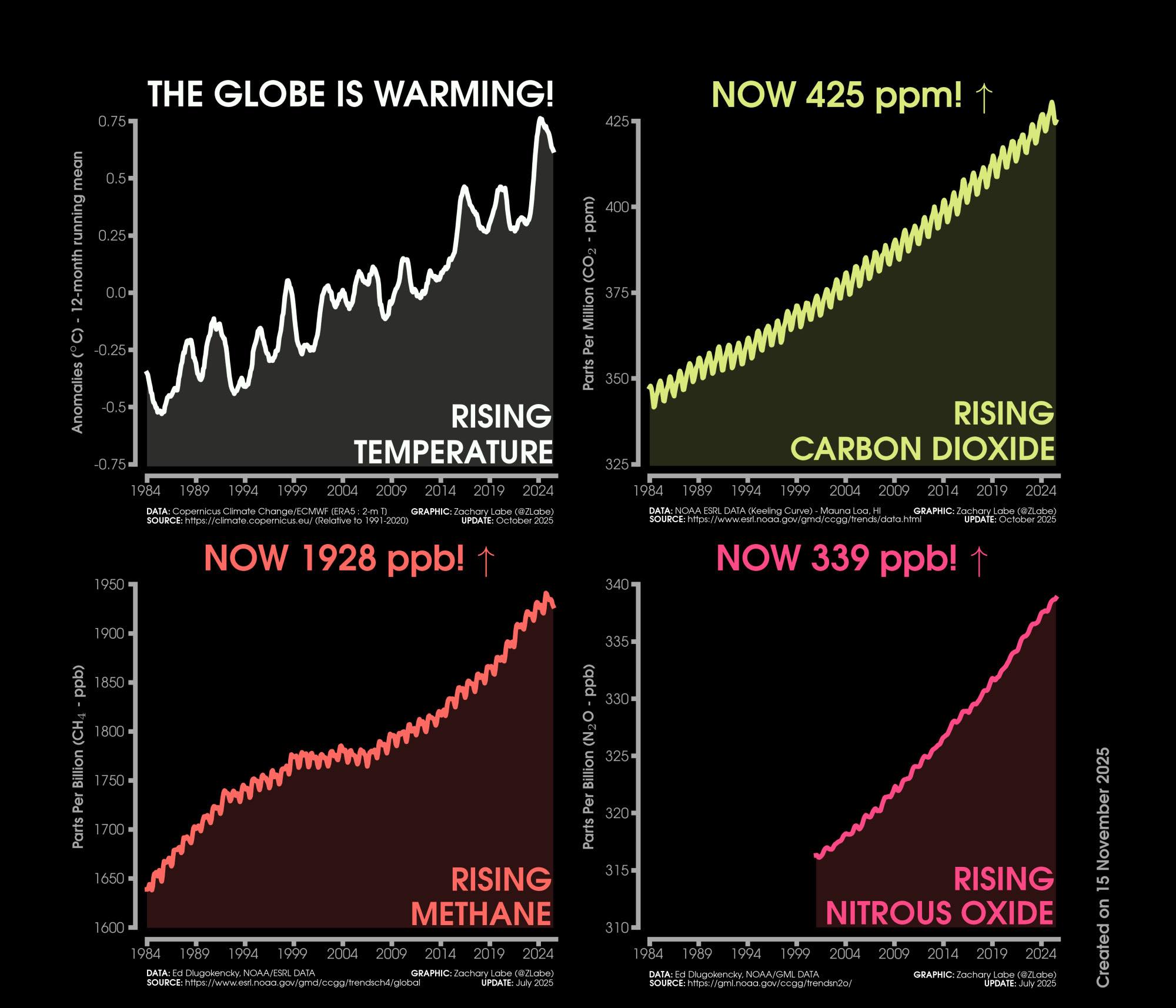
CO₂ is only one component in a vast, interconnected climate system — but it remains the most significant driver of human-caused warming. While water vapor, clouds, aerosols, and ocean circulation all play essential roles, CO₂ is the primary forcing mechanism we directly control. And today, it is rising at a speed unprecedented in Earth’s recent geological history.

According to the World Meteorological Organization (2025) and the Global Carbon Project (2025), the year 2024 marked the most extreme convergence of climate records ever observed. Atmospheric CO₂ levels reached 422.7 ppm, the highest in three million years, with a record annual increase of 3.75 ppm. Monthly readings peaked at 426.91 ppm in June 2024 — a value that would have been unimaginable even a generation ago.

Accelerating Emissions and the Collapse of “Natural Buffers”

Global fossil fuel and cement emissions rose to 37.4 gigatons of CO₂ in 2024, a 0.8% increase from 2023. The growth was driven by:

  • Coal expansion across Asia

  • Post-pandemic industrial rebound

  • Sharp increases in liquefied natural gas (LNG) production, particularly in the United States

While often marketed as a “bridge fuel,” methane leakage from LNG infrastructure — over 80 times more potent than CO₂ over 20 years — has erased its supposed climate advantage. These cumulative emissions are now overwhelming the buffering capacity of the oceans, cryosphere, and biosphere.

This record convergence signals a fundamental phase transition in the Earth system. Regions that once absorbed carbon, stabilized temperature, and moderated climate extremes are now flipping into self-reinforcing feedback loops. What was once a slow climb in global heat content is now taking on the characteristics of nonlinear acceleration.

Glaciers, Cryosphere Collapse, and the Finality of “Point of No Return”

The WMO issued one of its starkest warnings in 2023:

“The world’s glaciers melted at dramatic speed last year and saving them is effectively a lost cause…
Antarctic sea ice fell to its lowest extent on record.
Some European glaciers are literally off the charts.”

WMO Secretary-General Petteri Taalas summarized the situation bluntly:

“We have already lost the melting-of-the-glaciers game.
The CO₂ concentration is now simply too high.”

In the Swiss Alps alone, 6.2% of total glacier mass vanished in a single summer, the greatest loss in the entire observational record.

Taalas further warned that disappearing glaciers will:

  • Reduce global freshwater supply

  • Impair agriculture

  • Destabilize river transport and hydrology

  • Accelerate sea-level rise far beyond prior projections

For decades, sea-level rise was expected to unfold over millennia. But with runaway CO₂ growth and feedback amplification, that timeline is rapidly collapsing into decades.

How Fast Could Sea Levels Rise? A Scientific Exchange

A natural question follows:
Could this trigger the fastest sea-level rise in Earth’s history?

Physicist Sidd Mukherjee offered the following expert assessment:

“It depends on what you mean by ‘ever.’
In terms of human civilization: yes, likely.”

He notes:

  • The total global ice inventory can produce ~200 feet of sea-level rise.

  • Greenland and West Antarctica may already be committed to collapse.

Breakdown of likely contributions:

  • Greenland: ~20 feet over 100–300 years

  • West Antarctica: ~10 feet, potentially in decades to a century

Average over a century:

  • ~20 feet → 2 inches per year (50 mm/year), 10x the current rate

But the average masks the danger. Sea-level rise will likely arrive in pulses, not a smooth curve:

“We could dawdle along at half an inch per year, then suddenly experience a couple of years with a foot of rise annually.”

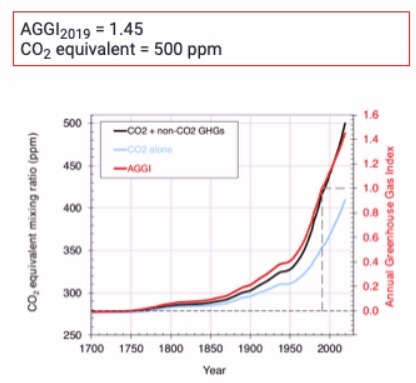
If CO₂-equivalent concentrations can be stabilized near 500 ppm, there may still be a chance to preserve East Antarctica, the largest remaining ice sheet. But if it destabilizes:

“Expect another couple hundred feet of sea-level rise.”

A Civilization-Level Threshold

We are now witnessing the early stages of a global system crossing into a new and dangerous mode of operation — one defined by:

  • Rapid CO₂ accumulation

  • Collapsing carbon sinks

  • Accelerating ocean heat storage

  • Cryosphere destabilization

  • Intensified extreme weather

The question is no longer whether these changes are occurring, but how quickly, and how prepared we are for the consequences.

Humanity is approaching — and in some cases passing — thresholds that earlier generations believed were centuries away. The decisions made in the next decade will determine whether sea-level rise is measured in inches, feet, or tens of feet within a single human lifetime.

WARNING

* Our probabilistic, ensemble-based climate model — which incorporates complex socio-economic and ecological feedback loops within a dynamic, nonlinear system — projects that global temperatures are becoming unsustainable this century. This far exceeds earlier estimates of a 4°C rise over the next thousand years, highlighting a dramatic acceleration in global warming. We are now entering a phase of compound, cascading collapse, where climate, ecological, and societal systems destabilize through interlinked, self-reinforcing feedback loops.

What Can I Do?
The single most important action you can take to help address the climate crisis is simple: stop burning fossil fuels. There are numerous actions you can take to contribute to saving the planet. Each person bears the responsibility to minimize pollution, discontinue the use of fossil fuels, reduce consumption, and foster a culture of love and care. The Butterfly Effect illustrates that a small change in one area can lead to significant alterations in conditions anywhere on the globe. Hence, the frequently heard statement that a fluttering butterfly in China can cause a hurricane in the Atlantic. Be a butterfly and affect the world.

Tipping points and feedback loops drive the acceleration of climate change. When one tipping point is toppled and triggers others, the cascading collapse is known as the Domino Effect.

The Climate Crisis: Violent Rain | Deadly Humid Heat | Health Collapse | Extreme Weather Events | Insurance | Trees and Deforestation | Soil | Rising Sea Level | Food and Water | Updates

The Human Induced Climate Change Experiment

bookmark_borderFact-Check: False and Misleading Claims in the State Department Statement

Marco Rubio, Secretary of State

November 13, 2025

Today, building on President Trump’s historic commitment to confront Antifa’s campaign of political violence, the Department of State is designating German-based Antifa Ost, along with three other violent Antifa groups in Italy and Greece, as Specially Designated Global Terrorists and intends to designate all four groups as Foreign Terrorist Organizations, effective November 20, 2025. The designation of Antifa Ost and other violent Antifa groups supports President Trump’s National Security Presidential Memorandum-7, an initiative to disrupt self-described “anti-fascism” networks, entities, and organizations that use political violence and terroristic acts to undermine democratic institutions, constitutional rights, and fundamental liberties. Groups affiliated with this movement ascribe to revolutionary anarchist or Marxist ideologies, including anti-Americanism, “anti-capitalism,” and anti-Christianity, using these to incite and justify violent assaults domestically and overseas.

1. “Antifa Ost” and similar groups are not recognized terrorist organizations under international law

There is no record — from Germany’s Federal Office for the Protection of the Constitution (BfV), EU security agencies, Europol, or Interpol — that Antifa Ost is designated as a terrorist organization.

  • Germany has never listed Antifa Ost as a terrorist group, nor has it formally accused them of terrorism under German criminal code.
  • Germany also does not recognize “Antifa” as a structured organization — it is a decentralized, loosely affiliated movement, not a hierarchy capable of meeting the statutory definition for “Foreign Terrorist Organization” (FTO).

Claim: Misleading / false. The U.S. cannot designate a group as a Foreign Terrorist Organization if it does not legally exist as such in the host country and lacks the organizational structure required by U.S. law.

2. “President Trump’s historic commitment to confront Antifa’s campaign of political violence”

This is propaganda framing, not factual analysis.

  • No U.S. intelligence agency — including the FBI, DHS, or CIA — has found any evidence of a coordinated Antifa campaign of political violence.
  • Trump’s own FBI Director, Christopher Wray (2020–2024), repeatedly testified that:“Antifa is an ideology, not an organization.”
  • DHS threat assessments consistently found right-wing extremist violence to be the primary domestic terrorist threat (2019–2024), not Antifa.

Claim: False framing; contradicted by official intelligence assessments.

3. “Self-described anti-fascism networks… undermining democratic institutions”

Anti-fascism is a political philosophy, not a network. The statement misrepresents:

  • Antifa groups are decentralized: no leadership, no command structure, and no formal membership.
  • U.S. law (18 U.S.C. §1189) requires structured, foreign organizations capable of planning and executing terrorist acts. Antifa does not meet this threshold.
  • No credible Western intelligence agency has reported coordinated, transnational Antifa networks undermining democratic institutions.

Claim: Misleading; conflates ideology with organized terrorism.

4. “These groups use terroristic acts… overseas”

There is no verified record of Antifa-related organizations committing internationally coordinated terror attacks.

  • European law enforcement has prosecuted individual anarchists for vandalism, clashes with police, or riots — not terrorism.
  • None of the listed countries (Germany, Italy, Greece) recognize Antifa subgroups as terrorist entities.
  • The EU Terrorism Database contains no entries linking Antifa movements to terrorist attacks.

Claim: False.

5. “Ascribe to revolutionary anarchist or Marxist ideologies, including anti-Americanism, anti-capitalism, and anti-Christianity”

This is political rhetoric, not factual classification.

  • Political ideology is not evidence of terrorism.
  • The statement relies on labeling (“anti-Christianity,” “anti-Americanism”) to frame political dissent as extremism.
  • Many antifascist activists are not Marxists; some are Christians; many are ordinary citizens who oppose far-right extremism.

Claim: Misleading and ideologically charged.

6. The U.S. lacks legal grounds to designate Antifa groups as FTOs

Under U.S. law, Foreign Terrorist Organization designation requires:

  1. The group must be foreign
  2. Must engage in terrorist activity
  3. Must pose a threat to U.S. national security

For Antifa Ost and similar groups:

  • They have no recognized command structure.
  • They have not carried out internationally coordinated terrorist activity.
  • They pose no established threat to U.S. national security.

Any designation would likely be challenged in federal court and overturned for lack of evidence — similar to prior cases where political groups were improperly labeled as threats.

Conclusion

The State Department statement is highly misleading, politically motivated, and largely contradicted by domestic and international intelligence assessments.
It:

  • Inflates a decentralized ideology into a coordinated global terrorist network
  • Makes false claims about terrorist activity
  • Misrepresents foreign governments’ legal positions
  • Politically weaponizes terrorism designations against ideological opposition

In short:
The statement is a political narrative masquerading as a national security finding.

Trumpenomics

bookmark_borderDon the Con: How Trump Cemented His Legacy as the Dumbest World Leader in History

Trump said it best, “Smart people don’t like me.”

Trump is going down in history as the dumbest president in American history; however, that title may not be “biggly” enough for him. He is now being recognized globally as the dumbest world leader in history — a man who has willfully ignored, denied, and lied about established science, accelerating a planetary crisis that has already cost millions of lives. Trump’s science denial directly resulted in millions of preventable COVID deaths in his first term. Now, he is endangering the entire population of the world.

Trump has repeatedly dismissed climate science as a “hoax,” “bullshit,” and “the green scam.” At the United Nations, he called climate change a “con” — an irony lost on no one, coming from “Don the Con” himself, a man whose business empire was built on deceit, bankruptcies, and fraud. His record now includes criminal convictions, civil judgments, and an unparalleled legacy of scientific ignorance.

This year, Trump refused to cooperate with the COP30 global climate summit in Brazil, further cementing America’s retreat from global climate leadership. With global emissions nearly doubling in the last 33 years, few would argue that progress has met expectations. Worse, the post-COVID global consensus on tackling climate change is fracturing — led by Trump’s renewed campaign of climate disinformation and economic coercion. His administration’s new trade tariffs pressure allies such as Japan, the EU, and South Korea to buy more U.S. fossil fuels, directly undermining global decarbonization efforts.

Trump’s absence from COP30 drew sharp rebukes from world leaders. “For small island states, the climate crisis is not past tense or future tense. It is our reality. We have no way to run, no way to hide,” said Antigua and Barbuda’s Prime Minister Gaston Browne. Chilean President Gabriel Boric accused Trump of spreading “lies” about the climate crisis, while Colombian President Gustavo Petro declared, “Mr. Trump is against humankind.”

As Trump abandons both people and planet, others are stepping into the leadership void. California Governor Gavin Newsom announced he will attend COP30 in Brazil, representing the world’s fourth-largest economy. Newsom aims to strengthen climate partnerships, promote clean-energy investments, and showcase California’s model for creating jobs while cutting toxic pollution.

“As the President of the United States turns his back on people and the planet, California is inking global partnerships focused on creating jobs and cutting toxic pollution,” Newsom said. “The economic winners of the 21st century are those who build the clean-energy future. We’re doing that right now — and showing the world that climate action means jobs, clean air, and lower costs.”

While Trump clings to fossil-fueled fantasies and falsehoods, California and the world are moving forward without him. History will remember Trump not as a leader, but as a warning — a living example of how ignorance, arrogance, and greed can conspire to imperil the planet itself.

The Great Race Against Time: Trump vs. Mother Nature

Donald Trump has consistently dismissed the science of climate change, calling it a hoax and dismissing policies aimed at addressing it as “The Green New Scam.” His repeated use of the phrase “Drill, Baby, Drill” symbolizes an energy policy that prioritizes fossil fuel extraction over sustainable alternatives. These policies have only intensified the climate crisis, posing severe risks not only to the environment but to the global economy as well. If left unchecked, Donald Trump’s economic and environmental policies will render the planet uninhabitable for future generations.

The evidence is irrefutable: climate change is accelerating at an alarming pace, and the associated costs—both economic and human—are rising exponentially. Immediate, decisive action is essential to reduce greenhouse gas emissions and prevent further environmental collapse. Our updated climate model, now grounded in chaos theory and incorporating complex social-ecological factors within a dynamic, non-linear framework, predicts that global temperatures could increase by up to 9°C this century—far surpassing the previous estimate of a 4°C rise over the next thousand years. Such extreme warming will render large portions of the planet uninhabitable within this century, threatening the stability of ecosystems and human societies alike.


* Our probabilistic, ensemble-based climate model — which incorporates complex socio-economic and ecological feedback loops within a dynamic, nonlinear system — projects that global temperatures are becoming unsustainable this century. This far exceeds earlier estimates of a 4°C rise over the next thousand years, highlighting a dramatic acceleration in global warming. We are now entering a phase of compound, cascading collapse, where climate, ecological, and societal systems destabilize through interlinked, self-reinforcing feedback loops.

What Can I Do?
The single most important action you can take to help address the climate crisis is simple: stop burning fossil fuels. There are numerous actions you can take to contribute to saving the planet. Each person bears the responsibility to minimize pollution, discontinue the use of fossil fuels, reduce consumption, and foster a culture of love and care. The Butterfly Effect illustrates that a small change in one area can lead to significant alterations in conditions anywhere on the globe. Hence, the frequently heard statement that a fluttering butterfly in China can cause a hurricane in the Atlantic. Be a butterfly and affect the world.

→ “Solutions to the Fossil Fuel Economy and the Myths Accelerating Climate and Economic Collapse.“

The Human Induced Climate Change Experiment

bookmark_borderTrump’s Tariffs Face Supreme Court Scrutiny: Economic, Legal, and Fiscal Fallout Looms

The U.S. Supreme Court on Wednesday appeared skeptical of the sweeping tariffs imposed by former President Donald Trump on much of the world, questioning both their legality and their unprecedented reach.

In a rare show of bipartisan concern, both conservative and liberal justices challenged the Trump administration’s interpretation of executive power under the International Emergency Economic Powers Act (IEEPA) — a 1977 law intended for narrow, national-security-related emergencies, not broad economic interventions.

Solicitor General D. John Sauer, defending the tariffs, argued that Trump’s actions were “regulatory,” not fiscal. “These are regulatory tariffs,” Sauer said. “They are not revenue-raising tariffs. The fact that they raise revenue was only incidental.”

Justice Sonia Sotomayor pushed back, saying, “You say tariffs are not taxes, but that’s exactly what they are. They’re generating money from American citizens — revenue.”

Conservative Justice Neil Gorsuch expressed similar unease, noting that Trump declared an “international emergency” over trade imbalances and fentanyl trafficking to bypass Congress. “What happens when the president simply vetoes legislation to take these powers back?” Gorsuch asked. “It’s a one-way ratchet toward the continual accretion of power in the executive branch and away from the people’s elected representatives.”

Other conservative justices, including Chief Justice John Roberts, Amy Coney Barrett, Brett Kavanaugh, and Samuel Alito, pressed Sauer on whether Trump had overstepped constitutional boundaries that reserve taxation and revenue measures for Congress.

Economic Fallout of a Reversal

If the Supreme Court strikes down the tariffs as illegal, the economic consequences could be profound. Many of Trump’s tariffs — ranging from 10% to as high as 50% on imports from nations such as India, Brazil, China, and Canada — were imposed in direct violation of World Trade Organization (WTO) agreements and bilateral trade treaties.

A ruling invalidating the tariffs would not only erode U.S. credibility on the global stage but could also trigger retaliatory claims from U.S. trading partners seeking compensation for lost exports and retaliatory duties. American exporters, already burdened by global counter-tariffs, could face renewed uncertainty just as global trade volumes are beginning to recover from pandemic disruptions.

Economically, a reversal could produce short-term market volatility as importers seek refunds and supply chains recalibrate. However, over the long term, restoring lawful, rules-based trade would likely stabilize markets, reduce consumer prices, and improve international confidence in U.S. economic leadership.

Fiscal Shock: Tariff Refunds and Rising Deficits

The fiscal consequences of declaring Trump’s tariffs unlawful could be staggering. Since the tariffs were enacted, the U.S. Treasury has collected roughly $151 billion in customs duties in the latter half of fiscal year 2025 alone — a nearly 300% increase from the same period in 2024, according to the Committee for a Responsible Federal Budget.

If courts require refunds to importers for illegally collected tariffs, the government could owe hundreds of billions of dollars, instantly swelling the federal deficit. Analysts estimate potential refund liabilities could reach $500 billion to $1 trillion when interest, penalties, and economic damages are included.

That would erase much of the short-term “revenue gain” touted by Trump’s supporters and substantially worsen the national debt, which already ballooned by $9 trillion across Trump’s two terms — more than under any president in U.S. history.

Global Credibility at Stake

Beyond dollars and deficits, the broader cost is diplomatic. Declaring the tariffs illegal would reinforce that the United States violated its own trade commitments, weakening U.S. moral and legal authority in the global economic order it helped build.

For decades, the U.S. has been viewed as a stabilizing force in global commerce. Trump’s unilateral tariffs — often imposed without consultation or evidence — undermined that reputation. A Supreme Court ruling against them would serve as both a legal correction and a warning shot: that economic nationalism, when untethered from law, carries immense risks not just for the economy but for America’s credibility as a global leader.

Trumpenomics

bookmark_borderTrump’s Tariff Lies: The Supreme Court Case That Could Expose the Biggest Tax Hike in U.S. History

President Trump has made several posts on Truth Social regarding today’s Supreme Court hearing on the legality of his tariffs, held Wednesday, November 5, 2025. He called the case one of immense national importance, writing, “This case is, literally, LIFE OR DEATH for our Country.” He went on to argue that presidential authority to impose tariffs is essential for national security, saying, “If a President was not able to quickly and nimbly use the power of Tariffs, we would be defenseless, leading perhaps even to the ruination of our Nation.”

This is an outright lie — one of many he’s repeated to disguise what his tariffs really are: the largest tax increase in U.S. history. Worse, they are among the most regressive taxes ever imposed, disproportionately harming low- and middle-income Americans while providing little measurable benefit to U.S. industries or workers.

Trump’s tariffs were declared under fabricated “national emergencies,” allowing him to bypass Congress — a direct violation of constitutional checks and balances. The case now before the Supreme Court stems from a class action lawsuit filed by thousands of small businesses that have been crushed under the weight of these taxes. Many of these businesses, already struggling with inflation and supply chain disruptions, have been forced to close their doors or lay off workers because of steep import costs.

In reality, tariffs are taxes — taxes paid by American consumers, not foreign countries. Every economist outside Trump’s echo chamber agrees that the tariffs have raised prices across nearly every sector, from food and automobiles to construction materials and electronics. The idea that tariffs make the U.S. “stronger” is pure fiction. They weaken purchasing power, fuel inflation, and undermine the very small businesses that form the backbone of the American economy.

Trump’s framing of this Supreme Court case as a matter of “life or death” is pure political theater — designed to rally his base and distract from the economic damage his policies have inflicted. The real stakes are indeed high, but not for the reasons he claims. What’s at risk is the rule of law, the integrity of the Constitution, and the economic wellbeing of millions of American families and businesses already paying the price for his reckless trade war.

Trumpenomics