bookmark_borderInternational Year of Glaciers

by Daniel Brouse
March 21, 2025

Glaciers Melting 36% Faster Than 20 Years Ago

The United Nations has designated 2025 as the International Year of Glaciers’ Preservation to raise global awareness about the critical role glaciers play in our planet’s climate system and water resources. This initiative aims to mobilize governments, scientific institutions, the private sector, and civil society to urgently reduce greenhouse gas emissions and implement effective adaptation strategies. Additionally, starting in 2025, March 21 will be observed annually as the World Day for Glaciers, emphasizing the need for concerted efforts to protect these vital natural resources. ​

Recent reports highlight the alarming acceleration of glacier melt worldwide. A UNESCO report reveals that glaciers have been melting 36% faster than they did 20 years ago, losing approximately 273 billion tons of ice per year between 2000 and 2023. This amounts to a total loss of 6,542 billion tons of ice during that period, significantly impacting regions from the Arctic to the Alps, South America, and the Tibetan Plateau. The accelerated melting contributes to rising sea levels, threatening millions with floods and disrupting essential water sources for energy and agriculture. ​

The rapid retreat of glaciers poses a severe risk to the food and water supply of up to 2 billion people globally. The climate crisis is causing unprecedented glacier melting and reduced snowfall, which in turn impacts irrigated agriculture and water supplies in mountainous regions. More than 1 billion people in these areas, particularly in developing countries, already face food insecurity, a situation predicted to worsen as glaciers continue to shrink.

In Antarctica, scientists are increasingly alarmed as evidence shows that sea ice has reached record lows for the fourth consecutive year. Notably, the Thwaites Glacier, often referred to as the “Doomsday Glacier,” remains particularly vulnerable, with significant implications for global sea levels. Recent Antarctic sea ice extents have fallen below 2 million square kilometers, with 2022 and 2025 both recording only 1.98 million square kilometers. This decline in sea ice has potential global repercussions, as it may amplify rising sea levels and influence global temperatures.

These developments underscore the urgency of the International Year of Glaciers’ Preservation in 2025, aiming to foster global action to mitigate the impacts of climate change on glaciers and the communities that depend on them.

The Past, Present, and Future of Climate Change
In the 1990s, we first hypothesized the non-linear acceleration of climate change. By the early 2000s, this hypothesis had evolved into established climate theory, now widely recognized as scientific fact. My lab partner, a Doctor of Physics from Ohio State, and I collaborated to provide key evidence supporting this theory. Over the years, we have observed a dramatic reduction in the doubling time of climate change impacts — the rate at which these effects intensify. Initially, the doubling time was approximately 100 years, but it has since decreased to 10 years and, more recently, to just 2 years. This trend implies that the damage caused by climate change today is double what it was two years ago. In two years, it could be four times worse; in four years, eight times worse; and within a decade, potentially 64 times worse. These projections are conservative, assuming the doubling period does not continue to shrink further. Alarmingly, this rapid acceleration does not appear to be an anomaly. If this trajectory persists, the consequences will likely be far more catastrophic than previously anticipated.
Rising Sea Level

The Human Induced Climate Change Experiment

bookmark_borderEscalating Climate Crisis: Extreme Weather Displaces Hundreds of Thousands in 2024

by Daniel Brouse
March 19, 2025

Not only was 2024 the hottest year on record, but it also set a record for the number of people displaced, including in the U.S.

  • The World Meteorological Organization (WMO) reported that 2024 was the hottest year on record, with global temperatures averaging 1.55°C above pre-industrial levels. This unprecedented heat contributed to the acceleration of glacier and sea ice loss, leading to a rise in sea levels. The temperature exceeds the 1.5°C limit set by the Paris Accord which is an important threshold for triggering tipping points. Nine tipping points have likely been crossed in the last 5 years. Tipping points are Critical Milestones that directly impact the rate of acceleration in climate change by multiplying the number and intensity of feedback loops. Identifying and understanding these tipping points is crucial for climate science and policymaking. Crossing multiple tipping points could lead to a domino effect, resulting in a much more rapid and severe climate change than currently projected.

  • The WMO also noted that extreme weather events in 2024, such as heatwaves, floods, and storms, displaced more than 800,000 people and caused significant crop losses. In the U.S., displacement was driven by multiple climate disasters, including an unprecedented hurricane season, widespread flooding, and prolonged heatwaves.

    Hurricanes Helene and Milton were among the most devastating storms to make landfall in 2024, forcing hundreds of thousands of people to evacuate in coastal regions, particularly in Florida, Louisiana, and the Carolinas. The hurricanes caused extensive infrastructure damage, with some communities still struggling to rebuild months later. Meanwhile, record-breaking flooding in the Midwest, exacerbated by heavier rainfall and rising river levels, displaced thousands of residents, washing away homes and farmlands.

    As 2025 began, the crisis continued with massive wildfires in California, driven by persistent drought and extreme heat. Entire towns were forced to evacuate, with some residents losing their homes permanently due to the rapidly spreading blazes. The Midwest and Southeast were also hit hard in March 2025 by one of the worst tornado outbreaks in recent history, leaving entire neighborhoods uninhabitable and displacing thousands. The increasing frequency and intensity of these disasters underscore the growing impact of climate change on population displacement in the U.S. and the urgent need for stronger adaptation measures.

  • Additionally, a study revealed that ‘climate whiplash’—abrupt shifts between extreme wet (violent rain) and dry conditions—is increasingly affecting major cities worldwide. This phenomenon complicates disaster preparedness and recovery efforts, underscoring the urgent need for global action to adapt to these changes.

    Mass, velocity, and density determine the severity of extreme rain events, and all three are increasing as both wind and rainfall intensify. The interaction of these factors amplifies flow forces, with wind and water forces scaling proportionally to the square of velocity. This means that as wind speeds rise due to more intense heating or heavier rainfall, the resulting damage increases exponentially. According to drag physics, force is proportional to density times the square of velocity.

    For example, a 20-mile-per-hour wind exerts four times the force of a 10-mile-per-hour wind, while a 40-mile-per-hour wind exerts 16 times the force. At 50 miles per hour, the force is 25 times greater, and at 60 miles per hour, it is 36 times greater than at 10 miles per hour. When factoring in density, the impact becomes even more severe: water is approximately 800 times denser than air, meaning that a 10-mile-per-hour water flow exerts 800 times the force of a 10-mile-per-hour wind.

    As climate change accelerates, increasing flow velocities will lead to exponentially greater destructive forces. While the precise extent of future velocity increases remains uncertain, the consequences are already visible—overwhelmed flood and sewage systems, collapsing hillsides, and widespread infrastructure failures. Without urgent adaptation measures, these escalating forces will continue to cause greater damage to communities and ecosystems.

    The increasing frequency of extreme rain events is occurring alongside cycles of severe drought, creating a destructive feedback loop. Prolonged drought leaves the land parched and less able to absorb water, making it highly susceptible to erosion, flash flooding, and landslides when heavy rains arrive. This combination intensifies devastation, as dry, compacted soil repels water, leading to rapid runoff, more severe flooding, and long-term degradation of topsoil, which further reduces the land’s ability to recover.

These findings emphasize the escalating impact of climate change on human displacement and the critical importance of implementing effective climate adaptation and mitigation strategies.


The Human Induced Climate Change Experiment

bookmark_borderClimate Update: Chain Reaction of Devastation

by Daniel Brouse
February 28, 2025

Human-induced climate change is directly impacting the habitability of our planet through increased thermal energy. Beyond rising temperatures, the cascading crises resulting from climate change can have immediate effects on health and wellness. The pollution caused by California wildfires, for instance, is expected to have long-term health impacts. In response to recent fires, California has temporarily suspended certain environmental protection laws to expedite rebuilding efforts.

Benzene Contamination

One significant concern is benzene exposure, which can occur through inhalation or ingestion of contaminated water.

Health Impacts of Benzene:

  • Short-term Exposure: Inhaling or ingesting benzene can cause symptoms such as nausea and vomiting.
  • Long-term Exposure: Prolonged exposure to benzene is linked to an increased risk of cancer.

Benzene contamination in California’s drinking water has emerged as a significant concern following recent wildfires. The combustion of urban infrastructure during these fires releases hazardous chemicals, including benzene, into the environment. Benzene, a known carcinogen, can infiltrate water systems through damaged pipes and compromised infrastructure.

In the aftermath of the Palisades and Eaton fires in Los Angeles, over 9,000 structures were affected, leading to contamination of municipal water supplies. Authorities have issued advisories against using tap water for drinking, cooking, or washing, recommending the use of bottled water instead. Boiling the water is discouraged, as it may not remove volatile organic compounds like benzene and could potentially concentrate them.

The process of restoring safe drinking water is complex and time-consuming. It involves extensive testing, system flushing, and infrastructure repairs, which can take from several days to months, depending on the severity of the contamination. For instance, after the Camp Fire in Paradise, California, in 2018, the town’s water supply was contaminated with benzene, and the remediation efforts extended over a prolonged period.

Residents in wildfire-prone areas are advised to stay informed through official channels and adhere to public health advisories regarding water usage. Using alternative water sources and avoiding the use of potentially contaminated tap water are crucial steps to minimize health risks associated with benzene exposure.  The best response is to avoid the area and do not rebuild.

In response to the recent wildfires, California Governor Gavin Newsom signed an executive order on January 12, 2025, suspending certain environmental regulations to expedite rebuilding efforts. This order temporarily lifts requirements under the California Environmental Quality Act (CEQA) and the California Coastal Act for development projects aimed at repairing or replacing properties damaged by the fires. While this action facilitates quicker reconstruction, it has raised concerns about potential environmental impacts due to the suspension of standard review processes.

The health impacts of wildfire-related pollution are profound. Short-term exposure to wildfire smoke can cause mild irritations like runny noses and scratchy throats, as well as more severe conditions such as bronchitis. For sensitive groups, including children, the elderly, pregnant individuals, and those with pre-existing respiratory and cardiovascular issues, the risks are even higher. Long-term exposure to pollutants from wildfire smoke has been linked to chronic respiratory diseases and an increased risk of cardiovascular problems.

Addressing the cascading crises resulting from climate change-induced events like wildfires requires a multifaceted approach. This includes implementing robust environmental protections, ensuring public health preparedness, and promoting sustainable practices to mitigate the underlying causes of climate change.

bookmark_borderClimate Change and Policy Shifts Threaten U.S. Housing Market Stability

by Daniel Brouse
February 20, 2025

Projected Devaluation of U.S. Homes Due to Climate Change

Recent analyses indicate that climate change poses a significant threat to the U.S. housing market. Over the next five years, it’s projected that at least 20% of U.S. homes will experience devaluation due to climate-related impacts. In certain vulnerable markets, property values could decline by up to 30% within this period. By 2055, approximately 84% of all U.S. homes may suffer devaluation, resulting in an estimated $1.47 trillion in losses. This timeline aligns with the typical 30-year mortgage term, underscoring the long-term financial risks for homeowners and lenders.

Insurance Market as an Indicator of Real Estate Vulnerability

The availability and cost of homeowners insurance are critical factors influencing mortgage approvals and, consequently, home valuations. Insurance is often considered the ‘canary in the coal mine’ for real estate, signaling emerging risks associated with climate change. High-vulnerability regions, particularly coastal areas in states like Florida, Louisiana, and California, are confronting a compounded crisis. The convergence of escalating insurance premiums, frequent natural disasters, and declining property values is placing immense strain on both homeowners and insurance systems. In Florida, for instance, the state-owned Citizens Property Insurance Corporation has become the largest insurer, reflecting the significant withdrawal of private companies from the market due to unmanageable risks.

Historical Context and Accelerating Climate Change Impacts

Traditionally, real estate has been regarded as a stable and appreciating investment, often outpacing general inflation rates. Since 1963, while inflation has risen by 896%, housing prices have surged by more than 2,350%. However, climate change is disrupting this paradigm. Scientific observations have documented a non-linear acceleration of climate change impacts, with the doubling time of these effects shrinking from approximately 100 years to just a few years. This rapid acceleration suggests that the adverse consequences of climate change on real estate are intensifying at an unprecedented rate.

Policy Changes and Their Potential Exacerbation of Climate Risks

Recent policy shifts under the Trump administration may further exacerbate these challenges. The administration has rescinded numerous environmental regulations and executive orders aimed at mitigating climate change. Notably, President Trump signed 26 executive orders on January 20, 2025, which included the repeal of approximately 80 prior executive actions focused on energy, environmental, and natural resource agendas. These actions reflect a strategic shift towards promoting domestic fossil energy production and reducing regulatory oversight, potentially accelerating environmental degradation.

Additionally, the administration has proposed reforms to key entities in the U.S. housing finance system, specifically Fannie Mae, Freddie Mac, and the Federal Housing Administration (FHA). The proposed privatization of Fannie Mae and Freddie Mac could lead to increased mortgage rates, adversely affecting housing affordability. Furthermore, the potential elimination of the Consumer Financial Protection Bureau (CFPB) may reduce oversight in the housing market, increasing the risk of predatory practices. These reforms could introduce significant uncertainty into the housing market, influencing home prices and overall economic stability.

The Trump administration has also announced plans to dismantle the Federal Emergency Management Agency (FEMA) and rescind all updates to floodplain maps. Homeland Security Secretary Kristi Noem supports reallocating FEMA’s responsibilities to state and local authorities, citing operational inefficiencies and flawed responses to recent disasters.  President Trump has signed an executive order revoking the Federal Flood Risk Management Standard, effectively halting enforcement of updated floodplain maps.  Critics argue that these actions could leave states unprepared for natural disasters and increase vulnerability to flooding leaving homeowners and lenders underwater.

Conclusion

The intersection of accelerating climate change impacts and recent policy shifts presents a formidable challenge to the U.S. housing market. Homeowners, investors, and policymakers must recognize and address these converging threats to safeguard the stability and value of real estate assets in the face of an evolving environmental and regulatory landscape.

Sources:

The Human Induced Climate Change Experiment

bookmark_borderFederal Funding Cuts and the Emerging Republican Backlash

Federal Funding Cuts: Disproportionate Impacts on Red States and Emerging Republican Backlash

Red states, which often receive more in federal funding than they contribute in taxes, are disproportionately impacted by federal fund reductions. This dependency means that cuts in federal funding can significantly affect their budgets and economies.

Federal Funding Dependency in Red States:

  • Higher Federal Aid Reliance: Many red states rely heavily on federal aid to support various programs and services. For instance, in 2021, Montana received 31.8% of its budget from federal funding, while Kentucky received 30.1%.

  • Fiscal Imbalance: On average, red states receive $1.24 for every dollar they contribute to the federal government, indicating a net gain from federal allocations.

Impact of Federal Funding Reductions:

  • Budgetary Strain: Reductions in federal funds can lead to significant budget shortfalls in these states, affecting essential services such as healthcare, education, and infrastructure. For example, proposed cuts to Medicaid expansion funding could result in a 31% decline in federal spending for expansion states, disproportionately affecting states with higher reliance on these funds.

  • Economic Challenges: Federal funding cuts can shift financial burdens onto state governments, many of which already face budget constraints. This shift can lead to reduced public services and increased financial pressure on residents.

Cracks in the Foundation

Recent federal funding cuts have sparked significant backlash from Republican constituencies, particularly in rural farming communities and states heavily reliant on research funding.

1) Rural Farmers Protest the Elimination of USAID’s “Food for Peace” Program

The dismantling of the U.S. Agency for International Development (USAID) has led to the abrupt termination of the “Food for Peace” program, a critical initiative that purchased approximately $2 billion annually in agricultural commodities such as rice, wheat, lentils, and peas from American farmers. This program not only provided food aid to countries in need but also served as a vital market for U.S. agricultural producers.

The sudden cessation of “Food for Peace” has left many rural farmers without a significant buyer, exacerbating existing financial strains caused by low commodity prices and trade uncertainties. In response, farmers have organized protests, voicing their concerns over the loss of this essential program and urging lawmakers to intervene. Senator Jerry Moran of Kansas has introduced legislative proposals to transfer the responsibilities of “Food for Peace” from the defunct USAID to the Department of Agriculture, aiming to preserve the program and protect farmers’ interests.

2) Alabama’s Backlash Due to NIH Funding Cuts Impacting the University of Alabama

In Alabama, the National Institutes of Health (NIH) announced significant reductions in funding, particularly targeting indirect cost reimbursements to research institutions. The University of Alabama at Birmingham (UAB), a leading biomedical research hub and one of the state’s largest employers, relies heavily on NIH grants, with an indirect cost rate previously set at 48.5%.

The proposed cuts, capping indirect cost rates at 15%, threatened to slash UAB’s research funding by hundreds of millions of dollars, jeopardizing ongoing projects and employment. This potential financial blow prompted widespread concern among university officials, researchers, and local communities. In response, a coalition of 22 states filed a lawsuit challenging the legality of the NIH’s funding cuts. A federal judge temporarily blocked the changes, acknowledging the potential “devastating” impact on research institutions. The situation has also led to public demonstrations, including billboards in Birmingham criticizing the funding cuts and urging political leaders to take action to protect the state’s vital research infrastructure.

These instances highlight the unintended consequences of federal funding reductions on Republican-leaning states, prompting backlash from communities that heavily depend on such programs for economic stability and growth.

bookmark_borderReal Estate in the Face of Economic and Environmental Challenges

Real Estate in the Face of Economic and Environmental Challenges: Inflation, Currency Devaluation, and Climate Change Impacts

by Daniel Brouse
February 16, 2025

Real estate has traditionally been viewed as a hedge against inflation and currency devaluation, often maintaining or increasing in value during such periods. However, the escalating impacts of climate change and shifting insurance landscapes are introducing new risks that could lead to significant losses in property values, particularly in high-risk areas.

Inflation:

  • Asset Appreciation: Over time, real estate values tend to rise faster than the general inflation rate. Since 1963, while inflation has increased by 896%, housing prices have surged by more than 2,350%.

  • Rental Income Growth: Inflation often leads to higher rents, boosting cash flow for property owners. This increase in rental income can offset the rising costs associated with inflation.

Currency Devaluation:

  • Increased Foreign Investment: A weaker dollar makes U.S. real estate more affordable for foreign investors, potentially driving up demand and property values.

  • Inflationary Pressures: Currency devaluation can lead to imported inflation, raising the cost of goods and services, which may, in turn, push real estate values higher as replacement costs increase.

Climate Change Impacts
The impact of human-induced climate change is becoming an increasingly critical factor in the residential real estate market. The rising frequency and severity of natural disasters, such as wildfires and floods, have led to heightened insurance premiums and decreased property values in high-risk areas. Recent studies project that climate change could erase approximately $1.47 trillion from U.S. home values over the next 10-30 years.

Moreover, the insurance landscape is shifting dramatically. As climate-related risks escalate, insurance companies are reassessing their coverage policies. In California, for instance, more than 80% of new properties built between 2020 and 2022 are located in high fire-risk areas, leading insurers to reduce coverage offerings in the state. This trend raises concerns that a significant portion of U.S. real estate could become uninsurable in the coming decades, posing substantial challenges for homeowners and investors.

The financial implications extend beyond immediate property devaluation. As insurance costs rise and coverage becomes scarce, homeowners may face increased mortgage defaults, and municipalities could experience shrinking tax bases. These factors contribute to a complex and evolving real estate landscape, where climate change plays a pivotal role in shaping future property values and market stability.

Conclusion
The interplay of fiscal policies and the accelerating climate crisis is poised to significantly impact real estate investments. Certain regions may experience market destabilization or even collapse due to increased climate-related risks, while others could see heightened demand and escalating prices. Investors should carefully assess these evolving factors when making real estate decisions.

bookmark_borderProtectionism 101: Trump Economics

Most of Trump’s policies are based on common misconceptions and in fact contradict established economic principles. To begin with, the U.S. government often subsidizes companies to keep operations domestic. This can make our products more expensive and our businesses less efficient and competitive. A notable example is electric vehicles (EVs). The U.S. heavily subsidizes EVs, yet we claim we are not, instead asserting that China does this without evidence. Consequently, we impose a 100% tariff on Chinese EVs. As a result, the U.S. lacks competitively priced, domestically produced EVs. Our EV industry has become uncompetitive and inefficient, while China has emerged as the powerhouse of EV manufacturing worldwide. This is just one example of how U.S. misunderstandings of trade have led to our own decline while contributing to China’s rise. These policies have been both Republican and Democratic. Trump’s policies, which are even more misguided and are intended to do this to every industry, are set to accelerate our decline rapidly. World economists estimate that our economy will be devastated within 1 year and 9 months.

For more information on this example see “BYD” and NEV sales. For another devastating example of protectionism see “Deep Seek” and large language model AI.

Protectionist policies have significantly influenced the global landscape of artificial intelligence (AI) and electric vehicles (EVs), creating distinct winners and losers across various industries.

Beneficiaries:

  • China:
    • BYD: A leading Chinese EV manufacturer, BYD has capitalized on domestic support and reduced foreign competition due to protectionist measures.
    • DeepSeek: This Hangzhou-based AI startup has emerged as a formidable player, developing advanced AI models like DeepSeek-R1. Notably, DeepSeek achieved these advancements at a fraction of the typical cost and energy consumption, democratizing AI development and enabling smaller firms to compete.

Adversely Affected:

  • United States:
    • Automotive Companies: Major U.S. automakers such as Ford and General Motors face challenges from increased tariffs and restricted access to international markets, impacting their competitiveness in the EV sector.
    • Technology Firms: Leading tech companies, including Nvidia, Intel, IBM, Qualcomm, Cerebras Systems, Graphcore, Tesla, Baidu, OpenAI, SambaNova, Microsoft, and Apple, have encountered setbacks due to protectionist policies. For instance, Nvidia experienced a significant decline in market capitalization following DeepSeek’s announcement of its R1 model, highlighting the disruptive potential of emerging competitors. For an idea of how costly protectionism can be to the US, Nvidia lost $593 billion in market value the day Deep Seek was announced.

The ripple effects of protectionism extend beyond these industries, notably impacting the energy sector—encompassing electricity, natural gas, and nuclear power—due to shifts in production and consumption patterns driven by evolving trade policies.

Beyond economic implications, protectionist measures can lead to significant technological and military consequences, as nations may struggle to access critical innovations or maintain strategic advantages in key sectors.

If you are interested in a historical example, the Smoot-Hawley Tariff Act of 1930 raised tariffs on imports to the United States, which contributed to the Great Depression. In fact, Trump’s policies, combined with bypassing the law and ignoring the Constitution by not having Congress codify legislation, make it appear as though our current economic downturn is accelerating. This is why world leaders and economists are not overly concerned; most agree they will tolerate current U.S. policies creating economic instability and that the collapsing economy will occur before the midterms. After the midterms, he will likely be toothless, if not impeached.

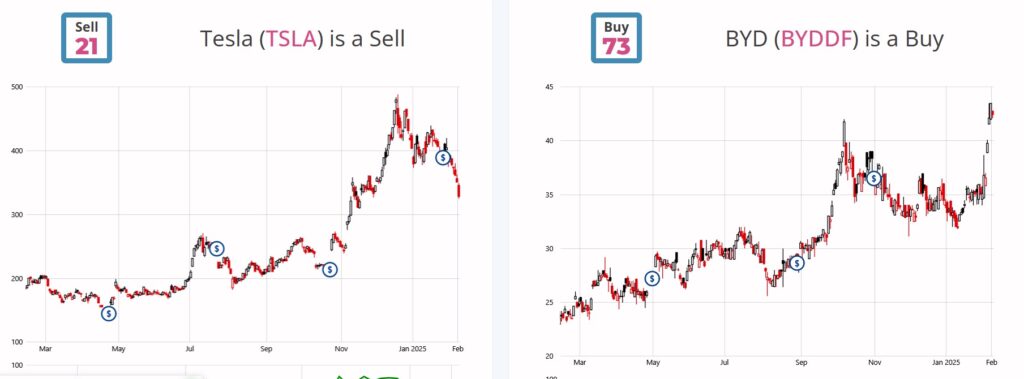
UPDATES: BYD’s Breakthrough Charging Tech Exposes the Pitfalls of U.S. Protectionism in the EV Market

How BYD Surpassed Tesla: The Role of Innovation, Tariffs, and Free Market Dynamics

Tesla vs. BYD
Tesla vs. BYD

MORE EDUCATIONAL MATERIALS ON TRUMP TARIFFS

Déjà Vu Economics: How Trump’s Deregulation and Tariff Policies Mirror the Road to the Great Depression

Trumpenomics: How Tariffs, Policy Cuts, and Labor Shortages Are Devastating American Farmers

The Devastating Impact of Trump’s Steel and Aluminum Tariffs

World Economics 101: The United States and Global Trade Dynamics

The Lies Behind Trump’s Terror Economics

Trumpenomics: The Decline of the US

bookmark_borderEconomic Update: The Path to Disaster

The Republican Party is driving the U.S. economy off a cliff, and the consequences are unfolding in real time. The good news? Trump’s team is imploding under the weight of its own reckless and poorly planned policies. The bad news? The so-called “Make America Great Again” agenda is achieving the exact opposite—weakening the country economically, politically, and diplomatically.

One silver lining is that nearly all of Trump’s Executive Orders (EOs) are built on shaky legal ground. Since they lack congressional approval, most will collapse like a house of cards. For example, Trump’s attempt to use tariffs as a revenue source to offset the budget deficit is fundamentally flawed—tariff revenue cannot be used this way unless Congress explicitly authorizes it. Given that the Republican Party has historically opposed taxation, it’s highly unlikely that this EO will ever be codified into law.

Economic Turmoil at Home and Abroad

Both the U.S. and global economies are experiencing unprecedented instability. Stock markets are on edge, interest rates remain high, inflation is still squeezing household budgets, and consumer confidence is plummeting. Meanwhile, Trump’s erratic trade policies—particularly his obsession with tariffs—are adding further uncertainty, disrupting supply chains, and increasing costs for American businesses and consumers.

Internationally, the damage is just as severe. The U.S. has alienated its closest allies through economic bullying and diplomatic incompetence. Relations with Canada and Mexico—our largest trading partners—are deteriorating, and Trump’s isolationist rhetoric has pushed the European Union and other key allies to seek alternative economic partnerships.

And now, in a shocking escalation of global instability, the Trump administration is preparing to seize Gaza—a move so reckless it defies comprehension. This will not only deepen existing geopolitical tensions but also further isolate the U.S. on the world stage.

Climate Policy: The Greatest Threat to Humanity

Of all the Republican Party’s dangerous policies, its stance on climate change is by far the most catastrophic. The continued promotion of fossil fuels, the aggressive rollback of environmental protections, and the outright denial of climate science are accelerating planetary destruction at an unprecedented rate.

If we continue down this path, vast regions of the planet will become uninhabitable within this century. This will lead to mass displacement, food and water shortages, and geopolitical instability on a scale never before seen in human history. The consequences won’t just last for decades or even centuries—climate disruptions and ecological collapse will shape life on Earth for millions of years.

We are already witnessing the devastating effects:

  • Record-breaking temperatures are making entire regions unlivable.
  • Wildfires are more frequent and intense, destroying homes, forests, and livelihoods.
  • Ecosystems are collapsing, with mass extinctions already underway.
  • Storms and flooding are worsening, causing billions in damages and displacing populations.

Despite this overwhelming evidence, Republican leadership continues to double down on climate denial. Instead of investing in renewable energy and sustainable infrastructure, they are working to expand fossil fuel production and dismantle climate policies that were designed to prevent catastrophe.

A Legacy of Destruction

Future generations will look back at this moment in history with disbelief and anger, wondering how a political movement could have been so willfully blind to the destruction it enabled. The question isn’t whether disaster is coming—it’s how much damage will be done before enough people demand change.

How long until the masses wake up and realize that the very policies they were sold as “America First” are actually ensuring America’s downfall?

bookmark_borderThe Lies Behind Trump’s Terror Economics

Article originally published February 4, 2025 in anticipation of tariffs on Mexico and Canada

The primary purpose of Trump’s tariffs is not economic growth or national security—it’s to fund his anti-humanity policies, particularly the billions of dollars required for mass deportation. Unfortunately, both his tariff policies and immigration restrictions have devastating effects on the U.S. economy, creating a dangerous cycle of economic instability and political deception.

Violation of Existing Trade Agreements

One of the most glaring contradictions in Trump’s proposal is that the United States already has a free-trade agreement with Mexico and Canada: the United States-Mexico-Canada Agreement (USMCA). This deal, which was implemented and widely touted as a signature achievement of Trump’s first term, replaced NAFTA and strengthened trade relations between the three nations. Imposing new tariffs would directly violate the terms of the USMCA, undermining the agreement and potentially sparking retaliation or trade disputes.

Circumventing Congressional Authority

Tariffs are a matter that traditionally requires Congressional approval under U.S. law. Trump’s plan to bypass this requirement involves declaring Mexico and Canada as security threats to justify the tariffs through executive action. While this approach exploits legal loopholes, it would almost certainly face challenges in court. Congress has constitutionally enshrined authority over trade, and using national security as a pretext for tariffs risks further eroding trust in executive restraint.

Trump’s Tariff Reversal: A Fake Victory

On February 3, 2025, Trump abruptly suspended the implementation of additional tariffs on Mexico and Canada. While he claimed this as a major negotiating victory, the reality tells a different story. The so-called “concessions” from Mexico and Canada were, in fact, pre-existing agreements that Trump has simply rebranded to appear as new achievements.

For example, in 2019, Trump secured an agreement with Mexico to deploy 15,000 troops to its southern border to curb migration. Now, the recently announced deployment of 10,000 troops is not an increase, but a reduction from that agreement. Similarly, the so-called “deal” with Canada was already announced in December 2024 under President Biden. Trump’s claims of securing new victories are nothing more than political theater designed to mask the damage caused by his reckless policies.

The Economic Damage and Republican Civil War

While the temporary tariff suspension is a win for the economy, common sense, and humanity, it is unlikely to last. Trump still needs to raise revenue to fund his disastrous immigration enforcement plans, and tariffs remain one of his primary tools to do so. These import taxes, however, disproportionately harm American consumers and businesses, leading to higher prices, supply chain disruptions, and reduced economic growth.

This presents a major dilemma for Trump and the Republican Party. Trump was already the largest contributor to the national debt during his first term, and economic forecasts indicate that his current policies could add more to the debt than all Democratic presidents combined throughout U.S. history. Given the Republican Party’s long-standing tradition of advocating for fiscal responsibility, Trump’s reckless spending could spark an all-out civil war within the GOP. The Freedom Caucus, known for its hardline stance on debt and government spending, is likely to lead the charge against Trump’s economic policies.

The Bigger Picture: Trump’s Economic Deception

Trump’s so-called “America First” economic strategy is built on a foundation of deception. His tariffs are nothing more than hidden taxes on the American people, and his immigration policies are not just inhumane—they are economically catastrophic. As his administration scrambles to balance contradictory goals of mass deportation and economic stability, the cracks in his strategy are already showing.

The real question is whether the Republican Party will continue to enable Trump’s reckless economic agenda or whether the internal conflict over fiscal responsibility will finally force a reckoning. One thing is clear: Trump’s terror economics is a losing game—not just for him, but for the entire country.


More Trump Lies and Consequences:

Trump’s Proposed Tariffs on Mexico and Canada: A Policy Analysis

Trumpenomics: How Tariffs, Policy Cuts, and Labor Shortages Are Devastating American Farmers

The Devastating Impact of Trump’s Steel and Aluminum Tariffs

World Economics 101: The United States and Global Trade Dynamics

Protectionism 101: Trump Economics

bookmark_borderPlanetary Solvency: Risks and Recommendations

Increasingly severe climate and nature driven impacts are highly likely, including fires, floods, heat and droughts. This is a national security issue as food, water and heat stresses will impact populations. If unchecked then mass mortality, involuntary mass migration events and severe GDP contraction are likely.

Planetary Solvency defines Catastrophic impacts as:
• Economic contraction, GDP loss of over 25%
• Mass human mortality events resulting in over 2 billion deaths
• Warming of 2°C or more, triggering high number of climate tipping points
• Breakdown of some critical ecosystem services and Earth Systems.
• Major Extinction Events in multiple geographies.
• Ocean circulation severely impacted.
• Severe socio-political fragmentation in many regions, low lying regions lost.
• Heat and water stress driving mass migration of billions.
• Catastrophic mortality events from disease, nutrition, thirst and conflict

Planetary Solvency: Risks and Recommendations

The Human Induced Climate Change Experiment