DIY Climate Control: Save Money, Reduce Waste, and Cut Greenhouse Gas Emissions
by Daniel Brouse
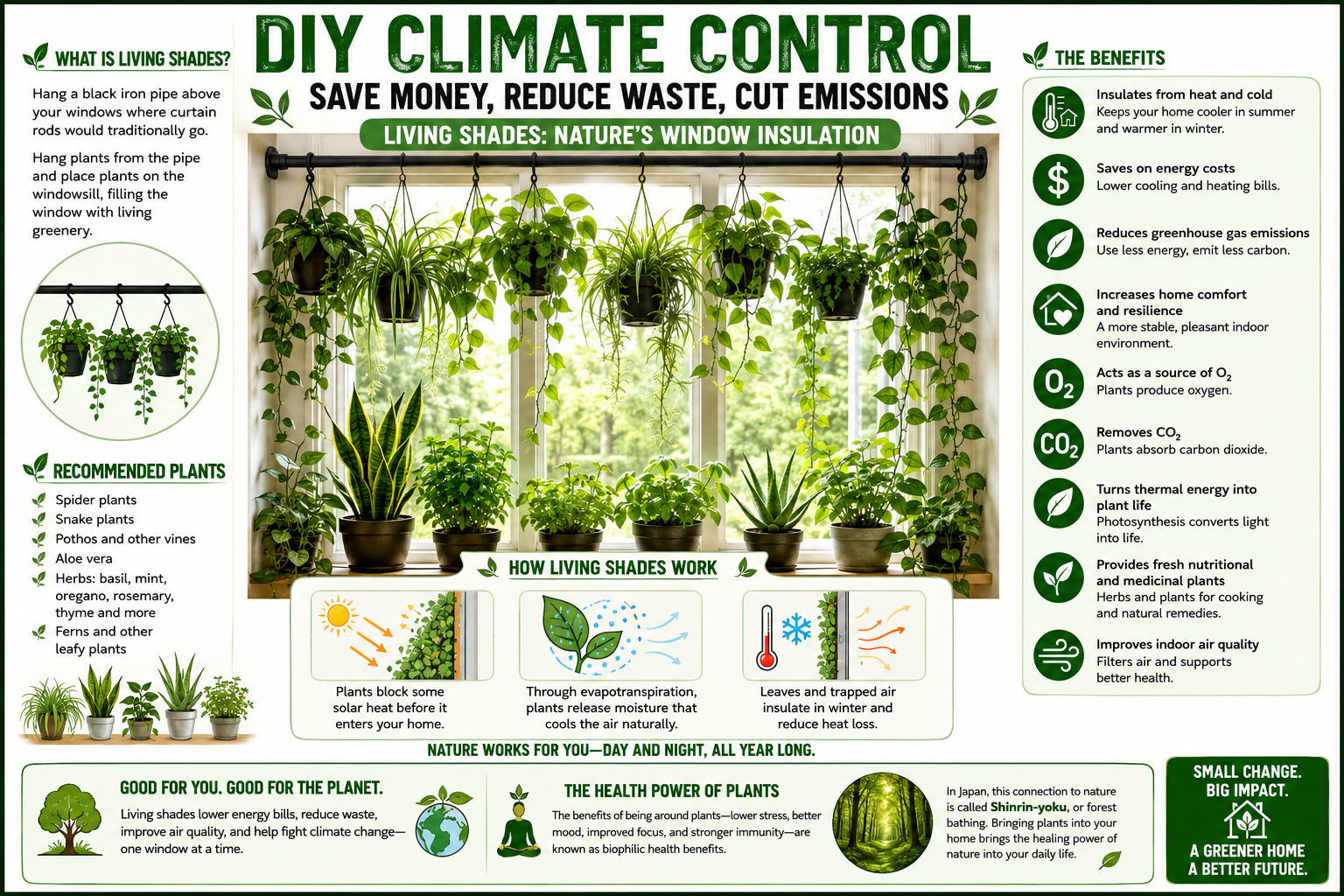
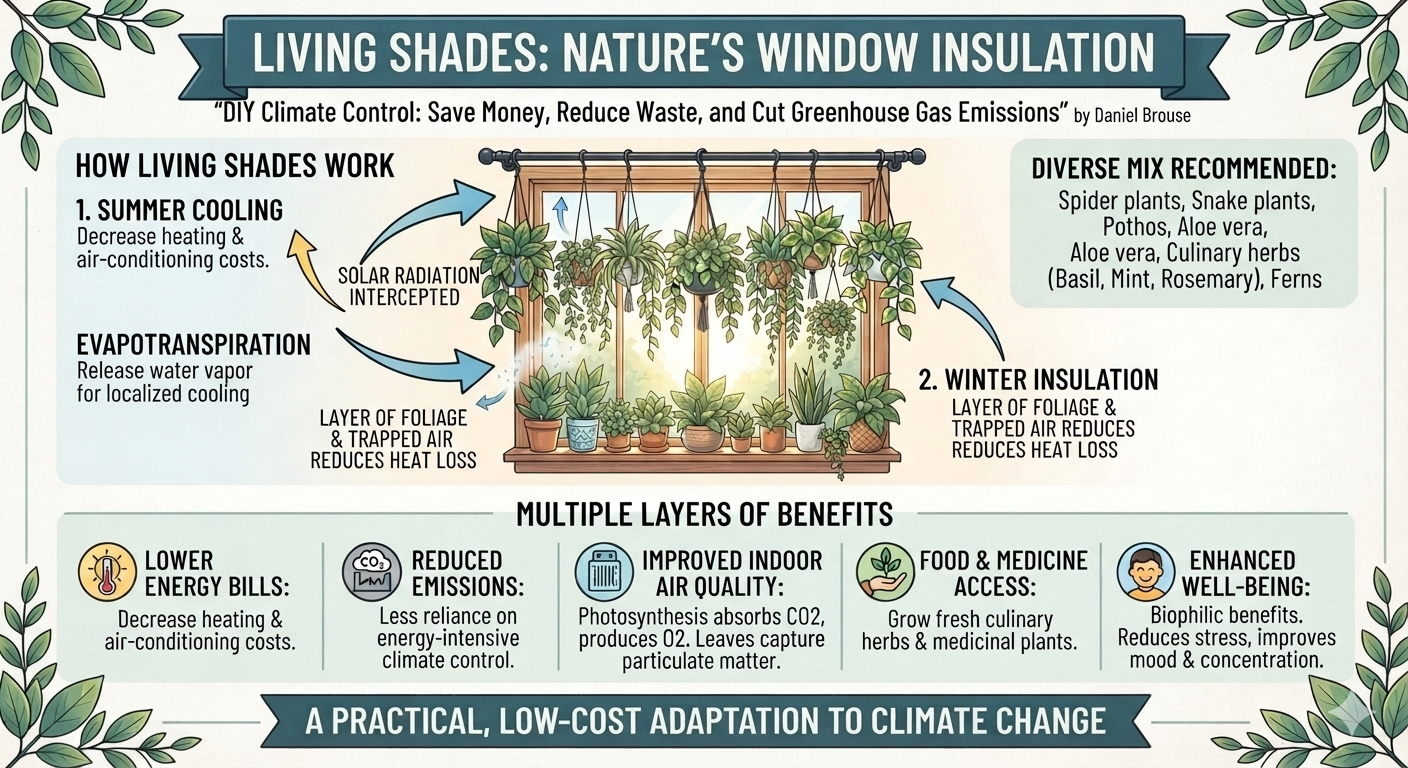
One of the simplest and most affordable ways to improve your home’s energy efficiency is to create living shades. Instead of installing traditional curtains or blinds, mount a sturdy black iron pipe above each window and suspend a collection of houseplants from it. Complement the hanging plants with additional plants on the windowsill, creating a dense layer of living vegetation between the window and the room.
A diverse mix of plants works best. Excellent choices include:
Spider plants
Snake plants
Pothos and other trailing vines
Aloe vera
Culinary herbs such as basil, mint, oregano, rosemary, and thyme
Ferns and other leafy houseplants
As the plants mature, they naturally form a living curtain that performs several useful functions simultaneously.
How Living Shades Work
Plants intercept a portion of incoming solar radiation before it enters the room. Through evapotranspiration, they also release water vapor that provides localized evaporative cooling around windows. During winter, the layer of foliage and trapped air provides modest insulation that helps reduce heat loss.
Unlike synthetic window coverings, living shades continuously improve indoor environmental quality while producing no waste and requiring very little energy to operate.
Benefits
Living shades can help:
Lower indoor temperatures during sunny weather.
Reduce winter heat loss through windows.
Decrease heating and air-conditioning costs.
Improve household energy efficiency.
Reduce greenhouse gas emissions associated with home energy use.
Increase indoor humidity during dry winter months.
Capture small amounts of airborne particulate matter on leaf surfaces.
Absorb carbon dioxide while producing oxygen through photosynthesis.
Improve indoor air quality and occupant comfort.
Provide fresh culinary herbs and medicinal plants.
Increase household resilience by producing small quantities of food year-round.
Create a calming, attractive indoor environment.
While individual houseplants should not be viewed as major carbon sinks, a home filled with vegetation contributes to a healthier indoor ecosystem while reducing reliance on energy-intensive climate control.
Beyond Energy Savings: The Health Benefits of Indoor Nature
The benefits of living plants extend beyond lower utility bills.
A growing body of research shows that exposure to vegetation can reduce stress, improve mood, enhance concentration, and promote psychological well-being. Collectively, these effects are known as biophilic health benefits, reflecting humanity’s innate connection to the natural world.
In Japan, the practice of intentionally immersing oneself in nature is known as Shinrin-yoku, or forest bathing. Research has shown that spending time around plants and trees can lower stress hormones, reduce blood pressure, improve immune function, and promote relaxation. While a living room cannot replace a forest, incorporating abundant indoor vegetation brings many of these restorative qualities into everyday life.
Living shades therefore provide multiple layers of value:
Lower energy bills.
Reduced greenhouse gas emissions.
Improved indoor air quality.
Increased food and medicinal plant production.
Enhanced physical comfort.
Better mental health and overall well-being.
As climate change drives higher temperatures and rising energy costs, living shades represent a practical, low-cost adaptation strategy that transforms ordinary windows into productive, energy-saving ecosystems.
Introduction: Climate Change as an Economic and Human Security Crisis
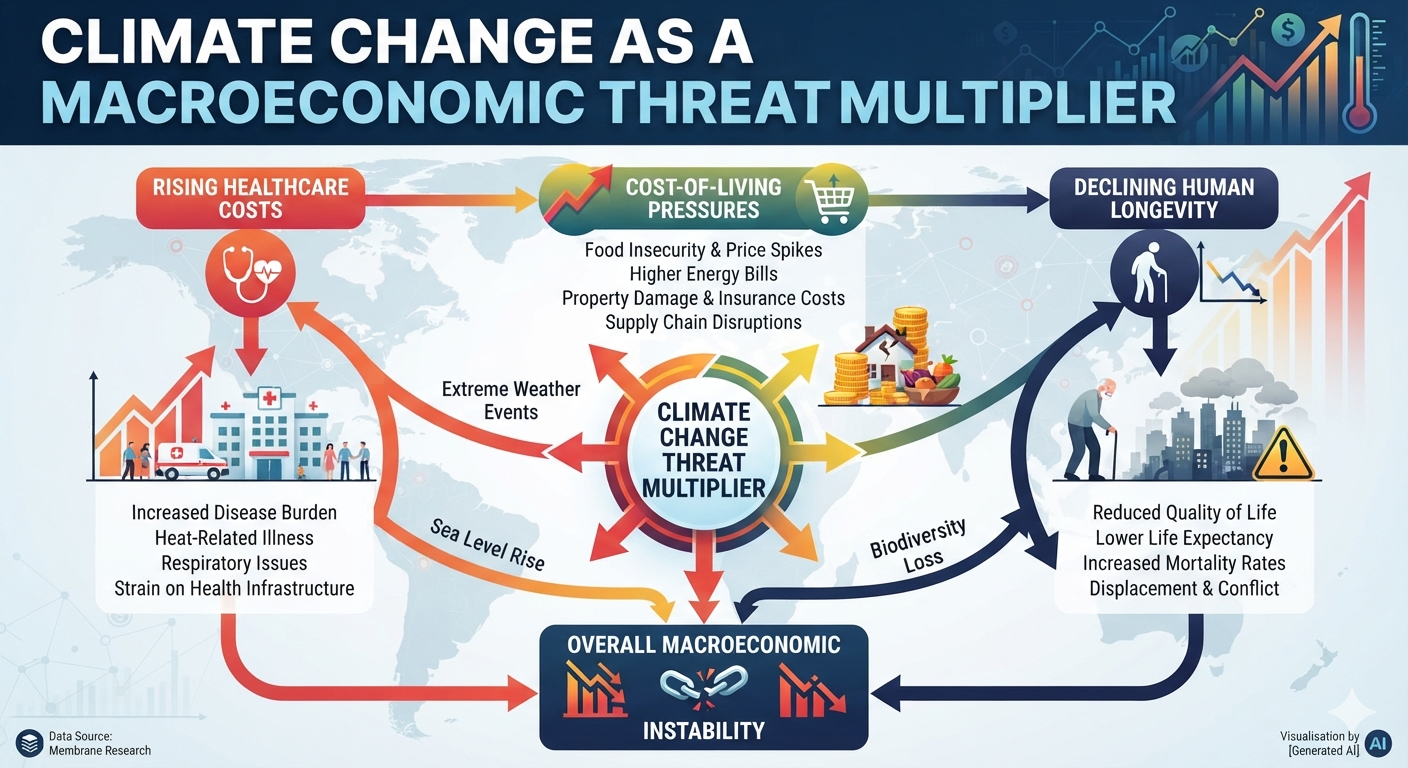
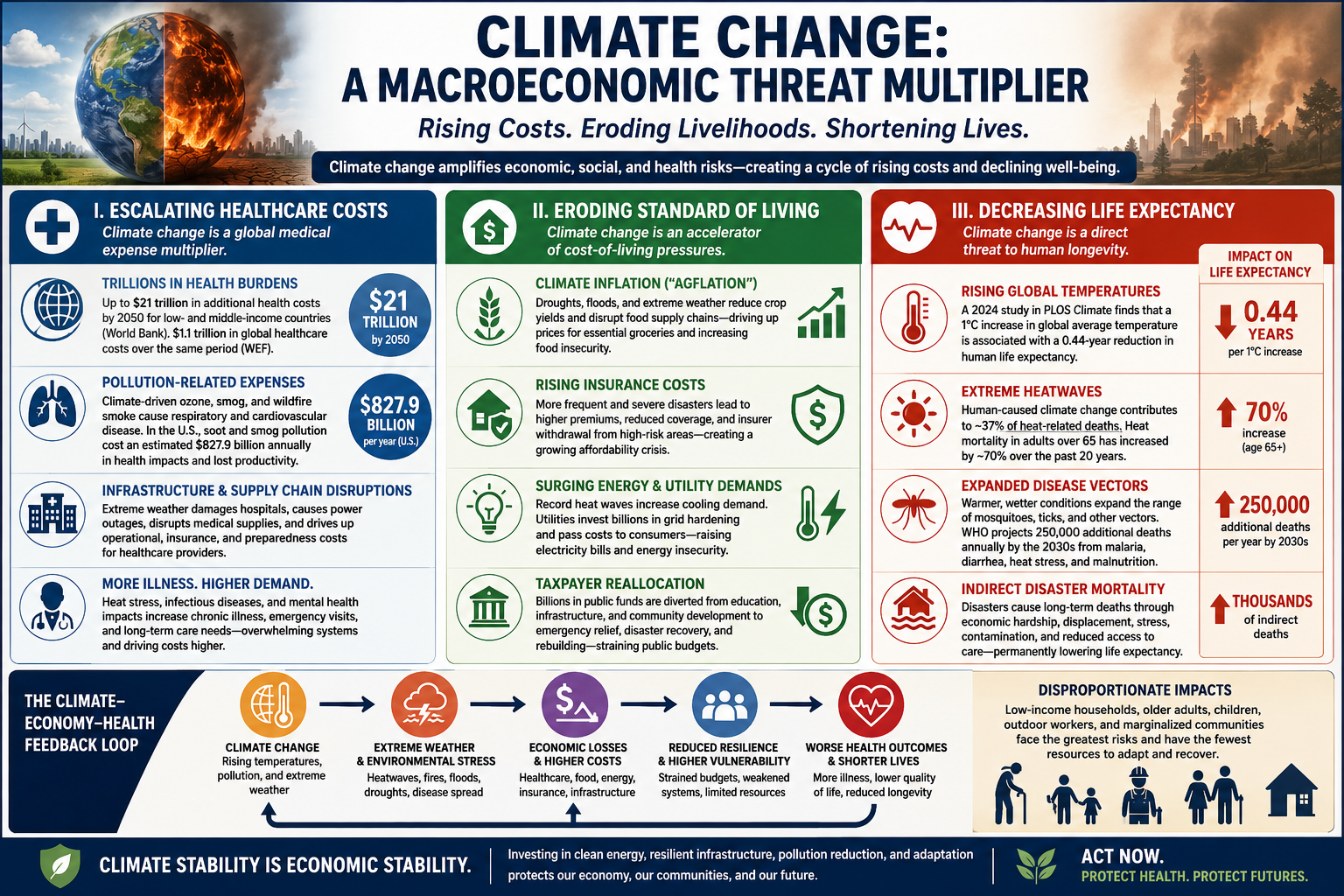
Climate change is no longer only an environmental challenge; it has become a powerful macroeconomic threat multiplier that amplifies existing social, economic, and public health vulnerabilities. Rising temperatures, increasingly extreme weather events, deteriorating air quality, and destabilized ecosystems are creating cascading financial pressures that extend from governments and businesses to individual households.
The economic consequences of climate change are increasingly visible through three interconnected pathways:
Escalating healthcare costs caused by heat exposure, air pollution, infectious diseases, and climate-related disasters.
Erosion of living standards through inflationary pressures on food, energy, insurance, housing, and public infrastructure.
Declining human longevity as environmental stressors undermine physical health, increase mortality, and reverse decades of progress in life expectancy.
These impacts are not distributed equally. Low-income households, elderly populations, outdoor workers, and marginalized communities often face the greatest exposure while having the fewest resources to adapt. Climate change therefore transforms environmental instability into a localized economic and human health crisis.
I. Escalating Healthcare Costs: Climate Change as a Global Medical Expense Multiplier
Climate change is placing unprecedented strain on healthcare systems by increasing both the frequency and severity of climate-related illnesses while simultaneously disrupting healthcare infrastructure.
1. Trillions of Dollars in Climate-Driven Health Burdens
The financial consequences of climate-related health impacts are expected to reach historic levels.
The World Bank estimates that climate-related health crises could impose approximately $21 trillion in additional costs by 2050 across low- and middle-income countries, reflecting increased disease burdens, reduced productivity, and expanding healthcare needs.
The World Economic Forum estimates that climate change could create approximately $1.1 trillion in additional global healthcare costs over the same period.
These costs represent more than direct medical expenses. They include lost productivity, reduced workforce participation, premature mortality, emergency response requirements, and infrastructure adaptation.
2. Pollution-Related Healthcare Expenses
Climate change and fossil fuel combustion are closely linked. Rising temperatures accelerate atmospheric chemical reactions that increase ground-level ozone formation, intensifying smog episodes and worsening respiratory and cardiovascular disease.
Fine particulate matter (PM2.5), ozone, wildfire smoke, and other pollutants contribute to:
Asthma and chronic respiratory illness
Heart attacks and strokes
Lung disease
Premature deaths
Increased emergency room visits
In the United States alone, soot and smog pollution are estimated to generate hundreds of billions of dollars annually in health-related costs, including medical expenses and lost economic productivity.
The growing frequency of wildfire smoke events demonstrates how climate impacts can transform regional air pollution into a national health emergency. Smoke from distant wildfires can travel thousands of miles, exposing millions of people far from the original source.
3. Healthcare Infrastructure and Supply Chain Disruptions
Extreme weather events increasingly threaten the operational stability of healthcare systems.
Climate-related disruptions include:
Hospitals losing electrical power during heat waves, hurricanes, and wildfires
Flooding damaging medical facilities
Disruptions in pharmaceutical and medical equipment supply chains
Increased emergency response costs
Higher insurance and operational expenses for healthcare providers
Hospitals are being forced to spend billions on climate resilience measures, including backup power systems, flood protection, cooling infrastructure, and emergency preparedness.
II. Eroding Standard of Living: Climate Change as a Cost-of-Living Accelerator
Climate change is increasingly becoming an economic reality experienced directly through household budgets. The same forces increasing healthcare costs are also driving inflationary pressures throughout the economy.
1. Climate Inflation and Agricultural Instability (“Agflation”)
Food systems are among the most climate-sensitive sectors of the global economy.
Rising temperatures, droughts, flooding, changing precipitation patterns, and extreme storms reduce agricultural productivity by damaging:
Crop yields
Livestock health
Fisheries
Agricultural infrastructure
Transportation networks
These disruptions create supply-side inflation, increasing prices for essential goods including:
Grains
Fruits and vegetables
Meat and dairy products
Transportation-dependent food products
Climate-driven food inflation disproportionately harms lower-income households because food represents a larger percentage of their monthly expenses.
2. Rising Insurance Costs and the Retreat From High-Risk Regions
The insurance industry has become one of the clearest economic indicators of accelerating climate risk.
As hurricanes, wildfires, floods, and severe storms become more frequent and destructive:
Insurance premiums increase dramatically.
Coverage becomes more restricted.
Insurers withdraw from vulnerable markets.
Property values decline in high-risk regions.
Homeowners increasingly face a difficult choice: pay rapidly increasing premiums or assume greater financial risk without adequate coverage.
This creates a growing climate affordability crisis, particularly for homeowners living in areas exposed to wildfire, coastal flooding, extreme storms, and severe weather.
3. Rising Energy Demand and Utility Costs
Climate change increases energy demand while simultaneously placing stress on energy infrastructure.
During extreme heat events:
Electricity consumption rises sharply due to increased air conditioning demand.
Utilities must invest billions in grid upgrades.
Transmission systems require additional protection against storms and wildfires.
Energy insecurity becomes a growing concern as vulnerable households struggle to afford cooling during dangerous heat events.
4. Taxpayer Costs and Public Financial Burdens
Climate disasters increasingly redirect public resources away from long-term investments toward emergency response and recovery.
Government spending is increasingly allocated toward:
Disaster relief
Infrastructure repairs
Emergency housing assistance
Flood recovery
Wildfire response
Agricultural assistance
These expenditures compete directly with funding for:
Education
Transportation improvements
Community development
Public health programs
Climate change therefore functions as a long-term fiscal drain, increasing government expenditures while reducing resources available for economic development.
III. Declining Human Longevity: Climate Change as a Biological Stressor
Beyond economic impacts, climate change increasingly affects the fundamental measure of human well-being: life expectancy.
The cumulative effects of extreme heat, pollution exposure, disease expansion, food insecurity, and climate disasters are slowing—and in some regions reversing—historical gains in longevity.
Climate Driver
Impact on Human Health and Longevity
Rising Global Temperatures
A 2024 study published in PLOS Climate found that a 1°C increase in global average temperature is associated with approximately a 0.44-year reduction in life expectancy.
Extreme Heatwaves
Human-caused climate change is estimated to contribute to approximately 37% of heat-related deaths. Heat-related mortality among adults over age 65 has increased substantially over recent decades.
Expanded Disease Vector Ranges
Warmer and wetter conditions allow mosquitoes, ticks, and other disease vectors to expand into new regions, increasing risks from malaria, dengue fever, Lyme disease, and other infections.
Food and Water Stress
Climate disruption increases risks of malnutrition, dehydration, agricultural failure, and water insecurity, particularly in vulnerable populations.
Indirect Disaster Mortality
Floods, hurricanes, wildfires, and other disasters create long-term health impacts through displacement, economic hardship, psychological stress, and environmental contamination.
This feedback loop means climate impacts are not isolated events. A wildfire, flood, or heat wave can simultaneously damage infrastructure, increase healthcare expenses, reduce productivity, raise insurance costs, and shorten human lives.
The poorest communities often experience the strongest effects because they have fewer resources to prepare, recover, and relocate.
Conclusion: Climate Stability Is Economic Stability
Climate change represents one of the largest economic and public health challenges of the modern era. Its consequences extend far beyond environmental degradation, affecting national budgets, household finances, healthcare systems, and human survival.
Addressing climate change is therefore not simply an environmental investment—it is an economic resilience strategy and a public health imperative. Investments in clean energy, resilient infrastructure, pollution reduction, efficient buildings, and climate adaptation can reduce future costs while protecting both human health and economic stability.
The cost of inaction is no longer measured only in degrees of warming. It is measured in rising medical bills, shrinking household budgets, damaged communities, and lost years of human life.
🌎 Climate Change and Personal Finances: The Rising Cost of a Changing Climate
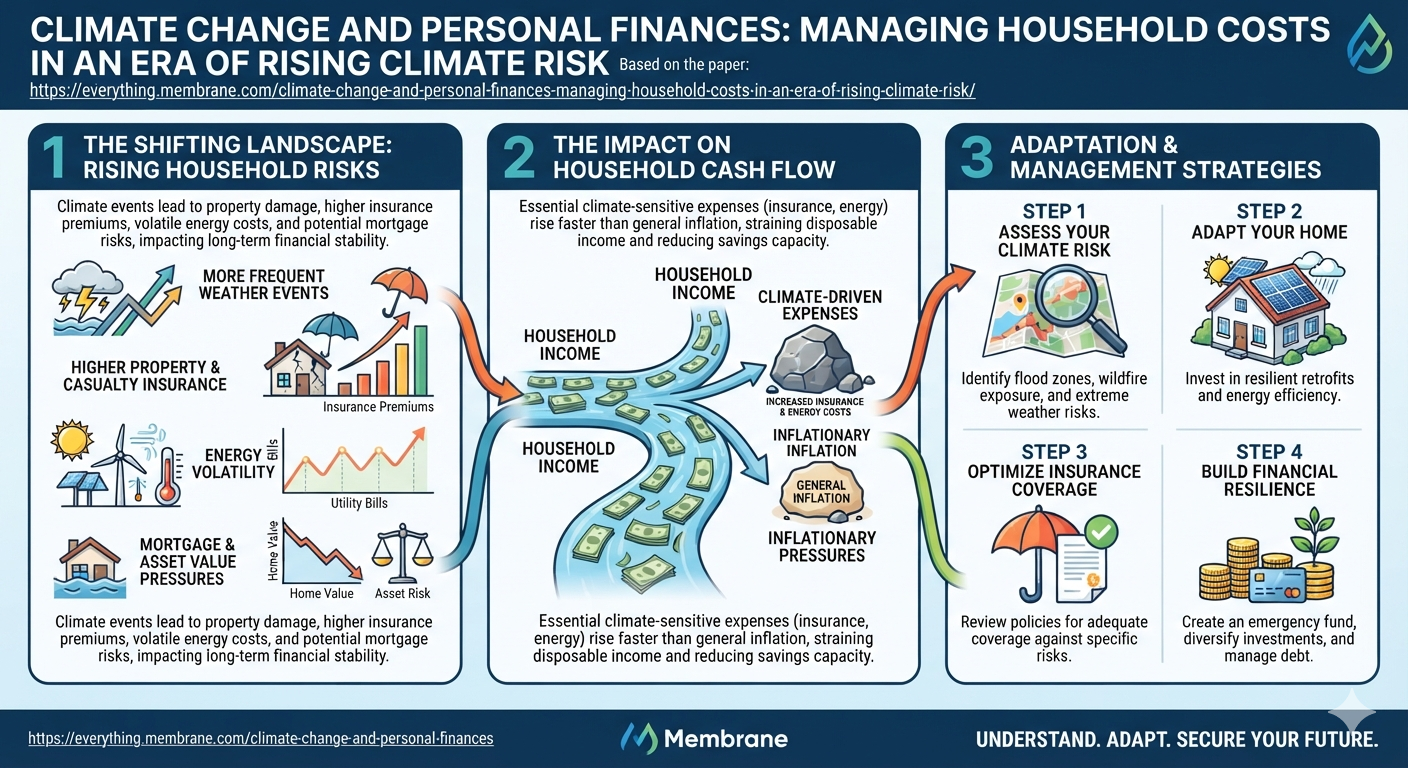
Climate change is no longer only an environmental challenge—it is becoming a growing financial challenge for households everywhere.
While headline inflation may appear moderate, the costs most affected by climate change are rising faster than many household incomes.
🔥 Extreme heat is increasing electricity demand and stressing energy infrastructure. ⛈️ Severe storms and hail events are driving higher comprehensive auto insurance costs. 🏠 Floods, hurricanes, wildfires, and extreme weather are pushing homeowners insurance premiums higher. 🌾 Droughts, floods, and shifting growing conditions are increasing food-price volatility. 🔨 Climate-related damage and rebuilding costs are raising housing expenses.
A new economic reality is emerging:
Climate-sensitive expenses are becoming a larger share of household budgets.
The financial impacts of climate change are not limited to major disasters. They appear in recurring expenses—monthly utility bills, insurance premiums, repair costs, and the price of everyday goods.
Building financial resilience means preparing for this changing economic landscape:
✅ Reduce high-interest debt ✅ Build emergency savings ✅ Improve home energy efficiency ✅ Review insurance coverage ✅ Invest in weather protection and resilience ✅ Plan for increasing climate-related costs
Climate change is reshaping not only our environment, but also the economics of everyday life.
📊 Read the full report:
“Climate Change and Personal Finances: Managing Household Costs in an Era of Rising Climate Risk”
Climate change is no longer simply an environmental issue. It has become an economic force that influences nearly every aspect of household finances. Extreme weather, rising insurance losses, damaged infrastructure, disruptions to agriculture, and increasing energy demand are reshaping the cost of living.
While the overall inflation rate captures broad price changes across the economy, climate change increasingly creates uneven inflation. Some goods remain relatively stable, while climate-sensitive sectors experience much faster price growth.
Understanding these trends allows households to better prepare for an increasingly volatile financial future.
Overall Inflation
The Consumer Price Index for All Urban Consumers (CPI-U) currently reflects annual inflation of approximately 3.5%.
Although this represents moderate overall inflation, it masks significant differences among individual household expenses. Energy, insurance, housing, and weather-sensitive goods continue to experience above-average price increases, while wages have largely kept pace only with headline inflation.
As climate change intensifies, these differences are expected to become even more pronounced.
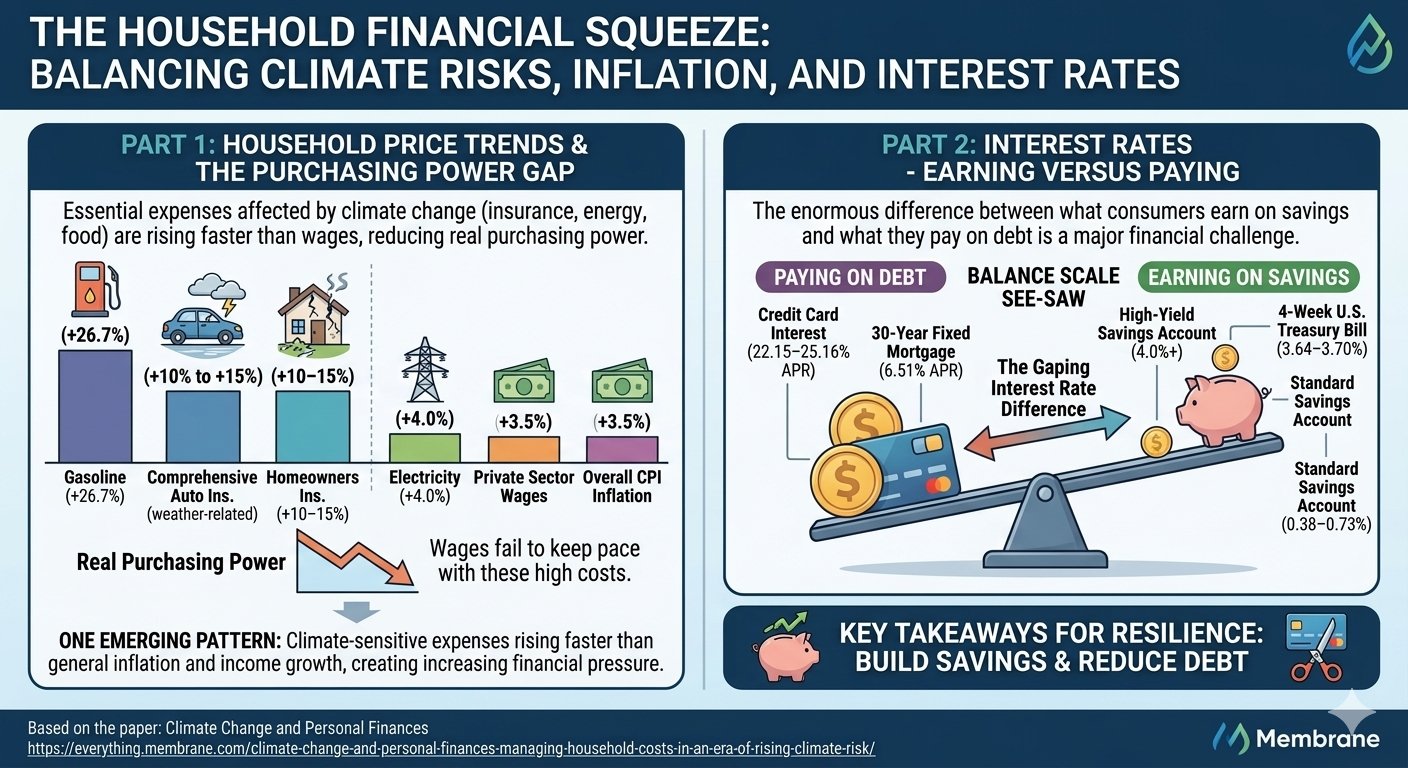
Household Price Trends
Major components of household budgets are experiencing dramatically different rates of inflation. Essential expenses increasingly affected by climate change—such as insurance, energy, housing repairs, and food—are rising faster than average wage gains. As a result, many households are experiencing a decline in real purchasing power despite wages keeping pace with headline inflation.
Household Expense
Annual Change
Overall CPI Inflation
+3.5%
Gasoline
+26.7%
Electricity
+4.0%
Comprehensive Auto Insurance (weather-related losses)
+10% to +15%
Homeowners Insurance
+10–15%
Private Sector Wages
+3.5%
One consistent pattern is emerging:
One consistent pattern is emerging: climate-sensitive expenses are rising faster than overall inflation and household income growth, creating increasing financial pressure for families adapting to a changing climate.
Energy Costs
Energy remains one of the largest sources of household inflation.
Gasoline prices have risen sharply due to geopolitical tensions, supply disruptions, refinery constraints, and transportation bottlenecks. While climate change is not the sole cause of gasoline inflation, extreme weather increasingly disrupts oil production, refining capacity, pipelines, and shipping routes.
Electricity prices have also continued to climb.
Several factors contribute:
Increased demand during prolonged heat waves
Expansion of electric transmission infrastructure
Grid modernization
Storm damage and repairs
Higher fuel and maintenance costs
As summers become hotter and heat waves last longer, residential electricity demand for air conditioning continues to increase.
The Insurance Crisis
Perhaps no household expense illustrates climate change more clearly than insurance.
Insurers base premiums on expected future losses—not past averages.
As hurricanes, wildfires, hailstorms, tornadoes, flooding, and severe convective storms become more destructive, insurance companies are paying record claims.
These losses eventually appear as:
Higher premiums
Larger deductibles
Reduced coverage
More exclusions
Non-renewals
Complete withdrawal from high-risk markets
Homeowners insurance has become one of the fastest-growing household expenses in many regions.
In some states, premiums have doubled within only a few years.
For households, insurance is increasingly becoming a direct monthly cost of climate change.
Comprehensive Auto Insurance and Climate Risk
Unlike collision insurance, which covers accidents between vehicles, comprehensive automobile insurance protects against damage caused by natural hazards and other non-collision events. As climate change increases the frequency and severity of extreme weather, comprehensive claims have risen substantially.
Common climate-related comprehensive claims include:
Hail damage
Falling trees and branches during windstorms
Flash flood damage
Hurricane storm surge
Wildfire damage
Tornado debris
Lightning strikes
Wind-blown objects
Ice and snow damage
Large hailstorms alone now produce billions of dollars in insured vehicle losses each year. Modern vehicles are particularly vulnerable because aluminum body panels, panoramic glass roofs, advanced sensors, cameras, and radar systems are expensive to repair or replace.
Flash flooding has also become one of the fastest-growing sources of comprehensive auto losses. Vehicles caught in flooded roadways often suffer catastrophic engine, electrical, and electronic damage, resulting in total-loss claims.
As insurers pay increasing numbers of weather-related claims, many companies have adjusted comprehensive premiums, increased deductibles, or refined risk models based on regional exposure to hail, flooding, hurricanes, wildfires, and severe convective storms.
While collision coverage is primarily influenced by driving behavior, repair costs, and accident frequency, comprehensive insurance increasingly reflects the financial consequences of a changing climate. For many households, the rising cost of comprehensive coverage has become another indirect expense associated with more frequent and more destructive extreme weather events.
Food Prices
Although food inflation fluctuates from year to year, climate change is placing increasing pressure on agricultural production.
Extreme heat, drought, flooding, hurricanes, and shifting growing seasons reduce crop yields while increasing production costs.
Examples include:
Heat-stressed livestock
Drought-reduced grain harvests
Flood-damaged vegetables
Disease outbreaks
Pollinator decline
Water shortages
The result is greater price volatility at grocery stores.
Consumers may increasingly experience periods where staple foods rise rapidly following major climate disasters.
Housing Costs
Housing costs are increasingly influenced by climate risk.
Construction materials become more expensive following disasters.
Labor shortages emerge after major storms.
Building codes become stricter.
Flood-resistant construction, stronger roofing systems, improved insulation, and wildfire-resistant materials all increase upfront construction costs while reducing long-term risk.
Mortgage lenders are also beginning to incorporate climate risk into property valuations.
Properties facing repeated flooding, wildfire exposure, or coastal erosion may experience declining values while insurance costs continue rising.
Wages and Purchasing Power
Private-sector wages have increased approximately 3.5% over the past year.
While this roughly matches headline inflation, it does not fully offset the faster growth of essential household expenses such as insurance, electricity, housing, and healthcare.
As a result, many households experience “cost-of-living compression,” where income keeps pace with average inflation but fails to keep pace with the expenses that matter most.
Interest Rates: Earning Versus Paying
One of the largest financial challenges facing households is the enormous difference between what consumers earn on savings and what they pay on debt.
Financial Instrument
Typical Rate
Credit Card Interest
22.15–25.16% APR
30-Year Fixed Mortgage
6.51% APR
High-Yield Savings Account
4.0%+
4-Week U.S. Treasury Bill
3.64–3.70%
Standard Savings Account
0.38–0.73%
The modern banking system rewards households that maintain liquidity while imposing extremely high costs on revolving debt.
Credit card interest rates frequently exceed 20%, making high-interest debt one of the largest obstacles to long-term financial security.
Conversely, households that maintain emergency savings can now earn meaningful returns through high-yield savings accounts and short-term Treasury securities.
Climate Change and Financial Risk
Climate change introduces several new forms of financial risk that traditional household budgeting rarely considered:
Increasing insurance premiums
Larger deductibles
Rising utility bills
Disaster repair costs
Temporary job interruptions after extreme weather
Declining property values in high-risk areas
Higher food prices
Greater investment volatility
These risks compound over time, making financial resilience increasingly important.
Strategies for Financial Resilience
Households can take practical steps to reduce their financial vulnerability to climate-related economic shocks.
Build an Emergency Fund
Maintaining three to six months of living expenses provides flexibility following disasters, temporary unemployment, or unexpected repairs.
Eliminate High-Interest Debt
Paying down credit cards earning 22–25% interest often provides a greater guaranteed return than most investments.
Improve Energy Efficiency
Investments such as insulation, efficient appliances, heat pumps, smart thermostats, and LED lighting can reduce utility costs while improving comfort during heat waves.
Review Insurance Coverage
Homeowners should regularly review policy limits, deductibles, exclusions, flood coverage, and replacement-cost estimates to ensure protection reflects today’s risks.
Diversify Investments
Diversification across asset classes, industries, and geographic regions can help reduce exposure to climate-related disruptions affecting any single sector.
Prepare for Extreme Weather
Emergency supplies, backup power, important documents, evacuation plans, and home maintenance can reduce both financial losses and recovery time after disasters.
The Economics of Adaptation
One of the defining economic realities of the coming decades will be the growing cost of adaptation.
Communities will invest billions in:
Stronger electrical grids
Flood-control systems
Coastal defenses
Wildfire mitigation
Stormwater infrastructure
More resilient buildings
Expanded emergency response capabilities
Although these investments require substantial upfront spending, they often cost far less than rebuilding after repeated disasters. For individual households, similar investments—such as reinforcing roofs, improving drainage, elevating utilities in flood-prone areas, or increasing home energy efficiency—can reduce future repair costs, lower insurance claims, and improve long-term resilience.
Conclusion
Climate change is increasingly shaping household finances through higher insurance premiums, rising energy costs, greater food-price volatility, and growing expenditures on disaster preparedness and infrastructure. At the same time, high borrowing costs amplify the financial strain on families carrying significant debt.
The central challenge is no longer simply inflation, but the uneven way inflation affects climate-sensitive expenses. Insurance, utilities, housing, and food are consuming a larger share of household budgets, even when overall inflation appears moderate.
Building emergency savings, reducing high-interest debt, investing in energy efficiency, maintaining appropriate insurance coverage, and preparing for extreme weather can strengthen financial resilience. As climate risks continue to evolve, households that proactively adapt their financial strategies will be better positioned to absorb future economic shocks and maintain long-term financial stability.
One of the most common misconceptions about climate change is that a warmer planet should produce less ice. In reality, the opposite is increasingly true for severe thunderstorms. While winters are warming and snow cover is declining in many regions, the atmosphere is becoming more energetic, more moisture-laden, and more capable of producing exceptionally large hail.
Hailstorms illustrate one of the central themes found throughout modern climate science: global warming is not simply making the planet warmer—it is making the atmosphere more unstable. The climate system is undergoing a nonlinear increase in available energy, atmospheric moisture, and circulation instability. The result is not gradual change, but an acceleration toward more powerful and destructive weather extremes.
Hail is one manifestation of this broader transition.
Severe Convective Energy Events
Hailstorms are among the most energetic convective weather systems on Earth. They develop inside powerful thunderstorms where intense upward air currents repeatedly lift developing ice particles through layers of supercooled water.
Each trip through the storm adds another layer of ice.
If the updraft remains strong enough, hailstones continue growing until gravity finally overcomes the upward force.
The stronger the storm, the larger the hail.
Large hail has become one of the fastest-growing sources of weather-related insurance losses worldwide, producing billions of dollars in damage each year to:
Homes
Roofs
Windows
Solar panels
Vehicles
Crops
Electrical infrastructure
Aircraft
Unlike heavy rainfall, which loses much of its kinetic energy through atmospheric friction, hailstones maintain tremendous momentum. Baseball-sized hail can strike the ground at speeds exceeding 100 mph (160 km/h), while the largest hailstones exceed 150 mph.
At those velocities, hail becomes a dangerous projectile capable of causing severe injuries and fatalities.
A Warmer Atmosphere Produces Bigger Hail
The same physical processes described in previous papers—especially the increasing atmospheric water vapor driven by the Clausius-Clapeyron relationship—also fuel hail growth.
Every degree Celsius of warming allows the atmosphere to hold approximately 7% more water vapor.
That additional moisture provides thunderstorms with more latent heat energy.
When this latent heat is released during condensation, it strengthens thunderstorm updrafts dramatically.
The result is a positive feedback:
More warming
More atmospheric moisture
More latent heat release
Stronger thunderstorms
Stronger updrafts
Larger hail
This is another example of Earth’s climate system amplifying itself through reinforcing feedback loops rather than responding linearly.
Updrafts: Nature’s Giant Ice Factory
Imagine a lava lamp operating at maximum power.
Instead of blobs of wax rising through liquid, enormous columns of warm, moisture-rich air accelerate upward through the atmosphere.
Inside these towers:
Water droplets freeze.
Ice particles are lifted thousands of feet upward.
Supercooled water freezes onto existing hailstones.
The growing hailstone falls.
The updraft catches it again.
Another layer forms.
This process repeats many times.
The stronger the updraft, the longer the hailstone remains suspended.
Eventually the hailstone becomes too heavy.
Then gravity wins.
The result is giant hail capable of catastrophic destruction.
As climate warming strengthens convective energy, these powerful updrafts are becoming increasingly common.
Why Small Hail Is Declining
Climate change does not necessarily increase every type of hail.
In fact, many regions may experience fewer small hail events.
This occurs because freezing levels are rising.
As temperatures increase:
Snow melts sooner.
Ice melts higher in the atmosphere.
Small hailstones completely melt before reaching the ground.
Large hailstones survive.
The result is a dramatic shift in hail size distribution.
Instead of numerous harmless pea-sized hailstones, storms increasingly produce fewer—but much larger and more destructive—hailstones.
Current projections suggest that by the end of this century:
Large hail events may increase by 38–47%
Small hail events may decrease by 4–8%
This represents another example of the climate system shifting toward extremes rather than averages.
Geography Is Changing
Historically, the world’s most active hail regions included:
The U.S. Great Plains
Argentina
South Africa
Northern India
Central Europe
Today, climate models suggest these regions are changing.
Increasing hail environments are projected across:
The U.S. Midwest
Ohio Valley
Northeast
Southeastern United States
Canada
Northern Europe
New Zealand’s South Island
The traditional “Hail Alley” of the Great Plains is expected to expand eastward while favorable atmospheric conditions migrate poleward as global temperatures rise.
These geographic shifts mirror changes already observed in atmospheric rivers, jet stream behavior, and storm tracks.
Changing Seasons
The timing of severe hailstorms is also evolving.
Rather than occurring primarily during midsummer, favorable conditions are increasingly appearing during:
Early spring
Late fall
Even portions of winter
Warmer winters allow severe thunderstorms to develop during months that historically experienced relatively stable atmospheric conditions.
This creates new risks for agriculture.
Winter wheat and other cool-season crops become increasingly vulnerable to destructive hail during critical stages of development.
Climate Change Is Increasing Financial Losses
Few weather hazards have produced such rapidly escalating insured losses.
Since 2008:
U.S. hail-related insurance claims have increased approximately fivefold.
Annual insured losses now regularly exceed tens of billions of dollars.
Vehicle damage has become one of the largest components of weather-related insurance costs.
One of the most striking recent examples occurred in northern Italy during 2023.
A series of severe thunderstorms produced approximately $8.6 billion in damages while dropping a European-record hailstone measuring nearly 19 centimeters (7.5 inches) in diameter.
Across North America, giant hail is increasingly damaging:
Solar farms
Wind facilities
Data centers
Warehouses
Airports
Distribution centers
As urban development expands into storm-prone regions, exposure continues to rise even as the storms themselves become more intense.
The result is a compounding economic feedback between climate risk and infrastructure vulnerability.
Human Safety
Although hail is often viewed as primarily a property hazard, it is increasingly becoming a public health concern.
Large hail can:
Cause traumatic brain injuries
Fracture bones
Damage eyesight
Kill livestock
Trigger multi-vehicle accidents
Force aircraft into emergency landings
As giant hail events become more common, so do reports of injuries and fatalities.
The danger is amplified because hail often accompanies tornadoes, destructive straight-line winds, flash flooding, and frequent lightning, creating multiple simultaneous hazards.
A Symptom of a More Energetic Climate
Large hail is not an isolated phenomenon.
It is part of the same global pattern documented throughout this body of work.
The accelerating increase in atmospheric water vapor, ocean heat content, jet stream instability, atmospheric rivers, bomb cyclones, extreme rainfall, wildfire behavior, and severe convective storms all point to the same underlying driver:
An atmosphere containing more energy.
As Arctic amplification weakens the temperature gradient between the poles and the tropics, atmospheric circulation becomes increasingly distorted. Rossby waves become more amplified, blocking patterns persist longer, and weather systems slow or stall. At the same time, warmer oceans and land surfaces inject additional heat and moisture into the atmosphere, providing more fuel for explosive thunderstorms.
When these large-scale circulation changes coincide with abundant moisture and intense surface heating, the result is an environment capable of generating stronger updrafts, larger hail, heavier rainfall, more damaging winds, and more frequent tornado outbreaks. Hail therefore should not be viewed as an isolated weather event, but as one expression of a broader shift toward higher-energy atmospheric dynamics.
The Shift to Extremes
One consistent pattern emerges:
Climate Change → Energy Imbalance → More Atmospheric Moisture + Greater Instability → Stronger Storm Dynamics → More Frequent & More Severe Weather Extremes → Hotter Heat Waves → Wetter Atmospheric Rivers → Larger Wildfires → More Intense Flash Floods → Stronger Hurricanes → Giant Hailstorms
This is the hallmark of nonlinear climate change: a progressive shift from moderate conditions toward increasingly severe outcomes as Earth’s energy imbalance grows. Hail is another visible indicator that the climate system is moving beyond historical norms, where extremes become more common and their impacts more costly.
Understanding hail in this broader context helps connect individual weather disasters to the larger transformation underway in the Earth’s climate system. Rather than isolated anomalies, these events are increasingly linked by the same physical processes: rising atmospheric moisture, greater available energy, and amplifying feedbacks that are reshaping weather across the globe.
Climate Control Feedback Loops: When Cooling Becomes Part of the Climate System
How the growing need for air conditioning is creating new reinforcing climate feedbacks
Introduction
For most of the twentieth century, air conditioning was considered a luxury in many parts of the world. Today, in an increasing number of regions, it is becoming essential for human health and survival. As climate change drives longer, hotter, and more humid heat waves, indoor climate control is rapidly shifting from a convenience to a critical component of public safety.
This transition carries an important consequence that is often overlooked: climate control itself is becoming part of the climate system. Cooling technologies are increasingly intertwined with energy production, infrastructure resilience, water availability, urban design, and greenhouse gas emissions. As societies become more dependent on mechanical cooling, air conditioning becomes linked to a growing number of reinforcing climate feedback loops.
Many of these feedbacks are indirect, but together they form an interconnected system capable of amplifying both climate risks and societal vulnerability. Understanding these emerging “climate control feedback loops” is becoming increasingly important as the world enters an era of persistent extreme heat.
Heat Is Becoming a Public Health Emergency
Heat waves are starting earlier, becoming more intense, and lasting longer as climate change reshapes weather patterns around the world. In the United States, extreme heat events have become dramatically more likely because of human-caused global warming. Similar trends are occurring across Europe, the United Kingdom, Asia, Australia, and many developing nations where populations and infrastructure were never designed for prolonged extreme heat.
Extreme heat is far more than an inconvenience—it is a major public health hazard.
High temperatures place increasing stress on the cardiovascular system, kidneys, lungs, and immune system while reducing the body’s ability to regulate its core temperature. Heat exhaustion, heat stroke, dehydration, and cardiovascular failure become more common during prolonged heat events. Emerging research also suggests that some heat-related cellular and metabolic impacts may occur at lower temperatures than previously believed, particularly when high humidity limits the body’s ability to cool itself through perspiration.
As these conditions become more common, reliable indoor cooling increasingly becomes a life-saving necessity rather than simply a comfort.
Climate Control Is Becoming Critical Infrastructure
Modern societies are becoming increasingly dependent upon:
air conditioning
electrical grids
water infrastructure
cooling centers
healthcare systems
refrigeration
telecommunications
indoor climate stabilization technologies
Each of these systems depends upon the others.
Hospitals require electricity to operate cooling systems.
Power plants often require large amounts of water for cooling.
Water systems require electricity to pump and distribute water.
Telecommunications rely upon climate-controlled data centers.
The result is an increasingly interconnected infrastructure network that becomes progressively more vulnerable during extreme heat.
The Primary Climate Control Feedback Loop
As temperatures rise, cooling demand rises simultaneously.
Unfortunately, the same heat that increases cooling demand also reduces the efficiency of many parts of the energy system.
Extreme heat can:
reduce electrical transmission efficiency
lower transformer performance
decrease power plant efficiency
reduce solar panel output during peak afternoon heat
increase wildfire risks near transmission lines
increase drought stress on hydroelectric generation
reduce available cooling water for thermal power plants
At precisely the moment society needs more electricity, the energy system often becomes less capable of supplying it.
The reinforcing cycle becomes:
More Heat → Higher Cooling Demand → Greater Electricity Use → More Greenhouse Gas Emissions (where electricity is fossil-fuel powered) → More Global Warming → More Heat
Although renewable energy can weaken this loop, much of the world’s electricity still relies upon fossil fuels, making this one of the most important emerging climate feedbacks.
Additional Climate Control Feedback Loops
Urban Heat Island Feedback
Cities absorb enormous amounts of solar energy through asphalt, concrete, brick, and roofing materials.
Air conditioners remove heat from inside buildings but release that heat outdoors through their condensers.
As more buildings use air conditioning:
Indoor Heat → Outdoor Heat Release → Higher Urban Temperatures → Greater Air Conditioning Demand → More Waste Heat
Large cities can become several degrees warmer simply from accumulated waste heat released by millions of cooling systems operating simultaneously.
Electrical Grid Feedback
As cooling demand grows:
Heat Wave → Air Conditioning Demand Surges → Grid Stress → Brownouts or Blackouts → Loss of Cooling → Higher Heat Illness and Mortality
During major heat waves, the electrical grid itself becomes one of the most vulnerable components of society.
Power failures during extreme heat can quickly become humanitarian disasters.
Water Infrastructure Feedback
Many cooling systems depend upon water.
Meanwhile, hotter temperatures increase evaporation while drought reduces water supplies.
Climate Warming → Drought → Reduced Water Supply → Less Cooling Capacity → Greater Heat Stress → Increased Cooling Demand
Thermoelectric power plants, cooling towers, and some industrial cooling systems all become less reliable during water shortages.
Refrigerant Feedback
Although newer refrigerants are improving, many cooling systems still contain gases with very high global warming potential.
More Cooling Equipment → More Refrigerant Leakage → Increased Greenhouse Warming → More Heat → More Cooling Equipment
Even relatively small refrigerant leaks can have significant climate impacts if high-global-warming-potential gases are involved.
Healthcare Feedback
Extreme heat increases hospital admissions.
Hospitals require continuous climate control.
More Heat → More Heat Illness → Greater Hospital Demand → Higher Energy Consumption → Additional Emissions → More Heat
Healthcare systems become both victims of climate change and contributors to increased energy demand.
Economic Productivity Feedback
Extreme heat lowers worker productivity.
Businesses compensate by increasing indoor cooling.
Higher Temperatures → Lower Worker Productivity → Increased Air Conditioning Use → Greater Energy Demand → Additional Warming
This loop becomes especially important in manufacturing, warehouses, offices, and logistics.
Housing Inequality Feedback
Not everyone can afford adequate cooling.
Communities with limited access to air conditioning experience greater illness, higher mortality, and reduced economic resilience.
Lower Income → Less Cooling → Greater Heat Exposure → Reduced Economic Opportunity → Continued Inability to Invest in Cooling
How Wildfire Smoke Increases Air Conditioning Demand
Wildfire smoke illustrates how climate feedbacks can extend well beyond temperature alone.
Smoke contains aerosols, soot, and black carbon that alter the atmosphere in multiple ways. During the day, dense smoke may partially block incoming sunlight in some locations. At night, however, smoke acts like an insulating blanket by absorbing and re-radiating longwave infrared radiation emitted from Earth’s surface. Instead of allowing accumulated daytime heat to escape efficiently into space, smoke traps a portion of that heat near the ground.
Buildings normally cool overnight by releasing stored heat through roofs, walls, windows, and ventilation. When smoke reduces nighttime cooling:
buildings retain more heat overnight
indoor temperatures begin each morning at a higher level
air conditioners start earlier
cooling systems operate longer
afternoon peak electricity demand increases
electrical grids experience additional stress
Where electricity generation still depends on fossil fuels, increased cooling demand can produce additional greenhouse gas emissions.
Wildfire smoke also deposits black carbon onto snow and ice. Darkened snow absorbs more solar radiation, reducing surface reflectivity (albedo) and accelerating melting. Faster snow and ice loss exposes darker land and ocean surfaces, which absorb even more solar energy and further amplify regional warming.
This creates multiple reinforcing feedbacks operating simultaneously.
Climate Change → More Frequent and Intense Wildfires → More Smoke, Black Carbon, and Aerosols → Nighttime Heat Trapping + Black Carbon Deposition on Snow and Ice → Warmer Nights + Reduced Surface Albedo → Accelerated Regional Warming → Higher Air Conditioning Demand + Faster Arctic Ice Melt → Greater Greenhouse Gas Emissions (where grids remain fossil-fuel powered) + Increased Solar Heat Absorption → Additional Global Warming → More Frequent and Intense Wildfires
Rather than a single feedback loop, wildfire smoke demonstrates how one climate impact can trigger several interconnected reinforcing loops that amplify one another.
Building Resilience
Preparing for extreme heat does not always require expensive renovations. Many low-cost measures can significantly improve resilience while reducing energy demand.
Examples include:
improving attic insulation
installing reflective roofing materials
adding exterior shading
planting shade trees
improving ventilation
using ceiling fans
sealing air leaks
installing high-efficiency heat pumps
increasing battery backup capability
incorporating passive cooling design
expanding urban tree canopies
Each improvement reduces dependence upon mechanical cooling while lowering stress on electrical infrastructure.
Conclusion
Climate control is rapidly becoming one of the defining infrastructure challenges of the twenty-first century. As temperatures continue to rise, air conditioning is evolving from a consumer appliance into a critical component of public health, economic stability, and societal resilience.
Yet the expansion of climate control also creates new reinforcing feedback loops involving energy systems, cities, water resources, healthcare, digital infrastructure, refrigerants, and wildfire dynamics. These feedbacks demonstrate that climate change is no longer simply an environmental issue—it is an interconnected systems problem in which human responses can either amplify or reduce future warming.
Breaking these feedback loops will require more than expanding air conditioning. It will depend upon cleaner electricity, higher-efficiency cooling technologies, passive building design, urban greening, resilient electrical grids, improved water management, and thoughtful climate adaptation. Every improvement that reduces the energy required to keep people safe weakens these reinforcing cycles.
The future of climate resilience will not be determined solely by how much we cool our buildings, but by how intelligently we redesign the systems that make cooling possible.
Climate Change, Water Scarcity, and the Geopolitics of a Thirsty Planet
by Daniel Brouse
Water has become one of the defining geopolitical resources of the 21st century. Population growth, aging infrastructure, groundwater depletion, pollution, and climate change have pushed many of the world’s major river basins toward what researchers increasingly describe as global water bankruptcy—a condition in which demand permanently exceeds reliable supply.
While full-scale wars fought solely over water remain relatively uncommon, water has become an increasingly powerful geopolitical weapon. Governments use dams, reservoirs, and water diversions as strategic leverage. Armed groups target water infrastructure. Climate-driven droughts intensify existing political tensions, transforming long-standing disputes into national security crises.
Organizations such as the Pacific Institute have documented hundreds of water-related conflicts worldwide, with the frequency of violent incidents increasing as climate change accelerates.
South Asia: The Indus and Brahmaputra Basins
The Indus River (India vs. Pakistan)
The Indus River remains one of the world’s most dangerous hydro-political flashpoints.
For more than six decades, the 1960 Indus Waters Treaty largely insulated water management from military conflict between India and Pakistan. However, deteriorating political relations have placed the agreement under unprecedented strain. India has accelerated construction of upstream hydroelectric projects and has suspended portions of treaty cooperation, while Pakistan has repeatedly warned that any deliberate interruption of water flows would be viewed as an existential threat.
Because the Indus supports the majority of Pakistan’s agriculture, even modest reductions in flow can have enormous economic and humanitarian consequences.
The Brahmaputra River (China vs. India)
Farther east, China is constructing some of the world’s largest hydroelectric projects on the Yarlung Tsangpo—the upper reaches of the Brahmaputra River in Tibet.
Although Beijing maintains that the projects are designed primarily for power generation and flood management, India and Bangladesh remain concerned that upstream control could eventually allow China to manipulate downstream water availability during periods of drought or political tension.
As climate change alters Himalayan snowpack and glacier melt, these concerns continue to grow.
Northeast Africa: The Nile River Basin
Ethiopia, Egypt, and Sudan
The Grand Ethiopian Renaissance Dam (GERD) has transformed regional politics.
Located on the Blue Nile, the dam gives Ethiopia significant influence over seasonal river flows. Ethiopia views the project as essential for economic development and electrification. Egypt, however, depends on the Nile for roughly 97 percent of its freshwater supply and considers uninterrupted downstream flows a matter of national survival.
Despite years of negotiations involving Ethiopia, Egypt, and Sudan, no permanent, legally binding agreement governing long-term operation of the dam has been reached.
The Middle East: Water as Strategic Leverage
The Tigris and Euphrates Rivers
Turkey’s Southeastern Anatolia Project (GAP) includes more than twenty major dams and numerous hydroelectric facilities.
While the project has expanded Turkish agriculture and electricity production, it has substantially reduced downstream flows into Syria and Iraq.
The consequences include:
declining agricultural productivity,
shrinking wetlands,
increased desertification,
deterioration of the historic Mesopotamian Marshes, and
heightened regional political instability.
The Helmand River (Iran vs. Afghanistan)
Water shortages have also intensified conflict between Iran and Afghanistan.
Repeated droughts have strained implementation of existing water-sharing agreements, and disputes over upstream reservoirs and dams have contributed to armed clashes between Iranian border forces and Taliban-controlled Afghanistan.
Southeast Asia: The Mekong River Basin
China has built an extensive series of dams on the Upper Mekong (Lancang River).
Downstream nations—including Vietnam, Cambodia, Laos, and Thailand—have experienced increasingly erratic river levels, reduced sediment transport, declining fisheries, and unexpected drought conditions.
Millions of people depend upon the Mekong for food security and agriculture, making river management one of Southeast Asia’s most significant long-term geopolitical challenges.
Eastern Europe: Water Infrastructure as a Weapon
The war in Ukraine has demonstrated how water infrastructure itself can become a military target.
The destruction of the Kakhovka Dam along the Dnieper River triggered catastrophic flooding, devastated ecosystems, destroyed farmland, disrupted drinking water supplies, and complicated cooling operations at the nearby Zaporizhzhia Nuclear Power Plant.
The event illustrated how modern warfare increasingly includes attacks on critical water infrastructure.
North America: Climate Change Meets International Water Law
Unlike many international river systems, North America has long relied upon formal treaties to govern shared water resources. However, prolonged drought and climate change are placing these agreements under unprecedented stress.
The United States and Mexico
The foundation of U.S.–Mexico water management is the 1944 Water Treaty, administered by the International Boundary and Water Commission (IBWC).
The treaty established a reciprocal exchange:
The United States delivers approximately 1.5 million acre-feet annually from the Colorado River to Mexico.
Mexico delivers approximately 350,000 acre-feet annually from Rio Grande tributaries into the United States, supplying much of South Texas agriculture.
Growing Tensions
Persistent megadrought across the American Southwest and northern Mexico has severely strained compliance.
Mexico has accumulated significant delivery deficits under portions of the treaty, leading to growing frustration among Texas farmers and lawmakers.
Water has increasingly become intertwined with trade policy. Some U.S. officials have proposed incorporating treaty compliance into future reviews of the United States–Mexico–Canada Agreement (USMCA), potentially linking water deliveries to trade negotiations.
The United States has also denied certain Mexican requests for additional Colorado River deliveries during periods of domestic shortage, illustrating how climate stress is reshaping bilateral diplomacy.
The United States and Canada
Canada manages shared waters with the United States through the 1909 Boundary Waters Treaty, administered by the International Joint Commission (IJC).
This framework governs:
the Great Lakes,
the St. Lawrence River,
the St. Mary River,
the Milk River, and
numerous other shared waterways.
A separate agreement—the 1964 Columbia River Treaty (CRT)—governs flood control and hydropower operations throughout the Pacific Northwest.
The Columbia River Treaty Modernization
For six years, negotiators from both countries worked to modernize the aging Columbia River Treaty.
The 2024 Agreement-in-Principle
Negotiators reached a tentative Agreement-in-Principle that included several major reforms.
Reduced Hydropower Payments
The United States negotiated reductions in the long-standing Canadian Entitlement, under which U.S. utilities compensated British Columbia for upstream water storage used to generate downstream electricity.
Modern Flood Control
Instead of relying upon the original prepaid flood-control system, the agreement would establish annual payments—approximately $37.6 million per year—for coordinated flood storage operations.
Greater Canadian Flexibility
British Columbia would receive greater authority to manage reservoir operations to support local priorities, including salmon habitat restoration and Indigenous cultural resources.
Negotiations Enter Political Limbo
Although negotiators reached broad agreement, final treaty language has not been ratified.
A change in U.S. presidential leadership placed many international agreements under broader policy review, delaying completion of the modernization process.
The negotiations have also become entangled in wider U.S.–Canada trade disputes, including tariff discussions and political rhetoric surrounding North American natural resources. Canadian officials have expressed concern that future treaty approval could become tied to broader trade negotiations rather than water management alone.
Interim Operations
Because modernization remains incomplete, water managers have adopted temporary operational agreements.
These interim measures attempt to replicate portions of the proposed treaty but have produced localized consequences.
For example, Lake Roosevelt has experienced larger seasonal drawdowns to preserve flood-control capacity, affecting ferry operations, recreation, and infrastructure serving the Colville Reservation.
Indigenous and Environmental Concerns
Many environmental organizations and Tribal Nations argue that modernization still falls short.
The original 1964 treaty focused almost exclusively on flood control and hydropower production.
Although Indigenous governments participated extensively in modernization negotiations, many advocacy organizations—including Save Our Wild Salmon—argue that ecosystem function should become a legally co-equal objective alongside flood protection and electricity generation.
With salmon populations already under severe stress from warming rivers, altered streamflows, and habitat loss, many conservation groups believe future treaty revisions must place ecological resilience at the center of water management rather than treating it as a secondary consideration.
Conclusion: Water Wars Have Already Begun
The phrase water wars once sounded like science fiction. Today, it describes a rapidly emerging geopolitical reality.
Climate change is reducing snowpack, accelerating glacier loss, intensifying droughts, and making precipitation increasingly erratic. At the same time, populations continue to grow while agriculture, industry, and cities demand ever larger shares of finite freshwater resources.
Most future conflicts will not resemble conventional wars fought solely over rivers. Instead, they will involve economic pressure, treaty disputes, dam construction, infrastructure sabotage, cyberattacks, migration, and political coercion centered on water security.
From the Indus to the Nile, from the Mekong to the Colorado, and from the Columbia River to the Rio Grande, freshwater is becoming both an environmental challenge and a strategic resource.
The world’s next great geopolitical competition may not be fought over oil—but over the rivers that sustain civilization itself.
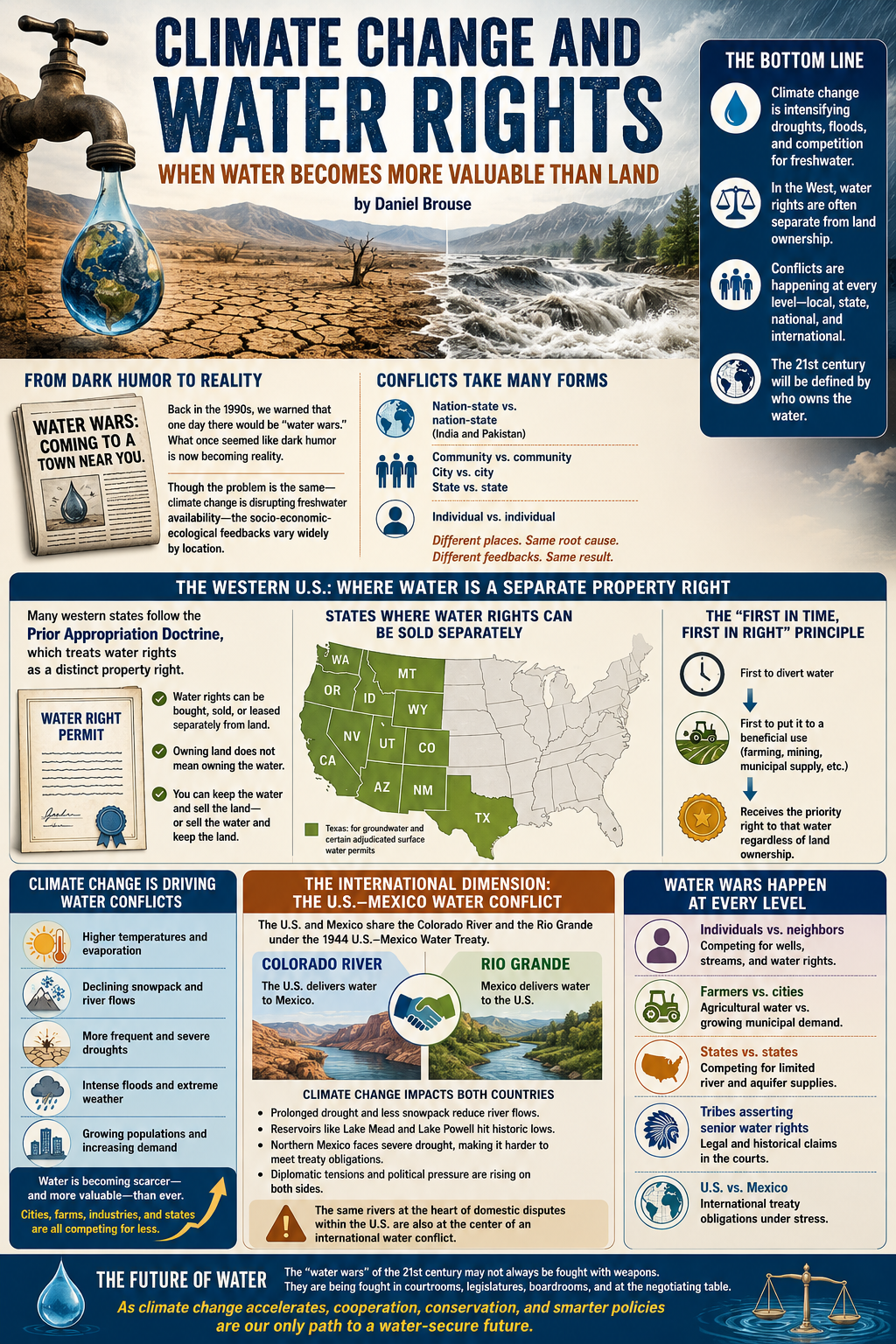
Climate change is making water security impossible to ignore. You don’t need a scientific report to see it—just look out your window. Floods, droughts, shrinking reservoirs, and increasing competition for freshwater are becoming part of everyday life.
Back in the 1990s, we warned that one day there would be “water wars.” We jokingly wrote headlines like, “Water Wars: Coming to a Town Near You.” Unfortunately, what once seemed like dark humor is steadily becoming reality.
The underlying problem is the same everywhere: climate change is disrupting the availability of freshwater. However, the resulting socio-economic and ecological feedbacks vary dramatically depending on geography, politics, and legal systems. In some regions, conflicts arise between nations, such as India and Pakistan over shared river systems. In others, disputes occur between neighboring communities, businesses, or even individual property owners.
The western United States provides one of the clearest examples of these emerging water conflicts. Unlike most of the eastern United States, many western states treat water rights as separate from land ownership.
Water Rights Are Not Always Property Rights
In much of the western United States, water rights can be bought, sold, or leased independently of the land itself. These states generally follow the Prior Appropriation Doctrine, a legal framework that treats water rights as a distinct form of property.
Under this system, owning land does not necessarily mean owning the water that flows across or beneath it. Likewise, someone can retain ownership of valuable water rights even after selling the associated land.
States Where Water Rights Can Be Sold Separately
States that commonly allow water rights to be severed from real estate include:
Colorado
Arizona
California
Nevada
New Mexico
Utah
Wyoming
Montana
Idaho
Washington
Oregon
Texas (for groundwater and certain adjudicated surface water permits)
The “First in Time, First in Right” Principle
These states generally operate under the principle of “first in time, first in right.”
The first individual or entity to divert water and put it to a legally recognized beneficial use—such as agriculture, mining, industry, or municipal supply—receives a priority right to continue using that water.
Because the right is tied to beneficial use rather than land ownership, water rights become a separate economic asset. A farmer, for example, may sell a ranch while retaining the associated water rights, or sell those rights to a nearby city while continuing to own the land.
Climate Change Is Increasing the Value of Water
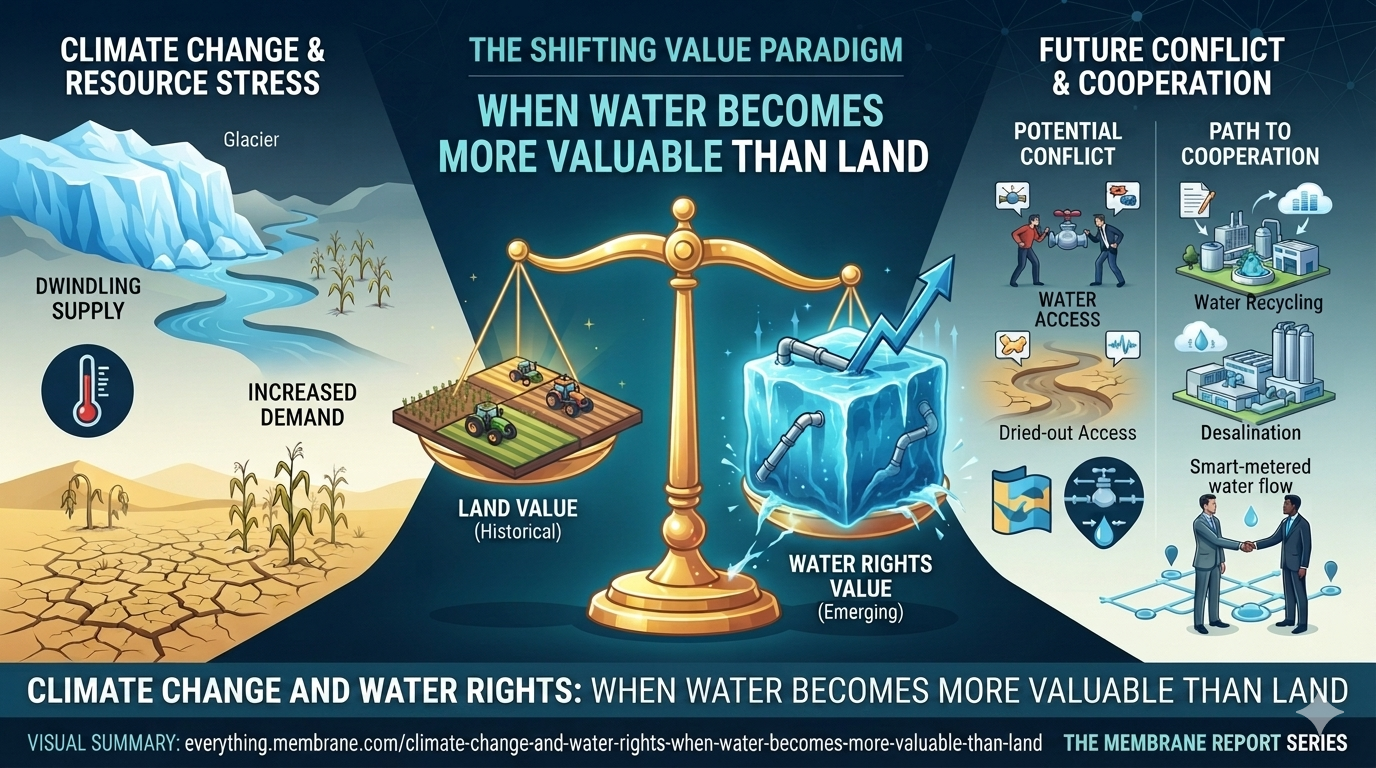
As climate change intensifies droughts, reduces snowpack, alters river flows, and increases evaporation, freshwater is becoming an increasingly scarce resource. In many regions, water rights are appreciating faster than the land they once served.
Cities are purchasing agricultural water rights to supply growing populations. Farmers compete with municipalities, industries, and neighboring states for limited supplies. Rivers that once flowed year-round now run seasonally, while reservoirs experience historic lows followed by damaging floods.
The result is an expanding marketplace where water is increasingly treated as a financial asset rather than simply a natural resource.
The Future of Water Conflicts
The “water wars” we predicted decades ago have already begun. They may not always resemble armed conflicts between nations. More often, they take the form of lawsuits, interstate compacts, regulatory battles, infrastructure disputes, and competition between agriculture, industry, municipalities, and environmental interests.
As climate change accelerates, freshwater will become one of the defining economic and political issues of the 21st century. In many regions, the question will no longer be who owns the land—it will be who owns the water.
The International Dimension: The U.S.–Mexico Water Conflict
The western United States is not only experiencing domestic “water wars” between states, cities, farmers, and industries—it is also involved in an increasingly contentious international dispute with Mexico over many of the same river systems.
The conflict centers primarily on the Colorado River and the Rio Grande, which are governed by the 1944 U.S.–Mexico Water Treaty. Under the treaty, the United States delivers water from the Colorado River to Mexico, while Mexico provides water from tributaries feeding the Rio Grande to the United States.
For decades, the agreement functioned reasonably well because both countries generally had sufficient water supplies. Climate change has dramatically altered that equation.
Prolonged drought, declining snowpack in the Rocky Mountains, higher temperatures, and increased evaporation have reduced river flows throughout the American Southwest. Reservoirs such as Lake Mead and Lake Powell have reached historically low levels, forcing difficult decisions about how increasingly scarce water should be allocated.
At the same time, northern Mexico has experienced severe drought, making it difficult to meet its treaty obligations to deliver water to the United States. The resulting shortages have led to diplomatic disputes, political pressure, and growing tensions between agricultural users, municipalities, and federal governments on both sides of the border.
What makes this conflict particularly significant is that it is driven by the very same rivers already at the center of domestic disputes within the United States. States such as California, Arizona, Nevada, Colorado, New Mexico, and Texas are competing with one another for diminishing supplies while simultaneously relying on international agreements that are becoming more difficult to satisfy under a changing climate.
In effect, the Colorado River and Rio Grande now support multiple layers of competition:
Individuals versus neighboring landowners.
Farmers versus rapidly growing cities.
States versus other states.
Native American tribes asserting senior water rights.
The United States versus Mexico under international treaty obligations.
As climate change continues to reduce the reliability of freshwater supplies, these overlapping legal, economic, and political conflicts are likely to intensify. The future of water management will require not only engineering and conservation but also new approaches to interstate and international cooperation. The “water wars” of the 21st century are no longer a prediction—they are unfolding simultaneously at the local, state, national, and international levels.
A Capital Preservation Strategy for an Uncertain Future
By Daniel Brouse
Introduction: Avoid the Minsky Moment
A “Minsky Moment” refers to a sudden, major collapse of asset prices following a long period of market growth and speculative risk-taking. Named after American economist Hyman Minsky and coined by Paul McCulley of PIMCO in 1998, the concept explains why long periods of economic stability inherently build the foundation for severe financial crises.
Climate change is no longer just an environmental issue—it is becoming a financial planning issue. Rising insurance costs, increasing weather-related losses, higher inflation risks, and growing economic uncertainty make protecting capital more important than ever.
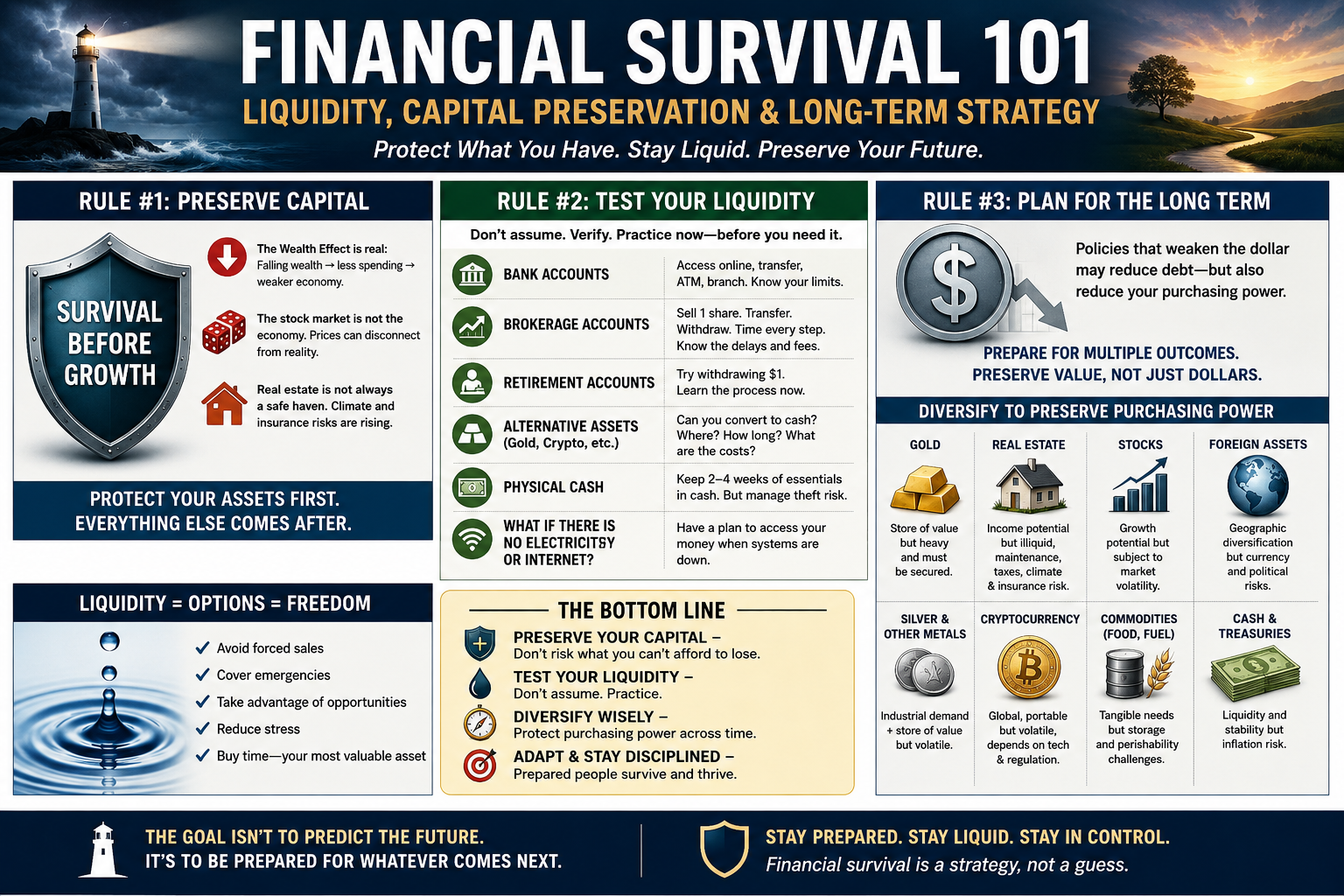
The first objective of any sound financial plan is not maximizing returns. It is ensuring that your savings remain available, secure, and able to preserve purchasing power. Liquidity gives you flexibility when unexpected expenses arise, while capital preservation prevents temporary market disruptions from becoming permanent financial losses.
One of the simplest and most effective strategies is to combine a high-yield savings account with a TreasuryDirect account that invests in short-term U.S. Treasury Bills.
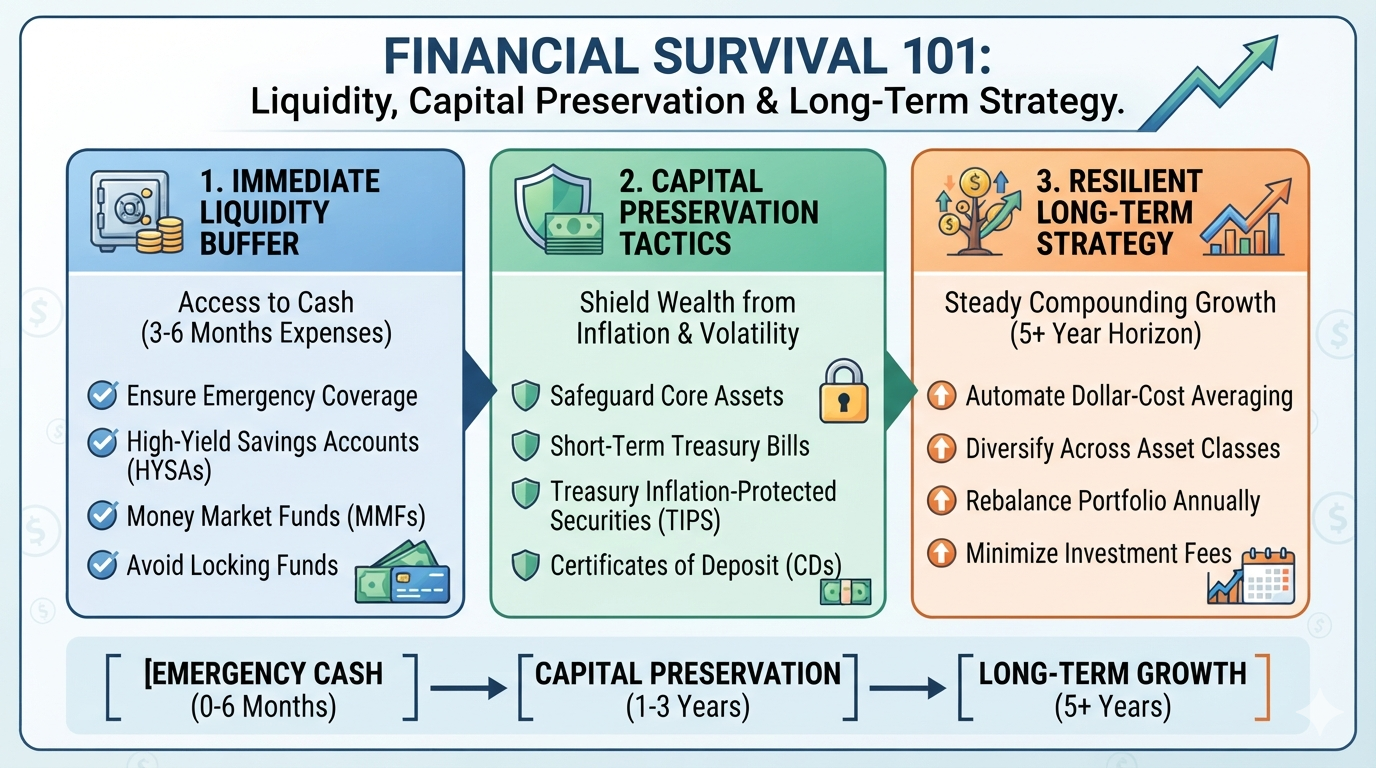
Step 1: Build an Immediate Liquidity Buffer
Every financial plan should begin with readily accessible cash.
Financial advisors generally recommend maintaining three to six months of living expenses in highly liquid accounts that can be accessed immediately during emergencies.
Good options include:
High-Yield Savings Accounts (HYSA)
Money Market Accounts
Money Market Mutual Funds
Unlike long-term investments, these accounts allow you to pay for unexpected expenses without selling stocks or bonds during a market decline.
A high-yield savings account serves as the foundation of your liquidity strategy.
Step 2: Open a TreasuryDirect Account
Once you’ve accumulated several hundred dollars beyond your emergency cash reserve, consider opening a TreasuryDirect account with the U.S. Treasury.
TreasuryDirect allows individuals to purchase Treasury securities directly from the federal government without brokerage fees.
Among the available securities, 4-week Treasury Bills (T-Bills) are particularly attractive for capital preservation.
Why 4-Week Treasury Bills?
Treasury Bills are considered one of the safest investments in the world because they are backed by the full faith and credit of the United States government.
Additional advantages include:
Extremely low default risk
Monthly maturity
High liquidity
Competitive interest rates
Exempt from state and local income taxes
Because they mature every four weeks, they provide exceptional flexibility if economic conditions change.
Understanding How Treasury Bills Work
Treasury Bills are sold through regularly scheduled government auctions.
Unlike traditional savings accounts, T-Bills are purchased at a discount to their face value.
For example:
Purchase Price: $99.60
Face Value at Maturity: $100.00
The $0.40 difference represents your interest earnings.
When the bill matures four weeks later, the Treasury pays the full face value directly into your account.
Funds used to purchase the bill are automatically withdrawn from your linked bank account after the auction.
Why Short-Term Bills Are Safer Than Long-Term Bonds
Many investors assume all Treasury securities carry identical risk.
They do not.
There is a critical distinction between:
Treasury Bills (4-week to 52-week)
Treasury Notes (2-10 years)
Treasury Bonds (20-30 years)
Longer-term bonds are highly sensitive to interest rate changes.
If inflation increases or interest rates rise, existing bonds decline in market value. Investors who need to sell before maturity can lose a substantial portion of their principal.
Short-term Treasury Bills largely avoid this problem.
Because they mature every month, your principal is quickly returned, allowing you to reinvest at current interest rates.
In today’s uncertain economic environment, short-term T-Bills generally provide much greater flexibility and significantly lower interest-rate risk than longer-term government bonds.
Automate the Process
TreasuryDirect allows investors to automatically reinvest maturing Treasury Bills.
For example:
Purchase a 4-week Treasury Bill.
Set it to automatically roll over for up to 12 cycles.
Each month, your principal purchases a new Treasury Bill.
Your interest is deposited back into your bank account.
This creates a largely automated income stream while maintaining monthly access to your capital.
As interest accumulates in your savings account, it can eventually be invested into additional Treasury Bills, creating a gradual compounding effect.
I Bonds: Protection Against Inflation
Another useful Treasury investment is the Series I Savings Bond (I Bond).
Unlike Treasury Bills, I Bonds are specifically designed to protect purchasing power during periods of inflation.
Their interest rate consists of:
A fixed rate
An inflation-adjusted rate that changes every six months
When inflation rises, I Bond yields increase accordingly.
During the inflation surge of 2022, newly issued I Bonds briefly paid annualized rates above 9%, illustrating how they can provide meaningful protection during periods of rapidly rising prices.
Additional advantages include:
Exempt from state and local income taxes
Federal taxes deferred until redemption
Potential education tax benefits if used for qualified higher education expenses and eligibility requirements are met
Because I Bonds cannot be redeemed during their first year and incur a modest interest penalty if redeemed before five years, they are best viewed as a medium-term inflation hedge rather than an emergency fund.
Retirement Accounts
Capital preservation becomes even more important inside retirement accounts.
Money that cannot easily be replaced should generally avoid unnecessary risk.
If you are nearing retirement—or simply wish to reduce volatility—consider investments that prioritize preservation of principal while earning yields comparable to short-term Treasury Bills or other low-risk cash equivalents.
The objective is not to chase maximum returns but to ensure retirement savings remain available when needed.
Building a Layered Financial Strategy
A resilient financial plan consists of three distinct layers.
Time Horizon
Objective
Typical Investments
0–6 Months
Immediate liquidity
High-yield savings accounts, money market funds
1–3 Years
Capital preservation
4-week Treasury Bills, I Bonds, short-term Treasury funds, short-term CDs
10+ Years
Long-term growth
Diversified stock index funds, international equities, retirement accounts
This layered approach allows each dollar to serve a specific purpose rather than forcing every investment to accomplish every objective. While there is no one-size-fits-all allocation, your age, financial obligations, income stability, and future plans should guide how much you keep in each layer.
For individuals following a prudent capital preservation strategy, a sample allocation might look like this:
Age 50 and older: Approximately 80% in immediate liquidity, 15% in capital preservation investments such as short-term Treasury Bills and I Bonds, and 5% in long-term growth investments.
Age 30–50: Approximately 50% in immediate liquidity, 40% in capital preservation, and 10% in long-term growth investments.
Under age 30: Approximately 20% in immediate liquidity, 60% in capital preservation, and 20% in long-term growth investments.
These allocations prioritize financial flexibility and preservation of principal in an era of increasing economic uncertainty. Younger investors generally have more time to recover from financial setbacks and can afford somewhat greater exposure to long-term growth assets, while those approaching or entering retirement often benefit from emphasizing liquidity and protecting accumulated wealth. Individual circumstances vary, however, so these percentages should be viewed as a prudent framework rather than a universal rule.
Long-Term Investing PrinciplesAfter establishing sufficient liquidity and protecting core capital, long-term wealth creation still depends on disciplined planning, risk management, and consistent investing.
Traditional investment principles remain important, but today’s financial environment requires a broader understanding of risk. Investors should consider not only market performance but also their ability to access capital, protect assets, and adapt to changing economic conditions.
Key principles include:
Maintain adequate liquidity and access to cash. A strong financial plan requires readily available funds to handle emergencies, unexpected expenses, and investment opportunities without being forced to sell assets at unfavorable times.
Evaluate insurance exposure. Rising insurance costs, coverage limitations, and changing underwriting standards can significantly affect personal finances and asset values. This applies not only to homeowners insurance but also to auto and rental insurance, which are increasingly influenced by climate-related risks. For example, hail damage is one of the leading causes of auto insurance claims, and the increasing frequency and severity of severe storms can contribute to higher premiums and reduced coverage availability. Renters can also be affected as rising property insurance costs are often passed through in the form of higher rents and fees.
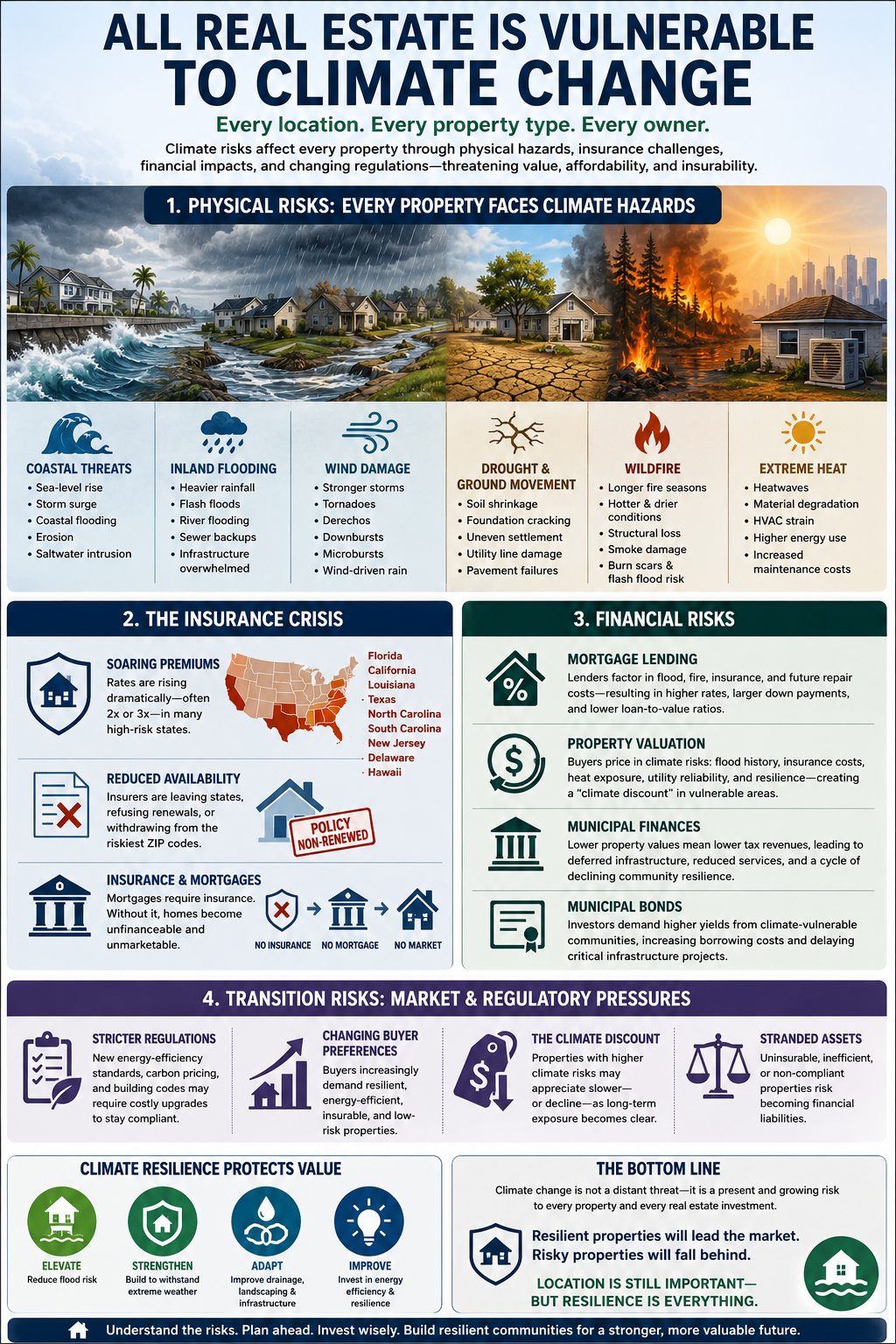
Assess climate-related financial risks. Property location, extreme weather exposure, infrastructure resilience, and changing insurance availability are increasingly important factors in long-term financial planning. Climate risks can influence property values, mortgage decisions, municipal finances, and the overall cost of living in vulnerable areas.
Rebalance periodically. Adjust your portfolio over time to maintain your intended allocation among liquidity, capital preservation, and growth investments.
Minimize investment expenses. Lower fees allow more of your returns to compound over time. Favor cost-efficient investment vehicles such as low-cost index funds and ETFs when appropriate.
Markets will inevitably fluctuate, but disciplined long-term investing, combined with sound risk management and financial flexibility, has historically rewarded patient investors. The goal is not simply to maximize returns—it is to build a resilient financial foundation capable of adapting to changing economic, environmental, and personal circumstances.
Climate Change and Financial Resilience
Climate change introduces new financial risks that previous generations rarely considered.
Increasingly, homeowners and investors must account for:
Rising insurance premiums
More frequent weather-related disasters
Inflationary pressures from supply disruptions
Higher infrastructure costs
Regional declines in real estate values
Greater economic uncertainty
These risks do not necessarily mean financial collapse is imminent. However, they do reinforce the importance of maintaining adequate liquidity and protecting principal. Investors with readily available cash are better positioned to handle emergencies, adapt to changing market conditions, and take advantage of opportunities that arise during periods of economic stress.
Conclusion
Successful investing begins with preserving financial flexibility.
A high-yield savings account provides immediate liquidity. Short-term Treasury Bills offer one of the safest ways to earn competitive returns while protecting principal. I Bonds provide an additional layer of inflation protection for longer-term savings.
Together, these tools create a strong foundation for financial resilience in an increasingly uncertain world.
No investment strategy can eliminate risk entirely, but maintaining liquidity, preserving capital, and investing for long-term growth can help individuals and families navigate economic volatility—including the growing financial challenges associated with climate change—with greater confidence and stability.
Capital preservation has always been a cornerstone of sound financial planning. In periods of heightened economic uncertainty, however, it becomes the overriding priority.
The goal is not to maximize returns at all costs. It is to ensure that you retain enough purchasing power and financial flexibility to navigate whatever comes next.
One concept increasingly influencing both Wall Street and Main Street is the Wealth Effect.
When household wealth rises—through higher stock prices, appreciating home values, or growing retirement accounts—people generally feel more confident. They spend more, borrow more, and invest more.
The opposite is equally true.
When people perceive themselves to be poorer, they begin cutting expenses. Vacations are postponed. New cars aren’t purchased. Home renovations are delayed. Restaurants see fewer customers. Businesses experience lower sales, which often leads to reduced hiring and layoffs.
The decline becomes self-reinforcing.
What begins as falling asset prices can eventually slow the broader economy.
The Stock Market Is Not the Economy
One of the biggest mistakes investors make is assuming that the stock market and the economy move together.
Over long periods they are related.
Over shorter periods they often are not.
Modern financial markets are increasingly driven by institutional trading, derivatives, leverage, algorithmic trading, and investor sentiment. Prices can become disconnected from underlying economic fundamentals for extended periods.
That means:
Rising stock prices do not necessarily mean the economy is healthy.
Falling stock prices do not automatically signal economic collapse.
Markets frequently overshoot in both directions.
Investors should avoid making emotional decisions based solely on market movements.
Real Estate Is Not Always a Safe Haven
For generations, real estate has been viewed as one of the safest long-term investments.
That assumption deserves closer examination.
Unlike stocks or bank deposits, real estate is highly illiquid. Selling a property can take weeks or months, and transactions involve significant costs, including commissions, taxes, legal fees, inspections, and financing contingencies.
Climate-related risks are adding another layer of uncertainty.
In many regions, insurance premiums have risen dramatically or insurers have withdrawn from markets altogether. Mortgage lenders are increasingly evaluating climate exposure, flood risk, wildfire danger, and long-term property resilience.
Some coastal communities, wildfire-prone regions, and flood zones are already experiencing declining property values, slower sales, or reduced insurance availability.
Examples include portions of:
California wildfire zones
Coastal Florida
Louisiana
Low-lying Atlantic and Gulf Coast communities
These trends do not mean that all real estate is at immediate risk. Many properties may remain attractive for decades. However, location-specific climate and insurance risks are becoming increasingly important considerations in short- and medium-term financial planning. Over the longer term, climate change is expected to affect virtually all real estate to varying degrees. The nature and severity of those risks will differ by location, but no property is likely to remain entirely insulated from changing climate conditions, rising insurance costs, evolving regulations, or shifting market preferences.
Real estate should no longer be evaluated solely by neighborhood, schools, and appreciation potential. Future insurability, financing availability, infrastructure resilience, and climate exposure are becoming equally important.
Step Two: Liquidity
What Good Are Assets If You Can’t Use Them?
After protecting capital comes a second priority:
Liquidity.
Liquidity measures how quickly an asset can be converted into usable cash without suffering significant losses.
During normal times, liquidity is often taken for granted.
During financial stress, it becomes priceless.
Many investors discover too late that assets they believed were readily available actually require days, weeks, or months to access.
That is why liquidity should be tested—not assumed.
Perform Your Own Liquidity Stress Test
Think of this as a financial fire drill.
You hope you’ll never need it.
But you’ll be grateful you’ve practiced.
Bank Accounts
Can you:
Access funds through online banking?
Use a debit card?
Transfer money electronically?
Withdraw cash from an ATM?
Obtain larger amounts from a local branch?
What is your backup plan if electricity, internet access, or electronic payments become unavailable?
Know your daily withdrawal limits.
Understand your bank’s policies before an emergency occurs.
Brokerage Accounts
Try the complete process:
Sell one share of a stock or ETF.
Transfer the proceeds to your checking account.
Withdraw cash.
Time every step.
Record:
Settlement delays
Transfer times
Bank holds
Fees
Unexpected obstacles
A brokerage balance isn’t liquid until the money reaches your wallet.
Retirement Accounts
Many retirement accounts allow withdrawals under certain circumstances.
Even if taxes or penalties apply, learn the mechanics now.
Understanding the paperwork, timing, and restrictions before an emergency reduces stress later.
Precious Metals
If you own gold or silver, ask yourself:
Where would I sell it?
How quickly could I receive payment?
Would I receive fair market value?
Would payment be immediate?
Owning precious metals is different from converting them into cash.
Practice the process.
Cryptocurrency
Crypto markets operate around the clock, but converting digital assets into spendable cash involves several steps.
Can you:
Sell cryptocurrency?
Transfer proceeds to your bank?
Withdraw physical cash?
What is your backup plan if electricity, internet access become temporarily unavailable?
Test a small transaction.
Don’t wait until markets become volatile.
Cash on Hand
Most financial planners recommend maintaining an emergency reserve.
Consider keeping enough physical cash to cover several weeks of essential expenses while avoiding excessive amounts that create theft or security risks.
Cash remains useful during temporary disruptions to banking networks, power outages, or payment systems.
Understanding the Physical, Financial, and Market Risks Facing Property Owners
For generations, real estate has been viewed as one of the safest long-term investments. Land cannot be manufactured, buildings can be improved, and population growth has historically supported rising property values. Climate change is altering many of the assumptions that have underpinned real estate markets for decades.
Contrary to popular belief, climate risk is not confined to beachfront homes or wildfire-prone forests. Every property is exposed to climate-related risks, although the specific hazards vary by location. These risks extend far beyond physical damage. They increasingly affect insurance availability, mortgage lending, municipal finances, infrastructure reliability, property values, and long-term market liquidity.
The vulnerability of real estate can be understood through four interconnected categories: physical risks, insurance risks, financial and lending risks, and transition risks.
1. Physical Risks: Every Property Faces Climate Hazards
Climate change is increasing both the frequency and intensity of many weather-related hazards. Every region experiences different threats, but no location is completely immune.
Coastal Regions
Coastal properties face some of the most visible climate risks, including:
Rising sea levels
More frequent nuisance flooding
Stronger storm surges
Accelerated shoreline erosion
Saltwater intrusion into groundwater
Even modest sea-level rise significantly increases flood frequency because storm surges begin from a higher baseline.
Inland Flooding
Many inland communities once considered “safe” are experiencing increasing flood losses.
Warmer air holds approximately 7% more water vapor for every 1°C of warming, increasing the potential for intense rainfall events. As storms become more moisture-laden, drainage systems designed for twentieth-century rainfall often become overwhelmed.
Consequences include:
Flash flooding
River flooding
Basement flooding
Sewer backups
Road washouts
Bridge failures
Properties located well outside traditional floodplains are increasingly experiencing damaging floods.
Wind Damage
For much of the United States, wind represents the largest source of insured property losses.
Climate change is increasing atmospheric energy available for:
Severe thunderstorms
Derechos
Tornado outbreaks
Downbursts
Microbursts
Hurricane wind fields
Roofs, siding, windows, and mature trees are particularly vulnerable. Wind-driven rain often causes damage even when structures remain standing.
Wildfire
Longer fire seasons, hotter temperatures, and more frequent droughts have dramatically expanded wildfire risk.
Wildfires threaten real estate through:
Direct structural destruction
Smoke damage
Utility failures
Water contamination
Long-term reductions in property desirability
Burn scars also increase the likelihood of flash flooding and debris flows during subsequent rainstorms.
Drought and Ground Movement
Extended drought affects soils in complex ways.
Clay-rich soils shrink as they dry, causing:
Foundation cracking
Uneven settlement
Utility line damage
Pavement failures
Conversely, periods of heavy rainfall following drought can produce rapid soil expansion that further stresses structures.
Extreme Heat
Heat affects virtually every building.
Higher temperatures accelerate deterioration of:
Roofing materials
Asphalt pavement
Exterior paints
Sealants
HVAC systems
Buildings require more cooling energy while mechanical systems experience greater wear, increasing maintenance and operating costs.
2. The Insurance Crisis
Insurance is becoming one of the most important climate risks facing property owners.
Historically, insurance spread risk across large geographic regions. As climate-related losses increase, that model is becoming increasingly difficult to sustain.
Rising Premiums
Many homeowners and commercial property owners have experienced substantial premium increases.
States experiencing particularly rapid increases include:
Florida
California
Louisiana
Texas
North Carolina
South Carolina
New Jersey
Delaware
Hawaii
In many communities, insurance costs are rising faster than home values.
Reduced Availability
Some insurers are:
Leaving entire states
Declining to insure specific ZIP codes
Refusing policy renewals
Restricting coverage amounts
Increasing deductibles
As private insurers withdraw, many homeowners are forced into state-sponsored insurers of last resort, which often provide less comprehensive coverage at higher cost.
Most mortgage lenders require continuous hazard insurance throughout the life of the loan.
If insurance becomes unavailable or unaffordable:
Mortgage approvals become more difficult.
Existing homeowners may violate loan requirements.
Buyers qualify for smaller loans.
Market demand declines.
Property values weaken.
Without insurance, many homes effectively become difficult or impossible to finance.
3. Financial Risks Beyond Property Damage
Climate change affects real estate markets even before disasters occur.
Financial institutions increasingly incorporate climate risk into lending and investment decisions.
Mortgage Lending
Banks and mortgage investors evaluate:
Flood exposure
Wildfire risk
Insurance availability
Future repair costs
Local infrastructure resilience
Higher perceived risk may result in:
Larger down payment requirements
Higher interest rates
Reduced loan-to-value ratios
Shorter lending horizons
Properties once viewed as routine collateral may gradually become more difficult to finance.
Property Valuation
Real estate markets depend heavily on expectations of future value.
Buyers increasingly consider:
Flood history
Fire history
Heat exposure
Insurance costs
Utility reliability
Local resilience investments
Two otherwise identical homes may command significantly different prices simply because one carries greater long-term climate risk.
Municipal Finances
Local governments rely heavily on property taxes.
If climate risks reduce property values, municipalities may experience:
Lower tax revenues
Deferred infrastructure maintenance
Reduced public services
Higher municipal borrowing costs
This creates a feedback loop in which deteriorating infrastructure further reduces property values.
Municipal Bonds
Cities and counties finance roads, schools, water systems, and flood-control projects through municipal bonds.
Increasing climate risks may lead investors to demand higher yields from municipalities perceived as vulnerable. Higher borrowing costs can delay infrastructure improvements, making communities even more susceptible to future climate impacts.
Credit rating agencies are paying increasing attention to long-term climate resilience when evaluating municipal creditworthiness.
4. Transition Risks
Not all climate risks arise from weather.
Many result from changes in markets, technology, regulations, and consumer preferences.
Energy Efficiency Requirements
Governments are gradually adopting stricter standards for:
Building efficiency
Carbon emissions
Appliance performance
Building electrification
Energy benchmarking
Older buildings may require expensive upgrades to remain competitive.
Changing Buyer Preferences
Homebuyers increasingly ask questions such as:
Is the property insurable?
How often does it flood?
What are annual insurance costs?
Does the home have backup power?
Is the roof hurricane-rated?
Are energy costs manageable?
These considerations increasingly influence purchasing decisions.
The Emerging Climate Discount
Economists have begun describing the possibility of a “climate discount” or “climate bubble.”
Properties with elevated climate risks may experience slower appreciation—or outright depreciation—as markets increasingly recognize long-term exposure.
Unlike traditional real estate cycles, climate-related devaluation may persist because the underlying physical risks continue to evolve.
5. Climate Risk Is Becoming a Core Investment Risk
Climate change is transforming real estate from an asset class valued primarily by location into one increasingly valued by resilience.
Future property performance will depend not only on neighborhood desirability but also on:
Infrastructure quality
Flood protection
Insurance availability
Building efficiency
Utility reliability
Community adaptation efforts
Investors, lenders, insurers, and homebuyers are already incorporating these factors into financial decisions.
Conclusion
Climate change does not mean that all real estate will suddenly lose value or become uninhabitable. Real estate will remain one of the world’s largest and most important asset classes. However, the factors that determine value are changing.
The greatest risk is not a sudden collapse of the housing market but a gradual repricing of climate risk. Some properties may remain highly desirable for decades, while others may face increasing costs from insurance, maintenance, financing, and regulatory compliance.
Understanding these risks allows homeowners, investors, developers, lenders, and policymakers to make informed decisions. Investments in resilient construction, improved infrastructure, energy efficiency, and thoughtful land-use planning can reduce long-term vulnerability and help preserve property values.
The future of real estate will increasingly be determined not simply by location, location, location, but by location, resilience, and adaptability.