bookmark_borderThe Real Cost of the “One Big Beautiful Bill”: Trillions in Debt, Millions Losing Healthcare, and a Weaker Economy

by Daniel Brouse
July 22, 2025

The Congressional Budget Office (CBO) has released its updated score for the “One Big Beautiful Bill Act” (H.R. 1), revealing the harsh reality behind the rhetoric: the bill will add a staggering $3.394 trillion to the federal deficit over the next decade.

This makes it the largest deficit-increasing bill in U.S. history, surpassing even the most aggressive tax cut and spending packages previously enacted. The bill’s massive fiscal hole is driven by a toxic mix of regressive tax cuts disguised as “relief,” unsustainable tariffs that slow economic growth while raising consumer prices, and a debt ceiling increase that fuels unchecked borrowing without a plan for repayment.

In addition to its fiscal recklessness, the CBO estimates that 10 million Americans will lose their health insurance coverage due to the bill’s provisions, including cuts and structural changes to the Affordable Care Act (ACA) and Medicaid. Many of those affected will be working families, children, the elderly, and individuals in rural communities where hospital systems are already under severe strain.

The bill’s healthcare provisions will trigger a ripple effect throughout the healthcare system, leading to hospital closures, increased uncompensated care, and additional costs shifted to those with private insurance. It will also force states to either cut essential services or raise taxes locally to fill the gaps left by federal retrenchment.

In another blow to the economy, the bill shifts over $100 billion to Homeland Security and ICE to expand mass deportation infrastructure, detention centers, and border militarization. This funding shift drains resources from productive sectors such as healthcare, education, and clean energy while providing no economic return. Instead, it actively reduces workforce availability, disrupts communities, and increases labor shortages, particularly in agriculture, healthcare, and service industries that depend heavily on immigrant labor. The mass deportation policies undermine consumption, slow GDP growth, and further strain local economies already grappling with inflation and rising interest rates.

Beyond healthcare and labor impacts, the bill weakens the long-term stability of Social Security and Medicare by reducing the tax base while the aging population continues to expand. Combined with anti-immigration measures that reduce the labor force and slow GDP growth, the economic drag from this bill will be far greater than its headline deficit figure suggests.

In short, while branded as “beautiful,” the bill is a fiscal and humanitarian disaster, prioritizing ideological goals and corporate giveaways over the stability and well-being of the American people. As interest payments on the debt soar, essential public investments in infrastructure, education, and climate resilience will be crowded out, ensuring future generations inherit not prosperity, but a weakened, debt-ridden nation.

The “One Big Beautiful Bill” is not only a policy failure but a clear sign of a government prioritizing short-term optics over the long-term health, economic security, and global competitiveness of the United States.

Trumpenomics: The Decline of the US

bookmark_borderU.S. Halts Beach Replenishment Funding for the First Time in 29 Years, Leaving Shore Towns Exposed

by Daniel Brouse
July 22, 2025

For the first time since 1996, Congress has allocated zero dollars for federal beach replenishment, halting nearly three decades of continuous support for projects that combat beach erosion along the U.S. coast. Typically, Congress sets aside $100 million to $200 million annually for these efforts, which involve dredging sand from offshore sites and depositing it on eroding beaches to protect coastal infrastructure, tourism economies, and property values.

This year, however, the federal budget earmarked nothing for these projects, and it remains uncertain whether any funding will be restored in next year’s budget as lawmakers debate spending priorities amid rising climate-related costs.

The immediate impact is already being felt:

  • Two planned beach nourishment projects at the Jersey Shore (Avalon, Stone Harbor, and Ocean City) for 2025 were canceled.

  • Planned replenishment in parts of Maryland and Delaware has also been paused indefinitely.

  • Shore towns that have reliably supported federal beach projects for decades now face the financial and environmental consequences of erosion without federal assistance.

“This is the first time in 29 years this has happened,” said Scott Wahl, business administrator for Avalon, NJ, noting that the town will not receive a “hydraulic fill” this cycle, a process that uses large pipes to pump dredged sand onto beaches. “You’re looking at tens of millions of dollars that will now fall on local communities.”

The Philadelphia district of the U.S. Army Corps of Engineers, which manages replenishment projects in heavily trafficked Shore towns, confirmed it had two projects eligible for “periodic nourishment” in 2025 (Avalon-Stone Harbor and North Ocean City), both of which were last nourished in 2023. However, without federal funding, these projects are now suspended.

Climate Change Intensifies Coastal Vulnerability

The halt in funding comes at a time when climate change and sea-level rise are accelerating coastal erosion, increasing the frequency and intensity of storms, and placing additional strain on fragile beach ecosystems and coastal infrastructure. Delays in nourishment can lead to:

  • Greater storm damage to homes, roads, and utilities.

  • Loss of protective dunes and wetlands that buffer inland flooding.

  • Economic losses for tourism-dependent communities.

Contractor Bottlenecks and Rising Costs

Dan Ginolfi of the American Coastal Coalition warns that delaying projects only compounds the challenges. The limited number of dredging contractors and strict environmental timing windows for projects mean any delay increases demand and inflates costs.

“If we can’t get those projects done in a certain amount of time,” Ginolfi said, “it increases the demand on the dredgers. The cost of dredging is already sky-high, and that just snowballs.”

A Looming Coastal Crisis

This funding freeze leaves local governments scrambling to find alternative funding sources, which could mean higher local taxes, special assessments, or deferred maintenance, all while the climate crisis increases the urgency of shoreline protection.

Without federal beach replenishment, coastal communities are left exposed to worsening erosion, economic disruption, and the risk of catastrophic losses from future storms, further highlighting the need for systemic climate adaptation strategies and sustainable shoreline management.

Beach Replenishment Is Becoming Unsustainable

While beach replenishment has historically helped protect coastal infrastructure and tourism economies, it is no longer a sustainable long-term solution in the face of accelerating climate change. The increased frequency and severity of storms wash away replenished sand more quickly, requiring ever more frequent and costly projects to maintain minimal beach widths. Meanwhile, sea-level rise accelerates erosion rates and increases the likelihood of storm surge damage, making each replenishment effort less effective and shorter-lived. This cycle of “sand dumping and washout” is becoming financially and environmentally untenable, highlighting the need for alternative coastal adaptation measures such as strategic retreat, dune restoration, and wetland buffers to protect communities in a warming world.

The Human Induced Climate Change Experiment

bookmark_borderThe Cascading Crisis: Climate Change, Pathogens, and the Future of Human Health

By Daniel Brouse
July 20, 2025

Disease vectors are among the most critical—and often underestimated—risk factors of climate change. Together with deadly humid heat and increasingly violent rain events, these three threats drive an exponential rise in climate-related deaths. Disease vectors, such as mosquitoes and ticks, expand their range and transmission seasons as the climate warms, spreading infectious diseases to new regions and populations. Meanwhile, intensifying heatwaves push human bodies past their physiological limits, while extreme rainfall and flooding multiply health risks by spreading pathogens and destroying critical infrastructure. This deadly triad—disease, heat, and violent rain—underscores how climate change is not a distant threat but a present, accelerating driver of mortality worldwide.

The Hierarchy of Interconnected Risks

My expertise on this topic follows a clear hierarchy: economics → risk management → climate change → pathogens.

These domains are deeply interconnected and critical to understanding the escalating risks shaping humanity’s future:

  • Economics determines how societies allocate resources, influencing policy priorities, investment decisions, and the speed of response to emerging threats.

  • Risk management applies these economic frameworks to reduce vulnerabilities, design early interventions, and prevent crises before they escalate.

  • Climate change is a risk multiplier, destabilizing economies, displacing populations, and creating environmental conditions that increase the frequency and severity of disasters.

  • Pathogens are a direct and rapidly growing consequence of these compounding crises, as climate change accelerates the migration, mutation, and transmission of infectious diseases globally.

Climate Change and Pathogens: A Serious Risk

One of the most concerning consequences of climate change is the surge in pathogen risks driven by rising temperatures, shifting precipitation patterns, and increased human displacement. Climate hazards directly fuel the migration of disease vectors (such as mosquitoes and ticks), expand pathogen survival zones, and increase the frequency of spillover events into human populations.

A landmark Nature study underscored the urgency of this threat:

“Over half of known human pathogenic diseases can be aggravated by climate change.”
Read the report (PDF)

Dr. Camilo Mora, lead author and associate professor at the University of Hawaii Manoa, explained:

“Climate hazards aggravated 58% of all known human pathogens. That is over half of infectious diseases discovered since the end of the Roman Empire.”

These pathways include:

  • Warmer winters and longer warm seasons that allow vectors and pathogens to survive year-round.

  • Climate-driven displacement of people and wildlife that increases cross-species transmission risks.

  • Floods, droughts, and heatwaves that expand breeding grounds while weakening public health systems.

The report warns:

“The human pathogenic diseases and transmission pathways aggravated by climatic hazards are too numerous for comprehensive societal adaptations, highlighting the urgent need to work at the source of the problem: reducing greenhouse gas emissions.”

As Dr. Mora noted:

“Managing one or two diseases is feasible. But when 58% of diseases are being affected or triggered in 1,000 different ways, it becomes clear we are not going to be able to adapt to climate change.”

Real-World Impacts: From COVID-19 to Vibrio Infections

These risks are not theoretical—they are unfolding now:

  • COVID-19 remains a stark example of how environmental disruption, global movement, and inadequate preparedness can turn a pathogen into a global crisis.

  • Avian influenza (Bird Flu) has crossed into cows and subsequently to humans, resulting in deaths. Though sustained human-to-human transmission has not yet occurred, each spillover raises the risk.

  • Vibrio vulnificus (flesh-eating bacteria) infections are rising in warming coastal waters:

    • In 2025, four Floridians have died from Vibrio infections across multiple counties.

    • The bacteria enter the body through open wounds, causing necrotizing fasciitis, and can also be contracted from eating contaminated seafood.

    • About 1 in 5 infected people die, according to the CDC.

    • Dr. Antarpreet Jutla of the University of Florida warns that infections increase after hurricanes and in warmer waters, aligning with intensifying climate patterns.

Floods as Disease Multipliers in a Warming World

The United States has experienced a record number of 1,000-year and 500-year floods this year across nearly every state, driven by a warming atmosphere’s increased ability to hold and release moisture. These extreme floods act as potent disease multipliers by:

  • Contaminating water supplies with sewage, industrial pollutants, and animal waste, creating breeding grounds for bacteria, parasites, and viruses.

  • Displacing rodents and insects, increasing human exposure to vector-borne diseases like leptospirosis, West Nile virus, and other mosquito-borne illnesses.

  • Leaving behind standing water that accelerates mosquito breeding.

  • Promoting mold growth in homes, exacerbating respiratory illnesses.

As climate change drives more frequent and intense flooding, these cascading health hazards will further strain healthcare systems, demonstrating how climate-fueled floods escalate pathogen risks in real time.

Climate Change and Lyme Disease in Pennsylvania

Climate change is fueling the spread of Lyme disease and tick-borne illnesses in Pennsylvania, which consistently reports some of the nation’s highest Lyme disease case counts. Warmer winters and longer growing seasons are expanding the range and activity period of the blacklegged tick (Ixodes scapularis), allowing it to remain active later into fall and emerge earlier in spring. Increased humidity and shifting forest ecosystems support tick survival while altering the distribution of deer and rodent hosts necessary for their lifecycle.

These climate-driven shifts increase human exposure risk, leading to higher infection rates and additional strain on healthcare systems already burdened by climate-related health challenges. As warming accelerates, Lyme and other tick-borne diseases will continue to expand in range and intensity, underscoring the deeply interconnected risks between climate change and infectious disease dynamics.

Conclusion: Interconnected Crises Require Urgent Action

Economics, risk management, climate change, and pathogens are not isolated challenges—they form an interconnected crisis that will shape our collective future.

Climate change is not just an environmental issue; it is a public health emergency, an economic destabilizer, and a risk multiplier. The rising threat of pathogens, compounded by climate disruption, proves that adaptation alone will be insufficient.

Reducing greenhouse gas emissions remains the only systemic intervention capable of mitigating these cascading risks while preserving the foundations of health, stability, and equity in human societies.


Tipping points and feedback loops drive the acceleration of climate change. When one tipping point is breached and triggers others, the cascading collapse is known as the Domino Effect.

The Climate Crisis: Violent Rain | Deadly Humid Heat | Extreme Weather Events | Insurance | Trees Deforestation | Air Pollution | Rising Sea Level | Food and Water | Updates

The Human Induced Climate Change Experiment

bookmark_borderClimate Change, Capitalism, and the Collapse of Insurance: California as a Case Study

by Daniel Brouse
July 19, 2025

California offers a stark preview of what to expect as the U.S. property insurance market begins to unravel under the weight of climate change. Insurers continue to withdraw from wildfire-prone and flood-prone areas, despite recent policy efforts aimed at stabilizing the market. The January 2025 Los Angeles wildfires alone generated billions in claims, leaving insurers scrambling to pay out as damages escalate beyond modeled expectations.

This collapse is visible in the growing number of households nationwide unable to find private property coverage, forcing them into state-chartered “insurers of last resort.” The share of coverage provided by these state-backed plans is a key metric for assessing the health of a state’s insurance market—and the trends are alarming.

In California, the state-chartered FAIR Plan is experiencing unprecedented growth as private insurers exit the voluntary market. Between September 2023 and June 2025, FAIR Plan policies nearly doubled from 330,000 to 610,000, reflecting a growing climate-driven insurance crisis. As climate change drives more destructive wildfires, flash floods, and extreme weather, insurers are dropping policies or refusing to renew coverage, forcing more Californians to turn to the FAIR Plan for basic protection.

Rising Exposure, Rising Risk

By June 2025, the FAIR Plan’s total exposure ballooned to $650 billion, a 42% increase since September 2024 and a staggering 289% increase since Fiscal Year 2021. This exposes the plan—and by extension, the state’s taxpayers and remaining insurers—to massive financial risk should large-scale disasters continue, which is increasingly likely under warming conditions.

In February 2025, following the catastrophic Los Angeles wildfires that caused tens of billions in damages, California Insurance Commissioner Ricardo Lara authorized the FAIR Plan to impose $1 billion in assessments on the state’s insurers to pay wildfire claims. It was the first such assessment since the 1994 Northridge earthquake, highlighting the scale and frequency of modern climate-driven disasters.

Shifting Policy Under Pressure

To address the growing crisis, Commissioner Lara has launched a new strategy aimed at stabilizing the insurance market. A key policy change now allows insurers to use forward-looking climate models to set rates—a practice previously barred under Proposition 103, the landmark consumer protection law passed in 1988.

“This is about reforming the limits of Proposition 103 and delivering on the promise of insurance access for every Californian,” Lara stated.

The decision has sparked intense debate. Consumer groups oppose the policy, warning that it allows insurers to use opaque, proprietary climate models to justify higher rates without accountability. Conversely, insurers and environmental advocates argue that this shift is necessary, enabling the use of science-based risk projections rather than backward-looking claims data in a rapidly changing climate.

A Harbinger for the Nation

California’s insurance turmoil is not an isolated incident but a leading indicator for the broader U.S. market. As climate change accelerates, states like Florida, Louisiana, and Texas are witnessing similar patterns of insurance withdrawal and reliance on last-resort state insurers, driven by increasing hurricane, flood, and wildfire risks. This trend signals a growing incompatibility between capitalism’s risk pricing mechanisms and the systemic, accelerating risks of climate change.

The collapse of private insurance markets under climate stress is not merely a financial problem but a systemic threat to housing stability, municipal solvency, and economic resilience. As disasters become more frequent and severe, the cost of maintaining insurance will skyrocket, pushing millions into underinsurance or complete uninsurance.

Conclusion

California’s experience is a warning: climate change is already breaking the assumptions underpinning private insurance, and capitalism’s profit models are proving incompatible with a destabilizing climate system. While policy adjustments such as allowing climate modeling for rate-setting may temporarily slow the collapse, they are insufficient to address the root cause—continued fossil fuel emissions and land-use practices that exacerbate climate risks.

Unless systemic mitigation efforts are accelerated and adaptation plans are implemented at scale, California’s insurance crisis will become the norm across the nation, with devastating consequences for homeowners, local economies, and the financial stability of states.

The Human Induced Climate Change Experiment

bookmark_borderWhy My Pool Is Losing Water—and What It Reveals About Climate Change

by Daniel Brouse
July 19, 2025

One of the most fundamental principles in science is observation. For the past couple of decades, I have observed the evaporation rate from my swimming pool steadily increasing. While it may seem like a small backyard inconvenience, it’s a clear, everyday confirmation of our warming climate.

As global temperatures rise, the atmosphere’s capacity to hold moisture increases. According to the Clausius-Clapeyron relation, for every 1°C (1.8°F) increase in temperature, the air can hold about 7% more water vapor. Many summer days now run 10° above historical averages, meaning the air can hold around 70% more water than it once did. That’s why my pool is losing water faster and faster each year.

This isn’t just about pools; it’s about our drinking water, food systems, and safety. Higher evaporation rates are depleting reservoirs and other freshwater sources, shifting water into the atmosphere, and often returning it in damaging ways. With a warmer, wetter atmosphere, we are seeing a marked increase in the intensity and frequency of extreme rainfall events. The United States has already seen record numbers of so-called “1,000-year” and “500-year” floods this year, with nearly every state experiencing damaging flash floods.

This increase in flash flooding is part of a vicious cycle: water evaporates from critical freshwater sources, the air holds more moisture, and storms unleash torrents of rain that infrastructure cannot handle, causing catastrophic flooding while failing to replenish water sources in sustainable, usable ways.

So, to all the folks in New Jersey cleaning up after yet another round of flash floods: if you happen to come across my pool water, I’d appreciate it if you could send it back.

In the meantime, we must recognize that these local observations are snapshots of a much larger global system in crisis—one that demands rapid, systemic change if we hope to stabilize water resources, protect communities, and adapt to the climate realities already unfolding around us.

* Our climate model — incorporating complex social-ecological feedback loops within a dynamic, non-linear system — projects that global temperatures could rise by up to 9°C (16.2°F) within this century. This far exceeds earlier estimates, which predicted a 4°C rise over the next thousand years, and signals a dramatic acceleration of warming.

Tipping points and feedback loops drive the acceleration of climate change. When one tipping point is breached and triggers others, the cascading collapse is known as the Domino Effect.

The Climate Crisis: Violent Rain | Deadly Humid Heat | Extreme Weather Events | Insurance | Trees Deforestation | Air Pollution | Rising Sea Level | Food and Water | Updates

The Human Induced Climate Change Experiment

bookmark_borderThree Economic Shocks Hitting You This Month: Health, Nutrition, and Education Under Attack

by Daniel Brouse
July 19, 2025

Starting this month, three interconnected economic impacts will begin hitting households and communities across the country—especially in rural areas—threatening health, nutrition, and education in ways that will ripple through local economies.

1. Health: Rising Insurance Costs and Rural Hospital Closures
Key parts of the Affordable Care Act are expiring, with average health insurance premiums expected to rise by 15%. This increase won’t just burden individuals with private insurance; it will trigger a chain reaction as more people are priced out of coverage, increasing the number of uninsured. Hospitals and health systems—particularly rural facilities already operating on thin margins—will face additional financial strain as uncompensated care rises. Simultaneously, reductions in Medicaid funding will further destabilize rural healthcare infrastructure, with many hospitals expected to close, leaving large geographic areas without critical health services and further harming local economies.

2. Nutrition: SNAP Cuts and Community Health
Millions of recipients of SNAP (food stamp) benefits will lose eligibility this month due to new policy changes and funding cuts. The immediate consequence will be increased food insecurity, with families struggling to meet basic nutritional needs. Poor nutrition leads to chronic health issues, which will add to the strain on already overburdened healthcare systems, particularly in rural areas. Additionally, the reduction in SNAP spending will remove millions of dollars in local food purchases, hurting grocery stores, farmers markets, and small businesses in these communities, creating a cascading economic slowdown.

3. Education: Public Broadcasting and the Erosion of Free Education
Congressional rescission of previously allocated funds will slash federal support for public broadcasting in the Philadelphia region and beyond. Local stations like WHYY (Philadelphia’s NPR and PBS affiliate), WDIY (Lehigh Valley Public Radio), WPSU (State College region), and WXPN (Philadelphia’s nonprofit public radio station) will face significant funding cuts, reducing their ability to deliver free educational programming, independent news, and arts coverage. This is more than just a cultural loss; it undermines local education efforts, diminishes civic engagement, and removes crucial platforms for local artists and scientists. Communities already struggling with underfunded educational systems, particularly in rural areas, will be hardest hit by these cuts.

The Broader Ripple Effects
These three impacts are deeply interconnected:

  • Reduced nutrition leads to increased healthcare needs.

  • Reduced access to education and independent media weakens community knowledge, civic participation, and local arts ecosystems.

  • Healthcare and nutrition crises drive local economic contraction, business closures, and further community decline.

Musicians, educators, healthcare workers, and small business owners are already raising alarms. As these cuts take effect, the strain will move beyond individuals to entire communities, deepening inequality and accelerating the decline of rural America’s economic and cultural vitality.

Trumpenomics: The Decline of the US

The Human Induced Climate Change Experiment

bookmark_borderWalk the Poop Before You Talk the Transition

By Daniel Brouse

July 18, 2025

Now that many people are finally waking up to the collapse of the climate and social systems, I hope my background as an economist focused on risk management can help illuminate the path forward. Ideally, we would have followed sound risk management decades ago to avoid reaching this crisis point. But here we are, and so we must shift to Plan B: A New Economy.

The Real Sustainability Test

Everyone talks about sustainability, but few understand what it requires at the most basic level: the ability to feed yourself and manage your waste without destroying your ecosystem.

Before we can credibly debate carbon markets, degrowth, or circular economies, we need to prove we can survive a single day in a truly self-sustaining way:

✅ Feed yourself for a day using methods that do not degrade soil, water, or biodiversity and that could scale for years.
✅ Secure clean water in a way that is sustainable long-term, without polluting the source or requiring massive energy inputs.
✅ Dispose of your own waste safely, ensuring you do not contaminate soil or water, or create disease vectors that harm your community or yourself.

The single most important thing you can do: go the distance.
Bury your waste far away from where you live, eat, drink, and grow your food. This simple action protects your water, your soil, and your health—more effectively than any untested high-tech solution.

Sustaining yourself for a day sounds simple until you try it. So, first do it. Once you can do it for a day, you need to scale it to weeks, months, and years—and then to your family, friends, and community.

The Hardest Part: Human Waste

Here’s the hard truth: the most important part of transitioning to a new economy is how you handle your poop.

Everyone wants to talk about electrification, AI, and green jobs, but no one wants to talk about the sanitation systems that prevent us from killing ourselves and our environment. Yet if we cannot manage our waste sustainably, any talk of a “sustainable economy” is hollow.

Before you join debates about transitioning to a post-carbon world, demonstrate you can literally walk the poop before you talk the transition.

Why Indigenous Practices Matter

This is not a new challenge. Indigenous communities across North America managed to live sustainably for millennia, disposing of human waste in ways that protected water sources, preserved soil health, and maintained community health.

They:

  • Buried waste away from water sources and habitation areas.

  • Moved camps periodically to prevent overloading any one location.

  • Used natural cover materials (soil, ash, plant matter) to accelerate decomposition and reduce contamination risks.

These practices were not merely cultural—they were effective, practical risk management strategies rooted in a deep understanding of land stewardship.

A Thought Experiment (That Should Become Reality)

If you think your solutions will save the world, start by proving you can:

  • Feed yourself for one day, sustainably.

  • Manage your waste for one day, sustainably.

  • Scale it to your family and community.

If your solutions fail at this basic level, they will fail at the societal level too. Conversely, if you can solve these fundamental challenges, you will be equipped with the grounded knowledge and humility needed to help design a real transition strategy for a collapsing climate and society.

Indigenous American Indians

Here is a clear, evidence-based overview on how many Indigenous American Indian communities traditionally managed human waste to avoid contaminating soil and water:

1️⃣ General Principles

  • Burial at a distance
    Waste was typically buried away from camps and water sources, using small personal latrines or digging cat holes, ensuring pathogens did not enter water supplies.

  • Site rotation
    Camps and waste sites were moved periodically, preventing concentration of waste in one location.

  • Choice of location
    Latrines were placed:

    • Downwind from camps

    • Far from streams, springs, or rivers (commonly 100+ feet)

    • On higher or well-drained ground to reduce runoff risk.


2️⃣ Region-Specific Practices

  • Plains & Nomadic Tribes (e.g., Lakota, Comanche)

    • Dug shallow pits when staying in one place.

    • Covered waste with soil and natural materials.

    • Moved frequently, allowing the environment to naturally decompose waste.

  • Southwest (e.g., Hopi, Pueblo)

    • In permanent villages, used designated latrine areas outside the living quarters.

    • Some used ash or sand to cover waste, aiding desiccation and reducing odors and flies.

  • Pacific Northwest & Woodlands

    • Waste was buried away from water sources, critical in forested or riparian zones.

    • Camps were often near water, but latrines were carefully sited at a safe distance and covered.

  • Arctic & Subarctic (e.g., Inuit)

    • In frozen conditions, waste was sometimes frozen and disposed of in designated snow areas.

    • In summer, waste was placed far from freshwater sources.


3️⃣ Why This Protected Soil and Water

✅ Burial with soil isolated pathogens from insects and animals.

✅ Distance from water reduced fecal contamination, protecting drinking and fishing sources.

✅ Organic decomposition in small, distributed quantities allowed soil microbes and sunlight to neutralize pathogens naturally.

✅ Rotation and mobility prevented soil overload and nutrient leaching in a single location.


4️⃣ Important Context

  • While Indigenous practices varied widely across regions and tribes, their relationship with land emphasized maintaining the health of water and soil.

  • There was no single universal method, but core principles of burial, distance, and rotation were nearly universal.

  • The single most important thing you can do: go the distance.
    Bury your waste far away from where you live, eat, drink, and grow your food. This simple action protects your water, your soil, and your health—more effectively than any high-tech solution you don’t actually use.

Trumpenomics: The Decline of the US

The Human Induced Climate Change Experiment

bookmark_borderFiscal Policy in the Chaos: How America’s Current Path Accelerates Economic Collapse

by Daniel Brouse
July 17, 2025

I’ve been getting a lot of great questions about two nonlinear, dynamic systems: climate collapse and economic collapse. Just as the climate system consists of interconnected subsystems, so too does the world economy. This chapter examines how current U.S. fiscal policy is a critical driver within this chaotic system, accelerating the collapse of the American and, by extension, the global economy.

The Three Subsystems Driving Collapse

The current fiscal policy can be viewed as three interacting subsystems, each contributing to an exponential acceleration of collapse:

1️⃣ Anti-Immigration and Mass Deportation

Capitalism depends on population growth. The U.S. has an aging population and declining birth rates, making mass immigration essential for economic stability. Without it, the economy faces a death spiral: fewer workers, reduced consumer demand, lower tax revenues, and collapsing support for programs like Medicare and Social Security.

For the past five years, immigration has accounted for 80% of U.S. GDP growth. Ending immigration and pursuing mass deportation will likely be the first domino to fall, triggering lower demand, labor shortages, and the unraveling of America’s fragile social safety net. It will also accelerate the adoption of AI and robotics, ensuring these jobs never return.

2️⃣ Tariffs: The Hidden Consumption Tax

Tariffs are regressive consumption taxes that fall hardest on the poor and middle class. Consumer spending drives the U.S. economy, and rising prices from tariffs reduce purchasing power, creating a feedback loop of lower demand, declining business revenues, layoffs, and economic contraction.

Tariffs marketed as “protecting American jobs” are, in practice, a stealth tax on every consumer, funding unrelated policy goals while weakening the core engine of economic growth.

3️⃣ The Big Ugly Bill: A Bomb Under the Economy

Trump’s “One Big Beautiful Bill (Act)” is not a strategy for energy independence or economic growth; it is a reckless gamble trading long-term planetary and economic stability for a mirage of short-term gains.

Key impacts of the bill include:

  • Gutting science and promoting climate collapse, starting with the destabilization of the insurance industry as climate disasters become uninsurable.

  • Slashing Medicaid, pushing the cost of health care back onto the private sector and individuals, straining household finances, and increasing medical bankruptcies.

  • Spending billions on anti-immigration enforcement and mass deportations, resulting in a net economic loss while worsening demographic decline.

  • Creating unsustainable debt: The bill will add trillions to the deficit, creating a positive feedback loop:

    • Massive government borrowing drives up interest rates.

    • Rising rates increase the cost of borrowing.

    • Higher interest payments balloon the deficit further.

    • In addition, the Big Ugly Act quietly raised the debt ceiling by trillions, removing near-term borrowing constraints. Almost immediately after the bill’s passage, the U.S. Treasury announced it would issue $1 trillion in new debt to replenish its cash reserves and finance the growing deficit. This surge of Treasury issuance will flood the market with short-term bills and long-term bonds, further driving up interest rates as the government competes for scarce capital. Higher rates, in turn, increase the cost of servicing the debt, creating a self-reinforcing cycle of borrowing and rising interest expenses that threaten the long-term sustainability of the U.S. economy.

Is it really trillions of dollars billions?

The debt ceiling was increased by $5 trillion, raising the limit from around $36 trillion to approximately $41 trillion under the “One Big Beautiful Bill” reconciliation package.

Following the legislation’s passage, the Treasury immediately began issuing new debt. Recent projections estimate between $900 billion and $1.6 trillion in short-term T‑bill issuances over the next 18 months—as part of a total issuance effort likely exceeding $1 trillion.

So yes, it’s literally trillions—a $5 trillion increase in borrowing authority, with over $1 trillion already entering the market to fund current operations and replenish Treasury balances.

Already in 2025, the U.S. is spending $1 trillion annually on interest payments, surpassing the entire military budget and many key domestic spending programs. This rising interest burden crowds out critical investments, hollowing out the nation’s capacity to address infrastructure, education, and climate resilience.

A Cascade of Self-Destruction: How Protectionism, Corruption, and Extremism Are Undermining America
This disastrous fiscal policy, rooted in protectionism and white nationalism, is compounded by a cascade of other self-destructive actions. Among these are the covert funding of a proxy war in Gaza by the notorious GHF—a private militia corporation established under Trump in Delaware—which uses U.S. citizens in combat roles actively participating in acts of genocide. It also includes the systematic undermining of the Federal Reserve’s independence, attacks on the rule of law and the justice system, rampant conflicts of interest, nepotism, and entrenched corruption. Pathological lying, racism, and bigotry further erode America’s credibility, while the administration’s pattern of acting as an unreliable trading partner and military ally weakens longstanding alliances and global stability.

A System Destabilizing Itself

The combined effect of anti-immigration policies, regressive tariffs, and unsustainable debt expansion is creating a self-reinforcing system of instability. Each subsystem interacts with the others, amplifying the risk of a systemic collapse of the U.S. economy, which as a major subsystem of the global economy, could trigger a worldwide crisis.

As with the climate system, feedback loops in the economic system accelerate collapse once tipping points are crossed. Without fundamental policy changes, these current fiscal choices may mark the end of U.S. exceptionalism and push the world into a prolonged period of instability and decline.

The Big Beautiful Bill Shell Game: Funding Deportation While Killing Growth

Trumpenomics: The Decline of the US

The Human Induced Climate Change Experiment

bookmark_borderLightning and Climate Change

by Daniel Brouse
July 17, 2025

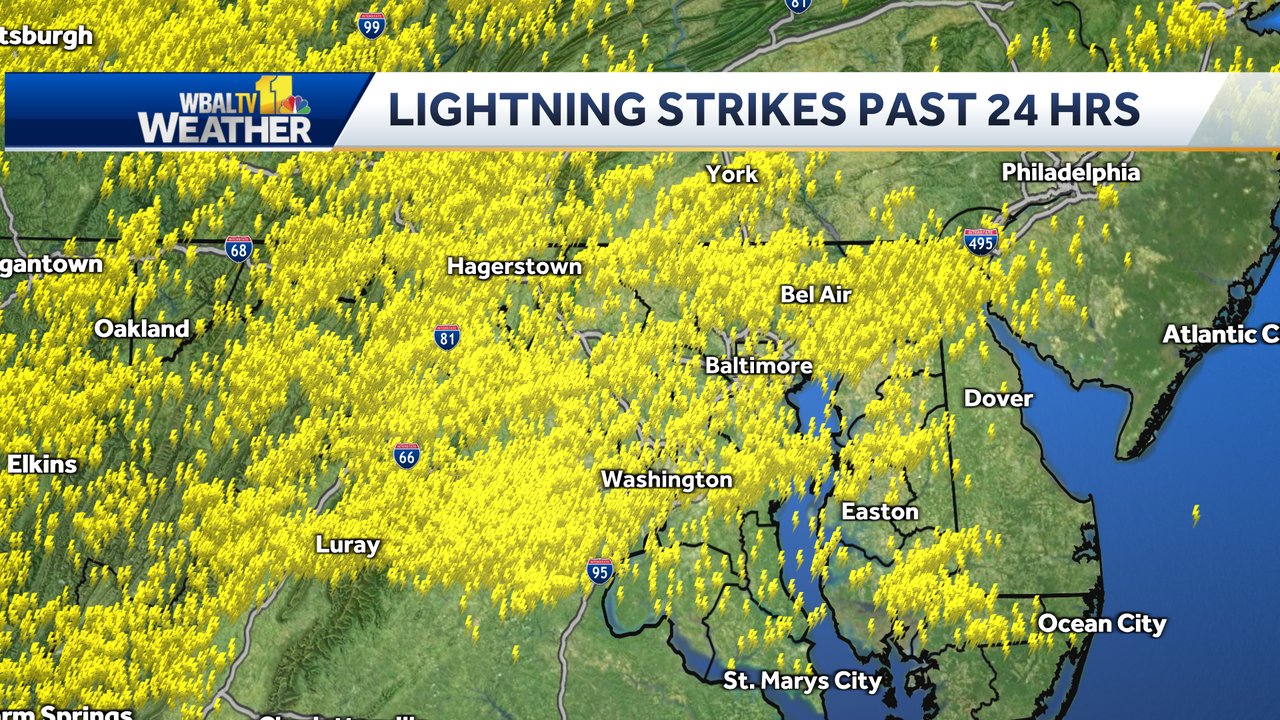
26,000 Lightning Strikes Yesterday

Lightning is an escalating concern in climate science. On July 16, 26,000 lightning bolts were recorded in our region, resulting in the death of an archery instructor and multiple injuries to children during an activity in New Jersey.


Lightning is the leading cause of wildfires in North America, including those in Canada that are driving unhealthy air quality across large parts of both Canada and the U.S.

There is an escalating climate feedback loop: increasingly intense and frequent wildfires release vast amounts of carbon dioxide and black carbon into the atmosphere, accelerating climate change. This, in turn, creates hotter, drier, and stormier conditions that increase both lightning frequency and wildfire risk. The cycle is self-reinforcing—each wildfire not only worsens the climate crisis but also sets the stage for more fires.

While the striking sunsets during wildfire season may appear beautiful, they are the visible scars of a system in distress. Wildfires devastate ecosystems, degrade air quality, and threaten human health on a massive scale. The Canadian wildfires offer a particularly stark example. Many began with lightning strikes, but they are burning through old-growth boreal forests rooted in permafrost that was once snow-covered year-round. Now, some smolder beneath the snow as “zombie fires” through the winter, reigniting in spring.

These fires are releasing more carbon dioxide than all of Canada’s human activities combined—along with vast amounts of methane, an even more potent greenhouse gas. The permafrost that once locked away both CO₂ and methane has passed a tipping point; it will not return in our lifetimes. The warmer it gets, the faster the permafrost melts, releasing more greenhouse gases, which accelerates warming even further.

This is no longer a single feedback loop but a chain reaction: melting permafrost, methane release, intensified lightning, and expanding wildfires all feed into each other. The result is a vicious, accelerating cycle that makes each year more dangerous than the last.

The Physics of Lightning — and How Climate Change Fuels It

Lightning formation is driven in part by strong updrafts within storm cells. Climate change is altering both the frequency and intensity of these updrafts. Several physical principles explain this shift, including the Clausius–Clapeyron relation and the drag equation, both of which directly influence climate dynamics.

As the atmosphere warms, it can hold about 7% more water vapor per degree Celsius. This increase produces larger raindrops and a greater number of them per square foot. Since momentum is defined as p = m × v (mass × velocity), heavier raindrops carry more momentum. When the rain falls, part of this momentum is transferred to the surrounding air, intensifying wind turbulence and strengthening updrafts—conditions that can further amplify lightning activity.

Mass and velocity are just part of the equation; density also plays a key role. The combination of these variables increases the intensity of flow forces. Wind and water forces scale with the square of velocity, meaning that as flow speeds increase — due to more intense heating or heavier rainfall — the damage scales accordingly. According to drag physics, force is proportional to density times the square of velocity.

For example, a 20-mile-an-hour wind exerts four times the force of a 10-mile-an-hour wind, while a 40-mile-an-hour wind exerts 16 times the force of a 10-mile-an-hour wind. At 50 miles an hour, the force is 25 times greater, and at 60 miles an hour, it’s 36 times greater than at 10 miles an hour. Now, add the density factor: water is about 800 times denser than air, so a 10-mile-an-hour water flow exerts 800 times the force of a 10-mile-an-hour wind.

As flow velocities increase due to climate change, the forces — and thus the damage — scale with the square of the velocities. While we may not know precisely how much velocities will rise with climate change, we’re already seeing the effects: overwhelmed flood and sewage systems, collapsing hillsides, and more.

Try This at Home

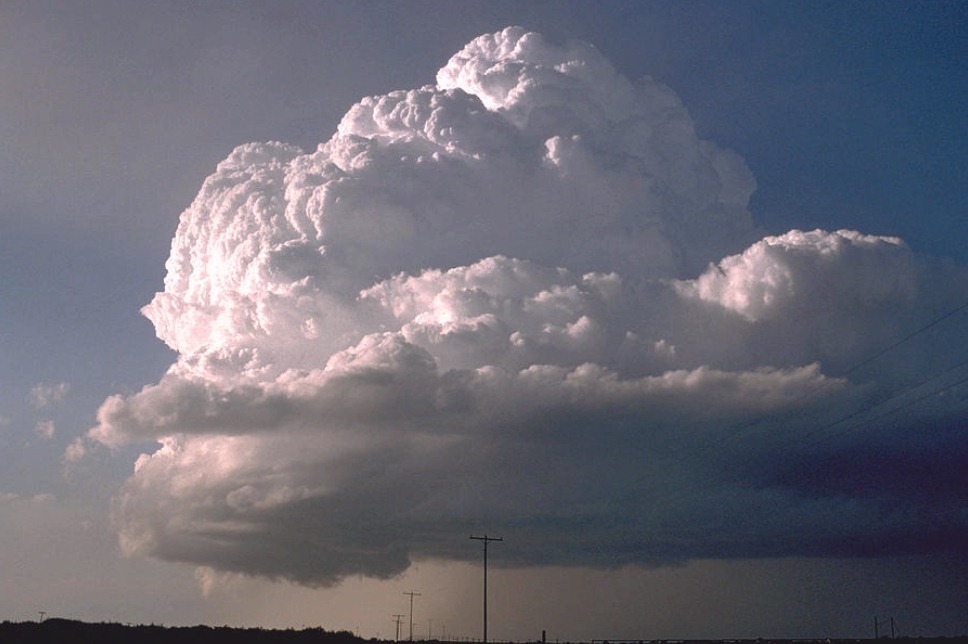
This is one of those “do-it-at-home” citizen science observations you can make for yourself. During heavy rainfall, the friction between the falling raindrops and the surrounding air can generate powerful updrafts, fueling the formation of supercells. These storms reveal themselves through the rapid growth of massive, darkening, and increasingly ominous clouds—towering higher and blacker with each passing minute. Known as Cumulonimbus clouds (Cb), often called thunderheads,, they build the immense energy that is ultimately released as lightning. 

You’ve likely seen this formation before. 

Supercell Formation
Supercell Formation
Supercell Thunderstorms
  • A supercell is a highly organized, long-lived thunderstorm with a deep, persistent, rotating updraft. This rotating updraft is called a mesocyclone.
  • Supercells are the most intense and potentially dangerous type of thunderstorm, responsible for most strong tornadoes, large hail, damaging winds, and flash flooding.
  • The rotating updraft, or mesocyclone, is what distinguishes a supercell from a regular thunderstorm. Wind shear causes horizontal vorticity, which is then tilted into a vertical column by the updraft, creating the rotation. 


Conclusion

That old saying, “You have better odds of being struck by lightning,” is becoming truer by the day.

On the bright side, the same momentum transfer from friction that helps create supercells and other deadly, extreme storm systems also keeps rain from killing you. This upward transfer of energy causes raindrops to reach terminal velocity, preventing them from accelerating endlessly—and eventually penetrating your roof and skull.

Learn more about the physics of Violent Rain

Tipping points and feedback loops drive the acceleration of climate change. When one tipping point is breached and triggers others, the cascading collapse is known as the Domino Effect.

The Climate Crisis: Violent Rain | Deadly Humid Heat | Extreme Weather Events | Insurance | Trees Deforestation | Air Pollution | Rising Sea Level | Food and Water | Updates

The Human Induced Climate Change Experiment

bookmark_borderTipping Points, Feedback Loops, and the Accelerating Collapse of Earth’s Climate Systems

By Daniel Brouse and Sidd Mukherjee
July 16, 2025

Introduction

Research and development incorporating complex social-ecological feedback loops within a dynamic, non-linear system is profoundly challenging. A small window into this complexity can be seen in the interactions among the Albedo Feedback Loop, Brown Carbon Feedback Loop, Freshwater–AMOC Disruption Loop, Permafrost–Methane Feedback Loop, Amazon Rainforest Dieback Feedback Loop, Sudden Sea Level Rise Pulses (“Cork Release” Events), Hydroclimate Whiplash, and Arctic Sea Ice Feedback.

Combined Consequences

These interlinked, reinforcing feedbacks can:

  • Drive non-linear, abrupt climate shifts.

  • Cause sudden sea level rise pulses (feet per year for consecutive years).

  • Collapse the AMOC, disrupting weather, food systems, and rainfall patterns.

  • Trigger Amazon dieback, increasing global CO₂.

  • Result in mass displacement, famine, and water crises.

Tipping Points Igniting a Domino Effect

We knew tipping points would eventually trigger self-sustaining feedback loops in the climate system—and now, they have arrived. I was prepared for that part.

What I could not fully envision was how rapidly the interplay among these tipping points would ignite a domino effect—so, so fast.

Now, I see it clearly: the nonlinear, dynamic dance of economic, physical, and ecological systems unfolding in real time. Abstract models are transforming into undeniable, measurable reality before our eyes.

Cascading System Failures

The breakdown of climate subsystems will not follow a smooth, linear decline. Instead, as one subsystem fails, it accelerates the failure of others, creating cascading, compounding effects across the entire climate system.

There are too many interconnected subsystems to list exhaustively, but consider one example:
The collapse of the AMOC slows ocean circulation, leading to hotter tropics and a warmer Arctic. This accelerates polar ice melt, causing sea levels to rise more rapidly while injecting large volumes of freshwater into the North Atlantic, further destabilizing the AMOC in a reinforcing loop.

At the same time, a disrupted climate system increases droughts in the Amazon, pushing the rainforest toward dieback and desertification. As the Amazon loses its ability to recycle rainfall and sequester carbon, it further amplifies global warming, which then accelerates ice melt, sea level rise, and AMOC collapse.

This example is just one piece of a much larger mosaic of cascading feedback loops already unfolding, shifting the climate system from a stable state to a chaotic, accelerating collapse.:

Albedo Feedback and Ice Melt

As ice melts, darker surfaces are exposed, absorbing more heat and causing further melt. Sea ice melt increases ocean heat but does not directly raise sea levels, whereas land ice melt in Greenland and Antarctica not only raises sea levels but alters ocean salinity and temperature, destabilizing the AMOC.

Greenland and Antarctica contain “corks” holding vast meltwater reservoirs. Once these corks break, sudden sea level pulses of 1–3 feet per year for multiple years could occur, with unpredictable impacts on the AMOC and global climate systems.

East Antarctic Ice Sheet: The Giant Unknown

The East Antarctic Ice Sheet (EAIS) holds enough ice to raise global sea levels by 170 feet if fully destabilized. Will it collapse slowly over centuries or could warming oceans and ice cliff instabilities trigger rapid collapse, displacing massive water volumes and causing tsunamis? We do not know, but early destabilization within the next 100 years is increasingly likely.

Sidd Mukherjee’s Perspective: Context and Probabilities

Sidd Mukherjee frames it this way:

“Mmmm… how long is ‘ever’? I don’t think there is enough ice globally to do more than ~200 feet of sea level rise total.”

He estimates:

  • Greenland: Effectively lost, 100–300 years, +20 feet.

  • West Antarctica: Likely to collapse within decades to a century, +10 feet.

This implies ~20–30 feet over the next century (~2 inches/year, 10x today’s rate), with potential for “pulse” events:

“We could dawdle along at half an inch a year, then see a few years at a foot per year.”

The wildcard remains the EAIS: stable under <500 ppm CO₂ equivalents, but if destabilized, catastrophic sea level rise would follow.

What is the AMOC?

The Atlantic Meridional Overturning Circulation (AMOC), including the Gulf Stream, transports warm surface water northward and cold, dense water southward at depth, regulating regional climates, distributing heat, and driving the global nutrient cycle.

How Melting Greenland Ice Affects the AMOC

  • Freshwater Injection reduces salinity and density, inhibiting North Atlantic sinking.

  • Sea Level Rise alters pressure gradients and stratifies waters, weakening the AMOC.

  • Cooling Surface Waters from meltwater can inhibit sinking even if cooled.

  • Gravitational Redistribution from Greenland’s mass loss pulls water away toward the equator, subtly impacting current patterns.

How Antarctic Melt Impacts the AMOC Indirectly

  • Freshwater input reduces Southern Ocean salinity, altering deep water formation.

  • Global sea level rise shifts ocean stratification.

  • Gravitational effects from Antarctic melt redistribute water toward the equator.

Combined, these impacts weaken the AMOC, alter heat distribution, shift weather patterns, and create feedback loops affecting ice melt and rainfall.

How Polar Melting Accelerates Amazon Dieback

Feedback Loops in Motion

  • Albedo Effect & Ice Melt accelerate warming, leading to further ice loss.

  • AMOC Slowing disrupts rainfall patterns in the tropics, increasing Amazon drought.

  • Reduced Rainfall & Higher Temperatures stress Amazon trees, reducing transpiration and rainfall recycling.

  • Storm Pattern Changes damage forests and increase vulnerability.

  • Hydroclimate Whiplash—rapid swings between drought and heavy rain—erode soils, reduce regrowth, and increase mortality, leading to more CO₂ emissions.

The Rio Negro Case Study

The Rio Negro’s black waters, rich in dissolved organic carbon (DOC), typically aid long-term carbon sequestration as DOC is flushed to the ocean. Record-low river levels in 2023 reduced this export while exposing DOC to sunlight, increasing CO₂ emissions. The Rio Negro and Amazon Rivers now serve as a live case study for how hydroclimate whiplash, Amazon dieback, and carbon cycle disruptions interact with AMOC slowdown.

Drought → Fire → Dieback → Carbon Feedback

Drought stresses trees, increasing flammability and reducing CO₂ uptake. Fires release stored carbon, turning the Amazon from a carbon sink into a carbon source. Brown carbon from wildfires darkens snow and ice globally, accelerating melt and AMOC slowdown, feeding back into the system.

Why It Matters

The Amazon dieback is not an isolated crisis; it is tied to polar processes through atmospheric and oceanic feedback loops. Without rapid fossil fuel reduction, the interconnected:

  • Albedo feedback,

  • Ice melt and sea level rise,

  • AMOC slowdown,

  • Amazon drought-fire-carbon feedback,

will accelerate the collapse of Earth’s climate regulators, threatening global food systems, weather stability, and habitability.
The Human Induced Climate Change Experiment