bookmark_borderPolar Vortex Disruptions, Rossby Waves, and a New Threats to the Stratosphere: Why Our Jet Streams Are Becoming Unrecognizable

by Daniel Brouse
July 2, 2025

Recent severe weather across North America—record-breaking tornado outbreaks, prolonged flooding, and deadly heat domes—are not random. They are tied to deep disruptions in the polar vortex and jet stream, driven by interconnected climate processes that are accelerating in a nonlinear way.

The Role of Rossby Waves and SSW Events

Rossby waves, the large-scale meanders in high-altitude winds, are critical in shaping weather patterns. Under normal conditions, they help distribute heat across the planet. However, as the Arctic warms faster than the equator, the jet stream weakens and these waves become more amplified and sluggish, leading to stuck weather patterns—like prolonged droughts or rain events.

Sudden Stratospheric Warming (SSW) events, where polar stratospheric temperatures can rise by 50°C (90°F) within days, also play a critical role. These events weaken and displace the polar vortex, often sending lobes of cold air far south while warm air surges into the Arctic. This winter and spring, two significant SSW events (February and April) contributed to polar vortex instability, creating pathways for extreme weather, including the tornado outbreaks and historic flooding that swept through the Midwest and South.

Stratospheric Ozone: A New Threat from Reentering Satellites

While climate-induced circulation changes are a well-known driver of stratospheric instability, an emerging concern is the rising impact of low Earth orbit satellites burning up on reentry. As we increase satellite launches for global internet and other services, thousands of small satellites will reenter Earth’s atmosphere, burning up and releasing aluminum oxide and other particulates into the stratosphere.

These particulates can catalyze reactions that deplete stratospheric ozone, weakening the protective layer that shields life from harmful ultraviolet radiation. Loss of stratospheric ozone also alters the temperature gradients in the stratosphere, which further destabilizes the polar vortex and influences jet stream behavior.

Nonlinear Acceleration and Underestimated Risks

Most climate models still underrepresent the combined effects of Rossby wave amplification, frequent SSW events, and stratospheric ozone depletion on atmospheric circulation. These feedbacks are now interacting with warming oceans, melting Arctic ice, and a weakening Atlantic Meridional Overturning Circulation (AMOC), creating compounding effects that accelerate the climate system’s instability.

This is not just an academic observation: these disruptions are directly linked to the intensification and persistence of extreme weather events, impacting food security, economic stability, and public health across the globe.

Why This Matters Now

  • Polar vortex disruptions are increasing, leading to more extreme cold surges and heat domes.
  • Jet stream elongation and stagnation are fueling floods, droughts, and heatwaves.
  • Stratospheric ozone loss from reentering satellites could accelerate these processes further.
  • We are crossing tipping points faster than predicted, while many still underestimate how quickly these interconnected systems can collapse.

If we fail to understand these dynamics, adaptation will be reactive and inadequate. As a climate scientist focusing on the interplay between the AMOC, jet stream instability, and wet-bulb thresholds under nonlinear system collapse, I see this as one of the most urgent threats facing the stability of societies worldwide.

Read: Solutions to the Fossil Fuel Economy and the Myths Accelerating Climate and Economic Collapse

The Converging Collapse: AMOC, Jet Streams, and Deadly Wet-Bulb Temperatures Brouse (2025)

Philadelphia’s Heat Dome: Wet-Bulb Temperatures Signal a Climate Tipping Point Brouse (2025)

Burning to Stay Cool: How Our Fight Against Heat Is Fueling Climate Collapse Brouse (2025)

Weakened Atlantic Meridional Overturning Circulation causes the historical North Atlantic Warming Hole Kai-Yuan Li & Wei Liu (2025)

The Reign of Violent Rain Brouse and Mukherjee (2023-2024)

Climate Change, the Jet Stream, and East Coast Atmospheric Rivers Brouse (2024)

Climate Change and Deadly Humid Heat Brouse (2023)

Climate Change: Rate of Acceleration Brouse and Mukherjee (2023-2024)

Tipping points and feedback loops drive the acceleration of climate change. When one tipping point is breached and triggers others, the cascading collapse is known as the Domino Effect.

The Human Induced Climate Change Experiment

bookmark_borderFrom Mathematics to Climate Leadership: Sarah Kapnick’s Vision for Climate-Integrated Finance and Infrastructure Resilience

by Daniel Brouse
July 1, 2025

Sarah Kapnick’s journey—from a Goldman Sachs analyst to NOAA’s chief scientist and now global head of climate advisory at JPMorgan Chase—reflects a career spent aligning climate science with financial and infrastructure decisions. She has long recognized the urgent intersection of climate risk and financial planning, an urgency that has only grown as U.S. infrastructure crumbles under the accelerating impacts of climate change.

The Climate Threat to U.S. Infrastructure

A recent CNBC investigation highlights that U.S. infrastructure is barely getting a passing grade, with climate change emerging as one of its fastest-growing threats. Historic rainfall at Fort Lauderdale/Hollywood International Airport in 2023 turned runways into rivers, shutting down operations and stranding passengers. In New York City, extreme heat caused metal on the Harlem River bridge to expand so severely it became stuck open.

The American Society of Civil Engineers (ASCE) has given U.S. infrastructure a “C” grade, warning that every category—from airports and bridges to power and telecommunications—is increasingly vulnerable to extreme weather, drought, floods, heat, hurricanes, and wildfires. According to First Street’s climate risk analytics, 19% of all power infrastructure, 17% of telecommunications infrastructure, and 12% of airports face major risks from flood, wind, or wildfire.

As ASCE’s executive director Tom Smith puts it, “We have to design for all of that, and we have to anticipate not just where the puck is now, but where we think it’s going.”

The Investor Shift: Climate Resilience as a Financial Imperative

For Kapnick, these threats are not abstract—they are shaping how capital markets, insurers, and investors must approach infrastructure financing.

“How should I change and invest in my infrastructure? Should I think about different types of insurance? How should I access the capital markets to do this type of work?” are questions Kapnick increasingly hears from clients who now recognize that most U.S. infrastructure was designed for a climate that no longer exists.

The risks extend beyond engineering challenges to capital allocation, bond ratings, and municipal finance, particularly as extreme weather events increase the likelihood of infrastructure failures and costly repairs.

Science Under Attack and the Data Challenge

Both Kapnick and Smith emphasize that resilient infrastructure investment must be rooted in science. Yet, this science has faced systemic attacks. During the Trump administration, deep cuts and staff firings at NOAA, FEMA, and NIST undermined agencies vital for advancing climate science, and funding for critical resilience programs like FEMA’s $1 billion Building Resilient Infrastructure and Communities initiative was slashed.

“There’s going to be this adjustment period as people figure out where they’re going to get the information they need,” Kapnick noted, emphasizing that market and financial decisions depend on data sets many assumed would always be there.

A $3.7 Trillion Gap, A Climate Opportunity

The ASCE estimates a $3.7 trillion spending gap over the next decade just to bring U.S. infrastructure up to a “state of good repair.” For Kapnick, this represents not only a colossal challenge but an opportunity: to reimagine how capital markets, insurance frameworks, and municipal investments integrate climate risk into infrastructure planning and funding.

Integrating climate risk isn’t simply about avoiding losses—it’s about unlocking more resilient, efficient, and forward-looking investments that protect public health, safety, and welfare.

The Path Forward

Kapnick’s vision is clear: finance, science, and engineering must align to future-proof infrastructure, ensuring the systems Americans rely on are ready for the realities of climate change.

As she told her clients and policymakers: “Climate and science is something that we take very, very seriously, working with the science, connecting it with the engineering to protect the public health, safety and welfare.”

Bridging the gap between climate science and financial decision-making is no longer optional; it is the cornerstone of protecting communities, investors, and the broader economy from the climate realities that are already here.


* Our climate model employs chaos theory — incorporating complex social-ecological feedback loops within a dynamic, nonlinear system to comprehensively consider human impacts and projects a potential global average temperature increase of 9℃ above pre-industrial levels.

Edge of Chaos: Chaos Theory Basics Brouse (2025)

bookmark_borderBasic Economics: Taxes Hurt Everyone—And So Do Nationalism, Protectionism, Populism, and Anti-Immigration Policies

by Daniel Brouse
June 21, 2025

In today’s political climate, economic debates are increasingly dominated by short-term wins, emotional appeals, and zero-sum thinking. But from the standpoint of fundamental economic principles, many widely supported policies—such as high taxation, nationalism, protectionism, populism, and anti-immigration sentiment—have long-term consequences that ultimately harm everyone, regardless of class or ideology.

Even more urgent is the looming threat of climate change, which economists and financial experts—including myself—agree poses a systemic risk to global capitalism. As climate-driven disasters grow in frequency and severity, the costs are beginning to overwhelm the financial infrastructure that underpins modern economies. Gunther Thallinger of Allianz SE, one of the world’s largest insurers, has issued a stark warning: the accelerating pace and scale of climate-related losses threaten to break the insurance sector’s ability to function. If the insurance industry falters, it could trigger a cascading collapse across the broader financial system, with profound implications for markets, investment, and the viability of capitalism itself.

Taxes Hurt Everyone—Especially When They Target Productivity

Taxes are necessary to fund public goods, but not all taxes are created equal. Income taxes, in particular, punish productivity by taxing labor and innovation. They create disincentives to work, invest, and grow businesses—core drivers of economic growth. Even when targeted at the wealthy, income taxes reduce the efficiency of capital allocation and suppress job creation. The impact ripples through the economy, lowering wages, slowing innovation, and ultimately limiting opportunity for all.

That’s not to say all taxation should be eliminated—but the structure and purpose of taxation matter greatly. Taxes that discourage pollution or the overconsumption of finite resources can create positive market incentives and help align economic activity with long-term sustainability. However, taxes that penalize productivity—such as those on wages or hiring—are inherently regressive in their impact on growth, regardless of intent.

That said, I’m not a proponent of traditional carbon taxes, largely because they are difficult to enforce effectively and are often accompanied by misleading narratives around carbon offsets and so-called “net-zero” goals. A more transparent and impactful approach would be to directly tax fossil fuels themselves. A phased-in system could include a 50% tax on natural gas, a 100% tax on each barrel of oil, and a 1,000% tax on every ton of coal. These measures would send a strong, unambiguous price signal, drive investment in cleaner alternatives, and reduce the long-term economic and environmental costs associated with fossil fuel dependency.

Beyond economic efficiency, there’s an urgent public health imperative. Pollution and climate change are now among the leading causes of death and chronic illness worldwide. Air pollution alone is responsible for an estimated 7 million premature deaths each year, according to the World Health Organization. Climate change exacerbates respiratory conditions, cardiovascular disease, heat-related illnesses, mental health crises, and the spread of infectious diseases like malaria and dengue fever.

These impacts don’t just strain individual lives—they are rapidly overwhelming public and private healthcare systems. As climate-related illnesses rise, health insurance costs skyrocket, risk pools destabilize, and premiums become unaffordable for many. Meanwhile, government programs like Medicare and Medicaid face unsustainable cost burdens driven by the medical consequences of a warming world. In short, climate inaction is not only a moral and environmental failure—it’s a direct threat to the economic sustainability of our entire healthcare infrastructure.

Nationalism, Protectionism, and Populism Are Not Economic Strategies

Nationalist and protectionist policies often promise to “bring jobs back” or “protect local industries,” but history shows they nearly always backfire. Tariffs and trade restrictions increase costs for consumers, limit access to global markets, and trigger retaliatory actions from trade partners. Jobs may temporarily appear in protected industries, but these gains are offset by job losses elsewhere and reduced overall competitiveness. Nationalism reduces global cooperation, which is essential for solving complex, borderless challenges like climate change, pandemics, and financial crises.

Populism adds fuel to the fire by prioritizing political expediency over economic soundness. Populist leaders often resort to unsustainable promises, distort data, and vilify economic experts. While it may deliver short-term popularity, it undermines the institutional trust and policy coherence needed for long-term economic stability.

Anti-Immigration Sentiment Threatens the Foundation of Economic Growth

Perhaps the most damaging myth in modern politics is that immigrants are a burden on the economy. In reality, immigration—particularly of young, working-age individuals—is essential to maintaining a stable workforce, supporting aging populations, and sustaining programs like Social Security and Medicare. As birth rates decline and the U.S. population ages, we face a demographic time bomb: fewer workers supporting more retirees. Without robust immigration, the math simply doesn’t work.

Contrary to political rhetoric, immigrants pay taxes, fill critical labor shortages, start businesses at higher rates than native-born citizens, and contribute disproportionately to innovation and economic growth. In fact, over the past five years, immigration has accounted for approximately 80% of U.S. GDP growth. Turning away millions of potential contributors out of fear, misinformation, or cultural backlash isn’t just economically short-sighted—it’s an act of national self-sabotage.

Two Paths Forward: Expand Immigration or Reform the Entire System

Given these economic realities, we face two clear options. If we intend to preserve the current system—with its reliance on income taxes and entitlements—then we must embrace large-scale immigration as a non-negotiable pillar of national policy. There is no other way to maintain the workforce necessary to fuel economic growth and support retirees without collapsing the fiscal balance.

The preferable alternative, however, is systemic reform. This means rethinking how we fund government and how we measure economic health. A transition away from income taxes toward taxes on resource consumption—such as a carbon tax or pollution levy—could reduce environmental damage while encouraging innovation and efficiency. At the same time, phasing out fossil fuels and investing in a clean-energy infrastructure would position the economy for long-term resilience and competitiveness.

Conclusion: Basic Economics Isn’t Political—It’s Predictive

Whether we like it or not, basic economics doesn’t bend to ideology. High taxes on productivity, closed borders, trade barriers, and emotionally driven populism all lead to the same outcome: stagnation. The path to a more prosperous, resilient future is clear—but it requires courage, clarity, and a willingness to make difficult choices. We must either open the door to millions of young workers through large-scale immigration or rethink the foundations of our economic system entirely—ideally, both.

At the same time, we face an accelerating climate emergency that threatens to overwhelm not just our economy, but the physical conditions required for human survival. Our latest climate model — now incorporating complex social-ecological feedback loops within a dynamic, nonlinear system—projects that global temperatures could rise by up to 9°C (16.2°F) within this century. This far exceeds earlier projections, which estimated a 4°C rise over the next thousand years, and signals a dramatic acceleration of planetary warming.

At this level of heating, vast regions of the Earth will become uninhabitable due to a combination of extreme temperatures, sea level rise, agricultural collapse, and mass migration. Crucially, parts of the United States are already experiencing wet-bulb temperatures approaching or exceeding 31°C (87.8°F)—a physiological threshold beyond which the human body can no longer regulate internal temperature, even in the shade with unlimited access to water. This makes extended outdoor exposure potentially fatal.

This is no longer a distant or theoretical threat. The climate system is now entering a phase of compound risk and cascading collapse, where disruptions in one area—such as crop failure—can trigger a domino effect across health systems, infrastructure, food security, and civil stability. We are already witnessing the early stages of this unraveling.

Immediate, radical action is now essential—not only to mitigate future emissions but also to adapt our societies, preserve habitable zones, safeguard food systems, and protect public health. The longer we delay, the higher the cost—economically, socially, and in terms of human life.
Trumpenomics: The Decline of the US

The Human Induced Climate Change Experiment

bookmark_borderClimate Change and Policy Shifts Threaten U.S. Housing Market Stability

by Daniel Brouse
February 20, 2025

Projected Devaluation of U.S. Homes Due to Climate Change

Recent analyses indicate that climate change poses a significant threat to the U.S. housing market. Over the next five years, it’s projected that at least 20% of U.S. homes will experience devaluation due to climate-related impacts. In certain vulnerable markets, property values could decline by up to 30% within this period. By 2055, approximately 84% of all U.S. homes may suffer devaluation, resulting in an estimated $1.47 trillion in losses. This timeline aligns with the typical 30-year mortgage term, underscoring the long-term financial risks for homeowners and lenders.

Insurance Market as an Indicator of Real Estate Vulnerability

The availability and cost of homeowners insurance are critical factors influencing mortgage approvals and, consequently, home valuations. Insurance is often considered the ‘canary in the coal mine’ for real estate, signaling emerging risks associated with climate change. High-vulnerability regions, particularly coastal areas in states like Florida, Louisiana, and California, are confronting a compounded crisis. The convergence of escalating insurance premiums, frequent natural disasters, and declining property values is placing immense strain on both homeowners and insurance systems. In Florida, for instance, the state-owned Citizens Property Insurance Corporation has become the largest insurer, reflecting the significant withdrawal of private companies from the market due to unmanageable risks.

Historical Context and Accelerating Climate Change Impacts

Traditionally, real estate has been regarded as a stable and appreciating investment, often outpacing general inflation rates. Since 1963, while inflation has risen by 896%, housing prices have surged by more than 2,350%. However, climate change is disrupting this paradigm. Scientific observations have documented a non-linear acceleration of climate change impacts, with the doubling time of these effects shrinking from approximately 100 years to just a few years. This rapid acceleration suggests that the adverse consequences of climate change on real estate are intensifying at an unprecedented rate.

Policy Changes and Their Potential Exacerbation of Climate Risks

Recent policy shifts under the Trump administration may further exacerbate these challenges. The administration has rescinded numerous environmental regulations and executive orders aimed at mitigating climate change. Notably, President Trump signed 26 executive orders on January 20, 2025, which included the repeal of approximately 80 prior executive actions focused on energy, environmental, and natural resource agendas. These actions reflect a strategic shift towards promoting domestic fossil energy production and reducing regulatory oversight, potentially accelerating environmental degradation.

Additionally, the administration has proposed reforms to key entities in the U.S. housing finance system, specifically Fannie Mae, Freddie Mac, and the Federal Housing Administration (FHA). The proposed privatization of Fannie Mae and Freddie Mac could lead to increased mortgage rates, adversely affecting housing affordability. Furthermore, the potential elimination of the Consumer Financial Protection Bureau (CFPB) may reduce oversight in the housing market, increasing the risk of predatory practices. These reforms could introduce significant uncertainty into the housing market, influencing home prices and overall economic stability.

The Trump administration has also announced plans to dismantle the Federal Emergency Management Agency (FEMA) and rescind all updates to floodplain maps. Homeland Security Secretary Kristi Noem supports reallocating FEMA’s responsibilities to state and local authorities, citing operational inefficiencies and flawed responses to recent disasters.  President Trump has signed an executive order revoking the Federal Flood Risk Management Standard, effectively halting enforcement of updated floodplain maps.  Critics argue that these actions could leave states unprepared for natural disasters and increase vulnerability to flooding leaving homeowners and lenders underwater.

Conclusion

The intersection of accelerating climate change impacts and recent policy shifts presents a formidable challenge to the U.S. housing market. Homeowners, investors, and policymakers must recognize and address these converging threats to safeguard the stability and value of real estate assets in the face of an evolving environmental and regulatory landscape.

Sources:

The Human Induced Climate Change Experiment

bookmark_borderClimate Change Threatens U.S. Housing Market with $1.5 Trillion Devaluation

by Daniel Brouse
February 19, 2025

In the next five years, at least 20% of U.S. homes are projected to lose value due to climate change impacts, according to Dave Burt, founder of DeltaTerra Capital. Burt, who foresaw the subprime mortgage crisis nearly two decades ago, draws parallels between that event and the emerging climate-related housing market risks. He warns that as climate risks escalate, the insurance industry will be compelled to raise premiums, increasing homeownership costs and subsequently reducing property values. Burt anticipates that these vulnerable markets could experience a 30% decline in value over the next five years, mirroring the downturn seen during the Great Recession.

Supporting this outlook, a recent analysis by climate-risk firm First Street Foundation estimates that by 2055, 84% of all U.S. homes could suffer devaluation, amounting to $1.47 trillion in losses. Jeremy Porter, head of climate implications research at First Street, emphasizes that climate change is now a tangible force reshaping real estate markets and regional economies across the nation. The report projects a national average insurance cost increase of 25%, with 14% attributed to previously underpriced risks and an additional 11% due to escalating climate threats. While the average property value impact is estimated at a 3% decline nationally, certain areas, particularly in Texas, Florida, and Louisiana, may see home values reduced by up to 50%.

High-vulnerability regions, especially coastal areas and states like Florida, Louisiana, and California, face a compounding crisis. The intersection of rising insurance premiums, frequent natural disasters, and declining property values is straining both homeowners and insurance systems. In states such as Florida, Louisiana, and California, taxpayers already subsidize homeowner insurance premiums due to the inability of private insurers to bear the mounting risks alone. In Florida, the state-owned insurer, Citizens Property Insurance Corporation, has become the largest insurer, a testament to the scale of market withdrawal by private companies.

California is among several states grappling with the growing frequency and intensity of climate-related disasters. Over recent years, the financial burden on the insurance industry has escalated, driven by catastrophic wildfires, prolonged droughts, and extreme weather events. Many private insurers, unable to sustain losses or raise premiums due to state-imposed price controls, have either stopped issuing new policies or left the state entirely. In response, California implemented government-subsidized homeowners’ insurance programs to provide coverage for those left without options. However, these systems, including the state-backed FAIR Plan, quickly became overburdened. The FAIR Plan, originally conceived as a safety net for homeowners in high-risk areas, has seen a surge in demand as private insurers retreat.

As climate-related disasters—such as hurricanes, wildfires, and floods—increase in both frequency and intensity, the economic strain on both taxpayers and insurance systems is becoming unsustainable. Florida’s reliance on taxpayer-backed insurance, for instance, exposes state finances to significant risk, particularly after events like Hurricane Ian in 2022, which caused catastrophic losses. Taxpayer-funded bailouts of insurance systems and rising deficits could divert resources from other critical areas, further exacerbating economic instability.

The real estate market in high-risk areas is already experiencing significant challenges. As insurance becomes increasingly difficult to obtain or afford, property values are declining, leaving homeowners facing the growing risk of being unable to sell or refinance. While liquidating properties in these areas may help mitigate individual financial risks, widespread devaluation could have far-reaching economic consequences, potentially leading to localized housing market collapses.

In summary, the convergence of escalating climate risks, rising insurance costs, and declining property values poses a substantial threat to the U.S. housing market. Proactive measures, including investment in resilient infrastructure, transparent risk assessment, and strategic policy reforms, are essential to mitigate these impacts and safeguard both homeowners and the broader economy.

bookmark_borderHomeowners Insurance Coverage $1 Trillion Climate Change Hole

by Daniel Brouse
January 12, 2025

The “$1 trillion hole” in homeowners insurance coverage refers to the growing gap between the actual costs of damage caused by natural disasters and the insurance coverage available to homeowners. This coverage gap has emerged due to a combination of factors, many of which are exacerbated by climate change and its associated risks. Here’s a detailed explanation:

What Contributes to the $1 Trillion Hole?

  1. Increasing Frequency and Intensity of Natural Disasters:
    • Climate change has led to more frequent and severe weather events, such as hurricanes, wildfires, floods, and tornadoes. These events cause greater financial losses, outpacing the capacity of insurance systems to absorb the costs.
  2. Underinsurance by Homeowners:
    • Many homeowners are either uninsured or underinsured, meaning their policies do not provide enough coverage to rebuild or repair homes after disasters. Some may not carry specific disaster coverage (e.g., flood or earthquake insurance), leaving them vulnerable.
  3. Rising Construction Costs:
    • The costs of rebuilding homes have surged due to inflation, supply chain disruptions, labor shortages, and updated building codes. Even those with insurance may find that their policies do not fully cover these increased costs.
  4. Insurance Industry Retreat:
    • In high-risk areas, particularly those prone to wildfires (e.g., California) or hurricanes (e.g., Florida), private insurers are pulling out of the market or dramatically increasing premiums. This leaves many homeowners reliant on state-backed plans, which are often more limited in coverage and face financial strain themselves.
  5. Lack of Government Support:
    • Government disaster relief programs and state-backed insurance plans, such as California’s FAIR Plan or Florida’s Citizens Property Insurance Corporation, are not sufficient to cover the full scope of damages. These programs are financially stretched and may not be able to address future catastrophic losses.
  6. Growing Risk Awareness:
    • Advanced risk modeling and climate science have shown that many areas are significantly more vulnerable to disasters than previously thought. This has caused insurers to reassess their exposure, further limiting coverage availability and affordability.

Implications of the Gap

  • Economic Strain on Homeowners: Many homeowners face bankruptcy or foreclosure after disasters because they cannot afford repairs or rebuilds without adequate insurance.
  • Real Estate Market Instability: The lack of affordable insurance is making it harder to buy, sell, or maintain properties in high-risk areas, potentially leading to a devaluation of real estate in these regions.
  • Taxpayer Burden: When insurance coverage falls short, governments often step in to provide disaster relief, placing additional financial strain on taxpayers.
  • Widening Inequality: Wealthier homeowners may be able to self-insure or rebuild after disasters, but low- and middle-income families often bear the brunt of the gap, deepening socioeconomic disparities.

Solutions Being Proposed

  • Climate Adaptation and Resilience:
    Investments in infrastructure, updated building codes, and measures such as fireproofing or floodproofing homes are often suggested to reduce future losses. However, as climate change continues to intensify, the escalating costs of such adaptations risk becoming unsustainable. Long-term solutions must account for the reality that some areas may no longer be viable for habitation.
  • Expanded Federal Support:
    Proposals for a national disaster insurance program aim to address coverage gaps and distribute financial risk across the country. While appealing in theory, this approach also faces sustainability challenges. As climate-related disasters grow in frequency and intensity, the financial burden on federal programs and taxpayers could spiral out of control, making this solution increasingly impractical without addressing the root causes of climate change.
  • Incentives for Private Insurers:
    Offering tax breaks or subsidies to encourage private insurers to remain in high-risk markets has been proposed. However, as the cost of insuring properties in vulnerable areas continues to rise, even these measures may prove insufficient or unsustainable. Without meaningful efforts to mitigate climate risks, the financial viability of these incentives is likely to erode.
  • Increased Awareness and Education:
    Educating homeowners about their risks and the importance of comprehensive insurance is critical. However, beyond awareness, action is needed. Homeowners in high-risk areas must consider relocating to regions with lower susceptibility to climate-related disasters. Managed migration or “climate retreat” should be prioritized to ensure long-term safety and financial stability for individuals and communities alike.

The “$1 trillion hole” is a stark reminder of the systemic challenges posed by climate change and highlights the need for innovative solutions to ensure financial security for homeowners and the stability of the broader economy.


bookmark_borderA System Under Strain: The Insurance Crisis

by Daniel Brouse
January 11, 2025

California Faces Unprecedented Challenges as Los Angeles Wildfires Rage

Just days into the devastating wildfires sweeping through Los Angeles, with flames still raging uncontrollably, early damage estimates have already reached a staggering $57 billion. As these fires continue to spread, that figure is expected to climb, highlighting the intensifying toll of climate change-driven catastrophes. These fires are not just an environmental disaster but also an economic and social crisis, testing the resilience of systems designed to mitigate the impact of such events.

A System Under Strain: The Insurance Crisis

California is among several states grappling with the growing frequency and intensity of climate-related disasters. Over recent years, the financial burden on the insurance industry has escalated, driven by catastrophic wildfires, prolonged droughts, and extreme weather events. Many private insurers, unable to sustain losses or raise premiums due to state-imposed price controls, have either stopped issuing new policies or left the state entirely.

In response, California implemented government-subsidized homeowners’ insurance programs to provide coverage for those left without options. However, these systems, including the state-backed FAIR Plan, quickly became overburdened. The FAIR Plan, originally conceived as a safety net for homeowners in high-risk areas, has seen a surge in demand as private insurers retreat.

Amendments to Insurance Laws

Recognizing the unsustainability of the current system, California recently amended its insurance regulations to allow companies to charge customers for catastrophic risks. While this measure aims to stem the exodus of private insurers from the state, it has sparked concerns about affordability. Homeowners in high-risk areas may find themselves priced out of coverage altogether, leaving many vulnerable to financial ruin in the wake of disasters like the Los Angeles wildfires.

Testing the Limits of Preparedness

The Los Angeles wildfires are poised to test the sustainability of the FAIR Plan and the broader insurance framework. With record losses anticipated, the state faces a critical challenge: balancing the financial viability of insurance programs with the need to provide affordable coverage to residents. This balancing act is made even more complex by the sheer scale and frequency of disasters driven by climate change, which shows no signs of abating.

The losses that the FAIR Plan is expected to incur from the Los Angeles wildfires are likely to be substantial, potentially unprecedented. While exact figures will depend on the extent of the fires, initial damage estimates for the ongoing wildfires have already reached $57 billion. Given that the FAIR Plan serves as a safety net for high-risk areas, including many wildfire-prone regions, a significant portion of the claims resulting from these fires is expected to fall under its coverage.

Key Factors Impacting FAIR Plan Losses

  1. High-Value Properties: Los Angeles and its surrounding areas are home to many high-value properties, which significantly increases the financial burden on the FAIR Plan when destruction or damage occurs. Uniquely, the current wildfires have spread not only through brush and vegetation, as is typical, but also from house to house. This unprecedented pattern of fire spread has led to compounded damages, affecting entire neighborhoods and making the financial impact even more severe.
  2. Increased Participation: The withdrawal of private insurers from the market has left many homeowners with no option but to turn to the FAIR Plan for coverage. This surge in participation has dramatically amplified the plan’s exposure to catastrophic losses, as a growing number of high-risk properties fall under its umbrella.
  3. Severity of Wildfires: Decades of drought, coupled with strong winds and persistently dry conditions, have fueled the intensity of the ongoing wildfires, making them extremely difficult to contain. The widespread destruction has led to an unprecedented number of claims, placing significant pressure on the FAIR Plan’s financial resources.
  4. Cost of Rebuilding: The costs of rebuilding are expected to escalate due to rising construction material prices, labor shortages, and stringent building codes. Unlike traditional wildfires that primarily burn through vegetation, these fires have spread from house to house, causing extensive structural damage. Rebuilding in affected areas will likely involve significant upgrades to meet new building codes aimed at preventing similar disasters in the future, further inflating claim payouts and financial liabilities for the FAIR Plan.

Projected Financial Impact

While it is too early to provide a definitive figure, some experts anticipate that the FAIR Plan could face billions of dollars in claims from the Los Angeles wildfires. The financial strain may lead to increased premiums for policyholders, additional government subsidies, or even calls for federal assistance to stabilize the program.

Challenges Ahead

The FAIR Plan was never designed to handle catastrophic losses on this scale. As the frequency and severity of climate-driven disasters continue to escalate, the plan’s financial sustainability is at risk. This situation highlights the urgent need for systemic reform in how high-risk areas are insured and managed in the face of a changing climate.

A Broader Wake-Up Call

The Los Angeles wildfires are a stark reminder of the far-reaching consequences of climate change. Beyond the immediate devastation, they underscore the urgent need for comprehensive strategies to mitigate risk, including aggressive emissions reductions, infrastructure improvements, and disaster preparedness. Without decisive action, the costs—both financial and human—will only continue to rise.

As California battles this latest crisis, it serves as a warning to the rest of the world: climate change is not a distant threat but a present and escalating reality, demanding immediate and sustained action.

Insurance Cost and Availability Brouse (2024)

Climate Change and Insurance: The Los Angeles Wildfires Brouse (2025)

The Cost of Climate Change: Rising Homeowners Insurance Rates Brouse (2024)


bookmark_borderThe Los Angeles Wildfires: A Record-Breaking Climate Disaster

by Daniel Brouse
January 9, 2025

The Los Angeles wildfires are shaping up to be the most expensive climate disaster in history. Just days into the crisis, with most fires still raging out of control, early damage estimates have already reached a staggering $57 billion. As these fires continue to spread, that figure is expected to climb, marking a sobering milestone in the era of climate change-driven catastrophes.

Vast Areas of California: A Growing Case for Uninhabitability

Large swaths of California, particularly in fire-prone regions like Los Angeles, are increasingly becoming uninhabitable due to the rapid escalation of extreme climate events. The frequency and intensity of these events are growing at an exponential rate and could become 64 times more severe within the next decade, according to projections. This dire trend poses significant risks not only to lives and property but also to the long-term sustainability of human habitation in these areas.

Natural Disasters and Exacerbated Risks

The Los Angeles region is expected to face an escalating barrage of natural disasters, including wildfires, droughts, and flooding. As climate change accelerates, the impact of these events is compounded by human actions. For instance, during recent wildfires, millions of gallons of saltwater were dropped to extinguish flames. While effective in firefighting, this practice leaves behind a devastating legacy: salt contamination of the soil. Salt can render the land infertile for decades, severely impacting agriculture, vegetation, and ecosystems, and making it difficult for communities to rebuild sustainably.

Environmental Compromises in Rebuilding

Compounding the challenges, California has begun relaxing its environmental regulations to expedite post-fire cleanup and rebuilding efforts. While this may speed up recovery, it introduces significant risks. The clean-up processes often leave behind toxic and carcinogenic residues, creating a hazardous foundation for future development. Rebuilding homes and infrastructure on contaminated ground poses severe health risks for residents, including exposure to harmful chemicals that can persist for generations.

Economic and Human Implications

Even if financial institutions and insurers are willing to continue underwriting the costs of rebuilding in these high-risk areas, the question arises: Who would want to live there?

  • Health Risks: Prolonged exposure to toxic soil and air contaminants from fire debris can lead to long-term health issues, including respiratory problems and cancer.
  • Safety Concerns: The relentless cycle of destruction and rebuilding undermines the sense of security for residents.
  • Financial Burden: The cost of insurance and rebuilding will continue to rise, making it increasingly unaffordable for many homeowners.

The Growing Case for Managed Retreat

As the risks of inhabiting these regions continue to climb, the concept of managed retreat—relocating communities from high-risk areas to safer ones—becomes an increasingly viable option. Policymakers, urban planners, and residents must weigh the economic, environmental, and human costs of staying versus the benefits of relocating.

In the face of exponential climate risks, California must rethink its approach to land use, rebuilding policies, and disaster preparedness. Without drastic intervention and forward-thinking strategies, vast areas of the state may soon become permanently uninhabitable, leaving behind ghost towns of abandoned homes and unlivable landscapes.


Growing Risks from Combined Extreme Weather Events

The Los Angeles wildfires are an exceptionally severe example of multiple climate extremes converging to create a catastrophic event. Over the past several decades, the region has experienced a record-breaking drought that has significantly lowered the water table, leaving vegetation dry and highly flammable. This prolonged period of aridity set the stage for the rapid ignition and spread of the fires. Adding to this perilous situation, hurricane-strength winds fanned the flames, transforming a single fire into multiple rapidly spreading infernos. These winds, fueled by high-pressure systems and seasonal weather patterns, carried embers over vast distances, igniting new hotspots and making containment efforts almost impossible. The extreme winds posed an additional challenge: they were so intense that aerial firefighting efforts — a critical component of fire suppression — were rendered ineffective. Planes and helicopters, which typically drop water and fire retardants, could not operate safely, leaving firefighters on the ground to battle the blazes under incredibly dangerous conditions.

This convergence of drought, high winds, and unrelenting fire illustrates the growing intensity and complexity of climate-related disasters. It also highlights the urgent need for stronger disaster preparedness, investment in climate resilience, and policies aimed at mitigating the root causes of climate change.

California, already grappling with the escalating costs of climate-related disasters, is one of three states that have had to implement government-backed hazard insurance programs. The move was necessitated by the increasing frequency and intensity of wildfires, hurricanes, and other natural disasters. However, state-imposed regulations that limit price increases have pushed many private insurers to stop issuing new policies in the state or withdraw from the market entirely.

A Changing Insurance Landscape

To address the growing insurance crisis, California recently amended its laws, allowing insurers to charge customers for catastrophic risks. This marks a significant departure from previous regulations, which sought to shield homeowners from exorbitant premiums. While the new laws aim to retain insurance providers in the state, they come with a cost: the affordability of coverage.

For many Californians, especially those in high-risk areas, the changes mean that insurance premiums will likely skyrocket, making it difficult — if not impossible — for average homeowners to secure coverage. This leaves vulnerable populations at greater risk, particularly in areas repeatedly struck by disasters, where rebuilding without insurance becomes a monumental financial burden.

The Broader Impact of the Wildfires

The economic toll of the Los Angeles wildfires extends far beyond the immediate destruction of homes, infrastructure, and businesses:

  1. Rising Insurance Premiums: Even for those who manage to retain coverage, premiums are expected to increase sharply, adding to the already high cost of living in the state.
  2. Housing Market Instability: Expensive or unavailable insurance could drive potential buyers out of the market, leading to decreased property values and reduced housing demand.
  3. Disproportionate Burden on Low-Income Residents: The inability to afford insurance could force low- and middle-income families to abandon homes in high-risk areas, exacerbating socioeconomic disparities.
  4. Pressure on Federal and State Funds: As private insurers retreat, government-backed programs will face mounting pressure, further straining public resources.

A Call for Long-Term Solutions

As of January 2025, the acceleration of climate change impacts appears to be doubling every two years. This trend suggests that the damage caused by climate change today is twice as severe as it was just two years ago. If this trajectory continues, the damage could be four times worse in two years and eight times worse in four years. These projections are conservative, assuming the doubling interval remains stable and does not shrink further — a possibility that cannot be ruled out given the current trajectory.

Alarmingly, this rapid acceleration does not seem to be an anomaly. If it persists, the consequences could far exceed prior expectations, potentially pushing the Earth’s climate system into uncharted and catastrophic territory. Recent updates to climate models, which now integrate complex social-ecological interactions, indicate that global temperatures could rise by up to 9°C within this century — a stark departure from earlier predictions of a 4°C rise over the next thousand years.

Such an increase would have devastating impacts, including widespread ecosystem collapse, extreme weather events becoming the norm, uninhabitable regions due to heat and drought, and severe disruptions to food and water supplies. The urgency to act has never been greater, as the window to mitigate these risks continues to close rapidly.

The Los Angeles wildfires serve as yet another warning about the urgent need to address climate change and its far-reaching consequences. While policy changes may help stabilize the insurance market in the short term, they do not address the root causes of the escalating disasters. California, along with other vulnerable states, must invest in:

  • Climate Mitigation Strategies: Expanding efforts to reduce greenhouse gas emissions, adopt renewable energy, and implement sustainable land-use practices.
  • Disaster Preparedness and Resilience: Strengthening infrastructure, improving fire prevention measures, and ensuring equitable access to recovery resources.
  • Federal Support and Collaboration: Coordinating with federal agencies to develop nationwide policies that address the challenges posed by an increasingly volatile climate.

As the costs of inaction continue to rise, California’s wildfire crisis underscores the critical importance of systemic changes to reduce risk and protect communities from the growing threat of climate disasters.

Insurance Cost and Availability

The Cost of Climate Change: Rising Homeowners Insurance Rates

How is All Real Estate at Risk From Climate Change?

The Human Induced Climate Change Experiment

bookmark_borderThe Cost of Climate Change: Rising Homeowners Insurance Rates

The average annual homeowners insurance premium for a $300,000 house varies widely by state, driven by factors like natural disaster risks, repair costs, and location-specific risks. For example, in states with frequent hurricanes, like Florida, the average premium is exceptionally high, around $10,996. In contrast, Idaho has a more affordable rate, at around $1,636, while Pennsylvania averages closer to $1,306. Other states with high premiums include Louisiana at $6,354 and Mississippi at $4,312.

These rates also reflect a significant trend of rising costs, largely due to inflation, increased construction expenses, and more frequent severe weather events. The national average is currently around $2,377, but premiums vary depending on additional factors such as home age, proximity to a fire station, and local building costs.


Here’s a list of average annual homeowners insurance premiums for a $300,000 house across each U.S. state:

State Average Premium ($)
Alabama $3,939
Alaska $1,116
Arizona $1,961
Arkansas $3,368
California $1,782
Colorado $4,072
Connecticut $1,764
Delaware $1,207
Florida $10,996
Georgia $2,426
Hawaii $1,150
Idaho $1,636
Illinois $2,050
Indiana $1,866
Iowa $2,120
Kansas $3,437
Kentucky $2,476
Louisiana $6,354
Maine $1,322
Maryland $1,670
Massachusetts $1,863
Michigan $1,840
Minnesota $2,332
Mississippi $4,312
Missouri $2,706
Montana $1,778
Nebraska $3,962
Nevada $1,224
New Hampshire $1,225
New Jersey $1,267
New Mexico $3,362
New York $2,257
North Carolina $2,110
North Dakota $2,519
Ohio $1,342
Oklahoma $5,444
Oregon $1,232
Pennsylvania $1,306
Rhode Island $2,036
South Carolina $3,082
South Dakota $2,562
Tennessee $2,470
Texas $2,621
Utah $1,034
Vermont $1,001
Virginia $1,091
Washington $1,055
West Virginia $1,150
Wisconsin $1,244
Wyoming $1,449

These values reflect the high variability in rates, with states like Florida and Louisiana seeing particularly high premiums due to frequent hurricanes, while states like Vermont and Utah have relatively lower rates due to fewer natural disaster risks.


Why are California’s rates relatively low given the high number of climate disasters?  California, Louisiana, and Florida have state subsidized property insurance which impacts the price.  California’s relatively lower average homeowners insurance rate, despite frequent wildfires and some insurers leaving the market, is due to a mix of state regulations, subsidies, and specific factors affecting the insurance market.

  1. Regulatory Controls on Rates: California’s Department of Insurance tightly regulates rate increases and approval processes. Insurers need state approval to raise premiums, which limits how much they can adjust rates based on risk factors like wildfires. This results in rates that don’t fully reflect the increasing risk of wildfires​.
  2. California FAIR Plan: For homeowners who can’t get standard insurance coverage due to wildfire risk, California offers the FAIR (Fair Access to Insurance Requirements) Plan. This high-risk insurance pool helps maintain some level of coverage in fire-prone areas, though it often comes at a higher cost and covers only basic needs. However, it provides a safety net, reducing pressure on average premiums by ensuring high-risk properties are not covered by standard policies​.
  3. Market Exit and Coverage Caps: Major insurers like State Farm and Allstate have indeed stopped issuing new policies in some high-risk areas, and other insurers are limiting coverage. However, this shift is recent, so current averages may not yet fully reflect the changes. Over time, as these limitations impact more homeowners, average premiums could increase or force more people into the FAIR Plan, which may be more expensive​.
  4. Risk Assessment and Geographic Variation: Not all areas in California are equally affected by wildfires. Coastal and urban areas have a lower risk compared to rural and mountainous regions. Since insurance premiums are partially based on location, areas with lower risk dilute the statewide average rate, making it appear relatively lower than what might be expected given the high-profile wildfire damage in certain parts​.

While California’s wildfire risk is high, average insurance rates appear relatively low due to strict regulations on private insurers and the exclusion of high-risk, state-subsidized policies from these averages.This approach may be unsustainable, and rapid changes are likely—either through significantly rising premiums or reduced access to private insurance as more companies withdraw from the state.

CONCLUSION

All of these rates are expected to rise by 25% annually for the foreseeable future, driven by factors such as increased natural disasters, inflation, and higher repair and construction costs. In addition, up to 50% of U.S. properties could face challenges in securing private homeowners insurance, particularly in high-risk areas. States most vulnerable to an insurance market collapse due to escalating premiums and insurer withdrawals include Florida, Louisiana, Mississippi, Georgia, Oklahoma, Texas, Arizona, Arkansas, Alabama, New Mexico, Nevada, Colorado, California, and Washington. As natural disasters like wildfires, hurricanes, and flooding become more frequent and severe, these states are increasingly at risk of a market breakdown, which could leave homeowners with limited or unaffordable coverage options​.

THE FUTURE
Florida’s homeowners insurance market has effectively become socialized, with taxpayers increasingly bearing the financial burden. Due to severe weather risks and skyrocketing claim costs, many private insurers have pulled out of the state or raised premiums to unaffordable levels. In response, Florida has had to expand state-run insurance programs, such as Citizens Property Insurance Corporation, which was originally meant as a last-resort insurer but is now one of the largest insurers in the state. As a result, when large-scale disasters occur, taxpayers often end up covering the costs, either through increased assessments or state funding support. Without major reform or federal intervention, Florida’s insurance market could face even greater instability, pushing more costs onto taxpayers.

Regarding climate change education, while a majority of U.S. parents and teachers support it, Florida’s restrictive standards limit teachers’ ability to address human-related climate impacts without risking conflicts with official guidelines or community pushback. Yet, the evidence of climate change is undeniable in Florida, which faces a heightened risk of severe environmental impacts. Rising sea levels threaten Florida’s extensive coastline, leading to more frequent “sunny day” flooding in areas like Miami and the Keys. Additionally, warming ocean temperatures are fueling stronger, more frequent hurricanes that intensify faster and bring heavier rainfall, as seen in recent hurricanes like Ian and Michael.

In Arkansas, the stance is mixed: the state shows minimal official support for policies addressing human-caused climate change and does not prioritize it as an urgent issue. Discussions around emissions reduction or clean energy transition are limited compared to other states. However, Arkansas is increasingly affected by climate change, evident in more frequent intense rainfall, flooding, and rising temperatures, which are altering agricultural cycles and stressing water resources essential to the state’s economy.

The Human Induced Climate Change Experiment

bookmark_borderClimate Change’s Impact on Florida Insurance

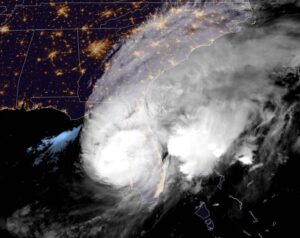
Hurricane Milton is expected to cause over $100 billion in insurance claims, creating even more challenges for Florida homeowners in obtaining insurance. On top of that, the cost to the public and government is projected to exceed an additional $50 billion, adding to the financial strain on taxpayers and the state. Much of the damage from Milton came from the powerful winds and the unprecedented number of tornadoes it spawned. The eastern side of Florida saw the most severe impacts, with over 30 tornadoes causing extensive damage and the highest number of fatalities and potential financial losses.

Citizens Property Insurance Corporation, Florida’s state-backed insurer, has become the largest insurance provider in the state due to the exodus of private insurance companies. Many companies are pulling out due to increasing risks from hurricanes and other extreme weather events driven by climate change. Citizens, however, faces significant financial strain. As hurricane damage grows more frequent and severe, Florida taxpayers are likely to face an unsustainable burden in covering reconstruction costs. The situation highlights the ongoing vulnerability of Florida’s real estate market, and if you haven’t already sold property in the state, it might be a case of better late than never.

The growing frequency and intensity of storms, combined with the financial instability of the insurance industry in Florida, make future investments in the region highly risky. As climate change continues to escalate, the risks are only expected to worsen.

It’s important to note that the degree of risk varies by region and property type. Some areas may experience more immediate and severe impacts, while others may be more resilient. Assessing and mitigating these risks require a comprehensive understanding of local climate vulnerabilities and the implementation of strategies to enhance property resilience. Policymakers, real estate professionals, and property owners are increasingly recognizing the importance of addressing climate risks to ensure the long-term sustainability and value of real estate assets. Thus, our recommendation to evacuate Florida now (i.e. Managed Retreat).

* Our climate model employs chaos theory to comprehensively consider human impacts and projects a potential global average temperature increase of 9℃ above pre-industrial levels.

Hurricane Milton / October 9, 2024

How is All Real Estate at Risk From Climate Change?

Flood Insurance

The Human Induced Climate Change Experiment