bookmark_borderDating The Calendar

The history of calendars goes back thousands of years. The oldest calendar is a Lunar Calendar found in Aberdeenshire, Scotland, from 8,000 BC.

The modern day calendar is known as the Gregorian calendar. This calendar is a refinement made in 1582 to the Julian calendar to help Easter align with the time of the year in which the First Council of Nicaea occurred.

“The Gregorian calendar is a solar calendar. A regular Gregorian year consists of 365 days and in a leap year, an intercalary or leap day is added as 29 February making the year 366 days. Normally a leap year occurs every 4 years, but the Gregorian calendar omits 3 leap days every 400 years, unlike the Julian calendar, which retains those leap days.”

The Gregorian calender is one of the most universal standards in the world making New Year’s Day the world’s most celebrated public holiday.

bookmark_borderThe *White Army* Militia Marches

SOUTH SUDAN, AFRICA — A group of armed militants is marching to fight in the growing crisis in South Sudan. The White Army is named from the white ash used to cover their bodies. They are a group of disgruntled young and under-employed men.

The Washington Post reports, “Twenty-five thousand young men who make up a tribal militia known as the “White Army” are marching toward a contested state capital in South Sudan, an official said Saturday, dimming hopes for a cease-fire.”

However, the BBC reports that the group is not made up of a tribe or ethnic group.

Wikipedia defines the White Army as follows: The Nuer White Army, sometimes decapitalised as the “white army”, is a semi-official name for a militant organisation formed by the Nuer people of central and eastern Greater Upper Nile in modern-day South Sudan as early as 1991. According to the Small Arms Survey, it arose from the 1991 schism within the Sudan People’s Liberation Movement/Army (SPLM/A) for the dual purpose of defending Nuer cattle herds from neighbouring groups and fighting in the Second Sudanese Civil War between the SPLM/A and the Sudanese government.

The White Army was so named due to the Nuer practice of smearing one’s skin with a light-coloured ash as a protection against biting insects, according to a Small Arms Survey report published in June 2007, though other sources contend the name was merely intended to draw a distinction between the Nuer militia and the Sudan Armed Forces.

The BBC reports they don’t know exactly why the White Army is on the move at this time. They report, “Thousands of youths loyal to South Sudanese rebel leader Riek Machar are marching on the strategic town of Bor, according to government sources.

Government troops are currently in control of Bor, the capital of Jonglei state they had taken from the rebels.

The government has offered to cease hostilities, but an army spokesman told the BBC that its forces were still battling over oilfields in the north.

At least 1,000 people have died since fighting broke out earlier this month.

More than 121,600 are believed to have fled their homes.

What began as a power struggle between Mr Machar and President Salva Kiir has taken on overtones of a tribal conflict. The Dinka, to which Mr Kiir belongs, are pitted against the Nuer, from which Mr Machar hails.

The White Army is a name that inspires fear in South Sudan.

This loose grouping of armed youth from the Nuer ethnic group was at least partly responsible for the 1991 Bor massacre, in which at least 2,000 people were killed. Then, the White Army fought alongside Riek Machar, who had split away from the main southern Sudanese rebel group fighting Khartoum.

In 2011 and 2012 a new incarnation of the White Army went on the rampage, killing hundreds of civilians from the Murle ethnic group. At the time, Mr Machar was vice president – and although he travelled to meet them, he was unable to stop their advance.

Now the South Sudanese government says thousands of White Army members are marching on Bor – under Mr Machar’s command. This is an explosive claim – particularly as Mr Machar is under international pressure to stop fighting and begin negotiations by the end of the year.

Tens of thousands of civilians have sought refuge in UN camps and reinforcements have been arriving to give them extra protection.

Joe Contreras, a spokesman for the UN Mission in South Sudan, told the BBC World Service Newshour programme that the reported advance of the armed youths was a dangerous development.”

bookmark_borderInternational Year of Crystallography

NEW YORK, NY — The United Nations has declared 2014 to be the year of crystallography.

The International Year of Crystallography (IYCr2014) will be launched during an opening ceremony to be held on 20 and 21 January 2014 at UNESCO Headquarters (Paris). This international launch will be a showcase for crystallography and crystallographers, featuring eminent scientists, industrialists and personalities from around the world. Keynote lectures will be ensured at this occasion by Professor Brian Kobilka, 2012 Nobel Prize in Chemistry, on his vision of crystallography and its role in elucidating biological mechanisms; and by Professor Jenny Glusker on “Crystallography past, present and future”.
The opening ceremony will also comprise an interactive session called “Young Talented Crystallographers of the World”, bringing together promising young minds from all the regions of the globe, and a special session called “Crystallography in the BRICS countries – success stories and roles for development”, which will feature key speeches by high officials and presidents of the National Science Academies of the BRICS countries (Brazil, Russia, India and China) on their leadership positions in areas such as innovations in pharmaceuticals, materials science, high energy physics, nanotechnology, mineralogy and others.

A special session of the launch event will also be dedicated to the immense contribution to crystallography of Arab scientists of the Islamic golden age, through presentation of crystallography-related symmetries in art, historical artifacts and architecture.

bookmark_border3rd World Countries from the Third Planet

Space Monkey From Iran

EARTH — The space race continues. Iran claims to have successfully sent its second monkey into space. “In total, this is the 2nd monkey sent into space and returned in perfect health to Iran. I congratulate the Leader, scientists and the nation,” said Iranian President Hassan Rouhani.

At the same time, China became the third country to land a rocket on the moon. “It’s still a significant technological challenge to land on another world,” said Peter Bond, consultant. “Especially somewhere like the moon, which doesn’t have an atmosphere so you can’t use parachutes or anything like that. You have to use rocket motors for the descent and you have to make sure you go down at the right angle and the right rate of descent and you don’t end up in a crater on top of a large rock.”

bookmark_borderForaging For Food in the Winter

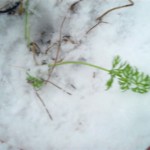
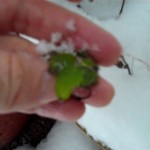
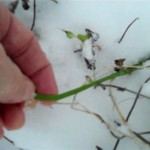
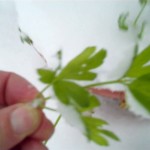
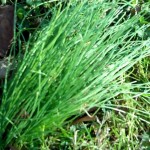
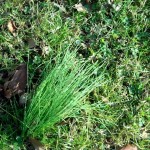
Winter foraging can be one of the toughest challenges; however, if you do a little preparation in the fall, the buried treasures will yield healthy results.

Find out more from the Guide To Edible Plants’ Foraging for Food in the Winter.

Chives, Garlic Greens, Mint, Carrot Greens, Parsley

bookmark_borderMiss Christmas

Acoustic Guitar
Acoustic Guitar

Miss Christmas is a collection of songs and music videos written and recorded for Christmas 2013.

Icicles
Christmas Ditty
Cheer Cheer
December Freeze
Birthday Cake Recipe
The First Christmas Eve Night
Xmas Mojo / Christmas Tradition
King With No Name
Vision Collision
Season Of Giving
Oy vey Holiday
Gift Shopping
Why Not?
Shout!
Come And Get It!
Home For Christmas
Angels Agent
Fall Into Winter
Get Your Wings
In The Air
The State Meant
Yuletidal Wave
Into The Light
Next Door Neighbor
Soulidarity
Krampus The Christmas Demon
The New Year Mad Math Method

Christmas Treasures

bookmark_borderComet ISON

Comet Ison
Comet ISON comes in from the bottom right and moves out toward the upper right, getting fainter and fainter, in this time-lapse image from the ESA/NASA Solar and Heliospheric Observatory. The image of the sun at the center is from NASA’s Solar Dynamics Observatory.
Image Credit:
ESA/NASA/SOHO/SDO/GSFC

NASA — Did comet Ison survive its trip around the sun? After several days of continued observations, scientists continue to work to determine and to understand the fate of Comet ISON: There’s no doubt that the comet shrank in size considerably as it rounded the sun and there’s no doubt that something made it out on the other side to shoot back into space. The question remains as to whether the bright spot seen moving away from the sun was simply debris, or whether a small nucleus of the original ball of ice was still there. Regardless, it is likely that it is now only dust.

Comet ISON, which began its journey from the Oort Cloud some 3 million years ago, made its closest approach to the sun on Nov. 28, 2013. The comet was visible in instruments on NASA’s Solar Terrestrial Relations Observatory, or STEREO, and the joint European Space Agency/NASA Solar and Heliospheric Observatory, or SOHO, via images called coronagraphs. Coronagraphs block out the sun and a considerable distance around it, in order to better observe the dim structures in the sun’s atmosphere, the corona. As such, there was a period of several hours when the comet was obscured in these images, blocked from view along with the sun. During this period of time, NASA’s Solar Dynamics Observatory could not see the comet, leading many scientists to surmise that the comet had disintegrated completely. However, something did reappear in SOHO and STEREO coronagraphs some time later – though it was significantly less bright.

Whether that spot of light was merely a cloud of dust that once was a comet, or if it still had a nucleus – a small ball of its original, icy material – intact, is still unclear. It seems likely that as of Dec. 1, there was no nucleus left. By monitoring its changes in brightness over time, scientists can estimate whether there’s a nucleus or not, but our best chance at knowing for sure will be if the Hubble Space Telescope makes observations later in December 2013.

Regardless of its fate, Comet ISON did not disappoint researchers. Over the last year, observatories around the world and in space gathered one of the largest sets of comet observations of all time, which should provide fodder for study for years to come. The number of space-based, ground-based, and amateur observations were unprecedented, with twelve NASA space-based assets observing over the past year.

VIDEO
Comet ISON is shown approaching the sun and curving away from it in this movie containing imagery from both NASA’s Solar Terrestrial Relations Observatory and the joint ESA/NASA Solar and Heliospheric Observatory from November 2013. ISON dims dramatically as it streams away from the sun.

bookmark_borderBitcoins

Bitcoin is a virtual currency that is open source P2P money. According to the Bitcom website: “Bitcoin uses peer-to-peer technology to operate with no central authority or banks; managing transactions and the issuing of bitcoins is carried out collectively by the network. Bitcoin is open-source; its design is public, nobody owns or controls Bitcoin and everyone can take part. Through many of its unique properties, Bitcoin allows exciting uses that could not be covered by any previous payment system.”

Wikipedia says, “In November 2008, a paper was posted on the internet under the name Satoshi Nakamoto titled Bitcoin: A Peer-to-Peer Electronic Cash System. This paper detailed methods of using a peer-to-peer network to generate what was described as “a system for electronic transactions without relying on trust”. In January 2009, the Bitcoin network came into existence with the release of the first open source Bitcoin client and the issuance of the first bitcoins, with Satoshi Nakamoto mining the first block of bitcoins ever (known as the “genesis block”), which had a reward of 50 bitcoins. The value of the first bitcoin transactions were negotiated by individuals on the bitcointalk forums with one notable transaction involving a 10,000 BTC pizza.”

Since then they inventor has gone underground. In theory, Bitcoins circulation will roll out over time without a centralized creator.

The value of a Bitcoin in dollars:

 
Date price for 1 BTC Notes
Jan 2009 – Jan 2010 basically none no exchanges or market, users were mainly cryptography fans, who were sending bitcoins for low or no value
Feb 2010 – May 2010 less than $0.01 user “laszlo” did first transaction – bought 2 pizzas for 10,000 BTC. User “SmokeTooMuch” auctioned 10,000 BTC for $50 (cumulatively), but no buyer was found.
June 2010 $0.08 in five days, the price grew 1000%, rising from $0.008 to $0.08 for 1 bitcoin
Feb 2011 – April 2011 $1 Bitcoin takes parity with US dollar
July 8th 2011 $31 top of first “bubble”, followed by the first price drop
Dec 2011 $2 minimum after few months
Dec 2012 $13 slowly rising for a year
April 11th 2013 $266 top of a price rally, during which the value was growing by 5-10% daily.
May 2013 $130 basically stable, again slowly rising.
June 2013 $100 in June slowly dropping to $70, but rising in July to $110
Nov 2013 $350 – $900 from October $150-$200 in November exponentially rising to $400, then $600, eventually reaching $900 on 11/19/2013.

In October of 2013, the FBI seized approximately 173,991 Bitcoins worth over $33.6 million:

Preet Bharara, the United States Attorney for the Southern District of New York; George Venizelos, the Assistant Director in Charge of the New York Office of the Federal Bureau of Investigation (“FBI”); Brian R. Crowell, the Special Agent in Charge of the New York Field Division of the Drug Enforcement Administration (“DEA”); and Toni Weirauch, the Special Agent in Charge of the New York Field Office of the Internal Revenue Service, Criminal Investigation (“IRS-CI”), today announced the unsealing of a protective order authorizing the seizure of approximately 144,336 Bitcoins found on computer hardware belonging to ROSS WILLIAM ULBRICHT, a/k/a “Dread Pirate Roberts,” a/k/a “DPR,” a/k/a “Silk Road,” the alleged owner and operator of “Silk Road,” a hidden website designed to enable its users to buy and sell illegal drugs and other unlawful goods and services anonymously and beyond the reach of law enforcement. Along with a prior seizure of approximately 29,655 Bitcoins, federal law enforcement agents have now seized a total of approximately 173,991 Bitcoins in connection with the Silk Road case, which, at today’s Bitcoin exchange rate, are worth over $33.6 million.

The Bitcoins have been seized in connection with a civil action previously filed in Manhattan federal court on September 30, 2013, seeking the forfeiture of all assets of Silk Road, including its website and all of its Bitcoins because those assets allegedly were used to facilitate money laundering and constitute property involved in money laundering. Also in connection with that civil action, federal law enforcement agents previously seized the Silk Road website itself. In addition to the civil action, a criminal complaint against ULBRICHT was filed in Manhattan federal court charging him with one count of narcotics conspiracy, one of count of conspiracy to commit computer hacking, and one count of money laundering conspiracy. ULBRICHT was arrested in San Francisco, California, on October 1, 2013, he was subsequently ordered detained, and he is expected to appear in Manhattan federal court within the next few weeks. ULBRICHT has also been charged in a separate indictment pending in federal court in Baltimore, Maryland.

Manhattan U.S. Attorney Preet Bharara said: “As alleged, Ross William Ulbricht operated Silk Road—a global illegal cyber business designed to broker criminal transactions—protected by a presumed anonymity and motivated by profit. With his arrest and our subsequent seizures of millions of dollars worth of Silk Road’s Bitcoins, we have sent a clear message to him and everyone else running criminal enterprises on the dark web: we are determined and equipped to hold you to account.”

FBI Assistant Director in Charge Venizelos said: “As alleged in court documents, the creator of Silk Road, Ross William Ulbricht, created a black market bazaar for drugs and illegal services where customer service and anonymity were added value to shoppers and sellers. This market generated millions in illegal profits for Ulbricht in the form of Bitcoins. However, what Ulbricht didn’t count on was that Silk Road’s coffers would not be out of reach of the FBI and our partners to seize. We want to thank our law enforcement partners here and abroad for their support and work on this case.”

DEA Special Agent in Charge Brian R. Crowell said: “The Silk Road underground website was the global venue for drug trafficking and money laundering, producing millions in dirty profits. DEA and others followed the money throughout this investigation, leading to this seizure. The website was used by drug dealers to put illicit drugs into our communities and literally at our doorsteps nationwide. 200,000 people die annually from drug abuse throughout the world, and our investigators worked tirelessly to bring to justice a facilitator who made every effort to hide behind highly encrypted technology while providing 24/7 anonymous services to global drug traffickers and money launderers. Ulbricht’s goals were to make millions from drug use and money laundering while protecting the world’s criminals from law enforcement. Our goal is to shut these people down and protect our children and DEA will continue to be relentless in this effort.”

IRS Special Agent in Charge Toni Weirauch said: “This seizure sends a clear notice to those who think they can commit crimes and conceal the fruits of their criminal activities in digital anonymity. The resolve of the government to uncover criminality and identify criminal proceeds is strong and its investigative capabilities are magnified when different federal agencies, each with its own areas of expertise, unite to achieve a common objective.”

According to the allegations in the complaint, the civil forfeiture action, and the application and protective order unsealed today in Manhattan federal court:

Background on Silk Road and ROSS WILLIAM ULBRICHT

Since approximately January 2011, ROSS WILLIAM ULBRICHT owned and operated the underground website known as Silk Road, which emerged as the most sophisticated and extensive criminal marketplace on the Internet. Throughout the time that ULBRICHT controlled Silk Road, it served as a sprawling black-market bazaar where unlawful goods and services, including illegal drugs of virtually every variety, were bought and sold regularly by the site’s users.

During its approximately two-and-a-half years in operation, Silk Road was used by several thousand drug dealers and other unlawful vendors to distribute hundreds of kilograms of illegal drugs and other unlawful goods and services to well over a hundred thousand buyers, and to launder hundreds of millions of dollars derived from these unlawful transactions. All told, the site generated sales revenue of more than 9.5 million Bitcoins and collected commissions from these sales totaling more than 600,000 Bitcoins. Although the value of Bitcoins has varied over time, these figures are roughly equivalent to approximately $1.2 billion in sales and approximately $80 million in commissions, using the Bitcoin exchange rate in effect when the Silk Road website was seized.

ULBRICHT deliberately operated Silk Road as an online criminal marketplace designed to enable its users to buy and sell drugs and other illegal goods and services anonymously and outside the reach of law enforcement. He sought to anonymize transactions on Silk Road in two principal ways. First, ULBRICHT operated Silk Road on what is known as “The Onion Router,” or “Tor” network, a special network of computers on the Internet, distributed around the world, designed to conceal the true IP addresses and therefore the identities of the networks’ users. The Tor network is designed to make it practically impossible to physically locate the computers hosting or accessing websites on the network. Second, ULBRICHT required that all transactions on Silk Road be paid with Bitcoins, an electronic currency that is as anonymous as cash. Although Tor and Bitcoins have known legitimate uses, they were intentionally used by Silk Road to further the site’s unlawful goals.

The Silk Road website provided a sales platform that allowed vendors and buyers using the site to conduct transactions online. Silk Road is believed to have been visited by hundreds of thousands of unique users from countries across the globe, nearly 30 percent of whom indicated upon registering on the site that they were from the United States. The illegal nature of the items sold on the website was readily apparent to any user browsing through its offerings. Indeed, the vast majority of the items for sale on Silk Road were illegal drugs, which were openly advertised as such on the site. As of September 23, 2013, Silk Road had nearly 13,000 listings for controlled substances, listed under such categories as “Cannabis,” “Dissociatives,” “Ecstasy,” “Intoxicants,” “Opioids,” “Precursors,” “Prescription,” “Psychedelics,” and “Stimulants.” From November 2011 to September 2013, law enforcement agents made more than 100 individual undercover purchases of controlled substances from Silk Road vendors. These purchases included heroin, cocaine, ecstasy, and LSD, among other illegal drugs, and were filled by vendors believed to be located in more than ten different countries, including the United States, Germany, the Netherlands, Canada, the United Kingdom, Spain, Ireland, Italy, Austria, and France.

In addition to illegal narcotics, other illicit goods and services were also openly bought and sold on Silk Road. For example, as of September 23, 2013, there were: 159 listings under the category “Services,” most of which offered computer-hacking services, such as a listing by a vendor offering to hack into social networking accounts of the customer’s choosing; 801 listings under the category “Digital goods,” including malicious software, hacked accounts at various online services, and pirated media content; and 169 listings under the category “Forgeries,” including offers to produce fake driver’s licenses, passports, Social Security cards, utility bills, credit card statements, car insurance records, and other forms of false identification documents.

The only form of payment accepted on Silk Road was Bitcoins, an anonymous, decentralized form of electronic currency, existing entirely on the Internet and not in any physical form. Silk Road’s payment system essentially consisted of an internal Bitcoin “bank,” where every Silk Road user had to hold an account in order to conduct transactions on the site. Every Silk Road user had at least one Silk Road Bitcoin address associated with the user’s Silk Road account. These addresses were stored on wallets maintained on servers controlled by Silk Road. In order to make a purchase on Silk Road, a user had to obtain Bitcoins (typically through a Bitcoin exchanger) and then send those Bitcoins to a Bitcoin address associated with his or her Silk Road account. Once a user’s account was funded in this way, the user was free to make purchases on Silk Road. When a purchase was made, the user’s Bitcoins were first transferred to an escrow account maintained by Silk Road, pending completion of the transaction. When the transaction was completed, the buyer’s Bitcoins were transferred from the escrow account to the Silk Road Bitcoin address of the vendor involved in the sale. Silk Road also used a so-called “tumbler” which, as the site explained, “sen[t] all payments through a complex, semi-random series of dummy transactions…making it nearly impossible to link your payment with any coins leaving the site.” Silk Road charged a commission for every transaction conducted by its users. The commission rate varied depending on the size of the transaction, but generally ranged from 8 to 15 percent of the total sales price.

Using the online moniker “Dread Pirate Roberts,” or “DPR,” ULBRICHT controlled and oversaw every aspect of Silk Road. ULBRICHT, for example, maintained the computer infrastructure and programming code underlying the Silk Road website; determined vendor and customer policies, including deciding what can be sold on the site; managed a small staff of online administrators who assisted with the day-to-day operation of the site; and controlled the enormous profits generated from the operation of the site. ULBRICHT did so while fully aware of the illegal nature of the enterprise; indeed, he deliberately sought to ensure the anonymity of the drug dealers and other illegal vendors operating on the site, as well as to conceal his own identity as the site’s owner and operator.

ULBRICHT was also willing to use violent means to protect the Silk Road enterprise and the anonymity of its users. For example, in March and April 2013, ULBRICHT solicited a murder-for-hire of a Silk Road vendor, known as “FriendlyChemist,” who was threatening to reveal the real names and addresses of a long list of Silk Road users unless ULBRICHT paid him $500,000. Upon receiving the threat from “FriendlyChemist” to expose the names of Silk Road users, ULBRICHT wrote to another Silk Road user, telling that user that “FriendlyChemist” is “causing me problems,” and adding: “I would like to put a bounty on his head if it’s not too much trouble for you. What would be an adequate amount to motivate you to find him? Necessities like this do happen from time to time for a person in my position.” ULBRICHT later explained that the threat by “FriendlyChemist” to expose the names of Silk Road users “is unforgivable to me. Especially here on Silk Road, anonymity is sacrosanct.” However, there is no record of a homicide at or about that time in the area where “FriendlyChemist” supposedly lived.

The Seizure of Computer Hardware Belonging to ROSS WILLIAM ULBRICHT

ROSS WILLIAM ULBRICHT was arrested in San Francisco, California, on October 1, 2013. At the time of his arrest, ULBRICHT was using a laptop computer, which was seized in connection with his arrest and subsequently searched pursuant to a search warrant. ULBRICHT’s residence was also searched on October 1, 2013, pursuant to a search warrant, and federal law enforcement agents conducting that search found several pieces of computer hardware belonging to ULBRICHT (collectively, along with ULBRICHT’s laptop, the “computer hardware”). Through forensic analysis of the computer hardware, federal law enforcement agents recovered a Bitcoin wallet containing approximately 144,336 Bitcoins.

CHINA
In December 2013, China banned the use of the Bitcoin. Although the value of Bitcoin’s did depreciate by 10% on the news, it still remained over $1,000.00 USD.

On December 18, 2013, China shutdown trading of a Chinese Bitcoin exchange and the value dropped by 50%.

“The Bitcoin bubble has burst and China was the pin that popped it,” writes Mark Williams of Boston University. “The latest move by China puts into question the viability of Bitcoin as a currency alternative and as a liquid and safe commodity.”

bookmark_borderExtreme Weather Events: Typhoon Haiyan / Yolanda

“The climate crisis is madness. We can stop this madness.”

Philippines — One of the world’s most severe storms hit the Philippines. The damage is so massive that it has taken several days just to asses the situation. It appears as though thousands of people lost their lives. Complete towns have been wiped out. The increased intensity of weather events has been linked to global warming.

Typhoon Haiyan by NASA

AFFECTED POPULATION

  • A total of 2,095,262 families (9,679,059 persons) 7,251 barangays in 471 municipalities and 51 cities in 41 provinces of Regions IV-A, IV-B, V, VI, VII, VIII, X, XI and Caraga.
  • A total of 91,657 families (433,300 persons) are being served inside 1,444 evacuation centers.

“In some cases the devastation has been total,” said Secretary to the Cabinet Rene Almendras.

“Reaching the worst affected areas is very difficult, with limited access due to the damage caused by the typhoon to infrastructure and communications,” said UNICEF Philippines Representative Tomoo Hozumi.

“We are seeing a lot of dead throughout the province,” said Brig. Gen. Domingo Tutaan Jr., spokesman for the Philippine armed forces. “I have been in the service for 32 years, and I have been involved with a lot of calamities. I don’t have words to describe what our ground commanders are seeing in the field.”

“Please tell my family I’m alive,” survivor Erika Mae Karakot said. “We need water and medicine because a lot of the people we are with are wounded. Some are suffering from diarrhea and dehydration due to shortage of food and water.”

“We’re afraid that it’s going to get dangerous in town because relief goods are trickling in very slow,” said Bobbie Womack, an American missionary. “I know it’s a massive, massive undertaking to try to feed a town of over 150,000 people. They need to bring in shiploads of food.

“Imagine America, which was prepared and very rich, still had a lot of challenges at the time of Hurricane Katrina, but what we had was three times more than what they received,” said Gwendolyn Pang.

The Philippines government has firmly connected the super typhoon Haiyan with climate change, and urged governments meeting in Poland on Monday to take emergency action to resolve the deadlocked climate talks.

“We cannot sit and stay helpless staring at this international climate stalemate. It is now time to take action. We need an emergency climate pathway,” said Yeb Sano, head of the government’s delegation to the UN climate talks, in an article for the Guardian, in which he challenged climate sceptics to “get off their ivory towers” to see the impacts of climate change firsthand.

“The climate crisis is madness. We can stop this madness. Right here in Warsaw. Typhoons such as Haiyan and its impacts represent a sobering reminder to the international community that we cannot afford to procrastinate on climate action..

“Science tells us that simply, climate change will mean more intense tropical storms. As the Earth warms up, that would include the oceans. The energy that is stored in the waters off the Philippines will increase the intensity of typhoons and the trend we now see is that more destructive storms will be the new norm.”.

Philippines Typhoon Devastation
Philippines Typhoon Devastation / AP

bookmark_borderCircadian Rhythms

National Institute of General Medical Sciences —

What are circadian rhythms?

Circadian rhythms are physical, mental and behavioral changes that follow a roughly 24-hour cycle, responding primarily to light and darkness in an organism’s environment. They are found in most living things, including animals, plants and many tiny microbes. The study of circadian rhythms is called chronobiology.

Circadian rhythm.

Are circadian rhythms the same thing as biological clocks?

No, but they are related. Our biological clocks drive our circadian rhythms.

What are biological clocks?

The biological clocks that control circadian rhythms are groupings of interacting molecules in cells throughout the body. A “master clock” in the brain coordinates all the body clocks so that they are in synch.

What is the master clock?

The “master clock” that controls circadian rhythms consists of a group of nerve cells in the brain called the suprachiasmatic nucleus, or SCN. The SCN contains about 20,000 nerve cells and is located in the hypothalamus, an area of the brain just above where the optic nerves from the eyes cross.

Do circadian rhythms have a genetic component?

Yes. Researchers have already identified genes that direct circadian rhythms in people, fruit flies, mice, fungi and several other model organisms used for studying genetics.

Does the body make and keep its own circadian rhythms?

Circadian rhythms are produced by natural factors within the body, but they are also affected by signals from the environment. Light is the main cue influencing circadian rhythms, turning on or turning off genes that control an organism’s internal clocks.

How do circadian rhythms affect body function and health?

Circadian rhythms can influence sleep-wake cycles, hormone release, body temperature and other important bodily functions. They have been linked to various sleep disorders, such as insomnia. Abnormal circadian rhythms have also been associated with obesity, diabetes, depression, bipolar disorder and seasonal affective disorder.

How are circadian rhythms related to sleep?

Circadian rhythms are important in determining human sleep patterns. The body’s master clock, or SCN, controls the production of melatonin, a hormone that makes you sleepy. Since it is located just above the optic nerves, which relay information from the eyes to the brain, the SCN receives information about incoming light. When there is less light—like at night—the SCN tells the brain to make more melatonin so you get drowsy.

How are circadian rhythms related to jet lag?

Jet lag occurs when travelers suffer from disrupted circadian rhythms. When you pass through different time zones, your body’s clock will be different from your wristwatch. For example, if you fly in an airplane from California to New York, you “lose” 3 hours of time. So when you wake up at 7:00 a.m., your body still thinks it’s 4:00 a.m., making you feel groggy and disoriented. Your body’s clock will eventually reset itself, but this often takes a few days.

Sleeping flies.

How do researchers study circadian rhythms?

Scientists can learn about circadian rhythms by studying humans or by using model organisms that have similar “clock” genes. Basic researchers doing these experiments can control the subject’s environment by altering light and dark periods and then look for changes in gene activity or other molecular signals.

How does circadian rhythm research contribute to human health?

Understanding what makes biological clocks tick may lead researchers to treatments for sleep disorders, jet lag and other health problems. Learning more about the genes responsible for circadian rhythms will also enhance our understanding of biological systems and the human body.

Learn more:
Tick Tock: New Clues About Biological Clocks and Health
A Light on Life’s Rhythms: Profile of Cara Altimus

NIGMS is a part of the National Institutes of Health that supports basic research to increase our understanding of life processes and lay the foundation for advances in disease diagnosis, treatment and prevention. For more information on the Institute’s research and training programs, see http://www.nigms.nih.gov.

Content reviewed November 2012