bookmark_borderCOVID in Your Genes

by Daniel Brouse
email help@membrane.com
May 30, 2021

COVID gets into your genes and makes alterations. Anybody that has “Long Haulers” (Post Acute COVID-19 Syndrome) can tell you about some of the resulting symptoms. COVID-19 Induced Secondary Pellagra (CISP) is one of the outcomes. CISP occurs when COVID changes your genome to chronically increase the breakdown of NAD+ and simultaneously decrease the production of NAD+ (nicotinamide adenine dinucleotide). NAD+ is in every cell and is involved in cell creation, maintenance, metabolism, and regulating cell processes. Without the ability to maintain NAD+ levels, the body’s immune system is severely compromised. For instance, you can not properly metabolize Vitamin C, Vitamin D, and zinc without NAD+. No matter how large of a megadose you take, it will not be metabolized; therefore, it will not be utilized in your immune response to any pathogen.

Not only will inadequate NAD+ levels impact your immune response, lack of NAD+ causes significant symptoms due to lack of cell regulation. A COVID NAD+ deficiency can cause a lack of serotonin regulation resulting in a lack of body temperature regulation. Dr. Ade Wentzel added, “NAD+ deficiency causes a lack of Tryptophan which is used for serotonin production and hence temperature…” Lack of cell and cytokine regulation also causes headaches, brain fog, anxiety, stress, loss of taste or smell, dizziness, fatigue, muscle aches, dermatitis, diarrhea, dementia, and death. Any activity that causes inflammation or a demand for NAD+ will result in more acute symptoms. Exercise and exertion of any kind exacerbates the condition.

The types of COVID-19 genome modifications are known as epigenetics. “Unlike genetic changes, epigenetic changes are reversible and do not change your DNA sequence, but they can change how your body reads a DNA sequence,” explains the CDC. At this time, we do not how many many genome modifications COVID makes nor how long the modifications will last.

Thousands of CISP patients have been treated successfully with a modified pellagra therapy; however, after a year of treatment, NAD+ production has not returned to normal for most patients.

In addition to genome modifications to NAD+, COVID also makes other changes. Brain fog, dizziness, tinnitus, ear aches, vertigo, and pressure in the ears are some of the symptoms associated with epigenetic changes in the upregulation of Indoleamine 2,3-dioxygenase (IDO). “IDO is an immune checkpoint molecule in the sense that it is an immunomodulatory enzyme produced by alternatively activated macrophages and other immunoregulatory cells. IDO is known to suppress T and NK cells, generate Tregs and myeloid-derived suppressor cells, and also supports angiogenesis.’ (Wikipedia)

Dr. Ade Wentzel said, “The epigenetic upregulation of IDO will determine the amount of quinolinic acid. Quinolinic acid comes from the kynurenine pathway. If the viscosity of the whole middle ear is increased then the ability to equalize will be less… same as having a cold. So, the ear isn’t equalizing correctly on increasing pressure. The same as when you land in a plane. If the viscosity in the semicircular canals is increased, the otoliths may well be lagging causing the vertigo. The otoliths usually “Float” in the semicircular canal and trigger tiny sensory hairs that allow you to detect position.”

It is possible that changes in the weather that cause changes in atmospheric pressure (Lows and Highs) may result in the same problems.

There are many other Epifactors and Transcription Factors caused by COVID. “Using integrative analyses of gene co-expression networks and de-novo pathway enrichment, we characterize different gene modules and protein pathways enriched with Transcription Factors or Epifactors relevant for SARS-CoV-2 infection. We identified EP300, MOV10, RELA, and TRIM25 as top candidates, and more than 60 additional proteins involved in the epigenetic response during viral infection that has therapeutic potential. Our results show that targeting the epigenetic machinery could be a feasible alternative to treat COVID-19.” (Nature)

“We found that exposure to the SARS-CoV-2 spike protein alone was enough to change baseline gene expression in airway cells,” said Evans who is based in the laboratory of Sharilyn Almodovar, Ph.D., at the Texas Tech University Health Sciences Center.

“This suggests that symptoms seen in patients may initially result from the spike protein interacting with the cells directly.”

The researchers analyzed expression in genes with functions related to oxidative and osmotic stress, cell death, the inflammatory response, and DNA damage, among others. They found that expression of CCL2, IL1A, IL1B, and MMP9 showed up to two-fold changes in expression after recovery.

All of these genes play a role in inflammation. CCL2 levels are increased in neuroinflammatory disorders such as epilepsy and Alzheimer’s, as well as in some autoimmune diseases like psoriasis, whereas MMP9 is needed for wound healing and recovery from lung damage.

IL1A and IL1B are part of the interleukin family of cytokines and directly produce inflammation and promote fever, as well as playing a regulatory role in the greater immune response. —
— Clinical OMICs

Structural analyses have elucidated hot spots in viral binding domains, mutations, and specific proteins in the host such as the receptor angiotensin-converting enzyme 2 (ACE2) and the transmembrane protease serine 2 (TMPRSS2) to be implicated in cell entry and viral infectivity. Furthermore, epigenetic changes that regulate chromatin structure have shown a major impact in genome stabilization and maintenance of cellular homoeostasis and they have been implicated in the pathophysiology of the virus infection. Epigenetic research has revealed that global DNA methylation along with ACE2 gene methylation and post-translational histone modifications may drive differences in host tissue-, biological age- and sex-biased patterns of viral infection. Moreover, modulation of the host cells epigenetic landscape following infection represents a molecular tool used by viruses to antagonize cellular signalling as well as sensing components that regulate the induction of the host innate immune and antiviral defence programmes in order to enhance viral replication and infection efficiency.
— Epigenetic mechanisms regulating COVID-19 infection (NIH)

“Viral proteins encoded by SARS-CoV-2 disrupt critical components of human cells’ molecular machinery and disable responses to infection. Researchers in the US describe how specific viral proteins bind to human RNAs involved in RNA splicing, protein translation, and protein trafficking, and in doing so suppress the host cell’s coordination of a key antiviral defense known as the type I interferon response.”
— SARS-CoV-2 Disables Key Components of Human Cells’ Defense System

“[COVID-19] interferes with protein trafficking to the cell membrane upon infection. Disruption of each of these essential cellular functions acts to suppress the interferon response to viral infection. Our results uncover a multipronged strategy utilized by SARS-CoV-2 to antagonize essential cellular processes to suppress host defenses.
— SARS-CoV-2 Disrupts Splicing, Translation, and Protein Trafficking to Suppress Host Defenses

COVID-19 genetic changes have been found to cause Reverse-transcribed SARS-CoV-2 RNA.

Prolonged detection of severe acute respiratory syndrome coronavirus 2 (SARS-CoV-2) RNA and recurrence of PCR-positive tests have been widely reported in patients after recovery from COVID-19, but some of these patients do not appear to shed infectious virus. We investigated the possibility that SARS-CoV-2 RNAs can be reverse-transcribed and integrated into the DNA of human cells…
— Reverse-transcribed SARS-CoV-2 RNA can integrate into the genome of cultured human cells and can be expressed in patient-derived tissues (PNAS)

How many different modifications to your genes does COVID-19 make? How long will the alterations last? We don’t know.

“Not all epigenetic changes are permanent. Some epigenetic changes can be added or removed in response to changes in behavior or environment.” Most of a person’s lifetime epigenetic changes have to do with aging. Infections and behaviors, like smoking, also can cause epigentic changes. Most of a smoker’s epigenetic changes revert back after a year of not smoking. Perhaps the COVID epigentic changes will go away over time. Unfortunately, COVID also does insertions. Insertions can not be reverted. The biggest unknown for COVID is the possibility — “if the insertion is in a tumor suppressor, for example, and disrupts that gene, then cancer can be a concern.”

Most experts are of the opinion that “the preexisting state may well determine the final outcome when there is genetic upregulation. COVID is choosing those that may well already have some subclinical symptoms of upregulated pathways.” In the case of cancer and tumor suppression, it appears COVID chooses people that have reduced P53 just like other coronavirus do (P53 is the tumor suppression gene.) Therefore, COVID is unlikely to cause insertions into the gene and be an additional cancer risk.

We do know there is upregulation of genes by COVID and these genes are related to abnormal T-cell, macrophage function, and abnormal humoral immunity. The epigenetic changes related to NAD+ have reverted in some cases after 13 months of treatment. The longer one has left it before getting help the harder and longer it takes for the epigenetics to revert. Currently, we are monitoring cases of epigenetic reversion as more people reach 12 months of treatment.

Post–COVID-19 Associated with Immune Cell Infiltration and Altered Gene Expression
COVID causes long-term immune dysfunction. “These findings indicate that T cell–mediated inflammation persists in the olfactory epithelium long after SARS-CoV-2 has been eliminated from the tissue, suggesting a mechanism for long-term post–COVID-19 smell loss.”
COVID-19 Chronic Conditions

MORE ON COVID: COVID-19 / SARS-CoV-2 / Novel Coronavirus

bookmark_borderCoastal Real Estate Financial Crisis

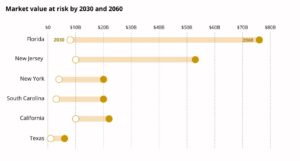
The rising sea level is putting a trillion dollars of real estate at high risk.

“The question is no longer if rising seas will erode coastal home values, but who will get stuck with the devalued assets when the markets turn,” reported Dee Gill.

“Alarmingly, more than half of that (at-risk property) exposure is estimated to lie outside FEMA flood zones. That means those properties are at higher risk of being underinsured, and, therefore, the loans attached to them are at higher risk of impairment, with increased risk for the value of the related CMBS (securities).” —CFTC

Market Value at Risk of Flooding

“Fannie and Freddie carry about $5.6 trillion in assets, mainly home mortgages and related securities. Ultimately, taxpayers backstop the payments on loans under the agencies’ control, UCLA’s Yu explains. Their regulator, the Federal Housing Finance Agency, issued a request for information in January, in part to assess flood risks. The entities require flood insurance that might mitigate their losses only on properties inside FEMA’s poorly drawn flood zones. Coverage limits imposed by NFIP — $250,000 for the structure and $100,000 for personal property — mean many coastal homes that have coverage are grossly underinsured.” — UCLA / Is the $1 Trillion Coastal Housing Market a Future Financial Crisis?

BlackRock, the G20-backed Financial Stability Board and the U.S. Commodity Futures Trading Commission are voicing concerns about unflagged flood risks squirreled away in mortgage-backed securities, bond markets and other real estate-backed investments. Common themes: The exact size of exposure is elusive but big; markets don’t currently price for it; these assets pose a threat to the stability of the global financial system.

More on Flood Insurance and Real Estate Risk

bookmark_borderAirborne, Aerosol, & Viral Load

The primary mode of COIVD transmission is the inhalation of very small fine droplets and aerosolized virus.

Viral load is the amount of virus exposure. The greater the viral load the more severe the COVID symptoms.

The CDC reports:
SARS-CoV-2 is transmitted by exposure to infectious respiratory fluids

The principal mode by which people are infected with SARS-CoV-2 (the virus that causes COVID-19) is through exposure to respiratory fluids carrying infectious virus. Exposure occurs in three principal ways: (1) inhalation of very fine respiratory droplets and aerosol particles, (2) deposition of respiratory droplets and particles on exposed mucous membranes in the mouth, nose, or eye by direct splashes and sprays, and (3) touching mucous membranes with hands that have been soiled either directly by virus-containing respiratory fluids or indirectly by touching surfaces with virus on them.

People release respiratory fluids during exhalation (e.g., quiet breathing, speaking, singing, exercise, coughing, sneezing) in the form of droplets across a spectrum of sizes.1-9 These droplets carry virus and transmit infection.

The largest droplets settle out of the air rapidly, within seconds to minutes.
The smallest very fine droplets, and aerosol particles formed when these fine droplets rapidly dry, are small enough that they can remain suspended in the air for minutes to hours.

Infectious exposures to respiratory fluids carrying SARS-CoV-2 occur in three principal ways (not mutually exclusive):

Inhalation of air carrying very small fine droplets and aerosol particles that contain infectious virus. Risk of transmission is greatest within three to six feet of an infectious source where the concentration of these very fine droplets and particles is greatest.
Deposition of virus carried in exhaled droplets and particles onto exposed mucous membranes (i.e., “splashes and sprays”, such as being coughed on). Risk of transmission is likewise greatest close to an infectious source where the concentration of these exhaled droplets and particles is greatest.
Touching mucous membranes with hands soiled by exhaled respiratory fluids containing virus or from touching inanimate surfaces contaminated with virus.

Top of Page
The risk of SARS-CoV-2 infection varies according to the amount of virus to which a person is exposed

Once infectious droplets and particles are exhaled, they move outward from the source. The risk for infection decreases with increasing distance from the source and increasing time after exhalation. Two principal processes determine the amount of virus to which a person is exposed in the air or by touching a surface contaminated by virus:

Decreasing concentration of virus in the air as larger and heavier respiratory droplets containing virus fall to the ground or other surfaces under the force of gravity and the very fine droplets and aerosol particles that remain in the airstream progressively mix with, and become diluted within, the growing volume and streams of air they encounter. This mixing is not necessarily uniform and can be influenced by thermal layering and initial jetting of exhalations.
Progressive loss of viral viability and infectiousness over time influenced by environmental factors such as temperature, humidity, and ultraviolet radiation (e.g., sunlight).

Transmission of SARS-CoV-2 from inhalation of virus in the air farther than six feet from an infectious source can occur

With increasing distance from the source, the role of inhalation likewise increases. Although infections through inhalation at distances greater than six feet from an infectious source are less likely than at closer distances, the phenomenon has been repeatedly documented under certain preventable circumstances.10-21 These transmission events have involved the presence of an infectious person exhaling virus indoors for an extended time (more than 15 minutes and in some cases hours) leading to virus concentrations in the air space sufficient to transmit infections to people more than 6 feet away, and in some cases to people who have passed through that space soon after the infectious person left. Per published reports, factors that increase the risk of SARS-CoV-2 infection under these circumstances include:

Enclosed spaces with inadequate ventilation or air handling within which the concentration of exhaled respiratory fluids, especially very fine droplets and aerosol particles, can build-up in the air space.
Increased exhalation of respiratory fluids if the infectious person is engaged in physical exertion or raises their voice (e.g., exercising, shouting, singing).
Prolonged exposure to these conditions, typically more than 15 minutes.

MORE ON COVID: COVID-19 / SARS-CoV-2 / Novel Coronavirus

bookmark_borderMore Than 900,000 People Have Died Of COVID-19 In U.S

As of May 6, 2021, a new study estimates more than 900,000 have died from COVID in the USA (and more than 6.9 million globaly.)

The study, “COVID-19 has caused 6.9 million deaths globally, more than double what official reports show”, comes from scientists at the University of Washington’s Institute for Health Metrics and Evaluation. “As terrible as the COVID-19 pandemic appears, this analysis shows that the actual toll is significantly worse,” said Dr. Chris Murray, IHME’s director. “Understanding the true number of COVID-19 deaths not only helps us appreciate the magnitude of this global crisis, but also provides valuable information to policymakers developing response and recovery plans.”

The 20 countries with the highest number of total COVID-19 deaths, March 2020­–May 2021 

Country  Total COVID-19 deaths  Reported COVID-19 deaths 
United States of America 905,289 574,043
India 654,395 221,181
Mexico 617,127 217,694
Brazil 595,903 408,680
Russian Federation 593,610 109,334
United Kingdom 209,661 150,519
Italy 175,832 121,257
Iran 174,177 72,906
Egypt 170,041 13,529
South Africa 160,452 54,390
Poland 149,855 68,237
Peru 147,765 62,739
Ukraine 138,507 46,737
France 132,680 105,506
Spain 123,786 85,365
Germany 120,729 83,256
Indonesia 115,743 45,938
Japan 108,320 10,390
Romania 87,649 28,382
Kazakhstan 81,696 5,620

MORE ON COVID: COVID-19 / SARS-CoV-2 / Novel Coronavirus

bookmark_borderCOVID-19: A Survivor’s Story

by Daniel Brouse

(Also see the update: 3 Years of Living With It)

I am a scientist and journalist publishing articles and papers since 1994. As part of a collective of scientists, we have been working on the greatest threat to humankind — humans. Much of my effort has been spent on Anthropogenic Climate Change. In addition, I have specialized in pollution, diseases, health and wellness.

In late December 2019 and early January 2020, I started studying a novel coronavirus discovered in Wuhan, China. My first paper on the subject was published in March 2020 entitled “COVID-19 and Air Pollution”.

In late January of 2020, I had been very ill with an upper respiratory illness. The same illness killed my father. At the time, COVID-19 had not been known in the USA. Since there was no test for COVID, the doctors could not diagnose the specific virus that caused my father’s death. It wasn’t until my recurring symptoms were diagnosed as “COVID Long Haulers” in May of 2020 that I knew I was suffering the aftermath of COVID-19.

The recurring symptoms were so concerning that I devoted all of my resources to studying COVID-long and searching for a cure. Every couple of weeks I went through a wave of symptoms. Though not as severe as the original illness, the symptoms still would render me useless. The symptoms did not come on all at the same time, rather they would cycle through over two weeks (not necessarily in the same order) and then repeat. Exercise and exertion would cause the symptoms to be more severe. The symptoms included:

* difficulty breathing (feeling like you’re not taking in enough oxygen)
* congestion / mild cough
* stomach issues / diarrhea
* loss of taste, smell, and appetite
* temperature regulation / night sweats
* nightmares / vivid dreams
* dizziness / the spins / foggy thinking
* headaches / body aches / soreness
* fatigue
* ear aches
* peripheral neuropathy (tingling of the hands and feet)

My concerns were several. Would the symptoms go away over time? As the months went on, the answer was no. Would the long term recurrence of systems cause a permanent disability? The answer is probably yes. My organs were sustaining progressive damage. Respiratory, circulatory, neurological, and renal damage, as well as, blood clots, thinning and leaky blood vessels in the brain tissue, and death have all been attributed to COVID and COVID-long.

In my pursuit of answers, I found another long hauler scientist, Dr. Ade Wentzel. Ade proved to me that my hypothesis of “COVID-19 Long Haulers: autoimmune response due to inactive particles of the virus” was incorrect. Rather, he demonstrated that sars-cov-2 causes COVID-19 Induced Secondary Pellagra (CISP).

The main culprit is believed to be COVID’s genetic change to our production and utilization of NAD+ (nicotinamide adenine dinucleotide). NAD+ is involved in cell creation, maintenance, metabolism, and regulating cell processes. COVID can chronically increase the breakdown of NAD+ and simultaneously decrease the production of NAD+.

Ade added, “The biggest function of NAD+ is as a cofactor for energy(atp) production via the citric acid cycle. NAD+ is essential for carbohydrate metabolism. The brain being highly dependent on carbs.”

NAD+ and the Citric Acid Cycle

Ade introduced me to one of the co-authors of his research, Robert Miller. In October of 2020, Ade and Robert started me on “the stack”. The vitamin stack helps correct the NAD+ malady by treating COVID-19 Induced Secondary Pellagra. Finding the correct form and dosage of Niacin was the most challenging part.

Within days of starting the stack, my COVID-long symptoms dissipated. Since that time, I have remained relatively symptom free EXCEPT when I tried reducing the Niacin dosage. On three separate occasions, I experimented with reducing the dosage of Niacin. All three times my symptoms returned; therefore, I would call the stack a treatment not a cure.

Since that time, I have successfully helped thousands of other COVID-long victims with the stack.

At the end of April, I received my first dose of the Moderna vaccine. Loss of taste and muscle soreness symptoms returned for 24 hours and then disappeared. My overall wellness appears to have improved. Now, I’m experimenting with reducing my Niacin dosage again to see if the vaccine helped my body recover its ability to produce and retain NAD+.

After several days of reduced Niacin (nicotinic acid dosage was reduced from 300-500mg/day down to 0-30mg day), symptoms returned: neuropathy, fatigue, brain fog, muscle soreness, difficulty breathing, GI track / stomach issues, ear aches, and allergy-like symptoms. The most notable symptom to return — headaches. Prior to COVID, I did not experience headaches. Within days of decreasing the dosage, a chronic headache returned. I increased the Niacin dosage back to 500mg/day and supplemented the stack with resveratrol. Symptoms immediately dissipated.

After the second shot, side-effects were slightly worse. The metallic taste returned within a couple hours. For the 12-24 hours post-vaccination, there was dizziness, nausea, and fatigue. Then, all the side-effects disappeared. Three months after being fully vaccinated all of my presenting symptoms dissipated. Other “silent” post COVID conditions have persisted since the initial infection.

See the update: 3 Years of Living With It

CISP and The Stack

MORE ON COVID: COVID-19 / SARS-CoV-2 / Novel Coronavirus

bookmark_borderNational Flood Insurance Program Increasing Rates

FEMA is updating the National Flood Insurance Program’s (NFIP) risk rating methodology through the implementation of a new pricing methodology called Risk Rating 2.0. The methodology leverages industry best practices and cutting-edge technology to enable FEMA to deliver rates that are actuarily sound, equitable, easier to understand and better reflect a property’s flood risk.

The Bradenton Herald reports, “More than a million Floridians will see their flood insurance premium rise next year, FEMA said Thursday.

The good news is, most will see increases of less than $120 a year. The bad news is that homeowners will likely see annual rate hikes like that for the foreseeable future.

The new strategy is meant to help pull the program out of its $20 billion debt and encourage people to live in safer, less flood-prone homes.

The new program will stop charging flood insurance premiums based solely on whether a home is within or outside of a flood zone and instead consider a range of factors like distance from the ocean, rainfall flooding and the cost to rebuild a home.

Starting April 2022, this pricing revamp will lead to higher prices for a majority of Florida’s 1.7 million policyholders — the most of any state — as well as a decrease for about 20% of policies, more than 340,000 policyholders.

“It allows us to set accurately sound rates and communicate flood risk better than we ever have before,” David Maurstad, senior executive of FEMA’s National Flood Insurance Program.

More articles on Flood Insurance, Rising Sea Levels and Global Warming.

bookmark_borderPost-infection COVID Immunity

A study published in The Lancet entitled Dynamics of SARS-CoV-2 neutralising antibody responses and duration of immunity: a longitudinal study found the immunity from a COVID reinfection varies widely from individual to individual from days to decades.

“We identified five distinctive patterns of neutralising antibody dynamics as follows:
* negative, individuals who did not, at our intervals of sampling, develop neutralising antibodies at the 30% inhibition level [12%];
* rapid waning, individuals who had varying levels of neutralising antibodies from around 20 days after symptom onset, but seroreverted in less than 180 days [27%];
* slow waning, individuals who remained neutralising antibody-positive at 180 days post-symptom onset [29%];
* persistent, although with varying peak neutralising antibody levels, these individuals had minimal neutralising antibody decay [32%];
* and delayed response, a small group that showed an unexpected increase of neutralising antibodies during late convalescence (at 90 or 180 days after symptom onset [2%]).

Persistence of neutralising antibodies was associated with disease severity and sustained level of pro-inflammatory cytokines, chemokines, and growth factors. By contrast, T-cell responses were similar among the different neutralising antibody dynamics groups. On the basis of the different decay dynamics, we established a prediction algorithm that revealed a wide range of neutralising antibody longevity, varying from around 40 days to many decades.

The question may also apply to vaccines: will the COVID immunity offered by vaccinations last for 40 days to many decades? What is the durability of vaccines and will it be uniform or vary widely from person to person?

MORE ON COVID: COVID-19 / SARS-CoV-2 / Novel Coronavirus

bookmark_borderPollen and Increased SARS-CoV-2 Infection Rates

The Proceedings of the National Academy of Sciences of the United States of America published the study Higher airborne pollen concentrations correlated with increased SARS-CoV-2 infection rates, as evidenced from 31 countries across the globe.

The research showed that airborne pollen on average accounts for 44% of the variation in infection rates in addition to humidity and air temperature.

Pollen exposure weakens the immunity by diminishing the antiviral interferon response.

“Our large-scale retrospective data analysis based on 80 individual time series from 130 regions in 31 countries in all inhabited continents across the globe (8,019 data points) enabled us to reveal a robust and significant positive correlation between SARS-CoV-2 infection rates and airborne pollen concentrations, which was halved under lockdown.”

COVID-19 and Air Pollution

COVID-19 Index

bookmark_borderIncreasing Cost and Risk of Flood Insurance

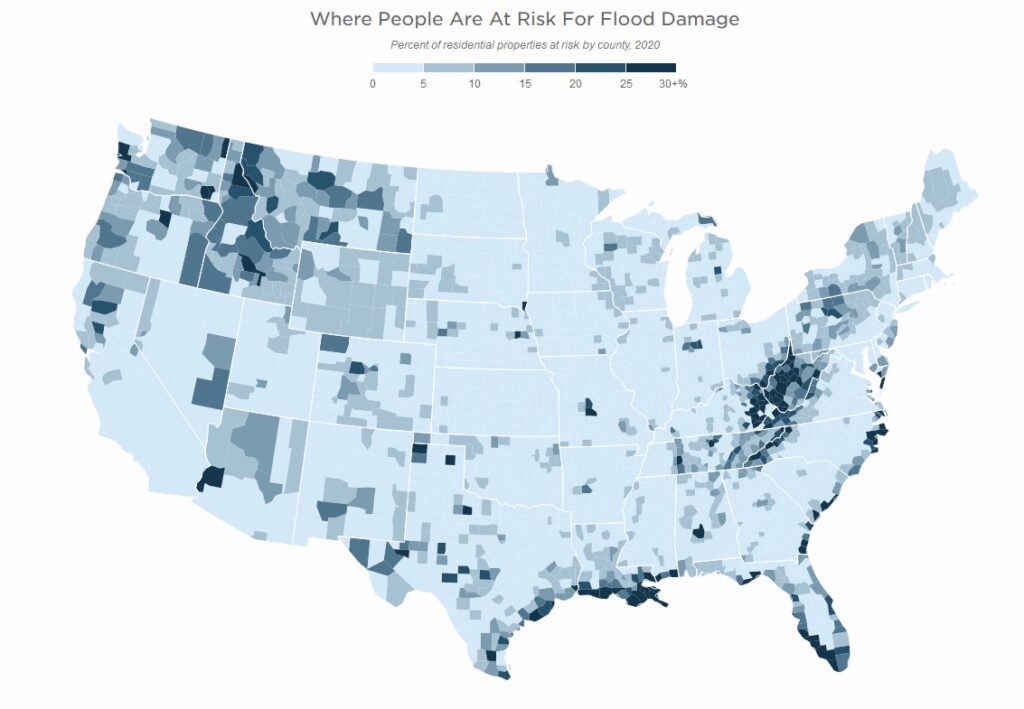
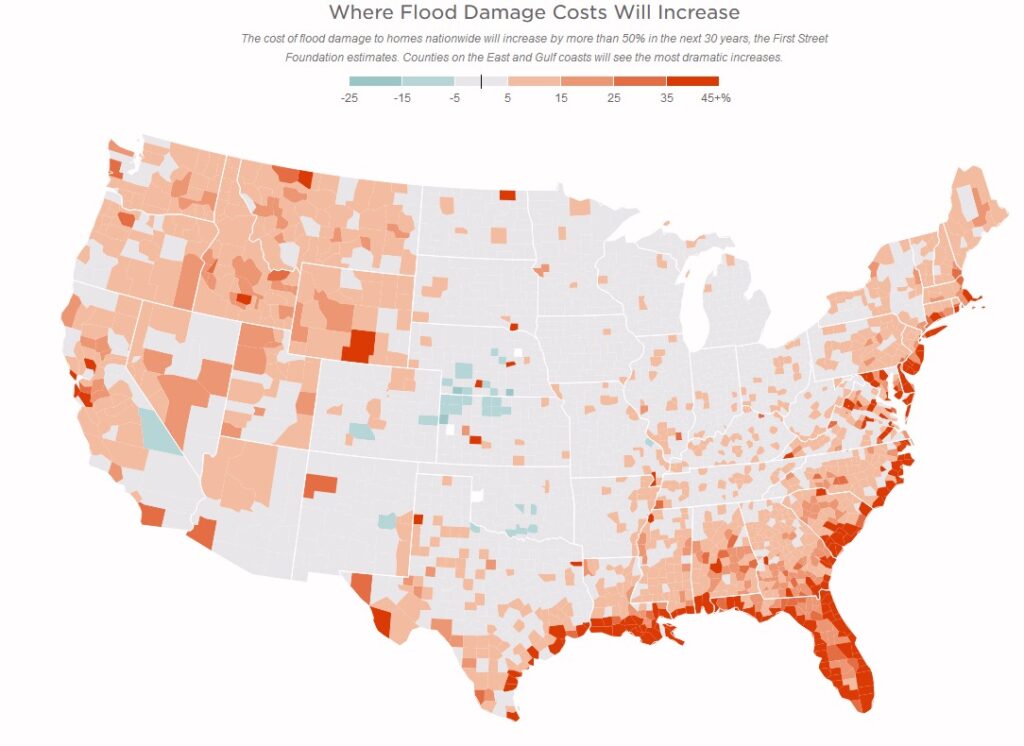
The cost of flood damage to homes nationwide will increase by more than 50% in the next 30 years, the First Street Foundation estimates.

Flood Insurance Forecast

A report by NPR radio, A Looming Disaster: New Data Reveal Where Flood Damage Is An Existential Threat, found:
The federal government provides the vast majority of residential flood insurance in the U.S. Most policies are underpriced relative to the actual cost of flood damage.

The new data show that flood insurance rates would need to more than quadruple to keep up with the costs of climate-driven flooding. The Federal Emergency Management Agency is already preparing to raise insurance premiums in many places later this year in an effort to save the National Flood Insurance Program, which has accrued more than $36 billion in debt.

FEMA warns that the First Street Foundation’s analysis is only an estimate and that FEMA didn’t provide the research group with details about the new flood insurance pricing plan, known as Risk Rating 2.0.

“Any entity claiming that they can provide insight or comparison to the Risk Rating 2.0 initiative, including premium amounts, is misinformed and setting public expectations that are not based in fact,” writes David Maurstad, the senior executive of the National Flood Insurance Program, in an email to NPR. “While entities are free to suggest or estimate their opinion of what flood insurance premiums should be, they are offering exactly that — an opinion — and they do not have insight into the Risk Rating 2.0 initiative.”

For homeowners who are currently underpaying for flood insurance, FEMA says it plans to raise rates by up to 18% each year until the price is accurate, according to a January report by the Congressional Research Service. The agency will begin rolling out the new pricing in October.

As the cost of insurance goes up, many people who need flood insurance will likely be unable to afford it, leaving them to face lasting damage. Research has found that disasters can erode family stability and exacerbate mental and physical ailments when people don’t have the money they need to repair their homes.

“If you don’t have the finances you need to recover, then families have to make really difficult trade-offs, like maybe forgo spending on medical expenses because otherwise you don’t have a safe home,” says Carolyn Kousky, the executive director of the Wharton Risk Management and Decision Processes Center at the University of Pennsylvania.

Flood Damage Risk
Flood Damage Risk
Flood Damage Cost
Flood Damage Cost

More articles on Flood Insurance, Rising Sea Levels and Global Warming.

bookmark_borderIncreasing Cost of Flood Insurance

“Increased awareness of flood risk and rising future insurance costs impact perceptions of value, which will impact real estate markets,” said Matthew Eby, founder and executive director of First Street Foundation.

First Street Foundation published a report that concludes: “Rising sea levels and extreme weather could cause $20 billion of flood damage to at-risk U.S. homes this year, rising to $32 billion (per year) by 2051.”

First Street Foundation Flood Insurance Forecast

“Roughly 4.3 million homes – concentrated in Florida, California, South Carolina and Texas – have a substantial risk of sustaining economic damage from flooding this year, the report shows. The majority are not required by the U.S. government to have flood insurance. Were all of them to buy federal insurance, National Flood Insurance Program (NFIP) rates would need to increase 4.5 times to cover the risk, according to the report. The current average NFIP premium for these 4.3 million homes is $981,” reports Kate Duguid of Reuters.

More articles on Flood Insurance, Rising Sea Levels and Global Warming.