bookmark_borderTrump’s Manufactured Shutdown: White Nationalism Over Economics

by Daniel Brouse
September 25, 2025

The U.S. government is once again barreling toward a shutdown, and the chaos is entirely of Donald Trump’s making. Despite branding himself a “businessman president,” Trump continues to push policies that baffle economists and devastate the very citizens he claims to represent.

The MAGA movement has ballooned the deficit through reckless spending while simultaneously cutting healthcare assistance for millions of Americans in need of insurance. Now, Trump is refusing to meet with Democratic leaders to even attempt a compromise. The result: a government paralyzed not by fiscal necessity, but by ideology.

I have been warning since Trump first took office that trying to reconstruct the global economy through the lens of white nationalism would end in disaster. Without the intellect of a second grader, Trump has undermined decades of U.S. economic stability in pursuit of grievance politics.

The government is already reeling from the DOGE fiasco, yet Trump’s proposed response is even more dangerous: firing thousands of government employees if a shutdown occurs, under the absurd pretense of “teaching Democrats a lesson.” These tactics are not only cruel—they could be the final nail in the coffin of what is already a failed Trump economy.

Protectionism and white nationalism are not economic strategies. Trade wars with nearly every major economy have shredded American credibility and competitiveness. Trump has violated the Constitution by pushing through the largest regressive tax increase in U.S. history, enriching the wealthy while burdening working families. Meanwhile, his racist, anti-immigration policies are crippling the backbone of American capitalism: population growth. Immigration has accounted for approximately 80% of GDP growth over the last five years—yet Trump insists on cutting off this lifeline.

A shutdown is now looking increasingly inevitable, not because of necessity, but because Trump believes he can spin an economic collapse into a political weapon against the so-called “radical left.” The irony, of course, is that it is the right—through Trump’s recklessness—that is dismantling the very fiscal conservatism it once claimed to uphold. As a fiscally conservative Republican economist, I cannot overstate the damage: Trump is destroying America from within.

Trumpenomics: The Decline of America

bookmark_borderResistance 101

by C. Moore
September 23, 2025

I’ve been getting a flood of questions about how to resist the Trump Regime: “What can I do?” in the midst of growing feelings of helplessness and hopelessness. My answer: focus on your strengths. Build a strong individual plan. Be resourceful. And sharpen your wits — because wit is often the best weapon.

The Censorship Example

As an investigative journalist with decades of experience defending the First Amendment, I’ve faced threats, targeted attacks, assaults by both criminals and police, fines, arrests, jail time, and years of court battles. Yet never — not once — have I seen anything as alarming as what is happening today. I’m furious at the erosion of our First Amendment rights, and I’m returning to my roots. In protest of this assault on free speech — and in solidarity with Jimmy Kimmel, Stephen Colbert, and the countless journalists silenced worldwide this year — I’m returning to my roots: sharp-witted satire. Words are swords, and comedy is our shield. That’s why tyrants fear it, why dictators ban it, and why Trump is trying to kill it. Humor exposes lies, punctures egos, and topples emperors who think they wear clothes.

During one period when I was illegally detained, silenced, and stripped of my rights, I adopted the pseudonym Mootmute. My lawyer was on speed dial, and I even had a plan to publish from jail. The name itself became a symbol of resistance. As they tried to turn me into a moot mute, I turned their strategy back on them. As I often say: hold up your sword and stand firm. If they continue to impale themselves on your defensive position, so be it.

Another form of resistance was publicly exposing their hypocrisy. For amusement and effect, while under oath I asked prosecutors what I wasn’t allowed to say. Their response? They wheeled in file cabinets overflowing with papers they themselves had published and read, line by line, everything that was now forbidden as “speech.” And so the name Mootmute stuck. They tried to silence me, but instead they became my unwitting mouthpiece, committing the very crime they accused me of.

Expanding the Resistance

In addition to the personal defiance above, I found other ways to resist oppression. While I was under attack, my publishing company — and the entities that had licensed my intellectual property — also became targets. To protect the innocent, I created a new publishing company. Much like Prince, who famously changed his name to a symbol when stripped of his own, I adopted a symbol too — only mine was crafted from ASCII characters and represented “the finger.” The irony was delicious: every time prosecutors wheeled in stacks of paper and read the forbidden words into the record, each page carried my publishing company’s logo at the bottom. The very emblem of defiance they sought to erase stared back at them from their own exhibits.

For added effect — and a touch of legal one-upmanship — I included a copyright notice on every page:

“These pages and their content may not be used without our expressed written consent. Violators will be prosecuted to the fullest extent allowed under the law.”

In their zeal to prosecute me, they inadvertently committed yet another offense: publishing my work without consent while declaring in court that no one was allowed to say what they themselves had just published.

Conclusion

So, “What can I do?” in the face of rising helplessness and hopelessness? Focus on your strengths. Develop a solid, individual plan. Be resourceful. And hone your wit — because wit is often your sharpest weapon and, in some cases, may literally save your life.


The Publishing Company’s Trademark and Copyright Notice


|
_ _ | _ _
Publishing
2007-2008
These pages and their content may not be used without our expressed written consent.
Violators will be prosecuted to the fullest extent allowed under the law.
Welcome!

The xxDANg3r_Usxx Adventures of mootmute

bookmark_borderTrump v. The First Amendment: A Mismatch for the Ages

by C. Moore
September 20, 2025

Trump’s $15 Billion Tantrum: When a Lawsuit Becomes Performance Art

President Donald J. Trump’s $15 billion lawsuit against The New York Times has been tossed like yesterday’s fast-food wrapper, for now.

Calling the president’s 85-page magnum opus of grievance “decidedly improper and impermissible,” U.S. District Judge Steven D. Merryday effectively told Trump to either learn how to write like a lawyer or go back to yelling at clouds. The judge, apparently unamused by the creative writing project, noted that the suit only contained two actual claims of defamation — Count I appearing on page 80, Count II on page 83 — buried beneath 79 pages of ego stroking, political invective, and what could best be described as a rejected campaign speech.

Judge Merryday reminded the former president that a legal complaint is supposed to be a “short and plain statement” of facts, not a “megaphone for public relations” or a “passionate oration at a political rally.” Translation: save the ranting for Truth Social. Oh, and trim it down to 40 pages or less — think of it as Twitter with footnotes.

This latest courtroom spectacle follows Trump’s ongoing legal vendetta tour against the media — having already aimed lawsuits at ABC, CBS, and The Wall Street Journal. His beef with The Times? That it acted as a “mouthpiece” for Democrats and gave Kamala Harris a campaign contribution in the form of journalism he didn’t like. In other words, reporting = rigging.


Free Speech, Unless You’re Pro-Palestinian

Meanwhile, in Trumpworld, free speech is sacred — unless you say something he doesn’t like. Multiple lawsuits have been filed against the administration’s alleged policy of targeting pro-Palestinian non-citizens for deportation, simply for expressing political views. Critics call it a direct violation of the First Amendment, creating a climate of fear on university campuses.

Take the case of Mahmoud Khalil, a Columbia University alum and legal U.S. resident. On September 17, 2025, an immigration judge in Louisiana ordered him deported — either to Algeria or Syria — over alleged misrepresentations on his green card application. Federal courts, however, are still blocking his deportation while his case proceeds. The irony, of course, is that Trump insists on defending the “freedom” of Confederate statues while trying to silence actual human beings.


The Pentagon Redefines “Free Press”

Not to be outdone, Defense Secretary Pete Hegseth unveiled new rules limiting Pentagon press access. Reporters now risk being banned for “unprofessional conduct” or even attempting to obtain information — whether classified, unclassified, or simply embarrassing to the administration.

In short: report at your own risk. The rules are so broad, you could probably lose access for asking where the bathroom is without “appropriate authorizing official” approval.


Trump’s Top Hits: Freedom Edition

As academics around the world scratch their heads, one burning question remains: which Trump-era attack on free speech is the most idiotic?

  1. Renaming the Gulf of Mexico the “Gulf of America” — because nothing says freedom like renaming water.

  2. Renaming the Department of Defense the “Department of War” — because why bother hiding it?

Perhaps, in the end, Trump’s lawsuits and renamings are all just a form of performance art — a legal and political avant-garde movement where coherence, constitutionality, and common sense are strictly optional.

Trumpenomics: The Decline of America

bookmark_borderPSA: Killing Humor Isn’t Funny

by C. Moore
September 20, 2025

The Death of the First Amendment: Trump’s War on Free Speech

As an investigative journalist with decades of experience defending the First Amendment, I’ve endured more than my share of danger. My life has been threatened, my family targeted. I’ve been assaulted by both criminals and police, fined, arrested, jailed, and dragged through years of court battles. But never — not once — have I seen anything as alarming as what is happening today.

On September 18, 2025, Donald Trump declared that any television network critical of him would risk having its broadcast license revoked. This came just one day after ABC’s Jimmy Kimmel Live! was suspended, following the earlier cancellation of The Late Show with Stephen Colbert. Trump’s message is clear: dissenting voices will not be tolerated.

Let’s be perfectly honest: this isn’t about “bias in the media.” This is about censorship. This is about silencing opposition. This is about killing comedy before it can mock power — and make no mistake, satire has always been the sharpest blade in democracy’s arsenal.

The Palin–Trump Paradox

When asked why he doesn’t care if Russia invades EU countries, Trump said the U.S. isn’t “geographically close” to Russia, and that Europeans should shoulder the burden for Ukraine’s defense.

“They’re our next-door neighbors — you can actually see Russia from land here in Alaska,” Sarah Palin once said.

And I always thought Sarah wasn’t that swift. Turns out, compared to Trump, she’s Einstein — with a side of cottage cheese.

A Call to Arms — Through Laughter

In protest of this ongoing assault on free speech — and in solidarity with Jimmy Kimmel, Stephen Colbert, and the many journalists slaughtered around the globe this year — I am returning to my roots: satirical wit. Words are swords, and right now, satire is our shield.

Comedy has always been democracy’s secret weapon. That’s why tyrants fear it, that’s why dictators ban it, and that’s why Trump is trying to kill it. Humor exposes lies. Humor punctures egos. Humor topples emperors who think they wear clothes.

Long live comedy. Long live satire. It’s time for all of us to pick up the torch and rise. Sharpen your wit, wield your words, and refuse to be silenced.

PSA: “Killing humor isn’t funny. Kill humor, kill freedom. Not so funny now, is it?”

Trumpenomics: The Decline of America

bookmark_borderThe Death of the First Amendment: Trump’s War on Free Speech

As an investigative journalist with decades of experience defending the First Amendment, I’ve faced more than my share of danger. My life has been threatened, my family targeted, I’ve been assaulted by both criminals and police. I’ve been fined, arrested, jailed, and dragged through years of court battles. But I have never seen anything as alarming as what is happening today.

On September 18, 2025, Donald Trump declared that any television network critical of him would risk having its broadcast license revoked. These words came the day after ABC’s Jimmy Kimmel Live! was suspended, following the earlier cancellation of The Late Show with Stephen Colbert. Trump’s message is unmistakable: dissenting voices will be silenced.

Since his return to power, Trump has wasted no time weaponizing the legal system against his perceived enemies — especially the press. Major networks like ABC, CBS, and even independent journalists are drowning under an endless barrage of lawsuits. These suits are not designed to win in court; they are designed to financially cripple media organizations, bury them in legal fees, and intimidate others into silence. A Justice Department that now resembles a political death squad is carrying out these vendettas. The question is no longer “will someone stop him?” but “is there anyone left who can?”

Access to the White House briefing room has also become a weapon. Critical outlets — including Reuters, once considered the gold standard of global journalism — have been barred from daily briefings, their press credentials revoked without explanation. Independent reporters are routinely denied access, while hand-picked pro-Trump media figures are given front-row seats and unlimited opportunities to lob softball questions. By choking off access to information, Trump has turned what was once the people’s press room into a propaganda stage.

And the assault extends beyond the newsroom. Across the country, state and federal authorities are escalating their crackdowns on peaceful protests. Ordinary Americans exercising their constitutional rights to assembly and free speech are being arrested and charged. Their “crime”? Opposing war, genocide, or environmental destruction. At the recent Hands Off! protests, chants weren’t just against military aggression — they demanded the release of political prisoners currently held inside the United States.

Disturbingly, several activists have been detained without due process. Others have been deported, in open violation of constitutional protections. This is not the America our founders envisioned.

It’s no longer a matter of speculation whether your First Amendment rights are under attack. They are. And as someone who has dedicated a career to protecting those rights, I can report — without hesitation — that the First Amendment has already been compromised. The only question now is whether Americans will recognize it in time to fight back.

The Growing Threat to Press Freedom: How Trump’s Influence Is Reaching Beyond U.S. Borders

The Battle for Free Speech: Jimmy Kimmel vs. MAGA Media Monopoly

Trumpenomics: The Decline of the US

bookmark_borderAmerica First, America Hurt: How Trump’s Trade War and Immigration Crackdowns Are Backfiring

The Trump tariff-driven global trade war and anti-immigration agenda are already proving to be an economic disaster for the United States. What was promised as a strategy to “rebuild American strength” is instead triggering a slowdown marked by weakening growth, collapsing job markets, rising inflation, declining wage gains, and a dollar under pressure. To make matters worse, the Federal Reserve’s independence is increasingly under political threat — a dangerous precedent for global markets that depend on U.S. monetary stability.

Ironically, the loudest supporters of Trump’s “America First” policies — farmers and rural voters — are among the hardest hit. U.S. agriculture, once a dependable pillar of American exports, is facing its harshest season in decades. Agriculture Secretary Brooke Rollins confirmed this week that the USDA is working with Congress to consider emergency aid for farmers this autumn, citing both the fallout from ongoing trade disputes and record-high yields that now have nowhere to go.

Soybeans, in particular, illustrate the crisis. In 2024, the U.S. shipped an estimated $12.8 billion worth of soybeans to China, accounting for roughly 25% of all U.S. exports, according to the USDA’s Foreign Agricultural Service. But for the 2025–2026 crop year, China has placed zero new soybean orders. That loss is catastrophic not just for Midwestern farmers, but for the entire trade balance, rural economies, and the global credibility of U.S. agricultural markets.

Adding to the irony is the sheer hypocrisy of Trump’s trade policy. His administration has justified sweeping tariffs as retaliation against “unfair trade practices,” particularly government subsidies supporting farmers in Japan, China, India, Canada, and across the EU. Yet, at the very same time, Trump has expanded U.S. subsidies to American farmers as emergency aid and even directed taxpayer-backed stakes in major corporations such as U.S. Steel and Intel — a patchwork of protectionism critics have dubbed “Trump-socialism.” What he condemns abroad, he quietly embraces at home, undermining his own argument while fueling the very distortions in global markets he claims to oppose.

The ripple effects extend beyond farms. Supply chains tied to agricultural equipment, transportation, and processing are already scaling back. Rural banks are bracing for a wave of loan defaults. Meanwhile, anti-immigration crackdowns are worsening labor shortages in both farming and food production, pushing costs up while productivity drops.

In short, Trump’s trade and immigration policies are backfiring — leaving the very communities that rallied hardest for “America First” paying the steepest price. The irony is brutal: instead of strengthening the U.S., these policies are isolating it, damaging trust with trading partners, and undermining the very foundation of American economic stability.

Trumpenomics: The Decline of America

bookmark_borderCATL’s New EV Battery Highlights U.S. Lag in the Global Electric Vehicle Race

by Daniel Brouse
September 9, 2025

Contemporary Amperex Technology Co. (CATL) is a leading Chinese manufacturer of lithium-ion batteries for electric vehicles (EVs) and energy storage systems. Headquartered in Ningde, China, the company has become a dominant player in the global battery market, underscoring the challenges facing the U.S. in the EV and battery industries. CATL exemplifies how U.S. trade and industrial policies have allowed foreign competitors to pull far ahead, leaving American manufacturers struggling to keep pace.

CATL unveiled a groundbreaking new EV battery for the European market, the “Shenxing Pro.” The battery is based on lithium iron phosphate (LFP) chemistry and comes in two specialized versions designed to meet Europe’s diverse EV demands.

The first version, a long-life model, is engineered to last up to 12 years or 1 million kilometers. It offers an impressive maximum driving range of 758 kilometers—far exceeding the typical 300-to-500 kilometers delivered by conventional LFP batteries. The second version focuses on rapid charging, enabling drivers to add 478 kilometers of range in just 10 minutes of charging, a feature that could dramatically reduce downtime for EV users.

CATL’s innovations highlight not only the rapid technological advances in the global battery industry but also the competitive gap that U.S. manufacturers face. While Chinese companies like CATL push the boundaries of battery range, longevity, and charging speed, U.S. policy and production constraints have limited domestic capacity, leaving American EV makers increasingly dependent on foreign supply chains for critical battery technology.

As Europe becomes a key battleground for EV adoption, CATL’s new battery underscores the strategic importance of investing in domestic battery production and technology development to ensure the U.S. remains competitive in the rapidly evolving global EV market.

Business & the Economy | Trumpenomics | Business Achieves

bookmark_borderRunaway Climate Feedbacks and Systemic Collapse

Daniel Brouse and Sidd Mukherjee
September 3, 2025


Our probabilistic, ensemble-based climate model — incorporating complex socio-economic and ecological feedback loops within a dynamic, nonlinear system — projects that global temperatures could rise by as much as 9°C (16.2°F) within this century. This far exceeds earlier estimates, which predicted a 4°C rise over the next thousand years, and signals a dramatic acceleration of warming.

Sidd responded: “9°C this century is a stretch. Consensus so far is closer to ~3°C.”

I ask: What do you make of the physics given the observable data?
We’re already at 1.5°C, which makes 3°C this century seem almost unavoidable. I used to think 9°C was a worst-case scenario — now I fear it’s shifting toward the “highly likely” range. In just the last couple of years, I’ve seen at least nine tipping points trigger feedback loops with my own eyes.

What strikes me most is not just that each loop accelerates warming, but that they are now amplifying each other. The interactions are compounding in ways that exceed current models.

So my question is: What do you think about the physics of reaching 9°C this century, given the observed interactions of feedback loops and tipping points, including:

  • Greenland and East Antarctic ice sheet tipping
  • Slowing of the Atlantic Meridional Overturning Circulation (AMOC)
  • Mountain glacier loss
  • Amazon rainforest dieback
  • Arctic sea ice loss
  • Boreal forest degradation and wildfire
  • Permafrost thawing and burning
  • Warm-water coral bleaching
  • West Antarctic Ice Sheet instability

Sidd replied: “I think ~3°C is likely this century, and that estimate already includes tipping points. But of course, I could be wrong. The oceans have the last word — and they take centuries to drive a 9°C+ shift.”


The Arctic as a Harbinger

The Arctic is warming far faster than the global average — ~2–3°C already, about 3–4 times faster than the planet as a whole. Projections vary:

  • Low emissions (~1.5–2°C global): Arctic warms 3–5°C by 2100.
  • High emissions (~3–4°C global): Arctic warms 7–10°C by 2100, with even higher local spikes.
  • Worst-case runaway: With reinforcing tipping points (permafrost, albedo collapse, ocean disruption), Arctic warming could exceed 12°C this century.

Consequences include seasonal ice-free summers by mid-century, permafrost fires releasing CO₂ and methane, and destabilization of AMOC, accelerating sea-level rise and global weather extremes.


Global Runaway Feedbacks

If multiple tipping points reinforce each other, the climate may enter a self-perpetuating heating cycle beyond human control. The main candidates include:

  1. Ice-Albedo Collapse — Ice loss locks in warming.
  2. Permafrost Thaw + Boreal Fires — Gigatons of CO₂/CH₄ released.
  3. Amazon & Rainforest Dieback — Carbon sinks flip to carbon sources.
  4. Ocean Circulation Breakdown — Jet stream chaos, monsoon collapse, food shocks.
  5. Marine Ecosystem Collapse — Coral death and plankton loss undermine food security.
  6. Soil & Crop Failure Feedbacks — Drought, famine, and forced migration.

Temperature outcomes:

  • Linear physics: ~3–5°C by 2100.
  • With feedbacks: 6–9°C this century is plausible.
  • Runaway: A “Hothouse Earth” trajectory of 10°C+ over centuries–millennia.

Feedback-Driven Warming Beyond 1.5 °C

As global mean temperature exceeds 1.5 °C and multiple climate tipping points activate, the critical question is not simply how much warmer the planet becomes, but how quickly feedbacks amplify that warming.

Scientific consensus: Current models suggest that carbon-cycle feedbacks — permafrost thaw, weakening ocean and land sinks, methane release from wetlands, and fire-driven emissions — could add ~0.2–1.0 °C of warming by 2100 on top of direct human emissions. This range reflects assumptions that:

  • Warming is held close to ~2 °C by policy.
  • Tipping points unfold slowly and largely independently.
  • Ecosystems and oceans continue absorbing a significant share of emissions.

Under a high-emissions trajectory, with multiple tipping elements engaged, the upper end of this estimate (or beyond) becomes more plausible.

My concern: These consensus estimates are already lagging reality. Observations suggest that at least nine major tipping points are not only triggered but are now reinforcing each other. Instead of unfolding over centuries or millennia, the pace is measured in years or decades. Models have struggled to keep up with this rapid nonlinearity.


Cascading Feedbacks in Real Time

Regardless of the rise in global mean temperature, cascading feedbacks are already reshaping weather extremes.

In just ten days during July 2025, the U.S. experienced:

  • Hundreds of flash floods nationwide, with hundreds of fatalities and billions in damages.
  • At least five “1-in-1,000-year” rainfall events (Texas, New Mexico, North Carolina, Florida, Illinois).
  • Multiple “500-year floods” across Pennsylvania, Delaware, New Jersey, Maryland, Virginia, and Iowa as extreme rainfall overwhelmed infrastructure.

These events illustrate how tipping feedbacks manifest in human terms — not only as gradual warming, but as sudden escalations in climate volatility and infrastructure failure.


Permafrost: From Slow Thaw to Year-Round Fire

The permafrost is one of the starkest examples of the gap between theory and reality:

  • Old assumption: Permafrost would thaw gradually over thousands of years, steadily releasing CO₂ and CH₄ into the atmosphere.
  • Observed reality: Large regions are no longer “permanently” frozen. Instead, they are catching fire and burning year-round, releasing greenhouse gases on much shorter timescales.

This raises new scientific uncertainties:

  • Fires combust organic matter directly, accelerating CO₂ emissions.
  • If methane is burned in situ during these fires, some fraction may be converted into CO₂ (a less potent but still powerful greenhouse gas) — effectively acting as a “natural flare.”
  • Yet, unburned methane still escapes, and the net balance between flaring vs. direct release remains poorly quantified.

What is clear is that the pace of release is orders of magnitude faster than assumed, and the feedbacks are already active, not hypothetical.


What 9°C Warming Would Mean for Humanity

  • Uninhabitable Tropics — Wet-bulb > 31–35°C renders regions physiologically uninhabitable.
  • Multi-Meter Sea-Level Rise — Coastal megacities drowned.
  • Food System Collapse — Crop yields crash across tropics and mid-latitudes.
  • Oceanic Collapse — Fisheries and reefs vanish.
  • Mass Extinction — 50–70% of species lost.
  • Mass Mortality & Migration — Billions displaced, political collapse, conflict.
  • Refugia Shrink — Only high-latitude/high-altitude zones remain marginally habitable.

At this level, modern civilization likely collapses, with human survival reduced to scattered refugia.


Why “Global Average” Misleads

The idea of a global average temperature obscures human experience. For example, while the average may rise 3°C, some regions (like the Arctic) could see 10°C+ increases. What matters more is regional extremes and wet-bulb thresholds — the real determinants of human survival.


Wet-Bulb Heat: The Real Threat

Wet-bulb temperatures >31°C are already being observed in parts of the U.S. Gulf Coast, Florida, and Mississippi River Valley, with lethal consequences. These levels were once thought “impossible” in the U.S., but climate change is shifting baselines.

This metric — not the global average — is the clearest signal of existential risk to human health and survival.


Conclusion: Humanity’s Chosen Fate

The question is not whether Earth will warm — it is how fast, how far, and how violently feedbacks will accelerate the process. A 9°C rise this century may or may not occur, but even “consensus” outcomes (~3°C) would be catastrophic.

The decisive factor is human action: whether we allow runaway feedbacks to trigger an irreversible “Hothouse Earth,” or whether we cut emissions, restore ecosystems, and adapt quickly enough to keep habitable zones intact.

We are not just modeling the future — we are choosing it.

* Our probabilistic, ensemble-based climate model — which incorporates complex socio-economic and ecological feedback loops within a dynamic, nonlinear system — projects that global temperatures are becoming unsustainable this century. This far exceeds earlier estimates of a 4°C rise over the next thousand years, highlighting a dramatic acceleration in global warming. We are now entering a phase of compound, cascading collapse, where climate, ecological, and societal systems destabilize through interlinked, self-reinforcing feedback loops.

We examine how human activities — such as deforestation, fossil fuel combustion, mass consumption, industrial agriculture, and land development — interact with ecological processes like thermal energy redistribution, carbon cycling, hydrological flow, biodiversity loss, and the spread of disease vectors. These interactions do not follow linear cause-and-effect patterns. Instead, they form complex, self-reinforcing feedback loops that can trigger rapid, system-wide transformations — often abruptly and without warning. Grasping these dynamics is crucial for accurately assessing global risks and developing effective strategies for long-term survival.
The Human Induced Climate Change Experiment

bookmark_borderFederal Appeals Court Strikes Down Key Trump Tariffs, Deepening Trade Uncertainty

by Daniel Brouse

On August 29, 2025, heading into the Labor Day holiday weekend, the U.S. Court of Appeals for the Federal Circuit in Washington, D.C. delivered a major ruling: most of President Donald Trump’s “reciprocal” tariffs, along with a separate set imposed earlier this year, are illegal. The decision represents both a constitutional challenge to executive authority and a new source of turmoil for an already fragile global economy.

Scope of the Ruling

The court’s decision addressed two major elements of Trump’s trade war:

  • “Reciprocal” tariffs, unveiled in April 2025, which Trump claimed were necessary to “balance” trade by matching foreign tariff rates.
  • A separate set of tariffs imposed in February 2025 against China, Canada, and Mexico, which had immediately escalated tensions with America’s largest trading partners.

The ruling does not impact tariffs issued under other legal authority. For example, Trump’s tariffs on steel and aluminum imports remain intact. This distinction highlights a broader complexity: with a wide variety of tariffs in play, the ruling may not provide relief to many businesses or consumers in the short term. Instead, it complicates the already daunting task of determining which tariff rates apply in specific cases, leaving companies mired in uncertainty.

Constitutional Clash

At its core, the ruling strikes at the legality of Trump’s unilateral approach to trade policy. The court found that the president exceeded his executive authority by imposing tariffs without proper congressional authorization. This confirms long-standing warnings from constitutional scholars that Trump’s trade war strategy was on shaky legal ground.

Economic Fallout

Even though the ruling is limited in scope, the implications are sweeping:

  • Businesses now face greater uncertainty as tariff structures become harder to predict or plan around.
  • Consumers are unlikely to see quick relief, since other tariffs remain in place and global supply chains are still disrupted.
  • Markets may react with volatility, as investors recalibrate expectations for trade flows, corporate profits, and Federal Reserve independence.

Global and Political Consequences

For U.S. trading partners—particularly China, Canada, and Mexico—the ruling offers partial vindication but not full clarity. Global markets will be watching whether Trump doubles down with new measures or is forced to negotiate under congressional oversight. Domestically, the decision reignites debate over the balance of power between Congress and the presidency, especially in matters that directly affect the U.S. and global economies.

A Warning for the Future

The ruling is not the end of tariffs under Trump, but it underscores a deeper truth: trade wars are costly, legally fragile, and economically destabilizing. For businesses and workers, this decision changes little in the immediate term but raises profound questions about the sustainability of America’s current economic path.

Insanity Unleashed

President Trump wasted no time firing back after the ruling, issuing a late-night statement laced with all-caps fury. In part, he declared: “ALL TARIFFS ARE STILL IN EFFECT! Today a Highly Partisan Appeals Court incorrectly said that our Tariffs should be removed, but they know the United States of America will win in the end. If these Tariffs ever went away, it would be a total disaster for the Country.”

He went even further, warning that: “If allowed to stand, this Decision would literally destroy the United States of America.”

For now, the appeals court has allowed the contested tariffs to remain in effect until October 17, giving the Supreme Court time to decide whether to intervene. The unusual delay has left markets and trading partners in limbo.

The Attorney General of Oregon—one of the states that brought the lawsuit—was blunt in his reaction, calling the tariffs “bonkers” and arguing they have done measurable harm to both state economies and global trade.

The ultimate fate of Trump’s tariffs now rests with the Supreme Court, where the outcome remains highly uncertain. Economists warn that if the Court sides with the appeals panel, the administration could be forced to refund billions in ill-gotten tariff revenues. Many believe such a refund would provide overdue relief to businesses and consumers, but in the meantime the uncertainty continues to roil markets at home and abroad.

Trumpenomics: The Decline of the US

bookmark_borderThe Meme Stock Market: Why Wall Street Is Defying Economic Gravity

Why is the stock market still rising when nearly every other economic indicator is flashing red? Bonds are weakening, real estate is cooling, manufacturing is in decline, and employment growth is softening. Yet the stock market continues to show upward momentum, seemingly disconnected from fundamentals.

The answer lies in a fundamental transformation of the market structure itself. Since the pandemic, retail investors—empowered by platforms like Robinhood and fueled by stimulus checks, social media hype, and a near zero-interest-rate environment—have reshaped trading dynamics. This new phenomenon has given rise to what I call the “meme stock market.”

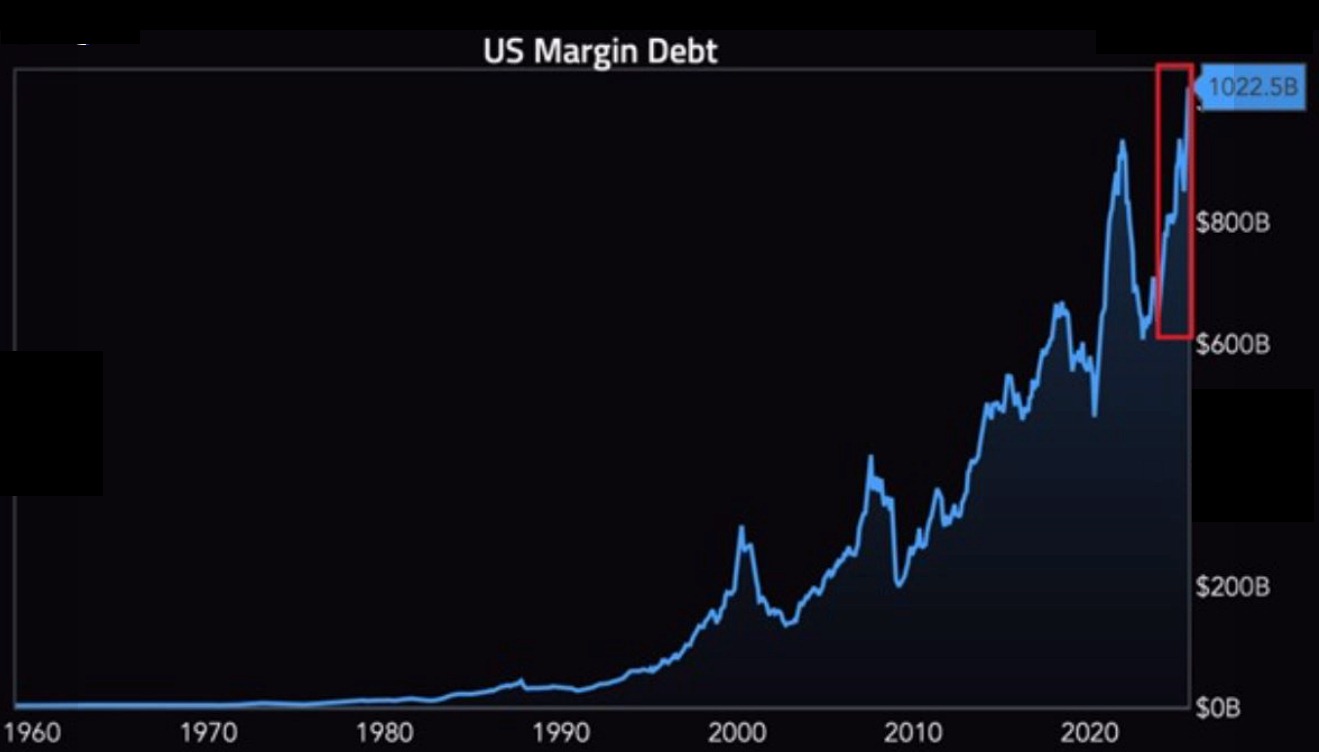
Unlike traditional investors, who rely on fundamentals such as earnings, revenue growth, or long-term sector trends, many retail traders are driven almost entirely by momentum, sentiment, and speculation. The trading models at play are not designed to build wealth over time; they are designed to exploit short-term volatility. This speculation is often amplified by leverage, margin accounts, and options trading, making swings more dramatic and less predictable.

The problem is that momentum-driven markets lack stability. They create the illusion of strength while quietly building fragility beneath the surface. As more money chases speculation rather than fundamentals, valuations drift further from reality, creating a bubble that cannot be sustained.

This bubble will almost certainly burst. And when it does, the unwinding will be severe. Because so many retail traders are using leveraged positions without effective downside protection, the correction will not simply be a normal pullback—it will be a violent contraction with significant ripple effects across the economy.

The stock market’s current behavior is not a sign of resilience but of distortion. It is being propped up by short-term speculation rather than long-term strength. Prudent investors should recognize the risks and approach this market with extreme caution.

Retail Investor’s Impact

Retail investors are individuals trading their own money through brokerage platforms, rather than through institutional structures like mutual funds, pensions, or endowments. While they don’t own the largest share of total market capitalization compared to institutions, their behavioral impact on the market is outsized relative to their percentage of ownership.

Here’s why:

  • Concentration of activity – Retail investors tend to pile into the same “meme” names or high-momentum stocks, amplifying volatility in ways that broad institutional strategies (like index funds) do not.

  • Leverage & options trading – Post-pandemic, we’ve seen an explosion of retail activity in leveraged products, including options and margin trading. For example, options volume is now dominated by contracts with less than 24 hours to expiration (“zero-day options”), and retail traders are a major driver of that activity. This behavior magnifies short-term swings.

  • Market signaling – Even though institutions hold more shares, they often respond to sentiment and volatility triggered by retail traders. In effect, retail flows can act as a spark that ignites much larger institutional moves.

  • High churn – The percentage of total market ownership by retail investors (estimated around 20–25% of U.S. equities) is less important than their trading behavior. Retail traders churn their portfolios at much higher rates than institutional investors, meaning the same dollars are moving in and out of positions far more rapidly. This turnover creates disproportionate price pressure compared to “buy and hold” strategies used by pensions and index funds.

The key issue isn’t retail investors’ overall share of ownership—it’s the outsized impact of their speculative, leveraged trading activity. Their rapid-fire churn has fundamentally reshaped market dynamics, injecting far more instability than their raw ownership percentages suggest.

As of the end of Q2 2025, Microsoft (MSFT), Apple (AAPL), and Nvidia (NVDA) together made up roughly 20% of the entire S&P 500 index. Because the index is market-cap weighted, this unprecedented concentration in just a handful of companies means that movements in these few stocks disproportionately drive the performance of the broader market.

Layer on top the influence of retail traders, whose momentum-driven strategies are detached from fundamentals, and the result is extreme volatility. In fact, on any given trading day, as much as 95% of index swings can be traced back to a combination of two forces: retail churn and the heavy concentration of market cap in a narrow set of tech giants. This creates the illusion of strength while masking deep fragility in the underlying economy.

Trumpenomics: The Decline of the US

US Margin Debt (Buying Stocks With Borrowed Money)