bookmark_borderRecord Exports, Rising Costs: The Hidden Tradeoffs of America’s Oil Boom

The United States reached a record-breaking 12.9 million barrels per day (bpd) in total crude oil and petroleum product exports for the week ending April 17, 2026. On paper, this milestone reinforces the narrative of American “energy dominance.” In practice, it reveals a far more complex—and costly—reality.


The Refinery Mismatch: Why the U.S. Imports Oil While Exporting It

Despite being a net exporter of total petroleum (crude + refined products), the U.S. still imports more crude oil than it exports.

This apparent contradiction is driven by what industry experts call a refinery mismatch:

  • U.S. shale production yields light, sweet crude, which is highly valuable on global markets
  • Many U.S. refineries were built decades ago to process heavier, sour crude
  • As a result, it is often more profitable to export domestic light crude and import cheaper heavy crude for refining

As of early 2026, the primary sources of U.S. crude imports include:

  • Canada (over 60% of imports)
  • Mexico
  • Saudi Arabia
  • Guyana and Colombia

This system maximizes industry profit—but it also ties domestic energy prices more tightly to global markets.


Climate Implications: A High-Emission Backbone

While production and exports surge, the refining process remains one of the most energy-intensive and polluting sectors in the U.S. economy.

Greenhouse Gas Emissions

Refineries are among the largest industrial emitters of carbon dioxide and methane. Globally, they rank as a major contributor to greenhouse gas emissions, reinforcing long-term warming trends.

Decarbonization Challenges

As sectors like electricity generation shift toward cleaner energy, refining is expected to represent a growing share of total emissions unless significant mitigation technologies are deployed.

Energy Intensity

Refining requires extreme heat and pressure, often generated by burning byproducts like refinery fuel gas—creating a self-reinforcing cycle of emissions.

When you account for emissions from both the refining process and the combustion of petroleum products, the United States is the largest contributor to environmental damage and climate change.


Local Pollution and Public Health

The environmental burden is not evenly distributed. Communities located near refineries—often referred to as “fenceline communities”—face elevated health risks.

Toxic Air Pollutants

Refineries emit hazardous chemicals such as:

  • Benzene (a known carcinogen)
  • Toluene
  • Xylene

Recent 2026 data indicates that benzene levels in some Gulf Coast regions remain above recommended safety thresholds.

Respiratory and Cardiovascular Impacts

Emissions of sulfur dioxide and nitrogen oxides contribute to:

  • Smog formation
  • Acid rain
  • Increased rates of asthma, bronchitis, and heart disease

Particulate Matter

Fine particles released during refining can enter the bloodstream, contributing to:

  • Premature mortality
  • Cancer risk
  • Chronic respiratory conditions

The Consumer Impact: Higher Prices at Home

Ironically, record exports can translate into higher costs for U.S. consumers.

Global Price Linkage

By exporting large volumes of oil and refined products, U.S. fuel prices become more tightly linked to volatile global markets, including geopolitical disruptions.

Rising Fuel Costs

In early 2026, American consumers paid an estimated $8.4 billion more for fuel, driven by supply disruptions and strong export demand.

Diesel Squeeze

Global demand for diesel has surged, pushing U.S. retail prices to nearly $5.80 per gallon as of April 2026—adding pressure to transportation, agriculture, and manufacturing costs.


The Bigger Picture: Strength or Exposure?

The U.S. oil boom highlights a fundamental tension:

  • Economic strength: Record exports, global market influence, and strong industry profits
  • Systemic exposure: Higher domestic prices, environmental costs, and dependence on global dynamics

What appears to be energy independence is, in reality, a deeply interconnected system—one where domestic outcomes are increasingly shaped by international forces.

The health impacts from the US production, distribution, and combustion of petroleum products are the most significant anthropogenic contributors to premature mortality and reduced quality of life worldwide.


Final Thought

Record export numbers tell only part of the story. Beneath the surface lies a system defined by structural inefficiencies, environmental tradeoffs, and rising costs for consumers.

In that sense, America’s energy dominance may be less about insulation—and more about integration into a volatile global market.

bookmark_borderHeat Health Risks

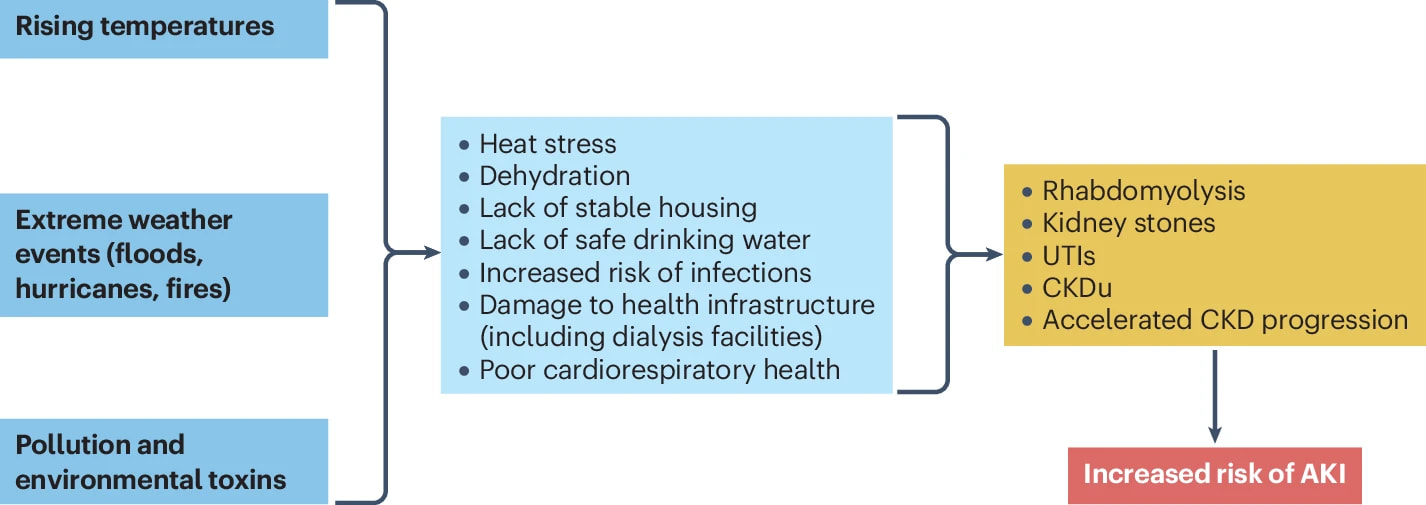
Heat stress is not just uncomfortable—it’s dangerous.

Rising exposure:
Over the past four years, the average person has experienced 19 days per year of life-threatening heat, driven almost entirely by human-caused warming.

Severe health impacts:
Extreme heat can trigger heatstroke, dehydration, and kidney injury, while also worsening existing heart and lung conditions.

Accelerated aging:
Prolonged exposure to extreme heat speeds up biological aging—damaging tissues and shortening telomeres at the cellular level.

Chronic disease risk:
These changes increase the likelihood of diseases such as cancer, dementia, and diabetes—conditions that are further exacerbated by pollution and infection.

Mental health effects:
Heat stress is also linked to higher rates of depression, anxiety, and even suicide.


Epigenetic Changes: The Molecular Convergence of Climate Stressors

A key connection between these risks lies in epigenetic changes—chemical modifications that influence how genes are expressed without altering the DNA itself. Think of them as switches that turn genes on or off.

Extreme heat has been shown to trigger these changes.

  • Heat—especially humid heat—can trigger epigenetic changes that activate high-risk genes linked to cancer, diabetes, cardiovascular disease, and neurological disorders.
  • Each time you are exposed to extreme heat , the effects don’t just add up—they compound, increasing long-term vulnerability across multiple organ systems..

This molecular disruption represents a shared pathway linking climate-related health threats. It amplifies feedback loops that drive chronic illness and premature death, and raises concerns about transgenerational effects, where these changes may increase disease risk in future generations.


A recent study in Nature examines the impact of heat stress on kidney health:
https://www.nature.com/articles/s41581-026-01063-3

bookmark_borderThe Greatest Economic Lies of All Time: War, Tariffs, and the Hidden Tax on Consumers

Perhaps the two greatest economic misconceptions of the 21st century are:

  • Foreign countries pay tariffs
  • The United States does not depend on the Strait of Hormuz

Both claims are not just misleading—they fundamentally distort how the global economy actually functions.


The Tariff Illusion: Who Really Pays?

The tariff argument is the easier of the two to understand.

Tariffs are taxes on imports. In practice, the importer—the domestic company bringing goods into the country—pays the tax. Those costs are then passed on through supply chains to businesses and ultimately to consumers.

This is not theoretical—it has been tested. In court rulings requiring tariff refunds, the recipients were overwhelmingly U.S. companies. Small and mid-sized businesses, which lack the pricing power and flexibility of large corporations, bore a disproportionate share of the burden.

In short, tariffs function as a domestic tax disguised as foreign punishment.


The Strait of Hormuz Myth: Indirect Dependence, Direct Consequences

The second claim—that the U.S. does not rely on the Strait of Hormuz—is more complex, and far more consequential.

It is technically true that the United States imports relatively little crude oil directly from the Persian Gulf compared to past decades. However, this misses the larger reality: oil is priced globally.

When the Strait of Hormuz—through which roughly 20 million barrels per day flow—is disrupted, the impact is immediate and universal. Prices rise not just for crude, but for refined fuels, petrochemicals, and nearly every energy-intensive product.

As a climate scientist, one might view this as an unintended but powerful carbon tax—accelerating the transition away from fossil fuels. As an economist concerned with inequality, poverty, and food security, the implications are deeply troubling.


War and the Permanent Price Shift

Early claims that the Strait would quickly reopen have proven overly optimistic. Even temporary disruptions create long-term structural changes:

  • Increased insurance costs
  • Security-related tolls and delays
  • Rerouting of global shipping lanes
  • Persistent risk premiums embedded in pricing

Even if hostilities decline, the system does not simply revert. Markets price risk forward, not backward.


Fossil Fuels: The Reality of “Energy Dominance”

Despite claims of “energy dominance,” the U.S. remains deeply exposed to global energy shocks.

Recent market behavior underscores this:

  • U.S. West Texas crude trading above Brent signals tightening domestic supply
  • Spot prices running $20–$30 above futures indicate immediate scarcity
  • Physical Brent cargoes reaching record highs reflect extreme demand for near-term delivery

This is classic backwardation—markets signaling shortage, not abundance.

As a result, gasoline prices moving toward $5 per gallon are not speculative—they are consistent with current market structure.


The Great Rerouting: Why U.S. Consumers Pay More

In response to disruptions, global buyers have begun shifting supply chains:

  • Tankers are increasingly sourcing oil from the U.S. Gulf Coast instead of the Middle East
  • American crude is being exported to replace disrupted supply elsewhere
  • Domestic supply tightens as global demand competes for U.S. barrels

Ironically, this means U.S. consumers may pay more than consumers in other regions.

Energy dominance, in this context, becomes exposure rather than insulation.


The Hidden War Tax on Oil

Even in a de-escalation scenario, new cost structures remain:

  • Tolls, insurance, and financing add an estimated $3.50–$5 per barrel to Middle Eastern oil
  • By comparison, shipping from Texas to Europe adds only $1–$3 per barrel

This creates a structural shift in global sourcing—but not necessarily lower prices for U.S. consumers. Instead, it embeds a long-term premium into the system.


Beyond Oil: System-Wide Inflation

The disruption extends far beyond crude oil.

Petrochemicals and Plastics

  • Plastic prices have surged as much as 60% in some markets
  • Plastic feedstock shortages are tightening global resin supply
  • Consumer goods—from packaging to household items—are rising in price. Less obvious are items like clothing, which are heavily dependent on plastics and synthetic fibers, making them particularly sensitive to these cost increases.

Fertilizer and Food Security

  • Roughly half of global fertilizer supply moves through the Strait
  • Disruptions threaten agricultural output worldwide
  • Some estimates suggest food security could collapse from supporting 8 billion people to as few as 2 billion under sustained disruption

This is not just inflation—it is systemic risk.


Metals and Industrial Inputs

Aluminum:

  • Prices at four-year highs
  • Production disruptions in key Gulf facilities
  • Supply chain impacts across automotive, construction, and packaging sectors

Downstream Effects:

  • Higher costs for consumer goods, infrastructure, and manufacturing inputs
  • Increased volatility in global supply chains

Helium: A Critical but Overlooked Shock

Strikes affecting LNG infrastructure in Qatar have disrupted nearly one-third of global helium supply.

Impacts include:

  • Semiconductor manufacturing
  • MRI medical systems
  • Aerospace and defense
  • Industrial applications

Some analysts warn shortages could persist for years due to infrastructure damage and logistical constraints.


Interest Rates: The Amplifier of Economic Pain

Rising interest rates are compounding the effects of war, tariffs, and supply shocks, acting as a powerful amplifier across the entire economy. As central banks attempt to contain inflation, higher rates are tightening financial conditions for households, businesses, and governments alike.

Impact on Consumer Spending

Higher interest rates directly reduce consumer purchasing power:

  • Credit card rates rise, increasing the cost of carrying balances
  • Auto loans become more expensive, suppressing vehicle demand
  • Personal loans and financing costs increase across the board

As debt servicing consumes a larger share of income, discretionary spending declines. This is particularly significant in an economy where consumption drives roughly 70% of GDP. Even modest increases in borrowing costs can lead to outsized reductions in spending, especially among middle- and lower-income households.

There is also a psychological component. Higher rates signal economic tightening, leading consumers to delay major purchases and increase savings as a precaution. This behavioral shift can accelerate economic slowdowns.

Impact on Housing and Real Estate

The real estate market is especially sensitive to interest rates:

  • Mortgage rates have risen sharply, significantly increasing monthly payments
  • Affordability has deteriorated even where home prices have stabilized
  • First-time buyers are increasingly priced out of the market

For example, a one percentage point increase in mortgage rates can raise monthly payments by hundreds of dollars, effectively reducing purchasing power by tens of thousands of dollars.

This has several cascading effects:

  • Home sales slow as buyers step back
  • Construction activity declines, impacting jobs and materials demand
  • Homeowners with low-rate mortgages are reluctant to sell, reducing supply and creating market rigidity

Commercial real estate faces even greater stress. Higher borrowing costs, combined with shifting demand patterns, are placing pressure on property valuations and increasing refinancing risks.

The Feedback Loop

Rising interest rates create a feedback loop within the broader economic environment:

  • Higher rates reduce demand
  • Reduced demand slows economic growth
  • Slower growth increases financial stress
  • Financial stress can further tighten credit conditions

At the same time, elevated rates increase the cost of servicing government debt, adding pressure to already high deficits and limiting fiscal flexibility.

The Combined Effect

When combined with war-driven energy inflation and tariff-induced price increases, higher interest rates leave policymakers with limited options. Attempts to control inflation risk deepening economic slowdown, while efforts to stimulate growth risk reigniting inflation.

The result is a structurally fragile environment in which consumers face higher prices, higher borrowing costs, and fewer opportunities for economic mobility.


Tariffs in a Time of War

Layered on top of these supply shocks are new tariffs:

  • 10% global import surcharge
  • 50% tariffs on key metals
  • Expanded sector-specific tariffs, including pharmaceuticals

These policies amplify inflationary pressure by increasing input costs across industries already strained by supply disruptions.


Conclusion: The Convergence of Two Lies

These two misconceptions—about tariffs and the Strait of Hormuz—converge into a single reality:

  • War acts as a global tax
  • Tariffs act as a domestic tax
  • Consumers ultimately pay both

The result is a compounding inflationary cycle driven not by a single factor, but by the interaction of policy, conflict, and global supply chains.


A Final Paradox

There is one undeniable outcome:

This crisis will likely accelerate the transition away from fossil fuels at a pace that would have been politically impossible under normal conditions.

But that transition is being forced not by planning—but by disruption.

And the cost of that disruption will be borne unevenly, with the greatest burden falling on those least able to afford it.

Iran has indicated that it has lost track of some floating mines in the Strait, underscoring the ongoing danger and uncertainty in the region. With mines already deployed and difficulties in locating and clearing them, reopening the waterway safely is a complex and time-consuming process.

Any assumption that conditions will return to normal in the near term—if ever—appears increasingly unrealistic.
bookmark_borderApproaching Singularity: Third Derivatives, Nonlinear Collapse, and Coupled Climate–Economic Instability

Daniel Brouse¹ and Sidd Mukherjee²
March 2026

¹Independent Climate Researcher, Economist
²Physicist


Abstract

A singularity in physics describes a regime in which governing equations break down, often producing non-physical or undefined results such as infinities. While true singularities are rare in real-world systems, many complex systems exhibit singularity-like behavior as they approach critical thresholds characterized by nonlinear amplification, loss of stability, and breakdown of predictability.

This paper develops a unified framework linking physical singularities to real-world system collapse through two analogs: dam failure and vortex dynamics. These systems demonstrate how gradual forcing can produce hidden instability, followed by abrupt, nonlinear transition. We extend this framework to the coupled climate–economic system, presenting evidence that both domains are exhibiting third-derivative behavior (d³I/dt³ > 0), indicating accelerating acceleration. We argue that this dynamic is consistent with systems approaching singularity-like regimes, where small perturbations can trigger large-scale, system-wide responses.


1. Introduction: Singularity as a Boundary of Predictability

In physics, a singularity represents a point at which known laws cease to produce meaningful predictions. Mathematically, this often appears as divergence toward infinity or undefined behavior.

In real-world systems, singularities rarely manifest as literal infinities. Instead, they represent boundaries of model validity, where:

  • linear assumptions fail
  • system sensitivity increases dramatically
  • behavior becomes nonlinear, unstable, and difficult to predict

This paper interprets singularity not as a point, but as a transition regime—a shift from stable, predictable dynamics to chaotic, self-reinforcing behavior.

Singularity marks the boundary of predictability—the edge of what can be reliably observed, modeled, and understood.


2. Dam Collapse: A Physical Analogy of Singularity

2.1 Gradual Forcing and Hidden Instability

A dam subjected to rising water levels exhibits initially stable behavior:

  • water level increases
  • structural stress accumulates
  • micro-fractures develop internally

Despite increasing internal stress, the system appears stable. This reflects latent instability, where damage accumulates without immediate failure.

This process is directly analogous to climate dynamics:

  • rising global temperatures
  • increasing ocean heat content
  • accumulation of greenhouse gases

2.2 Nonlinear Threshold Behavior

Structural stress does not scale linearly with forcing. Instead:

Stress ∝ h
Force ∝ h²

where h is water height.

As a result, small increases in forcing produce disproportionately large increases in stress. Failure risk becomes a nonlinear function of accumulated strain.


2.3 Critical Threshold and Collapse

At a critical point:

  • the dam remains intact
  • but internal stability is effectively exhausted

At this stage:

A small perturbation → catastrophic failure

This transition exhibits singularity-like behavior:

  • system response becomes disproportionate to input
  • predictability collapses
  • linear models fail

2.4 Runaway Dynamics and Feedback

Once failure begins:

  • crack propagation accelerates
  • water flow increases
  • erosion intensifies
  • structural resistance collapses

This creates a positive feedback loop:

More flow → more erosion → larger breach → more flow

Formally:

d²I/dt² > 0
d³I/dt³ > 0


2.5 Functional Singularity

Although no true infinity occurs, the system undergoes a discontinuous transition:

Stable → Unstable → Collapse

This represents a functional singularity—a point where system behavior changes abruptly and irreversibly.


3. Vortex Dynamics: Singular Behavior in Fluid Systems

3.1 Energy Input and Self-Organization

Vortices emerge from energy input into a fluid system:

  • pressure gradients develop
  • rotational motion forms
  • angular momentum is conserved

The system organizes into a coherent structure.


3.2 Nonlinear Acceleration Toward the Core

A defining vortex property is:

v ∝ 1 / r

As radius decreases:

r → 0 ⇒ v → ∞

This represents a mathematical singularity.


3.3 Breakdown of Physical Validity

In reality, infinite velocity does not occur. Instead:

lim (r → 0) v(r) → undefined

This signals:

  • breakdown of governing equations
  • transition beyond laminar flow assumptions

3.4 Transition to Turbulence

As the vortex intensifies:

  • turbulence develops
  • instabilities emerge
  • dissipation increases
  • structure degrades

Thus:

Singularity → Turbulence → Instability


3.5 Feedback Amplification

Vortices are governed by reinforcing dynamics:

Faster rotation → lower pressure → stronger inflow → faster rotation

Which corresponds to:

dv/dt > 0
d²v/dt² > 0
d³v/dt³ > 0


3.6 Singular Behavior Without Infinity

The vortex demonstrates that singularities represent:

  • extreme sensitivity to small changes
  • rapid nonlinear amplification
  • breakdown of predictability

Formally:

|dv/dr| → ∞ as r → 0


4. Climate and Economic Singularity

The climate system and the global economy form a coupled nonlinear system characterized by reinforcing feedback loops. Increasing evidence suggests both systems are exhibiting third-derivative behavior:

dI/dt > 0
d²I/dt² > 0
d³I/dt³ > 0

This indicates:

  • impacts are increasing
  • acceleration is increasing
  • acceleration itself is increasing

4.1 Coupled Feedback Dynamics

The interaction between climate and economic systems can be expressed as:

Increasing climate impacts → rising economic losses → reduced adaptive capacity → increased vulnerability → further impacts

This creates a self-reinforcing feedback loop.


4.2 Mechanisms of Nonlinear Amplification

Climate system drivers include:

  • ice-albedo feedback
  • ocean heat accumulation
  • atmospheric moisture amplification
  • ecosystem degradation

Economic responses include:

  • rising disaster losses
  • infrastructure stress
  • insurance market withdrawal
  • capital mispricing
  • sovereign fiscal pressure

4.3 Singularity-Like Regime

As feedbacks intensify, both systems approach a regime characterized by:

  • extreme sensitivity to small perturbations
  • dominance of feedback loops
  • breakdown of predictive models
  • increasing probability of abrupt transitions

This defines singularity-like behavior.


4.4 Phase Transition Dynamics

Collapse should not be viewed as a single event, but as a phase transition:

Stable → Nonlinear → Chaotic

In this regime:

  • volatility increases
  • system coherence degrades
  • cascading failures become more likely

5. Synthesis: From Physical Systems to Climate Risk

Both dam collapse and vortex dynamics demonstrate a common principle:

Singularity ≠ infinity
Singularity = breakdown of stability and predictability

Across systems:

Physical SystemBehavior Near Singularity
DamStructural collapse
VortexTurbulence
ClimateCascading instability
EconomySystemic financial stress

6. Conclusion

This analysis demonstrates that singularity-like behavior is a defining feature of nonlinear systems approaching instability. Both physical analogs—dam failure and vortex dynamics—illustrate how gradual forcing can lead to abrupt, disproportionate outcomes through feedback amplification.

The coupled climate–economic system now exhibits similar characteristics, including positive third-derivative behavior (d³I/dt³ > 0), indicating accelerating acceleration. This dynamic suggests that the system is entering a regime where:

  • small perturbations can produce large-scale impacts
  • predictability is increasingly limited
  • nonlinear feedbacks dominate system behavior

Importantly, the concept of singularity in this context does not imply infinite outcomes, but rather a transition beyond the limits of conventional modeling and incremental adaptation. If current trends persist, the probability of rapid, system-wide disruption will continue to increase—not as a distant possibility, but as an emergent property of the system itself.

Singularity represents the boundary of understanding. As systems approach and cross this boundary, the risk of cascading failures increases nonlinearly over time, making large-scale disruption increasingly likely even in response to relatively small perturbations.


References

IPCC (2023). Sixth Assessment Report
Lenton, T. et al. (2019). Climate tipping points
Hansen, J. et al. (2016). Ice melt and sea level rise
NOAA National Centers for Environmental Information. Billion-Dollar Weather and Climate Disasters Database

bookmark_borderClimate and Economic Singularity (Easy Version)

Daniel Brouse¹ and Sidd Mukherjee²
March 2026

¹Independent Climate Researcher, Economist
²Physicist


Big Idea

Some systems look stable… until they suddenly aren’t.

In physics, a singularity is where our equations stop working and predictions break down—sometimes appearing to point toward infinity, the speed of light, or other physical impossibilities. In the real world, we don’t actually observe “infinity.” Instead, we reach a point where:

  • Small changes cause huge effects
  • Systems become unstable
  • Outcomes become hard to predict

This paper argues that both the climate system and the global economy are moving toward this kind of boundary. More importantly, they are tightly coupled: each system amplifies and accelerates the other, creating a self-reinforcing cycle that drives both toward singularity-like behavior.

This dynamic is similar to watching a dam on the verge of collapse, the touchdown of a tornado, or a vortex pulling inward—systems that appear stable until a critical threshold is reached, after which small changes trigger rapid, runaway breakdown.


1. What Is a Singularity (In Plain Terms)?

A singularity is not really a “point.”

It’s better understood as a transition zone:

  • From stable → unstable
  • From predictable → chaotic
  • From linear → nonlinear

Think of it as the edge of understanding—where our models stop working well.


2. The Dam Example (Simple Analogy)

Step 1: Looks Stable

  • Water rises slowly
  • Pressure builds
  • Small cracks form

Everything seems fine.


Step 2: Hidden Risk

The key insight:

  • Pressure doesn’t increase evenly
  • It increases faster than the water level

Simple version:

Stress ∝ height  
Force ∝ height²

Small increases → much bigger stress


Step 3: The Breaking Point

At some point:

  • The dam is still standing
  • But it’s already unstable

Then:

A tiny change → total collapse


Step 4: Runaway Collapse

Once it starts:

  • More water flows → more damage
  • More damage → even more flow

This is a feedback loop:

More flow → more erosion → bigger breach → more flow

Key Takeaway

A dam doesn’t fail slowly.

It fails:

Stable → Unstable → Collapse

That sudden shift is what we mean by a “real-world singularity.”


3. The Vortex Example (Whirlpools & Storms)

How It Works

In a vortex:

Velocity ∝ 1 / radius

As you get closer to the center:

  • Radius shrinks
  • Speed increases rapidly

Mathematically:

r → 0 ⇒ velocity → very large (approaching infinity)

In reality, the speed never actually reaches infinity at the center. Instead, the system becomes unstable and transitions into turbulence. However, the rapid increase in velocity as it approaches the core illustrates why vortices are so powerful—the closer you get, the stronger the pull, sucking everything down the drain.

At the tip of a tornado’s vortex, the effects become much more visible. As wind speeds increase rapidly toward the center, the forces intensify, and anything caught near the core can be violently torn apart or lifted. While the forces don’t actually reach infinity, the rapid increase in intensity explains the severe and often explosive damage observed at touchdown.


What Really Happens

In reality:

  • Speed doesn’t go to infinity
  • The system becomes turbulent, chaotic, and more damaging

The model breaks down.


Key Insight

A vortex shows that:

  • Small changes near the center → huge effects
  • Behavior becomes unpredictable

4. What This Means for Climate and the Economy

Both systems now show the same pattern:

dI/dt > 0     (damage is increasing)
d²I/dt² > 0 (the rate of damage is accelerating)
d³I/dt³ > 0 (acceleration itself is accelerating)

In plain English:

  • Things are getting worse
  • They’re getting worse faster
  • The amplification is compounding—both in intensity and in frequency

This is called “jerk” (third derivative)


5. The Feedback Loop Problem

Climate and the economy are connected:

More climate damage  
→ more economic losses
→ less ability to adapt
→ more vulnerability
→ even more damage

This is a self-reinforcing loop.


6. Why This Is Dangerous

As systems approach singularity-like behavior:

  • Small events can trigger big consequences
  • Predictions become less reliable
  • Instability spreads across systems

Examples:

SystemWhat Happens Near “Singularity”
DamSudden collapse
VortexTurbulence
ClimateCascading failures
EconomyFinancial stress

7. The Most Important Insight

Singularity does not mean infinity.

It means:

Loss of stability and predictability


8. What Happens Next?

If current trends continue:

  • Disruptions become more frequent
  • Systems become more fragile
  • Large-scale failures become more likely

Not because of one big event—but because of:

Accumulated stress + feedback loops


Final Thought

Singularity is the boundary of understanding.

As we approach it:

  • Small changes matter more
  • Risks grow faster
  • Outcomes become harder to control

The danger isn’t just change—it’s the acceleration of change.


References (Simplified)

  • IPCC (2023) – Climate science report
  • Lenton et al. (2019) – Tipping points
  • Hansen et al. (2016) – Ice melt and sea level
  • NOAA – Billion-dollar disasters

bookmark_border“More Winning?” Trump’s Record Baby Bombing

The Human Cost of the 2026 Iran Conflict: Child Casualties and U.S. Military Losses

“Promises made, mothers wept.”

The 2026 escalation of hostilities in the Middle East has produced an unprecedented spike in civilian casualties, particularly among children. Modern conflicts involving the United States have not seen child casualty figures of this magnitude in such a short timeframe.


Child Casualties in the Middle East

According to recent UNICEF reports, over 1,100 children have been killed or injured in the Middle East since the start of the Iran conflict on February 28, 2026.

  • This figure represents a concentrated 10-day spike, which is unprecedented in modern U.S. military engagements.
  • While U.S. forces have historically been involved in conflicts with high cumulative child casualties, the speed and intensity of this recent spike are unmatched.

Updated Civilian Fatalities and Injuries

Iran

  • As of March 13, 2026, over 1,300 Iranian civilians have reportedly been killed since the conflict began.
  • The reported injuries include children, women, and non-combatants, highlighting the devastating humanitarian impact of air and drone strikes.

U.S. Military Fatalities and Injuries

  • Total U.S. fatalities: 13
    • March 12, 2026: 6 airmen killed when a KC-135 Stratotanker crashed in western Iraq during a combat mission.
    • March 1, 2026: 6 soldiers killed by an Iranian drone strike at a command center in Port Shuaiba, Kuwait.
    • March 8, 2026: 1 soldier succumbed to injuries sustained during the March 1 attack at Prince Sultan Air Base in Saudi Arabia.
  • Total U.S. injuries: Approximately 140–150
    • 8 service members remain severely injured and are receiving intensive care.
    • Additional injuries have been reported aboard the USS Gerald R. Ford following a fire, though casualty details have not yet been finalized.

Implications and Context

The rapid escalation of casualties — both civilian and military — underscores the unintended human costs of conflict. Key takeaways include:

  1. Child Casualties as a Humanitarian Indicator
    • A spike of over 1,100 children injured or killed in 10 days signals urgent concern for international human rights organizations and emphasizes the need for independent investigations.
  2. Military Vulnerability and Operational Risks
    • The combination of drone attacks, aerial operations, and naval incidents illustrates both the complexity of modern warfare and the exposure of U.S. forces to high-risk operational environments.
  3. Historical Comparison
    • By comparison, prior U.S. military conflicts in Iraq, Afghanistan, and Syria involved prolonged casualties but rarely saw this intensity of child harm within such a compressed timeframe.
  4. Global Repercussions
    • These casualty figures are likely to influence international opinion, foreign policy debates, and U.S. domestic discourse on military intervention.

Conclusion

The 2026 Iran conflict demonstrates that even short-term, high-intensity military operations can have disproportionate humanitarian consequences. While strategic objectives may be articulated by policymakers, the human cost — particularly for children — is immediate and staggering.

Under President Donald J. Trump’s direction as Commander-in-Chief, U.S. military operations in the 2026 Iran conflict have resulted in an unprecedented number of child casualties over a very short timeframe, surpassing any president in modern history.

International agencies, humanitarian groups, and governments must urgently monitor the situation, assess the impact of operations, and ensure that civilian protection is prioritized.

Trumpenomics

bookmark_borderClimate Change: Is It Too Late?

Well, no. It will never be too late. That is the part the ecofascists are depending on. The physics limits warming to roughly +9°C. At that level, much of the planet would be uninhabitable — oceans would rise dramatically, heat extremes would make large regions lethal to humans, freshwater scarcity would be widespread, and agricultural systems would collapse. Tens or hundreds of millions would face starvation, disease, and displacement. In the twisted logic of ecofascists, this is not a crisis to prevent but an opportunity: the “inferior blood” would perish, while they imagine themselves ruling what remains of the world, consolidating power in the wake of mass suffering.

Ecofascism reframes environmental collapse as beneficial — even desirable — if it reduces populations deemed inferior, excessive, or expendable. It merges environmental crisis with authoritarian hierarchy, racialized survival logic, and elite domination theory. This is not speculation. It is evidenced in language.

The release of the Epstein Files provided explicit confirmation of ideological alignment between climate minimization and eugenic framing. Publicly released materials include statements attributed to Jeffrey Epstein such as:

  • “I liked the argument that more CO₂ is good for plants.”
  • “Maybe climate change is a good way of dealing with overpopulation — the earth’s forest fire. Potentially a good thing for the species.”

Combined with statements reflecting explicit eugenic ideology:

  • “Executions of the elderly and infirm make sense.”
  • “African music has lots of beats and little development — no accident. It mirrors their learning process.”

This is not conventional policy disagreement. This is eliminationist logic. Where traditional denial protects capital investment, ecofascism rationalizes unequal human survival.

Since I’m not part of the Epstein Elite, I ain’t buying that ideology. So, we need to do everything we can to:

  1. Educate everyone on climate science.
  2. Refuse to tolerate denialism or ecofascism.
  3. Stop the use of fossil fuels as quickly as humanly possible.

bookmark_borderThe Accidental Fascist Hunter

How a Climate Investigation Uncovered Ecofascist Networks

Introduction

This paper documents how an investigation into climate science denial led to the identification of ecofascist ideology embedded within elite networks.

I did not set out to become what some now call a “fascist hunter.” The investigation began narrowly, focused on institutional influence and regulatory manipulation. It evolved into something far larger — the exposure of an ideological framework that treats environmental collapse not as a crisis to prevent, but as a mechanism of selective survival.

Phase I: The Institutional Inquiry

The investigation began with a focused institutional question:

Were challenges to the EPA’s Endangerment Finding and coordinated regulatory rollbacks driven primarily by economic motives — specifically the fossil fuel industry’s long-documented strategy of financing climate denial narratives?

The CO₂ Coalition and the Department of Energy’s Climate Working Group (DOE CWG) were central nodes of analysis.

The economic motive was clear and well documented: protect fossil capital, delay regulation, manufacture doubt.

That part of the investigation was straightforward.

Phase II: The Ideological Shift

As correspondence, affiliations, and rhetoric were analyzed, a second pattern emerged.

This was not merely economic denialism.

It was ideological normalization of ecofascism.

Ecofascism reframes environmental collapse as beneficial — even desirable — if it reduces populations deemed inferior, excessive, or expendable. It merges environmental crisis with authoritarian hierarchy, racialized survival logic, and elite domination theory.

This is not speculation. It is evidenced in language.

The release of the Epstein Files provided explicit confirmation of ideological alignment between climate minimization and eugenic framing.

Publicly released materials include statements attributed to Jeffrey Epstein such as:

“I liked the argument that more CO₂ is good for plants.”
“Maybe climate change is a good way of dealing with overpopulation — the earth’s forest fire. Potentially a good thing for the species.”

Combined with statements reflecting explicit eugenic ideology:

“Executions of the elderly and infirm make sense.”
“African music has lots of beats and little development — no accident. It mirrors their learning process.”

This is not conventional policy disagreement.

This is eliminationist logic.

Where traditional denial protects capital investment, ecofascism rationalizes unequal human survival.

Phase III: Scientific Foundation — Acceleration

My climate work dates to the 1990s, when we analyzed whether sea-level rise and temperature increases were accelerating.

The core question was mathematical: Is climate change linear, or is it nonlinear and accelerating?

Rather than assuming constant growth, we examined second-order rate-of-change — whether the rate itself was increasing.

Core Mathematical Insight

When feedback amplification increases the growth constant over time:Td(t)=ln⁡(2)k(t)T_d(t) = \frac{\ln(2)}{k(t)}Td​(t)=k(t)ln(2)​

Where:

  • Td(t)T_d(t)Td​(t) = doubling time
  • k(t)k(t)k(t) = time-dependent growth constant
  • ln⁡\lnln = natural logarithm

When k(t)k(t)k(t) increases due to feedback loops, doubling times collapse.

By the early 2000s, multiple independent datasets supported nonlinear acceleration:

  • Surface and tropospheric temperature
  • Greenland and Antarctic ice mass balance
  • Wildfire frequency and burned area
  • Ocean heat content
  • Hydrological extremes

Observed impact doubling times declined from roughly ~100 years (pre-industrial baseline), to ~10 years by 2010, and to approximately 2–5 years by 2024 in certain high-sensitivity indicators.

Under compressed doubling intervals of ~1.5–2 years, cumulative impacts can increase by a factor of 64 (2⁶) within a decade.

That is not linear change.

That is system instability.

Phase IV: The Convergence

Until February 2026, I had not encountered ecofascism as an operational category in my investigative work.

Now it is central.

The convergence point is this:

Climate denial that is knowingly false
+
Rhetoric that frames collapse as beneficial
+
Elitist eugenic ideology

Ecofascism

If someone promotes demonstrably false climate claims — not out of ignorance, but with the intent to delay mitigation while expressing indifference toward disproportionate harm to vulnerable populations — that is not mere misinformation.

That is ideological weaponization.

There is no rational basis for saying 1 + 1 = 89.

Likewise, there is no empirical basis for claiming modern anthropogenic climate change is purely natural. When such claims are made repeatedly, despite overwhelming evidence to the contrary, intent must be examined.

The lie becomes structural.

And when the structural outcome of that lie disproportionately harms populations already deemed inferior by those promoting it, the ideological alignment becomes clear.


Qualifications

1. Climate Science

In the 1990s, we independently analyzed acceleration dynamics in climate indicators. Our work examined doubling times and nonlinear feedback compression using empirical datasets.

This was not speculative modeling. It was data-driven analysis of observed acceleration.

2. Ethics, Logic, and Investigative Journalism

I hold a philosophy degree, graduated with a 4.0 GPA, and was inducted into Phi Sigma Tau, the international honor society for philosophy, with formal expertise in ethics, logic, and linguistics.

I have investigated organized crime, municipal corruption, and institutional misconduct. I understand retaliation, intimidation, and disinformation tactics.

This investigation fits the same structural pattern.

Unintended Consequences

It was not my intention to uncover what appears to be an international ideological network.

So far, ecofascist patterns have been identified in the U.S., Canada, the U.K., EU member states, Russia, Indonesia, Australia, and New Zealand.

Exposure carries risk.

Publishing quickly and publicly is not theatrical — it is strategic documentation. Transparency is protection.


Initial Findings

Based on two years of combined denialism and ecofascism analysis:

  • ~10% appear to understand the science and knowingly promote harmful narratives consistent with ecofascist ideology.
  • ~90% do not understand the science but adopt denialist rhetoric as identity reinforcement.
  • A measurable subset demonstrate impaired abstract reasoning capacity, making them highly susceptible to manipulation and propaganda.

This is ongoing research.

The dataset now includes tens of thousands of observed interactions.

Fortunately, a growing network of citizen scientists has begun assisting in documentation and data collection.


Conclusion: The Rise of the Fascist Hunter

This was not a chosen role.

It emerged from evidence.

When denial transitions from economic self-interest to eliminationist indifference, the moral frame changes.

We are no longer debating policy cost curves.

We are confronting ideological frameworks that treat ecological collapse as selective purification.

Identifying that shift is no longer optional.

It is necessary.

RESOURCES:

bookmark_borderThe Department of Energy’s “Climate Working Group”: Legal Violations, Ideological Networks, and the Convergence of Climate Denial and Ecofascism

Abstract

Recent investigations into the U.S. Department of Energy’s (DOE) “Climate Working Group” (CWG) reveal a complex intersection of legal violations, political influence, and ideological alignment with climate denial networks. A U.S. District Court ruled that the CWG violated the Federal Advisory Committee Act (FACA), which mandates transparency, balanced representation, and public accountability for federal advisory committees. Beyond procedural breaches, the group’s membership and affiliations suggest a coordinated effort to challenge established climate science, influence federal policy, and promote fossil fuel interests. Further investigation uncovers connections between these networks and ecofascist thought, illustrating how climate denial can intersect with elite ideological currents, with tangible implications for vulnerable populations and future generations.


1. Introduction

The formation and operation of the DOE’s “Climate Working Group” have become the subject of intense scrutiny due to potential violations of U.S. law and concerns about the integrity of federal science advisory processes. Established under the Trump administration, the CWG produced analyses that were reportedly leveraged to support the reconsideration and attempted repeal of the Environmental Protection Agency’s (EPA) 2009 Greenhouse Gas Endangerment Finding, which legally identifies greenhouse gases as threats to public health.

Critics have highlighted the group’s membership, which includes scientists and policy analysts known for challenging mainstream climate models, and noted the group’s ideological overlap with organizations such as the CO₂ Coalition and the Heartland Institute. These associations raise questions regarding viewpoint diversity, conflicts of interest, and potential influence on policy outcomes.


2. Legal Framework: The Federal Advisory Committee Act

The Federal Advisory Committee Act (FACA) establishes standards for federal advisory committees, requiring them to:

  1. Operate transparently;
  2. Provide balanced viewpoints;
  3. Maintain publicly accessible records.

In February 2026, a U.S. District Court ruled that the DOE’s CWG violated FACA. According to the court, the group failed to maintain transparency, excluded diverse perspectives, and operated without adequate public oversight. These procedural failures coincided with the group’s production of a report that informed attempts to overturn the EPA’s Endangerment Finding, which had far-reaching implications for climate and pollution regulation.


3. DOE Leadership and Fossil Fuel Background

Chris Wright (b. January 15, 1965), currently the 17th U.S. Secretary of Energy, has a professional history rooted in the fossil fuel industry:

  • Liberty Energy: Founder and former CEO of the Denver-based hydraulic fracturing company, which became the second-largest fracking firm in North America.
  • Pinnacle Technologies: Founded in 1992, the company pioneered hydraulic fracture mapping technologies.

Wright’s industry background, combined with his position at DOE, positions him as a central figure in shaping the policy context in which the CWG operated.


4. Composition of the Climate Working Group

The CWG was coordinated by Travis Fisher and included five prominent climate skeptics:

  • Steven E. Koonin: Physicist, senior fellow at Stanford’s Hoover Institution, former DOE official, and former chief scientist at BP. Author of Unsettled, which challenges mainstream climate science consensus.
  • Judith Curry: Climatologist, professor emerita at Georgia Institute of Technology, known for criticizing “alarmism” in climate policy.
  • Ross McKitrick: Environmental economist at the University of Guelph and senior fellow at the Fraser Institute. Argues that climate change is not a major policy threat.
  • John Christy: Atmospheric scientist with experience in satellite temperature research; affiliated with CO₂ Coalition-linked networks.
  • Roy Spencer: Meteorologist and climate researcher, publicly affiliated with the CO₂ Coalition.

Several members maintain professional and advocacy ties to organizations critical of mainstream climate science, raising concerns about bias and conflicts of interest in the CWG’s work.


5. Connections to the CO₂ Coalition and Heartland Institute

The CO₂ Coalition is a nonprofit advocating a reassessment of carbon dioxide’s role in climate change and opposing specific regulatory measures. Among CWG members:

  • Roy Spencer is formally listed as affiliated with the CO₂ Coalition and has contributed to its publications.
  • John Christy has collaborated with Spencer within the same policy network.

The CWG also exhibits clear overlaps with the Heartland Institute:

  • Personnel overlap: Several CWG members have longstanding Heartland affiliations.
  • Promotion of work: Heartland actively publicized the CWG report, A Critical Review of Impacts of Greenhouse Gas Emissions on the US Climate.
  • Shared policy goals: Both the CWG and Heartland focused on overturning the EPA’s Endangerment Finding and mirrored the methodology and conclusions of the Nongovernmental International Panel on Climate Change (NIPCC).
  • Network influence: CWG members frequently participate in Heartland conferences, reinforcing ideological alignment.

These connections highlight the interlocking networks shaping federal climate policy from outside formal government processes.


6. Affiliations with Conservative and Libertarian Think Tanks

CWG members maintain extensive ties to conservative and libertarian institutions:

MemberAffiliationInfluence
Steven KooninHoover InstitutionChallenges Endangerment Finding
Roy SpencerHeritage FoundationPromotes “science is unsettled” rhetoric
Ross McKitrickCato Institute, Fraser InstituteAdvises against CO₂ restrictions
John ChristyCompetitive Enterprise InstituteDisputes scientific consensus

Many of these organizations have received funding from “dark money” sources such as Donors Trust, Donors Capital Fund, Koch foundations, and the Scaife and Bradley Foundations, amplifying the reach and influence of climate-skeptic narratives.


7. Policy Influence Under the Trump Administration

Rob Bradley Jr., a conservative policy advocate, publicly promoted the CWG’s work through platforms such as IER and MasterResource. Bradley emphasized the report’s analyses as justification for repealing the 2009 Endangerment Finding and reducing regulatory restrictions on fossil fuels. His professional relationship with DOE Secretary Chris Wright further reinforced the integration of CWG findings into federal policy-making.


8. The Emergence of Ecofascist Rhetoric

Initial investigation into climate denial networks suggested a profit motive: fossil fuel interests seeking to delay regulation and protect market share. However, evidence indicates a deeper ideological thread—eco-fascism—framing climate change as a selective mechanism to reduce population pressures, particularly in the Global South.

Key observations:

  • Elite discussions, including those connected to Jeffrey Epstein, demonstrate interest in overpopulation and climate skepticism.
  • Materials indicate indirect influence on climate discourse through funding, convening, and advocacy, rather than direct scientific authorship.
  • Ecofascist reasoning diverges from profit-driven denialism by portraying environmental collapse as a selective corrective mechanism.

9. Humanitarian and Legal Implications

The CWG report and subsequent policy actions carry measurable consequences:

  • Increased pollution exposure and health risks to minors.
  • Amplified vulnerability of low-income nations to climate impacts, including heat, crop failure, and sea-level rise.
  • Potential civil liability, federal civil rights implications, and even violations recognized under international law when systemic harm to vulnerable populations can be demonstrated.

Policy actions informed by ideologically skewed advisory groups shift the issue from scientific debate to foreseeable harm, raising urgent ethical and legal questions.


10. Conclusion

The DOE Climate Working Group case exemplifies the dangers of ideologically motivated, opaque advisory networks influencing federal policy. Beyond procedural violations under FACA, the convergence of climate denial, conservative think tank networks, and ecofascist ideology underscores the risks posed by unaccountable influence on environmental governance.

Ensuring transparency, accountability, and viewpoint diversity in science advisory bodies is not merely a matter of administrative compliance—it is a prerequisite for ethical and legally responsible policy-making, particularly when actions carry foreseeable consequences for future generations and vulnerable populations.


11. Addendum: The Ethical Stakes for Minors

When policy actions:

  • Downplay climate risk;
  • Rescind environmental protections;
  • Increase exposure to pollution;
  • Contribute to measurable health harms;

the ethical and legal stakes escalate. Children are uniquely vulnerable to:

  • Air pollution
  • Heat exposure
  • Flood displacement
  • Food insecurity
  • Long-term developmental impacts

These outcomes underscore the necessity of transparent, evidence-based policymaking and the potential consequences of allowing ideological networks to shape public policy unchecked.

RESOURCES:

bookmark_borderEpstein’s Network, Climate Denialism, and the Rise of Ecofascist Ideology

“As someone who has spent decades analyzing economic systems and their ethical failures, I view this convergence of ideology and environmental risk as one of the most dangerous feedback loops currently unfolding.”

Ecofascism

I began investigating the CO₂ Coalition in the spring of 2025. That inquiry led me to examine its connections to the Department of Energy’s Climate Working Group (CWG) following the release of the group’s report on July 29, 2025. The scientific community responded with immediate and substantial criticism, including a 434-page rebuttal authored by more than 85 international scientists within weeks of the report’s publication.

In early February 2026, a federal court ruled that the CWG had operated in violation of federal advisory committee requirements, effectively deeming it an unlawful clandestine body. At that point, I assumed the group’s influence would diminish. However, on February 12, 2026, the 2009 Greenhouse Gas Endangerment Finding was formally overturned.

Ecofascist ideology advocates pushing global temperature increases toward the upper bounds permitted by physical constraints. A rise of approximately +9°C would render large portions of the planet effectively uninhabitable, with catastrophic consequences for human populations. Under this framework, mass mortality is viewed not as a tragedy to prevent but as a mechanism of demographic reduction.

Some strands of this ideology include explicit beliefs about eliminating those deemed “genetically inferior,” premised on the assumption that a select elite would survive and ultimately dominate.

Elements of this worldview overlap with themes found in certain white nationalist movements and segments of extremist Evangelical Christian nationalism.

by Daniel Brouse / February 25, 2026

When I began examining links between Jeffrey Epstein’s elite network and climate change denial, my initial working hypothesis was straightforward: profit. The fossil fuel industry has long funded campaigns designed to cast doubt on the scientific consensus that climate change is anthropogenic. If wealthy financiers and political actors were aligned with denialist narratives, the motive seemed obvious—protect existing investments, extend fossil fuel dependence, and delay regulatory action.

That motive exists. But it is not the whole story.

As the investigation deepened, a far more disturbing ideological thread emerged: the normalization of ecofascist rhetoric within segments of elite discourse. This worldview frames climate change not as a crisis to prevent, but as a selective corrective—an event that could reduce global population pressures, particularly in the Global South. In this framing, environmental catastrophe becomes less a shared human emergency and more a demographic filter.

Epstein replied:

“i liked the argument that more co2 is good for plants”

This echoes a common climate denial talking point that isolates the fertilization effect of CO₂ while ignoring well-documented countervailing harms — including heat stress, drought intensification, soil degradation, extreme weather, and nutrient dilution in crops.

Documented Intersections

Publicly released materials from the U.S. Department of Justice and congressional oversight records indicate that Jeffrey Epstein expressed views consistent with ecofascist ideology. According to those documents:

  • Epstein discussed overpopulation as a central global problem.
  • He questioned elements of the scientific consensus on climate change.
  • He interacted with climate skeptics and individuals promoting continued fossil fuel dependence.
  • His associations were distinct from, but sometimes rhetorically adjacent to, other figures in climate and energy debates.

The records do not portray Epstein as a climate scientist or policy architect. Rather, they show a financier with influence, access, and a demonstrated interest in shaping elite conversations around science, demography, and environmental futures.

The distinction matters. Influence in elite networks often operates indirectly—through funding, convening power, intellectual patronage, and agenda-setting rather than formal authorship of policy.

From Profit Motive to Ideological Motive

The profit motive behind climate denial is well documented across decades of fossil fuel industry strategy. However, ecofascism represents something structurally different.

Traditional denialism seeks to:

  • Delay regulation.
  • Preserve market share.
  • Undermine scientific credibility.
  • Protect capital investments.

Ecofascist reasoning, by contrast, reframes environmental collapse as:

  • An inevitable outcome.
  • A selective survival mechanism.
  • A tool for demographic reduction.
  • A geopolitical rebalancing that disproportionately impacts vulnerable populations.

Where denialism protects profits, ecofascism rationalizes harm.

This ideological shift is critical. It suggests that for some actors, climate inaction may not simply be negligence or greed—but strategic indifference to who suffers first and worst.

The Global South as a Targeted Casualty

Climate models consistently show that warming impacts—extreme heat, crop failure, sea-level rise, water stress—fall disproportionately on lower-income nations and equatorial regions. These are also regions with higher population growth rates.

The convergence of:

  1. Climate vulnerability
  2. Population growth rhetoric
  3. Elite indifference
  4. Fossil fuel dependence

creates a morally volatile mixture.

If climate destabilization is privately perceived as a “solution” to overpopulation, then policy paralysis is no longer accidental—it becomes aligned with a worldview that treats human suffering as an acceptable externality.

Why This Matters Now

The climate crisis is accelerating. Extreme weather events are intensifying. Migration pressures are rising. Food systems are destabilizing. As someone who has spent decades analyzing economic systems and their ethical failures, I view this convergence of ideology and environmental risk as one of the most dangerous feedback loops currently unfolding.

Climate denialism is not merely a scientific dispute. It is a political strategy. When fused with ecofascist undertones, it becomes something darker: a tacit endorsement of unequal survival.

The Epstein case illustrates how elite influence networks can intersect with scientific discourse in subtle but consequential ways. The concern is not that one financier alone shaped global climate policy. The concern is that certain narratives—about population, scarcity, and expendability—circulated within powerful circles without sufficient public scrutiny.

Conclusion

The investigation began with a question about greed. It evolved into a warning about ideology.

Climate denial protects capital.
Ecofascism rationalizes collapse.

Understanding the difference is essential.

The future of climate policy is not just a debate over carbon emissions. It is a debate over whose lives are treated as negotiable.

Nonlinear Climate Acceleration and the Convergence of Ecofascist and Eugenics Ideologies

The DOE’s “Climate Working Group”: Legal Violations, Ideological Networks, and the Convergence of Climate Denial and Ecofascism

Trump, Chris Wright, Rob Bradley Jr., the CO2 Coalition, Epstein Elite, and Crimes Against Humanity

Rob Bradley Jr., the Climate Working Group, and Policy Influence Under the Trump Administration