bookmark_borderClimate Update: A Sad Day for Humanity

by Daniel Brouse
March 13, 2025

The Trump administration has once again taken a sledgehammer to environmental protections, rolling back regulations on industrial emissions and automobile fuel efficiency standards. These actions continue the administration’s aggressive pro-fossil fuel agenda under the “drill, baby, drill” philosophy, prioritizing short-term profits over the long-term survival of our planet.

Rolling Back Protections: A Devastating Step Backward

Environmental regulations serve as critical guardrails to prevent unchecked pollution, mitigate climate change, and protect public health. However, the Trump administration has systematically dismantled these safeguards, undoing decades of progress.

Key rollbacks include:

  • Industrial Emissions: Regulations limiting carbon dioxide, methane, and other greenhouse gas emissions have been weakened or eliminated, allowing industries to pump more pollutants into the atmosphere with fewer consequences.
  • Automobile Standards: Fuel efficiency requirements for vehicles have been relaxed, leading to increased fossil fuel consumption and higher emissions at a time when transitioning to clean energy is more urgent than ever.
  • Public Land Exploitation: Protected areas, including national parks and wildlife refuges, have been opened up for oil drilling and resource extraction, permanently damaging ecosystems and increasing carbon output.

These policies, far from being economically beneficial, are accelerating climate change and endangering both the environment and human civilization.

Crossing the Point of No Return

Newly revised climate models indicate that the environmental policies enacted during Trump’s first and second terms have pushed the planet past multiple tipping points—points where climate systems begin to change irreversibly. These include:

  • Arctic Ice Loss Acceleration: Reduced ice cover is amplifying global warming by decreasing the Earth’s ability to reflect solar radiation.
  • Amazon Rainforest Collapse: Deforestation, coupled with rising temperatures, is transforming the world’s largest carbon sink into a net emitter of CO₂.
  • Ocean Circulation Disruptions: The weakening of major ocean currents, including the Atlantic Meridional Overturning Circulation (AMOC), threatens global weather patterns and food security.

With these tipping points crossed, scientists warn that global temperatures are now set to surpass critical thresholds within this century, leading to more frequent and intense natural disasters, rising sea levels, and mass displacement of human populations.

The Cost of Ignoring Science

The consequences of ignoring climate science in favor of corporate profits are becoming increasingly severe. Every rollback in environmental protections increases the likelihood of widespread ecological collapse and economic devastation. Rising temperatures will fuel more hurricanes, wildfires, droughts, and floods—each exacting a higher toll on human life and infrastructure.

Despite overwhelming evidence of the catastrophic impact of these policies, the administration remains committed to deregulation, further entrenching fossil fuel dependence and delaying the transition to sustainable energy.

Final Thoughts: An Avoidable Disaster

The tragedy of this situation is that it was entirely preventable. Had the U.S. prioritized climate action over corporate interests and personal greed, we could have slowed or even halted many of these dangerous trends. Instead, we now face an increasingly inhospitable planet, an unstable economy, and a future filled with avoidable suffering.

The question now is not whether the damage will be done—but how much worse it will get before real action is taken.
The Human Induced Climate Change Experiment

bookmark_borderThe Great Depression vs. The Climate Crisis: Why the Stock Market May Never Recover

by Daniel Brouse
March 10, 2025

Stock Market Recovery After the Great Depression

The Great Depression, which began with the stock market crash of October 1929, led to an unprecedented economic collapse. The Dow Jones Industrial Average (DJIA) plummeted from a peak of 381 in September 1929 to a low of 41 in July 1932—an almost 90% decline.

Recovery was slow and uneven. While there were periods of growth, the market didn’t return to its 1929 high until November 1954—about 25 years later. The recovery was influenced by various factors, including the New Deal policies, World War II spending, and the post-war economic boom. Even then, the financial scars of the Depression lasted for decades, with unemployment and social instability persisting well into the 1940s.

Why the Climate Crisis May Prevent Market Recovery

Unlike the Great Depression, which had a primarily financial cause and a subsequent recovery, the ongoing climate crisis presents an existential threat to economic stability. Climate-related disasters—hurricanes, wildfires, droughts, and floods—are increasing in frequency, intensity, and economic cost. Entire industries, from insurance to agriculture, are being destabilized.

Several factors suggest the market may never fully recover from climate-driven economic collapse:

  1. Infrastructure Damage – As sea levels rise and extreme weather intensifies, cities and economic hubs will suffer irreversible damage. The cost of rebuilding will outpace economic growth.

  2. Uninsurability of Assets – Many properties in high-risk areas are becoming uninsurable. As insurance costs skyrocket, real estate values plummet, leading to a long-term decline in wealth.

  3. Resource Scarcity and Inflation – Water shortages, crop failures, and supply chain disruptions will drive persistent inflation, making economic stability impossible.

  4. Mass Displacement – Climate refugees fleeing uninhabitable regions will place immense strain on governments and economies, leading to political instability and loss of productivity.

  5. Declining Investor Confidence – Unlike past recessions or depressions, which had clear recovery paths, investors may lose faith in the long-term viability of markets in a world where economic and environmental risks are unmanageable.

Unlike historical economic downturns, where recovery was a matter of policy and time, the climate crisis introduces irreversible disruptions. Without immediate action, the financial system may enter a state of permanent decline, making a full stock market recovery impossible.

Capital Preservation During Trumpenomics

Trumpenomics: The Decline of the US

bookmark_borderClimate Update: Record CO₂ Levels Signal Escalating Climate Crisis

by Daniel Brouse
March 9, 2025

Carbon dioxide (CO₂) levels have reached unprecedented highs, marking a dangerous milestone in the ongoing climate crisis. On March 7, 2025, the Mauna Loa Observatory in Hawaii recorded a daily average CO₂ concentration of 430.60 parts per million (ppm)—the highest ever measured. Since CO₂ levels typically peak annually in May, even higher concentrations are expected in the coming months.

This surge continues a troubling trend. In 2024, CO₂ levels rose by 3.6 ppm, reaching 427 ppm, a dramatic increase from pre-industrial levels. The rapid acceleration is driven by a combination of factors, including widespread wildfires, persistent fossil fuel emissions, and the intensifying impacts of the El Niño climate cycle, which has fueled hotter and drier conditions.

To put this in perspective, CO₂ concentrations have now reached levels unseen in over two million years. Unlike other pollutants, CO₂ remains in the atmosphere for hundreds to thousands of years, accumulating and compounding the greenhouse effect. We have not only increased emissions to unsustainable levels, but we have also triggered tipping points and feedback loops—such as permafrost thaw and forest dieback—that are further amplifying warming.

Simply reducing emissions is no longer enough. Immediate action is required to halt emissions entirely and reverse the self-reinforcing climate feedbacks we have set in motion. If we continue on our current trajectory, climate-driven disasters will intensify, and human life will be severely threatened within this century.

Unintended Consequences and Inexplicable Consumer Behavior
Climate change is primarily driven by the escalation of thermal energy affecting biogeophysical and socio-economic systems. While biogeophysical factors can be studied using math, physics, and historical records, socio-economic systems pose greater challenges due to the unpredictable consequences of human behavior and inexplicable consumer choices, exacerbating tipping points and feedback loops.

Complex Feedback Loops:

Complex feedback loops in climate science refer to interactions between different components of the Earth’s climate system that can amplify or dampen the effects of initial changes, leading to non-linear and often unpredictable outcomes. These feedback loops play a crucial role in shaping the behavior of the climate system and can influence various climate phenomena, including temperature changes, ice melt, and precipitation patterns.

Tipping points are Critical Milestones that directly impact the rate of acceleration in climate change by multiplying the number and intensity of feedback loops. Identifying and understanding these tipping points is crucial for climate science and policymaking. Crossing multiple tipping points could lead to a domino effect, resulting in a much more rapid and severe climate change than currently projected.

The Human Induced Climate Change Experiment

bookmark_borderClimate Update: Chain Reaction of Devastation

by Daniel Brouse
February 28, 2025

Human-induced climate change is directly impacting the habitability of our planet through increased thermal energy. Beyond rising temperatures, the cascading crises resulting from climate change can have immediate effects on health and wellness. The pollution caused by California wildfires, for instance, is expected to have long-term health impacts. In response to recent fires, California has temporarily suspended certain environmental protection laws to expedite rebuilding efforts.

Benzene Contamination

One significant concern is benzene exposure, which can occur through inhalation or ingestion of contaminated water.

Health Impacts of Benzene:

  • Short-term Exposure: Inhaling or ingesting benzene can cause symptoms such as nausea and vomiting.
  • Long-term Exposure: Prolonged exposure to benzene is linked to an increased risk of cancer.

Benzene contamination in California’s drinking water has emerged as a significant concern following recent wildfires. The combustion of urban infrastructure during these fires releases hazardous chemicals, including benzene, into the environment. Benzene, a known carcinogen, can infiltrate water systems through damaged pipes and compromised infrastructure.

In the aftermath of the Palisades and Eaton fires in Los Angeles, over 9,000 structures were affected, leading to contamination of municipal water supplies. Authorities have issued advisories against using tap water for drinking, cooking, or washing, recommending the use of bottled water instead. Boiling the water is discouraged, as it may not remove volatile organic compounds like benzene and could potentially concentrate them.

The process of restoring safe drinking water is complex and time-consuming. It involves extensive testing, system flushing, and infrastructure repairs, which can take from several days to months, depending on the severity of the contamination. For instance, after the Camp Fire in Paradise, California, in 2018, the town’s water supply was contaminated with benzene, and the remediation efforts extended over a prolonged period.

Residents in wildfire-prone areas are advised to stay informed through official channels and adhere to public health advisories regarding water usage. Using alternative water sources and avoiding the use of potentially contaminated tap water are crucial steps to minimize health risks associated with benzene exposure.  The best response is to avoid the area and do not rebuild.

In response to the recent wildfires, California Governor Gavin Newsom signed an executive order on January 12, 2025, suspending certain environmental regulations to expedite rebuilding efforts. This order temporarily lifts requirements under the California Environmental Quality Act (CEQA) and the California Coastal Act for development projects aimed at repairing or replacing properties damaged by the fires. While this action facilitates quicker reconstruction, it has raised concerns about potential environmental impacts due to the suspension of standard review processes.

The health impacts of wildfire-related pollution are profound. Short-term exposure to wildfire smoke can cause mild irritations like runny noses and scratchy throats, as well as more severe conditions such as bronchitis. For sensitive groups, including children, the elderly, pregnant individuals, and those with pre-existing respiratory and cardiovascular issues, the risks are even higher. Long-term exposure to pollutants from wildfire smoke has been linked to chronic respiratory diseases and an increased risk of cardiovascular problems.

Addressing the cascading crises resulting from climate change-induced events like wildfires requires a multifaceted approach. This includes implementing robust environmental protections, ensuring public health preparedness, and promoting sustainable practices to mitigate the underlying causes of climate change.

bookmark_borderClimate Change and Policy Shifts Threaten U.S. Housing Market Stability

by Daniel Brouse
February 20, 2025

Projected Devaluation of U.S. Homes Due to Climate Change

Recent analyses indicate that climate change poses a significant threat to the U.S. housing market. Over the next five years, it’s projected that at least 20% of U.S. homes will experience devaluation due to climate-related impacts. In certain vulnerable markets, property values could decline by up to 30% within this period. By 2055, approximately 84% of all U.S. homes may suffer devaluation, resulting in an estimated $1.47 trillion in losses. This timeline aligns with the typical 30-year mortgage term, underscoring the long-term financial risks for homeowners and lenders.

Insurance Market as an Indicator of Real Estate Vulnerability

The availability and cost of homeowners insurance are critical factors influencing mortgage approvals and, consequently, home valuations. Insurance is often considered the ‘canary in the coal mine’ for real estate, signaling emerging risks associated with climate change. High-vulnerability regions, particularly coastal areas in states like Florida, Louisiana, and California, are confronting a compounded crisis. The convergence of escalating insurance premiums, frequent natural disasters, and declining property values is placing immense strain on both homeowners and insurance systems. In Florida, for instance, the state-owned Citizens Property Insurance Corporation has become the largest insurer, reflecting the significant withdrawal of private companies from the market due to unmanageable risks.

Historical Context and Accelerating Climate Change Impacts

Traditionally, real estate has been regarded as a stable and appreciating investment, often outpacing general inflation rates. Since 1963, while inflation has risen by 896%, housing prices have surged by more than 2,350%. However, climate change is disrupting this paradigm. Scientific observations have documented a non-linear acceleration of climate change impacts, with the doubling time of these effects shrinking from approximately 100 years to just a few years. This rapid acceleration suggests that the adverse consequences of climate change on real estate are intensifying at an unprecedented rate.

Policy Changes and Their Potential Exacerbation of Climate Risks

Recent policy shifts under the Trump administration may further exacerbate these challenges. The administration has rescinded numerous environmental regulations and executive orders aimed at mitigating climate change. Notably, President Trump signed 26 executive orders on January 20, 2025, which included the repeal of approximately 80 prior executive actions focused on energy, environmental, and natural resource agendas. These actions reflect a strategic shift towards promoting domestic fossil energy production and reducing regulatory oversight, potentially accelerating environmental degradation.

Additionally, the administration has proposed reforms to key entities in the U.S. housing finance system, specifically Fannie Mae, Freddie Mac, and the Federal Housing Administration (FHA). The proposed privatization of Fannie Mae and Freddie Mac could lead to increased mortgage rates, adversely affecting housing affordability. Furthermore, the potential elimination of the Consumer Financial Protection Bureau (CFPB) may reduce oversight in the housing market, increasing the risk of predatory practices. These reforms could introduce significant uncertainty into the housing market, influencing home prices and overall economic stability.

The Trump administration has also announced plans to dismantle the Federal Emergency Management Agency (FEMA) and rescind all updates to floodplain maps. Homeland Security Secretary Kristi Noem supports reallocating FEMA’s responsibilities to state and local authorities, citing operational inefficiencies and flawed responses to recent disasters.  President Trump has signed an executive order revoking the Federal Flood Risk Management Standard, effectively halting enforcement of updated floodplain maps.  Critics argue that these actions could leave states unprepared for natural disasters and increase vulnerability to flooding leaving homeowners and lenders underwater.

Conclusion

The intersection of accelerating climate change impacts and recent policy shifts presents a formidable challenge to the U.S. housing market. Homeowners, investors, and policymakers must recognize and address these converging threats to safeguard the stability and value of real estate assets in the face of an evolving environmental and regulatory landscape.

Sources:

The Human Induced Climate Change Experiment

bookmark_borderClimate Change Threatens U.S. Housing Market with $1.5 Trillion Devaluation

by Daniel Brouse
February 19, 2025

In the next five years, at least 20% of U.S. homes are projected to lose value due to climate change impacts, according to Dave Burt, founder of DeltaTerra Capital. Burt, who foresaw the subprime mortgage crisis nearly two decades ago, draws parallels between that event and the emerging climate-related housing market risks. He warns that as climate risks escalate, the insurance industry will be compelled to raise premiums, increasing homeownership costs and subsequently reducing property values. Burt anticipates that these vulnerable markets could experience a 30% decline in value over the next five years, mirroring the downturn seen during the Great Recession.

Supporting this outlook, a recent analysis by climate-risk firm First Street Foundation estimates that by 2055, 84% of all U.S. homes could suffer devaluation, amounting to $1.47 trillion in losses. Jeremy Porter, head of climate implications research at First Street, emphasizes that climate change is now a tangible force reshaping real estate markets and regional economies across the nation. The report projects a national average insurance cost increase of 25%, with 14% attributed to previously underpriced risks and an additional 11% due to escalating climate threats. While the average property value impact is estimated at a 3% decline nationally, certain areas, particularly in Texas, Florida, and Louisiana, may see home values reduced by up to 50%.

High-vulnerability regions, especially coastal areas and states like Florida, Louisiana, and California, face a compounding crisis. The intersection of rising insurance premiums, frequent natural disasters, and declining property values is straining both homeowners and insurance systems. In states such as Florida, Louisiana, and California, taxpayers already subsidize homeowner insurance premiums due to the inability of private insurers to bear the mounting risks alone. In Florida, the state-owned insurer, Citizens Property Insurance Corporation, has become the largest insurer, a testament to the scale of market withdrawal by private companies.

California is among several states grappling with the growing frequency and intensity of climate-related disasters. Over recent years, the financial burden on the insurance industry has escalated, driven by catastrophic wildfires, prolonged droughts, and extreme weather events. Many private insurers, unable to sustain losses or raise premiums due to state-imposed price controls, have either stopped issuing new policies or left the state entirely. In response, California implemented government-subsidized homeowners’ insurance programs to provide coverage for those left without options. However, these systems, including the state-backed FAIR Plan, quickly became overburdened. The FAIR Plan, originally conceived as a safety net for homeowners in high-risk areas, has seen a surge in demand as private insurers retreat.

As climate-related disasters—such as hurricanes, wildfires, and floods—increase in both frequency and intensity, the economic strain on both taxpayers and insurance systems is becoming unsustainable. Florida’s reliance on taxpayer-backed insurance, for instance, exposes state finances to significant risk, particularly after events like Hurricane Ian in 2022, which caused catastrophic losses. Taxpayer-funded bailouts of insurance systems and rising deficits could divert resources from other critical areas, further exacerbating economic instability.

The real estate market in high-risk areas is already experiencing significant challenges. As insurance becomes increasingly difficult to obtain or afford, property values are declining, leaving homeowners facing the growing risk of being unable to sell or refinance. While liquidating properties in these areas may help mitigate individual financial risks, widespread devaluation could have far-reaching economic consequences, potentially leading to localized housing market collapses.

In summary, the convergence of escalating climate risks, rising insurance costs, and declining property values poses a substantial threat to the U.S. housing market. Proactive measures, including investment in resilient infrastructure, transparent risk assessment, and strategic policy reforms, are essential to mitigate these impacts and safeguard both homeowners and the broader economy.

bookmark_borderClimate Update: Sea Level Rise

by Daniel Brouse
February 18, 2025

The rising sea level is a slow process relative to a human life. Well, at least it used to be. The rise in sea level has been doubling. When Sidd and I started our research, the rise in sea level was doubling every 100 years. Then, as climate change accelerated, that time dropped to 10 years by 2020. In the last five years, the doubling time has dropped to 2 years.

Today the impacts are being realized. The Key Largo tree cactus (Pilosocereus millspaughii) is recognized as the first species in the United States to experience local extinction due to sea level rise. This cactus, once native to the Florida Keys, was last observed in the wild in 2018. Researchers attribute its disappearance to factors associated with rising sea levels, such as saltwater intrusion and increased soil salinity, which have degraded its coastal habitat.

While the Key Largo tree cactus remains extant in parts of the Caribbean, including northern Cuba and the Bahamas, its loss in the U.S. underscores the profound impact of climate change on native species and highlights the urgent need for conservation efforts to protect vulnerable habitats.

bookmark_borderFederal Funding Cuts and the Emerging Republican Backlash

Federal Funding Cuts: Disproportionate Impacts on Red States and Emerging Republican Backlash

Red states, which often receive more in federal funding than they contribute in taxes, are disproportionately impacted by federal fund reductions. This dependency means that cuts in federal funding can significantly affect their budgets and economies.

Federal Funding Dependency in Red States:

  • Higher Federal Aid Reliance: Many red states rely heavily on federal aid to support various programs and services. For instance, in 2021, Montana received 31.8% of its budget from federal funding, while Kentucky received 30.1%.

  • Fiscal Imbalance: On average, red states receive $1.24 for every dollar they contribute to the federal government, indicating a net gain from federal allocations.

Impact of Federal Funding Reductions:

  • Budgetary Strain: Reductions in federal funds can lead to significant budget shortfalls in these states, affecting essential services such as healthcare, education, and infrastructure. For example, proposed cuts to Medicaid expansion funding could result in a 31% decline in federal spending for expansion states, disproportionately affecting states with higher reliance on these funds.

  • Economic Challenges: Federal funding cuts can shift financial burdens onto state governments, many of which already face budget constraints. This shift can lead to reduced public services and increased financial pressure on residents.

Cracks in the Foundation

Recent federal funding cuts have sparked significant backlash from Republican constituencies, particularly in rural farming communities and states heavily reliant on research funding.

1) Rural Farmers Protest the Elimination of USAID’s “Food for Peace” Program

The dismantling of the U.S. Agency for International Development (USAID) has led to the abrupt termination of the “Food for Peace” program, a critical initiative that purchased approximately $2 billion annually in agricultural commodities such as rice, wheat, lentils, and peas from American farmers. This program not only provided food aid to countries in need but also served as a vital market for U.S. agricultural producers.

The sudden cessation of “Food for Peace” has left many rural farmers without a significant buyer, exacerbating existing financial strains caused by low commodity prices and trade uncertainties. In response, farmers have organized protests, voicing their concerns over the loss of this essential program and urging lawmakers to intervene. Senator Jerry Moran of Kansas has introduced legislative proposals to transfer the responsibilities of “Food for Peace” from the defunct USAID to the Department of Agriculture, aiming to preserve the program and protect farmers’ interests.

2) Alabama’s Backlash Due to NIH Funding Cuts Impacting the University of Alabama

In Alabama, the National Institutes of Health (NIH) announced significant reductions in funding, particularly targeting indirect cost reimbursements to research institutions. The University of Alabama at Birmingham (UAB), a leading biomedical research hub and one of the state’s largest employers, relies heavily on NIH grants, with an indirect cost rate previously set at 48.5%.

The proposed cuts, capping indirect cost rates at 15%, threatened to slash UAB’s research funding by hundreds of millions of dollars, jeopardizing ongoing projects and employment. This potential financial blow prompted widespread concern among university officials, researchers, and local communities. In response, a coalition of 22 states filed a lawsuit challenging the legality of the NIH’s funding cuts. A federal judge temporarily blocked the changes, acknowledging the potential “devastating” impact on research institutions. The situation has also led to public demonstrations, including billboards in Birmingham criticizing the funding cuts and urging political leaders to take action to protect the state’s vital research infrastructure.

These instances highlight the unintended consequences of federal funding reductions on Republican-leaning states, prompting backlash from communities that heavily depend on such programs for economic stability and growth.

bookmark_borderReal Estate in the Face of Economic and Environmental Challenges

Real Estate in the Face of Economic and Environmental Challenges: Inflation, Currency Devaluation, and Climate Change Impacts

by Daniel Brouse
February 16, 2025

Real estate has traditionally been viewed as a hedge against inflation and currency devaluation, often maintaining or increasing in value during such periods. However, the escalating impacts of climate change and shifting insurance landscapes are introducing new risks that could lead to significant losses in property values, particularly in high-risk areas.

Inflation:

  • Asset Appreciation: Over time, real estate values tend to rise faster than the general inflation rate. Since 1963, while inflation has increased by 896%, housing prices have surged by more than 2,350%.

  • Rental Income Growth: Inflation often leads to higher rents, boosting cash flow for property owners. This increase in rental income can offset the rising costs associated with inflation.

Currency Devaluation:

  • Increased Foreign Investment: A weaker dollar makes U.S. real estate more affordable for foreign investors, potentially driving up demand and property values.

  • Inflationary Pressures: Currency devaluation can lead to imported inflation, raising the cost of goods and services, which may, in turn, push real estate values higher as replacement costs increase.

Climate Change Impacts
The impact of human-induced climate change is becoming an increasingly critical factor in the residential real estate market. The rising frequency and severity of natural disasters, such as wildfires and floods, have led to heightened insurance premiums and decreased property values in high-risk areas. Recent studies project that climate change could erase approximately $1.47 trillion from U.S. home values over the next 10-30 years.

Moreover, the insurance landscape is shifting dramatically. As climate-related risks escalate, insurance companies are reassessing their coverage policies. In California, for instance, more than 80% of new properties built between 2020 and 2022 are located in high fire-risk areas, leading insurers to reduce coverage offerings in the state. This trend raises concerns that a significant portion of U.S. real estate could become uninsurable in the coming decades, posing substantial challenges for homeowners and investors.

The financial implications extend beyond immediate property devaluation. As insurance costs rise and coverage becomes scarce, homeowners may face increased mortgage defaults, and municipalities could experience shrinking tax bases. These factors contribute to a complex and evolving real estate landscape, where climate change plays a pivotal role in shaping future property values and market stability.

Conclusion
The interplay of fiscal policies and the accelerating climate crisis is poised to significantly impact real estate investments. Certain regions may experience market destabilization or even collapse due to increased climate-related risks, while others could see heightened demand and escalating prices. Investors should carefully assess these evolving factors when making real estate decisions.

bookmark_borderProtectionism 101: Trump Economics

Most of Trump’s policies are based on common misconceptions and in fact contradict established economic principles. To begin with, the U.S. government often subsidizes companies to keep operations domestic. This can make our products more expensive and our businesses less efficient and competitive. A notable example is electric vehicles (EVs). The U.S. heavily subsidizes EVs, yet we claim we are not, instead asserting that China does this without evidence. Consequently, we impose a 100% tariff on Chinese EVs. As a result, the U.S. lacks competitively priced, domestically produced EVs. Our EV industry has become uncompetitive and inefficient, while China has emerged as the powerhouse of EV manufacturing worldwide. This is just one example of how U.S. misunderstandings of trade have led to our own decline while contributing to China’s rise. These policies have been both Republican and Democratic. Trump’s policies, which are even more misguided and are intended to do this to every industry, are set to accelerate our decline rapidly. World economists estimate that our economy will be devastated within 1 year and 9 months.

For more information on this example see “BYD” and NEV sales. For another devastating example of protectionism see “Deep Seek” and large language model AI.

Protectionist policies have significantly influenced the global landscape of artificial intelligence (AI) and electric vehicles (EVs), creating distinct winners and losers across various industries.

Beneficiaries:

  • China:
    • BYD: A leading Chinese EV manufacturer, BYD has capitalized on domestic support and reduced foreign competition due to protectionist measures.
    • DeepSeek: This Hangzhou-based AI startup has emerged as a formidable player, developing advanced AI models like DeepSeek-R1. Notably, DeepSeek achieved these advancements at a fraction of the typical cost and energy consumption, democratizing AI development and enabling smaller firms to compete.

Adversely Affected:

  • United States:
    • Automotive Companies: Major U.S. automakers such as Ford and General Motors face challenges from increased tariffs and restricted access to international markets, impacting their competitiveness in the EV sector.
    • Technology Firms: Leading tech companies, including Nvidia, Intel, IBM, Qualcomm, Cerebras Systems, Graphcore, Tesla, Baidu, OpenAI, SambaNova, Microsoft, and Apple, have encountered setbacks due to protectionist policies. For instance, Nvidia experienced a significant decline in market capitalization following DeepSeek’s announcement of its R1 model, highlighting the disruptive potential of emerging competitors. For an idea of how costly protectionism can be to the US, Nvidia lost $593 billion in market value the day Deep Seek was announced.

The ripple effects of protectionism extend beyond these industries, notably impacting the energy sector—encompassing electricity, natural gas, and nuclear power—due to shifts in production and consumption patterns driven by evolving trade policies.

Beyond economic implications, protectionist measures can lead to significant technological and military consequences, as nations may struggle to access critical innovations or maintain strategic advantages in key sectors.

If you are interested in a historical example, the Smoot-Hawley Tariff Act of 1930 raised tariffs on imports to the United States, which contributed to the Great Depression. In fact, Trump’s policies, combined with bypassing the law and ignoring the Constitution by not having Congress codify legislation, make it appear as though our current economic downturn is accelerating. This is why world leaders and economists are not overly concerned; most agree they will tolerate current U.S. policies creating economic instability and that the collapsing economy will occur before the midterms. After the midterms, he will likely be toothless, if not impeached.

UPDATES: BYD’s Breakthrough Charging Tech Exposes the Pitfalls of U.S. Protectionism in the EV Market

How BYD Surpassed Tesla: The Role of Innovation, Tariffs, and Free Market Dynamics

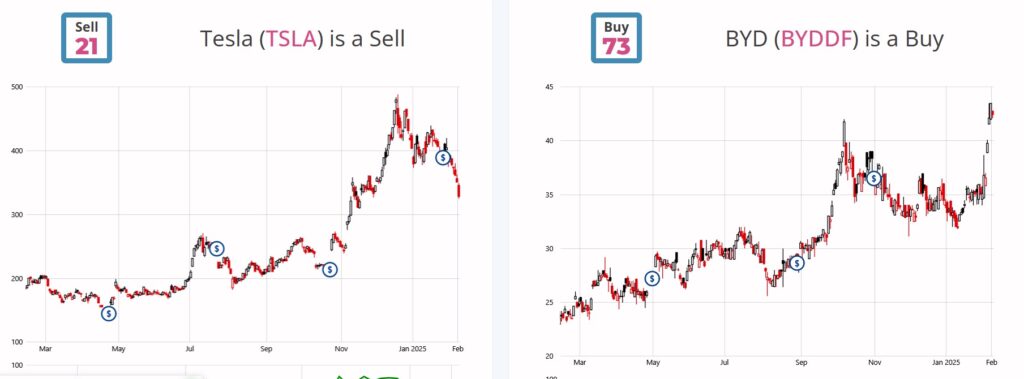
Tesla vs. BYD
Tesla vs. BYD

MORE EDUCATIONAL MATERIALS ON TRUMP TARIFFS

Déjà Vu Economics: How Trump’s Deregulation and Tariff Policies Mirror the Road to the Great Depression

Trumpenomics: How Tariffs, Policy Cuts, and Labor Shortages Are Devastating American Farmers

The Devastating Impact of Trump’s Steel and Aluminum Tariffs

World Economics 101: The United States and Global Trade Dynamics

The Lies Behind Trump’s Terror Economics

Trumpenomics: The Decline of the US