bookmark_borderHow BYD Surpassed Tesla: The Role of Innovation, Tariffs, and Free Market Dynamics

by Daniel Brouse
March 25, 2025

BYD, a leading Chinese electric vehicle (EV) manufacturer, reported annual revenues of approximately $107 billion, surpassing Tesla’s $97.7 billion for the same period. This milestone underscores BYD’s rapid ascent in the global EV market, driven by innovation, affordability, and superior battery technology. Meanwhile, U.S. protectionist tariffs have not only contributed to China’s dominance in the EV sector but have also stifled competition, delayed the clean energy transition, and harmed public health. By restricting access to lower-cost, high-quality EVs, these policies have jeopardized both economic competitiveness and the well-being of future generations.

Tariffs Delay of an Energy Transition and Destruction of the Planet

The imposition of 120% tariffs on Chinese EVs has significantly hampered the U.S. transition to zero-emission transportation. By artificially inflating the prices of more affordable and technologically advanced EVs, these tariffs have limited consumer access to the very vehicles that could accelerate the shift away from fossil fuels. Meanwhile, countries without such restrictive trade barriers have rapidly expanded their adoption of clean transportation, leaving the U.S. behind in both market penetration and infrastructure development.

As a result, American consumers face fewer choices and higher costs for EVs, discouraging widespread adoption. This delay extends reliance on gasoline-powered vehicles, exacerbating carbon emissions and worsening climate change. Furthermore, as U.S. automakers struggle to compete due to higher production costs and weaker incentives for innovation, the global market continues to be dominated by manufacturers in China and Europe that are advancing rapidly in battery efficiency, charging infrastructure, and affordability.

The tariffs not only stifle competition but also undermine global efforts to combat climate change. By slowing the transition to clean energy, the U.S. risks missing critical emissions-reduction targets, leading to more severe environmental consequences, including intensified extreme weather events, rising sea levels, and habitat destruction. In contrast, a free-market approach—one that encourages technological exchange, competition, and lower costs—would accelerate the adoption of EVs, reduce emissions more effectively, and help mitigate the catastrophic impact of climate change.

Impacts of 120% Tariffs on U.S. Competitiveness

  • Increased Costs for Consumers and Businesses: Tariffs function as taxes on imports, leading to much higher prices for EV’s. This tax hurts consumers the most, as they face much higher prices for basic and better transportation.

  • Reduced Global Competitiveness: Elevated tariffs have prompted retaliatory measures from other countries, diminishing the competitiveness of U.S. exports in international markets. Such trade barriers have lead to a decline in market share for U.S. companies abroad.

  • Negative Impact on Employment: Industries reliant on global supply chains are experiencing increased production costs due to tariffs, leading to reduced hiring and layoffs.

Free Markets vs. Tariffs: The Case of BYD

BYD’s success underscores the advantages of free-market principles:​

  • Innovation Through Competition: In an open market, companies are incentivized to innovate to maintain a competitive edge. BYD’s advancements in battery technology and charging infrastructure exemplify how competition fosters technological progress. ​

  • Consumer Benefits: Free markets encourage companies to improve product quality and reduce prices, benefiting consumers. BYD’s ability to offer high-quality EVs at competitive prices demonstrates how market dynamics can lead to better consumer outcomes.

Examples of BYD’s Innovation Through Competition

  1. Diverse Product Portfolio: BYD offers a wide range of vehicles, including both pure electric and plug-in hybrid models. This diversity caters to various consumer preferences and has broadened its market appeal. BYD offers a far superior product at a fraction of the price.

  2. Advanced Battery Technology: The company has invested heavily in battery innovation, leading to superior battery performance and charging speeds. BYD’s proprietary battery technology has enhanced the efficiency and appeal of its vehicles. ​The newest models can charge 3 times faster than a Tesla.

  3. Competitive Pricing: By leveraging economies of scale and efficient production methods, BYD has managed to offer its vehicles at more affordable prices compared to some competitors, making EVs accessible to a broader consumer base. BYD’s are 1/2 to 1/3 the price of Tesla and are superior in every aspect.

Why Are People Boycotting Tesla?

Protectionism 101: Trump Economics

Trumpenomics: The Decline of the US

bookmark_borderThe Inevitable Collapse: How Trump’s Policies and Climate Neglect Will Reshape the Economy

The Balancing of Wealth Inequality

Wealth inequality may correct itself sooner than anticipated. Trump’s rapid and unconstitutional actions are already causing his political influence to unravel. The economy is entering a significant slowdown. Historically, 80% of GDP has been driven by immigrants, and the effects of their declining contributions are becoming increasingly apparent.

On April 2nd, Trump imposed another round of tariffs—the most devastating since the Great Depression. These tariffs could trigger an economic crash from which the U.S. may struggle to recover, especially given the ongoing neglect of the climate crisis. A stock market collapse would likely be followed by a real estate market downturn.

These economic shifts are already affecting wealth inequality, as demonstrated by the decline in Elon Musk’s fortune.

Within 6 to 12 months of the new tariffs, a similar downward trend is expected to impact all billionaires. Meanwhile, as climate change worsens due to inaction and harmful environmental policies, the intensification of extreme weather events and rising sea levels will drive a fundamental redistribution of asset classes.

Simultaneously, the climate crisis is accelerating. Financial forecasts predict that 25% of all real estate will become uninsurable due to climate disasters, with 84% of properties expected to lose value over the life of a mortgage. This will mark the first time in history that the distribution of real estate wealth is so significantly and permanently altered.


The Human Induced Climate Change Experiment

Donald Trump has consistently dismissed the science of climate change, calling it a hoax and dismissing policies aimed at addressing it as “The Green New Scam.” His repeated use of the phrase “Drill, Baby, Drill” symbolizes an energy policy that prioritizes fossil fuel extraction over sustainable alternatives. These policies have only intensified the climate crisis, posing severe risks not only to the environment but to the global economy as well. If left unchecked, Donald Trump’s economic and environmental policies will render the planet uninhabitable for future generations.

In the 1990s, we first hypothesized the non-linear acceleration of climate change. By the early 2000s, this hypothesis had evolved into an established climate theory, now widely recognized as scientific fact. My lab partner, a Doctor of Physics from Ohio State, and I collaborated to provide the key evidence creating this theory. Over the years, we have observed a dramatic reduction in the doubling time of climate change impacts—the rate at which these effects intensify. Initially, the doubling time was approximately 100 years, but it has since decreased to 10 years and, more recently, to just 2 years. This trend implies that the damage caused by climate change today is double what it was two years ago. In two years, it could be four times worse; in four years, eight times worse; and within a decade, potentially 64 times worse. These projections are conservative, assuming the doubling period does not continue to shrink further. Alarmingly, this rapid acceleration does not appear to be an anomaly. If this trajectory persists, the consequences will likely be far more catastrophic than previously anticipated.

The evidence is clear: climate change is rapidly accelerating, and the costs—both economic and human—are growing exponentially. The future demands decisive and immediate action to curb greenhouse gas emissions and prevent further environmental and societal collapse. Our updated climate model, now integrating complex social-ecological factors as part of a dynamic and non-linear system, shows that global temperatures could rise by up to 9°C within this century—far beyond previous predictions of a 4°C rise over the next thousand years. This level of warming will render much of the world uninhabitable within this century.

The Great Depression vs. The Climate Crisis: Why the Stock Market May Never Recover

Drill, Baby, Drill (How Hate and Ignorance Distort Economic Perspectives)

July 2024 – Pre-Election Warning: Concerns were raised about candidate Trump’s proposed economic policies, highlighting potential unintended consequences such as heightened inflation and increased national debt—both of which could undermine economic stability. Additionally, experts cautioned that his administration’s environmental stance, including withdrawing from the Paris Agreement and rolling back over 100 environmental regulations, could have devastating effects on both the economy and the environment. Now, much of this forecast is unfolding before our very eyes.

Economic Outlook 2025 – 2035

November 2024 – Post-Election Analysis: Concerns are mounting over the potential consequences of President Elect Trump’s proposed economic policies, particularly their impact on inflation, national debt, and climate change. The Committee for a Responsible Federal Budget estimates these policies could add $7.75–$10 trillion to the national debt over the next decade. Additionally, projections suggest inflation could rise to at least 6% by 2026, with consumer prices potentially increasing by 20% by 2028. These forecasts have since been revised, reflecting higher inflation and slower economic growth, compounded by the significant fallout of an ill-conceived trade war.

Trumpenomics: The Decline of the US

bookmark_borderClimate Change Overview

Global warming is caused by an increase in thermal energy in the climate system. The Earth is a climate system. Many subsystems make up our climate. Chaos theory emphasizes the complexity and nonlinearity of dynamic systems, and this complexity is inherent in the interactions between soil, atmosphere, and oceans in the Earth’s climate system.

Atmospheric circulation together with ocean circulation is how thermal energy is redistributed throughout the world. Chaos theory offers insights into the complex, nonlinear dynamics of climate systems role in the redistribution of thermal energy. The Earth’s climate is a highly complex and dynamic system, influenced by various factors such as ocean currents, atmospheric circulation, and feedback loops.

General Circulation Models for the earth climate are nonlinear and teleconnected. That means a small change in temperature or pressure or humidity in one small area on the globe can cause _large_ changes in conditions _anywhere_ on the globe. This is sometimes called the Butterfly effect. The complexity of these models can lead to chaotic behavior. Climate science must grapple with these models and extract results in spite of the mathematical difficulties, and there have been remarkable successes in some cases and sad failures in others. Nevertheless we must proceed.

Unintended Consequences and Inexplicable Consumer Behavior
Climate change is primarily driven by the escalation of thermal energy affecting biogeophysical and socio-economic systems. While biogeophysical factors can be studied using math, physics, and historical records, socio-economic systems pose greater challenges due to the unpredictable consequences of human behavior and inexplicable consumer choices, exacerbating tipping points and feedback loops.

Complex Feedback Loops:

Complex feedback loops in climate science refer to interactions between different components of the Earth’s climate system that can amplify or dampen the effects of initial changes, leading to non-linear and often unpredictable outcomes. These feedback loops play a crucial role in shaping the behavior of the climate system and can influence various climate phenomena, including temperature changes, ice melt, and precipitation patterns.

Tipping points are Critical Milestones that directly impact the rate of acceleration in climate change by multiplying the number and intensity of feedback loops. Identifying and understanding these tipping points is crucial for climate science and policymaking. Crossing multiple tipping points could lead to a domino effect, resulting in a much more rapid and severe climate change than currently projected.

* Our climate model employs chaos theory to comprehensively consider human impacts and projects a potential global average temperature increase of 9℃ above pre-industrial levels.

Violent Rain | Deadly Humid Heat | Extreme Weather Events | Insurance | Trees Deforestation | Air Pollution | Rising Sea Level | Climate Litigation | Updates


bookmark_borderClimate Change and Allergies: How a Longer Growing Season is Making Pollen Worse

by Daniel Brouse
March 23, 2025

The growing season in the Northeastern U.S. has increased by about 20 days due to climate change, primarily because of rising temperatures and shifts in seasonal weather patterns. Here’s how this is happening and how it contributes to increased allergies:

Why the Growing Season is Longer

  1. Earlier Springs & Later Falls

    • Warmer temperatures cause plants to begin growing earlier in the spring and delay the first frost in the fall.

    • This results in an extended period for plant growth and reproduction.

  2. Increased CO₂ Levels

    • Higher atmospheric carbon dioxide levels enhance plant growth, including trees, grasses, and weeds that produce pollen.

  3. Warmer Winters & Milder Frosts

    • Less frequent and severe winter cold reduces plant dormancy periods, allowing for earlier budding and flowering.

How This Increases Allergies

  1. Longer Pollen Seasons

    • With an extended growing season, plants produce pollen for a longer period.

    • Ragweed, a major allergen, now pollinates later into the fall due to warmer temperatures.

  2. Higher Pollen Production

    • Increased CO₂ levels not only extend pollen seasons but also boost pollen production per plant.

    • Studies show that some allergenic plants, like ragweed, produce more pollen in a CO₂-rich environment.

  3. New & Expanding Allergens

    • Rising temperatures allow allergenic plants to spread to regions where they previously couldn’t survive.

    • This introduces new allergens to people who weren’t previously exposed.

  4. Increased Pollen Potency

    • Warmer temperatures and elevated CO₂ make pollen more allergenic, meaning each pollen grain triggers stronger allergic reactions.

Health Impacts

  • Increased exposure to allergens leads to a rise in allergy-related conditions like hay fever (allergic rhinitis) and asthma.

  • More people experience longer, more severe allergy seasons, increasing medical costs and reducing productivity.

About U.S. Temperate Zones
Climate change is significantly impacting the temperate zones in the United States in several ways:

    1. Shifts in Temperature: Temperate zones are experiencing changes in temperature patterns, with increases in both average temperatures and the frequency of extreme heat events. Winters are becoming milder, and summers are growing hotter, leading to shifts in growing seasons and ecosystem dynamics.
    2. Altered Precipitation Patterns: Climate change is causing alterations in precipitation patterns, including changes in rainfall intensity, frequency, and distribution. Some regions within temperate zones may experience more frequent and intense rainfall events, leading to increased flooding and soil erosion, while others may face more prolonged periods of drought, impacting water resources and agriculture.

Vines breech the tree canopy

  1. Changes in Ecosystems: The distribution and composition of ecosystems within temperate zones are being disrupted by climate change. Species ranges are shifting, and migration patterns are changing as plants and animals respond to altered temperature and precipitation conditions. This can lead to mismatches in timing between species interactions, such as flowering and pollination, or disruptions in food webs.
  2. Impacts on Agriculture: Climate change is posing challenges to agriculture in temperate zones, affecting crop yields, pest and disease dynamics, and the availability of suitable growing conditions. Heat stress, drought, and extreme weather events can damage crops and reduce agricultural productivity, impacting food security and economic livelihoods.
  3. Increased Risk of Wildfires: Warmer temperatures and drier conditions are contributing to an increased risk of wildfires in temperate zones, particularly in regions with dense vegetation and susceptible to drought. Wildfires can have devastating consequences for ecosystems, communities, and air quality, posing risks to human health and safety.
  4. Threats to Human Health: Climate change in temperate zones can exacerbate health risks associated with extreme heat events, air pollution, and the spread of vector-borne diseases. Vulnerable populations, such as the elderly, children, and individuals with pre-existing health conditions, may face increased risks of heat-related illnesses and respiratory problems.

Overall, climate change is reshaping the environmental, social, and economic landscapes of temperate zones in the United States, underscoring the need for proactive measures to mitigate its impacts and enhance resilience in affected regions. Regrettably, trees find themselves rooted in their temperate zones, unable to embark on the migratory journeys undertaken by some other species to seek refuge in more hospitable environments.


Trees and Temperate Zones

Climate Change and Health Impacts

The Human Induced Climate Change Experiment

bookmark_borderWhy Are People Boycotting Tesla?

Elon Musk’s extreme hypocrisy has led to widespread boycotts and protests against Tesla. It’s the only company in U.S. history to achieve profitability primarily through carbon credits and remains one of the largest recipients of government subsidies, including tax credits. Yet Musk publicly opposes these very policies, making his contradictions even more damaging—not just to his brand but also to his employees.

My biggest concern is the economic hypocrisy and Tesla’s role in slowing the transition to sustainable energy. While Tesla benefits from more government subsidies than any other company in the world, the U.S. has imposed a 120% tariff on higher-quality, more affordable EVs like those from BYD. This has left the U.S. with an uncompetitive, inefficient EV industry, while China has become the global leader in EV manufacturing.

This isn’t just about Tesla—it’s about fairness and the fastest path to sustainability. The U.S. is blocking competition by slapping massive tariffs on superior, lower-cost EVs while funneling billions in subsidies to Tesla, despite its questionable labor practices and supply chains. If the goal is to fight climate change, we should prioritize the best EVs at the best prices, regardless of where they’re made, rather than propping up a single company with government handouts.

Finally, Trump remains the only president to openly violate ethics rules, conflict-of-interest laws, and bans on endorsing private products—most notably by purchasing a Tesla on the White House lawn. The Secretary of Commerce further compounded these violations by publicly promoting Tesla stock.

In summary, Elon Musk leveraged taxpayer money to amass his fortune, then hypocritically denounced such practices—even accusing others of fraud for doing the same. Additionally, he acted without congressional authority, making his actions unconstitutional and unlawful. As a government employee, he violated ethics rules, conflict-of-interest laws, and bans on endorsing private products. He should have divested his assets before entering government service and stepped down as CEO of Tesla.

Trumpenomics: The Decline of the US

bookmark_borderInternational Year of Glaciers

by Daniel Brouse
March 21, 2025

Glaciers Melting 36% Faster Than 20 Years Ago

The United Nations has designated 2025 as the International Year of Glaciers’ Preservation to raise global awareness about the critical role glaciers play in our planet’s climate system and water resources. This initiative aims to mobilize governments, scientific institutions, the private sector, and civil society to urgently reduce greenhouse gas emissions and implement effective adaptation strategies. Additionally, starting in 2025, March 21 will be observed annually as the World Day for Glaciers, emphasizing the need for concerted efforts to protect these vital natural resources. ​

Recent reports highlight the alarming acceleration of glacier melt worldwide. A UNESCO report reveals that glaciers have been melting 36% faster than they did 20 years ago, losing approximately 273 billion tons of ice per year between 2000 and 2023. This amounts to a total loss of 6,542 billion tons of ice during that period, significantly impacting regions from the Arctic to the Alps, South America, and the Tibetan Plateau. The accelerated melting contributes to rising sea levels, threatening millions with floods and disrupting essential water sources for energy and agriculture. ​

The rapid retreat of glaciers poses a severe risk to the food and water supply of up to 2 billion people globally. The climate crisis is causing unprecedented glacier melting and reduced snowfall, which in turn impacts irrigated agriculture and water supplies in mountainous regions. More than 1 billion people in these areas, particularly in developing countries, already face food insecurity, a situation predicted to worsen as glaciers continue to shrink.

In Antarctica, scientists are increasingly alarmed as evidence shows that sea ice has reached record lows for the fourth consecutive year. Notably, the Thwaites Glacier, often referred to as the “Doomsday Glacier,” remains particularly vulnerable, with significant implications for global sea levels. Recent Antarctic sea ice extents have fallen below 2 million square kilometers, with 2022 and 2025 both recording only 1.98 million square kilometers. This decline in sea ice has potential global repercussions, as it may amplify rising sea levels and influence global temperatures.

These developments underscore the urgency of the International Year of Glaciers’ Preservation in 2025, aiming to foster global action to mitigate the impacts of climate change on glaciers and the communities that depend on them.

The Past, Present, and Future of Climate Change
In the 1990s, we first hypothesized the non-linear acceleration of climate change. By the early 2000s, this hypothesis had evolved into established climate theory, now widely recognized as scientific fact. My lab partner, a Doctor of Physics from Ohio State, and I collaborated to provide key evidence supporting this theory. Over the years, we have observed a dramatic reduction in the doubling time of climate change impacts — the rate at which these effects intensify. Initially, the doubling time was approximately 100 years, but it has since decreased to 10 years and, more recently, to just 2 years. This trend implies that the damage caused by climate change today is double what it was two years ago. In two years, it could be four times worse; in four years, eight times worse; and within a decade, potentially 64 times worse. These projections are conservative, assuming the doubling period does not continue to shrink further. Alarmingly, this rapid acceleration does not appear to be an anomaly. If this trajectory persists, the consequences will likely be far more catastrophic than previously anticipated.

Rising Sea Level

The Human Induced Climate Change Experiment

bookmark_borderEscalating Climate Crisis: Extreme Weather Displaces Hundreds of Thousands in 2024

by Daniel Brouse
March 19, 2025

Not only was 2024 the hottest year on record, but it also set a record for the number of people displaced, including in the U.S.

  • The World Meteorological Organization (WMO) reported that 2024 was the hottest year on record, with global temperatures averaging 1.55°C above pre-industrial levels. This unprecedented heat contributed to the acceleration of glacier and sea ice loss, leading to a rise in sea levels. The temperature exceeds the 1.5°C limit set by the Paris Accord which is an important threshold for triggering tipping points. Nine tipping points have likely been crossed in the last 5 years. Tipping points are Critical Milestones that directly impact the rate of acceleration in climate change by multiplying the number and intensity of feedback loops. Identifying and understanding these tipping points is crucial for climate science and policymaking. Crossing multiple tipping points could lead to a domino effect, resulting in a much more rapid and severe climate change than currently projected.

  • The WMO also noted that extreme weather events in 2024, such as heatwaves, floods, and storms, displaced more than 800,000 people and caused significant crop losses. In the U.S., displacement was driven by multiple climate disasters, including an unprecedented hurricane season, widespread flooding, and prolonged heatwaves.

    Hurricanes Helene and Milton were among the most devastating storms to make landfall in 2024, forcing hundreds of thousands of people to evacuate in coastal regions, particularly in Florida, Louisiana, and the Carolinas. The hurricanes caused extensive infrastructure damage, with some communities still struggling to rebuild months later. Meanwhile, record-breaking flooding in the Midwest, exacerbated by heavier rainfall and rising river levels, displaced thousands of residents, washing away homes and farmlands.

    As 2025 began, the crisis continued with massive wildfires in California, driven by persistent drought and extreme heat. Entire towns were forced to evacuate, with some residents losing their homes permanently due to the rapidly spreading blazes. The Midwest and Southeast were also hit hard in March 2025 by one of the worst tornado outbreaks in recent history, leaving entire neighborhoods uninhabitable and displacing thousands. The increasing frequency and intensity of these disasters underscore the growing impact of climate change on population displacement in the U.S. and the urgent need for stronger adaptation measures.

  • Additionally, a study revealed that ‘climate whiplash’—abrupt shifts between extreme wet (violent rain) and dry conditions—is increasingly affecting major cities worldwide. This phenomenon complicates disaster preparedness and recovery efforts, underscoring the urgent need for global action to adapt to these changes.

    Mass, velocity, and density determine the severity of extreme rain events, and all three are increasing as both wind and rainfall intensify. The interaction of these factors amplifies flow forces, with wind and water forces scaling proportionally to the square of velocity. This means that as wind speeds rise due to more intense heating or heavier rainfall, the resulting damage increases exponentially. According to drag physics, force is proportional to density times the square of velocity.

    For example, a 20-mile-per-hour wind exerts four times the force of a 10-mile-per-hour wind, while a 40-mile-per-hour wind exerts 16 times the force. At 50 miles per hour, the force is 25 times greater, and at 60 miles per hour, it is 36 times greater than at 10 miles per hour. When factoring in density, the impact becomes even more severe: water is approximately 800 times denser than air, meaning that a 10-mile-per-hour water flow exerts 800 times the force of a 10-mile-per-hour wind.

    As climate change accelerates, increasing flow velocities will lead to exponentially greater destructive forces. While the precise extent of future velocity increases remains uncertain, the consequences are already visible—overwhelmed flood and sewage systems, collapsing hillsides, and widespread infrastructure failures. Without urgent adaptation measures, these escalating forces will continue to cause greater damage to communities and ecosystems.

    The increasing frequency of extreme rain events is occurring alongside cycles of severe drought, creating a destructive feedback loop. Prolonged drought leaves the land parched and less able to absorb water, making it highly susceptible to erosion, flash flooding, and landslides when heavy rains arrive. This combination intensifies devastation, as dry, compacted soil repels water, leading to rapid runoff, more severe flooding, and long-term degradation of topsoil, which further reduces the land’s ability to recover.

These findings emphasize the escalating impact of climate change on human displacement and the critical importance of implementing effective climate adaptation and mitigation strategies.


The Human Induced Climate Change Experiment

bookmark_borderBYD’s Breakthrough Charging Tech Exposes the Pitfalls of U.S. Protectionism in the EV Market

by Daniel Brouse
March 18, 2025

BYD, China’s leading electric vehicle (EV) manufacturer, has unveiled a groundbreaking ultra-fast charging system capable of delivering 1,000 kilowatts (kW) of power. This advancement allows EVs to gain 400 kilometers (approximately 248 miles) of range in just five minutes, effectively matching the refueling time of traditional gasoline vehicles. This technology is set to debut in BYD’s latest Han L sedan and the upcoming Tang L SUV models.

In contrast, the United States has implemented protectionist policies, including substantial tariffs on Chinese-made EVs and components. These measures aim to shield domestic manufacturers from foreign competition but have led to increased costs for EV parts and materials. Consequently, American consumers face higher prices, potentially slowing the adoption rate of EVs and hindering the expansion of charging infrastructure.

Moreover, such protectionism may inadvertently discourage domestic innovation. With reduced competition, U.S. automakers might have less incentive to pursue rapid technological advancements, potentially causing them to lag behind global competitors like BYD. This scenario underscores how protectionist policies can stifle innovation and competitiveness within the domestic EV industry.

BYD’s new charging technology exemplifies the strides made by manufacturers operating in more open and competitive markets. It highlights the potential drawbacks of U.S. protectionist measures, which, while intended to bolster domestic industries, may instead result in higher consumer prices and a slowdown in technological progress.

Protectionism 101: Trump Economics

bookmark_borderGlobal Economic Outlook Dims Amid Rising Trade Barriers and Geopolitical Tensions

by Daniel Brouse
March 17, 2025

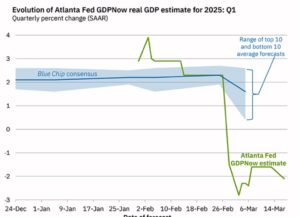
On March 17, 2025, the Organization for Economic Co-operation and Development (OECD) released its latest Interim Economic Outlook, revising downward its global economic growth forecasts. This worldwide slowdown is attributed to higher trade barriers in several G20 economies, which are expected to dampen global growth and contribute to inflationary pressures, elevated geopolitical tensions and policy uncertainties. For the United States, the OECD has notably reduced its GDP growth forecasts, anticipating a multiyear decline with a meager 1.6% growth rate in 2026.

Atlanta Fed's GDP Tracker
Atlanta Fed’s GDP Tracker

Additionally, the Atlanta Fed’s GDP tracker for real GDP growth also was revised downward today to -2.1% for the first quarter of 2025 indicating a possible recession in the first half of this year.

These forecasts highlight both the immediate and long term decline in global economies, as well as the severe impacts to the US economy due to Trump’s economic policies.

Ironically, a sharp decline in the U.S. economy could help counteract the ‘drill, baby, drill’ policy and slow fossil fuel consumption, which would be beneficial for the environment. An economic slowdown typically leads to reduced demand for oil and fossil fuels, resulting in lower emissions. This decreased demand often causes oil prices to fall. When the price of a barrel of oil drops below certain thresholds, drilling new wells can become unprofitable. For instance, in 2022, the average breakeven price to profitably drill a new well in the United States was approximately $56 per barrel, with regional variations ranging from $48 to $69 per barrel.  Therefore, sustained oil prices below these breakeven points can discourage new drilling activities.

Explanation of the ‘Drill, Baby, Drill’ Policy:
The phrase “drill, baby, drill” emerged as a political slogan advocating for increased domestic oil and gas production in the United States. It gained prominence during the 2008 Republican National Convention and has been associated with policies aiming to boost fossil fuel extraction to achieve energy independence and economic growth. In recent years, this slogan has been revitalized to support expansive fossil fuel production initiatives. Proponents argue that such measures can lead to lower energy prices and reduced reliance on foreign oil. However, critics express concerns that this approach undermines efforts to combat climate change by perpetuating dependence on carbon-intensive energy sources.

President Donald Trump’s stance on climate change has been characterized by skepticism and policy actions that deprioritize environmental concerns in favor of economic and energy interests.

Public Statements:

  • Historically, Trump has referred to climate change as a “hoax.”
  • More recently, he has dismissed concerns about rising sea levels, stating, “That is not our problem,” and has emphasized “nuclear warming” as a more pressing threat.
  • Trump has repeatedly referred to the climate crisis as the Green New Scam.

Policy Actions:

  • Upon his inauguration in January 2025, President Trump withdrew the United States from the Paris Agreement and pledged to roll back executive orders and policies from the previous administration aimed at addressing climate change.

  • He issued an executive order titled “Promoting Energy Independence and Economic Growth,” aiming to dismantle many federal actions addressing climate change.

  • The administration has proposed cuts to agencies like FEMA, which could significantly impact disaster response capabilities in states vulnerable to climate-related events, such as California.

Impact on Environmental Policies:

  • The administration’s stance has led to reduced funding for clean energy projects and transportation initiatives. Major financial institutions have withdrawn from net-zero alliances, and the Securities and Exchange Commission (SEC) has implemented rules making it more challenging for investors to address environmental, social, and governance (ESG) issues within companies.

Trumpenomics: The Decline of the US

The Human Induced Climate Change Experiment

bookmark_borderEscalating Tornado Outbreaks: The Role of Climate Change and Gulf of Mexico Warming

by Daniel Brouse
March 16, 2025

In March 2025, a powerful storm system unleashed over 40 tornadoes across eight states in the Midwest and Southern United States, resulting in at least 34 fatalities and widespread destruction. This devastating event has intensified discussions about the influence of climate change, particularly the warming of the Gulf of Mexico, on the frequency and severity of such tornado outbreaks.

Increasing Tornado Frequency and Intensity

Recent years have seen a notable uptick in tornado activity across the United States. While tornadoes are inherently challenging to predict, studies suggest that rising global temperatures contribute to greater atmospheric instability—a key factor in tornado formation. Additionally, there is evidence that tornado activity is shifting eastward from the traditional “Tornado Alley” in the Central Plains toward more densely populated regions in the Southeast, potentially increasing the risk to human life and property.

Impact of Gulf of Mexico Warming

The Gulf of Mexico significantly influences severe weather events in the United States. Elevated sea surface temperatures (SSTs) in the Gulf supply warm, moist air to storm systems, intensifying their strength. Recent data indicates that SSTs in the Gulf have been upwards of 2°C above average. This warming can contribute to more severe and frequent tornado outbreaks.

Global warming results from increased thermal energy within the climate system. Over the past 25 years, Earth’s oceans have absorbed energy equivalent to detonating five Hiroshima-sized atomic bombs per second.  Between 1971 and 2020, global warming trapped approximately 380 zettajoules (ZJ) of energy, comparable to the detonation of 25 billion atomic bombs.


Conclusion

Climate change gains momentum because its impacts are self-reinforcing, cumulative, and interconnected. The longer we delay significant mitigation efforts, the harder it becomes to slow or reverse the trajectory. Urgent action is needed to break these feedback loops and stabilize the climate.

The evidence is clear: climate change is rapidly accelerating, and the costs — both economic and human — are growing exponentially. The future demands decisive and immediate action to curb greenhouse gas emissions and prevent further environmental and societal collapse. Our updated climate model, now integrating complex social-ecological factors, shows that global temperatures could rise by up to 9°C within this century — far beyond previous predictions of a 4°C rise over the next thousand years. This kind of warming could bring us dangerously close to the “wet-bulb” threshold, where heat and humidity exceed the human body’s ability to cool itself, leading to fatal consequences.