bookmark_borderLiving Planet Report: the Decline of Wildlife

The World Wildlife Fund Reports — Global wildlife could plunge to a 67 per cent level of decline in just the fifty-year period ending this decade as a result of human activities, according to WWF’s Living Planet Report 2016. The report shows how people are overpowering the planet for the first time in Earth’s history and highlights the changes needed in the way society is fed and fuelled.

According to the report, global populations of fish, birds, mammals, amphibians and reptiles have already declined by 58 per cent between 1970 and 2012, the most recent year with available data. This places the world on a trajectory of a potential two-thirds decline within a span of the half-century ending in 2020.

Fortunately, 2020 is also a year of great promise. In that same year, commitments made under the Paris climate deal will kick in, and the first environmental actions under the globe’s new sustainable development plan are due. If implemented, these measures, along with meeting international biodiversity targets set for 2020, can help achieve the reforms needed in the world’s food and energy systems to protect wildlife across the globe.

“Wildlife is disappearing within our lifetimes at an unprecedented rate,” said Marco Lambertini, Director General of WWF International. “This is not just about the wonderful species we all love; biodiversity forms the foundation of healthy forests, rivers and oceans. Take away species, and these ecosystems will collapse along with the clean air, water, food and climate services that they provide us. We have the tools to fix this problem and we need to start using them now if we are serious about preserving a living planet for our own survival and prosperity.”

The WWF report uses the Living Planet Index, provided by the Zoological Society of London (ZSL), to monitor trends in wildlife abundance. This index reports how wildlife populations have changed in size, rather than the specific number of animals that have been lost or gained.

“Human behaviour continues to drive the decline of wildlife populations globally, with particular impact in freshwater habitats. Importantly however, these are declines, they are not yet extinctions – and this should be a wake-up call to marshal efforts to promote the recovery of these populations,” said Professor Ken Norris, Director of Science at ZSL.

Additional evidence of a man-made era
The top threats to species identified in the report are directly linked to human activities, including habitat loss, degradation and overexploitation of wildlife.

The report’s findings provide additional evidence that the planet is entering completely unchartered territory in its history in which humanity is shaping changes on the Earth, including a possible sixth mass extinction. Researchers are already calling this period the Anthropocene. Understanding why we are moving into this new epoch enables us to identify solutions for restoring the ecosystems we depend upon.

According to the report, food production to meet the complex demands of an expanding human population is leading the race in the destruction of habitats and overexploitation of wildlife. At present, agriculture occupies about one-third of the Earth’s total land area and accounts for almost 70 per cent of water use.

The Living Planet Report 2016 outlines solutions to reform the way we produce and consume food to help ensure that the world is well-fed in a sustainable way. The report also focuses on the fundamental changes required in the global energy and finance systems to meet the sustainability needs of future generations.

Pushing the planet to its limits
Living Planet Report 2016 draws on leading research about the scale and impact of human activity on our planet. One such framework, developed by the Stockholm Resilience Centre in collaboration with partners, demonstrates that humanity has surpassed four out of nine Planetary Boundaries – safe thresholds for critical Earth system processes that maintain life on the planet.

In a special foreword in the report, Planetary Boundaries lead researcher Johan Rockström underlines the need for an urgent transition to a world that works within Earth’s safe operating space.

The report also features research from the Global Footprint Network that shows that while we only have one Earth, humanity is currently using the resources of 1.6 planets to provide the goods and services we use each year.

“No matter how you add it up, the math does not look good. The more we continue to exceed Earth’s limits, the more damage we do to our own future,” said Lambertini. “We are at a decisive moment in time when we can seize the solutions to steer our food, energy and finance systems in a more sustainable direction.”

Charting the way forward
The WWF report demonstrates that we need to rethink how we produce, consume, measure success and value the natural environment.

Adequately protecting the environment alongside economic and social development requires an urgent system change by individuals, businesses and governments to move from a short-sighted approach to a visionary approach that values future generations.

In one example, the report shows how smallholder farmers in Kenya work with local authorities and the food industry to manage the natural resources of Lake Naivasha, the country’s second largest freshwater body, a biodiversity hotspot and a significant contributor to its GDP.

The report also illustrates the positive momentum that is building by highlighting recent global agreements on climate change and sustainable development. In particular, the report recognizes the 2030 Agenda for Sustainable Development as an essential guide to decision-making that can ensure that the environment is valued alongside economic and social interests.

“A strong natural environment is the key to defeating poverty, improving health and developing a just and prosperous future. We have proven that we know what it takes to build a resilient planet for future generations, we just need to act on that knowledge,” Lambertini added.

Living Planet Report 2016: Risk and resilience in a new era is the eleventh edition of WWF’s biennial flagship publication. The report tracks over 14,000 vertebrate populations of over 3,700 species from 1970 to 2012.

bookmark_borderGMO’s: Throwing the Baby out with the Bathwater

by Daniel Brouse

The definition of GMO is the modern version, not selective breeding. (0)

GMO’s (genetically modified organism) have been around for thousands of years; however, the irrational fear of GMO’s is a recent phenomenon. Are there risks to GMO’s? Yes. Has there been any evidence of harm to human health? No. The risks associated with GMO’s are from the impact to our ecosystem through the misuse of GMO agricultural practices.

Technically speaking, you are a genetically modified organism.  One of the first patents issued for GMO’s was for medicine. “In 1982, The U.S. Food and Drug Administration approves the first genetically engineered drug, Genentech’s Humulin, a form of human insulin produced by bacteria. This is the first consumer product developed through modern bioengineering.”

The phobia of GMO’s is really a fear of modern bioengineering patents. Modern bioengineering started in 1980. The U.S. Supreme Court ruled that “genetically altered life forms can be patented. The decision allowed the Exxon Oil Company to patent an oil-eating microorganism.” (1)

Another change in the meaning of GMO occurred with the sequencing of genes. “NHGRI led the National Institutes of Health’s contribution to the International Human Genome Project. This project, which had as its primary goal the sequencing of the three thousand million base pairs that make up human genome, was successfully completed in April 2003.” (1.1) With these discoveries all sorts-of risks arose. There are the benefits of being able to use plants similar to the human genome for research. For instance, GMO tobacco plants are being used to help develop new medicines because of their similarity to the human genome. It is the ability of Man to alter genetics so rapidly that is frightening.

SHOULD WE BE AFRAID OF GMO’s?
The use of GMO’s in agriculture practices should be of concern. “There is a case for GMOs and a case against the indiscriminate use of monoculture crops fueled by synthetic fertilizer on dead lands.” (2)

Part of the concern is a monoculture crop. There may be long term impacts from the lack of diversity caused by patent controlled crops. This factor is the least concerning since patents are only good for 17 years. After that, the GMO seed is free to crossbreed.

Of more concern is, “fueled by synthetic fertilizer on dead lands.” The inherent risk from GMO’s is not the plant itself, but how the plant is farmed. Some GMO crops promote the use of RoundUp (glyphosate). RoundUp creates dead lands — the rest of the ecosystem is destroyed, at least to some extent. Certainly, all the other vegetation is extinct from that land. The collapse of bee colonies may, or may not, be part of that destroyed ecosystem. Combining RoundUp with synthetic fertilizer just adds fuel to the deadly mix.  There appears to be no debate that GMO seed created for the purpose of being fed fossil fuel fertilizer has a negative impact on the entire world.

5,000 years ago in China similar agriculture experiments were conducted. (In particular, the cultivation of rice.) Today it is believed these methods of farming are the origins of human induced climate change. (3)

If you look at the impact on Earth as an ecosystem, humans are conducting a deadly agriculture experiment.

PART II: Should we throw the baby out with the bathwater?

On the other hand, GMO farming (in particular, the cultivation of rice) is saving millions of children from dying or going blind. (4)

HUMAN HEALTH
Since 1992, millions of animals have been raised on GMO feed. Since 1996, cows, chickens, pigs and pretty much all other types of livestock have eaten GMO crops. To date, there has not been a single case of a health problem for either the animals nor the humans that consume the meat. This equates to multiple generations being raised without an occurrence of ill health.

Also since 1996, almost all organic produce has been grown using GMO fed manure. During these multiple generations of plants, neither a plant nor human has shown any ill effects related to the GMO dung.

… TO BE CONTINUED.

0) Mark Mullen (2016)
1) American Public Radio (2016)
1.1) Human Genome Project (2003)
2) Sidd (2016)
3) Richard Lovett (2014)
4} Golden Rice / U.S. Patent and Trademark Office (2015)

bookmark_borderUS Corporate Taxes

By Daniel Brouse

The United States is the only country that taxes domestic corporations on their worldwide income at the federal and state levels. “The IRS reminds you to report your worldwide income on your U.S. tax returns.”

The United States has the highest corporate tax rate in the world. Federal tax rates on corporate taxable income vary from 15% to 39%.

The United States imposes double taxation on corporate dividends. The IRS says, “The profit of a corporation is taxed to the corporation when earned, and then is taxed to the shareholders when distributed as dividends. This creates a double tax.”

The non-competitive corporate tax rate inhibits businesses from starting in the USA, as well, as encourages business to move out of the USA.

An analysis by the Center for Data Analysis (CDA) of a reduction in the corporate income tax rate to 25 percent shows substantial growth for the U.S. economy:

  • The number of jobs in the U.S. would grow
  • U.S. real gross domestic product would rise
  • A typical family of four’s after-tax income would rise on average by $2,484 per year
  • U.S. capital stock would grow; and Gross private domestic investment would increase

bookmark_borderThe Panama Papers

By Daniel Brouse

The Panama Papers is the name being attached to the world’s largest data breach. A Panama law firm known for offshore business structures had 11,000,000 files stolen. Most of the activities did not take place in Panama, so the name is a bit misleading. Most of the transactions took place in territories, such as, the British Virgin Islands.

An anonymous “whistle blower” gave the data to a German newspaper. The German newspaper is sharing the data with the ICIJ. The International Consortium of Investigative Journalists has hundreds of journalist from around the world working on analyzing the data.

Not About Taxes. About Corruption.
Contrary to common conspiracy theorists, most of the findings do not have to do with tax evasion. Almost all of the named parties are using the shell companies to hide money for other reasons. So far, all of the Americans mentioned are already known criminals.

The names taking the international headlines are mostly political leaders that have been hiding money from their own governments (because they are corrupt and need to hide their ill-gotten gains.) These officials would gladly pay taxes on the money, but they can’t explain how the money was earned. This isn’t about the taxes. This is about laundering money.

The Prime Minister of Iceland stepped down when it was revealed he had hid millions of dollars during his disclosure to Parliament. Vladimir Putin is said to be hiding money from his government in an account set-up under his cellist. The Chinese leaders are accused of the same behavior.

The others being named are individuals placed on sanctions, convicted criminals, and shell companies for the proceeds from Ponzi schemes. In addition to personal corruption, there is also evidence of sanctioned States committing violations. The law firm, Mossack Fonseca, “helped firms subject to sanctions”, such as, links to North Korea’s nuclear weapons program. Another rogue State utilizing the black market is Syria. Mossack Fonseca serviced Assad cousin’s firms despite Syria being on the world watch list.

The current count is:
World Leaders 12
Sanctioned individuals or companies 33

bookmark_borderThe FED (Federal Reserve Bank)

by Daniel Brouse

The FED tries to control our spending… and that ain’t easy.

It seems to happen around election time — all these wacky posts about the FED. (Luckily, I’ve a degree in international economics for just such an occasion.) If you are posting about the FED, please remember these facts:
* The FED regulates banks to the best of their ability. (They also try to keep inflation and employment under control.) It is called “monetary policy”.
* No one owns the FED as it is part of our government oversight.
* Those that borrow money from the FED fund the FED (usually banks foot the bill.)
* The FED has too little power and no control over fiscal policy (spending).
* If we control our own spending, the FED doesn’t do anything.

Though I hated it happening, thank God the FED went beyond their powers. When the Fiscal Policy of “us” USA citizens was (and still is) in crisis, the FED was forced to intervene in an unprecedented manner; however, even under these circumstances the FED made money for USA citizens. (The “bailouts” made billions of dollars for the Treasury. OUTFLOWS: $617 billion / INFLOWS: $681 billion) Please blame us before blaming the FED. Check out your responsibility for fiscal policy.

bookmark_borderTrans-Pacific Partnership Agreement (TPP)

by Daniel Brouse

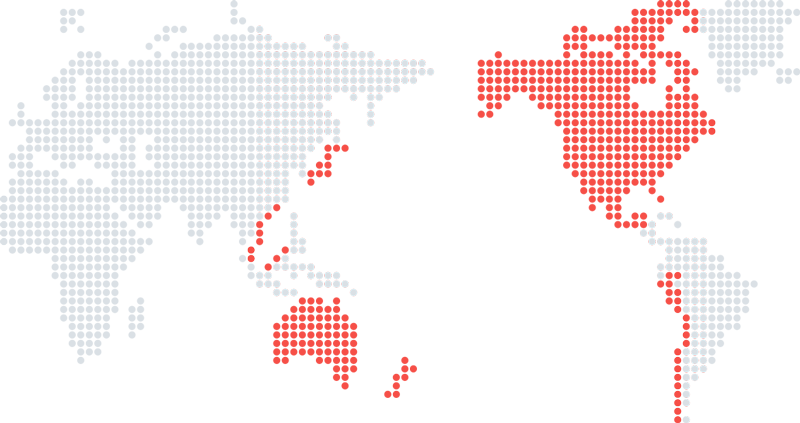
The Trans-Pacific Partnership Agreement (TPP) is a free trade agreement being negotiated by twelve countries:
Australia, Canada, Japan, Malaysia, Mexico, Peru, United States, Vietnam, Chile, Brunei, Singapore, and New Zealand. The TPP will eliminate over 18,000 taxes, tariffs and other trade barriers.

One of the largest benefits of the TPP will be protecting the environment. Participating countries will need to adopt tougher pollution standards similar to the USA. “TPP includes the most robust enforceable environment commitments of any trade agreement in history,” according the United States. “TPP requires countries to play by fair environmental rules if they want to send their goods to the United States, and upgrades NAFTA by putting fully enforceable environment obligations at the core of the agreement.” In addition, TPP helps improve conditions on the ground in TPP countries by requiring them to:
* Fulfill their obligations under the Convention on International Trade in Endangered Species of Wild Fauna and Flora (CITES) to protect and conserve iconic species, such as rhinos and elephants.
* For the first time in any trade agreement, prohibit harmful fisheries subsidies, including those that contribute to overfishing, and work to restrain new subsidy programs or enhancements to existing subsidy programs.
* Combat illegal fishing, promote sustainable fisheries management practices, and protect wetlands and important natural areas.
* Promote the long-term conservation of whales, dolphins, sharks, sea turtles, and other marine species at risk.
* Combat wildlife trafficking, illegal logging, and illegal fishing through enhanced national and regional actions.
* Protect the marine environment from ship pollution, including by implementing their obligations under MARPOL (an international agreement to prevent marine pollution).

Another benefit of the TPP will be the recognition of Intellectual Property (IP) Rights. Countries would be required to adopt standards inline with the USA. TPP copyrights are proposed to be “for the author’s life plus 70 years.”

The Agreement covers more than 40 percent of global GDP. Of the international economists questioned, the only complaint about TPP is — it doesn’t include the entire world.

Trans-Pacific Partnership Agreement (TPP) Map

Also see: GMO Rice Wins Humanitarian Award

bookmark_borderU.S. Ends Bailout Program with $15.3 Billion Profit

The Troubled Asset Relief Program (TARP) ended when the Treasury sold its remaining shares of Ally Financial (the last remaining major bank.) The bailout program was originally $426 billion.

The Treasury Department reports, “Treasury invested approximately $245 billion across five distinct bank programs. Each of these programs was established to accomplish different goals as part of the overall effort to stabilize America’s banking system.

​Treasury has already recovered an amount that is greater than what was invested in banks under TARP. Taxpayers began to see a positive return on their bank investments in March 2011. Every additional dollar that is recovered from TARP’s bank investments represents an additional return for the taxpayers. ​​”

bookmark_borderBitcoins

Bitcoin is a virtual currency that is open source P2P money. According to the Bitcom website: “Bitcoin uses peer-to-peer technology to operate with no central authority or banks; managing transactions and the issuing of bitcoins is carried out collectively by the network. Bitcoin is open-source; its design is public, nobody owns or controls Bitcoin and everyone can take part. Through many of its unique properties, Bitcoin allows exciting uses that could not be covered by any previous payment system.”

Wikipedia says, “In November 2008, a paper was posted on the internet under the name Satoshi Nakamoto titled Bitcoin: A Peer-to-Peer Electronic Cash System. This paper detailed methods of using a peer-to-peer network to generate what was described as “a system for electronic transactions without relying on trust”. In January 2009, the Bitcoin network came into existence with the release of the first open source Bitcoin client and the issuance of the first bitcoins, with Satoshi Nakamoto mining the first block of bitcoins ever (known as the “genesis block”), which had a reward of 50 bitcoins. The value of the first bitcoin transactions were negotiated by individuals on the bitcointalk forums with one notable transaction involving a 10,000 BTC pizza.”

Since then they inventor has gone underground. In theory, Bitcoins circulation will roll out over time without a centralized creator.

The value of a Bitcoin in dollars:

 
Date price for 1 BTC Notes
Jan 2009 – Jan 2010 basically none no exchanges or market, users were mainly cryptography fans, who were sending bitcoins for low or no value
Feb 2010 – May 2010 less than $0.01 user “laszlo” did first transaction – bought 2 pizzas for 10,000 BTC. User “SmokeTooMuch” auctioned 10,000 BTC for $50 (cumulatively), but no buyer was found.
June 2010 $0.08 in five days, the price grew 1000%, rising from $0.008 to $0.08 for 1 bitcoin
Feb 2011 – April 2011 $1 Bitcoin takes parity with US dollar
July 8th 2011 $31 top of first “bubble”, followed by the first price drop
Dec 2011 $2 minimum after few months
Dec 2012 $13 slowly rising for a year
April 11th 2013 $266 top of a price rally, during which the value was growing by 5-10% daily.
May 2013 $130 basically stable, again slowly rising.
June 2013 $100 in June slowly dropping to $70, but rising in July to $110
Nov 2013 $350 – $900 from October $150-$200 in November exponentially rising to $400, then $600, eventually reaching $900 on 11/19/2013.

In October of 2013, the FBI seized approximately 173,991 Bitcoins worth over $33.6 million:

Preet Bharara, the United States Attorney for the Southern District of New York; George Venizelos, the Assistant Director in Charge of the New York Office of the Federal Bureau of Investigation (“FBI”); Brian R. Crowell, the Special Agent in Charge of the New York Field Division of the Drug Enforcement Administration (“DEA”); and Toni Weirauch, the Special Agent in Charge of the New York Field Office of the Internal Revenue Service, Criminal Investigation (“IRS-CI”), today announced the unsealing of a protective order authorizing the seizure of approximately 144,336 Bitcoins found on computer hardware belonging to ROSS WILLIAM ULBRICHT, a/k/a “Dread Pirate Roberts,” a/k/a “DPR,” a/k/a “Silk Road,” the alleged owner and operator of “Silk Road,” a hidden website designed to enable its users to buy and sell illegal drugs and other unlawful goods and services anonymously and beyond the reach of law enforcement. Along with a prior seizure of approximately 29,655 Bitcoins, federal law enforcement agents have now seized a total of approximately 173,991 Bitcoins in connection with the Silk Road case, which, at today’s Bitcoin exchange rate, are worth over $33.6 million.

The Bitcoins have been seized in connection with a civil action previously filed in Manhattan federal court on September 30, 2013, seeking the forfeiture of all assets of Silk Road, including its website and all of its Bitcoins because those assets allegedly were used to facilitate money laundering and constitute property involved in money laundering. Also in connection with that civil action, federal law enforcement agents previously seized the Silk Road website itself. In addition to the civil action, a criminal complaint against ULBRICHT was filed in Manhattan federal court charging him with one count of narcotics conspiracy, one of count of conspiracy to commit computer hacking, and one count of money laundering conspiracy. ULBRICHT was arrested in San Francisco, California, on October 1, 2013, he was subsequently ordered detained, and he is expected to appear in Manhattan federal court within the next few weeks. ULBRICHT has also been charged in a separate indictment pending in federal court in Baltimore, Maryland.

Manhattan U.S. Attorney Preet Bharara said: “As alleged, Ross William Ulbricht operated Silk Road—a global illegal cyber business designed to broker criminal transactions—protected by a presumed anonymity and motivated by profit. With his arrest and our subsequent seizures of millions of dollars worth of Silk Road’s Bitcoins, we have sent a clear message to him and everyone else running criminal enterprises on the dark web: we are determined and equipped to hold you to account.”

FBI Assistant Director in Charge Venizelos said: “As alleged in court documents, the creator of Silk Road, Ross William Ulbricht, created a black market bazaar for drugs and illegal services where customer service and anonymity were added value to shoppers and sellers. This market generated millions in illegal profits for Ulbricht in the form of Bitcoins. However, what Ulbricht didn’t count on was that Silk Road’s coffers would not be out of reach of the FBI and our partners to seize. We want to thank our law enforcement partners here and abroad for their support and work on this case.”

DEA Special Agent in Charge Brian R. Crowell said: “The Silk Road underground website was the global venue for drug trafficking and money laundering, producing millions in dirty profits. DEA and others followed the money throughout this investigation, leading to this seizure. The website was used by drug dealers to put illicit drugs into our communities and literally at our doorsteps nationwide. 200,000 people die annually from drug abuse throughout the world, and our investigators worked tirelessly to bring to justice a facilitator who made every effort to hide behind highly encrypted technology while providing 24/7 anonymous services to global drug traffickers and money launderers. Ulbricht’s goals were to make millions from drug use and money laundering while protecting the world’s criminals from law enforcement. Our goal is to shut these people down and protect our children and DEA will continue to be relentless in this effort.”

IRS Special Agent in Charge Toni Weirauch said: “This seizure sends a clear notice to those who think they can commit crimes and conceal the fruits of their criminal activities in digital anonymity. The resolve of the government to uncover criminality and identify criminal proceeds is strong and its investigative capabilities are magnified when different federal agencies, each with its own areas of expertise, unite to achieve a common objective.”

According to the allegations in the complaint, the civil forfeiture action, and the application and protective order unsealed today in Manhattan federal court:

Background on Silk Road and ROSS WILLIAM ULBRICHT

Since approximately January 2011, ROSS WILLIAM ULBRICHT owned and operated the underground website known as Silk Road, which emerged as the most sophisticated and extensive criminal marketplace on the Internet. Throughout the time that ULBRICHT controlled Silk Road, it served as a sprawling black-market bazaar where unlawful goods and services, including illegal drugs of virtually every variety, were bought and sold regularly by the site’s users.

During its approximately two-and-a-half years in operation, Silk Road was used by several thousand drug dealers and other unlawful vendors to distribute hundreds of kilograms of illegal drugs and other unlawful goods and services to well over a hundred thousand buyers, and to launder hundreds of millions of dollars derived from these unlawful transactions. All told, the site generated sales revenue of more than 9.5 million Bitcoins and collected commissions from these sales totaling more than 600,000 Bitcoins. Although the value of Bitcoins has varied over time, these figures are roughly equivalent to approximately $1.2 billion in sales and approximately $80 million in commissions, using the Bitcoin exchange rate in effect when the Silk Road website was seized.

ULBRICHT deliberately operated Silk Road as an online criminal marketplace designed to enable its users to buy and sell drugs and other illegal goods and services anonymously and outside the reach of law enforcement. He sought to anonymize transactions on Silk Road in two principal ways. First, ULBRICHT operated Silk Road on what is known as “The Onion Router,” or “Tor” network, a special network of computers on the Internet, distributed around the world, designed to conceal the true IP addresses and therefore the identities of the networks’ users. The Tor network is designed to make it practically impossible to physically locate the computers hosting or accessing websites on the network. Second, ULBRICHT required that all transactions on Silk Road be paid with Bitcoins, an electronic currency that is as anonymous as cash. Although Tor and Bitcoins have known legitimate uses, they were intentionally used by Silk Road to further the site’s unlawful goals.

The Silk Road website provided a sales platform that allowed vendors and buyers using the site to conduct transactions online. Silk Road is believed to have been visited by hundreds of thousands of unique users from countries across the globe, nearly 30 percent of whom indicated upon registering on the site that they were from the United States. The illegal nature of the items sold on the website was readily apparent to any user browsing through its offerings. Indeed, the vast majority of the items for sale on Silk Road were illegal drugs, which were openly advertised as such on the site. As of September 23, 2013, Silk Road had nearly 13,000 listings for controlled substances, listed under such categories as “Cannabis,” “Dissociatives,” “Ecstasy,” “Intoxicants,” “Opioids,” “Precursors,” “Prescription,” “Psychedelics,” and “Stimulants.” From November 2011 to September 2013, law enforcement agents made more than 100 individual undercover purchases of controlled substances from Silk Road vendors. These purchases included heroin, cocaine, ecstasy, and LSD, among other illegal drugs, and were filled by vendors believed to be located in more than ten different countries, including the United States, Germany, the Netherlands, Canada, the United Kingdom, Spain, Ireland, Italy, Austria, and France.

In addition to illegal narcotics, other illicit goods and services were also openly bought and sold on Silk Road. For example, as of September 23, 2013, there were: 159 listings under the category “Services,” most of which offered computer-hacking services, such as a listing by a vendor offering to hack into social networking accounts of the customer’s choosing; 801 listings under the category “Digital goods,” including malicious software, hacked accounts at various online services, and pirated media content; and 169 listings under the category “Forgeries,” including offers to produce fake driver’s licenses, passports, Social Security cards, utility bills, credit card statements, car insurance records, and other forms of false identification documents.

The only form of payment accepted on Silk Road was Bitcoins, an anonymous, decentralized form of electronic currency, existing entirely on the Internet and not in any physical form. Silk Road’s payment system essentially consisted of an internal Bitcoin “bank,” where every Silk Road user had to hold an account in order to conduct transactions on the site. Every Silk Road user had at least one Silk Road Bitcoin address associated with the user’s Silk Road account. These addresses were stored on wallets maintained on servers controlled by Silk Road. In order to make a purchase on Silk Road, a user had to obtain Bitcoins (typically through a Bitcoin exchanger) and then send those Bitcoins to a Bitcoin address associated with his or her Silk Road account. Once a user’s account was funded in this way, the user was free to make purchases on Silk Road. When a purchase was made, the user’s Bitcoins were first transferred to an escrow account maintained by Silk Road, pending completion of the transaction. When the transaction was completed, the buyer’s Bitcoins were transferred from the escrow account to the Silk Road Bitcoin address of the vendor involved in the sale. Silk Road also used a so-called “tumbler” which, as the site explained, “sen[t] all payments through a complex, semi-random series of dummy transactions…making it nearly impossible to link your payment with any coins leaving the site.” Silk Road charged a commission for every transaction conducted by its users. The commission rate varied depending on the size of the transaction, but generally ranged from 8 to 15 percent of the total sales price.

Using the online moniker “Dread Pirate Roberts,” or “DPR,” ULBRICHT controlled and oversaw every aspect of Silk Road. ULBRICHT, for example, maintained the computer infrastructure and programming code underlying the Silk Road website; determined vendor and customer policies, including deciding what can be sold on the site; managed a small staff of online administrators who assisted with the day-to-day operation of the site; and controlled the enormous profits generated from the operation of the site. ULBRICHT did so while fully aware of the illegal nature of the enterprise; indeed, he deliberately sought to ensure the anonymity of the drug dealers and other illegal vendors operating on the site, as well as to conceal his own identity as the site’s owner and operator.

ULBRICHT was also willing to use violent means to protect the Silk Road enterprise and the anonymity of its users. For example, in March and April 2013, ULBRICHT solicited a murder-for-hire of a Silk Road vendor, known as “FriendlyChemist,” who was threatening to reveal the real names and addresses of a long list of Silk Road users unless ULBRICHT paid him $500,000. Upon receiving the threat from “FriendlyChemist” to expose the names of Silk Road users, ULBRICHT wrote to another Silk Road user, telling that user that “FriendlyChemist” is “causing me problems,” and adding: “I would like to put a bounty on his head if it’s not too much trouble for you. What would be an adequate amount to motivate you to find him? Necessities like this do happen from time to time for a person in my position.” ULBRICHT later explained that the threat by “FriendlyChemist” to expose the names of Silk Road users “is unforgivable to me. Especially here on Silk Road, anonymity is sacrosanct.” However, there is no record of a homicide at or about that time in the area where “FriendlyChemist” supposedly lived.

The Seizure of Computer Hardware Belonging to ROSS WILLIAM ULBRICHT

ROSS WILLIAM ULBRICHT was arrested in San Francisco, California, on October 1, 2013. At the time of his arrest, ULBRICHT was using a laptop computer, which was seized in connection with his arrest and subsequently searched pursuant to a search warrant. ULBRICHT’s residence was also searched on October 1, 2013, pursuant to a search warrant, and federal law enforcement agents conducting that search found several pieces of computer hardware belonging to ULBRICHT (collectively, along with ULBRICHT’s laptop, the “computer hardware”). Through forensic analysis of the computer hardware, federal law enforcement agents recovered a Bitcoin wallet containing approximately 144,336 Bitcoins.

CHINA
In December 2013, China banned the use of the Bitcoin. Although the value of Bitcoin’s did depreciate by 10% on the news, it still remained over $1,000.00 USD.

On December 18, 2013, China shutdown trading of a Chinese Bitcoin exchange and the value dropped by 50%.

“The Bitcoin bubble has burst and China was the pin that popped it,” writes Mark Williams of Boston University. “The latest move by China puts into question the viability of Bitcoin as a currency alternative and as a liquid and safe commodity.”