bookmark_borderClimate Change Threatens U.S. Housing Market with $1.5 Trillion Devaluation

by Daniel Brouse
February 19, 2025

In the next five years, at least 20% of U.S. homes are projected to lose value due to climate change impacts, according to Dave Burt, founder of DeltaTerra Capital. Burt, who foresaw the subprime mortgage crisis nearly two decades ago, draws parallels between that event and the emerging climate-related housing market risks. He warns that as climate risks escalate, the insurance industry will be compelled to raise premiums, increasing homeownership costs and subsequently reducing property values. Burt anticipates that these vulnerable markets could experience a 30% decline in value over the next five years, mirroring the downturn seen during the Great Recession.

Supporting this outlook, a recent analysis by climate-risk firm First Street Foundation estimates that by 2055, 84% of all U.S. homes could suffer devaluation, amounting to $1.47 trillion in losses. Jeremy Porter, head of climate implications research at First Street, emphasizes that climate change is now a tangible force reshaping real estate markets and regional economies across the nation. The report projects a national average insurance cost increase of 25%, with 14% attributed to previously underpriced risks and an additional 11% due to escalating climate threats. While the average property value impact is estimated at a 3% decline nationally, certain areas, particularly in Texas, Florida, and Louisiana, may see home values reduced by up to 50%.

High-vulnerability regions, especially coastal areas and states like Florida, Louisiana, and California, face a compounding crisis. The intersection of rising insurance premiums, frequent natural disasters, and declining property values is straining both homeowners and insurance systems. In states such as Florida, Louisiana, and California, taxpayers already subsidize homeowner insurance premiums due to the inability of private insurers to bear the mounting risks alone. In Florida, the state-owned insurer, Citizens Property Insurance Corporation, has become the largest insurer, a testament to the scale of market withdrawal by private companies.

California is among several states grappling with the growing frequency and intensity of climate-related disasters. Over recent years, the financial burden on the insurance industry has escalated, driven by catastrophic wildfires, prolonged droughts, and extreme weather events. Many private insurers, unable to sustain losses or raise premiums due to state-imposed price controls, have either stopped issuing new policies or left the state entirely. In response, California implemented government-subsidized homeowners’ insurance programs to provide coverage for those left without options. However, these systems, including the state-backed FAIR Plan, quickly became overburdened. The FAIR Plan, originally conceived as a safety net for homeowners in high-risk areas, has seen a surge in demand as private insurers retreat.

As climate-related disasters—such as hurricanes, wildfires, and floods—increase in both frequency and intensity, the economic strain on both taxpayers and insurance systems is becoming unsustainable. Florida’s reliance on taxpayer-backed insurance, for instance, exposes state finances to significant risk, particularly after events like Hurricane Ian in 2022, which caused catastrophic losses. Taxpayer-funded bailouts of insurance systems and rising deficits could divert resources from other critical areas, further exacerbating economic instability.

The real estate market in high-risk areas is already experiencing significant challenges. As insurance becomes increasingly difficult to obtain or afford, property values are declining, leaving homeowners facing the growing risk of being unable to sell or refinance. While liquidating properties in these areas may help mitigate individual financial risks, widespread devaluation could have far-reaching economic consequences, potentially leading to localized housing market collapses.

In summary, the convergence of escalating climate risks, rising insurance costs, and declining property values poses a substantial threat to the U.S. housing market. Proactive measures, including investment in resilient infrastructure, transparent risk assessment, and strategic policy reforms, are essential to mitigate these impacts and safeguard both homeowners and the broader economy.
bookmark_borderTrump’s Housing Finance Reforms: Privatization and Deregulation Amidst Controversy

The Trump administration has outlined plans to reform key entities in the U.S. housing finance system, specifically Fannie Mae, Freddie Mac, and the Federal Housing Administration (FHA), with potentially significant impacts on mortgage rates, the real estate industry, homeowners, and the broader economy.

Privatizing Fannie Mae and Freddie Mac could lead to increased mortgage rates, affecting housing affordability. Additionally, the proposed elimination of the Consumer Financial Protection Bureau (CFPB) may reduce oversight in the housing market, potentially exposing consumers to predatory practices. These reforms could introduce uncertainty into the housing market, influencing home prices and economic stability.

Privatization of Fannie Mae and Freddie Mac:
Fannie Mae and Freddie Mac, government-sponsored enterprises (GSEs) that have been under federal conservatorship since the 2008 financial crisis, are central to the administration’s reform agenda. The administration aims to privatize these entities, transitioning them from government control to private ownership. This move is intended to reduce taxpayer exposure and encourage competition in the mortgage market. However, critics express concerns that privatization could lead to higher mortgage rates, potentially making homeownership less affordable for many Americans.

Leadership Changes at the Federal Housing Finance Agency (FHFA):
To facilitate these reforms, President Trump has announced his intention to nominate Bill Pulte as the director of the FHFA, the agency responsible for overseeing Fannie Mae and Freddie Mac. Pulte, known for his philanthropic efforts, is expected to play a pivotal role in steering the GSEs toward privatization.

Modernization of the Federal Housing Administration (FHA):
The administration’s plans also encompass the FHA, focusing on modernizing its operations and technology. Objectives include enhancing risk management, improving program designs, and ensuring the FHA effectively serves low- and moderate-income families who may not qualify through traditional underwriting.

While these initiatives aim to revamp the housing finance landscape, they have sparked debate. Proponents argue that reducing government involvement could foster a more robust and competitive market. Opponents caution that such changes might increase borrowing costs and limit access to affordable housing. The administration’s approach reflects a broader strategy to reshape federal involvement in housing finance, emphasizing privatization and deregulation at the expense of the real estate industry, homeowners, and the economy.

bookmark_borderReal Estate in the Face of Economic and Environmental Challenges

Real Estate in the Face of Economic and Environmental Challenges: Inflation, Currency Devaluation, and Climate Change Impacts

by Daniel Brouse
February 16, 2025

Real estate has traditionally been viewed as a hedge against inflation and currency devaluation, often maintaining or increasing in value during such periods. However, the escalating impacts of climate change and shifting insurance landscapes are introducing new risks that could lead to significant losses in property values, particularly in high-risk areas.

Inflation:

  • Asset Appreciation: Over time, real estate values tend to rise faster than the general inflation rate. Since 1963, while inflation has increased by 896%, housing prices have surged by more than 2,350%.

  • Rental Income Growth: Inflation often leads to higher rents, boosting cash flow for property owners. This increase in rental income can offset the rising costs associated with inflation.

Currency Devaluation:

  • Increased Foreign Investment: A weaker dollar makes U.S. real estate more affordable for foreign investors, potentially driving up demand and property values.

  • Inflationary Pressures: Currency devaluation can lead to imported inflation, raising the cost of goods and services, which may, in turn, push real estate values higher as replacement costs increase.

Climate Change Impacts
The impact of human-induced climate change is becoming an increasingly critical factor in the residential real estate market. The rising frequency and severity of natural disasters, such as wildfires and floods, have led to heightened insurance premiums and decreased property values in high-risk areas. Recent studies project that climate change could erase approximately $1.47 trillion from U.S. home values over the next 10-30 years.

Moreover, the insurance landscape is shifting dramatically. As climate-related risks escalate, insurance companies are reassessing their coverage policies. In California, for instance, more than 80% of new properties built between 2020 and 2022 are located in high fire-risk areas, leading insurers to reduce coverage offerings in the state. This trend raises concerns that a significant portion of U.S. real estate could become uninsurable in the coming decades, posing substantial challenges for homeowners and investors.

The financial implications extend beyond immediate property devaluation. As insurance costs rise and coverage becomes scarce, homeowners may face increased mortgage defaults, and municipalities could experience shrinking tax bases. These factors contribute to a complex and evolving real estate landscape, where climate change plays a pivotal role in shaping future property values and market stability.

Conclusion
The interplay of fiscal policies and the accelerating climate crisis is poised to significantly impact real estate investments. Certain regions may experience market destabilization or even collapse due to increased climate-related risks, while others could see heightened demand and escalating prices. Investors should carefully assess these evolving factors when making real estate decisions.

bookmark_borderProtectionism 101: Trump Economics

Most of Trump’s policies are based on common misconceptions and in fact contradict established economic principles. To begin with, the U.S. government often subsidizes companies to keep operations domestic. This can make our products more expensive and our businesses less efficient and competitive. A notable example is electric vehicles (EVs). The U.S. heavily subsidizes EVs, yet we claim we are not, instead asserting that China does this without evidence. Consequently, we impose a 100% tariff on Chinese EVs. As a result, the U.S. lacks competitively priced, domestically produced EVs. Our EV industry has become uncompetitive and inefficient, while China has emerged as the powerhouse of EV manufacturing worldwide. This is just one example of how U.S. misunderstandings of trade have led to our own decline while contributing to China’s rise. These policies have been both Republican and Democratic. Trump’s policies, which are even more misguided and are intended to do this to every industry, are set to accelerate our decline rapidly. World economists estimate that our economy will be devastated within 1 year and 9 months.

For more information on this example see “BYD” and NEV sales. For another devastating example of protectionism see “Deep Seek” and large language model AI.

Protectionist policies have significantly influenced the global landscape of artificial intelligence (AI) and electric vehicles (EVs), creating distinct winners and losers across various industries.

Beneficiaries:

  • China:
    • BYD: A leading Chinese EV manufacturer, BYD has capitalized on domestic support and reduced foreign competition due to protectionist measures.
    • DeepSeek: This Hangzhou-based AI startup has emerged as a formidable player, developing advanced AI models like DeepSeek-R1. Notably, DeepSeek achieved these advancements at a fraction of the typical cost and energy consumption, democratizing AI development and enabling smaller firms to compete.

Adversely Affected:

  • United States:
    • Automotive Companies: Major U.S. automakers such as Ford and General Motors face challenges from increased tariffs and restricted access to international markets, impacting their competitiveness in the EV sector.
    • Technology Firms: Leading tech companies, including Nvidia, Intel, IBM, Qualcomm, Cerebras Systems, Graphcore, Tesla, Baidu, OpenAI, SambaNova, Microsoft, and Apple, have encountered setbacks due to protectionist policies. For instance, Nvidia experienced a significant decline in market capitalization following DeepSeek’s announcement of its R1 model, highlighting the disruptive potential of emerging competitors. For an idea of how costly protectionism can be to the US, Nvidia lost $593 billion in market value the day Deep Seek was announced.

The ripple effects of protectionism extend beyond these industries, notably impacting the energy sector—encompassing electricity, natural gas, and nuclear power—due to shifts in production and consumption patterns driven by evolving trade policies.

Beyond economic implications, protectionist measures can lead to significant technological and military consequences, as nations may struggle to access critical innovations or maintain strategic advantages in key sectors.

If you are interested in a historical example, the Smoot-Hawley Tariff Act of 1930 raised tariffs on imports to the United States, which contributed to the Great Depression. In fact, Trump’s policies, combined with bypassing the law and ignoring the Constitution by not having Congress codify legislation, make it appear as though our current economic downturn is accelerating. This is why world leaders and economists are not overly concerned; most agree they will tolerate current U.S. policies creating economic instability and that the collapsing economy will occur before the midterms. After the midterms, he will likely be toothless, if not impeached.

UPDATES: BYD’s Breakthrough Charging Tech Exposes the Pitfalls of U.S. Protectionism in the EV Market

How BYD Surpassed Tesla: The Role of Innovation, Tariffs, and Free Market Dynamics

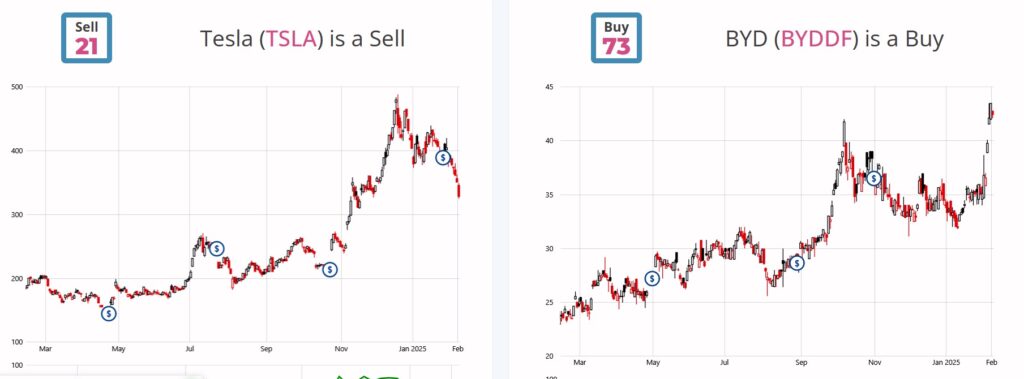
Tesla vs. BYD
Tesla vs. BYD

MORE EDUCATIONAL MATERIALS ON TRUMP TARIFFS

Déjà Vu Economics: How Trump’s Deregulation and Tariff Policies Mirror the Road to the Great Depression

Trumpenomics: How Tariffs, Policy Cuts, and Labor Shortages Are Devastating American Farmers

The Devastating Impact of Trump’s Steel and Aluminum Tariffs

World Economics 101: The United States and Global Trade Dynamics

The Lies Behind Trump’s Terror Economics

Trumpenomics: The Decline of the US

bookmark_borderEconomic Update: The Path to Disaster

The Republican Party is driving the U.S. economy off a cliff, and the consequences are unfolding in real time. The good news? Trump’s team is imploding under the weight of its own reckless and poorly planned policies. The bad news? The so-called “Make America Great Again” agenda is achieving the exact opposite—weakening the country economically, politically, and diplomatically.

One silver lining is that nearly all of Trump’s Executive Orders (EOs) are built on shaky legal ground. Since they lack congressional approval, most will collapse like a house of cards. For example, Trump’s attempt to use tariffs as a revenue source to offset the budget deficit is fundamentally flawed—tariff revenue cannot be used this way unless Congress explicitly authorizes it. Given that the Republican Party has historically opposed taxation, it’s highly unlikely that this EO will ever be codified into law.

Economic Turmoil at Home and Abroad

Both the U.S. and global economies are experiencing unprecedented instability. Stock markets are on edge, interest rates remain high, inflation is still squeezing household budgets, and consumer confidence is plummeting. Meanwhile, Trump’s erratic trade policies—particularly his obsession with tariffs—are adding further uncertainty, disrupting supply chains, and increasing costs for American businesses and consumers.

Internationally, the damage is just as severe. The U.S. has alienated its closest allies through economic bullying and diplomatic incompetence. Relations with Canada and Mexico—our largest trading partners—are deteriorating, and Trump’s isolationist rhetoric has pushed the European Union and other key allies to seek alternative economic partnerships.

And now, in a shocking escalation of global instability, the Trump administration is preparing to seize Gaza—a move so reckless it defies comprehension. This will not only deepen existing geopolitical tensions but also further isolate the U.S. on the world stage.

Climate Policy: The Greatest Threat to Humanity

Of all the Republican Party’s dangerous policies, its stance on climate change is by far the most catastrophic. The continued promotion of fossil fuels, the aggressive rollback of environmental protections, and the outright denial of climate science are accelerating planetary destruction at an unprecedented rate.

If we continue down this path, vast regions of the planet will become uninhabitable within this century. This will lead to mass displacement, food and water shortages, and geopolitical instability on a scale never before seen in human history. The consequences won’t just last for decades or even centuries—climate disruptions and ecological collapse will shape life on Earth for millions of years.

We are already witnessing the devastating effects:

  • Record-breaking temperatures are making entire regions unlivable.
  • Wildfires are more frequent and intense, destroying homes, forests, and livelihoods.
  • Ecosystems are collapsing, with mass extinctions already underway.
  • Storms and flooding are worsening, causing billions in damages and displacing populations.

Despite this overwhelming evidence, Republican leadership continues to double down on climate denial. Instead of investing in renewable energy and sustainable infrastructure, they are working to expand fossil fuel production and dismantle climate policies that were designed to prevent catastrophe.

A Legacy of Destruction

Future generations will look back at this moment in history with disbelief and anger, wondering how a political movement could have been so willfully blind to the destruction it enabled. The question isn’t whether disaster is coming—it’s how much damage will be done before enough people demand change.

How long until the masses wake up and realize that the very policies they were sold as “America First” are actually ensuring America’s downfall?

bookmark_borderThe Lies Behind Trump’s Terror Economics

Article originally published February 4, 2025 in anticipation of tariffs on Mexico and Canada

The primary purpose of Trump’s tariffs is not economic growth or national security—it’s to fund his anti-humanity policies, particularly the billions of dollars required for mass deportation. Unfortunately, both his tariff policies and immigration restrictions have devastating effects on the U.S. economy, creating a dangerous cycle of economic instability and political deception.

Violation of Existing Trade Agreements

One of the most glaring contradictions in Trump’s proposal is that the United States already has a free-trade agreement with Mexico and Canada: the United States-Mexico-Canada Agreement (USMCA). This deal, which was implemented and widely touted as a signature achievement of Trump’s first term, replaced NAFTA and strengthened trade relations between the three nations. Imposing new tariffs would directly violate the terms of the USMCA, undermining the agreement and potentially sparking retaliation or trade disputes.

Circumventing Congressional Authority

Tariffs are a matter that traditionally requires Congressional approval under U.S. law. Trump’s plan to bypass this requirement involves declaring Mexico and Canada as security threats to justify the tariffs through executive action. While this approach exploits legal loopholes, it would almost certainly face challenges in court. Congress has constitutionally enshrined authority over trade, and using national security as a pretext for tariffs risks further eroding trust in executive restraint.

Trump’s Tariff Reversal: A Fake Victory

On February 3, 2025, Trump abruptly suspended the implementation of additional tariffs on Mexico and Canada. While he claimed this as a major negotiating victory, the reality tells a different story. The so-called “concessions” from Mexico and Canada were, in fact, pre-existing agreements that Trump has simply rebranded to appear as new achievements.

For example, in 2019, Trump secured an agreement with Mexico to deploy 15,000 troops to its southern border to curb migration. Now, the recently announced deployment of 10,000 troops is not an increase, but a reduction from that agreement. Similarly, the so-called “deal” with Canada was already announced in December 2024 under President Biden. Trump’s claims of securing new victories are nothing more than political theater designed to mask the damage caused by his reckless policies.

The Economic Damage and Republican Civil War

While the temporary tariff suspension is a win for the economy, common sense, and humanity, it is unlikely to last. Trump still needs to raise revenue to fund his disastrous immigration enforcement plans, and tariffs remain one of his primary tools to do so. These import taxes, however, disproportionately harm American consumers and businesses, leading to higher prices, supply chain disruptions, and reduced economic growth.

This presents a major dilemma for Trump and the Republican Party. Trump was already the largest contributor to the national debt during his first term, and economic forecasts indicate that his current policies could add more to the debt than all Democratic presidents combined throughout U.S. history. Given the Republican Party’s long-standing tradition of advocating for fiscal responsibility, Trump’s reckless spending could spark an all-out civil war within the GOP. The Freedom Caucus, known for its hardline stance on debt and government spending, is likely to lead the charge against Trump’s economic policies.

The Bigger Picture: Trump’s Economic Deception

Trump’s so-called “America First” economic strategy is built on a foundation of deception. His tariffs are nothing more than hidden taxes on the American people, and his immigration policies are not just inhumane—they are economically catastrophic. As his administration scrambles to balance contradictory goals of mass deportation and economic stability, the cracks in his strategy are already showing.

The real question is whether the Republican Party will continue to enable Trump’s reckless economic agenda or whether the internal conflict over fiscal responsibility will finally force a reckoning. One thing is clear: Trump’s terror economics is a losing game—not just for him, but for the entire country.


More Trump Lies and Consequences:

Trump’s Proposed Tariffs on Mexico and Canada: A Policy Analysis

Trumpenomics: How Tariffs, Policy Cuts, and Labor Shortages Are Devastating American Farmers

The Devastating Impact of Trump’s Steel and Aluminum Tariffs

World Economics 101: The United States and Global Trade Dynamics

Protectionism 101: Trump Economics

bookmark_borderRecord Taxation Starts Now

by Daniel Brouse
January 31, 2025

We haven’t seen taxation like this since the era of tariffs that contributed to the Great Depression.

Today, the White House announced that President Donald Trump will implement new tariffs starting tomorrow, February 1, 2025. These tariffs include a 25% levy on imports from Canada and Mexico, and a 10% levy on goods from China.

President Trump stated that there is nothing Canada, Mexico, or China can do to prevent these tariffs, emphasizing his commitment to enforcing them.

The administration has indicated that these measures are part of a broader strategy to address trade imbalances and protect domestic industries.


ADDITIONAL RESOURCES

Economic Outlook

Trump’s Proposed Tariffs on Mexico and Canada: A Policy Analysis

The Trump Trade

The True Costs (and Benefitlessness) of a Trump Economy

bookmark_borderThe Link Between GDP and Immigration

by Daniel Brouse
January 31, 2025

In the most recent quarter, the U.S. GDP experienced a decline, coinciding with historically low levels of immigration over the past few quarters. This is not a coincidence—there is a well-documented and direct relationship between economic growth and immigration. In modern times, immigration has accounted for approximately 80% of GDP growth, as new workers, consumers, and entrepreneurs contribute to economic expansion, productivity, and innovation.

With the current restrictive immigration policies, the U.S. economy faces a significant risk of contraction. A shrinking labor force leads to slower business growth, increased labor shortages, and reduced consumer demand—all of which hinder GDP expansion. Additionally, declining immigration reduces the number of younger workers paying into Social Security and Medicare, exacerbating long-term fiscal challenges.

If current trends continue, the economy is expected to suffer severe negative consequences, including slower growth, rising inflationary pressures due to labor shortages, and weakened global competitiveness. Addressing immigration policy is not just a social or political issue—it is an economic imperative.

ADDITIONAL RESOURCES

Economic Outlook

Trump’s Proposed Tariffs on Mexico and Canada: A Policy Analysis

Economic Facts on Immigration, Budget Deficits and Inflation

Immigration and the Wage Inflation Spiral

The True Costs (and Benefitlessness) of a Trump Economy

bookmark_borderPlanetary Solvency: Risks and Recommendations

Increasingly severe climate and nature driven impacts are highly likely, including fires, floods, heat and droughts. This is a national security issue as food, water and heat stresses will impact populations. If unchecked then mass mortality, involuntary mass migration events and severe GDP contraction are likely.

Planetary Solvency defines Catastrophic impacts as:
• Economic contraction, GDP loss of over 25%
• Mass human mortality events resulting in over 2 billion deaths
• Warming of 2°C or more, triggering high number of climate tipping points
• Breakdown of some critical ecosystem services and Earth Systems.
• Major Extinction Events in multiple geographies.
• Ocean circulation severely impacted.
• Severe socio-political fragmentation in many regions, low lying regions lost.
• Heat and water stress driving mass migration of billions.
• Catastrophic mortality events from disease, nutrition, thirst and conflict

Planetary Solvency: Risks and Recommendations

The Human Induced Climate Change Experiment

bookmark_borderHow Risk Management Turns to Crisis Management

by Daniel Brouse
December 23, 2024

I have spent my life in the study and implementation of risk management. I obtained degrees with honors and academic accolades in economics, philosophy, and logic, including becoming the youngest subscriber to the Federal Reserve’s “Beige Book,” the country’s youngest university-level statistics tutor, and an inductee into both the Pi Gamma Mu and Phi Sigma Tau honor societies. This foundation was followed by 40 years of research, development, and real-world experience in risk management.

By the 1990s, it had become clear that the greatest risk to humans is, indeed, humans. First, climate change climbed from a substantial risk to an impending crisis. By the 2000s, the aging population emerged as the leading risk to short-term economic sustainability. Today, these two risks—human-induced climate change and an aging population—have combined and evolved into an existential crisis.

This is not to say that we should give up hope or abandon ship. Quite the contrary. Acknowledging the gravity of our circumstances makes it essential to invoke a robust and effective crisis management plan. What follows is an exploration of these intertwined crises and the paths forward to mitigate them.


The Rise of Human-Induced Climate Change

Climate change represents is the most profound example of a long-ignored risk evolving into a crisis. For decades, scientists and policymakers issued warnings about rising global temperatures, extreme weather events, and the cascading effects of environmental degradation. Despite this, global emissions and deforestation rates surged, driven by short-term economic priorities and political inertia.

The impacts are now undeniable. Wildfires, hurricanes, droughts, and floods have intensified, costing lives and overwhelming economies. Infrastructure built for past climates struggles to withstand today’s conditions, let alone those of the future. Furthermore, climate change disproportionately affects vulnerable populations, exacerbating global inequities and threatening social stability.

Complex feedback loops in climate science refer to interactions between different components of the Earth’s climate system that can amplify or dampen the effects of initial changes, leading to non-linear and often unpredictable outcomes. These feedback loops play a crucial role in shaping the behavior of the climate system and can influence various climate phenomena, including temperature changes, ice melt, and precipitation patterns. Tipping points are Critical Milestones that directly impact the rate of acceleration in climate change by multiplying the number and intensity of feedback loops. Identifying and understanding these tipping points is crucial for climate science and policymaking. Crossing multiple tipping points has led to the domino effect, resulting in much more rapid and severe climate change than previously projected.

Addressing this crisis requires immediate and coordinated action:

  • Transitioning to renewable energy: Fossil fuels must be phased out in favor of sustainable alternatives.
  • Implementing adaptive infrastructure: Cities and communities need to be redesigned to withstand the challenges of a changing climate.
  • Global cooperation: International agreements like the Paris Accord must be strengthened and enforced to meet ambitious targets.
  • Reducing pollution and greenhouse gases: Fossil fuel pollution is the leading cause of death worldwide and the greatest contributor to the climate crisis. Mitigating this requires aggressive policies to limit emissions and promote cleaner technologies.


The Economic Risks of an Aging Population

Parallel to the climate crisis is the demographic challenge of aging populations, particularly in developed nations. By the 2000s, it became clear that declining birth rates and increasing life expectancy were reshaping economic landscapes. Pension systems, healthcare infrastructure, and labor markets are all under strain.

Economic growth slows as the working-age population shrinks relative to retirees. Healthcare costs soar, and governments face mounting fiscal pressures. Wealth disparities exacerbate these challenges, as those without adequate savings face severe hardship in retirement.

Key strategies to address this demographic shift include:

  • Reforming healthcare and pensions: Systems must be made more efficient and sustainable.
  • Encouraging workforce participation: Policies that enable older adults to remain in the workforce longer can help ease economic pressures.
  • Investing in education and technology: Automation and productivity-enhancing technologies can offset labor shortages.
  • Demographic Solutions: Encouraging higher birth rates or increasing immigration can help stabilize the worker-to-retiree ratio. Mass immigration is likely the only viable solution for addressing both short-term and long-term challenges.

Bridging the Crises: An Integrated Approach

The climate and demographic crises are interconnected. Climate change disproportionately affects the elderly, who are more vulnerable to heatwaves, natural disasters, and health impacts. Simultaneously, the economic strain of aging populations limits resources available for climate mitigation and adaptation.

Addressing these crises requires an integrated approach that considers both environmental and economic sustainability. Policymakers, businesses, and individuals must work together to:

  • Redesign tax systems: Taxes should incentivize sustainable practices and ensure equitable contributions from all sectors.  Ideally, taxation should focus primarily on fossil fuel combustion. Pollution from fossil fuels is the leading cause of death globally. While the cost of human life is immeasurable, the associated increase in healthcare expenses places a significant burden on the economy. Additionally, the societal costs of climate change — driven largely by fossil fuel combustion — likely represent an even greater economic and environmental challenge. Redirecting taxation in this way could incentivize cleaner energy alternatives while addressing these critical issues. A 100% tax on a barrel of oil and a 1,000% tax on a ton of coal could significantly reduce wealth inequality while simultaneously fostering a sustainable economy.
  • Reduce wealth disparities: Closing the wealth gap can enhance resilience and provide resources for climate action. Taxing fossil fuel combustion could be the single largest factor in creating a more equitable future.
  • Embrace innovation: Technologies that address both climate and economic challenges must be prioritized.

Conclusion: From Crisis to Opportunity

Acknowledging the dual crises of climate change and an aging population is not a sign of defeat but a call to action. Humanity has faced existential threats before and emerged stronger through innovation, cooperation, and resilience. By transitioning from risk management to effective crisis management, we can not only mitigate these challenges but also build a more sustainable and equitable future.

What follows are detailed papers on the sustainability of our environment and economy, including energy, taxation, debt, healthcare, and wealth disparity. These explorations aim to provide actionable insights and solutions to navigate this critical juncture in human history.

The Human Induced Climate Change Experiment

Climate Change and Insurance: Costs, Availability, and Sustainability

Balancing the Books: How Public-Private Healthcare Models Can Sustain Economic Growth

Taxation in a Changing World: Challenges, Inefficiencies, and Paths to Sustainability

Wealth Taxes Are Illogical

Economic Outlook 2025 – 2035